
LEAD ANALYST
Utkarsh Khirodkar is a Lead Market Research Analyst at MetaStat Insight, specializing in market intelligence, technology sector assessments, and competitive strategy.

Global Racing Motorcycles Market Size, Share, By Motorcycle Type (Superbike, Supersport, Grand Prix/Prototype, Motocross, Enduro, Supermoto, Trials and Rally-Raid), By Engine Capacity (Up to 500 cc, 501-1000 cc and Above 1000 cc), By Propulsion Type (Internal Combustion Engine and Electric), By End User (Professional Racing Teams, Private/Independent Racers, Racing Schools and Academies, Track-Day and Performance Riders and Motorsport Event Operators), Industry Analysis, Growth, Trends, and Forecast, 2026-2033
Report ID
MSI-5037
Published
August, 2026
Pages
252 Pages
Format
Historical
Base year
Forecast
Forecast period
Report Details
Choose Your License
Global Racing Motorcycles Market
The global Racing Motorcycles market was valued at USD 3,867.2 million in 2025 and is projected to reach USD 6,306.6 million by 2033, growing at a CAGR of 6.3% over the forecast period.
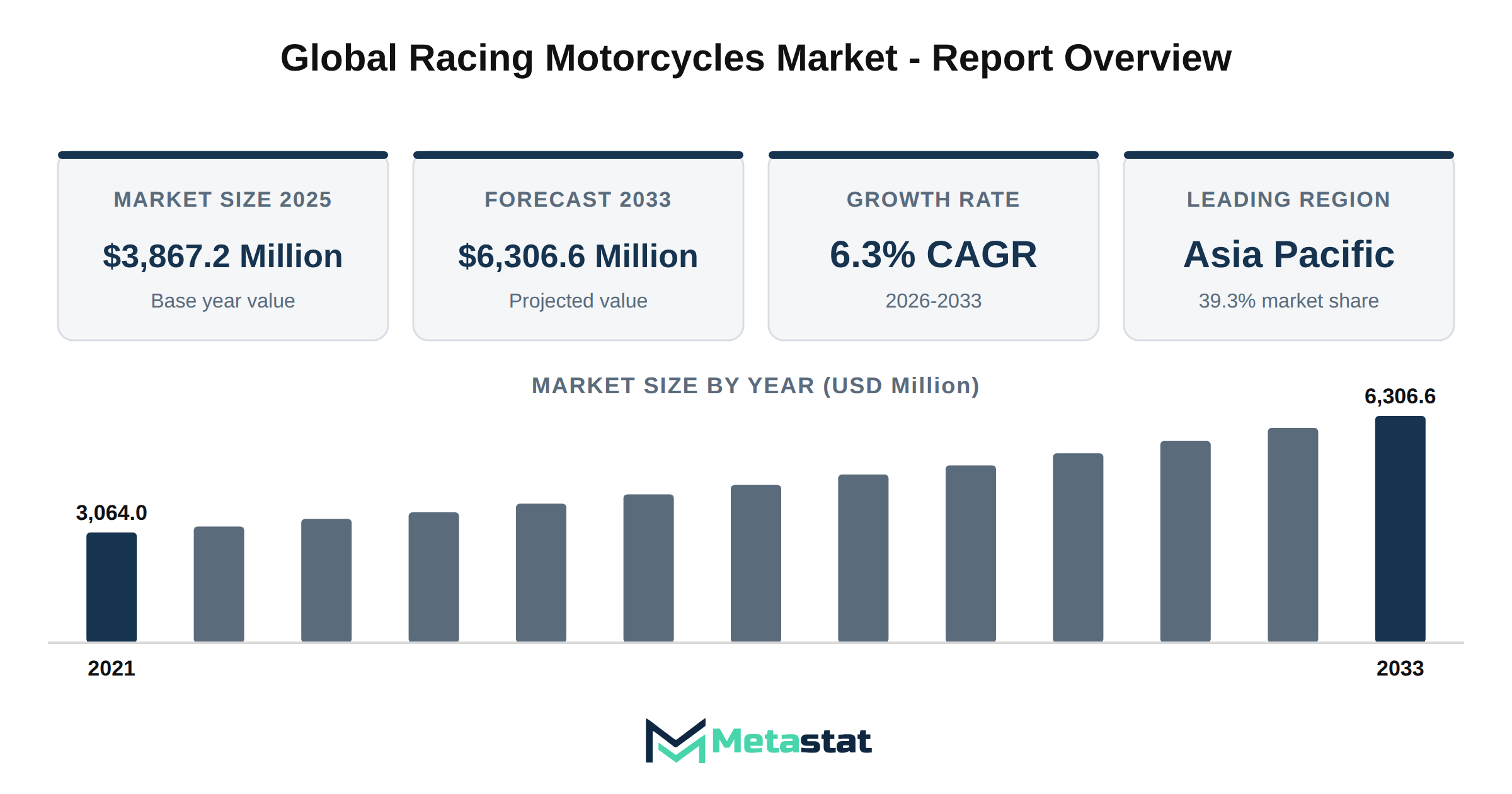
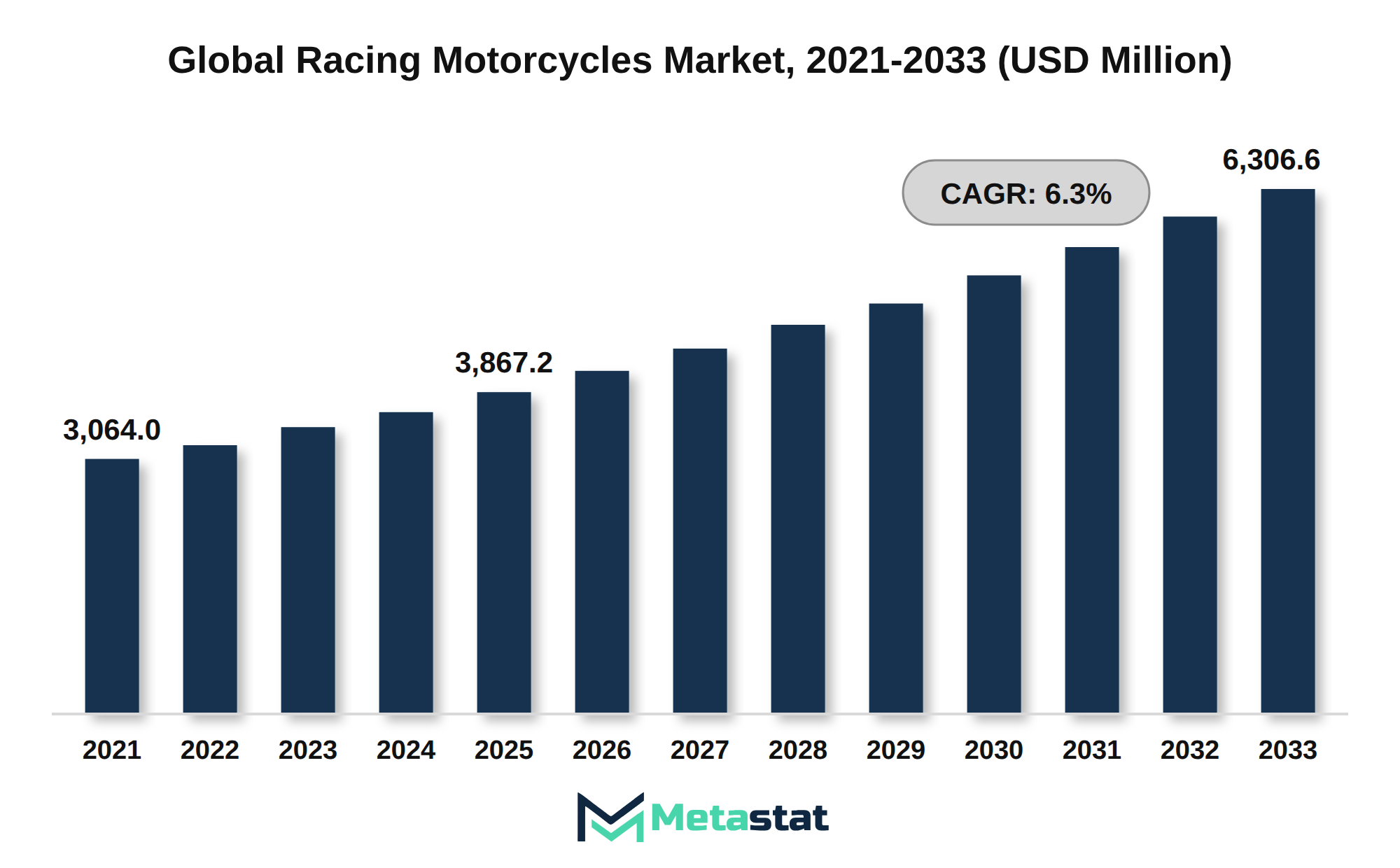
The Racing Motorcycles market reached a value of USD 3,867.2 million in 2025, following a consistent growth trajectory since 2021. From USD 3,064.0 million in 2021, the market expanded to USD 3,229.5 million in 2022 and further to USD 3,445.7 million in 2023. In 2024, it achieved a value of USD 3,625.4 million, demonstrating a robust upward trend.
Forecasts indicate the market experiences continued growth, with an expected value of USD 6,306.6 million by 2033, reflecting a compound annual growth rate (CAGR) of 6.3% from 2026 to 2033. The projected market values for the intervening years include USD 4,122.2 million in 2026, USD 4,389.0 million in 2027, and USD 4,675.9 million in 2028. By 2029, the market value is anticipated to reach USD 4,930.8 million, increasing to USD 5,269.6 million in 2030, USD 5,609.5 million in 2031, and USD 5,975.0 million in 2032.
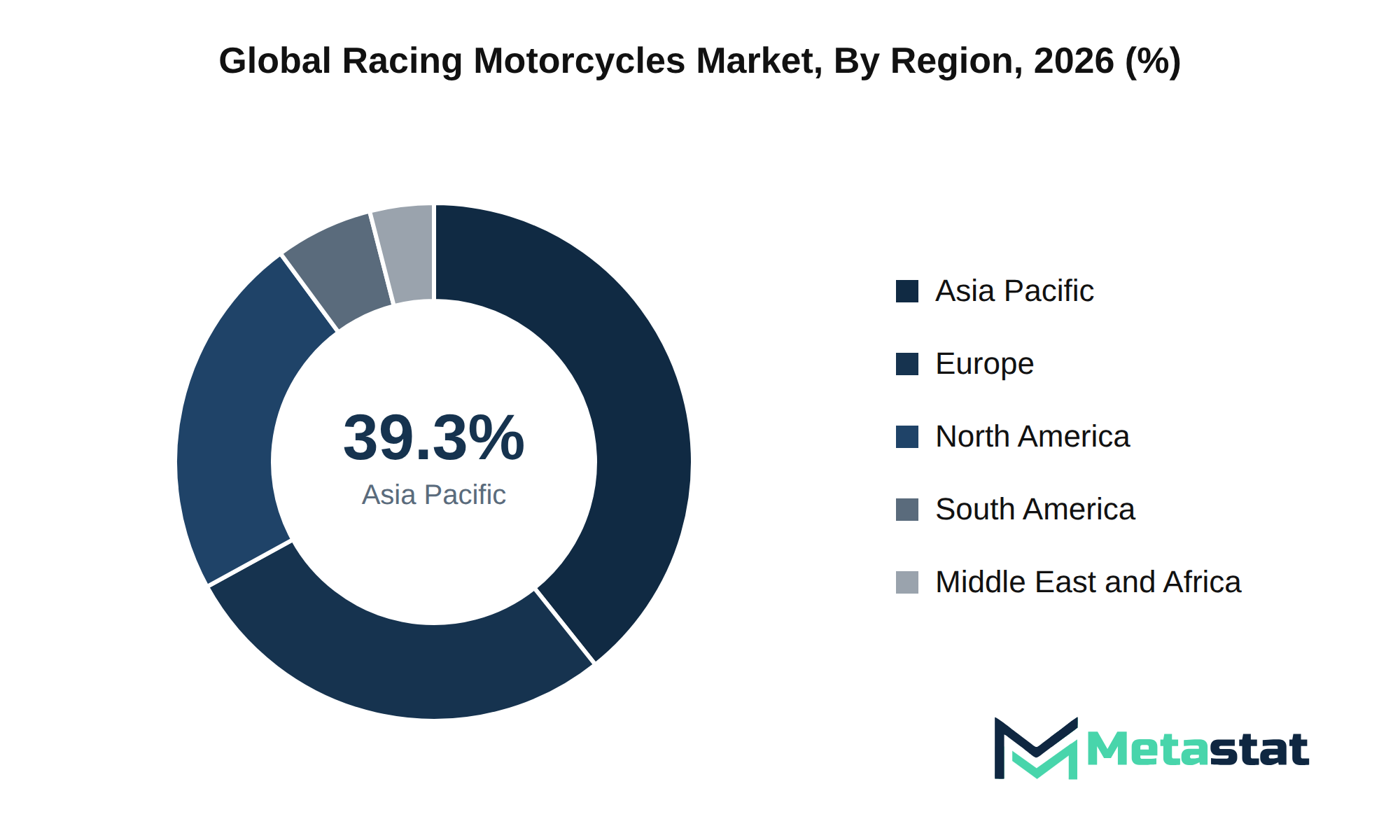
The regional distribution indicates that the Asia Pacific region holds the largest share at 39.3%, followed by Europe at 27.7%, and North America at 22.9%. South America and the Middle East and Africa account for 6.1% and 4.0% of the market respectively. North America is projected to achieve a market value of USD 1,383.7 million by 2033, with a CAGR of 6.3%. This regional performance highlights growing interest and investment in racing motorcycles across diverse geographical markets.
In terms of segments, the Superbike category shows significant growth potential, with values increasing from USD 704.0 million in 2026 to USD 1,078.4 million by 2033, reflecting a CAGR of 6.3%. The Supersport segment is projected to reach USD 816.1 million by 2033, while the Grand Prix/Prototype category will attain a value of USD 347.5 million. The motocross segment experiences a CAGR of 6.9%, signifying robust demand among enthusiasts.
The Racing Motorcycles market experiences dynamic shifts driven by several factors influencing growth and development. The integration of next-generation innovations continues to enhance performance and safety features, attracting more consumers and racing enthusiasts. The focus on sustainable transformation aligns with the increasing demand for eco-friendly models, propelling manufacturers to invest in electric propulsion technologies. This transition supports decarbonization efforts and aligns with the growing importance of the circular economy.
Research and development trajectories highlight a robust commitment to improving engine efficiency and performance across various motorcycle types. This innovation cycle drives competition among manufacturers, including KTM AG, Honda Motor Co., Ltd., and Yamaha Motor Co., Ltd. The market’s fragmentation necessitates strategic partnerships and collaborations to leverage resources and accelerate technological advancements. This competitive landscape shapes procurement strategies, influencing customer journey dynamics within the market.
Capital allocation remains a critical aspect, with manufacturers prioritizing infrastructure investments to enhance production capabilities and reduce operational costs. The focus on operational excellence leads to a nuanced understanding of CapEx and OpEx realities, ensuring sustainable growth. Macroeconomic headwinds, including inflationary pressures and currency volatility, challenge market participants, requiring adaptive strategies to maintain profitability and market share.
Future strategic outlooks indicate that the Racing Motorcycles market is expected to continue evolving, driven by technological advancements, shifting consumer preferences, and regulatory compliance. These factors will shape corporate imperatives, guiding manufacturers towards high-value recommendations for sustainable growth and market leadership.
The Racing Motorcycles market experiences growth driven by increasing demand for high-performance motorcycles that comply with stringent emission standards. Various governments implement strict regulations aimed at reducing carbon emissions, compelling manufacturers to innovate their engines and overall designs. This regulatory push drives investments in research and development, enhancing product offerings and improving market competitiveness.
Innovative technologies, including advanced fuel injection systems and lightweight materials, emerge because manufacturers seek to meet emission targets while enhancing performance. Such advancements attract professional racing teams and private racers, contributing to an expanding customer base. The introduction of electric racing motorcycles provides an alternative, aligning with the growing preference for sustainability among consumers.
This emphasis on emission compliance stimulates capital investments and influences production strategies, enabling the market to strengthen its position. The shift toward environmentally-friendly solutions positions the Racing Motorcycles market for sustained growth, enhancing its attractiveness to investors and stakeholders. Over the forecast period, performance-oriented innovations are expected to shape the future of the market.
Investment in technological integration significantly influences the growth trajectory of the Racing Motorcycles market. The adoption of advanced technologies including automation, artificial intelligence, and software solutions enhances operational efficiency and product development. Riders and racing teams increasingly demand high-performance motorcycles equipped with innovative features, compelling manufacturers to invest in research and development. This trend creates a competitive environment where companies seek to differentiate their offerings through advanced technology, strengthening long-term demand.
The digitization of legacy processes streamlines production and reduces operational costs, enabling manufacturers to allocate resources toward enhancing product quality and performance. The rising importance of data analytics allows firms to better understand consumer preferences and adjust product offerings accordingly. Enhanced customer experiences through technology-driven solutions become essential in attracting and retaining customers in this dynamic market, reinforcing the segment's position.
Technological investments create opportunities for new entrants, increasing competition within the Racing Motorcycles market. Startups and established companies focus on innovative product features, driving overall market growth. This pursuit of technological advancement benefits manufacturers and improves the overall quality and performance of racing motorcycles, further stimulating consumer interest and investment in the market.
The Racing Motorcycles market faces significant challenges due to stringent regulations that impose compliance hurdles on manufacturers and suppliers. Regulatory compliance requirements lead to increased operational costs, with businesses allocating substantial resources to meet legal mandates. These financial burdens particularly affect smaller manufacturers and new entrants, limiting their ability to compete effectively in the market.
Macroeconomic headwinds, including inflationary pressures, contribute to rising costs across the industry. Market participants encounter challenges in managing expenses associated with production and distribution. The combination of regulatory compliance and inflationary effects restricts profitability and stifles investment in innovation within the Racing Motorcycles market.
Supply chain disruptions exacerbate these challenges, leading to delays in production and difficulties in sourcing raw materials. Geopolitical instability results in unexpected fluctuations in the availability and pricing of essential components. Such disruptions create uncertainty within the market, negatively impacting manufacturers' ability to meet customer demand and maintain market share.
High capital investment requirements for research and development of advanced motorcycle models deter investment, particularly in a landscape marked by market fragmentation. This fragmentation leads to increased competition, which exerts downward pressure on prices and profits. Operational costs associated with maintaining skilled labor and addressing workforce deficiencies add strain to profitability.
The combination of these factors creates a challenging environment for participants in the Racing Motorcycles market. Companies navigate complex regulatory landscapes and rising costs while striving to maintain competitiveness and meet growing demand. This dynamic poses significant obstacles to market growth and innovation.
The Racing Motorcycles market encounters challenges stemming from geopolitical fragmentation, which results in trade deficits and tariff friction between various regions. This fragmentation disrupts global supply chains, affecting the availability and cost of essential components necessary for motorcycle production. Manufacturers face increased costs associated with navigating these challenges, influencing pricing strategies across the market.
Technological disruptions pose additional challenges, driven by firms struggling to integrate new advancements with existing systems. The complexity of research and development integration complicates product innovation, impacting the ability to respond to evolving consumer demands. Such obstacles create friction in interoperability, hindering the launch of new models and limiting market growth.
The market grapples with rising input cost structures that strain profit margins. Factors like workforce skill gaps and automation displacements exacerbate these pressures, leading to challenges in talent retention. Companies face difficulties attracting and maintaining skilled workers capable of adapting to new technological environments.
Environmental sustainability demands and decarbonization mandates further complicate market dynamics. Firms experience pressure to develop innovative solutions that minimize environmental footprints while maintaining competitive pricing. This evolving landscape requires significant investment in retrofitting existing infrastructure, leading to implementation bottlenecks that delay product timelines.
Intellectual property protection deficits expose companies to cybersecurity risks and data vulnerabilities, threatening their competitive advantage. With changing downstream demands, firms in the Racing Motorcycles market continuously adapt to remain relevant in a saturated environment where alternative modes of transportation emerge owing to viable substitutes.
The Racing Motorcycles market benefits from advancements in technology, which drive innovation in design and performance. Emerging technologies including electric propulsion systems and lightweight materials enhance speed and efficiency, attracting a wider array of consumers. This technological shift appeals to professional racing teams and private racers seeking competitive advantages.
Infrastructure modernization supports the growing demand for high-performance motorcycles. Enhanced racing tracks and facilities accommodate advanced motorcycles, creating an environment conducive to competitive racing. These factors contribute to increased participation in motorsport events, driving expansion within the market.
The market experiences geographical expansion driven by manufacturers exploring untapped regions. Countries in Asia Pacific, particularly China and India, show rising interest in racing motorcycles, fueled by increasing disposable incomes and a growing motorsport culture. This regional demand aligns with the global push for environmentally friendly vehicles, driving manufacturers to focus on sustainable practices and electric models.
Digital transformation influences consumer behavior. Online platforms provide convenient access to racing motorcycles, enabling buyers to research and purchase models without geographical limitations. This shift in buying behavior encourages competition among manufacturers, ultimately benefiting consumers through improved offerings and pricing.
The Racing Motorcycles market faces opportunities for niche applications in areas including electric motorcycle racing events and eco-friendly racing technologies. These developments align with sustainability imperatives, attracting environmentally conscious consumers and sponsors. Manufacturers investing in these niches position themselves favorably in a market increasingly focused on sustainability and performance.
The Global Racing Motorcycles market is segmented based on Motorcycle Type, Engine Capacity, Propulsion Type, and End User.
Valued at USD 704 million in 2026, the Superbike segment is projected to reach USD 1,078.4 million by 2033, reflecting a CAGR of 6.3% during the forecast period. This segment experiences heightened demand driven by factors including increased participation in professional racing events and a growing number of enthusiasts engaging in motorsports. The popularity of superbikes, characterized by their performance capabilities and advanced technology, attracts both private racers and professional racing teams, thus supporting segment expansion.
Technological maturation plays a significant role in the growth of this segment. Manufacturers continually innovate, developing advanced safety features and enhancing performance metrics including speed, power-to-weight ratio, and fuel efficiency. The incorporation of electric propulsion systems signifies a shift towards sustainable racing motorcycles, aligning with global trends in environmental responsibility. This evolution in product offerings caters to a diverse range of end users, from professional racing teams to private enthusiasts.
Regulatory compliance standards further influence the Superbike segment, with increasing emphasis on safety and emissions. Compliance with stringent regulations ensures manufacturers maintain product integrity while meeting consumer expectations for performance. Pricing volatility arises from fluctuations in raw material sourcing, impacting overall cost structures. However, the robust demand within the Racing Motorcycles market enables resilience, allowing players to adapt to market changes effectively.
Strategic opportunity windows emerge because manufacturers assess consumer preferences and technological advancements. Investments in next-generation upgrades and product evolution enable companies to capture market share and enhance profitability. The Superbike segment remains a focal point within the Racing Motorcycles market, driven by innovation, consumer interest, and evolving market dynamics.
Growth in the Supersport segment of the Racing Motorcycles market aligns with increasing consumer interest in high-performance bikes, particularly among younger riders seeking speed and agility. Factors including enhanced marketing strategies and rising disposable incomes contribute to this demand. The segment is estimated to reach USD 816.1 million by 2033, at a CAGR of 5.3% during the forecast period. Technological maturation plays a critical role, driven by manufacturers incorporating advanced features, including improved aerodynamics and electronic stability control, appealing to performance enthusiasts.
Investment in product evolution continues to drive the segment forward. Next-generation upgrades, including lightweight materials and innovative propulsion systems, enhance overall riding experiences. Downstream applications, particularly in competitive racing, further stimulate demand because professional racing teams seek specialized models designed for peak performance. Consumption shifts reflect a growing preference for motorcycles that offer both speed and reliability, influencing purchasing decisions among private and independent racers.
Regulatory compliance standards and certifications impact market dynamics. Manufacturers prioritize adherence to safety regulations while striving to balance costs and pricing strategies. Pricing volatility in raw materials creates margin pressures, necessitating efficient supply chain management. Strategic opportunity windows emerge because manufacturers adapt to evolving consumer preferences and technological advancements. Overall, the combination of these factors will significantly influence the future trajectory of the Supersport segment within the broader Racing Motorcycles market.
Growth in the Grand Prix/Prototype segment of the Racing Motorcycles market stems from increasing interest in competitive motorsport events and the pursuit of high-performance motorcycles. Demand from professional racing teams and private racers drives investments in advanced technology and innovative design solutions. The competitive nature of the sport encourages manufacturers to enhance motorcycle performance, resulting in more efficient engines and lightweight materials, strengthening long-term demand.
Regulatory compliance standards significantly influence development strategies, compelling manufacturers to adapt to evolving safety and environmental regulations while maintaining performance. Technological maturation in manufacturing processes, including the use of carbon fiber and enhanced aerodynamics, supports the segment's expansion, enabling the production of superior racing machines, which increases compliance costs for participants.
Consumer preferences shift towards high-performance, track-ready models. Manufacturers respond with next-generation upgrades that enhance speed and agility. Racing schools and academies increasingly adopt these motorcycles, creating a steady demand for training purposes. The segment's market value is projected to reach USD 347.5 million by 2033.
Significant investment opportunities arise from emerging markets. The Grand Prix/Prototype segment of the market presents a strategic opportunity for established players and new entrants. Companies focused on innovation and performance are expected to capitalize on consumer trends, driving overall growth in the Racing Motorcycles market.
Rising interest in off-road racing drives demand for the Motocross segment within the Racing Motorcycles market. Enthusiasts of off-road events seek motorcycles that provide superior durability and performance on rugged terrains. The projected growth at a CAGR of 6.9% during the forecast period reflects an expanding base of private and independent racers, and racing schools and academies investing in competitive equipment.
Technological advancements in suspension, tire design, and engine performance enhance the appeal of motocross motorcycles. Innovations contribute to improved safety and rider experience, attracting new participants to the sport. The segment's expansion aligns with increasing participation in motocross events globally, driven by community and event promotion within the motorsport ecosystem.
Market dynamics reflect shifts toward sustainable practices, attributed to manufacturers exploring electric propulsion options. Investment in next-generation upgrades emphasizes eco-friendly alternatives while maintaining performance standards. Regulatory compliance regarding noise and emissions further compels manufacturers to innovate, creating a competitive environment conducive to growth.
Cost structures associated with motocross motorcycles reflect the balance between premium features and affordability. Pricing volatility arises from fluctuations in raw material costs, influencing manufacturers' strategies to manage margins. Strategic opportunity windows for investment emerge in response to rising demand and evolving consumer preferences.
Overall, the Motocross segment significantly influences the Racing Motorcycles market, presenting opportunities for growth and innovation against a backdrop of competitive pressure and consumer engagement.
Growth in the Enduro segment of the Racing Motorcycles market reflects a shift towards off-road riding experiences. Factors driving demand include increasing interest in adventurous and rugged riding among consumers, which aligns with a broader lifestyle trend that values outdoor activities. The segment's expansion is facilitated by advancements in lightweight materials and improved suspension technologies, enhancing performance on challenging terrains.
Enduro motorcycles cater to a diverse range of users, from professional riders to recreational enthusiasts. This broad appeal contributes to strong adoption rates, with manufacturers focusing on durable designs and high-performance features that meet various rider needs. Consumption patterns indicate a preference for bikes that balance power with agility, shaping product developments in the segment.
Regulatory compliance influences the Enduro segment, particularly regarding emissions standards and safety regulations. Manufacturers invest in research and development to ensure compliance while delivering innovative solutions that enhance performance. This commitment to meeting regulatory requirements impacts cost structures and influences pricing strategies across the market.
Strategic opportunity windows exist for manufacturers to capture market share by introducing next-generation upgrades and electric options, responding to environmental concerns and changing consumer preferences. While technology matures, the segment anticipates increased competition, driving innovation and potentially lowering prices. This trend further boosts demand in the Racing Motorcycles market.
Supermoto motorcycles have gained traction in the racing motorcycle sector due to their unique blend of performance and versatility. Designed for both street and off-road capabilities, these motorcycles attract a diverse range of riders, including professional racers and enthusiastic amateurs. The segment experiences increasing demand driven by growing interest in recreational racing and urban mobility.
Technological advancements within the segment play a crucial role in enhancing performance and user experience. Innovations in engine efficiency, lightweight materials, and suspension systems contribute to the appeal of Supermoto motorcycles. Next-generation upgrades, including advanced electronic systems and improved safety features, align with the preferences of modern consumers, encouraging further adoption.
End-use dynamics reflect a shift in consumer preferences toward high-performance motorcycles specifically designed for varied terrains. Racing schools and academies incorporate Supermoto bikes into their training programs, enhancing visibility and acceptance among new riders. Regulatory compliance standards surrounding emissions and safety are evolving, with manufacturers adapting their designs to meet these criteria without compromising performance.
Market participants focusing on this segment face challenges related to pricing volatility and margin pressures. Fluctuations in raw material costs impact production expenses, necessitating strategic procurement and supply chain resilience. Strategic opportunity windows arise for manufacturers capable of leveraging these dynamics to introduce competitive pricing strategies while maintaining product quality.
Overall, the Supermoto segment contributes significantly to the Racing Motorcycles market by fulfilling the needs of a niche audience seeking high-performance bikes that are adaptable to various riding conditions. Continued investment in research and development is expected to drive further innovation, positioning the segment for growth and expansion in the competitive motorcycle market.
Trials motorcycles cater to a niche segment within the Racing Motorcycles market, appealing primarily to enthusiasts and competitive riders who focus on obstacle clearing and technical maneuvers. The demand for this motorcycle type aligns closely with the growing popularity of trial competitions and events, which emphasize rider skill over sheer speed. Increased participation in these events contributes to the segment's appeal among private racers and competitive teams.
Technological advancements drive significant improvements in trials motorcycles, facilitating lighter frames, improved suspension systems, and enhanced grip capabilities. These innovations enable improved performance on challenging terrains, attracting riders seeking both competitive edge and recreational enjoyment. Adoption of eco-friendly propulsion technologies, including electric options, aligns with global trends towards sustainability, presenting strategic opportunities for manufacturers to capture environmentally conscious consumers.
Consumer preferences shift towards specialized models tailored for specific types of racing or recreational use, with trials motorcycles benefiting from this trend. Increased awareness of trials riding through media coverage and social media exposure enhances visibility, encouraging new entrants into the sport. This growing interest indicates a favorable environment for manufacturers focusing on this segment, highlighting opportunities for product evolution and targeted marketing strategies.
Regulatory compliance around safety standards influences bike design and production processes significantly. Emphasis on rider safety furthers the demand for advanced safety features, including improved braking systems and protective gear integration. Manufacturers navigate complex compliance challenges while ensuring that their offerings meet evolving standards.
Investments in trials motorcycle development reflect a commitment to enhancing product offerings and capturing market share. Strategic partnerships and collaborations within the trials community create avenues for brand loyalty and community support. This engagement strengthens market presence and builds consumer trust, essential for success in the competitive environment of the Racing Motorcycles market.
Interest in the Rally-Raid segment stems from the growing enthusiasm for off-road racing and adventure sports. Enthusiasts seek motorcycles that offer durability, performance, and versatility across diverse terrains. The segment experiences notable expansion owing to increasing participation in rally events, which drives demand for specialized motorcycles that excel in challenging conditions. Key drivers include rising disposable incomes and a shift in consumer preferences towards experience-oriented activities, contributing to a robust market landscape.
Technological maturation significantly influences the segment's evolution. Innovations in suspension systems, tire technology, and lightweight materials enhance motorcycle performance while ensuring rider safety. Manufacturers continually pursue next-generation upgrades to meet the demands of competitive racers and adventure riders alike. The emphasis on product evolution aligns with a broader trend of customization and personalization, creating unique offerings that cater to individual preferences.
End-use dynamics highlight the diverse applications of Rally-Raid motorcycles, ranging from professional racing teams to private racers. Events like the Dakar Rally contribute to significant visibility and marketing opportunities for manufacturers. Increased participation in training programs and racing academies further fuels consumption shifts, where aspiring racers seek high-performance vehicles to refine their skills. This dynamic environment drives a competitive landscape, encouraging strategic investments and partnerships within the market.
Regulatory compliance standards pose challenges for manufacturers, owing to safety and environmental regulations that influence design and production processes. Adhering to these standards requires ongoing investment in research and development, impacting cost structures. Pricing volatility in raw materials creates margin pressures, compelling manufacturers to optimize sourcing strategies for components and materials. Strategic opportunity windows exist in identifying disruptive alternatives and mitigating risks associated with technological obsolescence, ensuring sustained growth in the Rally-Raid segment.
Growing interest in various racing forms drives demand for motorcycles in the Others (Speedway, Flat Track) segment. Enthusiasts and competitive riders influence market dynamics through increased participation in events and community engagement, establishing a solid base for sustaining long-term growth. The proliferation of various racing platforms contributes to heightened consumer awareness and enthusiasm, enhancing the overall appeal of the segment.
Technological advancements play a crucial role in shaping product evolution within this sub-segment. Manufacturers focus on developing specialized motorcycles tailored for unique racing formats, enhancing performance characteristics and rider experience. Innovations in engineering and design significantly impact the attractiveness of these motorcycles to both professional racing teams and private independent racers.
Regulatory compliance standards continue to play a significant role in the market. Adhering to specific regulations ensures that motorcycles meet safety and performance benchmarks, allowing manufacturers to maintain credibility among consumers. Compliance enhances the market's reputation, attracting new entrants looking to capture market share in the Others (Speedway, Flat Track) segment.
Opportunities for capital investment increase owing to growing market interest. Investors recognize the potential for profit in developing advanced motorcycle technology and expanding dealership networks. Strategic initiatives aimed at increasing market penetration signal a favorable outlook for growth within the racing motorcycles market.
Consumer preferences shift toward motorcycles that combine performance with personalization. Tailoring motorcycles to individual tastes not only enhances rider satisfaction but increases competitive edge in the market. Manufacturers adapt their offerings to remain relevant to changing consumer demands.
Valued at USD 1,916.7 million in 2026, the Up to 500 cc segment is projected to reach USD 3,039.2 million by 2033, at a CAGR of 6.8% during the forecast period. Primary demand drivers include the rising popularity of motorsport events and increased participation in motorcycle racing among enthusiasts. This segment attracts both professional racing teams and private racers, leading to a surge in demand for lightweight and high-performance motorcycles. The expansion of racing academies and training schools supports growth, providing more opportunities for new riders to enter the sport.
Technological maturation influences this segment, with manufacturers focusing on developing advanced engine designs and lightweight materials to enhance performance characteristics. Continuous innovation in propulsion systems, particularly in electric motorcycles, influences product evolution and captures the interest of environmentally conscious consumers. The market experiences a shift in consumption patterns, with younger riders favoring more agile and efficient models, driving the need for manufacturers to adapt their offerings.
Regulatory compliance standards shape the competitive landscape, where adherence to safety and environmental regulations becomes crucial for manufacturers. Cost structures, including raw material pricing and production complexities, influence pricing strategies, affecting profit margins. While market dynamics evolve, strategic opportunity windows arise for players to invest in next-generation technologies and expand their product portfolios to capture untapped market segments. The growth projected for the Up to 500 cc segment highlights its significance within the broader Racing Motorcycles market.
Growth in racing motorcycles increasingly focuses on the 501-1000 cc segment, driven by rising demand within both professional racing teams and private racers. This segment attracts enthusiasts seeking a balance between performance and manageability, appealing to those upgrading from smaller displacement motorcycles. The segment is projected to reach USD 2,578.1 million by 2033, at a CAGR of 5.9% during the forecast period.
Technological maturation influences production within this segment, with manufacturers integrating advanced materials and electronics, enhancing performance and safety features. Next-gen upgrades, including improved engine efficiency and lightweight components, contribute to the appeal of motorcycles in this category. Regulatory compliance standards continue to tighten, prompting manufacturers to innovate to meet emissions and safety requirements, stimulating further adoption in the market.
Market dynamics reflect shifting consumer preferences, with riders gravitating towards motorcycles that deliver both competitive edge and reliability. The integration of smart technology in racing motorcycles enhances user experience, influencing purchasing decisions. Segment expansion is supported by the growth of racing schools and academies that increase interest and participation in the sport.
Pricing volatility remains a challenge, influenced by fluctuating raw material costs and supply chain resilience. Strategic opportunities arise for manufacturers to capture market share through targeted marketing and partnerships with racing events. The 501-1000 cc segment holds a significant position within the broader racing motorcycles market, driven by evolving consumer needs and technological advancements.
Demand for motorcycles in the Above 1000 cc segment reflects a robust interest from professional racing teams and high-performance enthusiasts. This interest stems from the pursuit of advanced engineering and racing capabilities that these motorcycles deliver. The racing environment favors powerful motorcycles that enhance performance on tracks and during competitions, aligning with consumer desires for speed and agility.
Technological advancements play a critical role in this segment, with ongoing innovations in engine performance, materials, and design fueling market growth. Manufacturers focus on enhancing efficiency and power output, which attracts professional racers and serious hobbyists. The evolution of product offerings has led to increased competition among brands, influencing pricing structures and marketing strategies.
Adoption of motorcycles in this segment rises owing to the growing popularity of racing events and increasing participation. The commitment of racing schools, academies, and independent racers to high-capacity motorcycles further supports market expansion. Regulatory compliance and performance standards continue to impact design and manufacturing approaches, shaping the competitive landscape.
Valued at USD 689.3 million by 2033, the Above 1000 cc segment illustrates a significant growth trajectory. Strategic investment in marketing and partnerships with racing events enhances brand visibility, driving demand among targeted consumers. Companies specializing in high-performance motorcycles find opportunities to capitalize on emerging trends in racing and consumer preferences, reinforcing their market positions.
Interest in the Internal Combustion Engine segment within the Racing Motorcycles market remains robust, driven by a tradition of performance and high-speed capabilities that these engines offer. Increasing participation in professional racing and track days among enthusiasts fuels demand for motorcycles equipped with internal combustion engines, reflecting riders' desire for the adrenaline rush associated with speed and agility. The segment benefits from advancements in engine technology, which enhance power output and fuel efficiency while meeting stringent emission standards. While manufacturers adapt to evolving regulatory compliance standards, innovations in combustion technology emerge, contributing to the overall appeal of internal combustion motorcycles.
Investments in next-generation upgrades strengthen the competitive edge of internal combustion engine motorcycles, with brands focusing on performance tuning and lightweight materials. The presence of established players in the market drives a continuous evolution of product offerings, ensuring that internal combustion motorcycles remain relevant amid rising interest in electric alternatives. Strategic opportunity windows arise from the growing demand for performance-oriented motorcycles, allowing manufacturers to capitalize on shifting consumer preferences. This segment's resilience against disruptive alternatives highlights its solid position in the overall racing motorcycles market.
Electric motorcycles represent an innovative shift within the Racing Motorcycles market, driven by a growing consumer preference for environmentally friendly transportation solutions. Increasing legislation supporting sustainable practices drives demand for electric models, aligning with global efforts to reduce carbon emissions. Enhanced battery technology enables longer riding ranges and quicker charging times, thus improving the overall user experience and attracting competitive racing teams.
Adoption of electric propulsion in the market is influenced by advancements in performance metrics, making electric motorcycles viable alternatives to traditional combustion engines. Racing events featuring electric motorcycles highlight their capabilities, encouraging wider acceptance and generating interest among private racers and motorsport event operators. The integration of electric models into racing academies enhances training opportunities, allowing aspiring racers to familiarize themselves with advanced technology.
Challenges persist, including the current cost of electric motorcycles relative to traditional options, impacting broader adoption among casual riders. Ongoing efforts in supply chain optimization and raw material sourcing are expected to lower production costs over time. Strategic partnerships among manufacturers focus on enhancing the performance and efficiency of electric motorcycles, supporting innovation and expanding the market.
In response to evolving consumer preferences, manufacturers in the Racing Motorcycles market are exploring various design and performance enhancements for electric models. This segment features significant potential for development, encouraging investment and collaboration among industry players. The trajectory of electric motorcycles reflects a significant period in racing, with an increasing number of options available to enthusiasts and competitive racers.
Professional racing teams represent a critical component of the Racing Motorcycles market, significantly influencing demand dynamics. These teams invest heavily in high-performance motorcycles to secure competitive advantages in racing events. The pursuit of enhanced performance drives technological advancement within the segment, pushing manufacturers to innovate continuously. This innovation includes the development of lightweight materials, advanced aerodynamics, and improved engine efficiency, which are essential for maintaining an edge in competitive environments.
Adoption of new technologies among professional racing teams fuels market expansion. Teams operate on tight schedules, requiring swift integration of the latest advancements. This urgency contributes to the accelerated lifecycle of racing motorcycles, compelling manufacturers to adapt rapidly to emerging trends. Building partnerships with tech providers enhances teams' capabilities and performance outcomes, reinforcing their competitive positions.
End-use dynamics within this segment reflect a shift towards more specialized motorcycles tailored for specific racing disciplines. This tailoring includes adjustments to engine capacity, weight distribution, and propulsion types to meet the unique demands of various racing formats. Evolving preferences of professional racing teams shape product evolution, leading to a diverse array of motorcycles designed for specific racing conditions.
Regulatory compliance standards play a significant role in shaping the market. Professional racing teams adhere to strict guidelines imposed by racing organizations, which influence motorcycle design and performance specifications. This regulatory landscape drives innovation while ensuring that safety and fairness in competitions are maintained.
Cost structures associated with professional racing fluctuate significantly based on sponsorships, team budgets, and the competitive landscape. Teams with robust financial backing invest in state-of-the-art equipment, creating a disparity among competitors. This dynamic emphasizes the importance of strategic opportunity windows for manufacturers looking to align their offerings with the evolving needs of racing teams.
Overall, the professional racing teams segment embodies the intersection of innovation, competition, and regulatory compliance within the Racing Motorcycles market. Continuous investment in technology and an adaptive approach to evolving demands will define the trajectory of this segment in the coming years.
Interest from Private/Independent Racers in the Racing Motorcycles market remains strong owing to the increasing accessibility of racing events and the growing diversity of motorcycle types available for purchase. Enthusiasts in this segment prioritize performance and customization, leading to a surge in demand for high-performance racing motorcycles that cater to personal preferences. Advancements in technology enhance riding experiences, enabling independent racers to take advantage of improved handling, speed, and safety features.
Adoption of next-generation upgrades, including electronic systems and lightweight materials, drives the evolution of motorcycles tailored for private racers. These innovations support riders in achieving competitive performance while enhancing overall rider comfort. Trends within the market demonstrate a notable shift towards eco-friendly racing options, encouraging the development of electric motorcycles that appeal to environmentally conscious consumers.
Regulatory compliance standards increasingly influence the choices of private racers. Ensuring that motorcycles meet stringent safety and environmental regulations creates a culture of responsible racing. Cost structures associated with maintaining and upgrading motorcycles impact purchasing decisions, with private racers seeking reliable yet affordable options without compromising performance. The strategic opportunity windows created by evolving consumer preferences highlight the need for manufacturers to focus on creating motorcycles that deliver both performance and value.
Growing interest in training and skill development for racing enthusiasts drives demand for Racing Schools and Academies. Professionals seeking to enhance their capabilities increasingly pursue formal education, which creates a stronger culture of competitive racing. Certification programs offered by these institutions provide essential training and ensure compliance with extensive regulations that govern racing activities. This commitment to high standards enhances the overall reputation of the market, attracting new entrants and expanding the participant base. Instructors with extensive experience and expertise play a crucial role in shaping the next generation of racers, promoting innovations in training methodologies.
Market expansion in this segment results from the increasing prevalence of organized racing events and competitions, which highlights the need for skilled racers. Racing Schools and Academies facilitate the growth of a dynamic environment by offering courses tailored to various skill levels, from beginners to advanced racers. The focus on technological maturation in motorcycle design and performance ensures that educational programs remain relevant, integrating the latest advancements. This emphasis on education aligns with broader trends in the Racing Motorcycles market, where performance optimization and technical knowledge are essential to success on the track.
Investment in Racing Schools and Academies reflects a growing recognition of their importance in the overall racing culture. Collaborations with manufacturers and sponsors enhance resources available for training, contributing to the segment's appeal. This collaboration creates strategic opportunities for schools to diversify their offerings and adopt advanced training equipment and techniques. In turn, this evolution supports a robust pipeline of talent entering the market, ensuring sustained interest and participation in competitive racing.
Interest in track-day events continues to rise, driving demand for motorcycles among performance riders. Enthusiasts seek high-performance machines that enhance their racing experience on closed circuits, leading to increased adoption of advanced technologies and features in motorcycles. This segment experiences significant influences from innovations in engine performance, suspension systems, and braking technologies, which enhance rider confidence and safety during track activities.
Performance-oriented motorcycles benefit from segment expansion catalysts including improved accessibility to racing venues and the proliferation of racing schools and academies. These institutions provide training and support for private and independent racers, contributing to a growing community of track-day riders. The increasing number of motorsport events and track days creates a competitive environment, encouraging a competitive spirit and attracting new participants.
Technological maturation significantly influences the evolution of motorcycles, with manufacturers focusing on next-generation upgrades that optimize performance and rider experience. Enhanced aerodynamics, lightweight materials, and advanced telemetry systems contribute to a performance edge, compelling riders to invest in the latest models. Continuous product evolution aligns with the expectations of performance riders, who prioritize speed, handling, and overall riding experience.
End-use dynamics reflect a shift towards personalization, where riders seek tailored modifications to meet their specific racing needs. This trend drives consumption patterns, with an increase in aftermarket parts and accessories that enhance motorcycle performance. Regulatory compliance standards increasingly focus on safety and emissions, prompting manufacturers to innovate within these parameters while maintaining performance levels.
Pricing volatility affects purchasing decisions within this segment, owing to fluctuations in raw material costs impacting the final price of motorcycles. Margin pressures challenge producers to maintain competitiveness while offering high-performance products. Strategic opportunity windows arise from advancements in electric motorcycles, which present disruptive alternatives that attract environmentally conscious riders.
The supply chain resilience of motorcycle manufacturers remains critical, with raw material sourcing and logistics vulnerabilities influencing production timelines. Disruptive alternatives, including electric propulsion systems, present new challenges and opportunities within the market. The evolving technology and consumer preferences necessitate continuous adaptation from manufacturers to meet the demands of performance-oriented riders.
Significant developments in the Racing Motorcycles market arise from the increasing focus on Motorsport Event Operators. These operators play a central role in organizing and managing various racing events, which directly influences demand for high-performance motorcycles. The expansion of racing events, including competitive leagues and exhibitions, highlights the need for specialized motorcycles that cater to the unique requirements of different events.
Investment in state-of-the-art racing facilities and the introduction of advanced technologies stimulate interest among Motorsport Event Operators. Continuous advancements in motorcycle performance and safety features enhance the appeal of racing events, attracting larger audiences and participants. This growing participation reflects a shift in consumer preferences towards thrilling and competitive sports experiences.
Regulatory compliance and safety standards significantly impact the operations of Motorsport Event Operators. Compliance with these regulations ensures a safe environment for participants and spectators, which in turn builds trust and supports the growth of the market. An emphasis on safety and adherence to regulations contributes to the credibility and popularity of racing events.
Technological maturation influences the types of motorcycles used in events, with innovations in engine performance and design becoming critical drivers. Next-generation upgrades, including electric propulsion systems, are gradually gaining traction among Motorsport Event Operators, aligning with broader industry trends towards sustainability. This evolution opens avenues for capturing a wider audience concerned with environmental impacts.
Strategic opportunity windows continue to emerge owing to Motorsport Event Operators seeking to diversify their offerings. Enhancing the racing experience through unique events and tailored motorcycle offerings attract new participants and spectators. Innovation and consumer engagement shape the future of the Racing Motorcycles market.
Based on geography, the Global Racing Motorcycles market is divided into North America, Europe, Asia-Pacific, South America, Middle East, and Africa.
North America Racing Motorcycles market experiences significant growth, driven by a combination of increasing participation in competitive racing and a growing interest in high-performance motorcycles. The United States, Canada, and Mexico serve because key markets, contributing to the region's expansive share of 22.9% of the global market in 2025. Rising disposable incomes among consumers and expanding recreational activities fuel demand for racing motorcycles, positioning the region for a robust market trajectory.
The market is set to expand at a CAGR of 6.3% within the forecast period, reaching a market size (TAM) of USD 1,383.7 million by the end of 2033. Adoption of advanced technologies in motorcycle manufacturing enhances the appeal of racing motorcycles among both professional racing teams and private racers. The growing presence of racing schools and academies in this region contributes to segment expansion, creating a new generation of racing enthusiasts.
Infrastructure modernization, particularly improvements in racing tracks and facilities, supports the growth of the market. Local compliance mandates and regulatory frameworks ensure a favorable environment for manufacturers, enabling them to invest in localized production strategies. The competitive landscape features established brands including KTM AG, Honda Motor Co., Ltd., and Yamaha Motor Co., Ltd., which continue to innovate and capture market share.
While the demand for racing motorcycles evolves, the region's focus on high-value replacement cycles and incremental growth vectors reinforces the market's resilience. The integration of localized manufacturing densities and supply chain regionalization strategies contributes to operational efficiency, allowing manufacturers to respond swiftly to market changes. Consequently, North America remains a vital player in the global racing motorcycles market.
The Racing Motorcycles market in Europe holds a strong position, accounting for 27.7% of the global market share in 2025. The region exhibits a well-established competitive landscape, characterized by strong demand for high-performance motorcycles across several countries, including Germany, France, the UK, Italy, Spain, and Russia. Significant investments in infrastructure modernization throughout these nations enhance the appeal of racing motorcycles, contributing to the market's growth trajectory.
Emerging market front-runners in Europe increasingly emphasize the importance of localized manufacturing and cross-border trade corridors, facilitating easier access to high-quality motorcycles. Cultural nuances in the region influence B2B buying behaviors, with a preference for brands that align with local racing traditions. This local alignment strengthens the connection between manufacturers and consumers, enhancing brand loyalty and market penetration.
Incremental growth vectors appear throughout various segments, with high-value replacement cycles for aging motorcycles creating opportunities for manufacturers. The market for superbikes, in particular, benefits from this trend, driven by enthusiasts upgrading to newer models featuring advanced technology and improved performance. The presence of established domestic market participants further consolidates the competitive environment, creating an atmosphere conducive to innovation and investment.
The Asia-Pacific region commands a significant share of the Racing Motorcycles market, with a projected contribution of 39.3% in 2025. China, Japan, India, South Korea, Australia, Southeast Asia, and the Rest of Asia Pacific represent key markets driving growth through increased consumer interest in high-performance racing motorcycles.
Emerging market front-runners highlight a growing demand, fueled by rising disposable incomes and expanding middle-class populations. Significant investments in infrastructure modernization enhance the market environment, enabling better access to racing facilities and events. Local preferences for motorcycle types, particularly superbikes and motocross, influence segment expansion, creating opportunities for manufacturers to tailor offerings to regional tastes.
The competitive environment features domestic market participants who adapt their strategies in response to local demands and supply chain efficiencies. Regional procurement dynamics prioritize localized manufacturing, which strengthens supply chains and reduces response times to market changes. This trend enhances the market’s resilience against geopolitical fragmentation and fluctuating consumer behaviors.
High-value replacement cycles for aging models contribute to incremental growth vectors, driven by consumers upgrading to the latest technologies and performance enhancements. In addition, foreign direct investment (FDI) flows into this sector emphasize the region's significance, attracting global players seeking to capitalize on increasing demand for racing motorcycles.
Growth of the Racing Motorcycles market in South America is driven by increasing participation in motorsports and a rising number of racing events. Brazil and Argentina represent the primary countries contributing to market expansion, supported by local racing cultures and emerging segments including motocross and supersport motorcycles. Demand for high-performance motorcycles continues to rise, influenced by an expanding base of private racers and professional racing teams across the region.
Infrastructure modernization in South America enhances access to racing facilities and tracks, increasing participation in motorsports. In Brazil, several initiatives focus on upgrading existing tracks and developing new facilities, which increase the appeal of motorsport events and consequently drive motorcycle sales. Argentina's motorsport scene, characterized by a passionate fan base, presents significant opportunities for growth.
The Racing Motorcycles market faces challenges stemming from economic fluctuations and varying consumer purchasing power in South America. However, increasing availability of financing options and growing interest in performance-oriented motorcycles help mitigate these challenges. Local manufacturers and imports from established motorcycle brands contribute to market dynamics, creating a competitive environment that encourages innovation and investment.
The South American Racing Motorcycles market is poised for steady growth, driven by cultural enthusiasm for racing, infrastructure improvements, and an expanding consumer base. Market participants will focus on capturing emerging trends to leverage growth opportunities in this developing region.
The Racing Motorcycles market in the Middle East and Africa presents unique dynamics, with a market share of 4.0% in 2025. A growing interest in motorsport activities, particularly in countries like Saudi Arabia and the UAE, drives market expansion efforts. The region's cultural emphasis on motorsports facilitates engagement from various consumer segments, including professional racing teams and private racers.
Investment in local infrastructure, alongside increasing efforts for modernization, supports the growth of the market. Enhancements in racing facilities and tracks attract more motorsport events, driving demand for racing motorcycles. Government initiatives aimed at promoting motorsports create a favorable environment for market participants.
Challenges persist, particularly in supply chain efficiency and regulatory compliance. Regional manufacturers encounter obstacles related to trade policies and local compliance mandates, which influence operational costs. Despite these challenges, opportunities exist for domestic market participants to leverage localized procurement dynamics and improve competitive positioning.
The market is expected to see incremental growth through strategic entry barriers and engagement with emerging market front-runners. Localized manufacturing efforts and foreign direct investment flows contribute to a more resilient market framework, enhancing the overall competitive environment. With strategic initiatives in place, the Middle East and Africa region is projected to experience further development within the Racing Motorcycles market.
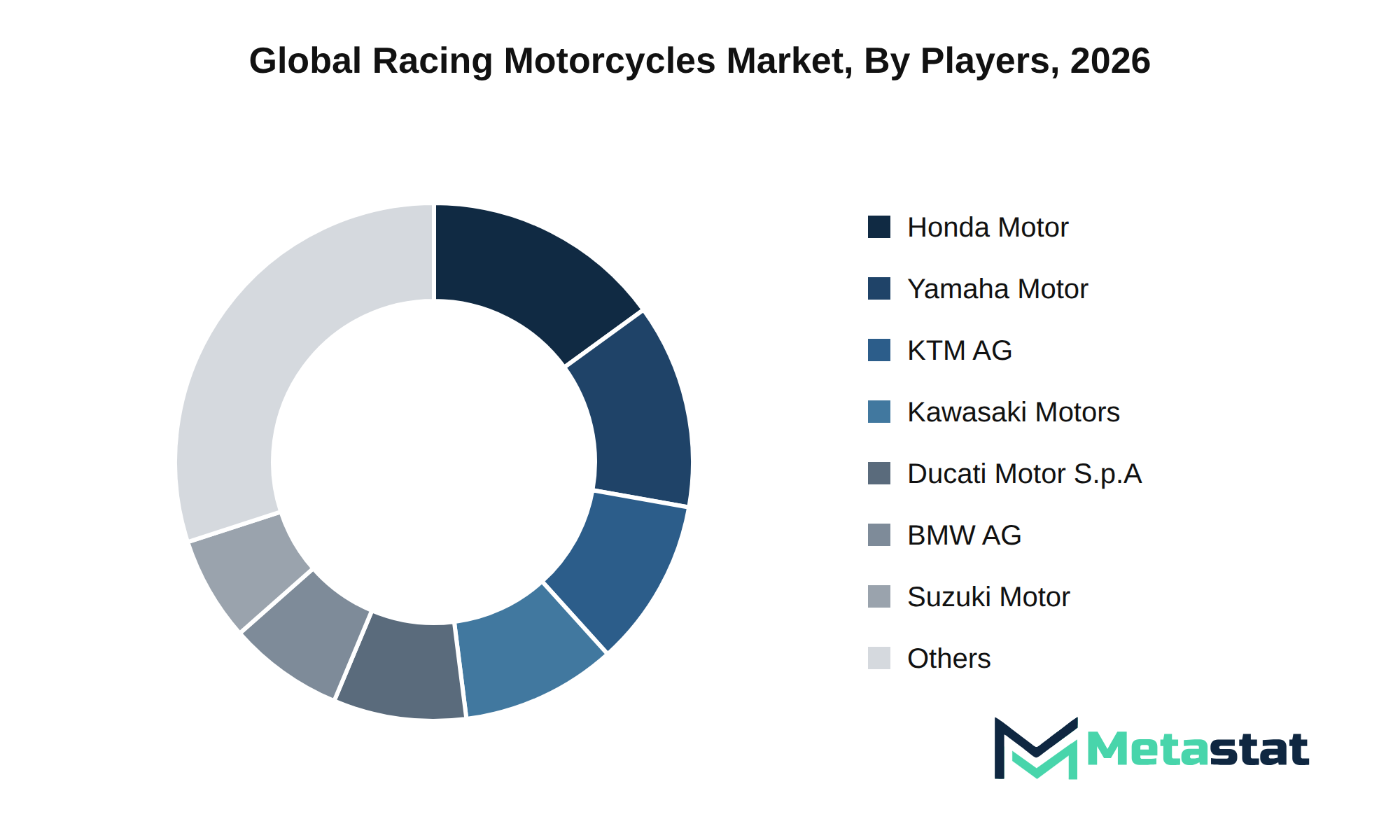
The Racing Motorcycles market features several prominent players that shape its competitive dynamics. Key participants include KTM AG, Honda Motor Co., Ltd., Yamaha Motor Co., Ltd., and Kawasaki Motors, Ltd. These companies leverage extensive product portfolios and established reputations to attract diverse customer segments, including professional racing teams and private racers.
Product differentiation remains a significant strategy within the market. Manufacturers like Ducati Motor Holding S.p.A., BMW AG, and Triumph Motorcycles Ltd. focus on developing high-performance models to cater to enthusiasts. Research and development pipelines emphasize innovation in technology and design, ensuring a competitive edge.
Strategic alliances and partnerships enhance market penetration. Companies including Husqvarna Mobility and GASGAS Motorcycles collaborate with regional distributors to optimize go-to-market strategies. This approach supports enhanced customer retention and improves brand equity, reinforcing their position in the Racing Motorcycles market.
The threat of new entrants poses challenges, particularly from startups focusing on electric propulsion systems and advanced technologies. Players including Stark Future S.L. and Electric Motion exemplify this trend, driving innovation while creating competitive pressure on established brands. The overall competitive environment remains dynamic, with ongoing restructuring and strategic growth influencing market evolution.
Market size is forecast to rise from USD 3,867.2 million in 2025 to over USD 6,306.6 million by 2033. The base case anticipates growth from USD 3,867.2 million in 2025 to USD 6,306.6 million by 2033 at a 6.3% CAGR. This growth trajectory aligns with the ongoing maturation of core industries and the integration of next-generation technology, which enhance performance and efficiency in the Racing Motorcycles market.
Downstream demand changes reflect evolving consumer preferences and increased participation in racing events, driving new interest in high-performance motorcycles. Strategic capital allocation directives by manufacturers emphasize investment in research and development efforts to create innovative products that cater to these demands.
Regulatory evolution in safety and environmental standards shapes the competitive landscape, presenting challenges and opportunities for market players. Compliance with imminent regulatory milestones requires agile adjustment of production and operational processes, influencing cost structures and pricing strategies.
Geopolitical realignments and shifts in global trade corridors impact supply chains, creating potential disruptions. Manufacturers focus on diversifying sourcing strategies and building resilient supply chains to mitigate risks associated with these changes.
Emerging white-space opportunities exist within the market owing to unmet enterprise needs growing, particularly in segments including electric racing motorcycles and eco-friendly propulsion systems. Identifying high-growth pockets remains vital for stakeholders aiming to capitalize on evolving market dynamics.
The report strategically identifies and profiles the key market players and analyses their core competencies in each sub-segment of the Racing Motorcycles market.
Report Attributes | Details |
Study Period | 2021-2033 |
Base Year | 2025 |
Estimated Year | 2026 |
Forecast Period | 2026-2033 |
Historical Period | 2021-2025 |
Growth Rate | CAGR 6.3% from 2026 to 2033 |
Revenue Unit | USD million |
Segmentation | By Motorcycle Type, Engine Capacity, Propulsion Type, End User, and Region |
By Region | North America (By Motorcycle Type, Engine Capacity, Propulsion Type, End User, and Country)
|
Europe (By Motorcycle Type, Engine Capacity, Propulsion Type, End User, and Country)
| |
Asia Pacific (By Motorcycle Type, Engine Capacity, Propulsion Type, End User, and Country)
| |
South America (By Motorcycle Type, Engine Capacity, Propulsion Type, End User, and Country)
| |
Middle East and Africa (By Motorcycle Type, Engine Capacity, Propulsion Type, End User, and Country)
|
Find answers to common questions about this report
The Racing Motorcycles market size was valued at USD 3,867.2 million in 2025.
The Racing Motorcycles market is projected to grow at a CAGR of 6.3% during the forecast period from 2026 to 2033.
The North America Racing Motorcycles market size is estimated to reach USD 1,383.7 million by 2033.
The Superbike segment leads the Racing Motorcycles market with a projected value of USD 1,078.4 million by 2033, based on its growth trajectory compared to other motorcycle types.
The Racing Motorcycles market experiences growth driven by increasing demand for high-performance motorcycles that comply with stringent emission standards. Regulatory pushes compel manufacturers to innovate, enhancing product offerings and attracting professional racing teams and private racers, thus expanding the customer base. The introduction of electric racing motorcycles aligns with the growing consumer preference for sustainability.
The Racing Motorcycles market faces significant challenges due to stringent regulatory compliance, which increases operational costs and limits competition, particularly for smaller manufacturers. Macroeconomic factors, including inflation, further strain profitability while supply chain disruptions create uncertainty, affecting production and pricing strategies. These combined pressures hinder market growth and innovation.
Increasing demand for high-performance motorcycles that comply with stringent emission standards drives product adoption. Manufacturers innovate their engines and designs to meet regulatory requirements, while advancements in technology enhance performance, attracting professional racing teams and private racers. The introduction of electric racing motorcycles aligns with consumer preferences for sustainability, further stimulating market interest.
The Racing Motorcycles market is estimated to reach a valuation of USD 6,306.6 million by 2033.
Key players operating in the Racing Motorcycles market include KTM AG, Honda Motor Co., Ltd., Yamaha Motor Co., Ltd., Kawasaki Motors, Ltd., Ducati Motor Holding S.p.A., BMW AG, and Triumph Motorcycles Ltd.
The Racing Motorcycles market is projected to grow at a compound annual growth rate of 6.3% from 2026 to 2033.
The analysts below cover Automotive and Transportation research at Metastat Insights.
LEAD ANALYST
Utkarsh Khirodkar is a Lead Market Research Analyst at MetaStat Insight, specializing in market intelligence, technology sector assessments, and competitive strategy.

ENERGY & INFRASTRUCTURE INDUSTRY CONSULTANT
Automotive and Transportation · Electronics and Semiconductor · Energy and Power · Machinery & Equipment
Saurabh Vasant Ganvir consults for Energy & Infrastructure Industry at MetaStat Insight, specializing in renewable energy, solar EPC, and electric vehicle (EV) infrastructure markets.
When evaluating distributed energy resource management systems, standard research summaries tend to gloss over the operational differences between front-of-the-meter utility deployments and behind-the-meter industrial sites. The MetaStat Insight report addressed those distinctions directly, especially regarding software interoperability standards and grid interconnection backlogs. The five-year market sizing across regional transmission organizations provided actionable context for our grid modernization strategy.
Most industry reports on warehouse automation bundle autonomous mobile robots and fixed conveyor installations into the same top-level numbers, which complicates advisory work. This study split the market cleanly by payload tiers, navigation technology, and fleet management software layers. The regional forecast for Western Europe gave our team defensible adoption benchmarks when evaluating capital allocation for logistics clients, saving us days of secondary data scrubbing.
Standard industry briefs frequently blur the operational distinctions between isobaric pressure exchangers and centrifugal turbines. In this study, MetaStat Insight categorized mega-scale desalination tenders across the GCC and Mediterranean basins by membrane replacement frequencies and salinity tolerances. Their primary research helped us evaluate local content requirements in Saudi Arabia and the UAE without relying on marketing literature. We found the segment-level equipment replacement estimates grounded and well-reasoned throughout.
Explore related market intelligence reports worth reading alongside this one.
Starting from
$2950