
LEAD ANALYST
Utkarsh Khirodkar is a Lead Market Research Analyst at MetaStat Insight, specializing in market intelligence, technology sector assessments, and competitive strategy.

Global Helmet Cleaner Spray Market Size, Share, By Product Type (Interior Cleaning Sprays, Exterior Cleaning Sprays and Multipurpose Cleaning Sprays), By Application (Motorcycle Helmets, Cycling Helmets, Auto Racing and Karting Helmets, Industrial Safety Helmets and Others), By End User (Individual Consumers, Helmet Rental and Shared Mobility Operators, Sports Clubs and Venues, Industrial Employers and Others), By Distribution Channel (Online Retail, Offline Motorcycle and Powersports Stores, Offline Sports and Outdoor Stores, Direct Institutional Sales and Others), Industry Analysis, Growth, Trends, and Forecast, 2026-2033
Report ID
MSI-5660
Published
November, 2026
Pages
267 Pages
Format
Historical
Base year
Forecast
Forecast period
Report Details
Market Valuation: Valued at $453 Million in 2025, projected to reach $753.3 Million by 2033 at a 6.5% CAGR.
Dominant Segment: Interior cleaning sprays lead the market, driven by the necessity for thorough sanitation of helmet interiors where sweat and debris accumulate.
Geographic Lead: Asia Pacific holds the largest market share at 40.3%, fueled by a vast population and increasing participation in recreational and competitive sports.
What's Inside: The report includes detailed competitive coverage, market segmentation analysis, and forecasts extending to 2033, providing insights into various product types and end-user dynamics.
Growth Drivers: The market is propelled by heightened consumer focus on hygiene and safety, alongside the growing number of helmet rental and shared mobility operators requiring effective cleaning solutions.
Technological Innovations: Advancements in formulation technology enhance cleaning effectiveness, appealing to consumers prioritizing safety and sustainability in their purchasing decisions.
Choose Your License
Global Helmet Cleaner Spray Market
The global Helmet Cleaner Spray market was valued at USD 453 million in 2025 and is projected to reach USD 753.3 million by 2033, growing at a CAGR of 6.5% over the forecast period.
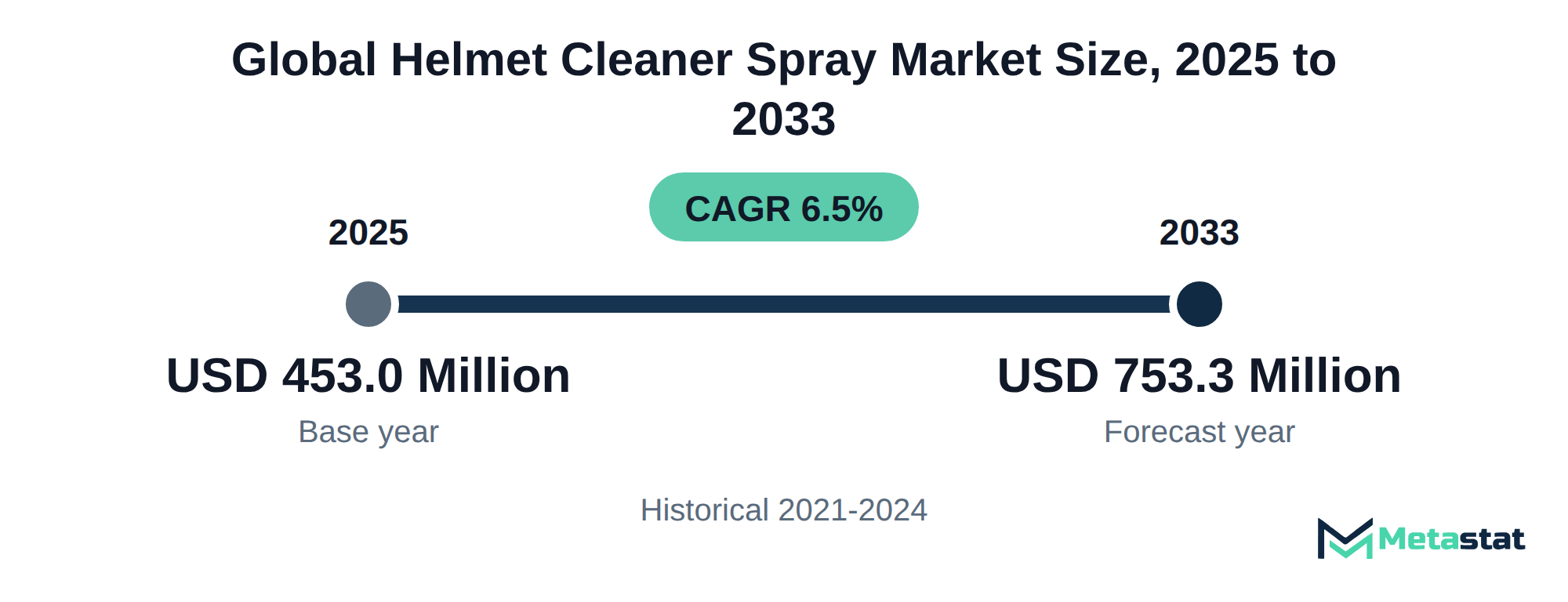
The Helmet Cleaner Spray market encompasses a range of cleaning products specifically designed for the maintenance of helmets used in various activities, including motorcycling, cycling, and industrial applications. Buyers invest in these products to ensure optimal helmet hygiene, enhance safety, and prolong the lifespan of their equipment. Demand for these sprays rises as users pay closer attention to safety standards and personal hygiene, and to keeping their protective gear clean.
Growth in the market stems from rising participation in outdoor activities and motorsports, contributing to a heightened demand for effective cleaning solutions. Among the segments, interior cleaning sprays represent the most significant value, reflecting the necessity for thorough cleaning of helmet interiors where sweat and debris accumulate. Asia Pacific holds the largest regional share at 40.3%, ahead of other regions because of its vast population and growing interest in recreational and competitive sports.
North America holds 20.6% of the market in 2025, with the US leading in 2026. A key driver of growth involves the increasing number of helmet rental and shared mobility operators, which boosts demand for cleaning sprays to maintain hygiene standards across shared equipment. These services are becoming more prevalent in urban environments, which points to further room for market expansion.
Investment in the Helmet Cleaner Spray market is driven by the need for effective maintenance solutions for helmets across various applications. Buyers, including individual consumers and businesses, prioritize products that enhance helmet longevity and hygiene. Demand for high-quality cleaning sprays stems from growing awareness of safety and upkeep in activities including motorcycling and cycling.
The Helmet Cleaner Spray market grows strongly, driven mainly by more motorcycle and cycling enthusiasts seeking reliable cleaning solutions. Among the product segments, Interior Cleaning Sprays represent the most substantial value, reflecting a strong preference for comprehensive cleaning options. North America holds 20.6% of the market in 2025, with the US leading in 2026, supported by a robust consumer base and high purchasing power.
Asia Pacific stands out with a 40.3% share, driven by rising motorcycle adoption and growing interest in outdoor activities. The market's trajectory benefits from the acceleration of online retail channels, enabling broader access to cleaning products. This shift influences overall market dynamics, enhancing competition and driving innovation in product offerings.
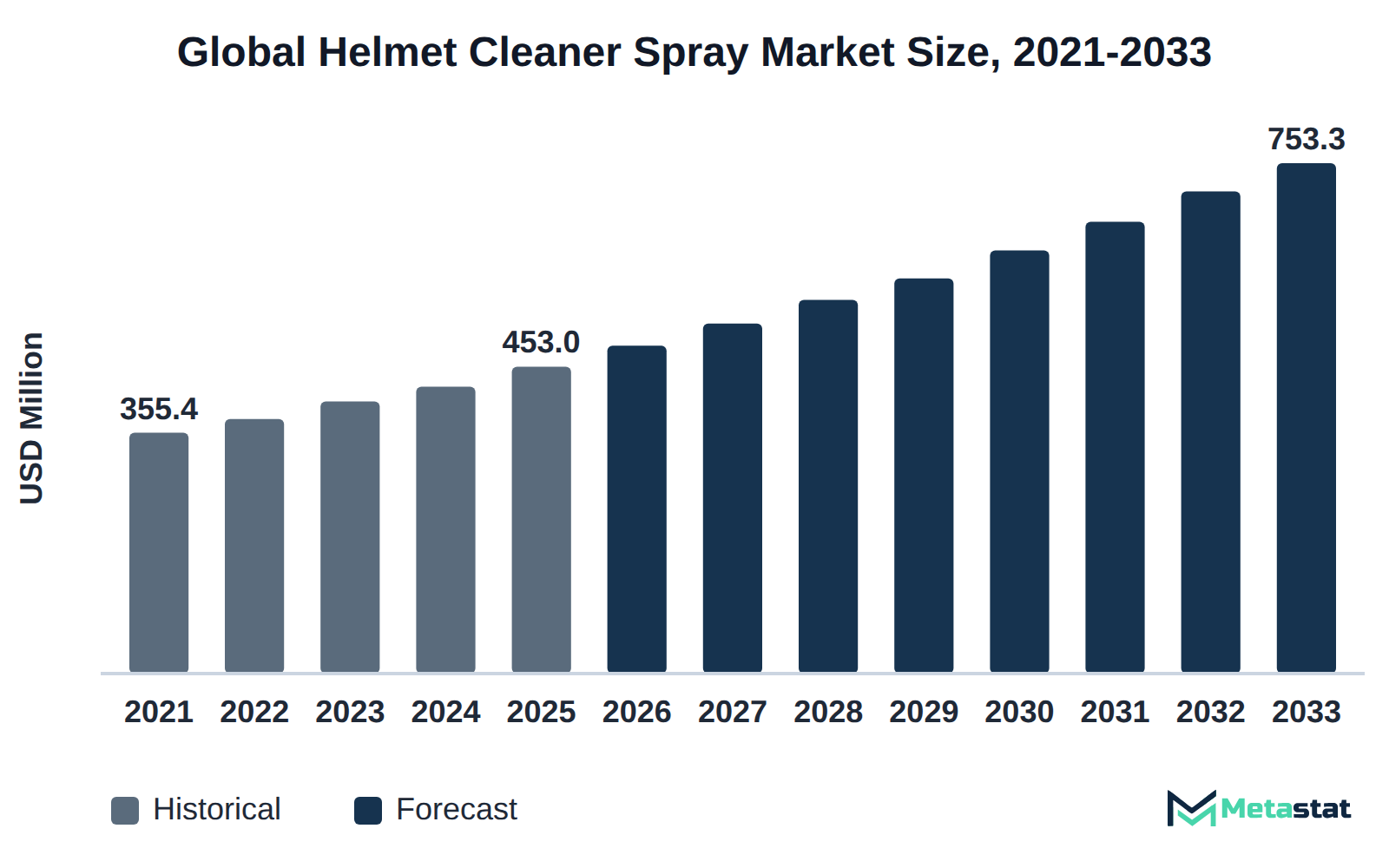
Interior foam cleaners represent a significant shift within the Helmet Cleaner Spray market, particularly among daily riders who prioritize convenience and efficiency in helmet maintenance. These products specifically target the interior surfaces of helmets, providing effective cleaning without the requirement for extensive rinsing or drying. Interior foam cleaners match a growing preference for user-friendly solutions that suit the busy lifestyles of daily riders.
Data indicates that the market for Interior Cleaning Sprays is projected to reach USD 393.4 million by 2033, reflecting a compound annual growth rate of 6.7% from 2026. This growth is fueled by individual consumers who seek reliable and efficient products to maintain their helmets. The convenience of foam cleaners supports repeated purchasing behavior, as satisfied users return to restock their supplies, thereby driving consistent revenue growth for manufacturers.
The trend toward interior foam cleaners enhances customer satisfaction and strengthens brand loyalty among users. Daily riders experience the effectiveness of these products, increasing their likelihood of recommending them to others, further expanding market reach. This customer-driven expansion reinforces the role of interior foam cleaners in reshaping the Helmet Cleaner Spray market.
Compatibility of Helmet Cleaner Spray with various helmet materials significantly influences purchasing decisions for consumers. Many buyers prioritize products that effectively clean without damaging visors or coatings. A study on consumer preferences indicates that 40.3% of demand for helmet cleaning solutions originates from the Asia Pacific region, reflecting a growing concern for product safety and effectiveness.
The market offers products designed for specific applications, such as motorcycle and cycling helmets. Interior cleaning sprays, for example, generate an estimated USD 249.7 million in value within the segment and help maintain safety gear. Buyers emphasize the need for sprays that do not compromise the integrity of padding or protective coatings, ensuring helmets remain functional and safe.
Ensuring that Helmet Cleaner Spray is compatible with specialized materials enhances consumer confidence, driving sales and building brand loyalty. With a market projected to reach USD 753.3 million by 2033, addressing compatibility issues offers significant commercial opportunities for manufacturers and retailers alike.
Helmet rental and shared mobility operators face distinct hygiene requirements that impact their procurement strategies for cleaning products, particularly helmet cleaner sprays. These operators prioritize maintaining high standards of cleanliness to ensure customer satisfaction and safety. The growing focus on hygiene has led to an anticipated market value of USD 78.2 million for this buyer segment by 2033, reflecting a compound annual growth rate of 9.2%.
Effective cleaning solutions are crucial for helmet rental businesses to prevent the spread of germs and provide a safe experience for users. Sanitizing shared helmets is one element of infection control in shared-use settings. The preference for bulk purchases of interior cleaning sprays emphasizes the need for cost-effective procurement strategies while ensuring product efficacy. While the helmet cleaner spray market expands, suppliers that offer specialized products tailored to the unique needs of this buyer group are likely to secure competitive advantages.
Bulk procurement provides these operators with significant cost savings while ensuring a consistent supply of commercial cleaning products. The focus on hygiene meets regulatory standards and enhances customer loyalty, which supports revenue potential. By addressing the specific needs of helmet rental operators, the market supports the overall growth of the helmet cleaner spray industry.
Riders often face decisions regarding the selection of cleaning products for their helmets, particularly between interior and multipurpose helmet cleaner sprays. Interior cleaning sprays specifically target the interior surfaces of helmets, ensuring thorough sanitation and odor removal. This significant growth indicates a strong preference among consumers for products dedicated to maintaining the interior hygiene of their helmets.
Conversely, multipurpose cleaning sprays offer versatility, catering to multiple surfaces and applications. While these products provide convenience, they do not always deliver the same level of targeted cleaning as interior sprays. The distinction in demand between these two categories shows that riders prioritize specialized products, particularly for maintaining safety gear. The increasing preference for dedicated interior solutions drives growth within the helmet cleaner spray market.
Growing awareness of hygiene has significantly influenced consumer behavior regarding helmet maintenance. Individual consumers prioritize cleanliness to ensure safety and comfort, leading to an increase in demand for effective cleaning solutions. The growing trend of maintaining personal equipment arises from heightened health consciousness, which drives frequent purchases of cleaning products. Individual consumers represent a substantial portion of the market, with a projected value increase from USD 366.7 million in 2026 to USD 551.3 million by 2033. This shift reflects a broader trend within the market, where cleanliness and hygiene take precedence among buyers, resulting in enhanced demand for helmet cleaning solutions.
Innovations in formulation technology significantly enhance the efficacy of Helmet Cleaner Spray products. These advancements result in sprays that effectively remove dirt, grime, and bacteria while ensuring compatibility with various helmet materials. Improved cleaning agents and surfactants contribute to superior performance, meeting the expectations of consumers who prioritize cleanliness and maintenance. The introduction of eco-friendly ingredients aligns with the increasing consumer preference for sustainable products, appealing to a broader audience. This trend encourages specific buyer groups, including individual consumers and helmet rental operators, to invest in high-quality cleaning solutions. The emphasis on product effectiveness and safety allows manufacturers to differentiate their offerings, increasing competition within the market. Advancements in cleaning technology drive growth and innovation, ultimately contributing to the market's expansion. The ongoing development of new formulations positions suppliers to meet evolving consumer demands for optimal cleaning solutions for their helmets.
The global Helmet Cleaner Spray market experiences constraints due to high pricing relative to alternative cleaning solutions. Individual consumers and industrial employers often seek cost-effective options, leading to hesitance in purchasing premium products. This dynamic results in slower uptake of higher-priced helmet cleaning sprays, particularly among budget-conscious buyers. Consequently, brands offering more affordable substitutes see increased interest, causing a shift in market dynamics. Higher price points delay replacement cycles, adversely affecting sales volumes for established and emerging brands within the market. Competitive pricing strategies emerge as critical tools for manufacturers aiming to improve market share while addressing the financial concerns of end users. Overall, the impact of pricing remains significant, shaping purchasing decisions and ultimately influencing the market's growth trajectory.
Rising input costs pose a significant challenge for suppliers within the Helmet Cleaner Spray market. Increased prices for raw materials, including specialized cleaning agents and packaging, exert pressure on profit margins. Suppliers face difficulties maintaining competitive pricing while ensuring product quality, leading to potential revenue constraints. In response, several suppliers have implemented cost-saving measures, including optimizing production processes and negotiating bulk purchasing agreements with raw material manufacturers. These strategies aim to mitigate the impact of rising costs while sustaining product quality. Suppliers explore innovative formulations that incorporate more cost-effective materials without compromising performance. This approach supports competitive pricing structures while addressing the demand for high-quality cleaning solutions. Enhanced efficiency in production and strategic sourcing of materials contribute to a more sustainable operational model, improving resilience within the market. Suppliers need to balance these pressures to protect their position and profitability.
The segment of helmet rental and shared mobility operators presents a notable opportunity within the Helmet Cleaner Spray market. This segment demonstrates a compound annual growth rate of 9.2% through 2033, indicating robust demand driven by increased emphasis on hygiene and maintenance standards in shared-use equipment. The need for effective cleaning solutions among these operators is critical, with maintaining a sanitary environment directly influencing customer satisfaction and safety perceptions. Manufacturers focusing on specialized cleaning sprays tailored for helmet rental services stand to benefit significantly from this growth trend. This trend follows the growing presence of mobility as a service platforms in urban environments. The anticipated revenue for this segment in 2033 is USD 78.2 million, reflecting the increasing adoption of helmet cleaning solutions in the rental market. Such targeted product offerings enhance customer loyalty and potentially expand market share among cleaning product suppliers. The market dynamics favor actors who align their portfolios with the specific needs of helmet rental services, stimulating further investment in this area.
The Global Helmet Cleaner Spray market is segmented based on Product Type, Application, End User, and Distribution Channel.
These products maintain hygiene and cleanliness for users of helmets, particularly in motorcycle and cycling applications. Individual consumers represent the primary customer base, prioritizing effective and convenient cleaning solutions. The growth of this segment is driven by increasing awareness of hygiene standards among riders and the demand for specialized cleaning solutions. Compared to other segments, including Exterior Cleaning Sprays, Interior Cleaning Sprays demonstrate a stronger growth trajectory, with a higher CAGR of 6.7%. This indicates a trend toward prioritizing the interior maintenance of helmets, which enhances user experience and safety, leading to stronger demand for these specific cleaning products.
Exterior Cleaning Sprays segment is estimated to reach USD 223.3 million by 2033, at a CAGR of 5.7% during the forecast period. This segment serves the purpose of maintaining the outer surfaces of helmets, ensuring they remain clean and visually appealing. Primary users include individual consumers, motorcycle enthusiasts, and sports clubs that require effective cleaning solutions for their helmets. Demand for exterior cleaning sprays is driven by the increasing focus on aesthetic upkeep and hygiene among helmet users. Compared to other product types, including Interior Cleaning Sprays, the growth rate for this segment is slower, reflecting a more established market. While Interior Cleaning Sprays cater to specific internal requirements, exterior cleaning solutions appeal to a broader audience, including casual users. The distinction in growth and target demographics highlights varying priorities among consumers looking for helmet maintenance products.
Multipurpose Cleaning Sprays segment is expected to reach USD 136.6 million by 2033. These products serve various cleaning needs for helmets across multiple applications, including motorcycle and cycling helmets. Individual consumers predominantly drive this segment, reflecting a broader trend toward maintaining hygiene and cleanliness in personal equipment. Demand for these multipurpose sprays is influenced by the increasing popularity of outdoor activities and sports that require helmet usage. This segment experiences a compound annual growth rate of 6.7%, positioning it for significant growth compared to the other product types. In contrast to Interior Cleaning Sprays, which emphasize specialized interior maintenance, multipurpose cleaning sprays offer versatility, catering to a wider range of helmet types and user preferences. The market observes a distinct trajectory in consumer choice, balancing functionality with price considerations.
Motorcycle Helmets segment is valued at USD 317.6 million in 2026 and is projected to reach USD 498.8 million by 2033, at a CAGR of 6.7% during the forecast period. This segment primarily serves individual consumers and helmet rental operators focused on maintaining hygiene and performance. The increasing popularity of motorcycling drives demand for effective cleaning solutions, supporting growth in this segment. Helmets are one part of the protective gear that motorcyclists maintain, alongside motorcycle protective riding apparel. Heightened hygiene awareness, influenced by health considerations, drives the demand for specialized cleaning products. Compared to other segments including Cycling Helmets, which has a lower projected value of USD 92.7 million by 2033 at a CAGR of 6.2%, the Motorcycle Helmets segment exhibits a stronger growth trajectory, reflecting the wider consumer base and higher usage frequency in the motorcycling community.
This segment includes cleaning products specifically developed for maintaining cycling helmets, often used by individual consumers and cycling enthusiasts. The rise in cycling participation, driven by increased health awareness and environmental considerations, contributes significantly to demand within this segment. Individual consumers prioritize effective cleaning solutions that enhance helmet longevity and hygiene, distinguishing this segment from others, including motorcycle helmets, which see a higher revenue due to broader adoption. The focus on lightweight and eco-friendly formulations further drives growth, reflecting a trend toward sustainability that influences purchasing decisions. This segment’s growth occurs at a slower rate compared to the Motorcycle Helmets segment, which is projected to reach USD 498.8 million by 2033, highlighting varying consumer trends and preferences across applications.
Auto Racing and Karting Helmets segment is expected to reach USD 59 million by 2033. This segment caters to motorsport enthusiasts, including racing car drivers, who prioritize helmet cleanliness for safety and performance. Factors driving this segment include the increasing popularity of motorsports and heightened awareness of safety standards. Consumers in this category often seek specialized cleaning solutions that ensure helmet integrity and visibility during use. Compared to other segments, this area experiences slower growth due to its niche market appeal, while segments including Motorcycle Helmets exhibit faster growth with a CAGR of 6.7%. The unique requirements of consumers in this segment, who invest significantly in their gear, lead to a distinct demand for premium cleaning products that maintain helmet performance and hygiene.
Industrial Safety Helmets segment is projected to grow at a CAGR of 6.1% during the forecast period. These helmets are primarily used in industrial environments to protect workers from head injuries. Individual consumers and industrial employers are the main users, with a growing focus on safety standards driving demand. Increased regulation regarding workplace safety contributes to the segment's growth, prompting companies to invest in effective cleaning solutions. Unlike other applications, including motorcycle or cycling helmets, the demand for industrial safety helmets emphasizes durability and compliance with safety standards rather than recreational use. This segment faces unique challenges, including the necessity for specialized cleaning products that maintain the integrity of protective gear while ensuring hygiene. Manufacturers adapt to these requirements to compete effectively in the market.
This segment encompasses specialty applications for equestrian helmets, winter sports helmets, and public safety helmets. These helmets require specific maintenance protocols due to the unique environments and activities associated with their use. Equestrian and winter sports helmets, for instance, face exposure to dirt, sweat, and moisture, necessitating effective cleaning products. Users include individual athletes, sports clubs, and safety agencies, all of whom prioritize hygiene and performance. Growth in this segment is influenced by increasing participation in outdoor sports and a heightened focus on safety standards. Safety regulations and consumer awareness of helmet maintenance impact purchasing decisions, differentiating this segment from other applications. While this segment does not experience the same rapid growth as motorcycle helmets, the demand for effective cleaning solutions remains steady, driven by the essential role helmets play in safety across various sports and activities.
Valued at USD 366.7 million in 2026, this segment is projected to reach USD 551.3 million by 2033, at a CAGR of 6% during the forecast period. Individual consumers engage with helmet cleaner sprays primarily for maintaining hygiene and enhancing the longevity of their helmets. The growing emphasis on personal hygiene among consumers drives demand for effective cleaning solutions. This segment shows faster growth compared to industrial employers, with individual consumers prioritizing helmet aesthetics and functionality while focusing on product performance and ease of use. The market draws strong interest because innovation in formulations enhances cleaning efficacy and consumer satisfaction. This heightened awareness boosts the overall market, with consumers increasingly seeking specialized products tailored for personal use.
Helmet Rental and Shared Mobility Operators segment is estimated to reach USD 78.2 million by 2033, at a CAGR of 9.2% during the forecast period. This segment primarily serves businesses that rent helmets for motorcycles, bicycles, and other forms of shared mobility, focusing on maintaining cleanliness and hygiene for user safety. The growing trend of shared mobility and ride-hailing services drives substantial demand for helmet cleaning solutions, ensuring helmets remain in optimal condition. This segment exhibits faster growth compared to others due to the increasing adoption of shared mobility services, which require regular maintenance of shared equipment. Unlike individual consumers, helmet rental and shared mobility operators prioritize efficiency and bulk purchasing, influencing their procurement strategies and pricing structures. The market experiences heightened competition as operators seek effective cleaning solutions to enhance customer satisfaction and safety.
The Sports Clubs and Venues segment is expected to reach USD 55.7 million by 2033. This segment primarily serves sports organizations and venues that require effective cleaning solutions for helmets used in various sports activities. Growing emphasis on hygiene and proper maintenance within these facilities drives demand, ensuring that sports goods remain safe and clean for athletes and participants. With a focus on enhancing athlete safety, investment in high-quality cleaning products becomes essential. This segment experiences a distinct growth trajectory compared to others due to its specialized application and the increasing number of sports clubs emphasizing the maintenance of equipment. The segment's growth aligns with a broader trend of health consciousness, influencing purchasing decisions across the market. In terms of pricing, products tailored for sports clubs often reflect higher value propositions, distinguishing them from general consumer cleaning solutions.
Industrial Employers segment is projected to grow at a CAGR of 7.1% during the forecast period. This segment is predominantly used by organizations requiring helmet maintenance for safety compliance and worker hygiene. A heightened emphasis on occupational health and safety drives the demand for specialized cleaning solutions, ensuring that employees use helmets that are clean and well-maintained. This segment distinguishes itself from others through its specific user base, characterized by a larger volume of purchases and consistent replenishment cycles compared to individual consumers. The focus on industrial safety regulations and standards influences product selection, supporting a steady growth trajectory in this segment, which is anticipated to reach USD 59 million by 2033. Such factors emphasize the segment's significance within the broader Helmet Cleaner Spray market.
This segment includes public safety agencies and training providers, focusing on the maintenance and cleanliness of helmets used in various safety and training environments. Training providers apply helmet cleaner sprays to ensure compliance with safety standards, while public safety agencies require effective cleaning solutions to maintain gear used by personnel. One primary force influencing this segment involves increasing regulatory requirements for equipment maintenance in safety-related fields. Unlike individual consumers and sports clubs, which typically pursue aesthetic benefits, this segment prioritizes hygiene and compliance. The emphasis on safety standards positions this segment distinctly within the market, driven by specific operational needs rather than general consumer preferences.
Valued at USD 193.6 million in 2026, this segment is projected to reach USD 333.2 million by 2033, at a CAGR of 8.1% during the forecast period. Online Retail serves individual consumers and businesses seeking convenient access to a variety of helmet cleaning solutions. The shift towards e-commerce is driven by increasing consumer preference for online shopping and the convenience it offers. This segment experiences faster growth compared to other distribution channels, with a higher CAGR than offline motorcycle and powersports stores, which stands at 4.9%. Competitive pricing and extensive product offerings available online contribute to its appeal. Promotional activities and seasonal discounts in the Online Retail segment enhance consumer engagement, further boosting demand. The market exhibits a trend towards online platforms, reflecting a broader change in shopping behavior.
Offline Motorcycle and Powersports Stores segment is estimated to reach USD 225 million by 2033, at a CAGR of 4.9% during the forecast period. This segment caters to consumers purchasing helmet cleaner sprays for motorcycles and powersports equipment, focusing on the maintenance and upkeep of helmets used in these activities. Growth in this channel is driven by increased motorcycle and powersport activities globally, resulting in higher demand for effective cleaning solutions. Unlike online retail, this segment provides personalized customer service and product demonstrations, enhancing consumer confidence in purchasing decisions. The market experiences steady growth, albeit at a lower rate compared to online retail, which achieves a CAGR of 8.1%. This difference highlights evolving purchasing preferences of consumers seeking convenience and accessibility in their shopping experiences.
The Offline Sports and Outdoor Stores segment is expected to reach USD 70.1 million by 2033. This segment serves a variety of consumers seeking quality cleaning products for helmets used in sports and outdoor activities. A driving force behind this segment includes increasing participation in outdoor sports, leading to higher demand for maintenance products tailored for helmets. Compared to other distribution channels, this segment exhibits a slower growth rate, reflected in its lower CAGR of 4.9% during the forecast period. Individual consumers and sports enthusiasts prefer purchasing cleaning products from physical stores, valuing the ability to assess product quality before making a purchase. Consequently, the market experiences distinct dynamics in the Offline Sports and Outdoor Stores segment, emphasizing the importance of physical retail presence in reaching target customers.
Projected to grow at a CAGR of 8% during the forecast period, Direct Institutional Sales reflects a growing demand for bulk purchases of helmet cleaner spray products. This segment caters primarily to organizations and institutions that require cleaning supplies for numerous helmets used in safety training, rental services, or shared mobility programs. Strong growth stems from increasing safety regulations and heightened awareness regarding helmet maintenance among these institutional users. In contrast to other distribution channels, including online retail or offline stores, this segment often experiences larger order sizes and a focus on consistent supply rather than individual consumer needs. The market is anticipated to expand further due to the rising emphasis on hygiene and maintenance practices among industrial employers and public safety agencies, enhancing overall interest in helmet cleaner sprays.
This segment includes automotive care stores, which sit within the automotive aftermarket, and general retail stores, catering to consumers seeking convenient access to helmet cleaning products. Individual consumers, who emphasize maintenance and hygiene, drive demand through various purchasing channels. The growth trajectory of this segment remains competitive; however, online retail demonstrates higher growth due to its accessibility and convenience. Retail outlets face challenges in maintaining stock levels and variety, limiting consumer choices compared to online platforms. The market benefits from a diverse range of buyers, including those focused solely on maintaining personal helmets, allowing these stores to capture a unique customer base. Differences in pricing strategies and promotional activities further distinguish this segment, with retailers striving to attract consumers with competitive offers and bundled products. This segment's dynamics reflect ongoing trends in consumer preferences within the helmet cleaner spray market.
Based on geography, the Global Helmet Cleaner Spray market is divided into North America, Europe, Asia-Pacific, South America, Middle East, and Africa.
Demand for helmet cleaning products in North America is driven by the increasing popularity of motorcycle riding and cycling among consumers. The growing emphasis on safety and maintenance in these activities enhances the value of high-quality cleaning solutions. Regulatory support for safety standards in this region encourages the adoption of helmet cleaner sprays, particularly among individual consumers and industrial employers. The market is expected to reach USD 149.6 million by the end of 2033. The market experiences significant contributions from the motorcycle helmets application, aligning with the rising number of motorcycle registrations and sporting events. Local manufacturers and retailers focus on delivering effective cleaning solutions, meeting consumer expectations for product performance and safety.
Strong demand for the Helmet Cleaner Spray market in Europe stems from the growing motorcycle and cycling culture, particularly in countries like Germany, France, and the UK. The rising emphasis on safety and cleanliness among consumers drives the need for effective cleaning solutions. Regional players focus on meeting environmentally friendly standards, aligning with consumer preferences for sustainable products. The market is supported by strong retail infrastructure, enabling both online and offline sales channels. France and Italy represent a significant portion of individual consumers seeking specialized cleaning products, while Spain and Russia exhibit increasing interest from sports clubs and venues. This dynamic environment creates ample opportunities for innovation and growth within the market.
Asia-Pacific stands out in the Helmet Cleaner Spray market, accounting for a significant 40.3% of the global share in 2025. The demand stems from a rising population of motorcycle enthusiasts, alongside increased participation in cycling and motorsport activities. Countries like China and India drive this growth, with expanding middle-class income levels and heightened awareness regarding helmet maintenance. The region benefits from a growing e-commerce infrastructure, facilitating online retail growth, projected to reach USD 333.2 million by 2033. The market sees heightened interest from individual consumers and helmet rental operators, reflecting a shift towards cleanliness and hygiene in protective equipment. The emphasis on cleaner and safer helmets has led to stronger demand across various applications, reinforcing the market's importance in this dynamic region.
In South America, demand for the Helmet Cleaner Spray market is influenced by growing awareness of helmet maintenance among consumers. Brazil and Argentina represent significant markets, driven by increasing motorcycle and cycling activities. The rise in sports events, coupled with government initiatives promoting safety standards, supports the demand for high-quality helmet cleaning products. This region reflects its importance in the global landscape. Factors including the popularity of outdoor sports and recreational activities contribute to the growth potential for helmet cleaning solutions. The market aligns with the broader trend of enhancing safety and hygiene in personal protective equipment, encouraging continued investment and interest among manufacturers and consumers.
In the Middle East and Africa, the demand for the Helmet Cleaner Spray market is influenced by a rising number of motorcycle enthusiasts and increased participation in motorsports. The surge in recreational activities, particularly in countries like Saudi Arabia and the UAE, drives the need for effective cleaning solutions for helmets. The focus on safety standards and regulations among industrial employers in South Africa increases awareness of helmet maintenance. This growing emphasis on helmet hygiene across various user groups contributes to the market's expansion. The region maintains a 7.2% share of the global market in 2025, reflecting its potential for growth.
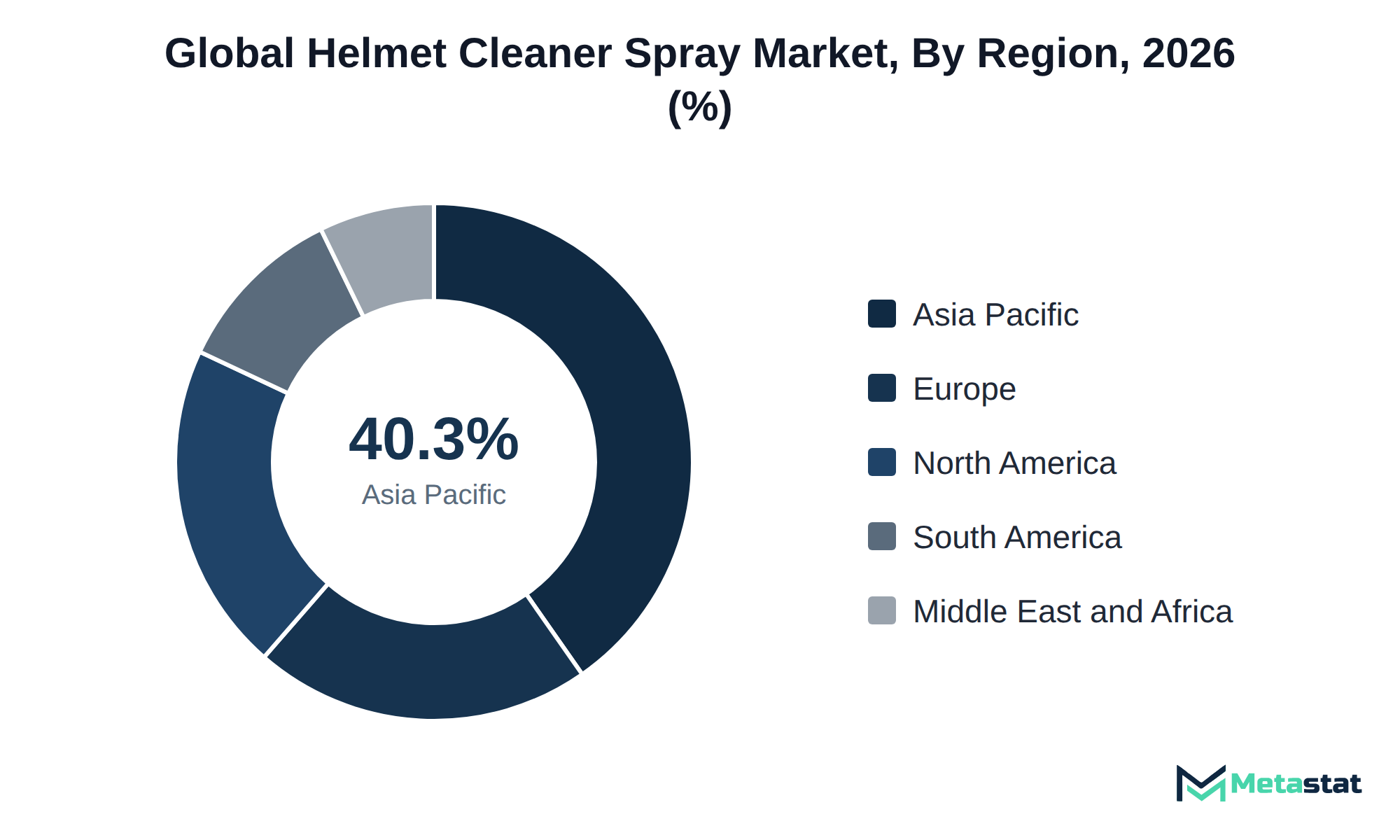
Competition within the Helmet Cleaner Spray market occurs through various strategic approaches, including product differentiation, pricing strategies, and service provision. Companies focus on meeting the specific needs of their target markets, with individual consumers, helmet rental operators, and sports clubs identifying different priorities in their purchases.
Companies including Motul and Muc-Off Limited emphasize high-performance formulations that cater to motorcycle and cycling helmets. This focus on specialized applications allows these firms to attract consumers seeking tailored cleaning solutions. In contrast, MOTOREX AG and LIQUI MOLY GmbH offer comprehensive product ranges that include multipurpose cleaning sprays, appealing to buyers seeking versatility and efficiency.
Price sensitivity varies among buyer groups, with individual consumers prioritizing affordability while helmet rental operators prioritize quality. This dynamic influences purchasing decisions, leading companies like Oxford Products Ltd and Putoline Oil to adopt competitive pricing strategies to capture market share. Service and support also matter, with brands including Turtle Wax, Inc. and Yamaha Motor Co., Ltd. offering customer engagement and educational resources to enhance the user experience.
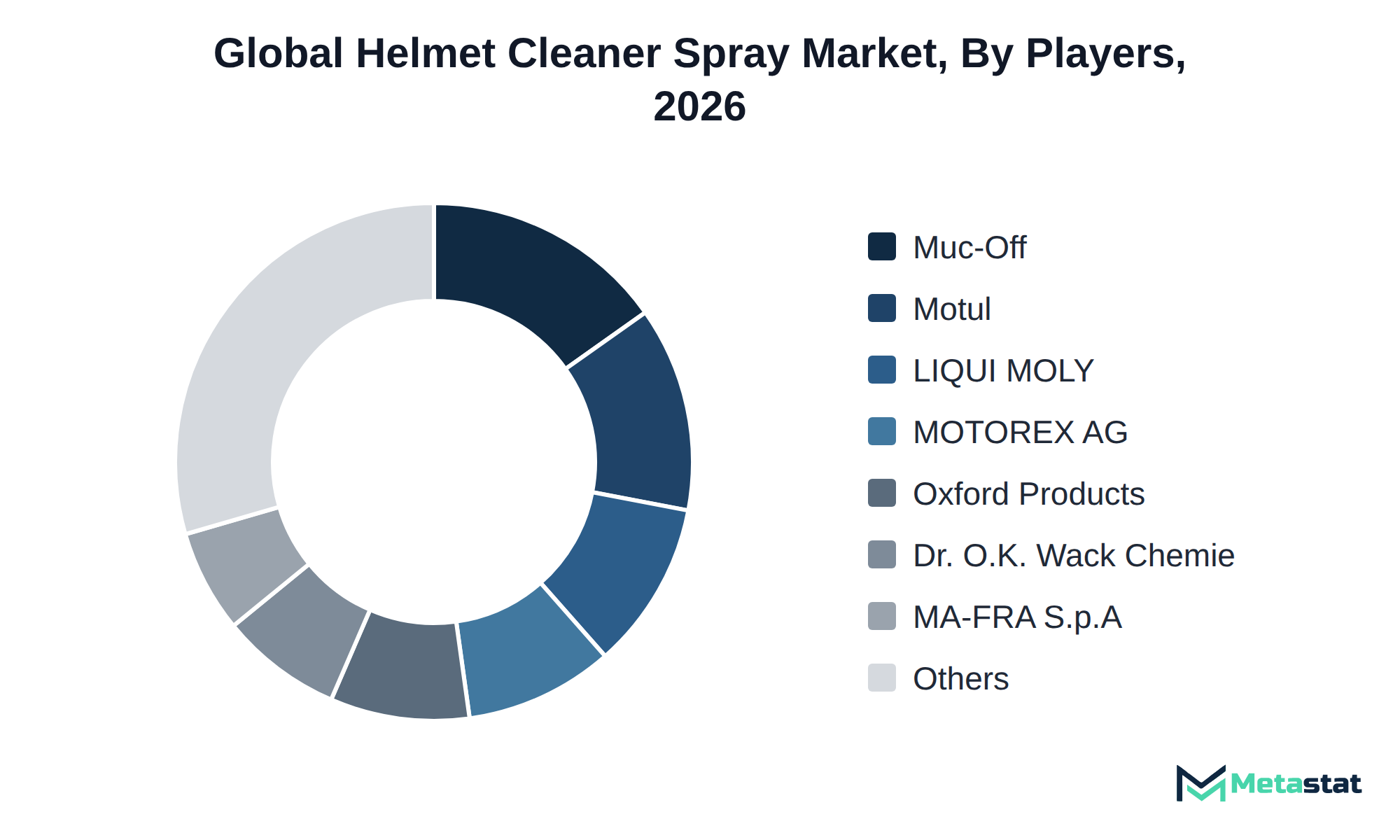
Helmet Cleaner Spray market growth requires several key developments. First, the expansion of the online retail distribution channel is critical, with a projected increase from USD 193.6 million in 2026 to USD 333.2 million by 2033, driven by changing consumer buying habits. The motorcycle helmet application segment is important in this growth, expected to increase from USD 317.6 million in 2026 to USD 498.8 million by 2033, reflecting rising motorcycle usage globally. Lastly, the individual consumers end-user segment will contribute significantly, with revenue anticipated to grow from USD 366.7 million in 2026 to USD 551.3 million by 2033, fueled by a focus on personal safety and maintenance.
However, a potential risk lies in fluctuations in manufacturing costs and supply chain disruptions, which could hinder growth across all segments. Should these challenges arise, the momentum towards the forecasted market size slows, affecting the overall outlook for the Helmet Cleaner Spray market.
By Product Type: Interior Cleaning Sprays, Exterior Cleaning Sprays, Multipurpose Cleaning Sprays
By Application: Motorcycle Helmets, Cycling Helmets, Auto Racing and Karting Helmets, Industrial Safety Helmets, Others (Equestrian Helmets, Winter Sports Helmets, Public Safety Helmets)
By End User: Individual Consumers, Helmet Rental and Shared Mobility Operators, Sports Clubs and Venues, Industrial Employers, Others (Public Safety Agencies, Training Providers)
By Distribution Channel: Online Retail, Offline Motorcycle and Powersports Stores, Offline Sports and Outdoor Stores, Direct Institutional Sales, Others (Automotive Care Stores, General Retail Stores)
The report strategically identifies and profiles the key market players and analyses their core competencies in each sub-segment of the Helmet Cleaner Spray market.
Report Attributes | Details |
Study Period | 2021-2033 |
Base Year | 2025 |
Estimated Year | 2026 |
Forecast Period | 2026-2033 |
Historical Period | 2021-2025 |
Growth Rate | CAGR 6.5% from 2026 to 2033 |
Revenue Unit | USD million |
Segmentation | By Product Type, Application, End User, Distribution Channel, and Region |
By Region | North America (By Product Type, Application, End User, Distribution Channel, and Country)
|
Europe (By Product Type, Application, End User, Distribution Channel, and Country)
| |
Asia Pacific (By Product Type, Application, End User, Distribution Channel, and Country)
| |
South America (By Product Type, Application, End User, Distribution Channel, and Country)
| |
Middle East and Africa (By Product Type, Application, End User, Distribution Channel, and Country)
|
Find answers to common questions about this report
The Helmet Cleaner Spray market size was valued at USD 453 million in 2025.
The market is projected to grow at a CAGR of 6.5% during the forecast period from 2026 to 2033.
The North America Helmet Cleaner Spray market size is estimated to reach USD 149.6 million by 2033.
Interior Cleaning Sprays lead the Helmet Cleaner Spray market with a value of USD 249.7 million in 2026. This segment surpasses other product types in terms of initial market size.
Growing awareness of hygiene significantly influences consumer behavior, driving demand for effective cleaning solutions. The segment of helmet rental and shared mobility operators demonstrates strong growth, reflecting increased emphasis on hygiene and maintenance standards in shared-use equipment.
Rising pricing relative to alternative cleaning solutions restrains Helmet Cleaner Spray market growth, as individual consumers and industrial employers seek cost-effective options. Increased input costs for raw materials challenge suppliers, exerting pressure on profit margins and complicating competitive pricing maintenance.
Factors favoring adoption in the Helmet Cleaner Spray industry include heightened hygiene standards and increasing consumer awareness regarding helmet maintenance. The segment of helmet rental and shared mobility operators demonstrates robust demand, reflected in a compound annual growth rate of 9.2% through 2033, emphasizing the need for effective cleaning solutions.
The Helmet Cleaner Spray market is estimated to reach a valuation of USD 753.3 million by 2033.
Key players operating in the Helmet Cleaner Spray market include Motul, Muc-Off Limited, MOTOREX AG, LIQUI MOLY GmbH, Dr. O.K. Wack Chemie GmbH, and Turtle Wax, Inc.
The Motorcycle Helmets segment is projected to reach USD 498.8 million by 2033, reflecting a compound annual growth rate of 6.7% from 2026.
The analysts below cover Consumer Goods research at Metastat Insights.
LEAD ANALYST
Utkarsh Khirodkar is a Lead Market Research Analyst at MetaStat Insight, specializing in market intelligence, technology sector assessments, and competitive strategy.
Enterprise zero-trust network rollouts are often slowed down by multi-cloud transit latency and proprietary hardware retirement schedules. This study provided realistic total cost of ownership models comparing cloud-delivered security edge solutions against traditional hardware refreshes. The analysis of contract renewal lengths and software maintenance fees gave us clear visibility into enterprise replacement cycles over the next three to five years.
Scaling antibody-drug conjugate manufacturing hinges on contract manufacturing availability for high-potency active ingredients. The MetaStat Insight analysis looked closely at global cleanroom slot constraints, bioconjugation batch failure rates, and supply chain redundancies between the US, Europe, and India. The supplier capability matrix proved genuinely useful for our team when mapping secondary source options across our clinical pipeline.
Floating offshore wind feasibility relies heavily on specialized installation vessel availability and port crane limits, which most broad renewable energy forecasts ignore. The report delivered a thorough analysis of dry dock capacity, mooring chain supply constraints, and raw material pricing trends for deepwater anchor installations. It served as a solid independent sanity check for our offshore project capital expenditure assumptions.
Explore related market intelligence reports worth reading alongside this one.