
LEAD ANALYST
Utkarsh Khirodkar is a Lead Market Research Analyst at MetaStat Insight, specializing in market intelligence, technology sector assessments, and competitive strategy.

Global Racing Cars Market Size, Share, By Vehicle Type (GT Racing Cars, Rally Racing Cars, Touring and One-Make Cup Cars, Sports Prototypes and Formula Race Cars), By Racing Class (GT3 / GT4 / GT2, Rally2 / Rally4, TCR / Touring Car, LMP / LMDh / Formula Junior), By Propulsion Type (Internal Combustion Racing Cars, Hybrid Racing Cars, Electric Racing Cars), By End User (Factory Racing Teams, Customer Racing Teams, Privateer / Gentleman Drivers, Racing Academies and Motorsport Clubs), Industry Analysis, Growth, Trends, and Forecast, 2026-2033
MSI-5459
October, 2026
299 Pages
Historical
Base year
Forecast
Forecast period
Report Details
Comprehensive Market Analysis And Insights
Market Valuation: Valued at $14.4 Billion in 2025, projected to reach $24.2 Billion by 2033 at a 6.7% CAGR.
Dominant Segment: GT Racing Cars lead the market, driven by strong demand for high-performance vehicles among factory and customer racing teams. This segment is projected to generate USD 5.4 billion in revenue by 2026.
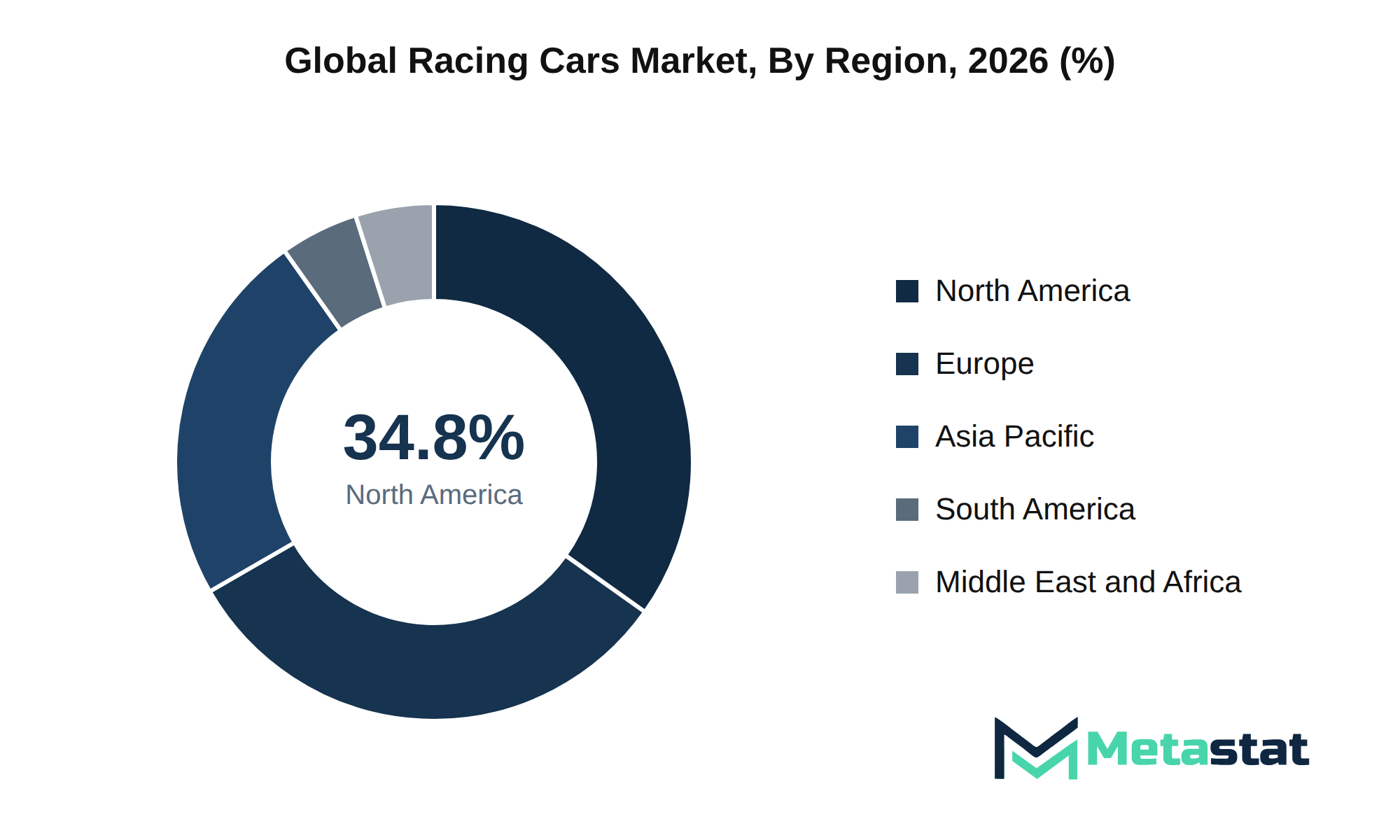
Geographic Lead: North America holds a significant market share of 34.8% in 2025, with the US expected to maintain its leadership in 2026 due to a robust motorsport culture and increased investment in racing events.
What's Inside: The report provides a comprehensive analysis of the Racing Cars market, including competitive coverage, detailed segmentation by vehicle type, racing class, propulsion type, and end user, along with a forecast window extending to 2033.
Emerging Growth in Hybrid Racing Cars: The hybrid racing car segment is projected to grow at a CAGR of 12.3%, reflecting a shift towards sustainable racing practices and increasing interest from factory and customer racing teams.
Supply Chain Bottlenecks: Factory racing teams face challenges due to supply chain bottlenecks in sourcing bespoke racing components, which are projected to generate USD 7.7 billion by 2033, impacting operational efficiency.
The global Racing Cars market was valued at USD 14.4 billion in 2025 and is projected to reach USD 24.2 billion by 2033, growing at a CAGR of 6.7% over the forecast period.
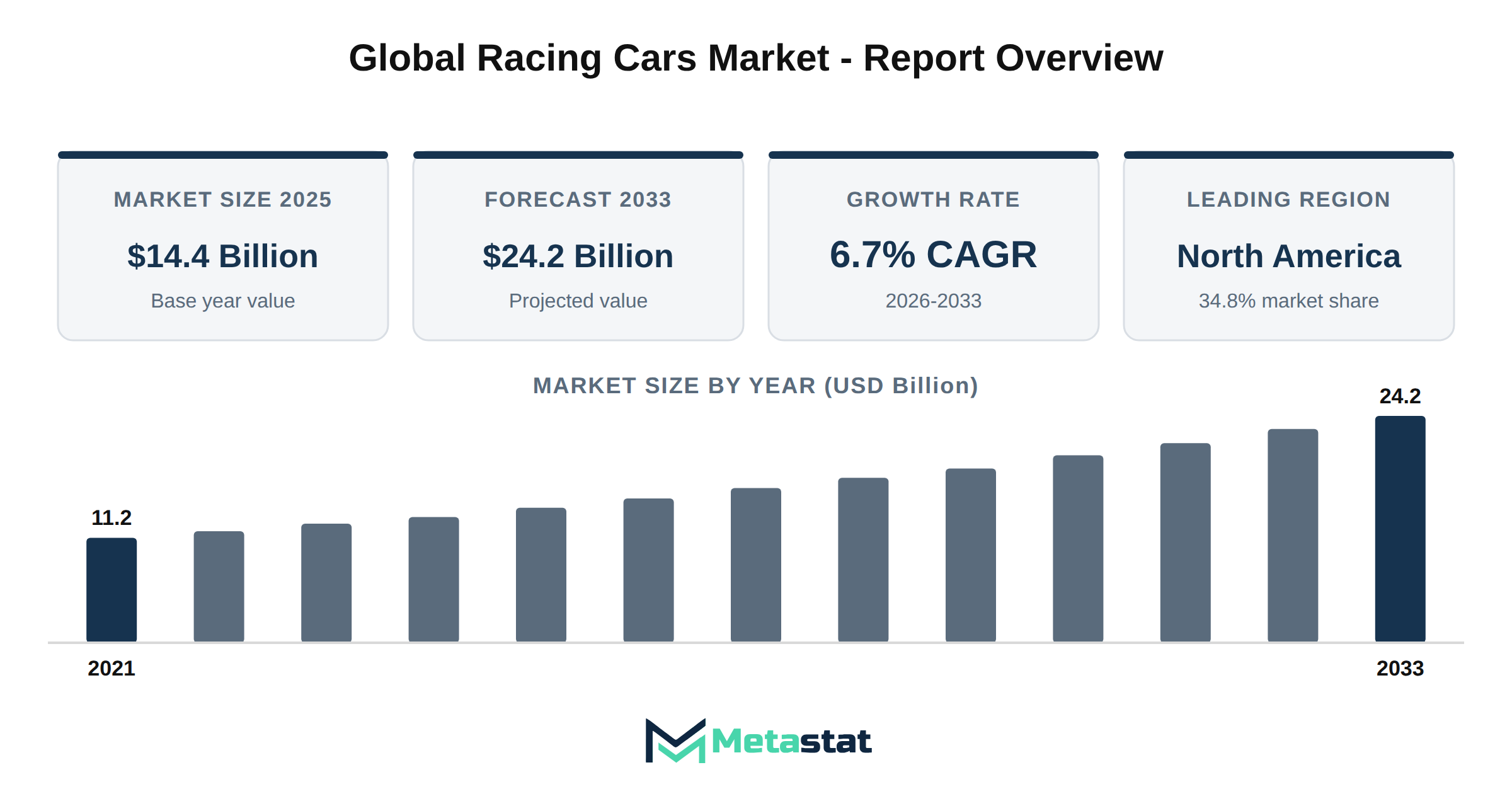
The Racing Cars market encompasses a wide range of vehicles specifically designed for competitive racing, including various vehicle types, racing classes, propulsion types, and end users. Buyers engage in this market due to the demand for high-performance racing cars that enhance competitive edge in motorsports. The market has experienced a steady increase in spending driven by the growing popularity of motorsports and the need for advanced technology in racing vehicles. This sustained demand directly influences specialized component sectors, including the automotive racing tires sector that equips high-downforce circuit and rally vehicles.
Growth is driven by increasing investment in motorsport events and the rising number of amateur racing enthusiasts seeking to participate in competitive racing. GT Racing Cars represent the segment with the most value, highlighting a strong preference for this type of vehicle within the market alongside sophisticated vehicle networking architectures such as the automotive central gateway module. North America holds 34.8% of the market in 2025, with the US leading in 2026. This regional dominance reflects the significance of motorsport culture in this area, where both professional and amateur racing events flourish.
The market is expected to experience robust expansion, fueled by advancements in technology and the introduction of innovative racing vehicles. The growing adoption of hybrid and electric racing cars reflects changing consumer preferences toward sustainability and performance. Increased participation from various racing teams and organizations further contributes to the growth trajectory of the Racing Cars market. These teams increasingly depend on specialized structural advancements provided by the broader automotive composite sector to achieve critical weight savings.
The Racing Cars market features vehicles optimized for various competitive racing formats, attracting diverse buyers, including factory teams, customer teams, and privateer drivers. Investments in this market stem from increasing interest in motorsport, technological advancements, and the thrill of competition. Buyers prioritize performance and innovation, fueling demand for high-quality racing vehicles equipped with an advanced automotive engine management system that enhances their competitive edge.
Growth in the market is driven primarily by the rising popularity of GT racing cars, which is expected to capture significant market share. This region's strong motorsport culture, combined with robust sponsorship and investment, supports the expansion of racing car activities and related events, contributing to overall market growth. Vehicle constructors in these regions leverage high-tolerance automotive parts aluminium die casting for durable, lightweight powertrain and structural housings.
Rapid advancements in propulsion technology characterize the market, particularly in hybrid and electric racing cars integrating a specialized high voltage battery management system. These innovations attract environmentally conscious buyers and organizations striving for sustainability in motorsport. Consequently, investments in the Racing Cars market are projected to increase, promoting further development and diversity within the industry.
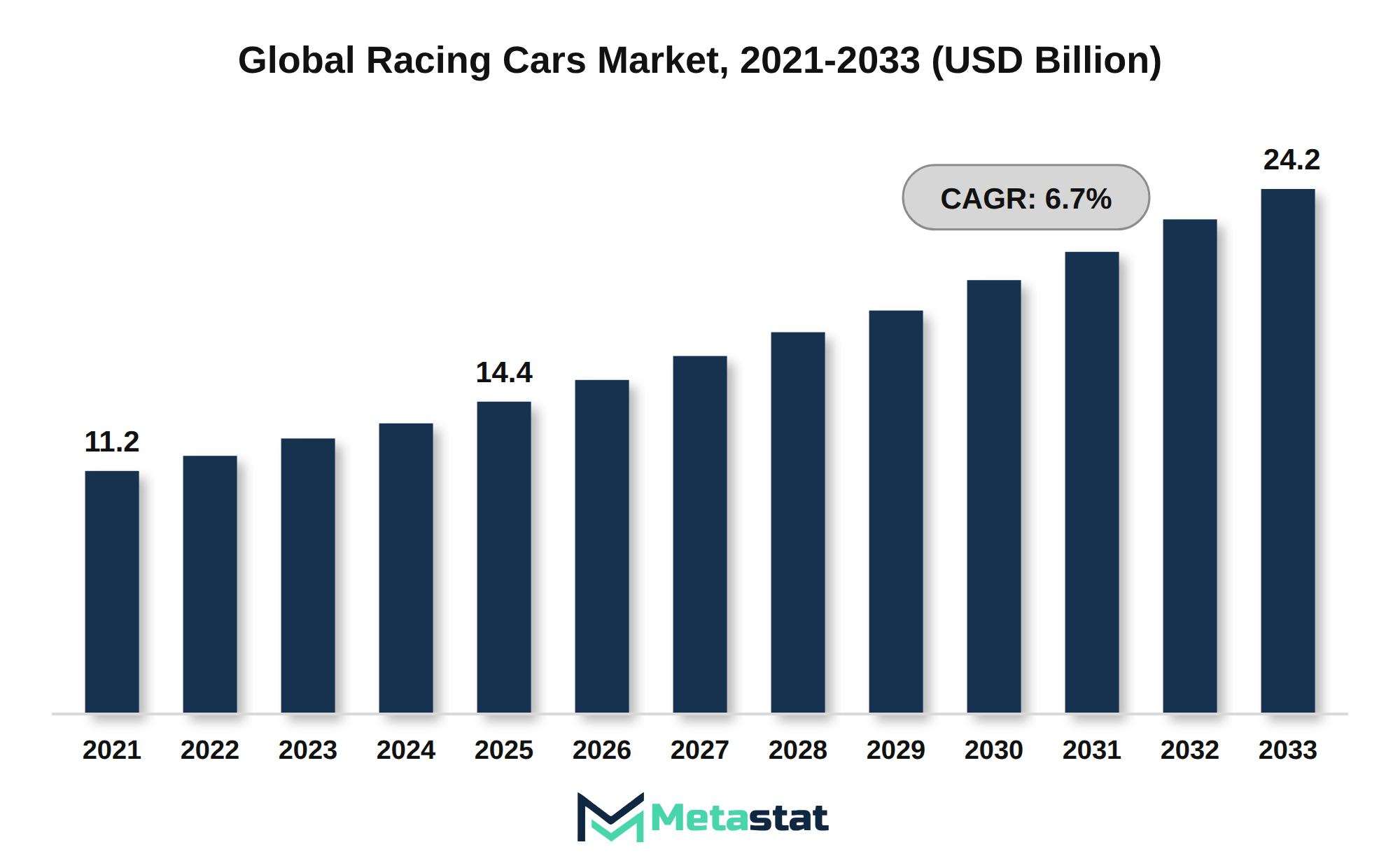
Electrification is reshaping the dynamics of the Racing Cars market, particularly through the integration of hybrid powertrains within professional motorsport series. This shift is driven by increasing regulatory pressures and consumer demand for sustainable solutions, compelling racing teams to adopt hybrid technologies. The segment for hybrid racing cars is projected to achieve a compound annual growth rate of 12.3%, reflecting a strong trend towards electrified performance in racing environments. This momentum mirrors broader conversion initiatives across the automotive retrofit electric vehicle powertrain space as classic and cup categories explore electric conversions.
The adoption of hybrid powertrains enables teams to enhance performance while reducing emissions, aligning with broader automotive industry trends. This transition not only meets regulatory requirements but attracts a new generation of motorsport fans who prioritize environmental responsibility. Factory racing teams that implement these advanced powertrains are expected to expand their investment in such technologies, particularly advanced battery management system hardware, to maintain competitive advantages in various racing classes.
With the anticipated value of hybrid racing cars reaching USD 6.5 billion by 2033, the commercial implications are significant for stakeholders throughout the Racing Cars market. Teams investing in hybrid technology position themselves favorably for sponsorships and audience engagement, reflecting a proactive approach to evolving market expectations.
Investment in carbon composite chassis technologies significantly influences the Racing Cars market. This advancement enables manufacturers to produce lighter and more durable vehicles, enhancing performance and safety. The shift towards these materials reflects a broader trend in the automotive industry, where lightweight construction is crucial for competitive edge. In 2026, GT Racing Cars are projected to generate USD 5.4 billion in revenue, demonstrating a clear demand for innovative vehicle types that leverage advanced materials.
The adoption of lightweight aerodynamic engineering further drives market dynamics. Enhanced aerodynamics improves speed and fuel efficiency, appealing to both professional racing teams and private customers. Innovations in this area attract buyers seeking competitive advantages and influence pricing strategies throughout the market. With an anticipated CAGR of 6.7% from 2025 to 2033, manufacturers investing in these technologies stand to benefit commercially, aligning their offerings with evolving consumer preferences and regulatory standards.
The increasing demand for bespoke racing components directly impacts the operational efficiency of factory racing teams. The complexity involved in sourcing specialized parts, including custom chassis and aerodynamic kits, leads to significant delays. Factory racing teams are projected to generate revenue of USD 7.7 billion by 2033, reflecting a strong growth trajectory driven by competitive racing events and technological advancements in vehicle design.
Challenges arise from reliance on a limited number of suppliers for high-performance components. Disruptions in these supply chains create bottlenecks that impede timely assembly operations at racetracks. Consequently, racing teams experience higher costs and extended lead times, which adversely affect their performance in critical racing seasons. This market is characterized by a critical need for streamlined logistics to ensure teams maximize their competitive edge. Addressing these supply chain issues enhances operational efficiency and ultimately drives profitability for racing teams.
Recent trends in sustainable e-fuels and FIA regulations significantly influence the development of racing cars. The push for eco-friendly alternatives arises from increasing environmental concerns and consumer demand for greener options. Sustainable e-fuels represent a viable pathway to reduce carbon emissions in the racing sector, while adhering to FIA regulations enhances competitiveness without compromising performance. For instance, hybrid racing cars, which fall under the propulsion type segment, are projected to reach a total value of USD 6.5 billion by 2033, reflecting a compound annual growth rate of 12.3%. This trend indicates a strong market shift towards hybrid technology, driven by regulatory frameworks aimed at promoting sustainability in motorsport.
The transformation towards sustainable racing options not only meets regulatory requirements but addresses the expectations of a growing eco-conscious audience. Racing teams investing in hybrid technology and e-fuels capture new market segments seeking both performance and sustainability in their racing experiences. The evolving landscape of the racing cars market emphasizes innovation in propulsion technologies that align with FIA regulations, creating opportunities for manufacturers and teams to enhance their competitive edge while catering to a more environmentally aware fan base.
The Racing Cars market experiences growth due to the increasing focus on emission limits across various racing events. This heightened awareness among racing organizations and teams drives investment in vehicles that comply with environmental standards and appeal to environmentally conscious consumers. The shift towards closed-loop systems, which efficiently manage emissions and enhance overall vehicle performance, further supports the transition to high-performance racing cars with minimal environmental impact. Manufacturers actively develop racing cars that integrate advanced technologies focused on emissions reduction. This trend enhances the market's competitiveness, leading to a surge in demand for innovative racing solutions that align with sustainability goals.
Several industry players are adapting to these changes, pushing the boundaries of performance while adhering to stricter emission regulations. The implementation of these technologies positions the market for long-term growth, attracting new buyers interested in sustainable racing. This dynamic environment encourages collaboration among manufacturers and teams to develop effective solutions that address both performance and environmental concerns.
Increasing costs associated with high-performance components challenge customer racing teams and privateer drivers in the Racing Cars market. The financial burden of acquiring advanced technologies, including hybrid powertrains and lightweight materials, restricts the ability of these buyers to invest. This situation leads to smaller order sizes and delayed purchasing decisions, which affects overall market dynamics. The competitive nature of racing events requires continual investment in vehicle upgrades, further compounding financial pressures. Buyers often reconsider their participation or scale back their investments due to these rising costs, influencing the pace of market growth. Several privateer drivers, typically operating on tighter budgets, face constraints that limit their engagement with new racing technologies. The combined effect of these financial challenges contributes to slower adoption rates and hampers the market's development trajectory.
Competitive dynamics within the Racing Cars market create significant challenges for suppliers, resulting in margin pressure. Heightened competition among manufacturers drives prices downward, forcing suppliers to reevaluate their pricing strategies. This situation compels producers to enhance operational efficiency while managing production costs. Investment in advanced manufacturing technologies serves to streamline processes, thereby reducing waste and improving profit margins. Suppliers are integrating automation and digital technologies to enhance productivity and reduce reliance on labor-intensive processes. This shift addresses the rising operational costs driven by skilled labor shortages and fluctuating component prices. Suppliers are diversifying their product offerings to cater to a broader range of customers, including factory teams and privateers, to maintain revenue streams. The evolving landscape of competition necessitates that firms remain agile and responsive to market demands, ensuring sustainable growth within this challenging environment.
The hybrid racing car segment exhibits the highest growth potential within the market, driven by increasing interest in sustainable racing practices. Factory racing teams and customer racing teams prioritize hybrid options due to their performance advantages and environmental benefits, aiming to align with global sustainability trends. Hybrid vehicles offer improved efficiency and reduced emissions, appealing to buyers focused on modern racing ethics. This demand shift highlights the opportunity for manufacturers to innovate and expand their hybrid offerings, positioning themselves competitively within the evolving landscape. The market's focus on hybrid technology presents significant revenue potential, enhancing overall growth prospects.
The Global Racing Cars market is segmented based on Vehicle Type, Racing Class, Propulsion Type, and End User.
GT Racing Cars segment is valued at USD 5.4 billion in 2026 and is projected to reach USD 8.7 billion by 2033, at a CAGR of 7% during the forecast period. These vehicles are primarily used by factory racing teams and customer racing teams, competing in events designed for high-performance racing. Increased investment in technology and driver development across various racing leagues drives demand for these cars. This segment experiences higher growth compared to others, including Rally Racing Cars, which exhibits a CAGR of 5.6%. Competitive pricing of GT Racing Cars attracts a broader range of buyers, including privateer and gentleman drivers, contributing to the increasing volume of sales in the market. Enhanced aerodynamics and lightweight materials further distinguish these cars, supporting their appeal in competitive environments.
Rally Racing Cars segment is estimated to reach USD 5.1 billion by 2033, at a CAGR of 5.6% during the forecast period. This segment is used by customer racing teams and privateers, allowing drivers to compete in events that test their skills against various surfaces and conditions. The growing popularity of rally sports drives demand, attracting enthusiasts and new participants. Compared to other vehicle types in the market, including GT Racing Cars, this segment experiences slower growth, reflecting a more niche audience. Rally Racing Cars often feature different technology adaptations, focusing on durability and versatility, which distinguishes them from other racing vehicles. The unique challenges presented by rally racing require specialized engineering, contributing to its overall appeal and investment in this segment.
The Touring and One-Make Cup Cars segment is expected to reach USD 4.4 billion by 2033. This segment includes vehicles designed for specific racing series, often featuring uniform specifications across competitors. It serves factory racing teams and customer racing teams seeking competitive and cost-effective options. Growth in this segment is driven by increasing participation in one-make cup events, which attract both novice and experienced drivers. The segment's performance will differ from GT Racing Cars, which have a higher CAGR of 7% due to broader appeal and advanced technologies. Touring and One-Make Cup Cars present a more accessible entry point for teams focused on building skills without the high costs associated with more sophisticated racing vehicles. This differentiation supports steady demand while maintaining competitive pricing in the market.
Sports Prototypes and Formula Race Cars segment is projected to grow at a CAGR of 8.2% during the forecast period. This segment attracts interest from professional teams competing in prestigious racing events, emphasizing speed and advanced engineering. The rapid evolution of automotive technology influences this segment, particularly with enhancements in aerodynamics and lightweight materials. Factory racing teams invest heavily to achieve competitive advantages, leading to increased vehicle performance, while customer racing teams seek innovations to improve their racing experiences. Compared to other vehicle types, the Sports Prototypes and Formula Race Cars segment experiences higher growth rates, driven by demand for advanced technology and performance. In contrast, segments like Touring and One-Make Cup Cars exhibit slower growth, appealing to a different audience focused on cost efficiency and accessibility. The dynamics within the Racing Cars market highlight diverse needs of buyers across the various segments.
GT3 / GT4 / GT2 segment is valued at USD 5.9 billion in 2026 and is projected to reach USD 9.4 billion by 2033, at a CAGR of 7% during the forecast period. These vehicles are used primarily in endurance racing and touring car competitions, appealing to factory racing teams and professional racing organizations. Increasing investments in performance enhancements and regulatory compliance drive growth within this segment. A focus on delivering competitive advantages through advanced technologies differentiates GT3 / GT4 / GT2 vehicles from others in the market, making them a preferred choice for competitive racing. With a robust CAGR of 7%, this segment outpaces several others, highlighting its significance in overall market expansion.
This segment caters to a specific audience of motorsport enthusiasts and teams looking for vehicles designed for rally competitions. Increasing interest in competitive rally events drives demand, especially among customer racing teams and privateers. Compared to other segments, the Rally2 / Rally4 category features a more affordable entry point, appealing to a broader range of buyers. This segment's growth rate of 5.5% positions it slightly behind the more rapidly expanding GT3 / GT4 / GT2 segment, which shows a CAGR of 7%. Regulatory influences and advancements in rally vehicle technology impact performance and efficiency, contributing to sustained interest in this area of the market.
TCR / Touring Car segment is expected to reach USD 4 billion by 2033. This category serves competitive racing teams and private drivers who participate in touring car events. Growth is driven by the increasing popularity of touring car championships and advancements in vehicle technology. The segment experiences a CAGR of 7.9%, making it one of the faster-growing areas within the market. Compared to other racing classes, TCR vehicles are typically more accessible for private drivers and customer racing teams, enhancing their appeal. This accessibility, combined with a focus on performance and affordability, differentiates TCR from higher-priced categories including GT racing. The market benefits from ongoing enhancements in vehicle specifications and designs tailored to meet competitive standards.
LMP / LMDh / Formula Junior segment is projected to grow at a CAGR of 7.9% during the forecast period. This segment caters to factory racing teams and customer racing teams, focusing on performance in endurance racing and formula competitions. Demand for these vehicles increases due to advancements in engineering and technology, enhancing speed and efficiency on the track. While regulations tighten around emissions and performance standards, manufacturers invest in innovative designs and materials to comply, securing a competitive edge. Differentiating this segment from others is its higher growth rate relative to traditional racing classes, fueled by rising interest from enthusiasts and professional teams aiming for greater performance. The segment is anticipated to reach significant valuation by 2033, reflecting its strong position within the market.
Internal Combustion Racing Cars segment is valued at USD 10.7 billion in 2026 and is projected to reach USD 14 billion by 2033, at a CAGR of 4% during the forecast period. This segment serves competitive racing teams and enthusiasts who prioritize traditional performance characteristics. Ongoing demand for high-performance internal combustion engines in motorsport supports this segment, driven by a preference for established technology despite increasing regulatory pressures for sustainability. Compared to the hybrid and electric racing cars segments, internal combustion racing cars exhibit slower growth and maintain a loyal customer base that values performance metrics and traditional appeal connecting with specific racing classes. While hybrid racing cars are expected to grow at a CAGR of 12.3%, the internal combustion segment's growth trajectory reflects a stable, albeit less aggressive, market presence in the evolving landscape of the Racing Cars market.
This segment is used by various racing teams and organizations looking to enhance performance while minimizing environmental impact. Increasing regulations surrounding emissions and sustainability are significant factors driving growth within this segment. Compared to Internal Combustion Racing Cars, which grow at a slower pace of 4%, Hybrid Racing Cars exhibit faster growth, reflecting a shift in buyer preferences toward eco-friendly racing alternatives. Customer racing teams are showing increasing interest in hybrid technologies, which enable improved fuel efficiency and performance on the track. The combination of technological advancements and regulatory pressures positions this segment favorably within the broader racing cars market.
Electric Racing Cars segment is expected to reach USD 2.9 billion by 2033. This segment caters to a growing interest in environmentally friendly racing options, appealing to factory racing teams, customer racing teams, and private drivers. Increasing awareness of sustainability in motorsport drives demand for electric vehicles. Technological advancements contribute significantly to growth, with manufacturers focused on developing high-performance electric racing solutions. The segment exhibits a higher growth rate compared to others, driven by a CAGR of 12.3%, reflecting dynamic shifts in consumer preferences and regulatory pressures in the market. Unlike traditional internal combustion racing cars, electric racing cars emphasize reduced carbon emissions and improved energy efficiency, providing a distinct advantage in aligning with modern sustainability goals.
Others is projected to grow at a CAGR of 6.7% during the forecast period. This segment caters to a niche within the racing arena, attracting enthusiasts and smaller teams seeking alternatives to conventional propulsion methods. Increased focus on innovation in racing technology drives the segment, reflecting a growing interest in diverse propulsion types beyond traditional solutions. Regulatory shifts favoring sustainability play a role in shaping demand for this segment. Compared to hybrid and internal combustion racing cars, the Others segment appeals to a unique buyer base, often involving experimental or custom-built vehicles. These vehicles typically command lower prices but offer opportunities for personalization and unique performance characteristics, contributing to the evolving dynamics of the racing cars market.
Factory Racing Teams segment is valued at USD 5.2 billion in 2026 and is projected to reach USD 7.7 billion by 2033, at a CAGR of 5.9% during the forecast period. This segment involves professional racing teams that operate factory-backed cars, focusing on competitive motorsport events. Factory Racing Teams typically engage in series that demand high-performance vehicles, attracting sponsorships and partnerships from automotive manufacturers. Growth in this segment is driven by increased investment in motorsport initiatives and a rising interest in performance engineering, enhancing the competitive edge. The Factory Racing Teams segment experiences slower growth compared to others in the market, primarily due to higher operational costs associated with maintaining factory-supported vehicles. This segment distinguishes itself by appealing to large automotive brands, leading to different pricing strategies than those employed by customer racing teams or privateers.
Customer Racing Teams segment is estimated to reach USD 9.7 billion by 2033, at a CAGR of 7.9% during the forecast period. This segment caters to private individuals or small teams that participate in racing events, enhancing their competitive presence. Growth in this segment is driven by increased participation in amateur racing events and the rising popularity of motorsport among enthusiasts. Compared to Factory Racing Teams, Customer Racing Teams typically operate on tighter budgets, influencing their purchasing decisions and vehicle specifications. This segment experiences faster growth relative to Privateer / Gentleman Drivers, who focus more on personal enjoyment rather than competitive success. The market for Customer Racing Teams seeks vehicles that balance performance and affordability, resulting in unique dynamics that differentiate it from the other segments in this group.
Privateer / Gentleman Drivers segment is expected to reach USD 4.8 billion by 2033. This segment includes individuals who participate in racing events either independently or through smaller teams. These drivers seek competitive, yet affordable options for racing, setting their budgets in a way that distinguishes them from larger factory teams. Growth in this segment is attributed to increasing interest in grassroots motorsport and the expansion of amateur racing leagues. A CAGR of 7.9% highlights its growth potential compared to other segments, driven by a rising number of enthusiasts engaged in competitive racing activities. Price-sensitive dynamics create a different purchasing behavior, focusing on value and performance over high-end specifications. Competitive pricing strategies from manufacturers will play a significant role in shaping the choices of Privateer / Gentleman Drivers, contributing to the evolving landscape of the racing cars market.
The Racing Academies and Motorsport Clubs segment is projected to grow at a CAGR of 6.7% during the forecast period. This segment caters to aspiring drivers and motorsport enthusiasts, providing training and resources to develop skills and compete in various racing events. Increasing interest in motorsport and performance driving fuels demand, with individuals seeking formal education and experience in a structured environment. Compared to other end-user segments, this category exhibits slower growth due to encompassing a narrower audience. While Factory and Customer Racing Teams focus on competitive performance and vehicle optimization, Racing Academies and Motorsport Clubs emphasize skill development and entry-level participation, leading to differences in pricing and investment. The market's expanding interest in motorsport contributes to heightened activity within this segment, ensuring ongoing investment and engagement from participants.
Based on geography, the Global Racing Cars market is divided into North America, Europe, Asia-Pacific, South America, Middle East, and Africa.
North America displays a strong demand for high-performance vehicles, driven by a strong motorsport culture and a growing interest in competitive racing activities. Countries including the United States, Canada, and Mexico contribute significantly to this landscape, with investments in infrastructure and events that encourage participation in various racing formats. The increasing popularity of GT and rally racing contributes to a robust market environment, particularly among factory and customer racing teams. North America is projected to reach USD 8 billion by the end of 2033, reflecting a solid growth outlook within the racing cars market. The region holds a significant share of the global market in 2025, highlighting its importance as a center for innovation and competition in motorsport.
Significant growth in the Racing Cars market stems from strong participation in motorsports throughout Europe. Countries including Germany, France, the UK, Italy, and Spain contribute to a strong racing culture that drives demand for high-performance vehicles. Regulation and investment in motorsport infrastructure further support the market's expansion, enabling teams and manufacturers to invest in advanced technologies. Prominent racing series in Europe, including Formula 1 and World Rally Championship, highlight the region's competitive landscape. The combination of established automotive manufacturers and enthusiastic customer racing teams creates a robust environment for innovation and growth.
Demand for racing cars in Asia-Pacific benefits from a growing interest in motorsport among younger audiences, particularly in countries including China and India. Increased participation in racing events and the rise of motorsport academies stimulate investment from both factory and customer racing teams. The region's share of the global racing cars market stands at 23.5% in 2025. Infrastructure development for racing tracks and facilities enhances opportunities for events and competitions, leading to higher demand for various racing segments. Regulatory support for local motorsports events has created a competitive environment, attracting international manufacturers looking to enter or expand within the market. Countries in Southeast Asia experience a surge in grassroots racing initiatives, contributing to a strong racing culture. Overall, these factors create a promising environment for growth in the racing cars market in Asia-Pacific.
Growing interest in competitive racing activities drives demand in South America, particularly in Brazil and Argentina. The Racing Cars market benefits from a rising number of racing events and increased participation at various levels, encouraging both local and international manufacturers to invest. The region's share of the global market reflects a developing motorsport culture. Enthusiasts and private teams seek opportunities to participate in racing events, contributing to market dynamics. The need for enhanced racing infrastructure and support for grassroots motorsport initiatives creates potential for growth. Investments in technology and vehicle development align with regional objectives to promote motorsport, while local manufacturers expand their offerings to cater to the increasing interest in racing. This environment creates opportunities for collaboration between racing organizations and educational institutions, ultimately enhancing the prospects for the Racing Cars market.
Growth in the region stems from a strong motorsport culture, particularly in Saudi Arabia and the UAE, where investments in racing infrastructure support increased participation in competitive racing events. The establishment of motorsport academies and training programs aims to nurture local talent, increasing the appeal of racing cars within the market. South Africa contributes to demand through its rich motorsport heritage, generating interest in various racing formats. The market's share stands at 4.9% of the global total in 2025, reflecting a solid foundation for future expansion. Strategic partnerships with international racing teams enhance exposure and improve local engagement in the motorsport sector. Customer racing teams represent a growing demographic, driven by the excitement of competitive events and the opportunity for personal involvement in racing.
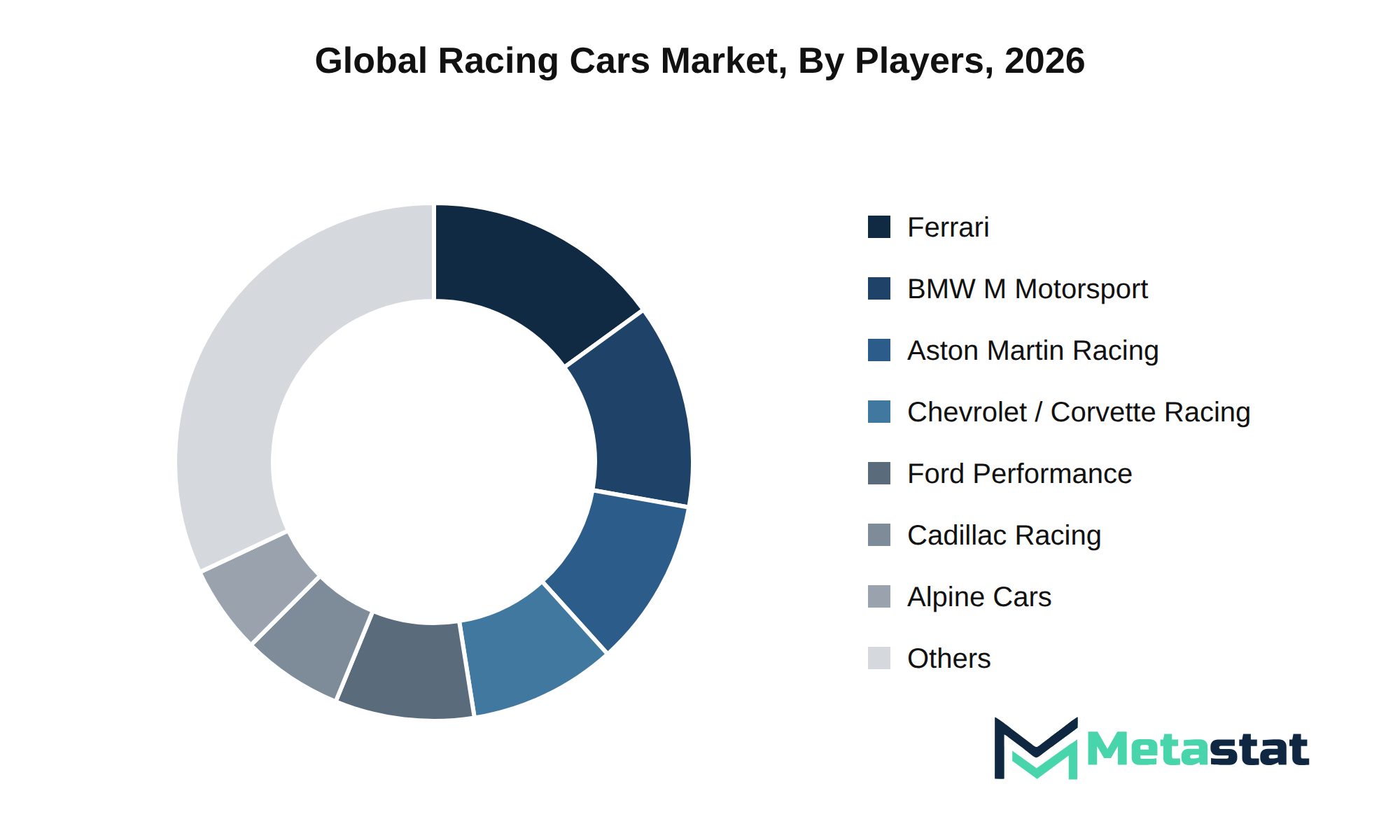
Companies in the Racing Cars market employ various strategies to differentiate themselves. Pricing remains a crucial factor, with buyers seeking competitive options across different vehicle types and racing classes. Customization options and performance certifications attract buyers focused on specific racing requirements. For instance, Mercedes-AMG emphasizes high-performance vehicles tailored for competitive racing, while Ferrari centers on luxury and performance capabilities.
Buyer preferences shape the competitive dynamics within the market. Factory racing teams prioritize manufacturers offering comprehensive support services and advanced technology. In contrast, customer racing teams focus on vehicles with high resale value and customization flexibility. Toyota GAZOO Racing exemplifies this by providing vehicles that appeal to both professional teams and individual racers, while Ford Performance highlights affordability alongside performance enhancements tailored for various racing events.
To achieve this target, significant developments in the racing cars market will take place. The expansion of hybrid racing cars, projected to reach USD 6.5 billion by 2033, significantly contributes to driving overall market growth. The increasing popularity of GT Racing Cars, with an anticipated growth to USD 8.7 billion during the same period, supports demand from factory racing teams and customer racing teams alike. However, potential risks, including economic downturns affecting discretionary spending on motorsports, could hinder revenue growth. A decline in consumer interest, particularly in North America and Europe, where the market holds significant shares, could pose challenges to achieving the projected figures. Therefore, sustained interest in high-performance and electric racing cars is essential for the market's future outlook.
By Vehicle Type: GT Racing Cars, Rally Racing Cars, Touring and One-Make Cup Cars, Sports Prototypes and Formula Race Cars
By Racing Class: GT3 / GT4 / GT2, Rally2 / Rally4, TCR / Touring Car, LMP / LMDh / Formula Junior
By Propulsion Type: Internal Combustion Racing Cars, Hybrid Racing Cars, Electric Racing Cars, Others
By End User: Factory Racing Teams, Customer Racing Teams, Privateer / Gentleman Drivers, Racing Academies and Motorsport Clubs
The report strategically identifies and profiles the key market players and analyses their core competencies in each sub-segment of the Racing Cars market.
|
Report Attributes |
Details |
|
Study Period |
2021-2033 |
|
Base Year |
2025 |
|
Estimated Year |
2026 |
|
Forecast Period |
2026-2033 |
|
Historical Period |
2021-2025 |
|
Growth Rate |
CAGR 6.7% from 2026 to 2033 |
|
Revenue Unit |
USD billion |
|
Segmentation |
Vehicle Type, Racing Class, Propulsion Type, End User |
|
By Region |
North America (By Vehicle Type, Racing Class, Propulsion Type, End User, and Country)
|
|
Europe (By Vehicle Type, Racing Class, Propulsion Type, End User, and Country)Germany
|
|
|
Asia Pacific (By Vehicle Type, Racing Class, Propulsion Type, End User, and Country)
|
|
|
South America (By Vehicle Type, Racing Class, Propulsion Type, End User, and Country)Brazil
|
|
|
Middle East and Africa (By Vehicle Type, Racing Class, Propulsion Type, End User, and Country)
|
Find answers to common questions about this report
The Racing Cars market size was valued at USD 14.4 billion in 2025.
The market is projected to grow at a CAGR of 6.7% during the forecast period from 2026 to 2033.
The North America Racing Cars market size is estimated to reach USD 8 billion by 2033.
GT Racing Cars lead the Racing Cars market with a projected value of USD 8.7 billion by 2033, reflecting the highest growth among the vehicle type segments. This segment exhibits a compound annual growth rate of 7 percent during the forecast period.
The Racing Cars market experiences growth due to the increasing focus on emission limits across various racing events. The hybrid racing car segment exhibits the highest growth potential, driven by increasing interest in sustainable racing practices.
North America holds the dominant share of the Racing Cars market, with a value of USD 8 billion projected for 2033. This region accounts for 34.8 percent of the total market share.
Increasing costs associated with high-performance components challenge customer racing teams and privateer drivers. The financial burden of acquiring advanced technologies restricts buyers' ability to invest, leading to smaller order sizes and delayed purchasing decisions.
Factors favoring adoption in this industry include the increasing focus on sustainable racing practices and the demand for improved efficiency and reduced emissions. The hybrid racing car segment is projected to reach USD 6.5 billion by 2033, reflecting a growing interest among buyers in aligning with modern racing ethics.
The Racing Cars market is estimated to reach a valuation of USD 24.2 billion by 2033.
Key players in the Racing Cars market include Alpine Cars, Aston Martin Racing, BMW M Motorsport, Ferrari, Ford Performance, McLaren Motorsport, Porsche Motorsport, and Toyota GAZOO Racing.
Choose Your License
Global Racing Cars Market
The analysts below cover Automotive and Transportation research at Metastat Insights.
LEAD ANALYST
Utkarsh Khirodkar is a Lead Market Research Analyst at MetaStat Insight, specializing in market intelligence, technology sector assessments, and competitive strategy.

ENERGY & INFRASTRUCTURE INDUSTRY CONSULTANT
Automotive and Transportation · Electronics and Semiconductor · Energy and Power · Machinery & Equipment
Saurabh Vasant Ganvir consults for Energy & Infrastructure Industry at MetaStat Insight, specializing in renewable energy, solar EPC, and electric vehicle (EV) infrastructure markets.
Floating offshore wind feasibility relies heavily on specialized installation vessel availability and port crane limits, which most broad renewable energy forecasts ignore. The report delivered a thorough analysis of dry dock capacity, mooring chain supply constraints, and raw material pricing trends for deepwater anchor installations. It served as a solid independent sanity check for our offshore project capital expenditure assumptions.
Assessing commercial microgrid software adoption requires looking past top-level installation numbers and examining utility interconnection queues. The research provided verifiable data on average permitting timelines, tariff structures, and battery storage integration costs across regional utility territories. That grounded perspective was valuable for our team when building five-year demand projections for industrial microgrid controllers.
Ambulatory surgical centers have very different purchasing cycles for robotic-assisted surgery platforms than major hospital networks. The MetaStat Insight study focused squarely on capital expenditure depreciation, procedural reimbursement pathways, and surgeon training overhead. That operational clarity made it much simpler to validate multi-year procedure growth forecasts against actual ambulatory center adoption patterns.
Explore related market intelligence reports worth reading alongside this one.
Starting from
$2950