
LEAD ANALYST
Utkarsh Khirodkar is a Lead Market Research Analyst at MetaStat Insight, specializing in market intelligence, technology sector assessments, and competitive strategy.

Global Automotive Central Gateway Module Market Size, Share, By Type (Ethernet Central Gateway Module, CAN Central Gateway Module, LIN Central Gateway Module, FlexRay and Multi-Protocol Central Gateway Modules), By Vehicle Type (Passenger Cars and Commercial Vehicles), By Application (Powertrain Control, Body Control, Infotainment System and Advanced Driver Assistance Systems), By Propulsion Type (Internal Combustion Engine Vehicles, Hybrid Electric Vehicles and Battery Electric Vehicles), Industry Analysis, Growth, Trends, and Forecast, 2026-2033
Report ID
MSI-2852
Published
September, 2026
Pages
294 Pages
Format
Historical
Base year
Forecast
Forecast period
Report Details
Market Valuation: Valued at $1,427.8 Million in 2025, projected to reach $2,743 Million by 2033 at a 8.5% CAGR.
Dominant Segment: The Ethernet Central Gateway Module segment leads the market, driven by the increasing complexity of vehicle architectures that demand efficient data handling and communication.
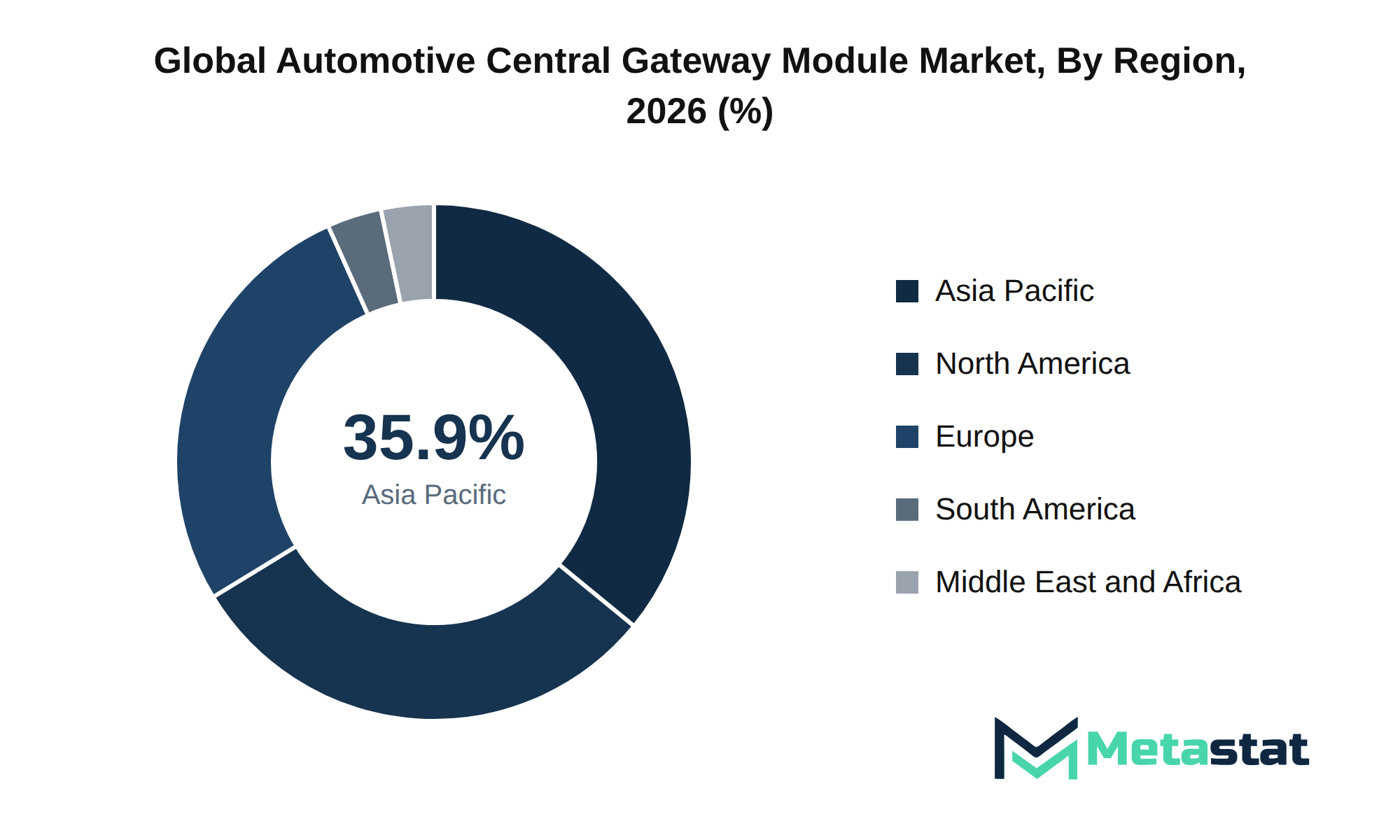
Geographic Lead: Asia Pacific is the leading region in automotive production, significantly contributing to the demand for central gateway modules due to rising vehicle electrification initiatives.
What's Inside: The report provides comprehensive coverage of market segmentation by type, vehicle type, application, and propulsion type, along with competitive analysis and strategic insights.
Emerging Trends: The market is poised for growth due to trends such as increased vehicle electrification and the integration of advanced connectivity solutions, which reshape industry dynamics.
Choose Your License
Global Automotive Central Gateway Module Market
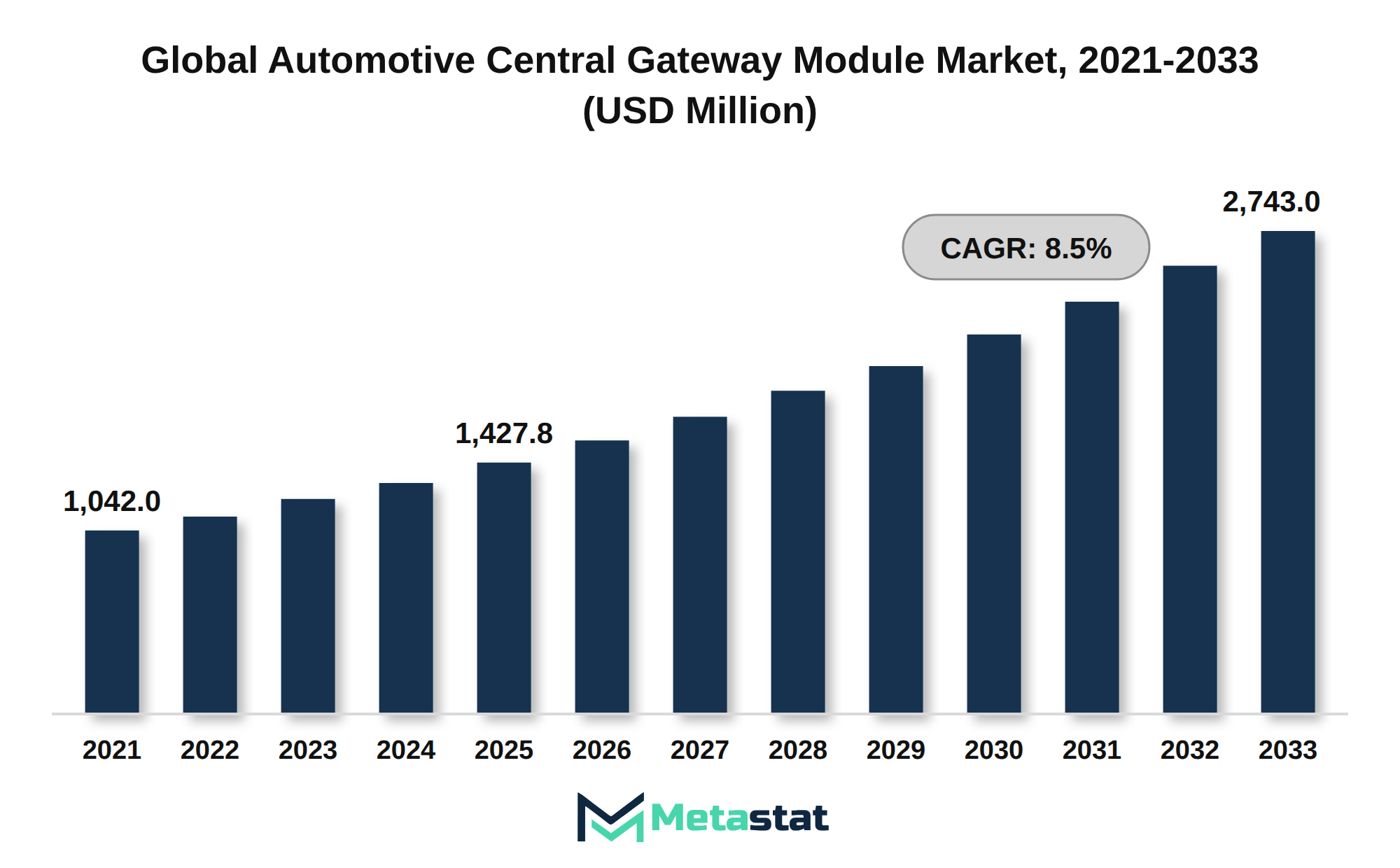
The global Automotive Central Gateway Module market was valued at USD 1,427.8 million in 2025 and is projected to reach USD 2,743 million by 2033, growing at a CAGR of 8.5% over the forecast period.
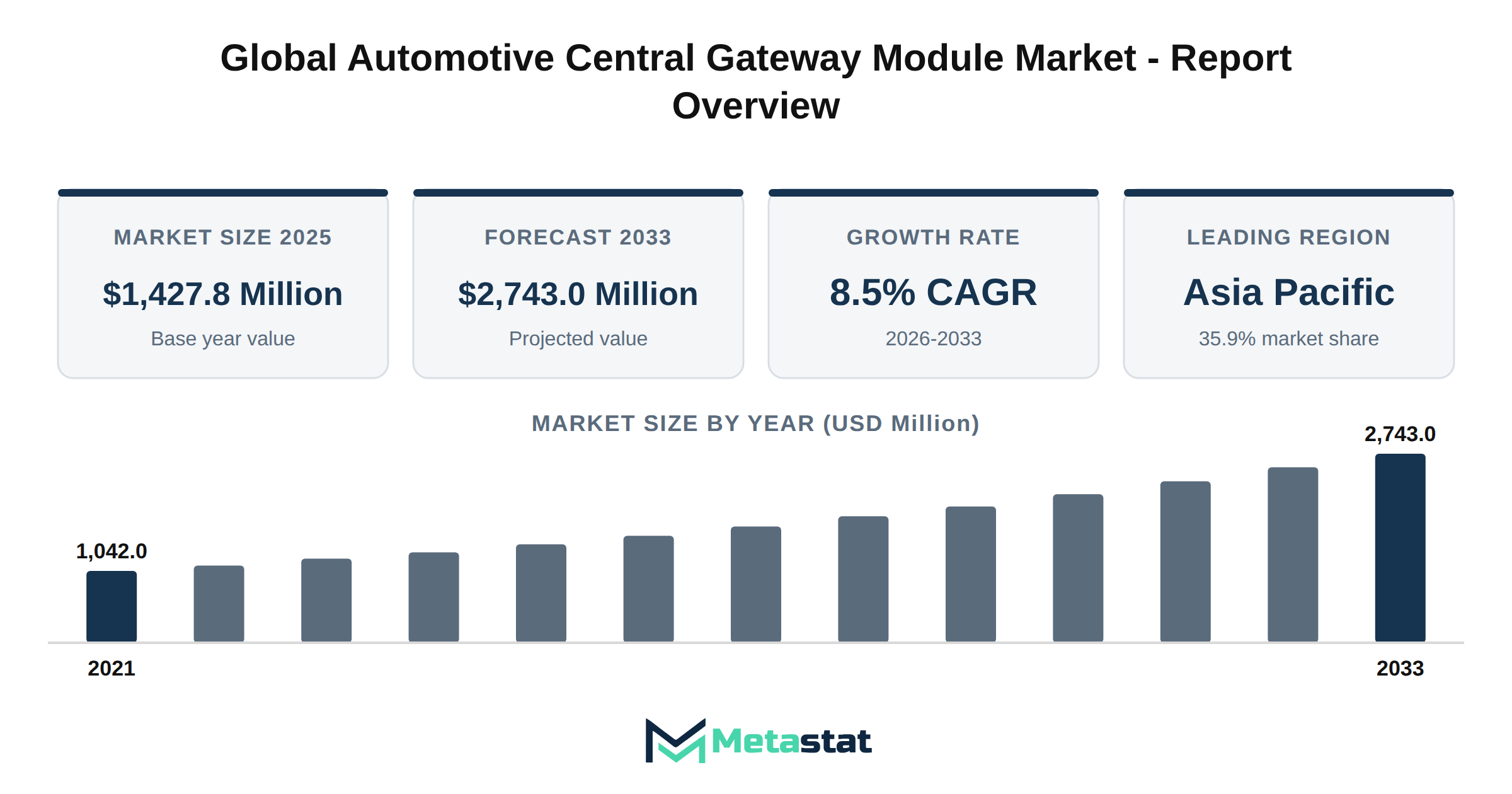
The Automotive Central Gateway Module market reached a valuation of USD 1,427.8 million in 2025, with projections indicating growth to USD 2,743 million by 2033, reflecting a compound annual growth rate (CAGR) of 8.5%. This growth trajectory highlights the increasing complexity of vehicle architectures and the demand for enhanced connectivity solutions.
Recent advancements in software-defined vehicles drive significant transformation within the automotive industry. The shift from traditional CAN and LIN gateway systems to Automotive Ethernet architectures enables higher data transfer rates and improved communication between various vehicle components. This transition supports the integration of advanced driver assistance systems (ADAS) and other smart technologies, positioning central gateway modules because the backbone of in-vehicle network communication.
The rising demand for connected and autonomous vehicle platforms necessitates robust gateway solutions capable of handling vast amounts of data. The integration of ADAS expands the requirements for automotive central gateway modules, facilitating enhanced vehicle safety and operational efficiency. The acceleration of electric vehicle adoption increases the need for high-speed gateway deployment, aligning with the industry's shift towards sustainable mobility solutions.
Multi-protocol gateway modules gain importance in electrical and electronic (E/E) architectures, offering flexibility and adaptability in modern vehicle designs. This evolution coincides with the emergence of zonal and centralized vehicle architectures, reshaping gateway module design and functionality to meet evolving consumer expectations and regulatory requirements.
Automotive cybersecurity requirements significantly influence central gateway innovation, because manufacturers prioritize secure vehicle communication and data integrity. Over-the-air updates further increase the demand for secure vehicle gateway modules, enabling manufacturers to enhance software capabilities and address potential vulnerabilities post-deployment.
High-bandwidth infotainment and telematics drive the adoption of Ethernet gateways, facilitating reliable connectivity for drivers and passengers. Semiconductor integration trends within automotive central gateway modules enhance performance and reliability, enabling the consolidation of multiple functions within a single module.
Original equipment manufacturers (OEMs) and Tier 1 suppliers implement strategic initiatives to develop next-generation vehicle gateway platforms, focusing on scalability and interoperability. These strategies support the overall advancement of automotive gateway supply chains, while semiconductor availability trends influence production timelines and cost structures.
Asia Pacific automotive production supports strong demand for central gateway modules, contributing significantly to the market's growth. North America and Europe exhibit increasing adoption of advanced vehicle network architectures, aligning with the global trend towards enhanced vehicle connectivity and intelligent transportation systems.
Functional safety and automotive communication standards shape gateway development, ensuring compliance with industry regulations and enhancing overall system reliability. Future growth opportunities in centralized vehicle computing and connectivity position the automotive central gateway module market for sustained expansion through 2033.
The Automotive Central Gateway Module market is experiencing significant growth driven by the rise of software-defined vehicles. This trend emphasizes the transition from traditional CAN and LIN gateways to advanced Automotive Ethernet architectures, enhancing vehicle communication capabilities and overall performance.
Central gateway modules serve because the backbone of in-vehicle network communication, facilitating data exchange between various electronic control units (ECUs). The increasing demand for connected and autonomous vehicle platforms further accelerates the need for robust gateway solutions, which are essential for managing the complex interactions among numerous systems.
Integration of Advanced Driver Assistance Systems (ADAS) expands the requirements for automotive central gateway modules, necessitating greater processing power and faster data transfer rates. The push for electric vehicles significantly influences high-speed gateway deployment due to their reliance on sophisticated electronic systems and real-time data management.
Multi-protocol gateway modules are gaining importance in evolving electronic and electrical architectures. The shift towards zonal and centralized vehicle architectures reshapes the design of gateway modules, enabling more efficient data handling and reducing complexity within the vehicle's network.
Automotive cybersecurity requirements significantly influence innovation in central gateway modules. Enhanced security measures are crucial for protecting vehicle data and communication from potential threats, leading to the development of secure vehicle gateway solutions that support over-the-air updates.
The demand for high-bandwidth infotainment and telematics systems drives the adoption of Ethernet gateways. With the increasing complexity of automotive systems, semiconductor integration trends in automotive central gateway modules reflect the industry's focus on combining multiple functionalities into single units, improving efficiency and reducing costs.
Original Equipment Manufacturers (OEMs) and Tier 1 suppliers are implementing strategies for next-generation vehicle gateway platforms to enhance performance and maintain a competitive edge. The dynamics of the automotive gateway supply chain and semiconductor availability trends play a crucial role in shaping the market landscape.
Asia Pacific automotive production supports growing demand for central gateway modules, driven by robust vehicle manufacturing in countries including China and Japan. In North America and Europe, adoption of advanced vehicle network architectures is transforming automotive systems, creating new opportunities for growth.
Functional safety and automotive communication standards significantly shape the development of gateway solutions, ensuring compliance with regulations and enhancing overall vehicle reliability. Future growth opportunities lie within centralized vehicle computing and connectivity, positioning the automotive central gateway module market for continued expansion.
Economic growth significantly influences the Automotive Central Gateway Module market. Indicators including GDP growth and capital investment environments affect demand for advanced automotive technologies. Increased venture funding and public-private spending power contribute to a more robust market landscape, allowing manufacturers to invest in innovation and expand their product offerings.
Digital transformation plays a critical role in driving adoption within the market. Rapid advancements in automation, artificial intelligence, and software integration streamline existing processes and enhance operational efficiency. Companies leveraging these technologies improve performance metrics and reduce costs, creating competitive advantages.
Shifting demographic patterns and evolving consumer behaviors further influence market dynamics. The aging population and urbanization trends lead to changing preferences for vehicle features and functionalities. These trends drive demand for sophisticated automotive systems, including the Automotive Central Gateway Module, which caters to modern consumer requirements.
Infrastructure development and asset modernization enhance the capability of manufacturers to meet growing demands. Upgrading physical and digital assets supports the production of advanced automotive technologies and strengthens supply chain resilience. This evolution in infrastructure boosts the market's capacity to deliver innovative automotive solutions.
Advancements in technology significantly influence the Automotive Central Gateway Module market. The integration of automation and artificial intelligence enhances operational capabilities, leading to improved efficiency in vehicle systems. Digitizing legacy processes enables manufacturers to modernize production, reducing costs while increasing output. This transition aligns with growing consumer expectations for advanced features in vehicles, prompting manufacturers to innovate continuously.
Software adoption within the automotive industry supports enhanced data management and connectivity. This trend allows vehicles to connect with various digital ecosystems, facilitating real-time data exchange vital for advanced driver assistance systems and infotainment features. The emphasis on effective integration of various technologies improves user experiences and drives demand for sophisticated gateway modules.
Investments in research and development across the sector play a critical role in advancing the capabilities of gateway modules. Companies focusing on proprietary technology development contribute to expanding product offerings and enhancing revenue streams. Leveraging technological advancements enables the Automotive Central Gateway Module market to experience significant growth, driven by a commitment to innovation and the need for improved vehicle functionality.
Ongoing regulatory compliance challenges exert pressure on the Automotive Central Gateway Module market, particularly due to stringent requirements surrounding data security and vehicle safety. Companies face significant costs related to achieving compliance, which hinders investment in new technologies and infrastructure. Compliance requires substantial capital investment, diverting resources from innovation and development efforts, thereby impacting market growth.
The risk of legal mandates regarding data privacy and vehicle performance creates uncertainty and restricts operational flexibility. Organizations operating within the market encounter continuous scrutiny, leading to increased operational costs that affect pricing strategies and profit margins. These compliance hurdles contribute to market fragmentation, making it difficult for smaller players to compete effectively.
Macroeconomic headwinds, including inflationary pressures and supply chain disruptions, further complicate the landscape for the Automotive Central Gateway Module market. Rising operational costs and resource scarcity challenge manufacturers' ability to maintain competitive pricing, slowing downstream demand for advanced automotive solutions. This dynamic results in a sluggish adoption rate for new technologies across various segments of the market.
Geopolitical fragmentation significantly challenges the Automotive Central Gateway Module market. Rising trade deficits and tariff friction between countries create an unstable environment for international manufacturers. Supply chain instability results from these geopolitical tensions, leading to increased costs and delays in the production of essential components. The complexity of research and development integrations further complicates the situation, driven by challenges in aligning technologies and processes across diverse regulatory environments.
Increased prices for raw materials and components result from feedstock volatility, impacting operational budgets. Pricing compression emerges because companies seek competitiveness in a market with fluctuating costs, while margin pressures from higher input costs threaten profitability. Workforce skill gaps present significant hurdles, attributed to businesses striving to retain talent amid rising automation and evolving technological demands.
Environmental lifecycle footprints and decarbonization mandates push companies to adopt sustainable practices, imposing additional costs and requiring investments in new technologies. Infrastructure gaps lead to retrofitting barriers, hindering the timely implementation of innovative solutions necessary for market advancement. Intellectual property protection deficits and cybersecurity risks introduce vulnerabilities that firms navigate to protect valuable assets and maintain consumer trust.
Changing downstream demands and market saturation lead to substitution vector pressures, compelling businesses to adapt rapidly to shifting consumer preferences. These challenges create a complex environment that shapes the future of the Automotive Central Gateway Module market, requiring strategic responses from all players involved.
The Automotive Central Gateway Module market experiences a significant growth trajectory driven by various emerging trends that reshape industry dynamics. Significant regional demands arise from increased vehicle electrification initiatives, prompting investments in advanced gateway modules to enhance connectivity and data processing capabilities. This transformation leads to a surge in infrastructure modernization, facilitating the integration of next-generation communication protocols including Ethernet, which aligns with the growing need for high-bandwidth applications in vehicles.
The geographical expansion of automotive manufacturers into emerging markets creates new opportunities for the market. Developing regions exhibit rising demand for advanced vehicle technology, driven by increasing consumer expectations for connectivity and safety features. Simultaneously, technological disruptions drive innovation in automotive systems, including the integration of artificial intelligence and enhanced data analytics, further improving the capabilities of gateway modules.
Sustainability imperatives significantly influence market growth, with manufacturers focusing on eco-friendly practices and compliance with environmental standards. This emphasis on green transformations accelerates the adoption of sustainable materials and production processes within the market. Downstream market diversification introduces niche applications that leverage the growing importance of digital transformation, enhancing the value proposition of gateway modules across various vehicle types and applications.
The evolution of buying behaviors and digital procurement shifts impacts traditional purchasing processes. A focus on operational yield maximization through value-chain optimization drives manufacturers to seek innovative and efficient solutions in their procurement strategies. Cross-industry mergers and acquisitions create strategic consolidation opportunities, positioning companies to leverage synergies that enhance their market presence and technological capabilities.
Asset lifecycle extensions and maintenance upgrades emerge because vital strategies for maximizing the operational lifespan of gateway modules. Retrofitting dynamics support the integration of advanced technologies in existing vehicle models, ensuring compatibility with evolving digital ecosystems. These factors collectively contribute to the positive growth outlook for the Automotive Central Gateway Module market, because stakeholders adapt to changing demands and embrace innovative solutions.
The Global Automotive Central Gateway Module market is segmented based on Type, Vehicle Type, Application, and Propulsion Type.
Valued at USD 593.6 million in 2026, the Ethernet Central Gateway Module segment is projected to reach USD 1,196.5 million by 2033, achieving a CAGR of 10.5% during the forecast period. Key demand drivers include the increasing complexity of vehicle architectures, which require efficient data handling and communication between multiple electronic control units (ECUs). The integration of advanced driver assistance systems (ADAS) and the growing trend of connected vehicles further enhance the necessity for robust Ethernet-based solutions.
Technological maturation influences this segment's expansion, driven by established suppliers enhancing product offerings through innovative features and improved performance. These developments attract automakers seeking to upgrade their existing infrastructure to better support next-generation applications. While automotive manufacturers emphasize reliable connectivity and data transfer, the demand for Ethernet Central Gateway Modules rises, impacting overall market growth.
Raw material sourcing and supply chain resilience influence pricing dynamics and availability. Fluctuations in semiconductor supply impact production capabilities, introducing potential margin pressures for manufacturers. The market experiences a strategic opportunity window owing to increased demand for electric and hybrid vehicles, necessitating advanced connectivity solutions. Successful positioning within this segment enables suppliers to capture greater market share while addressing the evolving needs of the automotive sector.
Growth in the CAN Central Gateway Module segment stems from increasing vehicle complexity and technological advancements in automotive electronics. The demand for enhanced connectivity and data management within vehicles drives the adoption of these modules. Manufacturers prioritize the integration of advanced features, including infotainment systems and advanced driver assistance systems, which requires robust gateway modules to manage data flow efficiently. Regulatory compliance regarding vehicle safety and emissions standards further drives demand for reliable and sophisticated gateway solutions.
Investments in research and development focus on next-generation upgrades, enhancing the functionality and performance of CAN Central Gateway Modules. These upgrades align with the industry's shift towards more integrated and intelligent vehicle architectures. The segment experiences significant growth potential due to rising consumer expectations for advanced technology features in vehicles. The CAN Central Gateway Module segment is estimated to reach USD 751.9 million by 2033, at a CAGR of 6.9% during the forecast period.
Competition in the market intensifies because manufacturers strive to innovate and meet evolving consumer preferences. Cost structures face pressures from continuous technological advancements, necessitating efficient pricing strategies to maintain profitability. Strategic opportunity windows emerge because companies explore partnerships and collaborations to enhance product offerings. Overall, the CAN Central Gateway Module segment is poised for growth, driven by technological maturation, regulatory compliance, and evolving consumer demands within the Automotive Central Gateway Module market.
Growth in the LIN Central Gateway Module segment stems from increasing demand for advanced connectivity solutions in automotive applications. Innovations in vehicle architecture and the rising complexity of electronic systems drive this demand. The automotive industry increasingly adopts Ethernet-based technologies, enhancing data transmission capabilities and enabling the integration of advanced driver assistance systems (ADAS) and infotainment systems. This shift towards more sophisticated electronic control units (ECUs) facilitates the transition to a more interconnected vehicle ecosystem.
Investment in research and development remains critical for players in the Automotive Central Gateway Module market, aiming to enhance product offerings and adapt to changing consumer preferences. Manufacturers strive to deliver high-performance modules that meet regulatory compliance standards while ensuring cost efficiency. The increasing prevalence of electric and hybrid vehicles further influences demand, driven by the necessity of advanced gateway modules for enhanced data processing and communication.
LIN Central Gateway Module segment is expected to reach USD 324.8 million by 2033. Competitive pressures and the need for continuous innovation compel companies to explore strategic partnership opportunities, enabling them to strengthen their market position. The segment's growth reflects a broader trend within the automotive industry, focusing on technological advancement and the pursuit of enhanced vehicle performance.
FlexRay technology enhances communication speed and reliability within automotive systems. This segment is projected to grow at a CAGR of 4.4% during the forecast period, driven by the increasing demand for high-speed communication protocols in advanced vehicle architectures. The ongoing transition towards more complex electronic networks in vehicles leads to greater adoption of FlexRay, particularly in applications requiring real-time data transfer, including advanced driver assistance systems (ADAS).
Major automotive manufacturers focus on integrating FlexRay in their next-generation vehicle models to improve system performance and efficiency. The automotive Central Gateway Module market reflects a trend towards adopting more sophisticated communication solutions, providing a foundation for innovations in vehicle connectivity. Such enhancements align with consumer expectations for advanced features, ensuring manufacturers remain competitive in a changing marketplace.
Investment in research and development continues to support the technological maturation of FlexRay, facilitating future upgrades and applications. This focus on innovation strengthens the market and encourages the development of complementary technologies, further expanding the range of use cases for FlexRay integration.
Investment in multi-protocol central gateway modules reflects a growing trend in the Automotive Central Gateway Module market. These modules support various communication protocols, enhancing flexibility and functionality in vehicle networks. The increasing complexity of automotive electronics and the demand for enhanced connectivity drive the integration of multi-protocol capabilities in modern vehicles. Rising consumer preference for advanced infotainment systems and connectivity features translates to increasing demand for modules that facilitate these applications.
Technological maturation plays a significant role in the adoption of multi-protocol central gateway modules. Manufacturers focus on developing next-generation upgrades that improve performance and reduce latency. The evolution of products includes capabilities for Over-the-Air (OTA) updates, enhancing software management and vehicle maintenance. This evolution corresponds to a shift in downstream applications, where vehicle manufacturers seek to provide enhanced features and services to end users.
Regulatory compliance standards increasingly influence the segment, pressing manufacturers to align their products with safety and emission regulations. The need for certifications, particularly in regions with stringent automotive standards, adds to the complexity and cost structure of developing multi-protocol modules. This dynamic environment creates challenges and strategic opportunities for innovation and differentiation in the market.
Cost pressures arise from rising material costs and the need for advanced technology integration. Pricing volatility affects profit margins, compelling manufacturers to streamline supply chains for efficiency. While substitution risks exist, manufacturers focus on enhancing the value proposition of multi-protocol modules to maintain market competitiveness. Supply chain resilience remains crucial in navigating these challenges, ensuring that manufacturers meet consumer demands while managing costs effectively.
Strategic investment in research and development continues to drive the market forward. By identifying white-space opportunities, manufacturers innovate within the multi-protocol segment, creating products that address emerging consumer needs and technological advancements. This proactive approach ensures the Automotive Central Gateway Module market remains dynamic and responsive to future trends.
Valued at USD 1,119.1 million in 2026, the Passenger Cars segment is projected to reach USD 1,915.5 million by 2033, at a CAGR of 8% during the forecast period. The ongoing transition towards electric vehicles and increased consumer demand for advanced driving assistance systems drive the expansion of this segment. Automotive manufacturers integrating more sophisticated technologies increases the demand for Automotive Central Gateway Modules, reflecting a shift towards enhanced connectivity and safety features. The rising focus on vehicle electrification further increases the need for innovative solutions in powertrain management and control systems, positioning the market for significant growth. Continuous advancements in artificial intelligence and machine learning contribute to the evolving landscape, enhancing automotive functionalities while optimizing overall performance. This dynamic environment offers strategic opportunities for manufacturers, encouraging investments in research and development to meet growing consumer expectations within the Automotive Central Gateway Module market.
Growth in the Commercial Vehicles segment reflects increasing demand for advanced connectivity solutions, driven by the rise in e-commerce and logistics activities. The ongoing transition towards electric and hybrid vehicles stimulates the adoption of Automotive Central Gateway Modules to facilitate enhanced vehicle-to-everything (V2X) communications and integration of advanced driver assistance systems (ADAS). Regulatory pressures aimed at reducing emissions compel manufacturers to implement sophisticated electronic architectures in commercial vehicles.
The Commercial Vehicles segment is estimated to reach USD 573.6 million by 2033, at a CAGR of 9.5% during the forecast period. Investments in next-generation upgrades, particularly in telematics and connectivity solutions, support this growth trajectory. The integration of state-of-the-art technologies enhances operational efficiency and safety in commercial fleets, making these modules critical for modern vehicle design.
Technological maturation within the Automotive Central Gateway Module market creates an environment conducive to innovative product evolution. Continuous improvements in software and hardware capabilities lead to more efficient data processing and communication, allowing for dynamic adjustments to vehicle performance parameters. This adaptability is vital for meeting changing consumer expectations and adhering to regulatory compliance standards, ensuring that commercial vehicles remain competitive in a changing marketplace.
Growth in the Buses and Coaches segment of the Automotive Central Gateway Module market aligns with increasing urbanization and public transportation initiatives. Rising demand for efficient and reliable transportation systems, particularly in urban areas, supports this growth. The segment is expected to reach USD 154.2 million by 2033, reflecting an ongoing trend toward enhanced public transport solutions.
Technological advancements significantly influence the evolution of gateway modules in buses and coaches. Integration of next-generation features, including advanced driver assistance systems and enhanced infotainment options, captures consumer interest. These innovations improve operational efficiency and enhance passenger experience, contributing to the segment's expansion.
Compliance with strict regulatory standards further shapes market dynamics. Municipalities increasingly prioritize environmentally friendly transportation, prompting investments in electric and hybrid bus models. This shift supports a transition toward sustainable mobility solutions and drives growth within the segment.
Pressure from rising costs affects manufacturers and operators within the market. Fluctuating raw material prices and supply chain disruptions create challenges for profitability. Companies focused on enhancing supply chain resilience gain a competitive advantage, enabling them to navigate these cost pressures effectively.
Strategic investment opportunities arise through collaboration between public and private sectors. Partnerships aimed at developing innovative solutions for public transport enhance market reach and drive adoption of advanced gateway modules. This collaboration presents a promising avenue for growth within the Buses and Coaches segment of the market.
Growth in the Two-Wheelers segment reflects increasing urbanization and a shift towards more efficient transportation solutions. Rising fuel prices drive consumers towards affordable mobility options, enhancing demand for two-wheelers equipped with advanced technological features. Investment in smart connectivity and enhanced safety systems plays a critical role in the segment's evolution, enabling adoption among manufacturers and consumers alike.
With a projected CAGR of 10.7% during the forecast period, the segment demonstrates robust expansion potential within the Automotive Central Gateway Module market. Demand for advanced driver assistance systems and infotainment features contributes significantly to the segment's growth, aligning with evolving consumer preferences for technology integration. Compliance with environmental regulations further drives innovation, encouraging manufacturers to invest in next-generation upgrades.
Strategic opportunities arise from the growing popularity of electric two-wheelers, which require sophisticated gateway modules to manage various electronic components. This trend opens pathways for manufacturers to innovate and differentiate their offerings amid competition. Regulatory compliance standards set forth by governing bodies reinforce the importance of safety and sustainability, ensuring that products meet industry benchmarks while enhancing consumer trust.
The Two-Wheelers segment within the Automotive Central Gateway Module market reflects strong dynamics influenced by technological advancements and consumer preferences. Investment in supply chain resilience and effective raw material sourcing remains essential, allowing manufacturers to adapt to changing market conditions and mitigate potential disruptions. This focus on sustainability and efficiency shapes the future direction of the segment, supporting continued growth and development.
Valued at USD 391.2 million in 2026, the Powertrain Control segment is projected to reach USD 614.7 million by 2033, at a CAGR of 6.7% during the forecast period. Increasing adoption of advanced driver assistance systems (ADAS) drives demand for powertrain control solutions that enhance vehicle performance and safety. This segment benefits from technological maturation, including the integration of electric and hybrid vehicle technologies, which leads to innovative product evolution and upgrades.
The shift toward electric vehicles (EVs) and hybrid electric vehicles (HEVs) creates new opportunities within the powertrain control segment, influencing consumption patterns and driving market expansion. Regulatory compliance standards focusing on emissions reduction and fuel economy incentivize manufacturers to enhance powertrain control systems. Competitive pressures prompt continuous improvement in cost structures, resulting in pricing volatility and margin pressures that impact the overall market.
Investment in next-generation powertrain technologies reflects strategic opportunities within the Automotive Central Gateway Module market. Companies prioritize supply chain resilience and raw material sourcing to mitigate risks associated with logistics vulnerabilities and substitution threats. Continuous innovations in powertrain control systems position this segment for growth, aligning with evolving consumer preferences and regulatory demands.
Increasing vehicle automation and advanced features drive the demand for the Body Control segment within the Automotive Central Gateway Module market. This segment integrates various electronic functions, enhancing vehicle safety, comfort, and convenience through technologies including automatic lighting, window control, and central locking systems. Manufacturers focus on improving the functionality of body control modules, leading to greater adoption across different vehicle types.
Market expansion is fueled by the ongoing evolution of automotive electronics, with significant investments in next-generation upgrades that support improved vehicle performance and efficiency. The Body Control segment is estimated to reach USD 593.3 million by 2033, at a CAGR of 7% during the forecast period. This growth reflects the increasing integration of body control functions with advanced driver assistance systems (ADAS), which enhances overall vehicle safety and user experience.
Technological maturation advances body control systems, enabling manufacturers to develop more sophisticated solutions that meet evolving consumer expectations. The shift towards electric and hybrid vehicles further influences the segment, driven by the requirement for advanced body control functionalities to manage energy consumption and optimize performance. The cost structures associated with body control modules remain a key consideration for manufacturers, who aim to balance quality and affordability while navigating pricing volatility.
The Body Control segment represents a vital component of the Automotive Central Gateway Module market, driven by technological advancements, consumer demand for enhanced vehicle features, and regulatory compliance standards aimed at improving safety and efficiency in automotive design.
With a projected value of USD 623.8 million by 2033, the Infotainment System segment experiences considerable demand driven by technological advancements and consumer preferences for integrated digital experiences in vehicles. Enhanced connectivity features, including smartphone integration, navigation systems, and entertainment options, play a critical role in consumer purchasing decisions, leading to increased adoption rates across various vehicle types.
The segment expansion reflects a shift toward advanced driver assistance systems, where infotainment systems contribute significantly to overall vehicle functionality. This integration fuels investments in next-generation upgrades and product evolution, enabling manufacturers to remain competitive in the dynamic Automotive Central Gateway Module market. End-use dynamics indicate a strong consumer inclination toward vehicles equipped with sophisticated infotainment systems, influencing production strategies and supply chain resilience.
Market participants are adapting to consumption shifts that prioritize effective connectivity and enhanced user experiences within vehicles. Regulatory compliance standards focusing on safety and technology integration necessitate investment in sophisticated infotainment solutions. This regulatory landscape shapes product development, ensuring that systems meet consumer expectations while adhering to emerging standards.
Pricing volatility and margin pressures specific to the segment challenge manufacturers to optimize cost structures while delivering advanced features. Strategic opportunity windows arise from the increasing demand for enhanced infotainment capabilities, prompting manufacturers to innovate and differentiate their offerings. Overall, the growth trajectory of the Infotainment System segment within the Automotive Central Gateway Module market indicates a strong and evolving landscape driven by technology and consumer preferences.
Investment in Advanced Driver Assistance Systems (ADAS) drives significant growth in the Automotive Central Gateway Module market, projected at a CAGR of 10.8% during the forecast period. The increasing focus on vehicle safety and convenience enhances demand for advanced technologies that enable automation and driver support functionalities. These systems improve situational awareness, providing real-time data and feedback to drivers, which is essential in reducing accidents and improving overall driving experiences. Technological maturation of sensors, cameras, and communication interfaces leads to improved system reliability and performance, encouraging widespread adoption across various vehicle types.
Valued at USD 391.2 million in 2026 and expected to reach USD 614.7 million by 2033, the segment demonstrates a robust trajectory driven by enhanced consumer awareness of safety features and regulatory compliance standards. Automakers increasingly prioritize ADAS integration to align with stringent safety regulations and enhance the value proposition of vehicles in a competitive market. The shift towards electric and hybrid vehicles contributes to the expansion of ADAS, driven by these vehicles incorporating advanced technologies to optimize performance and safety. The combination of consumer demand, regulatory pressures, and technological advancements positions the ADAS segment because a critical growth area within the market.
Increasing adoption of telematics and connectivity features in vehicles drives demand for advanced applications within the Automotive Central Gateway Module market. This trend reflects a shift towards integrated systems that enhance communication among various vehicle components, improving overall performance and user experience. Enhanced data transfer capabilities enable real-time monitoring and diagnostics, responding to the growing need for connected vehicle technologies. The market sees significant interest in instrument cluster developments, where digital displays and advanced graphics provide drivers with critical information at a glance, improving the driving experience.
The evolution of next-generation upgrades in connectivity protocols supports segment expansion, allowing for greater interoperability between devices and systems. Automotive manufacturers prioritize integration of infotainment, navigation, and telematics, intensifying demand for advanced gateway modules. Regulatory compliance standards influence development, with increasing pressure to implement safety features and connectivity enhancements. Strategic opportunities arise from investments in research and development to create innovative solutions, driving competition and collaboration among suppliers in the market.
Valued at USD 841.7 million in 2026, the Internal Combustion Engine Vehicles segment is projected to reach USD 1,027.5 million by 2033, at a CAGR of 2.9% during the forecast period. Demand for this segment arises from the persistent preference for traditional combustion engine technologies among consumers, particularly in regions where electric vehicle infrastructure remains underdeveloped. The automotive industry experiences ongoing investment in enhancing engine efficiency and reducing emissions, driven by regulatory pressures for compliance with stricter environmental standards. Technological advancements in engine design and fuel management systems enable manufacturers to deliver improved performance while maintaining competitive pricing strategies.
Optimizing the balance between performance and regulatory compliance fuels the evolution of the Automotive Central Gateway Module market. Manufacturers respond to shifting consumer preferences toward performance and sustainability, while the integration of advanced communication systems within Internal Combustion Engine Vehicles enhances overall vehicle functionality. The anticipated growth trajectory underscores the importance of strategic investments in research and development to address emerging challenges in emissions and fuel efficiency. Facing increasing competition from alternative propulsion methods, traditional internal combustion engine vehicles maintain substantial market presence driven by established consumer habits and ongoing demand in various regions.
Investment in Hybrid Electric Vehicles (HEV and MHEV) enhances the overall demand for the Automotive Central Gateway Module market. This segment is estimated to reach USD 690.7 million by 2033, at a CAGR of 10.8% during the forecast period. The increasing emphasis on environmental sustainability drives manufacturers to adopt hybrid technologies, aligning with stringent regulatory compliance standards aimed at reducing carbon emissions. Growing consumer interest in fuel-efficient vehicles further accelerates adoption, influencing consumer preferences and driving sales growth.
Technological maturation in battery management systems and power electronics influences the evolution of HEV and MHEV integration. These advancements facilitate improved energy efficiency and enhance vehicle performance. Next-gen upgrades, including enhanced infotainment systems and advanced driver assistance features, create synergies with hybrid propulsion, making vehicles more appealing to consumers.
Market conditions reflect a shift toward electrification in the automotive sector, emphasizing capital investment outlooks focused on hybrid technologies. This trend drives the growth of the Automotive Central Gateway Module market and prompts manufacturers to explore strategic opportunity windows for expanding their product lines. Consequently, market players are positioned to leverage these developments, ensuring resilience in supply chains and adaptability in response to evolving consumer demands.
Projected to reach USD 280.9 million by 2033, the Plug-in Hybrid Electric Vehicles segment reflects significant growth within the Automotive Central Gateway Module market. This expansion results from rising consumer preference for environmentally friendly transportation solutions and increasing regulatory support for hybrid technology. Governments worldwide implement incentives for adopting plug-in hybrid vehicles, enhancing their attractiveness to consumers. Advancements in battery technology and hybrid systems contribute to more efficient and cost-effective vehicles, driving market adoption.
The segment experiences strong demand due to a shift in consumer behavior toward sustainable mobility options. Vehicle manufacturers focus on integrating advanced connectivity features and enhanced user experiences in plug-in hybrid models, aligning with emerging technological trends. These upgrades improve vehicle performance and make electric driving more accessible. Consequently, the Automotive Central Gateway Module market sees increased investments in this segment driven by manufacturers' aim to meet evolving consumer expectations and regulatory standards.
Investment in Battery Electric Vehicles reflects a significant shift towards sustainable transportation solutions. With increasing government regulations aimed at reducing carbon emissions, manufacturers accelerate their production capabilities for Battery Electric Vehicles, driven by heightened demand for associated technologies, including automotive central gateway modules. The segment is projected to grow at a CAGR of 17.3% during the forecast period, indicating the market's robust expansion trajectory.
Technological advancements in battery technology enhance vehicle performance and range, attracting consumers seeking eco-friendly alternatives. The growing infrastructure for electric vehicle charging stations supports market adoption, enabling more consumers to transition to Battery Electric Vehicles. Consequently, manufacturers increasingly invest in automotive central gateway modules to facilitate communication and control between various vehicle systems.
Shifts in consumer preferences towards environmentally sustainable transportation coupled with advancements in vehicle technology create an optimistic outlook for the segment. The Automotive Central Gateway Module market benefits from these dynamics, reflecting that Battery Electric Vehicles represent a critical component in the broader automotive ecosystem.
Increasing focus on sustainable transportation fuels drives demand for Fuel Cell Electric Vehicles within the Automotive Central Gateway Module market. Growing environmental concerns prompt consumers and manufacturers to seek cleaner alternatives to traditional propulsion systems, leading to heightened interest in hydrogen-powered vehicles. The automotive industry observes a shift towards advanced technologies and innovations that enhance vehicle performance and reduce emissions, creating a favorable environment for fuel cell technology adoption.
Technological advancements in fuel cell systems drive product evolution, enabling manufacturers to integrate these systems into a wider range of vehicle types. Research and development efforts focus on improving fuel cell efficiency, durability, and cost-effectiveness, addressing limitations that previously hindered widespread adoption. Regulatory compliance standards increasingly support the transition to cleaner energy sources, encouraging investments in fuel cell technology.
Market participants recognize strategic opportunity windows in the development and deployment of fuel cell electric vehicles. Enhanced performance capabilities and expanding infrastructure for hydrogen refueling stations provide a foundation for increased consumer acceptance and usage. While the market matures, manufacturers remain agile, adapting to evolving consumer preferences and technological advancements to maintain competitive advantages.
Investment in fuel cell technology represents a critical component of the broader shift towards zero-emission vehicles. Stakeholders in the automotive industry actively pursue partnerships and collaborations aimed at accelerating the development of fuel cell systems. This collaborative approach drives innovation and knowledge sharing, ultimately benefiting the market's growth trajectory.
Challenges related to raw material sourcing and supply chain resilience persist, impacting the overall cost structure of fuel cell electric vehicles. Ensuring a stable supply of necessary components and materials remains essential for managing pricing volatility and maintaining profitability. Strategic planning around logistics vulnerabilities and potential disruptions plays a vital role in supporting the long-term sustainability of the fuel cell segment within the Automotive Central Gateway Module market.
Based on geography, the Global Automotive Central Gateway Module market is divided into North America, Europe, Asia-Pacific, South America, Middle East, and Africa.
Expansion of the Automotive Central Gateway Module market in North America is supported by rising demand for enhanced vehicle connectivity and automation. Increased consumer preferences for advanced telematics features and the integration of driver assistance systems contribute to this growth. The market in this region is projected to reach USD 794.4 million by the end of 2033 with a compound annual growth rate (CAGR) of 8.5% during the forecast period.
The United States, Canada, and Mexico represent key markets within North America, collectively accounting for 30.3% of the global market share in 2025. The importance of localized manufacturing and the trend toward nearshoring initiatives enhance supply chain resilience and efficiency, offering opportunities for market expansion. The presence of established automotive manufacturers and a skilled workforce supports the development of innovative solutions in this sector.
Investment in infrastructure modernization drives adoption rates for Automotive Central Gateway Modules. The emphasis on improving energy grid resiliency and establishing robust local infrastructure ensures readiness for increasing technological demands. Domestic market participants actively pursue collaborative ventures to enhance product offerings, further strengthening their positions within the competitive landscape.
While regional dynamics evolve, increasing foreign direct investment (FDI) flows reflect confidence in the market's potential. Geographic regulatory frameworks and compliance mandates shape operational strategies for suppliers, facilitating a conducive environment for growth. Cultural nuances and regional B2B buying behaviors influence procurement dynamics, necessitating tailored approaches for market engagement.
The Automotive Central Gateway Module market in Europe benefits from growing consumer demand for advanced vehicle technologies. Countries including Germany, France, and the UK embrace the integration of sophisticated connectivity and automation features within their automotive sectors. Investment in infrastructure modernization and localized manufacturing facilitates market expansion, enhancing product accessibility to end-users.
Germany stands out because a significant player, with a strong automotive manufacturing base and a robust supply chain. France and Italy follow closely, propelled by initiatives aimed at enhancing electric vehicle infrastructure. Russia's evolving automotive landscape presents opportunities for growth, driven by increasing investments in vehicle technology and modernization efforts.
The market structure reflects mature dynamics, with established players maintaining significant market shares. Replacement cycles for automotive components introduce high-value opportunities, influencing both suppliers and manufacturers. Emerging market front-runners, particularly in passenger cars and commercial vehicles, fuel competition among domestic players, creating a competitive environment.
Localized procurement dynamics shape purchasing behaviors in this region, with companies focusing on sourcing components closer to manufacturing hubs. Regional resource availability and energy grid resiliency enhance operational efficiency, allowing for effective responses to market demands. The Automotive Central Gateway Module market demonstrates strong growth potential, supported by strategic entry barriers and foreign direct investment flows into the automotive sector.
The Asia-Pacific region accounts for 35.9% of the Automotive Central Gateway Module market in 2025. Countries including China, Japan, and India exhibit rapid advancements in automotive technology, driving demand for sophisticated gateway modules. The region's emphasis on electric vehicles and smart infrastructure accelerates adoption rates, particularly in urban centers where technology integration is critical.
Investment in localized manufacturing and supply chain regionalization enhances market dynamics. Countries like South Korea and Japan prioritize innovation, promoting the development of Ethernet Central Gateway Modules, which support advanced connectivity features. This focus improves the region's competitive edge, leading to emerging market front-runners in the automotive sector.
Infrastructure modernization initiatives further increase demand for automotive gateway technologies. Governments commit to improving transportation networks, creating opportunities for businesses engaged in the Automotive Central Gateway Module market. The increasing presence of foreign direct investment (FDI) flows into the region facilitates growth and geographic expansion, particularly in underpenetrated territories.
Cultural nuances influence B2B buying behaviors, with regional procurement dynamics favoring partnerships with established suppliers. The presence of domestic market participants, including DENSO Corporation and Robert Bosch GmbH, creates a competitive landscape that drives innovation and efficiency. While the market evolves, localized compliance mandates and regulatory frameworks will shape the trajectory of the Automotive Central Gateway Module market in Asia-Pacific.
The Automotive Central Gateway Module market in South America presents opportunities for growth, driven by increasing vehicle electrification and the rising demand for advanced connectivity features. Brazil and Argentina emerge because key players in this developing market, with a collective share of 3.4% of the global market in 2025. The ongoing modernization of infrastructure supports the adoption of innovative technologies, enabling market expansion.
Investment in localized manufacturing and nearshoring initiatives strengthens the supply chain dynamics within the region. Domestic vendors are gaining traction, competing with established global players. This competitive landscape encourages collaborations and strategic partnerships, enhancing product offerings and improving customer access.
Local compliance mandates and regulatory frameworks influence market dynamics, necessitating adherence to specific standards for vehicle components, including gateway modules. These regulations support the growth of the Automotive Central Gateway Module market through enhanced safety and performance requirements.
Emerging trends in B2B buying behavior highlight a shift towards integrated solutions that address regional needs. Cultural nuances influence procurement strategies, with businesses favoring suppliers that demonstrate a strong understanding of local market conditions. This localized approach builds trust and reliability between vendors and buyers, further accelerating market development.
The Automotive Central Gateway Module market in the Middle East and Africa is positioned for gradual enhancement, with significant contributions stemming from nations like Saudi Arabia, the UAE, and South Africa. These countries demonstrate increasing interest in automotive technologies, spurred by rapid urbanization and economic diversification strategies. Investments in infrastructure modernization and localized manufacturing play crucial roles in supporting market growth, enabling manufacturers to adapt to regional demands efficiently.
The share of the global market indicates a stable foothold despite challenges in underpenetrated territories. Emerging market front-runners exhibit readiness for adopting advanced automotive solutions, driven by rising consumer expectations for connectivity and safety features. Domestic market participants are likely to capitalize on these trends, leveraging established networks to expand influence and increase market penetration.
Regional competitive dynamics reflect a blend of localized procurement practices and cultural nuances impacting B2B buying behaviors. Companies that align their strategies with the specific needs of local markets benefit from enhanced customer loyalty and sustained revenue growth. The ongoing regionalization of supply chains, alongside foreign direct investment flows, creates an environment conducive to innovation and competitive advantage within the Automotive Central Gateway Module market.
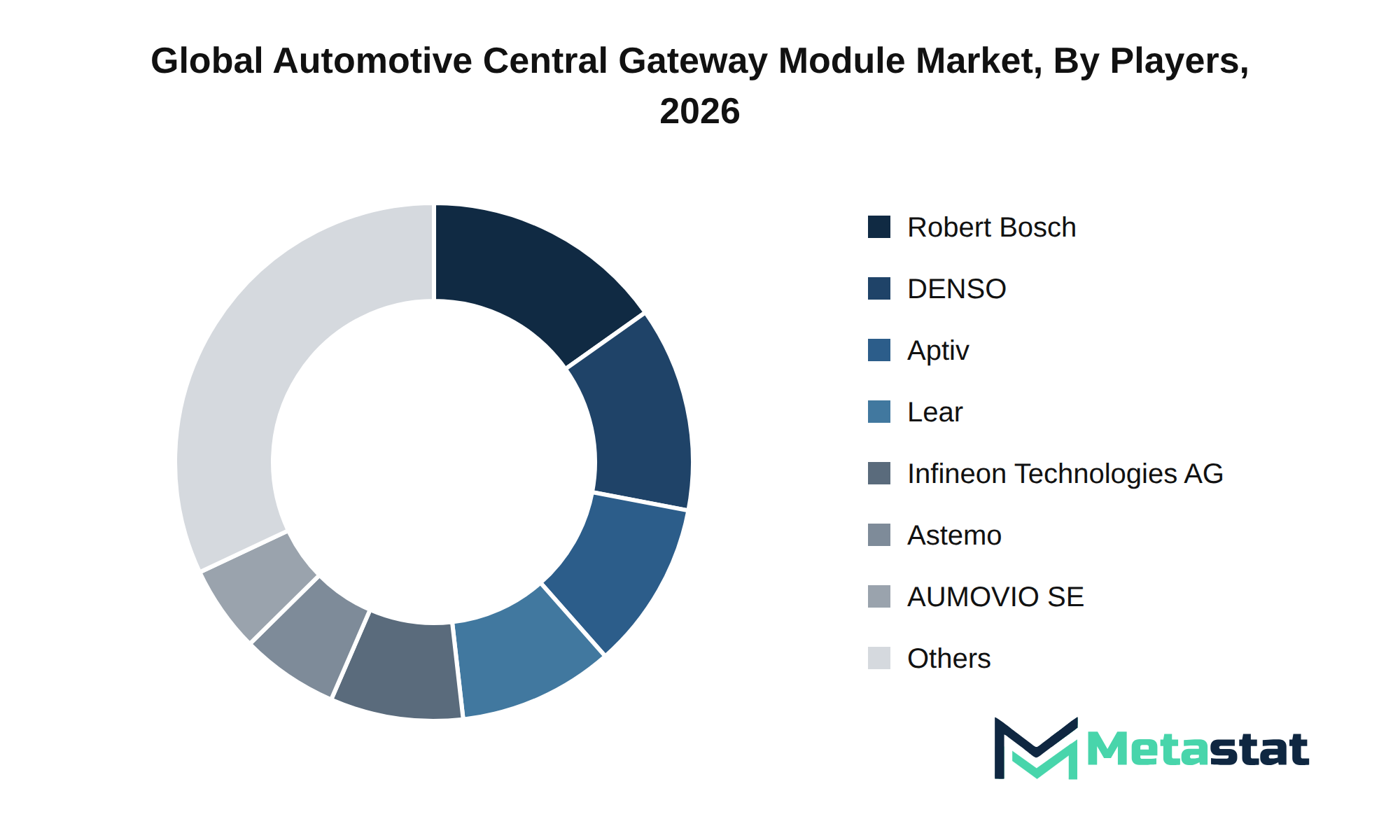
The Automotive Central Gateway Module market features a diverse array of companies that contribute to its growth and innovation. Key players, including Robert Bosch GmbH, DENSO Corporation, and Aptiv PLC, leverage strategic partnerships and alliances to enhance their market presence and expand product offerings. Investments in research and development enable these firms to differentiate their products, addressing evolving customer needs and technological advancements.
Strategic consolidation through mergers and acquisitions remains a prominent trend, allowing companies including Hitachi Automotive Systems, Ltd. and Continental to integrate vertically and enhance their supply chain dominance. This integration improves procurement leverage and strengthens their position within the market. Firms like Infineon Technologies AG and LG Electronics Inc. focus on developing proprietary technologies that create barriers to entry for potential new entrants, securing their market share against startup disruption dynamics.
Customer retention strategies play a crucial role in maintaining brand equity, with companies investing in innovative solutions and enhanced customer support. The competitive outlook of the Automotive Central Gateway Module market indicates a focus on technological defensibility and intellectual property portfolios, ensuring sustained growth and adaptation to changing market dynamics.
Market size is forecast to rise from USD 1,427.8 million in 2025 to over USD 2,743 million by 2033. The base case reflects a growth trajectory characterized by an 8.5% compound annual growth rate (CAGR). This growth stems from various macroeconomic factors, including increased investment in next-generation technologies and evolving consumer preferences that drive demand for advanced automotive solutions.
In a bull scenario, heightened economic stability and strong regulatory support for electric and hybrid vehicles could increase investments in the Automotive Central Gateway Module market, leading to accelerated adoption and greater technological integration. Conversely, a bear scenario arises from geopolitical tensions and supply chain disruptions that could limit production capabilities and slow market growth.
Technological advancements in connectivity and automation significantly influence the market's evolution. Strategic capital allocation to research and development remains critical in driving innovation and addressing emerging consumer needs. Evolving regulatory frameworks shape product development timelines and compliance milestones, impacting operational strategies across the industry.
While the market matures, organizations identify and capitalize on high-growth pockets and unmet needs. Infrastructure commitments and capital expenditures directed toward enhancing the supply chain infrastructure support long-term growth. Future growth recommendations include investing in robust supply chain solutions and maintaining adaptability to regulatory changes and market dynamics.
The report strategically identifies and profiles the key market players and analyses their core competencies in each sub-segment of the Automotive Central Gateway Module market.
|
Report Attributes |
Details |
|
Study Period |
2021-2033 |
|
Base Year |
2025 |
|
Estimated Year |
2026 |
|
Forecast Period |
2026-2033 |
|
Historical Period |
2021-2025 |
|
Growth Rate |
CAGR 8.5% from 2026 to 2033 |
|
Revenue Unit |
USD million |
|
Segmentation |
By Type, Vehicle Type, Application, Propulsion Type, and Region |
|
By Region |
North America (By Type, Vehicle Type, Application, Propulsion Type, and Country)
|
|
Europe (By Type, Vehicle Type, Application, Propulsion Type, and Country)
|
|
|
Asia Pacific (By Type, Vehicle Type, Application, Propulsion Type, and Country)
|
|
|
South America (By Type, Vehicle Type, Application, Propulsion Type, and Country)
|
|
|
Middle East and Africa (By Type, Vehicle Type, Application, Propulsion Type, and Country)
|
Find answers to common questions about this report
The Automotive Central Gateway Module market size was valued at USD 1,427.8 million in 2025, according to the Metastat Insights study.
The Automotive Central Gateway Module market is projected to grow at a CAGR of 8.5% during the forecast period from 2026 to 2033.
The North America Automotive Central Gateway Module market size is estimated to reach USD 794.4 million by 2033.
The Ethernet Central Gateway Module segment leads the Automotive Central Gateway Module market, with a projected value of USD 1,196.5 million by 2033. This segment exhibits the highest growth rate, with a compound annual growth rate of 10.5 percent.
Economic growth, digital transformation, and advancements in technology drive the Automotive Central Gateway Module market. Increased venture funding and public-private spending enhance innovation, while automation and artificial intelligence improve operational efficiency, meeting evolving consumer demands for sophisticated vehicle features.
North America holds the dominant share of the Automotive Central Gateway Module market, with a value of USD 794.4 million projected for 2033. This region accounts for 30.3 percent of the market share.
Economic growth, digital transformation, and advancements in technology significantly favor product adoption in the Automotive Central Gateway Module industry. Increased venture funding allows manufacturers to invest in innovation, while the integration of automation and artificial intelligence enhances operational capabilities, aligning with consumer expectations for advanced vehicle features.
The Automotive Central Gateway Module market is estimated to reach a valuation of USD 2,743 million by 2033.
Key players in the Automotive Central Gateway Module market include Robert Bosch GmbH, DENSO Corporation, Aptiv PLC, Lear Corporation, Infineon Technologies AG, NXP Semiconductors, and ZF Friedrichshafen AG.
The Ethernet Central Gateway Module segment is projected to grow at a CAGR of 10.5% from 2026 to 2033.
The analysts below cover Automotive and Transportation research at Metastat Insights.
LEAD ANALYST
Utkarsh Khirodkar is a Lead Market Research Analyst at MetaStat Insight, specializing in market intelligence, technology sector assessments, and competitive strategy.

ENERGY & INFRASTRUCTURE INDUSTRY CONSULTANT
Automotive and Transportation · Electronics and Semiconductor · Energy and Power · Machinery & Equipment
Saurabh Vasant Ganvir consults for Energy & Infrastructure Industry at MetaStat Insight, specializing in renewable energy, solar EPC, and electric vehicle (EV) infrastructure markets.
Tracking maintenance cycle demand for secondary flight display units and terrain collision avoidance systems across regional jet fleets involves complex aftermarket dynamics. MetaStat Insight provided practical analysis separating airline retrofit programs from OEM forward-fit production schedules in North America and Southeast Asia. The supplier matrix highlighted component obsolescence timelines without resorting to vague generalizations. The dataset served as a dependable reference during our annual program review meetings.
Evaluating secondary resin quality across post-consumer packaging streams requires reliable technical segmentation. MetaStat Insight delivered an objective assessment that distinguished between extrusion-grade flake pricing and optical sorting throughput limitations across Western Europe. The competitive positioning breakdown for licensed depolymerization technology providers answered several questions during our feedstock feasibility audit. Their team clarified regional trade restrictions on mixed plastic scrap quickly when our team submitted follow-up requests.
Evaluating sovereign cloud deployments for core banking platforms demands a clear view of data residency regulations and migration exit strategies. MetaStat Insight delivered an exhaustive review of regional latency tolerances, mainframe decommission milestones, and third-party vendor concentration risk. The regulatory compliance mapping across European and Asian financial jurisdictions gave our team a dependable baseline for multi-cloud infrastructure discussions.
Explore related market intelligence reports worth reading alongside this one.
Starting from
$2950