
LEAD ANALYST
Utkarsh Khirodkar is a Lead Market Research Analyst at MetaStat Insight, specializing in market intelligence, technology sector assessments, and competitive strategy.

Vietnam Battery Market Size, Share, By Battery Type (Lead-Acid Batteries, Lithium-Ion Batteries, Nickel-Metal Hydride Batteries, Nickel-Cadmium Batteries, Alkaline Batteries, Zinc-Carbon Batteries, Primary Lithium Batteries and Others), By Application (Automotive Starting, Lighting and Ignition (SLI), Electric Two-Wheelers and Three-Wheelers, Electric Passenger and Commercial Vehicles, Stationary Energy Storage Systems, UPS and Data Center Backup, Telecommunication Backup Power, Industrial Motive Power and Material Handling, Consumer Electronics and Portable Devices, Household and General-Purpose Devices and Others), By Distribution Channel (OEM Sales, Direct B2B and Project Sales, Authorized Distributors and Dealers, Retail Stores and E-Commerce), By Region (Northern Vietnam, Central Vietnam and Southern Vietnam), Industry Analysis, Growth, Trends, and Forecast, 2026-2033
Report ID
MSI-5280
Published
September, 2026
Pages
285 Pages
Format
Historical
Base year
Forecast
Forecast period
Report Details
Market Valuation: Valued at $1,743 Million in 2025, projected to reach $3,448.7 Million by 2033 at a 8.9% CAGR.
Dominant Segment: Lithium-Ion Batteries lead the Vietnam Battery market, projected to reach USD 1,680.5 million by 2033, driven by the increasing adoption of electric vehicles and advancements in battery technology.
Geographic Lead: Southern Vietnam is experiencing the fastest growth in battery demand, primarily due to urbanization and government initiatives promoting electric mobility.
What's Inside: The report provides a comprehensive analysis of market dynamics, competitive landscape, and forecasts from 2026 to 2033, covering various battery types, applications, and distribution channels.
Emerging Regional Demands: The market is expanding due to rising demand in the automotive and renewable energy sectors, particularly for electric vehicles and energy storage solutions.
Choose Your License
Vietnam Battery Market
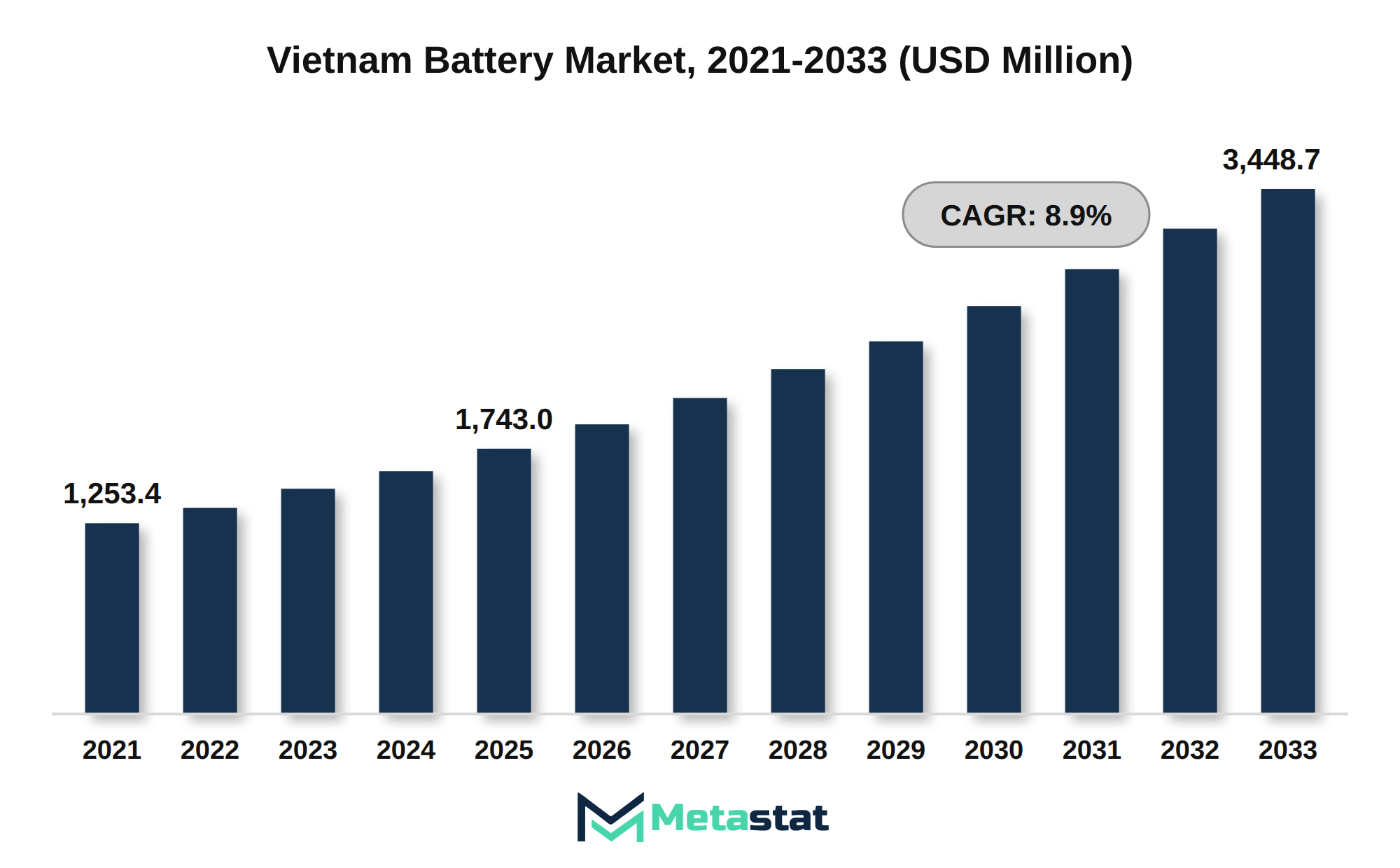
The Vietnam Battery market was valued at USD 1,743 million in 2025 and is projected to reach USD 3,448.7 million by 2033, growing at a CAGR of 8.9% over the forecast period.
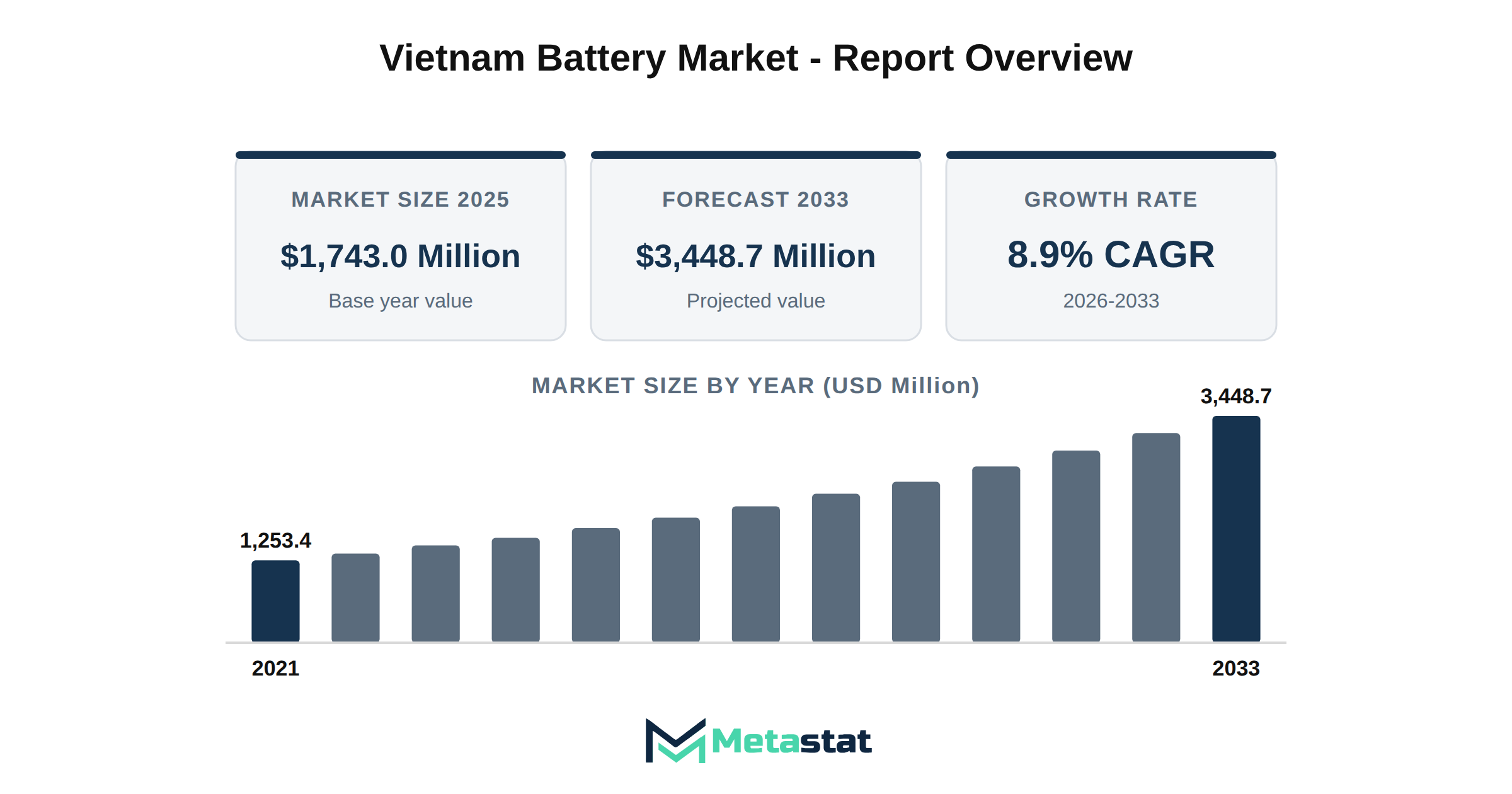
The Vietnam Battery market is projected to grow from USD 1,743 million in 2025 to USD 3,448.7 million by 2033, reflecting a compound annual growth rate (CAGR) of 8.9%. This growth trajectory is influenced by several factors, including the increasing demand for electric vehicles, advancements in battery technology, and an expanding manufacturing base.
Vietnam's lithium-ion battery manufacturing is experiencing significant expansion. This development aligns with the global trend towards cleaner energy solutions, leading to increased investments in production facilities and innovations within the sector. Local manufacturers focus on enhancing production capacities to meet the rising demand for energy storage and electric mobility solutions.
The demand for lead-acid batteries remains strong across automotive and industrial applications. This segment accounts for a substantial portion of the market, driven by the need for reliable power sources in traditional vehicles and backup systems. The automotive sector's reliance on lead-acid batteries for starting, lighting, and ignition (SLI) applications contributes to steady growth within this category.
Electric vehicle adoption significantly influences battery demand in Vietnam. The government's initiatives to promote electric mobility, coupled with consumer interest in sustainable transportation, create an environment conducive to rapid growth in this segment. While electric vehicle sales increase, the demand for high-performance batteries to support these vehicles escalates.
Battery demand from electric two-wheelers and commercial electric vehicles is on the rise in Vietnam. The growing popularity of electric two-wheelers, fueled by urbanization and environmental concerns, contributes to this trend. Commercial electric vehicles, particularly in logistics and public transportation, further drive demand for reliable battery solutions.
Vietnam's battery energy storage system deployment trends indicate a shift towards integrating renewable energy sources. With the country's commitment to increasing renewable energy capacity, the need for efficient energy storage solutions becomes critical. This trend supports market growth by enhancing grid stability and enabling the utilization of solar and wind energy.
The supply chain for battery production and raw material sourcing in Vietnam faces challenges and opportunities. Local manufacturers focus on securing stable supply chains for essential raw materials, including lithium, cobalt, and nickel. This strategic focus aims to mitigate risks associated with global supply chain disruptions and price volatility.
Key developments in battery cell, module, and pack manufacturing continue to shape the market landscape. Innovations in battery design and production processes contribute to improved efficiency and performance. Local manufacturers adopt advanced technologies to enhance the competitiveness of their products in both domestic and international markets.
Dependency on imported battery materials presents challenges for Vietnam's battery industry. While domestic production capabilities expand, many manufacturers still rely on imported raw materials. This reliance affects production costs and highlights the need for developing local sourcing strategies to enhance supply chain resilience.
Battery production costs and raw material price trends remain crucial considerations for manufacturers. Fluctuations in the prices of key materials impact overall production costs, influencing pricing strategies and profit margins. Manufacturers actively seek cost-effective solutions to maintain competitiveness while delivering high-quality products.
Foreign direct investment plays a significant role in Vietnam's battery manufacturing landscape. Increased investment from international players supports technology transfer, production capacity expansion, and market entry strategies. This influx of capital strengthens the market and drives innovation across various segments.
The establishment of battery gigafactories and capacity expansion plans reflects the industry's growth potential. These facilities aim to achieve economies of scale, reduce production costs, and cater to the increasing demand for batteries across multiple applications. Strategic investments in gigafactories position Vietnam because a key player in the global battery market.
The Vietnam Battery market shows significant growth potential driven by various factors, including the increasing demand for electric vehicles and advancements in battery technologies. The expansion of lithium-ion battery manufacturing significantly contributes to meeting this growing demand. Lithium-ion batteries are projected to reach USD 1,680.5 million by 2033, reflecting a compound annual growth rate (CAGR) of 13.1%. This growth aligns with the global shift towards sustainable energy solutions and the push for electric mobility.
Lead-acid batteries maintain a steady presence in the market, particularly within automotive and industrial applications. The demand for lead-acid batteries is expected to increase from USD 741 million in 2026 to USD 1,083.6 million by 2033, achieving a CAGR of 5.6%. This consistent demand stems from their reliability and established role in traditional automotive functions, including starting, lighting, and ignition systems.
The transition to electric vehicles significantly influences battery demand in Vietnam. Electric passenger and commercial vehicles are anticipated to create substantial opportunities in the near future, enhancing the market further. The deployment of electric two-wheelers and three-wheelers is expected to reach USD 547.6 million by 2033, with a CAGR of 10.1%. This growth highlights the increasing acceptance of electric mobility solutions among consumers.
Battery energy storage systems continue to gain traction owing to Vietnam's focus on renewable energy sources. Growing investments in stationary energy storage systems, driven by the need for grid stability, position the market favorably for future growth. The demand for energy storage solutions reflects Vietnam's commitment to enhancing its energy infrastructure and promoting sustainable practices.
The supply chain for battery production in Vietnam increasingly focuses on raw material sourcing and local manufacturing capabilities. The reliance on imported battery materials presents challenges, emphasizing the need for strategic partnerships and investments in domestic production. The cost of battery production remains influenced by fluctuations in raw material prices, affecting overall market dynamics.
Foreign direct investment (FDI) in the Vietnam battery sector is expanding, facilitating the establishment of gigafactories and enhancing manufacturing capacities. This investment trend supports the local economy and encourages technological advancements within the industry. Companies are actively exploring opportunities to increase production efficiency and scale operations to meet rising demand.
In terms of technology, lithium iron phosphate (LFP) battery technology is gaining prominence, particularly for its safety and long cycle life. Adoption of LFP technology aligns with the market's shift towards sustainable energy solutions, offering advantages in both cost and performance. The growing interest in battery recycling and circular economy initiatives further strengthens the market's sustainability efforts.
Competitive dynamics among domestic and international manufacturers shape the Vietnam Battery market. Both local players and multinational corporations are investing in R&D to enhance product offerings and capture market share. The evolving regulatory environment and government incentives for electric vehicle adoption further influence competitive strategies, driving innovation and growth within the sector.
Data center, telecom, and uninterruptible power supply (UPS) battery demand in Vietnam illustrates a diverse application base. This segment represents a critical opportunity for growth, driven by increasing digitalization and the growing need for reliable power sources in urban areas. The focus on regional battery manufacturing hubs, particularly in Northern and Southern Vietnam, supports the market's expansion and integration into broader supply chains.
Future technology shifts within the Vietnam Battery market will likely revolve around advancements in battery chemistry and energy density. Such developments promise to enhance performance, reduce costs, and drive adoption across various applications. The ongoing exploration of battery production supply chains and localization strategies will significantly influence the market's future landscape.
Growing environmental concerns and the push for sustainability fuel the demand for advanced battery technologies within the Vietnam Battery market. Industries focusing on reducing carbon emissions actively seek efficient energy storage solutions, leading to increased investments in lithium-ion and alternative battery types. The shift towards environmentally friendly operational practices strengthens the adoption of these technologies across various applications, particularly in electric vehicles and renewable energy systems.
Manufacturers face pressure to meet stringent emission standards, prompting innovations in battery design and production processes. This trend enables a closed-loop system where battery materials are recycled and reused, minimizing waste and promoting a circular economy. The commitment to sustainability enhances brand reputation and aligns with consumer preferences for eco-friendly products.
Businesses adapting to these evolving market conditions benefit from operational productivity and cost-efficiency initiatives. Investments in research and development facilitate the creation of more efficient battery systems, ultimately driving growth within the market. The integration of advanced technologies, including digital tools and automation, enhances production capabilities and reduces overhead costs.
The emphasis on environmental, social, and governance (ESG) mandates influences purchasing decisions among consumers and businesses alike. Increased awareness and demand for sustainable products create new revenue streams and market opportunities. Consequently, the Vietnam Battery market is poised for substantial growth driven by stakeholders aligning their strategies with these trends.
Rapid digital transformation within multiple industries significantly influences the Vietnam Battery market. Companies increasingly integrate automation, artificial intelligence, and advanced software solutions into their operations, enhancing productivity and operational efficiency. This shift supports the demand for various battery technologies, particularly lithium-ion batteries, which are essential for powering digital tools and devices. The need for effective energy storage solutions within digital frameworks encourages further investment in battery technologies.
Businesses responding to evolving consumer behaviors adopt digital strategies that emphasize convenience and access. This trend manifests in the rise of electric vehicles and smart devices, both of which rely heavily on reliable battery systems. The growth of e-commerce platforms drives demand for efficient logistics and distribution networks, emphasizing the importance of robust battery solutions.
Investment in digital infrastructure enhances energy management systems, allowing for better utilization of battery resources. Increasing reliance on data-driven insights facilitates the optimization of supply chains and enhances overall operational performance. Advancing digital transformation efforts enables companies in the Vietnam Battery market to position themselves for sustained growth and increased market share.
The Vietnam Battery market faces regulatory challenges that hinder growth and adoption. Stringent compliance hurdles associated with environmental standards impact production costs and operational efficiencies. Manufacturers absorb these expenses, leading to higher prices for consumers and restricting market expansion. Capital investment requirements for battery production demand significant financial resources, limiting the ability of smaller players to enter the market.
Macroeconomic headwinds, including inflationary pressures, exacerbate operational costs. Rising prices for raw materials challenge profitability and create uncertainty in pricing strategies. Supply chain disruptions, driven by geopolitical instability, introduce unpredictability in sourcing components essential for battery manufacturing. This situation contributes to production delays and limits the ability of firms to fulfill growing demand in the market.
Infrastructure gaps in regions, particularly in Northern Vietnam, hinder the effective distribution of battery products. Connectivity deficits restrict market access, posing challenges for companies seeking to reach end-users and expand their footprint. Deployment bottlenecks in establishing charging stations and support infrastructure for electric vehicles inhibit growth prospects.
Skilled labor deficiencies in the workforce strain production capabilities. Companies encounter challenges in attracting and retaining talent, which affects overall operational efficiency. The combination of these factors creates significant barriers for companies operating within the Vietnam Battery market, impacting growth and profitability.
The Vietnam Battery market encounters significant challenges stemming from geopolitical tensions and trade deficits, which disrupt established supply chains. Tariff friction complicates import processes for essential components, increasing operational costs for local manufacturers. These increased costs impact pricing strategies, leading to margin pressures across the industry. Ongoing technological disruptions necessitate complex research and development integrations, straining resources and delaying product launches.
Logistics disruptions and supply chain instability contribute to an unpredictable market environment, affecting the availability of critical feedstocks and components. This volatility hinders manufacturers' ability to meet growing demand while maintaining competitive pricing. The tightening of regional regulatory standards introduces compliance overhead, creating additional burdens for industry players. While these challenges persist, heightened competition and potential market saturation limit growth opportunities in the Vietnam Battery market.
Rising input costs and workforce skill gaps challenge the sector's capacity to innovate and adapt. Automation displacements further complicate labor dynamics, intensifying talent retention pressures. Environmental lifecycle footprints and decarbonization mandates add layers of complexity to product development. Consequently, these factors collectively shape the trajectory of the Vietnam Battery market, necessitating strategic agility among manufacturers to navigate an intricate environment.
The Vietnam Battery market experiences a notable opportunity driven by emerging regional demands, particularly in the automotive and renewable energy sectors. The increasing adoption of electric vehicles (EVs) and the integration of battery storage systems for renewable energy solutions create substantial demand for advanced battery technologies. This shift aligns with global trends toward electrification and sustainable energy practices, enhancing the market's attractiveness.
Infrastructure modernization further supports this market opportunity. Investments in upgrading power grids and transportation facilities boost the need for efficient energy storage solutions, particularly in urban areas where energy consumption is high. Modernized infrastructure enables the integration of battery technologies, positioning the market for sustained growth.
Geographical expansion of battery applications enhances the market's growth potential. Northern, Central, and Southern Vietnam demonstrate varying demands for battery types, driven by regional industrial activities and consumer preferences. This diversification creates numerous opportunities for suppliers to cater to specific needs and regions, optimizing product offerings based on local market dynamics.
Technological disruptions continue to transform the battery landscape, with advancements in lithium-ion battery technology playing a crucial role. These innovations lead to lighter, more efficient batteries with improved energy density, appealing to various applications beyond automotive, including consumer electronics and industrial equipment.
The ongoing digital transformation within the supply chain improves operational efficiency and customer engagement in the market. Digital procurement shifts enable companies to streamline purchasing processes and enhance transparency, ensuring timely access to battery technologies. These developments align with evolving buying behaviors, where consumers increasingly prioritize sustainable and technologically advanced products.
Strategic consolidation efforts, including mergers and acquisitions, drive the expansion of capabilities within the market. Companies seek partnerships and collaborations to enhance their technological prowess and market reach, aligning with consumer expectations for innovative solutions. This consolidation creates a more competitive environment, encouraging further advancements in battery technologies.
Overall, the combination of emerging regional demands, infrastructure modernization, and technological innovations positions the Vietnam Battery market for significant growth opportunities. This growth trajectory is supported by an increasingly diverse application landscape and the need for sustainable energy solutions, driving value for stakeholders across the industry.
The Vietnam Battery market is segmented based on Battery Type, Application, Distribution Channel, and Region.
Valued at USD 741 million in 2026, the Lead-Acid Batteries segment is projected to reach USD 1,083.6 million by 2033, reflecting a CAGR of 5.6% during the forecast period. Increasing demand for Lead-Acid Batteries primarily stems from the automotive sector, specifically for starting, lighting, and ignition (SLI) applications, which require reliable power sources. The segment benefits from established manufacturing processes, a strong supply chain, and cost-effectiveness, making it a preferred choice for numerous applications.
Regulatory compliance surrounding vehicle emissions and fuel efficiency drives demand for Lead-Acid Batteries. Automotive manufacturers transition towards hybrid and electric vehicle platforms, further increasing the need for efficient energy storage solutions. The market's performance hinges on technological advancements that enhance battery lifespan and performance, influencing adoption rates in electric vehicles and other applications.
Supply chain resilience plays a critical role in the Lead-Acid Batteries segment. A stable supply of raw materials remains essential for maintaining production levels and controlling costs. Fluctuations in lead prices, a key raw material in battery manufacturing, directly impact profit margins and pricing strategies. Strategic investments in recycling technologies for lead and other materials could mitigate cost pressures and environmental concerns, positioning the market favorably.
Overall, the Lead-Acid Batteries segment within the Vietnam Battery market continues to evolve with growing applications across various sectors. The outlook remains positive, supported by consistent demand from automotive applications, technological advancements, and favorable market dynamics.
Lithium-Ion Batteries hold a prominent position within the Vietnam Battery market, with an estimated value of USD 1,680.5 million by 2033, reflecting a CAGR of 13.1% during the forecast period. This growth results from several demand drivers, including increasing adoption of electric vehicles and consumer electronics. The transition to renewable energy sources and the need for efficient energy storage solutions further support market expansion.
Technological maturation plays a critical role in the market, with advancements in battery chemistry and production methods enhancing performance and reducing costs. Next-generation upgrades focus on improving energy density, charging speed, and lifespan. These improvements are essential for applications ranging from electric two-wheelers to electric passenger vehicles.
Increased consumption of Lithium-Ion Batteries across various end-use sectors, including automotive and consumer electronics, significantly influences market dynamics. The push for regulatory compliance concerning emissions and energy efficiency standards intensifies demand for high-performance batteries. Evolving consumer preferences toward eco-friendly and sustainable energy solutions drive further consumption shifts.
Market participants face challenges related to cost structures and pricing volatility. Fluctuations in raw material prices, particularly lithium and cobalt, impact margins and influence strategic sourcing decisions. Supply chain resilience becomes crucial. Producers aim to mitigate potential disruptions arising from geopolitical tensions and trade policies.
Strategic opportunity windows emerge. Manufacturers explore innovative battery technologies and applications. Investments in research and development facilitate the introduction of disruptive alternatives that enhance market competitiveness. Overall, the Lithium-Ion Batteries segment is expected to experience substantial growth, contributing significantly to the overall expansion of the Vietnam Battery market.
Nickel-Metal Hydride Batteries play a vital role in the evolving environment of the Vietnam Battery market. The segment is expected to reach USD 149 million by 2033, reflecting increasing adoption across diverse applications. Factors driving demand include the rising need for energy-efficient solutions in automotive and consumer electronics sectors. Expansion catalysts include advancements in battery technology that enhance performance and reliability. Technological maturation leads to next-generation upgrades, enabling broader integration in electric vehicles and renewable energy systems.
End-use dynamics significantly influence consumption patterns, driven by industries prioritizing sustainable energy solutions. Regulatory compliance standards are tightening, prompting manufacturers to innovate and adhere to environmental regulations. The segment faces cost structures and pricing volatility challenges that impact margins, yet strategic investment opportunities arise with evolving consumer preferences for high-performance batteries. Supply chain resilience remains a focus because companies navigate raw material sourcing and mitigate substitution risks, positioning Nickel-Metal Hydride Batteries because a key player in the Vietnam Battery market.
This segment is projected to grow at a CAGR of 4.3% during the forecast period. Demand for Nickel-Cadmium Batteries in the Vietnam Battery market derives from their specific applications, particularly in emergency power systems and various industrial uses. These batteries demonstrate resilience in high-drain situations and operate effectively across a wide temperature range, appealing to industries requiring reliable performance.
Technological maturation and product evolution contribute to segment expansion. Advancements in manufacturing processes lead to improved energy density and cycle life. Regulations aimed at reducing environmental impact prompt manufacturers to enhance sustainability practices, influencing market dynamics. The demand for reliable energy storage solutions, coupled with rising adoption of backup power systems, drives growth in Nickel-Cadmium Batteries.
Increased reliance on stationary energy storage systems and industrial applications further supports market expansion. Consumption shifts towards more energy-efficient solutions and competitive pricing strategies enhance the attractiveness of Nickel-Cadmium Batteries against alternative battery technologies. The Vietnam Battery market experiences strategic opportunity windows driven by ongoing investment in renewable energy sources and infrastructure development.
Overall, the Nickel-Cadmium Batteries segment contributes significantly to the market, enabling growth prospects in various sectors by addressing specific energy storage needs and enhancing operational efficiencies.
Interest in alkaline batteries within the Vietnam Battery market arises from their extensive application in consumer electronics, household devices, and various general-purpose uses. Growing demand for reliable, portable power sources enhances the importance of this battery type across multiple sectors. Technological advancements in the manufacturing process have contributed to better performance and competitive pricing, enabling wider adoption among consumers.
Regulatory compliance standards regarding environmental impact influence the alkaline battery segment, driving manufacturers to innovate while maintaining sustainability. Evolving regulatory frameworks necessitate adherence to these standards, which affects manufacturers' positioning within the broader battery landscape.
Market dynamics surrounding alkaline batteries reflect a blend of technological progress, evolving consumer preferences, and regulatory compliance. This combination creates strategic opportunities within the Vietnam Battery market, enabling players to capitalize on shifting consumption patterns and expanding end-use applications.
Zinc-Carbon Batteries serve because a cost-effective option for various low-drain applications, contributing to the overall dynamics of the Vietnam Battery market. Demand for these batteries primarily arises from consumer electronics, household devices, and toys, where reliability and affordability remain essential. Adoption of Zinc-Carbon Batteries is influenced by consumers seeking economical solutions while maintaining adequate performance standards.
Segment expansion is supported by the increasing availability of these batteries in retail channels, particularly in urban areas. Enhanced distribution networks ensure that consumers access Zinc-Carbon Batteries conveniently. Technological maturation within this battery type has led to improvements in performance, although at a slower pace compared to advanced battery technologies.
Product evolution emphasizes the design and packaging of Zinc-Carbon Batteries, targeting consumer preferences for eco-friendly alternatives. Downstream applications highlight their role in devices including flashlights and remote controls. Regulatory compliance standards focus on safety and environmental impact, which indirectly supports market stability.
Cost structures for Zinc-Carbon Batteries reflect their competitive pricing strategy, making them an attractive choice for budget-conscious consumers. With minimal pricing volatility, manufacturers maintain margins while addressing market demands. Strategic opportunities emerge because innovations drive new formulations, enhancing the appeal of Zinc-Carbon Batteries within specific niches.
Supply chain resilience remains critical, with manufacturers relying on consistent raw material sourcing to mitigate potential disruptions. While substitution risks exist from alternatives including Alkaline Batteries, the established presence of Zinc-Carbon Batteries ensures sustained demand in niche markets. Continuous investment in research and development facilitates advancements in product offerings, positioning the segment favorably within the market.
Primary Lithium Batteries demonstrate increasing adoption due to their lightweight characteristics and high energy density, essential for compact electronic devices and various applications. Demand drivers include the rise in consumer electronics, which rely on efficient power sources, and the growing usage of portable medical devices that require reliable battery solutions. Transitioning to electric vehicles further increases demand in this sub-segment, necessitating advanced battery technologies for optimal performance.
Technological maturation in battery design leads to improved efficiency and lifespan, encouraging manufacturers to invest in next-generation upgrades. Ongoing product evolution focuses on developing batteries with enhanced safety features and longer durability, aligning with shifting preferences among consumers and industries. This trend introduces strategic opportunity windows for companies aiming to innovate and differentiate in the competitive market.
Downstream applications in automotive and consumer electronics sectors significantly influence consumption patterns, with increased focus on sustainability and environmental compliance. Regulatory compliance standards drive manufacturers towards safer, eco-friendly materials, influencing cost structures and pricing dynamics. Fluctuations in raw material sourcing for lithium and other components present potential risks to supply chain resilience.
Substitution risks arise from advancements in alternative battery technologies, compelling firms to maintain a competitive edge through continuous innovation. A vigilant approach to disruptive alternatives is necessary, ensuring that product offerings remain relevant in the evolving market. Strategic capital investment is crucial for companies to capture emerging opportunities and enhance their market positioning within the Vietnam Battery market.
The segment of Others (Silver-Oxide, Zinc-Air Batteries) contributes to the diverse landscape of the Vietnam Battery market through specific applications that include niche electronic devices and medical equipment. Demand for these batteries arises primarily from their unique characteristics, including high energy density and reliability in specialized use cases. Adoption within sectors requiring compact and efficient power sources drives growth, particularly in consumer electronics where space is at a premium.
Technological advancements enhance battery performance and reliability, encouraging manufacturers to innovate within this segment. Ongoing product evolution reflects shifts in consumer preferences toward more efficient power solutions. Market dynamics indicate a growing focus on sustainability, influencing the development of batteries that minimize environmental impact while maintaining performance standards.
Regulatory compliance standards increasingly shape the production and distribution practices of batteries, ensuring safety and environmental stewardship. This focus on compliance affects manufacturing processes and impacts pricing structures and market accessibility. Cost structures associated with Silver-Oxide and Zinc-Air batteries remain competitive, although price volatility linked to raw material fluctuations poses challenges.
Strategic opportunities exist within the market for manufacturers and suppliers capable of addressing evolving consumer expectations and regulatory requirements. Capital investment in research and development is vital for maintaining competitiveness and driving innovation in battery technology, specifically within the Others segment. The Vietnam Battery market stands to benefit from these developments, ensuring sustainable growth and resilience against market fluctuations.
Valued at USD 429.2 million in 2026, the Automotive Starting, Lighting and Ignition (SLI) segment is projected to reach USD 618 million by 2033, reflecting a CAGR of 5.3% during the forecast period. Demand for automotive batteries arises from the rising number of vehicles on the road and the growing emphasis on vehicle safety and performance. The increasing adoption of advanced lighting systems in vehicles further drives the need for reliable battery solutions.
Technological advancements within the automotive sector contribute to market expansion, with innovations in battery chemistry and design enhancing the efficiency and lifespan of SLI batteries. Regulatory compliance standards regarding vehicle emissions and safety have spurred market growth, requiring manufacturers to improve battery performance. While the market evolves, the shift towards electric vehicles demands higher performance batteries, influencing consumer preferences.
Cost structures and pricing volatility remain critical factors affecting the market landscape. Increasing raw material costs pressure profit margins, compelling manufacturers to optimize production processes and source materials strategically. The Vietnam Battery market benefits from robust investments aimed at enhancing production capabilities and expanding distribution networks.
Strategic opportunity windows exist for players responding to the shift towards electrification in transportation. Companies that innovate and adapt to emerging trends position themselves favorably within the competitive landscape. Overall, the Automotive Starting, Lighting and Ignition (SLI) segment exemplifies a dynamic component of the Vietnam Battery market, influenced by evolving consumer needs and technological advancements.
Investment in Electric Two-Wheelers and Three-Wheelers drives a significant portion of growth within the Vietnam Battery market. A shift towards environmentally friendly transportation solutions aligns with government initiatives to promote electric vehicles, enhancing adoption among consumers. The segment is expected to reach USD 547.6 million by 2033, growing at a CAGR of 10.1% during the forecast period. Technological advancements, including improved battery efficiency and reduced charging times, support increased consumer acceptance and market expansion. The emergence of new players in the electric vehicle market, alongside established manufacturers, increases competition that enhances product offerings and price competitiveness. Demand for electric models reflects changing consumer preferences, with a notable increase in urban mobility solutions. Regulatory compliance and incentives for electric vehicle production further strengthen market dynamics, positioning the segment for sustained growth.
Significant demand for Electric Passenger and Commercial Vehicles fuels the Vietnam Battery market's expansion. Rising urbanization, increased adoption of electric vehicles (EVs), and supportive government policies aimed at reducing emissions drive this demand. These elements create a favorable environment for manufacturers focusing on battery technology and innovation.
In the segment, expectations indicate the market is projected to reach USD 602.1 million by 2033. The shift towards electric mobility enhances the need for advanced battery solutions, particularly lithium-ion technology, due to its higher energy density and efficiency compared to traditional alternatives. Growth in this application segment is supported by consumer preference for environmentally friendly transport options.
Technological advancements accelerate product evolution, enabling manufacturers to deliver next-generation battery systems tailored to the specific needs of electric passenger and commercial vehicles. Increasing investment in charging infrastructure supports the segment's growth trajectory, facilitating wider EV adoption and enhancing overall market dynamics.
With a compound annual growth rate (CAGR) of 10.1%, the segment's growth reflects changing consumption patterns and a strong emphasis on sustainability. Consequently, manufacturers strategically position themselves to capitalize on emerging opportunities, contributing to the Vietnam Battery market's overall expansion.
Growing demand for renewable energy solutions continues to drive investment in Stationary Energy Storage Systems. This increasing focus on sustainable energy sources highlights the need for effective storage solutions, which aligns with the broader trends observed in the Vietnam Battery market. The transition towards environmentally friendly energy solutions creates opportunities for battery technologies that support energy management and grid stability.
The Stationary Energy Storage Systems segment is projected to grow at a CAGR of 12.6% during the forecast period. This growth results from various factors, including advancements in battery technology that enhance performance and efficiency. Improved energy density and faster charging capabilities drive adoption across multiple applications, including residential, commercial, and industrial sectors.
While the market matures, regulatory frameworks increasingly support the deployment of energy storage solutions. Government incentives and policies aimed at reducing carbon emissions encourage investments in stationary energy systems, further boosting the segment's growth. Customers across various sectors recognize the value provided by energy storage solutions in managing energy costs and improving energy resilience.
Continual evolution in product offerings enhances the attractiveness of Stationary Energy Storage Systems. Manufacturers focus on developing systems that integrate seamlessly with renewable energy sources, enabling better energy management. This alignment with next-generation technologies positions the segment favorably within the competitive environment and contributes to the overall growth trajectory of the market.
Considering these dynamics, investment in Stationary Energy Storage Systems is expected to yield substantial returns. Increased adoption aligns with the ongoing shift towards sustainable energy solutions, signaling robust potential for growth within the Vietnam Battery market. Collaborative efforts between manufacturers, developers, and regulatory bodies will further accelerate the segment's expansion and effectiveness.
UPS and Data Center Backup applications in the Vietnam Battery market experience increasing demand driven by the growing reliance on uninterrupted power supply solutions. Factors supporting this demand include the expansion of data centers and the rising need for efficient energy management across various industries. Technological advancements in battery chemistry and energy storage systems enhance performance and reliability, encouraging adoption within critical infrastructure sectors.
Regulatory compliance standards further influence the segment, because organizations prioritize solutions that meet stringent energy efficiency and safety requirements. This emphasis on regulatory adherence drives manufacturers to innovate and improve product offerings, increasing competition among suppliers. Shifts in consumption patterns, including the move toward sustainable energy solutions, create strategic opportunity windows for battery manufacturers targeting the UPS and Data Center Backup segment.
Cost structures within this segment face pressures due to fluctuations in raw material prices and competition among suppliers. Investment in research and development continues to support product evolution, enabling firms to introduce next-generation batteries that align with market demands. Supply chain resilience remains critical, because manufacturers navigate sourcing challenges and logistics vulnerabilities, ensuring consistent product availability.
The UPS and Data Center Backup segment holds significant potential within the Vietnam Battery market, driven by ongoing technological maturation and increasing emphasis on energy reliability across various applications.
Telecommunication Backup Power solutions experience increased demand due to the growing reliance on uninterrupted power supply in telecommunications infrastructure. This reliance stems from the critical nature of communication networks, which require consistent energy to maintain operations, especially during power outages or disruptions. Companies within the telecommunications sector prioritize reliable backup systems to ensure service continuity and maintain customer satisfaction.
Technological advances drive the evolution of backup power solutions. Innovations in battery technology enhance efficiency and performance, making newer systems more attractive to telecommunications providers. These advancements encompass improvements in energy density, charging speeds, and overall longevity, which contribute to lower operational costs and reduced environmental impact. The market benefits from these technological shifts by attracting investments aimed at expanding capabilities and improving product offerings.
Regulatory compliance standards exert influence over the market's dynamics, with policies aimed at promoting sustainable energy use and reducing carbon footprints. Telecommunications companies increasingly align their operations with these regulations, leading to a preference for greener energy solutions. While regulations tighten, companies that adopt compliant technologies gain a competitive edge, positioning themselves favorably within the evolving environment. The market anticipates continued shifts towards energy-efficient practices driven by such compliance measures.
Cost structures in the telecommunications sector impact purchasing decisions for backup power systems. Fluctuations in raw material prices affect overall costs, prompting companies to seek alternative suppliers and materials to maintain profitability. Strategic partnerships within the supply chain enhance resilience, ensuring that manufacturers adapt to market changes. These partnerships improve logistics efficiency and reduce vulnerabilities, supporting the overall health of the market.
Continual examination of consumption patterns shows shifts in demand driven by an increasing number of connected devices and the expansion of data centers. Telecommunications providers respond by investing in robust backup systems that support their operational needs while accommodating future growth. This trend illustrates the long-term outlook for the market, demonstrating sustained demand for innovative telecommunication backup power solutions.
Demand for industrial motive power and material handling applications relies heavily on the growing automation within industries, which necessitates efficient energy solutions. Adoption of advanced battery technologies enhances performance metrics in various industrial settings, driving the transition from traditional energy sources to more efficient battery systems. These shifts are particularly evident in manufacturing, logistics, and warehousing sectors, where the need for reliable power sources for equipment including forklifts and automated guided vehicles is crucial.
The evolution of battery technology, especially lithium-ion batteries, supports expanding operational capabilities, leading to increased productivity. Innovations in battery management systems and energy density further enhance the efficiency of industrial applications. The drive for sustainability encourages industries to invest in cleaner energy alternatives, propelling demand for batteries in material handling processes.
Regulatory compliance standards play a critical role in this segment, driven by industries seeking to reduce their carbon footprint. Meeting these standards often involves transitioning to advanced battery technologies that align with government initiatives on emissions and energy usage. Consequently, investments in the Vietnam Battery market reflect a strategic move towards greener alternatives, ensuring both compliance and competitive advantage.
Consumption shifts towards electric and hybrid solutions indicate robust potential in this sub-segment. The increasing preference for cleaner energy sources among consumers and businesses drives innovation and operational improvements within the market. This growing focus on sustainability directly influences the adoption of batteries designed for industrial motive power and material handling applications, establishing a clear trajectory for future growth.
Strategic opportunity windows arise in this evolving landscape, with investments targeting advancements in battery technology and infrastructure development. This dynamic environment presents significant potential for stakeholders to capitalize on emerging trends, ensuring long-term viability within the market. Overall, the industrial motive power and material handling segment of the Vietnam Battery market is positioned for substantial growth driven by technology advancements and heightened sustainability efforts.
Advancements in portable devices and consumer electronics stimulate significant demand for battery solutions in the Vietnam Battery market. The demand is driven by an increasing reliance on mobile technologies and smart devices, which require reliable power sources. While manufacturers implement next-gen upgrades, battery performance and longevity become critical, influencing purchasing decisions.
Technological maturation within the battery industry supports the development of more efficient and longer-lasting products. Innovations in lithium-ion technology enhance energy density and recharge capabilities, positioning these batteries because preferred options for consumer electronics. Regulatory compliance plays a decisive role in shaping consumer preferences, with stringent standards for safety and performance compelling manufacturers to adopt higher quality batteries.
Consumption shifts towards portable electronics and smart home devices further strengthen the battery's role in this segment. Enhanced features and functionalities in devices, including artificial intelligence and enhanced connectivity, require robust battery solutions to ensure uninterrupted usage. The market experiences pressure on cost structures, reflecting fluctuations in raw material prices and production costs, which impact overall pricing strategies.
Investment in research and development continues to drive the evolution of battery technology, leading to potential openings for new entrants and disruptive alternatives. Strategic opportunity windows are visible for manufacturers focusing on eco-friendly and sustainable battery solutions, aligning with changing consumer preferences for environmentally conscious products. Overall, the dynamics within the market indicate a competitive environment for battery solutions catering to consumer electronics and portable devices.
Consumer preferences increasingly shift towards portable and efficient power solutions for household and general-purpose devices. The surge in electronic device usage, including remote controls, smart home products, and personal gadgets, underpins this trend. Rising demand for reliable and long-lasting battery options fuels market growth. Consumers prioritize convenience and performance in their daily lives.
Technological advancements lead to the development of innovative battery technologies that enhance performance, safety, and sustainability. The integration of smart technologies in household devices drives the need for batteries that support higher energy outputs and longer lifespans. Manufacturers focus on optimizing product design to meet evolving consumer expectations, contributing to the expansion of the Vietnam Battery market.
Regulatory compliance standards and environmental considerations shape market dynamics. Growing awareness regarding environmental sustainability encourages manufacturers to invest in eco-friendly battery solutions. This regulatory push influences product development, leading to the introduction of rechargeable and recyclable battery options that align with global sustainability goals.
Pricing volatility impacts consumer purchasing decisions. Fluctuations in raw material costs influence overall market stability. Manufacturers face margin pressures that necessitate strategic adjustments in pricing models. Understanding these economic factors enhances companies' ability to navigate challenges while capitalizing on emerging opportunities within the segment.
Growing interest in the Others (Medical, Marine, Rail Applications) segment within the Vietnam Battery market reflects the diversification of battery applications in specialized fields. Increased reliance on advanced battery technologies in medical equipment, marine vessels, and rail systems drives demand for high-performance solutions that ensure reliability and efficiency. These applications require batteries that meet stringent safety and operational standards, influencing manufacturers to focus on product certification and compliance with regulatory benchmarks.
Developments in battery technology enhance product offerings, emphasizing longer life cycles, rapid charging capabilities, and environmental sustainability. Strategic investments in research and development facilitate the evolution of battery designs tailored to meet the unique needs of medical, marine, and rail applications. This segment experiences a shift in consumption patterns, with users prioritizing efficiency and performance in critical applications.
Economic pressures and pricing volatility shape the market dynamics for these specialized batteries. Suppliers navigate fluctuating raw material costs while striving to maintain competitive pricing, impacting profit margins across the supply chain. Companies increasingly seek innovative solutions and strategic partnerships to enhance supply chain resilience and mitigate risks associated with raw material sourcing.
The Vietnam Battery market presents strategic opportunity windows for players willing to invest in technological advancements and capacity expansions. Continuous innovation and adaptation to changing market conditions position suppliers favorably to capitalize on the growing demand for tailored battery solutions in medical, marine, and rail applications.
Valued at USD 634.4 million in 2026, the OEM Sales segment is projected to reach USD 1,109.8 million by 2033, with a CAGR of 8.3% during the forecast period. Increased demand for automotive applications fuels this segment, driven by the growing automotive sector in Vietnam, which relies on reliable battery technology for starting, lighting, and ignition systems. The trend towards electric vehicles further strengthens the need for high-capacity batteries in OEM applications, enhancing the segment's growth potential.
Technological advancements in battery design and production processes contribute to improved performance and efficiency, making OEM Sales a critical area of focus for manufacturers in the Vietnam Battery market. The push for sustainability encourages automotive manufacturers to seek batteries that offer longer life cycles and higher energy density. Consequently, suppliers in this segment pursue innovations to meet market demands while adhering to regulatory standards that promote environmentally friendly products.
Competitive pressure among suppliers stimulates strategic partnerships, mergers, and acquisitions to expand capabilities and enhance market presence. Players in this segment leverage advancements in lithium-ion technology to capture market share, driven by the significant advantages lithium-ion batteries offer over traditional battery types. Investment in R&D to create next-generation battery solutions remains crucial for suppliers aiming to establish a competitive edge in the evolving landscape of the Vietnam Battery market.
Growing adoption of Direct B2B and Project Sales in the Vietnam Battery market reflects increasing demand from various sectors requiring reliable and efficient power sources. This segment is estimated to reach USD 1,050.8 million by 2033, at a CAGR of 10.1% during the forecast period. Rising electric vehicle production and the expansion of renewable energy projects drive significant investments in battery solutions, particularly in the B2B space.
Technological advancements enhance battery efficiency and lifespan, attracting businesses seeking sustainable energy solutions. Companies actively pursue upgrades to meet the evolving needs of their clients. The segment benefits from the ongoing shift towards electric mobility and energy storage systems, aligning with global sustainability goals.
Regulatory frameworks increasingly support clean energy initiatives, creating a conducive environment for manufacturers and suppliers in the market. Investment in research and development ensures that new, innovative products meet compliance standards, further building trust among end-users.
Increased competition among established players and new entrants encourages rapid innovation in battery technologies, influencing pricing strategies. The focus on cost-effectiveness, alongside performance improvements, positions the Direct B2B and Project Sales segment for considerable growth within the broader context of the Vietnam Battery market.
Growth in the Authorized Distributors and Dealers segment aligns with increasing demand for various battery types within the Vietnam Battery market. Strong market expansion stems from rising consumer interest in electric vehicles and renewable energy solutions, leading to higher battery adoption across diverse applications. This segment is projected to reach USD 677.3 million by 2033, reflecting the industry's adaptation to evolving market conditions.
Strategic partnerships and robust distribution networks enhance the effectiveness of authorized distributors and dealers, enabling better market penetration. These operators play a crucial role in ensuring product availability and building customer trust, particularly in a competitive landscape characterized by significant technological advancements. Manufacturers releasing next-generation battery technologies enable authorized distributors and dealers to capitalize on emerging opportunities by delivering enhanced products to end-users.
The segment benefits from shifts in consumption patterns driven by increased awareness of energy efficiency and sustainability. Regulatory compliance standards and certifications shape market dynamics, encouraging stakeholders to adopt cleaner technologies. Authorized distributors and dealers experience strong growth prospects, contributing significantly to the overall performance of the Vietnam Battery market.
Retail Stores segment is projected to grow at a CAGR of 6.4% during the forecast period. Increasing consumer demand for convenient access to battery products drives growth in this segment. Retail locations provide consumers with opportunities to purchase batteries quickly and easily for a variety of applications. While the market expands, innovations in battery technology prompt retailers to stock more diverse and advanced battery options, aligning with evolving consumer preferences for efficiency and performance.
Shifts in consumer behavior towards immediate availability of products influence purchasing patterns, compelling retailers to enhance their inventory management strategies. Competition among retail outlets encourages effective pricing strategies, ensuring affordability while maintaining profit margins. Retailers focusing on customer service and knowledgeable staff improve consumer experience, further boosting sales in the Vietnam Battery market.
Overall, the Retail Stores segment contributes significantly to the market, positioning itself because a critical channel for battery distribution and ensuring that consumers have reliable access to essential power solutions.
Growth in the E-Commerce distribution channel reflects changing consumer behaviors and increased reliance on online platforms for purchasing batteries. The shift towards digital commerce aligns with broader trends in retail, where convenience and accessibility drive purchasing decisions. Various factors contribute to this trend, including the proliferation of mobile technology and improvements in logistics networks. Consumers increasingly favor the ability to browse and compare products, access customer reviews, and enjoy competitive pricing available through e-commerce channels.
Product evolution within the Vietnam Battery market enhances the appeal of online sales. Manufacturers focus on developing a broader range of battery types, catering to diverse end-use applications. The introduction of smart batteries with integrated technologies supports online sales, since consumers favor high-tech solutions that provide performance data and monitoring capabilities. These innovations create a more engaged customer base, encouraging repeat purchases through improved customer experiences.
Regulatory compliance standards play a role in shaping the e-commerce landscape for battery sales. Adherence to safety regulations and environmental standards is critical in ensuring consumer trust and market acceptance. By complying with these standards, manufacturers and retailers build credibility and establish long-term relationships with customers. This trust, in turn, drives consumer willingness to purchase batteries online, contributing to the segment’s growth.
Strategic opportunity windows arise within the e-commerce segment due to its alignment with consumer preferences for immediate access to products. The ability to purchase batteries online allows customers to receive timely deliveries, meeting urgent needs without the constraints of traditional retail hours. This dynamic supports the market's expansion, driven by companies leveraging digital marketing strategies to attract and retain customers within the Vietnam Battery market.
Northern Vietnam displays substantial growth potential within the Vietnam Battery market, with a valuation of USD 738.2 million in 2026, projected to reach USD 1,411.2 million by 2033, at a CAGR of 9.7% during the forecast period. This expansion originates from increasing investments in automotive applications, particularly Electric Two-Wheelers and Three-Wheelers, which significantly enhance demand for lead-acid and lithium-ion battery types.
Technological maturation in battery technologies contributes to improved efficiency and performance, promoting adoption across various sectors. The rising trend toward electric vehicles incentivizes manufacturers to innovate, leading to next-generation upgrades in battery capabilities. Regulatory compliance standards focusing on environmental sustainability drive demand for cleaner and more efficient battery solutions.
Market participants engage in strategic opportunities to capitalize on the growing demand for energy storage systems. Investments in domestic production capabilities enhance supply chain resilience and mitigate risks associated with global sourcing. The evolving landscape of battery chemistry, including advancements in lithium-ion and alternative technologies, creates a competitive environment that shapes consumption patterns.
Expenditure dynamics in raw material sourcing impact cost structures and pricing volatility. Fluctuations in raw material prices pressure margins, prompting stakeholders to adopt strategies that balance costs with performance requirements. The Northern Vietnam segment's growth reflects a broader trend within the market, influenced by shifts in consumer preferences toward sustainable and high-performance battery solutions.
Central Vietnam displays significant potential within the Vietnam Battery market, driven by continuous advancements in technology and growing demand across various applications. The region's automotive sector, particularly in electric two-wheelers and three-wheelers, undergoes rapid transformation, leading to increased adoption of lithium-ion batteries. This trend aligns with broader global shifts towards electrification and sustainability, creating a robust foundation for growth in the battery market.
The Central Vietnam segment is projected to reach USD 593.2 million by 2033, with a CAGR of 7.9% during the forecast period. Growing investments in infrastructure and energy storage solutions contribute to market expansion, supporting the shift towards renewable energy and efficient energy management systems. Regulatory compliance and safety standards incentivize manufacturers to innovate and improve battery technology, ensuring a competitive edge in the market.
Cost structures and pricing volatility influence purchasing decisions, prompting end-users to seek reliable and cost-effective solutions. Strategic opportunity windows arise for suppliers and manufacturers, allowing them to capitalize on the changing landscape of the battery industry. Central Vietnam's battery market reflects a dynamic environment, with promising prospects driven by technological evolution and increasing demand across various sectors.
Growth in Southern Vietnam's battery segment reflects escalating demand for electric vehicles and energy storage solutions. The region's increasing urbanization and infrastructure development drive the uptake of electric two-wheelers and three-wheelers, fostering innovation within the market. Government initiatives to promote electric mobility and renewable energy applications strengthen the segment's expansion. Regulatory compliance and consumer preferences significantly influence product evolution, compelling manufacturers to invest in next-generation technologies.
The Southern Vietnam segment is expected to reach USD 1,444.3 million by 2033. This growth trajectory aligns with rising investments in renewable energy sources and energy-efficient technologies. The competitive landscape features several prominent players committed to enhancing their product offerings. Pricing strategies and cost structures play crucial roles in maintaining market competitiveness. Increased stakeholder collaboration and supply chain resilience further enhance the market's stability, supporting sustained growth and innovation.
Technological maturation and advancements in battery chemistry drive the region's development. Adoption of lithium-ion batteries is anticipated to gain momentum, influenced by their superior performance characteristics. The market's response to evolving consumer preferences for sustainable and portable energy solutions remains significant. Southern Vietnam continues to embrace these trends, and the Vietnam Battery market benefits from improved operational efficiencies and innovative product offerings.
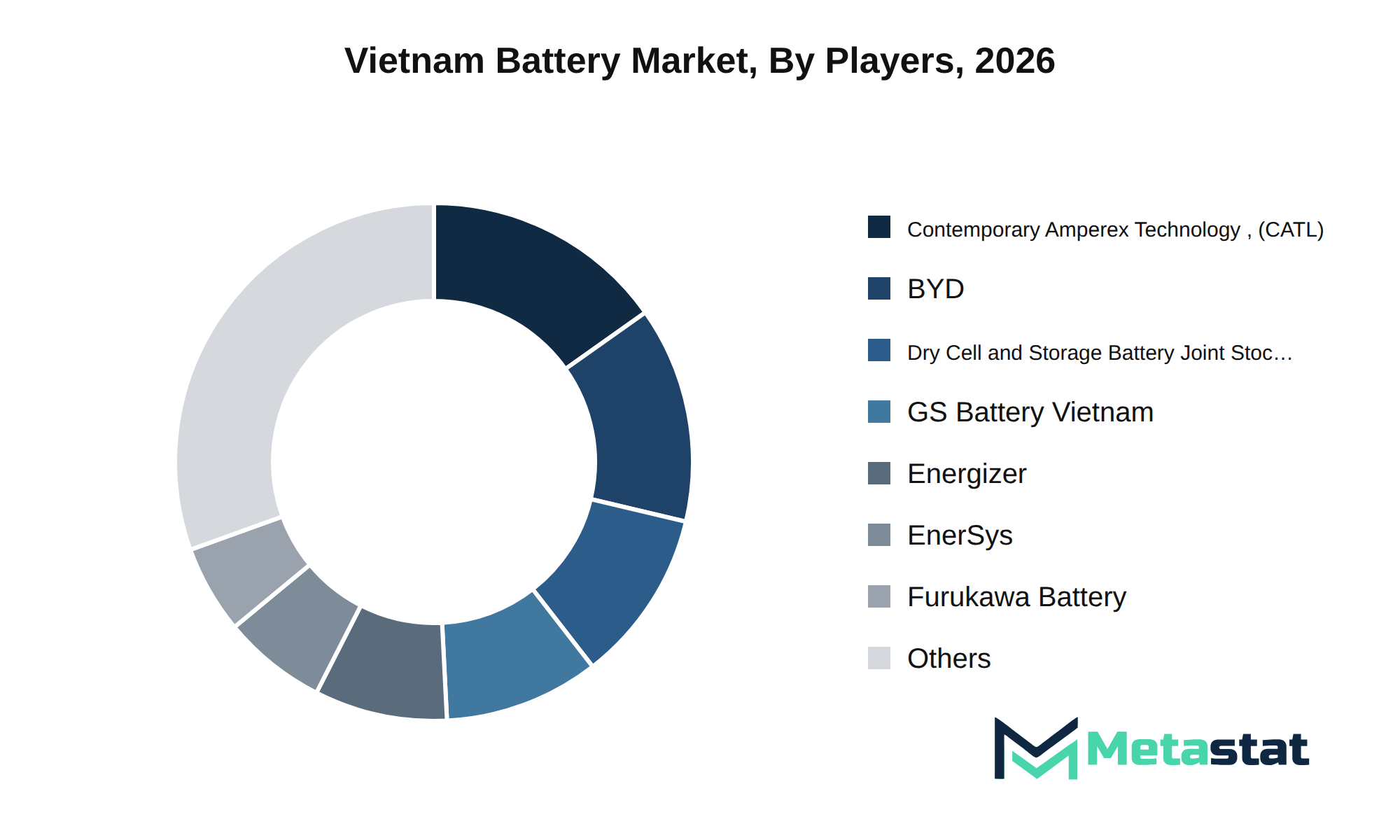
The Vietnam Battery market features a diverse competitive landscape, where various players engage in strategies including mergers and acquisitions, strategic consolidation, and industry restructuring. Companies like BYD Co Ltd and Contemporary Amperex Technology Co., Limited (CATL) leverage their technological capabilities to differentiate their products, enhancing customer loyalty and brand equity. Emphasis on research and development pipelines enables these firms to create proprietary technology moats that secure their market positions.
Strategic alliances and joint ventures play a crucial role in expanding market reach and sharing technological advancements. Partnerships between local companies like CSB Energy Technology (Vietnam) Co., Ltd. and global players facilitate the integration of supply chain dominance and procurement leverage. The competitive environment reflects a strong focus on customer retention strategies and the management of switching costs, ensuring sustained engagement with end-users.
Challenges persist for new entrants due to high barriers to entry, including established IP portfolios and patent landscapes held by dominant firms like Energizer Holdings, Inc. and Exide Industries. The future competitive outlook indicates that ongoing technological advancements and shifts in consumer preferences will shape the market landscape significantly. Players focusing on innovation and adaptability drive strategic growth vectors necessary for long-term success in the Vietnam Battery market.
Market size is forecast to rise from USD 1,743 million in 2025 to over USD 3,448.7 million by 2033. This growth reflects an 8.9% compound annual growth rate (CAGR), driven by multiple factors within the Vietnam Battery market. Current economic conditions, characterized by increasing investment in infrastructure and technological advancements, play a significant role in shaping market dynamics. The ongoing maturation of core industries, including automotive and renewable energy, directly influences downstream demand for batteries.
The bull case projects accelerated adoption of next-generation technologies, resulting in heightened demand for lithium-ion and other advanced battery types. Conversely, the bear case anticipates potential disruptions linked to regulatory changes and geopolitical realignments, which could affect supply chain stability and operational costs. These shifts prompt businesses to reevaluate their strategic capital allocation and investment vectors, focusing on areas with high growth potential and unmet enterprise needs.
Emerging opportunities within the market include the integration of innovative battery solutions in electric vehicles and stationary energy storage systems. Timely commercialization of research and development efforts will enhance competitive positioning and meet evolving customer demands. While the Vietnam Battery market continues to evolve, stakeholders remain vigilant in responding to regulatory evolution and compliance milestones, ensuring alignment with national policies and international standards.
The outlook for the Vietnam Battery market emphasizes the importance of strategic foresight in navigating challenges and pursuing growth opportunities. Proactive measures in executive-level decision-making will cultivate resilience, enabling companies to capitalize on structural consumption shifts and emerging trends in battery technology and application.
The report strategically identifies and profiles the key market players and analyses their core competencies in each sub-segment of the Battery market.
Report Attributes | Details |
Study Period | 2021-2033 |
Base Year | 2025 |
Estimated Year | 2026 |
Forecast Period | 2026-2033 |
Historical Period | 2021-2025 |
Growth Rate | CAGR 8.9% from 2026 to 2033 |
Revenue Unit | USD million |
Segmentation | By Battery Type, Application, Distribution Channel, Region, and Region |
Find answers to common questions about this report
The Vietnam Battery market size was valued at USD 1,743 million in 2025.
The Vietnam Battery market is projected to grow at a CAGR of 8.9% during the forecast period from 2026 to 2033.
Lithium-Ion Batteries lead the Vietnam Battery market with a projected value of USD 1,680.5 million by 2033, surpassing other battery types in growth potential.
Growing environmental concerns and the push for sustainability drive demand for advanced battery technologies in the Vietnam Battery market. Increased investments in lithium-ion and alternative battery types stem from industries striving to reduce carbon emissions, particularly in electric vehicles and renewable energy systems.
The Vietnam Battery market growth faces significant restraints due to stringent regulatory challenges, high production costs, and supply chain disruptions. Geopolitical tensions and trade deficits complicate sourcing essential components, while infrastructure gaps and skilled labor deficiencies hinder operational efficiency and market access. These factors collectively limit manufacturers' ability to meet growing demand.
Growing environmental concerns and the push for sustainability drive product adoption within the Vietnam Battery market. Industries seek efficient energy storage solutions, particularly in electric vehicles and renewable energy systems, leading to increased investments in advanced battery technologies. Enhanced operational productivity and cost-efficiency initiatives further support the demand for these products.
The Battery market is estimated to reach a valuation of USD 3,448.7 million by 2033.
Key players in the Vietnam Battery Market include BYD Co Ltd, Contemporary Amperex Technology Co., Limited (CATL), CSB Energy Technology (Vietnam) Co., Ltd., Dry Cell and Storage Battery Joint Stock Company (PINACO), Energizer Holdings, Inc., and Samsung SDI Vietnam Co., Ltd.
Northern Vietnam leads the Vietnam Battery market, with a projected value of USD 1,411.2 million by 2033.
Lithium-ion batteries are expected to reach a value of USD 1,680.5 million by 2033, reflecting a CAGR of 13.1%.
The analysts below cover Energy and Power research at Metastat Insights.
LEAD ANALYST
Utkarsh Khirodkar is a Lead Market Research Analyst at MetaStat Insight, specializing in market intelligence, technology sector assessments, and competitive strategy.

PRINCIPAL CONSULTANT - ENTERPRISE AI & EMERGING TECHNOLOGIES
Banking & Finance · Electronics and Semiconductor · Energy and Power · Healthcare IT · Information & Technology · Professional Services
Vijay Gunti is a Principal Consultant at MetaStat Insight, bringing over two decades of experience across enterprise digital transformation, technology strategy, and intelligent systems.

ENERGY & INFRASTRUCTURE INDUSTRY CONSULTANT
Automotive and Transportation · Electronics and Semiconductor · Energy and Power · Machinery & Equipment
Saurabh Vasant Ganvir consults for Energy & Infrastructure Industry at MetaStat Insight, specializing in renewable energy, solar EPC, and electric vehicle (EV) infrastructure markets.
Replacing petrochemical surfactants with bio-based alternatives requires realistic timelines on industrial precision fermentation scaling. The market research broke down commercialization timelines, feedstock sugar price sensitivities, and regional cosmetic ingredient regulatory approvals in Europe and East Asia. That supplier readiness mapping gave our formulations team reliable context when comparing renewable chemical sourcing roadmaps.
Tracking ceramic matrix composite adoption in high-bypass aero engines requires strict attention to material qualification cycles and FAA airworthiness testing milestones. The MetaStat Insight team provided a detailed timeline of silicon carbide fiber manufacturing capacity and commercial foundry lead times. Having clear visibility into upstream thermal barrier coating supply helped us stress-test our long-term component procurement strategy.
Transitioning ultra-class mining haul trucks to alternative power requires concrete data on remote hydrogen refueling infrastructure economics. The report evaluated megawatt-scale electrolyzer installation expenses, onsite storage safety mandates, and heavy-duty fuel cell stack degradation under continuous duty cycles. That technical rigor helped our engineers benchmark realistic total operating cost horizons for off-highway fleet decarbonization.
Explore related market intelligence reports worth reading alongside this one.