
LEAD ANALYST
Utkarsh Khirodkar is a Lead Market Research Analyst at MetaStat Insight, specializing in market intelligence, technology sector assessments, and competitive strategy.

Global Automotive Lighting Plastic Components Market Size, Share, By Component Type (Outer Lenses and Lamp Covers, Inner Optical Lenses and Thick-Wall Optics, Light Guides and Light Pipes, Reflectors, Housings and Rear Covers, Bezels and Decorative Frames, Diffusers, Brackets and Carriers, Others), By Material Type (Polycarbonate, Polymethyl Methacrylate, Acrylonitrile Butadiene Styrene, Polybutylene Terephthalate, Polypropylene, Polyamide, PC/ABS Blends, Bulk Molding Compound, Others), By Vehicle Type (Passenger Cars, Light Commercial Vehicles, Medium and Heavy Commercial Vehicles, Two-Wheelers, Three-Wheelers, Off-Highway Vehicles), By Lighting Application (Headlamps and Front Lighting, Rear Lamps and Tail Lamps, Turn Signals and Indicators, Fog and Auxiliary Lamps, Daytime Running Lamps, Others), Industry Analysis, Growth, Trends, and Forecast, 2026-2033
Report ID
MSI-5209
Published
September, 2026
Pages
303 Pages
Format
Historical
Base year
Forecast
Forecast period
Report Details
Choose Your License
Global Automotive Lighting Plastic Components Market
The global Automotive Lighting Plastic Components market was valued at USD 5,286 million in 2025 and is projected to reach USD 8,555.8 million by 2033, growing at a CAGR of 6.2% over the forecast period.
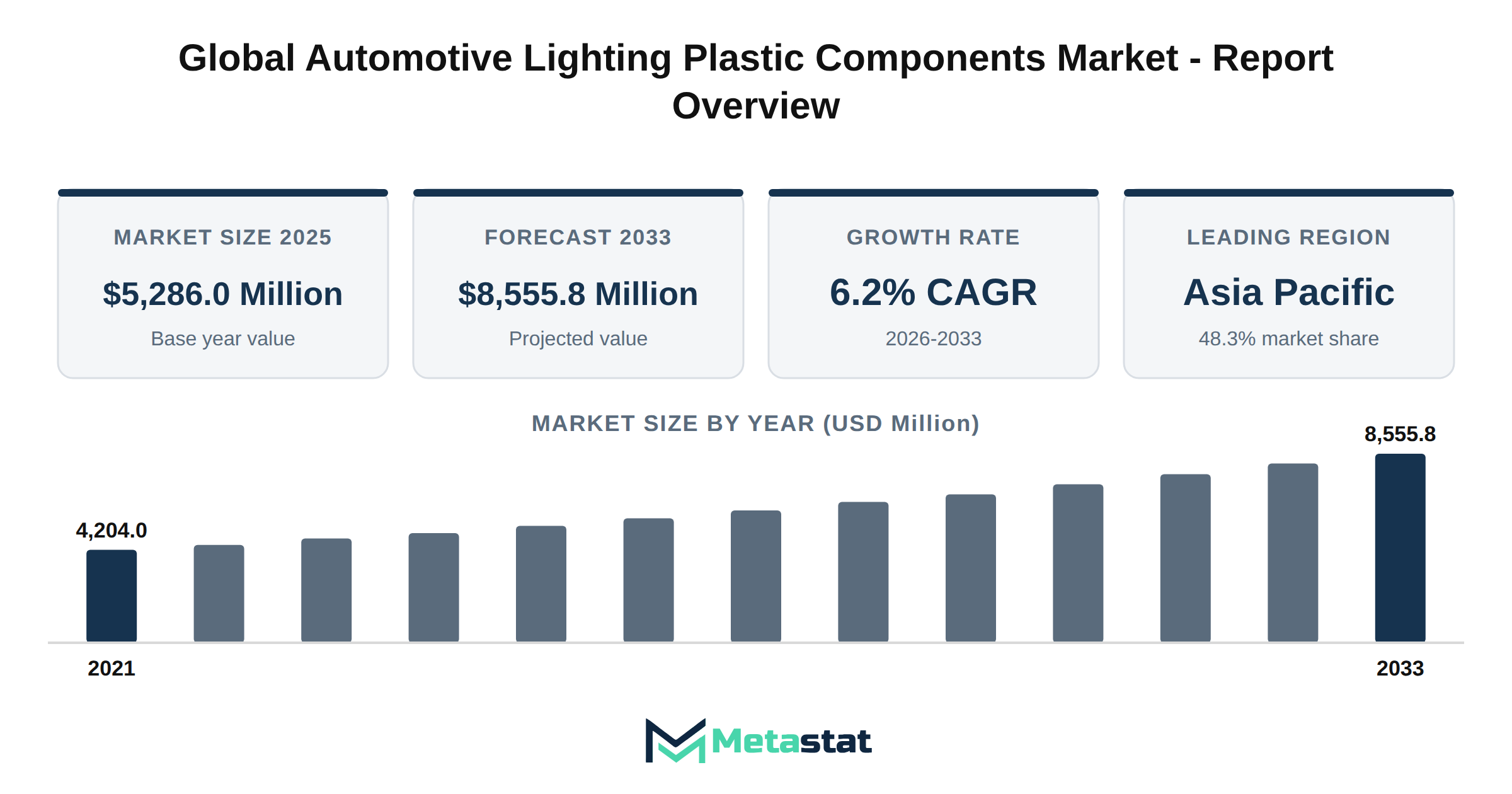
The global Automotive Lighting Plastic Components market recorded a base value of USD 5,286 million in 2025, with a projected value of USD 8,555.8 million by 2033, reflecting a compound annual growth rate (CAGR) of 6.2% during the forecast period from 2026 to 2033. Historical data shows a gradual market increase from USD 4,204 million in 2021 to USD 4,960.1 million in 2024, indicating a consistent upward trend.
Demand for automotive lighting plastic components is driven by the growing adoption of LED and matrix lighting technologies, which offer enhanced visibility and energy efficiency. Vehicle manufacturers integrate advanced lighting systems that align with consumer preferences for improved safety and aesthetics.
The shift toward lightweight optical plastics in automotive lighting systems aligns with industry efforts to reduce vehicle weight, enhancing fuel efficiency and performance. Polycarbonate and polymethyl methacrylate (PMMA) innovations facilitate this transition by providing durable and lightweight options for lamp components.
The growth of light guides and thick-wall optics in vehicle lighting enhances the efficiency and design versatility of automotive lighting applications. These components contribute to advanced lighting solutions, allowing for more creative and functional designs in modern vehicles.
Trends in advanced injection molding for automotive lighting plastic parts focus on precision and efficiency, reducing production costs and improving part quality. This technique enables the production of complex geometries and high-quality surface finishes, critical for meeting performance standards in the automotive sector.
The market for automotive lighting plastic components increasingly caters to electric and premium vehicles, which demand high-performance materials and innovative designs. This segment demonstrates significant growth potential, driven by the rising popularity of electric vehicles equipped with advanced lighting technologies.
Design integration of decorative bezels and ambient lighting components enhances the visual appeal of vehicles, providing manufacturers with opportunities to differentiate their products in a competitive marketplace. Incorporating these features aligns with consumer preferences for personalization and enhanced interior aesthetics.
Thermal, UV, and impact performance requirements for lighting plastics remain critical, ensuring that components withstand varying environmental conditions. These performance criteria drive material innovations, enhancing the longevity and reliability of automotive lighting systems.
Surface coating and hard-coating innovations for automotive lamp lenses improve durability and resistance to scratches and environmental factors. These advancements enhance the functionality and aesthetic quality of lighting components, contributing to overall vehicle appeal.
Sustainability and the use of recycled plastics in automotive lighting components reflect the industry's commitment to environmental responsibility. Manufacturers adopt sustainable materials and processes, aligning with global initiatives aimed at reducing carbon footprints.
Supply chain and localization trends in the automotive lighting plastic components market emphasize the importance of regional production capabilities. This focus on local sourcing enhances responsiveness to market demands and reduces lead times, positively impacting overall operational efficiency.
The growing demand for LED and matrix lighting technologies significantly influences the Automotive Lighting Plastic Components market. These advanced lighting solutions enhance vehicle visibility and safety, driving the need for high-performance plastic components that support these innovations. The shift toward lightweight optical plastics, particularly in high-efficiency automotive lighting systems, aligns with manufacturers' goals to improve fuel efficiency and reduce overall vehicle weight. This trend highlights the critical role of advanced materials in meeting automotive design and performance standards.
Polycarbonate and PMMA innovations play a vital role in the development of automotive lamp components. These materials offer superior optical clarity, impact resistance, and thermal stability, essential for modern lighting applications. Increasing adoption of light guides and thick-wall optics within vehicle lighting systems supports the evolution of design aesthetics and functionality, contributing to overall market growth.
Advanced injection molding techniques transform the production of automotive lighting plastic parts, enhancing precision and reducing waste. These methods enable manufacturers to produce complex geometries that meet stringent performance standards while optimizing production efficiency. Design integration of decorative bezels and ambient lighting components enriches the consumer experience, responding to the growing demand for customizable vehicle interiors.
The Automotive Lighting Plastic Components market faces rigorous thermal, UV, and impact performance requirements, necessitating continuous material advancements. Innovations in surface coating and hard-coating technologies for automotive lamp lenses enhance durability and resistance to environmental factors, extending product life and maintaining optical performance. Sustainability trends emphasize the importance of recycled plastics in automotive lighting components, reflecting the industry's commitment to environmental responsibility and circular economy principles.
The supply chain for automotive lighting plastic components reflects localization trends, driven by the need for efficiency and responsiveness to market demands. Regulatory impacts on component design and materials increasingly shape production strategies, ensuring compliance with evolving safety and environmental standards. Future opportunities in smart and adaptive automotive lighting plastics emerge from advancements in technology, regulatory compliance, and the need for innovative solutions to meet changing consumer preferences.
The Automotive Lighting Plastic Components market experiences significant shifts due to ongoing research and development trajectories, focusing on next-generation innovations and sustainable transformations. Corporate imperatives prioritize capital allocation and infrastructure investments, shaping the future strategic outlook for the industry. High-value recommendations guide stakeholders in navigating market fragmentation, M&A dynamics, and the complexities of the value chain.
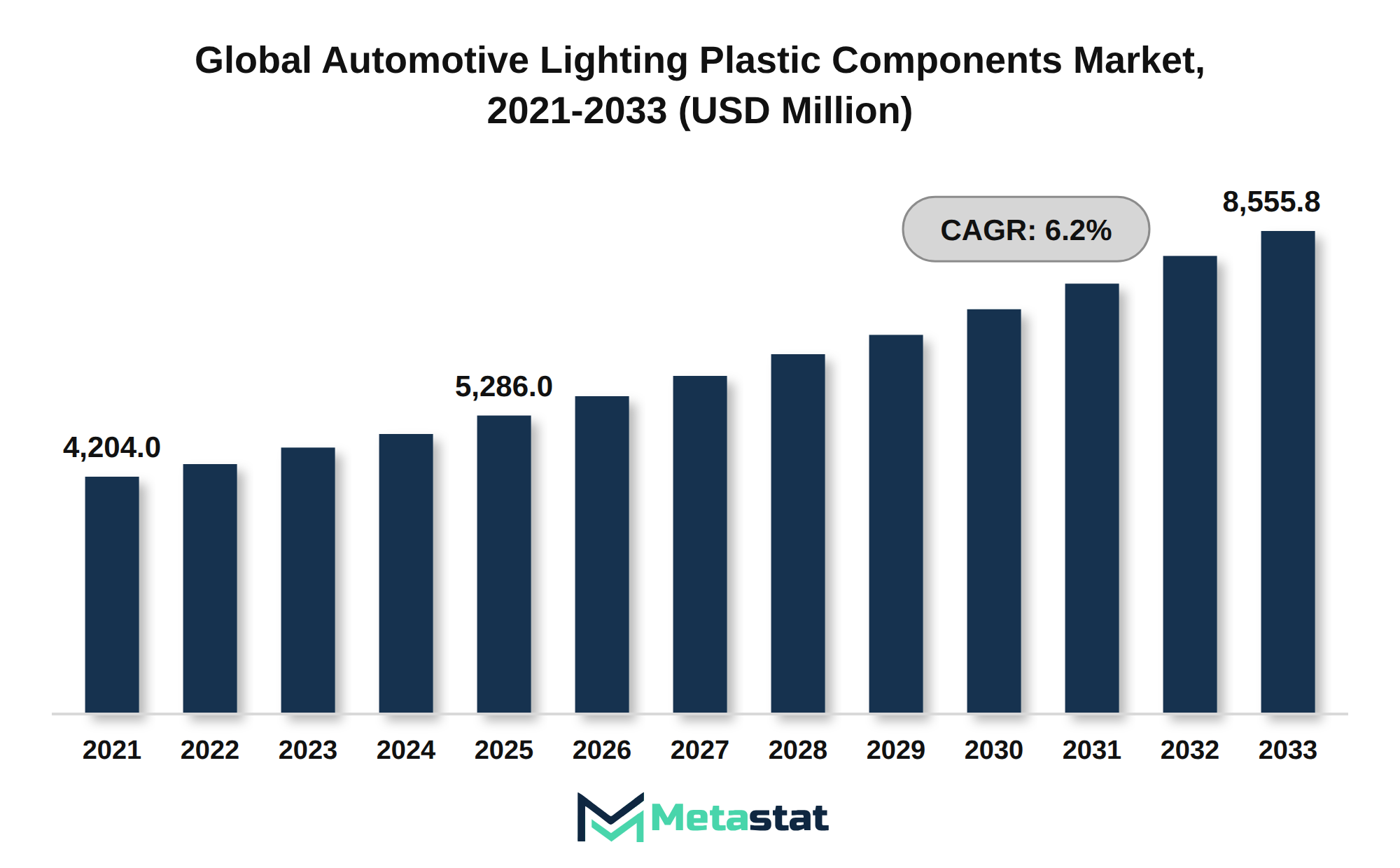
The Automotive Lighting Plastic Components market benefits from favorable capital investment environments characterized by increasing GDP growth and enhanced public-private spending power. Economic stability encourages investments in innovative automotive technologies, particularly in lighting solutions that enhance vehicle safety and energy efficiency.
Interest rates play a critical role in shaping capital allocation strategies within the automotive sector. Lower interest rates facilitate access to financing for manufacturers, allowing them to invest in research and development of advanced lighting systems. This trend drives market expansion through the introduction of new product lines and enhancements to existing offerings.
Venture funding further fuels innovation by providing financial resources for startups and established companies focused on developing advanced lighting technologies. This influx of capital enables significant advancements in materials and design, ultimately improving product performance and sustainability. Increased venture funding leads to a more competitive environment, driving demand for automotive lighting plastic components.
The combination of GDP growth, interest rate dynamics, and venture funding creates a robust capital investment environment that propels the Automotive Lighting Plastic Components market forward, supporting technological advancements and increasing adoption of innovative lighting solutions.
Increased investment in infrastructure development significantly impacts the Automotive Lighting Plastic Components market. Governments and private entities prioritize enhancing transportation networks, leading to greater demand for vehicles equipped with advanced lighting solutions. Improved infrastructure supports higher vehicle usage, which directly correlates with the rising need for effective automotive lighting components.
Developing regions particularly benefit from infrastructure enhancement, resulting in higher vehicle sales and increased consumer access to advanced technologies. This trend drives demand for innovative lighting solutions that enhance safety and visibility, aligning with evolving consumer preferences for quality and performance in automotive lighting. The expansion of infrastructure upgrades contributes to the overall growth trajectory of the market.
Public-private partnerships in infrastructure spending create opportunities for automotive manufacturers to integrate advanced lighting features into new vehicles. Enhanced lighting components including LED technologies and intelligent lighting systems improve vehicle performance and safety, aligning with consumer expectations. Such investments in infrastructure support the market, driving innovation and facilitating product diversification in the Automotive Lighting Plastic Components market.
Regulatory tightening presents a significant restraint on the Automotive Lighting Plastic Components market. Compliance hurdles associated with evolving standards create barriers for manufacturers, increasing costs and operational complexities. The need for extensive testing and certification processes delays product launches and strains resources, particularly for smaller firms lacking the necessary infrastructure. Legal mandates regarding safety and environmental impacts compel producers to invest in advanced technologies, further escalating operational expenses.
Macroeconomic headwinds, including inflationary pressures, have contributed to rising raw material costs, affecting profit margins in the market. Supply chain disruption stemming from geopolitical instability exacerbates these issues, leading to longer lead times and unpredictable availability of essential components. Such challenges hinder the ability of automotive manufacturers to meet growing demand effectively.
Technological obsolescence poses additional risks, driven by rapid advancements in lighting technologies that necessitate continual investment in research and development. The threat of substitution from alternative materials and designs further complicates the landscape, compelling companies to adopt innovative solutions to retain competitive advantage. The Automotive Lighting Plastic Components market faces not only these direct challenges but indirect effects stemming from regional adoption resistors and cultural barriers that delay market penetration and overall growth.
Geopolitical fragmentation significantly impacts the Automotive Lighting Plastic Components market, introducing uncertainties related to trade policies and tariffs. These geopolitical tensions lead to trade deficits that hinder the movement of raw materials and finished components, resulting in increased costs and disrupted supply chains. Market participants face challenges related to tariff friction, which inflates operational expenses and reduces competitiveness.
Technological disruptions present another significant challenge for the market. Rapid advancements in lighting technology require continuous investment in research and development, leading to complex integrations that demand skilled labor. The existing workforce lacks the necessary skills to adapt to these technological changes, resulting in talent retention pressures that affect production capabilities.
Volatility in feedstock and component prices complicates market dynamics. Fluctuations in raw material costs exert pressure on profit margins, straining financial performance. Rising input costs prompt manufacturers in the market to adjust their pricing strategies, leading to reduced demand from price-sensitive customers.
Logistics disruptions and supply chain instability hinder the timely delivery of components, impacting production schedules and customer satisfaction. These interruptions stem from various factors, including natural disasters and global pandemic effects. Tightening global regulatory standards increase compliance overhead for manufacturers, adding to the operational burden.
Environmental lifecycle footprints and sustainability demands shape market strategies, compelling companies to invest in greener technologies and practices. Failing to meet sustainability expectations risks reputational damage and loss of market share. Overall, these challenges create a complex environment for the Automotive Lighting Plastic Components market, influencing growth trajectories and competitive positioning.
A strong shift towards next-generation innovations drives growth within the Automotive Lighting Plastic Components market. Rapid advancements in materials and manufacturing processes enhance product performance, meeting evolving consumer expectations for efficiency and sustainability. Increased adoption of lightweight materials, including polycarbonate, leads to weight reduction in vehicles, which improves fuel efficiency and lowers emissions. This innovation drives demand across various vehicle types, particularly passenger cars, driven by manufacturers seeking to comply with stricter environmental standards.
Geographical expansion into emerging markets, particularly in Asia Pacific, presents significant opportunities for manufacturers. Rising disposable incomes and urbanization in these regions create heightened demand for advanced automotive lighting solutions. Local players capitalize on these trends by expanding distribution networks and tailoring products to meet regional preferences. Infrastructure modernization initiatives in several countries facilitate the integration of advanced lighting systems, promoting safety and aesthetic appeal in urban environments.
Strategic consolidation through mergers and acquisitions supports market growth by enhancing competitive positioning and expanding product portfolios. Collaborations among key players enable increased research and development capabilities, leading to the introduction of innovative solutions that cater to diverse consumer needs. This trend contributes to the overall expansion of the Automotive Lighting Plastic Components market, ensuring that suppliers remain agile and responsive to market dynamics.
Digital transformation shifts purchasing behaviors, with stakeholders increasingly favoring online procurement methods. This transition streamlines the buying process and supports greater market accessibility. Enhanced digital platforms facilitate real-time communication between manufacturers and customers, optimizing order fulfillment and improving customer satisfaction. The Automotive Lighting Plastic Components market stands to benefit significantly from these changes, aligning supply with demand more effectively.
The Global Automotive Lighting Plastic Components market is segmented based on Component Type, Material Type, Vehicle Type, and Lighting Application.
Valued at USD 1,119.6 million in 2026, the Outer Lenses & Lamp Covers segment is projected to reach USD 1,643.6 million by 2033, reflecting a CAGR of 5.6% during the forecast period. This segment significantly enhances vehicle safety and aesthetics, driven by the rising demand for innovative lighting solutions in the Automotive Lighting Plastic Components market. The adoption of advanced technologies, including LED and adaptive lighting, further drives market growth, because these technologies rely on high-quality outer lenses and lamp covers for optimal performance.
Product evolution remains a significant driver in this segment, with manufacturers focusing on lightweight and durable materials that improve energy efficiency and performance. Enhanced design capabilities and customization options enable manufacturers to meet diverse consumer preferences, increasing adoption across various vehicle types. Regulatory compliance standards concerning safety and environmental impacts encourage the use of advanced materials, reinforcing market growth.
Pricing volatility and margin pressures arise from fluctuations in raw material costs, impacting profitability for manufacturers. Strategic investments in supply chain resilience and raw material sourcing facilitate stability, enabling players to navigate market challenges effectively. The ongoing trend toward electric vehicles introduces new opportunities, because these vehicles typically require advanced lighting solutions that enhance both functionality and design. Overall, the evolving conditions of the Automotive Lighting Plastic Components market drive continuous innovation within the Outer Lenses & Lamp Covers segment, supporting sustained growth and competitive positioning.
Growth in the Inner Optical Lenses & Thick-Wall Optics segment aligns with the increasing adoption of advanced lighting technologies in the Automotive Lighting Plastic Components market. Innovations in optical design enhance light performance, driving demand from manufacturers seeking to improve vehicle visibility and safety. Enhanced regulatory standards regarding vehicle lighting efficiency further support the segment's expansion.
The segment is estimated to reach USD 1,345 million by 2033, at a CAGR of 6.7% during the forecast period. Increasing consumer preference for high-quality lighting solutions in passenger vehicles and commercial applications contributes significantly to this growth. The focus on lightweight materials to improve fuel efficiency supports demand for innovative plastic components in automotive lighting, particularly in the context of evolving environmental regulations.
Next-generation upgrades in automotive lighting systems create opportunities for stakeholders in this segment, particularly in integrating smart technologies including adaptive lighting and automated control systems. This trend toward technological maturation drives investments in research and development, enabling manufacturers to remain competitive in the evolving Automotive Lighting Plastic Components market. The market continues to evolve with the integration of advanced features that enhance user experience.
Strategic collaborations and partnerships among component manufacturers and automotive OEMs facilitate efficient supply chain management and raw material sourcing, enhancing product availability and reducing costs. The emphasis on quality certifications and compliance with international standards ensures that products meet market expectations, further strengthening the segment's position.
Strong growth in the Light Guides & Light Pipes segment of the Automotive Lighting Plastic Components market reflects increasing adoption of advanced lighting solutions in vehicles. Rising consumer preference for aesthetic and functional lighting features drives demand for specialized components, contributing to a projected market value of USD 1,309.9 million by 2033. The automotive industry’s ongoing transition to LED technology enhances the performance and efficiency of lighting systems, further supporting segment expansion.
Technological maturation enables the development of innovative designs and materials, enhancing the efficiency of light transmission and durability of components. Next-generation upgrades focus on improving energy efficiency and sustainability, aligning with broader industry trends toward greener technologies. Regulatory compliance standards emphasize the importance of safety and environmental considerations, ensuring that products meet stringent requirements. This dynamic environment encourages investment in research and development within the segment, leading to continuous innovation and improved product offerings.
Cost structures remain influenced by fluctuations in raw material prices, impacting production expenses and pricing strategies. Effective supply chain management and strategic partnerships enhance resilience, ensuring competitive pricing and availability of high-quality materials. The evolving landscape of consumer preferences, along with a strong emphasis on design and functionality, drives significant consumption shifts within the market. The Light Guides & Light Pipes segment significantly shapes the future of automotive lighting, reflecting broader trends within the Automotive Lighting Plastic Components market.
Reflectors in the Automotive Lighting Plastic Components market show promising growth. This segment is projected to grow at a CAGR of 5.1% during the forecast period. Increasing demand for energy-efficient lighting solutions drives manufacturers to innovate in reflector design and material usage. Technological advancements in reflectors enhance light performance and durability, meeting the evolving requirements of automotive manufacturers. The push for enhanced vehicle safety features contributes to the adoption of high-performance reflectors, aligning with regulatory compliance standards. The shift towards electric vehicles creates new opportunities for reflector technologies, driven by the requirement for optimized lighting systems. Enhanced focus on aesthetics and functionality in vehicle design further supports the growth of the reflector segment. Overall, the market reflects a trend toward advanced materials and engineering solutions, ensuring a sustainable growth trajectory in the coming years.
Growth in the Automotive Lighting Plastic Components market significantly relies on demand for robust and lightweight materials, with Housings & Rear Covers playing a vital role in overall product performance. The automotive industry's transition toward lightweight vehicles supports this segment, driving manufacturers to enhance designs that improve fuel efficiency and reduce emissions. Technological maturation in materials and manufacturing processes enables the production of innovative, durable housings that withstand harsh environmental conditions, contributing to vehicle longevity and safety.
Next-generation upgrades to lighting systems, including advanced LED technologies, create opportunities for the market. These upgrades necessitate housing solutions that accommodate new designs while ensuring optimal light distribution and performance. The evolution of automotive lighting applications further influences demand, with increasing integration into vehicle designs that prioritize aesthetics and functionality.
Compliance with evolving regulatory standards enhances safety and efficiency, placing additional pressure on manufacturers to develop high-quality Housings & Rear Covers. This segment adapts to these regulations while navigating cost structures and pricing volatility associated with raw material sourcing. Strategic investments in supply chain resilience and the incorporation of sustainable practices become essential since environmental considerations influence consumer preferences and regulatory frameworks.
Supply chain resilience remains critical in maintaining consistent production levels during global disruptions. Risks related to raw material sourcing impact manufacturing timelines and costs, compelling businesses to diversify suppliers and strengthen relationships throughout the supply chain. Innovations in materials and processes position firms to leverage strategic opportunity windows, allowing them to capitalize on emerging trends and consumer demands.
Growth in the Bezels & Decorative Frames segment arises from increasing consumer preference for enhanced aesthetics in automotive design. Manufacturers recognize that visually appealing components contribute significantly to vehicle differentiation, prompting investments in innovative designs. Heightened demand from vehicle manufacturers focusing on premium offerings attracts buyers.
Technological maturation in materials has led to the creation of lightweight and durable bezels, allowing for greater design flexibility. This evolution supports the integration of advanced functionalities within automotive lighting systems. Trends toward customization and personalization drive the need for diverse decorative frames, reflecting a broader consumer shift toward unique vehicle appearances.
End-use dynamics reflect a rising demand for bezels and decorative frames in both passenger cars and commercial vehicles. Vehicle manufacturers actively seek components that enhance aesthetic appeal while maintaining compliance with safety standards. These dynamics create a competitive landscape where innovation in design and functionality plays a critical role in market positioning.
Strategic opportunity windows emerge due to the ongoing transition toward electric vehicles, where the aesthetics of lighting components become crucial in branding. Manufacturers focusing on sustainable materials find avenues for differentiation in the market, aligning with consumer expectations for environmentally friendly options. This alignment with trends enhances market resilience and positions players for future growth.
Increased focus on energy efficiency drives demand for diffusers within the Automotive Lighting Plastic Components market. The evolution of LED technology necessitates advanced light distribution solutions, with diffusers playing a critical role in enhancing the performance of lighting systems. Adoption of these components aligns with the growing emphasis on design aesthetics in vehicle manufacturing, driven by manufacturers looking for ways to improve both functionality and visual appeal.
Technological maturation fuels innovation in diffuser materials and designs. Advances in production techniques enable the creation of more complex geometries that enhance light diffusion efficiency. This progress supports the evolution of products tailored to specific lighting applications, further enhancing the significance of diffusers in various automotive lighting setups.
End-use dynamics reflect a shift towards more integrated lighting solutions. Vehicle manufacturers increasingly seek products that contribute to overall vehicle performance, influencing demand for high-quality diffusers that optimize light output. Regulatory compliance standards regarding safety and efficiency reinforce the necessity for effective light distribution systems, leading to greater emphasis on advanced diffusers in new vehicle models.
Cost structures in the production of diffusers are influenced by raw material sourcing and supply chain resilience. Volatility in pricing for materials impacts overall production costs, affecting profitability margins for manufacturers. Strategic opportunity windows exist for companies that adapt to market fluctuations by optimizing supply chains and exploring alternative materials that mitigate cost pressures.
With the automotive lighting sector continuously evolving, attention towards diffusers highlights their essential role in the Automotive Lighting Plastic Components market. Ongoing investment and research into next-generation upgrades will likely shape the future of this sub-segment, positioning it for significant growth in the coming years.
Growth within the Automotive Lighting Plastic Components market reflects the increasing integration of Brackets, Carriers & Holders in various lighting applications. Demand for these components arises primarily from advancements in vehicle design and safety regulations, which necessitate robust and reliable mounting solutions for automotive lighting systems. The transition towards lightweight materials enhances vehicle performance and efficiency, leading to increased adoption of innovative plastic solutions in this segment.
Technological maturation drives investments in next-generation upgrades, allowing manufacturers to enhance the durability and aesthetic appeal of Brackets, Carriers & Holders. This segment benefits from evolving consumer preferences for vehicle customization, with manufacturers focusing on developing products that meet specific design requirements. Regulatory compliance standards influence product development, ensuring that components maintain structural integrity while aligning with environmental sustainability goals.
Shifts in consumption patterns favor the adoption of advanced materials that contribute to weight reduction and improved fuel efficiency. The market observes increasing competition among suppliers, prompting them to optimize their offerings through strategic partnerships and collaborations. These dynamics create strategic opportunity windows for manufacturers to innovate and differentiate their products, ultimately enhancing market penetration and revenue generation.
In the automotive industry, the integration of shields, vents, and sealing components serves critical functions in protecting lighting systems from environmental factors. These components enhance the durability and performance of automotive lighting, promoting their adoption across various vehicle types.
Technological advancements contribute significantly to the evolution of shields, vents, and sealing components. The development of lightweight yet robust materials, including advanced plastics, enables manufacturers to produce components that meet stringent performance standards while minimizing weight. This evolution aligns with the broader trend of enhancing fuel efficiency and reducing emissions in vehicles.
End-use dynamics demonstrate a strong preference for components that offer superior protection and reliability. Vehicle manufacturers prioritize ensuring that lighting systems withstand harsh conditions, including exposure to moisture, dust, and temperature fluctuations. Consequently, the performance of these components directly influences consumer safety and satisfaction.
Regulatory compliance standards play an important role in shaping the design and materials used for shields, vents, and sealing components. Manufacturers actively seek certifications that demonstrate compliance with industry regulations, facilitating market entry and acceptance of their products. This ensures that the automotive lighting plastic components market aligns with safety and environmental standards.
Supply chain resilience remains crucial for manufacturers involved in producing these components. The global sourcing of raw materials, particularly advanced polymers, influences production timelines and cost structures. Fluctuations in raw material availability impact pricing and margins, prompting manufacturers to adopt strategic sourcing initiatives to mitigate risks.
Strategic opportunity windows emerge in response to the increasing demand for electric vehicles (EVs) and hybrid models. These vehicles require specialized lighting solutions that offer enhanced energy efficiency and performance. While the market shifts toward sustainability, the demand for innovative sealing solutions that cater to EV requirements strengthens.
Investment in research and development remains essential for manufacturers to stay competitive in the automotive lighting plastic components market. Continuous innovation in production techniques and material science enables companies to deliver effective solutions that meet evolving consumer and regulatory demands.
Valued at USD 1,813.4 million in 2026, the Polycarbonate (PC) segment is projected to reach USD 2,807.2 million by 2033, at a CAGR of 6.4% during the forecast period. This growth primarily derives from rising demand for lightweight and durable materials in automotive lighting applications. Manufacturers prioritize Polycarbonate due to its excellent impact resistance, optical clarity, and versatility in design, contributing to higher adoption rates in modern vehicle models.
Technological maturation within the market facilitates the development of advanced Polycarbonate formulations that enhance performance characteristics. Innovations in coatings and treatments improve heat resistance and UV stability, addressing critical performance requirements for automotive lighting. Consequently, vehicle manufacturers consider Polycarbonate a preferred material for components like outer lenses and lamp covers, driving segment expansion.
The segment's growth benefits from evolving regulatory compliance standards that emphasize energy efficiency and safety in automotive lighting. Polycarbonate components align with these standards, making them attractive to vehicle manufacturers keen on meeting stringent regulations while enhancing overall vehicle aesthetics. End-use dynamics favor materials that offer both practical benefits and design flexibility.
Consumption shifts toward more environmentally friendly materials influence the market, with Polycarbonate being recyclable and contributing to sustainable automotive practices. This shift presents strategic opportunity windows for manufacturers aiming to capture environmentally conscious buyers. In addition, increasing capital investments in R&D by key players support the continuous evolution of Polycarbonate applications.
Overall, the Polycarbonate (PC) segment plays a critical role in the Automotive Lighting Plastic Components market, demonstrating significant growth potential driven by innovation, regulatory compliance, and shifting consumer preferences.
Growth in the Polymethyl Methacrylate (PMMA/Acrylic) segment demonstrates strong alignment with advancements in automotive lighting technologies. Increasing adoption of energy-efficient and lightweight materials drives demand for PMMA/Acrylic, particularly in applications requiring superior optical clarity and durability. This material provides significant advantages in both functional and aesthetic aspects of automotive lighting components.
Valued at USD 1,987.5 million by 2033, the segment is expected to grow at a CAGR of 6.8% during the forecast period. The expanding automotive sector emphasizes the importance of regulatory compliance, which influences manufacturers to seek high-quality materials that meet stringent safety and performance standards. This focus on compliance enhances the overall value of PMMA/Acrylic within the Automotive Lighting Plastic Components market.
Technological maturation plays a critical role in this segment's growth. Continuous innovations in production processes lead to higher-quality PMMA materials that exhibit enhanced thermal stability and scratch resistance. These advancements enable manufacturers to produce components that not only meet aesthetic demands but withstand challenging environmental conditions.
Product evolution within the segment reflects the industry's response to consumer preferences for design flexibility and customization. The shift towards integrated lighting solutions drives the need for versatile materials like PMMA/Acrylic, which seamlessly blend into various vehicle designs. This growing consumer emphasis on personalized automotive aesthetics supports increased investment and development in the segment.
Overall, the Polymethyl Methacrylate (PMMA/Acrylic) segment positions itself because a vital contributor to the Automotive Lighting Plastic Components market, with a growth trajectory fueled by material advancements, regulatory compliance, and evolving consumer demands.
Increasing demand for lightweight and durable materials drives the growth of the Acrylonitrile Butadiene Styrene (ABS) segment within the Automotive Lighting Plastic Components market. The material's excellent impact resistance and versatility make it suitable for various automotive lighting applications. By 2033, the segment is expected to reach USD 773.4 million, illustrating its significant market potential.
Continued advancements in manufacturing processes enhance the appeal of ABS in automotive lighting components. Innovations in polymer technology ensure that ABS maintains its relevance in modern designs, catering to evolving consumer preferences. The shift towards electric and hybrid vehicles further contributes to demand, driven by manufacturers seeking materials that provide both performance and sustainability.
End-use dynamics reflect a robust adoption of ABS in passenger vehicles, driven by automakers' focus on optimizing vehicle efficiency and aesthetics. The material's compatibility with other components facilitates integration into lighting systems, promoting operational efficiency in production lines. Growth in the Automotive Lighting Plastic Components market aligns with these trends, highlighting the importance of ABS in meeting the demands of the automotive sector.
Growth in the Polybutylene Terephthalate (PBT) segment is projected to grow at a CAGR of 6% during the forecast period. This material type benefits from its excellent thermal and chemical resistance, making it suitable for various automotive lighting applications. Increased demand for lightweight and durable components drives the adoption of PBT, particularly in high-performance scenarios where longevity and reliability are critical. The segment's expansion is influenced by technological advancements that enhance the properties of PBT, enabling its use in more complex designs and applications. The Automotive Lighting Plastic Components market sees significant interest in PBT due to its ability to support innovative lighting solutions that comply with stringent regulatory standards. While automakers focus on improving vehicle efficiency, the need for materials like PBT that offer both performance and compliance with environmental regulations is expected to enhance its market presence.
In the Automotive Lighting Plastic Components market, the Polypropylene (PP) segment diversifies material options for various applications. The increasing adoption of lightweight materials in vehicle manufacturing drives demand for PP components, aligning with trends that enhance fuel efficiency and reduce vehicle weight. Significant advancements in polymer processing technologies enable producers to achieve enhanced performance characteristics in PP, including improved durability and resistance to environmental conditions. The automotive sector's shift toward sustainable practices supports the integration of recycled and bio-based PP materials, enhancing environmental compliance. Regulatory standards dictate the necessity for high-performance materials in automotive applications, creating robust opportunities for PP. Manufacturers explore innovative applications and develop next-generation products, with the segment anticipating further growth driven by evolving consumer preferences and technological advancements.
Increasing adoption of Polyamide (PA/Nylon) within the Automotive Lighting Plastic Components market arises from its superior mechanical properties, including strength, flexibility, and heat resistance. These characteristics align with the automotive industry's demand for materials that enhance performance and safety while reducing vehicle weight. The material's ability to withstand high temperatures makes it suitable for various automotive lighting applications, driving interest among manufacturers.
Technological maturation supports the utilization of Polyamide (PA/Nylon) in advanced lighting systems. Innovations in production techniques and polymer formulations have improved the material's performance attributes, making it a preferred choice for complex designs. This evolution enables manufacturers to explore next-generation upgrades that meet stricter regulatory compliance standards while enhancing product longevity and functionality.
Consumption shifts within the automotive sector reflect a growing emphasis on sustainability and environmental compliance. Polyamide (PA/Nylon) contributes to this trend with its recyclability and reduced environmental impact compared to traditional materials. End-use dynamics evolve, and manufacturers prioritize eco-friendly solutions, which favor the adoption of Polyamide (PA/Nylon) in automotive lighting components.
Strategic opportunity windows emerge for suppliers focusing on Polyamide (PA/Nylon) due to its competitive pricing dynamics amid fluctuating raw material costs. The market landscape invites capital investments aimed at enhancing production capabilities and addressing supply chain resilience. Firms investing in strategic partnerships and research initiatives position themselves to capture greater market share and leverage product evolution in automotive applications.
Adoption of PC/ABS blends in the Automotive Lighting Plastic Components market reflects the industry's shift towards versatile materials that enhance performance and reduce weight. Demand for these blends arises from their excellent impact resistance and aesthetic versatility, making them suitable for various automotive lighting applications. The automotive sector prioritizes designs that incorporate advanced materials to meet regulatory standards and consumer preferences for lightweight vehicles.
Technological maturation enables manufacturers to refine PC/ABS blends, improving durability and performance in challenging environments. Product evolution highlights an ongoing trend towards integrating these materials into innovative lighting designs, including adaptive headlamps and high-efficiency light guides. Consumption shifts towards environmentally friendly options influence the adoption of PC/ABS blends, prompting manufacturers to explore sustainable sourcing practices and recycling potential.
Regulatory compliance regarding emissions and safety standards drives investment in PC/ABS blends within the market. Manufacturers face cost structures affected by fluctuating raw material prices, necessitating strategic sourcing and supply chain resilience. Strategic opportunities arise from the growing emphasis on automotive design innovation, resulting in heightened capital investment and exploration of new applications for PC/ABS blends in the automotive lighting sector.
Shifts in consumer preferences towards sustainable materials significantly impact demand for Bulk Molding Compound (BMC) within the Automotive Lighting Plastic Components market. Manufacturers increasingly seek materials that offer improved performance while minimizing environmental effects, aligning with industry-wide sustainability goals. The compound's favorable properties, including durability and lightweight characteristics, enhance its appeal in various automotive applications.
Technological advancements in manufacturing processes accelerate the adoption of BMC, enabling enhanced product performance and reducing production costs. Innovations in formulations allow for greater flexibility in design and improved compatibility with existing production techniques. These factors contribute to the segment's expansion, particularly in applications requiring intricate designs and robust performance under varying conditions.
End-use dynamics highlight the growing reliance on Bulk Molding Compound in vehicle lighting solutions, driven by the increasing complexity of automotive designs. Vehicle manufacturers integrating advanced lighting technologies create a rising demand for materials that support these innovations. This trend positions BMC favorably against traditional materials, promoting its adoption in the Automotive Lighting Plastic Components market.
Regulatory compliance standards, focusing on material safety and environmental impact, influence the market landscape. Producers of BMC actively engage in obtaining necessary certifications, ensuring their products meet or exceed these standards. This proactive approach enhances market credibility and opens avenues for expanding into new markets where regulatory adherence is critical.
Supply chain resilience influences the stability of BMC production. Strategic sourcing of raw materials and establishing reliable logistics channels mitigate risks associated with supply disruptions. This focus on securing consistent material availability supports sustained growth in the segment.
Investment in research and development remains vital for enhancing the competitive positioning of BMC. Companies prioritize the exploration of innovative formulations that improve performance characteristics while addressing cost pressures. This commitment to ongoing product evolution supports a robust pipeline of advanced solutions tailored to meet the evolving needs of the automotive industry.
Demand for specialty polymers in the Automotive Lighting Plastic Components market results from the increasing need for innovative materials that offer enhanced performance and durability. These materials, including PPA, PPS, ASA, and other specialty polymers, provide unique properties including high heat resistance and chemical stability, which align with the stringent requirements of automotive lighting applications.
Technological maturation within this segment drives product evolution, facilitating the development of next-generation lighting solutions. Enhanced performance characteristics, along with compliance with regulatory standards, position these materials because favorable choices for manufacturers. End-use dynamics reflect a shift towards lightweight solutions, contributing to overall vehicle efficiency.
Investment in research and development plays a critical role in driving innovation within the market. Companies focus on exploring new applications for specialty polymers, which leads to strategic opportunity windows because manufacturers seek to differentiate their offerings. Effective raw material sourcing strategies and supply chain resilience remain critical in mitigating risks associated with price volatility and substitution threats.
Overall, the segment for specialty polymers in the Automotive Lighting Plastic Components market presents significant potential, driven by evolving consumption patterns and the ongoing push for enhanced automotive lighting solutions.
Valued at USD 3,545.1 million in 2026, the Passenger Cars segment is projected to reach USD 5,375.6 million by 2033, at a CAGR of 6.1% during the forecast period. Increasing consumer interest in advanced safety features and innovative lighting applications enhances demand for automotive lighting solutions in passenger vehicles. The shift toward electric and hybrid cars stimulates the need for lightweight and energy-efficient lighting components, propelling growth within the market. Manufacturers invest significantly in research and development to implement next-generation lighting technologies, including adaptive lighting systems and LED solutions, which contribute to market expansion. Regulatory compliance regarding vehicle safety standards intensifies the need for high-quality lighting components, driving competition among key players to meet these demands. Continuous advancements in material science enhance the performance and durability of automotive lighting plastic components, ensuring longevity and efficiency within the market.
Investment in light commercial vehicles continues to grow, driven by rising demand for transport solutions that balance capability and efficiency. This segment's emphasis on fuel economy and emissions reduction aligns with global regulations, enhancing the attractiveness of advanced lighting solutions. Increased production of electric light commercial vehicles presents opportunities for innovative lighting applications, enhancing visibility and safety while reducing energy consumption. Such developments stimulate increased adoption of lightweight materials, particularly in components designed for headlamps and rear lamps.
Technological advancements in lighting systems, including adaptive lighting and LED integration, support the segment's growth within the Automotive Lighting Plastic Components market. Enhanced features appeal to fleet operators who prioritize efficiency and reliability. Ongoing product evolution through smart technology integration further improves the segment's profile, making it a focus area for manufacturers.
The Light Commercial Vehicles segment is projected to reach USD 1,115.7 million by 2033, at a CAGR of 6.2% during the forecast period. Regulatory compliance standards surrounding vehicle safety and performance significantly affect market dynamics. Compliance with these regulations necessitates continued investment in robust lighting solutions, which further validates the segment's growth trajectory.
Shifts in consumer preferences for safety and functionality enhance demand for high-performance lighting components in light commercial vehicles. Manufacturers increasingly focus on developing products that meet evolving market needs, creating a competitive landscape characterized by innovation and responsiveness. The consolidation of supply chains and strategic partnerships among key players strengthens the market, ensuring resilience against potential disruptions.
Overall, the light commercial vehicle segment remains a vital component of the Automotive Lighting Plastic Components market, reflecting broader trends in the automotive industry. Anticipated developments in technology and regulatory frameworks will shape the segment's future, positioning it for sustained growth and profitability.
Demand for automotive lighting solutions in the Medium & Heavy Commercial Vehicles segment drives significant growth within the Automotive Lighting Plastic Components market. The increasing focus on safety regulations and fuel efficiency contributes to the adoption of advanced lighting systems, enhancing vehicle visibility and operational performance. Adoption of energy-efficient lighting technologies aligns with global trends toward sustainability, prompting manufacturers to invest in high-quality plastic components.
Technological advancements in materials and design enhance the functionality and aesthetics of lighting components. Innovations in polycarbonate and acrylic materials, known for their durability and lightweight properties, lead to improved performance characteristics in harsh environments. The integration of next-gen lighting applications boosts the market's momentum, with growing demand for smart lighting solutions offering enhanced visibility and safety features.
The Medium & Heavy Commercial Vehicles segment is projected to reach USD 727.2 million by 2033. This growth reflects the increasing production of commercial vehicles and the rising importance of compliance with stringent regulatory standards concerning vehicle safety and energy consumption. Manufacturers prioritizing compliance with these standards position themselves favorably within the evolving market landscape.
Supply chain resilience and raw material sourcing remain crucial factors impacting the segment's dynamics. Ongoing fluctuations in raw material prices exert pressures on production costs, compelling manufacturers to optimize their supply chains for better efficiency. Strategic opportunity windows arise due to companies exploring innovative materials and processes to mitigate these challenges, ensuring competitiveness in the Automotive Lighting Plastic Components market.
Investment in two-wheelers drives significant growth within the Automotive Lighting Plastic Components market. This segment is projected to grow at a CAGR of 7.2% during the forecast period. The influx of innovative technologies and advancements in materials fuels demand for enhanced lighting solutions in two-wheelers. Shifting consumer preferences toward energy-efficient and durable lighting options align with broader sustainability goals. Regulatory compliance regarding safety standards and environmental impact significantly shapes product offerings. These dynamics create strategic opportunities for manufacturers to expand portfolios and enhance product performance, ultimately contributing to the segment's growth trajectory.
Growing interest in three-wheelers significantly influences demand within the Automotive Lighting Plastic Components market. These vehicles serve diverse functions, from personal transportation to commercial deliveries, particularly in densely populated regions where their maneuverability offers a critical advantage. The surge in urbanization and the rising need for efficient, cost-effective transportation solutions further fuel the adoption of three-wheelers.
Technological advancements play an essential role in this segment, with manufacturers integrating next-generation lighting solutions that enhance vehicle safety and efficiency. The shift towards energy-efficient lighting systems aligns with regulatory compliance standards aimed at reducing energy consumption and environmental impact. Increasingly stringent regulations around emissions encourage manufacturers to adopt innovative lighting technologies that comply with evolving standards.
Several manufacturers focus on product evolution, developing lightweight and durable materials for lighting components, which contributes to improved vehicle performance and customer satisfaction. The growing trend towards electric three-wheelers requires adaptations in lighting solutions to meet the specific energy and design needs of these vehicles.
Consumer preferences increasingly prioritize sustainability, pushing manufacturers to explore eco-friendly materials for automotive lighting applications. This shift enhances market competitiveness, driven by companies innovating to offer products that not only meet regulatory requirements but appeal to environmentally conscious consumers.
Investment in the three-wheeler segment continues to demonstrate robust potential. Companies seek strategic opportunities to capture emerging market segments. The Automotive Lighting Plastic Components market stands to benefit from these trends, with a focus on resilience in supply chains and raw material sourcing contributing to long-term growth and stability.
Growth in the Off-Highway Vehicles segment of the Automotive Lighting Plastic Components market aligns with several demand drivers, including the increasing need for high-performance lighting solutions in challenging environments. Agricultural and construction vehicles require robust lighting systems that withstand dust, moisture, and temperature variances. Enhanced safety regulations and standards for off-highway vehicles contribute to heightened demand for advanced lighting technologies.
Technological maturation in lighting components, including LED technology, significantly influences the expansion of this segment. Next-generation upgrades in lighting applications improve energy efficiency and reduce maintenance costs, appealing to operators seeking cost-effective solutions. Product evolution continues to focus on integrating smart features, enabling better visibility and safety for operators in various off-highway applications.
Consumption shifts towards more sustainable and efficient materials impact product offerings in the market. Manufacturers source high-performance plastics that enhance durability while maintaining lightweight properties, which are important for efficiency in off-highway vehicles. Strategic opportunity windows arise from investments by companies in adapting their product lines to meet evolving regulatory compliance standards and consumer expectations.
Supply chain resilience remains a critical factor, especially when sourcing raw materials for the production of lighting components. Companies increasingly diversify their supplier networks to mitigate risks and ensure a stable supply of essential materials. This diversification supports consistent pricing structures and reduces the impact of any pricing volatility in raw materials on product margins.
Overall, the Off-Highway Vehicles segment of the Automotive Lighting Plastic Components market stands poised for growth driven by technological advancements, environmental considerations, and evolving regulatory landscapes. Companies focusing on innovation and sustainability are likely to capitalize on emerging trends that shape the future of this segment.
Valued at USD 2,409.6 million in 2026, the Headlamps & Front Lighting segment is projected to reach USD 3,581.4 million by 2033, at a CAGR of 5.8% during the forecast period. Innovations in design and technology, including advanced optics and LED integration, drive enhanced performance and efficiency in headlamp systems. Increased focus on safety and regulatory requirements heightens demand for high-quality lighting solutions, reinforcing the segment's significance in the Automotive Lighting Plastic Components market.
Ongoing advancements in materials, particularly lightweight plastics, contribute to durability and energy efficiency in headlamps. The shift toward electric vehicles increases the need for robust lighting systems that cater to evolving design aesthetics and functional requirements. Environmental considerations influence the selection of sustainable materials, facilitating broader acceptance of innovative lighting solutions. Consumer preference for superior visibility and design customization enhances growth opportunities within this segment.
Market pressures related to raw material costs and supply chain vulnerabilities require strategic navigation to maintain competitive pricing and margins. Regulatory compliance standards, including safety and environmental certifications, shape product evolution and market dynamics. Strategic opportunity windows for manufacturers center on developing next-generation lighting solutions that align with trends in automotive design and consumer expectations.
Increasing demand for advanced lighting solutions drives growth in the Rear Lamps & Tail Lamps segment of the Automotive Lighting Plastic Components market. Regulatory compliance regarding vehicle safety and visibility further supports this segment, ensuring that manufacturers meet stringent standards for rear lighting systems. The evolution of automotive designs emphasizes the importance of aesthetics, functionality, and energy efficiency, leading to innovative designs and materials.
Technological maturation significantly influences segment expansion, with advancements in LED technology enhancing the performance and longevity of rear lamps. Manufacturers focus on next-generation upgrades that improve visibility and energy consumption, aligning with consumer preferences for sustainable and efficient products. The shift towards electric and hybrid vehicles prompts a reevaluation of lighting applications, particularly rear lamps, leading to increased integration of smart technologies.
Valued at USD 2,282.7 million by 2033, at a CAGR of 6% during the forecast period, this segment reflects a strong growth trajectory. Competitive pressures influence cost structures and pricing volatility, prompting manufacturers to seek cost-effective materials and production methods. Raw material sourcing remains critical, with suppliers adapting to fluctuating prices and availability of polymer materials.
The Automotive Lighting Plastic Components market presents strategic opportunity windows for investments aimed at enhancing product offerings and expanding market reach. With the rise in vehicle production and the increasing focus on safety, the Rear Lamps & Tail Lamps segment stands out because a key area for innovation and growth.
Demand for Turn Signals & Indicators in the Automotive Lighting Plastic Components market reflects a steady increase, driven by advancements in automotive safety regulations and consumer preferences for enhanced vehicle visibility. The segment is expected to reach USD 808.5 million by 2033, indicating a growth trajectory supported by the expansion of global automotive production and the ongoing trend toward more efficient lighting solutions.
Technological maturation within this segment plays a critical role, with manufacturers focusing on integrating LED technology and smart lighting systems. These innovations improve signaling clarity and enhance energy efficiency, aligning with the broader automotive industry’s shift toward sustainability. The adoption of lightweight materials, including polycarbonate and polymethyl methacrylate, contributes to overall design efficiency, positively influencing production costs and vehicle performance.
End-use dynamics are shifting, with consumers increasingly prioritizing safety features and reliable signaling systems. Regulatory compliance standards enforcing advanced lighting solutions drive manufacturers to innovate continuously, ensuring competitiveness in the market. While production scales, pricing volatility becomes a factor, necessitating strategic sourcing of raw materials to maintain profit margins.
Investment in research and development remains crucial for players targeting this segment. Ongoing upgrades in signaling technology and consumer demands for multifunctional lighting systems present strategic opportunity windows. The market continues to evolve, with companies exploring disruptive alternatives that enhance product offerings, ensuring alignment with regulatory requirements and customer expectations.
Growing awareness regarding road safety increases the demand for Fog & Auxiliary Lamps within the Automotive Lighting Plastic Components market. Enhanced visibility in adverse weather conditions drives the need for advanced lighting solutions. Innovations in lamp designs and materials significantly improve performance and energy efficiency, appealing to both manufacturers and consumers prioritizing safety features in vehicles.
The Fog & Auxiliary Lamps segment is projected to grow at a CAGR of 5% during the forecast period. Increased incorporation of LED technology and lightweight materials contributes to segment expansion, providing durability and energy savings. Regulatory compliance regarding vehicle safety standards further supports this growth, pushing manufacturers to invest in high-quality lighting products. This segment's evolution is closely tied to advancements in automotive technologies and consumer preferences for enhanced illumination capabilities.
Investment in research and development plays a critical role in product evolution, leading to the introduction of next-generation upgrades. These upgrades focus on improving light distribution and reducing glare, meeting the expectations of modern drivers. The ongoing shift in consumption patterns toward more efficient and effective lighting solutions indicates a strategic opportunity window for companies operating in the market. Increased competition among key players ensures a steady stream of innovations, creating a dynamic segment within the broader market.
Growing awareness of vehicle safety and energy efficiency drives demand for Daytime Running Lamps within the Automotive Lighting Plastic Components market. Regulatory compliance, particularly in regions emphasizing safety standards, encourages automotive manufacturers to adopt advanced lighting technologies. Automotive lighting suppliers experience a consistent push towards innovation and the development of next-generation products.
Technological maturation in LED and other energy-efficient lighting solutions contributes significantly to product evolution. Innovations in materials, including the development of lightweight polymers, enhance the performance and durability of Daytime Running Lamps, meeting consumer expectations for longevity and energy savings. These advancements enable the integration of such lamps into various vehicle types, aligning with automotive design trends focused on aesthetics and functionality.
End-use dynamics reflect a shift towards increased incorporation of Daytime Running Lamps in passenger cars and commercial vehicles alike. This trend drives market growth, because manufacturers seek to enhance vehicle visibility and comply with global safety mandates. The emphasis on stylish and functional designs influences purchasing decisions, with consumers increasingly prioritizing advanced lighting features.
Investment in research and development for Daytime Running Lamps creates strategic opportunities, enabling players in the Automotive Lighting Plastic Components market to capitalize on emerging technologies. The focus on supply chain resilience and sourcing quality raw materials remains essential, particularly because manufacturers navigate pricing volatility and margin pressures associated with material costs. This landscape presents a dynamic environment for innovation and investment in the automotive lighting sector.
Growing demand for high-mounted stop lamps and interior lighting within the Automotive Lighting Plastic Components market derives from heightened consumer focus on safety and aesthetics in vehicle design. Regulatory compliance standards, particularly those enhancing vehicle visibility, necessitate advanced lighting solutions. This segment benefits from technological maturation, with innovations improving efficiency and performance in lighting applications.
Investment in next-generation upgrades drives product evolution, driven by manufacturers seeking to enhance the functionality and design of these components. Shifts in consumption patterns towards integrated lighting systems have broadened the application scope, leading to increased adoption in modern vehicle designs. Strategic opportunity windows arise from the need for customization, with manufacturers exploring innovative designs that cater to diverse consumer preferences.
Supply chain resilience plays a critical role in mitigating risks associated with raw material sourcing for high-mounted stop lamps and interior lighting. Disruptive alternatives, including emerging materials and technologies, present both challenges and opportunities for market players. Capital investment outlook highlights the importance of staying competitive by adopting advanced production techniques to meet evolving consumer demands.
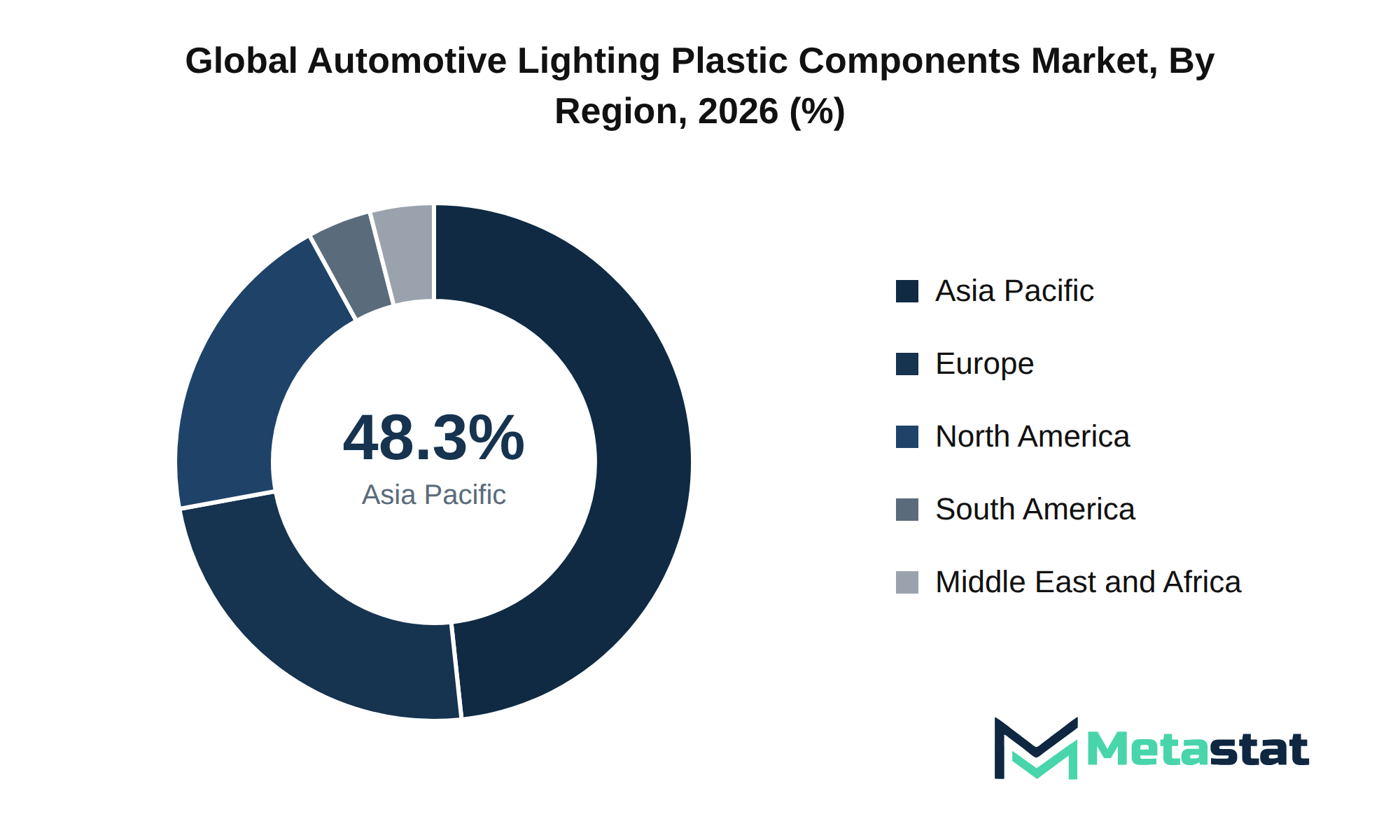
Based on geography, the Global Automotive Lighting Plastic Components market is divided into North America, Europe, Asia-Pacific, South America, Middle East, and Africa.
North America Automotive Lighting Plastic Components market presents significant potential, expanding at a CAGR of 6.2% within the forecast period, reaching a market size of USD 1,605.1 million by the end of 2033. The region's share of the global market reflects robust demand for automotive lighting solutions.
Key demand drivers include a combination of technological advancements in lighting systems and an increasing focus on vehicle safety, influencing purchasing decisions among consumers and manufacturers. The automotive industry in the United States, Canada, and Mexico invests heavily in modernization initiatives, enhancing production capabilities and expanding product offerings to meet the evolving needs of customers.
Segment expansion driven by rising adoption of energy-efficient lighting technologies positions the market for steady growth. The focus on eco-friendly materials and innovative designs supports manufacturers in gaining a competitive edge, while localized manufacturing densities contribute to cost efficiency and supply chain optimization.
Regional domestic market participants, including ZKW Group GmbH and Valeo SE, are central to shaping the competitive landscape. These companies emphasize research and development, strengthening their position in the Automotive Lighting Plastic Components market through continuous innovation and strategic partnerships.
Cross-border trade corridors and geopolitical dynamics influence market accessibility and growth potential. Increased foreign direct investment (FDI) flows into North America enhance regional production capabilities, facilitating access to innovative technologies and advanced manufacturing processes.
Europe plays a critical role in the Automotive Lighting Plastic Components market, contributing 23.8% of the global share in 2025. Strong automotive manufacturing capabilities in countries including Germany, France, and the UK support robust demand for advanced lighting solutions. The presence of leading automotive manufacturers and a well-established supply chain facilitates the growth of innovative products within the region.
Investment in sustainable and energy-efficient lighting technologies significantly influences market dynamics. Consumers in Europe prioritize safety features and energy efficiency, leading to heightened demand for high-quality automotive lighting components. These trends drive manufacturers to adopt advanced technologies and materials, including polycarbonate and polymethyl methacrylate, to enhance product performance and reliability.
Infrastructure modernization across Europe supports the market's expansion. Enhanced transportation networks and governmental support for green initiatives promote investment in electric vehicles and advanced lighting systems. These developments encourage manufacturers to innovate and adapt to evolving market demands, ensuring competitive positioning within the automotive lighting sector.
The competitive landscape features significant vendor consolidation efforts. Domestic leaders, including Valeo SE and ZKW Group GmbH, seek strategic partnerships and acquisitions to enhance their market presence. This trend leads to increased resource allocation for research and development, further driving market growth.
Localized procurement dynamics and cultural nuances shape the buying behaviors of businesses within the region. Understanding these factors allows suppliers to tailor their offerings to meet specific customer expectations, enhancing market penetration. The presence of a diverse automotive industry in Europe enables the market to adapt swiftly to changing consumer preferences and regulatory requirements.
Overall, the Automotive Lighting Plastic Components market in Europe experiences steady growth driven by technological advancements, infrastructure investments, and evolving consumer preferences. Strategic initiatives by manufacturers and suppliers enhance the region's competitiveness, positioning it well for future opportunities.
Asia Pacific dominates the Automotive Lighting Plastic Components market, holding a share of 48.3% in 2025. Rapid growth in this region stems from rising vehicle production, particularly in countries like China, India, and Japan, driving demand for advanced lighting solutions. Factors including urbanization, increased disposable income, and a growing focus on vehicle safety contribute to market expansion.
China, the largest automotive market globally, plays a significant role in driving demand for automotive lighting components. The country’s commitment to electric vehicles and improved lighting technologies enhances market growth. India’s automotive sector shows significant promise, with a robust increase in passenger vehicle production, leading to heightened demand for various lighting applications.
Japan's emphasis on innovation and high-quality production standards drives advancements in lighting technology, catering to consumer needs. South Korea's automotive industry, known for its technological innovation, supports the market by adopting the latest lighting solutions, enhancing both safety and aesthetics.
Infrastructure modernization in the region enhances the accessibility of automotive lighting components, enabling suppliers to meet rising demand effectively. Several manufacturers are increasing localized production to streamline supply chains and reduce lead times. This shift towards localized manufacturing aligns with nearshoring initiatives, ensuring that production capabilities meet the growing demand for automotive lighting solutions.
The competitive landscape in Asia Pacific features a mix of domestic players and international firms striving to capture market share. Companies focus on strategic partnerships and collaborations to leverage local expertise and enhance product offerings. This dynamic environment encourages competition and innovation, driving further growth within the Automotive Lighting Plastic Components market.
The Automotive Lighting Plastic Components market in South America demonstrates a unique growth trajectory influenced by various regional factors. Brazil and Argentina represent the primary markets, with Brazil holding a significant share of the overall regional demand. Market players invest in localized manufacturing to enhance supply chain efficiencies, reducing dependency on imports and creating job opportunities within the region.
Infrastructure modernization efforts in South America contribute positively to the market, with enhanced road networks and improved transportation systems supporting vehicle sales. The increasing adoption of advanced lighting solutions aligns with regional trends toward vehicle safety and energy efficiency. Consumer preferences shift toward modern vehicle technologies, driving up demand for high-performance lighting components.
The competitive landscape remains dynamic, with domestic market participants striving to consolidate their positions. Vendor consolidation trends emerge in response to changing market dynamics, prompting companies to innovate and enhance their product offerings. Such developments are essential for capturing the evolving consumer preferences within the Automotive Lighting Plastic Components market.
The Automotive Lighting Plastic Components market in the Middle East and Africa exhibits a developing landscape characterized by a share of 4.00% of the global market in 2025. Key demand drivers include regional growth in vehicle ownership and increasing investments in infrastructure modernization, particularly in Saudi Arabia and the UAE. The rising number of passenger cars and light commercial vehicles boosts the need for advanced lighting solutions, reflecting global trends toward improved vehicle safety and energy efficiency.
South Africa shows potential for expansion within the market, driven by a growing automotive sector and local manufacturing initiatives. The market benefits from localized procurement dynamics and increasing foreign direct investment aimed at enhancing supply chain resilience. Emerging market front-runners demonstrate a focus on high-value replacement cycles, further stimulating demand for automotive lighting components.
Regional competitive landscapes present a mix of domestic market participants and international players, contributing to vendor consolidation trends. The market environment reflects cultural nuances and distinct B2B buying behaviors, impacting procurement strategies. Strategic entry barriers, including regulatory compliance and local market knowledge, influence investment decisions by foreign manufacturers seeking to establish a presence in the region.
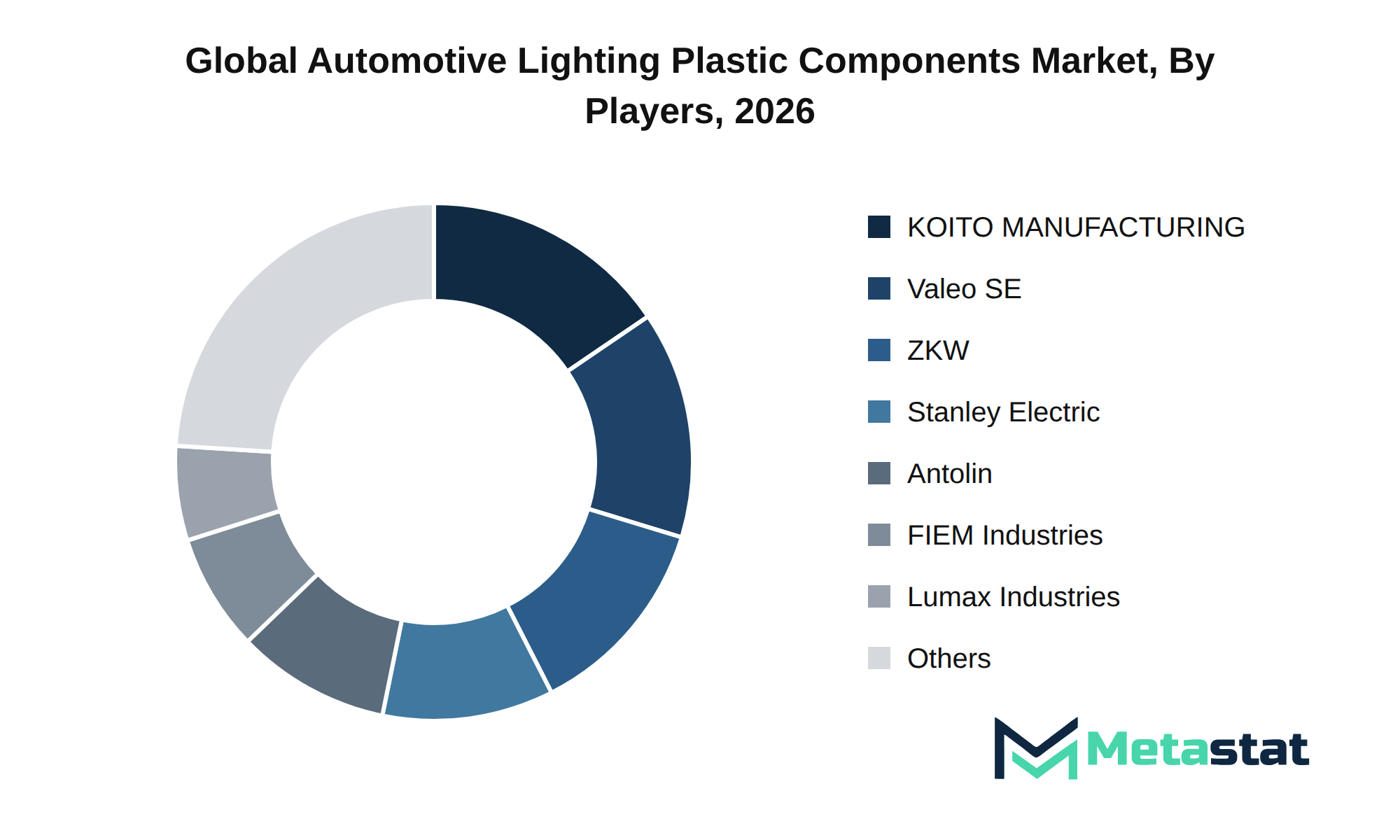
The competitive landscape of the Automotive Lighting Plastic Components market reflects a dynamic environment driven by innovation, strategic alliances, and comprehensive product portfolios. Key players actively pursue mergers and acquisitions to strengthen their market positions and enhance technological capabilities. Companies including ZKW Group GmbH and Valeo SE focus on integrating advanced materials and proprietary technologies to differentiate their offerings and improve market presence.
Strategic alliances play a crucial role in expanding market reach and developing innovative solutions. Collaborations among industry players, including Antolin and KOITO MANUFACTURING CO., LTD., facilitate joint ventures aimed at enhancing product differentiation and leveraging R&D capabilities. Such partnerships enable a faster response to market demands and customer expectations.
Key players exhibit strong brand equity and customer retention strategies, creating significant barriers to entry for new entrants. The presence of established companies, including Stanley Electric Co., Ltd. and Lumax Industries Limited, coupled with their extensive intellectual property portfolios, reinforces their competitive advantage. The Automotive Lighting Plastic Components market is expected to experience continued growth, driven by technological advancements and evolving consumer preferences.
Market size is forecast to rise from USD 5,286 million in 2025 to over USD 8,555.8 million by 2033. This growth trajectory reflects a compound annual growth rate (CAGR) of 6.2% across the forecast period. Several macroeconomic factors influence this progression, including fluctuations in global economic conditions and downstream demand shifts. Core industry maturation, alongside ongoing integration of next-generation technologies, drives advancements in product offerings and operational efficiencies.
The automotive lighting plastic components market faces distinct bull and bear cases. In a favorable scenario, heightened consumer demand for advanced lighting systems, spurred by regulatory pressures for enhanced safety and sustainability, could lead to accelerated growth. Challenges arising from economic downturns or geopolitical tensions restrict spending in the automotive sector, impacting growth rates.
Strategic capital allocation directives and infrastructure commitments will play a critical role in shaping the market landscape. Investments in research and development (R&D) support innovation and commercialization timelines for new products, enhancing competitiveness. Regulatory evolution, including compliance milestones and policy enforcement horizons, influences operational frameworks within the industry.
Emerging white-space opportunities present potential for growth within unmet enterprise needs and high-growth pockets. These areas require executives to establish strategic imperatives and defensibility roadmaps, ensuring alignment with market demands. The automotive lighting plastic components market is poised for evolution, aligning with broader economic trends and technological advancements.
The report strategically identifies and profiles the key market players and analyses their core competencies in each sub-segment of the Automotive Lighting Plastic Components market.
|
Report Attributes |
Details |
|
Study Period |
2021-2033 |
|
Base Year |
2025 |
|
Estimated Year |
2026 |
|
Forecast Period |
2026-2033 |
|
Historical Period |
2021-2025 |
|
Growth Rate |
CAGR 6.2% from 2026 to 2033 |
|
Revenue Unit |
USD million |
|
Segmentation |
By Component Type, Material Type, Vehicle Type, Lighting Application, and Region |
|
By Region |
North America (By Component Type, Material Type, Vehicle Type, Lighting Application, and Country)
|
|
Europe (By Component Type, Material Type, Vehicle Type, Lighting Application, and Country)
|
|
|
Asia Pacific (By Component Type, Material Type, Vehicle Type, Lighting Application, and Country)
|
|
|
South America (By Component Type, Material Type, Vehicle Type, Lighting Application, and Country)
|
|
|
Middle East and Africa (By Component Type, Material Type, Vehicle Type, Lighting Application, and Country)
|
Find answers to common questions about this report
The Automotive Lighting Plastic Components market size was valued at USD 5,286 million in 2025, according to the Metastat Insights study.
The Automotive Lighting Plastic Components market is projected to grow at a CAGR of 6.2% during the forecast period from 2026 to 2033.
The North America Automotive Lighting Plastic Components market size is estimated to reach USD 1,605.1 million by 2033.
The segment "Passenger Cars" leads the Automotive Lighting Plastic Components market, with a value of USD 5,375.6 million projected for 2033. This segment's growth reflects a compound annual growth rate (CAGR) of 6.1% from 2026 to 2033.
Key drivers for the Automotive Lighting Plastic Components market include favorable capital investment conditions, characterized by GDP growth and public-private spending. Increased investment in infrastructure development further boosts demand for advanced lighting solutions, enhancing vehicle safety and visibility. venture funding supports innovation, leading to advancements in materials and design.
Asia Pacific holds the dominant share of the Automotive Lighting Plastic Components market, with a regional share of 48.3% in 2025. This region significantly outpaces others, including Europe at 23.8% and North America at 19.9%.
Regulatory tightening presents a significant restraint on the Automotive Lighting Plastic Components market, increasing compliance costs and operational complexities. Macroeconomic factors, including inflation and supply chain disruptions, further strain profit margins and hinder manufacturers' ability to meet demand. These challenges create barriers that affect overall market growth and competitiveness.
Favorable capital investment environments, characterized by increasing GDP growth and enhanced public-private spending, drive product adoption in the Automotive Lighting Plastic Components market. lower interest rates facilitate access to financing for manufacturers, enabling investment in innovative lighting technologies that enhance vehicle safety and energy efficiency.
The Automotive Lighting Plastic Components market is estimated to reach a valuation of USD 8,555.8 million by 2033.
Key players operating in the Automotive Lighting Plastic Components market include ZKW Group GmbH, Valeo SE, Antolin, KOITO MANUFACTURING CO., LTD., Stanley Electric Co., Ltd., and FIEM Industries Limited.
The analysts below cover Automotive and Transportation research at Metastat Insights.
LEAD ANALYST
Utkarsh Khirodkar is a Lead Market Research Analyst at MetaStat Insight, specializing in market intelligence, technology sector assessments, and competitive strategy.

ENERGY & INFRASTRUCTURE INDUSTRY CONSULTANT
Automotive and Transportation · Electronics and Semiconductor · Energy and Power · Machinery & Equipment
Saurabh Vasant Ganvir consults for Energy & Infrastructure Industry at MetaStat Insight, specializing in renewable energy, solar EPC, and electric vehicle (EV) infrastructure markets.
Evaluating sovereign cloud deployments for core banking platforms demands a clear view of data residency regulations and migration exit strategies. MetaStat Insight delivered an exhaustive review of regional latency tolerances, mainframe decommission milestones, and third-party vendor concentration risk. The regulatory compliance mapping across European and Asian financial jurisdictions gave our team a dependable baseline for multi-cloud infrastructure discussions.
Replacing petrochemical surfactants with bio-based alternatives requires realistic timelines on industrial precision fermentation scaling. The market research broke down commercialization timelines, feedstock sugar price sensitivities, and regional cosmetic ingredient regulatory approvals in Europe and East Asia. That supplier readiness mapping gave our formulations team reliable context when comparing renewable chemical sourcing roadmaps.
Tracking ceramic matrix composite adoption in high-bypass aero engines requires strict attention to material qualification cycles and FAA airworthiness testing milestones. The MetaStat Insight team provided a detailed timeline of silicon carbide fiber manufacturing capacity and commercial foundry lead times. Having clear visibility into upstream thermal barrier coating supply helped us stress-test our long-term component procurement strategy.
Explore related market intelligence reports worth reading alongside this one.
Starting from
$2950
Starting from
$2950