
LEAD ANALYST
Utkarsh Khirodkar is a Lead Market Research Analyst at MetaStat Insight, specializing in market intelligence, technology sector assessments, and competitive strategy.

India Automotive Door Seal Market Size, Share, By Type (TPE Door Seals, PVC Door Seals, EPDM Door Seals, Foam Rubber Door Seals, and Others), By Vehicle Type (Passenger Vehicles, Light Commercial Vehicles, and Heavy Commercial Vehicles), By Industry Analysis, Growth, Trends, and Forecast, 2026-2033
Report ID
MSI-4759
Published
May, 2026
Pages
315 Pages
Format
Report Details
Choose Your License
India Automotive Door Seal Market
India Automotive Door Seal market size is valued at USD 441.2 million in 2025 and projected to grow at a CAGR of 5.6% during the forecast period, reaching USD 680.1 million by 2033.
TPE Door Seals segment accounts for a market share of 18.4% in 2025.
Key trends driving growth: Growing passenger vehicle production in India is creating steady demand for door sealing components and consumer preference for quieter and premium-feel vehicles is encouraging adoption of advanced rubber and EPDM seals.
Opportunities include expansion of electric vehicle manufacturing in India is opening demand for lightweight and durable sealing systems and rising exports of automobiles from India are creating opportunities for OEM-grade door seal suppliers.
Key insight: Rising focus on cabin comfort, noise reduction, and water protection is increasing demand for high-quality automotive door seals in India.
The India Automotive Door Seal Market is a vital segment of the automotive components industry focused on preventing water leakage, dust ingress, wind noise, and vibration around vehicle doors and closure areas. These sealing systems enhance passenger comfort, cabin insulation, and long-term vehicle durability.
OEMs and component manufacturers are investing in advanced elastomers, precision extrusion systems, multi-layer sealing profiles, and recyclable materials. Rising vehicle ownership, export-oriented production, and demand for improved cabin refinement will support long-term growth of the India Automotive Door Seal Market.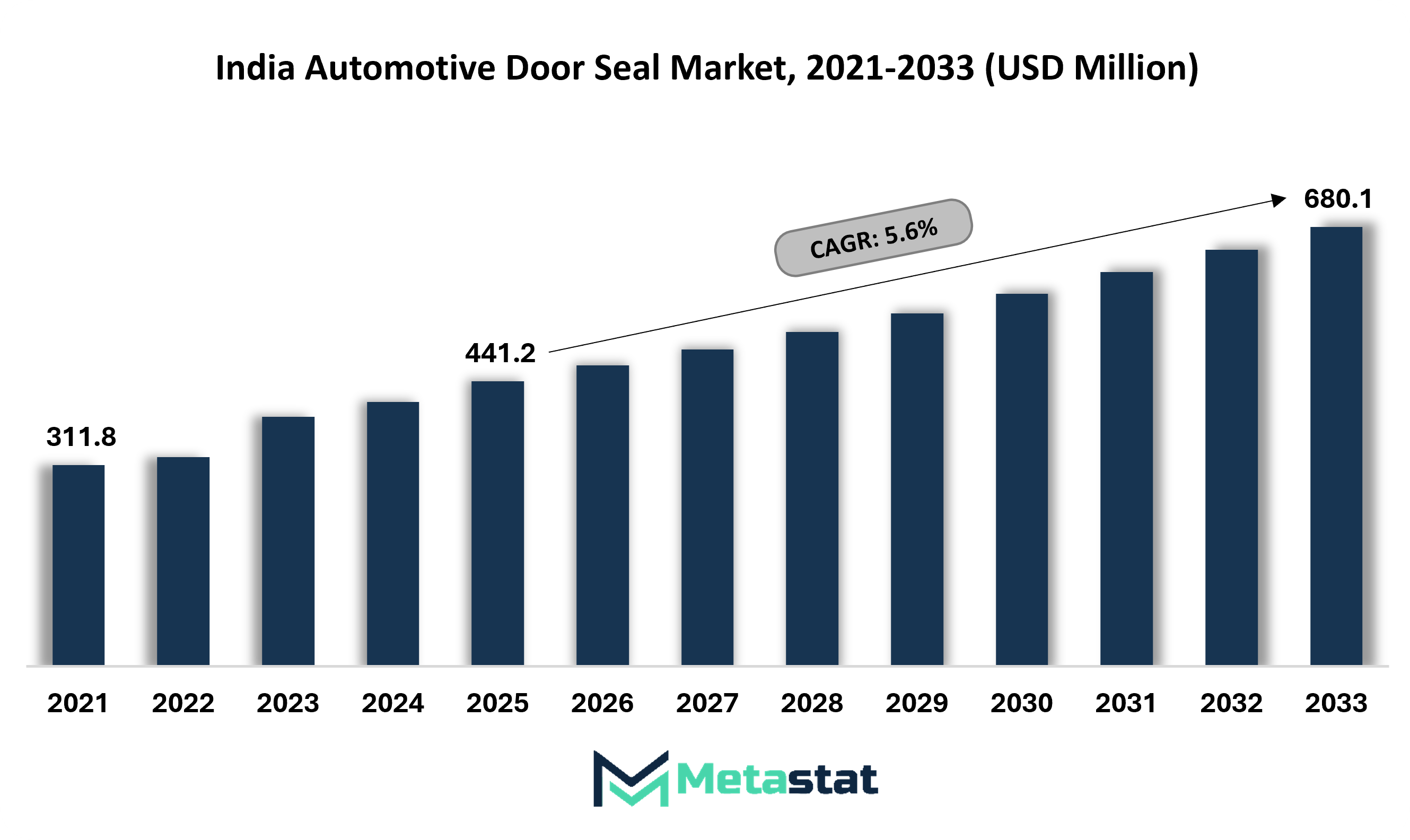
Growing passenger vehicle production in India is creating steady demand for door sealing components.
Rising passenger car output across production hubs such as Maharashtra, Gujarat, Tamil Nadu, and Haryana supports continuous procurement of door sealing components. Higher assembly volumes encourage capacity expansion, automation, and vendor partnerships. Future production growth will strengthen aftermarket replacement demand, creating broader revenue channels for domestic suppliers.
Consumer preference for quieter and premium-feel vehicles is encouraging adoption of advanced rubber and EPDM seals.
Increasing demand for refined cabin comfort and premium vehicle finish is encouraging wider use of advanced rubber and EPDM sealing systems. Noise reduction, vibration control, dust protection, and smooth door closure remain important purchase factors. Future model launches will introduce improved sealing profiles with stronger durability and higher temperature resistance.
Fluctuating raw material prices are affecting manufacturing costs and profit margins for suppliers.
Volatility in rubber, petrochemical derivatives, additives, and metal reinforcement costs creates pressure on manufacturing budgets. Cost uncertainty limits long-term pricing contracts and narrows supplier margins. Future inflationary periods will delay investment plans, reduce inventory flexibility, and increase pressure across procurement and distribution networks.
Presence of low-cost unorganized players is creating pricing pressure in the domestic market.
A large number of low-cost unorganized manufacturers intensifies competition across local markets. Aggressive discounting reduces average selling prices and affects organized brand profitability. Future market conditions will encourage consolidation, stronger quality certification norms, and higher preference for reliable suppliers with consistent dimensional accuracy.
Expansion of electric vehicle manufacturing in India is opening demand for lightweight and durable sealing systems.
Rapid electric vehicle production growth is creating fresh demand for lightweight sealing systems with strong durability. Battery performance targets support reduced component weight, while silent powertrains increase focus on cabin noise control. Future innovation will include recyclable materials, heat-resistant compounds, and smart sealing designs for connected vehicles.
The India Automotive Door Seal Market is classified based on type and vehicle type.
TPE Door Seals segment is valued at USD 85.6 million in 2026 and is projected to reach USD 137.2 million by 2033, at a CAGR of 7% during the forecast period.
TPE Door Seals will gain stronger demand owing to flexibility, lightweight characteristics, and stable weather resistance. Vehicle makers prefer cleaner processing and recyclable material alternatives. Noise reduction, water protection, and smooth door closure support rising adoption. Premium hatchbacks and utility vehicle models will create wider consumption across India.
PVC Door Seals segment is valued at USD 109.0 million in 2026 and is projected to reach USD 146.9 million by 2033, at a CAGR of 4.4% during the forecast period.
PVC Door Seals maintain market presence through cost efficiency and dependable sealing performance. Large-scale production supports budget vehicle applications and replacement demand. Improved grades with better heat tolerance will support continued relevance. Local supply networks and steady pricing will encourage wider usage in the coming years.
EPDM Door Seals segment is valued at USD 196.4 million in 2026 and is projected to reach USD 295.5 million by 2033, at a CAGR of 6% during the forecast period.
EPDM Door Seals hold high value owing to heat resistance, ozone protection, and long service life. Harsh climatic conditions across India support strong preference for durable sealing systems. Mid-range and premium vehicle models will strengthen demand. Better cabin comfort will further increase installation rates.
Foam Rubber Door Seals segment is valued at USD 27.9 million in 2026 and is projected to reach USD 36.3 million by 2033, at a CAGR of 3.8% during the forecast period.
Foam Rubber Door Seals attract interest for cushioning quality and vibration control. Better compression recovery helps maintain tight closure during repeated door movement. Growing focus on quieter cabins will lift future demand. Urban mobility trends and comfort-led purchasing patterns will support stronger market movement.
Others segment is valued at USD 46.5 million in 2026 and is projected to reach USD 64.2 million by 2033, at a CAGR of 4.7% during the forecast period.
Others include blended materials, advanced composites, and specialized sealing formats designed for electric mobility and luxury interiors. Product innovation will rise with changing design standards. Smart coatings, low-friction surfaces, and improved lifespan will open fresh opportunities for producers serving different vehicle classes.
Passenger Vehicles segment is projected to reach USD 546.1 million by 2033, at a CAGR of 5.7% during the forecast period.
Passenger Vehicles form a major demand center owing to high production volume and rising comfort expectations. Better insulation, dust control, and refined cabin experience increase seal consumption per unit. Electric vehicle growth, compact SUV demand, and premium styling trends will raise future adoption levels.
Light Commercial Vehicles segment is projected to reach USD 87.1 million by 2033, at a CAGR of 5.6% during the forecast period.
Light Commercial Vehicles create steady demand through logistics growth, urban delivery expansion, and fleet replacement cycles. Frequent door operation increases the need for durable sealing products. Stronger focus on driver comfort and cabin noise control will support upgraded material selection across future model launches.
Heavy Commercial Vehicles segment is projected to reach USD 46.9 million by 2033, at a CAGR of 4% during the forecast period.
Heavy Commercial Vehicles require robust sealing systems for long-distance operation, vibration exposure, and varied weather conditions. Fleet operators value maintenance savings and dependable cabin protection. Infrastructure spending and freight movement growth will lift production volumes, creating broader requirements for high-strength door seal solutions.
The India Automotive Door Seal Market is gaining attention as vehicle makers need stronger protection from dust, water, noise, and heat. Buyers now expect cabins that feel quieter and more comfortable during everyday travel. Seal makers are improving rubber blends and fitment quality so doors close smoothly and remain stable for longer use. Growth in passenger vehicles, utility vehicles, and transport fleets will support demand across multiple states. Local sourcing also helps producers reduce lead times and respond faster to model changes from automakers and component suppliers.
Among notable companies are SFC Solutions India Sealing Private Limited and PPAP Automotive Limited, both recognized for supplying various sealing parts. Avesta Enterprises Private Limited and ALP Nishikawa Company Private Limited maintain strong positions through established manufacturing relationships. GoldSeal SAARGUMMI India Private Limited and Toyoda Gosei Co. Ltd. bring technical expertise from broader automotive sealing operations. Bohra Rubber Private Limited, HSI Automotives Private Limited, ASP Sealing Products Limited, and Xtruline also serve customers with profiles, trims, channels, and custom sealing solutions for several vehicle applications.
Competition in this market remains active as automakers evaluate price, quality, fitment, lifecycle performance, and delivery speed before placing orders. Companies that test materials effectively and keep defect rates low will secure repeat contracts. Lightweight doors and higher cabin insulation are pushing manufacturers to design softer yet durable seals. Electric vehicle growth will open fresh opportunities as buyers increasingly value quiet cabins and smooth design lines. Firms using automation, smart tooling, and close vendor relationships can manage pricing pressure while maintaining stable output during demand swings and seasonal cycles.
Looking ahead, the sector will benefit from rising vehicle ownership in smaller towns and replacement demand for worn seals in older cars. Aftermarket channels will expand as workshops stock reliable components at fair prices. Producers that train workers, improve blending methods, and maintain steady dimensions will build trust with assemblers and repair networks. Exports will also add another growth route if companies meet global quality standards and delivery schedules. With careful planning and continuous innovation, Indian manufacturers can strengthen supply depth and support balanced industry expansion nationwide.
Market size is forecast to rise from USD 441.2 million in 2025 to over USD 680.1 million by 2033.
The India Automotive Door Seal Market is expected to benefit from rising vehicle ownership, stronger comfort expectations, and localization of automotive components. Future adoption is likely to favour smart sealing materials, lightweight profiles, enhanced acoustic insulation, EV-specific closures, and sustainable elastomer technologies.
This research report categorizes the India Automotive Door Seal market based on key segments and regions, forecasts revenue growth, and analyses trends in each submarket. The report analyses the key growth drivers, opportunities, and challenges influencing the India Automotive Door Seal market. Recent market developments and competitive strategies such as expansion, product launch, partnership, merger, and acquisition have been included to draw the competitive landscape in the market.
The report strategically identifies and profiles the key market players and analyses their core competencies in each sub-segment of the India Automotive Door Seal market.
|
Report Attributes |
Details |
|
Study Period |
2021-2033 |
|
Base Year |
2025 |
|
Estimated Year |
2026 |
|
Forecast Period |
2026-2033 |
|
Historical Period |
2021-2025 |
|
Growth Rate |
CAGR 5.6% from 2026 to 2033 |
|
Revenue Unit |
USD million |
|
Sales Volume Unit |
Million Units |
|
Segmentation |
By Type and Vehicle Type |
Find answers to common questions about this report
Top players operating in the India Automotive Door Seal industry includes SFC Solutions India (Sealing) Private Limited, PPAP Automotive Limited, Avesta Enterprises Private Limited, ALP Nishikawa Company Private Limited, and GoldSeal - SAARGUMMI India Private Limited
Growing passenger vehicle production in India is creating steady demand for door sealing components and consumer preference for quieter and premium-feel vehicles is encouraging adoption of advanced rubber and EPDM seals are key driving factors, boosting the market.
The India Automotive Door Seal market is expected to grow at a CAGR of 5.6% over the forecast period (2026-2033).
Fluctuating raw material prices are affecting manufacturing costs and profit margins for suppliers will hamper the market growth within the forecast period.
The EPDM Door Seals is the leading type segment in the India market.
India Automotive Door Seal market is estimated to reach USD 680.1 million by 2033.
The Metastat Insights study shows that the India Automotive Door Seal market size was USD 441.2 million in 2025.
The analysts below cover Automotive and Transportation research at Metastat Insights.
LEAD ANALYST
Utkarsh Khirodkar is a Lead Market Research Analyst at MetaStat Insight, specializing in market intelligence, technology sector assessments, and competitive strategy.

ENERGY & INFRASTRUCTURE INDUSTRY CONSULTANT
Automotive and Transportation · Electronics and Semiconductor · Energy and Power · Machinery & Equipment
Saurabh Vasant Ganvir consults for Energy & Infrastructure Industry at MetaStat Insight, specializing in renewable energy, solar EPC, and electric vehicle (EV) infrastructure markets.
Integrating zero-trust access controls across legacy electronic health record systems involves complex compliance overhead. Team produced an analysis that clearly separated identity governance and administration tools from privileged access management platforms. Their evaluation of HIPAA and GDPR compliance features across cloud native solutions gave our architecture group clear baseline criteria. The custom data request regarding biometric authentication adoption in hospital networks was returned promptly with clear documentation.
Evaluating calorific value requirements and air permit compliance across municipal waste facilities requires localized data. Metastat Insight structured their analysis around operational throughput capacity and feedstock composition variations in Latin America and Eastern Europe. Their competitive mapping of sorting equipment vendors helped clarify technology differences between optical separators and heavy media systems. The study provided an objective baseline during our capital expenditure reviews.
Decarbonizing industrial thermal processes hinges on refrigerant regulations and compressor efficiency limits. Metastat Insights delivered a thorough market analysis that evaluated natural refrigerants like CO2 and hydrocarbons against synthetic low-GWP alternatives. The breakdown of utility incentives and grid capacity constraints across key European manufacturing hubs offered valuable perspective. The follow-up conversation with their sector analysts addressed our specific questions on mechanical vapor recompression systems efficiently.
Explore related market intelligence reports worth reading alongside this one.
Starting from
$2950