
LEAD ANALYST
Utkarsh Khirodkar is a Lead Market Research Analyst at MetaStat Insight, specializing in market intelligence, technology sector assessments, and competitive strategy.

Global Automotive Lightweight Plastic Components Market Size, Share, By Component Type (Interior & Cabin Components, Exterior Body & Trim Components, Powertrain & Under-the-Hood Components, Chassis, Underbody & Structural Components, Fuel, Fluid & Air Management Components, Seating Components, Lighting, Sensor & Electrical Housings, EV Battery & Power Electronics Components, Others), By Material Type (Polypropylene (PP) & Thermoplastic Polyolefin (TPO), Polyamide (PA/Nylon), Polyurethane (PU), Acrylonitrile Butadiene Styrene (ABS), Polycarbonate (PC) & PC Blends, Polybutylene Terephthalate (PBT) & Polyester Plastics, Polyethylene (PE), Thermoplastic Elastomers (TPE/TPU), Fiber-Reinforced Thermoplastics & Composites, Others), By Manufacturing Process (Injection Molding, Blow Molding, Compression Molding, Thermoforming, Reaction Injection Molding, Resin Transfer Molding, Extrusion, Foam Molding, Others), By Vehicle Type (Passenger Cars, Sport Utility Vehicles & Crossovers, Light Commercial Vehicles, Heavy Commercial Vehicles, Buses & Coaches, Off-Highway Vehicles), Industry Analysis, Growth, Trends, and Forecast, 2026-2033
Report ID
MSI-5409
Published
October, 2026
Pages
253 Pages
Format
Historical
Base year
Forecast
Forecast period
Report Details
Market Valuation: Valued at $33.1 Billion in 2025, projected to reach $56.1 Billion by 2033 at a 6.8% CAGR.
Dominant Segment: The interior and cabin components segment leads the market, driven by a growing focus on vehicle aesthetics and passenger comfort. This segment is projected to grow from USD 8.7 billion in 2026 to USD 12.4 billion by 2033.
Geographic Lead: North America holds a significant market share of 27.3% in 2025, with the US expected to lead in 2026 due to stringent fuel efficiency regulations and a consumer shift towards eco-friendly vehicles.
What's Inside: The report provides comprehensive coverage of the market, including detailed analyses of component types, material types, and manufacturing processes, along with forecasts extending to 2033.
Emerging Trends: The market is experiencing a shift towards sustainability, with increasing adoption of recycled materials and closed-loop systems, driven by stringent emission limits and consumer demand for greener vehicle options.
Material Insights: Polypropylene and thermoplastic polyolefin components represent a substantial market share, projected to reach USD 14.7 billion by 2033, reflecting a strong preference for these materials in vehicle manufacturing.
Choose Your License
Global Automotive Lightweight Plastic Components Market
The global Automotive Lightweight Plastic Components market was valued at USD 33.1 billion in 2025 and is projected to reach USD 56.1 billion by 2033, growing at a CAGR of 6.8% over the forecast period.
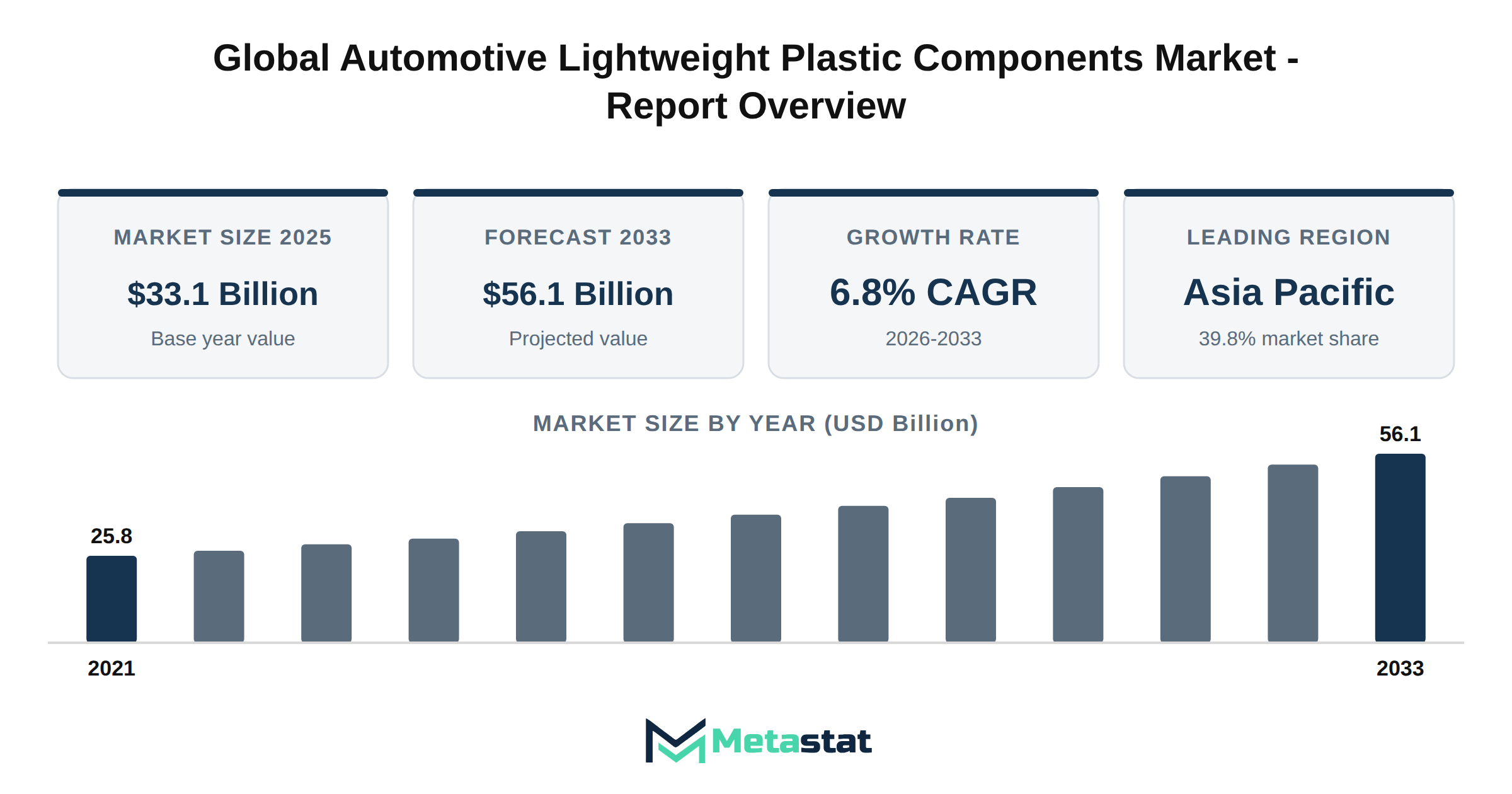
The Automotive Lightweight Plastic Components market encompasses various components used in vehicle manufacturing, focusing on lightweight materials that enhance fuel efficiency and performance. The market reflects a significant growth trajectory, with revenue expected to rise from USD 33.1 billion to USD 56.1 billion by 2033. This increase signals robust demand for lightweight solutions in the automotive sector, driven by the need for improved energy efficiency and reduced emissions.
North America holds a 27.3% share in 2025, with the US leading the market in 2026. Demand in this region stems from stringent regulations promoting fuel efficiency and a growing consumer preference for eco-friendly vehicles. The interior and cabin components segment represents a substantial portion of the market, indicating a shift towards enhancing vehicle aesthetics and comfort while maintaining lightweight characteristics. Overall, market dynamics reflect a strong commitment to innovation and sustainability in automotive manufacturing.
The Automotive Lightweight Plastic Components market experiences significant growth, fueled by increasing demand for fuel-efficient vehicles. The expansion from USD 33.1 billion to USD 56.1 billion reflects a strong shift towards lightweight materials, which enhance vehicle performance and reduce emissions. Polypropylene and thermoplastic polyolefin components represent a substantial part of the market, projected to reach USD 14.7 billion by 2033, indicating a growing preference for these materials in vehicle manufacturing.
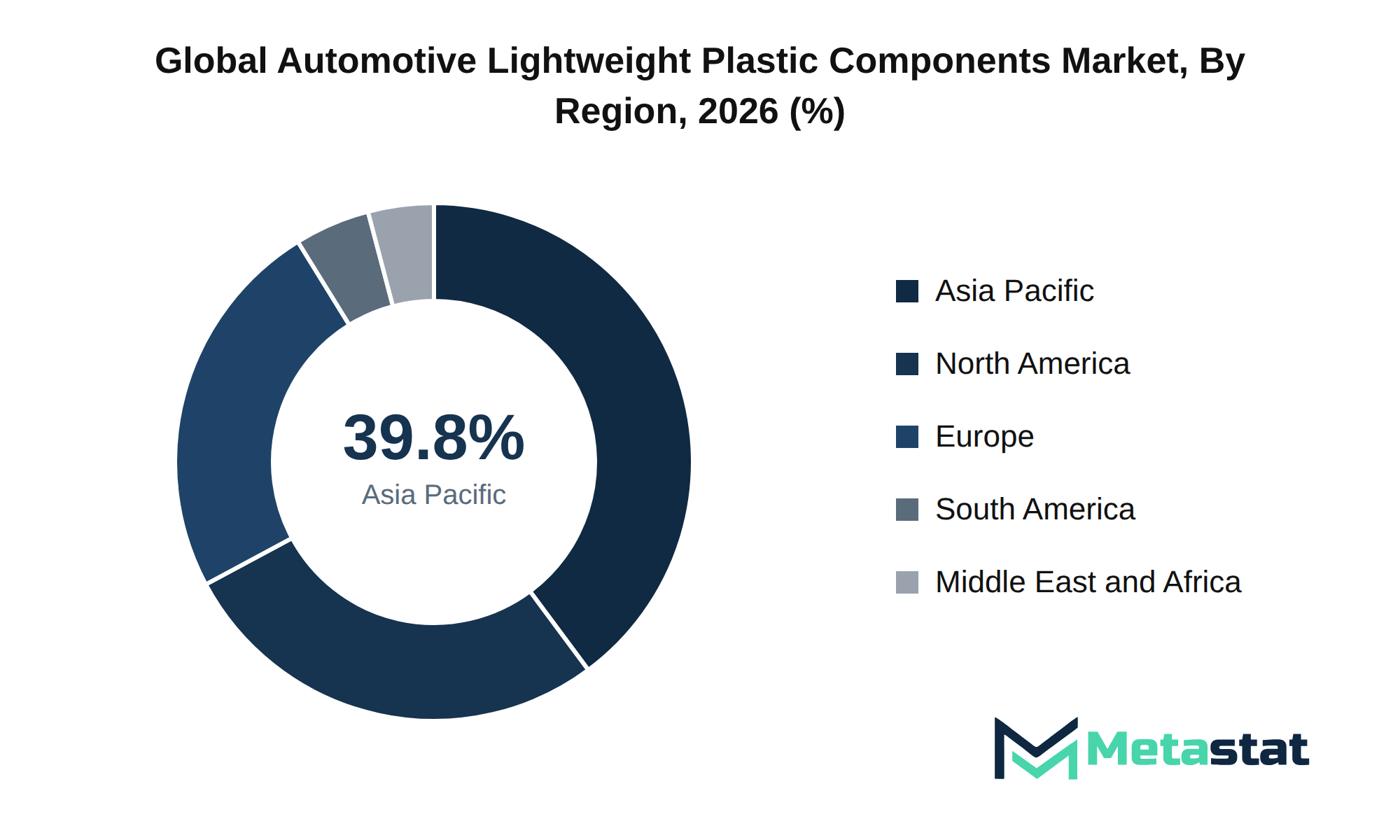
The region's investment in advanced manufacturing technologies and sustainable materials drives its market dominance. Concurrently, the Asia Pacific region, accounting for 39.8% of the market, presents significant growth potential, propelled by rising automotive production and an increasing focus on environmental regulations. The Automotive Lightweight Plastic Components market reflects a shift towards innovative solutions that support both performance and sustainability.
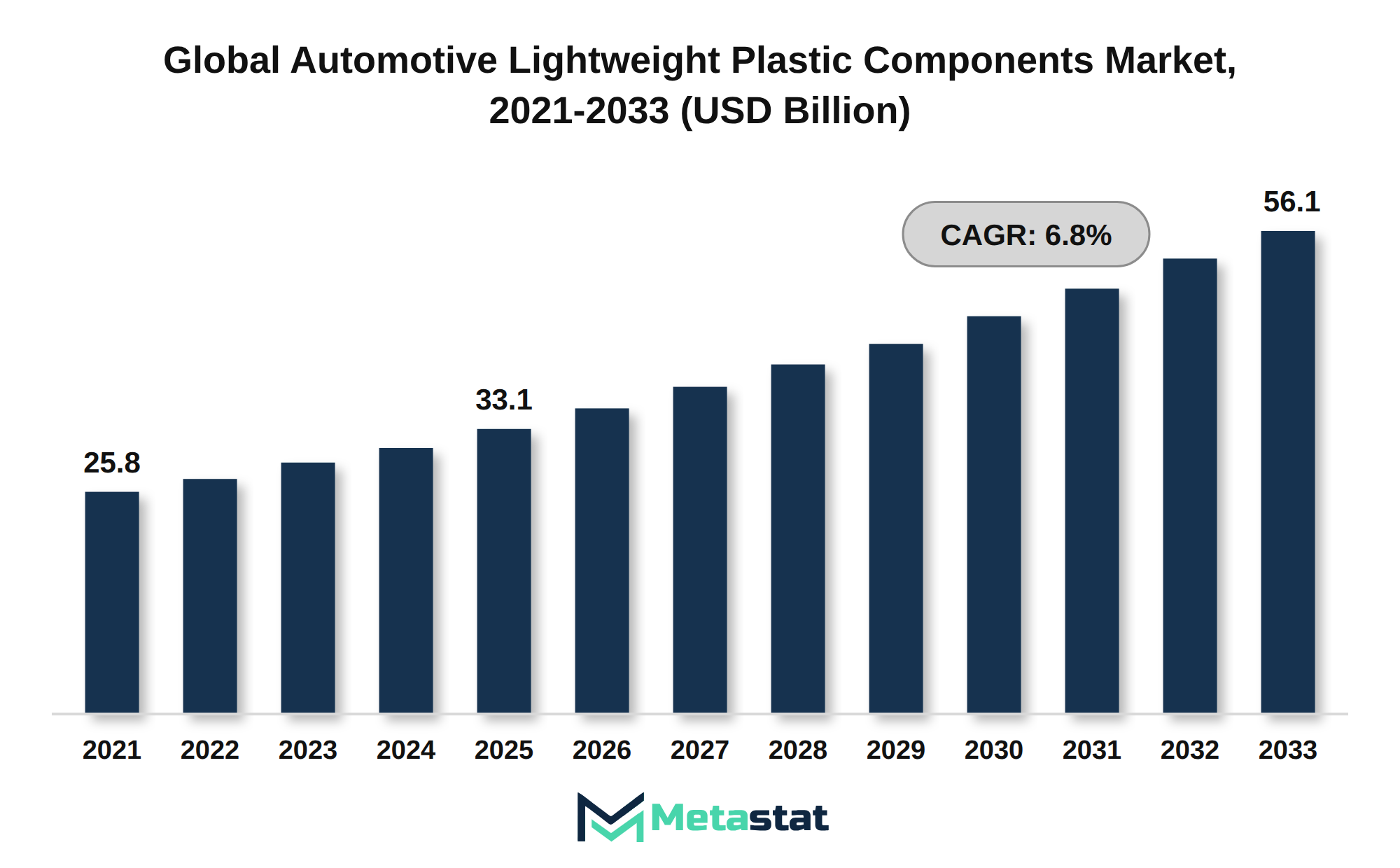
The Automotive Lightweight Plastic Components market experiences growth driven by an increased emphasis on sustainability and circular economy principles. Stringent emission limits create demand for materials that reduce overall vehicle weight, contributing to improved fuel efficiency. This trend encourages manufacturers to explore innovative solutions, including incorporating recycled resins and mono-material designs in production processes. Shifting towards closed-loop systems enables industries to minimize waste, aligning with environmental goals while enhancing product appeal.
Key automotive manufacturers focus on sourcing sustainable materials, building partnerships with suppliers to secure high-quality recycled components. This collaboration enhances the market's capacity to meet evolving consumer expectations for green vehicle options. Expanding adoption of lightweight plastics supports regulatory compliance and offers manufacturers a competitive edge, driving revenue growth in the Automotive Lightweight Plastic Components market.
Rising material costs represent a significant restraint for the Automotive Lightweight Plastic Components market. Suppliers face challenges in sourcing affordable raw materials, influencing pricing strategies across the industry. Increasing costs lead to delays in adopting lightweight plastic components, affecting order sizes and overall market growth. Price sensitivity impacts vehicle production budgets, slowing transitions to lighter materials that enhance fuel efficiency.
The presence of established metal components creates competition, complicating the shift toward lightweight solutions. Many manufacturers opt for traditional materials to circumvent heightened costs associated with lightweight plastics. Consequently, the market experiences reduced adoption rates, attributed to manufacturers seeking to maintain profit margins while balancing performance and cost-effective solutions. Overcoming these financial barriers will be crucial for driving demand and achieving growth in the Automotive Lightweight Plastic Components market.
Rising labor costs pose a significant challenge for the Automotive Lightweight Plastic Components market. Suppliers face pressure to maintain profit margins while managing increased wage demands and hiring expenses. This situation compels manufacturers to adopt automation and advanced manufacturing technologies to enhance productivity and reduce dependency on manual labor. Investments in automated processes enable streamlined operations, resulting in improved cost efficiency. Suppliers engage in workforce training programs to upskill employees, ensuring that the workforce is equipped to handle sophisticated machinery and processes. Addressing labor cost challenges is crucial for maintaining competitive pricing and meeting the growing demand for lightweight components. Effective management of these costs directly influences the ability to innovate and expand market share in a competitive landscape.
The Automotive Lightweight Plastic Components market presents a significant opportunity in the passenger vehicle segment, projected to expand from USD 12.2 billion in 2026 to USD 18.2 billion by 2033, reflecting a CAGR of 5.9%. This growth results from increasing consumer preference for lightweight materials that enhance fuel efficiency and overall vehicle performance. Manufacturers targeting this segment capitalize on rising demand for electric vehicles, which require advanced lightweight components to optimize range and efficiency. The emphasis on sustainability within the automotive industry encourages the adoption of recyclable materials, providing an additional selling point for manufacturers. The market's expansion aligns with shifting consumer behaviors and regulatory pressures aimed at reducing emissions, driving manufacturers to innovate and supply lightweight plastic components tailored for passenger vehicles.
The Global Automotive Lightweight Plastic Components market is segmented based on Component Type, Material Type, Manufacturing Process, and Vehicle Type.
Interior & Cabin Components segment is valued at USD 8.7 billion in 2026 and is projected to reach USD 12.4 billion by 2033, at a CAGR of 5.1% during the forecast period. This segment encompasses various components including dashboards, door panels, and seat covers, primarily used in vehicles to enhance passenger comfort and aesthetic appeal. The growing focus on vehicle interior design and user experience drives demand for these lightweight materials, enabling manufacturers to create innovative designs while minimizing weight. This sub-segment experiences steady growth due to consumers prioritizing comfort and visual appeal in vehicle selection. The increasing adoption of advanced materials, including thermoplastics, offers manufacturers opportunities to enhance the quality and durability of interior components, further driving market expansion. Differentiation in growth rates between segments reflects the unique preferences and requirements of buyers concerning vehicle interiors, influencing production strategies across the market.
Exterior Body & Trim Components segment is estimated to reach USD 9 billion by 2033, at a CAGR of 5.7% during the forecast period. These components play a critical role in vehicle aesthetics and aerodynamics, primarily used by automotive manufacturers to enhance both appearance and performance. The demand for innovative designs and lightweight solutions drives this segment, with automakers seeking to reduce overall vehicle weight for improved fuel efficiency. Unlike other segments, including Interior & Cabin Components, which focus more on comfort and safety features, this segment emphasizes exterior styling and functionality. Current trends in electric vehicle production further influence growth, driven by manufacturers prioritizing lightweight materials to offset battery weight. This focus on innovation and design presents opportunities for suppliers that provide advanced lightweight plastics, ensuring competitiveness in the evolving Automotive Lightweight Plastic Components market.
The Powertrain & Under-the-Hood Components segment is expected to reach USD 7.1 billion by 2033. This segment focuses on parts that enhance engine performance, improve fuel efficiency, and contribute to overall vehicle functionality. Key buyers include automotive manufacturers prioritizing lightweight components for better vehicle dynamics. Increasing regulatory pressures for emissions reduction drive demand for lighter, more efficient materials. In comparison to sibling segments, including Interior & Cabin Components, the Powertrain segment experiences more rapid growth, influenced by the push for electric vehicles requiring innovative lightweight solutions. The adoption of advanced materials, including fiber-reinforced composites, supports this segment’s expansion. By 2033, the market anticipates significant advancements in manufacturing processes that enhance production capabilities and cost-effectiveness.
The Chassis, Underbody & Structural Components segment is projected to grow at a CAGR of 7.4% during the forecast period. These components provide structural integrity and support vehicle dynamics, primarily utilized by automotive manufacturers focused on enhancing safety and performance. The increasing emphasis on lightweight materials for improved fuel efficiency drives demand within this segment. Stringent safety regulations compel manufacturers to adopt advanced materials that meet performance standards while reducing weight. Compared to other segments, including Exterior Body & Trim Components, which is anticipated to grow at a CAGR of 5.7%, the Chassis, Underbody & Structural Components segment exhibits a faster growth rate. This growth presents opportunities for manufacturers to innovate with advanced composites and plastics, positively influencing the overall Automotive Lightweight Plastic Components market.
Fuel, Fluid & Air Management Components represent a vital segment within the Automotive Lightweight Plastic Components market. These components are essential for managing the various fluids and air systems in vehicles, ensuring optimal performance and efficiency. The growth of this segment is influenced by increasing demand for lightweight materials that enhance fuel economy and reduce emissions. Manufacturers prioritize these components to comply with stringent environmental regulations while delivering high-performance vehicles. Unlike other segments, including Chassis or Body components that focus more on structural integrity, the Fuel, Fluid & Air Management Components segment experiences distinct buyer dynamics, emphasizing compliance and efficiency over sheer volume. This focus on regulatory compliance drives innovation in material selection and production processes, differentiating it from its counterparts in the market.
Seating Components in the Automotive Lightweight Plastic Components market play a crucial role in enhancing passenger comfort and safety. Used primarily by automotive manufacturers, these components contribute significantly to the overall vehicle experience. One driving force for this segment includes the growing consumer preference for comfort, pushing manufacturers to prioritize advanced seating designs and materials. The trend towards electrification in the automotive industry creates opportunities for seating components that support weight reduction, enhancing overall vehicle efficiency. Compared to sibling segments, seating components experience slower growth, attributed to more stringent regulatory requirements for safety and design standards. This regulatory landscape leads to higher costs and longer development cycles, impacting the pricing strategies implemented by manufacturers. The focus on lightweight materials in the seating segment remains a key differentiator, aligning with broader market trends aimed at improving fuel efficiency and reducing emissions.
Lighting, Sensor & Electrical Housings represent a crucial segment within the Automotive Lightweight Plastic Components market. This segment is applied in various automotive applications, primarily by OEMs and tiered suppliers, focusing on integrating advanced lighting solutions, sensor systems, and electrical components into vehicles. The increasing adoption of electric and hybrid vehicles drives demand, owing to the requirement for sophisticated electrical systems to manage power efficiently. Advancements in LED technology and smart lighting systems enhance functionality and energy efficiency, generating further interest among manufacturers. Compared to other sub-segments, this segment experiences slower growth due to the higher costs associated with the innovative technologies being implemented. Nevertheless, the ongoing shift towards advanced driver assistance systems (ADAS) and autonomous vehicles creates opportunities for growth, because these technologies depend heavily on effective lighting and sensor applications.
EV Battery & Power Electronics Components represent a critical sub-segment in the Automotive Lightweight Plastic Components market. These components serve the electric vehicle (EV) sector, particularly in managing energy storage and distribution. A significant factor driving growth in this segment is the global push towards electrification in transportation, which encourages manufacturers to adopt lightweight materials that enhance vehicle efficiency. This segment differentiates itself from others by focusing on advanced materials designed for high performance and safety, resulting in higher production costs. Unlike segments including Exterior Body & Trim Components, which target aesthetic enhancements, the EV Battery & Power Electronics Components prioritize functionality and durability in demanding environments, necessitating ongoing innovation and investment in material technology.
Others (Fasteners, Brackets, Functional Plastic Parts) represent a specialized sub-segment within the Automotive Lightweight Plastic Components market. This segment finds application in various automotive assemblies, providing critical support and structural integrity. Demand for these components arises from manufacturers seeking to enhance performance while minimizing vehicle weight, aligning with current industry trends toward lightweighting. A significant driver for this segment involves the increasing focus on optimizing manufacturing processes, which translates to cost efficiencies for automotive producers. Compared to its counterparts, this segment experiences slower growth due to its niche nature and specialized application needs. Manufacturers prioritize quality and strength, leading to different pricing dynamics compared to other component types. This focus on performance ensures that the segment remains vital for enhancing overall vehicle efficiency and safety.
Polypropylene (PP) & Thermoplastic Polyolefin (TPO) segment is valued at USD 9.9 billion in 2026 and is projected to reach USD 14.7 billion by 2033, at a CAGR of 5.8% during the forecast period. This segment primarily finds applications in interior cabin components, exterior body parts, and various trims, catering to automakers focused on lightweight vehicle designs. Rising demand for fuel efficiency and increasing emphasis on sustainability drive growth in this segment. Compared to other material types like Polyamide (PA/Nylon), which is anticipated to grow at a CAGR of 7.1%, the Polypropylene and TPO segment reflects steadier growth. This aspect positions it differently within the market, attracting buyers prioritizing cost-effectiveness alongside performance. The anticipated increase in automotive production directly influences demand for lightweight materials, making this segment essential for manufacturers striving to meet evolving consumer preferences and regulatory requirements.
Polyamide (PA/Nylon) segment is estimated to reach USD 8.5 billion by 2033, at a CAGR of 7.1% during the forecast period. This material type is predominantly used in manufacturing components that require high strength and durability, including structural parts and under-the-hood applications. The automotive sector increasingly adopts polyamide due to its strong thermal resistance and lightweight properties, aligning with the industry's focus on fuel efficiency. In contrast, polypropylene experiences slower growth at a CAGR of 5.8%, while the polyamide segment benefits from rising demand in high-performance applications. This growth is supported by a shift in consumer preferences towards lightweight materials that enhance vehicle performance while maintaining safety standards.
Polyurethane (PU) segment is projected to reach USD 6.1 billion by 2033. Applications of PU in the Automotive Lightweight Plastic Components market include cushioning, insulation, and structural components, primarily used in passenger cars and sport utility vehicles. Growth in this segment is driven by rising demand for lightweight materials that enhance fuel efficiency and reduce emissions. Polyurethane's versatility and excellent mechanical properties position it favorably compared to other materials, enabling it to meet specific requirements within the automotive sector. The PU segment benefits from the expanding electric vehicle market, which requires lightweight solutions; however, it faces competition from alternative materials like polypropylene. This rivalry influences pricing strategies and technology adoption, shaping market dynamics for PU components in the automotive industry.
Acrylonitrile Butadiene Styrene (ABS) segment is projected to grow at a CAGR of 5.8% during the forecast period. Used primarily in interior and exterior automotive applications, ABS is favored by manufacturers for its durability and aesthetic appeal. This material serves critical functions in components including dashboards, trim pieces, and protective housings. The increasing focus on lightweight materials to enhance fuel efficiency drives demand within this segment. Compared to other materials in the market, ABS offers cost advantages despite its slower growth rate relative to segments like Polyamide (PA/Nylon), which benefits from advancements in high-performance applications. With strong performance characteristics and a competitive price point, ABS continues to attract several automotive producers seeking to optimize both functionality and cost in their lightweight plastic components.
Polycarbonate (PC) & PC Blends represent an important sub-segment within the Automotive Lightweight Plastic Components market. This material finds extensive application in components requiring enhanced durability and transparency, including lighting housings and interior trims, primarily employed by automotive manufacturers focused on producing passenger cars and SUVs. Strong demand for lightweight materials that contribute to vehicle efficiency drives growth in this segment. Competitive pricing and the ability to meet stringent safety and regulatory standards further influence adoption. Compared to other materials, PC and its blends often provide a combination of weight reduction and performance, appealing to manufacturers aiming for improved fuel efficiency and reduced emissions. Manufacturers continue to explore technological advancements to enhance the properties of PC blends, positioning this sub-segment because a critical player in the evolving market.
Polybutylene Terephthalate (PBT) & Polyester Plastics represent an important component within the Automotive Lightweight Plastic Components market. This material finds applications in parts including connectors, housings, and other automotive components due to its excellent mechanical properties and chemical resistance. The growth of this segment correlates with increasing demand for lightweight materials that enhance fuel efficiency and reduce emissions in vehicles. A significant driver for this segment is the heightened focus on sustainability, prompting manufacturers to seek materials with lower environmental impacts. Compared to other materials, PBT offers superior thermal stability and is often chosen for applications requiring durability under stress, influencing pricing dynamics within the market. The distinct characteristics of PBT differentiate it from other materials including Polyamide (PA/Nylon) and Polypropylene (PP), which serve different operational roles within the automotive supply chain.
Polyethylene (PE) serves various applications in the automotive sector, particularly in producing interior components, fuel tanks, and bumpers. This segment attracts interest from manufacturers focused on lightweight solutions that enhance fuel efficiency and reduce emissions. Increasing regulatory pressure on emissions and fuel economy influences demand dynamics for polyethylene, contributing to its relevance in vehicle production. Compared to other material types, polyethylene typically offers cost advantages, making it appealing for manufacturers seeking to balance performance with budget constraints. The growing emphasis on sustainable practices drives interest in polyethylene, particularly in recycling initiatives that align with environmental goals. In contrast to higher-priced alternatives, polyethylene provides a viable option for cost-sensitive buyers within the Automotive Lightweight Plastic Components market.
Thermoplastic Elastomers (TPE/TPU) segment is crucial in the Automotive Lightweight Plastic Components market. These materials are primarily used in applications requiring flexibility, durability, and resistance to harsh environments, making them ideal for parts including seals, gaskets, and flexible housings. Demand for TPE/TPU is driven by the automotive industry's increasing emphasis on lightweight materials that enhance fuel efficiency while maintaining performance standards. This segment experiences growth due to advancements in processing technologies, which enable manufacturers to create components with improved properties at competitive costs. Compared to other material segments, TPE/TPU attracts buyers focused on high-performance applications, resulting in a diverse range of pricing structures. This differentiation positions TPE/TPU uniquely within the broader market, appealing to automotive manufacturers seeking innovative solutions for component design and functionality.
Fiber-Reinforced Thermoplastics & Composites represent a significant sub-segment within the Automotive Lightweight Plastic Components market. These materials find extensive application in structural components and energy-absorbing parts, primarily used by manufacturers of passenger cars and sport utility vehicles. The rising demand for lightweight yet strong materials drives growth in this sub-segment, particularly owing to automakers' focus on fuel efficiency and emissions reduction. Advancements in manufacturing techniques enhance the performance characteristics of these composites, allowing for more efficient production processes. This sub-segment experiences faster growth compared to traditional materials due to its superior mechanical properties and reduced weight. Consequently, automotive manufacturers exhibit a growing preference for fiber-reinforced solutions in vehicle design, positioning this sub-segment favorably within the broader market.
Others (PVC, POM, PPE, PEI) represent a specialized sub-segment within the Automotive Lightweight Plastic Components market, encompassing materials that provide unique properties for specific applications. This segment finds utility in automotive interiors, electrical housings, and fluid management systems, primarily serving manufacturers of passenger cars and commercial vehicles. Demand for these materials is driven by the need for lightweight and durable solutions that meet stringent safety and performance standards. The diverse applications of PVC, POM, PPE, and PEI allow for flexibility in design and function, differentiating this sub-segment from others in the market. Regulatory pressures towards sustainable materials influence adoption, because manufacturers seek to comply with environmental standards. Compatibility with various manufacturing processes further supports the segment's relevance, allowing for integration with traditional and advanced production techniques.
Injection Molding segment is valued at USD 16.3 billion in 2026 and is projected to reach USD 24.2 billion by 2033, at a CAGR of 5.9% during the forecast period. This manufacturing process is predominantly employed for producing complex and intricate parts used in various automotive applications, including interior and exterior components. Demand for Injection Molding is driven by the automotive industry's focus on lightweight materials, which enhance fuel efficiency and reduce emissions. This segment demonstrates stronger growth compared to Blow Molding, which faces limitations in producing intricate designs. Competitive pricing associated with Injection Molding attracts manufacturers, resulting in increased adoption across vehicle types, particularly passenger cars and SUVs. This segment contributes significantly to the Automotive Lightweight Plastic Components market, reflecting the industry's shift toward sustainable and efficient production methods.
Blow Molding segment is estimated to reach USD 6.8 billion by 2033, at a CAGR of 6.1% during the forecast period. This segment is primarily for producing hollow plastic parts, which are essential in various automotive applications, including fuel tanks and interior components. Automobile manufacturers increasingly adopt blow molding processes due to their efficiency and ability to create complex shapes with less material waste. Robust demand arises from the growing preference for lightweight components that enhance fuel efficiency in vehicles. Compared to other manufacturing processes, blow molding often results in lower production costs, enabling competitive pricing. The rising focus on sustainability and recycling trends in the automotive lightweight plastic components market further encourages the use of blow-molded products, reinforcing their relevance in the industry.
Compression Molding segment is expected to reach USD 5.7 billion by 2033. This manufacturing process finds significant application in producing components for passenger cars and commercial vehicles, focusing on items including bumpers and dashboards. The growth of this segment is influenced by increasing demand for lightweight components that enhance fuel efficiency and reduce emissions. Unlike other manufacturing processes, Injection Molding is projected to grow at a faster CAGR of 5.9%. Compression Molding offers distinct advantages, including lower material waste and the capability to produce larger parts more effectively. Suppliers in this segment prioritize cost efficiency, supporting competitive pricing and attracting a broader range of automotive manufacturers. The anticipated expansion in the Automotive Lightweight Plastic Components market aligns with the shift towards sustainable production practices, enhancing the appeal of Compression Molding for manufacturers seeking to optimize their supply chains.
Thermoforming segment is projected to grow at a CAGR of 5.9% during the forecast period. This manufacturing process is commonly employed to create large plastic parts, including panels and interior components for vehicles, and is primarily used by automotive manufacturers focusing on lightweight designs. The low-cost production capabilities and relatively quick turnaround times of thermoforming drive its adoption, especially among manufacturers aiming to optimize production efficiency. In comparison to injection molding, the thermoforming process typically attracts a different buyer demographic, driven by its favoring of lower volume production runs with less intricate designs. This segment's growth trajectory reflects a rising demand for lightweight solutions in the Automotive Lightweight Plastic Components market, further propelled by regulatory pressures for improved fuel efficiency across vehicle types. The evolving landscape of material innovations and sustainability practices within the industry continues to shape the preferences of manufacturers seeking to leverage thermoforming capabilities.
Reaction Injection Molding represents a unique manufacturing process within the Automotive Lightweight Plastic Components market. This method is primarily used to produce complex geometries and large components, including automotive body panels and structural parts. Several automotive manufacturers and suppliers leverage this technique due to its ability to create lightweight yet durable components that enhance vehicle performance and fuel efficiency.
Key drivers for this segment include advancements in material formulations and an increased focus on sustainability. These factors facilitate the adoption of Reaction Injection Molding, particularly in applications requiring high precision and structural integrity. Compared to other manufacturing processes, Reaction Injection Molding typically features a more complex setup, resulting in higher initial costs. However, the potential for reduced weight and improved material properties presents significant value to vehicle manufacturers, driving demand in the market.
Resin Transfer Molding represents a unique manufacturing process within the Automotive Lightweight Plastic Components market. This process is utilized for producing complex and detailed automotive components, appealing to manufacturers focused on high-quality finishes and intricate designs. Key drivers for this segment include advancements in material technology that improve performance characteristics and increasing demand for lightweight solutions that enhance fuel efficiency in vehicles. Compared to other manufacturing processes, Resin Transfer Molding typically involves higher initial setup costs but allows for greater design flexibility and lower waste production. This differentiation from conventional methods positions it because an attractive option for manufacturers aiming for sustainability and quality in their product offerings. The market reflects a growing interest in integrating such innovative processes, aligning with broader trends of enhanced performance and environmental responsibility in automotive design.
Extrusion represents a crucial manufacturing process within the Automotive Lightweight Plastic Components market. This process is widely used for producing components like profiles and tubes, particularly for applications in vehicle interiors and exteriors. Manufacturers increasingly adopt extrusion technologies to create complex shapes that other processes cannot achieve, resulting in a competitive advantage in design flexibility. Compared to other manufacturing processes, extrusion typically presents lower material costs and a quicker production cycle, enhancing its attractiveness to automotive producers. The ability to use various thermoplastics in extrusion further diversifies potential application areas, appealing to a broader range of buyers in the automotive sector.
Foam Molding represents a notable sub-segment within the Automotive Lightweight Plastic Components market. This manufacturing process is employed for producing lightweight components, contributing to enhanced fuel efficiency in vehicles. Manufacturers in sectors focusing on interior components and cushioning elements rely heavily on foam molding for its ability to create complex shapes and designs. Increasing demand for lightweight materials to meet fuel efficiency standards and consumer preferences for more comfortable interiors drives this segment. Unlike other manufacturing processes, foam molding emphasizes lightweight properties while maintaining structural integrity. This distinction allows it to cater to specific buyer needs, particularly in the passenger car segment, where interior comfort and lightweight design are critical for competitive differentiation.
Others (Pultrusion, Additive Manufacturing) represent a specialized area within the manufacturing process of the Automotive Lightweight Plastic Components market. This segment focuses on advanced techniques that enable the production of complex geometries and lightweight designs, catering primarily to automotive manufacturers seeking innovative solutions. The rising demand for customization and efficiency in production drives interest in these methods, owing to their facilitation of rapid prototyping and reduced material waste. Compared to traditional manufacturing processes, this segment attracts a distinct buyer group, often comprising companies prioritizing advanced manufacturing capabilities over cost. While broader manufacturing processes experience steady growth, the unique advantages offered by pultrusion and additive manufacturing create differentiation, positioning this segment because an essential contributor to the future of the market.
This segment primarily serves manufacturers focused on lightweight solutions to enhance fuel efficiency and performance in personal vehicles. Rising global demand for environmentally friendly transportation options significantly influences this segment, with manufacturers increasingly adopting lightweight plastic components to reduce vehicle weight. In contrast to heavier commercial vehicle segments, the Passenger Cars segment experiences relatively faster growth driven by consumer preference for fuel-efficient models. Economic pressures on car manufacturers to meet stringent regulatory standards further accelerate innovation in this area. The integration of advanced materials into vehicle designs enables improved safety and aesthetic appeal, reinforcing the Passenger Cars segment's position within the Automotive Lightweight Plastic Components market.
Sport Utility Vehicles & Crossovers segment is estimated to reach USD 15.2 billion by 2033, at a CAGR of 7.5% during the forecast period. This segment serves a diverse consumer base seeking both utility and comfort in their vehicles. The demand for lightweight components in this segment primarily stems from the growing focus on fuel efficiency and sustainability. Consumers increasingly prefer vehicles that offer better mileage without compromising performance. The higher growth rate compared to other vehicle types results from the increasing popularity of Sport Utility Vehicles and Crossovers among families and urban drivers. Enhanced technology use in production processes facilitates the creation of more advanced and lighter components, further supporting this segment's expansion. The Automotive Lightweight Plastic Components market is expected to experience continued innovation in materials and designs to meet evolving consumer preferences.
Light Commercial Vehicles segment is expected to reach USD 9.5 billion by 2033. This segment serves various applications including delivery services, logistics, and construction, where manufacturers prioritize durability and lightweight materials to enhance fuel efficiency and payload capacity. The increasing demand for efficient transportation solutions drives growth in this segment, attributed to a shift towards e-commerce and urbanization. Compared to Passenger Cars and Sport Utility Vehicles, the Light Commercial Vehicles segment experiences a different growth trajectory, targeting businesses and fleet operators instead of individual consumers. This distinct buyer group emphasizes cost-effectiveness and operational efficiency, influencing the adoption of lightweight plastic components that optimize vehicle performance while complying with stringent regulations aimed at reducing emissions. Such factors contribute to a robust outlook for the segment within the Automotive Lightweight Plastic Components market.
Heavy Commercial Vehicles segment is projected to grow at a CAGR of 7% during the forecast period. This segment primarily includes vehicles used for transporting goods and heavy materials, including trucks and trailers. The demand for lightweight materials, particularly plastics, is driven by the need for improved fuel efficiency and reduced emissions in the commercial vehicle sector. Manufacturers increasingly adopt lightweight plastic components to enhance vehicle performance while complying with stringent environmental regulations. Compared to other segments, the Heavy Commercial Vehicles segment experiences a unique growth trajectory due to its emphasis on performance and cost-effectiveness. The anticipated growth in this segment reflects a broader trend toward sustainable practices in the Automotive Lightweight Plastic Components market, positioning it because a crucial area for investment and development.
Buses & Coaches represent a specialized sub-segment within the Automotive Lightweight Plastic Components market. These vehicles utilize lightweight plastic components to enhance fuel efficiency, reduce overall weight, and improve passenger comfort. Demand for more sustainable and economical transportation solutions drives the adoption of these components in the segment. Regulatory pressures for lower emissions influence manufacturers seeking to comply with environmental standards, further propelling growth. In comparison to other vehicle types, Buses & Coaches typically experience slower growth in lightweight plastic adoption, primarily due to higher upfront costs associated with implementing innovative materials. This contrasts with the rapid advancements observed in segments like Sport Utility Vehicles & Crossovers, where consumer preferences strongly favor lightweight options for performance and efficiency.
Off-Highway Vehicles represent a specialized sub-segment within the Automotive Lightweight Plastic Components market. This segment serves heavy-duty machinery and equipment used in agriculture, construction, and forestry. Significant demand stems from a heightened focus on improving fuel efficiency and reducing emissions in off-highway applications, compelling manufacturers to adopt lightweight plastic components. Differences in growth rates become evident because this segment experiences a slower advancement compared to passenger vehicles, largely attributed to the longer product life cycles associated with heavy machinery. Stringent regulations regarding emissions and environmental impact further influence material selection, compelling manufacturers to explore innovative lightweight alternatives to enhance performance. This segment's unique requirements demand a tailored approach to material properties, differentiating it from lighter vehicle categories.
Based on geography, the Global Automotive Lightweight Plastic Components market is divided into North America, Europe, Asia-Pacific, South America, Middle East, and Africa.
North America represents a significant portion of the Automotive Lightweight Plastic Components market, with a projected market size of USD 14.6 billion by the end of 2033, reflecting a CAGR of 6.8%. The automotive industry in the United States drives substantial demand due to a strong focus on lightweight materials, primarily influenced by fuel efficiency regulations and environmental standards. Canada exhibits similar trends, with growing investments in electric vehicle manufacturing, further increasing the need for lightweight components. Mexico's established automotive manufacturing sector enhances regional growth by offering cost-effective production capabilities. The combined efforts of these countries position North America because a key player in the market, driving innovations in material technology and manufacturing processes to meet evolving consumer demands.
Europe represents a significant region in the Automotive Lightweight Plastic Components market, accounting for 24.00% of the global share in 2025. Key countries driving demand include Germany, France, the UK, Italy, and Spain, each contributing to the region's automotive manufacturing excellence. Regulatory pressures for emissions reduction and lightweight vehicle designs enhance the need for innovative plastic components. The automotive sectors within these countries prioritize lightweight solutions to improve fuel efficiency and comply with stringent environmental standards. The emphasis on developing electric vehicles further increases demand for advanced lightweight materials, positioning the market for substantial growth during the forecast period.
The Asia-Pacific region accounts for 39.8% of the Automotive Lightweight Plastic Components market in 2025. Countries including China, Japan, and India drive demand through robust automotive manufacturing sectors and increasing vehicle production. The region's focus on electric vehicles further enhances the necessity for lightweight materials, improving efficiency and performance. South Korea and Australia contribute to advancements in manufacturing technologies and materials innovation, supporting market growth. Regulatory frameworks across these countries emphasize emissions reductions, prompting manufacturers to adopt lightweight plastic components for enhanced fuel economy. Shifting consumer preferences toward eco-friendly vehicles support the expansion of this market, creating opportunities for stakeholders involved in the production of automotive lightweight plastic components.
South America holds a share of 4.7% in the Automotive Lightweight Plastic Components market for 2025. Brazil and Argentina serve because the primary countries driving market growth in the region, influenced by the increasing production of passenger cars and light commercial vehicles. The demand for lightweight materials aligns with local automakers’ efforts to enhance fuel efficiency and meet regulatory requirements. The automotive industry in Brazil, a significant manufacturing hub, is evolving rapidly with the advancement of electric vehicles, which require innovative plastic components. Argentina's growing automotive sector focuses on expanding its supply chain and enhancing domestic production capabilities. The market in South America is expected to benefit from rising investments in infrastructure and technology, driving the adoption of advanced lightweight materials in vehicle production.
The Middle East and Africa represent a developing segment within the Automotive Lightweight Plastic Components market, accounting for 4.1% of the global share in 2025. Significant demand arises from countries including Saudi Arabia, UAE, and South Africa, driven by ongoing infrastructure investments and a rising automotive industry. Growing interest in sustainable practices influences manufacturers to adopt lightweight plastic components, enhancing vehicle efficiency and compliance with environmental standards. Regulatory initiatives promoting the use of recycled materials and efficient manufacturing processes contribute to market growth. The automotive sector in the region increasingly focuses on innovation, with manufacturers optimizing vehicle performance through advanced materials. This shift supports advancements in manufacturing techniques, including injection molding and blow molding, ensuring alignment with global trends while addressing local market needs.
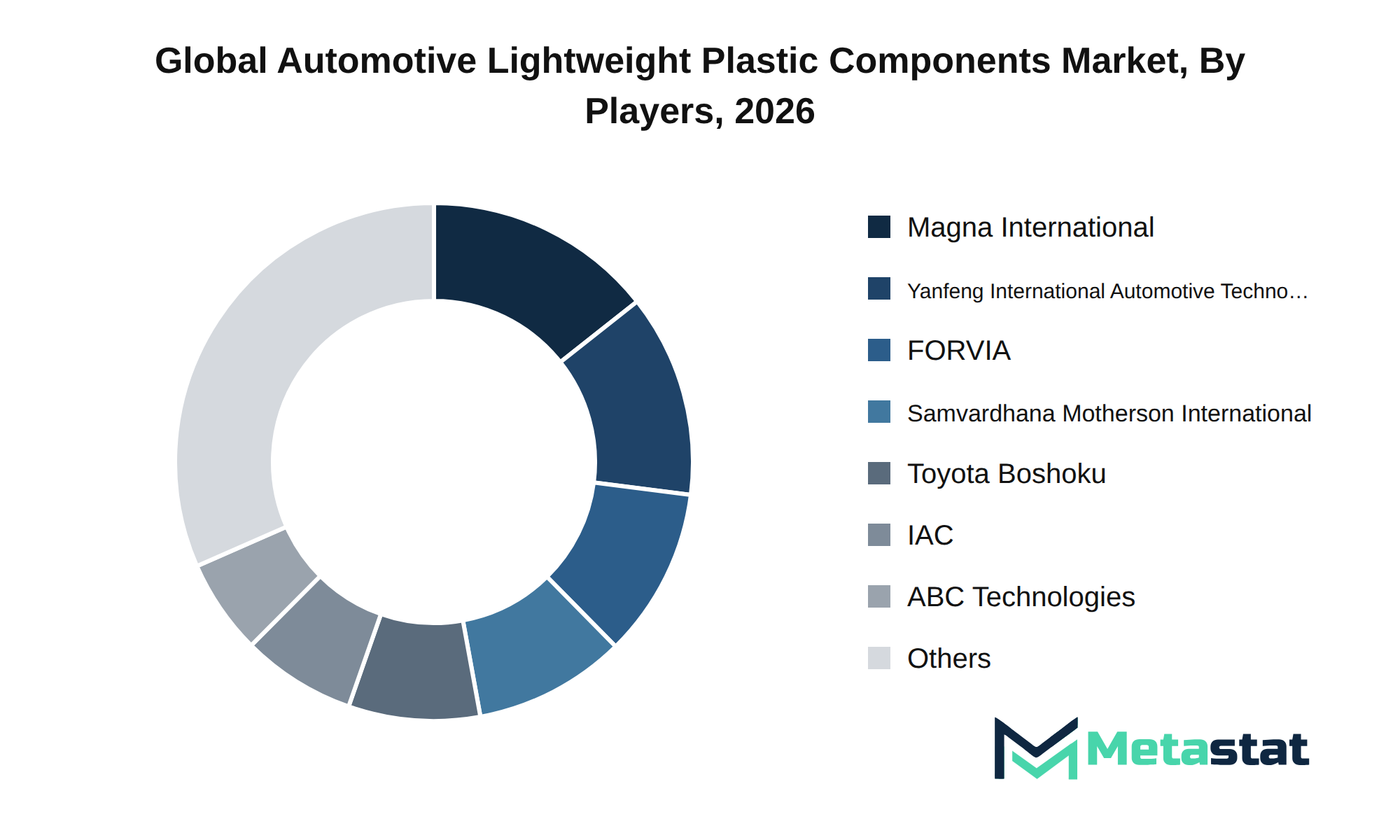
The automotive lightweight plastic components market features a diverse array of players, ranging from global brands to regional specialists. Companies like Magna International Inc. and Yanfeng International Automotive Technology Co., Ltd. represent established global participants with comprehensive product portfolios and strong distribution networks. In contrast, local specialists including Mitchell Plastics and Revere Plastics Systems, LLC offer tailored solutions that cater to specific regional needs and preferences.
Price, certification, customization, and service quality are critical factors influencing buyer decisions within this market. Organizations seek suppliers who provide competitive pricing while ensuring compliance with safety and environmental regulations. For instance, FORVIA focuses on innovative designs and sustainable materials, appealing to environmentally conscious automotive manufacturers. Meanwhile, ABC Technologies Inc. emphasizes customization and flexibility, allowing clients to adapt components to unique design specifications.
Strategic positioning within the automotive lightweight plastic components market varies significantly among competitors. Companies including Toyoda Gosei Co., Ltd. and Samvardhana Motherson International Limited leverage extensive industry experience to develop advanced materials and solutions for their clients. The market's competitive landscape encourages companies to prioritize research and development, enabling them to introduce innovative products that meet evolving market demands.
Collaboration with vehicle manufacturers to create integrated systems enhances value propositions. Major players like Inteva Products, LLC and Kautex Textron GmbH & Co. KG actively engage with automotive clients, building long-term relationships that lead to mutual growth.
Achieving this growth depends on several key developments. The automotive industry is adopting advanced manufacturing processes, particularly in injection molding, to improve efficiency and reduce production costs. Increasing demand for lightweight components in passenger cars and sport utility vehicles drives growth, supported by the anticipated rise in the production of electric vehicles (EVs). Regulatory frameworks promoting sustainability influence the market, particularly in regions like Europe, where stringent environmental standards compel manufacturers to employ lightweight plastic components.
Several risks could impede this growth trajectory. Fluctuations in raw material prices, particularly for polyamide and polypropylene, affect cost structures across the supply chain. Delays in adopting new technologies or manufacturing processes limit the availability of innovative lightweight solutions. If these challenges arise, the market's potential expansion towards USD 56.1 billion could face significant headwinds.
By Component Type: Interior & Cabin Components, Exterior Body & Trim Components, Powertrain & Under-the-Hood Components, Chassis, Underbody & Structural Components, Fuel, Fluid & Air Management Components, Seating Components, Lighting, Sensor & Electrical Housings, EV Battery & Power Electronics Components, Others (Fasteners, Brackets, Functional Plastic Parts)
By Material Type: Polypropylene (PP) & Thermoplastic Polyolefin (TPO), Polyamide (PA/Nylon), Polyurethane (PU), Acrylonitrile Butadiene Styrene (ABS), Polycarbonate (PC) & PC Blends, Polybutylene Terephthalate (PBT) & Polyester Plastics, Polyethylene (PE), Thermoplastic Elastomers (TPE/TPU), Fiber-Reinforced Thermoplastics & Composites, Others (PVC, POM, PPE, PEI)
By Manufacturing Process: Injection Molding, Blow Molding, Compression Molding, Thermoforming, Reaction Injection Molding, Resin Transfer Molding, Extrusion, Foam Molding, Others (Pultrusion, Additive Manufacturing)
By Vehicle Type: Passenger Cars, Sport Utility Vehicles & Crossovers, Light Commercial Vehicles, Heavy Commercial Vehicles, Buses & Coaches, Off-Highway Vehicles
The report strategically identifies and profiles the key market players and analyses their core competencies in each sub-segment of the Automotive Lightweight Plastic Components market.
|
Report Attributes |
Details |
|
Study Period |
2021-2033 |
|
Base Year |
2025 |
|
Estimated Year |
2026 |
|
Forecast Period |
2026-2033 |
|
Historical Period |
2021-2025 |
|
Growth Rate |
CAGR 6.8% from 2026 to 2033 |
|
Revenue Unit |
USD billion |
|
Segmentation |
|
|
By Region |
North America (By Component Type, Material Type, Manufacturing Process, Vehicle Type, and Country)
|
|
|
|
Asia Pacific (By Component Type, Material Type, Manufacturing Process, Vehicle Type, and Country)
|
|
|
|
|
Middle East and Africa (By Component Type, Material Type, Manufacturing Process, Vehicle Type, and Country)
|
Find answers to common questions about this report
The Metastat Insights study reveals that the Automotive Lightweight Plastic Components market size was valued at USD 33.1 billion in 2025.
The Automotive Lightweight Plastic Components market is projected to grow at a CAGR of 6.8% during the forecast period from 2026 to 2033.
According to Metastat Insights analysis, the North America Automotive Lightweight Plastic Components market size is estimated to reach USD 14.6 billion by 2033.
The leading segment in the Automotive Lightweight Plastic Components market is Interior & Cabin Components, with a projected value of USD 12.4 billion by 2033. This segment's growth is driven by increasing demand for lightweight materials in vehicle interiors, enhancing fuel efficiency and performance.
The key drivers for the Automotive Lightweight Plastic Components market include the increasing demand for lightweight materials in vehicle interiors and the growth of the Interior & Cabin Components segment, which is projected to rise from USD 8.7 billion in 2026 to USD 12.4 billion by 2033. The Asia Pacific region leads the market, reflecting a strong focus on lightweight solutions.
Increasing consumer preference for lightweight materials that enhance fuel efficiency and vehicle performance drives product adoption in the Automotive Lightweight Plastic Components market. The emphasis on sustainability and regulatory pressures for reduced emissions further encourages manufacturers to innovate and supply lightweight components, aligning with evolving consumer expectations.
The Automotive Lightweight Plastic Components market is estimated to reach a valuation of USD 56.1 billion by 2033.
Key players in the Automotive Lightweight Plastic Components market include Magna International Inc., FORVIA, Yanfeng International Automotive Technology Co., Ltd., IAC Group, ABC Technologies Inc., and Toyoda Gosei Co., Ltd.
The passenger vehicle segment in the Automotive Lightweight Plastic Components market is projected to expand from USD 12.2 billion in 2026 to USD 18.2 billion by 2033.
The polyamide segment in the Automotive Lightweight Plastic Components market is expected to grow at a CAGR of 7.1% through 2033.
The analysts below cover Automotive and Transportation research at Metastat Insights.
LEAD ANALYST
Utkarsh Khirodkar is a Lead Market Research Analyst at MetaStat Insight, specializing in market intelligence, technology sector assessments, and competitive strategy.

ENERGY & INFRASTRUCTURE INDUSTRY CONSULTANT
Automotive and Transportation · Electronics and Semiconductor · Energy and Power · Machinery & Equipment
Saurabh Vasant Ganvir consults for Energy & Infrastructure Industry at MetaStat Insight, specializing in renewable energy, solar EPC, and electric vehicle (EV) infrastructure markets.
Decarbonizing industrial thermal processes hinges on refrigerant regulations and compressor efficiency limits. Metastat Insights delivered a thorough market analysis that evaluated natural refrigerants like CO2 and hydrocarbons against synthetic low-GWP alternatives. The breakdown of utility incentives and grid capacity constraints across key European manufacturing hubs offered valuable perspective. The follow-up conversation with their sector analysts addressed our specific questions on mechanical vapor recompression systems efficiently.
Assessing 200mm wafer transition schedules and substrate supply bottlenecks requires precise technical intelligence. MetaStat Insight supplied an actionable breakdown comparing planar and trench MOSFET architectures across automotive and industrial drive markets. The regional capacity estimates for Asia-Pacific foundries helped clarify lead-time uncertainties during our strategic planning session. When we needed additional clarification on high-purity raw material sourcing, their analyst team responded with helpful context within twenty-four hours.
Tracking maintenance cycle demand for secondary flight display units and terrain collision avoidance systems across regional jet fleets involves complex aftermarket dynamics. MetaStat Insight provided practical analysis separating airline retrofit programs from OEM forward-fit production schedules in North America and Southeast Asia. The supplier matrix highlighted component obsolescence timelines without resorting to vague generalizations. The dataset served as a dependable reference during our annual program review meetings.
Explore related market intelligence reports worth reading alongside this one.
Starting from
$2950