
LEAD ANALYST
Utkarsh Khirodkar is a Lead Market Research Analyst at MetaStat Insight, specializing in market intelligence, technology sector assessments, and competitive strategy.

Global Electric Motorcycle Market Size, Share, By Motorcycle Type (Performance Motorcycle and Regular Motorcycle), By Drive Type (Belt Drive, Chain Drive, and Hub Motor), By End-Use (Personal and Commercial), By Battery Type (Lithium-ion, Lead Acid, and Others), Industry Analysis, Growth, Trends, and Forecast, 2026-2033
Report ID
MSI-5359
Published
September, 2026
Pages
281 Pages
Format
Historical
Base year
Forecast
Forecast period
Report Details
Market Valuation: Valued at $60.2 Billion in 2025, projected to reach $287.7 Billion by 2033 at a 21.6% CAGR.
Dominant Segment: The Performance Motorcycle segment leads the market, projected to grow from USD 28.3 billion in 2026 to USD 121.4 billion by 2033, driven by rising consumer interest in high-performance electric vehicles.
Geographic Lead: Asia Pacific dominates the market with a 72.1% share in 2025, fueled by strong demand in countries like China and India, alongside significant investments in charging infrastructure.
What's Inside: The report provides a comprehensive analysis of market segmentation by motorcycle type, drive type, end-use, and battery type, along with competitive coverage and strategic insights.
Emerging Regional Demands: The market potential is elevated by increasing urbanization and a shift towards eco-friendly transportation, particularly in Asia Pacific, where government incentives are enhancing electric motorcycle adoption.
Investment Dynamics: Favorable capital investment environments are driving market expansion, with rising GDP growth and venture funding supporting the development of electric motorcycle technologies and infrastructure.
Choose Your License
Global Electric Motorcycle Market
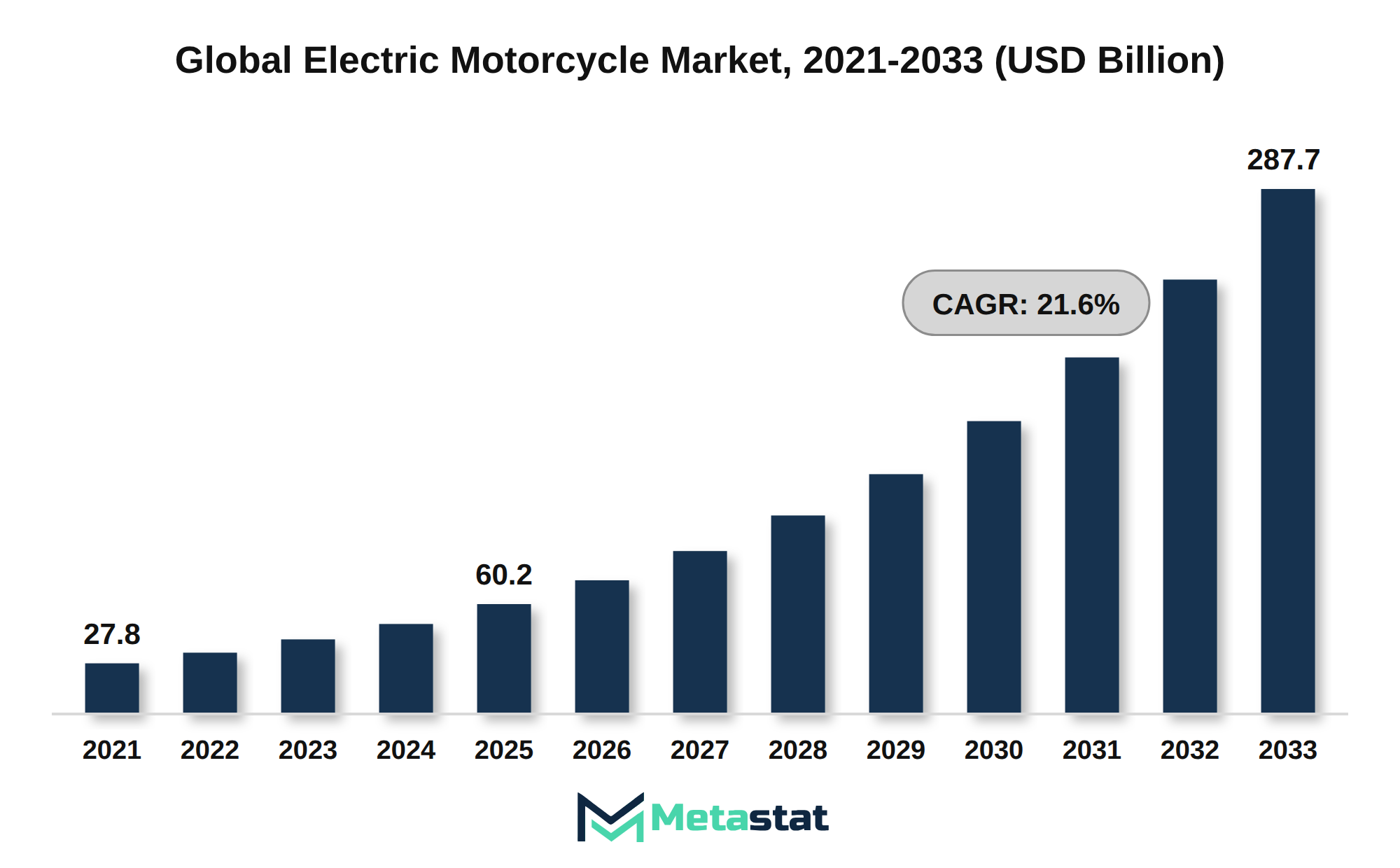
The global Electric Motorcycle market was valued at USD 60.2 billion in 2025 and is projected to reach USD 287.7 billion by 2033, growing at a CAGR of 21.6% over the forecast period.
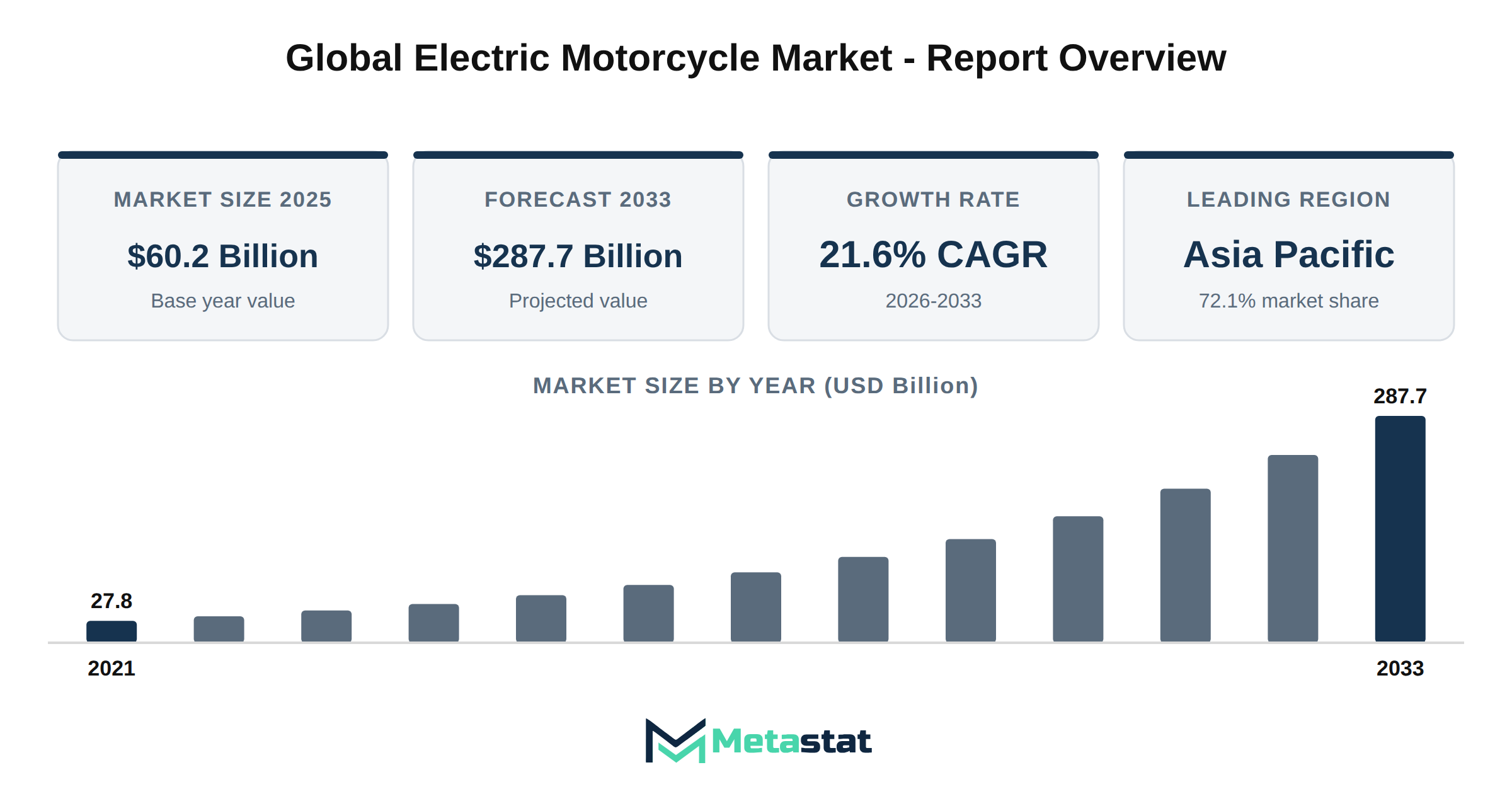
The Electric Motorcycle market reached a value of USD 60.2 billion in 2025, representing an increase from USD 27.8 billion in 2021. The market is projected to expand rapidly, reaching USD 287.7 billion by 2033, with a compound annual growth rate (CAGR) of 21.6% during the forecast period from 2026 to 2033.
Urban mobility trends and the push towards electrification drive market growth. Rising consumer demand for zero-emission two-wheelers enhances the attractiveness of electric motorcycles. Advancements in lithium-ion battery technology transform the performance capabilities of these vehicles, leading to longer ranges and improved efficiency.
Fast charging and battery swapping technologies reshape electric motorcycle adoption. Enhanced charging solutions reduce downtime and improve convenience, encouraging more users to transition to electric options. Improvements in electric motorcycle range, coupled with declining battery costs, support market penetration.
Government incentives and emission regulations significantly influence electric motorcycle sales. This regulatory support encourages consumers and businesses to invest in electric motorcycles, aligning with broader sustainability goals. The growing adoption of electric motorcycles for last-mile delivery and commercial fleets highlights a shift towards electrified transportation solutions.
Premium and high-performance electric motorcycles gain momentum within the market. Consumers increasingly seek advanced features and superior performance, driving manufacturers to innovate and differentiate their offerings. Connected electric motorcycles, equipped with smart mobility features, enhance the user experience and drive product innovation.
The expansion of electric motorcycle charging infrastructure and ecosystem development is critical for supporting market growth. Increased availability of charging stations improves accessibility, encouraging wider adoption. OEM investment and new product launches accelerate market competition, allowing various players to capitalize on emerging opportunities.
The Electric Motorcycle market experiences significant growth driven by urban mobility trends and the push for electrification. Factors including increasing congestion in urban areas and rising awareness of environmental issues contribute to the shift towards electric two-wheelers. Consumers seek convenient and eco-friendly transportation options, directly impacting demand across various demographics.
Rising consumer interest in zero-emission vehicles positions electric motorcycles because an attractive option. Health and environmental benefits, alongside government incentives, motivate consumers to transition from traditional motorcycles to electric variants. This transition aligns with broader sustainability goals, further enhancing the market's growth potential.
Advancements in lithium-ion battery technology significantly transform the performance of electric motorcycles. Improved energy density, reduced weight, and enhanced lifespan lead to higher efficiency and longer ranges. These developments encourage manufacturers to innovate, creating models that meet diverse consumer needs while ensuring competitive pricing.
Fast charging and battery swapping technologies reshape electric motorcycle adoption by addressing common range anxiety concerns. Enhanced charging infrastructure enables users to recharge their vehicles quickly, promoting convenience and practicality. This evolution in service models supports broader market penetration and builds consumer trust.
Improvements in electric motorcycle range, combined with declining battery costs, enhance affordability and accessibility. Consumers increasingly perceive electric motorcycles because viable alternatives to traditional models, expanding the market. Competitive pricing strategies, influenced by technological advancements and economies of scale, further support this trend.
Government incentives and emission regulations play a crucial role in supporting electric motorcycle sales. Financial subsidies and tax benefits encourage consumers to adopt electric vehicles, while stringent emission standards compel manufacturers to innovate toward cleaner technologies. This collaboration between policy and market demand accelerates growth trajectories.
The growing adoption of electric motorcycles in last-mile delivery and commercial fleets presents new opportunities. Businesses seek efficient, cost-effective solutions for urban logistics, driving demand for electric two-wheelers. The operational advantages of these vehicles enhance their appeal to commercial users, creating a new segment within the market.
Premium and high-performance electric motorcycles gain momentum amid rising consumer expectations for advanced features. Manufacturers develop high-end models that combine performance with sustainability, appealing to niche markets. This segment highlights the potential for profitability within the broader market.
Connected electric motorcycles equipped with smart mobility features promote product innovation. Integrating technology enhances user experience, offering functionalities including navigation, vehicle diagnostics, and connectivity with smart devices. This trend reflects the market's shift towards incorporating digital solutions into transportation.
Expansion of the charging infrastructure and ecosystem development significantly influence market dynamics. Investments in public and private charging networks enhance the usability of electric motorcycles, driving consumer adoption. Strategic partnerships between stakeholders support infrastructure growth, creating a robust ecosystem for electric mobility.
Investments from original equipment manufacturers (OEMs) and the introduction of new products accelerate market competition. Companies focus on expanding their portfolios to include electric models, responding to consumer demand for variety and innovation. This competitive landscape encourages continuous improvement and drives market growth.
Startups in the electric motorcycle sector and their strategic partnerships reshape the competitive landscape. Emerging companies introduce innovative designs and technologies, challenging established players. Collaboration between startups and traditional manufacturers enhances market dynamism and creates new solutions.
Supply chain developments in batteries, motors, power electronics, and critical materials significantly impact market viability. Ensuring a stable supply of essential components supports production efficiency and innovation. This aspect of the market requires careful management to address potential disruptions and maintain growth.
Asia Pacific emerges because the leading region for electric motorcycle demand and manufacturing. The region's growing urban population and government initiatives promoting electric mobility reinforce its market position. While manufacturers focus on regional production, economies of scale contribute to competitive pricing and broader accessibility.
North America and Europe represent emerging high-growth markets for electric motorcycles. Increasing consumer awareness and government policies favoring sustainable transportation options drive demand in these regions. The evolving market landscape presents opportunities for growth and innovation, aligning with global environmental goals.
Affordability, total cost of ownership, and consumer purchase decisions heavily influence market dynamics. Consumers evaluate the long-term financial implications of electric motorcycles, weighing initial costs against potential savings on fuel and maintenance. This analysis shapes purchasing behavior and market penetration rates.
Technological trends related to belt drive, chain drive, and hub motor systems contribute to the evolution of electric motorcycles. Manufacturers explore various configurations to enhance performance, efficiency, and user experience. These advancements reflect the industry's response to consumer preferences and operational demands.
Commercial fleet electrification generates new growth opportunities for electric motorcycles. Organizations increasingly seek sustainable alternatives for their logistics needs, driving demand for electric two-wheelers. This trend highlights the strategic importance of aligning product offerings with evolving market requirements.
Battery safety, thermal management, and regulatory compliance remain critical considerations in electric motorcycle design. Ensuring reliability and safety standards enhances consumer confidence and encourages market growth. Addressing these factors is essential for manufacturers aiming to establish a strong market presence.
The evolution of the electric motorcycle aftermarket, maintenance, and service ecosystem reflects changing consumer expectations. While the market matures, the demand for support services and replacement parts increases. This trend creates opportunities for businesses to offer specialized services, enhancing overall market viability.
Future growth opportunities in the global Electric Motorcycle market through 2033 appear promising. Continued advancements in technology, supportive government policies, and shifting consumer preferences position the market for sustained expansion. Manufacturers focusing on innovation and customer satisfaction are well-positioned to capitalize on these trends.
The Electric Motorcycle market thrives due to favorable capital investment environments, characterized by rising GDP growth and increasing venture funding. Enhanced public-private spending power supports the development of electric motorcycle technologies and infrastructure. This environment attracts investment in research and development, fueling the introduction of innovative models and features appealing to consumers.
Interest rates influence financing options for consumers, enabling more individuals to purchase electric motorcycles. Lower rates reduce borrowing costs, leading to increased sales. A growing focus on sustainability enhances the market's appeal among environmentally conscious buyers, prompting a preference for electric over traditional motorcycles.
The market benefits from shifting demographic patterns, particularly among younger consumers who prioritize eco-friendly transportation solutions. Urbanization trends contribute to the demand for efficient and sustainable commuting options. Consequently, the electric motorcycle emerges because a favored choice, appealing to lifestyle changes and evolving buying preferences.
Investment in the Electric Motorcycle market generates opportunities for manufacturers and suppliers to establish a competitive edge through innovation-led product diversification. Companies focusing on advanced battery technologies, improved performance capabilities, and smart connectivity features position themselves favorably to capture market share and drive further growth.
Regulatory compliance poses challenges for the Electric Motorcycle market, influencing manufacturers to navigate complex standards and certifications. Adhering to diverse regulations across regions requires substantial investments in compliance processes, extending time to market. This situation affects smaller companies disproportionately, creating barriers to entry and stifling competition.
Infrastructure gaps impede adoption rates in various regions. Limited access to charging stations and service facilities diminishes consumer confidence and convenience, particularly in rural areas. Insufficient investment in the necessary infrastructure contributes to slower market penetration and inhibits potential growth.
Geopolitical instability adds uncertainty to the market, affecting supply chains and operational reliability. Fluctuating trade policies and tariffs often lead to increased costs, making it challenging for companies to maintain competitive pricing. Such conditions deter investment in capacity expansion or innovation, hindering overall market development.
Technological obsolescence presents another restraint for the Electric Motorcycle market. Rapid advancements in technology necessitate continuous upgrades to product offerings, placing pressure on manufacturers to invest in research and development. Failure to keep pace results in decreased market share and loss of competitiveness.
Rising operating costs further challenge profitability in the Electric Motorcycle market. Inflationary pressures on raw materials and labor significantly impact margins, reducing the financial resources available for expansion initiatives. Companies manage operational efficiencies to sustain growth while facing these increasing expenses.
Geopolitical fragmentation contributes to challenges within the Electric Motorcycle market, creating uncertainties in trade relations and regulatory environments. Trade deficits exacerbate cost pressures, resulting from increased import tariffs and costs associated with sourcing materials and components. These conditions lead to obstacles in the supply chain, impacting manufacturers' operational efficiency and profitability.
Technological disruptions further complicate the landscape, where rapid advancements shift consumer expectations and production requirements. Manufacturers experience pressure to innovate continuously while managing the complexities of integrating new technologies into existing frameworks. This dynamic creates potential interoperability friction, hindering collaboration among various stakeholders in the market.
Supply chain instability poses significant challenges, with volatility in feedstock and component availability affecting production timelines and costs. Increased logistics disruptions, stemming from geopolitical tensions or natural events, lead to further complications in bringing products to market. Consequently, the Electric Motorcycle market experiences heightened pricing compression and margin pressures because companies strive to navigate these multifaceted challenges.
Rising input cost structures and workforce skill gaps further contribute to the competitive landscape. Companies face difficulties in retaining talent with the necessary skills to adapt to evolving technologies and market demands. The need for automation and workforce optimization increases, but finding a balance between technological investments and human resources remains complex.
The focus on sustainability and environmental footprints introduces additional pressures. Companies in the market address decarbonization mandates and sustainability demands from consumers and regulators alike. This shift drives the need for innovative solutions while ensuring compliance with tightening global regulatory standards.
In this context, the Electric Motorcycle market encounters various challenges that influence growth potential, innovation pathways, and operational viability. Stakeholders navigate these issues while striving for a competitive edge in an increasingly complex market environment.
The Electric Motorcycle market stands to benefit from a surge in regional demands driven by increased urbanization and a shift toward eco-friendly transportation options. Regions, particularly in Asia Pacific, experience rapid growth in electric motorcycle adoption due to rising urban populations and changing consumer preferences. Governments in these areas prioritize sustainability, prompting investment in electric mobility solutions, which enhances market dynamics and opens new avenues for growth.
Infrastructure modernization plays a critical role in boosting market opportunities. Investments in charging infrastructure and service networks are essential for enabling consumers to adopt electric motorcycles confidently. The alignment of infrastructure development with regional transport policies facilitates greater access to electric motorcycles, driving demand in urban centers and suburban regions.
Technological disruptions in the automotive sector further contribute to the market's expansion. Advancements in battery technology, particularly lithium-ion solutions, improve performance and reduce costs, appealing to a broader consumer base. Next-generation innovations in electric motorcycle design enhance features, catering to diverse consumer needs and preferences.
Growing environmental sustainability imperatives create a favorable environment for the Electric Motorcycle market. Consumers increasingly prioritize eco-friendly alternatives, aligning with global trends toward reducing carbon footprints. This shift enables manufacturers to develop and market electric motorcycles effectively, tapping into the changing demand landscape.
Strategic consolidation and cross-industry collaborations provide additional growth opportunities. Partnerships between electric motorcycle manufacturers and tech companies facilitate the integration of advanced features, enhancing market competitiveness. Collaborative efforts to create innovative products capture niche markets and address evolving consumer expectations.
Changing buying behaviors influence market dynamics, particularly with the rise of digital procurement processes. Consumers demonstrate a preference for online purchasing channels, driving manufacturers to adapt to new sales models. This transition supports the growth of the Electric Motorcycle market, making it easier for consumers to access products and services tailored to their needs.
The Global Electric Motorcycle market is segmented based on Motorcycle Type, Drive Type, End-Use, and Battery Type.
Valued at USD 28.3 billion in 2026, the Performance Motorcycle segment is projected to reach USD 121.4 billion by 2033, at a CAGR of 23.2% during the forecast period. Rising demand stems from increased interest in high-performance electric vehicles among consumers seeking sustainable and efficient alternatives to traditional motorcycles. This segment experiences significant enhancement due to technological advancements that improve battery efficiency, acceleration, and overall performance, attracting a diverse range of buyers, from casual riders to enthusiasts.
Investment in electric motorcycle technology plays a significant role in driving market growth. Manufacturers increasingly focus on developing next-generation electric motorcycles that incorporate advanced features, enhancing user experience. The Performance Motorcycle segment benefits from the integration of advanced materials and engineering practices, which contribute to weight reduction and improved handling, further appealing to performance-oriented customers.
While consumers shift towards eco-friendly transportation options, the market experiences changes in end-use dynamics. The personal use sector sees heightened interest, with riders prioritizing performance alongside sustainability. This trend creates a competitive environment, compelling manufacturers to innovate consistently to maintain market share in the Electric Motorcycle market.
Regulatory compliance surrounding emissions and noise levels creates a favorable environment for electric motorcycles. Stricter regulations on combustion-engine vehicles enhance the appeal of performance motorcycles, permitting manufacturers to leverage these shifts for strategic advantage. Consequently, the segment attracts substantial capital investments aimed at expanding production capacities and enhancing technological capabilities.
Overall, the Performance Motorcycle segment within the Electric Motorcycle market demonstrates strong growth potential through continuous innovation, evolving consumer preferences, and supportive regulatory frameworks, setting the stage for a dynamic future.
Growth in the Regular Motorcycle segment stems from increasing consumer preferences for sustainable transportation solutions. Rising environmental awareness drives demand for electric two-wheelers, pushing manufacturers to enhance their product offerings. Performance and efficiency improvements serve because key catalysts for consumer adoption, with technology advancements significantly enhancing battery life and overall riding experience.
The segment is estimated to reach USD 166.4 billion by 2033, at a CAGR of 20.5% during the forecast period. This adoption reflects a shift in end-use dynamics, particularly in urban commuting and recreational activities, where electric motorcycles present viable alternatives to traditional gasoline-powered models. Enhanced regulatory frameworks promoting electric vehicle usage further support market expansion, aligning with global sustainability goals.
Investment in next-generation upgrades, including improved battery technologies and innovative design features, positions the Regular Motorcycle segment for growth. Consumers increasingly prioritize performance and reliability, prompting manufacturers to explore advanced lithium-ion battery solutions. This strategic focus on product evolution continues to shape the competitive landscape within the Electric Motorcycle market.
Belt Drive segment is valued at USD 23 billion in 2026 and is projected to reach USD 97.1 billion by 2033, at a CAGR of 22.9% during the forecast period. Increasing urbanization drives the demand for efficient and eco-friendly transportation options, propelling consumer interest in electric motorcycles equipped with belt drive systems. This demand stems from the advantages of belt drives, including low maintenance, quieter operation, and smoother performance, appealing to both personal and commercial end-users.
Technological advancements enhance the performance and efficiency of belt drive systems, enabling manufacturers to integrate innovative features and upgrades. Suppliers focus on next-generation upgrades, improving energy efficiency and battery life, which align with growing consumer expectations for high-performance electric motorcycles. The shift towards renewable energy sources and sustainable commuting influences adoption rates within the market.
Regulatory compliance standards supporting electric vehicle adoption fuel market growth, driven by governments worldwide implementing policies promoting environmental sustainability. Favorable regulations encourage investment in electric motorcycle technology, creating a competitive landscape among manufacturers. Cost structures in the industry adjust to accommodate the increasing demand for high-quality materials and advanced engineering processes essential for belt drive systems.
Price volatility in raw materials presents challenges, impacting production costs and profit margins for manufacturers. Strategic opportunity windows emerge for companies that excel in mitigating these challenges through efficient supply chain management and innovative sourcing strategies. Overall, the combination of growing consumer demand, technological maturation, and supportive regulatory frameworks positions the Belt Drive segment for significant growth within the Electric Motorcycle market.
Significant growth in the Chain Drive segment of the Electric Motorcycle market results from increasing demand for high-performance motorcycles. Enthusiasts prioritize the efficient power transfer and enhanced handling characteristics that chain drive systems provide. This segment is expected to reach USD 107 billion by 2033, at a CAGR of 19.2% during the forecast period. The trend toward performance-oriented designs drives manufacturers to innovate with lighter materials and advanced technologies, ensuring improved durability and responsiveness.
Adoption of chain drive systems aligns with the needs of both personal and commercial end-users seeking reliable and efficient transportation solutions. The market benefits from a growing emphasis on sustainability, with electric motorcycles presenting a cleaner alternative to traditional gasoline-powered vehicles. Regulatory compliance regarding emissions further increases demand for electric motorcycles with chain drive systems, enhancing their attractiveness in urban and rural environments.
Investment in research and development leads to technological maturation within the segment, enabling manufacturers to introduce next-generation upgrades that optimize performance. This evolution encourages a shift in consumer preferences, resulting in a substantial increase in sales volumes. The market landscape is influenced by competitive pricing strategies and an expanding consumer base, which collectively support the growth trajectory of chain drive systems in the Electric Motorcycle market.
Technological innovations play a crucial role in advancing the Hub Motor segment of the Electric Motorcycle market. This segment benefits from advancements in motor efficiency, which enhance performance and reduce energy consumption. The increasing demand for high-performance electric motorcycles drives growth, driven by consumers seeking superior speed and acceleration. Rising environmental concerns further influence buyer preferences, compelling manufacturers to focus on electric solutions.
Hub motors offer unique advantages, including integration into wheel hubs, which simplifies vehicle design and reduces overall weight. This design improves handling and maneuverability, appealing to urban commuters and performance enthusiasts. Increased investments in R&D contribute to the segment's expansion, enabling the introduction of next-generation models that align with consumer expectations.
Market dynamics reflect a shift toward personal electric vehicles, with the Hub Motor segment projected to reach USD 83.6 billion by 2033. Growing acceptance of electric mobility illustrates a broader trend in transportation, where traditional combustion engines face challenges from regulatory standards and changing consumer behavior. The segment attracts investment, creating opportunities for manufacturers to expand their portfolios and enhance competitive positioning.
In addition, strategic partnerships among industry players strengthen supply chain resilience and improve raw material sourcing, addressing potential vulnerabilities. Companies focusing on sustainability and efficient production processes position themselves favorably in the market. Overall, the Hub Motor segment aligns with the evolving environment of the Electric Motorcycle market, driving healthy growth and promoting innovation.
Valued at USD 56.9 billion in 2026, the Personal segment is projected to reach USD 211.3 billion by 2033, with a CAGR of 20.6% during the forecast period. This segment experiences significant growth driven by increasing urbanization and a shift toward sustainable transportation options. Consumers increasingly seek alternatives to traditional gasoline-powered motorcycles, motivated by factors including environmental concerns and rising fuel prices.
Adoption of electric motorcycles in the Personal segment benefits from technological advancements, including improved battery life and charging infrastructure. Manufacturers focus on enhancing performance capabilities, making electric motorcycles more appealing for daily commuting and leisure riding. The transition supports a broader acceptance of electric vehicles within the consumer market, ultimately driving market expansion.
Pricing volatility remains a factor in the Personal segment, driven by fluctuations in raw material costs that impact overall pricing strategies for manufacturers. Strategic investments in supply chain resilience and raw material sourcing influence cost structures, thereby affecting end-user pricing. The competitive landscape intensifies because established brands and new entrants vie for market share, requiring continuous innovation to meet evolving consumer demands.
Technological maturation in battery technology, particularly lithium-ion batteries, directly impacts the appeal of electric motorcycles among personal users. Next-generation upgrades focus on enhancing range and efficiency, addressing concerns related to charging times and overall performance. These advancements contribute to a favorable outlook for the Electric Motorcycle market within the Personal segment, supporting growth in adoption and consumer interest.
Growth in the Commercial segment aligns with increasing demand for sustainable transportation solutions across various industries. This demand arises from businesses seeking to reduce their carbon footprint and comply with stringent environmental regulations. The market is projected to reach USD 76.4 billion by 2033, at a CAGR of 24.5% during the forecast period.
Adoption of electric motorcycles within the commercial sector gains momentum due to advancements in battery technology, enhancing performance and operational efficiency. Companies within logistics, delivery, and ride-sharing segments leverage electric motorcycles to optimize their fleets and reduce operational costs. The shift toward electric vehicles significantly impacts urban environments, where incentives and infrastructure developments support the integration of electric motorcycles.
Investment in next-generation upgrades, including improved battery life and charging capabilities, plays an important role in the expansion of this segment. The evolution of electric motorcycles toward higher performance levels attracts commercial buyers who prioritize efficiency and sustainability in their operations. Manufacturers focus on developing models tailored to commercial needs, ensuring a strong market presence.
End-use dynamics reflect a broader trend toward electrification within transportation, influencing purchasing decisions. Businesses increasingly recognize the long-term cost benefits associated with electric motorcycles, including lower fuel expenses and reduced maintenance costs compared to traditional vehicles. Consequently, this segment experiences significant growth driven by changing consumption patterns and heightened awareness of environmental impacts.
Lithium-ion battery technology plays a crucial role in the Electric Motorcycle market, providing enhanced energy density and efficiency compared to traditional alternatives. Valued at USD 58.6 billion in 2026, this segment is projected to reach USD 248.8 billion by 2033, at a CAGR of 23% during the forecast period. Primary demand drivers include increasing adoption of electric motorcycles among consumers seeking sustainable transportation options and growing emphasis on reducing carbon emissions.
The expansion of lithium-ion batteries in the market reflects advancements in manufacturing processes and cost reductions, making these batteries more accessible to manufacturers and consumers alike. This segment benefits from significant investments in R&D, leading to the development of next-generation battery technologies that enhance performance and longevity. Increased competition among battery producers encourages innovation, resulting in improved product evolution and efficiency.
Downstream applications in various segments, particularly personal and commercial use, drive demand for lithium-ion batteries. Consumers show a pronounced shift towards electric motorcycles, driven by rising fuel prices and a growing preference for eco-friendly vehicles. Regulatory compliance standards further support adoption of lithium-ion batteries, pushing manufacturers to prioritize cleaner energy sources.
Cost structures within the lithium-ion segment endure pressures from raw material sourcing, particularly due to reliance on lithium and cobalt. Market players face challenges associated with pricing volatility, impacting profit margins. However, strategic opportunity windows exist for companies willing to innovate and invest in supply chain resilience to mitigate these risks.
Overall, the lithium-ion battery segment’s growth aligns with broader market dynamics, emphasizing sustainability and technological innovation. With significant capital investments anticipated in the coming years, this segment is poised for substantial advancement within the Electric Motorcycle market.
Demand for Lead Acid batteries within the Electric Motorcycle market arises from their cost-effectiveness and widespread availability. These batteries provide reliable performance, particularly in personal electric motorcycles, appealing to budget-conscious consumers. Increasing adoption of electric motorcycles in various regions drives the expansion of this segment.
The Lead Acid segment is estimated to reach USD 28.4 billion by 2033, at a CAGR of 13.4% during the forecast period. This growth correlates with advancements in battery technology, improving efficiency, and extending the lifespan of these batteries. Regulatory compliance standards emphasizing sustainable practices enhance the market's appeal.
Cost structures associated with Lead Acid batteries remain favorable, allowing manufacturers to maintain competitive pricing. Pricing volatility in raw materials, including lead, introduces potential margin pressures, influencing manufacturers' strategies. The segment's established position in the market provides a strategic opportunity window for continued growth.
Investment in Lead Acid technology provides a pathway for innovation and development, ensuring that the segment remains relevant amid rising competition from alternative battery types. The Electric Motorcycle market continues to evolve, demonstrating resilience and adaptability to shifting consumer preferences, while the Lead Acid segment contributes to this evolving environment.
Emerging trends in battery technology drive the Others segment of the Electric Motorcycle market. Innovations in alternative battery chemistries and designs contribute significantly to segment growth. These advancements cater to consumer preferences for environmentally friendly solutions, while performance and cost-effectiveness enhance adoption rates. The market observes a gradual shift towards alternative battery options that complement existing lithium-ion technologies, aiming to expand choices for manufacturers and consumers alike.
Investment in research and development fuels technological maturation, allowing companies to explore disruptive alternatives that challenge traditional battery types. Regulatory compliance regarding emissions and environmental standards creates opportunities for battery manufacturers focusing on sustainable practices. Growing consumer awareness regarding energy efficiency influences market dynamics, prompting manufacturers to diversify their battery offerings.
The Others segment is expected to reach USD 10.5 billion by 2033. Continued advancements in battery technology are anticipated to enhance the overall performance of electric motorcycles, supporting further segment growth. The strategic opportunity windows provided by evolving consumer preferences for green technology present an attractive prospect for investment and expansion.
Based on geography, the Global Electric Motorcycle market is divided into North America, Europe, Asia-Pacific, South America, Middle East, and Africa.
North America demonstrates substantial potential for growth within the Electric Motorcycle market, projected to expand at a CAGR of 21.6% throughout the forecast period, reaching a market size of USD 27.2 billion by the end of 2033. This region captures 8.4% of the global market in 2025, indicating a growing interest and investment in electric mobility solutions.
Primary demand drivers in North America include an increasing emphasis on sustainable transportation and stricter emissions regulations. The United States, Canada, and Mexico are advancing infrastructure modernization efforts, enhancing charging networks, and promoting electric vehicle adoption through various incentives. These initiatives contribute to higher adoption rates and encourage manufacturers to expand their product offerings.
The supply chain regionalization trend influences the market by promoting localized manufacturing and developing cross-border trade corridors. This strategic shift enhances access to electric motorcycle components while reducing logistics costs. Cultural nuances and regional B2B buying behaviors shape procurement dynamics, leading to tailored marketing and distribution strategies that connect with consumers.
Domestic market leaders, including prominent manufacturers and emerging players, facilitate competition that drives innovation and product diversification. The Electric Motorcycle market evolves rapidly, with high-value replacement cycles and incremental growth vectors providing opportunities for further penetration. This combination of factors positions North America because a critical player in the global electrification of the motorcycle industry.
Europe represents 11.8% of the global Electric Motorcycle market in 2025, indicating significant potential for growth. Key countries driving this market include Germany, France, the UK, Italy, Spain, and Russia. Factors contributing to the expansion encompass increasing urbanization, a growing emphasis on sustainability, and supportive government policies aimed at promoting electric mobility.
Infrastructure modernization presents opportunities for enhancing electric vehicle charging networks, thereby facilitating higher adoption rates of electric motorcycles. The increasing prevalence of battery electric vehicles aligns with the European Union's stringent emissions regulations, encouraging manufacturers and consumers to transition towards cleaner alternatives. Localized manufacturing densities and nearshoring initiatives enhance supply chain efficiencies while supporting regional economies.
Emerging market front-runners exhibit varying levels of adoption, influenced by cultural nuances and regional B2B buying behaviors. Germany and the UK emerge because leaders, demonstrating robust demand for performance motorcycles, while other countries develop their segments. The market experiences high-value replacement cycles, driven by increasing consumer preferences for advanced technologies and improved performance. Overall, the Electric Motorcycle market in Europe reflects both mature market dynamics and incremental growth vectors.
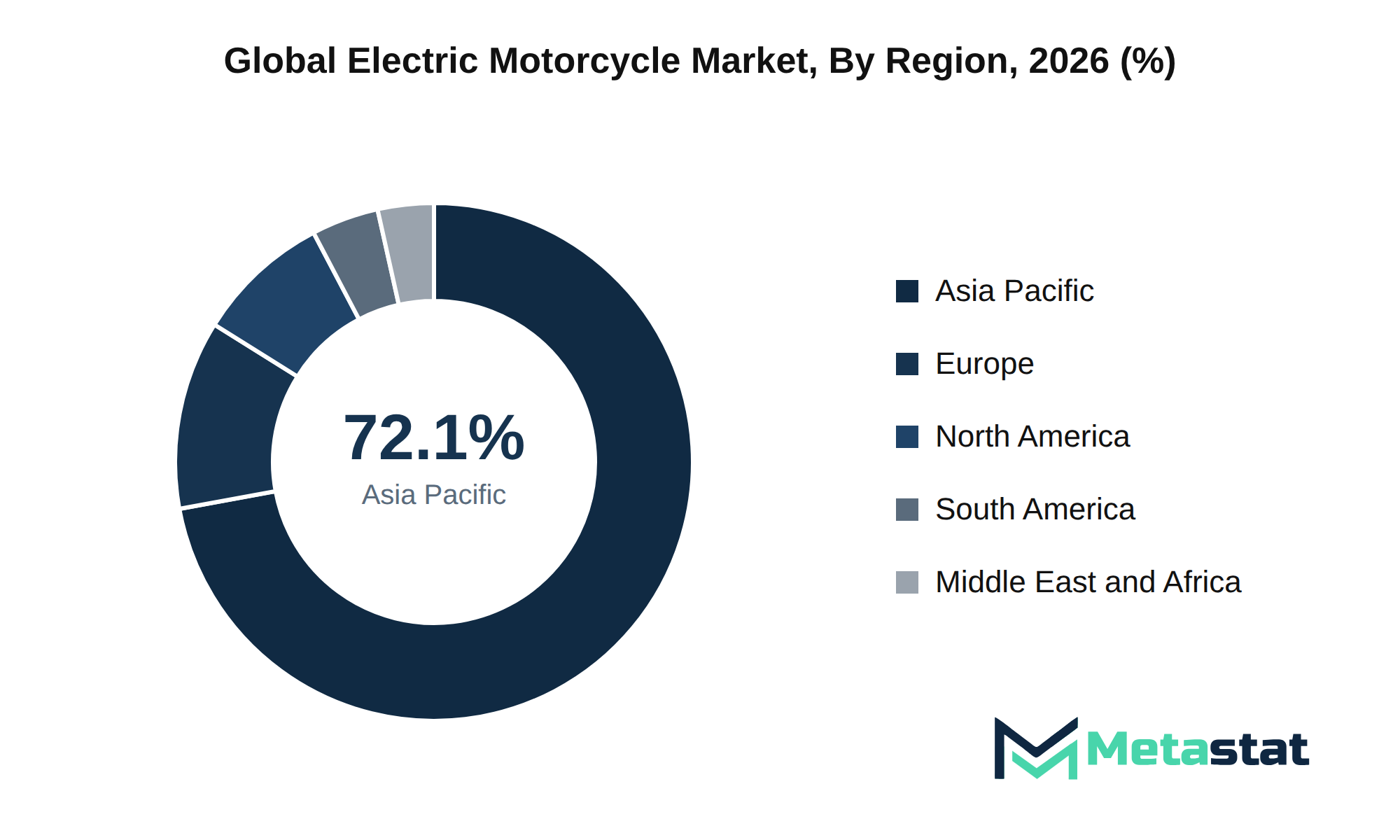
Asia Pacific represents a significant portion of the Electric Motorcycle market, accounting for 72.1% of the global market share in 2025. This dominance is driven by a combination of factors, including strong consumer demand in countries including China, Japan, India, and South Korea. The increasing awareness of environmental issues and government incentives for electric vehicles further fuel adoption across the region.
Infrastructure modernization supports market growth. Many countries within Asia Pacific are investing heavily in charging infrastructure and battery swapping stations, enabling consumers to transition from traditional motorcycles to electric alternatives more seamlessly. This investment creates a supportive environment for both personal and commercial use of electric motorcycles.
The emergence of key market players in Asia Pacific, including Zero Motorcycles and LiveWire, positions the region because a front-runner in the global electric motorcycle landscape. Local manufacturers, including Revolt Motors and Oben Electric, are capturing market share by offering models that cater to the unique preferences of regional consumers, further enhancing competition.
Localized manufacturing densities contribute to cost-effective production and supply chain efficiencies. By establishing production facilities within the region, companies reduce logistic costs and respond more rapidly to shifts in consumer demand, strengthening their market positions.
Market dynamics in Asia Pacific reflect a mature landscape with high-value replacement cycles. Consumers increasingly seek upgraded electric motorcycle models, reinforcing demand and driving incremental growth vectors. This trend presents opportunities for manufacturers to introduce innovative features and technologies that appeal to discerning buyers.
Overall, the Electric Motorcycle market in Asia Pacific demonstrates a positive growth trajectory, supported by favorable governmental policies, evolving consumer preferences, and strategic investments in infrastructure. These factors collectively enhance the region's position because a key player in the global electric motorcycle industry.
With a projected market share of 4.2% in 2025, South America presents opportunities within the Electric Motorcycle market. Key countries, including Brazil and Argentina, demonstrate increasing interest in electric mobility solutions driven by environmental awareness and government initiatives promoting sustainable transportation. Urbanization and the rising cost of fossil fuels serve because catalysts for the adoption of electric motorcycles, appealing to both eco-conscious consumers and cost-sensitive buyers.
The market experiences gradual growth, supported by improving local infrastructure and a shift towards cleaner energy sources. Brazil leads the region in electric motorcycle adoption, supported by investment in charging infrastructure and favorable regulatory frameworks. Argentina follows closely, with an emerging consumer base eager to embrace electric alternatives. Incremental growth vectors in the region highlight the importance of localized manufacturing and supply chain efficiencies to meet rising demand.
Domestic market leaders, including local manufacturers and regional players, contribute to competitive dynamics by addressing the unique buying behaviors and preferences of consumers in South America. The market's potential for expansion aligns with broader trends of globalization and regionalization, enhancing cross-border trade corridors that facilitate the flow of electric motorcycles and related technologies.
The Electric Motorcycle market in the Middle East and Africa faces unique challenges and opportunities influenced by regional dynamics. Saudi Arabia, UAE, and South Africa represent the key markets within this region, characterized by a growing interest in sustainable transportation solutions. Rising environmental awareness and government initiatives to promote electric mobility drive demand, contributing to market expansion.
Infrastructure modernization remains a critical factor for the market's growth. Investment in charging stations and related facilities is essential to support electric motorcycle adoption. Several countries in the region are enhancing their energy grid resiliency to accommodate the increasing demand for electric vehicles. This development creates a conducive environment for the Electric Motorcycle market.
Cultural nuances shape buying behaviors in the region. Consumers increasingly favor personal mobility solutions that align with modern lifestyles, particularly in urban areas. The market benefits from localized procurement dynamics, where manufacturers adapt their offerings to meet specific regional needs. This adaptability enhances market penetration.
In terms of competitive landscape, local vendors strive to establish a foothold in the market. Increased foreign direct investment (FDI) flows into the region signal confidence in potential growth opportunities. Collaborative efforts between local firms and international manufacturers strengthen the market position, facilitating knowledge transfer and technology sharing. Overall, the Middle East and Africa region presents a promising avenue for growth within the Electric Motorcycle market.
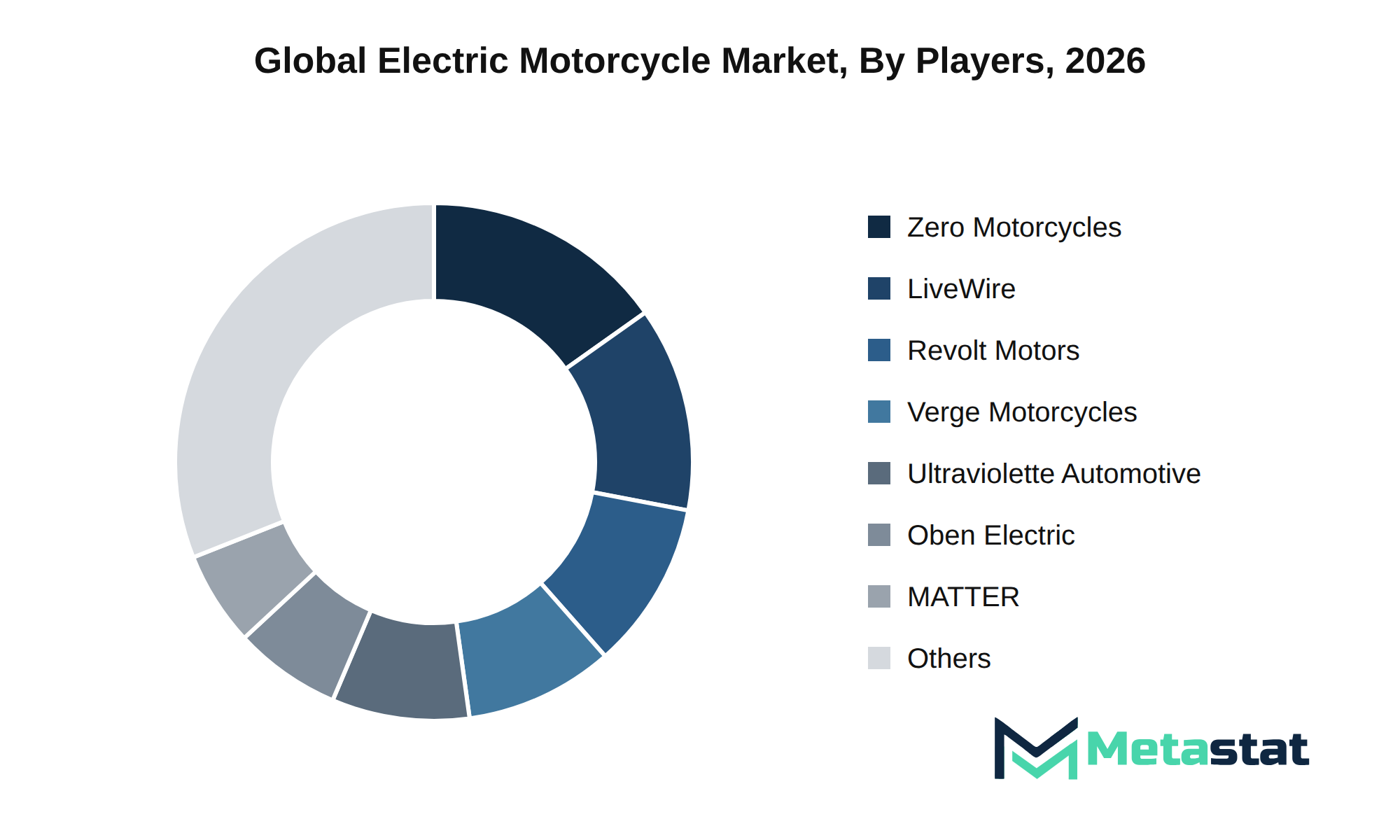
Competitive dynamics within the Electric Motorcycle market demonstrate significant activity among established players and emerging companies. Key strategies include mergers and acquisitions, product differentiation, and innovative go-to-market approaches. Companies like Zero Motorcycles and LiveWire focus on premium offerings, catering to performance-driven consumers. In contrast, brands including Revolt Motors and Oben Electric emphasize affordability and accessibility, targeting a broader demographic.
Strategic alliances and partnerships play a critical role in enhancing market presence. Collaborations between manufacturers and technology developers, including those involving Ultraviolette Automotive and MATTER, leverage proprietary technology and advance R&D initiatives. Companies like NIU Technologies and VMoto / Super Soco establish cross-industry partnerships to enhance distribution networks and customer engagement.
The market faces barriers to entry due to high capital requirements and established brand equity dynamics. New entrants encounter challenges in building customer loyalty and differentiating their offerings within a competitive landscape dominated by key players including Kawasaki and Harley-Davidson, Inc. This competitive environment ensures ongoing innovation and value chain integration, positioning the electric motorcycle sector for significant growth.
Market size is forecast to rise from USD 60.2 billion in 2025 to over USD 287.7 billion by 2033. This growth trajectory reflects a base case of USD 60.2 billion in 2025 and forecasts a significant increase at a CAGR of 21.6%. The bull case scenario indicates accelerated growth driven by advancements in battery technology and enhanced charging infrastructure, attracting a wider consumer base. Conversely, the bear case suggests potential challenges from regulatory hurdles and fluctuations in raw material costs that could impede growth.
The macroeconomic scenario for the Electric Motorcycle market indicates changing economic cycles and downstream demand influenced by rising consumer awareness of sustainable transportation options. Core industry maturation, alongside structural consumption shifts towards electric vehicles, drives a significant change in transportation dynamics. Integration of next-generation technology accelerates research and development timelines, enhancing product life cycles and commercialization opportunities.
Regulatory evolution plays an important role in shaping the market landscape. Compliance milestones and policy enforcement horizons drive manufacturers to adapt swiftly to new standards, aligning their offerings with consumer expectations. Geopolitical realignments and global supply chain shifts further influence market dynamics, necessitating strategic capital allocation and infrastructure commitments to meet emergent demands.
High-growth pockets within the market present emerging white-space opportunities, particularly in urban areas where electric motorcycles alleviate congestion and reduce emissions. Addressing unmet enterprise needs and focusing on executive-level strategic imperatives enable companies to capitalize on these opportunities. Defensibility roadmaps that prioritize innovation and customer engagement support future growth strategies in the Electric Motorcycle market.
The report strategically identifies and profiles the key market players and analyses their core competencies in each sub-segment of the Electric Motorcycle market.
Report Attributes | Details |
Study Period | 2021-2033 |
Base Year | 2025 |
Estimated Year | 2026 |
Forecast Period | 2026-2033 |
Historical Period | 2021-2025 |
Growth Rate | CAGR 21.6% from 2026 to 2033 |
Revenue Unit | USD billion |
Segmentation | By Motorcycle Type, Drive Type, End-Use, Battery Type, and Region |
By Region | North America (By Motorcycle Type, Drive Type, End-Use, Battery Type, and Country)
|
Europe (By Motorcycle Type, Drive Type, End-Use, Battery Type, and Country)
| |
Asia Pacific (By Motorcycle Type, Drive Type, End-Use, Battery Type, and Country)
| |
South America (By Motorcycle Type, Drive Type, End-Use, Battery Type, and Country)
| |
Middle East and Africa (By Motorcycle Type, Drive Type, End-Use, Battery Type, and Country)
|
Find answers to common questions about this report
The Electric Motorcycle market size was valued at USD 60.2 billion in 2025, according to the Metastat Insights study.
The Electric Motorcycle market is projected to grow at a CAGR of 21.6% during the forecast period from 2026 to 2033.
The North America Electric Motorcycle market size is estimated to reach USD 27.2 billion by 2033.
The Performance Motorcycle segment leads the Electric Motorcycle market with a projected value of USD 121.4 billion by 2033, compared to the Regular Motorcycle segment, which is expected to reach USD 166.4 billion in the same year.
Key drivers for the Electric Motorcycle market include growing consumer awareness of environmental sustainability and a strong preference for low-emission vehicles. Enhanced infrastructure and advancements in battery technology further support operational productivity, enabling manufacturers to meet rising consumer demands effectively. favorable capital investment environments and shifting demographic patterns among younger consumers contribute to market expansion.
Several factors restrain the Electric Motorcycle market growth, including regulatory compliance challenges that require substantial investments and infrastructure gaps limiting access to charging stations. geopolitical instability creates uncertainty in supply chains, while rising operating costs from inflationary pressures on raw materials and labor further challenge profitability.
Growing consumer awareness regarding environmental sustainability and a strong preference for low-emission vehicles drive product adoption in the Electric Motorcycle market. Enhanced infrastructure and advancements in battery technology further improve operational productivity and performance, making electric motorcycles a viable alternative to traditional gasoline-powered bikes.
The Electric Motorcycle market is estimated to reach a valuation of USD 287.7 billion by 2033.
Top players operating in the Electric Motorcycle market include Zero Motorcycles, LiveWire, Verge Motorcycles, Ultraviolette Automotive, Revolt Motors, and Harley-Davidson, Inc.
Asia Pacific leads the Electric Motorcycle market, accounting for 72.1% of the regional share in 2025.
The analysts below cover Automotive and Transportation research at Metastat Insights.
LEAD ANALYST
Utkarsh Khirodkar is a Lead Market Research Analyst at MetaStat Insight, specializing in market intelligence, technology sector assessments, and competitive strategy.

ENERGY & INFRASTRUCTURE INDUSTRY CONSULTANT
Automotive and Transportation · Electronics and Semiconductor · Energy and Power · Machinery & Equipment
Saurabh Vasant Ganvir consults for Energy & Infrastructure Industry at MetaStat Insight, specializing in renewable energy, solar EPC, and electric vehicle (EV) infrastructure markets.
Evaluating sovereign cloud deployments for core banking platforms demands a clear view of data residency regulations and migration exit strategies. MetaStat Insight delivered an exhaustive review of regional latency tolerances, mainframe decommission milestones, and third-party vendor concentration risk. The regulatory compliance mapping across European and Asian financial jurisdictions gave our team a dependable baseline for multi-cloud infrastructure discussions.
Replacing petrochemical surfactants with bio-based alternatives requires realistic timelines on industrial precision fermentation scaling. The market research broke down commercialization timelines, feedstock sugar price sensitivities, and regional cosmetic ingredient regulatory approvals in Europe and East Asia. That supplier readiness mapping gave our formulations team reliable context when comparing renewable chemical sourcing roadmaps.
Tracking ceramic matrix composite adoption in high-bypass aero engines requires strict attention to material qualification cycles and FAA airworthiness testing milestones. The MetaStat Insight team provided a detailed timeline of silicon carbide fiber manufacturing capacity and commercial foundry lead times. Having clear visibility into upstream thermal barrier coating supply helped us stress-test our long-term component procurement strategy.
Explore related market intelligence reports worth reading alongside this one.
Starting from
$2950