
LEAD ANALYST
Utkarsh Khirodkar is a Lead Market Research Analyst at MetaStat Insight, specializing in market intelligence, technology sector assessments, and competitive strategy.

Global Energy Transition Investment Market Size, Share, By Technology Domain (Renewable Energy Generation, Electric Vehicles & Charging, Power Grids & Electrification Infrastructure, Stationary Energy Storage, Electrified Heat, Low-Carbon Hydrogen, Nuclear Energy, Carbon Capture & Storage and Others), By End-Use Sector (Power & Utilities, Transportation, Manufacturing & Process Industries, Residential Buildings, Commercial & Institutional Buildings and Others), By Investment Purpose (New Asset Development & Purchases, Expansion of Existing Assets and Replacement & Retrofit), By Asset Ownership (Private Ownership, Public Ownership and Joint Public-Private Ownership), Industry Analysis, Growth, Trends, and Forecast, 2026-2033
Report ID
MSI-5616
Published
October, 2026
Pages
291 Pages
Format
Historical
Base year
Forecast
Forecast period
Report Details
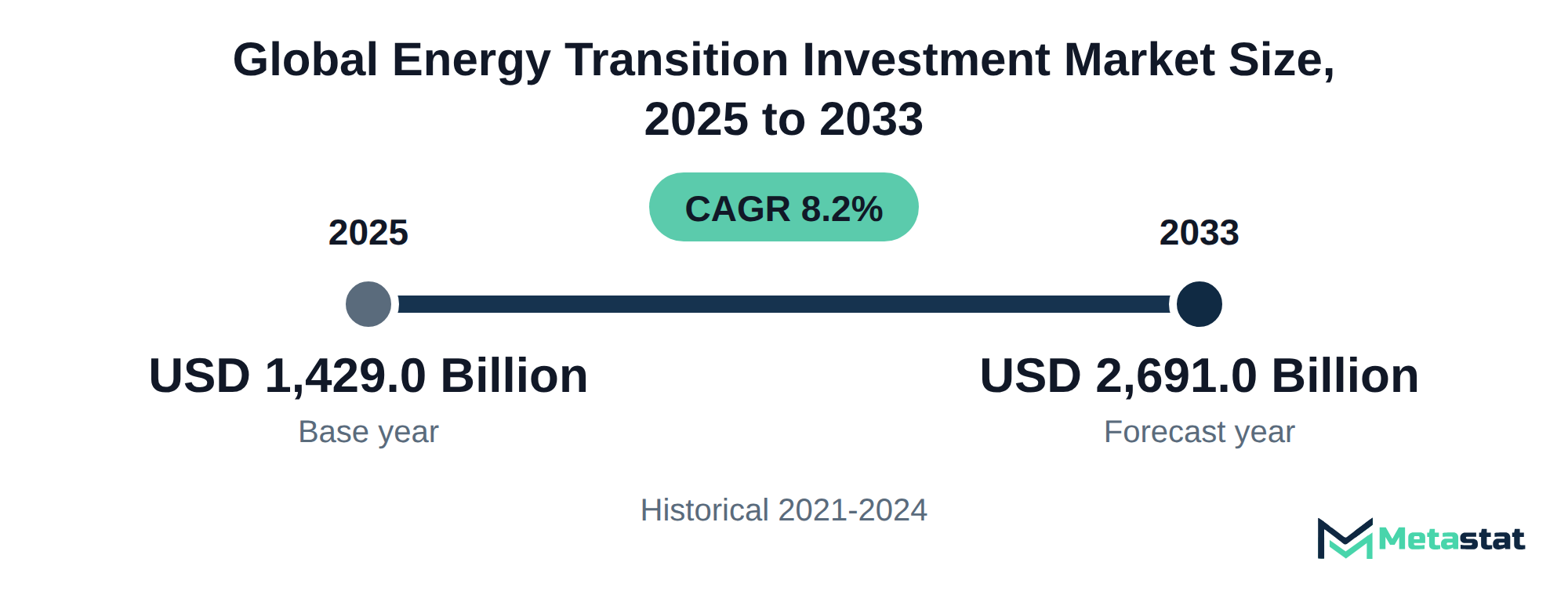
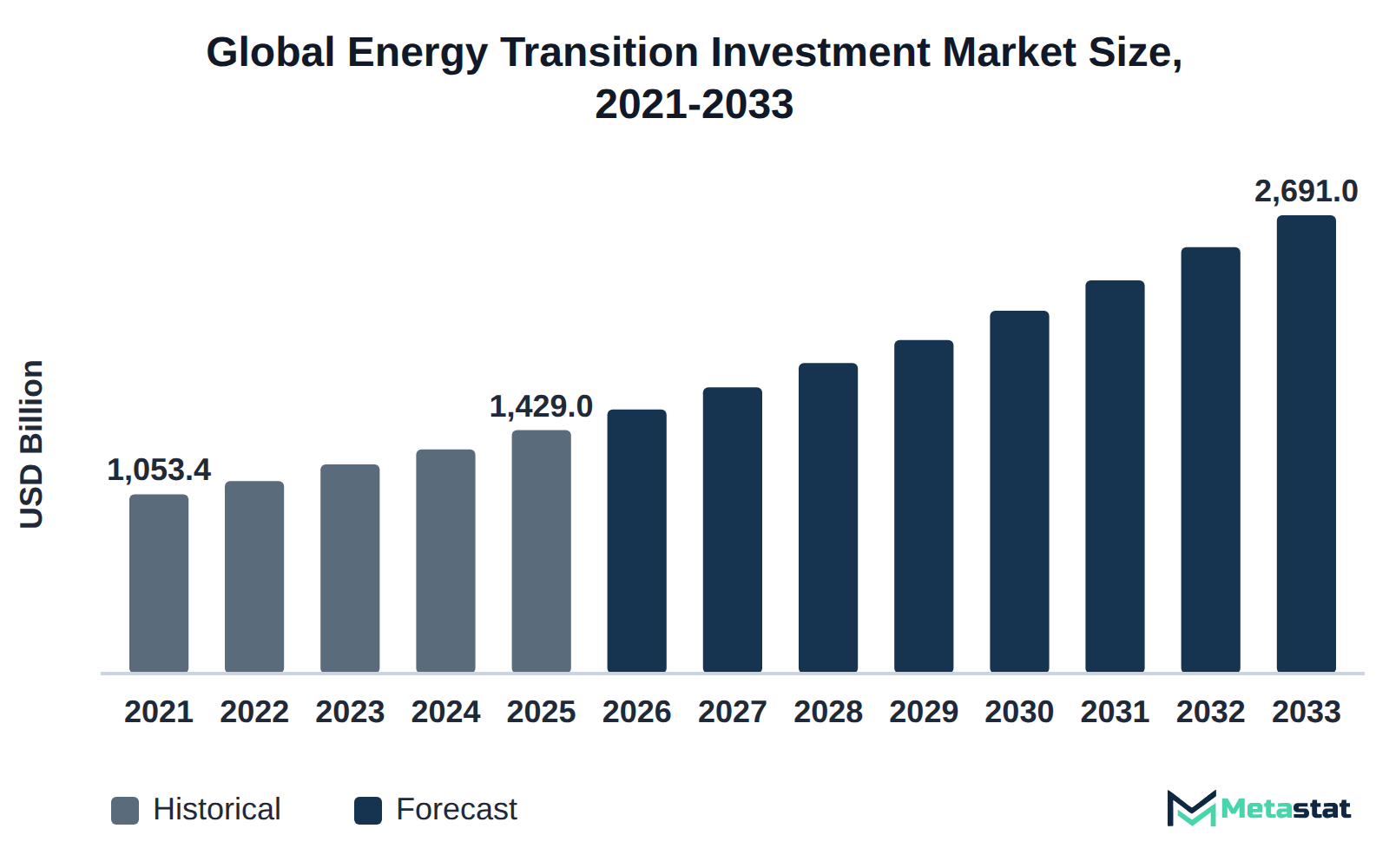
Market Valuation: Valued at $1,429 Billion in 2025, projected to reach $2,691 Billion by 2033 at a 8.2% CAGR.
Dominant Segment: Renewable energy generation leads the Energy Transition Investment market, driven by a global push for decarbonization and significant investments in clean energy technologies.
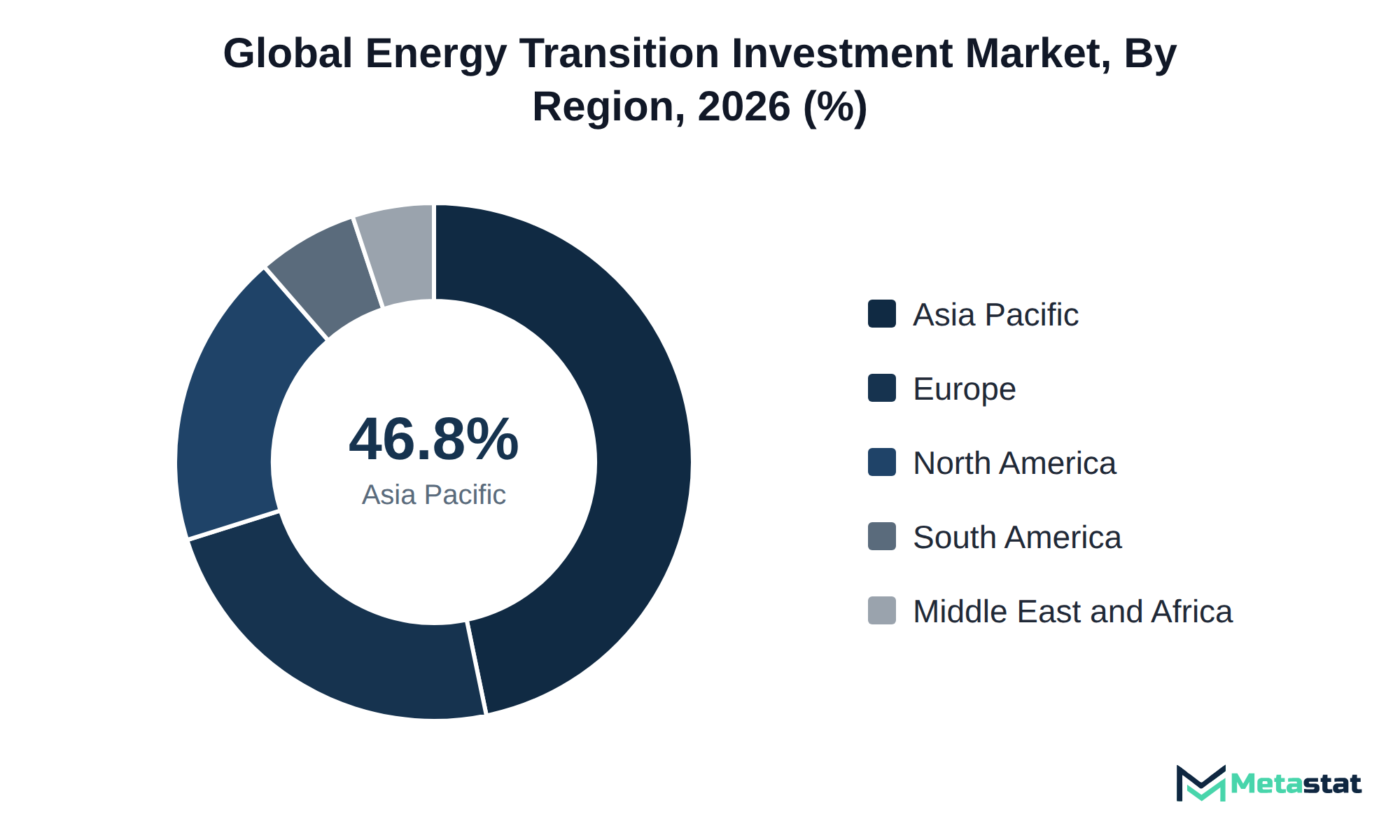
Geographic Lead: Asia Pacific holds the largest market share at 46.8%, fueled by increased investments in renewable energy and electric vehicles, with North America following at 18.5%.
What's Inside: This report provides a comprehensive analysis of the Energy Transition Investment market, covering technology domains, end-use sectors, investment purposes, and asset ownership, along with competitive insights and growth forecasts.
Investment Growth Areas: The stationary energy storage segment is projected to grow at a CAGR of 13.8%, reflecting rising demand for reliable energy solutions and enhanced grid stability.
Infrastructure Challenges: Infrastructure gaps, particularly in developing regions, hinder the deployment of renewable energy projects and electric vehicle integration, impacting overall market growth.
Choose Your License
Global Energy Transition Investment Market
The global Energy Transition Investment market was valued at USD 1,429 billion in 2025 and is projected to reach USD 2,691 billion by 2033, growing at a CAGR of 8.2% over the forecast period.
The Energy Transition Investment market covers investments that support the shift towards sustainable energy solutions. Buyers engage in this market to address the increasing demand for renewable energy sources, electric vehicles, and advanced infrastructure. Investments target various segments, including renewable energy generation, power grids, and electrification, reflecting a significant commitment to transitioning from fossil fuels to cleaner alternatives.
Growth in the market is primarily driven by technological advancements and regulatory support promoting clean energy initiatives. The renewable energy generation segment holds the largest value, supported by the global push for decarbonization. Asia Pacific stands out with the largest market share, accounting for 46.8%, significantly ahead of North America, which holds 18.5% of the market in 2025, with the US leading in 2026.
Increased investments in electric vehicles and charging infrastructure further enhance market dynamics. The transition towards sustainable transportation is expected to accelerate, driven by consumer preferences and government incentives. This momentum reflects a broader commitment across industries to reduce carbon emissions and invest in sustainable practices, positioning the market for strong growth in the coming years.
The Energy Transition Investment market supports various initiatives that enable the adoption of renewable energy technologies, energy-efficient systems, and sustainable infrastructure. Buyers invest in this market to meet regulatory requirements, fulfill corporate sustainability goals, and respond to the growing demand for cleaner energy solutions. The increasing focus on reducing carbon emissions and enhancing energy security drives investments across multiple sectors, including power generation, transportation, and industrial processes.
Growth in the market is significantly influenced by advancements in renewable energy technologies, particularly in the area of renewable energy generation. This segment accounts for the largest share of investment, reflecting the transition towards sustainable energy sources. Asia Pacific holds the largest market share, with 46.8%, indicating a strong commitment to energy transition initiatives in the region.
Investments in electric vehicles and charging infrastructure represent another critical area of growth. The shift towards electrification in transportation fuels demand for innovative solutions, alongside the expansion of charging networks. The need for cleaner alternatives and governmental support for sustainable practices strengthen the investment landscape and support market development throughout the forecast period.
The evolving dynamics of grid connection capacity and storage duration significantly influence the economics of renewable energy projects. Enhanced grid connection capacity allows for a more efficient integration of renewable energy sources, supporting smoother electricity transmission and distribution. By 2033, the Energy Transition Investment market anticipates that renewable energy generation will reach USD 790.3 billion, which makes reliable infrastructure essential.
Storage duration shapes energy availability, particularly for intermittent sources such as solar and wind. Longer storage durations allow projects to deliver energy consistently, even during low generation periods. This capability is essential for enhancing reliability and building consumer confidence in renewable energy. Investments in advanced energy storage solutions, projected to experience a compound annual growth rate of 13.8%, highlight the market's commitment to addressing these challenges.
Ultimately, the relationship between grid connection capacity and storage duration determines project feasibility and financial viability. Investors and stakeholders in the Energy Transition Investment market increasingly prioritize projects that demonstrate efficient grid integration and effective energy storage, leading to improved long-term returns and a more sustainable energy future.
Green hydrogen projects increasingly hinge on secure offtake agreements and optimal electrolyzer utilization to achieve bankability. Effective offtake arrangements provide revenue certainty, enticing investors and financial institutions. The projected growth of the Energy Transition Investment market highlights rising demand for green hydrogen, supporting significant investments in electrolyzer technology. Electrolyzer utilization rates directly impact operational efficiency and project economics, with higher capacities leading to lower production costs per kilogram of hydrogen.
In the current investment landscape, buyers prefer long-term contracts that mitigate price volatility and ensure stable cash flows. This trend aligns with the evolution of the Energy Transition Investment market, where companies seek reliable partnerships with green hydrogen producers. Organizations develop new pricing models incorporating fixed-price agreements alongside market-based pricing, enabling adaptability to shifting market dynamics. A well-structured offtake agreement enhances project viability, providing a pathway for scaling production and optimizing capital expenditures.
Growing electrification in transportation and heating sectors drives significant demand for integrated energy systems. The Energy Transition Investment market highlights this trend, with the Electric Vehicles and Charging segment projected to reach USD 940 billion by 2033, reflecting a compound annual growth rate of 6.9%. This electrification shift aligns with efforts to reduce carbon emissions and enhance energy efficiency across industries.
Investors in the energy transition are increasingly focusing on technologies that enable integration of electric transportation and heating solutions. Companies in the market, including Siemens Energy AG and ABB Ltd., are expanding their portfolios to include innovations that support electrified mobility and heating systems. These advancements support compliance with emerging regulatory frameworks and enhance operational efficiency for businesses.
Ultimately, the rising demand for integrated energy systems represents a substantial commercial opportunity within the Energy Transition Investment market. Companies that invest in electrification technologies capture significant market share while contributing to a more sustainable energy ecosystem.
Renewable energy generation stands out as a key technology within the Energy Transition Investment market, demonstrating significant scalability potential. From 2026 to 2033, this segment is projected to grow from USD 467.6 billion to USD 790.3 billion, reflecting a compound annual growth rate (CAGR) of 7.8%. This growth is driven by increasing global demand for clean energy solutions, with governments and corporations implementing sustainability initiatives. The substantial investment in renewable energy generation directly impacts the power and utilities sector, which anticipates an expansion from USD 763.9 billion in 2026 to USD 1,286.6 billion by 2033, with a CAGR of 7.7%. This alignment enhances operational efficiencies and lowers overall costs for energy providers.
The emergence of electric vehicles and charging infrastructure contributes to strong investment opportunities. By 2033, this segment is projected to reach USD 940 billion, indicating a strong trend toward electrified transportation solutions. This shift attracts investments that support the manufacturing and process industries, emphasizing the need for advanced charging networks and related infrastructure. The growth in both sectors highlights the significant potential of electric vehicles within the Energy Transition Investment market, facilitating a more sustainable transportation ecosystem.
Growing adoption of electric vehicles drives investment in charging infrastructure. Consumers increasingly prioritize electric vehicles due to environmental concerns and rising fuel prices. This shift in consumer behavior enhances demand for supporting charging solutions, stimulating investment in the Energy Transition Investment market. Companies expand their portfolios to include advanced charging technologies such as DC fast charging, which supports market growth. The rising demand for electric vehicles results in increased spending on infrastructure, further increasing investment in energy transition projects.
Strong investment in renewable energy generation aligns with the growing focus on sustainable transportation solutions. Investors recognize the link between electric vehicles and renewable energy, which pushes the market toward innovative solutions that meet changing consumer expectations.
The shift towards electrified heat significantly influences the Energy Transition Investment market. Technologies that facilitate the replacement of fossil fuel heating systems with electric alternatives show promise for reducing greenhouse gas emissions. The ongoing development of heat pumps and electric boilers positions electrified heat as a key component in decarbonizing residential and commercial buildings. Growth in this sector attracts investment from various stakeholders, including utility companies and building owners, who seek to enhance energy efficiency and comply with sustainability targets.
Increased demand for electrification in heating leads to a surge in investments aimed at developing the necessary infrastructure. This includes the enhancement of power grids and the expansion of district heating networks capable of integrating renewable energy sources. The market for electrified heat is projected to experience significant growth, driven by rising awareness of energy efficiency benefits. Market players recognize the potential of electrified heat technologies to improve overall energy management and reduce operational costs, thereby shaping future investment strategies in the sector.
Infrastructure gaps significantly hinder advancements in renewable energy projects, particularly in developing regions. Limited availability of reliable power grids and charging stations restricts the deployment of technologies including electric vehicles and renewable energy systems. Buyers in the Power and Utilities sector face challenges in scaling operations due to insufficient grid connection capacity, resulting in slower uptake of necessary investments. In the Transportation sector, inadequate charging infrastructure delays the integration of electric vehicles. Consequently, stakeholders experience smaller orders and deferred replacement of existing assets. The Energy Transition Investment market reflects these limitations, restricting overall investment growth and adoption rates across various sectors. Closing these infrastructure gaps is essential for wider market participation and for sustainable energy investment.
Suppliers face significant challenges due to rising input costs in the Energy Transition Investment market. Increased prices for key materials, including lithium and cobalt, directly impact the profitability of projects across various sectors, particularly in energy storage and electric vehicles. This situation prompts suppliers to seek alternative materials and innovative technologies to mitigate costs while maintaining product performance and sustainability.
In response, many companies are investing in research and development to enhance the efficiency of current processes. Collaborations and partnerships with material providers and research institutions aim to create new avenues for cost reduction and resource optimization. These strategies aim to sustain growth and profitability as energy transition investments evolve. Ultimately, addressing input cost pressure remains critical for suppliers aiming to enhance their competitive position in the market.
Stationary energy storage presents a significant growth opportunity within the Energy Transition Investment market. The segment reports a compound annual growth rate (CAGR) of 13.8% driven by increasing demand for reliable energy solutions and enhanced grid stability. This technology allows for the efficient management of renewable energy generation, addressing challenges related to intermittency and ensuring a steady energy supply for consumers and industries. With the transition towards renewable sources, energy storage systems become crucial for balancing supply and demand fluctuations.
Investment in stationary energy storage is expected to attract substantial funding from both private and public sectors, enhancing the overall capacity for energy storage solutions. This growing focus on energy storage technology will support advancements in grid integration and sustainability efforts. Integrating energy storage systems will improve the performance of renewable energy projects and support further growth in the market.
The Global Energy Transition Investment market is segmented based on Technology Domain, End-Use Sector, Investment Purpose, and Asset Ownership.
This segment primarily caters to utilities and independent power producers who invest in sustainable energy sources including wind, solar, and hydroelectric power. A significant driver of this segment stems from the increasing global focus on reducing carbon emissions, prompting a shift toward cleaner energy solutions. The segment distinguishes itself from others due to its higher growth rate, with a CAGR of 7.8%, compared to sectors like Electric Vehicles & Charging, which exhibits a CAGR of 6.9%. This growth reflects a shift in investment strategies and regulatory frameworks favoring renewable energy adoption, resulting in substantial opportunities for stakeholders in the Energy Transition Investment market.
This segment focuses on the development of electric vehicles and the necessary infrastructure for charging, targeting individual consumers and fleet operators who increasingly prioritize sustainable transportation options. A surge in environmental awareness among consumers drives demand for electric vehicles, while government regulations promoting emission reductions further stimulate the segment. This sub-segment differs from others, including Renewable Energy Generation, which exhibits a higher CAGR of 7.8%, reflecting a more established market for traditional energy sources. The broader adoption of electric vehicles and charging stations enhances competition among manufacturers, leading to innovations in battery technology and charging efficiency, contributing to the overall growth of the market.
Power Grids & Electrification Infrastructure segment is expected to reach USD 557.3 billion by 2033. This segment includes investments in the modernization and development of energy transmission systems, enabling the integration of renewable sources into existing grids. Utilities and energy providers apply these infrastructures to enhance reliability and efficiency. Demand for these systems arises from the increasing need for reliable electricity distribution and growing renewable capacity. Unlike other segments, including Renewable Energy Generation, this segment exhibits a slower growth rate, primarily due to regulatory challenges and high costs associated with upgrading existing infrastructure, reflected in its CAGR of 7.8%. With the ongoing emphasis on energy transition, the market sees considerable investment aimed at enhancing grid resilience and accommodating diverse generation sources.
Stationary energy storage is projected to grow at a CAGR of 13.8% during the forecast period. This segment balances energy demand and supply, and utilities and commercial entities use it to manage energy loads effectively. Increased investment stems from the rising need for reliable power supply, driven by the transition towards renewable energy sources. Fluctuations in renewable generation drive the demand for energy storage solutions, allowing users to store excess energy during peak generation times, which is then used when generation drops. Compared to other segments, including Electric Vehicles & Charging, which is expected to grow at a CAGR of 6.9%, stationary energy storage demonstrates faster growth, reflecting its essential role in enhancing grid stability and reliability. The growing emphasis on energy resilience significantly influences market dynamics, positioning this segment as a key driver within the Energy Transition Investment market.
Electrified heat involves technologies that provide electricity-based heating solutions, impacting sectors including residential, commercial, and industrial heating. Increasing focus on decarbonization drives investment in electrified heat, with utilities, manufacturers, and building owners seeking to replace fossil fuel-based systems. Regulatory pressures aimed at reducing carbon footprints stimulate this segment, encouraging broader adoption of electric heat pumps and other electrified solutions. Compared to other technology domains, electrified heat exhibits unique characteristics, often facing higher upfront costs due to the incorporation of advanced technologies. However, operational savings and lower emissions contribute to its attractiveness in the long run. The segment signifies a crucial step towards sustainable energy adoption, aligning with the broader objectives of the Energy Transition Investment market. Increased consumer awareness regarding environmental impacts further drives interest in electrified heat solutions.
Low-Carbon Hydrogen focuses on the production and utilization of hydrogen generated through low-carbon methods, contributing significantly to the reduction of greenhouse gas emissions. This hydrogen serves various applications, including transportation, industrial processes, and energy storage, appealing to sectors seeking sustainable energy solutions. Key drivers influencing this segment include technological advancements in hydrogen production and increasing governmental regulations advocating for cleaner energy alternatives. Compared to other segments, Low-Carbon Hydrogen presents slower growth, with emerging technologies requiring substantial investment and time for large-scale adoption. The incentive to transition from fossil fuels to hydrogen fuels interest among various industries, prioritizing energy transition goals and environmental sustainability over immediate cost efficiency.
Nuclear energy is a significant low-carbon power generation source, contributing to efforts aimed at reducing greenhouse gas emissions. This energy form finds applications across various sectors, including electricity generation for residential, commercial, and industrial use. Demand for nuclear energy is driven by a global shift towards cleaner energy alternatives, with many countries investing in new nuclear facilities and upgrading existing ones to enhance efficiency and safety. Regulatory support is important in facilitating these developments, with governments seeking to balance energy needs with environmental goals. Compared to other segments, nuclear energy often involves higher upfront investment costs and longer project timelines. It does provide stable and reliable energy output, which differentiates it from more volatile renewable sources. The Energy Transition Investment market reflects a growing recognition of nuclear energy's potential to complement renewable sources in achieving energy security and sustainability goals.
Carbon Capture & Storage involves technologies aimed at capturing carbon dioxide emissions from various sources and storing it to mitigate climate change impacts. Industries employing these technologies include power generation and manufacturing, where significant emissions occur. Increasing regulatory pressure to reduce carbon footprints drives demand for effective carbon capture solutions. Compared to other segments like Renewable Energy Generation, the growth trajectory for Carbon Capture & Storage is slower, influenced by high implementation costs and infrastructure requirements. Unlike segments focused on immediate energy supply solutions, this area emphasizes long-term environmental sustainability, appealing to companies prioritizing corporate responsibility and compliance with evolving environmental regulations. Investment in this technology reflects a broader commitment to achieving carbon neutrality and addressing climate change, highlighting the importance of this sub-segment in the Energy Transition Investment market.
Others (Sustainable Aviation Fuels, Other Low-Carbon Fuels) consists of innovative fuel solutions aimed at reducing carbon emissions in the aviation sector and other applications. Industries including aviation, freight transport, and shipping employ these fuels, such as sustainable aviation fuel, to advance towards decarbonization targets. Growth in this segment is primarily driven by regulatory pressures and sustainability commitments from major corporations and governments. The segment distinguishes itself from others through its unique focus on fuel alternatives that enhance energy efficiency and reduce greenhouse gas emissions. Compared to segments like Electric Vehicles & Charging or Renewable Energy Generation, this sub-segment experiences slower growth due to higher production costs and the need for substantial infrastructure changes to support widespread adoption. The Energy Transition Investment market reflects a growing emphasis on sustainable solutions, positioning this segment for potential future developments in technology and production methods.
This segment encompasses the generation and distribution of electricity, primarily used by residential, commercial, and industrial consumers. The demand for cleaner energy sources significantly influences investment, with regulations promoting renewable energy integration into the grid. Compared to other segments, Power & Utilities exhibits significant growth due to the increasing transition towards sustainable energy solutions. Investments in modernizing infrastructure and adopting smart grid technologies drive demand further, distinguishing this segment with a higher projected CAGR relative to others. Continuous advancements in energy storage technologies enhance operational efficiency, contributing to the overall growth in the market.
Transportation is estimated to reach USD 954.5 billion by 2033, at a CAGR of 7% during the forecast period. This segment primarily focuses on the development and implementation of sustainable transportation solutions, including electric vehicles and their associated charging infrastructure. Significant growth in this sector is driven by increasing regulatory support for low-emission vehicles and rising consumer demand for greener transportation options. Unlike other segments, the Transportation segment exhibits a unique competitive landscape due to varied buyer profiles, including both consumers and commercial fleets, who prioritize sustainable practices. Factors influencing this segment include advancements in battery technology and investment in charging infrastructure, which enhance adoption and user convenience, distinguishing it from the slower growth seen in areas like Manufacturing & Process Industries. The Energy Transition Investment market reflects the importance of this segment in the broader push toward sustainable energy solutions.
Manufacturing & Process Industries segment is expected to reach USD 187.6 billion by 2033. This segment focuses on providing essential goods and services through industrial processes, influencing sectors including chemicals, food processing, and textiles. Companies in this segment invest in sustainable technologies to enhance production efficiency and reduce emissions. A significant driver includes the transition to greener manufacturing practices, driven by regulatory pressures and consumer demand for lower carbon footprints. This segment experiences a higher growth rate compared to others in its group, with a projected CAGR of 7% during the forecast period. The distinct characteristics of this segment's buyer base, driven by specific operational needs and sustainability goals, differentiate it from sectors like Power & Utilities, which experience slower growth due to extensive infrastructure changes. The energy transition impacts the market by pushing manufacturing sectors to adopt innovative technologies and practices.
Residential Buildings segment is projected to grow at a CAGR of 9.5% during the forecast period. This segment comprises investments aimed at enhancing energy efficiency and integrating renewable energy systems into residential properties. Homeowners and property developers drive investments in this area, focusing on technologies that reduce energy consumption and lower utility bills. Increasing awareness of climate change and the push for sustainable living standards support the adoption of energy-efficient systems in homes. Compared to other segments in the market, Residential Buildings exhibit faster growth, partly due to growing regulatory incentives for energy-efficient renovations and retrofits. With an estimated market value that reflects these trends, the Residential Buildings segment stands out within the Energy Transition Investment market.
Commercial and institutional buildings encompass a broad range of structures for business operations, education, and healthcare. These buildings incorporate energy-efficient technologies and sustainable practices, appealing to owners and tenants focused on operational savings and environmental responsibility. Increasing regulatory pressure for enhanced energy performance and the growing consumer preference for green buildings drive investments in this segment. Unlike other end-use sectors, this segment faces a competitive landscape driven by tenant demand for energy-efficient spaces and the need for compliance with stringent building codes. The unique emphasis on sustainable design differentiates commercial and institutional buildings from residential options, impacting purchasing decisions and investment strategies. This focus influences the overall dynamics of the Energy Transition Investment market.
Investment in agriculture, mining, and construction emphasizes advancements in energy efficiency and sustainability. These sectors employ various technologies to reduce environmental impact while maintaining operational efficiency. Demand for sustainable practices within agriculture is driven by regulatory pressures and consumer preferences for eco-friendly products. In mining, companies invest in electrification and automation to enhance productivity and reduce emissions, aligning with global sustainability objectives. Construction projects increasingly integrate renewable energy solutions and sustainable materials, appealing to environmentally conscious consumers and governments. This segment's growth trajectory differs from others, primarily influenced by unique regulatory environments and project-based investments, making it essential for stakeholders in the Energy Transition Investment market to remain informed about emerging trends and technologies.
New Asset Development & Purchases segment is valued at USD 1,041.8 billion in 2026 and is projected to reach USD 1,678.4 billion by 2033, at a CAGR of 7.1% during the forecast period. This segment focuses on investments aimed at creating new energy infrastructure and assets, essential for enabling renewable energy initiatives. Major players in the market, including private and public entities, engage in these investments to enhance their operational capabilities and meet sustainability targets. The segment experiences strong growth due to increased regulatory support for renewable projects and rising demand for clean energy solutions. Unlike segments including Expansion of Existing Assets, which targets enhancement of current facilities, this segment exhibits a dynamic growth trajectory, reflecting the market's commitment to innovative energy solutions. This investment strategy helps transform energy systems and supports the broader objectives of the market.
Expansion of Existing Assets segment is estimated to reach USD 508.9 billion by 2033, at a CAGR of 10% during the forecast period. This segment focuses on enhancing and upgrading existing infrastructure to improve efficiency and meet evolving energy demands. Utilities and energy companies engage in this process to optimize their current assets for better performance, regulatory compliance, and sustainability goals. The growing emphasis on reducing emissions and increasing efficiency drives investment in this segment. Compared to other segments, including New Asset Development & Purchases which has a CAGR of 7.1%, the Expansion of Existing Assets segment experiences faster growth. Increased regulations around emissions and operational efficiency further support this segment, making it vital for companies aiming to modernize their operational capacities while adhering to stricter environmental standards. In the Energy Transition Investment market, this segment is essential for supporting overall growth and sustainability initiatives across various sectors.
Replacement & Retrofit segment is expected to reach USD 503.7 billion by 2033. This segment focuses on updating or enhancing existing infrastructure and equipment within various sectors, including power generation, utilities, and manufacturing. Operators in these fields invest in energy retrofit projects to improve efficiency and reduce emissions, driven by regulatory pressures and the pursuit of sustainability. This segment experiences slower growth compared to others, including New Asset Development & Purchases, which achieves a CAGR of 7.1% versus 10% for expansion initiatives. Replacement & Retrofit, while essential for maintaining operational integrity, typically encounters higher upfront costs associated with upgrading legacy systems. The Energy Transition Investment market reflects a growing emphasis on sustainability and efficiency, leading to increased investment in this area.
Private Ownership segment is valued at USD 1,087.1 billion in 2026 and is projected to reach USD 1,849 billion by 2033, at a CAGR of 7.9% during the forecast period. This segment primarily involves investments made by private entities into energy transition projects, including renewable energy generation, electric vehicles, and energy storage solutions. Key drivers for this segment stem from increasing emphasis on sustainability and the pursuit of lower operational costs across industries. Investment in this segment exhibits a higher growth trajectory compared to public ownership, reflecting a growing trend toward privatization and independent energy solutions. Innovative technologies and the competitive advantage gained through private investment contribute to its strong expansion and position it distinctly within the Energy Transition Investment market.
Public Ownership segment is estimated to reach USD 615.4 billion by 2033, at a CAGR of 8% during the forecast period. This segment typically involves investments in renewable energy projects and infrastructures that are government-owned or funded. Public entities primarily manage these assets to support energy security and meet sustainability goals. The growing emphasis on climate change initiatives drives investment in this area, with governments allocating funds for renewable projects and energy infrastructure upgrades. Compared to other segments, including Private Ownership, which is projected to grow at a CAGR of 7.9%, the Public Ownership segment offers a comparatively lower rate of growth. However, the stable nature of public funding provides a unique advantage, ensuring ongoing support for energy transition initiatives. Overall, the market sees significant activity in public investments, reflecting broader trends in sustainability and energy independence.
Joint Public-Private Ownership segment is expected to reach USD 226.6 billion by 2033. This segment involves collaborative investments between government entities and private firms, aimed at developing infrastructure projects and energy initiatives. These partnerships occur in sectors including renewable energy and public utilities, where substantial capital and expertise are essential. Demand for this segment experiences growth driven by increasing government commitments to sustainable energy projects and private sector innovation. Compared to other asset ownership segments, this collaboration enables shared financial responsibilities and risk mitigation. It creates a unique investment landscape, combining public policy goals with private sector efficiency. The contribution of this segment to the Energy Transition Investment market reflects a balanced approach to addressing energy challenges while maximizing resource utilization.
Based on geography, the Global Energy Transition Investment market is divided into North America, Europe, Asia-Pacific, South America, Middle East, and Africa.
Demand for energy transition investments in North America stems from initiatives in renewable energy and electric vehicle adoption. The United States, Canada, and Mexico drive significant investments in these sectors, reflecting a commitment to sustainability and reduced carbon emissions. By 2033, North America is projected to reach USD 494.3 billion, demonstrating strong growth. The Energy Transition Investment market benefits from strong government support and incentives aimed at enhancing infrastructure and technology related to renewable energy generation and electrification. The regulatory landscape encourages innovation, leading to increased participation from both private and public sectors. This environment positions North America as a key region in the global energy transition.
The European market drives energy transition initiatives, particularly in countries such as Germany, France, the UK, Italy, Spain, and Russia. Significant investments in renewable energy generation align with regional climate targets and the transition from fossil fuels. Infrastructure improvements and government policies supporting electric vehicle adoption enhance demand in the transportation sector. Manufacturing sectors focus on sustainable practices and use innovations in energy technologies. The market reached a 23.4% share of the global total in 2025, reflecting the commitment of various industries to invest in cleaner energy solutions. Continuous investments support the growth of power and utility companies, which are essential for meeting the region's evolving energy needs while advancing the energy transition investment market.
With a significant 46.8% share of the global market in 2025, Asia Pacific emerges as a critical region for the Energy Transition Investment market. Key drivers include aggressive government initiatives in countries like China and India, focusing on renewable energy generation and electric vehicle adoption. Investments in power grids and electrification infrastructure support the region's infrastructure upgrades, enhancing capacity and reliability. In Australia, increased funding for stationary energy storage technologies reflects a growing emphasis on energy resilience. The trend of expanding existing assets and developing new assets highlights the commitment to transitioning towards a low-carbon economy. Strong demand in the transportation and power sectors positions Asia Pacific as a vital hub for future energy transition efforts.
The Energy Transition Investment market in South America experiences unique dynamics driven by specific regional factors. Brazil and Argentina play important roles in this sector, influenced by a growing focus on renewable energy sources, particularly in solar and wind. Infrastructure projects aimed at enhancing energy efficiency create demand for new investments, with an emphasis on sustainable development practices among local industries. Supportive regulations from national governments encourage investment in renewable technologies, contributing to the market's growth. The region's share of the global market in 2025 stands at 6.3%, reflecting a commitment to transition toward greener energy solutions. Investment flows are increasing, and opportunities for innovative technology providers are expected to expand significantly within the market.
The Middle East and Africa region accounts for a 5.1% share of the global Energy Transition Investment market in 2025. The region experiences growing interest in renewable energy projects, particularly in Saudi Arabia and the UAE, driven by national strategies aimed at diversifying energy sources and reducing carbon emissions. Investments focus on solar and wind energy, supported by government initiatives promoting clean technology adoption. In South Africa, energy transition efforts are strengthened by regulatory frameworks encouraging investments in sustainable energy solutions. The market anticipates substantial growth due to increasing demand for electrification and energy efficiency solutions, reinforcing the relevance of energy transition initiatives across the region.
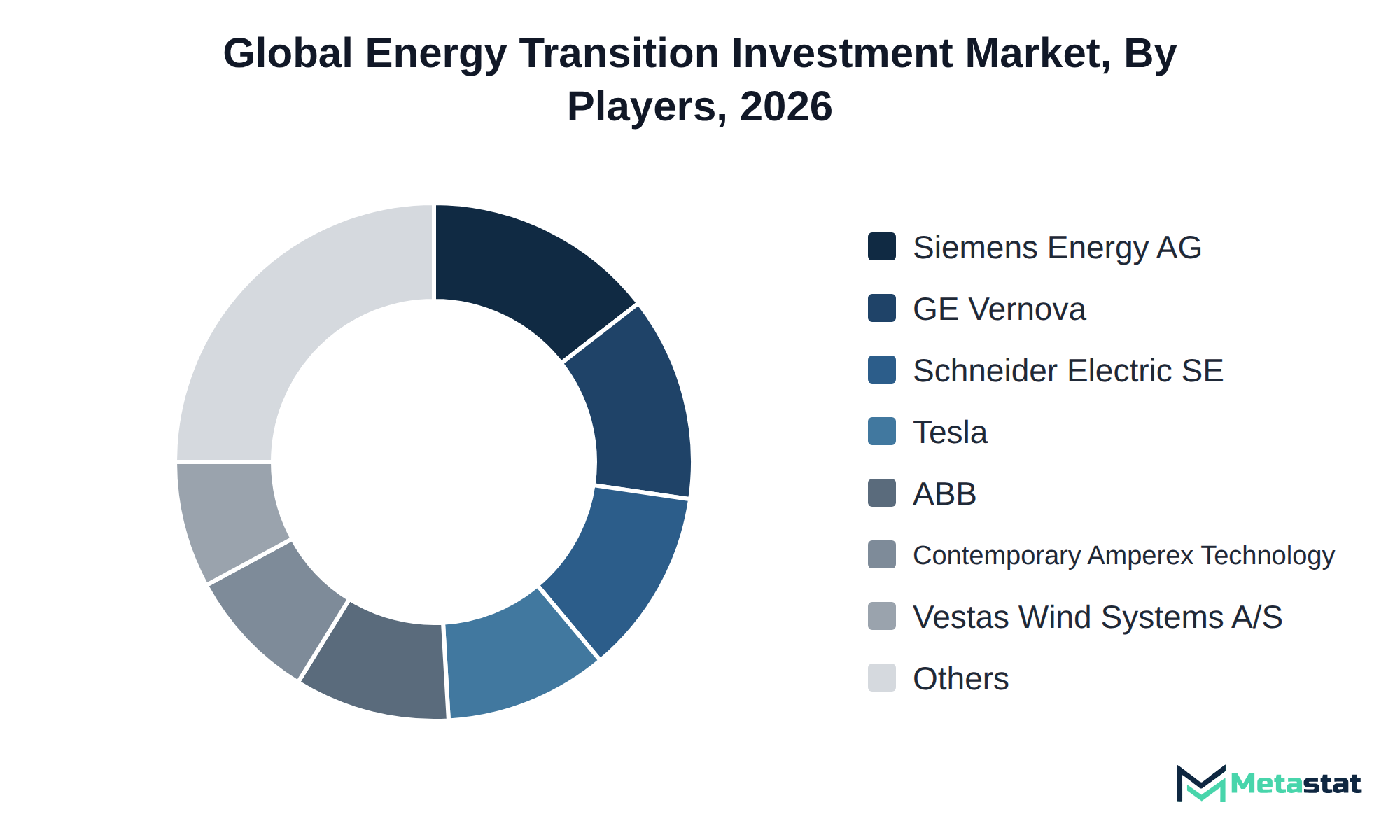
The Energy Transition Investment market displays varied competitive strategies among companies involved. Firms differentiate themselves through factors including price, customization, service offerings, and ecosystem integration. Companies focusing on innovation in renewable technologies, electrification infrastructure, and energy storage solutions are prominent in shaping market dynamics.
Siemens Energy AG and GE Vernova Inc. emphasize renewable energy generation and electrification infrastructure, addressing growing demands for sustainability in power and utilities. Firms like Tesla, Inc. and BYD Company Limited concentrate on electric vehicles and charging solutions, responding to shifts in consumer transportation preferences. JinkoSolar Holding Co., Ltd. and First Solar, Inc. lead in photovoltaic technology, driving advancements in solar energy solutions that align with market expansion goals.
Companies like Schneider Electric SE and ABB Ltd. provide integrated solutions across various end-use sectors, enhancing operational efficiency for clients. Vestas Wind Systems A/S and Enphase Energy, Inc. focus on wind and solar generation technologies, respectively, positioning themselves as key players in meeting increasing energy demands. This competitive landscape drives innovation and responsiveness to evolving market needs, reinforcing the strategic importance of each player in the Energy Transition Investment market.
The growth forecast for the Energy Transition Investment market relies on several key developments. First, the expansion of renewable energy generation, projected to increase from USD 467.6 billion in 2026 to USD 790.3 billion by 2033, will drive significant demand. Second, investments in electric vehicles and their corresponding charging infrastructure rise, targeting USD 940 billion by 2033.
Several risks could impede this growth trajectory, particularly in the Asia Pacific region, which accounts for 46.8% of the market share. Regulatory changes or supply chain disruptions in this area could slow adoption rates and affect overall investments. Addressing these challenges while ensuring adequate infrastructure and policy support remains essential for realizing the market potential during the forecast period.
By Technology Domain: Renewable Energy Generation, Electric Vehicles & Charging, Power Grids & Electrification Infrastructure, Stationary Energy Storage, Electrified Heat, Low-Carbon Hydrogen, Nuclear Energy, Carbon Capture & Storage, Others (Sustainable Aviation Fuels, Other Low-Carbon Fuels)
By End-Use Sector: Power & Utilities, Transportation, Manufacturing & Process Industries, Residential Buildings, Commercial & Institutional Buildings, Others (Agriculture, Mining, Construction)
By Investment Purpose: New Asset Development & Purchases, Expansion of Existing Assets, Replacement & Retrofit
The report strategically identifies and profiles the key market players and analyses their core competencies in each sub-segment of the Energy Transition Investment market.
Report Attributes | Details |
Study Period | 2021-2033 |
Base Year | 2025 |
Estimated Year | 2026 |
Forecast Period | 2026-2033 |
Historical Period | 2021-2025 |
Growth Rate | CAGR 8.2% from 2026 to 2033 |
Revenue Unit | USD billion |
Segmentation | By Technology Domain, End-Use Sector, Investment Purpose, Asset Ownership, and Region |
By Region | North America (By Technology Domain, End-Use Sector, Investment Purpose, Asset Ownership, and Country)
|
Europe (By Technology Domain, End-Use Sector, Investment Purpose, Asset Ownership, and Country)
| |
Asia Pacific (By Technology Domain, End-Use Sector, Investment Purpose, Asset Ownership, and Country)
| |
South America (By Technology Domain, End-Use Sector, Investment Purpose, Asset Ownership, and Country)
| |
Middle East and Africa (By Technology Domain, End-Use Sector, Investment Purpose, Asset Ownership, and Country)
|
Find answers to common questions about this report
The Energy Transition Investment market size was valued at USD 1,429 billion in 2025.
The market is projected to grow at a CAGR of 8.2% during the forecast period from 2026 to 2033.
The North America Energy Transition Investment market size is estimated to reach USD 494.3 billion by 2033.
The leading segment in the Energy Transition Investment market is Electric Vehicles & Charging, with a projected value of USD 940 billion by 2033. This segment surpasses others in terms of investment potential within the market.
Growing adoption of electric vehicles drives investment in charging infrastructure, as consumers prioritize these vehicles due to environmental concerns and rising fuel prices. The shift towards electrified heat significantly influences the market, attracting investment from stakeholders seeking to enhance energy efficiency and comply with sustainability targets.
Infrastructure gaps significantly hinder advancements, particularly in developing regions. Limited availability of reliable power grids and charging stations restricts the deployment of technologies, resulting in slower uptake of necessary investments.
Rising demand for electric vehicles and the shift towards electrified heat significantly favor adoption in the Energy Transition Investment market. the growth of stationary energy storage presents a substantial opportunity, driven by the need for reliable energy solutions and enhanced grid stability.
The Energy Transition Investment market is estimated to reach a valuation of USD 2,691 billion by 2033.
Key players operating in the Energy Transition Investment market include Siemens Energy AG, GE Vernova Inc., ABB Ltd., Schneider Electric SE, Hitachi Energy Ltd., Tesla, Inc., and NextEra Energy, Inc.
The renewable energy generation segment is expected to reach USD 790.3 billion by 2033, reflecting a compound annual growth rate of 7.8 percent.
The analysts below cover Energy and Power research at Metastat Insights.
LEAD ANALYST
Utkarsh Khirodkar is a Lead Market Research Analyst at MetaStat Insight, specializing in market intelligence, technology sector assessments, and competitive strategy.

PRINCIPAL CONSULTANT - ENTERPRISE AI & EMERGING TECHNOLOGIES
Banking & Finance · Electronics and Semiconductor · Energy and Power · Healthcare IT · Information & Technology · Professional Services
Vijay Gunti is a Principal Consultant at MetaStat Insight, bringing over two decades of experience across enterprise digital transformation, technology strategy, and intelligent systems.

ENERGY & INFRASTRUCTURE INDUSTRY CONSULTANT
Automotive and Transportation · Electronics and Semiconductor · Energy and Power · Machinery & Equipment
Saurabh Vasant Ganvir consults for Energy & Infrastructure Industry at MetaStat Insight, specializing in renewable energy, solar EPC, and electric vehicle (EV) infrastructure markets.
Replacing petrochemical surfactants with bio-based alternatives requires realistic timelines on industrial precision fermentation scaling. The market research broke down commercialization timelines, feedstock sugar price sensitivities, and regional cosmetic ingredient regulatory approvals in Europe and East Asia. That supplier readiness mapping gave our formulations team reliable context when comparing renewable chemical sourcing roadmaps.
Tracking ceramic matrix composite adoption in high-bypass aero engines requires strict attention to material qualification cycles and FAA airworthiness testing milestones. The MetaStat Insight team provided a detailed timeline of silicon carbide fiber manufacturing capacity and commercial foundry lead times. Having clear visibility into upstream thermal barrier coating supply helped us stress-test our long-term component procurement strategy.
Transitioning ultra-class mining haul trucks to alternative power requires concrete data on remote hydrogen refueling infrastructure economics. The report evaluated megawatt-scale electrolyzer installation expenses, onsite storage safety mandates, and heavy-duty fuel cell stack degradation under continuous duty cycles. That technical rigor helped our engineers benchmark realistic total operating cost horizons for off-highway fleet decarbonization.
Explore related market intelligence reports worth reading alongside this one.
Starting from
$2950