
LEAD ANALYST
Utkarsh Khirodkar is a Lead Market Research Analyst at MetaStat Insight, specializing in market intelligence, technology sector assessments, and competitive strategy.

India Mid-Size SUV Market Size, Share, By Fuel Type (Petrol (incl. Mild Hybrid), Diesel, Strong Hybrid (HEV), CNG, Battery Electric (BEV) and Others (Plug-in Hybrid, Flex-Fuel, Range-Extender)), By Transmission Type (Manual (incl. Intelligent Manual) and Torque Converter Automatic, Dual-Clutch (DCT), CVT (incl. iVT) and Single-Speed and e-CVT (Electric and Strong Hybrid)), By Drivetrain (Front-Wheel Drive, Rear-Wheel Drive, Four-Wheel Drive and All-Wheel Drive), By Region (North India, South India, West India and East and Northeast India), Industry Analysis, Growth, Trends, and Forecast, 2026-2033
Report ID
MSI-5669
Published
November, 2026
Pages
297 Pages
Format
Historical
Base year
Forecast
Forecast period
Report Details
Market Valuation: Valued at $4,286.9 Million in 2025, projected to reach $7,478.8 Million by 2033 at a 7.2% CAGR.
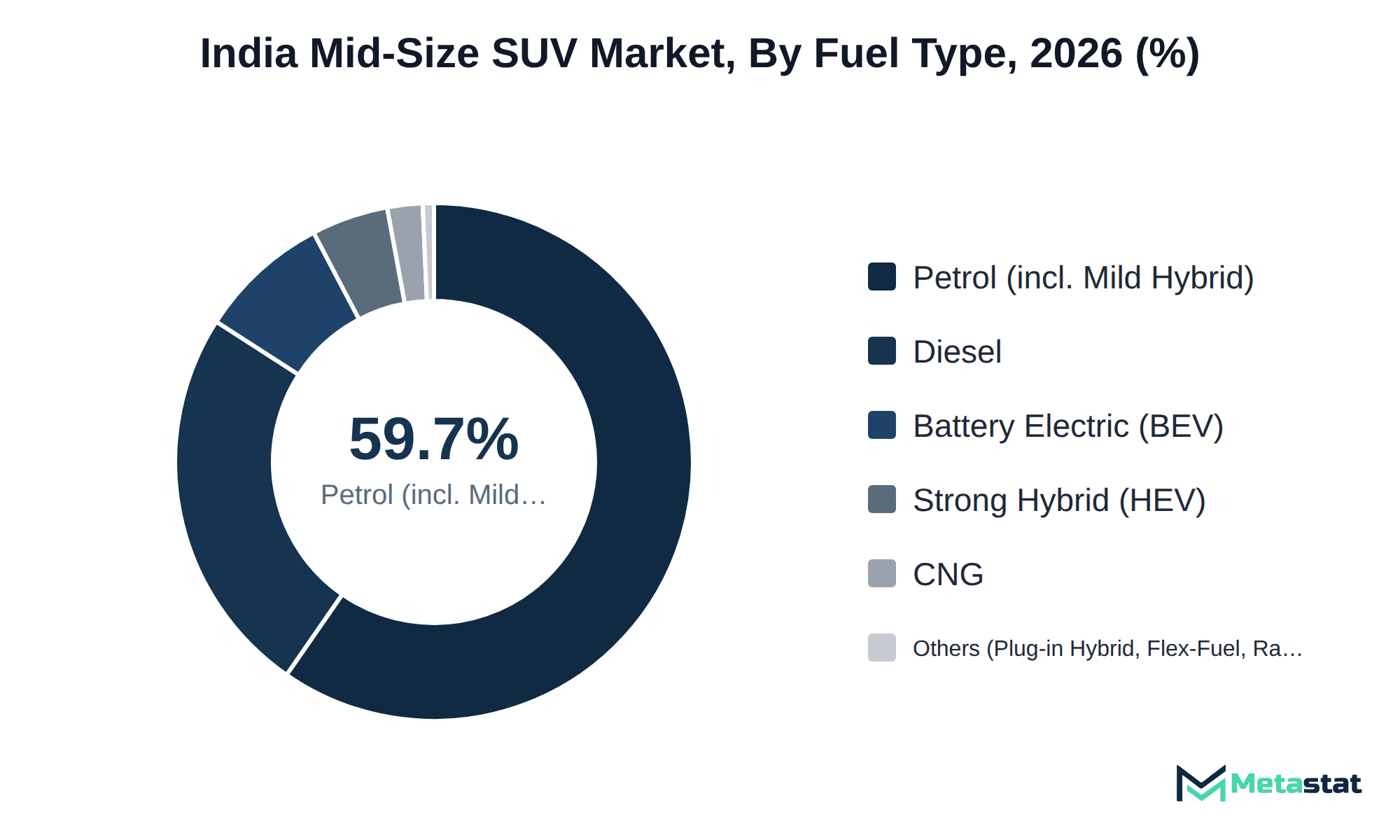
Dominant Segment: The petrol segment, including mild hybrids, leads the India Mid-Size SUV market, driven by consumer preferences for fuel efficiency and performance. This segment is projected to reach a market value of USD 3,679.6 million by 2033.
Geographic Lead: North India holds the largest share of the market, fueled by urbanization and improved infrastructure, which enhances consumer access to mid-size SUVs.
What's Inside: The report provides a comprehensive analysis of the India Mid-Size SUV market, covering fuel types, transmission types, drivetrain options, and regional dynamics, along with competitive insights and growth forecasts.
Technological Advancements: Innovations in fuel efficiency and advanced transmission technologies are reshaping consumer preferences, with significant growth expected in segments like strong hybrids and torque converter automatics.
Price Sensitivity: Price sensitivity is a key challenge in the market, particularly affecting budget-conscious consumers, which influences manufacturers to balance features and pricing to attract a wider audience.
Choose Your License
India Mid-Size SUV Market
The India Mid-Size SUV market was valued at USD 4,286.9 million in 2025 and is projected to reach USD 7,478.8 million by 2033, growing at a CAGR of 7.2% over the forecast period.
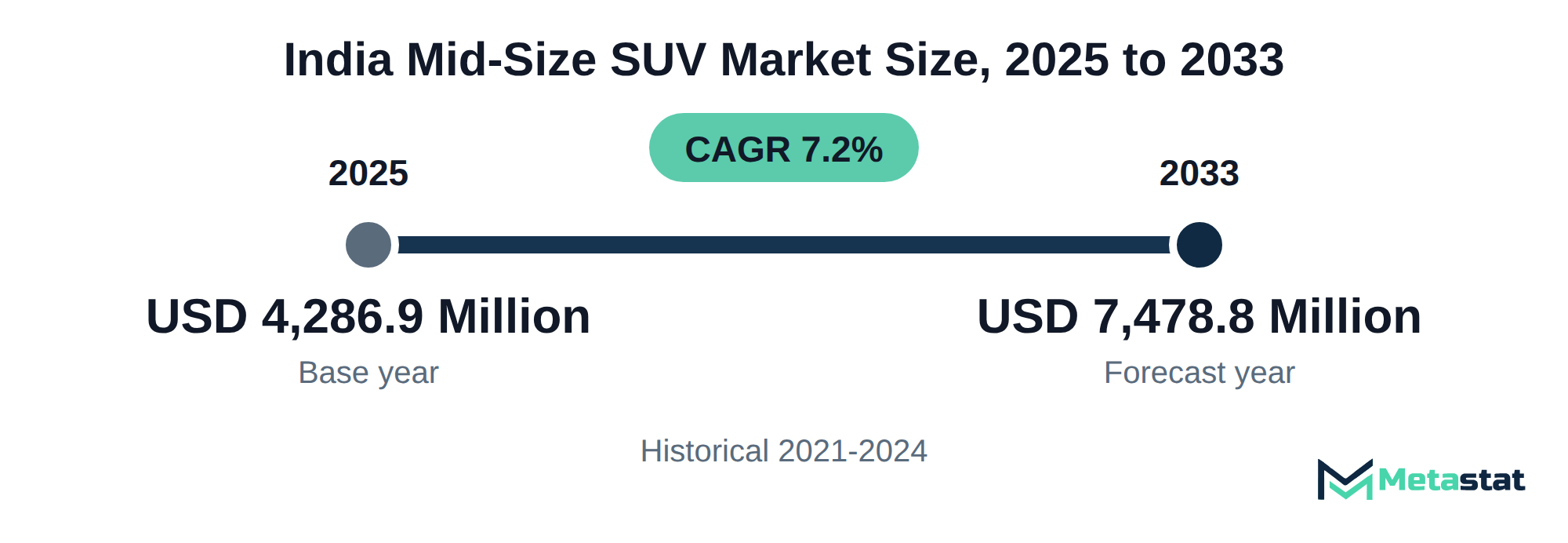
The India Mid-Size SUV market covers vehicles that meet the growing demand for spacious and versatile transportation options. Buyers invest in this segment primarily due to the increasing preference for SUVs, which offer enhanced comfort, safety features, and advanced technology. The appeal of mid-size SUVs aligns with the evolving lifestyle of consumers who prioritize both functionality and aesthetics.
Growth in this market is propelled by rising disposable income and changing consumer preferences towards premium features in vehicles. Among the various segments, petrol vehicles, including mild hybrids, represent the highest value, reflecting significant consumer interest in fuel efficiency and performance. North India holds the largest regional share, with demand driven by urbanization and improved infrastructure.
One significant growth driver in the India Mid-Size SUV market is the increasing adoption of advanced automotive transmission technologies, particularly automatic options. This trend enhances the overall driving experience, attracting a broader customer base looking for convenience and ease of operation. The combination of these factors supports market growth within the automotive industry.
The India Mid-Size SUV market addresses the evolving preferences of consumers for vehicles that combine comfort, style, and functionality. Buyers invest in this segment due to the increasing need for versatile transportation solutions suitable for urban and rural environments. This market includes various fuel types, transmission options, and drivetrain configurations that cater to diverse customer requirements and preferences.
Growth is driven by several factors, including rising demand for petrol-powered SUVs, the largest segment by value. North India contributes significantly to the overall market share, reflecting a robust consumer base and infrastructure that supports the adoption of mid-size SUVs. Increasing disposable income among urban consumers fuels the desire for premium features and advanced technology in vehicles.
With an anticipated compound annual growth rate (CAGR) of 7.2%, the market is projected to experience substantial growth over the forecast period. The emergence of innovative technology and enhanced safety features significantly attracts buyers. Manufacturers are responding to this trend by enhancing their offerings, ensuring that the India Mid-Size SUV market remains competitive and appealing to consumers throughout the forecast period.
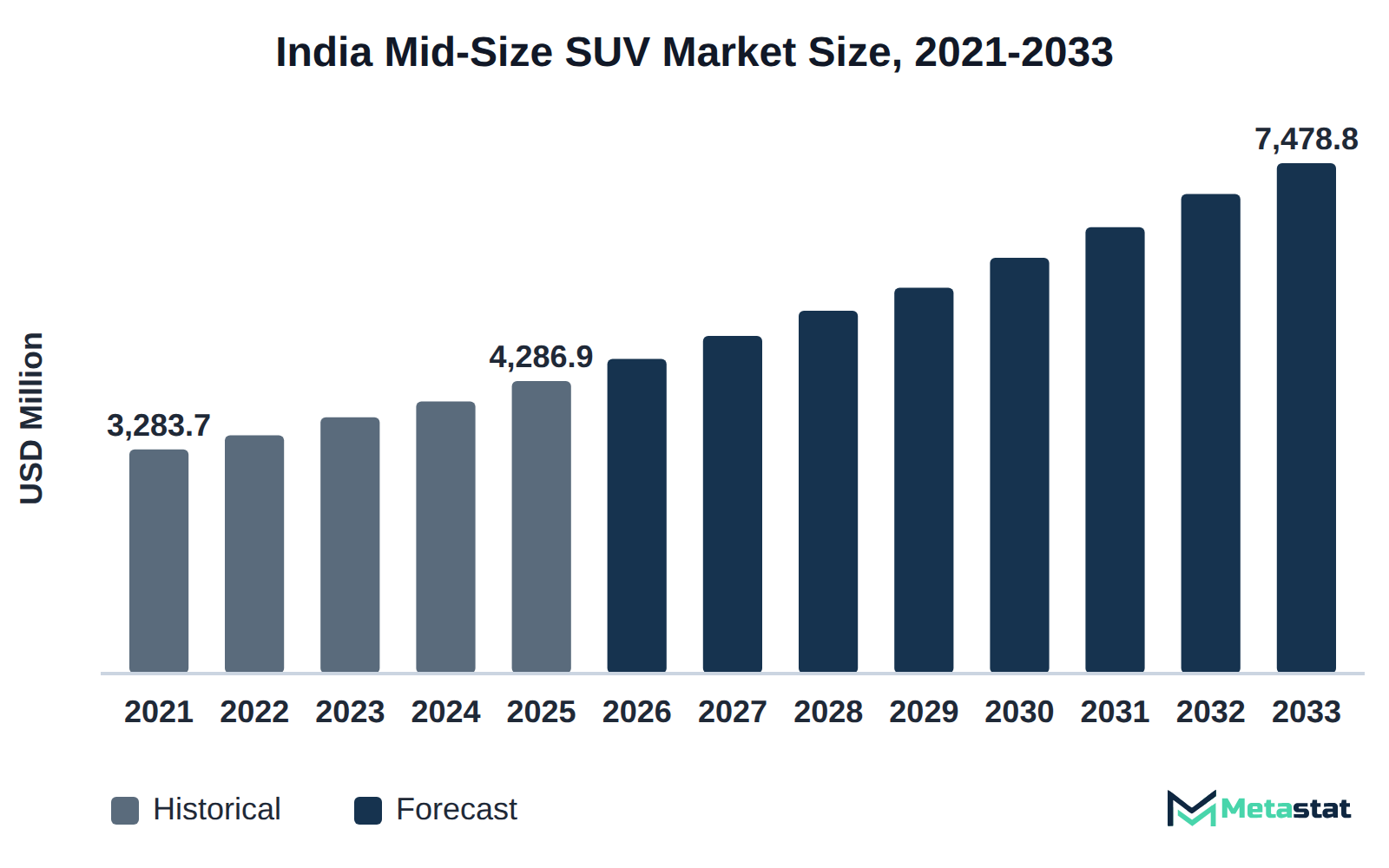
The integration of strong-hybrid and electric powertrains is transforming purchasing decisions within the India Mid-Size SUV market. Electric vehicles (EVs) and strong-hybrid vehicles contribute to reducing fuel consumption and emissions, aligning with growing environmental concerns among consumers. Strong-hybrid vehicles are projected to see a notable increase in market share, with a value of USD 775.5 million by 2033. This shift reflects the automotive industry's response to regulatory pressures and consumer preferences prioritizing sustainability.
Hybrid powertrains, particularly strong-hybrids, offer a practical alternative for buyers seeking fuel efficiency without compromising performance. The increase in demand for these technologies indicates a broader transition toward greener options, influencing manufacturers to enhance their offerings in this segment. The rise of CNG powertrains, with a compound annual growth rate of 8.7%, further supports this trend, providing consumers with varied choices that emphasize both economy and environmental impact.
The shift toward cleaner powertrains in the India Mid-Size SUV market creates commercial opportunities for automakers and suppliers. Firms investing in hybrid and electric technologies capture the attention of a consumer base increasingly focused on sustainable transportation solutions. The shift towards these powertrains enhances brand reputation and positions companies favorably within a market that values innovation and environmental responsibility.
The five-seat cabin configuration and spacious boot space significantly distinguish mid-size SUVs from compact and three-row models, catering to a specific buyer preference. With a base market value of USD 4,286.9 million in 2025, the India Mid-Size SUV market attracts consumers seeking versatility and comfort without the bulk of larger vehicles. This configuration allows for an optimal balance between passenger space and cargo capacity, appealing to urban families and professionals who require both practicality and style.
Mid-size SUVs offer generous boot space, which helps with everyday tasks such as grocery shopping or family outings. In contrast, compact SUVs often compromise cargo space for a smaller footprint, while three-row models prioritize seating capacity over cargo area. This unique selling proposition encourages buyers to favor mid-size SUVs when considering their lifestyle needs, creating a competitive edge in the market. The growth trajectory of the market, projected at a compound annual growth rate of 7.2% through 2033, reflects increasing consumer demand for versatile vehicles that deliver both comfort and functionality.
Attributes including Level 2 Advanced Driver Assistance Systems (ADAS), Bharat NCAP ratings, and connected features significantly influence consumer purchasing decisions in the India Mid-Size SUV market. Buyers increasingly prioritize safety and technology in their vehicle selections, reflecting a shift towards more sophisticated automotive offerings. Enhanced safety features, driven by stringent Bharat NCAP ratings, serve essential criteria for many consumers evaluating options in this segment. Occupant protection hardware such as automotive airbags forms part of the safety assessment behind these ratings.
For instance, vehicles featuring Level 2 ADAS significantly improve driving safety and convenience by offering functionalities including adaptive cruise control, lane-keeping assistance, and collision avoidance. These features meet the growing demand for enhanced safety measures among new car buyers. Connected car features that allow integration with smartphones and onboard systems cater to a tech-savvy demographic that prioritizes convenience and connectivity.
The integration of these advanced features into mid-size SUVs leads to higher consumer trust and brand loyalty, positioning manufacturers who prioritize these technologies competitively within the market. Buyers increasingly seek vehicles that deliver both safety and technological advancements, and the emphasis on Level 2 ADAS and Bharat NCAP ratings will continue to shape their purchasing behavior, driving growth in the India Mid-Size SUV market.
In the India Mid-Size SUV market, price bands significantly influence perceived value and consumer decisions. The price range between USD 4,000 million and USD 5,000 million represents the most compelling segment for buyers seeking value. This segment accommodates the growing demand for mid-size SUVs, offering various features and quality without exceeding budget constraints.
This price band is expected to generate considerable interest, particularly from first-time buyers and those upgrading from smaller vehicles. The base value in 2025 stands at USD 4,286.9 million, with projections reaching USD 7,478.8 million by 2033, indicating robust market growth driven by consumer preferences for higher-quality, feature-rich vehicles.
The appeal of this price range lies in its balance of affordability and technology integration, allowing manufacturers to equip vehicles with advanced safety and connectivity features. Targeting this segment enables automakers to optimize their offerings to meet the preferences of budget-conscious consumers while enhancing brand loyalty and market penetration in the competitive environment. Focusing on this price band supports sustained growth in the India Mid-Size SUV market.
The rise in environmental awareness among consumers drives the increased adoption of strong hybrid vehicles. Buyers prioritize fuel efficiency and lower emissions, leading to a shift in purchasing behavior. This trend is particularly evident among younger demographics, who seek sustainable options in the India Mid-Size SUV market. Growth in strong hybrids is expected to reach USD 775.5 million by 2033, contributing significantly to overall market expansion. This shift enhances the volume driven by eco-conscious consumers, creating opportunities for manufacturers to cater to emerging preferences. Consequently, the market experiences a surge in demand for innovative powertrains that align with buyer values.
Heightened interest in advanced features drives demand
Consumer interest in advanced technological features intensifies the demand for mid-size SUVs in the India Mid-Size SUV market. Buyers increasingly seek vehicles equipped with enhanced safety and connectivity options, reflecting a broader trend towards digital integration in automotive purchases. This behavior shifts purchasing patterns, as consumers prioritize models that offer advanced technologies, thus enhancing overall ownership experiences. The market experiences an influx of models featuring Level 2 Advanced Driver Assistance Systems (ADAS) and connected features, which cater to these evolving consumer expectations. Both feature sets depend on advances in automotive electronics. Such advancements contribute to competitive differentiation and fuel growth potential across the sector.
Innovations in vehicle technology significantly enhance fuel efficiency, attracting consumers in the India Mid-Size SUV market. Advances in turbocharging, lightweight materials such as automotive composites, and aerodynamics contribute to improved performance and reduced fuel consumption. Manufacturers implement these technologies to meet increasing consumer expectations for efficiency without sacrificing power or driving experience. This shift aligns with broader trends emphasizing sustainability and cost-effectiveness among buyers.
The development of alternative fuel options, including CNG and strong hybrids, expands the choices available to consumers, appealing to environmentally conscious buyers. This diversification enhances the attractiveness of mid-size SUVs, encouraging brands to invest in advanced technologies that improve overall vehicle appeal. Enhanced fuel efficiency reduces running costs and supports compliance with environmental standards, positioning manufacturers favorably in a competitive market.
Price sensitivity presents a significant constraint for the India Mid-Size SUV market, particularly affecting budget-conscious consumers. High initial costs associated with mid-size SUVs deter potential buyers in a price-sensitive market. Many consumers prioritize affordability, leading to slower adoption rates among those considering these vehicles. Competing segments, including compact SUVs, offer more accessible pricing, drawing away potential customers. This trend results in smaller order sizes and delayed vehicle replacements, particularly among first-time buyers. The rising cost of living and economic uncertainties further exacerbate this challenge, limiting household budgets for discretionary spending on vehicles. Consequently, manufacturers face pressure to balance features and pricing to attract price-sensitive segments while maintaining profitability within a competitive market. Demand for mid-size SUVs is expected to evolve, with affordability shaping consumer preferences and purchase decisions.
Profitability in the India Mid-Size SUV market faces significant challenges due to rising input costs for manufacturers. Increased prices for raw materials, including metals and automotive plastics, directly impact profit margins. Suppliers respond by optimizing operations and implementing cost-control measures, including streamlining production and sourcing alternative materials. These strategies help mitigate the negative effects of escalating costs.
Manufacturers explore partnerships and collaborations to enhance supply chain efficiency. By sharing resources and expertise, companies reduce expenses while maintaining product quality. This approach becomes increasingly relevant in a competitive landscape where price sensitivity influences consumer purchasing decisions. Suppliers aiming to sustain profitability must balance cost management with product appeal.
Rapid growth in the petrol segment of the India Mid-Size SUV market presents a significant opportunity for manufacturers. By 2033, the petrol segment, including mild hybrids, is projected to reach USD 3,679.6 million, reflecting a compound annual growth rate (CAGR) of 4.4% during the forecast period. This growth is driven by changing consumer preferences toward fuel-efficient and environmentally friendly vehicles. Increasing urbanization and a rising middle class drive demand for mid-size SUVs that offer a balance of performance, comfort, and efficiency. Addressing this growing segment requires manufacturers to focus on developing advanced petrol engines and hybrid technologies. Investment in research and development will enable automotive players to meet the evolving demands of the market. Strategies targeting the petrol segment align with broader trends in the automotive industry, further enhancing competitive positioning and supporting long-term growth.
The India Mid-Size SUV market is segmented based on Fuel Type, Transmission Type, Drivetrain, and Region.
Petrol (incl. This segment predominantly appeals to consumers seeking efficient and reliable transportation options. Buyers prioritize lower emissions and fuel economy, contributing to the segment's growth. The segment's expansion is influenced by ongoing technological advancements in mild hybrid systems and increasing consumer preference for versatile vehicle options. Compared to diesel, the petrol segment exhibits faster growth driven by changing consumer sentiments towards fuel diversity and environmental considerations, positioning it as a more attractive option for many buyers. This trend contrasts with the diesel segment, which is projected to grow at a slower rate of 2.3% through 2033, reflecting shifting preferences in the India Mid-Size SUV market.
Diesel fuel type is estimated to reach USD 1,259.4 million by 2033, at a CAGR of 2.3% during the forecast period. This segment appeals primarily to consumers seeking vehicles with higher torque output and efficiency for long-distance travel, making them suitable for both urban and rural settings. The segment's growth is driven by consistent demand for vehicles offering robust performance and durability. Compared to other fuel types, including petrol, which has a CAGR of 4.4%, diesel shows slower growth, indicating a shift in consumer preferences toward alternative fuels. Increased fuel prices and tightening emission regulations present challenges for the diesel segment, prompting manufacturers to enhance their offerings. Despite these challenges, diesel vehicles remain popular among buyers requiring superior towing capabilities and long-range fueling options.
Strong Hybrid (HEV) segment is expected to reach USD 775.5 million by 2033. This segment serves the growing demand for fuel-efficient vehicles that reduce emissions while providing the versatility of traditional internal combustion engines. Eco-conscious consumers and urban buyers increasingly opt for strong hybrids to balance performance and environmental responsibility. With a compound annual growth rate (CAGR) of 7.2%, the segment reflects a strong shift toward more sustainable automotive solutions. Market dynamics favor strong hybrids due to rising fuel prices and stringent emission regulations, prompting manufacturers to enhance their hybrid offerings. Compared to other fuel types, strong hybrids attract a premium price point, appealing to buyers willing to invest in long-term savings on fuel and maintenance. The segment's growth outpaces that of diesel vehicles, which face challenges from regulatory pressures and declining consumer interest.
CNG vehicles are projected to grow at a CAGR of 8.7% during the forecast period. This fuel type appeals to environmentally conscious consumers seeking lower emissions and cost-effective fuel options. Adoption of CNG is driven by rising fuel prices of traditional fuels and government incentives promoting cleaner technologies. Compared to petrol and diesel, CNG offers a more cost-efficient alternative in terms of operational expenses, particularly appealing to budget-sensitive buyers. The pricing advantage of CNG vehicles contributes to higher demand, distinguishing this segment from others like petrol, which is projected to grow at a CAGR of 4.4%. The market reflects an increasing preference for sustainable choices, prompting manufacturers to invest in CNG technology, further enhancing its market presence.
Battery Electric Vehicles (BEVs) present an innovative solution for environmentally conscious consumers seeking sustainable transportation options. This segment appeals to buyers prioritizing zero-emission vehicles and advanced technology, particularly in urban areas where pollution and fuel costs drive demand for electric alternatives. Growth in the battery electric segment depends on expanding charging infrastructure, including DC fast charging, and governmental incentives promoting electric vehicle adoption. Compared to traditional fuel types, this segment experiences faster growth, driven by technological advancements and shifting consumer preferences toward sustainability. The market faces competition from hybrids and other alternative fuel sources, which offer consumers various options depending on their needs and usage patterns.
Others (Plug-in Hybrid, Flex-Fuel, Range-Extender) encompasses various alternative fuel technologies that appeal to environmentally conscious consumers seeking efficient driving solutions. These vehicles are often used by urban drivers who prioritize low emissions and fuel flexibility. Increasing regulations favoring greener alternatives drive adoption, compelling manufacturers to innovate and expand their offerings. Compared to other fuel types, this sub-segment attracts a niche market of buyers prioritizing sustainability over conventional performance, often resulting in higher upfront costs. While the demand for petrol and diesel remains robust, growth in this sub-segment is expected to accelerate due to shifting consumer preferences and stricter emissions standards. The India Mid-Size SUV market reflects a gradual transition towards more eco-friendly options, reshaping buying patterns and influencing market dynamics.
Manual (incl. Intelligent Manual) segment is valued at USD 2,148 million in 2026 and is projected to reach USD 2,382.7 million by 2033, at a CAGR of 1.5% during the forecast period. This segment primarily serves customers who prefer greater control over vehicle performance, appealing to driving enthusiasts and cost-conscious consumers alike. The segment experiences slower growth compared to the Torque Converter Automatic segment, which has a projected CAGR of 10.5%. A significant factor influencing this segment involves the rising preference for automated transmission systems, which offer convenience and ease of use. Although the pricing for manual transmissions remains lower than automatic variants, the shift towards automatic systems restricts the growth potential of the manual segment. This trend reflects a broader consumer shift within the India Mid-Size SUV market towards more user-friendly technology.
Torque Converter Automatic segment is estimated to reach USD 1,453.1 million by 2033, at a CAGR of 10.5% during the forecast period. This transmission type is popular among consumers seeking a balance between convenience and performance in mid-size SUVs. The rising preference for user-friendly driving experiences fuels demand for this segment, particularly among urban drivers. Unlike manual transmissions, Torque Converter Automatic systems offer smoother gear shifts, improving comfort during commutes and long drives. This segment's growth rate outpaces that of manual transmissions, which are expected to grow at a CAGR of 1.5%. Increased adoption of advanced driving features and technology integration further enhances the appeal of this transmission type, reinforcing its position in the India Mid-Size SUV market. Enhanced performance and fuel efficiency contribute significantly to the segment's success, making it a choice for buyers prioritizing reliability and modern driving capabilities.
Dual-Clutch (DCT) segment is expected to reach USD 532.5 million by 2033. This transmission type is favored for its ability to deliver smoother gear shifts and enhanced acceleration, appealing to performance-oriented buyers who prioritize driving dynamics. Demand for DCT systems is influenced by an increasing consumer preference for automatic transmissions, driven by convenience and ease of use. Compared to manual transmissions, DCTs offer quicker gear changes, providing a more engaging driving experience. This segment experiences a higher growth rate, with a CAGR of 10.5%, outpacing manual transmissions, which grow at a CAGR of 1.5%. The increasing integration of advanced technologies, including connectivity features and enhanced vehicle performance, positions the DCT segment uniquely within the India Mid-Size SUV market, attracting a discerning customer base focused on modern automotive innovation.
CVT (incl. iVT) segment is projected to grow at a CAGR of 2.5% during the forecast period. This transmission type offers smooth gear transitions and improved fuel efficiency, making it popular among urban drivers and those prioritizing ease of use. Increasing environmental consciousness drives demand in this segment, with consumers seeking efficient alternatives to traditional automatic transmissions. Compared to other transmission types, including Torque Converter Automatic, which is forecasted to grow at a higher CAGR of 10.5%, the CVT segment exhibits slower growth. However, the affordability and accessibility of CVT vehicles appeal to budget-sensitive buyers, differentiating this segment from higher-priced counterparts. Consumers in the India Mid-Size SUV market favor CVTs for their performance in stop-and-go traffic, leading to steady demand and sustained market presence.
Single-Speed and e-CVT (Electric and Strong Hybrid) technology combines electric power with traditional combustion engines, catering to environmentally conscious consumers seeking efficient driving solutions. This segment appeals to buyers prioritizing fuel efficiency and lower emissions, prominently enhancing the market's sustainability efforts. Demand for electric vehicles, including electric SUVs, continues to rise, driven by government incentives supporting zero-emission technologies. Compared to other transmission types, this segment is expected to attract a different demographic, particularly younger consumers and urban dwellers who value advanced technology and sustainability. The market potential for this segment remains strong, reflecting shifts in consumer preferences toward greener alternatives in vehicles. The integration of electric and hybrid technologies aligns with the broader trend toward reducing carbon footprints and meeting regulatory standards, establishing a competitive edge in the evolving India Mid-Size SUV market.
Front-Wheel Drive segment is valued at USD 3,690.5 million in 2026 and is projected to reach USD 5,662.9 million by 2033, at a CAGR of 6.3% during the forecast period. This drivetrain configuration serves primarily urban consumers who prioritize fuel efficiency and ease of maneuverability in city settings. Rising demand for compact and agile vehicles significantly influences this segment's growth. Compared to other drivetrain options, Front-Wheel Drive offers a balance of performance and cost-effectiveness, making it a preferred choice among budget-conscious buyers. In contrast, Four-Wheel Drive systems typically command higher prices and cater to consumers seeking off-road capabilities. The market responds to evolving consumer preferences, with manufacturers focusing on enhancing the efficiency of Front-Wheel Drive options to capture a broader customer base.
Rear-Wheel Drive segment is estimated to reach USD 1,038.1 million by 2033, at a CAGR of 7.4% during the forecast period. This drivetrain configuration appeals to consumers seeking enhanced driving dynamics and performance, often preferred by enthusiasts and those valuing sportier handling characteristics. The segment experiences growth driven by rising demand for performance-oriented vehicles, particularly in urban settings where maneuverability and stability are essential. Compared to Front-Wheel Drive, which values fuel efficiency and cost-effectiveness, Rear-Wheel Drive offers a different driving experience, often commanding a higher price point due to its performance attributes. The market evolves with advancements in automotive technology, resulting in competition among manufacturers to deliver superior driving experiences, thereby supporting segment expansion.
Four-Wheel Drive segment is expected to reach USD 436.8 million by 2033. This drivetrain type appeals to consumers seeking superior traction and off-road capabilities, particularly in India’s diverse terrain. Demand is influenced by the growing popularity of adventure and leisure activities, where four-wheel drive vehicles perform optimally. Compared to other drivetrain segments, Four-Wheel Drive exhibits a distinct advantage in rugged conditions, attracting buyers focused on performance and safety. While Front-Wheel Drive maintains a larger share of the market, the Four-Wheel Drive segment features a higher price point, reflecting its specialized capabilities. The growth rate for Four-Wheel Drive is projected to be robust, contributing significantly to the overall expansion of the India Mid-Size SUV market.
All-Wheel Drive segment is projected to grow at a CAGR of 20.9% during the forecast period. This drivetrain type is preferred by consumers seeking enhanced traction and stability, particularly in challenging road conditions. Enthusiasts and adventure seekers favor this configuration for off-road and mixed-terrain driving. The growing demand for All-Wheel Drive systems aligns with increasing consumer preference for vehicles capable of handling diverse environments. Compared to Front-Wheel Drive, which is expected to grow at a CAGR of 6.3%, All-Wheel Drive demonstrates significantly faster growth. While Front-Wheel Drive models cater primarily to urban driving needs, All-Wheel Drive appeals to those prioritizing performance and safety in less predictable driving scenarios. The market displays a trend toward investing in advanced drivetrain technologies, indicating a shift toward more robust vehicle capabilities.
North India segment is valued at USD 1,341.5 million in 2026 and is projected to reach USD 2,104.5 million by 2033, at a CAGR of 6.6% during the forecast period. This region serves a diverse consumer base, including families and urban dwellers seeking spacious vehicles for daily commuting and weekend travel. Rising disposable incomes and urbanization drive demand, with consumers increasingly preferring SUVs due to their perceived safety and versatility. Compared to other regions, North India experiences moderate growth rates, reflecting a balance between established urban markets and emerging rural demand. The market in North India benefits from a robust automotive ecosystem, with several manufacturers expanding their offerings to cater to regional preferences, contributing to its overall growth within the market.
South India segment is estimated to reach USD 2,128.5 million by 2033, at a CAGR of 7.4% during the forecast period. This region attracts buyers seeking vehicles with enhanced comfort and versatility, appealing to families and urban commuters. Increasing urbanization alongside rising disposable incomes contributes to demand growth. Compared to other segments, the South India segment exhibits a stronger growth trajectory, driven by consumers’ preference for mid-size SUVs that offer both utility and style. The segment's performance contrasts with North India, which, despite a steady growth rate, shows a CAGR of 6.6%. In this context, South India stands out as a promising area for investment and product development within the India Mid-Size SUV market.
West India segment is expected to reach USD 1,922.8 million by 2033. This segment primarily caters to consumers seeking versatile and spacious vehicles for family use and urban commuting. Key growth drivers include increasing disposable incomes and a strong preference for personal mobility solutions, particularly in urban areas. The CAGR for this segment is projected at 6.0%, positioning it favorably compared to other regional segments. Demand for mid-size SUVs in West India reflects a blend of practicality and style, appealing to buyers who favor modern designs and advanced features. This differentiation from other segments arises from its growth rate and targeted buyer demographics. In this context, the India Mid-Size SUV market continues to evolve, with West India presenting a favorable environment for vehicle sales.
East and Northeast India segment is projected to grow at a CAGR of 8.4% during the forecast period. This region attracts buyers seeking versatile vehicles for both urban commuting and rural travel. Increasing disposable income among consumers and the growing preference for personal mobility contribute to this segment's growth. Compared to other regions, East and Northeast India shows distinctive demand for mid-size SUVs due to expanding urban centers and the rising trend of family-oriented purchases. The need for vehicles that handle varying terrains, especially in rural areas, supports the segment's appeal. Pricing of vehicles in this region often remains competitive, further stimulating demand in comparison to more mature markets. The India Mid-Size SUV market reflects this dynamic, demonstrating a strong growth trajectory driven by regional consumer preferences.
Central India is important in the overall context of the India Mid-Size SUV market. This region addresses various consumer needs, particularly among urban families seeking spacious and versatile vehicles for daily commuting and leisure activities. The shift towards petrol and hybrid vehicles drives demand in this segment, reflecting a growing preference for fuel efficiency and lower emissions among consumers. Compared to other regions, Central India experiences slower growth rates due to factors including varying infrastructure development and purchasing power disparities. The competitive dynamics in this region focus on affordability and value, appealing to a price-sensitive consumer base while striving to meet evolving expectations for advanced features and eco-friendliness in the SUV segment. These traits set Central India apart from the other regions.
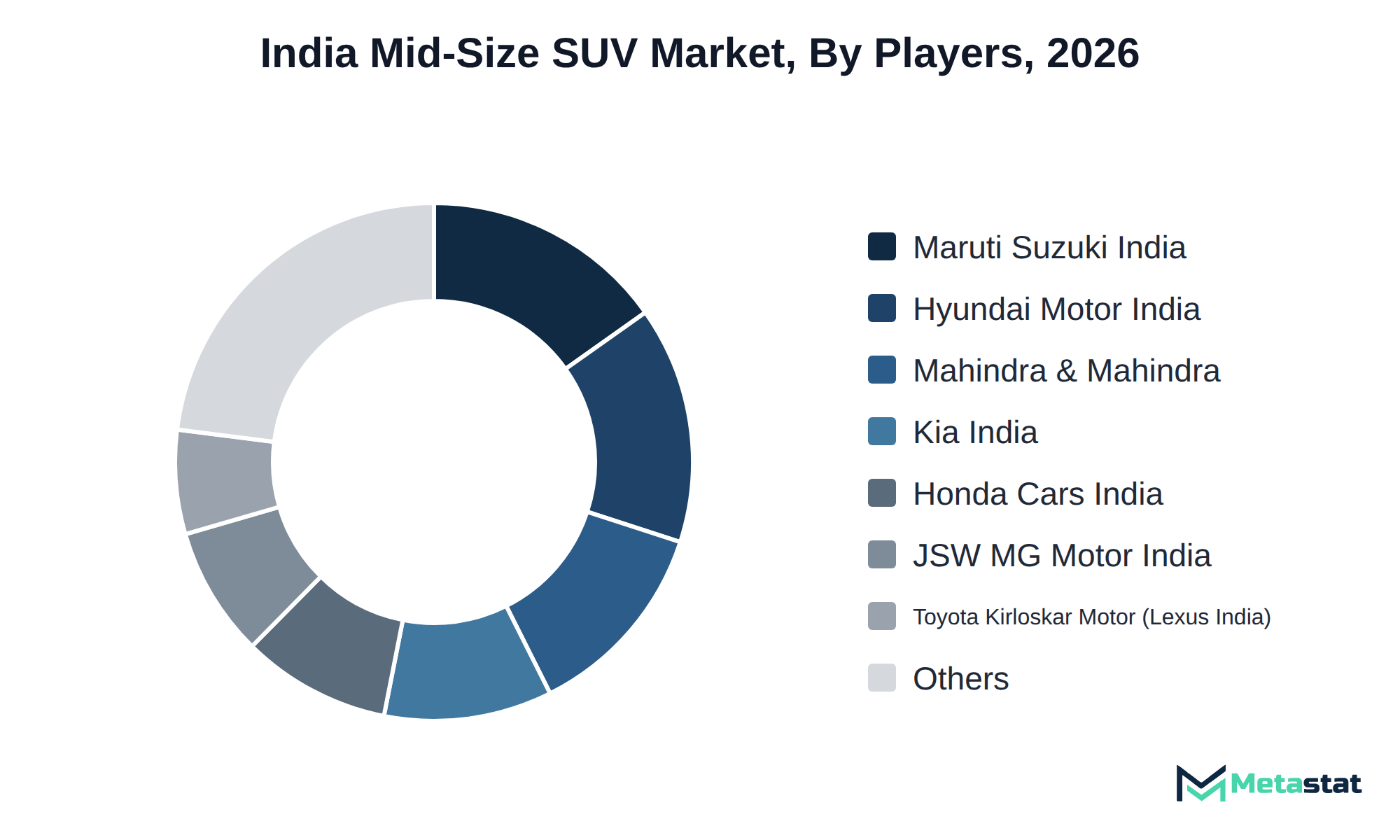
The India Mid-Size SUV market features several key players that adopt distinct strategies to cater to varying consumer preferences. Companies focus on factors including price, customization, and service aspects to differentiate their offerings. For instance, Hyundai Motor India Limited emphasizes a blend of affordability and advanced features, appealing to budget-conscious buyers while ensuring quality and reliability.
Maruti Suzuki India Limited leverages its extensive service network and affordability, targeting a wide customer base, particularly first-time buyers. In contrast, luxury brands like Mercedes-Benz India Private Limited and Audi India concentrate on high-end features and premium services, attracting affluent consumers seeking exclusive experiences and superior performance.
Technological advancements play a significant role in the India Mid-Size SUV market. Kia India Private Limited focuses on integrating modern tech features within its vehicles, enhancing user experience and connectivity. Meanwhile, Mahindra & Mahindra Limited emphasizes rugged designs and utility, appealing to consumers seeking vehicles that perform well in challenging terrains.
Companies including JSW MG Motor India Private Limited and Skoda Auto Volkswagen India Private Limited prioritize sustainability through eco-friendly vehicles, addressing the growing demand for greener options. This strategic focus on innovation and technology influences consumer choices in the India Mid-Size SUV market.
The India Mid-Size SUV market is projected to achieve this growth due to increasing demand for petrol variants, particularly mild hybrids. This segment is expected to grow from USD 2,731 million in 2026 to USD 3,679.6 million by 2033 at a CAGR of 4.4%. The expansion of all-wheel drive options, which will see significant growth due to consumer interest in multi-terrain capabilities, supports overall market development. Fluctuating fuel prices are a primary risk to achieving the projected market size, as they could affect consumer purchasing decisions. This applies particularly to diesel options, which are anticipated to grow more slowly, reaching USD 1,259.4 million by 2033 with a CAGR of 2.3%. The India Mid-Size SUV market is expected to benefit from favorable trends in fuel type diversification and drivetrain options, although external economic factors influence overall performance.
By Fuel Type: Petrol (incl. Mild Hybrid), Diesel, Strong Hybrid (HEV), CNG, Battery Electric (BEV), Others (Plug-in Hybrid, Flex-Fuel, Range-Extender)
By Transmission Type: Manual (incl. Intelligent Manual), Torque Converter Automatic, Dual-Clutch (DCT), CVT (incl. iVT), Single-Speed and e-CVT (Electric and Strong Hybrid)
By Drivetrain: Front-Wheel Drive, Rear-Wheel Drive, Four-Wheel Drive, All-Wheel Drive
By Region: North India, South India, West India, East and Northeast India, Central India
The report strategically identifies and profiles the key market players and analyses their core competencies in each sub-segment of the Mid-Size SUV market.
Report Attributes | Details |
Study Period | 2021-2033 |
Base Year | 2025 |
Estimated Year | 2026 |
Forecast Period | 2026-2033 |
Historical Period | 2021-2025 |
Growth Rate | CAGR 7.2% from 2026 to 2033 |
Revenue Unit | USD million |
Segmentation | By Fuel Type, Transmission Type, Drivetrain, Region, and Region |
Find answers to common questions about this report
The Mid-Size SUV market size was valued at USD 4,286.9 million in 2025.
The market is projected to grow at a CAGR of 7.2% during the forecast period from 2026 to 2033.
Petrol (including Mild Hybrid) leads the Mid-Size SUV market with a value of USD 2,731 million in 2026. This segment shows significant demand compared to others in the market.
The rise in environmental awareness among consumers drives the increased adoption of strong hybrid vehicles. Consumer interest in advanced technological features intensifies the demand for mid-size SUVs, leading to a shift in purchasing patterns towards models that offer enhanced safety and connectivity options.
Price sensitivity restrains growth in the Mid-Size SUV market, particularly among budget-conscious consumers prioritizing affordability. Rising input costs challenge profitability for manufacturers, impacting profit margins and necessitating cost-control measures.
Factors favoring adoption in the India Mid-Size SUV market include the rapid growth of the petrol segment, projected to reach USD 3,679.6 million by 2033, and increasing urbanization, which enhances demand for vehicles that balance performance, comfort, and efficiency. These trends reflect changing consumer preferences for fuel-efficient options.
The Mid-Size SUV market is estimated to reach a valuation of USD 7,478.8 million by 2033.
Key players operating in the Mid-Size SUV market include Hyundai Motor India Limited, Maruti Suzuki India Limited, Mahindra & Mahindra Limited, Kia India Private Limited, JSW MG Motor India Private Limited, Honda Cars India Limited, Skoda Auto Volkswagen India Private Limited, and Toyota Kirloskar Motor Private Limited (Lexus India).
The petrol segment, including mild hybrids, is projected to reach USD 3,679.6 million by 2033, reflecting a compound annual growth rate (CAGR) of 4.4% during the forecast period.
Rising input costs for manufacturers challenge profitability due to increased prices for raw materials. Suppliers optimize operations and implement cost-control measures to mitigate these effects.
The analysts below cover Automotive and Transportation research at Metastat Insights.
LEAD ANALYST
Utkarsh Khirodkar is a Lead Market Research Analyst at MetaStat Insight, specializing in market intelligence, technology sector assessments, and competitive strategy.

ENERGY & INFRASTRUCTURE INDUSTRY CONSULTANT
Automotive and Transportation · Electronics and Semiconductor · Energy and Power · Machinery & Equipment
Saurabh Vasant Ganvir consults for Energy & Infrastructure Industry at MetaStat Insight, specializing in renewable energy, solar EPC, and electric vehicle (EV) infrastructure markets.
Integrating zero-trust access controls across legacy electronic health record systems involves complex compliance overhead. Team produced an analysis that clearly separated identity governance and administration tools from privileged access management platforms. Their evaluation of HIPAA and GDPR compliance features across cloud native solutions gave our architecture group clear baseline criteria. The custom data request regarding biometric authentication adoption in hospital networks was returned promptly with clear documentation.
Evaluating calorific value requirements and air permit compliance across municipal waste facilities requires localized data. Metastat Insight structured their analysis around operational throughput capacity and feedstock composition variations in Latin America and Eastern Europe. Their competitive mapping of sorting equipment vendors helped clarify technology differences between optical separators and heavy media systems. The study provided an objective baseline during our capital expenditure reviews.
Decarbonizing industrial thermal processes hinges on refrigerant regulations and compressor efficiency limits. Metastat Insights delivered a thorough market analysis that evaluated natural refrigerants like CO2 and hydrocarbons against synthetic low-GWP alternatives. The breakdown of utility incentives and grid capacity constraints across key European manufacturing hubs offered valuable perspective. The follow-up conversation with their sector analysts addressed our specific questions on mechanical vapor recompression systems efficiently.
Explore related market intelligence reports worth reading alongside this one.
Starting from
$2950
Starting from
$2950