
LEAD ANALYST
Utkarsh Khirodkar is a Lead Market Research Analyst at MetaStat Insight, specializing in market intelligence, technology sector assessments, and competitive strategy.

India SUV Market Size, Share, By Vehicle Size (Compact SUVs (Up to 4.0 m), Midsize SUVs (>4.0-4.4 m), Large SUVs (>4.4-4.7 m), Full-Size SUVs (>4.7 m)), By Fuel Type (Petrol (Including Mild Hybrids), Diesel (Including Mild Hybrids), CNG, Hybrid (HEV and PHEV), Battery Electric (BEV)), By Drivetrain (Front-Wheel Drive (FWD), Rear-Wheel Drive (RWD), Four-Wheel Drive (4WD), All-Wheel Drive (AWD)), By Seating Configuration (Up to 4 Seats, 5 Seats, 6 Seats, 7 Seats and 8 Seats and Above), Industry Analysis, Growth, Trends, and Forecast, 2026-2033
Report ID
MSI-5536
Published
October, 2026
Pages
263 Pages
Format
Historical
Base year
Forecast
Forecast period
Report Details
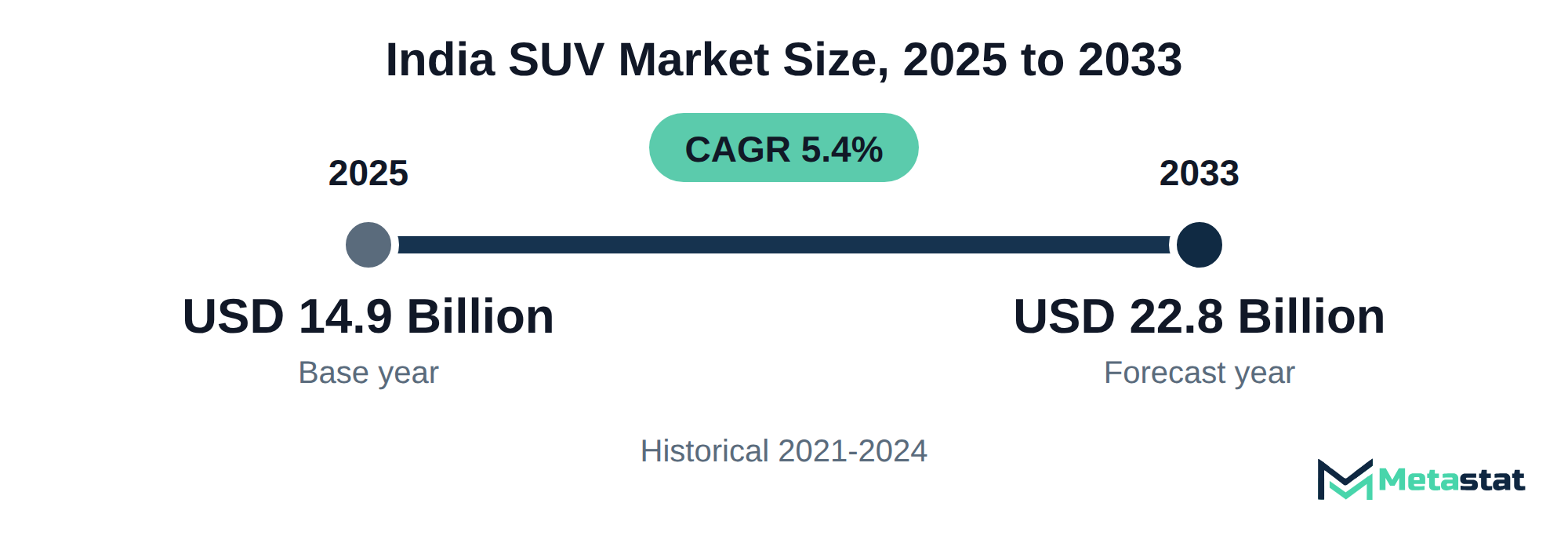
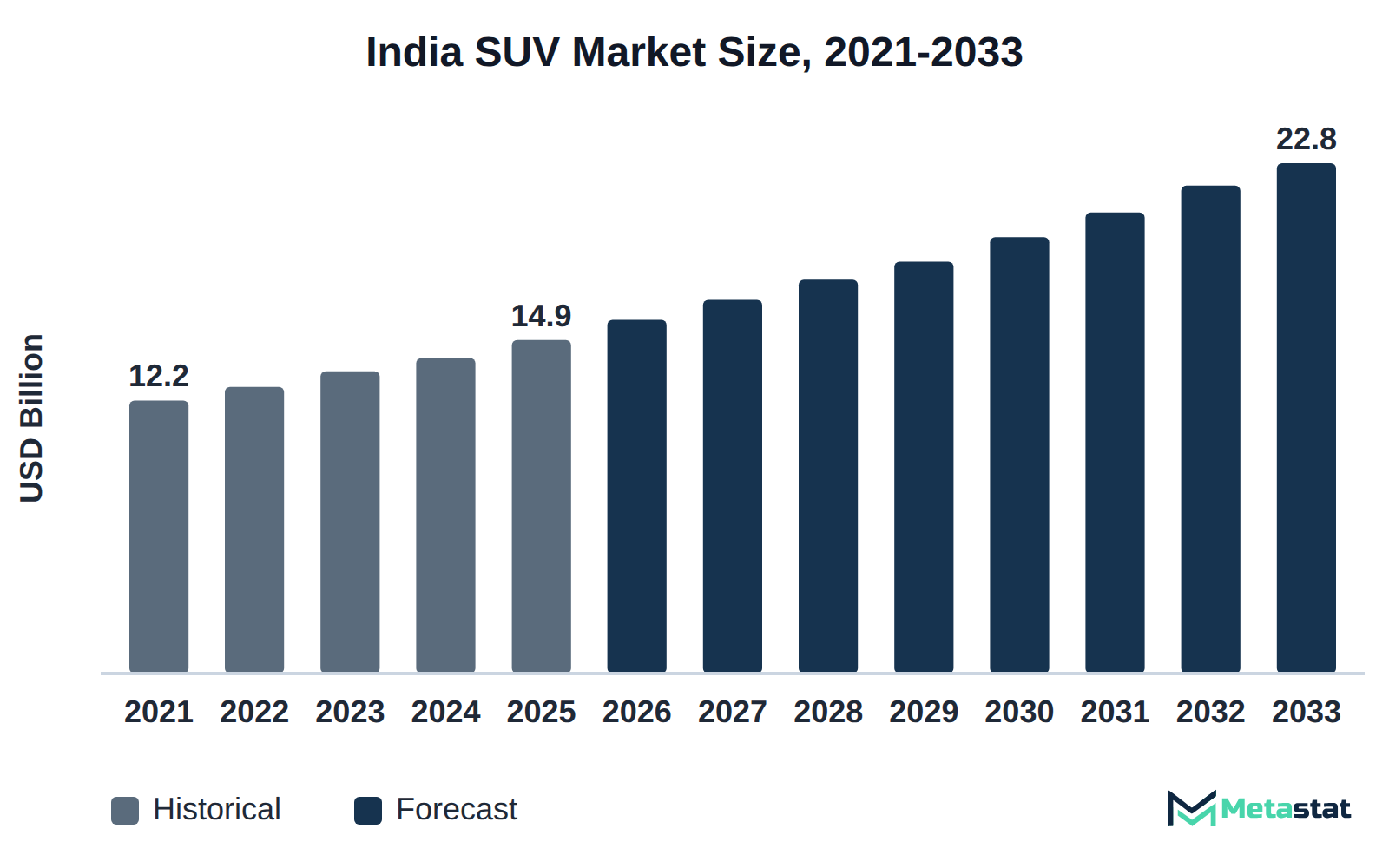
Market Valuation: Valued at $14.9 Billion in 2025, projected to reach $22.8 Billion by 2033 at a 5.4% CAGR.
Dominant Segment: Compact SUVs lead the India SUV market, driven by their optimal size and fuel efficiency, appealing to a broad demographic of urban consumers.
Geographic Lead: North India holds the largest market share, supported by established automotive infrastructure and consumer familiarity with SUV models.
What's Inside: The report provides in-depth analysis of market dynamics, competitive landscape, and forecasts from 2026 to 2033, covering various vehicle sizes, fuel types, and drivetrains.
Emerging Trends: The hybrid segment is projected to grow at a CAGR of 17.9%, reflecting a strong market interest in sustainable alternatives and advanced automotive technologies.
Price Sensitivity: Price sensitivity among consumers is influencing demand, with buyers gravitating towards more affordable compact and midsize SUVs amid rising living costs.
Choose Your License
India SUV Market
The India SUV market was valued at USD 14.9 billion in 2025 and is projected to reach USD 22.8 billion by 2033, growing at a CAGR of 5.4% over the forecast period.
The India SUV market encompasses a diverse range of vehicles designed for varying consumer needs, including compact, midsize, large, and full-size SUVs. Buyers invest in these vehicles for their blend of utility, comfort, and performance, with preferences shifting towards models that offer advanced technology and safety features. Demand is particularly strong among urban consumers, families, and adventure-seekers who prioritize versatility and space in their vehicle choices.
Growth in the market is fueled by increasing disposable income among consumers, enabling higher spending on automobiles. Compact SUVs represent the segment with the most value, appealing to a broad demographic due to optimal size and fuel efficiency. The Asia-Pacific region holds the largest share of the market, reflecting robust demand driven by urbanization and lifestyle changes that favor SUV ownership.
One main growth driver arises from the rising preference for hybrid and electric models, which align with global sustainability trends. Enhanced fuel efficiency and lower emissions attract environmentally conscious buyers, contributing to a shift in the market landscape. Ongoing developments in automotive technology further support this transition, positioning the market for sustained expansion in the coming years.
Consumer spending in the India SUV market reflects a strong preference for vehicles that combine functionality and style. The primary buyer groups include urban families seeking spacious interiors, young professionals desiring compact models for city driving, and adventure enthusiasts looking for rugged options. This diverse demand drives substantial investment in the market, with buyers prioritizing features that enhance safety, efficiency, and driving experience.
Growth in the market is propelled by increasing disposable incomes, urbanization, and a shift toward personal mobility. Compact SUVs represent the highest value segment, appealing to a broad audience due to their versatility and affordability. Among the regions, North India holds the largest share, driven by established automotive infrastructure and consumer familiarity with SUV models. Focus on electrification in the automotive sector has led to a rise in demand for hybrid and electric SUVs, further stimulating market expansion.
Investment in advanced technologies, including safety features and connected car options, enhances the appeal of SUVs. Manufacturers are adapting their offerings to meet evolving customer expectations. Rising interest in eco-friendly vehicles also supports the market, in line with global sustainability trends. Overall, the India SUV market stands on a solid foundation for sustained growth and innovation.
The popularity of sub-4-metre SUVs in the India SUV market reflects a significant shift in consumer preferences from traditional hatchbacks to compact sport utility vehicles. This category of vehicles offers a blend of practicality, modern features, and a higher driving position, appealing to urban buyers. Forecasts indicate that the compact SUV segment, defined as vehicles up to 4.0 metres in length, is projected to grow from USD 6.8 billion in 2026 to USD 9.5 billion by 2033, marking a compound annual growth rate of 4.9%. This growth demonstrates a clear consumer inclination towards sub-4-metre SUVs, which provide more space and versatility than hatchbacks, without incurring additional costs associated with larger vehicles.
This transition is attributed to evolving lifestyle needs, particularly among younger buyers who prioritize both aesthetics and functionality in their vehicle choices. The compact SUV segment addresses urban mobility challenges while enhancing the overall driving experience with advanced technology, improved safety features, and higher fuel efficiency. Manufacturers respond to this trend with innovative designs and competitive pricing strategies, positioning the India SUV market for significant growth and shifting the dynamics of personal transportation in India.
The expansion of electric vehicle (EV) adoption in the India SUV market hinges on effective pricing strategies and financing options. A significant trend is the shift towards battery localization, which reduces dependence on imports and contributes to cost efficiency. This strategy aligns with the anticipated rise in demand for hybrid and battery electric vehicles. The hybrid segment is projected to grow at a compound annual growth rate (CAGR) of 17.9% through 2033, indicating strong market interest in sustainable alternatives.
Financial models, including flexible leasing and pay-per-use contracts, are increasingly popular among buyers. These models facilitate access to electric SUVs while mitigating high upfront costs. Manufacturers including Mahindra & Mahindra Limited and Tata Motors Passenger Vehicles Limited actively promote these financing options to enhance market penetration. This approach broadens customer bases and encourages the transition to greener technologies.
Price parity, achieved through localized battery production, enhances the competitive positioning of electric SUVs against traditional petrol and diesel models. The petrol segment remains dominant, valued at USD 9.5 billion in 2026, but as battery costs decline, electric SUVs are expected to gain attractiveness. This shift is expected to influence consumer preferences and support more sustainable choices in the India SUV market.
The demand for three-row SUVs has surged in the India SUV market, driven by growing family-oriented consumers seeking spacious and versatile vehicles. Families with children, often requiring additional seating capacity, find three-row SUVs appealing due to their ability to accommodate larger groups comfortably. The market analysis indicates that the segment focusing on seating configurations is performing well, with a projected compound annual growth rate (CAGR) of 6.2% for SUVs featuring seven seats through 2033.
These vehicles offer significant advantages, including enhanced legroom and convenience for family outings, making them highly desirable. The emergence of captain seats in these SUVs enhances comfort and accessibility, catering to families prioritizing a premium experience. The inclusion of advanced features and safety technologies in these models aligns with parents' expectations, resulting in a shift from smaller vehicles to larger three-row SUVs. Among these safety technologies, automotive airbag systems remain a central component.
This trend impacts the purchasing decisions of families and encourages automakers to innovate and expand their offerings. A substantial portion of the market targets family upgrade purchases, so manufacturers are incentivized to invest in features that appeal to this demographic. This supports long-term growth in the overall India SUV market.
Choosing an appropriate drivetrain for urban and off-road driving is critical for consumers in the India SUV market. The Front-Wheel Drive (FWD) option supports efficient maneuverability in city settings, featuring a projected market value increasing from USD 10.7 billion in 2026 to USD 14 billion by 2033, representing a compound annual growth rate (CAGR) of 3.8%. This configuration proves advantageous in urban environments where parking and tight turns are common.
Four-Wheel Drive (4WD) offers enhanced traction and stability on challenging terrains, making it a preferred choice for off-road enthusiasts. Although the segment does not provide a specific projected value, demand aligns with the growing interest in adventure and exploration among Indian consumers. The ability to engage all four wheels provides confidence in navigating rough paths, especially in rural or mountainous regions. This capability is often complemented by automotive terrain response systems, which adjust vehicle settings to the driving surface.
For buyers seeking versatility, understanding the differences between drivetrains leads to better purchasing decisions. The demand for FWD configurations reflects convenience for daily urban use, while 4WD caters to those looking for off-road capabilities. This differentiation highlights the diverse preferences within the market, influencing manufacturers to tailor offerings accordingly.
Recent consumer trends show a growing preference for larger SUVs among buyers, reflecting a significant demographic shift. Younger families and urban dwellers increasingly favor the spaciousness and versatility offered by midsize and full-size SUVs. This transition aligns with lifestyle changes, where larger vehicles contribute to both functionality and comfort for family travel. The shift towards these vehicles boosts demand, resulting in a notable increase in market value. The demand for larger SUVs enhances volume, further driving competition among manufacturers. Changing consumer preferences also influence product offerings and pricing strategies, which enhances growth potential in the market.
Increased urbanization contributes to this trend, with consumers seeking vehicles that accommodate both daily commuting and weekend getaways. The India SUV market responds to these evolving consumer needs by expanding its range of larger models, ensuring a diverse selection for buyers.
Advancements in hybrid propulsion technologies significantly impact the India SUV market by enhancing fuel efficiency and reducing emissions. Automotive manufacturers invest in hybrid electric vehicles (HEVs) and plug-in hybrid electric vehicles (PHEVs) to provide consumers with sustainable alternatives. This shift responds to rising environmental awareness and stricter emissions regulations, prompting buyers to consider energy-efficient models. The growing interest in hybrids particularly appeals to urban consumers seeking both performance and sustainability.
In the market, the adoption of hybrid SUVs is expected to accelerate, reflecting a compound annual growth rate of 17.9%. This growth aligns with manufacturers' strategies to diversify their portfolios and cater to eco-conscious consumers. Enhanced battery technology and improved driving range further increase consumer confidence, leading to increased sales. The build-out of charging infrastructure and government incentives for hybrid vehicles create a favorable environment for growth, ultimately driving market expansion.
Price sensitivity among consumers limits demand in the India SUV market. Buyers seeking compact and midsize SUVs exhibit reluctance to invest in higher-priced models, causing slower uptake and smaller orders. The rising cost of living exacerbates this issue, with families prioritizing essential expenditures over vehicle purchases. Higher financing costs, driven by changes in interest rates, further complicate decisions for potential buyers. These financial pressures result in delayed vehicle replacements, particularly for buyers previously inclined to upgrade their current models. Consequently, the market experiences a distinct shift in purchasing patterns, with budget-conscious consumers gravitating towards more affordable options. This emphasis on price reflects broader economic conditions and affects overall market growth.
Rising input costs significantly impact profitability for suppliers in the India SUV market. Increasing prices for raw materials, coupled with supply chain disruptions, create pressure on margins. Suppliers respond by implementing cost-control measures and exploring alternative sourcing strategies to mitigate the financial strain. Innovations in production efficiency help suppliers maintain output levels amid these challenges.
Suppliers invest in technology upgrades to enhance production processes and reduce waste. This transition addresses immediate cost concerns and positions suppliers for long-term sustainability in a competitive market. Adjusted strategies aim to balance profitability with growing SUV demand and keep suppliers agile and responsive to evolving consumer preferences.
This segment is driven by urban buyers seeking vehicles that combine maneuverability with adequate space for urban commuting and occasional family use. Increasing urbanization in India supports the demand for these compact models, appealing to younger consumers and small families looking for affordability without compromising on features. The shift towards compact SUVs aligns with changing consumer preferences, particularly among first-time buyers entering the market. Manufacturers focusing on enhancing features, fuel efficiency, and affordability in this segment effectively tap into this growing demand, thereby strengthening their market position. Growing sales in this segment will contribute to overall market expansion, which rewards manufacturers that adapt to evolving consumer needs.
The India SUV market is segmented based on Vehicle Size, Fuel Type, Drivetrain, and Seating Configuration.
This segment appeals to urban consumers seeking a blend of compactness and versatility for daily commutes and weekend adventures. Factors driving growth include increasing demand for affordable yet spacious vehicles, reflecting changing lifestyle preferences among younger buyers. Compared to larger SUV categories, compact SUVs offer a more economical choice, with lower acquisition and operational costs. Their smaller size enhances maneuverability in congested city environments, making them attractive for urban settings. Midsize and large SUVs exhibit higher growth rates of 6% and above. Compact SUVs, in contrast, maintain steady demand due to affordability, practicality, and the variety of models available in the market.
Midsize SUVs (>4.0-4.4 m) segment is estimated to reach USD 7 billion by 2033, at a CAGR of 6% during the forecast period. Midsize SUVs cater to consumers seeking a balance between passenger space and maneuverability, appealing to families and professionals alike. The growing urban population, combined with rising disposable incomes, fuels demand for these vehicles, with buyers prioritizing comfort and versatility for daily commutes and weekend getaways. Compared to compact SUVs, which exhibit a CAGR of 4.9%, the midsize segment shows stronger growth potential. However, the higher price point of midsize SUVs often presents a barrier for budget-conscious consumers, distinguishing this segment from smaller alternatives. The trend toward hybrid technology adoption influences this segment, aligning with sustainability goals and consumer preferences for fuel efficiency.
Large SUVs (>4.4-4.7 m) segment is expected to reach USD 4.5 billion by 2033. These vehicles attract buyers seeking spaciousness and enhanced comfort, often preferred for family use or long-distance travel. Growth in this segment is driven by shifting consumer preferences towards larger vehicles, which provide better road presence and versatility compared to compact SUVs. With a compound annual growth rate (CAGR) of 5.5%, this segment experiences quicker growth compared to midsize SUVs, which grow at a CAGR of 6%. Buyers prioritize features including advanced infotainment systems and safety technologies, increasing demand for premium offerings. Competition intensifies as manufacturers introduce new models equipped with advanced features to capture this growing consumer base. The market for large SUVs reflects a distinct trend towards luxury and performance, setting it apart from other segments within the India SUV market.
Full-Size SUVs (>4.7 m) segment is projected to grow at a CAGR of 5.5% during the forecast period. These larger vehicles typically cater to families and consumers seeking spacious interiors and advanced features, often used for long-distance travel and off-road adventures. The increasing demand for premium features and safety technologies drives this segment, attracting affluent buyers prioritizing comfort and luxury. Compared to other segments, including Midsize SUVs, which are projected to grow at a CAGR of 6%, Full-Size SUVs offer a different value proposition, commanding higher price points due to their size and features. Evolving consumer preferences toward larger vehicles that provide enhanced space and utility highlight the distinct trajectory of this segment in the India SUV market.
Valued at USD 9.5 billion in 2026, this segment is projected to reach USD 10.3 billion by 2033, at a CAGR of 1.2% during the forecast period. Vehicles in this segment typically serve urban consumers seeking fuel-efficient options for daily commuting and family use. Demand arises from preferences for reliable and economical vehicles that offer a balance between performance and efficiency. The relatively modest growth rate distinguishes this segment from others in the fuel type category, including hybrids, which exhibit a significant CAGR of 17.9%. While petrol vehicles remain popular, rising interest in hybrid technology reflects shifting consumer attitudes toward sustainability and fuel economy. Consequently, manufacturers are likely to adapt their offerings to meet evolving buyer expectations, including the integration of advanced hybrid systems alongside traditional petrol options.
Diesel (Including Mild Hybrids) segment is estimated to reach USD 3.8 billion by 2033, at a CAGR of 0% during the forecast period. This segment appeals to consumers seeking fuel-efficient vehicles with robust performance, particularly in urban and semi-urban settings. The relatively stable demand for diesel vehicles arises from preferences for lower fuel costs and longer driving ranges, factors that align with budget-conscious buyers. Compared to other fuel types, this segment experiences slower growth, reflecting a shift toward petrol and hybrid options. Regulatory pressures aimed at reducing emissions and transitioning to cleaner alternatives create an additional challenge for diesel adoption. Meeting emission requirements on diesel vehicles depends partly on automotive exhaust sensors, which monitor emission control systems. Given these dynamics, this segment's performance helps explain consumer choices in the India SUV market and shapes the competitive strategies of manufacturers targeting this demographic.
CNG segment is expected to reach USD 1.2 billion by 2033. This segment attracts environmentally conscious consumers seeking alternatives to traditional fossil fuels. Adoption is driven by growing regulatory support for compressed natural gas (CNG) vehicles, aligning with efforts to reduce emissions and improve air quality. These vehicles store their fuel on board in CNG cylinders. Compared to petrol and diesel segments, the CNG sub-segment presents a more affordable fueling option for users, promoting cost-effectiveness in urban transportation. While the petrol segment is projected to grow at a CAGR of 1.2% from 2026 to 2033, CNG vehicles appeal to budget-conscious buyers looking for economical choices, reflecting a distinct demand profile within the India SUV market. This differentiation supports ongoing interest in CNG-powered SUVs, creating a competitive landscape among manufacturers aiming to enhance their CNG offerings.
Hybrid (HEV and PHEV) segment is projected to grow at a CAGR of 17.9% during the forecast period. This segment appeals to environmentally conscious consumers looking for efficient alternatives to traditional fuel sources. Rising awareness of climate change and regulatory pressure for reduced emissions drive demand for hybrid vehicles. Compared to other fuel types, hybrid vehicles typically feature higher pricing due to advanced technology. Petrol vehicles reflect modest growth with a CAGR of 1.2%, and diesel vehicles face stagnation at a 0% CAGR. Hybrids stand out with their substantial growth potential, catering to a niche market segment seeking sustainability and innovation. The combination of electric and conventional powertrains attracts buyers seeking flexibility and efficiency, positioning the hybrid segment as a notable focus for manufacturers in the Indian SUV market.
Battery electric vehicles (BEVs) employ electric propulsion technology, receiving increasing attention from environmentally conscious consumers in the India SUV market. At the core of this propulsion technology are electric vehicle drive motors. These vehicles appeal primarily to urban buyers seeking sustainable transportation options. The growth of charging infrastructure acts as a key driver for this segment, making electric SUVs more accessible. Government incentives aimed at promoting electric vehicle adoption further support this sub-segment. Compared to petrol and diesel variants, the battery electric segment experiences slower growth due to consumer concerns about range and charging times. However, alignment with global trends towards sustainability positions it uniquely in the market, attracting a niche customer base focused on reducing carbon footprints.
This segment primarily appeals to consumers seeking fuel efficiency and a comfortable driving experience, often favored by urban dwellers and families. The growth of this segment is driven by increasing demand for affordable and efficient vehicles that provide practicality without sacrificing performance. Compared to other drivetrain options, including All-Wheel Drive (AWD), the FWD segment experiences slower growth, primarily due to a competitive pricing environment. The distinct focus on cost-effectiveness and fuel economy sets FWD apart, influencing purchasing decisions among budget-conscious buyers in the India SUV market.
Rear-Wheel Drive (RWD) segment is estimated to reach USD 2.3 billion by 2033, at a CAGR of 3% during the forecast period. This configuration is often preferred for its balance of handling and performance, attracting buyers who value driving dynamics, particularly in higher-end models. RWD vehicles typically appeal to consumers seeking enhanced stability and steering response, particularly in urban and highway driving conditions. The segment experiences moderate growth compared to others, including the All-Wheel Drive segment, which benefits from a higher CAGR of 16.8%. While consumers increasingly favor advanced drivetrains for their versatility and performance, RWD retains its appeal among enthusiasts and luxury buyers, ensuring steady demand in the India SUV market. Factors driven by evolving consumer preferences and the integration of advanced technologies contribute to the segment's growth.
The Four-Wheel Drive (4WD) segment is expected to reach USD 2.4 billion by 2033. This drivetrain option attracts drivers seeking enhanced traction and off-road capabilities, appealing to adventure enthusiasts and those living in challenging terrains. A growing interest in off-road capabilities drives demand for 4WD vehicles, particularly in regions with varied landscapes. The segment exhibits a distinct growth pattern compared to other drivetrain options, with a compound annual growth rate (CAGR) of 3% anticipated during the forecast period. Pricing remains a crucial factor, with consumers often associating 4WD systems with premium pricing compared to Front-Wheel Drive (FWD) alternatives, influencing buyer choices. Overall, evolving consumer preferences shape the trajectory of the Four-Wheel Drive segment within the India SUV market.
All-Wheel Drive (AWD) segment is projected to grow at a CAGR of 16.8% during the forecast period. This segment caters to consumers seeking enhanced control and traction on diverse terrains, making it particularly appealing to outdoor enthusiasts and those residing in regions with challenging weather conditions. Factors driving this growth include increasing consumer preference for vehicles offering superior handling capabilities and safety features. Compared to other drivetrain configurations, the AWD segment exhibits faster growth, positioning itself as a preferred choice for buyers prioritizing performance. The competitive landscape sees key players focusing on technological advancements, contributing to an anticipated shift towards more efficient AWD systems. Power delivery to each axle depends on the automotive transmission, which makes it a key component of AWD systems. In the India SUV market, sustained demand for AWD vehicles reflects a broader trend towards versatile and capable vehicles that meet the varying needs of consumers.
Valued at USD 0.1 billion in 2026, this segment is projected to reach USD 0.1 billion by 2033, at a CAGR of -0.8% during the forecast period. Vehicles in this segment provide compact options for consumers seeking practicality and efficiency, often appealing to urban residents or small families. The decline in growth reflects shifting consumer preferences toward larger vehicles, particularly Compact SUVs and Midsize SUVs, which offer more space and features. The segment experiences pressure from rising costs of advanced technologies and materials, impacting its attractiveness to cost-sensitive buyers. Compared to segments like 5 Seats, which has a CAGR of 4.7%, the Up to 4 Seats segment reflects a slower growth trajectory, highlighting a notable shift in market demand dynamics within the India SUV market.
5 Seats segment is estimated to reach USD 15.2 billion by 2033, at a CAGR of 4.7% during the forecast period. This configuration appeals to families and individuals requiring ample passenger space without the higher costs associated with larger seating capacities. Growth within this segment benefits from rising consumer preference for spacious yet practical vehicles suited for urban commuting and family outings. Increasing disposable income among middle-class consumers fuels demand for SUVs with this seating arrangement. Compact and large SUV segments are expected to grow at CAGRs of 4.9% and 5.5% respectively. In contrast, the 5 Seats segment shows a moderate pace of growth, reflecting its position as a balanced choice for buyers prioritizing comfort and affordability. The growing emphasis on fuel efficiency within the India SUV market drives manufacturers to offer competitive models focused on this configuration.
Valued at USD 1.2 billion by 2033, the 6 Seats segment serves families and groups requiring additional seating capacity for commuting and leisure activities. Demand for this configuration is driven by urban consumers seeking versatile vehicles that accommodate more passengers without sacrificing comfort. The relatively stable growth compared to other configurations reflects a niche market appeal, primarily attracting buyers focused on practicality and functionality. The growing trend toward multi-purpose vehicles influences demand, with consumers prioritizing space and flexibility in their automotive choices. Increased availability of models catering to larger families further supports this segment's expansion in the India SUV market.
7 Seats segment is projected to grow at a CAGR of 6.2% during the forecast period. This configuration serves larger families and groups, offering ample space and comfort. Increasing urbanization, along with a rising preference for family-oriented vehicles, drives demand for this segment. Economic growth enhances disposable income, supporting higher expenditure on personal vehicles. Compared to other configurations, this segment typically holds a higher price point, appealing to buyers seeking versatility and comfort for multiple passengers. The increasing focus on safety features and advanced technology further influences consumer choices, pushing this segment to expand in the competitive landscape of the India SUV market. Demand for 7 Seats SUVs is expected to reflect broader trends in family vehicle preferences, distinguishing it from configurations with fewer seating options.
Vehicles in the 8 Seats and Above segment cater specifically to large families and groups requiring extra space and comfort. These vehicles are often preferred by buyers prioritizing passenger capacity for both daily commuting and long-distance travel. A strong driver of this segment includes growing urbanization, which increases the demand for spacious vehicles suitable for family outings and community transportation. Compared to other segments, this category typically commands a higher price point due to its larger size and additional features aimed at enhancing passenger comfort. The segment experiences slower growth relative to other configurations in the market, reflecting a distinct market trend where more compact SUVs remain favored for urban settings.
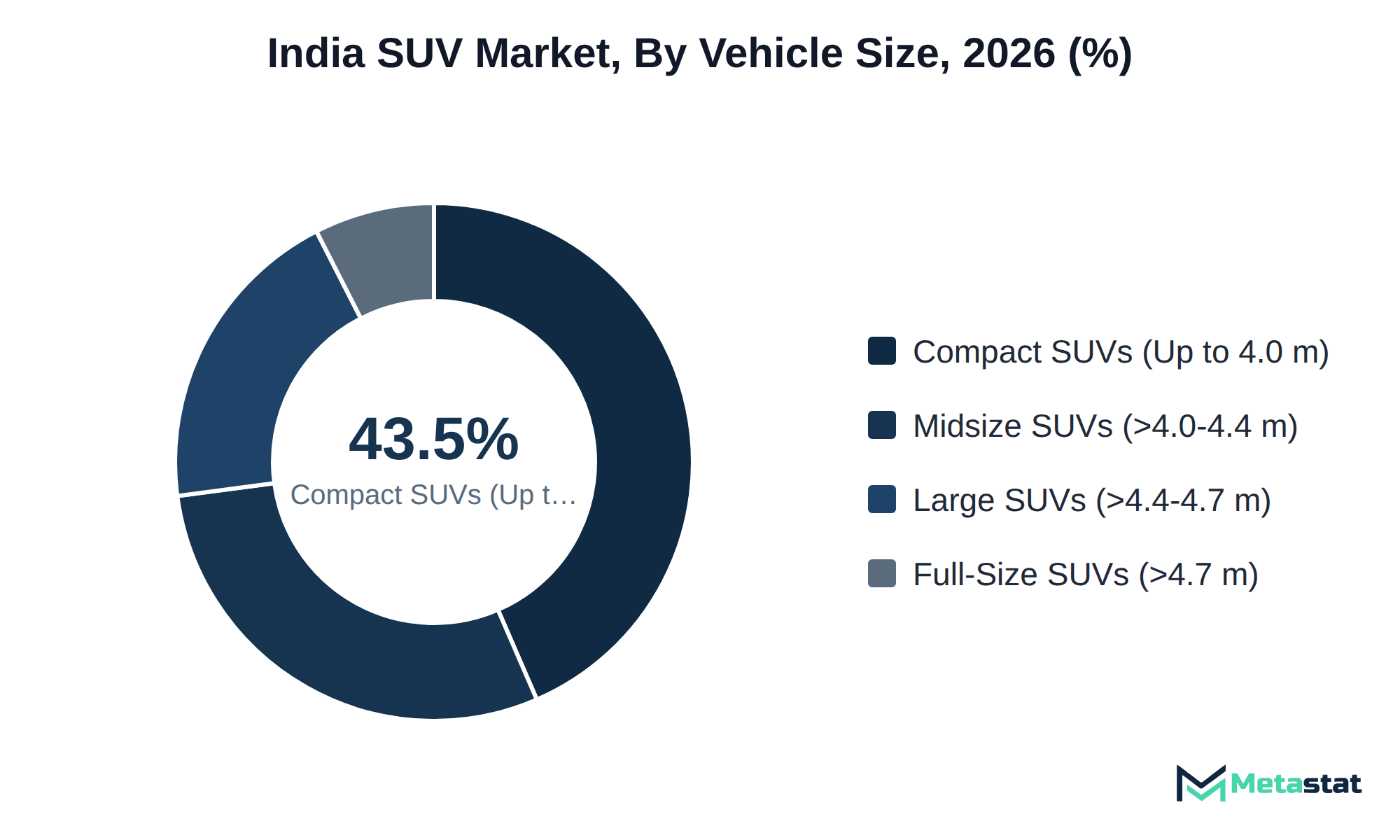
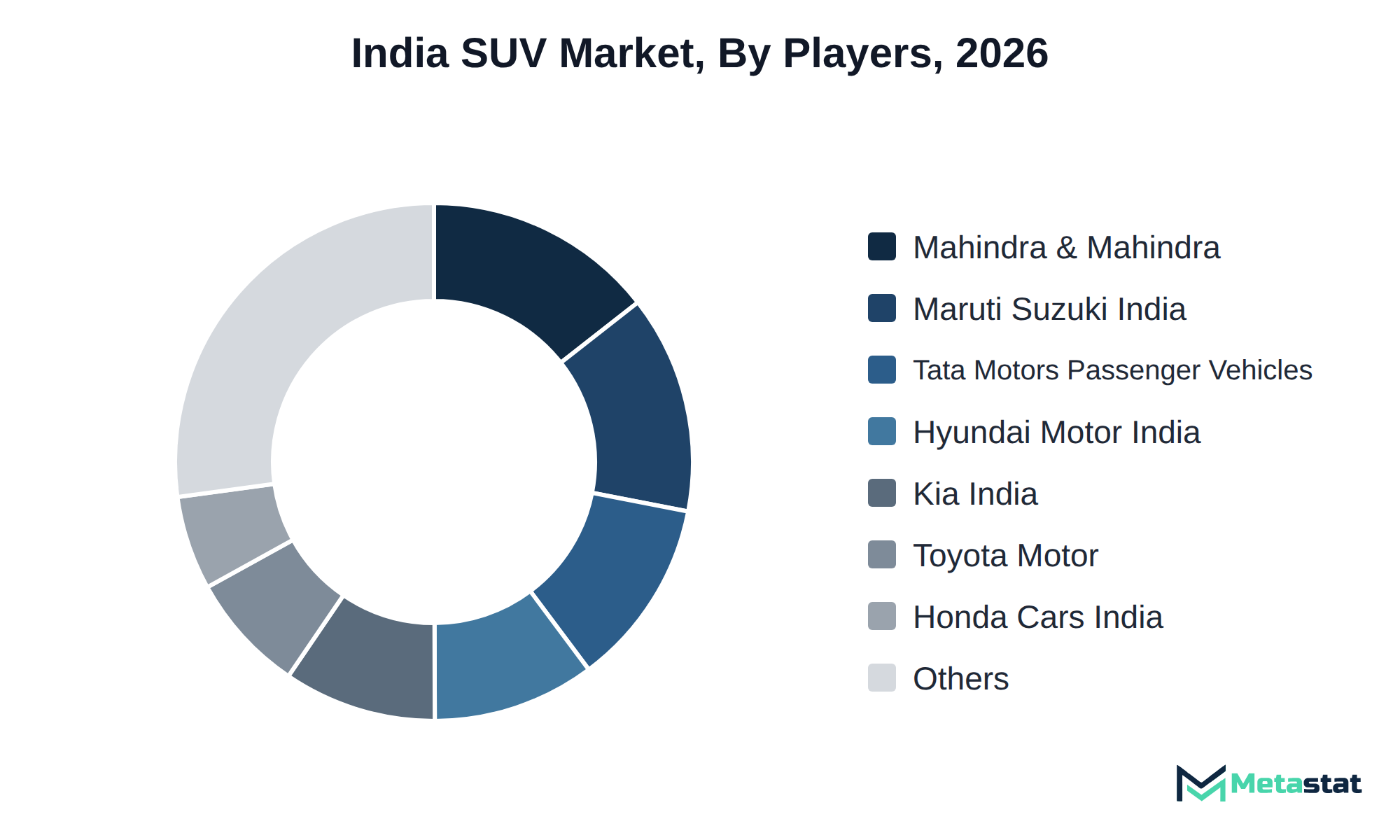
Companies in the India SUV market compete on various dimensions, including pricing, features, and customer service. Buyers prioritize factors including comfort, fuel efficiency, and brand reputation when selecting SUVs. Compact SUVs dominate consumer interest due to affordability and suitability for urban environments.
Mahindra & Mahindra Limited emphasizes ruggedness and off-road capabilities, appealing to outdoor enthusiasts. Tata Motors Passenger Vehicles Limited focuses on electric and hybrid technologies, aligning its offerings with sustainability trends. Hyundai Motor India Limited targets urban consumers with stylish designs and advanced technology features, enhancing appeal in a competitive landscape.
This growth relies on several key developments within the India SUV market. First, the increasing adoption of hybrid and electric vehicles, particularly in the Hybrid (HEV and PHEV) segment, supports market expansion. The segment is projected to experience a CAGR of 17.9%, reflecting rising consumer preference for eco-friendly options. Second, demand for Front-Wheel Drive (FWD) vehicles is anticipated to grow, with figures rising from USD 10.7 billion in 2026 to USD 14 billion by 2033, driven by urbanization and changing lifestyle preferences. Third, the Compact SUVs segment is expected to expand, with a CAGR of 4.9%, indicating a growing preference for smaller, versatile vehicles suitable for city driving.
Risks including economic downturns that affect consumer purchasing power could impede market growth. Regulatory changes aimed at reducing diesel vehicle usage impact the Diesel (Including Mild Hybrids) segment, which is expected to plateau at USD 3.8 billion by 2033. Maintaining a favorable environment for investment and innovation will be necessary for the overall success of the market.
By Vehicle Size: Compact SUVs (Up to 4.0 m), Midsize SUVs (>4.0-4.4 m), Large SUVs (>4.4-4.7 m), Full-Size SUVs (>4.7 m)
By Fuel Type: Petrol (Including Mild Hybrids), Diesel (Including Mild Hybrids), CNG, Hybrid (HEV and PHEV), Battery Electric (BEV)
By Drivetrain: Front-Wheel Drive (FWD), Rear-Wheel Drive (RWD), Four-Wheel Drive (4WD), All-Wheel Drive (AWD)
By Seating Configuration: Up to 4 Seats, 5 Seats, 6 Seats, 7 Seats, 8 Seats and Above
The report strategically identifies and profiles the key market players and analyses their core competencies in each sub-segment of the SUV market.
Report Attributes | Details |
Study Period | 2021-2033 |
Base Year | 2025 |
Estimated Year | 2026 |
Forecast Period | 2026-2033 |
Historical Period | 2021-2025 |
Growth Rate | CAGR 5.4% from 2026 to 2033 |
Revenue Unit | USD billion |
Segmentation | By Vehicle Size, Fuel Type, Drivetrain, Seating Configuration, and Region |
Find answers to common questions about this report
The SUV market size was valued at USD 14.9 billion in 2025.
The market is projected to grow at a CAGR of 5.4% during the forecast period from 2026 to 2033.
Compact SUVs (Up to 4.0 m) lead the SUV market with a projected value of USD 9.5 billion by 2033. This segment shows a compound annual growth rate of 4.9 percent during the forecast period.
Recent consumer trends show a growing preference for larger SUVs, driven by the demand for spaciousness and versatility among younger families and urban dwellers. advancements in hybrid propulsion technologies enhance fuel efficiency and reduce emissions, appealing to eco-conscious consumers.
The SUV market is estimated to reach a valuation of USD 22.8 billion by 2033.
Key players operating in the SUV market include Mahindra & Mahindra Limited, Maruti Suzuki India Limited, Tata Motors Passenger Vehicles Limited, Hyundai Motor India Limited, Kia India Private Limited, and Toyota Motor Corporation.
The hybrid SUV segment is expected to grow at a compound annual growth rate of 17.9% from 2026 to 2033, reflecting increased consumer interest in sustainable vehicles.
Compact SUVs (up to 4.0 m) represent the fastest-growing segment, with a projected compound annual growth rate of 4.9% from 2026 to 2033.
Rising urbanization and changing consumer preferences drive demand for larger SUVs, as buyers seek vehicles that provide functionality and comfort for family travel.
The India SUV market faces challenges from rising input costs and supply chain disruptions, which impact profitability for suppliers.
The analysts below cover Automotive and Transportation research at Metastat Insights.
LEAD ANALYST
Utkarsh Khirodkar is a Lead Market Research Analyst at MetaStat Insight, specializing in market intelligence, technology sector assessments, and competitive strategy.

ENERGY & INFRASTRUCTURE INDUSTRY CONSULTANT
Automotive and Transportation · Electronics and Semiconductor · Energy and Power · Machinery & Equipment
Saurabh Vasant Ganvir consults for Energy & Infrastructure Industry at MetaStat Insight, specializing in renewable energy, solar EPC, and electric vehicle (EV) infrastructure markets.
In the biological seed treatment space, registration timelines vary drastically between the European Union, Brazil, and North America. The MetaStat Insight research handled these cross-border regulatory barriers with genuine nuance, mapping commercialization pathways alongside historical field adoption rates. The segmentation between microbial strains and biochemical active ingredients was particularly well structured.
Our team was tracking whether regional recycling infrastructure could realistically absorb the growing volume of lithium iron phosphate batteries over the next decade. The report did a solid job separating announced hydrometallurgical plant capacity from active, permitted operational throughput. That distinction made the feedstock availability projections and regional recovery rate models far more credible than standard commercial overviews.
Tracking capacity expansion in single-use bioprocessing requires dependable data on raw material availability and cleanroom-grade polymer supply chains. The competitive landscape chapter gave a grounded evaluation of secondary component suppliers across North America and Asia-Pacific rather than simply reprinting press releases. Having that level of supplier benchmarking helped clarify dual-sourcing considerations for our clinical pipeline planning.
Explore related market intelligence reports worth reading alongside this one.
Starting from
$2950