
LEAD ANALYST
Utkarsh Khirodkar is a Lead Market Research Analyst at MetaStat Insight, specializing in market intelligence, technology sector assessments, and competitive strategy.

India Automotive Electronics Market Size, Share, By Component Type (Electronic Control Units, Sensors, Power Electronics Modules, Infotainment Units, Instrument Clusters and Displays, Telematics and Connectivity Modules, Electronic Lighting Modules, Electronic Ignition Modules, Others), By Vehicle Type (Passenger Cars, Two-Wheelers, Three-Wheelers, Light Commercial Vehicles, Medium and Heavy Commercial Vehicles, Off-Highway Vehicles), By Application (Powertrain and Energy Management, Advanced Driver Assistance Systems, Passive Safety Systems, Chassis and Vehicle Dynamics, Body and Comfort Electronics, Infotainment and Driver Information, Vehicle Connectivity and Telematics, Lighting Control), By Propulsion Type (Internal Combustion Engine Vehicles, Hybrid Electric Vehicles, Battery Electric Vehicles, Fuel Cell Electric Vehicles), Industry Analysis, Growth, Trends, and Forecast, 2026-2033
Report ID
MSI-5504
Published
October, 2026
Pages
301 Pages
Format
Historical
Base year
Forecast
Forecast period
Report Details
Market Valuation: Valued at $11.8 Billion in 2025, projected to reach $17.8 Billion by 2033 at a 5.3% CAGR.
Dominant Segment: Passenger cars lead the India Automotive Electronics market, driven by substantial consumer interest in electrification and automation, reflecting a shift towards more technologically advanced vehicles.
Geographic Lead: The Asia-Pacific region commands the largest share of the market, propelled by rapid urbanization and increasing disposable incomes, which enhance consumer demand for advanced automotive technologies.
What's Inside: The report provides a comprehensive analysis of the competitive landscape, market segmentation by component type, vehicle type, application, and propulsion type, along with growth forecasts from 2026 to 2033.
Power Electronics Growth: The hybrid electric vehicles segment is projected to achieve a CAGR of 12.7%, highlighting the increasing demand for efficient energy management solutions within the automotive sector.
ADAS Adoption: The sensors segment is expected to reach USD 3.5 billion by 2033, driven by rising investments in Advanced Driver Assistance Systems (ADAS) and a growing emphasis on vehicle safety.
Choose Your License
India Automotive Electronics Market
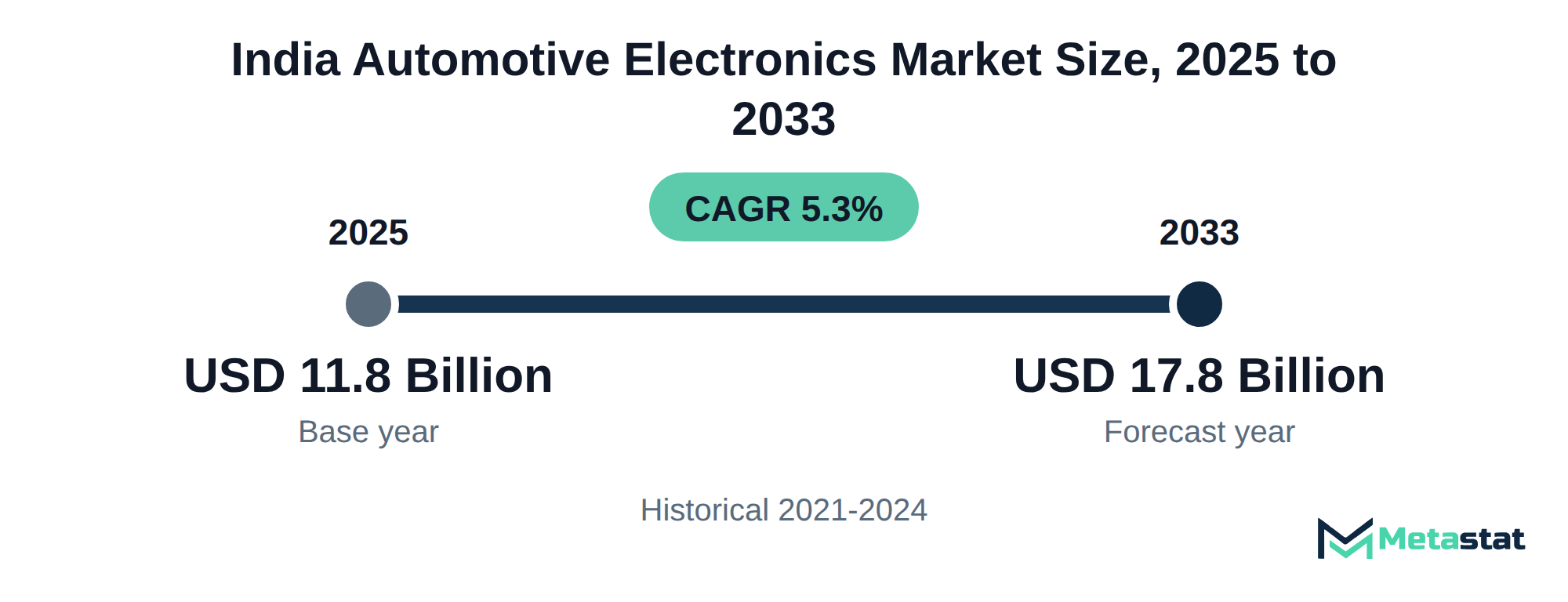
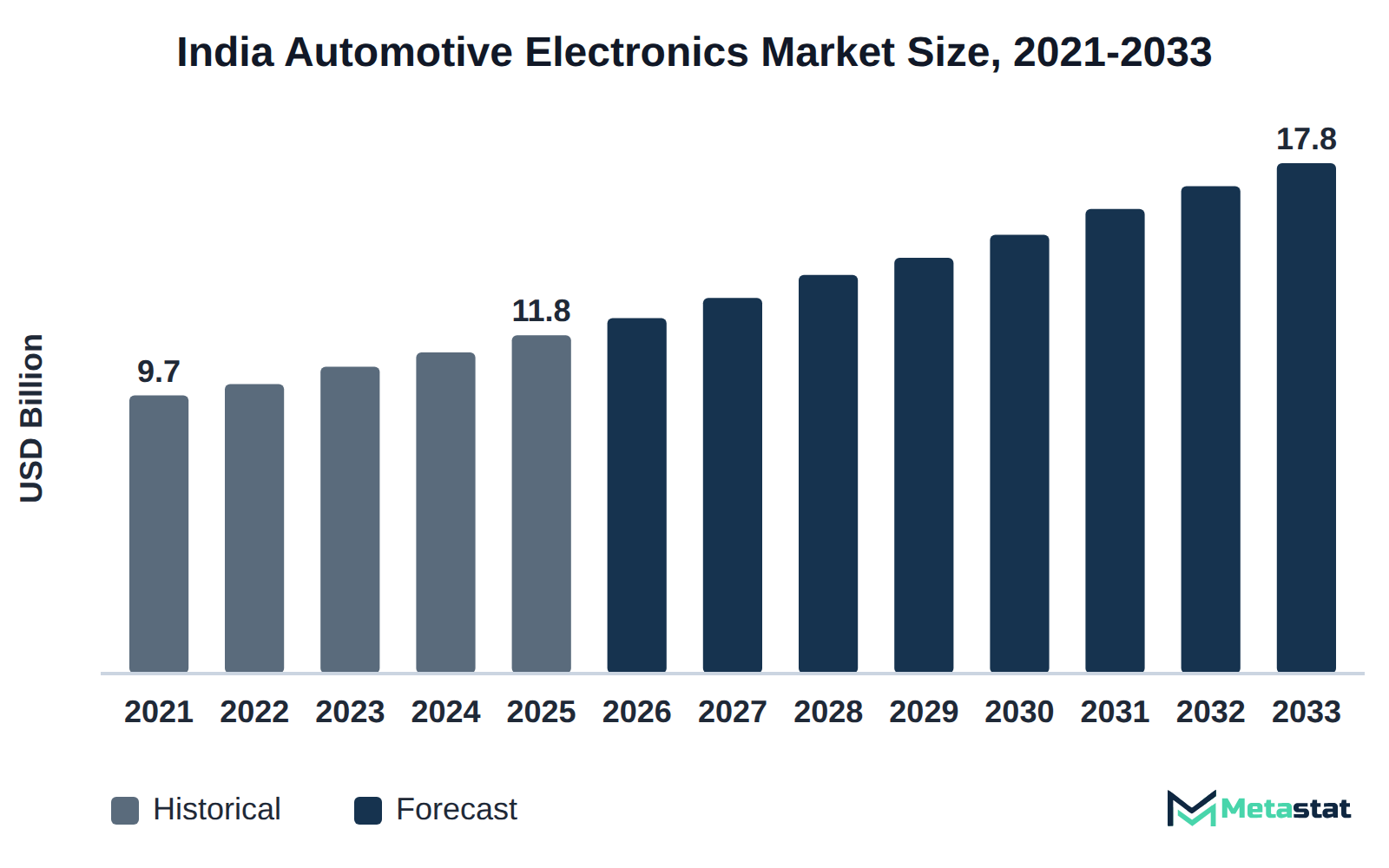
The India Automotive Electronics market was valued at USD 11.8 billion in 2025 and is projected to reach USD 17.8 billion by 2033, growing at a CAGR of 5.3% over the forecast period.
The India Automotive Electronics market encompasses electronic components and systems in vehicles, including electronic control units, sensors, infotainment units, and power electronics modules. Buyers invest in these technologies to enhance vehicle performance, improve safety features, and increase connectivity. The continuous evolution of consumer preferences toward advanced technology and integrated systems drives demand for automotive electronics across various vehicle types.
Rising adoption of electric vehicles and hybrid technologies propels market growth, because both require advanced electronic solutions for efficient energy management. Passenger cars represent the segment with the highest value, reflecting substantial consumer interest in electrification and automation. This shift in consumer behavior influences manufacturers to invest heavily in innovative electronic technologies, enhancing overall vehicle functionality and performance.
Regionally, the market shows a notable concentration of activity in Asia-Pacific, which commands the largest share, driven by rapid urbanization and increasing disposable incomes. The demand for enhanced safety features and connectivity solutions contributes to this growth, creating opportunities for manufacturers and suppliers to expand their offerings. The focus on integrating advanced technologies within vehicles continues to shape the competitive environment, driving innovation and investment across the sector.
The India Automotive Electronics market features a variety of components, including electronic control units, sensors, and infotainment systems, tailored for diverse vehicle applications. Buyers invest in these technologies to enhance vehicle performance, safety, and user experience. The increasing demand for advanced features in vehicles drives significant spending, particularly among automotive manufacturers and suppliers aiming to meet consumer expectations for connectivity and functionality.
Growth within the market is primarily fueled by the rising adoption of electric and hybrid vehicles, which require sophisticated electronic systems to manage power distribution, battery performance, and connectivity features. Passenger cars represent the segment with the highest value, reflecting the ongoing trend toward more technologically advanced vehicles. The Asia-Pacific region holds the largest share, supported by a robust automotive manufacturing base and increasing consumer demand for smart mobility solutions.
Investments in research and development drive innovation in the market and enable technologies such as advanced driver assistance systems and enhanced infotainment options. The demand for energy-efficient solutions aligns with global sustainability goals, creating opportunities for suppliers to expand their product offerings. This evolving landscape contributes to the anticipated growth trajectory of the India Automotive Electronics market.
The demand for power electronics in electric vehicles (EVs) is experiencing significant growth within India's electric two-wheeler and passenger car segments. In these segments, the adoption of hybrid electric vehicles and battery electric vehicles is expected to drive the need for advanced power electronics solutions. The market for hybrid electric vehicles is projected to reach USD 2.3 billion by 2033, reflecting a compound annual growth rate of 12.7%. This shift towards EVs necessitates the integration of efficient power management systems to optimize energy use and enhance performance.
Power electronics manage the energy flow in these vehicles and affect their efficiency and overall performance. The growing focus on sustainable mobility and stricter emissions regulations prompts manufacturers to invest in innovative power electronic technologies that facilitate the transition towards electric mobility. Consequently, suppliers within the India Automotive Electronics market benefit from this transition, capitalizing on the increased demand for solutions tailored for EV applications. The expansion of this market segment signals a significant transformation in India's automotive industry, highlighting the importance of power electronics in achieving future mobility goals.
The integration of Advanced Driver Assistance Systems (ADAS) in vehicles significantly influences the demand for automotive sensors in the India Automotive Electronics market. The market for sensors is projected to grow, driven by increasing investments in safety and automation technologies. By 2033, the sensors segment is expected to reach USD 3.5 billion, reflecting a compound annual growth rate (CAGR) of 5.7%. This growth stems from rising emphasis on vehicle safety and compliance with regulatory mandates that necessitate the inclusion of advanced safety features in vehicles.
Purchasing models in this sector typically involve contracts structured around performance metrics and long-term supply agreements. Buyers increasingly prefer fixed-price contracts to mitigate cost fluctuations and ensure budget predictability. The competitive landscape influences pricing strategies, with suppliers offering tiered pricing based on volume commitments. These arrangements establish long-term relationships between automotive manufacturers and sensor suppliers, benefiting both parties through reduced costs and improved supply chain efficiency.
The emphasis on quality and reliability in sensor technology further impacts buying decisions. Manufacturers prioritize suppliers that demonstrate robust testing and compliance with industry standards, ensuring that components meet stringent requirements for safety and performance. This focus on quality aligns with broader goals of the India Automotive Electronics market, where enhancing vehicle safety and functionality remains essential.
India's Automotive Electronics market increasingly emphasizes the localization of electronic control units (ECUs) to enhance self-sufficiency and reduce import dependence. The market for ECUs is projected to grow from USD 3.4 billion in 2026 to USD 4.7 billion by 2033, representing a compound annual growth rate (CAGR) of 4.5%. This growth stems from rising demand for indigenous manufacturing capabilities to support local automotive production and innovation.
Domestic automotive manufacturers seek to mitigate risks associated with global supply chain disruptions and foreign exchange fluctuations. By prioritizing local sourcing of ECUs, these manufacturers achieve greater control over production timelines and quality standards, ultimately reducing operational costs. This strategic shift aligns with government initiatives aimed at promoting 'Make in India,' which encourages local assembly and manufacturing of automotive components.
Investments in local ECU production facilities are expected to create jobs within the country and build a strong supplier ecosystem. Companies involved in this localization drive will likely benefit from a competitive edge, meeting the growing demand for customized solutions designed to address the unique needs of the Indian automotive market. This trend will contribute to the overall growth of the market while companies streamline their supply chains and enhance operational efficiency.
The integration of digital cockpits into vehicles significantly alters procurement strategies within the India Automotive Electronics market. This transformation emphasizes the demand for advanced electronic control units and in-vehicle infotainment systems, driving suppliers to enhance product offerings. In the vehicle category, the passenger cars segment is expected to grow from USD 7.3 billion in 2026 to USD 10.7 billion by 2033, reflecting a compound annual growth rate of 5.6%. This growth indicates a strong preference among consumers for vehicles equipped with sophisticated digital interfaces.
Advanced driver assistance systems are central to this evolution, with a projected value of USD 3.3 billion by 2033 and a 9.6% compound annual growth rate. The heightened focus on user experience and driver safety necessitates a shift in procurement strategies, driven by automakers seeking suppliers capable of delivering high-quality electronic components. The standardization of digital cockpits means suppliers that innovate and adapt their product lines secure a competitive edge in the market. This adaptation leads to increased investment in R&D, subsequently enhancing overall market growth and creating new opportunities for stakeholders.
The integration of Advanced Driver Assistance Systems (ADAS) drives demand for sophisticated automotive electronics in the market. Automotive manufacturers focus on enhancing vehicle safety and performance through technologies that support features including lane departure warnings, adaptive cruise control, and automated parking. Increased consumer awareness regarding safety features influences buyers, particularly in passenger cars and light commercial vehicles. Investments in research and development from suppliers facilitate rapid advancements in sensor technologies and data processing capabilities. These innovations change the types of electronic components deployed in vehicles and raise the need for electronic control units and sensors. The market experiences accelerated growth due to this shift toward safety and convenience, appealing to both consumers and manufacturers seeking competitive advantages. Suppliers that focus on developing reliable ADAS technologies gain a stronger foothold in the market, aligning with the evolving demands of consumers and regulatory standards.
The rising costs of key components in the India Automotive Electronics market restrict the willingness of automotive manufacturers to invest in advanced electronics systems. Increased expenses associated with electronic control units, sensors, and infotainment units affect budget allocations for new projects, making manufacturers hesitant to pursue upgrades or new implementations. Higher costs translate into slower adoption rates in segments including passenger cars and two-wheelers, where price sensitivity among consumers limits the potential for premium features. This phenomenon particularly impacts smaller manufacturers who lack the financial flexibility to absorb escalating expenses, leading to delayed product launches and reduced order volumes. Consequently, the overall growth trajectory for the market experiences downward pressure, constraining opportunities for expansion and innovation within the automotive electronics sector. The balance between cost and technological advancement remains a challenge for buyers seeking to enhance vehicle capabilities while managing budgets effectively.
Growing competition within the India Automotive Electronics market leads to margin pressure for suppliers. Increased demand for high-performance components requires significant investment in research and development. Suppliers face challenges in maintaining profitability amid rising production costs and the need for advanced technologies. With profit margins tightening, many suppliers explore cost reduction strategies, including optimizing manufacturing processes and enhancing supply chain efficiencies. Such measures allow for competitive pricing while sustaining product quality and performance. Collaboration among suppliers and manufacturers helps share risks and align development efforts to meet evolving market needs effectively. This trend indicates a shift in supplier strategies, focusing on innovation and efficiency to navigate the pressures of the current market environment. Balancing cost management with the delivery of advanced solutions remains critical for suppliers seeking to thrive in a competitive environment.
The segment of hybrid electric vehicles is poised for considerable expansion within the market, driven by shifting consumer preferences and increasing environmental regulations. Power electronics modules, integral to the operation of hybrid systems, are anticipated to achieve a significant compound annual growth rate of 12.7%, reflecting growing demand for efficient energy management solutions. This segment's expected value will reach USD 2.3 billion by 2033, highlighting a strong opportunity for manufacturers focusing on this technology. The rise in hybrid vehicle adoption aligns with manufacturers' efforts to align product offerings with evolving market needs. This segment offers a growth opportunity and adds resilience to the market by diversifying the vehicle offerings available to consumers.
The ongoing commitment to sustainability supports investment in hybrid electric vehicles. This shift promises to transform the automotive electronics market in India, revealing the potential for significant returns for stakeholders involved in this segment. The emphasis on enhanced power electronics in hybrid vehicles signals a strategic pivot for automotive manufacturers, likely shaping future market dynamics.
The India Automotive Electronics market is segmented based on Component Type, Vehicle Type, Application, and Propulsion Type.
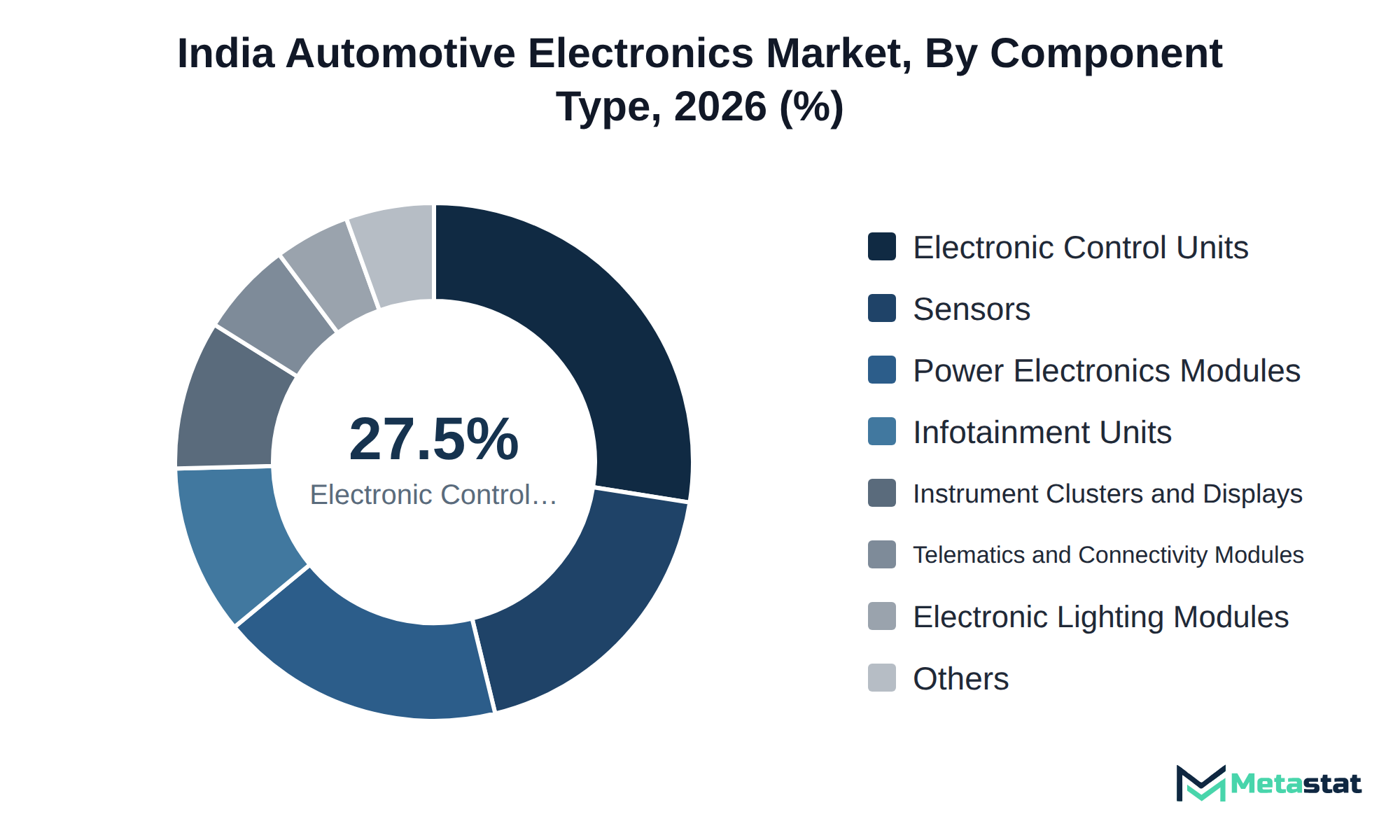
Electronic Control Units segment is valued at USD 3.4 billion in 2026 and is projected to reach USD 4.7 billion by 2033, at a CAGR of 4.5% during the forecast period. These units manage various systems including powertrain, infotainment, and driver assistance features. Key buyers include automotive manufacturers focusing on enhancing vehicle performance and consumer experience. Increased demand for advanced functionalities and automation drives growth in this segment. Compared to other components like sensors, which experience a higher CAGR of 5.7%, the Electronic Control Units segment exhibits steadier growth. This difference highlights the ongoing evolution within the automotive sector, where technological advancements shape consumer preferences and automotive design priorities, promoting a shift towards more intelligent and interconnected vehicles. The market reflects a broadening uptake of these technologies, aligning with advancements in electric and autonomous vehicles.
Sensors enhance vehicle safety, performance, and driver experience, finding applications across various vehicle types, including passenger cars and two-wheelers. Key drivers of growth include increasing demand for advanced safety features and the rise of connected vehicle technologies. Compared to other component types, the sensors segment experiences faster growth driven by the integration of technologies including Advanced Driver Assistance Systems (ADAS). While the Power Electronics Modules segment focuses primarily on energy management, sensors facilitate real-time data processing and monitoring, making them indispensable for contemporary automotive applications. The evolving automotive landscape, characterized by heightened safety standards, accelerates the demand for sophisticated sensor technologies.
Power Electronics Modules segment is expected to reach USD 4 billion by 2033. These modules manage power distribution and conversion in various vehicle types, including passenger cars, two-wheelers, and commercial vehicles. Adoption is influenced by growing demand for energy efficiency and electrification in the automotive sector. The increasing focus on hybrid and electric vehicles drives this segment's growth, reflected in a compound annual growth rate (CAGR) of 12.7% for Hybrid Electric Vehicles. This segment has higher growth potential compared to others, including Electronic Control Units, which have a CAGR of 4.5%. Technological advancements in power electronics enhance functionality and reduce weight, making vehicles more energy-efficient. The need for improved power management systems in modern vehicles further supports demand, contributing to the overall expansion of the India Automotive Electronics market.
Infotainment Units segment is projected to grow at a CAGR of 3% during the forecast period. These units enhance the user experience by providing entertainment, navigation, and connectivity features, appealing primarily to consumers seeking modern amenities in their vehicles. The rise in demand for infotainment systems is driven by advancements in connectivity technologies, including Bluetooth and smartphone integration, which attract tech-savvy buyers. This segment exhibits slower growth compared to others, with the Sensors segment showing a higher CAGR of 5.7%. The price and complexity of infotainment units often position them at a premium in the market. Continuing to innovate and integrate features, including voice recognition and advanced user interfaces, is essential to maintain competitiveness. Integration of infotainment systems into electric and hybrid vehicles aligns with consumer preferences for smart technology, further influencing demand dynamics.
Instrument clusters and displays provide vital interfaces in vehicles, delivering drivers essential information regarding speed, fuel levels, navigation, and other performance metrics. Automotive manufacturers apply these components to enhance user experience and safety, appealing primarily to consumers of passenger cars and light commercial vehicles. Demand for advanced features, including digital displays and connectivity options, drives growth in this segment. Enhanced consumer expectations regarding vehicle aesthetics and functionality necessitate ongoing innovation in automotive display systems. Compared to other components, this segment experiences varied growth rates due to integration with emerging technologies, including advanced driver assistance systems and infotainment units that require sophisticated visual interfaces. The market continues to evolve alongside trends in vehicle electrification and digitalization, which influence the design and functionality of instrument clusters and displays.
Telematics and Connectivity Modules involve systems that enable vehicles to communicate with external networks, enhancing features including navigation, vehicle tracking, and emergency services. These modules serve a diverse range of buyers, including automotive manufacturers focusing on connected car technologies and fleet management companies seeking real-time data. Demand for these modules experiences upward pressure due to increasing consumer expectations for connectivity and smart technology features in vehicles. This segment distinguishes itself from others, including Electronic Control Units, by prioritizing integration with cloud services and mobile applications. While Electronic Control Units experience steady growth, Telematics and Connectivity Modules benefit from rapid advancements in communication technology, driving increased adoption among consumers and manufacturers alike.
Electronic Lighting Modules enhance vehicle visibility and safety through advanced lighting systems, catering to the growing demand for innovative automotive solutions. These modules find extensive use in passenger cars and commercial vehicles, ensuring compliance with safety regulations and consumer expectations. A significant driver for this segment stems from the increasing regulatory focus on vehicle safety standards, necessitating the integration of high-quality lighting solutions. Advancements in automotive LED lighting technology lead to improved energy efficiency and longer lifespans, attracting manufacturers seeking to enhance vehicle performance while reducing operational costs. Growth in Electronic Lighting Modules reflects a steady pace influenced by evolving safety requirements and technology improvements rather than rapid market shifts. The market is expected to experience sustained interest from both consumers and manufacturers, emphasizing a commitment to safer and more efficient vehicles.
Electronic Ignition Modules serve a critical role in enhancing engine performance and ensuring reliable ignition in vehicles. These components are widely used in internal combustion engine vehicles, where precise ignition timing is essential for optimal fuel efficiency and reduced emissions. The shift towards stricter emission regulations drives demand for more efficient ignition systems, compelling manufacturers to adopt advanced technologies. In comparison to other components including Sensors and Electronic Control Units, Electronic Ignition Modules exhibit slower growth rates due to the dominance of established technologies and lower investment levels in innovation. The emphasis on cost-effective solutions further differentiates this segment, positioning it uniquely within the India Automotive Electronics market, which is shifting towards more integrated and advanced automotive solutions.
Electronic Interface Modules and Electronic Actuator Assemblies enable communication between electronic components in a vehicle and manage actuator functions. Automotive manufacturers, suppliers, and technology developers use these modules to enhance vehicle performance and efficiency. Demand for this segment is driven by the increasing complexity of vehicle electronics and the need for improved functionality in modern vehicles. Innovations in electric and hybrid vehicles necessitate the adoption of advanced electronic interfaces, which differentiates this segment from others in the group, particularly since it caters to specific high-tech applications. The unique requirements of this segment lead to different pricing structures compared to more general electronic components, reflecting its specialized nature. The India Automotive Electronics market continues to evolve, with this segment contributing to overall growth through technological advancements and heightened consumer expectations.
This segment primarily includes vehicles designed for personal transportation, widely adopted by individual consumers and families. The growing consumer preference for comfort, safety features, and advanced technology in vehicles drives demand within this segment. In comparison to other vehicle types, including Two-Wheelers and Three-Wheelers, the Passenger Cars segment exhibits a relatively higher growth rate. This expansion reflects increasing economic stability and rising disposable income among consumers in India. The ongoing trend toward electric and hybrid vehicles influences the segment, aligning with broader shifts in the India Automotive Electronics market driven by sustainability and innovation.
Two-Wheelers segment is estimated to reach USD 3.5 billion by 2033, at a CAGR of 6% during the forecast period. This segment includes motorcycles and scooters, widely used for personal transportation in urban and rural areas across India. The increasing demand for fuel-efficient and affordable mobility solutions drives growth, particularly among young consumers and urban commuters. Rising disposable incomes support the transition from public transport to personal two-wheelers. Compared to other vehicle segments, the Two-Wheelers segment exhibits faster growth, driven by higher adoption rates and lower price points, catering to a diverse buyer demographic. The market for two-wheelers continues to expand, reflecting a shift towards more compact and efficient transportation solutions aligned with the preferences of the modern consumer. In the India Automotive Electronics market, the demand for innovative electronics in this segment supports advancements in safety, connectivity, and entertainment features.
The Three-Wheelers segment is expected to reach USD 0.6 billion by 2033. This segment primarily serves urban transportation needs, often used by small businesses for goods delivery and by individuals for commuting. The growing urban population in India drives demand for efficient and affordable transportation solutions. With a CAGR of 1.2% from 2026 to 2033, growth in this segment remains slower compared to others in the vehicle category, including Two-Wheelers, which experiences a CAGR of 6%. Increasing adoption of electric three-wheelers presents a significant opportunity, aligning with governmental initiatives promoting green mobility. Investment in electric powertrains and associated electronics continues to rise, reflecting the trend toward sustainability. The India Automotive Electronics market sees the Three-Wheelers segment evolving, with advancements in technology enhancing performance and efficiency.
Light Commercial Vehicles segment is projected to grow at a CAGR of 4% during the forecast period. These vehicles typically serve commercial purposes, including delivery and transportation services, appealing to businesses requiring efficient logistics solutions. Increasing urbanization and demand for last-mile delivery services drive this segment's growth. This segment experiences slower growth compared to passenger cars, which are projected to grow at a CAGR of 5.6%. The differentiation arises from Light Commercial Vehicles being used in commercial operations that require specialized configurations and features to enhance practicality and efficiency. The adoption of advanced safety systems and connectivity features is essential to improve operational effectiveness, reflecting a significant opportunity in the market. A focus on integrating technology further supports the evolving nature of commercial transport solutions.
Medium and Heavy Commercial Vehicles incorporate advanced automotive electronics that enhance operational efficiency and performance. These vehicles serve industries including freight transport and logistics, requiring robust electronic systems for management and control. Demand for this segment is driven by increasing urbanization, which necessitates efficient goods transportation. Enhancements in technology, including telematics and connectivity, facilitate real-time monitoring and data collection, improving fleet management. Compared to other vehicle types, Medium and Heavy Commercial Vehicles often exhibit slower growth rates due to higher initial investments and regulatory compliance costs. The India Automotive Electronics market reflects a growing focus on durability and reliability in electronic components, ensuring they meet the rigorous demands of heavy-duty applications. Suppliers concentrate on developing specialized solutions tailored for this segment, addressing the specific requirements of commercial operators.
Off-Highway Vehicles encompass a category of vehicles designed for use in activities including construction, mining, and agricultural operations. These vehicles require advanced electronic systems to enhance performance, safety, and operational efficiency. Industries that rely on off-highway vehicles depend on reliable electronic components to manage complex operations and ensure safety in challenging environments. The segment experiences growth driven by increased infrastructure development and the need for efficient machinery in various sectors. These vehicles have distinct electronic requirements compared to passenger cars and commercial vehicles, leading to a different pricing structure and demand dynamics. Off-highway vehicles face unique challenges related to harsh operating conditions, influencing the adoption of specialized automotive electronics. The India Automotive Electronics market continues to evolve, reflecting the specific needs and applications of off-highway vehicles.
Powertrain and Energy Management segment is valued at USD 3.8 billion in 2026 and is projected to reach USD 5.6 billion by 2033, at a CAGR of 5.7% during the forecast period. This segment focuses on optimizing vehicle performance and efficiency through advanced technologies that manage energy usage. Automotive manufacturers apply these systems to enhance fuel efficiency and reduce emissions, driven by regulatory pressures for cleaner vehicles. The growing emphasis on sustainability drives demand for electric and hybrid vehicle systems, contributing to the strong growth anticipated in this segment. Compared to other applications, Powertrain and Energy Management experiences a moderate growth rate influenced by the increasing integration of electric propulsion technologies. This segment's emphasis on energy efficiency and performance distinguishes it from others, including Advanced Driver Assistance Systems, which is projected to grow at a faster CAGR of 9.6%. The India Automotive Electronics market reflects these trends, with increasing investments aimed at enhancing vehicle capabilities.
These systems enhance vehicle safety and functionality through features including adaptive cruise control, lane-keeping assist, and automatic emergency braking. Demand primarily arises from automotive manufacturers aiming to meet safety regulations and consumer expectations for enhanced driving experiences. The segment's rapid growth is driven by increasing awareness of road safety and the ongoing push towards autonomous driving technologies. Unlike other segments, including Powertrain and Energy Management, which have a CAGR of 5.7%, Advanced Driver Assistance Systems experiences significantly faster growth due to heightened investments in safety technologies. The market continues to evolve, reflecting a shift towards more sophisticated electronic systems that integrate into modern vehicles.
Passive Safety Systems segment is expected to reach USD 1.4 billion by 2033. This segment encompasses features designed to enhance occupant safety during vehicle collisions, including airbags and seatbelt systems. Manufacturers focus on integrating advanced technologies to improve performance and reliability, catering to a diverse range of vehicle types. The growing emphasis on passenger safety regulations and standards drives demand for these systems. Passive Safety Systems differ from other automotive electronics applications due to their critical role in ensuring safety, which significantly influences purchasing decisions. While adoption rates are robust, the segment's growth rate experiences fluctuations tied to advancements in active safety technologies, emphasizing proactive measures to prevent accidents. The projected CAGR of 5.7% reflects the increasing prioritization of safety features in the India Automotive Electronics market.
Chassis and Vehicle Dynamics segment is projected to grow at a CAGR of 3.4% during the forecast period. This segment focuses on enhancing vehicle handling, stability, and comfort through advanced electronic systems. Primarily used in passenger cars and commercial vehicles, these systems are critical for maintaining optimal performance during various driving conditions. Increasing demand for safer and more efficient vehicles drives innovation in this segment. The integration of advanced algorithms and real-time data processing distinguishes this segment from others, including Powertrain and Energy Management, which have different growth trajectories. While the Powertrain segment grows at a faster CAGR of 5.7%, Chassis and Vehicle Dynamics emphasizes safety and comfort, appealing to manufacturers focused on consumer satisfaction. This focus on electronic solutions aligns with broader trends in the India Automotive Electronics market, reflecting a shift towards enhanced driver experience and vehicle performance.
Body and Comfort Electronics encompasses various electronic systems that enhance the passenger experience and operational comfort in vehicles. This segment caters to automakers focusing on luxury features and user-friendly interfaces, appealing mainly to consumers seeking advanced comfort and convenience. Growing consumer preferences for advanced infotainment capabilities and enhanced cabin comfort drive demand in this segment. The market prioritizes user experience, differentiating Body and Comfort Electronics from other segments that emphasize performance and safety features. Technological advancements in touchscreen displays, connectivity solutions, and climate control systems significantly shape this segment's evolution, aligning with broader trends in the India Automotive Electronics market.
Infotainment and Driver Information encompasses systems that provide entertainment and essential information to drivers. These systems serve various functions, including navigation, audio control, and communication features, making them integral to modern automotive experiences. Demand for these systems is driven by increasing consumer expectations for connectivity and multimedia capabilities in vehicles. This sub-segment distinguishes itself from others by focusing on enhancing user experience and convenience, reflecting a shift in consumer priorities toward digital integration. Given the rapid advancements in technology, the market is expected to experience continued innovation in infotainment solutions, leading to higher demand from both manufacturers and consumers. Competition in this segment intensifies as automakers aim to differentiate their offerings through state-of-the-art infotainment features and user-friendly interfaces.
Vehicle Connectivity and Telematics involves systems that provide real-time information and connectivity for vehicles, enhancing user experience and operational efficiency. This segment serves automotive manufacturers and consumers by integrating connectivity features that enable navigation, communication, and data sharing. Increasing demand for enhanced safety features and the proliferation of smart devices drive growth within this segment. Compared to other application segments, Vehicle Connectivity and Telematics stands out as focusing on data analytics and user interaction, responding to the evolving expectations of tech-savvy consumers. Adoption barriers include cybersecurity concerns and the complexity of integrating these systems with existing vehicle architectures. The India Automotive Electronics market benefits from these advancements, facilitating significant investment in innovative solutions that enhance driving experiences.
Lighting Control involves systems designed to manage vehicle lighting effectively, ensuring optimal visibility and safety during driving conditions. This segment focuses on integrating advanced technologies into lighting systems, allowing vehicles to adapt to varying environmental conditions. Manufacturers in the India Automotive Electronics market use these systems to improve user experience, particularly for passenger cars and two-wheelers. The rising demand for energy-efficient lighting solutions drives innovation, with increasing consumer awareness of safety standards influencing purchasing decisions. Compared to other applications, Lighting Control experiences steady growth due to its essential function in vehicle safety while facing challenges from alternative technologies. Pricing strategies in this segment reflect the need for balance between affordability and advanced features, differentiating it from higher-growth segments including Advanced Driver Assistance Systems. Overall, the segment enhances vehicle functionality and safety.
Internal Combustion Engine Vehicles segment is valued at USD 9.6 billion in 2026 and is projected to reach USD 10.4 billion by 2033, at a CAGR of 1.2% during the forecast period. This segment primarily supports traditional automotive users who rely on gasoline and diesel engines for transportation. Demand derives from the widespread adoption of these vehicles, driven by established infrastructure and consumer preference for familiarity in performance and operation. Compared to the other propulsion types, this segment exhibits slower growth due to the increasing shift towards hybrid and electric vehicles, which capture a higher growth rate of 12.7% in the same period. The market for Internal Combustion Engine Vehicles remains significant, while competitive pressures from cleaner technologies influence pricing strategies and long-term demand forecasts. The India Automotive Electronics market reflects these dynamics as consumers and manufacturers adapt to evolving trends in propulsion technology.
This segment combines internal combustion engines and electric propulsion systems, appealing to consumers seeking improved fuel efficiency and reduced emissions. Increasing environmental regulations and a shift towards sustainable transportation drive the demand for this segment, attracting both manufacturers and buyers focused on eco-friendly options. Hybrid Electric Vehicles exhibit faster growth compared to Internal Combustion Engine Vehicles, with a CAGR of 12.7% contrasted against 1.2%. The higher price point associated with hybrid technology distinguishes it from conventional vehicles, influencing market dynamics and consumer purchasing decisions. The market continues to evolve, driven by technological advancements and an expanding array of hybrid models that cater to diverse consumer preferences.
Battery Electric Vehicles segment is expected to reach USD 5.1 billion by 2033. These vehicles rely on electric motors powered by rechargeable batteries, serving consumers seeking sustainable transportation options. The segment experiences significant growth driven by increasing government support and incentives promoting electric mobility. Higher environmental awareness among consumers drives demand, particularly in urban areas. In comparison to Internal Combustion Engine Vehicles, the Battery Electric Vehicles segment exhibits a faster growth rate, supported by a CAGR of 12.7%. While manufacturers focus on enhancing battery technology and charging infrastructure, the market anticipates a shift in buyer preferences toward more efficient and eco-friendly transportation solutions, aligning with broader trends in the India Automotive Electronics market.
Fuel Cell Electric Vehicles segment is projected to grow at a CAGR of 31.3% during the forecast period. These vehicles rely on hydrogen fuel cells to generate electricity, appealing to environmentally conscious consumers and government initiatives aimed at reducing emissions. The emphasis on sustainability drives investments in this segment, with manufacturers focusing on innovation and efficiency. Compared to Internal Combustion Engine Vehicles, which show slower growth with a CAGR of 1.2%, Fuel Cell Electric Vehicles experience heightened demand due to increasing regulatory support and technological advancements. This segment distinguishes itself with a faster growth trajectory, targeting buyers interested in advanced technology and sustainable transportation solutions. The market benefits from enhanced research and development efforts to improve fuel cell efficiency and reduce costs, thereby supporting broader adoption.
Competition in the India Automotive Electronics market centers around various factors that influence buyer decisions, including price, certification, customization, and service. Companies focus on creating ecosystems that deliver integrated solutions, enhancing value for customers while differentiating their offerings.
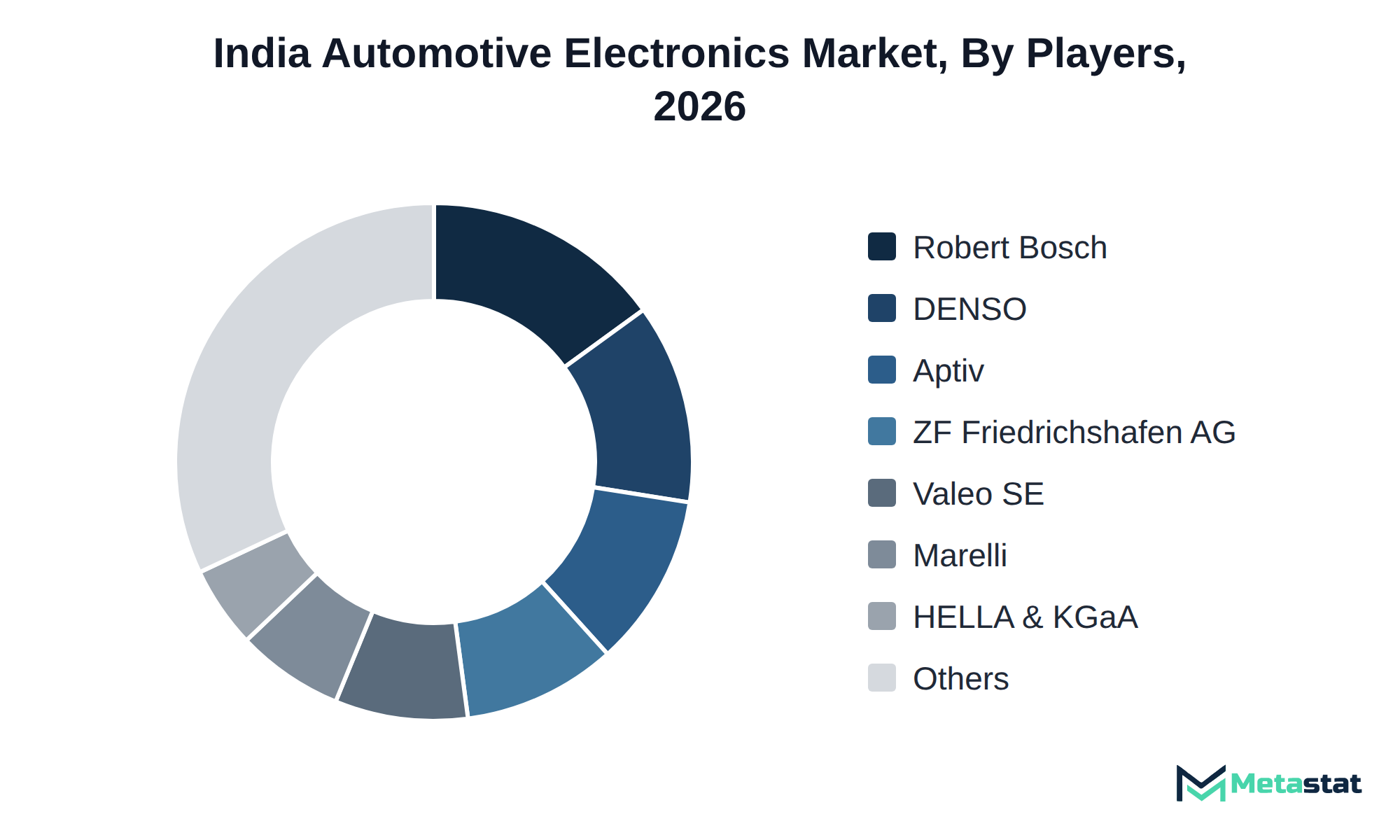
Robert Bosch GmbH emphasizes innovation through advanced driver assistance systems and infotainment units. DENSO Corporation targets powertrain efficiency and energy management systems, driven by rising demand for electric vehicle components. Valeo SE concentrates on lighting control and safety systems, enhancing vehicle performance while addressing regulatory requirements.
Companies like Aptiv PLC and ZF Friedrichshafen AG draw on their expertise in electronic control units and sensors to capture market share in emerging vehicle categories. Players including Marelli Holdings Co., Ltd. and Visteon Corporation focus on infotainment and telematics, catering to a growing need for connectivity and driver information solutions.
Achieving this growth hinges on several key developments within the India Automotive Electronics market. Growing passenger car adoption, driven by technological advancements, will increase market size. The forecast anticipates a rise in Electronic Control Units, which are essential for various vehicle functionalities, contributing to an estimated USD 4.7 billion by 2033. Advancements in Advanced Driver Assistance Systems, with projected expansion to USD 3.3 billion, will enhance safety and performance in vehicles, further propelling demand.
Risks including potential supply chain disruptions could impede market growth. Supply chain challenges, particularly for critical components like sensors and power electronics modules, delay production and increase costs. These constraints limit the market's ability to reach its projected size. Continuous investment in infrastructure and supply chain resilience will be crucial for the market to navigate these challenges and maintain its growth trajectory.
By Component Type: Electronic Control Units, Sensors, Power Electronics Modules, Infotainment Units, Instrument Clusters and Displays, Telematics and Connectivity Modules, Electronic Lighting Modules, Electronic Ignition Modules, Others (Electronic Interface Modules, Electronic Actuator Assemblies)
By Vehicle Type: Passenger Cars, Two-Wheelers, Three-Wheelers, Light Commercial Vehicles, Medium and Heavy Commercial Vehicles, Off-Highway Vehicles
By Application: Powertrain and Energy Management, Advanced Driver Assistance Systems, Passive Safety Systems, Chassis and Vehicle Dynamics, Body and Comfort Electronics, Infotainment and Driver Information, Vehicle Connectivity and Telematics, Lighting Control
By Propulsion Type: Internal Combustion Engine Vehicles, Hybrid Electric Vehicles, Battery Electric Vehicles, Fuel Cell Electric Vehicles
The report strategically identifies and profiles the key market players and analyses their core competencies in each sub-segment of the Automotive Electronics market.
Report Attributes | Details |
Study Period | 2021-2033 |
Base Year | 2025 |
Estimated Year | 2026 |
Forecast Period | 2026-2033 |
Historical Period | 2021-2025 |
Growth Rate | CAGR 5.3% from 2026 to 2033 |
Revenue Unit | USD billion |
Segmentation | By Component Type, Vehicle Type, Application, Propulsion Type, and Region |
Find answers to common questions about this report
The Automotive Electronics market size was valued at USD 11.8 billion in 2025.
The market is projected to grow at a CAGR of 5.3% during the forecast period from 2026 to 2033.
The leading segment in the Automotive Electronics market is Passenger Cars, with a projected value of USD 10.7 billion by 2033. This segment outpaces others in terms of revenue generation within the market.
Growing environmental awareness and governmental incentives drive the shift toward electric vehicles. The integration of Advanced Driver Assistance Systems (ADAS) enhances vehicle safety and performance, significantly influencing consumer purchasing decisions.
The rising costs of key components restrict the willingness of automotive manufacturers to invest in advanced electronics systems. This challenge leads to slower adoption rates in segments like passenger cars and two-wheelers, affecting overall market growth.
Growing environmental awareness and governmental incentives drive the shift toward electric vehicles in India. the rise in hybrid vehicle adoption aligns with manufacturers' efforts to meet evolving market needs, presenting significant opportunities for investment and growth in the automotive electronics sector.
The Automotive Electronics market is estimated to reach a valuation of USD 17.8 billion by 2033.
Key players operating in the Automotive Electronics market include Robert Bosch GmbH, DENSO Corporation, ZF Friedrichshafen AG, Aptiv PLC, Valeo SE, HELLA GmbH & Co. KGaA, Marelli Holdings Co., Ltd., and Visteon Corporation.
The hybrid electric vehicles segment is projected to achieve a compound annual growth rate of 12.7%, highlighting a strong demand for efficient energy management solutions.
The electronic control units segment is anticipated to reach a value of USD 4.7 billion by 2033, reflecting the increasing demand for advanced automotive electronics.
The analysts below cover Automotive and Transportation research at Metastat Insights.
LEAD ANALYST
Utkarsh Khirodkar is a Lead Market Research Analyst at MetaStat Insight, specializing in market intelligence, technology sector assessments, and competitive strategy.

ENERGY & INFRASTRUCTURE INDUSTRY CONSULTANT
Automotive and Transportation · Electronics and Semiconductor · Energy and Power · Machinery & Equipment
Saurabh Vasant Ganvir consults for Energy & Infrastructure Industry at MetaStat Insight, specializing in renewable energy, solar EPC, and electric vehicle (EV) infrastructure markets.
Our team was tracking whether regional recycling infrastructure could realistically absorb the growing volume of lithium iron phosphate batteries over the next decade. The report did a solid job separating announced hydrometallurgical plant capacity from active, permitted operational throughput. That distinction made the feedstock availability projections and regional recovery rate models far more credible than standard commercial overviews.
Tracking capacity expansion in single-use bioprocessing requires dependable data on raw material availability and cleanroom-grade polymer supply chains. The competitive landscape chapter gave a grounded evaluation of secondary component suppliers across North America and Asia-Pacific rather than simply reprinting press releases. Having that level of supplier benchmarking helped clarify dual-sourcing considerations for our clinical pipeline planning.
When evaluating distributed energy resource management systems, standard research summaries tend to gloss over the operational differences between front-of-the-meter utility deployments and behind-the-meter industrial sites. The MetaStat Insight report addressed those distinctions directly, especially regarding software interoperability standards and grid interconnection backlogs. The five-year market sizing across regional transmission organizations provided actionable context for our grid modernization strategy.
Explore related market intelligence reports worth reading alongside this one.