
LEAD ANALYST
Utkarsh Khirodkar is a Lead Market Research Analyst at MetaStat Insight, specializing in market intelligence, technology sector assessments, and competitive strategy.

Global Airline Ancillary Services Market Size, Share, By Service Type (Loyalty and Co-Branded Card Revenue, Baggage Services, Seat Selection and Paid Upgrades, Food and Beverages, Third-Party Travel Commissions, Priority Services and Lounge Access, In-Flight Connectivity and Entertainment, Onboard Retail and Advertising), By Airline Type (Full-Service Carriers and Low-Cost Carriers), By Sales Channel (Airline Websites and Mobile Apps, Loyalty and Co-Brand Partners, Airport and Onboard Sales, Travel Agencies and Intermediaries), By Travel Type (Domestic and International), Industry Analysis, Growth, Trends, and Forecast, 2026-2033
Report ID
MSI-5650
Published
October, 2026
Pages
260 Pages
Format
Historical
Base year
Forecast
Forecast period
Report Details
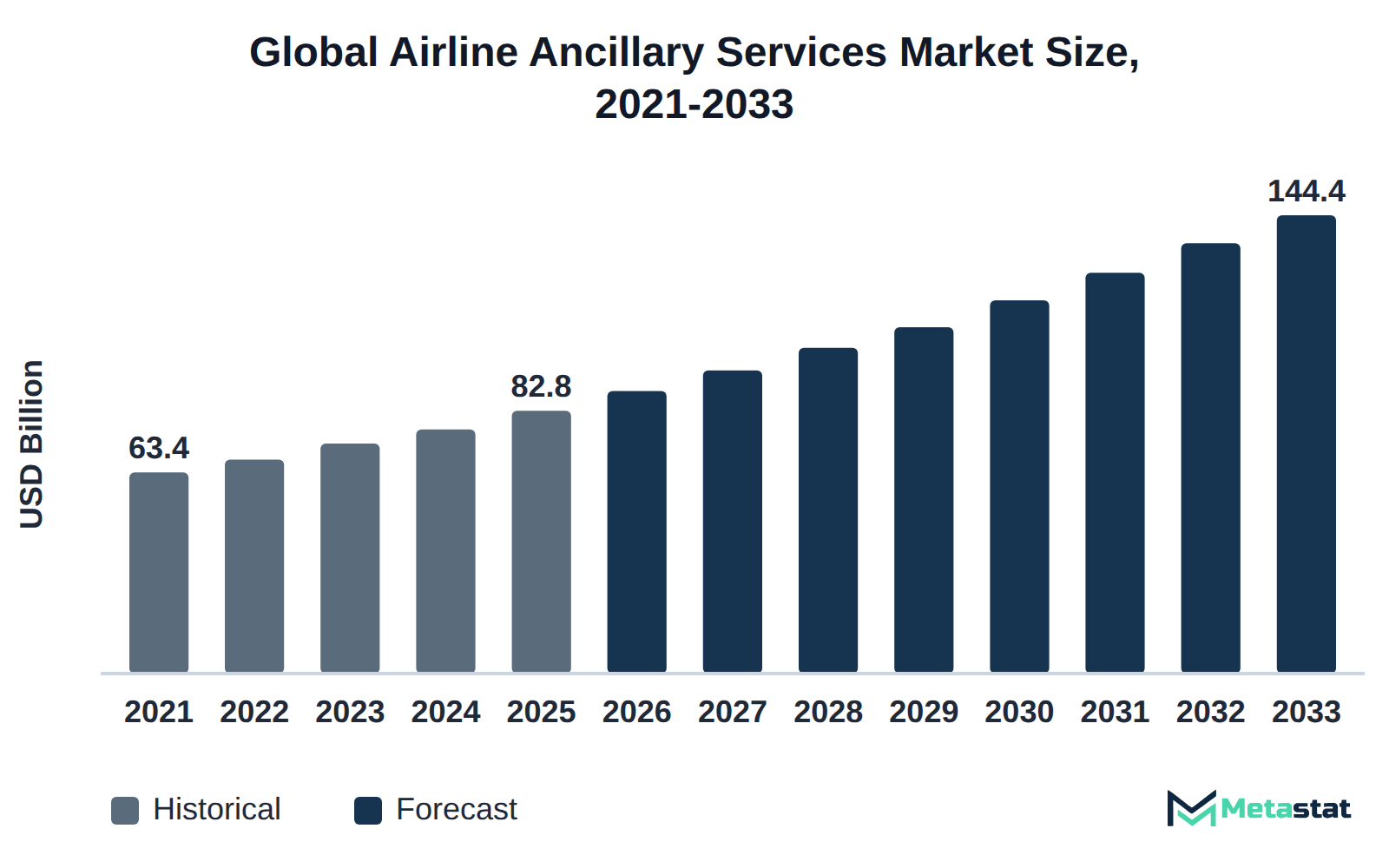
Market Valuation: Valued at $82.8 Billion in 2025, projected to reach $144.4 Billion by 2033 at a 7.2% CAGR.
Dominant Segment: Loyalty and Co-Branded Card Revenue leads the market, driven by strong consumer interest in rewards programs that enhance travel experiences. This segment is projected to grow significantly, reflecting airlines' focus on customer retention.
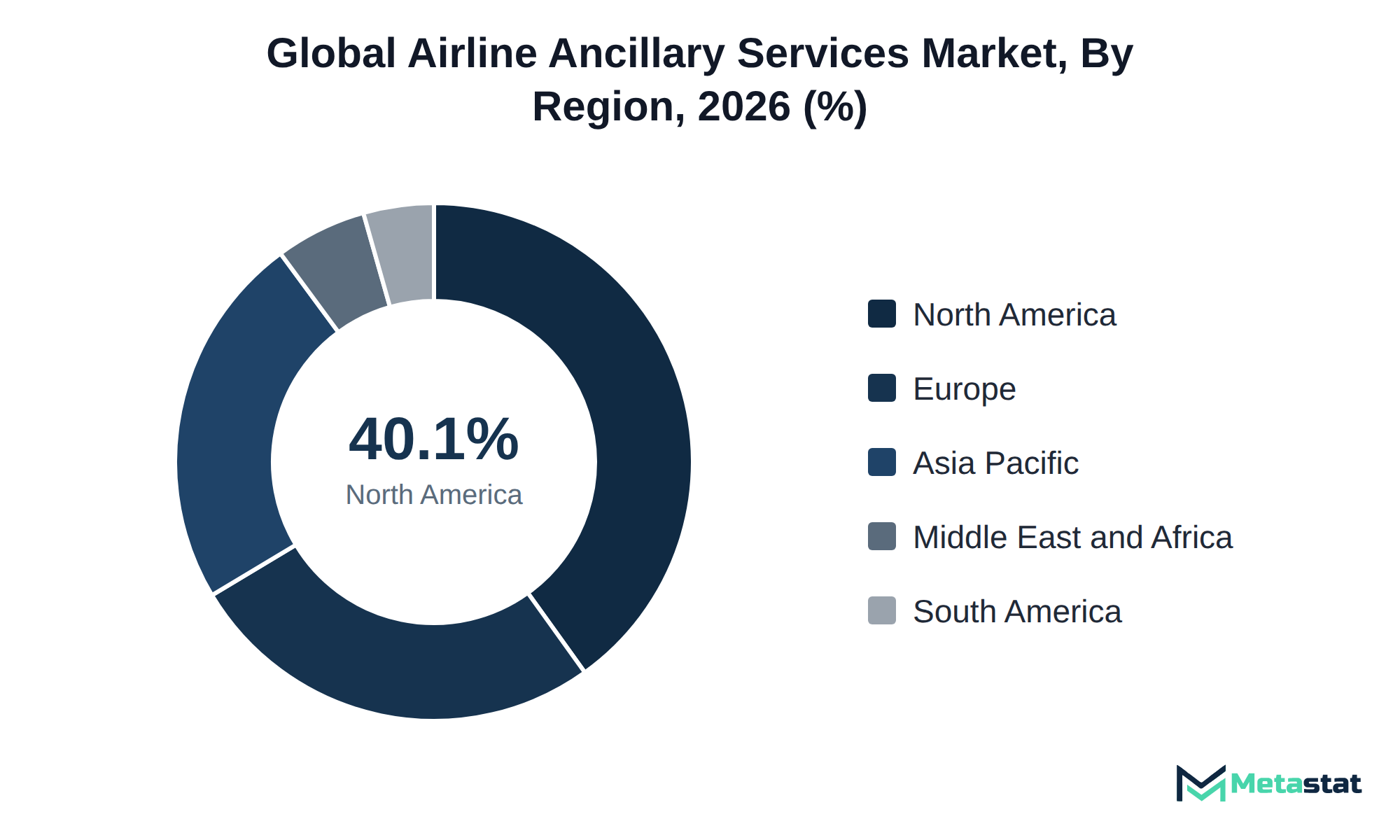
Geographic Lead: North America is the leading region, holding 40.1% of the market share in 2025, with the US expected to maintain its dominance due to a mature airline infrastructure and high consumer demand for ancillary services.
What's Inside: The report offers a comprehensive analysis of the Airline Ancillary Services market, including competitive coverage, detailed segment breakdowns by service type, airline type, sales channel, and travel type, along with growth forecasts from 2026 to 2033.
Emerging Trends: The integration of mobile merchandising is enhancing ancillary sales opportunities, with projected revenue from airline websites and mobile apps expected to grow significantly, showcasing the industry's shift towards digital engagement.
Market Dynamics: Rising passenger traffic and increasing demand for personalized travel experiences are driving growth across various service segments, particularly among low-cost carriers that capitalize on ancillary offerings to boost profitability.
Choose Your License
Global Airline Ancillary Services Market
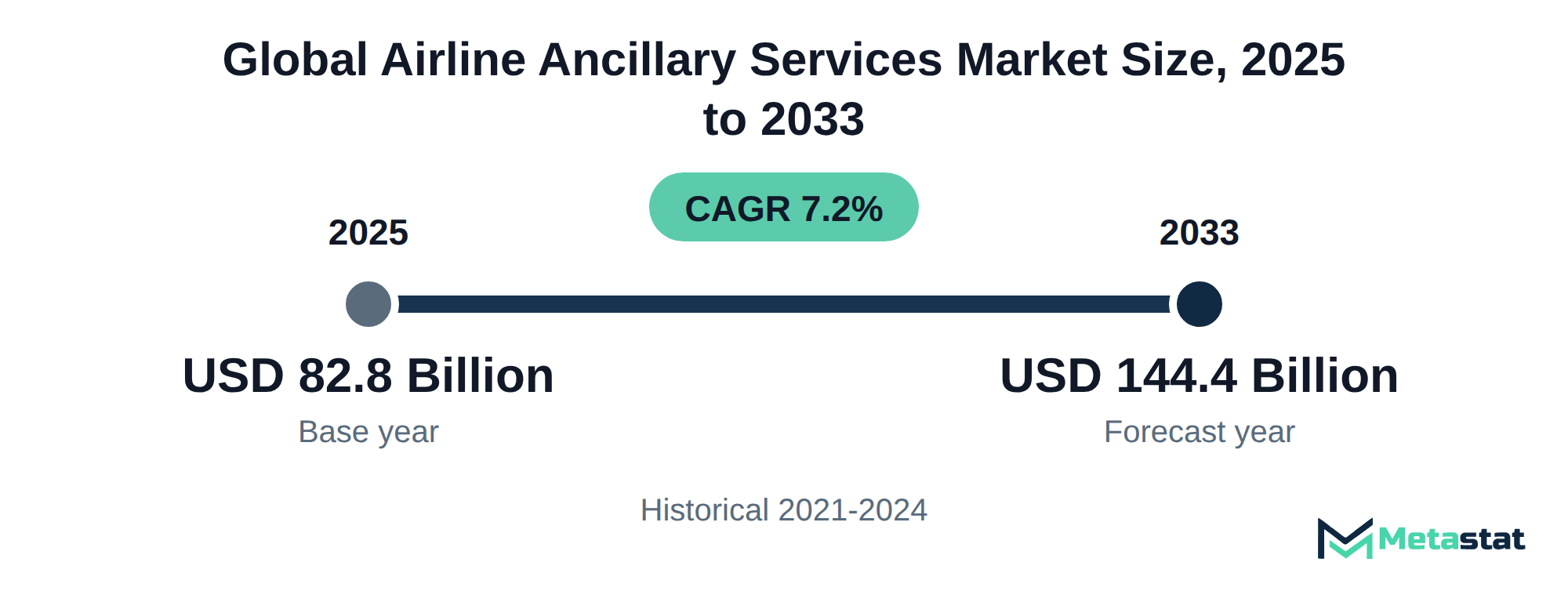
The global Airline Ancillary Services market was valued at USD 82.8 billion in 2025 and is projected to reach USD 144.4 billion by 2033, growing at a CAGR of 7.2% over the forecast period.
The Airline Ancillary Services market covers the additional services airlines offer to enhance the passenger experience and generate revenue beyond ticket sales. Buyers invest in these services to improve travel comfort, convenience, and personalization. Key service types include loyalty programs, baggage services, and in-flight amenities, which cater to a growing consumer demand for enhanced travel experiences. This trend reflects an increasing focus on customer satisfaction and competitive differentiation among airlines.
Several factors drive growth in the market, and the expansion of low-cost carriers is among the most significant. These airlines increasingly offer ancillary services to enhance profitability and customer engagement. In terms of value, loyalty and co-branded card revenue emerges as the largest segment, indicating strong consumer interest in rewards and perks linked to travel. North America holds 40.1% of the market in 2025, with the US leading in 2026. This regional dominance highlights the concentrated consumer base and established airline infrastructure in the area.
Globally, the market is projected to experience growth, driven largely by an increase in air travel and the need for airlines to diversify revenue streams. Low-cost carriers, in particular, capitalize on this trend by providing a variety of optional services that cater to budget-conscious travelers, the core customer base for low-cost travel. The market's future performance is expected to reflect ongoing shifts in consumer preferences and airline strategies to maximize revenue opportunities across various service channels.
The Airline Ancillary Services market attracts significant spending due to the increasing demand for enhanced passenger experiences and the drive for additional revenue streams. Airlines use loyalty programs, baggage services, and in-flight amenities to meet diverse customer preferences. Rising disposable income and travel frequency further support consumer willingness to spend on these ancillary services, giving airlines a profitable revenue opportunity.
Growth in the market is primarily driven by the expansion of low-cost carriers, which continue to gain traction among price-sensitive travelers. Low-cost carriers have rapidly adopted various ancillary service offerings, enabling them to diversify their revenue base while maintaining competitive ticket pricing. Among the service segments, Loyalty and Co-Branded Card Revenue stands out with considerable value, reflecting the substantial investment airlines make in customer retention strategies.
North America accounts for a significant share of the market in 2025, benefiting from a mature airline infrastructure and a high demand for ancillary service options. While Europe and Asia Pacific follow with shares of 26.3% and 23.5%, respectively, the competitive landscape within these regions encourages innovation, enhancing the overall appeal of the Airline Ancillary Services market.
The integration of seat selection and baggage bundles significantly influences revenue per passenger in the Airline Ancillary Services market. This trend reflects a shift toward personalized travel experiences, where passengers prioritize convenience and comfort. Revenue from seat selection and paid upgrades is projected to reach USD 32.4 billion by 2033. This increase reflects growing passenger acceptance of bundled services, which improve the travel experience and raise airline profitability.
Airlines optimize package offerings, allowing customers to choose tailored combinations of seat selection and baggage services. This approach appeals to leisure travelers, who prioritize flexibility during their booking process. Airlines deploying these strategies effectively create a competitive advantage, influencing customer loyalty and repeat business.
The expansion in revenue generated from these bundled services strengthens airlines' financial positions, driving further investment in technology and service enhancements. With rising competition, airlines that embrace innovative bundling strategies are expected to increase market share in the Airline Ancillary Services market.
Co-branded credit cards represent a significant revenue source for airlines, enhancing the effectiveness of loyalty programs. In the Airline Ancillary Services market, revenue from loyalty and co-branded card offerings is projected to rise from USD 27.8 billion in 2026 to USD 43.7 billion by 2033, reflecting a compound annual growth rate (CAGR) of 6.7%. This growth indicates strong demand for integrated financial products that link consumer spending with airline rewards.
Airlines typically partner with financial institutions to offer these credit cards, creating a win-win scenario. Consumers benefit from earning airline miles on their everyday purchases, while airlines capitalize on increased customer engagement and spending. Pricing models for co-branded credit cards vary, often incorporating annual fees along with benefits including bonus miles upon sign-up or specific spending thresholds. Contract structures typically involve revenue-sharing agreements, allowing airlines to capture a portion of the transaction fees generated through card usage.
The increasing adoption of these financial products strengthens customer loyalty and enhances overall revenue streams. Airlines that tie loyalty programs to co-branded credit cards strengthen their competitive position, supporting sustained growth and profitability.
The integration of mobile merchandising into airline operations significantly enhances ancillary sales opportunities beyond the initial booking phase. This approach allows airlines to engage customers throughout their journey, from pre-flight to post-flight experiences. Revenue from airline websites and mobile apps is projected to increase from USD 40.3 billion in 2026 to USD 73.4 billion by 2033, reflecting a compound annual growth rate of 8.9%. This growth demonstrates the increasing reliance of airlines on digital platforms to facilitate ancillary sales.
Mobile merchandising enables airlines to offer a variety of ancillary services, including seat upgrades and in-flight purchases, tailored to individual passenger preferences. Airlines apply big data analytics to identify customer behaviors and preferences, driving personalized offers that connect with travelers. This strategy enhances customer satisfaction and boosts overall revenue streams within the Airline Ancillary Services market.
The shift towards mobile platforms aligns with evolving consumer expectations for convenience and accessibility. Passengers increasingly use mobile devices to manage their travel arrangements, creating a compelling opportunity for airlines to capitalize on this trend. Airlines that refine their mobile merchandising strategies can capture a larger share of ancillary spending, improving both profitability and customer loyalty.
Airlines can grow ancillary revenue without compromising fare transparency by building loyalty and co-branded card revenue. Such growth signals increasing consumer interest in loyalty programs that provide additional value beyond standard fares.
By offering incentives for customers to use co-branded credit cards, airlines build customer loyalty and create a steady revenue stream. This strategy aligns with broader trends observed within the Airline Ancillary Services market, where targeted marketing and strategic partnerships contribute to heightened consumer engagement. The integration of loyalty programs into the purchase process enhances the overall customer experience while simultaneously increasing revenue opportunities for airlines.
Ultimately, successful implementation of these strategies improves financial performance without sacrificing the transparency that travelers increasingly expect. By focusing on loyalty initiatives, airlines position themselves to capture a larger share of passenger spending, supporting sustained growth within the market.
Rising passenger traffic in the airline industry significantly influences spending on additional services. Travelers increasingly prioritize convenience and comfort, driving airlines to expand their ancillary offerings. This shift particularly affects full-service carriers and low-cost carriers, which are enhancing their service portfolios to meet evolving customer expectations. For instance, the market anticipates a growth in seat selection and baggage services, directly linked to the increase in international travel. Low-cost carriers expect ancillary revenue to reach USD 55.3 billion by 2033, reflecting consumers' willingness to spend on tailored travel options. Enhanced travel experiences will likely lead to increased volumes of ancillary service purchases, ultimately contributing to overall market growth.
Rapidly expanding consumer interest in loyalty programs further supports this trend. Consumers engage with multiple airlines, heightening competition among carriers to offer attractive services. This strategy improves customer retention and generates additional revenue, reinforcing the importance of ancillary services to airline finances.
Loyalty programs increasingly serve as key revenue drivers within the Airline Ancillary Services market. Enhanced offerings, including co-branded cards and tiered rewards, create a more compelling value proposition for frequent flyers. These enhancements result from airlines focusing on customer retention and engagement strategies, aiming to deepen brand loyalty while expanding their service portfolios. The integration of targeted promotions and personalized experiences within loyalty programs encourages higher spending on ancillary services.
Full-service carriers particularly benefit from these enhancements. They possess the infrastructure and resources to develop comprehensive loyalty initiatives. Greater investment into these programs leads to improved customer satisfaction and retention rates, which ultimately translates into increased revenue. The market's competitive landscape intensifies, pushing airlines to innovate and differentiate their loyalty offerings to capture and retain a larger customer base.
Price sensitivity represents a significant constraint affecting the Airline Ancillary Services market. Many passengers exhibit reluctance to purchase additional services when perceived costs become prohibitive. This behavior particularly influences leisure travelers, who prioritize low base fares over ancillary offerings. High prices for services like seat selection, baggage allowances, and in-flight amenities contribute to slower adoption rates among this group. Budget-conscious travelers frequently opt for low-cost carriers that feature fewer ancillary options. Consequently, airlines face challenges in generating revenue from ancillary services, especially in competitive markets where fare wars drive base prices down. This dynamic creates an environment where airlines struggle to raise ancillary prices without risking loss of customers to competitors. The overall growth trajectory of the market experiences limitations due to price sensitivity among key consumer segments.
Operating in the Airline Ancillary Services market exposes suppliers to significant margin pressure due to rising input costs and intense competition. Increased costs associated with service delivery, including talent acquisition and retention, impact overall profitability. Airlines face challenges in balancing competitive pricing while maintaining robust service offerings, leading to a focus on efficiency improvements. In response, many airlines adopt technology solutions that streamline operations and reduce overhead, ultimately enhancing service delivery without compromising quality.
Technological advancements include the integration of data analytics into revenue management to optimize pricing strategies and enhance customer engagement. By leveraging customer insights, airlines refine their service offerings and align them with passenger preferences, driving additional revenue without sacrificing margins. This shift toward technology-driven solutions helps airlines counter margin pressure and manage a changing ancillary services landscape.
Growth in loyalty and co-branded card revenue stems from airlines' focus on customer retention through loyalty programs, which raise revenue by encouraging repeat business. The increasing adoption of co-branded credit cards strengthens partnerships between airlines and financial institutions, enabling airlines to capitalize on consumer spending trends.
Airlines targeting frequent travelers with attractive rewards structures, backed by effective loyalty, rewards and incentive management, capture a larger share of this segment. Financial benefits appeal to a broad customer base. High customer engagement through personalized offerings further drives revenue potential. Overall, growth in loyalty and co-branded cards contributes significantly to airlines' overall profitability, influencing their competitive positioning in the market.
The Global Airline Ancillary Services market is segmented based on Service Type, Airline Type, Sales Channel, and Travel Type.
This segment serves airlines by providing customers with incentives to engage more deeply with loyalty programs, driving repeat purchases and customer retention. Growth in this segment is primarily influenced by increasing demand for rewards programs among frequent travelers and the expansion of co-branded credit card offerings. Compared to other segments, including Baggage Services, which holds a lower CAGR of 5.9%, Loyalty and Co-Branded Card Revenue demonstrates a faster growth trajectory, highlighting its significance in the overall Airline Ancillary Services market. This dynamic reflects a shift in customer preferences toward loyalty incentives that enhance travel experiences.
Baggage Services segment is estimated to reach USD 30.8 billion by 2033, at a CAGR of 5.9% during the forecast period. This segment enhances passenger convenience and satisfaction by allowing travelers to check in their luggage for a fee, thus streamlining the boarding process. Airlines target this offering primarily at both leisure and business travelers seeking a hassle-free journey. Key growth drivers include rising passenger traffic and the increasing emphasis on customer experience, contributing to higher uptake of these services. Compared to other segments like Seat Selection and Paid Upgrades, which have a higher CAGR of 6.6%, baggage services experience steadier growth due to their essential nature; every passenger typically engages in baggage handling, ensuring consistent demand. The market continues to evolve while airlines enhance baggage services to include features like tracking and real-time updates, further increasing value for consumers.
Seat Selection and Paid Upgrades segment is expected to reach USD 32.4 billion by 2033. This segment focuses on allowing passengers to select preferred seating options and upgrade their travel experience, catering to travelers who prioritize comfort and convenience. Business and premium travelers, in particular, actively seek out these options, driving demand in this sector. The segment experiences significant growth, fueled by increasing travel options and an expanding middle-class demographic seeking premium services. Growth in this segment outpaces others, with a compound annual growth rate of 6.6%. While pricing strategies vary, the willingness of consumers to pay for enhanced comfort and convenience distinguishes it from lower-priced segments. This focus on customer experience aligns with trends in the Airline Ancillary Services market, where airlines strive to maximize revenue through tailored offerings.
Food and Beverages segment is projected to grow at a CAGR of 6.7% during the forecast period. This segment encompasses the sale of food items and beverages to passengers during flights, enhancing the overall travel experience. Airlines leverage this segment to increase customer satisfaction and generate supplementary revenue. The rising demand for quality in-flight dining options drives growth, particularly among full-service carriers, which typically invest more in their food offerings compared to low-cost carriers. With a projected revenue increase, the market for Food and Beverages distinguishes itself from others through its focus on enhancing passenger experience rather than generating revenue through ancillary services. This approach attracts discerning travelers willing to pay for premium dining experiences, thereby contributing to its growth trajectory compared to other segments in the market.
Third-Party Travel Commissions involve revenue generated by airlines through partnerships with traditional travel agencies and online travel agency platforms. These commissions enhance the airline's distribution network, allowing agents to book flights on behalf of customers. This segment primarily attracts travel agencies and intermediaries seeking to provide comprehensive travel solutions to clients. Growth in this segment is influenced by increasing online travel bookings and the convenience they offer to consumers. Compared to other service types, this segment experiences slower growth, driven by competition among online booking platforms and a shift in consumer preferences toward direct bookings through airline websites and mobile apps. The ongoing evolution of digital platforms and a focus on customer experience shape the dynamics of this segment, impacting overall performance in the market.
Priority Services and Lounge Access enhance the travel experience for premium passengers, providing exclusive amenities and expedited airport services. These offerings attract frequent flyers and business travelers seeking comfort and convenience during their journeys. Growth in this segment is fueled by increasing passenger expectations for personalized services, alongside rising disposable incomes, which enable customers to invest in premium experiences. Compared to other segments, Priority Services and Lounge Access typically command higher prices, reflecting their premium nature. This segment enjoys a faster growth trajectory than standard ancillary services due to the expanding demographic of affluent travelers. Airlines strategically leverage these offerings to differentiate themselves in a competitive market, enhancing customer loyalty and driving overall revenue growth.
In-Flight Connectivity and Entertainment encompasses various digital services that enhance the passenger experience during flights. Airlines provide this segment to offer internet access, streaming options, and other forms of entertainment, catering primarily to tech-savvy travelers and business passengers who prioritize connectivity during their journeys. Growing passenger expectations for reliable connectivity while flying drive investment in this segment, leading to its expansion in airline offerings. Compared to other ancillary services, In-Flight Connectivity often commands higher pricing due to the advanced technology and infrastructure, including airborne SATCOM systems, required to deliver these services effectively. The market experiences increased competition among airlines to enhance their technological offerings, reflecting demand for improved connectivity options that set airlines apart from rivals.
Onboard Retail and Advertising encompass the sale of products and advertising space during flights, enhancing the passenger experience and generating additional revenue for airlines. This segment caters to travelers seeking convenience and entertainment while flying, allowing airlines to offer a variety of products, including food, beverages, and other retail items. Demand for onboard retail is stimulated by increasing passenger traffic, with airlines seeking innovative ways to enhance their service offerings. This segment typically operates at higher margins compared to other ancillary services, reflecting premium pricing strategies. Unlike segments such as Loyalty and Co-Branded Card Revenue, onboard retail and advertising rely on immediate consumer interactions, driving impulse purchases that significantly boost overall profitability. Through targeted marketing and partnerships, airlines effectively leverage this segment to maximize ancillary revenue while enhancing customer satisfaction.
Change fees and pet carriage options represent ancillary services offered by airlines to enhance customer flexibility and convenience. These services cater to travelers who require adjustments to their bookings or wish to travel with pets. The segment experiences movement driven by heightened consumer expectations for service personalization and convenience. Increased travel frequency, particularly among pet owners, results in a growing demand for pet carriage options and related pet travel services. This segment differs from others in the ancillary services group, typically attracting a niche audience that seeks specific services tailored to their unique travel needs. While segments including baggage services and food services tend to experience broader appeal, change fees and pet carriage offer targeted solutions that appeal to specific customer segments, reflecting a more specialized service approach. The market is expected to evolve, adapting to changing customer preferences and travel trends.
Full-Service Carriers segment is valued at USD 54.1 billion in 2026 and is projected to reach USD 84.8 billion by 2033, at a CAGR of 6.6% during the forecast period. This segment primarily serves business and leisure travelers who prioritize comfort and additional services during their flights. The increasing demand for premium services drives growth within this segment, differentiating it from Low-Cost Carriers, which focus on more basic offerings. The higher willingness to pay among Full-Service Carrier customers results in larger revenue opportunities for airlines. Loyalty programs targeting frequent flyers enhance engagement and contribute to revenue growth, reflecting a strategic focus on customer loyalty. The substantial growth forecast for this segment indicates a robust market outlook compared to others, highlighting its importance within the Airline Ancillary Services market.
Low-Cost Carriers segment is estimated to reach USD 55.3 billion by 2033, at a CAGR of 8.1% during the forecast period. This segment caters to budget-conscious travelers seeking cost-effective flying options. Competitive pricing strategies drive demand, encouraging more passengers to opt for low-cost airlines. The segment relies heavily on ancillary services to enhance revenue, which includes options like baggage fees and seat selection. Compared to Full-Service Carriers, this segment exhibits faster growth due to the increasing preference for affordable travel solutions among consumers. Low-Cost Carriers prioritize operational efficiency and lower fare structures, enabling them to attract a diverse customer base, which distinguishes this segment from other airline types. The market shows a clear trajectory toward expanding these services, emphasizing the significance of Low-Cost Carriers in the Airline Ancillary Services market.
The Others (Regional Carriers, Charter Airlines) segment is expected to reach USD 4.3 billion by 2033. This segment primarily serves smaller regional and charter airlines, focusing on providing flexible travel options and specialized services. Demand for these services increases due to the growing need for personalized travel experiences, appealing to niche markets. Unlike larger airlines, which emphasize loyalty programs and extensive networks, regional carriers prioritize cost-efficiency and tailored offerings. The segment operates with a lower average revenue generation compared to full-service carriers, reflecting different pricing strategies and service scope. This segment’s growth trajectory reflects a more cautious pace, with a projected CAGR lower than low-cost carriers, driven by unique market dynamics and customer preferences.
This segment serves travelers by providing a platform to book flights, manage bookings, and access additional services directly through airlines' digital channels. A significant demand driver is the increasing preference for digital and mobile solutions among consumers, facilitating smooth transactions and enhancing customer engagement. Compared to other sales channels, this segment experiences faster growth due to the rise of digital connectivity and mobile technology adoption, attracting both leisure and business travelers who prioritize convenience and efficiency in their travel planning. The segment's growth trajectory contrasts with traditional sales channels, indicating a shift in consumer behavior and a strategic focus for airlines aiming to enhance user experience and drive ancillary revenue.
Loyalty and Co-Brand Partners segment is estimated to reach USD 39.3 billion by 2033, at a CAGR of 6.7% during the forecast period. This segment facilitates airlines' partnerships with financial institutions and other brands, offering rewards programs that incentivize customer loyalty. Frequent fliers and credit card users engage with these programs, driving demand for loyalty points and co-branded offerings. A growing preference for personalized travel experiences and exclusive benefits significantly influences this segment. Compared to other sales channels, including Airline Websites and Mobile Apps, which are projected to grow at a CAGR of 8.9%, the Loyalty and Co-Brand Partners segment experiences slightly slower growth, indicating a more established but stable revenue stream. Market dynamics highlight the importance of strong partnerships, allowing airlines to maintain competitive differentiation in a crowded landscape.
Airport and Onboard Sales segment is expected to reach USD 19.4 billion by 2033. This segment encompasses revenue generated from sales at airports and during flights, including merchandise, food, and beverages. Travelers access these services for convenience and enhanced travel experiences, contributing to increased airline revenues. Growth in this segment is driven by rising passenger demand for additional services and products during their journeys. The segment exhibits a slower growth trajectory compared to others, with a projected CAGR reflecting a more conservative expansion. In contrast to the Airline Websites and Mobile Apps segment, which achieves a CAGR of 8.9%, Airport and Onboard Sales does not capture the same level of consumer engagement and revenue growth. The varying growth rates highlight the differing dynamics and revenue generation potential across the sub-segments in the market.
Travel Agencies and Intermediaries segment is projected to grow at a CAGR of 5.7% during the forecast period. This segment facilitates bookings and ancillary services for travelers through travel agencies and online platforms, targeting both leisure and business travelers. Increased demand for personalized travel experiences drives engagement with travel agencies, owing to consumers seeking tailored solutions that meet their unique preferences. Unlike other sales channels that focus on direct bookings, this segment relies heavily on partnerships and commissions derived from airlines, making it less susceptible to fluctuations in direct online sales. The segment's growth trajectory remains slower compared to Airline Websites and Mobile Apps, which benefit from an expected CAGR of 8.9%. Investments in digital tools and improved customer service within travel agencies will enhance their competitive position in the market.
This sub-segment includes services offered through call centers and city ticket offices, providing customers with personalized assistance for bookings, inquiries, and support. Airlines use these services to enhance customer interaction and address specific passenger needs, catering primarily to travelers who prefer direct communication rather than digital channels. A significant driver of growth within this segment stems from increasing demand for personalized customer service, particularly among older travelers who prioritize assistance in managing their travel arrangements. Compared to other sales channels, this sub-segment experiences slower growth due to the rising preference for online platforms, which offer convenience and efficiency. This shift affects the operational focus of airlines, pushing them to balance traditional customer service with the growing importance of digital solutions in the market.
Domestic travel is valued at USD 48 billion in 2026 and is projected to reach USD 74 billion by 2033, at a CAGR of 6.4% during the forecast period. This segment caters primarily to leisure and business travelers seeking convenient and cost-effective options for short-haul flights. Increasing consumer preference for domestic travel, driven by the ease of access to local destinations, fuels demand in this segment. Compared to international travel, stricter regulations and lower costs make domestic travel more appealing to a larger audience. This segment grows at a slower rate than the international segment, which has a projected CAGR of 8%. The Airline Ancillary Services market benefits from this growth as airlines expand their ancillary offerings, including baggage services and seat selection, to enhance customer experience and increase revenue streams.
International travel segment is estimated to reach USD 70.3 billion by 2033, at a CAGR of 8% during the forecast period. This segment encompasses services provided by travelers on international flights, including additional baggage, seat selection, and premium services. The demand for international travel is driven by increasing globalization and growing disposable incomes, which encourage more consumers to explore overseas destinations. This segment exhibits faster growth compared to the domestic travel segment, reflecting a shifting preference among travelers seeking diverse experiences. Market dynamics differ significantly, with international travelers often willing to invest in premium services, resulting in higher revenue potential for airlines. In contrast, the domestic segment focuses on cost-effective options to attract a broader customer base. This divergence in growth trajectories and customer preferences highlights the unique characteristics of the International segment within the Airline Ancillary Services market.
Based on geography, the Global Airline Ancillary Services market is divided into North America, Europe, Asia-Pacific, South America, Middle East, and Africa.
Demand for the Airline Ancillary Services market in North America benefits from a robust travel industry and the increasing adoption of technology by airlines. The United States, Canada, and Mexico represent significant markets, driven by high passenger volumes and growing consumer expectations for additional services. North America holds a dominant market share of 40.1%, reflecting the region's strong investment in customer experience enhancements through ancillary services. Airlines focus on developing loyalty programs, enhancing baggage services, and expanding food and beverage options to attract and retain customers. North America is projected to reach USD 53.8 billion by the end of 2033. The region's airlines leverage their digital platforms to facilitate sales, ensuring a smooth customer journey that incorporates ancillary purchases at various stages of travel.
In Europe, the market experiences significant growth driven by increasing consumer demand for personalized travel options. Countries including Germany, France, the UK, Italy, and Spain play significant roles in shaping this landscape. The rise of low-cost carriers has intensified competition among airlines, compelling them to enhance their ancillary service offerings. Innovations in technology and digital platforms facilitate efficient purchasing experiences for customers, leading to higher revenue generation. By 2025, Europe is projected to account for 26.3% of the global market. The increasing focus on loyalty programs and co-branded credit cards further supports growth within the market. Airlines leverage these initiatives to strengthen customer engagement and retention, reflecting a shift toward more customer-centric business models.
The Asia-Pacific region accounts for 23.5% of the Airline Ancillary Services market in 2025. Rapid economic growth in countries including China, India, and Japan drives increased travel demand, particularly in the low-cost carrier segment. The proliferation of budget airlines in Southeast Asia enhances competition, pushing carriers to offer diverse ancillary services. In South Korea and Australia, the adoption of technology, including mobile apps for booking and ancillary purchases, supports revenue growth in this sector. Enhanced airport infrastructure in major cities facilitates smoother passenger experiences, further improving ancillary service sales. The market is expected to expand due to airlines innovating and tailoring their offerings to meet evolving consumer preferences, ensuring continued demand for additional services.
Growth in the Airline Ancillary Services market within South America is driven by increasing air travel demand, particularly in Brazil and Argentina. The expansion of low-cost carriers enhances appeal to price-sensitive consumers seeking affordable travel options. Infrastructure improvements at airports enhance passenger experiences, influencing ancillary service adoption. With a market share of 4.4% in 2025, South America's unique travel dynamics present both challenges and opportunities for airlines. Local carriers focus on loyalty programs and baggage services to enhance revenue streams. Regulations related to air travel safety and consumer rights further shape the market landscape, compelling airlines to adapt their offerings. By 2033, the market is expected to reflect increased competition among airlines, emphasizing the need for innovative ancillary services tailored to regional preferences.
In the Middle East and Africa, the Airline Ancillary Services market benefits from a growing travel industry, with notable contributions from countries including Saudi Arabia, UAE, and South Africa. Increased disposable income among consumers in these countries supports higher spending on travel-related services. Airlines in this region focus on enhancing customer experiences through loyalty programs and personalized services, driving demand for ancillary offerings. Infrastructure developments, including new airports and expanded connectivity, facilitate travel growth and accessibility. The share of the global market in 2025 stands at 5.7%. Investments in technology and digital platforms, particularly through mobile applications, enhance service delivery efficiency and customer engagement in the market.
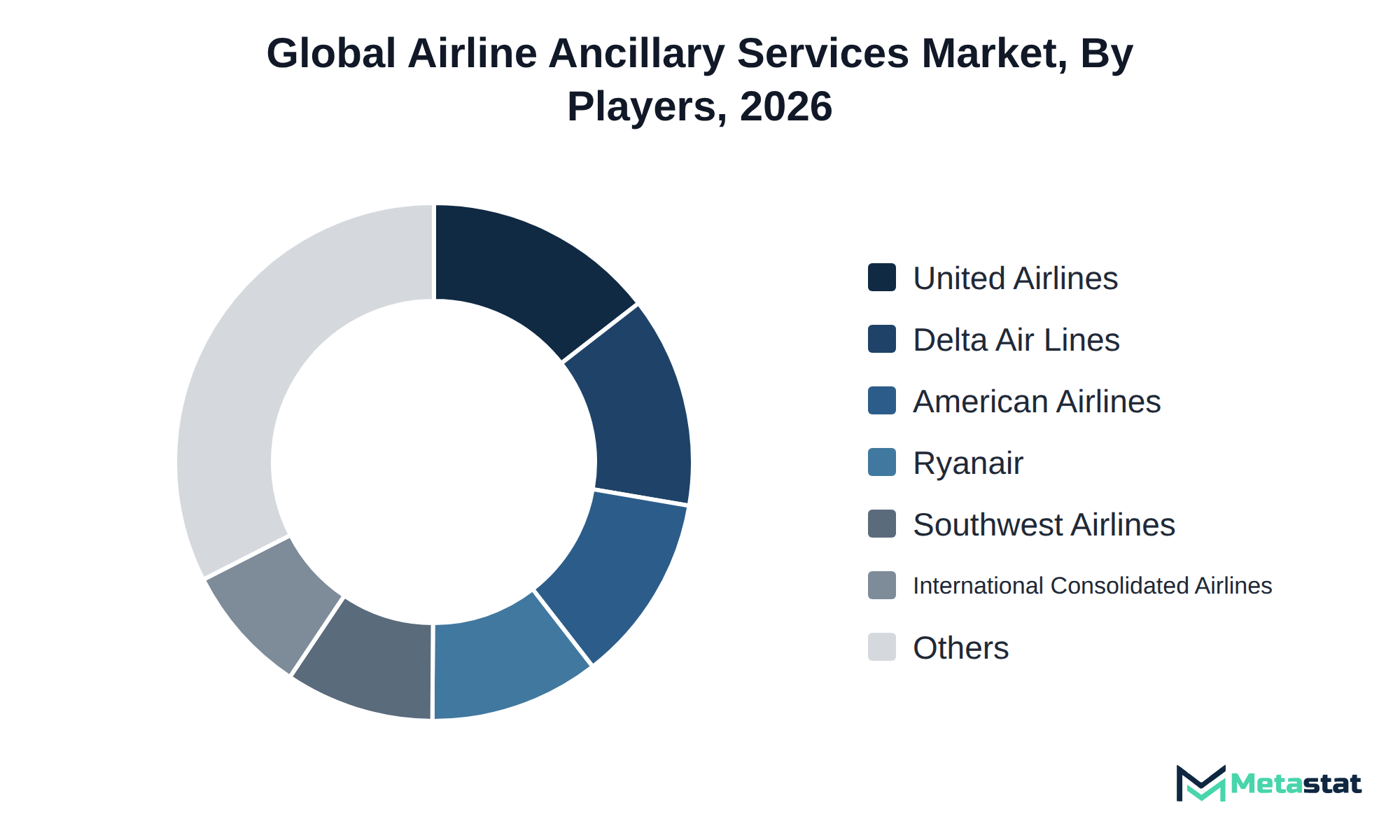
The Airline Ancillary Services market features intense competition among various carriers, each employing distinct strategies to capture market share. Full-Service Carriers focus on a broader range of services, enhancing customer engagement through loyalty programs and premium services. Low-Cost Carriers prioritize cost efficiency and basic offerings, appealing to budget-conscious travelers while generating ancillary revenue through targeted add-ons.
Buyers in the market select services based on factors including price, service quality, and customization options. United Airlines Holdings, Inc. emphasizes its loyalty program, boosting customer retention through co-branded card revenue. Ryanair Holdings plc concentrates on low fare offerings combined with ancillary charges for services including seat selection and baggage, aligning with its budget model. This strategic differentiation influences buyer choices and shapes overall market dynamics.
Growth in the Airline Ancillary Services market hinges on several critical developments. Firstly, the expansion of low-cost carriers, which is expected to reach USD 55.3 billion by 2033, will significantly contribute to the market's overall increase, driven by rising demand for affordable travel options. Secondly, the enhancement of airline websites and mobile apps, projected to grow from USD 40.3 billion in 2026 to USD 73.4 billion by 2033, represents a vital channel for ancillary service sales, improving customer engagement and purchasing ease. However, challenges including economic downturns, which could restrict consumer spending on non-essential services, pose a risk to achieving these targets. This factor particularly impacts full-service carriers that rely on premium service offerings. The Airline Ancillary Services market thus faces a dual landscape of opportunity and risk, shaping its trajectory over the forecast period.
By Service Type: Loyalty and Co-Branded Card Revenue, Baggage Services, Seat Selection and Paid Upgrades, Food and Beverages, Third-Party Travel Commissions, Priority Services and Lounge Access, In-Flight Connectivity and Entertainment, Onboard Retail and Advertising, Others (Change Fees, Pet Carriage)
By Airline Type: Full-Service Carriers, Low-Cost Carriers, Others (Regional Carriers, Charter Airlines)
By Sales Channel: Airline Websites and Mobile Apps, Loyalty and Co-Brand Partners, Airport and Onboard Sales, Travel Agencies and Intermediaries, Others (Call Centers, City Ticket Offices)
By Travel Type: Domestic, International
The report strategically identifies and profiles the key market players and analyses their core competencies in each sub-segment of the Airline Ancillary Services market.
Report Attributes | Details |
Study Period | 2021-2033 |
Base Year | 2025 |
Estimated Year | 2026 |
Forecast Period | 2026-2033 |
Historical Period | 2021-2025 |
Growth Rate | CAGR 7.2% from 2026 to 2033 |
Revenue Unit | USD billion |
Segmentation | By Service Type, Airline Type, Sales Channel, Travel Type, and Region |
By Region | North America (By Service Type, Airline Type, Sales Channel, Travel Type, and Country)
|
Europe (By Service Type, Airline Type, Sales Channel, Travel Type, and Country)
| |
Asia Pacific (By Service Type, Airline Type, Sales Channel, Travel Type, and Country)
| |
South America (By Service Type, Airline Type, Sales Channel, Travel Type, and Country)
| |
Middle East and Africa (By Service Type, Airline Type, Sales Channel, Travel Type, and Country)
|
Find answers to common questions about this report
The Airline Ancillary Services market size was valued at USD 82.8 billion in 2025.
The market is projected to grow at a CAGR of 7.2% during the forecast period from 2026 to 2033.
The North America Airline Ancillary Services market size is estimated to reach USD 53.8 billion by 2033.
Loyalty and Co-Branded Card Revenue leads the Airline Ancillary Services market, with a projected value of USD 43.7 billion by 2033. This segment outpaces others in terms of revenue growth and market share.
Rising passenger traffic significantly influences spending on additional services, as travelers prioritize convenience and comfort. Enhanced travel experiences and rapidly expanding consumer interest in loyalty programs further support market growth.
North America holds the dominant share of the Airline Ancillary Services market, accounting for USD 53.8 billion in 2033, representing 40.1 percent of the total market. This figure surpasses the shares of other regions significantly.
Price sensitivity represents a significant constraint affecting market growth, as many passengers exhibit reluctance to purchase additional services when perceived costs become prohibitive. Operating in this market exposes suppliers to significant margin pressure due to rising input costs and intense competition, impacting overall profitability.
Several factors favor adoption in the Airline Ancillary Services industry. Rising passenger traffic drives demand for additional services, while airlines enhance their offerings to meet evolving customer expectations. Increased consumer interest in loyalty programs further supports this trend, encouraging airlines to innovate and differentiate their services.
The Airline Ancillary Services market is estimated to reach a valuation of USD 144.4 billion by 2033.
Key players operating in the Airline Ancillary Services market include United Airlines Holdings, Inc., Delta Air Lines, Inc., American Airlines Group Inc., Ryanair Holdings plc, Southwest Airlines Co., easyJet plc, and Wizz Air Holdings Plc.
The analysts below cover Automotive and Transportation research at Metastat Insights.
LEAD ANALYST
Utkarsh Khirodkar is a Lead Market Research Analyst at MetaStat Insight, specializing in market intelligence, technology sector assessments, and competitive strategy.

ENERGY & INFRASTRUCTURE INDUSTRY CONSULTANT
Automotive and Transportation · Electronics and Semiconductor · Energy and Power · Machinery & Equipment
Saurabh Vasant Ganvir consults for Energy & Infrastructure Industry at MetaStat Insight, specializing in renewable energy, solar EPC, and electric vehicle (EV) infrastructure markets.
Analyzing the transition from natural gas to green hydrogen in iron ore reduction requires realistic infrastructure timelines. Meta stat insight supplied a detailed regional assessment of DRI plant conversion costs and scrap metal availability in North America and Western Europe. Their report carefully examined pellet quality specs and electrical grid access constraints without making oversimplified market assumptions. The research material served as a practical reference during internal technology roadmap discussions.
Integrating zero-trust access controls across legacy electronic health record systems involves complex compliance overhead. Team produced an analysis that clearly separated identity governance and administration tools from privileged access management platforms. Their evaluation of HIPAA and GDPR compliance features across cloud native solutions gave our architecture group clear baseline criteria. The custom data request regarding biometric authentication adoption in hospital networks was returned promptly with clear documentation.
Evaluating calorific value requirements and air permit compliance across municipal waste facilities requires localized data. Metastat Insight structured their analysis around operational throughput capacity and feedstock composition variations in Latin America and Eastern Europe. Their competitive mapping of sorting equipment vendors helped clarify technology differences between optical separators and heavy media systems. The study provided an objective baseline during our capital expenditure reviews.
Explore related market intelligence reports worth reading alongside this one.
Starting from
$2950
Starting from
$2950