
LEAD ANALYST
Utkarsh Khirodkar is a Lead Market Research Analyst at MetaStat Insight, specializing in market intelligence, technology sector assessments, and competitive strategy.

Cruise Tourism Market Size, Share, By Type (Ocean Cruises, River Cruises, Expedition Cruises, Luxury Cruises, and Others), By Duration (Up to 6 Days, Between 6 to 10 Days, Between 10 to 14 Days, and Above 14 Days), By Booking Channel (Online, Travel Agents, Direct Booking, and Others), By End User (Individual, Group, Corporate, and Others), Industry Analysis, Growth, Trends, and Forecast, 2026-2033
Report ID
MSI-4682
Published
April, 2026
Pages
316 Pages
Format
Report Details
Choose Your License
Cruise Tourism Market
Global Cruise Tourism market size is valued at USD 89.6 billion in 2025 and projected to grow at a CAGR of 10.8% during the forecast period, reaching USD 203.3 billion by 2033.
North America accounted for 33.7% of the global market in 2025, with the U.S. leading regional revenue generation.
Ocean Cruises segment accounted for a market share of 70.2% in 2025.
Key trends driving growth: Rising preference for bundled, multi-destination vacations with predictable trip planning along with premiumization of onboard experiences spanning dining, wellness, entertainment, and private island stop.
Opportunities include fleet renewal and itinerary redesign anchored in lower-emission propulsion, shore power readiness, and destination partnerships.
Key insight: Global Cruise Tourism Market gains momentum through experiential travel demand and fleet modernization across premium and emerging segments.
Global Cruise Tourism Market in the travel and hospitality industry is entering a phase shaped by strategic reinvention, experiential differentiation, and maritime infrastructure modernization. Operators are shifting from traditional port-to-port itineraries toward immersive voyage experiences centered on culture, gastronomy, wellness, entertainment, and expedition travel. Fleet design is evolving with modular layouts, faster refurbishment cycles, and customized onboard zones that support premium leisure, social spaces, and wellness offerings. Cruise ships are increasingly positioned as floating destinations designed to deliver personalized guest experiences.
Investment patterns are shifting toward smaller luxury vessels and next-generation mega ships equipped with alternative fuel capabilities. Shipyards in Europe and Asia are collaborating with technology providers to integrate advanced navigation analytics, predictive maintenance systems, and AI-enabled guest service platforms. Digital identity frameworks are streamlining embarkation and onboard transactions, reducing friction while improving operational intelligence. Ports across the Mediterranean, Southeast Asia, and the Caribbean are expanding smart docking systems and shore power capabilities to support decarbonization goals.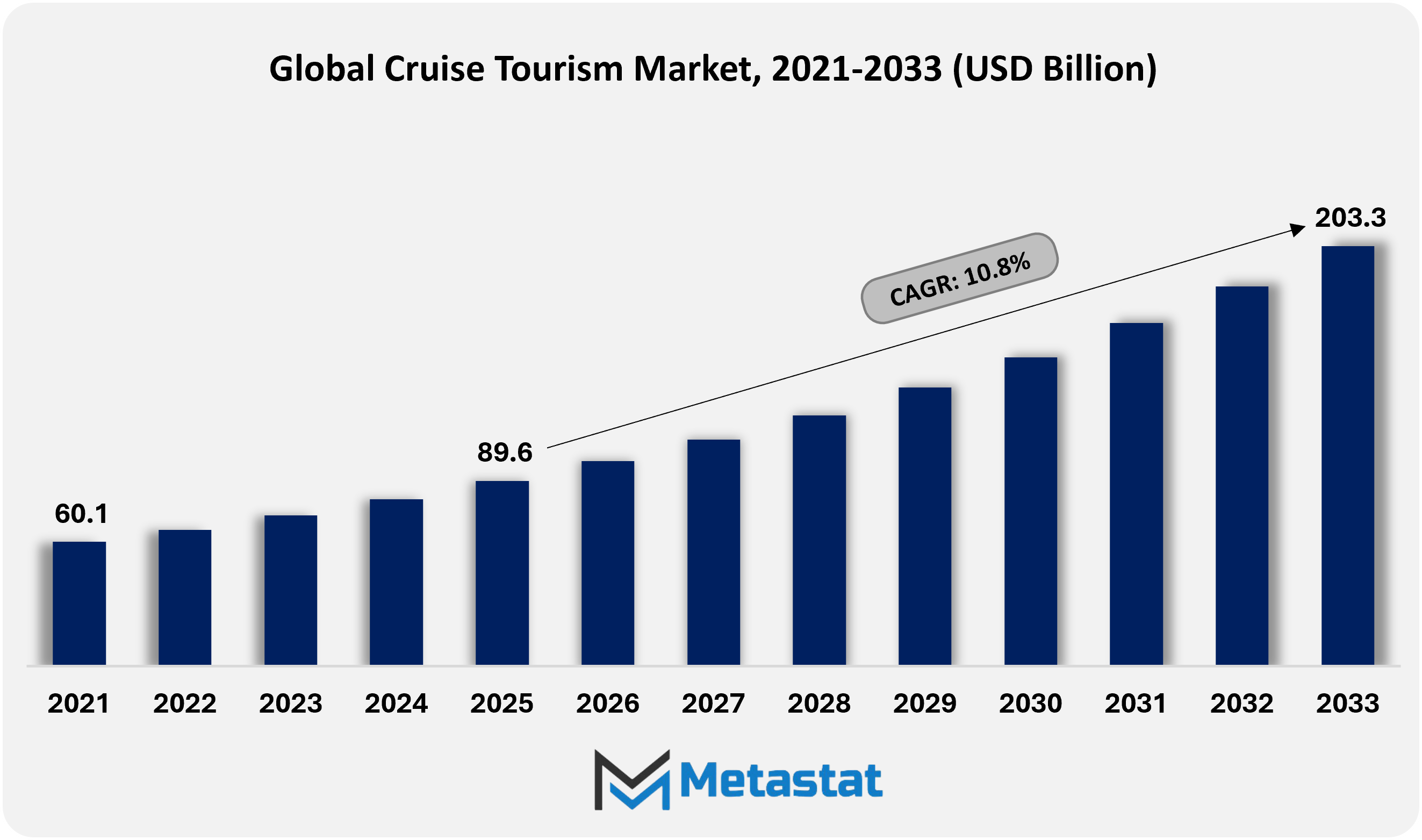
Rising preference for bundled multi-destination vacations with predictable trip planning.
Growing consumer preference for packaged, multi-destination vacations with structured scheduling will accelerate expansion across the Global Cruise Tourism Market. Travelers are prioritizing transparent pricing, curated shore excursions, and coordinated logistics under a single booking. Predictable trip planning reduces uncertainty, strengthens booking confidence, and supports longer itineraries across multiple coastal destinations.
Premiumization of onboard experiences spanning dining, wellness, entertainment, and private island stop
Rising demand for premium hospitality standards will strengthen revenue generation within the Global Cruise Tourism Market. Operators are investing in specialty dining venues, advanced spa concepts, immersive entertainment formats, and exclusive private island experiences. Differentiated amenities support premium pricing, attract high-spending travelers, and strengthen brand loyalty through curated guest experiences.
Port congestion, berth constraints, and itinerary slot limitations at high-traffic destinations
Infrastructure pressure at major cruise gateways is creating scheduling bottlenecks for the Global Cruise Tourism Market. Limited berth availability, regulatory controls, and seasonal traffic peaks restrict turnaround efficiency. Capacity allocation conflicts among operators are affecting itinerary planning and increasing operational adjustments across high-traffic tourism corridors.
Fuel cost volatility and tightening emissions compliance requirements impacting operating economics
Fluctuating marine fuel prices and tightening environmental regulations are reshaping cost structures across the Global Cruise Tourism Market. Compliance with decarbonization targets, carbon intensity standards, and emission control requirements is driving capital allocation toward cleaner technologies. Margin pressure is increasing, prompting operators to optimize route efficiency, vessel design, and long-term procurement strategies.
Fleet renewal and itinerary redesign anchored in lower-emission propulsion, shore power readiness, and destination partnerships
Strategic modernization initiatives will unlock long-term transformation across the Global Cruise Tourism Market. Adoption of lower-emission propulsion systems, integration of shore power infrastructure, and partnerships with destination authorities will strengthen sustainability positioning. Redesigned routes focused on responsible tourism practices will improve stakeholder alignment, support regulatory compliance, and strengthen competitive differentiation.
The Global Cruise Tourism market is classified based on Type, Duration, Booking Channel, and End User.
Ocean Cruises segment is valued at USD 69.6 billion in 2026 and is projected to reach USD 136 billion by 2033, at a CAGR of 10% during the forecast period.
Ocean Cruises will continue to command large passenger volumes through advanced vessel design, improved fuel efficiency, and extensive port connectivity. Smart cabins, digital navigation systems, and immersive onboard activity zones are enhancing traveler comfort. Broader itinerary networks across major cruise regions will support steady expansion across the Global Cruise Tourism Market while maintaining operational efficiency.
River Cruises segment is valued at USD 15.6 billion in 2026 and is projected to reach USD 30.7 billion by 2033, at a CAGR of 10.2% during the forecast period.
River Cruises will gain traction through access to historic inland cities and culturally rich travel corridors. Compact vessel design enables docking in central districts, improving traveler convenience. Personalized services, curated excursions, and sustainability compliance across inland waterways will strengthen positioning in the Global Cruise Tourism Market over the forecast period.
Expedition Cruises segment is valued at USD 5.6 billion in 2026 and is projected to reach USD 15.9 billion by 2033, at a CAGR of 16.2% during the forecast period.
Expedition Cruises will witness strong growth driven by rising interest in polar regions, remote islands, and ecological exploration. Ice-class vessels, environmental research partnerships, and strict conservation protocols are shaping operations in this segment. Educational programs led by subject experts enhance experiential value, creating niche yet influential demand within the Global Cruise Tourism Market.
Luxury Cruises segment is valued at USD 4.5 billion in 2026 and is projected to reach USD 12.4 billion by 2033, at a CAGR of 15.5% during the forecast period.
Luxury Cruises will expand through ultra-premium accommodations, private suites, fine dining experiences, and exclusive shore access. Limited passenger capacity supports privacy and personalized service. Integration of wellness retreats, designer collaborations, and bespoke itinerary planning will strengthen premium positioning across the Global Cruise Tourism Market.
Others segment is valued at USD 3.8 billion in 2026 and is projected to reach USD 8.2 billion by 2033, at a CAGR of 11.7% during the forecast period.
Other cruise formats, including themed voyages and regional specialty routes, will diversify market offerings. Culinary-focused journeys, heritage circuits, and seasonal festival sailings are expected to attract distinct traveler groups. Flexible pricing models and hybrid entertainment concepts will broaden segment depth within the Global Cruise Tourism Market.
Up to 6 Days segment is projected to reach USD 56.1 billion by 2033, at a CAGR of 9.6% during the forecast period.
Short-duration voyages of up to 6 days will attract working professionals seeking quick leisure breaks. Weekend departures from major ports, simplified travel formalities, and competitive pricing strategies will support demand. Efficient turnaround operations will enable high-frequency scheduling across the Global Cruise Tourism Market.
Between 6 to 10 Days segment is projected to reach USD 88.5 billion by 2033, at a CAGR of 10.5% during the forecast period.
Medium-duration itineraries between 6 and 10 days will balance leisure with destination coverage. Travelers are likely to prefer extended cultural excursions without long absence from professional commitments. Enhanced onboard entertainment programs and balanced port rotations will sustain the popularity of this segment within the Global Cruise Tourism Market.
Between 10- and 14-Days segment is projected to reach USD 40.4 billion by 2033, at a CAGR of 12.1% during the forecast period.
Voyages lasting between 10 and 14 days will appeal to travelers seeking immersive multi-country exploration. Broader geographic coverage and thematic destination clusters will increase experiential depth. Seasonal migration routes and transcontinental sailings will strengthen premium demand within the Global Cruise Tourism Market.
Above 14 Days segment is projected to reach USD 18.4 billion by 2033, at a CAGR of 13.8% during the forecast period.
Long-haul cruises exceeding 14 days will appeal to retirees and experiential travelers seeking comprehensive journeys. Intercontinental routes, world cruise segments, and onboard enrichment programs will strengthen value perception. Extended sailings will enhance revenue generation potential within the Global Cruise Tourism Market.
Online segment is projected to reach USD 82.1 billion by 2033.
Online booking platforms will lead through integrated payment gateways, digital cabin previews, and AI-driven recommendation engines. Dynamic pricing tools and digital marketing campaigns are influencing purchase decisions. Seamless mobile applications are accelerating customer acquisition across the Global Cruise Tourism Market.
Travel Agents segment is projected to reach USD 68 billion by 2033.
Travel Agents will remain relevant through customized package planning and destination advisory services. Personalized itinerary consultation and bundled land arrangements enhance customer trust. Strong regional distribution networks continue to contribute consistent bookings within the Global Cruise Tourism Market.
Direct Booking segment is projected to reach USD 45.4 billion by 2033.
Direct booking channels operated by cruise lines will expand through loyalty programs and exclusive promotional offers. Data-driven customer relationship management systems will improve repeat traveler retention. Transparent pricing structures will strengthen consumer confidence within the Global Cruise Tourism Market.
Others segment is projected to reach USD 7.8 billion by 2033.
Alternative booking methods, including corporate partnerships and event-based reservations, will expand distribution reach. Collaborations with hospitality brands and tourism boards will increase bundled offerings. Multi-channel integration strategies will strengthen transactional efficiency across the Global Cruise Tourism Market.
Individual segment is projected to grow at a CAGR of 10% during the forecast period.
Individual travelers are increasingly seeking personalized itineraries, flexible cabin options, and independent excursion planning. Digital planning tools and solo traveler communities are improving accessibility. Tailored wellness, learning, and adventure experiences will strengthen participation across the Global Cruise Tourism Market.
Group segment is projected to grow at a CAGR of 11.9% during the forecast period.
Group bookings will rise through family reunions, social clubs, and themed travel communities. Discounted cabin blocks and coordinated shore excursions will encourage collective participation. Event management integration and shared-interest programs will increase demand across the Global Cruise Tourism Market.
Corporate segment is projected to grow at a CAGR of 13% during the forecast period.
Corporate customers are increasingly using cruises for incentive programs, leadership retreats, and large-scale meetings. Dedicated conference facilities, hybrid communication infrastructure, and branded event customization are enhancing segment appeal. Strategic partnerships with enterprises will generate stable revenue streams within the Global Cruise Tourism Market.
Others segment is projected to grow at a CAGR of 7% during the forecast period.
Other end users, including educational institutions and special interest associations, are adopting cruise formats for experiential learning and collaborative travel. Structured onboard seminars and guided field visits enhance value delivery, contributing incremental growth to the Global Cruise Tourism Market.
Based on geography, the Global Cruise Tourism market is divided into North America, Europe, Asia-Pacific, South America, Middle East, and Africa.
North America Cruise Tourism Market is set to expand at a CAGR of 10.8% within the forecast period, reaching a market size (TAM) of USD 62.1 billion by the end of 2033.
Strong consumer spending across the United States and Canada continues to accelerate cruise bookings across premium and luxury segments within the Cruise Tourism Market.
Expansion of advanced port infrastructure across North America is enhancing embarkation capacity and supporting higher passenger throughput within the Cruise Tourism Market.
Europe benefits from mature port infrastructure, strong intra-regional tourism demand, and high adoption of premium ocean and river cruise itineraries across the Mediterranean, Baltic, and Northern Europe.
Rising middle-class income levels across China, India, and Southeast Asia are unlocking substantial untapped demand for regional and international cruise travel within the Cruise Tourism Market.
Development of new cruise terminals and regional itineraries across Asia Pacific is creating scope for diversified routes and first-time cruisers within the Cruise Tourism Market.
Across South America and the Middle East and Africa, the Cruise Tourism Market is gaining momentum through rising coastal tourism investments, port infrastructure development, and growing interest in experiential marine travel.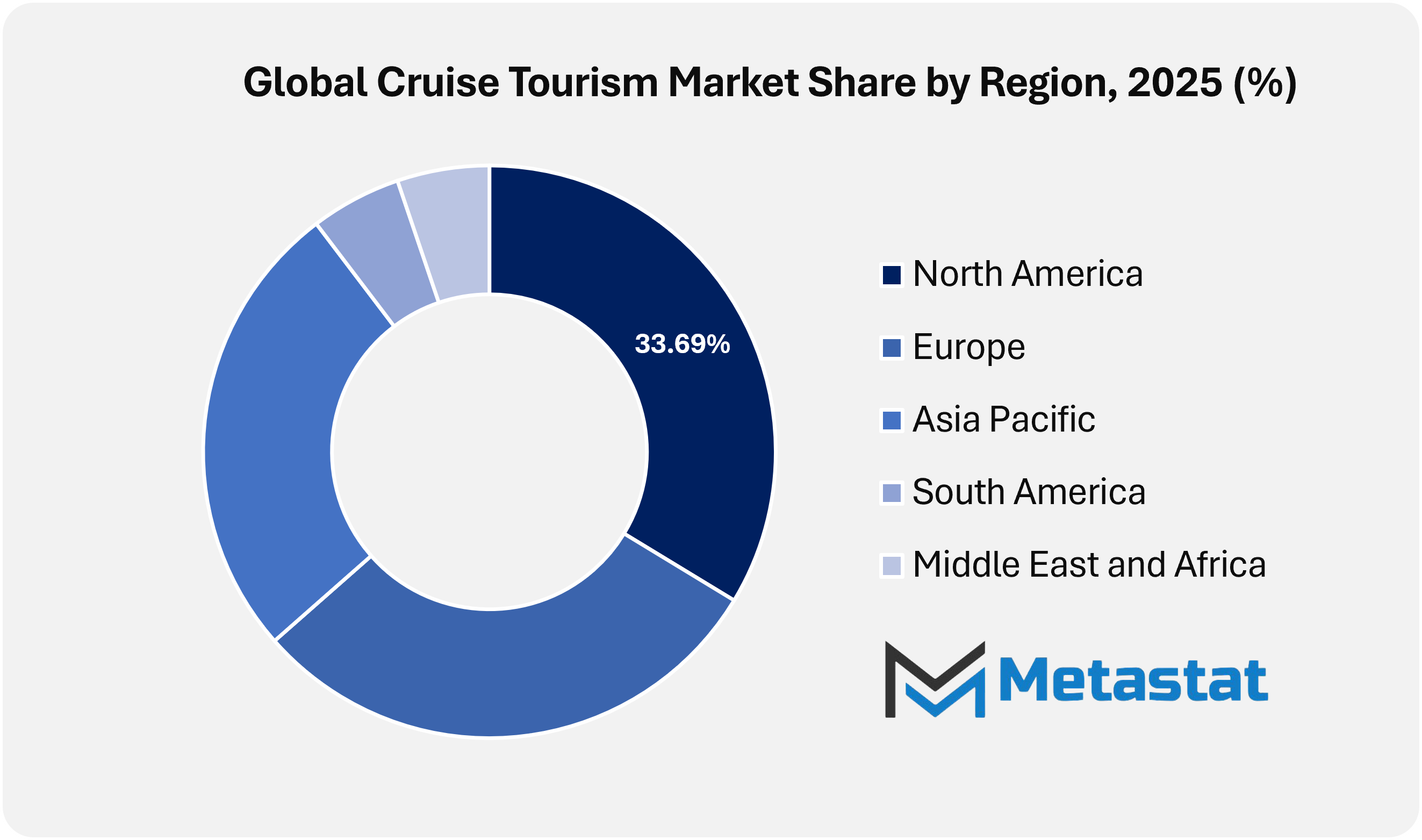
The global cruise tourism market has evolved into a strong pillar of the travel industry, offering travelers a combination of convenience, entertainment, and exploration within a single journey. Consumers increasingly seek vacations that combine comfort with memorable experiences, and cruise holidays align well with this preference. From short regional sailings to extended international voyages, cruise lines offer diverse options for families, couples, retirees, and solo travelers. Rising disposable income, improving port infrastructure, and simpler booking systems will continue to support market growth in the coming years. Interest in themed cruises, wellness-focused voyages, and destination-led travel formats is also widening market appeal.
Large global operators continue to play a central role in shaping competition and service standards. Brands under major groups such as Carnival Cruise Line, Princess Cruises, Holland America Line, Costa Cruises, and AIDA Cruises are expanding fleets and destination coverage. Premium and heritage brands including Cunard Line, P&O Cruises, and Seabourn Cruise Line focus on refined onboard experiences and personalized service. Meanwhile, global leaders such as Royal Caribbean International, Celebrity Cruises, and Norwegian Cruise Line continue to invest in large vessels, advanced entertainment zones, and private island destinations to attract a broad customer base.
The luxury and niche segment continues to gain traction with operators such as Silversea Cruises, Regent Seven Seas Cruises, Oceania Cruises, and Viking Cruises offering smaller ships and curated itineraries. Newer entrants such as Virgin Voyages and Explora Journeys bring fresh branding and adult-focused concepts that are reshaping customer expectations. Family-focused brands such as Disney Cruise Line continue to build strong loyalty through themed experiences and character-based attractions. Expedition and regional operators including Ponant, HX Hurtigruten Expeditions, and Hurtigruten are expanding into remote destinations to capture rising adventure travel demand.
River and boutique cruise operators are also strengthening their presence in the market. Companies such as AmaWaterways, Uniworld Boutique River Cruises, Avalon Waterways, and CroisiEurope remain focused on inland waterways and culturally rich routes. Operators including MSC Cruises, TUI Cruises, Hapag-Lloyd Cruises, Azamara, Crystal Cruises, Windstar Cruises, Paul Gauguin Cruises, Star Clippers, Celestyal Cruises, Fred. Olsen Cruise Lines, Saga Cruises, Scenic Luxury Cruises & Tours, Emerald Cruises, and Tauck continue refining destination-focused offerings. With fleet modernization, digital booking tools, and stronger safety measures, the global cruise tourism market is expected to maintain steady momentum and attract a wider range of travelers seeking structured yet flexible vacation experiences.
Market size is forecast to rise from USD 89.6 billion in 2025 to over USD 203.3 billion by 2033.
Commercial models are expected to evolve through dynamic pricing algorithms and loyalty ecosystems that extend engagement beyond individual sailings. Environmental performance metrics are becoming increasingly embedded in corporate reporting frameworks, influencing investor sentiment and itinerary planning. Over the forecast period, market participants will navigate regulatory scrutiny, climate commitments, and shifting traveler expectations, positioning cruise tourism as an advanced maritime experience model shaped by technology integration, sustainability alignment, and experiential differentiation.
This research report categorizes the Cruise Tourism market based on key segments and regions, forecasts revenue growth, and analyses trends in each submarket. The report analyses the key growth drivers, opportunities, and challenges influencing the Cruise Tourism market. Recent market developments and competitive strategies such as expansion, product launch, partnership, merger, and acquisition have been included to draw the competitive landscape in the market.
The report strategically identifies and profiles the key market players and analyses their core competencies in each sub-segment of the Cruise Tourism market.
|
Report Attributes |
Details |
|
Study Period |
2021-2033 |
|
Base Year |
2025 |
|
Estimated Year |
2026 |
|
Forecast Period |
2026-2033 |
|
Historical Period |
2021-2025 |
|
Growth Rate |
CAGR 10.8% from 2026 to 2033 |
|
Revenue Unit |
USD billion |
|
Segmentation |
By Type, Duration, Booking Channel, End User, and Region |
|
By Region |
North America (By Type, Duration, Booking Channel, End User, and Country)
|
|
Europe (By Type, Duration, Booking Channel, End User, and Country)
|
|
|
Asia Pacific (By Type, Duration, Booking Channel, End User, and Country)
|
|
|
South America (By Type, Duration, Booking Channel, End User, and Country)
|
|
|
Middle East and Africa (By Type, Duration, Booking Channel, End User, and Country)
|
Find answers to common questions about this report
Top players operating in the Cruise Tourism industry include Carnival Cruise Line, Princess Cruises, Holland America Line, Costa Cruises, and AIDA Cruises.
Global Cruise Tourism market is estimated to reach USD 203.3 billion by 2033.
The Ocean Cruises is the leading type segment in the Global market.
The Metastat Insights analysis shows that the North America Cruise Tourism market size is estimated to be USD 62.1 billion by 2033.
North America region dominates the market.
Port congestion, berth constraints, and itinerary slot limitations at high-traffic destinations will hamper the market growth within the forecast period.
Rising preference for bundled, multi-destination vacations with predictable trip planning and Premiumization of onboard experiences spanning dining, wellness, entertainment, and private island stops are key driving factors, boosting the market.
The Metastat Insights study shows that the Global Cruise Tourism market size was USD 89.6 billion in 2025.
The Global Cruise Tourism market is expected to grow at a CAGR of 10.8% over the forecast period (2026-2033).
The analysts below cover Automotive and Transportation research at Metastat Insights.
LEAD ANALYST
Utkarsh Khirodkar is a Lead Market Research Analyst at MetaStat Insight, specializing in market intelligence, technology sector assessments, and competitive strategy.

ENERGY & INFRASTRUCTURE INDUSTRY CONSULTANT
Automotive and Transportation · Electronics and Semiconductor · Energy and Power · Machinery & Equipment
Saurabh Vasant Ganvir consults for Energy & Infrastructure Industry at MetaStat Insight, specializing in renewable energy, solar EPC, and electric vehicle (EV) infrastructure markets.
Scaling antibody-drug conjugate manufacturing hinges on contract manufacturing availability for high-potency active ingredients. The MetaStat Insight analysis looked closely at global cleanroom slot constraints, bioconjugation batch failure rates, and supply chain redundancies between the US, Europe, and India. The supplier capability matrix proved genuinely useful for our team when mapping secondary source options across our clinical pipeline.
Floating offshore wind feasibility relies heavily on specialized installation vessel availability and port crane limits, which most broad renewable energy forecasts ignore. The report delivered a thorough analysis of dry dock capacity, mooring chain supply constraints, and raw material pricing trends for deepwater anchor installations. It served as a solid independent sanity check for our offshore project capital expenditure assumptions.
Assessing commercial microgrid software adoption requires looking past top-level installation numbers and examining utility interconnection queues. The research provided verifiable data on average permitting timelines, tariff structures, and battery storage integration costs across regional utility territories. That grounded perspective was valuable for our team when building five-year demand projections for industrial microgrid controllers.
Explore related market intelligence reports worth reading alongside this one.
Starting from
$2950