
LEAD ANALYST
Utkarsh Khirodkar is a Lead Market Research Analyst at MetaStat Insight, specializing in market intelligence, technology sector assessments, and competitive strategy.

Global Public Sector Consulting and Advisory Services Market Size, Share, By Service Type (Operations Transformation, Strategy Consulting, Management Consulting, Technology Consulting, Human Resource Consulting, Financial Advisory and Other Service Types (Risk & Compliance Advisory)), By End User (General Public Administration & Government Operations, Defense, National Security & Justice, Health & Human Services, Education, Transportation & Infrastructure, Tax, Revenue & Customs, Economic Development, Trade & Labor, Public Safety & Emergency Management, Environment, Energy & Sustainability and Others (Housing, Culture, Postal & Community Services)), Industry Analysis, Growth, Trends, and Forecast, 2026-2033
Report ID
MSI-5073
Published
August, 2026
Pages
304 Pages
Format
Historical
Base year
Forecast
Forecast period
Report Details
Choose Your License
Global Public Sector Consulting and Advisory Services Market
The global Public Sector Consulting and Advisory Services market was valued at USD 31.8 billion in 2025 and is projected to reach USD 42.5 billion by 2033, growing at a CAGR of 3.7% over the forecast period.
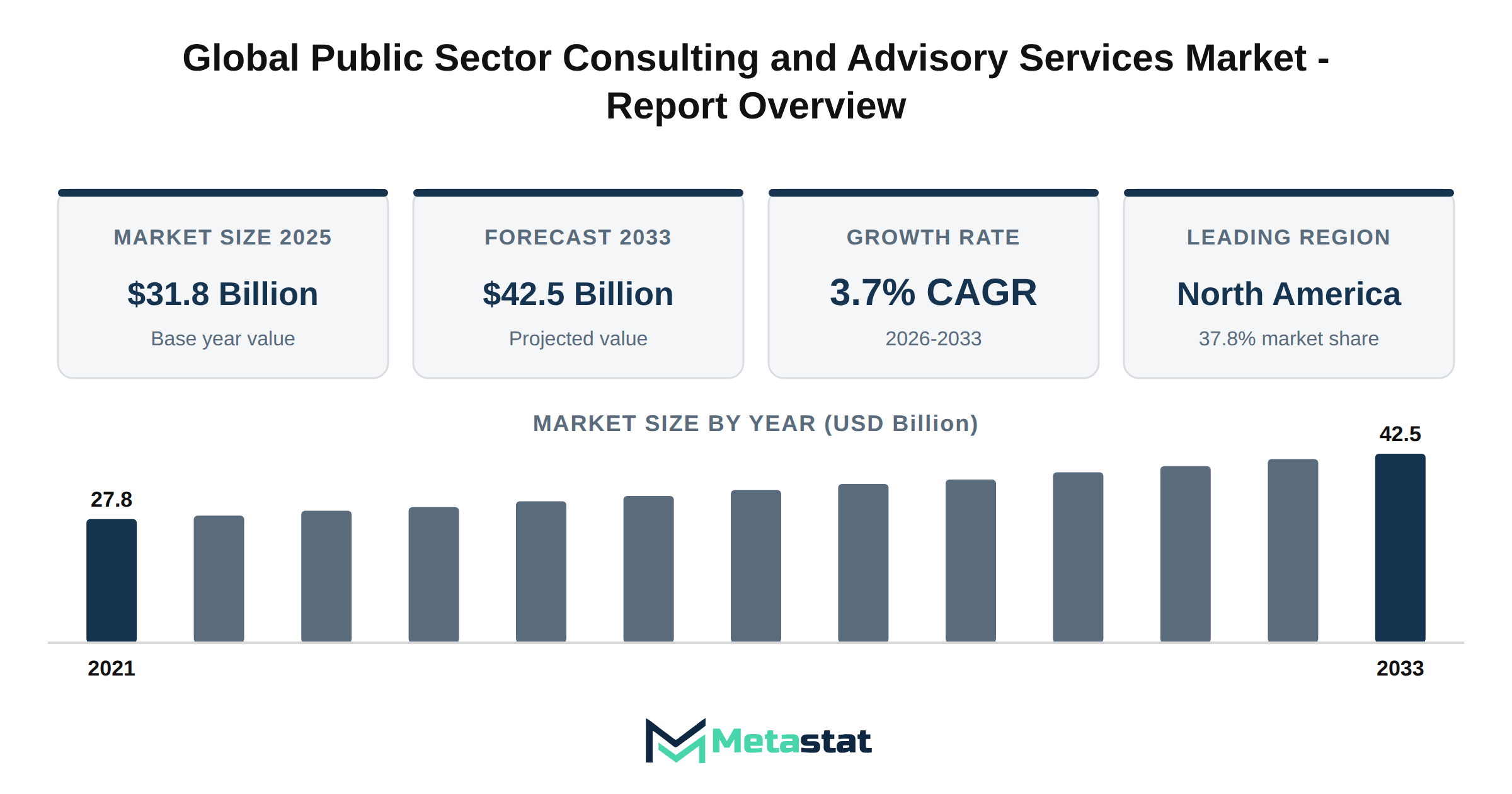
The Public Sector Consulting and Advisory Services market reached USD 31.8 billion in 2025, reflecting a steady growth trajectory from USD 27.8 billion in 2021. This steady growth demonstrates the increasing reliance on consulting services by public sector organizations to enhance operational efficiency and strategic direction.
By 2033, the market is projected to expand to USD 42.5 billion, with a compound annual growth rate (CAGR) of 3.7% from 2026 to 2033. Key factors contributing to this growth include the rising demand for operational transformation and technology consulting, which are critical for adapting to the evolving needs of public sector entities.
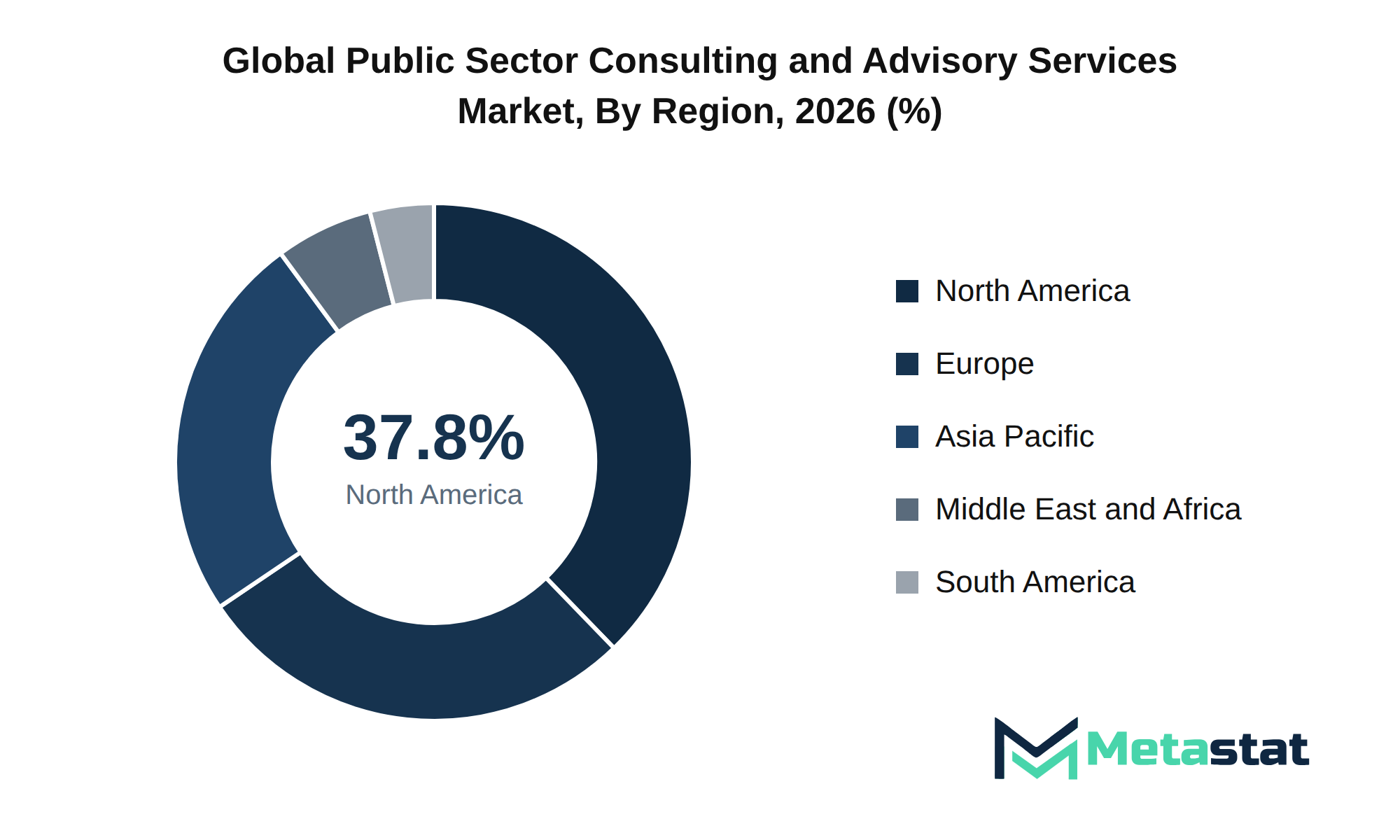
Regional dynamics play a significant role in shaping the market landscape. North America holds the largest share at 37.8%, driven by substantial investments in public administration and government operations. Europe follows with a 27.8% share, where a strong focus on regulatory compliance and sustainable transformation influences market dynamics. The Asia Pacific region accounts for 24.4%, supported by increasing government initiatives in various sectors.
Service types within the market show varied growth patterns. Operations transformation services are expected to grow from USD 4.7 billion in 2026 to USD 6.1 billion by 2033, representing a CAGR of 3.9%. Strategy consulting, another key segment, anticipates reaching USD 5.1 billion by 2033, growing at a CAGR of 2.8%. Management consulting is projected to achieve similar growth, reflecting the ongoing demand for strategic insights across public sector organizations.
End-user segments highlight the diverse applications of consulting services. General public administration and government operations are expected to grow from USD 6.5 billion in 2026 to USD 8 billion by 2033, with a CAGR of 2.9%. Defense, national security, and justice services are anticipated to reach USD 7 billion by 2033, exhibiting a strong growth rate of 4%. Health and human services, along with education, continue to contribute to market expansion, driven by the need for enhanced service delivery and operational efficiency.
The Public Sector Consulting and Advisory Services market faces various regulatory frameworks that drive compliance and shape operational practices. These frameworks influence how firms operate, necessitating a focus on adherence to established standards. Companies in the sector navigate these complexities to ensure they meet the requirements set forth by governing bodies, resulting in increased operational costs and a need for specialized expertise.
Disruption within the market arises from technological advancements and shifting client expectations. Firms invest in research and development trajectories to stay ahead of competition and deliver innovative solutions. The pursuit of next-generation innovations facilitates the development of more effective consulting methodologies, enhancing service delivery and improving client satisfaction.
Sustainable transformation represents a critical focus for the market. Organizations increasingly prioritize decarbonization and circular economy dynamics, integrating these principles into their operational strategies. This shift encourages firms to adopt sustainable practices that meet regulatory demands and align with evolving consumer preferences, enhancing their competitive positioning.
The market experiences fragmentation, with numerous players providing specialized consulting services across various end-user sectors. Mergers and acquisitions reflect the competitive landscape, where firms seek to consolidate resources and capabilities to enhance their market position. This consolidation leads to improved service offerings and greater value for clients, reinforcing competition among providers.
Capital allocation strategies evolve, with firms directing investments towards infrastructure projects that align with government priorities. This focus on infrastructure investments supports economic development and enhances public service delivery, creating opportunities for consulting firms to expand their service offerings.
Corporate imperatives now include a commitment to high-value recommendations that drive operational efficiency and effectiveness. Firms focus on understanding customer journey dynamics to better serve their clients and enhance satisfaction. By prioritizing these imperatives, companies position themselves for sustained growth in the Public Sector Consulting and Advisory Services market, strengthening their competitive advantage.
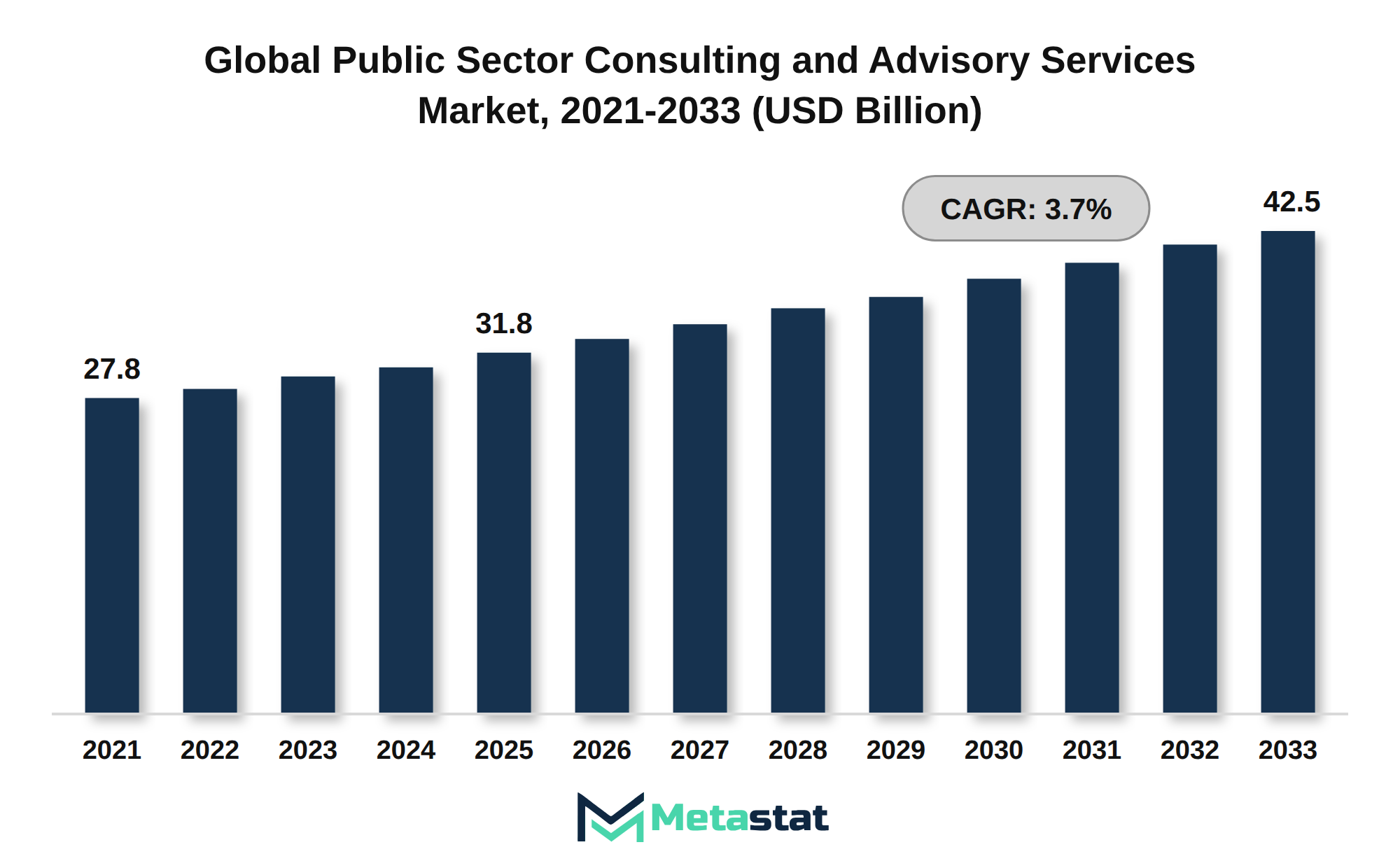
The Public Sector Consulting and Advisory Services market experiences significant growth driven by favorable macro-economic conditions. Increased capital investment environments, characterized by rising GDP and venture funding, enhance public-private spending power, creating new opportunities for consulting services. This financial stability encourages government entities and public organizations to seek strategic advice, operational improvements, and technology adoption to optimize performance.
Digital transformation initiatives across various sectors fuel market expansion. Organizations prioritize the integration of advanced technologies, including automation and artificial intelligence, to modernize legacy processes and improve service delivery. The focus on technological integration promotes demand for consulting services that facilitate this transition, ensuring operational efficiency and enhancing productivity.
Shifting demographic patterns and evolving consumer behaviors influence market dynamics. An aging population and urbanization trends drive the need for improved public services and infrastructure, prompting government agencies to engage consulting firms for expertise in addressing these challenges. The market experiences increased demand for specialized advisory services tailored to meet the unique needs of diverse populations.
Globalization and supply chain resilience impact the market landscape. Nations seek to strengthen trade corridors and mitigate risks, while public sector organizations look to consulting firms for guidance in navigating complex international environments. This strategic focus on market access and resource stewardship supports ongoing growth in the Public Sector Consulting and Advisory Services market.
Digital transformation significantly influences the Public Sector Consulting and Advisory Services market. Public sector organizations increasingly prioritize the adoption of new technologies to enhance operational efficiency and service delivery. Investments in automation, artificial intelligence, and software adoption streamline processes, allowing government entities to optimize resources and respond effectively to changing citizen needs.
Economic pressures and growing demands from the public drive the urgency for technological integration. Public sector bodies are tasked with digitizing legacy processes and improving overall service quality. The transition toward a more digital infrastructure not only facilitates better communication with stakeholders but promotes transparency and accountability.
In addition to improving operational productivity, digital transformation aligns with governmental objectives for cost-efficiency initiatives. By adopting advanced technologies, public sector organizations reduce overhead costs while enhancing service quality. This shift creates a favorable environment for growth in the Public Sector Consulting and Advisory Services market. Consulting firms provide expertise in navigating the complexities of digital integration.
The demand for strategic consulting services grows due to public organizations seeking to implement technology-driven solutions. Firms specializing in technology consulting play a vital role in guiding public sector clients through the digital transformation journey. This collaboration stimulates the market, driving innovation and ensuring that public services evolve in line with contemporary expectations.
Regulatory compliance presents significant challenges for the Public Sector Consulting and Advisory Services market. Compliance requirements often increase operational costs for consulting firms, affecting profitability. Constant adaptation to evolving regulations creates burdensome legal mandates that limit flexibility, impacting project timelines and budgets.
Geopolitical instability adds another layer of complexity, driving uncertainty in project execution. This instability leads to fluctuations in demand for consulting services, affecting revenue projections. Economic downturns depress government spending, directly influencing the market’s growth potential.
Resource scarcity, particularly in talent acquisition, constrains firms from meeting project demands effectively. Skilled labor deficiencies hinder the ability to deliver high-quality consulting services, resulting in potential delays and impacting client satisfaction. The combination of these factors creates a challenging environment for firms operating within the Public Sector Consulting and Advisory Services market.
The Public Sector Consulting and Advisory Services market experiences significant challenges due to geopolitical tensions that create instability in trade relationships and economic climates. Fragmented geopolitical landscapes lead to trade deficits and tariff friction, disrupting supply chains and increasing costs for consulting services. These disruptions affect various sectors, particularly in regions heavily reliant on international partnerships.
Technological disruptions further complicate the market. Rapid advancements in technology demand continuous adaptation from consulting firms, while interoperability issues between new systems and existing infrastructures complicate service delivery. This situation raises operational costs and limits the ability to provide effective solutions to clients.
Rising input costs contribute to margin pressures within the market. Consulting firms face increasing expenses related to talent retention and workforce skill gaps, challenging their ability to deliver high-quality advisory services. These factors converge to heighten the demand for effective resource management and strategic planning within the Public Sector Consulting and Advisory Services market.
Environmental considerations become increasingly critical. Sustainability demands and decarbonization mandates necessitate investment in environmentally friendly practices, complicating project implementation. Firms encounter barriers related to retrofitting existing infrastructures to meet new standards, leading to potential delays and increased project costs.
The combination of these challenges creates a complex environment for the Public Sector Consulting and Advisory Services market, requiring firms to develop innovative strategies to navigate these hurdles effectively. Ongoing volatility in global markets highlights the need for agility and responsiveness in service delivery.
Increasing investment in infrastructure modernization across various regions accelerates demand for the Public Sector Consulting and Advisory Services market. Regional governments prioritize the enhancement of public services, leading to substantial growth opportunities for consulting firms. The push for technological disruptions, particularly in digital transformation initiatives, aligns firms' services with evolving client needs.
Geographical expansion remains a significant factor, especially in underserved markets. These regions experience heightened interest in innovative consulting solutions, creating openings for firms to penetrate new areas. Sustainability imperatives increasingly influence market dynamics, prompting organizations to adopt eco-friendly practices and align with ESG-driven standards. This shift enhances the potential for consulting services focused on green transformations and sustainability strategies.
Strategic consolidation and cross-industry mergers present further opportunities for the Public Sector Consulting and Advisory Services market. Firms leverage partnerships to diversify their service offerings, thereby strengthening their competitive position. Evolving buying behaviors driven by digital procurement shifts lead to new commercial model transitions, impacting client engagement with consulting services.
Supply chain localization trends, coupled with strategic buffering and import substitution frameworks, create demand for consulting expertise in optimizing local and regional supply chains. Firms assist public sector entities in navigating these shifts effectively. Value-chain optimization, process automation, and operational yield maximization indicate a strong focus on enhancing efficiency, driving firms to seek innovative solutions that address these concerns.
Asset life-cycle extensions and maintenance upgrades contribute to ongoing demand for advisory services. Organizations increasingly prioritize retrofitting existing infrastructures to improve performance and sustainability. These developments collectively highlight the opportunities present within the Public Sector Consulting and Advisory Services market, driving growth and innovation across diverse segments.
The Global Public Sector Consulting and Advisory Services market is segmented based on Service Type, End User.
Investment in operations transformation significantly influences the Public Sector Consulting and Advisory Services market. Factors driving this segment include the need for enhanced operational efficiency and improved service delivery within public institutions. Organizations increasingly seek innovative solutions to streamline processes, reduce costs, and improve the quality of services offered to citizens. The evolving landscape of technology adoption, particularly in areas driven by data analytics and automation, supports growth in this segment.
The Operations Transformation segment is valued at USD 4.7 billion in 2026 and is projected to reach USD 6.1 billion by 2033, at a CAGR of 3.9% during the forecast period. The focus on digital transformation initiatives promotes strategic investment across various public sector operations, thereby expanding the demand for consulting services. This transition is characterized by a shift toward data-driven decision-making, which enhances transparency and accountability in government operations.
The adoption of innovative technologies and practices creates a competitive environment among consulting firms, encouraging them to develop specialized offerings tailored to public sector needs. Increased government spending on modernization and efficiency initiatives stimulates demand, particularly in areas including defense, health, and education. While public sector organizations aim to enhance service quality and meet the expectations of their constituents, the operations transformation segment is anticipated to experience significant growth in the coming years.
Increasing focus on strategic initiatives drives demand for Strategy Consulting services within the Public Sector Consulting and Advisory Services market. Public sector organizations seek to enhance operational efficiency, improve governance, and adapt to evolving challenges. These factors create a strong foundation for growth in this segment, leading to an estimated value of USD 5.1 billion by 2033, at a CAGR of 2.8% during the forecast period.
The need for effective resource allocation and capacity building supports the expansion of this segment. Public sector entities rely on Strategy Consulting to navigate complex issues, including regulatory compliance and organizational restructuring. Ongoing emphasis on data-driven decision-making supports the adoption of advanced analytics and strategic frameworks, enhancing the overall effectiveness of government operations.
Investment in technology and innovative approaches further contributes to the segment's growth. Enhanced analytics capabilities and digital transformation initiatives create opportunities for consulting firms to deliver tailored solutions. Public sector organizations increasingly prioritize strategic partnerships and knowledge exchange, resulting in strengthening demand for Strategy Consulting services within the market.
The Strategy Consulting segment addresses the diverse needs of various governmental entities, including defense, health, and education sectors. By aligning strategies with organizational goals, consulting firms enable clients to navigate challenges effectively. Sustained demand for strategic guidance reinforces the importance of this segment within the broader Public Sector Consulting and Advisory Services market.
Growth in the Management Consulting segment reflects increasing complexity in public sector operations, prompting organizations to seek specialized guidance. Clients prioritize enhancing operational efficiency, improving strategies, and adapting to technological advancements. Rising investments in digital services and infrastructure modernization contribute to these dynamics, encouraging firms to provide targeted solutions that address specific challenges faced by government and public entities.
Adoption of management consulting services emerges from the need for improved governance and policy implementation. Agencies focusing on digital transformation and data-driven decision-making align with the evolving landscape, resulting in a shift towards consulting firms that offer strategic insights and innovative methodologies. This segment is expected to reach USD 6.2 billion by 2033, driven by demand from various levels of government.
Competitive pressures compel firms to enhance service delivery and expand their portfolios. Continuous technological maturation and a focus on next-generation upgrades facilitate efficient service deployment and client engagement. This trend positions the Management Consulting segment because a critical component of the broader Public Sector Consulting and Advisory Services market, reinforcing its relevance in addressing contemporary issues.
Investment in technology consulting continues to gain momentum within the Public Sector Consulting and Advisory Services market. Increased reliance on digital solutions and data-driven decision-making necessitates specialized expertise to support public sector organizations in their technological transformations. Challenges including managing cybersecurity risks and integrating new technologies into existing frameworks drive demand for technology consulting services.
The Technology Consulting segment is projected to grow at a CAGR of 5.2% during the forecast period. This growth aligns with the ongoing push for modernization and efficiency in public sector operations. Stakeholders increasingly prioritize next-generation technology upgrades that enhance operational effectiveness, streamline processes, and improve service delivery to citizens.
Government entities are adopting innovative technologies, including artificial intelligence and cloud computing, to improve public service outcomes. This trend creates a competitive environment where consulting firms that offer advanced solutions establish a strong position within the market. In addition, compliance with evolving regulatory standards drives organizations to seek expert guidance on leveraging technology to meet legislative requirements.
Investment in technology consulting reflects broader shifts within the public sector, emphasizing enhanced public safety, improved infrastructure, and optimized resource allocation. The technology consulting landscape continues to evolve, presenting significant opportunities for firms operating within the Public Sector Consulting and Advisory Services market.
In the Public Sector Consulting and Advisory Services market, Human Resource Consulting enhances organizational efficiency and effectiveness. Demand for this sub-segment stems from a growing emphasis on workforce management and talent development within public sector organizations. The focus on employee engagement and retention has intensified, driven by challenges in attracting and retaining skilled personnel amid competitive labor markets.
Rapid technological maturation influences human resource practices in the public sector, leading to the adoption of innovative HR technologies. Next-generation upgrades, including automated recruitment tools and data analytics for performance management, support organizations in optimizing their human capital strategies. The evolution of products within this segment aligns with shifting expectations of the modern workforce, including flexibility and a supportive work environment.
End-use dynamics reflect a shift toward more strategic roles for HR departments, transforming them into key contributors in organizational decision-making. Regulatory compliance standards further shape the landscape, compelling public sector organizations to implement robust HR policies and practices. Cost structures associated with human resource management have come under increased scrutiny. Organizations seek effective strategies to manage budgets while enhancing service delivery.
Pricing volatility in human resource consulting services affects budget allocations for public sector entities, leading to an emphasis on value-driven partnerships. Margin pressures emerge from the need for high-quality service delivery at competitive rates, encouraging consultants to innovate and differentiate their offerings. The outlook for capital investment in this segment remains positive, with strategic opportunity windows for firms that align their capabilities with evolving public sector needs.
Market dynamics in the Financial Advisory sub-segment reflect a growing emphasis on strategic decision-making within public sector organizations. This trend arises from increasing complexities in regulatory frameworks, which require specialized advisory services to navigate compliance challenges and optimize operational efficiency. Demand for tailored financial solutions continues to rise owing to the evolving economic landscape, compelling agencies to adopt comprehensive financial strategies that ensure fiscal responsibility and transparency.
Investment in advanced technologies and digital tools enhances the quality of financial advisory services. Public sector entities increasingly seek expertise in data analytics and financial modeling, which drive improved decision-making processes. This integration of technology enables agencies to forecast trends more accurately, manage risks effectively, and allocate resources efficiently, contributing to overall market growth.
Regulatory compliance standards significantly influence the Financial Advisory segment. Stricter government policies regarding budget management and procurement processes necessitate robust advisory support. Providers responding to these needs contribute to enhanced governance and accountability in public sector operations. This focus on compliance translates into an increased demand for advisory services across various departments, including health and human services, education, and defense.
While public sector agencies face ongoing fiscal pressures, cost structures and pricing strategies remain crucial considerations. Financial advisory firms play a vital role in guiding organizations toward sustainable financial practices while optimizing budgets. This challenge creates competitive advantages for firms that offer innovative solutions tailored to the unique needs of public sector clients.
Strategic opportunity windows emerge owing to public sector entities seeking to enhance their financial resilience. This demand drives firms toward developing specialized service offerings that address specific challenges in the market. Continuous adaptation to changing regulatory environments and economic conditions positions financial advisory services because essential components for effective public sector management.
Increasing regulatory scrutiny around risk and compliance dictates significant demand for advisory services focused on risk management and compliance frameworks within the Public Sector Consulting and Advisory Services market. Organizations across various sectors prioritize adherence to evolving regulations, which drives the need for expertise in navigating complex compliance landscapes. This advisory segment enables clients to mitigate risks, ensuring they align with both local and international standards.
Technological advancements in data analytics and compliance management systems enhance service offerings within this sub-segment. The integration of next-gen technologies, including artificial intelligence and machine learning, supports improved risk assessment and compliance monitoring capabilities. Organizations that invest in these technologies gain a competitive edge by streamlining their processes and enhancing decision-making efficiency.
Adoption patterns reflect a growing emphasis on proactive risk management strategies. Public sector entities increasingly shift from reactive compliance approaches to proactive measures that anticipate regulatory changes and emerging risks. This transition encourages collaboration between consulting firms and their clients, creating an environment where innovative solutions flourish to address complex challenges.
The margin pressures associated with delivering risk and compliance advisory services stem from the necessity for continuous skill development and technological investments. Firms balance the costs of maintaining expertise with the competitive pricing pressures prevalent in the market. To sustain profitability, consulting firms focus on optimizing service delivery and enhancing client relationships, positioning themselves because indispensable partners in navigating compliance complexities.
Future opportunities within this advisory segment arise from the increasing recognition of compliance because a strategic advantage. Organizations that prioritize compliance not only mitigate risks but enhance their reputations and operational efficiencies. The focus on sustainability and ethical governance further increases the demand for advisory services that align with these principles, thereby expanding the overall service landscape within the Public Sector Consulting and Advisory Services market.
Valued at USD 6.5 billion in 2026, the General Public Administration & Government Operations segment is projected to reach USD 8 billion by 2033, with a CAGR of 2.9% during the forecast period. An increasing focus on citizen engagement and service delivery drives demand for consulting services tailored to public administration. Technological advancements play a crucial role, enabling governments to enhance operational efficiency and adopt digital solutions. Investment in public sector modernization, particularly in infrastructure and service delivery, supports segment growth.
Regulatory frameworks and compliance standards influence service delivery in this segment, necessitating expertise in navigating complex policy environments. The evolving landscape of government operations, characterized by heightened expectations from citizens and stakeholders, compels public sector organizations to seek innovative consulting solutions. Increased competition among service providers leads to enhanced service offerings, creating a dynamic market environment for public sector consulting.
The Public Sector Consulting and Advisory Services market remains poised for steady growth, with the General Public Administration & Government Operations segment demonstrating resilience and adaptability in addressing the changing needs of public entities.
Investment in the Defense, National Security & Justice segment reflects escalating government budgets aimed at enhancing security infrastructure and addressing emerging threats. Increasing geopolitical tensions and the need for advanced defense capabilities drive demand for consulting services in this area. The market is estimated to reach USD 7 billion by 2033, at a CAGR of 4% during the forecast period. Continuous technological advancements, including cybersecurity solutions and intelligence analytics, encourage stakeholders to seek expert guidance in navigating complex landscapes.
Regulatory requirements regarding national security and defense policies create a compelling need for compliance-focused consulting services. Agencies focus on optimizing operations and improving efficiency through strategic initiatives, which drives growth within the market. Emphasis on integrating next-generation technologies enhances the effectiveness of defense and security measures while ensuring alignment with national and international standards. The evolving landscape of national security will prompt continued investment in consulting services, reinforcing the importance of expertise in the Public Sector Consulting and Advisory Services market.
Investment in health infrastructure significantly influences growth within the Health & Human Services segment of the Public Sector Consulting and Advisory Services market. An increasing focus on public health challenges and the need for improved service delivery drive demand for consulting services. Government agencies prioritize enhancing healthcare systems, leading to a surge in advisory services aimed at optimizing operations and improving patient outcomes.
This segment is projected to reach USD 6.2 billion by 2033, reflecting a commitment to addressing health disparities and expanding access to care. Technological advancements in health information systems and telehealth solutions contribute to sector growth, creating strategic opportunities for consulting firms to assist in integrating new technologies into existing frameworks.
Adoption of innovative practices and solutions in health delivery aligns with broader trends in public sector reform, emphasizing efficiency and effectiveness. The ongoing shift towards value-based care models enhances demand for specialized expertise in performance improvement and strategic planning. Consequently, the market adapts by offering tailored solutions that address the unique challenges faced by public health organizations.
Investment in the Education segment of the Public Sector Consulting and Advisory Services market reflects a growing commitment to improving learning outcomes and enhancing educational delivery systems. Demand arises from the need for effective strategies in curriculum development, technology integration, and administrative efficiency. Educational institutions increasingly seek expert guidance to navigate complex policy frameworks and adopt best practices in governance.
The Education segment is projected to grow at a CAGR of 3% during the forecast period. This growth stems from various factors, including the push for digital transformation in educational settings and the increasing emphasis on accountability and performance metrics. The integration of advanced technologies into learning environments creates opportunities for innovative solutions that improve educational delivery. Strategic partnerships between educational institutions and consulting firms enhance capacity-building efforts and strengthen resource allocation.
Market dynamics indicate that funding fluctuations impact growth trajectories within the segment. Nevertheless, ongoing public investments in education present avenues for consulting firms to deliver tailored solutions. While educational institutions embrace data-driven decision-making, demand for consulting services that enhance operational efficiency and strategic planning is expected to rise, cementing the role of the Public Sector Consulting and Advisory Services market in supporting educational advancement.
Investment in Transportation and Infrastructure consulting stems from the need for sustainable development and modernization of public assets. Governments increasingly seek to enhance the efficiency and effectiveness of transportation systems, aligning with global trends toward sustainable urban development and environmental compliance. This shift drives demand for services that support infrastructure upgrades and transportation planning, creating significant opportunities for consulting firms.
Technological maturation is significant in advancing Transportation and Infrastructure initiatives. The adoption of smart technologies, including Internet of Things (IoT) applications and data analytics, enables improved operational efficiencies. Consulting firms that provide expertise in integrating these technologies into existing frameworks contribute to smoother transitions and enhanced project outcomes.
Next-generation upgrades reflect a pressing address aging infrastructure across various regions. While infrastructure continues to deteriorate, strategic planning and investment become critical. Agencies that engage consulting services to navigate these challenges position themselves for long-term success and public satisfaction.
End-use dynamics in this segment show a growing demand for integrated transportation solutions. Stakeholders seek to optimize resource allocation, reduce costs, and enhance service delivery through collaboration with consulting firms. This alignment of interests creates a robust market for public sector consulting services aimed at the Transportation and Infrastructure sector.
Regulatory compliance standards necessitate continuous adaptation of Transportation and Infrastructure initiatives. Consulting firms that provide insights into policy developments and help clients navigate complex regulatory landscapes create significant value. Ensuring compliance not only mitigates risks but enhances project viability, contributing positively to the overall market.
Cost structures and pricing volatility remain critical considerations for Transportation and Infrastructure projects. Consulting firms with expertise in financial modeling and risk assessment guide public agencies in establishing feasible budgets and investment strategies. This strategic guidance ensures that projects remain economically viable while meeting public needs.
Capital investment outlooks for the Transportation and Infrastructure segment remain positive, supported by government initiatives and funding commitments. Increased public and private sector collaborations create opportunities for innovative project financing, driving growth in the Public Sector Consulting and Advisory Services market. Consulting firms that effectively leverage these investment opportunities position themselves favorably within this expanding market.
Demand for consulting services in the Tax, Revenue & Customs sub-segment stems from increasing government focus on tax compliance and revenue enhancement strategies. Governments strive to optimize tax collection processes and improve efficiency, driving investment in consulting services that address these challenges. This sector experiences heightened interest from public administrators who seek innovative solutions to enhance tax policy frameworks, streamline revenue management, and ensure compliance with evolving regulations. Technological advancements play a crucial role in transforming tax systems, enabling automation and data analytics, which enhance operational efficiencies and improve decision-making capabilities.
Shifts in consumption patterns and regulatory frameworks create additional pressure on government agencies to adapt their tax policies. While economies evolve, tax authorities face challenges that include managing new revenue streams, addressing globalization impacts, and responding to public demand for transparency and accountability. Consequently, consulting firms focusing on tax, revenue, and customs services align their offerings with these trends, positioning themselves strategically within the Public Sector Consulting and Advisory Services market. Investments in next-generation technologies and analytics tools further drive demand for expert consultation in this area, enabling governmental bodies to manage risks and enhance service delivery effectively.
Demand for consulting services in the Economic Development, Trade & Labor sub-segment results from a heightened focus on policy-making and economic strategies that promote growth and stability. Governments increasingly seek comprehensive solutions to address economic issues, including unemployment rates, trade relations, and labor market dynamics. Heightened government focus drives consulting firms to provide tailored services that enhance the effectiveness of public sector initiatives.
Segment expansion receives support from technological advancements and evolving economic conditions. The incorporation of data analytics and artificial intelligence enables consultants to offer insights that inform policy decisions and improve program effectiveness. Collaboration between public and private sectors creates opportunities for innovative solutions that address pressing economic challenges.
Regulatory compliance standards continue to shape the landscape of the Public Sector Consulting and Advisory Services market. Governments require assistance in navigating complex regulatory frameworks, ensuring that policies align with both domestic and international standards. Consequently, consulting firms that specialize in Economic Development, Trade & Labor provide valuable expertise to facilitate compliance and mitigate potential risks.
Investments in social programs and workforce development initiatives represent significant avenues for consulting services. Public sector entities focus on enhancing labor market conditions and promoting economic equity, which requires strategic planning and implementation. Through targeted consulting engagements, firms assist governments in designing and executing programs that support sustainable economic growth.
The Economic Development, Trade & Labor sub-segment thrives on the intersection of policy-making, regulatory compliance, and technological progress. Consulting firms play a vital role in navigating these dynamics, ultimately contributing to the overall growth of the Public Sector Consulting and Advisory Services market.
Investment in Public Safety & Emergency Management aligns with increasing demands for improved crisis response and public safety measures. Heightened awareness of natural disasters and public safety threats necessitates advanced strategies and technologies, leading to greater adoption of consulting services in this segment. Governments and agencies invest in training, simulations, and preparedness initiatives, reflecting a commitment to enhancing resilience against emergencies.
Technological advancements drive evolution in emergency management practices. Innovations in data analytics, communication technologies, and simulation models enhance decision-making processes and operational effectiveness. Stakeholders recognize the significance of integrated systems that support real-time information sharing during critical incidents. This technological maturation drives a shift in how organizations approach public safety strategies and emergency preparedness.
Regulatory compliance standards influence demand for consulting services in this segment. Authorities increasingly establish mandates requiring robust emergency management plans and risk assessments, prompting organizations to seek specialized expertise. Compliance with evolving policies ensures accountability and enhances operational efficiency in managing crises. Such pressures create growth opportunities within the market.
While public awareness of safety issues continues to rise, investment in public safety initiatives expands. Stakeholders prioritize funding for comprehensive emergency management solutions, which include training programs and advanced technology integration. This ongoing commitment to public safety illustrates a strategic recognition of the necessity for effective risk management and preparedness in the face of various challenges.
Growing focus on environmental responsibility and sustainability drives demand for consulting services within the Environment, Energy & Sustainability sub-segment. Increasing regulations on emissions and energy efficiency create a robust need for advisory services that align with these standards. Organizations face pressure to innovate and adopt more sustainable practices, which influences consulting strategies across the market. Technological advancements in renewable energy and waste management enhance service offerings, enabling firms to provide valuable insights and solutions. The emphasis on compliance with environmental regulations shapes investment decisions and prioritizes funding for projects aimed at sustainability.
Investment in this sub-segment aligns with broader trends impacting the Public Sector Consulting and Advisory Services market, particularly in public administration and governmental operations. Stakeholders in various industries recognize the strategic importance of transitioning to sustainable models, leading to increased collaborations and partnerships with consulting firms. This trend addresses regulatory compliance and enhances operational efficiency, providing a competitive advantage within the market. While organizations navigate their environmental responsibilities, the capacity for consultancy to deliver tailored solutions remains critical.
Demand for consulting services within the "Others (Housing, Culture, Postal & Community Services)" segment demonstrates a critical response to evolving societal needs and government priorities. This sub-segment addresses various public interests, including housing initiatives, cultural initiatives, postal services, and community development, which require tailored consulting strategies to enhance operational efficiency and service delivery.
Significant investments in housing projects aimed at improving community living standards drive demand for specialized advisory services. Cultural initiatives necessitate expert guidance to ensure effective program implementation and resource allocation. Postal services increasingly require modernized operational strategies and technological integration to enhance service efficiency and customer satisfaction.
Regulatory compliance standards play an important role in shaping advisory needs within this segment. Government policies and compliance requirements compel public sector organizations to seek expert consultation to navigate complex regulations effectively. This reliance on consulting services highlights the strategic importance of maintaining compliance while delivering essential public services.
Market dynamics reflect a continuous evolution, with increasing expectations for efficient resource management and responsiveness to community needs. This sub-segment serves because a vital aspect of the Public Sector Consulting and Advisory Services market, enabling public organizations to address contemporary challenges while contributing to societal welfare and development.
The strategic opportunity windows in this segment are influenced by changing demographics and urbanization trends, which create demands for innovative solutions. While communities evolve, consulting services focused on housing, culture, and community services will remain integral to the broader public sector consulting landscape, ensuring alignment with societal expectations and government initiatives.
Based on geography, the Global Public Sector Consulting and Advisory Services market is divided into North America, Europe, Asia-Pacific, South America, Middle East, and Africa.
The North America Public Sector Consulting and Advisory Services market is set to expand at a CAGR of 3.7% within the forecast period, reaching a market size (TAM) of USD 15.1 billion by the end of 2033. The region holds a substantial share of the global market. Key drivers include robust government investment in infrastructure modernization and the ongoing demand for operational efficiency across various sectors.
Countries including the United States, Canada, and Mexico exhibit strong adoption rates for consulting services, driven by increasing regulatory compliance requirements and a focus on strategic resource allocation. The emphasis on technology consulting reflects the region's commitment to enhancing digital capabilities within public sectors. The Defense, National Security & Justice segment demonstrates substantial growth due to heightened security concerns and associated investments.
Health & Human Services consulting is another critical area of growth, supported by ongoing healthcare reforms and investments in public health infrastructure. Education consulting continues to expand, influenced by governmental initiatives aimed at improving educational outcomes and the integration of advanced technologies into educational systems.
The market's maturity presents opportunities for incremental growth vectors, particularly within underpenetrated territories and high-value replacement cycles. Localized procurement dynamics, driven by a cultural inclination toward regional vendors, shape the competitive landscape. Domestic players including Accenture, Deloitte, and McKinsey & Company operate in the market, influencing trends and driving innovations in service delivery.
Overall, the North America Public Sector Consulting and Advisory Services market reflects a dynamic environment characterized by evolving demands and strategic investments, positioning it for sustained growth through 2033.
The Public Sector Consulting and Advisory Services market in Europe accounts for USD 1,004.1 million in 2025. Key factors influencing this market include a strong emphasis on regulatory compliance and the evolving political landscape across Germany, France, the UK, Italy, Spain, and Russia. These nations face increasing demand for consulting services focused on public administration and governance, driven by the urgency for infrastructure modernization and enhanced service delivery.
Infrastructure projects in Europe highlight the need for strategic advisory services, particularly in defense, education, and healthcare sectors. The growing complexity of regulatory frameworks prompts public sector entities to seek expertise that ensures compliance and enhances operational efficiency. Incremental growth in the market results from consulting firms positioned to capitalize on sector-specific insights and localized knowledge.
Investment in high-value segments including defense and national security continues to drive demand. The regional competitive landscape features established domestic players, including consulting firms with a strong European presence. Their expertise and understanding of cultural nuances create robust relationships with public sector clients, ensuring tailored solutions that address specific challenges within the diverse regulatory environments of the region.
Emerging market front-runners in Europe have begun to adopt innovative strategies, prioritizing localized procurement and establishing regional partnerships. This shift facilitates the development of cross-border trade corridors that enhance collaboration among European nations. Such dynamics create opportunities for consulting firms to expand their service offerings and strengthen their market positions in the Public Sector Consulting and Advisory Services market.
The Asia-Pacific region, with a market share of 24.4% in the Public Sector Consulting and Advisory Services market in 2025, presents significant growth potential driven by various factors. Rapid urbanization, coupled with government initiatives to enhance public sector efficiency, spurs demand in this region. Countries including China and India lead the charge, implementing comprehensive reforms to streamline operations and improve service delivery.
Technological advancements play a critical role in transforming public sector consulting services across Asia-Pacific. Increased adoption of digital solutions enables governments to enhance citizen engagement and optimize service delivery. This trend leads to a surge in demand for technology consulting services, particularly in areas like data analytics and cybersecurity.
Infrastructure modernization remains a key focus in nations like Japan and South Korea, where aging infrastructure necessitates substantial investments. Governments prioritize upgrading transportation, healthcare, and education systems, creating opportunities for consulting firms specializing in operations transformation and strategic planning. This emphasis on infrastructure reflects a broader trend of high-value replacement cycles that enhances market growth.
Localized procurement dynamics and cultural nuances significantly influence decision-making processes in the public sector. Understanding regional B2B buying behaviors enables consulting firms to tailor their offerings to meet specific government needs. This localized approach builds stronger relationships with governmental entities, facilitating smoother project execution and enhanced client satisfaction.
With foreign direct investment (FDI) flows increasing, the region experiences a rise in strategic entry barriers. Many international firms seek partnerships with local players to navigate regulatory frameworks and compliance mandates effectively. This trend encourages vendor consolidation, resulting from firms aligning their capabilities with market demands and leveraging local expertise.
The interaction of geopolitical factors and cross-border trade corridors shapes the competitive landscape in Asia-Pacific. Trade agreements and regional collaborations facilitate knowledge sharing and best practices, enriching the public sector consulting ecosystem. While the market evolves, the focus on sustainable practices and efficiency continues to drive innovation, further strengthening Asia-Pacific's position in the Public Sector Consulting and Advisory Services market.
The Public Sector Consulting and Advisory Services market in South America demonstrates significant potential for growth, driven by increasing investments in key sectors including public administration, defense, and health services. Brazil and Argentina represent the largest markets within this region, accounting for USD 1,004.1 million of the overall demand. The ongoing modernization of infrastructure, particularly in urban areas, necessitates consulting services that enhance operational efficiency and governance capabilities.
Market dynamics in South America include a growing focus on localized procurement practices and an emphasis on compliance with regional regulatory frameworks. Cultural nuances influence B2B buying behaviors, leading to distinct approaches in procurement processes. Domestic firms, alongside established global players, engage in a competitive landscape characterized by strategic partnerships and vendor consolidation trends.
Investment in public sector initiatives, particularly within health and education, contributes to the sector's expansion. The presence of high-value replacement cycles in aging public infrastructure further stimulates demand for consulting services. The Public Sector Consulting and Advisory Services market in South America is set to benefit from strategic entry barriers that attract foreign direct investment, enhancing local capabilities and supporting economic development.
The Public Sector Consulting and Advisory Services market in the Middle East and Africa is positioned for gradual growth, driven by increasing demand for effective governance and public administration. Countries including Saudi Arabia and the UAE invest heavily in modernization initiatives, significantly enhancing operational efficiency and service delivery. These efforts create an improved environment for consulting services, particularly in areas including defense, national security, and justice.
South Africa demonstrates potential for further development of the market through its focus on health and human services, where significant investments in infrastructure modernization contribute to increased demand for advisory services. The region's emphasis on localized procurement and compliance with regulatory frameworks supports the expansion of consulting services tailored to market-specific needs.
Geopolitical factors play a crucial role in shaping the competitive landscape within the Middle East and Africa. Domestic market participants emerge, driven by a growing appetite for specialized consulting services. Foreign direct investment flows, aimed at enhancing local capacity, continue to influence market dynamics. Collaboration between regional players and international firms creates an environment conducive to further growth in the Public Sector Consulting and Advisory Services market.
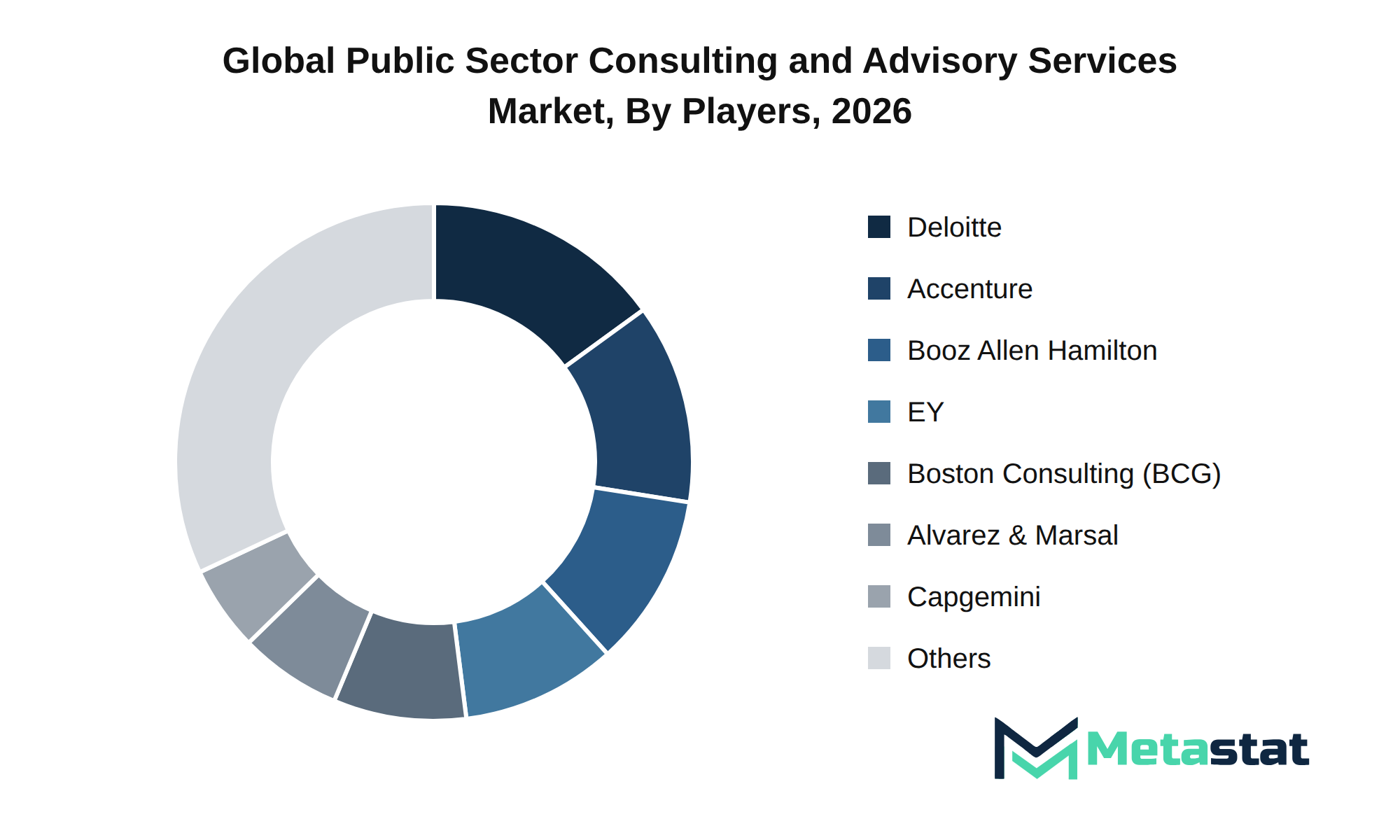
The Public Sector Consulting and Advisory Services market features a diverse array of players strategically positioning themselves through various approaches, including mergers, acquisitions, and alliances. Companies including Accenture, Deloitte, and McKinsey & Company actively pursue strategic consolidation, enhancing their market presence through targeted acquisitions and partnerships.
Firms like Bain & Company and Booz Allen Hamilton leverage proprietary technologies and distinct service offerings to differentiate themselves. This differentiation enhances their competitive advantage and allows them to address the unique needs of government operations, defense, and public administration effectively.
Pricing architectures and commercial models evolve owing to firms navigating the complexities of client demands and budgetary constraints, influencing how they deliver value in the market. Players including EY and Capgemini focus on customer retention strategies, capitalizing on brand equity and service quality to maintain a loyal client base.
New entrants emerge, and competitive dynamics shift. Established firms face ongoing pressures to innovate and adapt, ensuring relevance in the fast-evolving landscape. The Public Sector Consulting and Advisory Services market anticipates continued growth driven by strategic initiatives and investments in technology and talent.
Market size is forecast to rise from USD 31.8 billion in 2025 to over USD 42.5 billion by 2033. The base case outlines a growth trajectory at a 3.7% compound annual growth rate (CAGR), reflecting broader macroeconomic trends and shifting demand dynamics within the Public Sector Consulting and Advisory Services market.
In a bullish scenario, increasing investments in infrastructure and technology integration drive stronger demand from governmental and public sectors. Enhanced focus on next-generation technologies and strategic capital allocation leads to expanded service offerings and heightened competition among providers. Conversely, in a bearish case, economic slowdowns and geopolitical tensions could restrain growth, limiting budget allocations across various governmental agencies and impacting demand for consulting services.
While the market evolves, structural consumption shifts emerge, driven by unmet enterprise needs and high-growth pockets within sectors including defense, health, and education. Regulatory evolution and compliance milestones prompt organizations to prioritize advisory services tailored to meet new standards, creating a steady demand for specialized consulting expertise.
Geopolitical realignments and changing trade corridors influence strategic decisions, compelling public sector entities to reassess operational frameworks and supply chain strategies. This scenario creates opportunities for providers to innovate their service offerings while addressing emerging challenges in global markets.
Executive-level strategic imperatives guide investment decisions, focusing on defensibility roadmaps and future growth recommendations that align with anticipated market complexities. The integration of advanced technologies and ongoing R&D commercialization enhances competitive positioning, facilitating sustained growth in the Public Sector Consulting and Advisory Services market.
The report strategically identifies and profiles the key market players and analyses their core competencies in each sub-segment of the Public Sector Consulting and Advisory Services market.
Report Attributes | Details |
Study Period | 2021-2033 |
Base Year | 2025 |
Estimated Year | 2026 |
Forecast Period | 2026-2033 |
Historical Period | 2021-2025 |
Growth Rate | CAGR 3.7% from 2026 to 2033 |
Revenue Unit | USD billion |
Segmentation | By Service Type, End User, and Region |
By Region | North America (By Service Type, End User, and Country)
|
Europe (By Service Type, End User, and Country)
| |
Asia Pacific (By Service Type, End User, and Country)
| |
South America (By Service Type, End User, and Country)
| |
Middle East and Africa (By Service Type, End User, and Country)
|
Find answers to common questions about this report
The Public Sector Consulting and Advisory Services market size was valued at USD 31.8 billion in 2025.
The Public Sector Consulting and Advisory Services market is projected to grow at a CAGR of 3.7% during the forecast period from 2026 to 2033.
The North America Public Sector Consulting and Advisory Services market size is estimated to reach USD 15.1 billion by 2033.
The segment "Defense, National Security & Justice" leads the Public Sector Consulting and Advisory Services market with a projected value of USD 7 billion by 2033. This segment's growth reflects a significant focus on security and defense initiatives.
Key drivers for the Public Sector Consulting and Advisory Services market include favorable macro-economic conditions, increased capital investment, and the urgency for digital transformation. Rising GDP and venture funding enhance public-private spending power, while the integration of advanced technologies improves operational efficiency and service delivery for government entities.
North America holds the dominant share of the Public Sector Consulting and Advisory Services market, with a value of USD 15.1 billion projected for 2033, representing 37.8 percent of the total market.
Geopolitical tensions create instability in trade relationships and economic climates, impacting project execution and revenue projections. Regulatory compliance requirements increase operational costs for consulting firms, while resource scarcity in talent acquisition constrains their ability to meet project demands effectively. These factors collectively challenge the growth of the Public Sector Consulting and Advisory Services market.
Favorable macro-economic conditions, increased capital investment, and digital transformation initiatives significantly enhance product adoption in the Public Sector Consulting and Advisory Services market. Government entities prioritize strategic advice and technology adoption to optimize performance, while evolving demographic patterns create demand for specialized advisory services tailored to diverse populations.
The Public Sector Consulting and Advisory Services market is estimated to reach a valuation of USD 42.5 billion by 2033.
Key players in the Public Sector Consulting and Advisory Services market include Accenture, Deloitte, EY, KPMG International, McKinsey & Company, PwC, and Tata Consultancy Services Limited (TCS).
The analysts below cover Professional Services research at Metastat Insights.
LEAD ANALYST
Utkarsh Khirodkar is a Lead Market Research Analyst at MetaStat Insight, specializing in market intelligence, technology sector assessments, and competitive strategy.

PRINCIPAL CONSULTANT - ENTERPRISE AI & EMERGING TECHNOLOGIES
Banking & Finance · Electronics and Semiconductor · Energy and Power · Healthcare IT · Information & Technology · Professional Services
Vijay Gunti is a Principal Consultant at MetaStat Insight, bringing over two decades of experience across enterprise digital transformation, technology strategy, and intelligent systems.

PRINCIPAL CONSULTANT - QUALITY SYSTEMS & COMPLIANCE
Electronics and Semiconductor · Machinery & Equipment · Professional Services
Omkar Phadtare is an Industry Consultant at MetaStat Insight, specializing in quality systems, regulatory compliance, and standards benchmarking to drive data-driven market intelligence and strategic industry research.

LEAD CONSULTANT - COMMUNICATION, TELECOM, AND IT
Electronics and Semiconductor · Information & Technology · Machinery & Equipment · Professional Services
Ravindra Sathe Consultants for Communication, Telecom, and IT at MetaStat Insight. He leads the firm's industry research initiatives across telecommunications infrastructure, digital connectivity, enterprise networking, and emerging information technology domains.
Tracking maintenance cycle demand for secondary flight display units and terrain collision avoidance systems across regional jet fleets involves complex aftermarket dynamics. MetaStat Insight provided practical analysis separating airline retrofit programs from OEM forward-fit production schedules in North America and Southeast Asia. The supplier matrix highlighted component obsolescence timelines without resorting to vague generalizations. The dataset served as a dependable reference during our annual program review meetings.
Evaluating secondary resin quality across post-consumer packaging streams requires reliable technical segmentation. MetaStat Insight delivered an objective assessment that distinguished between extrusion-grade flake pricing and optical sorting throughput limitations across Western Europe. The competitive positioning breakdown for licensed depolymerization technology providers answered several questions during our feedstock feasibility audit. Their team clarified regional trade restrictions on mixed plastic scrap quickly when our team submitted follow-up requests.
Evaluating sovereign cloud deployments for core banking platforms demands a clear view of data residency regulations and migration exit strategies. MetaStat Insight delivered an exhaustive review of regional latency tolerances, mainframe decommission milestones, and third-party vendor concentration risk. The regulatory compliance mapping across European and Asian financial jurisdictions gave our team a dependable baseline for multi-cloud infrastructure discussions.
Explore related market intelligence reports worth reading alongside this one.