
LEAD ANALYST
Utkarsh Khirodkar is a Lead Market Research Analyst at MetaStat Insight, specializing in market intelligence, technology sector assessments, and competitive strategy.

Global Sustainable Farming Market Size, Share, By Solution Type (Seeds and Traits, Biopesticides, Biostimulants, Biofertilizers, Organic Fertilizers and Others), By Farming System (Organic Farming, Regenerative Agriculture, Conservation Agriculture, Agroecology and Integrated Farming Systems), By Crop Type (Cereals and Grains, Oilseeds and Pulses, Fruits and Vegetables and Others), By Application (Crop Production, Crop Protection, Nutrient Management and Others), Industry Analysis, Growth, Trends, and Forecast, 2026-2033
Report ID
MSI-4902
Published
August, 2026
Pages
255 Pages
Format
Historical
Base year
Forecast
Forecast period
Report Details
Choose Your License
Global Sustainable Farming Market
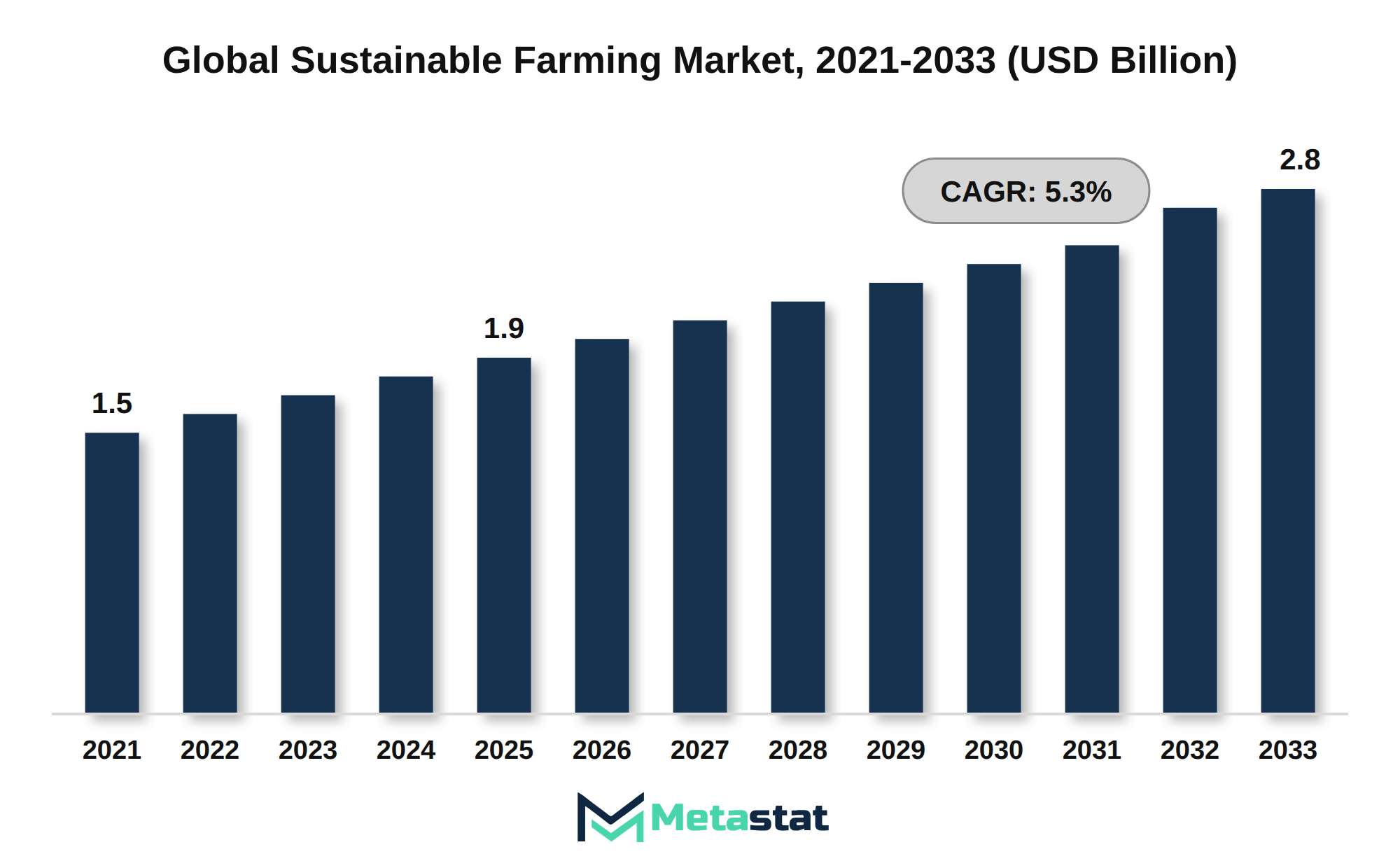
The global Sustainable Farming market was valued at USD 1.9 billion in 2025 and is projected to reach USD 2.8 billion by 2033, growing at a CAGR of 5.3% over the forecast period.
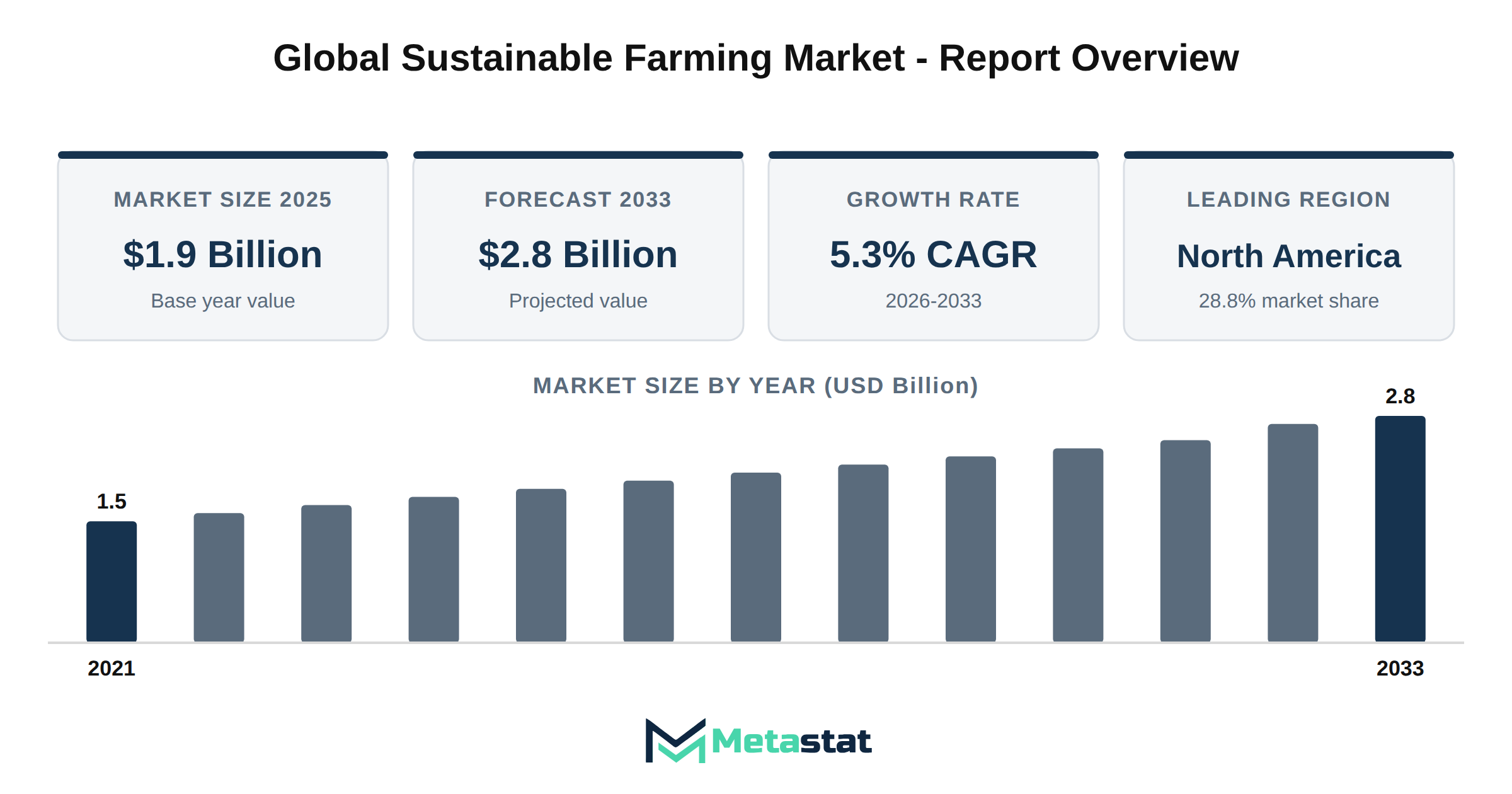
The Sustainable Farming market reached a value of USD 1.9 billion in 2025, showing steady growth from USD 1.5 billion in 2021. Projections indicate that the market is expected to expand to USD 2.8 billion by 2033, reflecting a compound annual growth rate (CAGR) of 5.3%. This growth trajectory reflects the increasing focus on environmentally friendly agricultural practices and the rising demand for sustainable food sources.
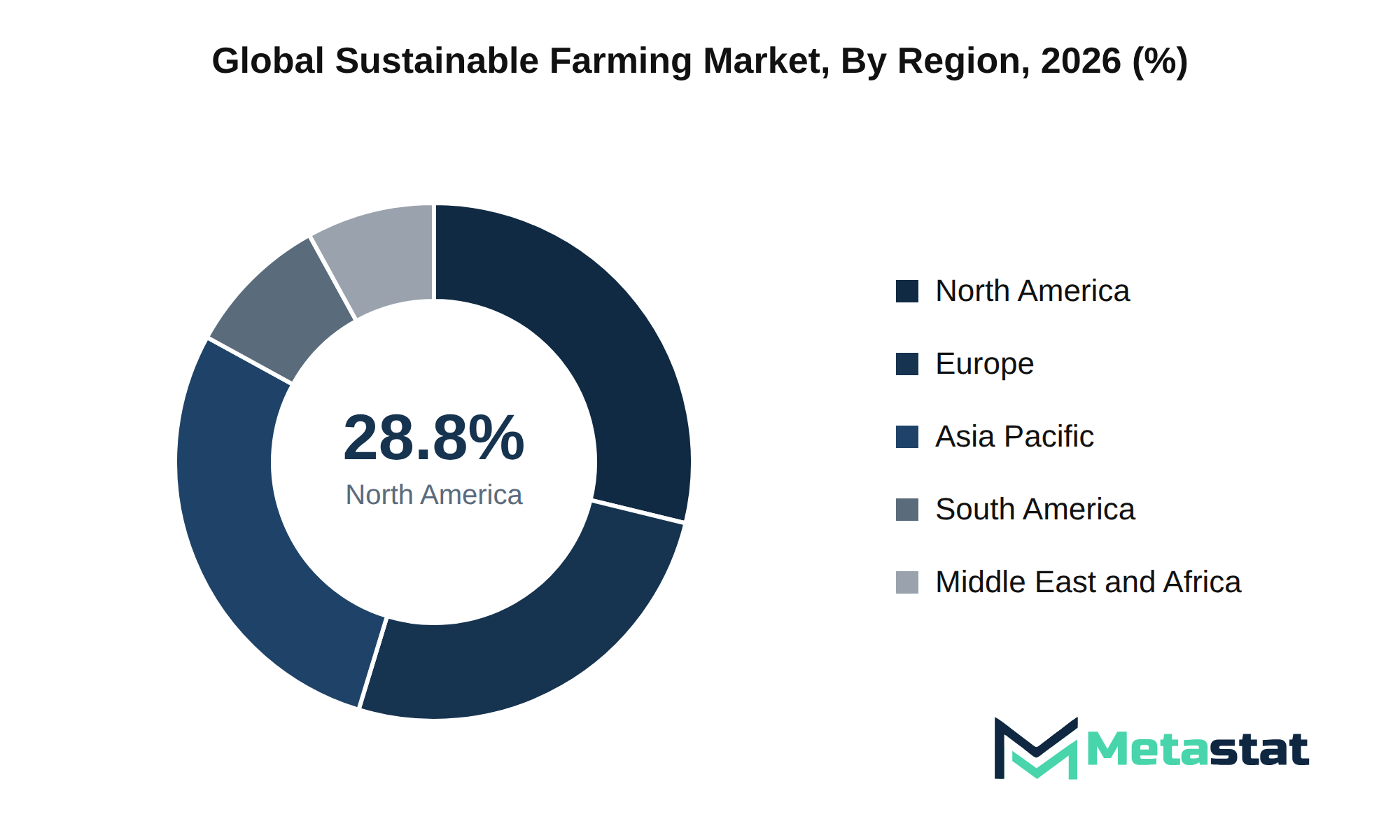
Regional dynamics play a significant role in shaping the market. North America holds a market share of 28.8%, followed closely by Asia Pacific at 28.3%. Europe follows with a market share of 25.9%. The variations among regions arise from differences in regulatory frameworks, consumer preferences, and agricultural practices. These variations influence the adoption of sustainable farming solutions.
The segment of biopesticides shows particular promise, anticipated to grow at a CAGR of 7.5% through 2033. This growth stems from increasing awareness among farmers regarding the benefits of biopesticides in reducing chemical inputs while maintaining crop health. The market for biostimulants, valued at USD 0.3 billion, is expected to sustain interest due to their ability to enhance crop resilience and yield.
In the context of farming systems, organic farming is projected to expand from USD 0.5 billion in 2026 to USD 0.7 billion by 2033, with a CAGR of 4.1%. This growth reflects consumer preference shifts toward organic produce, driven by health and environmental considerations. Regenerative agriculture shows strong potential, with expectations of reaching USD 0.7 billion by 2033, illustrating a broader movement toward sustainable practices in the agricultural sector.
Crop types including cereals and grains, projected to increase from USD 0.8 billion in 2026 to USD 1.1 billion by 2033, demonstrate a growing demand for sustainable practices in staple crops. This highlights the importance of sustainable farming solutions in enhancing food security while addressing environmental concerns.
The Sustainable Farming market experiences significant dynamics driven by regulatory compliance, standards, and geopolitical risk frameworks. These frameworks influence operational practices within the agricultural sector, shaping how companies approach sustainable practices. Compliance with evolving regulations often necessitates investment in new technologies and processes, impacting overall operational costs and long-term strategic planning.
Disruption in the market results from rapid advancements in R&D trajectories and next-generation innovations. These developments introduce new methods and technologies, enhancing productivity and sustainability. The incorporation of innovative solutions, including precision agriculture and biotechnology, transforms traditional farming practices, enabling producers to achieve higher yields with lower environmental impact.
Sustainable transformation and decarbonization efforts drive a shift towards circular economy dynamics within the market. This shift emphasizes resource efficiency and waste reduction, creating a more sustainable agricultural ecosystem. Companies increasingly adopt circular practices to minimize their carbon footprint, which in turn attracts environmentally-conscious consumers and investors alike.
The market's supply chain landscape reflects these trends, requiring a reevaluation of logistics architecture and sourcing strategies. Enhanced collaboration among suppliers, producers, and distributors supports the integration of sustainable practices throughout the supply chain, improving overall efficiency and reliability. This transformation presents opportunities for stakeholders to leverage sustainable sourcing, ultimately leading to improved brand reputation and customer loyalty.
Market fragmentation shapes competitive dynamics. Numerous players operate across various segments, including solution types, farming systems, crop types, and applications. This fragmentation encourages innovation, driven by companies striving to differentiate themselves through unique offerings and sustainable practices. M&A dynamics further influence the market, with strategic partnerships and acquisitions enabling firms to enhance their product portfolios and expand their market reach.
Value chain considerations remain essential in understanding the market's structure. Each segment contributes to the overall growth and sustainability of the agricultural ecosystem. Effective procurement strategies and customer journey dynamics are essential for optimizing value creation and ensuring that stakeholders achieve their sustainability goals.
Capital allocation and infrastructure investments are vital for supporting growth initiatives in the market. Companies are re-evaluating their CapEx and OpEx realities to align with sustainable objectives. This financial strategy enables firms to invest in innovative technologies and practices that drive long-term profitability while addressing environmental challenges.
Macroeconomic headwinds, including inflationary pressures and currency volatility, present challenges for the Sustainable Farming market. These factors influence production costs and pricing strategies, necessitating agile responses from market participants. Strategic planning amid these uncertainties ensures that companies remain resilient and competitive in a fluctuating economic landscape.
The future strategic outlook for the Sustainable Farming market emphasizes corporate imperatives that prioritize sustainability and innovation. Companies are expected to adopt high-value recommendations that align with market trends and consumer preferences, positioning themselves for success in an increasingly eco-conscious environment.
Macro-economic factors significantly influence the growth of the Sustainable Farming market. Increasing global economic activity, coupled with rising GDP, stimulates greater investment in sustainable agricultural practices. Enhanced capital investment environments, characterized by favorable interest rates and increased venture funding, enable farmers and agricultural producers to adopt innovative solutions that align with sustainability goals.
The expansion of public-private partnerships further supports this growth by providing additional funding sources for sustainable initiatives. These financial conditions encourage the development of new technologies that enhance operational productivity, streamline processes, and optimize resource use. Producers experience improved cost efficiency, enabling them to offer more competitive prices while adhering to sustainable practices.
This convergence of economic growth and investment in sustainable farming technologies positions the market for robust expansion. Increased consumer awareness and favorable demographic trends further drive demand for sustainable products, creating a more resilient agricultural sector that prioritizes environmental stewardship and long-term viability.
Digital transformation significantly impacts the Sustainable Farming market by enhancing operational efficiency and productivity. The integration of automation, artificial intelligence, and software solutions streamlines farming processes, reducing labor costs and increasing yield. Increasing availability of digital tools enables farmers to collect and analyze data in real time, facilitating informed decision-making regarding crop management and resource allocation. This trend attracts substantial capital investment, fueling further technological advancements.
Technological integration improves sustainability practices within the market. Farmers using precision agriculture tools optimize inputs like water and fertilizers, leading to reduced waste and environmental impact. Enhanced data analytics capabilities drive effective crop protection strategies, enabling targeted interventions that align with sustainability goals. The market experiences growth driven by rising demand for eco-friendly farming solutions that cater to evolving consumer preferences.
The shift toward digital transformation positions the Sustainable Farming market favorably for future expansion. Increased venture funding and public-private partnerships support the development and implementation of innovative technologies, ensuring that farmers remain competitive amid changing market dynamics. The combination of technological resources and sustainable practices attracts a growing consumer base prioritizing ethical farming, thereby expanding market reach and opportunities for revenue growth.
Regulatory tightening poses significant challenges for the Sustainable Farming market, impacting operational costs and compliance efforts for stakeholders. Increased regulatory requirements around sustainable practices necessitate investments in technology and processes, limiting the ability of several producers to adopt new methods swiftly. Compliance hurdles create barriers for smaller operators who lack resources to navigate complex regulations, inhibiting broader market participation and adoption.
Macroeconomic headwinds, including inflationary pressures, exacerbate these challenges. Rising input costs and fluctuating commodity prices strain profit margins. This situation leads to hesitancy in making investments. Consequently, these economic factors contribute to capital stagnation, suppressing growth potential and delaying advancements in sustainable practices across various agricultural segments.
Operational disruptions stem from supply chain instability and geopolitical factors. These disruptions lead to delays in accessing critical resources and technologies needed for sustainable farming, hampering timely implementation of sustainable practices. Infrastructure gaps and connectivity deficits in rural areas hinder the deployment of innovative solutions. This complicates efforts to enhance sustainability in farming.
Escalating operating costs and high capital investment requirements complicate the transition to sustainable farming methods. Increased financial burdens on producers deter investment in advanced technologies, limiting access to innovative solutions that drive efficiency and sustainability. Industry maturation and market saturation impact growth, leading to reduced incentives for investment and innovation among established players.
Ultimately, the combination of these factors creates a challenging environment for the Sustainable Farming market, affecting growth trajectories and limiting potential revenue generation opportunities. Stakeholders navigate these constraints to ensure sustainable practices gain traction and contribute to long-term market viability.
Geopolitical fragmentation presents substantial challenges for the Sustainable Farming market, influencing trade relations and supply chains. Tariff friction between nations disrupts access to essential agricultural inputs, increasing costs for producers. This situation affects various stakeholders, including farmers who rely on imported seeds and agricultural technologies. Rising prices associated with trade barriers create inflationary pressures, reducing profit margins and deterring investments in sustainable practices.
Technological disruptions emerge due to a significant factor, complicating research and development integrations. Innovations frequently depend on collaboration across borders, which geopolitical tensions impede. This fragmentation leads to delays and increased costs in developing new sustainable farming technologies, ultimately affecting market competitiveness. Companies face mounting pressure to innovate within constrained timelines, hindering their ability to meet evolving consumer demands for sustainable products.
Logistical disruptions further exacerbate challenges in the market. Supply chain instability due to geopolitical tensions results in unpredictable delivery schedules and increased transportation costs. Farmers experience difficulties in obtaining necessary materials, impacting crop yields and sustainability efforts. This instability prompts producers to explore local sourcing options, which are not always feasible or available, limiting the market's growth potential.
Increased environmental lifecycle footprints related to geopolitical factors present a concern. Initiatives aimed at decarbonization and sustainability face obstacles from fragmented regulatory environments. Different regions adopt varying standards, complicating compliance for businesses operating internationally. The evolving legal landscape surrounding sustainability demands significant resources for compliance, further straining operational budgets and affecting overall market growth.
Workforce skill gaps emerge amid these challenges, driven by the demand for skilled labor in sustainable practices exceeding supply. Automation displacements result in a transition period, where existing workers lack the necessary skills to adapt to new technologies. Talent retention pressures complicate workforce sustainability, creating a risk of operational inefficiencies within the market. Addressing these talent gaps is crucial for companies seeking to enhance their competitive positions in the Sustainable Farming market.
The Sustainable Farming market presents significant opportunities driven by emerging regional demands, infrastructure modernization, and technological disruptions. Increasing awareness among consumers regarding sustainability compels agricultural producers to adopt eco-friendly practices. This shift aligns with global sustainability imperatives, enhancing market attractiveness for innovative solutions that cater to environmentally conscious consumers.
Infrastructure modernization supports the expansion of sustainable farming practices by improving supply chain localization and reducing operational inefficiencies. Investments in modern farming technologies facilitate asset life-cycle extensions and maintenance upgrades, resulting in enhanced productivity and operational yield maximization. These initiatives create favorable conditions for market growth, ensuring producers remain competitive in an evolving environment.
Technological disruptions, including precision agriculture and advanced analytics, reshape farming methodologies and enable producers to optimize resource usage. Such innovations lead to increased operational efficiency, ultimately reducing costs and enabling higher profit margins. The integration of next-generation solutions, including biopesticides and biofertilizers, supports niche application growth within the Sustainable Farming market, catering to specific crop types and farming systems.
Strategic consolidation among market players further contributes to industry evolution. Mergers and acquisitions intensify competition, driving innovation and broadening product offerings. This consolidation allows companies to utilize complementary strengths, creating comprehensive solutions that enhance sustainability practices across various agricultural segments.
Recent shifts in buying behaviors and digital procurement trends influence purchasing decisions within the market. Producers increasingly prioritize sustainable solutions that align with consumer preferences and environmental expectations. The resulting demand for eco-friendly products and practices establishes a strong foundation for future growth within the Sustainable Farming sector.
The Global Sustainable Farming market is segmented based on Solution Type, Farming System, Crop Type, and Application.
Sustainable Farming market dynamics reflect the increasing importance of the Seeds and Traits segment, valued at USD 0.3 billion in 2026, with projections indicating growth to USD 0.4 billion by 2033. This growth represents a CAGR of 3.3% during the forecast period. Key drivers for this segment include rising demand for high-yield and resilient crop varieties, essential for meeting global food security needs.
Technological advancements in genetic modification and biotechnology enable the development of seeds with enhanced traits, including drought resistance and pest tolerance. This evolution is crucial for farmers facing unpredictable climate conditions and pest pressures. Adoption of these advanced seeds is prominent among large-scale agricultural producers aiming to maximize yield and minimize reliance on chemical inputs.
Regulatory compliance surrounding genetically modified organisms influences the landscape, creating both challenges and opportunities. Regions with progressive regulatory frameworks experience faster adoption of innovative seed technologies. These factors contribute to a strategic opportunity window for companies investing in research and development of next-generation seeds.
The segment's growth aligns with broader consumption shifts towards sustainable practices. Farmers increasingly prioritize eco-friendly farming methods. Competitive pressure among major players, including Bayer AG and Corteva Agriscience, drives continuous innovation in seed development. This environment significantly shapes market dynamics, enhancing investment opportunities and strategic partnerships within the sustainable farming ecosystem.
Growth in the biopesticides sub-segment of the Sustainable Farming market stems from increasing demand for environmentally friendly agricultural practices. Factors including rising consumer awareness regarding the adverse effects of synthetic pesticides drive farmers toward biopesticide solutions. Agricultural producers increasingly adopt biopesticides due to their compatibility with organic farming methods and the growing need for sustainable crop protection solutions.
Biopesticides are experiencing segment expansion attributed to technological advancements and product evolution. Innovations in formulation and application techniques enhance the efficacy of biopesticides, making them attractive alternatives to traditional chemical pesticides. This evolution aligns with shifting consumption patterns, where end-users favor products that comply with stringent environmental regulations.
Regulatory compliance plays a significant role in the biopesticides segment, driven by stringent policies that promote cleaner agricultural practices and incentivize the use of biopesticides. These regulations create strategic opportunity windows for manufacturers investing in the development of biopesticide products. Financial incentives and certifications further enhance market growth by encouraging producers to transition from conventional to sustainable farming methods.
Cost structures, including pricing volatility of raw materials, influence the biopesticides market. While initial production costs are higher than those of synthetic alternatives, the long-term benefits of using biopesticides, including improved soil health and resistance to harmful pests, present compelling advantages for farmers. This trend reinforces the segment's projected growth. The biopesticides segment is expected to reach USD 0.5 billion by 2033, at a CAGR of 7.5% during the forecast period.
Growing awareness of sustainable agricultural practices drives demand for biostimulants within the Sustainable Farming market. These products enhance crop resilience, growth efficiency, and nutrient uptake, attracting attention from farmers seeking to optimize yields while minimizing environmental impact. Increasing regulatory support for sustainable farming practices further accelerates the adoption of biostimulants, driven by governments promoting eco-friendly solutions through incentives and subsidies.
The biostimulants segment is expected to reach USD 0.3 billion by 2033, reflecting a strong growth trajectory within the broader market. This growth results from technological advancements that improve product efficacy and broaden the application range across various crops. Innovations in formulation and delivery methods enhance product performance, making biostimulants a critical component of modern agricultural practices.
End-use dynamics play a significant role in shaping market trends, with agronomists and farmers increasingly prioritizing biostimulants in crop protection and nutrient management strategies. The shift towards integrated farming systems creates a conducive environment for biostimulant adoption, because these products complement traditional agricultural inputs while addressing challenges including soil health and climate variability.
Regulatory compliance standards and certifications related to biostimulants contribute to market confidence and consumer acceptance. These factors enhance the segment's growth potential, allowing manufacturers to navigate market entry barriers effectively. Overall, investment in biostimulants represents a strategic opportunity, supporting sustainable agriculture objectives while meeting the rising global food demand.
Demand for biofertilizers reflects a growing emphasis on sustainable agricultural practices that enhance soil health and crop productivity. Increasing consumer awareness of environmental issues drives farmers to adopt eco-friendly solutions, resulting in a shift towards biofertilizers. Regulatory support encouraging the reduction of chemical fertilizers further supports this trend, with governments promoting organic farming and sustainable agricultural practices. This segment is projected to grow at a CAGR of 8.5% during the forecast period, highlighting its potential to capture significant market share.
Technological advancements in biofertilizer production contribute to the segment's expansion. Innovations in microbial formulations and delivery mechanisms improve the effectiveness of biofertilizers, driving their adoption across various agricultural applications. End-users, including large-scale farmers and organic cultivators, benefit from increased crop yields and reduced dependency on synthetic fertilizers, enhancing their operational efficiency and profitability.
Cost structures associated with biofertilizers remain competitive compared to traditional fertilizers. While initial investments are higher, long-term savings from reduced chemical inputs and enhanced soil health present a compelling case for adoption. Pricing volatility in the market reflects demand fluctuations and raw material sourcing challenges, but the overall trend indicates a steady increase in biofertilizer acceptance among agricultural producers.
Strategic investment in research and development of biofertilizers drives innovation and product evolution. Companies focus on developing next-generation biofertilizers tailored to specific crops and soil conditions, ensuring optimized performance. This proactive approach enables market participants to address diverse agricultural needs, enhancing their competitive advantage in the sustainable farming market.
Increasing emphasis on sustainable agricultural practices drives demand for organic fertilizers, which support soil health and enhance crop yields. Consumer trends favoring organic produce further fuel this demand, driven by environmentally-conscious consumers seeking products free from synthetic chemicals. This shift aligns with global initiatives promoting sustainable farming methods aimed at reducing chemical inputs in agriculture.
Technological maturation influences the organic fertilizers segment, supported by advancements in bioengineering and microbial formulations that improve product efficacy. Innovations in product formulations and application methods enable better nutrient absorption and crop responsiveness. While competition intensifies, suppliers invest in research and development to introduce next-generation organic fertilizers, enhancing their market positions.
Regulatory compliance influences market conditions, with stricter guidelines encouraging the adoption of organic fertilizers. Certifications related to organic farming enhance consumer confidence and support market growth, attributed to their guarantee of adherence to specific standards. This growing regulatory framework presents opportunities for suppliers to differentiate their products through quality assurance and sustainable sourcing practices.
Pricing volatility poses challenges, particularly in sourcing raw materials for organic fertilizers. Fluctuations in the availability of organic inputs lead to cost pressures, impacting profit margins for producers. However, consumer demand continues to rise, prompting suppliers to explore strategic partnerships and vertical integration to stabilize their supply chains and mitigate risks associated with raw material sourcing.
Investment in marketing and education remains essential for promoting organic fertilizers. Educating farmers on the benefits and application of organic solutions encourages adoption, while marketing efforts focusing on sustainability attract environmentally-conscious consumers. This dual approach enhances the visibility of organic fertilizers within the broader sustainable farming market and supports segment growth.
Precision agriculture technologies, sustainable irrigation solutions, and farm machinery and automation represent essential components within the Sustainable Farming market. Increasing pressure on food production efficiency, driven by population growth and climate change, drives adoption of these advanced technologies. Farmers seek precision agriculture solutions to optimize resource use, reduce waste, and enhance crop yields, aligning with sustainability goals.
Technological maturation in data analytics, IoT, and automation generates significant interest in these solutions. Improved sensor technologies and big data applications facilitate real-time monitoring and decision-making, leading to better land and resource management. This strategic shift toward data-driven farming not only enhances productivity but supports environmental stewardship.
Next-generation upgrades in farm machinery contribute to the segment's expansion. Enhanced automation in planting, irrigation, and harvesting processes streamlines operations and reduces labor costs. Manufacturers focus on developing equipment that integrates advanced technologies, including GPS and AI, to provide farmers with superior precision and efficiency.
Downstream applications of these technologies influence various farming systems and crop types, reflecting their support for diverse agricultural practices, including organic farming and regenerative agriculture. The versatility of precision agriculture tools allows for wider implementation across different crops and farming systems, enhancing their attractiveness to producers seeking tailored solutions for specific challenges.
Regulatory compliance standards increasingly mandate sustainable practices, pushing farmers to invest in technologies that meet eco-friendly criteria. Certifications related to sustainable farming further motivate manufacturers to innovate and improve their offerings. This regulatory landscape encourages strategic investments in precision agriculture technologies and sustainable irrigation solutions.
Cost structures associated with these technologies remain a critical consideration. While initial investment is substantial, the long-term operational savings and increased efficiency offer compelling financial incentives. Price volatility in raw materials influences the pricing of farm machinery, necessitating ongoing adaptation by manufacturers to maintain competitiveness in the market.
Strategic opportunity windows arise from the growing emphasis on sustainability and environmental responsibility in agriculture. Investment in this sub-segment aligns with broader market trends, because stakeholders prioritize operational resilience and resource efficiency. Capital investment outlooks indicate a favorable environment for innovation, because firms recognize the potential returns associated with precision agriculture and sustainable solutions.
Valued at USD 0.5 billion in 2026, the Organic Farming segment is projected to reach USD 0.7 billion by 2033, representing a CAGR of 4.1% during the forecast period. Increasing consumer preference for organic products drives substantial demand for organic farming practices. This preference aligns with rising health consciousness and environmental sustainability concerns, leading to greater adoption among farmers and producers.
Regulatory compliance standards highlighting organic certifications enhance market growth potential. Farmers face requirements to meet specific organic practices, which necessitate investment in training and resources. This compliance builds consumer trust in organic products while ensuring quality and safety standards are upheld.
Technological maturation optimizes organic farming methods. Innovations in biopesticides and biofertilizers provide effective alternatives to synthetic chemicals, enhancing productivity while maintaining organic integrity. The market benefits from ongoing research and development focused on sustainable agricultural practices and efficient farming solutions.
Growing investment in organic farming reflects strategic opportunity windows for stakeholders. Capital investment in technologies that support organic farming practices positions companies favorably within the expanding market. Increased awareness regarding environmental impact and food sourcing fuels this investment trend.
Consumption shifts toward organic products significantly influence downstream application dynamics. Retailers report increasing sales of organic foods, reflecting changing consumer preferences toward healthier options. This trend encourages farmers to expand their organic offerings, aligning production with market demand.
Growth in the Regenerative Agriculture segment reflects a rising focus on sustainable farming practices that aim to restore soil health, enhance biodiversity, and improve ecosystem services. Increasing environmental awareness among consumers and regulatory bodies drives the adoption of regenerative practices, resulting in greater emphasis on soil carbon sequestration and decreased chemical inputs. Farmers, particularly those engaged in large-scale crop production, benefit from improved yields and reduced dependency on synthetic fertilizers and pesticides by implementing regenerative techniques. This transition not only improves farm resilience against climate change but enhances profitability through cost savings associated with reduced inputs.
Investment in research and development accelerates technological maturation within the segment, leading to innovative solutions that promote regenerative practices. Enhanced crop varieties and soil amendment technologies emerge because critical components in the evolution of regenerative agriculture, enabling farmers to achieve higher productivity while maintaining a commitment to sustainable practices. The segment's growth trajectory aligns with rising demand for organic and sustainably sourced products, positioning regenerative agriculture because a key player in the Sustainable Farming market.
Market projections indicate the regenerative agriculture segment is estimated to reach USD 0.7 billion by 2033, at a CAGR of 7.3% during the forecast period. This growth highlights the segment's important role in addressing contemporary agricultural challenges while meeting the increasing consumer demand for environmentally responsible food production.
Growth in the Conservation Agriculture segment reflects a shift towards sustainable farming practices that enhance soil health, promote biodiversity, and improve water management. Factors driving adoption include increasing consumer awareness of environmental issues and the need for farmers to comply with stricter regulatory standards aimed at reducing the use of harmful chemicals. Producers across various regions recognize the long-term economic benefits associated with conservation agriculture, including improved yields and lower input costs, contributing to the segment's development.
Technological advancements play a crucial role in the expansion of conservation agriculture. Innovations in planting techniques and soil management technologies enable farmers to implement these practices effectively. The integration of data analytics and precision farming tools further supports the optimization of agricultural operations, ensuring resource efficiency and enhanced crop performance. The segment is projected to reach USD 0.5 billion by 2033, driven by increased investments and innovations in sustainable agricultural solutions.
End-use dynamics indicate that both large-scale agribusinesses and smallholder farmers increasingly adopt conservation agriculture practices. This trend reflects a broader shift within the Sustainable Farming market towards environmentally responsible agricultural methods. Regulatory compliance continues to shape market dynamics, with policies favoring sustainable practices creating a supportive environment for conservation agriculture growth.
Growth in the Agroecology segment reflects a shift towards sustainable agricultural practices that prioritize ecological balance and biodiversity. Increased consumer demand for organic and environmentally friendly products drives this shift. Key stakeholders in the agriculture and food sectors adopt agroecological methods to enhance soil health, conserve water, and improve yield resilience. This trend leads to more investments in research and development of agroecological technologies, contributing to the segment's projected growth at a CAGR of 6.3% during the forecast period.
Adoption of agroecology aligns with regulatory frameworks promoting sustainable farming practices. Governments and regulatory bodies implement policies that incentivize practices reducing chemical inputs and enhancing ecosystem services. Incorporating agroecological techniques modifies supply chain dynamics, driven by producers sourcing sustainable materials and engaging in practices that minimize environmental impact. This transformation encourages a competitive edge for businesses committed to sustainability, positioning them favorably in the evolving market.
Technological maturation in agroecology supports the integration of advanced farming techniques, including precision agriculture and data-driven decision-making. These developments enhance operational efficiency and yield optimization, appealing to both traditional and modern farmers. The positive impact of agroecology on crop productivity and sustainability encourages broader acceptance among growers, leading to increased market penetration and revenue growth. In the Sustainable Farming market, the Agroecology segment plays a critical role in addressing ecological challenges while meeting rising global food demand.
Increasing focus on sustainable agriculture practices drives the demand for Integrated Farming Systems. These systems combine various agricultural practices to enhance productivity while minimizing environmental impact. Factors including the growing consumer preference for sustainably sourced food drive adoption among farmers seeking to meet market demands. Technological maturation plays a significant role in this segment, with advancements in precision agriculture and data analytics enabling more efficient resource use.
Investments in next-generation upgrades support the integration of modern technologies, enhancing yields and improving farm management. The evolution of products within this segment aligns with the growing emphasis on farming approaches that consider ecological balance. Downstream applications reflect an increased focus on maximizing productivity while adhering to sustainability standards, further propelling segment growth.
Shifts in consumption patterns towards organic and sustainably produced food impact end-use dynamics across various consumer segments. Regulatory compliance standards influence operational methodologies, prompting farmers to adopt integrated systems that align with environmental regulations. Cost structures within Integrated Farming Systems benefit from optimized resource allocation, contributing to resilience in the supply chain. Pricing volatility remains a concern, affecting margins and operational strategies for farmers within this segment.
Raw material sourcing strategies adapt to mitigate risks associated with supply chain vulnerabilities, ensuring a steady flow of inputs required for integrated farming practices. Substitution risks arise from the availability of alternative agricultural practices, prompting a continuous assessment of competitive approaches. Disruptive alternatives, including vertical farming and urban agriculture, present challenges that Integrated Farming Systems address to maintain relevance. Strategic opportunity windows emerge, encouraging capital investment to enhance farming capabilities and meet evolving market demands within the Sustainable Farming market.
Cereal and grain production plays a critical role in the Sustainable Farming market, contributing significantly to food security and agricultural sustainability. Valued at USD 0.8 billion in 2026, this segment is projected to reach USD 1.1 billion by 2033, at a CAGR of 4.5% during the forecast period. Key drivers of this growth include increasing global population demands, which elevate the need for efficient agricultural practices that enhance yield and reduce environmental impact.
Technological advancements in seed traits and crop management practices fuel segment expansion. The integration of precision agriculture techniques enhances productivity while minimizing resource use. Adoption of biopesticides and biofertilizers contributes to healthier crop production, aligning with sustainability goals. These factors create a favorable environment for cereals and grains, reinforcing their importance in meeting dietary needs and supporting sustainable practices.
Changing consumer preferences toward organic and sustainably sourced food further drive demand within this segment. Regulatory compliance, particularly regarding environmental standards, influences production practices and encourages investment in sustainable technologies. Adapting to these regulatory frameworks enhances competitiveness and market position.
Supply chain resilience remains crucial for the cereals and grains segment. Efficient raw material sourcing and logistics management directly impact cost structures and pricing stability. Strategic opportunities arise from investments in innovation and collaboration among stakeholders, including agricultural technology companies and traditional farmers. These collaborative efforts support the long-term growth outlook for cereals and grains within the broader Sustainable Farming market.
Growing demand for oilseeds and pulses reflects a shift toward plant-based diets and increased awareness regarding sustainability. These crops act because essential sources of protein and healthy fats, aligning with consumer preferences for nutritious and environmentally friendly food options. The substantial growth in the market results from rising health consciousness and the search for sustainable food sources among consumers, particularly in North America and Europe.
This segment benefits from advancements in agricultural technologies that improve yield and reduce environmental impact. Innovations in biopesticides and biofertilizers significantly enhance crop production and soil health. These technologies support the expansion of the oilseeds and pulses segment, enabling lower input costs and better resource efficiency.
Regulatory compliance standards further drive the demand for sustainable farming practices, compelling producers to adopt environmentally friendly methods. Certifications related to organic and sustainable farming enhance market accessibility, allowing farmers to tap into premium pricing models. The Oilseeds and Pulses segment is estimated to reach USD 0.6 billion by 2033, at a CAGR of 5.5% during the forecast period.
Increased investment in research and development strengthens the segment's growth potential. Capital investments in technology and innovation facilitate the introduction of new varieties and production methods. This strategic opportunity window enhances competitiveness in the market, driving demand for oilseeds and pulses in both domestic and export markets.
Increasing health consciousness among consumers drives demand for fresh produce, enhancing the growth of the Fruits and Vegetables segment within the Sustainable Farming market. Notable shifts towards plant-based diets and organic products influence purchasing behavior, prompting growers to adopt sustainable practices for higher yields and quality. Investments in advanced agricultural technologies, including precision farming and innovative crop management solutions, contribute to this segment's expansion. These technologies enable better resource utilization and improved crop resilience, aligning with environmental regulations and consumer preferences for sustainable practices.
The Fruits and Vegetables segment is projected to reach USD 0.7 billion by 2033. The rising trend towards local sourcing and shorter supply chains enhances market dynamics, reducing transportation costs and increasing freshness. Regulatory compliance standards further incentivize sustainable practices among producers, supporting the segment's growth. Strategic partnerships and collaborations within the industry strengthen supply chain resilience, enabling stakeholders to navigate market challenges effectively.
Growth in the Others (Sugar Crops, Fiber and Industrial Crops) segment reflects a significant shift towards sustainable practices in crop production. Increasing demand for diverse agricultural products drives producers to adopt sustainable farming techniques, enhancing yield and contributing to environmental stewardship. The integration of technological advancements, including precision agriculture and biopesticides, supports the optimization of resource use and crop management in this sub-segment.
Investments in research and development play a crucial role in enhancing the efficiency of sugar crops, fiber, and industrial crops. This investment landscape encourages innovation, resulting in the emergence of next-generation solutions that align with sustainability goals. A continuous focus on compliance with regulatory standards influences product development, ensuring sustainable practices throughout the cultivation process.
The Others (Sugar Crops, Fiber and Industrial Crops) segment is projected to grow at a CAGR of 5.6% during the forecast period. This growth trajectory is fueled by shifting consumption patterns that favor sustainable and eco-friendly products. Sustainability becomes a core component of agricultural practices, and end-users increasingly prioritize sourcing products that meet these criteria, ultimately driving market expansion.
Strategic opportunities arise from the increasing focus on sustainable farming methods, enhancing supply chain resilience. Producers engage in raw material sourcing for the Others segment, highlighting the importance of maintaining robust supply chains. Addressing substitution risks and exploring disruptive alternatives contribute to the segment's growth, establishing a solid foundation for future investments in sustainable practices.
Overall, the Others (Sugar Crops, Fiber and Industrial Crops) segment is poised for substantial growth within the Sustainable Farming market, driven by evolving consumer preferences and a strong emphasis on sustainability across agricultural practices.
Valued at USD 0.7 billion in 2026, the Crop Production segment is projected to reach USD 0.9 billion by 2033, at a CAGR of 4.7% during the forecast period. Demand for sustainable farming practices drives growth in this segment, driven by agricultural producers increasingly recognizing the importance of environmentally responsible methods. The shift toward organic and regenerative farming techniques influences adoption, with consumers opting for food products that reflect these sustainable practices.
Technological advancements in crop production enhance productivity and resource efficiency, attracting investment from stakeholders across the agricultural value chain. Innovations including precision agriculture, biopesticides, and biofertilizers contribute to operational improvements, aligning with current sustainability trends. These advancements enable producers to maintain competitiveness while meeting the rising regulatory standards associated with sustainable farming.
Downstream applications highlight the importance of sustainable crop production methods, driven by end-users demanding higher quality and environmentally friendly products. The impact of shifting consumer preferences reinforces the need for producers to adapt their strategies, focusing on sustainable practices that align with health-conscious consumers. The market anticipates increased capital investment to support these shifts, driving growth in the Crop Production segment of the Sustainable Farming market.
Growing awareness regarding crop health and protection drives demand for advanced solutions in the Sustainable Farming market. A shift towards sustainable agricultural practices influences the adoption of innovative crop protection products, leading to improved yield and quality of crops. This trend aligns with increasing agricultural productivity requirements and consumer preferences for sustainably sourced produce.
Technological advancements in biopesticides and biofertilizers enhance product efficacy and environmental compatibility. The evolution of these products supports enhanced pest management strategies, leading to reduced chemical inputs and improved crop resilience. This focus on sustainability encourages investments in the Crop Protection segment, driving research and development for next-generation solutions.
Regulatory compliance concerning pesticide usage and environmental impact shapes market dynamics. Strict regulations surrounding chemical applications drive demand for biopesticides and organic solutions, aligning with global sustainability goals. Suppliers face challenges in adapting to these standards while ensuring product availability and affordability.
The Crop Protection segment is estimated to reach USD 0.8 billion by 2033, at a CAGR of 6.2% during the forecast period. Increased competition among key players stimulates innovation and cost-effective solutions, enhancing market growth prospects. A strategic opportunity window exists for companies investing in sustainable crop protection technologies to meet evolving market demands.
Growing awareness of the benefits associated with nutrient management strategies significantly influences market dynamics. The drive towards sustainable agriculture encourages the adoption of advanced nutrient management solutions. Increasing costs associated with conventional fertilizers and growing environmental concerns drive farmers to seek more sustainable options, thus driving demand in the Sustainable Farming market. The integration of precision agriculture technologies enhances the efficiency of nutrient application, maximizing crop yields while minimizing environmental impact.
Investment in research and development advances nutrient management technologies. Innovations in biofertilizers and organic amendments emerge owing to effective alternatives that cater to a growing segment of eco-conscious consumers. Regulatory compliance regarding nutrient usage further pushes farmers towards adopting these sustainable practices, ensuring alignment with environmental standards. By 2033, the Nutrient Management segment is expected to reach USD 0.6 billion, reflecting significant growth fueled by evolving agricultural practices.
Competition within the market intensifies because players recognize the strategic importance of nutrient management solutions. Companies expand their portfolios to include products that enhance nutrient efficiency and sustainability. This trend not only supports profitability but aligns with broader industry shifts toward environmentally responsible practices. Overall, advancements in nutrient management serve because a critical component in the transition towards more sustainable farming methods.
Growth in the Others (Farm Monitoring and Decision Support, and Harvesting and Post-Harvest Operations) segment reflects an increasing focus on technology integration in agricultural practices. Rising demand for efficient farm management solutions drives investment in monitoring systems and decision support tools, enabling better resource allocation and yield optimization. Advancements in automation technologies enhance harvesting processes, reducing time and labor costs associated with post-harvest operations. This segment is projected to grow at a CAGR of 4.7% during the forecast period, highlighting its importance in the Sustainable Farming market.
The adoption of smart farming technologies significantly influences this segment. Farmers increasingly seek solutions that provide real-time data and insights, allowing for informed decision-making and timely interventions in crop management. Regulatory pressures regarding sustainability and resource efficiency increase the need for innovative solutions in farm monitoring and post-harvest practices. Consequently, this creates a robust environment for growth within the market.
Investment in digital agriculture and data analytics capabilities enhances operational efficiencies, leading to improved profitability for stakeholders involved in the segment. The integration of artificial intelligence and machine learning in decision support systems enhances predictive analytics, enabling proactive management of agricultural challenges. These developments open strategic opportunity windows for companies operating within the segment, encouraging innovation and competitive advantage.
Based on geography, the Global Sustainable Farming market is divided into North America, Europe, Asia-Pacific, South America, Middle East, and Africa.
North America is a key player in the Sustainable Farming market, with a projected market size of USD 0.8 billion by the end of 2033, expanding at a CAGR of 5.3% within the forecast period. The region holds a significant share of the global market in 2025, highlighting its importance and contribution to sustainable agricultural practices.
Primary demand drivers in the region include a shift towards environmentally friendly agricultural methods, driven by increasing consumer awareness and regulatory support for sustainable practices. Adoption rates are expected to rise due to farmers recognizing the long-term benefits of sustainable techniques in enhancing soil health and crop yields. The integration of advanced technologies, including precision agriculture and bioproducts, supports this transition, improving efficiency and resource management.
Emerging market front-runners in North America encompass countries like the United States, Canada, and Mexico, each contributing to the regional growth through unique agricultural practices. Infrastructure modernization and investment in local manufacturing capabilities strengthen the supply chain, leading to increased efficiency and reduced operational costs. These developments enhance market penetration and support the adoption of innovative solutions in sustainable farming.
High-value replacement cycles encourage farmers to invest in new technologies and sustainable practices, further driving demand in the market. Incremental growth vectors, including localized procurement dynamics and strategic entry barriers, create opportunities for both established players and new entrants within the market. Regional compliance mandates shape purchasing behaviors, compelling stakeholders to align with sustainability goals.
Key players in the North American Sustainable Farming market include Bayer AG, Syngenta Group, Corteva Agriscience, BASF Agricultural Solutions Deutschland GmbH, UPL, FMC Corporation, and Yara International ASA. These companies leverage their positions to drive innovation, enhance product offerings, and address the evolving needs of the agricultural sector. Their ability to adapt to changing market conditions is essential in shaping the competitive environment.
Overall, North America's Sustainable Farming market presents robust opportunities for growth driven by evolving consumer preferences, regulatory frameworks, and technological advancements. The combination of these factors positions the region for continued expansion and leadership within the global market.
Europe represents a significant portion of the Sustainable Farming market. Key factors driving this market include a strong regulatory framework that emphasizes sustainable agricultural practices, alongside increasing consumer demand for organic and locally sourced products. Countries including Germany, France, the UK, Italy, and Spain are experiencing growth in the organic farming segment, driven by rising health consciousness among consumers and governmental support for sustainable practices.
Emerging market front-runners like Germany and France contribute to advancements in agricultural technology and sustainable practices, enhancing overall market dynamics. Local compliance mandates push for innovative farming solutions, encouraging investment in biopesticides and biofertilizers. The integration of modern technologies in traditional farming systems boosts productivity, addressing challenges posed by an aging workforce and climate change.
Competitive landscapes in the region are characterized by the presence of companies including Bayer AG and Syngenta Group, which drive research and development of advanced agricultural solutions. Increasing collaboration among domestic market participants promotes innovation and facilitates market penetration in underrepresented territories. This collaborative effort enhances the availability of sustainable farming solutions, ultimately promoting market expansion.
Regional resource availability, including arable land and water, influences cultivation practices, impacting overall market performance. Countries in Europe focus on energy grid resiliency and local infrastructure readiness to support the transition towards sustainable practices. Foreign direct investment flows into the region further strengthen the market, attracting new players and encouraging competition.
Asia-Pacific holds a share of the Sustainable Farming market, accounting for 28.3% in 2025. The region's diverse agricultural landscapes, coupled with rapid economic growth, drive a growing demand for sustainable agricultural practices. Countries including China, India, and Japan lead in adopting innovative farming techniques that prioritize sustainability and productivity. Investment in organic farming, biopesticides, and biofertilizers reflects a strategic focus on improving crop yields while minimizing environmental impact. Infrastructure modernization and advances in technology further enhance the capabilities of local farmers, enabling them to meet rising food demands sustainably.
Emerging market front-runners, particularly in Southeast Asia, exhibit growth potential due to increasing consumer awareness and government support for sustainable initiatives. The shift toward regenerative agriculture in Australia and South Korea highlights a commitment to long-term sustainability goals. Regional compliance mandates and agricultural policies are evolving, encouraging practices that ensure food security while protecting natural resources.
Localized manufacturing densities strengthen supply chain resilience, reducing reliance on imported agricultural solutions. Domestic market participants like Bayer AG and Syngenta Group play an important role in driving innovation and collaboration within the region. The competitive landscape undergoes transformation driven by vendor consolidation trends, resulting in enhanced resource allocation and improved market offerings.
Brazil and Argentina represent the primary markets for sustainable farming within South America, with Brazil holding a substantial market share. The focus on sustainable agricultural practices in these countries drives growth, influenced by rising health consciousness and environmental concerns among consumers. Brazil's diverse agricultural landscape, characterized by large-scale farming operations, supports significant investment in sustainable methods, positioning the country because a leader in the market.
Argentina demonstrates a commitment to sustainability through policy initiatives that encourage modern farming techniques. The increasing adoption of biopesticides, biofertilizers, and organic farming practices highlights the country's efforts to enhance agricultural productivity while minimizing environmental impact. The combination of strong agricultural output and a growing emphasis on sustainability results in a dynamic market, with the sustainable farming market in South America projected to achieve a 9% share of the global market by 2025.
The rest of South America presents emerging opportunities for sustainable farming, with various countries beginning to adopt innovative practices and technologies. The gradual modernization of agricultural infrastructure supports the expansion of sustainable methods across the region. Demand for sustainable farming solutions is expected to increase, driven by both local initiatives and global market trends.
In the Middle East and Africa, the Sustainable Farming market represents a growing segment with considerable potential for expansion. The market's share of the global total is projected at 8.00% in 2025, indicating a substantial role within the overall market. Key drivers include increasing investments in agricultural technology and sustainable practices, particularly in countries like Saudi Arabia and the UAE, where government initiatives support modernization in farming systems.
Rapid urbanization and rising populations in these regions contribute to heightened demand for efficient food production methods. South Africa leads the region in agricultural output, benefiting from advanced farming techniques and technologies that enhance yield and sustainability. The Rest of Middle East and Africa presents emerging opportunities, with investments directed towards enhancing local agricultural infrastructure and capacity to meet growing food security challenges.
The competitive landscape includes several players committed to innovating within the Sustainable Farming market. Companies including Bayer AG, Syngenta Group, and Corteva Agriscience are actively involved in supplying biopesticides and biofertilizers that align with the region's sustainability goals. Continued focus on improving agricultural practices and resource management is expected to drive market growth, with significant contributions from the organic farming segment, anticipated to reach USD 0.7 billion by 2033.
Overall, the combination of government support, technological advancements, and a focus on sustainability positions the Middle East and Africa because a significant contributor to the global Sustainable Farming market, driving further investment and innovation in the sector.
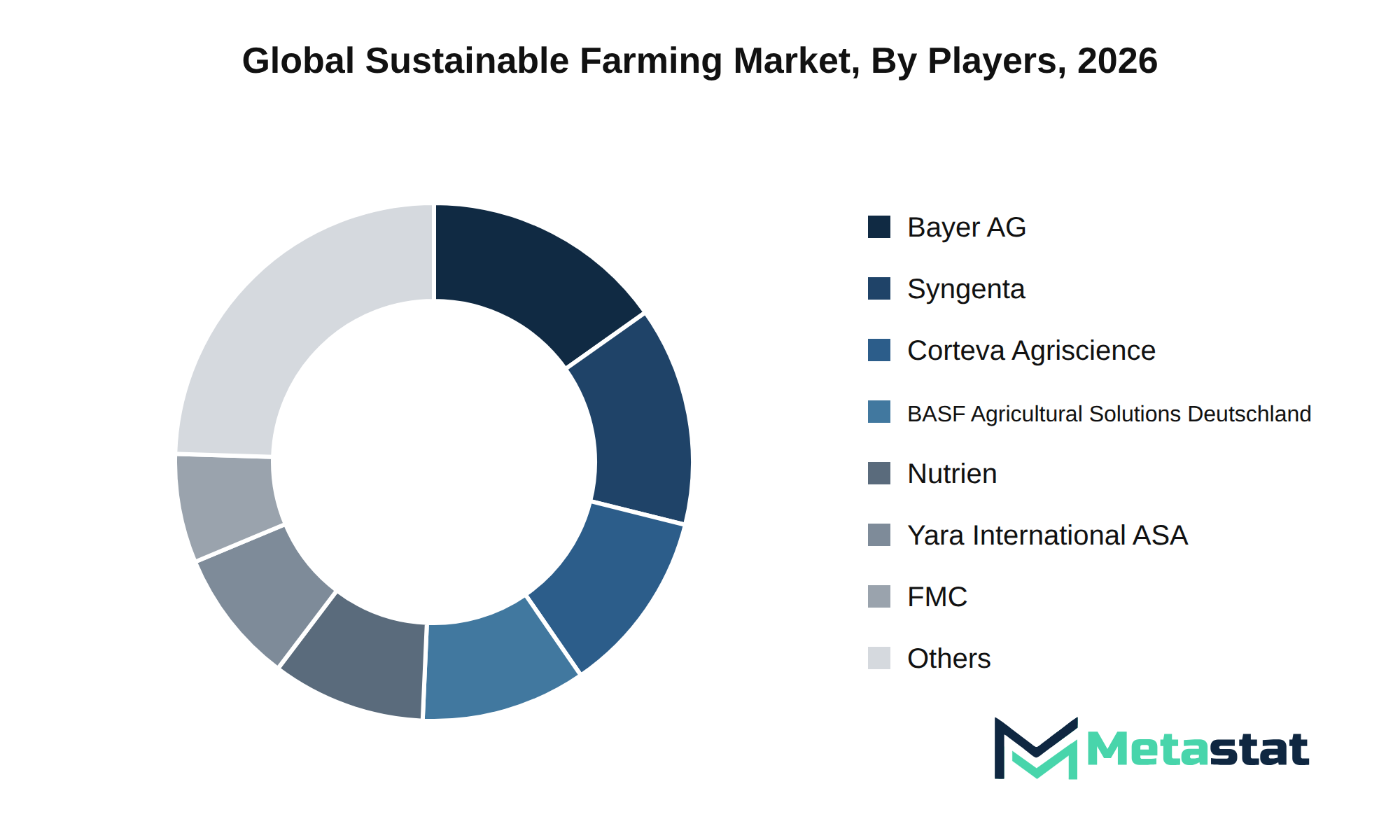
The competitive environment within the Sustainable Farming market experiences significant dynamics through mergers, acquisitions, and strategic consolidation. Major players, including Bayer AG, Syngenta Group, and Corteva Agriscience, pursue strategic alliances to enhance their product offerings and expand market reach. These partnerships focus on the development of proprietary technologies and innovative solutions, enabling companies to create a competitive advantage in an evolving market.
Pricing architectures reflect competitive pressures, with companies implementing various commercial models tailored to meet diverse customer needs. For instance, firms like BASF Agricultural Solutions Deutschland GmbH and UPL emphasize differentiated product lines, leveraging R&D pipelines to bring unique offerings to market. Such strategies improve customer retention by enhancing brand equity and establishing long-term relationships with key stakeholders.
The threat of new entrants remains a notable consideration in the market. Increased investment in sustainable technologies attracts startups and emerging players, presenting challenges to established firms. Companies including Nutrien and Yara International ASA navigate these disruptions by integrating value chain strategies, ensuring control over supply chains while maintaining procurement leverage. This integration aids in managing switching costs for customers, further strengthening market positions.
Intellectual property portfolios and patent landscapes significantly influence competitive positioning. Firms invest heavily in technological defensibility, ensuring that innovations remain protected from competitors. The future competitive outlook shows a focus on strategic growth vectors, where companies prioritize sustainability and efficiency within their operations. This structured approach positions the Sustainable Farming market for continued expansion through 2033.
Market size is forecast to rise from USD 1.9 billion in 2025 to over USD 2.8 billion by 2033, reflecting a compound annual growth rate (CAGR) of 5.3%. This growth is driven by an evolving macroeconomic landscape characterized by increased consumer awareness about sustainability and a global push towards environmentally friendly farming practices.
The bull case anticipates accelerated adoption of sustainable farming technologies supported by heightened regulatory support and substantial capital investment in research and development initiatives. This scenario encourages innovation, resulting in rapid product commercialization and a surge in market penetration across regions.
Conversely, the bear case suggests potential challenges, including economic fluctuations that lead to reduced investment in sustainable practices and slower regulatory enforcement. In this scenario, market participants face a more arduous path to achieving projected growth targets.
Overall, the Sustainable Farming market is projected for substantial growth, reflecting structural shifts towards sustainable practices, increased demand for organic products, and advancements in next-generation agricultural technologies.
The report strategically identifies and profiles the key market players and analyses their core competencies in each sub-segment of the Sustainable Farming market.
Report Attributes | Details |
Study Period | 2021-2033 |
Base Year | 2025 |
Estimated Year | 2026 |
Forecast Period | 2026-2033 |
Historical Period | 2021-2025 |
Growth Rate | CAGR 5.3% from 2026 to 2033 |
Revenue Unit | USD billion |
Segmentation | By Solution Type, Farming System, Crop Type, Application, and Region |
By Region | North America (By Solution Type, Farming System, Crop Type, Application, and Country)
|
Europe (By Solution Type, Farming System, Crop Type, Application, and Country)
| |
Asia Pacific (By Solution Type, Farming System, Crop Type, Application, and Country)
| |
South America (By Solution Type, Farming System, Crop Type, Application, and Country)
| |
Middle East and Africa (By Solution Type, Farming System, Crop Type, Application, and Country)
|
Find answers to common questions about this report
The Sustainable Farming market size was valued at USD 1.9 billion in 2025.
The Sustainable Farming market is projected to grow at a CAGR of 5.3% during the forecast period from 2026 to 2033.
The North America Sustainable Farming market size is estimated to reach USD 0.8 billion by 2033.
Biopesticides lead the Sustainable Farming market, with a projected value of USD 0.5 billion by 2033. This segment's growth reflects a compound annual growth rate of 7.5%.
Key drivers for the Sustainable Farming market include macro-economic factors including increasing global economic activity and rising GDP, which stimulate greater investment in sustainable agricultural practices. Enhanced digital transformation through automation and data analytics improves operational efficiency, while growing consumer awareness drives demand for eco-friendly farming solutions.
North America holds the dominant share of the Sustainable Farming market, accounting for 28.8 percent in 2025. This regional share positions North America ahead of Europe, which holds 25.9 percent.
Regulatory tightening and increased operational costs significantly restrain growth in the Sustainable Farming market. Compliance with evolving regulations requires substantial investments, particularly impacting smaller producers. macroeconomic headwinds, including inflation and supply chain disruptions, further complicate the adoption of sustainable practices, limiting investment and innovation opportunities.
Increasing global economic activity, favorable interest rates, and enhanced public-private partnerships favor product adoption in the Sustainable Farming market. These factors enable farmers to invest in innovative technologies that improve operational efficiency and align with sustainability goals, thereby attracting a growing consumer base prioritizing eco-friendly practices.
The Sustainable Farming market is estimated to reach a valuation of USD 2.8 billion by 2033.
Key players in the Sustainable Farming market include Bayer AG, Syngenta Group, Corteva Agriscience, BASF Agricultural Solutions Deutschland GmbH, UPL, FMC Corporation, and Yara International ASA.
The analysts below cover Agriculture research at Metastat Insights.
LEAD ANALYST
Utkarsh Khirodkar is a Lead Market Research Analyst at MetaStat Insight, specializing in market intelligence, technology sector assessments, and competitive strategy.
In the biological seed treatment space, registration timelines vary drastically between the European Union, Brazil, and North America. The MetaStat Insight research handled these cross-border regulatory barriers with genuine nuance, mapping commercialization pathways alongside historical field adoption rates. The segmentation between microbial strains and biochemical active ingredients was particularly well structured.
Our team was tracking whether regional recycling infrastructure could realistically absorb the growing volume of lithium iron phosphate batteries over the next decade. The report did a solid job separating announced hydrometallurgical plant capacity from active, permitted operational throughput. That distinction made the feedstock availability projections and regional recovery rate models far more credible than standard commercial overviews.
Tracking capacity expansion in single-use bioprocessing requires dependable data on raw material availability and cleanroom-grade polymer supply chains. The competitive landscape chapter gave a grounded evaluation of secondary component suppliers across North America and Asia-Pacific rather than simply reprinting press releases. Having that level of supplier benchmarking helped clarify dual-sourcing considerations for our clinical pipeline planning.
Explore related market intelligence reports worth reading alongside this one.
Starting from
$2950