
LEAD ANALYST
Utkarsh Khirodkar is a Lead Market Research Analyst at MetaStat Insight, specializing in market intelligence, technology sector assessments, and competitive strategy.

Global Order Management Software Market Size, Share, By Component (Software, Professional Services, Managed Services), By Deployment Model (Cloud-Based, On-Premises, Hybrid), By Organization Size (Large Enterprises, Medium Enterprises, Small Enterprises), By End-Use Industry (Retail and E-commerce, Manufacturing and Industrial, Wholesale and Distribution, Consumer Goods and FMCG, Telecom and IT, Healthcare and Pharmaceuticals, Automotive, Food and Beverage), Industry Analysis, Growth, Trends, and Forecast, 2026-2033
Report ID
MSI-4000
Published
November, 2026
Pages
307 Pages
Format
Historical
Base year
Forecast
Forecast period
Report Details
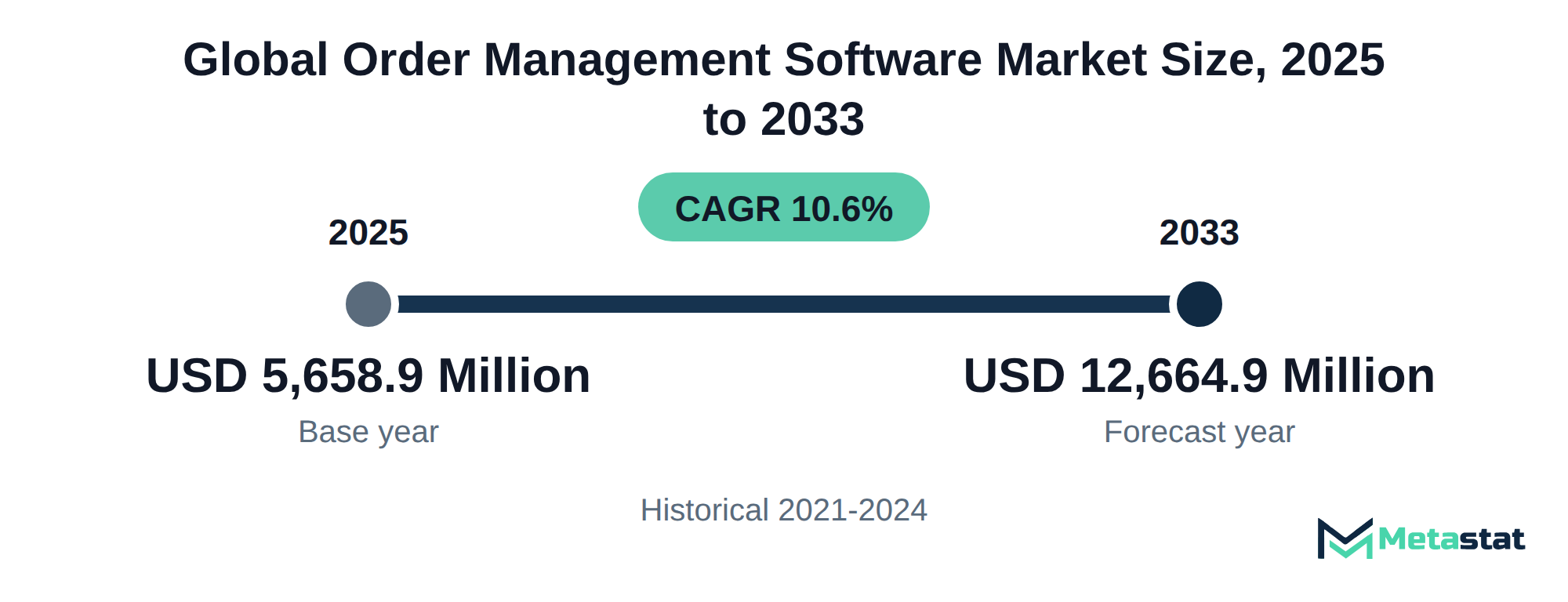
Market Valuation: Valued at $5,658.9 Million in 2025, projected to reach $12,664.9 Million by 2033 at a 10.6% CAGR.
Dominant Segment: The software segment leads the market, driven by a strong preference for comprehensive solutions that enhance order processing efficiency and integrate with existing systems.
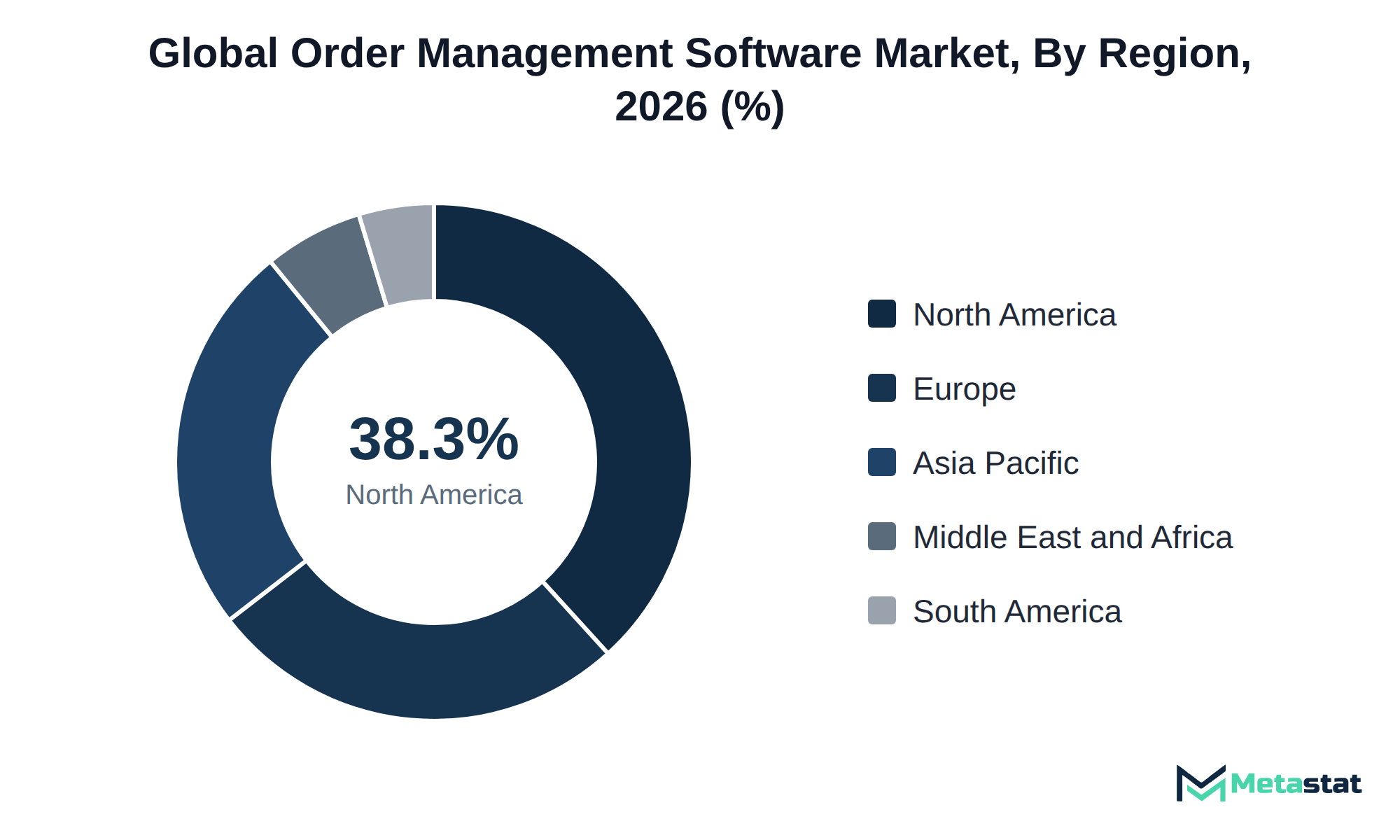
Geographic Lead: North America is the leading region, capturing 38.3% of the market in 2025, primarily due to its robust technology infrastructure and high adoption rates among enterprises.
What's Inside: The report provides an in-depth analysis of market dynamics, competitive landscape, and forecasts from 2026 to 2033, covering various segments including software, professional services, and deployment models.
Emerging Demand for Professional Service: The professional services segment is projected to grow at a CAGR of 11.6%, reflecting the increasing need for tailored solutions that enhance operational efficiency in order management.
Rising Costs Challenge Buyer Adoption: Increasing software costs are creating barriers for small and medium enterprises, leading to slower adoption rates and impacting overall market growth.
Choose Your License
Global Order Management Software Market
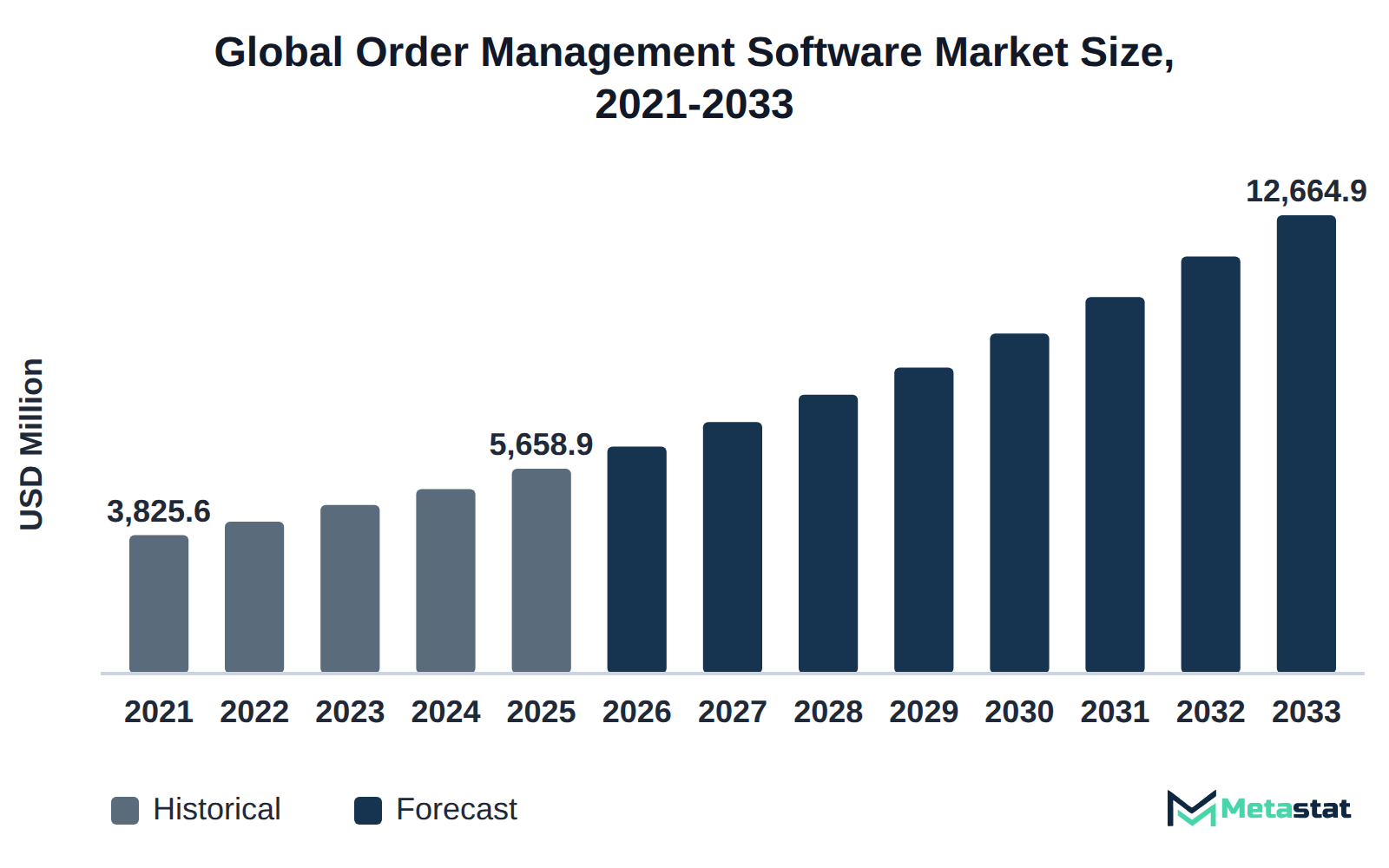
The global Order Management Software market was valued at USD 5,658.9 million in 2025 and is projected to reach USD 12,664.9 million by 2033, growing at a CAGR of 10.6% over the forecast period.
The Order Management Software market encompasses solutions that streamline and automate the order processing workflow, delivering improved efficiency and accuracy for organizations. Buyers invest in these systems to optimize their order fulfillment processes, reduce operational costs, and improve customer satisfaction. Businesses that implement effective order management software gain greater visibility into inventory and make better decisions, leading to increased profitability.
Growth in the market is driven by the rising demand for customer experiences and the increasing complexity of supply chains. The software segment holds the most significant value, reflecting a strong preference for comprehensive solutions that integrate with existing systems. North America holds 38.3% of the market in 2025, with the US leading in 2026. North America's lead stems from strong technology infrastructure and high adoption among enterprises seeking to improve operational efficiency.
The ongoing shift toward digital transformation in various industries fuels the expansion of the market. Retail, manufacturing, and e-commerce companies pursue advanced order management solutions to stay competitive. By leveraging these technologies, organizations streamline operations, drive innovation, and respond effectively to changing market demands.
The Order Management Software market covers the full order processing cycle, from initiation to fulfillment. Businesses invest in these solutions to enhance operational efficiency, reduce errors, and improve customer satisfaction. The integration of these systems facilitates better inventory management, order tracking, and analytics, driving more informed decision-making for organizations across various sectors.
The growth of the market is primarily fueled by the increasing demand for automation and digital transformation in order processing. Among the segments, the software component stands out with the highest value, reflecting a significant push towards cloud-based solutions. This region's strong adoption rates are driven by the presence of major technology players and a robust infrastructure supporting advanced order management capabilities.
The expansion of e-commerce continues to be a major catalyst for the market's growth. Retail and e-commerce industries use order management software to meet growing consumer expectations for timely and accurate deliveries. This trend shows how technology helps retailers maintain competitive advantages and improve customer experiences in an increasingly digital marketplace.
Distributed order orchestration enhances fulfillment efficiency for omnichannel retailers by optimizing inventory management and streamlining order processing across multiple channels. This approach reduces fulfillment costs significantly, allowing retailers to allocate resources more effectively. Accurate stock records at the warehouse level, maintained through warehouse management systems, give orchestration rules the data they need to route each order. The Order Management Software market is changing as businesses prioritize operational excellence and customer satisfaction.
In 2026, the software component of the market is expected to reach USD 4,239.9 million, demonstrating the growing investment in technology solutions that support distributed order orchestration. Retailers increasingly adopt cloud-based models, which are anticipated to reach USD 9,036.4 million by 2033, enhancing flexibility and scalability. These cloud-based solutions facilitate real-time visibility into inventory levels across various locations, allowing retailers to fulfill orders from the most efficient source.
Leveraging distributed order orchestration enables omnichannel retailers to minimize delivery times and reduce shipping costs, ultimately improving customer satisfaction. This technological shift within the Order Management Software market supports competitive differentiation, attracting a broader customer base and driving overall revenue growth.
The transition from traditional order-to-cash suites to composable, API-first order management software reflects a significant shift in how organizations approach their operational needs. Businesses increasingly seek flexibility and customization capabilities that legacy systems often lack. Composable architectures allow firms to integrate best-of-breed solutions tailored to their specific requirements, enhancing overall efficiency.
In the order management software market, cloud-based solutions emerge as a leading deployment model, projected to reach USD 9,036.4 million by 2033, with a CAGR of 12.2%. These cloud-based platforms facilitate integration with various applications via APIs, offering users a streamlined experience. This capability significantly reduces implementation times and lowers costs associated with maintaining outdated systems.
Organizations adopting composable solutions benefit from improved responsiveness to market changes and consumer demands. The ability to customize deployment improves their competitive edge, enabling innovations in service delivery. The migration toward API-first order management software is a strategic investment that aligns with modern business requirements and drives long-term value.
AI agents increasingly streamline order capture, sourcing, and exception handling, offering distinct advantages for retail and e-commerce enterprises. This sector is expected to generate USD 4,075.6 million by 2033, demonstrating a compound annual growth rate (CAGR) of 10.1% from 2026. The integration of AI technology enhances operational efficiency and improves customer satisfaction through faster response times and accurate order processing. Retailers using AI for these functions expect significant reductions in processing errors and improved inventory management.
A growing trend involves the adoption of AI-driven solutions to manage complex sourcing requirements and handle exceptions during order fulfillment. By automating these tasks, organizations allocate resources more efficiently and focus on strategic initiatives that drive growth. The Order Management Software market supports this transformation, with businesses investing in innovative technologies to optimize their supply chains. Retailers succeed in this competitive landscape by using AI to improve order management processes and meet customer expectations.
Choosing the right Order Management Software for mid-market brands hinges on specific organizational needs and growth ambitions. A standalone Order Management Software typically offers tailored functionalities that cater directly to operational complexities, whereas an ERP module integrates broader business processes, providing a unified solution for resource planning alongside order management.
The anticipated growth of cloud-based solutions significantly influences this choice. This growth indicates an inclination among businesses towards agile, scalable, and cost-effective solutions that cloud platforms offer.
Marketplace hubs present an alternative, facilitating transactions across multiple platforms, thus enhancing market reach. However, the suitability of each option varies based on the brand's focus - whether on operational efficiency, integration with existing systems, or tapping into wider market opportunities. Adopting the right type of software ultimately drives efficiency and positions mid-market brands for growth within the competitive landscape of the Order Management Software market.
The rise of e-commerce has significantly influenced buyer behavior, particularly among retail and e-commerce enterprises. Increased consumer preference for online shopping has triggered these businesses to invest more in advanced order management systems to enhance operational efficiency. A competitive landscape pushes retailers to streamline order fulfillment processes to meet heightened customer expectations, driving demand for effective solutions. The Order Management Software market is expected to grow, supported by investments that improve inventory management and order accuracy. This growth stems from the necessity for businesses to adapt to changing consumer behaviors and optimize order processing capabilities.
Increased adoption of cloud-based deployment models strengthens this trend, with organizations seeking scalable solutions to manage growing order volumes. The shift from traditional on-premises systems to cloud-based platforms facilitates a more agile response to market demands, enhancing overall competitiveness.
Adoption of cloud-based deployment models drives significant growth in the Order Management Software market. This shift results from organizations seeking flexibility and scalability in their operations, enhancing responsiveness to market demands. Cloud solutions eliminate the constraints of on-premises infrastructure, enabling businesses to streamline their order processing and improve collaboration across various departments and locations.
Large and medium enterprises particularly benefit from these cloud solutions, reducing upfront capital expenditures associated with traditional systems. Ongoing operational costs remain manageable through subscription-based pricing structures, the same model used by enterprise software-as-a-service providers. This financial advantage increases the appeal of cloud-based options for decision-makers aiming to optimize budgets.
Advancements in cloud technology provide enhanced security features and regular updates, ensuring compliance with industry standards. The ability to integrate with other cloud applications further accelerates efficiencies across the supply chain, leading to improved customer experiences. Overall, the adoption of the cloud-based deployment model significantly contributes to the market's expansion through 2033.
Increasing software costs hinder rapid adoption among small and medium enterprises. The financial burden associated with implementing advanced Order Management Software creates barriers to entry for these organizations, resulting in slower uptake and delayed replacement cycles. Potential buyers face uncertainty regarding return on investment, leading to smaller orders and cautious decision-making processes. This situation impacts operational efficiency, with firms struggling to keep pace with larger competitors who leverage technology to enhance their order processing capabilities effectively. The resulting imbalance in technology adoption creates a fragmented market, where only well-capitalized enterprises apply innovative solutions efficiently. The market's trajectory experiences deceleration due to these financial constraints, limiting overall growth and expansion opportunities for both vendors and clients.
Increasing operational costs present challenges for suppliers operating in the market. Rising talent costs and pressure on billing influence profitability, making it essential for suppliers to adopt strategies that enhance efficiency. Many suppliers focus on streamlining service delivery processes and investing in automation technologies to mitigate costs. This approach allows them to optimize resource utilization and maintain competitive pricing. The growing emphasis on value-based pricing enables suppliers to justify service costs while enhancing margins. Suppliers leveraging technology to improve workflows and reduce overhead expenses are positioned to thrive in a competitive environment. Addressing these operational challenges is essential to maintaining profitability in the Order Management Software market. Companies that proactively adapt their strategies to counter rising costs secure a stronger market presence and capitalize on growth opportunities.
Rapid growth in the Order Management Software market highlights the increasing demand for professional services, with a projected compound annual growth rate (CAGR) of 11.6% through 2033. Factors driving this trend include organizations seeking to enhance operational efficiency and streamline order management processes. Retail and e-commerce sectors show significant interest in these services, requiring tailored solutions to address unique challenges. Professional services encompass consulting, integration, and support, enabling organizations to fully leverage software capabilities and optimize order workflows.
With the growing complexity of supply chains and customer expectations, this segment presents a valuable growth opportunity. Organizations prioritizing professional services navigate the intricacies of order management more effectively, leading to improved performance and customer satisfaction. The market responds to these needs with a range of offerings designed to support implementation and ongoing support, creating long-term partnerships between service providers and clients.
The Global Order Management Software market is segmented based on Component, Deployment Model, Organization Size, and End-Use Industry.
Software segment is valued at USD 4,239.9 million in 2026 and is projected to reach USD 8,179 million by 2033, at a CAGR of 9.8% during the forecast period. This segment is essential for organizations looking to enhance order processing efficiency through automation and integrated management. Retail and e-commerce enterprises heavily rely on software solutions to facilitate effective order fulfillment and optimize inventory management. Demand for advanced software is driven by increasing consumer expectations for faster delivery and streamlined purchasing experiences. Compared to other segments, including Professional Services, which has a higher CAGR of 11.6%, the Software segment demonstrates a steady growth trajectory influenced by technological advancements and the shift towards cloud-based solutions. The market increasingly recognizes the importance of software in maintaining competitive advantage amid evolving consumer demands.
Professional Services segment is estimated to reach USD 2,866.1 million by 2033, at a CAGR of 11.6% during the forecast period. This segment includes consulting, implementation, and support services aimed at enhancing the effectiveness of order management systems. Its primary users consist of large enterprises and mid-sized companies seeking to optimize their order processing capabilities. Increased complexity in supply chains and the growing demand for customized solutions drive growth in this segment. Professional Services differ from software offerings, which provide the technological foundation for order management. Software revenue is projected to grow at a CAGR of 9.8%. The faster growth in Professional Services reflects a heightened need for expert guidance in navigating evolving market conditions and implementing new technologies. The emphasis on tailored solutions further distinguishes this segment, with service providers adapting their offerings to meet the unique requirements of various industries.
Managed Services segment is expected to reach USD 1,619.8 million by 2033. This segment provides essential support for organizations seeking to optimize their order management processes through expert assistance and management. Companies in retail, e-commerce, and manufacturing sectors primarily engage managed services to enhance operational efficiency and reduce the burden of in-house management. Demand for these services is driven by the increasing complexity of supply chains and the need for specialized knowledge in systems integration. Unlike Software and Professional Services segments, managed services operate at a different price point, focusing on ongoing support rather than one-time implementations or software licenses. With a projected CAGR of 11.6%, growth in this segment reflects the rising importance of external expertise in navigating the evolving landscape of order management, contrasting with the slower growth anticipated in on-premises solutions.
This deployment model is widely used by organizations seeking flexibility and scalability in their operations, particularly among large enterprises and retail sectors. The demand for cloud-based solutions is driven by the need for integration across multiple sales channels, allowing for efficient order processing and fulfillment. Compared to other deployment models, including On-Premises and Hybrid, the Cloud-Based model experiences faster growth due to lower upfront costs and a reduced maintenance burden. Its advantages encourage organizations to shift from traditional server-based systems to cloud-based platforms, creating a competitive advantage while enhancing customer experiences.
The On-Premises segment is estimated to reach USD 2,234.1 million by 2033, at a CAGR of 4.4% during the forecast period. This segment typically serves organizations requiring complete control over their order management processes, emphasizing data security and customization. Large enterprises and specific industries, including manufacturing, often favor on-premises solutions for their robust infrastructure needs. Key factors influencing this segment include the desire for enhanced security features and regulatory compliance. The lower growth rate of 4.4% indicates slower adoption compared to cloud-based alternatives, which have a CAGR of 12.2%. Organizations transitioning toward more flexible and cost-effective solutions encounter challenges in maintaining market relevance compared to cloud-based systems, which offer more scalable solutions.
Hybrid deployment models are expected to reach USD 1,394.4 million by 2033. This approach allows organizations to combine both cloud-based and on-premises solutions, providing flexibility in order management. Companies, particularly in sectors like retail and e-commerce, adopt hybrid models to enhance their order processing capabilities while balancing costs and operational control. The main driver in this segment is the increasing demand for scalable solutions that accommodate fluctuating requirements. Compared to other deployment models, the hybrid segment demonstrates a moderate growth trajectory, influenced by the advantages of integrating existing systems with modern cloud technologies. The compound annual growth rate (CAGR) for hybrid is lower than that of cloud-based solutions, which experience a CAGR of 12.2%. This positions the hybrid segment as a viable option for businesses seeking a balanced approach to their order management strategies.
Large Enterprises segment is valued at USD 3,333.2 million in 2026 and is projected to reach USD 6,157.7 million by 2033, at a CAGR of 9.2% during the forecast period. This segment serves large corporations that require sophisticated order management solutions to handle complex operational needs and high transaction volumes. The demand for advanced analytics and real-time visibility drives growth, owing to the necessity to optimize supply chain processes and enhance customer satisfaction. Unlike Medium and Small Enterprises, which focus on more basic functionalities, large enterprises often seek customizable solutions tailored to their specific requirements, resulting in a more significant investment. The higher price point for solutions in this segment reflects the added complexity and capabilities demanded by larger organizations, particularly in industries including retail and manufacturing. The market remains competitive, with several players focusing on delivering enterprise-grade software and services that meet the intricate needs of large businesses.
Medium Enterprises segment is estimated to reach USD 3,665.2 million by 2033, at a CAGR of 11.3% during the forecast period. This segment primarily serves mid-sized companies that require comprehensive order management solutions to streamline operations and enhance customer satisfaction. Growth in this segment is driven by increasing demand for efficient inventory management and order processing capabilities, particularly within retail and e-commerce industries. Compared to large enterprises, which exhibit a growth rate of 9.2%, the Medium Enterprises segment experiences a faster growth trajectory. This heightened demand reflects the evolving market landscape where mid-sized companies recognize the value of adopting technology to compete effectively. Investment in professional services to implement these solutions contributes to this segment's expansion, ensuring organizations adapt to changing market conditions efficiently.
Small Enterprises segment is expected to reach USD 2,842 million by 2033. This segment primarily serves small businesses that require efficient order processing and inventory management solutions to enhance operational efficiency. Demand for Order Management Software in this segment is driven by the growing need for streamlined processes in e-commerce and retail, where quick response times directly impact customer satisfaction. The segment demonstrates a higher compound annual growth rate (CAGR) of 11.3% compared to the Large Enterprises segment, which has a CAGR of 9.2%. This difference arises from the agility of small enterprises to adopt innovative solutions more rapidly due to lower implementation costs and a greater focus on customer experience. The affordability of software options makes these solutions accessible, allowing these businesses to compete effectively in the market.
Retail and E-commerce segment is valued at USD 2,084.6 million in 2026 and is projected to reach USD 4,075.6 million by 2033, at a CAGR of 10.1% during the forecast period. This segment serves retailers and online merchants seeking to streamline order fulfillment processes and enhance customer satisfaction. A significant driver of growth stems from the ongoing shift towards online shopping, compelling businesses to adopt efficient order management solutions. This segment's growth rate surpasses that of the Manufacturing and Industrial segment, which has a CAGR of 9.9%. Retail and E-commerce firms face increasing competition, necessitating robust order management strategies to maintain market share. The need for effective integration between sales channels and inventory management systems further increases the demand for specialized software solutions in this segment. Growth in the Order Management Software market directly reflects the evolving landscape of consumer expectations and purchasing behavior.
Manufacturing and Industrial segment is estimated to reach USD 1,711 million by 2033, at a CAGR of 9.9% during the forecast period. This segment primarily serves manufacturers and industrial companies that rely on efficient order processing and management to streamline operations and enhance productivity. An increasing demand for automation and integration of advanced technologies, including artificial intelligence and data analytics, drives growth in this segment. These same technologies also support smart manufacturing initiatives across industrial companies. Compared to other segments, the Manufacturing and Industrial segment exhibits a slower growth rate, yet presents steady demand due to ongoing investments in technology upgrades and supply chain enhancements. While retail and e-commerce sectors focus on rapid scaling and consumer engagement, the Manufacturing and Industrial segment prioritizes operational efficiency and cost management, shaping its unique position in the market.
The Wholesale and Distribution segment is expected to reach USD 1,727.5 million by 2033. This segment serves wholesalers and distributors who require efficient management of inventory, order processing, and fulfillment. Increasing demand for streamlined operations drives growth in this area, particularly as businesses focus on enhancing service levels and reducing operational costs. The projected compound annual growth rate (CAGR) for this segment aligns with trends seen in retail and e-commerce, which exhibit a CAGR of 10.1%. However, the Wholesale and Distribution segment experiences slightly slower growth compared to Professional Services, which has a CAGR of 11.6%. This difference reflects the unique challenges faced by wholesalers in adopting advanced software solutions, impacting their operational agility and responsiveness in a competitive market. The Order Management Software market recognizes this distinct segment's dynamics and the evolving requirements of its players.
Consumer Goods and FMCG segment is projected to grow at a CAGR of 10.1% during the forecast period. This segment serves retailers and manufacturers focusing on the production and distribution of consumer goods, where efficient order management is critical for maintaining inventory levels and customer satisfaction. Rising consumer demand for fast and reliable service significantly influences this segment's growth. Compared to the Manufacturing and Industrial segment, which has a CAGR of 9.9%, the Consumer Goods and FMCG segment demonstrates a more rapid pace of expansion. Businesses operating in this area require advanced order management solutions to streamline processes and enhance responsiveness to market trends, differentiating their offerings in a competitive landscape. The increasing need for technology-driven solutions positions this segment favorably within the broader Order Management Software market, emphasizing its potential for significant revenue generation.
Telecom and IT is a key segment of the Order Management Software market, focused on optimizing operations and improving service delivery across telecommunications and information technology providers. This segment is employed by enterprises to enhance customer experience, streamline order processing, and manage resource allocation effectively. Key drivers for growth within this segment include advancements in technology and an increasing demand for integration of services. Unlike other segments, this area is characterized by a shift towards more sophisticated software solutions that address specific industry challenges. The segment faces unique pressures, including the need for compliance with regulatory standards and the continuous evolution of technology, impacting investment decisions and operational strategies. Strong competition in the market further compels companies to innovate and differentiate their offerings, ensuring relevance in a dynamically evolving environment.
Healthcare and Pharmaceuticals is a vital end-use industry in the Order Management Software market. This segment serves hospitals, clinics, and pharmaceutical companies, facilitating the efficient management of orders for medical supplies, equipment, and medications. Growth in this segment is driven by increasing demand for streamlined healthcare operations and timely access to critical supplies. These needs connect order management closely with healthcare supply chain management across hospitals and pharmaceutical companies. Regulatory compliance acts as a significant force, necessitating robust order management solutions to ensure adherence to industry standards. Compared to other segments, this end-use industry experiences moderate growth but commands higher prices due to specialized requirements and the critical nature of its products. Investment in advanced technologies and automation enhances operational efficiency, distinguishing this segment from others with less stringent regulatory demands.
The Automotive sector involves the production and distribution of vehicles, encompassing various manufacturers and suppliers. This sector sees increasing demand for Order Management Software to streamline operations, enhance inventory management, and support customer service needs. Key players in this segment include large automotive manufacturers and suppliers focusing on efficiency and responsiveness in their distribution networks. Distribution for these players also relies on finished vehicles logistics to move completed vehicles through dealer and customer channels. The growing emphasis on electric vehicles and advanced manufacturing technologies drives demand, requiring solutions that adapt to rapidly changing market conditions. Compared to other segments, this sector experiences significant growth due to the ongoing transformation in automotive technologies, creating distinct requirements for software solutions that enhance operational efficiency and customer engagement. Investment in automation and data analytics further differentiates this segment, necessitating specialized software tailored to meet the unique challenges faced by automotive enterprises.
Food and Beverage represents a crucial end-use category that significantly influences the supply chain, focusing on the efficient management of orders, inventory, and customer demand. Companies within this sector leverage Order Management Software to streamline operations, enhance customer satisfaction, and effectively manage inventory. The growing emphasis on online food delivery and e-commerce drives demand for advanced order management solutions tailored to meet the unique challenges of the industry. Delivery apps add to the order volumes that food and beverage businesses must process accurately. Regulatory compliance and food safety standards influence purchasing decisions, requiring robust systems to maintain quality and traceability. This category experiences unique pressures from consumer trends and shifting preferences, necessitating adaptability and responsiveness to ensure competitiveness. The market is characterized by a diverse array of players, each aiming to fulfill the intricate needs of food and beverage businesses, thereby enhancing operational efficiency and customer engagement.
This segment encompasses various industries, including Energy and Utilities, Education, and Government, which apply Order Management Software for streamlining processes, enhancing operational efficiency, and ensuring compliance with regulatory requirements. Buyers in these sectors seek solutions that provide reliability and scalability, enabling them to manage complex order fulfillment processes effectively. Demand for advanced functionality, including integration with other enterprise systems, drives growth in this segment. A key challenge involves navigating stringent regulations that impede adoption. Compared to other segments, this group experiences slower growth, influenced by such regulatory barriers. The focus on compliance and operational efficiency differentiates it from rapidly growing sectors including Retail and E-commerce. The market remains attuned to the unique requirements of these industries, working to deliver tailored solutions that address specific operational needs.
Based on geography, the Global Order Management Software market is divided into North America, Europe, Asia-Pacific, South America, Middle East, and Africa.
Demand for Order Management Software in North America is driven by a robust retail sector, with a significant emphasis on e-commerce. Companies in the United States, Canada, and Mexico leverage advanced software solutions to streamline operations and enhance customer experiences. North America accounted for 38.3% of the global market share in 2025, reflecting strong investment in technology to support efficient order processing. The region's infrastructure supports rapid adoption, with increasing reliance on cloud-based solutions to enable scalable operations. By the end of 2033, North America is projected to reach USD 4,466.9 million, demonstrating a continued commitment to digital transformation across various industries. The market benefits from the presence of several established players, contributing to competitive dynamics and innovation.
In Europe, the Order Management Software market focuses on optimizing supply chains and enhancing operational efficiencies across various industries. Key drivers of demand include the retail and e-commerce sectors, which are experiencing substantial growth due to increasing online sales and the rising need for efficient order processing systems. Countries including Germany, France, and the UK lead the way in adoption, supported by robust digital infrastructure and favorable regulatory environments. The market in this region holds a share of 26.3% in 2025, indicating strong growth potential. Investments in cloud-based solutions contribute to a progressive shift in operational strategies among enterprises, reflecting a broader trend towards digital transformation within industries.
Demand within the Order Management Software market in Asia Pacific is driven primarily by the retail and e-commerce sectors. Countries including China and India engage in rapid digital transformation, enhancing the need for efficient order management solutions. In Australia, businesses pursue cloud-based solutions to streamline operations and improve customer service. The region's growth is influenced by an expanding middle class and increasing online shopping trends. Infrastructure investments in logistics and distribution networks support these developments, allowing for more effective inventory management and fulfillment strategies. The market share of this region reached 24.6% in 2025, reflecting its significance in the global landscape.
In South America, the Order Management Software market experiences a unique demand landscape driven by the growth of retail and e-commerce sectors, particularly in Brazil and Argentina. The increasing adoption of digital solutions within these industries supports efficiency and customer satisfaction. Infrastructure improvements across the region further enhance accessibility to advanced software solutions, allowing enterprises to optimize order processes. With a market share of 4.7% in 2025, the region demonstrates significant potential for expansion. The market growth is influenced by the rising need for streamlined supply chain operations and effective inventory management across various sectors. This evolving environment presents opportunities for both local and international providers to capture market share in South America.
In the Middle East and Africa, the Order Management Software market benefits from increasing technological adoption across various sectors, particularly in Saudi Arabia and the UAE. The region presents significant growth potential due to rising demand for efficient order management systems among businesses aiming to enhance operational efficiencies. The need for streamlining processes in retail and e-commerce sectors drives investment in software solutions. Emerging infrastructure initiatives in South Africa further support the integration of advanced technologies in order management. The market evolves amid a backdrop of expanding digital transformation strategies, encouraging stakeholders to invest in innovative solutions that meet consumer expectations.
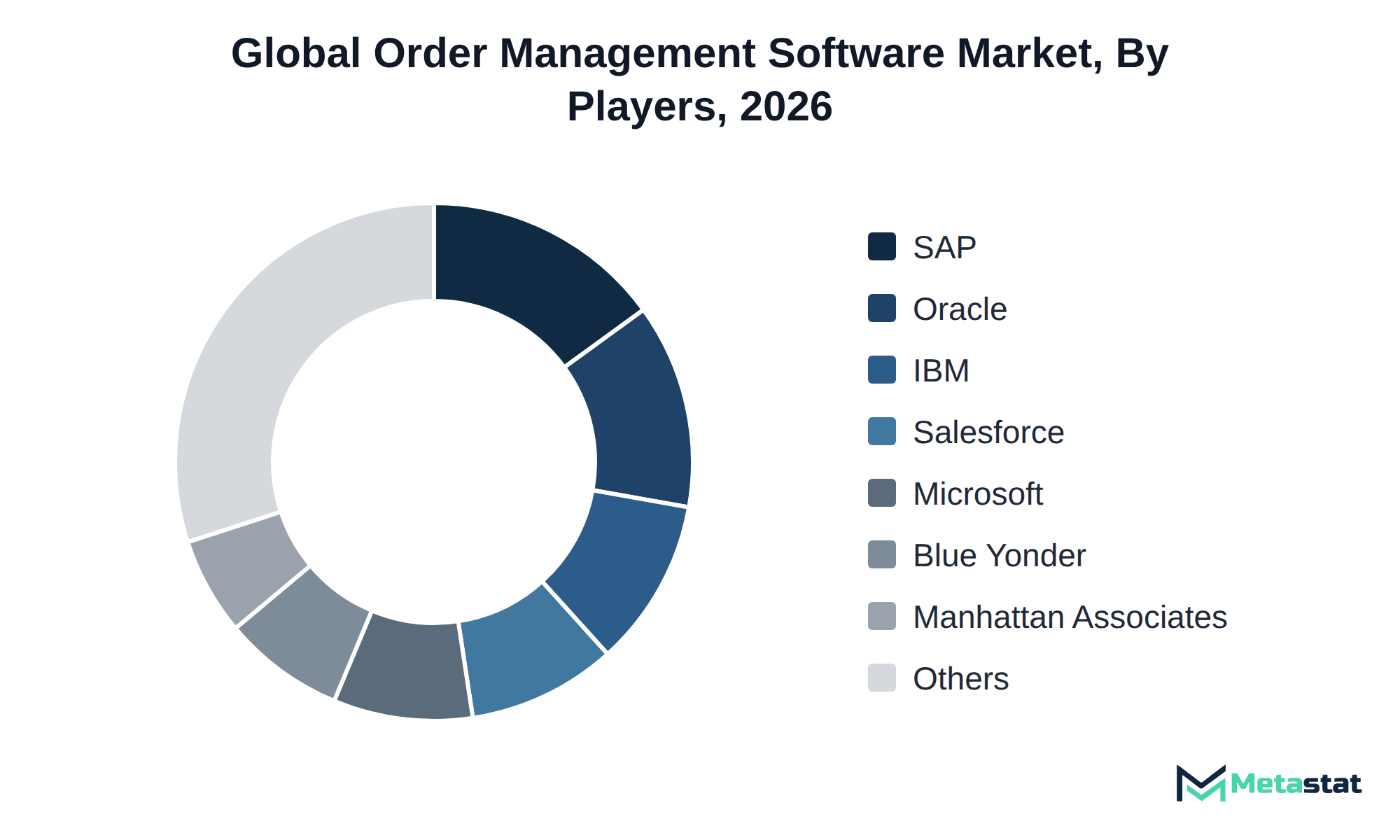
Companies competing in the Order Management Software market exhibit diverse strategic behaviors based on service type and deployment model. Many firms focus on specific deployment models, with cloud-based solutions experiencing increasing adoption due to their scalability and lower upfront costs. Buyer preferences prioritize factors including pricing, customization, and integration capabilities.
Leading players like IBM, Oracle, and SAP emphasize robust software offerings while enhancing professional services to cater to large enterprises. Salesforce and Microsoft position themselves by integrating their solutions with existing ecosystems, enhancing user experience and driving adoption among medium and small enterprises. In addition, organizations including Fluent Commerce and Kibo Commerce focus on tailored solutions for retail and e-commerce, addressing unique industry challenges within the market.
Price and certification play critical roles in buyer decision-making, impacting competitive positioning. Companies including Manhattan Associates and Blue Yonder highlight their expertise in supply chain integration, ensuring effective order management and fulfillment processes. This emphasis reflects the close link between order management and supply chain execution software. Meanwhile, Tecsys and Aptos concentrate on specific verticals, offering specialized solutions for manufacturing and distribution, which further differentiates their presence in the market.
Smaller players like Unicommerce and Vinculum focus on niche markets, providing tailored order management solutions that cater to specific regional needs. The combination of these strategies shapes the competitive environment, driving innovation and growth within the Order Management Software market.
The growth of the Order Management Software market relies on several key developments. Firstly, the increasing demand for cloud-based solutions will drive adoption across various industries, particularly in North America, where the technology enhances operational efficiency and customer satisfaction. Secondly, the rise of e-commerce and retail sectors will significantly contribute to market growth. Retail and e-commerce are expected to grow from USD 2,084.6 million in 2026 to USD 4,075.6 million by 2033, supported by technological advancements and greater consumer spending on online platforms. A primary risk that could impede this growth includes potential economic downturns or disruptions in supply chains, which lead to reduced investment in technology solutions. Addressing these challenges while leveraging opportunities in sectors like manufacturing and distribution will be critical for the market to reach USD 12,664.9 million.
By Component: Software, Professional Services, Managed Services
By Deployment Model: Cloud-Based, On-Premises, Hybrid
By Organization Size: Large Enterprises, Medium Enterprises, Small Enterprises
By End-Use Industry: Retail and E-commerce, Manufacturing and Industrial, Wholesale and Distribution, Consumer Goods and FMCG, Telecom and IT, Healthcare and Pharmaceuticals, Automotive, Food and Beverage, Others (Energy and Utilities, Education, Government)
The report strategically identifies and profiles the key market players and analyses their core competencies in each sub-segment of the Order Management Software market.
|
Report Attributes |
Details |
|
Study Period |
2021-2033 |
|
Base Year |
2025 |
|
Estimated Year |
2026 |
|
Forecast Period |
2026-2033 |
|
Historical Period |
2021-2025 |
|
Growth Rate |
CAGR 10.6% from 2026 to 2033 |
|
Revenue Unit |
USD million |
|
Segmentation |
By Component, Deployment Model, Organization Size, End-Use Industry, and Region |
|
By Region |
North America (By Component, Deployment Model, Organization Size, End-Use Industry, and Country)
|
|
Europe (By Component, Deployment Model, Organization Size, End-Use Industry, and Country)
|
|
|
Asia Pacific (By Component, Deployment Model, Organization Size, End-Use Industry, and Country)
|
|
|
South America (By Component, Deployment Model, Organization Size, End-Use Industry, and Country)
|
|
|
Middle East and Africa (By Component, Deployment Model, Organization Size, End-Use Industry, and Country)
|
Find answers to common questions about this report
The Order Management Software market size was valued at USD 5,658.9 million in 2025.
The market is projected to grow at a CAGR of 10.6% during the forecast period from 2026 to 2033.
The North America Order Management Software market size is estimated to reach USD 4,466.9 million by 2033.
The leading segment in the Order Management Software market is Software, with a projected value of USD 8,179 million by 2033. This segment outpaces Professional Services and Managed Services in terms of revenue growth.
The rise of e-commerce and increased consumer preference for online shopping drive demand for advanced order management systems. The shift to cloud-based deployment models enhances flexibility and scalability, enabling organizations to efficiently manage growing order volumes.
North America holds the dominant share of the Order Management Software market, with a projected value of USD 4,466.9 million in 2033, representing 38.3 percent of the total market.
Increasing software costs hinder rapid adoption among small and medium enterprises, creating barriers to entry and resulting in slower uptake. Rising operational costs present challenges for suppliers, influencing profitability and necessitating strategies that enhance efficiency.
Increasing demand for professional services, driven by the need for operational efficiency and streamlined order management processes, favors adoption in the industry. The retail and e-commerce sectors particularly seek tailored solutions to address their unique challenges, presenting significant growth opportunities.
The Order Management Software market is estimated to reach a valuation of USD 12,664.9 million by 2033.
Key players operating in the Order Management Software market include IBM, Oracle, SAP, Salesforce, Microsoft, Manhattan Associates, and Comarch.
The analysts below cover Information & Technology research at Metastat Insights.
LEAD ANALYST
Utkarsh Khirodkar is a Lead Market Research Analyst at MetaStat Insight, specializing in market intelligence, technology sector assessments, and competitive strategy.

PRINCIPAL CONSULTANT - ENTERPRISE AI & EMERGING TECHNOLOGIES
Banking & Finance · Electronics and Semiconductor · Energy and Power · Healthcare IT · Information & Technology · Professional Services
Vijay Gunti is a Principal Consultant at MetaStat Insight, bringing over two decades of experience across enterprise digital transformation, technology strategy, and intelligent systems.

LEAD CONSULTANT - COMMUNICATION, TELECOM, AND IT
Electronics and Semiconductor · Information & Technology · Machinery & Equipment · Professional Services
Ravindra Sathe Consultants for Communication, Telecom, and IT at MetaStat Insight. He leads the firm's industry research initiatives across telecommunications infrastructure, digital connectivity, enterprise networking, and emerging information technology domains.
Our group needed clearer visibility into out-of-autoclave processing timelines for high-temperature thermoplastic composites. MetaStat Insight delivered an objective assessment that contrasted automated fiber placement scrap rates with traditional thermoset prepreg layup cycles. The supplier landscape mapped out primary resin suppliers and tape slitting capacity across France, Germany, and Japan with solid technical accuracy. Their analyst handled our questions on precursor supply risks during an unscheduled inquiry call, providing clear, unembellished context.
Evaluating sensor fusion reliability across harsh operating environments can be tricky without field-validated data. The study on agricultural autonomous guidance systems clearly separated stereo vision setups from automotive-grade solid-state LiDAR. We appreciated the regional infrastructure analysis, specifically around RTK network density across North America and South America. During our follow-up consultation, the MetaStat Insight team walked through tier-two perception software partnerships, giving our engineering leads a practical basis for vendor shortlisting.
Analyzing the transition from natural gas to green hydrogen in iron ore reduction requires realistic infrastructure timelines. Meta stat insight supplied a detailed regional assessment of DRI plant conversion costs and scrap metal availability in North America and Western Europe. Their report carefully examined pellet quality specs and electrical grid access constraints without making oversimplified market assumptions. The research material served as a practical reference during internal technology roadmap discussions.
Explore related market intelligence reports worth reading alongside this one.
Starting from
$2950