
LEAD ANALYST
Utkarsh Khirodkar is a Lead Market Research Analyst at MetaStat Insight, specializing in market intelligence, technology sector assessments, and competitive strategy.

Global Creator Economy Market Size, Share, By Platform Type (Social Media Platforms, Video-Sharing Platforms, Podcasting Platforms, Live-Streaming Platforms, Creator Commerce Platforms and Audio and Music Platforms), By Creator Content Category (Arts and Crafts Content, Digital and Educational Content, Written Content and Blogging, Video Production Content, Photography and Visual Content, Music and Audio Content and Gaming, Lifestyle and Specialized Content), By Revenue Channel (Advertising Revenue, Subscriptions and Memberships, Tips, Donations and Virtual Gifts, Affiliate Marketing, Brand Partnerships and Sponsorships, Merchandise and Digital Product Sales and Pay-Per-View and Ticketed Experiences), By End User (Amateur Creator and Professional Creator), Industry Analysis, Growth, Trends, and Forecast, 2026-2033
Report ID
MSI-5800
Published
November, 2026
Pages
281 Pages
Format
Historical
Base year
Forecast
Forecast period
Report Details
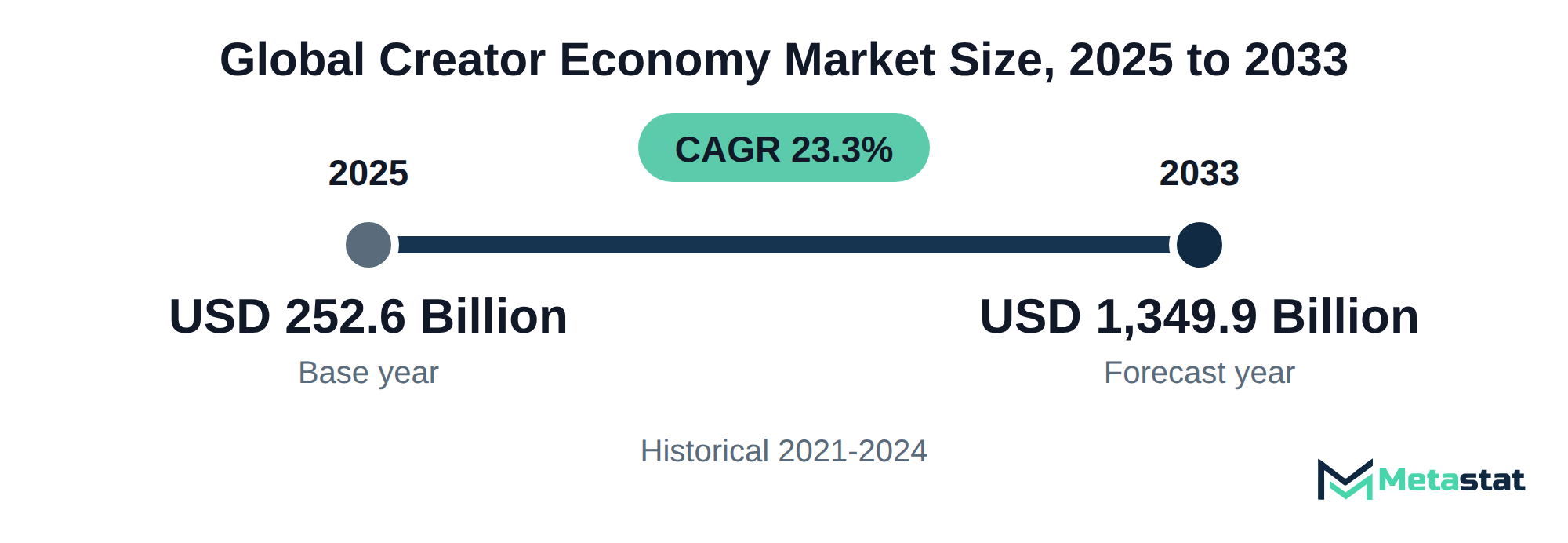
Market Valuation: Valued at $252.6 Billion in 2025, projected to reach $1,349.9 Billion by 2033 at a 23.3% CAGR.
Dominant Segment: Social media platforms lead the Creator Economy market, driven by increasing user engagement and brand investments in influencer collaborations.
Geographic Lead: North America holds the largest market share, with the US projected to lead in growth due to advanced digital infrastructure and high consumer engagement.
What's Inside: The report provides comprehensive competitive coverage, detailed analyses across various segments, and forecasts extending to 2033, highlighting key trends and growth drivers.
Emerging Trends: The rise of digital and educational content is a significant growth area, projected to reach USD 272.1 billion by 2033, reflecting the demand for online learning and skill development.
Revenue Channels: Subscriptions and memberships are becoming crucial revenue streams, expected to reach USD 173.6 billion by 2033, as creators seek direct engagement with their audiences.
Choose Your License
Global Creator Economy Market
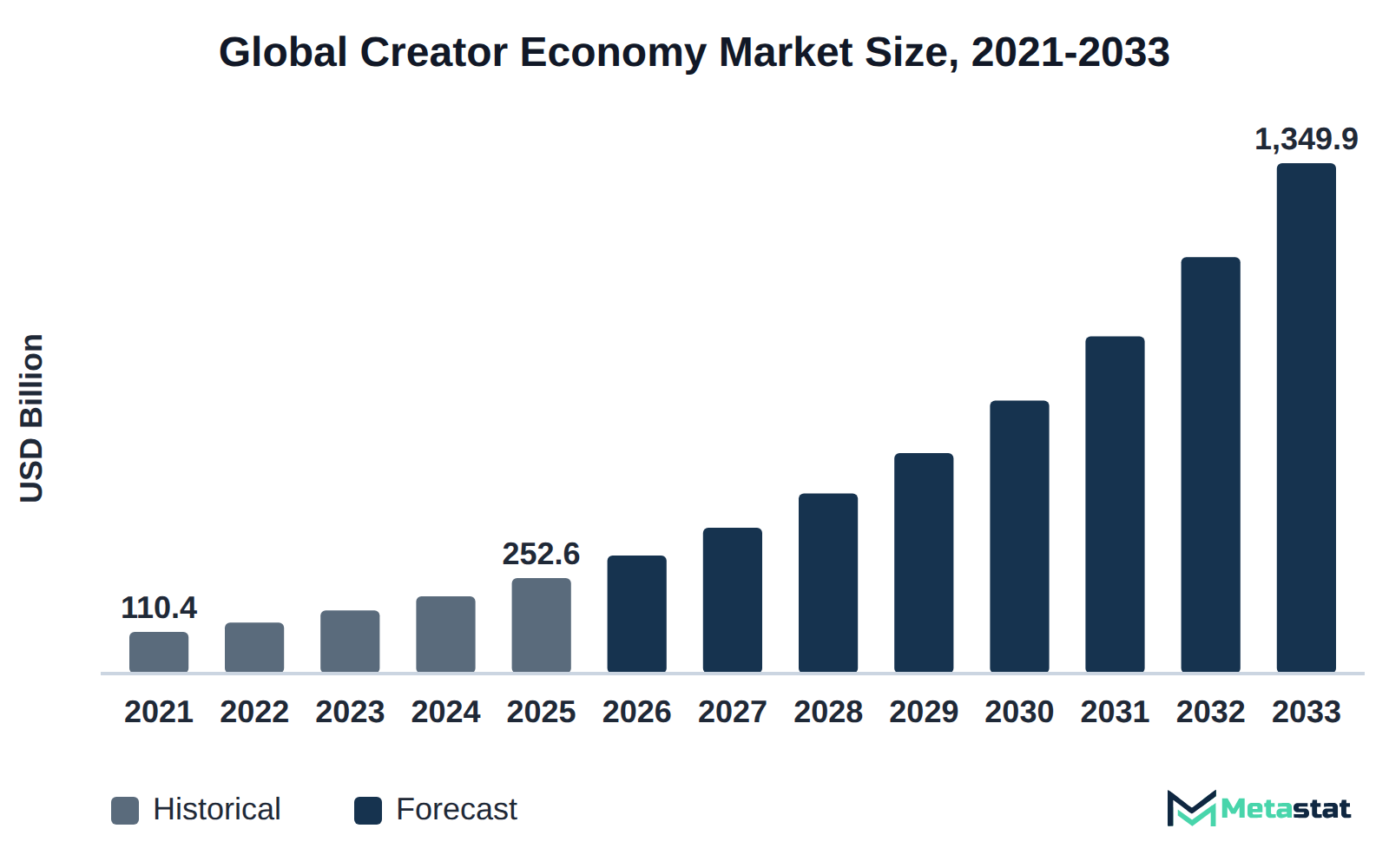
The global Creator Economy market was valued at USD 252.6 billion in 2025 and is projected to reach USD 1,349.9 billion by 2033, growing at a CAGR of 23.3% over the forecast period.
The Creator Economy market encompasses a broad range of platforms and services facilitating content creation and distribution. Buyers invest in this market driven by the increasing popularity of digital content across various demographics. The demand for creative forms of expression and engagement fuels spending from both amateur and professional creators, who leverage these platforms to monetize their content. This segment continues to evolve, reflecting changing consumer preferences and technological advancements.
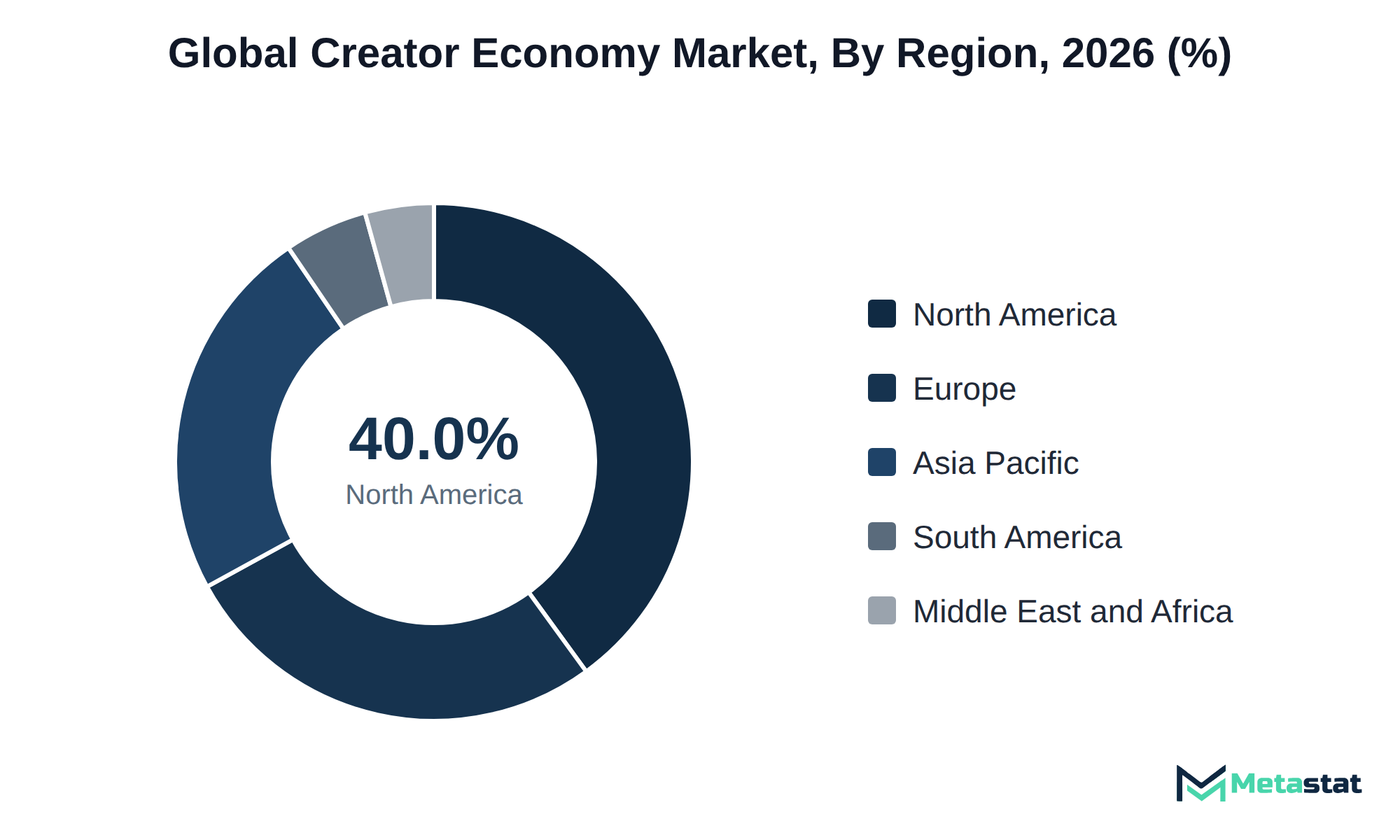
Growth within the market stems from several key factors, with the highest revenue generated by social media platforms. North America holds 40.0% of the market in 2025, with the US leading in 2026. The rapid expansion of digital and educational content significantly contributes to the market's upward trajectory, attracting investment and user engagement through innovative approaches to learning and entertainment.
Regional distribution shows that North America leads the market share, followed by Europe and Asia Pacific. Each region demonstrates unique characteristics influencing content consumption and creator engagement. The diverse landscape of platforms and content types enhances opportunities for creators and brands alike, creating a dynamic environment conducive to sustained growth and investment in the Creator Economy.
Investments in the Creator Economy market arise from the increasing demand for diverse content across various industries, including entertainment, education, and marketing. Content creators, businesses, and brands leverage these platforms to engage audiences and enhance brand visibility. The rise of digital consumption has accelerated spending on platforms that facilitate content creation, distribution, and monetization. Buyers prioritize solutions that align with their objectives, driving growth across multiple segments.
Significant growth in the market results from the rapid expansion of social media platforms, which are projected to reach USD 383.7 billion by 2033. The region outpaces others, including Europe and Asia Pacific, due to its advanced digital infrastructure and high consumer engagement. The increasing popularity of video-sharing platforms and content monetization strategies further fuels the market’s development.
The Creator Economy market experiences robust expansion, driven by the demand for digital and educational content, projected to reach USD 272.1 billion by 2033. This category attracts significant investments from both amateur and professional creators seeking to establish their presence in the online ecosystem. The evolving landscape of content creation and distribution establishes a strong foundation for sustained growth, driving innovation and competition among industry players.
AI-powered creator tools significantly transform content production and monetization in the Creator Economy market. These tools streamline workflows, enhance creativity, and optimize revenue generation channels for creators. For instance, the segment of Digital and Educational Content is projected to reach USD 272.1 billion by 2033, reflecting a compound annual growth rate (CAGR) of 24.6%. This upward trend illustrates how AI tools help creators produce more engaging educational materials efficiently, thereby increasing market demand.
The integration of AI technologies enables creators to analyze audience preferences, personalize content, and automate repetitive tasks. By utilizing such capabilities, creators enhance their productivity and adaptability in an increasingly competitive landscape. With AI-driven insights, creators tailor their offerings to meet evolving consumer expectations effectively, positioning themselves for success in the market.
While the market for AI-powered tools grows, collaborations between software developers and creators are likely to intensify. Such partnerships lead to innovative solutions that further disrupt traditional content production paradigms, resulting in enhanced monetization opportunities. Consequently, the continued evolution of AI tools promises to reshape the economic landscape for creators and significantly expand revenue potential across various content categories.
Brand partnerships and influencer advertising have evolved significantly within the Creator Economy market, with a notable shift toward performance-based campaigns. This transition is driven by brands increasingly seeking measurable results from their marketing investments. In 2026, advertising revenue within the market is projected to reach USD 83.6 billion, growing to USD 343.2 billion by 2033, reflecting a compound annual growth rate of 22.4%. This growth highlights the rising importance of performance metrics in evaluating the success of brand collaborations.
The pricing models associated with influencer advertising have adapted to this demand for performance. Many brands opt for cost-per-action or cost-per-click structures, which link payments directly to specific outcomes, including conversions or engagement levels. Such models reduce risk for advertisers and align the interests of brands and creators, creating a more collaborative environment. Consequently, creators benefit from a steady income stream tied to their performance, enhancing their financial sustainability in the competitive landscape.
This shift in contract models enhances the commercial viability of influencer partnerships, stimulating further investment and innovation across the sector. Brands prioritize performance-driven campaigns, positioning the Creator Economy market for robust expansion, with both creators and brands seeking mutually beneficial arrangements that drive success.
Subscription models have emerged as a significant revenue channel within the Creator Economy market, particularly benefiting creators who seek direct engagement with their fans. These models enable creators to monetize their content through memberships, providing exclusive access to their audiences. The revenue from subscriptions and memberships is projected to reach USD 173.6 billion by 2033, reflecting the growing popularity of this approach. This shift towards direct-to-fan strategies reflects a broader trend where creators prioritize building deeper relationships with their communities.
Creator commerce plays a significant role in the expansion of direct-to-fan revenue, transforming the way creators interact with their audiences. Through platforms that facilitate commerce, creators leverage their personal brands to sell products, services, and experiences directly to fans. The rise of this model aligns with a significant growth rate in the sector, as evidenced by the anticipated revenue from advertising, expected to hit USD 343.2 billion by 2033. This indicates a robust environment for creators to thrive financially and sustain their creative activities.
The increasing adoption of subscription models and creator commerce signifies a pronounced shift within the market, with creators now focusing on monetization strategies that build loyalty and community. This trend is set to reshape the dynamics of content creation, driving further investment and innovation across the industry, ultimately benefiting creators who adapt to these evolving revenue channels.
Emerging platforms and virtual communities significantly influence creator-follower engagement in the Creator Economy market. The rise of social media platforms is a key factor, with revenue from these platforms projected to expand from USD 95.5 billion in 2026 to USD 383.7 billion by 2033, demonstrating a compound annual growth rate (CAGR) of 22%. This growth enables creators to interact more directly with their audiences, creating a sense of belonging and loyalty among followers.
Virtual communities, including Discord and Patreon, provide creators with dedicated spaces to engage their followers through exclusive content, live events, and personalized interactions. This direct engagement strengthens relationships and enhances follower retention, crucial in a highly competitive market where attention spans are short. By offering unique experiences, creators differentiate themselves and establish deeper connections with their audiences.
The commercial implications of this shift are substantial. Increased engagement drives higher subscription rates and encourages followers to support creators through tips, donations, and virtual gifts. Revenue from tips and donations is expected to reach USD 117.9 billion by 2033. This direct financial support reflects the growing willingness of audiences to invest in creators they feel connected to, highlighting the impact of emerging platforms in the Creator Economy market.
Shifts in consumer behavior have led to increased spending by amateur creators, who seek to leverage their skills for income. With the rise of social media and digital platforms, engaging in content creation has become more accessible, attracting diverse individuals to pursue opportunities in this sector. This demographic shift reflects a growing trend where hobbyists transition to professional creators, driven by the potential for monetization and audience engagement.
Spending on tools and services supporting content creation shows significant growth. By 2033, the revenue generated from amateur creators is projected to reach USD 786.2 billion, demonstrating a compound annual growth rate of 22.3%. This trend not only enhances participation but significantly contributes to the overall growth of the Creator Economy market.
Advancements in creative tools significantly enhance content production efficiency within the market. Innovations in software and hardware provide creators with the ability to produce high-quality content more rapidly and with reduced costs. These developments attract both amateur and professional creators, who seek to maximize their output while minimizing resource expenditure. Increased accessibility to sophisticated editing tools, animation software, and production equipment supports a broader range of creators, including those in digital and educational content categories.
The integration of collaboration features within these tools encourages teamwork among creators, increasing the potential for diverse content generation. Enhanced analytics capabilities enable creators to assess audience engagement and optimize content strategies accordingly. Such efficiencies and insights drive revenue growth across the creator community, contributing to the overall expansion of the Creator Economy market. The shift toward using these innovative tools leads to improved content quality and supports the monetization of creative efforts, propelling market development.
Price sensitivity presents a notable restraint for the Creator Economy market, particularly impacting amateur creators. High costs associated with advanced tools, subscriptions, and platform fees deter potential participants from fully engaging or investing in their content creation efforts. While these creators evaluate expenses against potential returns, slower uptake occurs, resulting in reduced content diversity and engagement on various platforms. Budget constraints restrict the growth of the amateur creator segment, limiting their ability to explore innovative revenue channels, including advertising revenue or subscriptions. The market's broad adoption hinges on addressing affordability for these creators, creating a more inclusive ecosystem that promotes participation and competition. Enhancing access to affordable solutions and resources could accelerate overall market growth, benefiting both creators and consumers alike.
Talent acquisition poses a challenge for suppliers operating in the Creator Economy market. The demand for skilled professionals, including content creators, marketers, and technical specialists, has surged due to increased competition and growth in content production. Higher salaries and benefits contribute to mounting operational costs, impacting profitability for many suppliers. In response, companies focus on streamlining their hiring processes and leveraging technology to identify qualified candidates more efficiently. This approach mitigates rising talent costs while maintaining service quality. A shift toward remote work allows suppliers to access a broader pool of talent, reducing geographical constraints and associated costs. These strategies enhance competitive positioning while addressing the challenges of escalating talent expenses. The dynamics of the market strongly influence how suppliers adapt to maintain performance amid these rising pressures.
The digital and educational content category represents a significant growth opportunity within the Creator Economy market. Increasing demand for online learning and skill development drives this trend, particularly from professional creators who seek to monetize their expertise in various fields. The rise of remote education and digital training platforms further supports investment in this area, enabling a diverse range of content delivery options. Businesses and educational institutions increasingly recognize the value of engaging with creators to enhance their training and development programs. This trend suggests robust progression toward monetizing educational content, enhancing revenue streams for creators and establishing a sustainable business model within the market.
The Global Creator Economy market is segmented based on Platform Type, Creator Content Category, Revenue Channel, and End User.
This segment is used primarily by influencers, brands, and content creators to share diverse content and engage with their audiences. The driving force for growth in this segment stems from the continuous increase in user engagement on social media, prompting brands to invest in influencer collaborations. This segment stands out due to its rapid growth rate compared to other platforms, with a CAGR of 22%, compared to the more moderate growth seen in Podcasting Platforms and Video-Sharing Platforms. The dynamic nature of social media platforms enables creators to monetize their content through various channels, including advertising revenue and brand partnerships, thereby offering broader revenue opportunities than the other segments in this group.
Video-Sharing Platforms segment is estimated to reach USD 320.1 billion by 2033, at a CAGR of 23% during the forecast period. This segment serves creators by providing a platform for sharing video content, enabling a diverse range of creators, from amateur video producers to professional filmmakers, to monetize their work. A driving force in this segment includes the growing demand for engaging video content across various industries including entertainment and marketing. Compared to other platforms, video-sharing sites experience faster growth due to their ability to capture viewer engagement effectively. The anticipated revenue growth in this segment highlights its significance in the Creator Economy market, reflecting the shift towards visual content consumption and increasing opportunities for revenue generation through advertising and subscription models.
Podcasting Platforms segment is expected to reach USD 113.9 billion by 2033. This segment primarily serves content creators who produce audio episodes on various topics, allowing them to reach audiences through streaming and download options. The growing interest in podcasting among consumers drives demand, with listeners seeking diverse content tailored to their preferences. The segment demonstrates a strong growth trajectory, supported by ongoing advancements in audio technology and increased accessibility to podcasting platforms. Compared to other sub-segments, including Video-Sharing Platforms, which are projected to experience a CAGR of 23%, the Podcasting Platforms segment exhibits a slightly slower growth pattern. The competitive landscape features a range of platforms catering to different audience demographics, further influencing market dynamics. Overall, evolving technology and shifting consumer preferences will significantly impact the growth of this segment.
Live-Streaming Platforms segment is projected to grow at a CAGR of 23.8% during the forecast period. This segment serves creators who engage audiences in real-time, offering content that includes gaming, tutorials, and live events. Viewers interact directly with creators through comments and donations, enhancing community engagement. The demand for authentic content experiences drives growth within this segment. Compared to other platform types, live-streaming displays faster growth, driven by increasing mobile internet penetration and the rise of interactive content consumption. The segment caters to both amateur and professional creators, with professional creators often commanding higher revenue streams through sponsorships and donations. This unique positioning differentiates live-streaming platforms from traditional content platforms, which offer real-time interaction and monetization opportunities that are less prevalent in other segments of the market.
Creator Commerce Platforms facilitate transactions between creators and their audiences, enabling direct sales of products, merchandise, and services. Such platforms are employed by both amateur and professional creators who seek to monetize their content and build stronger relationships with their followers. The rise of digital commerce and the demand for personalized creator experiences drives this segment. Compared to other platforms, Creator Commerce Platforms exhibit distinct characteristics, including a focus on transactional interactions rather than content sharing, setting them apart from social media and video-sharing platforms. The evolving landscape of e-commerce creates opportunities for creators to capitalize on their unique offerings, influencing their growth trajectory relative to other segments.
Audio and music platforms facilitate the creation and distribution of diverse auditory content, serving a wide range of creators including musicians, podcasters, and sound designers. These platforms enable users to share their work with audiences globally, often allowing for monetization through various channels including subscriptions and sponsorships. One key driver of this segment involves the rising popularity of audio content consumption, with audiences increasingly seeking engaging auditory experiences. This trend contrasts with other segments like video-sharing platforms, which attract different demographics and content types. While video-sharing platforms exhibit rapid growth due to visual appeal, audio and music platforms cater to users seeking on-the-go content, making the growth dynamics distinct within the overall market. Creators on audio platforms often face unique challenges related to discoverability and audience engagement compared to their visual counterparts.
Arts and Crafts Content segment is valued at USD 31.5 billion in 2026 and is projected to reach USD 127.2 billion by 2033, at a CAGR of 22.1% during the forecast period. This segment serves creators focused on instructional and DIY content, appealing to audiences interested in hands-on activities. The increasing popularity of hobbyist pursuits drives demand, particularly among amateur creators seeking to monetize their skills. Compared to other segments, Arts and Crafts Content experiences significant growth, outpacing Written Content and Blogging, which grow at a CAGR of 24.6%. Rising engagement on social media platforms further supports the expansion of this segment, with creators using these platforms to present their crafts and connect with like-minded individuals. The market thrives on the interaction between creators and their audiences, resulting in diverse revenue streams and an expanding ecosystem of tools and resources tailored for this niche.
This segment focuses on providing educational resources, tutorials, and skill development for users ranging from students to professionals. The increasing demand for online learning platforms drives growth, reflecting a significant shift toward self-improvement and skill acquisition. Adoption of new technologies and digital tools enhances content delivery, making learning more accessible than in traditional settings. Compared to other segments in the Creator Content Category, this segment shows a faster growth rate, supported by a higher CAGR of 24.6%, which eclipses other content types like Arts and Crafts Content. The growing audience for digital education presents ample opportunities for creators, influencing how content is produced and consumed in the market.
The Written Content and Blogging segment is expected to reach USD 159.6 billion by 2033. This segment serves creators focused on producing articles, essays, and blogs, catering to audiences seeking information, entertainment, or personal expression. The demand for high-quality written content drives growth in this area, particularly among professional creators who prioritize audience engagement and brand partnerships. The segment exhibits a higher growth rate compared to other content categories, with a compound annual growth rate (CAGR) of 24.4%. Pricing structures in this segment adapt to the value of expertise, with creators often charging premium rates for specialized knowledge. Factors including evolving digital platforms and increased consumer appetite for informative content significantly influence this segment’s trajectory. The Creator Economy market is expected to evolve, providing diverse opportunities for writers to monetize their skills effectively.
Video Production Content segment is projected to grow at a CAGR of 24.4% during the forecast period. This segment serves creators focused on producing visual narratives for platforms like YouTube and Vimeo. The demand for engaging video content drives investment from amateur and professional creators alike, with many seeking to build their brands or monetize their creativity. Advancements in video editing tools and software significantly enhance production quality, attracting a wider audience. Differentiating this segment from others, including Digital and Educational Content, lies in its higher growth trajectory and specialized audience engagement. While Digital and Educational Content is anticipated to reach USD 272.1 billion by 2033, video production maintains a unique appeal, catering to diverse creator needs in visual storytelling.
Photography and Visual Content encompasses a diverse range of visual creation, appealing to creators interested in artistry and aesthetics. Artists, marketers, and social media influencers engage with this content type to enhance engagement with their audiences. Factors influencing this segment include the increasing demand for high-quality visual content across digital platforms, driven by consumer preferences for visually appealing communication. Advancements in camera technology and editing software streamline the production process, enabling creators to produce visually stunning work efficiently. This segment's growth trajectory differs from others due to its unique appeal to various user demographics, particularly brands seeking professional imagery for marketing campaigns and social media presence, distinguishing it from other content categories focused more on user-generated or educational material. The Creator Economy market is projected to expand due to these dynamics, emphasizing the vital role of Photography and Visual Content in enhancing creative storytelling and brand identity.
Music and audio content provides a diverse array of auditory experiences, appealing to various creators including musicians, podcasters, and sound designers. This segment allows creators to share their work, cultivate audiences, and monetize their efforts through platforms tailored for audio distribution. The growing popularity of podcasting and music streaming platforms drives interest in this category, with users increasingly seeking original content. This segment stands out due to its unique engagement metrics, with audio content generating strong listener loyalty compared to other content types. The market for this category experiences different dynamics than video production, with audio content often incurring lower production costs while attracting a dedicated listener base. In comparison to other segments, creators of music and audio content face distinct challenges regarding discoverability and monetization, which influence growth trajectories and investment strategies within the Creator Economy market.
Specialized content encompasses gaming, lifestyle, and other niche topics that attract a dedicated audience. Creators in this segment engage users through immersive experiences, tutorials, and lifestyle vlogs. The demand for this type of content grows due to the increasing desire for personalized and relatable material among viewers. Younger demographics, particularly Generation Z and Millennials, drive this trend, seeking authentic connections with creators who share their interests. Unlike more mainstream content categories, this segment faces unique challenges, including competition from established brands and the need for creators to differentiate themselves through originality. The varying interests of audiences generate a dynamic environment, encouraging creators to adapt and innovate continuously. In this context, the Creator Economy market thrives, presenting an array of specialized offerings that cater to diverse consumer preferences.
This segment serves advertisers and brands looking to reach specific audiences through various creator channels. The increasing demand for targeted advertising drives growth in this segment, where brands leverage creators' influence to enhance engagement. Compared to other revenue channels, advertising revenue experiences significant growth due to the integration of data analytics and targeted strategies that enhance advertising effectiveness. In contrast, subscription and membership revenue channels grow at a CAGR of 24%, indicating a slightly faster pace. Advertising revenue faces challenges related to changing consumer preferences and regulatory scrutiny, which impact advertising strategies. The market benefits from ongoing innovations in digital advertising technology that improve campaign effectiveness, ensuring continued investment from brands in the creator economy.
Subscriptions and Memberships segment is estimated to reach USD 173.6 billion by 2033, at a CAGR of 24% during the forecast period. This segment provides creators with a sustainable revenue model through recurring payments from their audience. Professional creators and influencers leverage subscriptions to enhance engagement and build a loyal community. Rising demand for exclusive content drives growth in this segment, distinguishing it from advertising revenue channels, which experience slower growth at a CAGR of 22.4%. Increasing consumer interest in personalized experiences and direct interactions with creators supports this upward trend. The unique value proposition of Subscriptions and Memberships lies in its ability to create deeper relationships between creators and their followers, ultimately contributing to the expansion of the overall Creator Economy.
Tips, Donations and Virtual Gifts segment is expected to reach USD 117.9 billion by 2033. This segment enables creators to receive financial support directly from their audience through tips, donations, and virtual gifts, catering primarily to both amateur and professional creators. A significant driver for this segment involves increasing audience engagement, where viewers express appreciation for content through monetary contributions. This differs from other revenue channels, including advertising revenue, which relies heavily on advertiser budgets and broader market trends. The Tips, Donations and Virtual Gifts segment illustrates a growth trajectory reflecting consumer willingness to support creators directly, creating a strong community bond. Compared to advertising revenue, which is projected to grow at a CAGR of 22.4%, the Tips, Donations and Virtual Gifts segment demonstrates a compelling opportunity to capture individual monetary expressions of support in the evolving Creator Economy market.
Affiliate Marketing segment is projected to grow at a CAGR of 23.7% during the forecast period. This channel enables creators to promote products or services of other businesses, earning commissions on sales generated through their unique affiliate links. Creators, especially influencers and bloggers, leverage affiliate marketing to monetize their content effectively. Growth in this segment is driven by increasing online shopping behaviors and a rising number of brands seeking to partner with creators to reach targeted audiences. Compared to other revenue channels, this segment provides a lower barrier to entry, allowing a diverse range of creators to participate. While advertising revenue typically involves more substantial investments from brands, affiliate marketing offers a flexible approach to monetization, appealing particularly to smaller creators looking for additional income streams. The market anticipates significant expansion in the affiliate marketing segment, enhancing the overall potential of the Creator Economy market.
Brand Partnerships and Sponsorships involve collaborations between creators and brands, facilitating marketing strategies that enhance visibility and audience engagement. This sub-segment is used by both amateur and professional creators seeking monetization opportunities while brands aim to leverage creator influence to reach targeted demographics. Demand grows due to increasing recognition of authentic promotion through personal connections, driven by the rise in digital content consumption. Distinct from other revenue channels, this segment often involves intricate negotiations and long-term commitments, differentiating it through its complexity and potential for higher-value partnerships compared to simpler advertising methods. The engagement level between creators and brands builds loyalty and trust, contributing to the overall dynamics of the Creator Economy.
Merchandise and Digital Product Sales encompass the sale of physical and digital goods linked to creator content. This segment targets professional creators who leverage their audience to sell products directly, enhancing revenue streams while engaging their followers. A significant driver for this segment stems from the increasing demand for unique, creator-branded merchandise, which appeals to dedicated fans. Unlike other revenue channels, this segment often experiences higher profit margins due to lower distribution costs for digital products. The rise in e-commerce platforms enables creators to market and distribute their merchandise more effectively, contributing to the expansion of the market. Increased collaboration between creators and brands further increases opportunities within this sales avenue, creating additional revenue potential for all parties involved.
Pay-Per-View and Ticketed Experiences involve content that requires users to purchase access to specific events or media, appealing to both creators and consumers seeking premium offerings. This segment attracts various creators, including entertainers, educators, and influencers, who leverage exclusive content to engage their audiences and monetize their work. The growth of this sub-segment links closely to increasing consumer willingness to pay for unique experiences, driven by enhanced digital distribution and marketing strategies. Compared to other segments, including subscriptions and advertising revenue, the Pay-Per-View and Ticketed Experiences segment features higher price points for individual access. This differentiation allows creators to capitalize on exclusive content, thus maximizing revenue potential in the Creator Economy market while catering to distinct consumer preferences.
Valued at USD 192 billion in 2026, this segment is projected to reach USD 786.2 billion by 2033, at a CAGR of 22.3% during the forecast period. Primarily, armature creators consist of individuals who create content for personal expression or hobbies rather than their main source of income. This segment experiences growth driven by the increasing accessibility of content creation tools and platforms, allowing a wider audience to engage in creative activities. Compared to professional creators, armature creators generally operate in a lower-cost environment with less commercial focus. The segment's growth trajectory stands out due to the rising popularity of social media and user-generated content, creating a supportive community that encourages participation. The Creator Economy market benefits significantly from this engagement, with brands and businesses increasingly seeking to collaborate with these creators to tap into their personal networks and niche audiences.
Professional Creator segment is estimated to reach USD 563.7 billion by 2033, at a CAGR of 24.7% during the forecast period. This segment includes individuals who generate high-quality content across various platforms, leveraging their creative skills to engage audiences. Professional creators often employ sophisticated tools and technologies to enhance their content, making it appealing to both viewers and potential sponsors. The demand for engaging and original content drives growth in this segment, supported by increasing revenue opportunities through sponsorships and brand collaborations. Compared to the Armature Creator segment, which grows at a CAGR of 22.3%, the Professional Creator segment experiences faster growth due to higher monetization potential and a more established audience base. This robust demand highlights the evolving landscape within the Creator Economy, where professional creators play a significant role in shaping content trends and influencing consumer behavior.
Based on geography, the Global Creator Economy market is divided into North America, Europe, Asia-Pacific, South America, Middle East, and Africa.
Demand for the Creator Economy market in North America derives primarily from the United States, Canada, and Mexico, with substantial engagement from diverse creator segments. This region's digital infrastructure supports rapid growth in technology and content creation, facilitating the rise of platforms that cater to user-generated content. By 2033, North America is projected to reach USD 510.7 billion, driven by substantial investments in social media and video-sharing platforms. The market benefits from a high concentration of creators and consumers, resulting in innovative content delivery models that enhance user engagement. The robust advertising ecosystem contributes significantly to overall revenue channels, reinforcing the prominence of the Creator Economy market in this region.
In Europe, significant growth in the Creator Economy market reflects robust engagement from countries like Germany, France, and the UK. This region benefits from a strong digital infrastructure that supports innovation in content creation and distribution. The presence of diverse buyer groups, including professional creators and brands seeking influencer collaborations, drives demand across various segments. The market share in Europe stands at 27% in 2025, highlighting its importance in the global landscape. Increasing investments in digital marketing and content strategies enhance revenue opportunities for creators in sectors including advertising revenue and subscriptions. Regulatory frameworks promoting digital innovation further support the market expansion.
Asia-Pacific accounts for 23.5% of the global Creator Economy market in 2025. Various factors contribute to the demand in this region, including a strong inclination toward digital and educational content. Countries including China and India exhibit a rapidly growing internet user base, driving the need for innovative content delivery platforms. The rising popularity of social media and video-sharing platforms fuels investment in creator tools and technologies. Cost conditions remain favorable due to lower operational expenses compared to Western markets. This combination creates a competitive environment, encouraging both amateur and professional creators to explore diverse monetization strategies. By 2033, the market value in Asia-Pacific is projected to reflect significant growth, driven by increasing engagement among creators and consumers alike.
Latin American countries, particularly Brazil and Argentina, exhibit a growing interest in the Creator Economy market, reflecting a surge in digital content creation. This rise results from increasing internet penetration and a young, tech-savvy population eager to engage with diverse content formats. Various sectors, including entertainment, education, and e-commerce, drive demand for innovative content. The region's unique cultural landscape encourages creativity and originality, attracting brands aiming to connect with local audiences. South America accounts for 5.2% of the global market in 2025, indicating potential for substantial growth. Enhancements in digital infrastructure and mobile connectivity contribute significantly, facilitating smoother access to content creation and distribution platforms. The market shows promise, with local creators leveraging social media and video-sharing platforms to expand their reach and monetize their efforts effectively.
The market experiences growth in the Middle East and Africa, driven by increasing content creation in digital formats across various sectors. Notable demand arises from industries including entertainment and education, where creators leverage platforms to expand their reach. Saudi Arabia and the UAE stand out, with substantial investments in technology and infrastructure supporting content creators. The presence of high-speed internet and mobile connectivity enhances accessibility for both creators and audiences. South Africa contributes to the market through a strong interest in digital content that promotes local culture and talent. The market share for this region is projected to hold 4.3% in 2025, highlighting its emerging significance within the broader Creator Economy.
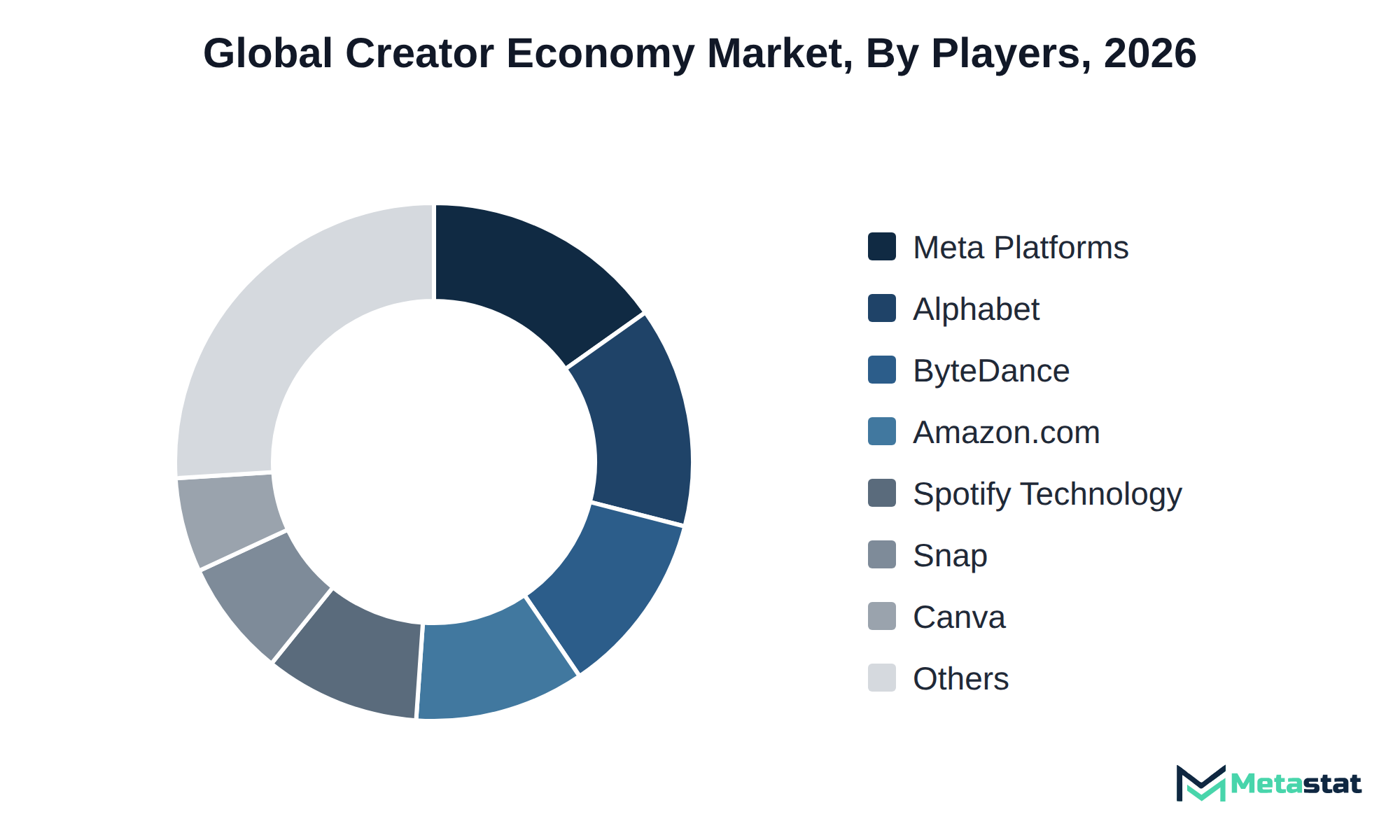
Competition within the Creator Economy market encompasses a range of platforms specializing in diverse content delivery methods. Social media platforms, video-sharing platforms, and podcasting platforms serve distinct segments of creators, influencing user engagement and content monetization approaches. The focus on user experience, platform features, and ecosystem integration drives competitive dynamics, resulting in varying levels of adoption and investment across the market.
Buyers prioritize features including pricing, ease of use, and integration capabilities when selecting platforms. Meta Platforms, Inc. emphasizes social media solutions, enhancing creator engagement and community building. Spotify Technology S.A. focuses on audio content distribution, appealing to creators in the music and podcasting sectors. Amazon.com, Inc. offers a comprehensive ecosystem for content creators, enabling monetization through diverse revenue channels, which strengthens its position in the competitive landscape.
Achieving this forecast requires several key developments. Second, the digital and educational content category, projected to reach USD 272.1 billion by 2033, reflects increasing demand for educational resources and interactive content. Third, the professional creator segment, which is set to grow significantly, will drive revenue channels including subscriptions and memberships, anticipated to reach USD 173.6 billion by 2033. However, risks persist that could inhibit market growth. Regulatory challenges in specific regions, particularly within North America and Europe, will limit the operational scope of creators and platforms. Addressing these regulatory hurdles will be crucial for the market to achieve its potential. Overall, the Creator Economy market is poised for significant growth, driven by evolving consumer preferences and technological advancements.
By Platform Type: Social Media Platforms, Video-Sharing Platforms, Podcasting Platforms, Live-Streaming Platforms, Creator Commerce Platforms, Others (Audio and Music Platforms)
By Creator Content Category: Arts and Crafts Content, Digital and Educational Content, Written Content and Blogging, Video Production Content, Photography and Visual Content, Music and Audio Content, Others (Gaming, Lifestyle and Specialized Content)
By Revenue Channel: Advertising Revenue, Subscriptions and Memberships, Tips, Donations and Virtual Gifts, Affiliate Marketing, Brand Partnerships and Sponsorships, Merchandise and Digital Product Sales, Others (Pay-Per-View and Ticketed Experiences)
By End User: Armature Creator, Professional Creator
The report strategically identifies and profiles the key market players and analyses their core competencies in each sub-segment of the Creator Economy market.
Report Attributes | Details |
Study Period | 2021-2033 |
Base Year | 2025 |
Estimated Year | 2026 |
Forecast Period | 2026-2033 |
Historical Period | 2021-2025 |
Growth Rate | CAGR 23.3% from 2026 to 2033 |
Revenue Unit | USD billion |
Segmentation | By Platform Type, Creator Content Category, Revenue Channel, End User, and Region |
By Region | North America (By Platform Type, Creator Content Category, Revenue Channel, End User, and Country)
|
Europe (By Platform Type, Creator Content Category, Revenue Channel, End User, and Country)
| |
Asia Pacific (By Platform Type, Creator Content Category, Revenue Channel, End User, and Country)
| |
South America (By Platform Type, Creator Content Category, Revenue Channel, End User, and Country)
| |
Middle East and Africa (By Platform Type, Creator Content Category, Revenue Channel, End User, and Country)
|
Find answers to common questions about this report
The Creator Economy market size was valued at USD 252.6 billion in 2025.
The market is projected to grow at a CAGR of 23.3% during the forecast period from 2026 to 2033.
The North America Creator Economy market size is estimated to reach USD 510.7 billion by 2033.
Social Media Platforms lead the Creator Economy market with a projected value of USD 383.7 billion by 2033, based on its significant growth rate of 22 percent.
Shifts in consumer behavior have led to increased spending by amateur creators seeking to leverage their skills for income. The digital and educational content category represents a significant growth opportunity, driven by rising demand for online learning and skill development.
North America holds the dominant share of the Creator Economy market, with a projected value of USD 510.7 billion in 2033, representing 40 percent of the total market.
Price sensitivity presents a notable restraint, particularly impacting amateur creators who face high costs associated with advanced tools, subscriptions, and platform fees. Talent acquisition poses a challenge for suppliers due to the surging demand for skilled professionals, resulting in higher operational costs.
Several factors favor adoption in the Creator Economy market. The increasing demand for digital and educational content drives investment, with this segment projected to reach USD 272.1 billion by 2033. advancements in creative tools enhance content production efficiency, attracting both amateur and professional creators.
The Creator Economy market is estimated to reach a valuation of USD 1,349.9 billion by 2033.
Key players operating in the Creator Economy market include Meta Platforms, Inc., Alphabet Inc., ByteDance Ltd., Amazon.com, Inc., Snap Inc., Spotify Technology S.A., and Patreon, Inc.
The analysts below cover Information & Technology research at Metastat Insights.
LEAD ANALYST
Utkarsh Khirodkar is a Lead Market Research Analyst at MetaStat Insight, specializing in market intelligence, technology sector assessments, and competitive strategy.

PRINCIPAL CONSULTANT - ENTERPRISE AI & EMERGING TECHNOLOGIES
Banking & Finance · Electronics and Semiconductor · Energy and Power · Healthcare IT · Information & Technology · Professional Services
Vijay Gunti is a Principal Consultant at MetaStat Insight, bringing over two decades of experience across enterprise digital transformation, technology strategy, and intelligent systems.

LEAD CONSULTANT - COMMUNICATION, TELECOM, AND IT
Electronics and Semiconductor · Information & Technology · Machinery & Equipment · Professional Services
Ravindra Sathe Consultants for Communication, Telecom, and IT at MetaStat Insight. He leads the firm's industry research initiatives across telecommunications infrastructure, digital connectivity, enterprise networking, and emerging information technology domains.
The technical breakdown of ISO 20022 migration readiness across correspondent banking corridors was remarkably thorough. Rather than treating cross-border corporate payments as a single block, the report drew a useful distinction between multilateral netting platforms and domestic instant payment rails across ASEAN economies. MetaStat Insight highlighted regulatory constraints on foreign exchange liquidity management that many publications gloss over. The research material offered practical clarity for our platform development roadmap.
Our group needed clearer visibility into out-of-autoclave processing timelines for high-temperature thermoplastic composites. MetaStat Insight delivered an objective assessment that contrasted automated fiber placement scrap rates with traditional thermoset prepreg layup cycles. The supplier landscape mapped out primary resin suppliers and tape slitting capacity across France, Germany, and Japan with solid technical accuracy. Their analyst handled our questions on precursor supply risks during an unscheduled inquiry call, providing clear, unembellished context.
Evaluating sensor fusion reliability across harsh operating environments can be tricky without field-validated data. The study on agricultural autonomous guidance systems clearly separated stereo vision setups from automotive-grade solid-state LiDAR. We appreciated the regional infrastructure analysis, specifically around RTK network density across North America and South America. During our follow-up consultation, the MetaStat Insight team walked through tier-two perception software partnerships, giving our engineering leads a practical basis for vendor shortlisting.
Explore related market intelligence reports worth reading alongside this one.
Starting from
$2950
Starting from
$2950