
LEAD ANALYST
Utkarsh Khirodkar is a Lead Market Research Analyst at MetaStat Insight, specializing in market intelligence, technology sector assessments, and competitive strategy.

Global Supply Chain Execution Software Market Size, Share, By Solution Type (Warehouse Management Systems (WMS), Transportation Management Systems (TMS), Order Fulfillment Management Systems, Supply Chain Visibility and Control Towers, Global Trade Management, Warehouse Labor Management, Yard and Dock Management, Freight Audit and Payment Software), By Deployment Model (Cloud, On-Premises and Hybrid), By Organization Size (Large Enterprises and Small and Medium-Sized Enterprises), By End-Use Industry (Apparel, Textiles and Footwear, Retail and E-Commerce, Transportation and Logistics, Automotive, Food and Beverage, Healthcare and Life Sciences, Electronics and High-Tech, Chemicals and Energy, Other Manufacturing), Industry Analysis, Growth, Trends, and Forecast, 2026-2033
Report ID
MSI-5572
Published
October, 2026
Pages
304 Pages
Format
Historical
Base year
Forecast
Forecast period
Report Details
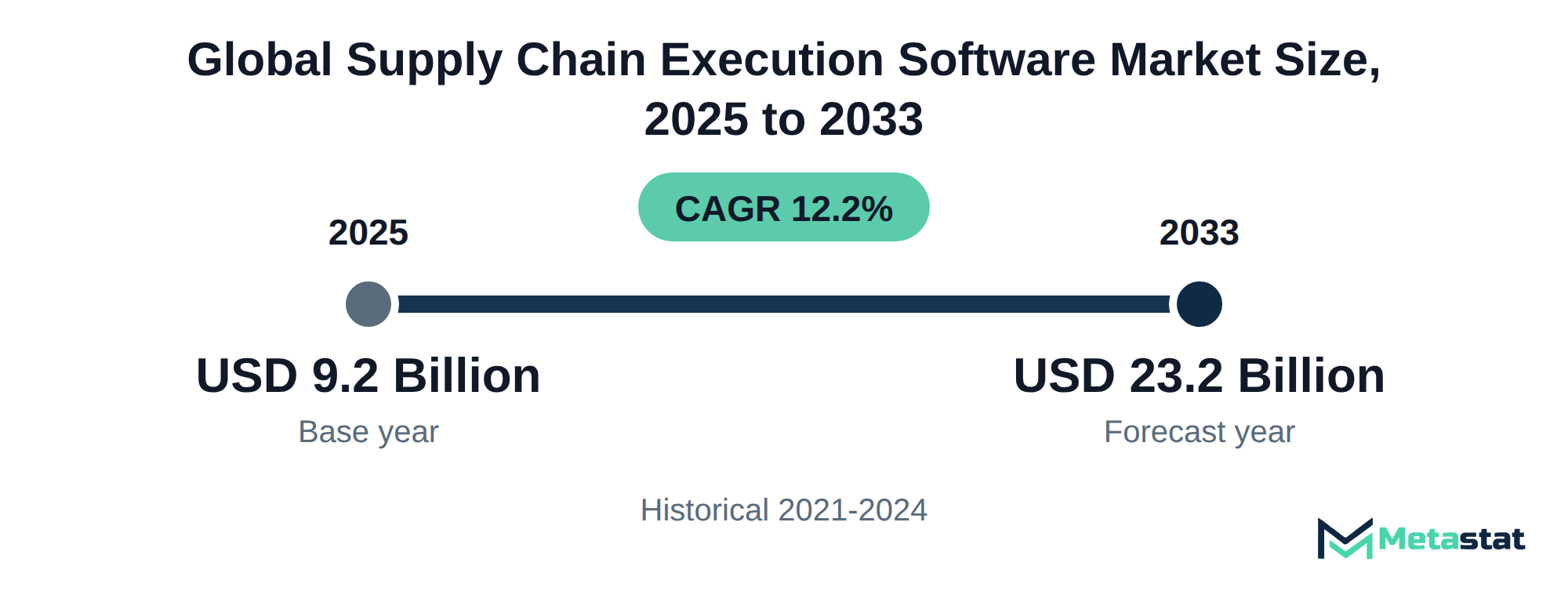
Market Valuation: Valued at $9.2 Billion in 2025, projected to reach $23.2 Billion by 2033 at a 12.2% CAGR.
Dominant Segment: Warehouse Management Systems (WMS) lead the market, driven by the need for enhanced supply chain visibility and operational efficiency. This segment reflects a strong focus on optimizing warehouse operations, contributing significantly to overall market growth.
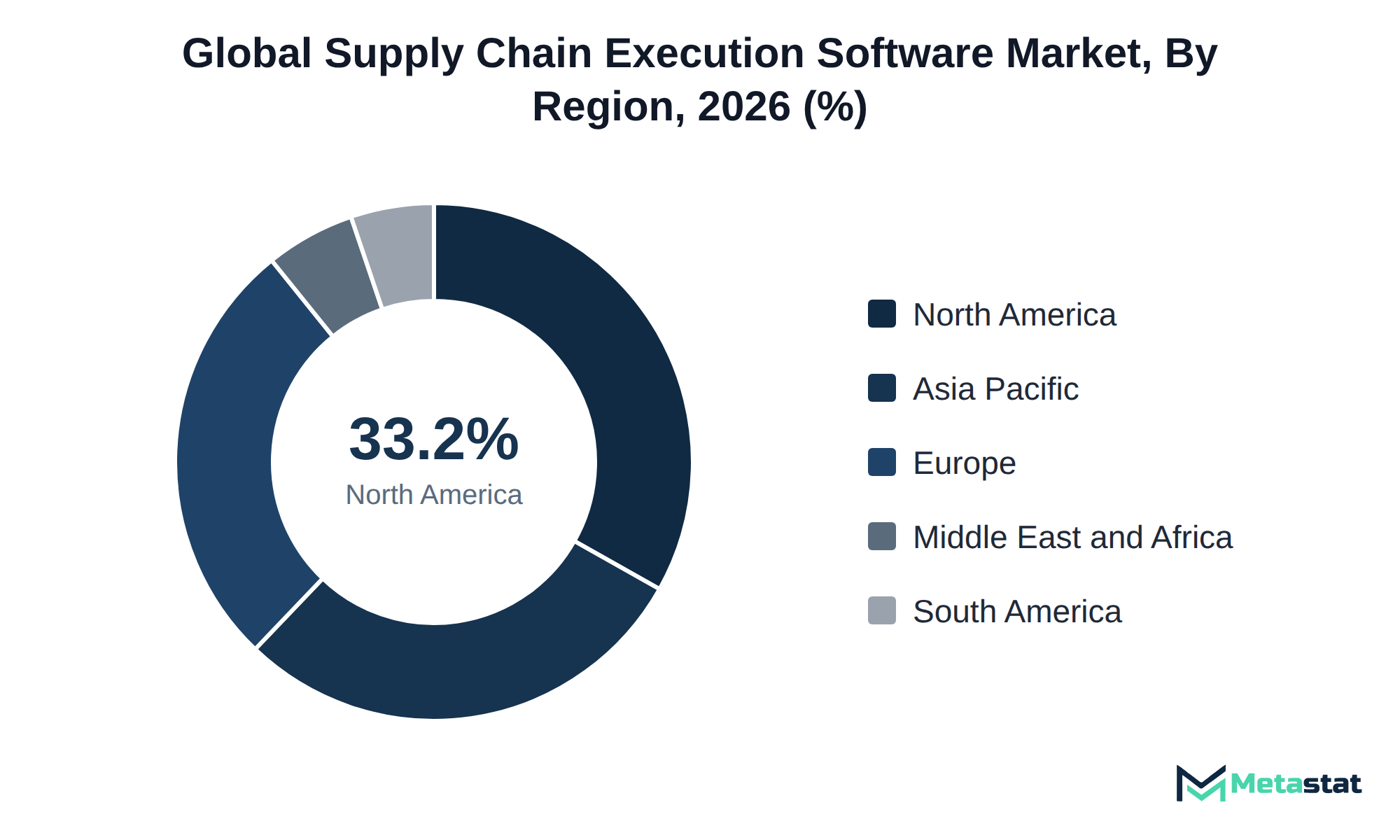
Geographic Lead: North America is the leading region, holding 33.2% of the market in 2025, with the US expected to maintain this dominance through 2026. The region's robust technological adoption and focus on supply chain efficiency are key growth drivers.
What's Inside: The report provides a comprehensive analysis of the Supply Chain Execution Software market, covering various solution types, deployment models, and end-use industries. It includes competitive coverage, market dynamics, and a detailed forecast from 2026 to 2033.
Market Dynamics: The increasing demand for efficiency and digital transformation within supply chains is driving significant investments in technology solutions. Organizations prioritize real-time data access and automation to enhance operational agility and responsiveness.
Price Sensitivity: High costs associated with advanced software solutions are limiting adoption rates among small and medium-sized enterprises (SMEs). This segment's financial constraints highlight the need for flexible pricing strategies to encourage investment in supply chain technologies.
Choose Your License
Global Supply Chain Execution Software Market
The global Supply Chain Execution Software market was valued at USD 9.2 billion in 2025 and is projected to reach USD 23.2 billion by 2033, growing at a CAGR of 12.2% over the forecast period.
The Supply Chain Execution Software market encompasses various solutions that enhance supply chain processes, including warehouse management, transportation management, order fulfillment, and supply chain visibility. Buyers invest in these solutions to improve operational efficiency, reduce costs, and achieve better inventory control. The increasing complexity of supply chains and the growing demand for real-time data analytics drive spending in this sector.
Growth in the market is propelled by the rising adoption of cloud-based solutions, which provide companies with flexibility and scalability. The segment of Warehouse Management Systems (WMS) holds the most value, reflecting a significant focus on optimizing warehouse operations. North America holds 33.2% of the market in 2025, with the US leading in 2026. In comparison, Europe accounts for 27.1%, while Asia Pacific follows closely with a share of 29%.
The need for enhanced visibility across supply chains remains a key driver. Companies increasingly seek to integrate their supply chain processes and improve collaboration among stakeholders, driving demand for advanced solutions. This trend enhances operational efficiency and boosts customer satisfaction through improved service levels.
The market encompasses solutions that enhance supply chain operations, driving investments in technology that improve efficiency and reduce operational costs. Buyers pursue these systems to improve visibility, optimize inventory, and manage logistics effectively. The need for integration across various platforms and processes leads companies to adopt advanced solutions that enable real-time data sharing and decision-making.
Growth in the market is primarily driven by the increasing demand for automation and digital transformation within supply chains. Among the various solution types, Warehouse Management Systems (WMS) stand out, projected to achieve significant growth. This regional dominance reflects strong technological adoption and a clear focus on improving supply chain efficiency.
The rise of e-commerce continues to influence spending patterns, prompting organizations to invest in solutions that support rapid order fulfillment and improved customer experiences. The market's expansion results from ongoing technological advancements and evolving consumer expectations, leading to increased competition among providers. These dynamics create a favorable environment for sustained investment in supply chain execution software.
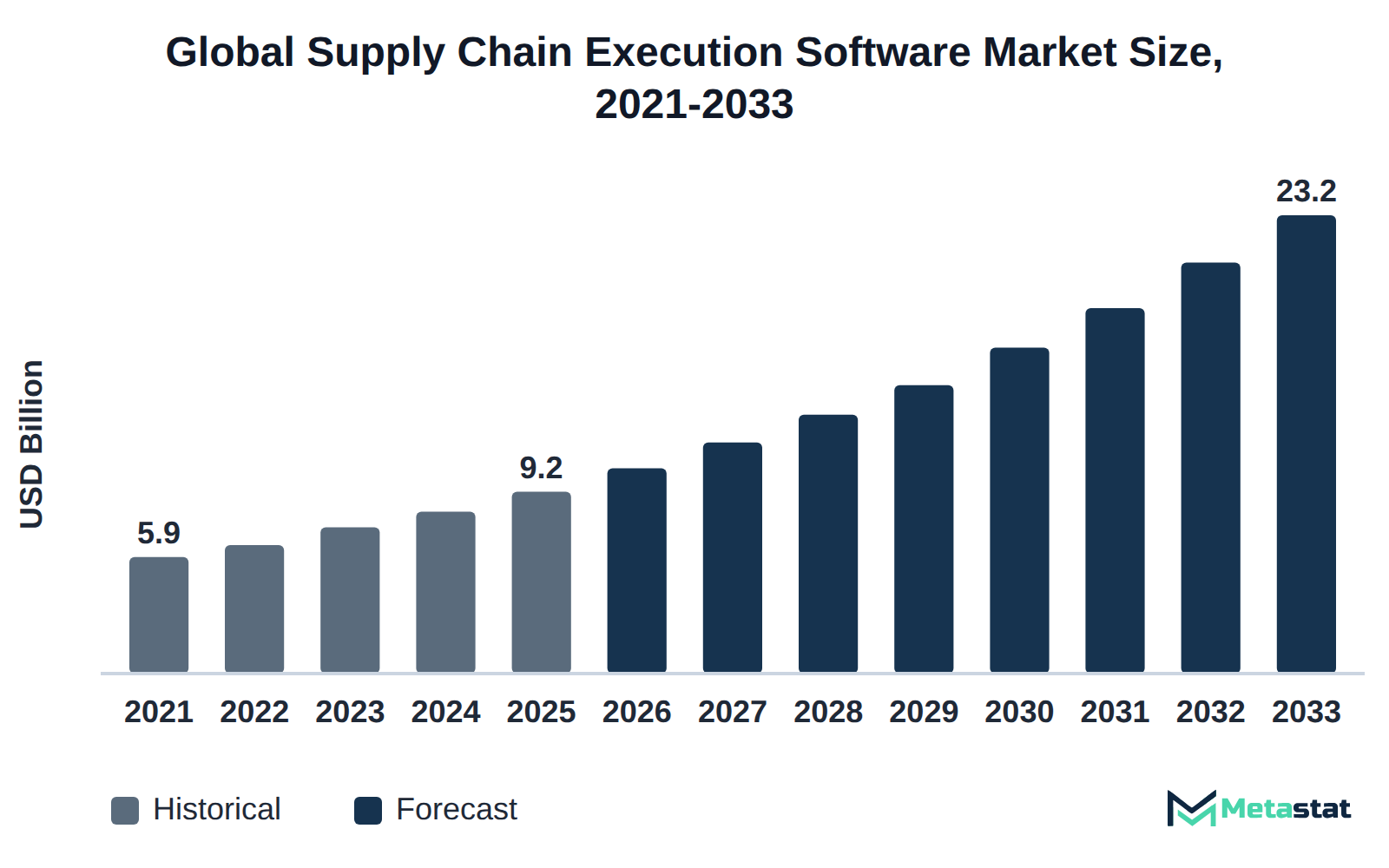
The integration of Cloud-based Warehouse Management Systems (WMS) and Transportation Management Systems (TMS) significantly enhances operational efficiency for apparel manufacturers. By 2033, the Cloud segment is projected to reach USD 14.2 billion, reflecting a compound annual growth rate (CAGR) of 15.6%. This shift to Cloud solutions enables real-time data access, streamlined inventory management, and improved order fulfillment processes.
Apparel manufacturers increasingly adopt these integrations to respond to market demands more effectively. Enhanced visibility throughout the supply chain facilitates timely decision-making, allowing businesses to adapt to fluctuations in consumer preferences and market trends. Supply chain execution software enables these advancements, giving manufacturers opportunities to optimize logistics and distribution networks.
This technological evolution yields substantial commercial benefits. Improved integration of WMS and TMS minimizes operational costs and enhances customer satisfaction through faster delivery times. As the market expands, apparel manufacturers investing in these Cloud solutions gain a stronger competitive position and support long-term growth and profitability.
Effective management of style, colour, and size tracking across garment warehouses significantly influences operational efficiency within the Supply Chain Execution Software market. Accurate tracking systems facilitate real-time inventory visibility, ensuring that garments are available in the required specifications when needed. This capability addresses a critical challenge for retailers in a competitive environment where customer satisfaction hinges on product availability and variety.
The Apparel, Textiles and Footwear segment is projected to expand, reaching USD 2.1 billion by 2033, reflecting a compound annual growth rate (CAGR) of 12.8%. This growth indicates rising demand for advanced tracking systems that support reliable inventory management. Retailers adopting these solutions benefit from enhanced operational workflows and reduced instances of stock discrepancies, which ultimately contribute to higher revenue and customer retention rates.
Investment in sophisticated tracking technology enables garment warehouses to streamline processes, resulting in more accurate order fulfillment and improved responsiveness to market trends. Consequently, this creates a competitive advantage within the market. Businesses increasingly prioritize integrating Supply Chain Execution Software solutions to optimize their logistics operations and meet evolving consumer expectations.
Fashion supply chains face unique challenges related to cross-border freight coordination and export documentation. The increasing complexity of global trade regulations and logistical requirements necessitates effective software solutions that streamline these processes. In the Supply Chain Execution Software market, demand is evident for solutions tailored to the fashion industry, particularly those that improve efficiency in managing international shipments and compliance with various export regulations.
The sector of Apparel, Textiles, and Footwear expects a compound annual growth rate (CAGR) of 12.8% from 2026 to 2033. This growth is driven by the rising need for fashion brands to enhance their supply chain visibility and control, leading to more effective cross-border operations. By using advanced supply chain execution software, companies improve coordination, reduce delays, and meet export documentation requirements.
This focus on enhanced coordination minimizes operational risks and contributes to improved customer satisfaction. Timely deliveries and accurate documentation enhance brand reputation, building loyalty among consumers. Consequently, firms that invest in specialized supply chain execution software tailored for the fashion industry position themselves for significant competitive advantages, capitalizing on the growth within this market segment.
Logistics software significantly enhances the operations of an apparel group by integrating effectively with existing Enterprise Resource Planning (ERP) systems. Adopting Warehouse Management Systems (WMS) delivers notable efficiencies, particularly with projected growth from USD 2.1 billion in 2026 to USD 4.6 billion by 2033, reflecting a compound annual growth rate (CAGR) of 11.8%. This integration facilitates streamlined inventory management, order processing, and distribution operations, which are critical in the dynamic apparel sector.
Incorporating Transportation Management Systems (TMS) further complements ERP capabilities by optimizing shipment planning and logistics coordination. As the apparel industry increasingly relies on timely deliveries and efficient supply chains, TMS is expected to reach USD 4.4 billion by 2033, which reflects its importance. This robust demand for effective logistics solutions aligns with the broader objectives of reducing operational costs and enhancing customer satisfaction.
For apparel groups, using these logistics software solutions alongside existing ERP systems yields substantial operational improvements. By adopting a WMS and TMS, organizations are better placed to manage supply chain execution in the apparel market, improving both efficiency and profitability.
Organizations increasingly prioritize efficiency in their supply chain operations, leading to higher investments in technology solutions. This shift primarily involves large enterprises seeking to streamline processes through advanced software that enhances visibility and control. The growth of e-commerce has intensified competition and heightened the need for robust supply chain execution capabilities. Buyers actively seek software that supports real-time tracking and improved coordination. The Supply Chain Execution Software market reflects this trend, with a significant growth projection, reaching USD 23.2 billion by 2033. The anticipated compound annual growth rate (CAGR) of 12.2% over the forecast period indicates strong demand driven by the desire for more agile and responsive supply chains.
Rapid shifts in consumer preferences further compel organizations to adopt these solutions, aiming to reduce lead times and enhance customer satisfaction. While the market evolves, demand for Supply Chain Execution Software continues to align with the need for improved operational efficiency.
The rapid advancement of digital technologies drives innovation within supply chain processes. Emerging technologies, including artificial intelligence, machine learning, and the Internet of Things, enhance data analytics capabilities, enabling organizations to make informed decisions. These technologies support real-time tracking of inventory and shipments, leading to improved visibility across supply chains. Organizations adopting digital solutions experience increasing demand for systems that integrate these technologies into existing operations.
The shift towards automation reduces manual intervention, resulting in faster processing times and decreased errors. Organizations within diverse sectors, including retail, automotive, and healthcare, recognize the benefits of these advancements, highlighting the importance of adopting digital tools. The integration of these technologies streamlines processes, enhances responsiveness, and ultimately contributes to competitive advantages. The continuous evolution of digital solutions will shape the Supply Chain Execution Software market, driving growth and investment in innovative software solutions.
High costs associated with Supply Chain Execution Software present a significant restraint for small and medium-sized enterprises (SMEs). Limited financial resources hinder their ability to invest in comprehensive software solutions that streamline operations. This situation leads to slower uptake of advanced technologies, resulting in smaller orders and delayed replacements of outdated systems. SMEs, often competing on tight margins, struggle to justify the expenditure required for robust software solutions, which affects their operational efficiency. Consequently, the market experiences constrained growth in this buyer segment, with many SMEs opting for less expensive alternatives or maintaining legacy systems. The price sensitivity observed in this segment highlights the need for flexible pricing strategies and tailored solutions. These approaches address the financial limitations of SMEs while promoting the adoption of more advanced supply chain technologies.
In contrast, larger enterprises exhibit greater readiness to invest in Supply Chain Execution Software, recognizing the long-term benefits of enhanced efficiency and improved operational visibility. However, sustained growth in the overall market depends significantly on addressing the affordability concerns faced by smaller organizations.
Profit margin pressure poses a significant challenge within the Supply Chain Execution Software market. Rising operational costs impact profitability, particularly for smaller suppliers who grapple with tight budgets and increased competition. Suppliers respond by optimizing their service offerings through enhanced integrations, focusing on innovative features that deliver greater value. This competitive landscape compels suppliers to refine their pricing strategies, often leading to increased reliance on value-added services to attract customers. Several suppliers invest in advanced analytics tools for better demand forecasting, improving their ability to manage inventory levels effectively while reducing excess costs. Efforts to streamline operations and improve service delivery have become critical for sustaining profitability in an environment marked by fluctuating demand and intensifying competition. The market continues to evolve, with players actively seeking ways to maintain their competitive edge while addressing the dual challenges of profitability and operational efficiency.
The increasing shift towards cloud deployment models represents a significant opportunity for the Supply Chain Execution Software market. Cloud solutions enable organizations to enhance scalability and flexibility while reducing upfront capital expenditures related to on-premises systems. The segment is projected to expand at a CAGR of 15.6%, reaching USD 14.2 billion by 2033, driven by rising demand for accessible and efficient supply chain management tools. Small and medium-sized enterprises (SMEs) particularly benefit from SME cloud services, which provide affordable access to advanced technologies that were previously limited to larger organizations. This transition allows SMEs to compete effectively by optimizing logistics and improving responsiveness to market changes. The emphasis on cloud deployment facilitates rapid implementation, allowing businesses to respond swiftly to shifting consumer demands and market conditions.
The Global Supply Chain Execution Software market is segmented based on Solution Type, Deployment Model, Organization Size, and End-Use Industry.
In the Supply Chain Execution Software market, this segment optimizes warehouse operations, helping businesses track inventory levels, manage storage space, and improve efficiency. Retailers and manufacturers are the primary users, relying on WMS to streamline processes and reduce operational costs. A key driver for this segment includes the ongoing push for enhanced supply chain visibility, driving organizations to invest in advanced WMS solutions. Compared to other segments, WMS demonstrates a strong growth trajectory, supported by the increasing need for organizations to improve inventory management. With a higher CAGR than traditional order fulfillment systems, WMS stands out for its significant impact on overall supply chain efficiency, contributing to the broader growth of the market.
Transportation Management Systems (TMS) segment is estimated to reach USD 4.4 billion by 2033, at a CAGR of 12.1% during the forecast period. TMS solutions facilitate the planning and execution of freight movement, optimizing transportation processes for various industries. Businesses in retail, manufacturing, and logistics use TMS to improve delivery efficiency and reduce costs. This segment experiences growth driven by increasing demand for integrated logistics solutions and the rising complexity of supply chains. Compared to other solutions, TMS exhibits faster growth due to the critical need for efficiency in transportation operations, making it distinct. The deployment of advanced technologies, including AI and machine learning, enhances TMS capabilities, positioning it as a leader in the Supply Chain Execution Software market.
Order Fulfillment Management Systems segment is expected to reach USD 3.3 billion by 2033. This segment facilitates the efficient processing and delivery of customer orders, primarily employed by retailers and e-commerce companies to enhance customer satisfaction. The growth of this segment is driven by increasing demand for faster and more accurate order processing, reflecting consumer expectations for immediate fulfillment. Advancements in technology, including automation and artificial intelligence, enhance the capabilities of order fulfillment systems. Compared to other segments, this segment exhibits a relatively stable growth trajectory, supported by a CAGR of 12.8%. In contrast, Warehouse Management Systems and Transportation Management Systems outpace it slightly, indicating varied adoption rates across the market. The market reflects a diverse array of solutions tailored to specific customer needs, contributing to overall expansion.
Supply Chain Visibility and Control Towers segment is projected to grow at a CAGR of 14.2% during the forecast period. This segment focuses on providing real-time insights and monitoring capabilities for supply chain operations, employed by organizations seeking enhanced transparency and control over their logistics networks. Key drivers include increasing demand for efficient supply chain management and the necessity for proactive decision-making in dynamic market conditions. This segment distinguishes itself through its significant growth rate compared to others, including Warehouse Management Systems, which is anticipated to expand at a CAGR of 11.8%. Investments in advanced technologies like IoT and AI further accelerate adoption, enabling companies to track inventory and shipments more effectively. With businesses aiming to improve customer satisfaction and operational efficiency, strong interest in this segment continues to shape the Supply Chain Execution Software market.
Global Trade Management focuses on optimizing international trade processes, encompassing activities including compliance, documentation, and customs management such as customs brokerage. Businesses in sectors including retail, manufacturing, and logistics engage with this segment to ensure efficient cross-border operations. Increasing regulatory requirements and the need for streamlined trade processes drive demand for these solutions. Unlike other segments, Global Trade Management emphasizes regulatory compliance and risk management, appealing primarily to large enterprises that engage in extensive international trade. This segment involves more complex integration with legal and regulatory systems compared to Warehouse Management Systems or Transportation Management Systems. The market for Supply Chain Execution Software is expected to expand, reflecting the growing importance of compliance and operational efficiency in global trade.
Warehouse Labor Management focuses on optimizing workforce efficiency in warehouses. This solution enhances labor productivity, ensuring timely order fulfillment and accurate inventory management. Organizations in retail, logistics, and manufacturing sectors apply this segment to track workforce performance, monitor compliance, and allocate resources effectively. Growing demand for warehouse automation drives investments in labor management solutions, enabling businesses to respond swiftly to market fluctuations. Compared to other segments, including Transportation Management Systems, Warehouse Labor Management emphasizes a unique focus on internal resource management rather than external logistics. The increasing need for real-time data analytics further distinguishes it, promoting operational agility during evolving supply chain dynamics. Adoption of advanced technology solutions provides a competitive edge for organizations striving to optimize workforce efficiency.
Yard and Dock Management involves optimizing the use of loading docks and yard space within logistics operations. This segment addresses the needs of companies managing freight loading and unloading activities, ensuring efficient vehicle scheduling and dock utilization. Increased demand for streamlined operations drives growth in this area, with organizations prioritizing efficient yard management to reduce wait times and enhance throughput. Factors including the rise in e-commerce and the need for real-time data visibility significantly influence this segment. Compared to other solution types, Yard and Dock Management aligns with specific buyer requirements focusing on operational efficiency rather than broader supply chain visibility. The supply chain execution software market reflects this segment's relevance, reflecting a targeted approach to enhancing logistics operations without the expansive scope of other segments.
Freight Audit and Payment Software encompasses solutions that streamline the auditing of freight bills and the payment processes related to transportation costs. Companies involved in transportation and logistics employ this type of software to ensure accuracy in billing, identify discrepancies, and optimize payment cycles. The segment benefits from increasing emphasis on cost control within logistics operations, where organizations pursue greater transparency and accountability in freight expenditures. Differentiation from other segments occurs due to specific focuses on auditing and financial reconciliation, rather than broader operational functions including warehouse management or transportation planning. This focus aligns with the market trend toward integrating financial scrutiny into supply chain processes, enhancing overall efficiency.
Returns execution and delivery management encompass crucial processes within supply chains, focusing on effectively handling product returns and managing delivery logistics. Delivery management in particular depends on courier, express, and parcel services to move orders to customers. Businesses in sectors including retail, e-commerce, and manufacturing leverage these systems to enhance customer satisfaction and streamline operations. The segment experiences growth driven by the increasing emphasis on customer service and the need for efficient returns management. This focus differentiates it from other segments, including Warehouse Management Systems, which emphasize inventory control. Unlike several segments that experience rapid expansion, the growth trajectory for returns execution and delivery management remains steady, reflecting consistent demand from businesses prioritizing customer experience. Organizations seeking to improve operational efficiency and responsiveness to customer needs frequently invest in these solutions, contributing to sustained interest in the market.
The cloud model gives organizations scalable and flexible supply chain execution software to manage their operations. Increasing demand for real-time data access and improved collaboration drives adoption among industries including retail and logistics. Compared to on-premises solutions, the cloud segment exhibits faster growth due to lower upfront investment and reduced maintenance costs. Companies favor this approach to enhance efficiency and streamline operations, adapting quickly to market changes. The trend towards cloud solutions reflects a broader shift in technology adoption, influencing competitive dynamics across other deployment models.
On-Premises segment is estimated to reach USD 5.9 billion by 2033, at a CAGR of 6% during the forecast period. This segment serves large enterprises that prioritize maintaining control over their IT infrastructure and data security. Demand arises from organizations prioritizing compliance and customization, which are often more achievable through on-premises solutions. Compared to cloud-based alternatives, the on-premises deployment model attracts clients requiring robust data governance and localized support. While the growth rate for this segment is slower than that of cloud solutions, which are anticipated to grow at a CAGR of 15.6%, on-premises software remains essential for industries requiring stringent regulatory adherence. The market shows a balanced interest in both deployment modes, reflecting diverse buyer preferences and operational necessities.
Hybrid deployment models are expected to reach USD 3.1 billion by 2033. This model integrates cloud and on-premises solutions, providing flexibility for organizations seeking to balance control and scalability. Large enterprises and small and medium-sized enterprises (SMEs) adopt hybrid systems to address varied operational needs. The growing emphasis on digital transformation drives demand, facilitating the integration of existing systems with cloud capabilities. This approach differs from fully cloud-based models, which experience a higher CAGR of 15.6% during the forecast period. In contrast, the hybrid model's growth rate aligns with overall market trends, reflecting a balanced response to the evolving demands of supply chain strategies. The market recognizes the benefits of hybrid solutions, enabling organizations to enhance efficiency while managing costs effectively.
Large Enterprises segment is valued at USD 6.2 billion in 2026 and is projected to reach USD 13.3 billion by 2033, at a CAGR of 11.5% during the forecast period. This segment primarily serves large organizations that require sophisticated solutions to manage complex supply chain processes, including inventory management, transportation planning, and order fulfillment. Key demand drivers include the increasing need for operational efficiency and enhanced visibility across supply chains. Compared to small and medium-sized enterprises, this segment experiences a different growth trajectory driven by higher investment capacity and greater complexity of operations. The market shows strong interest in advanced analytics and integration capabilities. The growth of Large Enterprises shows robust potential as these organizations increasingly adopt comprehensive supply chain execution software solutions to optimize their operations.
Small and Medium-Sized Enterprises segment is estimated to reach USD 9.9 billion by 2033, at a CAGR of 13.3% during the forecast period. This segment serves small and medium-sized businesses seeking to enhance their supply chain operations. Increasing demand for cost-effective and scalable software solutions drives growth in this segment, with organizations prioritizing efficiency and flexibility. Unlike larger enterprises, which often adopt more complex and customized solutions, small and medium-sized enterprises benefit from straightforward implementations that meet their specific needs. The market for this segment shows a faster growth trajectory compared to On-Premises solutions, which are projected to reach USD 5.9 billion by 2033 at a CAGR of 6%. Interest in cloud-based systems encourages investment in Small and Medium-Sized Enterprises, further differentiating this segment through its adaptability and competitive pricing within the broader market.
This segment primarily serves manufacturers and retailers focused on improving inventory management, order fulfillment, and overall supply chain efficiency. Increased demand for fast fashion and personalized products drives growth in this sector, compelling companies to adopt advanced software solutions that enhance responsiveness and visibility. Unlike other segments, including Transportation Management Systems, this segment experiences a relatively higher growth rate, driven by evolving consumer preferences and the need for efficient supply chain operations tailored to specific market trends. The market's evolution is reflected in the increasing adoption of technology aimed at streamlining processes and reducing lead times.
Retail and E-Commerce (Excluding Apparel) segment is estimated to reach USD 4.2 billion by 2033, at a CAGR of 11.8% during the forecast period. Retailers and e-commerce platforms employ this software to enhance inventory management, streamline order processing, and improve customer experience. Growing consumer demand for faster delivery times and better service drives adoption among these businesses. This segment, focusing on non-apparel retail, exhibits faster growth compared to other segments like Transportation Management Systems, which grows at a CAGR of 12.1%. The increasing shift toward online shopping and digital channels significantly influences spending in this area, highlighting the essential role of technology in meeting evolving consumer expectations. Suppliers within this segment compete by providing advanced features that cater to the unique needs of retail organizations in managing complex supply chain processes effectively.
Transportation and Logistics segment is expected to reach USD 4 billion by 2033. This segment encompasses the management of transportation operations and logistics services, employed by businesses involved in shipping goods, freight forwarding, and warehousing. Increasing demand for efficient supply chain management and the rise of e-commerce significantly influence this sector. Businesses require robust software solutions to streamline logistics processes, enhance visibility, and reduce operational costs. Compared to other segments, this one exhibits a moderate growth rate driven by these demand dynamics while maintaining competitive pricing strategies. The expected growth rate highlights the essential role of advanced software solutions in meeting evolving industry needs, particularly in sectors reliant on transportation and logistics services.
Automotive segment is projected to grow at a CAGR of 11.5% during the forecast period. This segment is essential in managing the complex supply chains involved in vehicle manufacturing and distribution, serving original equipment manufacturers (OEMs) and suppliers alike. Finished vehicle logistics covers the distribution side of these supply chains. Growth in this segment is driven by increasing demand for electric vehicles and advancements in manufacturing technologies. Automotive companies seek enhanced supply chain visibility and real-time data management to streamline operations and improve efficiency. Compared to other segments, including apparel or retail, the automotive segment features a more significant emphasis on compliance and regulatory standards, necessitating advanced software solutions to meet specific industry requirements. The market reflects a strong interest in integrating modern technologies to support the ongoing transformation in automotive production and logistics.
The Food and Beverage segment manages supply chains that span the production, processing, and distribution of food products. This segment serves manufacturers, distributors, and retailers who require robust systems to ensure compliance with safety regulations and manage inventory effectively. The increasing demand for traceability and transparency in food sourcing drives adoption of advanced software solutions, addressing consumer preferences for safety and quality. Differentiating factors include a focus on regulatory compliance and quality assurance, which sets this segment apart from others, resulting in unique buyer requirements and operational challenges. The market benefits from an ongoing shift towards digitalization, enhancing operational efficiency and enabling better decision-making for stakeholders in the food and beverage industry. This emphasis on compliance and quality encapsulates the evolving dynamics of the Supply Chain Execution Software market.
Healthcare and Life Sciences segment focuses on managing the complexities of healthcare supply chains within the pharmaceutical and medical sectors. Organizations involved in this segment include hospitals, pharmaceutical companies, and medical device manufacturers that require efficient tracking and management of products from production to delivery. Regulatory compliance and the increasing demand for transparency in drug supply chains drive adoption of these solutions. Unlike other segments, the Healthcare and Life Sciences segment often faces stricter regulatory scrutiny, impacting implementation timelines and costs. This environment creates a greater emphasis on quality assurance and risk management compared to segments including Retail and E-Commerce, which experience varying pressures driven by consumer demand. Such dynamics contribute to specific requirements for technology solutions tailored for this highly regulated industry. The Supply Chain Execution Software market supports these needs by enabling organizations to enhance visibility and control over their supply chains.
Electronics and High-Tech encompasses a diverse range of sectors, including consumer electronics, semiconductor manufacturing, and telecommunications. This segment serves manufacturers and distributors seeking to enhance operational efficiency and supply chain transparency. A key driver for this segment involves rapid technological advancements that require agile supply chains capable of adapting to changes in production processes. Increasing demand for smart devices and connectivity solutions contributes to heightened focus on inventory management and visibility solutions. Compared to other segments, Electronics and High-Tech usually faces higher pricing pressures due to the complexity of the products and the necessity for advanced technological integration. The emphasis on real-time data analytics and supply chain visibility distinguishes this segment, highlighting the market's focus on precision and responsiveness to consumer demands.
In the Chemicals and Energy sector, companies focus on enhancing the efficiency of supply chains across various processes related to chemical production, energy distribution, and resource management. This segment is used by manufacturers, energy providers, and logistics firms to streamline operations, improve visibility, and optimize resource allocation. Growing regulatory pressures and the shift towards sustainable practices influence the demand for advanced supply chain execution solutions. Compared to other segments, this sector experiences unique challenges due to stringent regulations, which slow the adoption of new technologies. The market adapts through innovations that promote compliance and sustainability, ensuring that businesses align with environmental standards while meeting operational needs.
Other Manufacturing encompasses a variety of industries involved in creating products not classified under specific sectors. This segment serves multiple industries, including machinery, furniture, and consumer goods, which rely on effective supply chain management for production and distribution. Increasing demand for customized products drives growth, enhancing the need for streamlined operations and efficient resource allocation. Unlike the Apparel, Textiles and Footwear segment, which has a defined growth trajectory, the Other Manufacturing sector experiences varied demands based on economic conditions and consumer preferences. Companies operating in this space focus on specific operational challenges and leverage technology to enhance productivity and reduce costs. The segment plays a unique role in the Supply Chain Execution Software market by addressing the diverse needs of manufacturers, who require tailored solutions to optimize their supply chain processes. Effective integration of supply chain software allows manufacturers to remain competitive in a dynamic market.
This segment encompasses various sectors including government, agriculture, and construction, which employ supply chain execution software for enhanced operational efficiency. Government agencies implement these solutions to streamline procurement processes and project management, while agricultural firms apply them to optimize supply chain activities from farm to market. Construction companies benefit through improved project tracking and resource management.
Demand for software in this segment arises from increasing regulatory requirements and the need for transparency in operations. Adoption barriers include resistance to change and budget constraints affecting public sector organizations. Compared to other segments, this segment experiences slower growth due to limited budgets and lengthy procurement cycles typical in government and construction projects. The Supply Chain Execution Software market is expected to evolve, offering tailored solutions that address the unique requirements of these diverse industries.
Based on geography, the Global Supply Chain Execution Software market is divided into North America, Europe, Asia-Pacific, South America, Middle East, and Africa.
The presence of advanced logistics operations significantly influences the Supply Chain Execution Software market in North America. This region stands out due to its robust infrastructure and technological advancements, driving demand across various sectors. Industries including retail, transportation, and automotive heavily rely on these solutions to enhance efficiency and streamline operations. A growing focus on digital transformation among large enterprises, along with increasing investments in automation, supports market expansion. North America is projected to reach USD 7.2 billion by the end of 2033, reflecting a strong growth trajectory. This growth is driven by companies seeking improved visibility and control within their supply chains, highlighting the importance of effective execution software.
Demand for supply chain execution software in Europe stems from various industries, including retail, automotive, and transportation. Countries including Germany, France, and the UK actively invest in advanced logistics solutions to enhance operational efficiency and meet rising consumer expectations. The regulatory environment in this region emphasizes compliance and transparency, driving organizations to adopt software that ensures adherence to strict guidelines. By 2025, Europe holds a 27.1% share of the global market, illustrating its importance in the overall landscape. The market experiences growth, supported by increasing demand for real-time visibility and control across supply chains. Businesses across the region leverage technology to optimize inventory management and improve customer service, reinforcing the need for specialized solutions tailored to European market dynamics.
Significant growth is expected in the Supply Chain Execution Software market across Asia-Pacific, driven by robust demand from sectors including retail, automotive, and logistics. Countries like China, Japan, and India exhibit a strong inclination towards adopting advanced supply chain solutions, enhancing operational efficiency and visibility. Infrastructure investments in digital technologies support this adoption, with organizations seeking to streamline their processes. The growing e-commerce sector in Southeast Asia increases the need for effective order fulfillment and inventory management systems. By 2025, this region is projected to account for 29.0% of the global market, reflecting increasing integration of supply chain technologies within various industries.
In South America, the market experiences significant demand driven by industries including retail and transportation. Brazil and Argentina contribute to the market's growth, with increasing investments in infrastructure and technology adoption. The rise of e-commerce enhances the promotion of supply chain execution software, improving operational efficiency. Companies in these countries prioritize solutions that improve visibility and control across their logistics networks. The region represents a share of 5.2% of the global market in 2025, reflecting ongoing advancements and a growing focus on supply chain optimization. Businesses strive to meet consumer demands and improve service levels, and the market is projected to expand in the coming years.
In the Middle East and Africa, the growth of the Supply Chain Execution Software market is driven by increasing demand from industries including retail and transportation. Countries like Saudi Arabia and the UAE invest heavily in infrastructure development, enhancing logistics capabilities and enabling smoother operations. South Africa demonstrates a growing interest in optimizing supply chains, reflecting a broader trend across the region. With a market share of 5.6% in 2025, this region presents opportunities for software providers to expand their offerings. The commitment to digitization and automation across various sectors supports the adoption of advanced supply chain solutions, positioning the market for significant growth through 2033.
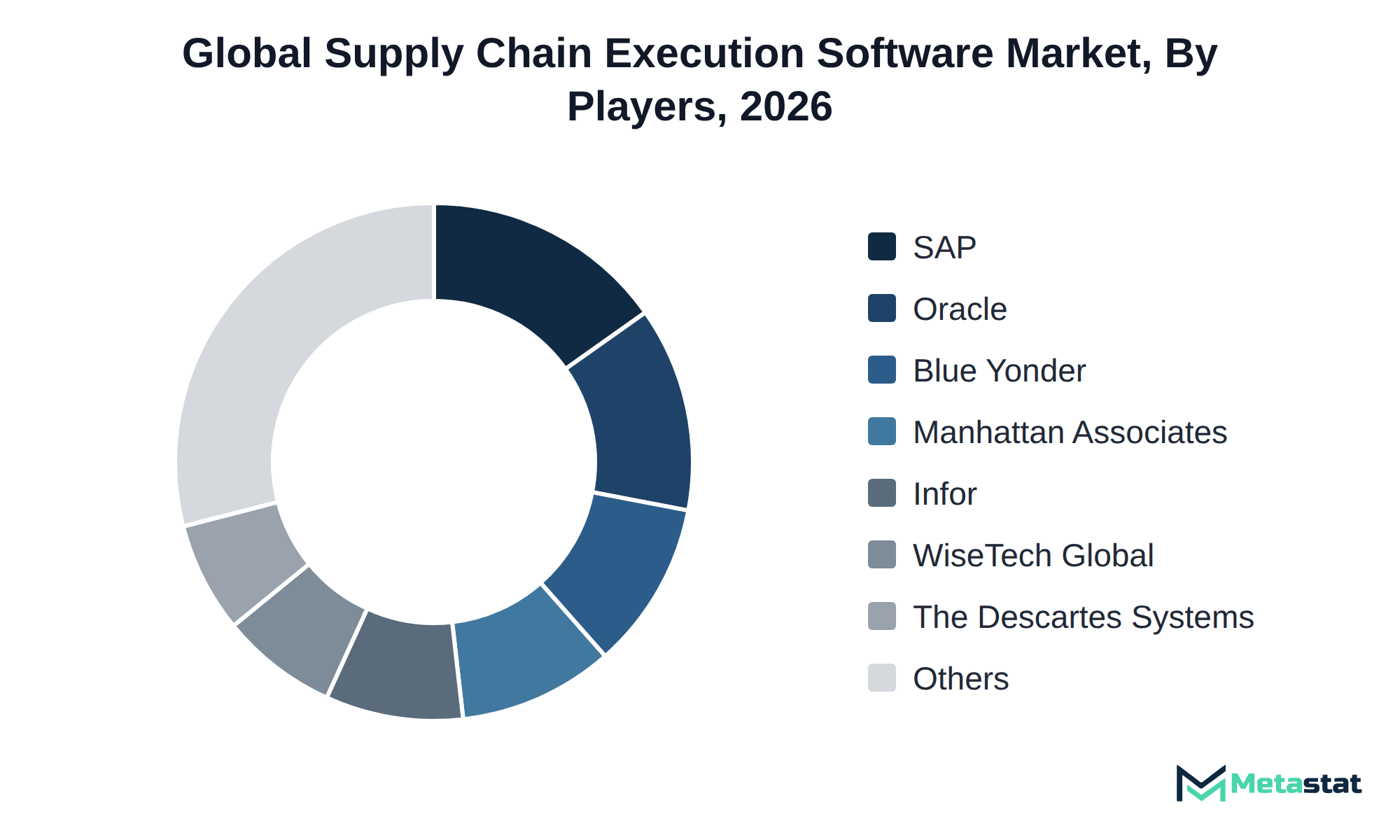
Competition within the Supply Chain Execution Software market revolves around solution type, deployment model, and organization size. Companies structure their offerings to cater to different buyer preferences, including price, customization, service quality, and ecosystem strength.
Firms including Manhattan Associates and SAP focus on Warehouse Management Systems (WMS) and Transportation Management Systems (TMS), which attract buyers seeking comprehensive solutions for inventory management and logistics optimization. In the cloud deployment model, companies like Oracle and Blue Yonder emphasize scalability and flexibility, allowing organizations to adapt their systems to changing demands.
Large enterprises gravitate towards robust solutions that integrate with existing systems. For example, Infor and Generix Group develop tailored offerings that address complex supply chain challenges for these larger businesses. In contrast, small and medium-sized enterprises prioritize cost efficiency and ease of implementation, leading firms like Tecsys and Shipsy to emphasize affordability and user-friendly interfaces.
This growth depends on several key developments within the Supply Chain Execution Software market. The adoption of cloud-based solutions is expected to accelerate, driven by scalability and flexibility, with revenues in this segment projected to reach USD 14.2 billion by 2033. Enhanced demand for Transportation Management Systems (TMS) will support this growth, driven by the need for efficient logistics and transport solutions. Revenue for TMS is projected to rise due to rising operational costs and the drive for improved delivery timelines. A primary risk that could impede progress involves the economic climate affecting enterprise investments in software solutions. Companies in North America, holding a significant market share, face challenges in budget allocations, which could slow the transition to advanced supply chain systems. If economic conditions remain uncertain, organizations delay upgrades and limit spending, impacting overall market performance. Attention to these dynamics will shape the trajectory of the market, influencing both growth opportunities and potential constraints.
By Solution Type: Warehouse Management Systems (WMS), Transportation Management Systems (TMS), Order Fulfillment Management Systems, Supply Chain Visibility and Control Towers, Global Trade Management, Warehouse Labor Management, Yard and Dock Management, Freight Audit and Payment Software, Others (Returns Execution, Delivery Management)
By Deployment Model: Cloud, On-Premises, Hybrid
By Organization Size: Large Enterprises, Small and Medium-Sized Enterprises
By End-Use Industry: Apparel, Textiles and Footwear, Retail and E-Commerce (Excluding Apparel), Transportation and Logistics, Automotive, Food and Beverage, Healthcare and Life Sciences, Electronics and High-Tech, Chemicals and Energy, Other Manufacturing, Others (Government, Agriculture, Construction)
The report strategically identifies and profiles the key market players and analyses their core competencies in each sub-segment of the Supply Chain Execution Software market.
Report Attributes | Details |
Study Period | 2021-2033 |
Base Year | 2025 |
Estimated Year | 2026 |
Forecast Period | 2026-2033 |
Historical Period | 2021-2025 |
Growth Rate | CAGR 12.2% from 2026 to 2033 |
Revenue Unit | USD billion |
Segmentation | By Solution Type, Deployment Model, Organization Size, End-Use Industry, and Region |
By Region | North America (By Solution Type, Deployment Model, Organization Size, End-Use Industry, and Country)
|
Europe (By Solution Type, Deployment Model, Organization Size, End-Use Industry, and Country)
| |
Asia Pacific (By Solution Type, Deployment Model, Organization Size, End-Use Industry, and Country)
| |
South America (By Solution Type, Deployment Model, Organization Size, End-Use Industry, and Country)
| |
Middle East and Africa (By Solution Type, Deployment Model, Organization Size, End-Use Industry, and Country)
|
Find answers to common questions about this report
The Supply Chain Execution Software market size was valued at USD 9.2 billion in 2025.
The market is projected to grow at a CAGR of 12.2% during the forecast period from 2026 to 2033.
The North America Supply Chain Execution Software market size is estimated to reach USD 7.2 billion by 2033.
Warehouse Management Systems (WMS) lead the Supply Chain Execution Software market, with a projected value of USD 4.6 billion by 2033. This segment demonstrates a compound annual growth rate of 11.8 percent during the forecast period.
Organizations increasingly prioritize efficiency in their supply chain operations, leading to higher investments in technology solutions. The growth of e-commerce has intensified competition and heightened the need for robust supply chain execution capabilities.
North America holds the dominant share of the Supply Chain Execution Software market, with a value of USD 7.2 billion projected for 2033, representing 33.2 percent of the total market.
High costs associated with Supply Chain Execution Software present a significant restraint, particularly for small and medium-sized enterprises (SMEs) that struggle to justify the expenditure required for robust solutions. Profit margin pressure poses a challenge as rising operational costs impact profitability, especially for smaller suppliers facing increased competition.
Factors favoring adoption in the Supply Chain Execution Software industry include the increasing demand for real-time tracking and improved coordination, driven by the growth of e-commerce. the shift towards cloud deployment models enhances scalability and flexibility, allowing organizations to optimize logistics and respond effectively to market changes.
The Supply Chain Execution Software market is estimated to reach a valuation of USD 23.2 billion by 2033.
Key players operating in the Supply Chain Execution Software market include Manhattan Associates, Infor, Blue Yonder, SAP, Oracle, Generix Group, project44, and Increff.
The analysts below cover Information & Technology research at Metastat Insights.
LEAD ANALYST
Utkarsh Khirodkar is a Lead Market Research Analyst at MetaStat Insight, specializing in market intelligence, technology sector assessments, and competitive strategy.

PRINCIPAL CONSULTANT - ENTERPRISE AI & EMERGING TECHNOLOGIES
Banking & Finance · Electronics and Semiconductor · Energy and Power · Healthcare IT · Information & Technology · Professional Services
Vijay Gunti is a Principal Consultant at MetaStat Insight, bringing over two decades of experience across enterprise digital transformation, technology strategy, and intelligent systems.

LEAD CONSULTANT - COMMUNICATION, TELECOM, AND IT
Electronics and Semiconductor · Information & Technology · Machinery & Equipment · Professional Services
Ravindra Sathe Consultants for Communication, Telecom, and IT at MetaStat Insight. He leads the firm's industry research initiatives across telecommunications infrastructure, digital connectivity, enterprise networking, and emerging information technology domains.
Ambulatory surgical centers have very different purchasing cycles for robotic-assisted surgery platforms than major hospital networks. The MetaStat Insight study focused squarely on capital expenditure depreciation, procedural reimbursement pathways, and surgeon training overhead. That operational clarity made it much simpler to validate multi-year procedure growth forecasts against actual ambulatory center adoption patterns.
When planning edge sensor rollouts across refinery environments, generic IoT reports typically miss the harsh-environment certification bottlenecks. MetaStat Insight gave an objective evaluation of ATEX and Class 1 Division 2 hardware availability, along with realistic five-year maintenance cycle cost projections. The comparison of wireless mesh versus private cellular backhaul helped our team pressure-test network reliability models for remote processing facilities.
In the biological seed treatment space, registration timelines vary drastically between the European Union, Brazil, and North America. The MetaStat Insight research handled these cross-border regulatory barriers with genuine nuance, mapping commercialization pathways alongside historical field adoption rates. The segmentation between microbial strains and biochemical active ingredients was particularly well structured.
Explore related market intelligence reports worth reading alongside this one.
Starting from
$2950