
LEAD ANALYST
Utkarsh Khirodkar is a Lead Market Research Analyst at MetaStat Insight, specializing in market intelligence, technology sector assessments, and competitive strategy.

Global Commercial Drone Services Market Size, Share, By Service Type (Drone Platform and Fleet Management Services, Drone MRO Services, Drone Training and Simulation Services, Drone Data Processing and Analytics Services, Drone Rental and Leasing Services, Drone Consulting and Regulatory Support Services), By Application (Inspection and Monitoring, Mapping and Surveying, Aerial Photography and Filming, Agricultural Spraying and Seeding, Data Acquisition and Remote Sensing, Transport and Delivery, Security, Surveillance and Public Safety, Disaster Response and Emergency Services), By Mode of Operation (Remotely Piloted, Semi-Autonomous, Fully Autonomous), By End-Use Industry (Construction and Infrastructure, Energy and Utilities, Agriculture and Forestry, Mining and Quarrying, Oil and Gas, Transportation and Logistics, Media and Entertainment, Real Estate, Public Safety and Government, Telecommunications), Industry Analysis, Growth, Trends, and Forecast, 2026-2033
Report ID
MSI-5179
Published
September, 2026
Pages
270 Pages
Format
Historical
Base year
Forecast
Forecast period
Report Details
Choose Your License
Global Commercial Drone Services Market
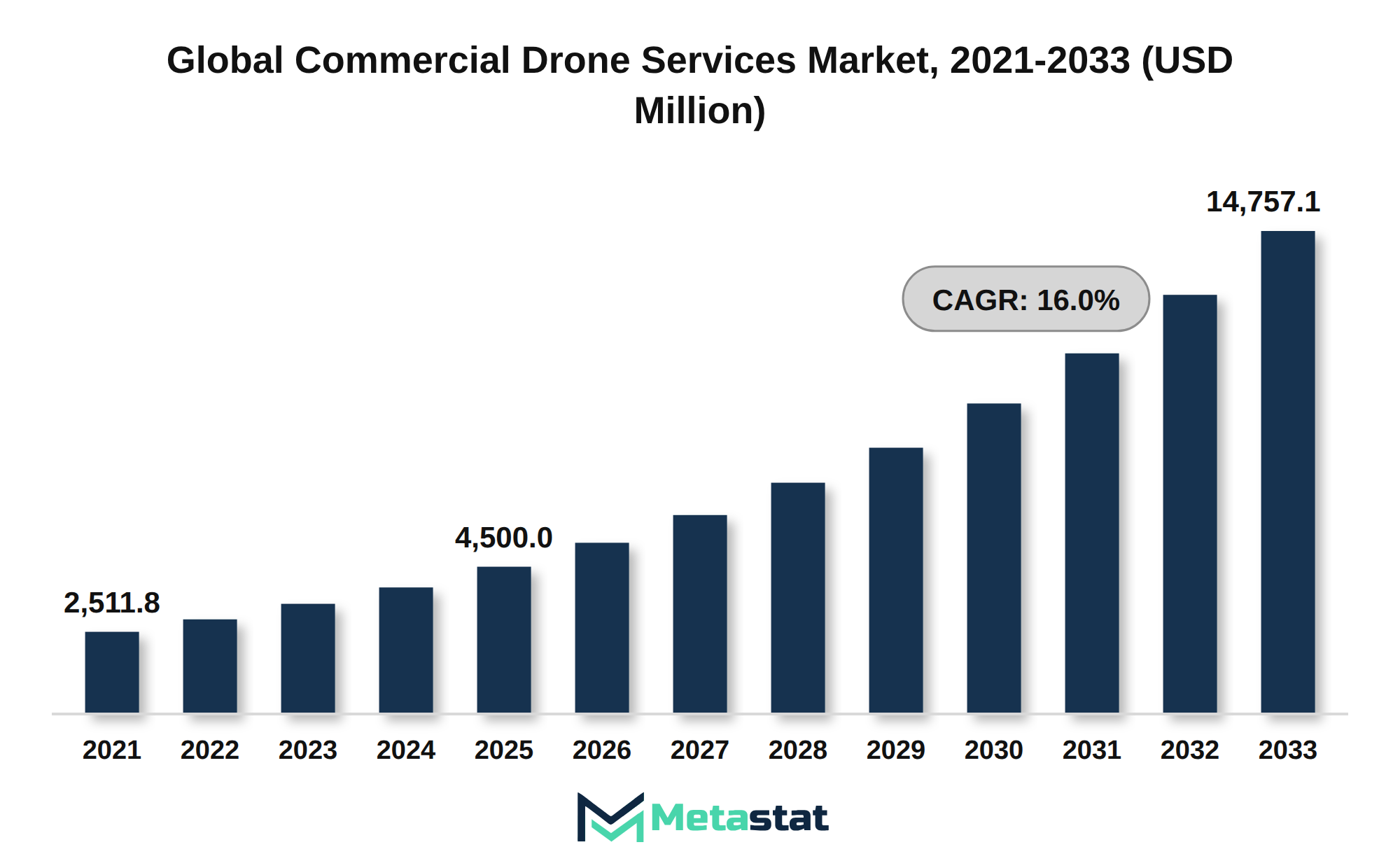
The global Commercial Drone Services market was valued at USD 4,500 million in 2025 and is projected to reach USD 14,757.1 million by 2033, growing at a CAGR of 16.0% over the forecast period.
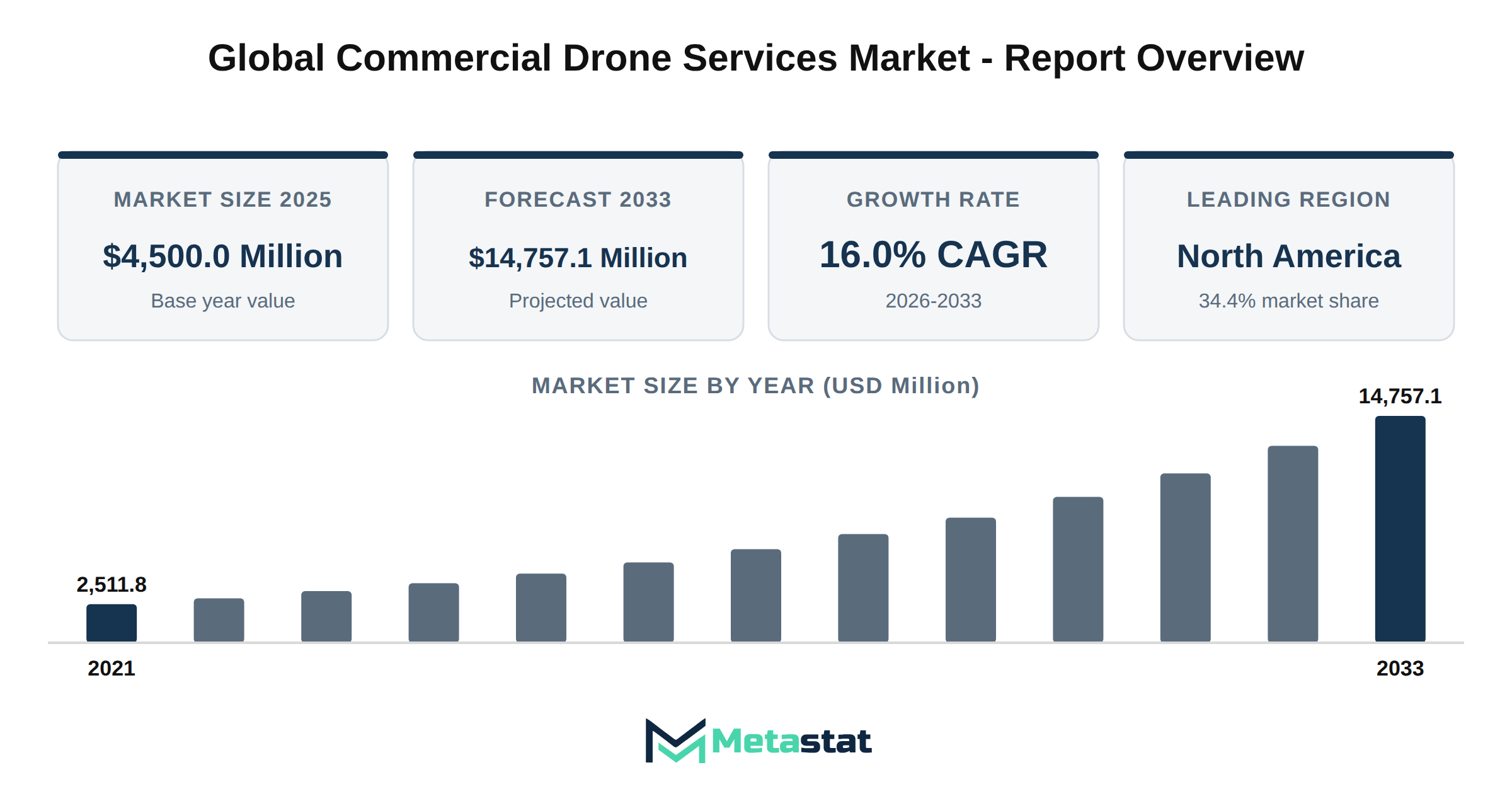
The Commercial Drone Services market reached a valuation of USD 4,500 million in 2025, demonstrating growth from USD 2,511.8 million in 2021. The market is projected to expand at a compound annual growth rate (CAGR) of 16% from 2026 to 2033, ultimately reaching USD 14,757.1 million by the end of the forecast period.
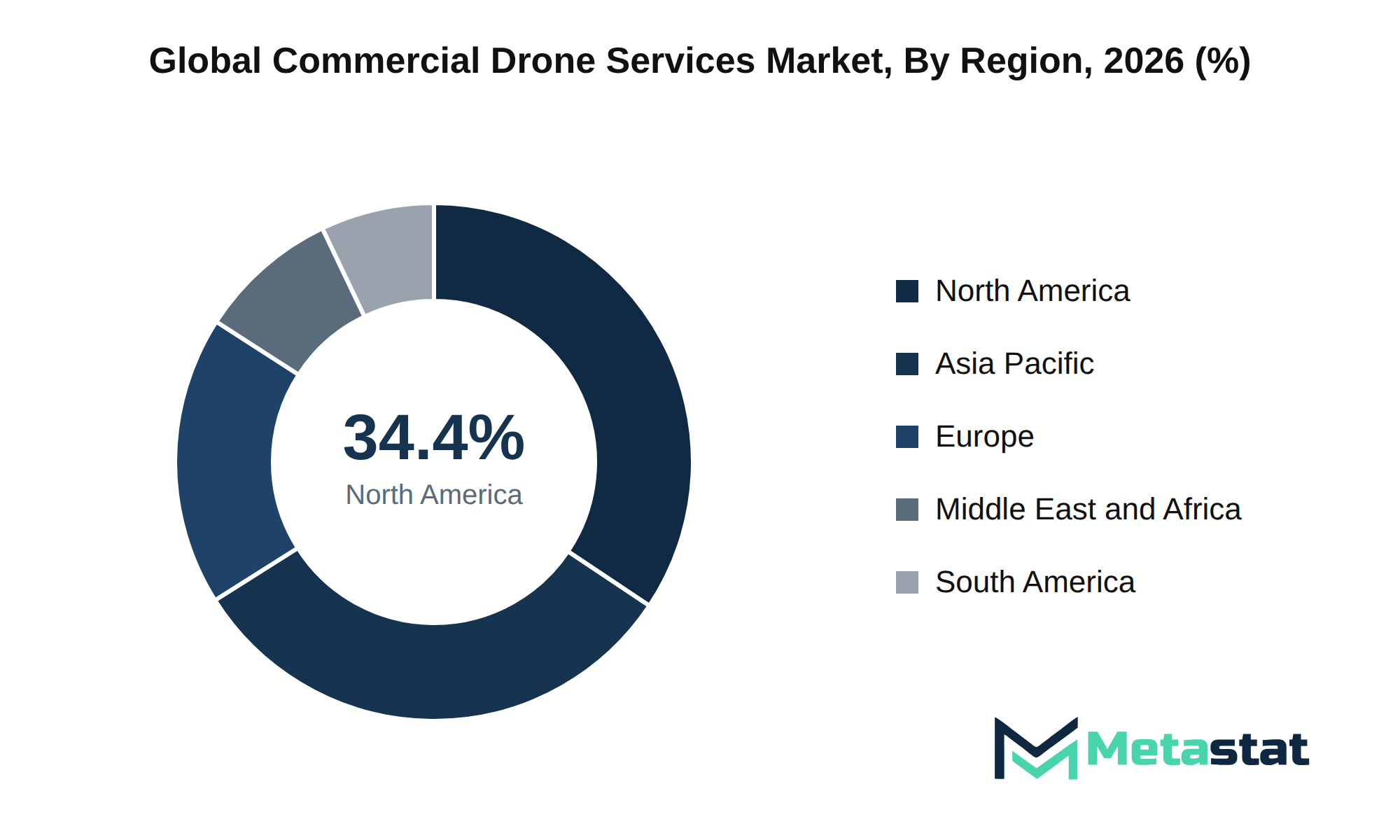
Regional dynamics show North America leading with a projected market share of 34.4% in 2025. The region is anticipated to experience substantial growth, with an expected value of USD 5,079.4 million by 2033, maintaining a CAGR of 16%. Following North America, the Asia Pacific region holds a market share of 31.7%, indicating robust adoption of drone services.
Various service types fuel the market's growth, including Drone Platform and Fleet Management Services, which is expected to generate USD 5,629.8 million by 2033, expanding at a CAGR of 15.3% from 2026. Drone MRO Services and Drone Data Processing and Analytics Services contribute significantly to revenue, with the former anticipated to reach USD 2,353.8 million by 2033. The latter exhibits a CAGR of 17.7%.
Applications including Inspection and Monitoring account for a critical portion of the market, with anticipated revenues of USD 4,472.9 million by 2033, reflecting a CAGR of 14.2%. The Mapping and Surveying segment is projected to reach USD 2,188.5 million, growing in response to increasing demand for precision and efficiency in various industries.
The evolving regulatory landscape influences the Commercial Drone Services market. Compliance with regulations ensures safety and operational efficiency, enhancing market credibility among stakeholders. Adhering to these regulations supports businesses in addressing safety concerns and legal requirements, driving market growth.
Innovation continues to drive the market forward. Advancements in drone technology, including improved battery life, enhanced sensor capabilities, and AI integration, fuel the demand for sophisticated drone services. Companies investing in research and development enhance their competitive edge, positioning themselves for future opportunities and enabling the market to expand rapidly.
Sustainability trends influence market dynamics. The push for decarbonization and environmentally friendly practices encourages companies to integrate sustainable practices into their operations. This transformation allows businesses to appeal to environmentally conscious consumers and regulators, contributing to overall market growth while addressing climate change concerns.
The supply chain landscape remains complex, with various players involved in the commercial drone ecosystem. Strategic partnerships and collaborations among manufacturers, service providers, and technology developers strengthen operational capabilities and improve the delivery of drone services. This interconnectedness enhances efficiency and reduces time-to-market for innovative solutions.
Investment in infrastructure is critical for the market's future. Expanding drone service infrastructure, including charging stations and maintenance facilities, supports the operational needs of drone services. Increased capital allocation in these areas ensures reliable service delivery, positioning the market for sustained growth and development.
Future strategic outlooks indicate a shift toward increased automation and data analytics in drone operations. Emphasizing automation enhances operational efficiency, while analytics provide valuable insights for decision-making. These developments position the market to meet evolving customer demands and adapt to changing industry conditions.
Investment in digital transformation significantly influences the Commercial Drone Services market by enhancing operational efficiency and encouraging the adoption of advanced technologies. Capital investments from both public and private sectors facilitate the integration of automation and artificial intelligence into drone operations. These technologies streamline processes, reduce costs, and ultimately improve service delivery across various applications.
The construction and infrastructure sectors benefit from this trend, driven by companies seeking to leverage drone services for tasks including inspection and monitoring. The growing emphasis on digital tools drives demand for high-quality data processing and analytics services, further contributing to the market's expansion. Increased operational productivity and cost-efficiency initiatives create a competitive environment, encouraging firms to adopt innovative drone solutions.
Looking ahead, sustained focus on digital transformation is expected to drive the Commercial Drone Services market, because organizations prioritize technological advancements to meet evolving consumer needs. This trend positions the market for significant growth, supporting the long-term viability of drone services across diverse industries.
Infrastructure development significantly influences the Commercial Drone Services market by enhancing operational capabilities and increasing service accessibility. Growing investments in upgrading physical and digital infrastructure enable efficient drone operations across various sectors. This enhancement leads to improved service delivery, expanded operational reach, and integration of advanced technologies including automation and artificial intelligence. Industries including construction, energy, and agriculture benefit from upgraded infrastructure, optimizing workflows and reducing operational costs.
Investment in infrastructure modernization promotes the deployment of drones for inspection, monitoring, and surveying tasks. These applications help businesses streamline processes, improve safety, and reduce time spent on manual operations. The resulting improvements in operational productivity align with the evolving demands of clients seeking innovative solutions in the Commercial Drone Services market. Growth in infrastructure development creates competitive advantages for service providers, driving market penetration and revenue generation.
The Commercial Drone Services market faces challenges due to stringent regulatory compliance and legal mandates. These requirements impose significant operational hurdles on service providers, leading to increased costs and extended timelines for market entry. Companies navigating this regulatory framework often encounter delays in obtaining necessary approvals and licenses, impacting their ability to deliver services efficiently.
Macroeconomic headwinds, including inflationary pressures and capital stagnation, further constrain market growth. Elevated operational costs associated with inflation impact profitability and limit the capacity for investment in technology and innovation. This situation affects service providers across various industries, hindering their ability to adapt to evolving market demands.
Supply chain disruptions and geopolitical instability introduce additional complexities. These factors lead to resource shortages, impacting the availability of drone components and affecting service delivery timelines. The market experiences heightened operational risks due to fluctuating prices and availability of critical inputs.
Technological obsolescence poses a significant restraint, driven by rapid advancements in drone technology that necessitate continual investment in upgrades and maintenance. This situation creates challenges for service providers striving to remain competitive. High capital investment requirements limit participation from smaller companies, consolidating market power among larger firms.
Concerns regarding data security and privacy vulnerabilities present critical obstacles for the Commercial Drone Services market. Increased scrutiny over data handling practices deters potential customers from fully embracing drone services. Resistance to adopting new technologies stems from cultural barriers and regional differences in acceptance, impeding widespread market adoption.
Overall, these factors create a complex environment for the Commercial Drone Services market, influencing growth trajectories and operational strategies. Stakeholders address these challenges to capitalize on the market's potential and drive future development.
The Commercial Drone Services market encounters significant challenges due to geopolitical fragmentation, resulting in trade deficits and tariff friction. These conditions create uncertainty for suppliers and buyers, leading to increased costs and prolonged project timelines. Geopolitical tensions affect the ability of firms to access crucial components and technologies, disrupting operations across regions. This instability complicates the market, hindering growth opportunities and increasing the risk of operational inefficiencies.
Technological disruptions present another challenge in the Commercial Drone Services market. Rapid advancements in drone technology require constant adaptation from service providers. The integration of new technologies into existing operations incurs substantial research and development costs, which strain budgets and resource allocation. Companies focused on maintaining competitiveness invest significantly in R&D efforts, potentially diverting funds from other critical areas of their operations.
Supply chain instability emerges because a critical issue, exacerbated by component volatility and logistics disruptions. Fluctuations in feedstock availability lead to unpredictable pricing structures, impacting profit margins and overall market viability. Companies face difficulties in meeting project timelines and delivering services, which diminish customer satisfaction and lead to lost contracts.
The evolving landscape of global regulatory standards introduces compliance overhead that complicates operations for market participants. Tightening regulations require ongoing adjustments and investments in compliance mechanisms, increasing operational costs. Companies that fall behind on regulatory obligations risk penalties, further straining their financial stability and hindering their ability to compete effectively.
Workforce skill gaps represent an additional barrier for the Commercial Drone Services market. The necessity for skilled operators and technicians continues to grow, yet the available talent pool often remains insufficient. Companies struggle to attract and retain qualified personnel, leading to operational bottlenecks and reduced capacity to meet service demands.
The Commercial Drone Services market experiences substantial growth due to emerging regional demands, particularly in North America and Asia Pacific. Increasing adoption of drone technology across sectors including construction, agriculture, and energy utilities drives this demand. Regional investments in infrastructure modernization enhance operational capabilities while decreasing costs associated with traditional methodologies. Geographical expansion into underserved markets creates new opportunities for service providers, increasing competition and stimulating innovation.
Technological disruptions, including advancements in drone capabilities and data processing technologies, significantly impact the market. Businesses prioritize digital transformation and next-generation innovations to optimize processes and enhance service delivery. Sustainability imperatives drive organizations toward eco-friendly solutions, aligning with environmental, social, and governance (ESG) objectives. Companies focusing on green transformations achieve competitive advantages by appealing to environmentally conscious consumers.
Downstream market diversification offers avenues for growth, allowing firms to integrate products and services that cater to niche applications. Strategic consolidation through cross-industry mergers and acquisitions strengthens market positions and expands service portfolios. Evolving buying behaviors reflect a shift toward digital procurement channels, influencing purchasing decisions in the market.
Supply chain localization and strategic buffering enhance resilience against global disruptions. Asset lifecycle extensions through maintenance upgrades and retrofitting dynamics create additional value. Value-chain optimization and process automation improve operational efficiencies, further advancing the market. Overall, the convergence of these factors positions the Commercial Drone Services market for sustained growth through 2033.
The Global Commercial Drone Services market is segmented based on Service Type, Application, Mode of Operation, and End-Use Industry.
Drone Platform & Fleet Management Services segment is valued at USD 2,074.9 million in 2026 and is projected to reach USD 5,629.8 million by 2033, at a CAGR of 15.3% during the forecast period. This segment experiences robust demand driven by the increasing adoption of unmanned aerial vehicles (UAVs) across various industries. Enhanced operational efficiency and cost-effectiveness associated with drone utilization support rising interest among end users, including construction, energy, and agriculture sectors.
Rapid advancements in drone technology play a crucial role in segment expansion. The introduction of next-generation drones with improved capabilities in terms of payload, endurance, and data processing enhances operational effectiveness. The growing trend of integrating artificial intelligence and machine learning with drone platforms facilitates advanced analytics and real-time decision-making, further boosting market attractiveness.
Regulatory frameworks and compliance standards significantly influence market dynamics. Governments worldwide are increasingly establishing guidelines that govern drone operations, ensuring safety and encouraging innovation. These regulations promote confidence among businesses and encourage investment in drone platform and fleet management services.
Cost structures and pricing volatility remain critical factors impacting market participation. Initial investments in drone systems are substantial, but long-term operational savings and efficiency gains often justify these costs. Emerging players in the market focus on innovative financing and leasing options to alleviate upfront financial burdens, promoting broader adoption of drone solutions.
The Drone Platform & Fleet Management Services segment within the Commercial Drone Services market is poised for significant growth, driven by technological advancements, regulatory support, and evolving end-use dynamics. The projected increase in market valuation highlights strategic opportunity windows available for investment and development in this segment.
Growth in the Drone MRO Services segment stems from increasing reliance on advanced drone technology across various industries. While organizations adopt drones for diverse applications, the need for maintenance, repair, and operational support rises significantly. Regulatory compliance and safety standards in sectors including energy, agriculture, and construction drive the demand for professional MRO services, ensuring drones operate efficiently and comply with regulations.
Anticipated developments in drone technology, coupled with next-generation upgrades, enhance the capabilities of MRO services. Emerging drone models require specialized maintenance protocols, creating opportunities for service providers to offer tailored solutions. The evolving landscape of drone applications, including remote sensing and data collection, further increases the need for comprehensive MRO services, enabling organizations to maximize the performance of their fleets.
Drone MRO Services segment is estimated to reach USD 2,353.8 million by 2033, at a CAGR of 16.8% during the forecast period. This growth reinforces the significance of MRO providers in sustaining the operational readiness of drone fleets, positioning them because crucial players in the Commercial Drone Services market. Increased investments in technology and infrastructure by end-use industries fortify the market, highlighting a strategic opportunity window for stakeholders involved in the provision of MRO services.
Growing interest in drone technology drives the demand for Drone Training & Simulation Services within the Commercial Drone Services market. Organizations recognize the necessity of specialized training programs to ensure safe and effective drone operations. This recognition results from increased regulatory scrutiny and a push for compliance with evolving aviation standards. Companies invest in training frameworks to mitigate risks associated with drone usage, enhancing operational safety and efficiency.
Technological advancements in simulation tools and training methodologies support the expansion of this segment. Enhanced virtual training environments provide realistic scenarios for operators, facilitating skill development without the risks associated with live flight training. This evolution in training methods attracts various industries, including construction, agriculture, and public safety, which seek to integrate drones into their operations. Consequently, the segment is projected to reach USD 1,164.3 million by 2033.
Increased demand for skilled operators stems from significant investments in drone technology across multiple sectors. While industries adopt automated solutions, the need for trained personnel capable of managing drone fleets becomes critical. The market's growth reflects a broader trend toward incorporating drones into operational frameworks, resulting in greater efficiency and productivity. Competition among training service providers intensifies due to their efforts to meet industry-specific requirements, pushing for continuous improvement in training offerings.
Growth in Drone Data Processing & Analytics Services stems from increasing demand for data-driven insights across various sectors. Enhanced capabilities in data analysis and visualization contribute to more effective decision-making, driving adoption among industries including agriculture, construction, and energy. The emphasis on automation and efficiency strengthens the need for advanced analytics, enabling businesses to optimize operations and reduce costs.
This segment is projected to grow at a CAGR of 17.7% during the forecast period. The technological maturation of drone systems supports the development of sophisticated data processing tools, enhancing their applicability in real-time monitoring and surveillance. Companies investing in next-gen upgrades achieve significant returns, leveraging analytics to gain competitive advantages and improve service delivery.
End-use dynamics indicate a shift towards integrated solutions that combine data processing with operational insights. Regulatory compliance, particularly in sectors like energy and agriculture, influences the adoption of data analytics services. These services aid organizations in meeting standards while promoting sustainable practices, thus enhancing the overall market landscape.
In the Commercial Drone Services market, strategic opportunity windows emerge owing to businesses prioritizing digital transformation initiatives. Capital investments directed towards enhancing data processing capabilities result in expanded service offerings and improved market positioning. The potential for disruptive alternatives, including AI-driven analytics and machine learning applications, adds to the competitive environment, reshaping industry standards.
Demand for Drone Rental & Leasing Services stems from the increasing need for cost-effective access to advanced drone technology across various industries. This segment benefits from organizations seeking to minimize capital expenditures while leveraging drone capabilities for tasks including aerial inspections and surveying. Flexibility in operations encourages firms to adopt rental arrangements, particularly in sectors with fluctuating demand, including construction and agriculture.
Technological maturation contributes to the market's growth, enabling service providers to offer a range of models and capabilities tailored to diverse applications. With advancements in drone technology, organizations access high-performance equipment without the burden of ownership, streamlining their operational processes. The increasing focus on regulatory compliance drives demand, resulting from firms seeking rental solutions that meet the latest safety and operational standards.
Market players face pressure from pricing volatility and margin constraints, which influence the cost structure of rental services. Strategic opportunities arise from expanding service offerings and enhancing customer support, enabling companies to differentiate themselves in a competitive environment. Overall, the market evolves, reflecting shifting consumption patterns and the need for adaptable drone solutions across various end-use industries.
Demand for Drone Consulting & Regulatory Support Services stems from increasing complexity in regulatory frameworks surrounding drone operations. Businesses pursuing drone integration require expert guidance to navigate compliance standards effectively. Regulatory hurdles significantly impact adoption rates, particularly in industries including construction, energy, and agriculture, where operational safety is critical. Enhanced regulations create a stronger emphasis on obtaining certifications, influencing investment in consulting services.
Technological maturation in drone capabilities drives the demand for specialized consulting services. Advancements in drone technology necessitate continuous updates to regulatory frameworks, ensuring that businesses remain compliant with evolving standards. Consulting services provide essential insights, helping companies adapt their strategies to remain competitive in the Commercial Drone Services market.
Investment in next-generation upgrades plays a critical role in shaping service offerings. While businesses seek to enhance their operational efficiency and compliance, demand for tailored consulting solutions increases. The focus on sustainable practices within sectors including agriculture and construction increases the need for regulatory support. This trend establishes new growth opportunities for consulting firms dedicated to drone applications.
Changes in downstream applications further influence the market landscape. Increased utilization of drones for tasks including inspections and monitoring necessitates robust compliance measures. Consulting services facilitate this transition, enabling companies to align their operational models with regulatory requirements effectively.
In the context of rising consumption shifts towards drone technology, businesses increasingly prioritize regulatory adherence. Enhanced awareness of safety and compliance creates a growing demand for expert consulting, vital for organizations aiming to integrate drones successfully into their operations. Consulting and regulatory support services establish themselves because essential components of the broader Commercial Drone Services market.
Growing adoption of drone technology in various sectors drives the demand for inspection and monitoring applications. Businesses increasingly leverage drones for tasks including infrastructure inspections, environmental monitoring, and safety assessments, enhancing operational efficiency and data accuracy. The Inspection & Monitoring segment is valued at USD 1,765.2 million in 2026 and is projected to reach USD 4,472.9 million by 2033, reflecting a CAGR of 14.2% during the forecast period.
Technological advancements play a crucial role in expanding this segment. The integration of high-resolution cameras, thermal imaging, and real-time data analytics transforms traditional inspection processes, allowing for quicker and more accurate assessments. Increased focus on safety and compliance across industries further enhances the need for advanced monitoring solutions, positioning the market for sustained growth.
Regulatory frameworks promoting the use of drones for inspections contribute to market expansion. Compliance with industry standards enhances consumer confidence and encourages investments in drone technology. Organizations prioritizing safety and operational efficiency drive the demand for inspection and monitoring services, reinforcing the role of the Commercial Drone Services market in various sectors.
Demand for advanced surveying tools drives growth in the Mapping & Surveying segment of the Commercial Drone Services market. Rapid technological advancements enhance the capabilities of drone applications, allowing for more precise and efficient data collection. Industries including construction, agriculture, and environmental monitoring increasingly adopt drones for mapping and surveying tasks, contributing to the expansion of this segment.
Mapping & Surveying segment is estimated to reach USD 2,188.5 million by 2033, at a CAGR of 15.8% during the forecast period. The ability to gather high-resolution imagery and data quickly supports decision-making processes across various sectors. Increasing regulatory compliance regarding data accuracy further drives adoption, reflecting organizations' prioritization of reliable solutions for their operations.
Technological maturation continues to influence the market, leading to the development of next-generation upgrades that improve the efficiency and effectiveness of drone data collection. Enhanced sensors, imaging technologies, and software solutions streamline workflows while reducing operational costs. This evolution in product offerings enhances competitiveness, encouraging firms to invest in commercial drone technology.
End-use dynamics play a critical role, with sectors like construction and agriculture driving demand for precise mapping and surveying services. These industries benefit from reduced time and labor costs through the integration of drone technology into their operations. Firms respond to evolving consumer preferences and regulatory pressures, and investments in the Mapping & Surveying segment are expected to increase, ultimately supporting the continued growth of the market.
Growing adoption of aerial photography and filming in various sectors increases demand within the Commercial Drone Services market. Professionals in media, entertainment, and real estate leverage drones for capturing stunning aerial visuals, enhancing the quality of their offerings. This trend stems from the demand for high-resolution imagery and the ability to provide unique perspectives, which traditional methods struggle to achieve.
Technological advancements in drone capabilities contribute significantly to the segment's growth. Improvements in camera technology, including 4K and higher resolution sensors, enhance the quality of footage captured, appealing to a wide range of customers. The integration of AI-driven analytics into drone systems enables users to gain deeper insights from collected data, further expanding its applications across industries.
Regulatory compliance standards influence operational dynamics within the aerial photography and filming segment. Stricter regulations regarding airspace use and safety protocols increase the need for certified operators, creating a more professional environment in the market. Compliance with these standards ensures safety and reliability, increasing consumer confidence.
The Aerial Photography & Filming segment is expected to reach USD 3,082.8 million by 2033. The expansion of this segment aligns with the overall growth trajectory of the market, supported by increasing investments in drone technology and infrastructure. Enhanced capabilities and evolving applications across various end-use industries highlight the segment's importance in the broader Commercial Drone Services market.
Increasing demand for precision agriculture drives growth in the Agricultural Spraying & Seeding segment within the Commercial Drone Services market. Farmers seek effective solutions to enhance crop yields while minimizing resource use. Drones equipped with advanced spraying technology provide a means to achieve precise application of fertilizers and pesticides, supporting sustainable agricultural practices.
Technological advancements play a crucial role in this segment's expansion. Continuous improvements in drone capabilities, including longer flight times, enhanced payload capacities, and improved navigation systems, enable more efficient operations. These innovations translate to cost savings and increased operational efficiency for farmers and agribusinesses.
A shift towards data-driven farming practices contributes to the segment's growth. Drones facilitate the collection of relevant data, allowing farmers to monitor crop health and optimize inputs. This data-driven approach enhances decision-making, resulting in better resource allocation and reduced environmental impact.
Regulatory compliance standards significantly influence the market landscape. Governments worldwide implement policies to ensure safe drone operations, creating a secure environment for agricultural applications. Meeting these standards enhances consumer confidence and encourages investment in drone technology.
By 2033, the Agricultural Spraying & Seeding segment is projected to reach a value of USD 3,082.8 million, reflecting a commitment to advancing agricultural practices. This growth aligns with broader trends within the Commercial Drone Services market, emphasizing innovation and sustainability in agricultural operations.
A CAGR of 17.2% during the forecast period highlights the segment's strong growth trajectory. Investment in next-generation upgrades and technological maturation will continue to drive adoption, allowing stakeholders to utilize the full potential of drone technology in agriculture.
Increasing demand for precise and efficient data collection drives interest in Data Acquisition & Remote Sensing within the Commercial Drone Services market. Various industries, including agriculture, construction, and environmental monitoring, employ drones for their ability to gather high-quality data quickly and accurately. The technological maturation of drone systems enhances their capabilities, enabling advanced imaging and sensor technologies that improve data collection and remote sensing applications.
Adoption of drone services in sectors including environmental monitoring and resource management has seen significant growth, fueled by the need for real-time data and insights. Firms in construction leverage drone technology to assess site conditions and track project progress, streamlining operations and optimizing resource allocation. Similarly, agricultural businesses employ drones for crop monitoring and analysis, improving yields and reducing waste.
Regulatory compliance standards regarding data collection and privacy are crucial for the segment's expansion. Organizations prioritize using drones that adhere to regulations, ensuring acceptable practices in data acquisition. The continuous evolution of drone technology and software solutions facilitates compliance while enhancing operational efficiency.
Strategic opportunity windows exist for companies to innovate and enhance service offerings in data acquisition. Investment in next-generation upgrades, including enhanced imaging technologies and machine learning analytics, positions firms to capitalize on increasing market demand. Overall, the Data Acquisition & Remote Sensing segment reflects strong growth potential in the evolving Commercial Drone Services market.
Increasing demand for rapid delivery solutions fuels growth in the Transport & Delivery segment of the Commercial Drone Services market. Businesses in e-commerce and logistics sectors seek to enhance delivery efficiency and reduce operational costs. Drones provide an effective means to achieve these goals by enabling quicker, more flexible delivery options, particularly in urban environments.
Technological advancements in drone capabilities contribute significantly to this segment's expansion. Improvements in battery life, payload capacity, and navigation systems enhance the feasibility of drone deliveries. These advancements support the adoption of drones for transporting goods, particularly in last-mile delivery applications.
Regulatory developments play a crucial role in shaping the operational landscape for drone services. Increased collaboration between regulatory bodies and industry stakeholders creates a clearer framework for commercial drone operations. Compliance with regulations enhances trust among consumers and businesses, ultimately driving growth in the Transport & Delivery segment.
Shifting consumer preferences toward faster delivery times prompt companies to explore innovative solutions. The integration of drones into existing logistics operations supports this transition, offering an effective alternative to traditional delivery methods. While the market matures, investments in infrastructure and technology will shape the future of drone deliveries.
Increased emphasis on public safety and security drives the adoption of drones for surveillance applications. Various governmental and non-governmental organizations recognize the benefits of using drones for monitoring large areas, disaster response, and crowd control. The ability to deploy drones in emergency situations enhances responsiveness while reducing risks to personnel.
Expansion occurs due to advancements in drone technology, including improvements in camera capabilities, real-time data transmission, and artificial intelligence integration. These enhancements enable improved situational awareness and data collection for law enforcement and emergency services. Adoption across sectors including construction, event management, and environmental monitoring illustrates the versatility of drones in addressing security needs.
Regulatory compliance influences market dynamics, because agencies implement guidelines for drone use in surveillance applications. Certainty in regulatory environments encourages investment in drone technology among public safety organizations, allowing for operational enhancements. The ongoing development of certifications for drone operators further supports the professionalism and safety standards within the market.
Downstream applications in public safety, including search and rescue, fire management, and traffic monitoring, exhibit strong demand for drone services. The effectiveness of drones in these applications leads to shifts in consumption patterns because organizations seek innovative solutions for traditional challenges. Cost structures associated with deploying drones, including operational costs and initial investments, align with the growing focus on efficiency and effectiveness in security operations.
The Security, Surveillance & Public Safety segment within the Commercial Drone Services market engages multiple factors that drive growth, from technological advancements to regulatory influences. Strategic investment opportunities arise because organizations seek to enhance their operational capabilities through innovative drone solutions.
Emergency response strategies increasingly incorporate drone technology, enhancing efficiency during critical situations. Drones facilitate rapid surveillance, allowing responders to assess situations in real-time, which significantly reduces response times. The ability to gather data in areas inaccessible by traditional methods increases operational effectiveness. This development is particularly relevant in regions prone to natural disasters, where timely information is crucial for effective intervention.
Technological advancements play a significant role in the adoption of drones for disaster management. Enhanced imaging capabilities and longer flight durations support a wide range of applications, from search and rescue missions to logistical support in remote areas. The integration of artificial intelligence and machine learning into drone systems offers valuable predictive analytics, improving situational awareness and decision-making processes during emergencies.
Several factors contribute to the expansion of the Disaster Response & Emergency Services segment within the Commercial Drone Services market. Regulatory frameworks increasingly support drone operations in emergency scenarios, with many authorities establishing guidelines to ensure safety and efficiency. These regulations help build trust among stakeholders, encouraging investment in drone technologies tailored for emergency applications.
Investment in training programs further supports this segment, driven by the necessity for skilled operators to maximize the effectiveness of drone deployments during crises. These initiatives enhance the capabilities of emergency responders, promoting collaboration between technology providers and end-users. Consequently, this segment exhibits considerable potential for growth, supported by evolving technologies and the increasing necessity for efficient disaster response solutions.
Environmental monitoring, mining exploration, and wildlife monitoring represent essential applications within the Commercial Drone Services market. Increasing emphasis on environmental sustainability and protection drives demand for drones capable of efficient data collection and monitoring of natural resources. Organizations leverage these technologies to enhance their capabilities in tracking wildlife populations, assessing habitat conditions, and monitoring environmental changes, which supports conservation efforts and regulatory compliance.
Technological maturation within drone systems supports enhanced capabilities in aerial imaging, real-time data transmission, and analytics. These advancements improve the effectiveness of monitoring activities and streamline processes across various industries. The integration of next-generation upgrades, including artificial intelligence and machine learning, enhances the analytical capabilities of drones, allowing for more precise environmental assessments and data interpretation.
Growing awareness of the importance of sustainable practices and the need for precise monitoring solutions encourages adoption across sectors including agriculture, forestry, and mining. Companies expand investment in drone technology to meet regulatory compliance standards and enhance operational efficiencies. This sub-segment presents compelling prospects for investment and growth in the overall market.
Market dynamics indicate a shift towards more comprehensive environmental assessments, leading to increased demand for robust data collection and analytical tools. The integration of drones into environmental monitoring workflows facilitates streamlined operations, cost reductions, and improved decision-making processes. Organizations pursuing environmental initiatives increasingly incorporate drone technology to support their objectives.
Growth in the Remotely Piloted segment reflects a significant increase in demand for high-efficiency drone operations across various industries. With a valuation of USD 2,993.9 million in 2026, the segment is projected to reach USD 7,394.8 million by 2033, with a CAGR of 13.8% during the forecast period. The drive towards automation in sectors including agriculture, construction, and logistics enhances the appeal of remotely piloted operations, where human oversight integrates with advanced technology to streamline processes.
Technological advancements contribute significantly to segment expansion. Innovations in drone capabilities, including improved flight times and enhanced payload capacities, facilitate more complex applications. Regulatory compliance standards support this growth, owing to agencies worldwide implementing frameworks that favor the deployment of remotely piloted systems for critical tasks like infrastructure inspection and agricultural monitoring. The need for efficient data collection further strengthens the segment's role within the broader Commercial Drone Services market.
Increased investment in next-generation upgrades influences market dynamics. Organizations prioritize the integration of advanced technologies, enabling enhanced functionality and operational efficiency. This trend creates a competitive environment, pushing companies to adopt advanced software solutions that support remotely piloted systems. The ongoing evolution of drone technology indicates promising opportunities for segments within the market, particularly where precision and reliability are essential.
Downstream applications continue to expand, with end-use industries actively employing remotely piloted drones for various tasks. Sectors including energy, construction, and public safety leverage these services for their operational advantages, including cost reduction and improved safety metrics. While organizations increasingly recognize the benefits of using drones for operational tasks, the Remotely Piloted segment positions itself because a vital component of the overall Commercial Drone Services market.
Growing interest in semi-autonomous drones stems from their ability to enhance operational efficiency and safety. This mode combines human oversight with automated functions, addressing specific industry needs across sectors including agriculture, construction, and energy. The semi-autonomous segment is expected to reach USD 3,782.3 million by 2033, at a CAGR of 16.3% during the forecast period.
Expansion in this segment occurs due to advancements in technology that facilitate improved data collection and processing capabilities. Industries increasingly adopt semi-autonomous drones for applications like inspection, monitoring, and surveying, wherein reduced human intervention aligns with productivity goals. This demand drives growth opportunities within the Commercial Drone Services market, encouraging manufacturers to invest in next-generation upgrades and innovations.
Regulatory compliance standards evolve to accommodate the integration of semi-autonomous systems, influencing market dynamics. While governments and organizations set clear guidelines, key players navigate these regulations to ensure operational legitimacy and safety. The interaction of technology maturation and regulatory frameworks provides strategic opportunity windows, enhancing investment prospects in the semi-autonomous segment.
Cost structures associated with semi-autonomous drones reflect their advanced capabilities, leading to discussions around pricing volatility and margin pressures. Competitive pricing strategies become essential for manufacturers aiming to establish a foothold in the market. This segment's resilience against supply chain vulnerabilities further strengthens its position, encouraging firms to prioritize raw material sourcing that supports innovative product development.
Significant advancements in technology drive the growth of the Fully Autonomous segment within the Commercial Drone Services market. Enhanced capabilities in artificial intelligence, machine learning, and sensor integration facilitate the deployment of fully autonomous drones across various applications. Industries including agriculture, construction, and logistics increasingly adopt these technologies for operational efficiency, productivity, and cost-effectiveness.
Regulatory compliance standards play a vital role in shaping the market. Governments focus on developing regulations that support the safe integration of fully autonomous drones into airspace. This regulatory framework influences investment decisions, encouraging companies to enhance their technological offerings and ensure compliance with safety requirements.
Market dynamics reflect increased interest in autonomous solutions for tasks including surveillance, inspection, and delivery services. The operational cost advantages associated with fully autonomous drones attract businesses aiming to optimize processes and reduce labor costs. The segment is projected to reach USD 3,580.1 million by 2033, highlighting its potential for substantial growth.
Strategic opportunity windows emerge for companies in the market willing to invest in innovative technologies and adapt to evolving consumer demands. Continuous product evolution will be essential to meet the requirements of various end-use industries. This creates a competitive landscape where companies prioritizing research and development gain an edge. Enhanced focus on product capabilities related to autonomous functionalities presents a pathway for market expansion.
Investment in the Construction & Infrastructure segment reflects a strategic shift towards improved project execution and increased efficiency. Valued at USD 1,187.6 million in 2026, this segment is projected to reach USD 3,138.8 million by 2033, growing at a CAGR of 14.9% during the forecast period. The increasing complexity of construction projects necessitates advanced solutions for monitoring and managing site activities.
Technological advancements enable enhanced data collection and visualization, driving demand for drone services in surveying and inspection applications. Regulatory compliance and safety standards influence adoption rates, pushing companies towards innovative solutions that minimize risks and optimize workflows. Integrating drones into construction practices streamlines operations, reduces labor costs, and enhances data accuracy, improving operational efficiency.
With rising competition in the Commercial Drone Services market, companies focus on strategic partnerships and collaborations to expand their capabilities. These partnerships provide access to new technologies and enhance service offerings, enabling firms to meet evolving customer needs. The trend towards sustainability leads to increased demand for environmentally friendly practices, further boosting the segment's growth.
Investment in next-generation upgrades, including data processing and analytics services, supports the segment's expansion. Companies prioritize developing scalable solutions that address specific challenges within the construction industry. This focus on product evolution enhances service quality and positions firms competitively within the broader market.
Adoption of drone technology in the Energy and Utilities sector reflects a significant market shift toward enhanced operational efficiency and data accuracy. Companies increasingly leverage drones for tasks including infrastructure inspections, asset monitoring, and emergency response, leading to improved safety and reduced downtime. Technological advancements, including high-resolution imaging and real-time data analytics, further drive growth in this segment.
Energy & Utilities segment is estimated to reach USD 2,752.2 million by 2033, at a CAGR of 16.4% during the forecast period. Regulatory compliance standards and safety requirements drive the integration of drone services into existing workflows, positioning drones because indispensable tools. The competitive environment benefits firms that invest in next-gen upgrades, positioning them to capitalize on evolving market dynamics.
Demand for effective asset management solutions shapes the operational patterns within the sector. Increasing focus on sustainability and efficient resource management prompts organizations to adopt drone services, ensuring compliance with environmental regulations. While the market matures, investment in innovative drone technologies will enhance service offerings, reinforcing the Energy and Utilities segment's role in the broader Commercial Drone Services market.
Demand for drone services within agriculture and forestry continues to rise, driven by the need for precision in crop management and resource allocation. The evolution of UAV technology enhances data collection capabilities, allowing farmers to monitor crop health and optimize yield. This segment exhibits a compound annual growth rate (CAGR) of 16.4%, reflecting substantial investment and innovation in this area.
Technological maturation significantly influences segment growth, with advancements in drone capabilities facilitating higher levels of automation and data analysis. The integration of artificial intelligence in aerial imaging and analytics increases operational efficiency for agricultural stakeholders. Implementing drones minimizes labor costs while improving accuracy, leading to better resource management in agricultural practices.
Overall, the Agriculture & Forestry segment is projected to reach USD 2,206.2 million by 2033, indicating strong potential for future growth. Increased awareness of sustainable farming practices and environmental stewardship encourages adoption of drone technology. The regulatory landscape surrounding agricultural drone usage evolves to accommodate these advancements, potentially streamlining certification processes and promoting wider acceptance across the industry.
Mining and quarrying applications drive significant growth within the Commercial Drone Services market. The sector relies on advanced drone technology for tasks including surveying, site inspection, and environmental monitoring. Adoption rates are increasing due to the push for enhanced operational efficiency and cost reduction. Integrating drone services leads to improved accuracy in data collection while minimizing the risks associated with manual inspections in hazardous environments.
The Mining & Quarrying segment is projected to grow at a CAGR of 16% during the forecast period. This growth is supported by a heightened focus on safety and compliance with environmental regulations. Companies seek innovative solutions to address these challenges, leading to increased investments in drone technology. Enhanced capabilities in data analytics and processing further optimize operations, delivering insights that aid decision-making.
While competition intensifies, participants within the market focus on developing next-generation drone solutions that address specific industry needs. Strategic partnerships and collaborations among service providers, technology firms, and regulatory bodies facilitate the introduction of innovative services. Increased capital investment in drone infrastructure supports expansion opportunities, positioning companies to capture a larger market share.
Technological advancements and the quest for operational efficiency drive the adoption of drone services in the Oil & Gas sector. Utilization of drones for inspection and monitoring of pipelines, refineries, and offshore installations enhances safety and reduces operational risks. Companies increasingly integrate drones into routine inspections, allowing for real-time data acquisition and analysis, which improves decision-making processes and minimizes equipment downtime.
Regulatory compliance influences market dynamics. Stricter regulations on emissions and safety standards prompt industry players to adopt innovative solutions to meet compliance requirements. Consequently, investments in drone technology for inspections and monitoring activities align with these regulatory frameworks, supporting growth in the market.
Challenges in logistics and the high costs associated with traditional inspection methods drive interest in drone services. Drones offer a more cost-effective alternative for monitoring remote and hazardous locations while significantly reducing the risks associated with manual inspections. This shift in operational strategy leads to greater efficiency and cost savings in the Oil & Gas segment.
Future growth opportunities arise from the development of advanced drone capabilities, including enhanced imaging technology and autonomous flight systems. Embracing next-generation upgrades allows companies to leverage drones for more complex applications, including anomaly detection and predictive maintenance. These innovations will further enhance the role of drones in the Oil & Gas sector, driving expansion within the broader Commercial Drone Services market.
Growth in the Transportation & Logistics sector aligns with the increasing need for efficient delivery and supply chain management solutions. This segment thrives due to companies seeking innovative ways to reduce delivery times and operational costs, enhancing overall service levels. Interest in drone applications for transportation arises from their potential to navigate congested urban environments, providing timely delivery options that traditional methods struggle to achieve.
Technological maturation significantly impacts this segment, with advancements in autonomous drone capabilities leading to improved reliability and safety. Next-generation upgrades in drone design and functionality enable faster transportation of goods while minimizing human intervention. The evolution of drone technology allows logistics providers to streamline their processes and optimize routes for quicker deliveries.
End-use dynamics within the market reflect a shift toward integrating drone services into broader logistics operations. Increased interest in real-time tracking and monitoring systems enhances transparency and efficiency in the transportation process. Regulatory compliance standards influence adoption, because various regions develop frameworks to support drone operations, ensuring safety and security while encouraging innovation.
Investment in the Transportation & Logistics segment represents a strategic response to evolving consumer expectations and market pressures. Companies prioritize capital investments in drone technology to strengthen supply chain resilience and mitigate vulnerabilities. Addressing potential substitution risks, firms explore disruptive alternatives that drones present, maintaining competitiveness in a rapidly changing environment.
Overall, the transportation and logistics capabilities within the Commercial Drone Services market reflect a growing recognition of the value that drone technology delivers across various operational aspects. Through continued advancements and strategic investments, this segment is poised for significant growth, aligning with broader trends in automation and efficiency enhancement across industries.
Captivating visuals and dynamic storytelling increasingly utilize drone technology within the Media and Entertainment sector, driving a surge in demand for enhanced aerial photography and filming capabilities. Creative professionals recognize the potential of drones to provide unique perspectives and high-quality content, significantly impacting production processes. This sector benefits from advancements in drone technology, which enable operators to capture stunning footage with greater efficiency, leading to broader adoption among filmmakers and content creators.
Regulatory compliance plays a crucial role in shaping operations in the Media and Entertainment segment. Adherence to guidelines ensures safe operations in populated areas, particularly during large-scale events or productions. The evolving regulatory landscape influences how companies strategize their drone utilization to maintain compliance while achieving creative objectives.
Technological maturation in drone capabilities continues to drive innovation in the market. Next-generation upgrades, including improved battery life, enhanced camera technology, and advanced stabilization mechanisms, improve the quality of aerial imagery. While operators seek innovative solutions, continuous product evolution becomes essential, driving greater investment in drone equipment and services.
Consumption shifts within the Media and Entertainment sector reflect an increasing preference for high-quality digital content. Audiences demand visually engaging experiences, prompting content creators to invest in aerial filming techniques. This shift influences the overall dynamics of the Commercial Drone Services market, driven by stakeholders recognizing the importance of innovative storytelling in capturing audience attention.
Strategic opportunity windows arise due to content creators increasingly identifying the benefits of incorporating drones into their workflows. The potential for drones to streamline production processes and enhance creative storytelling provides a competitive edge in a crowded market. While more industry players adopt drone technology, opportunities for collaboration and partnership further expand, driving growth and innovation in the segment.
Real estate increasingly adopts drone technology for various applications, including property inspections, aerial photography, and surveying. The integration of drones facilitates efficient data collection, streamlining processes that traditionally required extensive manpower and time. By leveraging aerial imagery, real estate professionals enhance property listings, allowing prospective buyers to visualize properties from unique perspectives. This technological shift aligns with consumer expectations for high-quality visuals and comprehensive property details.
Emerging trends within the market highlight a growing focus on regulatory compliance. Certifications related to drone operation ensure safety and reliability, building confidence among stakeholders in real estate transactions. While drone technology matures, advancements in camera quality, data processing, and analytics further enhance its utility in the sector. The evolution of these tools allows real estate professionals to provide detailed insights, improving decision-making for buyers and investors.
Investment in this segment reflects broader dynamics within the real estate market, where the demand for innovative solutions continues to increase. The ability to capture real-time data effectively influences marketing strategies and property evaluations. Adapting to these innovations positions companies favorably, allowing them to outperform competitors who rely on traditional methods. The benefits of drone usage extend beyond operational efficiency, contributing to strategic growth within the commercial drone services market.
Utilization of drones in the Public Safety & Government segment stems from the increasing requirement for efficient surveillance, search and rescue operations, and disaster management. This segment experiences strong demand driven by the need for real-time data acquisition and monitoring capabilities. Governments prioritize the integration of drones to enhance situational awareness, which enables timely decision-making during emergencies. Technological advancements facilitate the development of sophisticated drones equipped with high-resolution cameras and sensors, significantly improving operational performance.
Expansion within this segment largely results from evolving regulatory frameworks that support drone operations. Various countries have established guidelines and certifications that encourage the use of drones for public safety applications. These regulations provide clarity and build confidence among stakeholders regarding compliance and operational safety. Increased investment in training programs for operators further enhances the segment's growth potential, driven by the essential role skilled personnel play in leveraging drone capabilities effectively.
Next-generation upgrades, including enhanced battery life and autonomous navigation systems, contribute to evolving operational capabilities. These advancements enable agencies to deploy drones in challenging environments, expanding their applications beyond traditional boundaries. The Public Safety & Government segment within the Commercial Drone Services market benefits from rising awareness about the advantages of drone technology, which significantly influences adoption rates across various governmental and emergency response agencies.
Cost structures within this segment reflect the balance between initial investment in drone technology and the long-term savings generated through enhanced operational efficiency. Agencies leverage drones to reduce the costs associated with traditional methods of surveillance and monitoring. Budget constraints become more prevalent, and the ability to deploy drones for multiple applications provides a strategic advantage, ensuring optimal resource allocation within public safety initiatives.
Increasing reliance on drone technology within the telecommunications sector highlights the industry's pursuit of enhanced efficiency and better connectivity solutions. Telecommunications companies increasingly adopt drones for tasks including infrastructure inspection, maintenance, and monitoring of communication networks. The need for real-time data and analytics drives the adoption of drone services, enabling operators to address potential issues promptly and ensure uninterrupted service delivery.
Emerging trends in the telecommunications sector include a push for next-generation upgrades, including the rollout of 5G networks. Drones play a critical role in supporting the deployment of these advanced networks by providing aerial views of infrastructure, which aids in planning and execution. This shift towards more sophisticated technologies encourages greater investment in drone services, positioning the market for substantial growth.
Regulatory compliance presents both challenges and opportunities for drone operators within telecommunications. Adherence to safety and privacy regulations influences operational strategies, encouraging companies to invest in certified drone solutions. These certifications enhance consumer confidence, allowing for increased adoption of drone services across the sector. The market's ability to navigate these regulatory landscapes will significantly impact future growth and investment trends.
The evolving landscape of consumer demand drives the shift towards drone technology in telecommunications. The need for improved customer experiences fuels interest in innovative service offerings, including enhanced network monitoring and rapid response capabilities. Capital investments in drone infrastructure become crucial for telecommunications providers seeking to maintain competitive advantages in a rapidly changing market.
Strategic opportunity windows arise due to telecommunications companies seeking to leverage drone capabilities for operational efficiencies. Businesses recognizing the potential for disruption from drone technology position themselves to capitalize on new market trajectories. The intersection of technological advancements and shifting consumer expectations continues to shape the future of the Commercial Drone Services market.
Based on geography, the Global Commercial Drone Services market is divided into North America, Europe, Asia-Pacific, South America, Middle East, and Africa.
North America accounts for USD 5,079.4 million in the Commercial Drone Services market by 2033, reflecting a robust CAGR of 16.0% throughout the forecast period. Demand stems from diverse applications, including inspection and monitoring, which leverage drone technology to enhance operational efficiency and accuracy.
The presence of advanced infrastructure supports the growth of the market. Countries including the United States, Canada, and Mexico invest heavily in technological innovation and regulatory frameworks that facilitate the integration of drone services across various sectors. This regional focus on modernization promotes adoption rates, particularly in industries like construction, energy, and agriculture.
Competitive dynamics play a critical role in shaping the market landscape. Companies, including Terra Drone Corp. and AERODYNE GROUP, contribute to the competitive environment by introducing advanced services and solutions tailored to local market demands. This creates an ecosystem of innovation that enhances service offerings and drives further investment in the market.
Localized manufacturing densities and strategic entry barriers facilitate the expansion of drone service providers within North America. The region benefits from a skilled workforce and a strong supply chain, allowing for efficient service delivery and operational scalability. These factors create a favorable environment for both established players and new entrants in the Commercial Drone Services market.
The Commercial Drone Services market in Europe represents a critical area of growth, driven by increased demand for advanced drone solutions across various sectors. Countries including Germany, France, and the UK exhibit robust adoption rates due to their established industrial bases and technological advancements. The push for modernization in infrastructure enhances the market, owing to industries seeking to improve efficiency through innovative applications of drone technology.
Emerging market front-runners, particularly in France and Germany, are creating a competitive landscape that encourages collaboration among local vendors to meet growing service demands. Geopolitical factors contribute to the regional dynamics, with localized manufacturing densities and supply chain regionalization enhancing the market's resilience. The presence of domestic market leaders, including Terra Drone Corp. and AERODYNE GROUP, signals strong vendor consolidation trends, enabling companies to optimize their offerings.
The segment for aerial photography and filming experiences notable interest, particularly in Spain and the UK, where media and entertainment industries leverage drone technology for content creation. Compliance with geographic regulatory frameworks ensures that operators adhere to safety standards, further boosting confidence in drone applications. The market anticipates steady growth, with European players well-positioned to capitalize on incremental growth vectors.
By 2025, Europe holds an 18.1% share of the global market, reflecting its strategic importance within the Commercial Drone Services market. The ongoing development of cross-border trade corridors and foreign direct investment (FDI) flows will facilitate regional expansion opportunities, allowing enterprises to utilize the potential of localized procurement dynamics. Overall, the market landscape in Europe promises sustained growth because industry stakeholders adapt to evolving demands and regulatory environments.
The Asia-Pacific region represents a critical growth area for the Commercial Drone Services market, with a projected share of 31.7% of the global market by 2025. This growth is driven by increasing technological adoption across various sectors, particularly within China, Japan, and India, where expanding infrastructure modernization initiatives support operational efficiencies. The market experiences significant demand from industries including construction, agriculture, and energy, reflecting a trend towards enhanced inspection and monitoring capabilities.
Southeast Asia and Australia show emerging trends in drone usage, with regional players emphasizing localized manufacturing densities and procurement dynamics. The region's robust verticals, including energy and utilities, contribute to the demand for drone services, because organizations seek efficient solutions for data collection, aerial surveying, and environmental monitoring. High-value replacement cycles within the market lead to incremental growth, driven by advancements in drone technology and operational capabilities.
Geopolitical fragmentation and varying regulatory frameworks across Asia-Pacific influence market entry strategies for domestic and international players. Trade policy shifts and compliance mandates create strategic entry barriers, necessitating adaptation to local market conditions. Domestic market leaders continue to consolidate their positions, focusing on cross-border trade corridors and foreign direct investment flows, which enhance competitive dynamics within the sector.
Supply chain regionalization and nearshoring initiatives have a notable impact on the market, because firms prioritize local sourcing to improve efficiency and responsiveness. Cultural nuances and B2B buying behaviors in the region necessitate tailored approaches to customer engagement and service delivery. Regional resource availability, along with energy grid resiliency, further supports the growth of the Commercial Drone Services market, highlighting the potential for expanded adoption and investment in drone technologies across Asia-Pacific.
The Commercial Drone Services market in South America experiences steady growth driven by increasing investments in technology and infrastructure. Brazil and Argentina lead the region, supported by a growing recognition of drones' capabilities in sectors including agriculture, construction, and environmental monitoring. The agricultural sector, in particular, presents significant opportunities due to the region's diverse farming practices, which benefit from drone-assisted monitoring and spraying services.
Challenges remain in the form of regulatory frameworks and varying compliance mandates across countries. However, advancements in local infrastructure readiness and increasing foreign direct investment (FDI) enhance the market's growth potential. The commitment to modernize infrastructure enables drone services, facilitating both inspection and monitoring applications.
Emerging players in the South American Commercial Drone Services market focus on localized procurement and vendor consolidation trends, allowing them to cater to the unique needs of the region. Cultural nuances and regional B2B buying behaviors further influence market dynamics, because businesses seek tailored solutions that fit local contexts. The market is projected to expand because these factors drive adoption rates and encourage the development of new service offerings.
The Commercial Drone Services market in the Middle East and Africa reflects a diverse landscape characterized by varying degrees of adoption and regulatory environments. Countries including Saudi Arabia and the UAE lead in integrating drone technologies across various sectors, driven by infrastructure modernization and government initiatives aimed at enhancing operational efficiency. These nations exhibit robust investment in drones for applications including inspection, monitoring, and surveying, addressing growing demands in urban planning and public safety.
South Africa demonstrates significant potential with emerging market dynamics, where improvements in local infrastructure and regulatory frameworks support drone utilization. The market experiences gradual expansion, influenced by high-value replacement cycles and the need for innovative solutions in sectors including agriculture and mining. The region's competitive landscape comprises established players and new entrants, contributing to a competitive ecosystem that encourages localized procurement and manufacturing.
The Commercial Drone Services market in this region stands to benefit from cross-border trade corridors and foreign direct investment flows. Increasing collaboration among regional players and a focus on compliance with local mandates further enhance market readiness. Overall, the Middle East and Africa present unique opportunities in the drone services sector, with significant growth potential driven by diverse end-use industries and an expanding technological landscape.
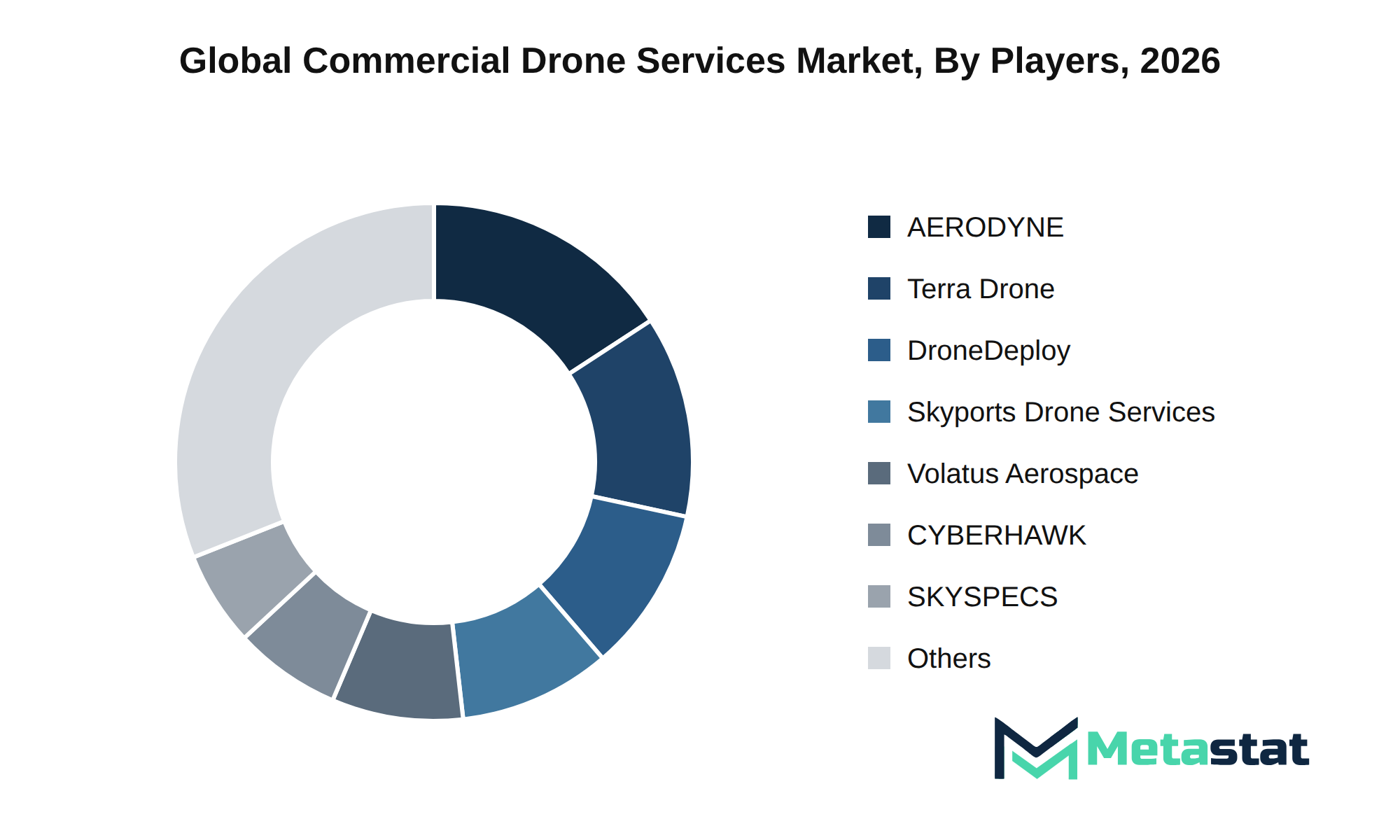
The Commercial Drone Services market experiences significant activity through mergers, acquisitions, and strategic consolidations among various players. Companies including Terra Drone Corp., AERODYNE GROUP, and CYBERHAWK engage in collaborations that enhance their market position and broaden their service offerings. These strategic alliances promote innovation and create a competitive edge, enabling companies to adapt to rapidly changing market conditions.
Go-to-market strategies focus on product differentiation and unique value propositions. Firms like DroneDeploy and Skyports Drone Services Ltd. leverage proprietary technologies and innovative commercial models to capture customer attention and build brand equity. Emphasizing customer retention strategies and low switching costs further strengthens their market presence.
Threats from new entrants and startup disruptions present challenges to established firms. The competitive landscape remains robust, driven by intellectual property portfolios and technological defensibility. Companies invest heavily in R&D to develop advanced solutions that distinguish them in the market. This ongoing investment ensures a dynamic environment for competition.
Value chain integration and procurement leverage play important roles in shaping competitive dynamics. Players including Volatus Aerospace and ZEITVIEW optimize their supply chains to maintain cost efficiency and streamline operations. The future competitive outlook indicates continuous evolution, with defensive imperatives and strategic growth vectors guiding companies through a landscape characterized by innovation and transformation.
Market size is forecast to rise from USD 4,500 million in 2025 to over USD 14,757.1 million by 2033. The base case anticipates growth at a rate of 16.0% CAGR, driven by macroeconomic factors influencing downstream demand across various sectors, including construction, agriculture, and energy. These industries increasingly adopt commercial drone services for operational efficiency and enhanced data collection capabilities.
In the bull case, market growth accelerates due to rapid advancements in next-generation technologies, including artificial intelligence and machine learning, which enhance the functionality of drone applications. Conversely, the bear case experiences slowdowns tied to regulatory challenges and geopolitical factors, impacting market dynamics and investment decisions.
The commercial drone services market experiences evolving consumer preferences and infrastructure commitments that shape investment vectors. Strategic capital allocation emphasizes research and development, facilitating the commercialization of innovative solutions. Companies increasingly seek to address unmet enterprise needs and identify high-growth pockets, presenting emerging white-space opportunities.
The landscape of compliance and regulatory evolution continues to transform, with imminent milestones impacting the operational framework for commercial drone services. Companies that effectively navigate these regulatory horizons position themselves favorably within the market, ensuring alignment with government policies and industry standards.
The commercial drone services market is poised for significant expansion, influenced by technological integration, strategic imperatives, and evolving consumer demands. Robust planning and adaptability remain essential for stakeholders aiming to leverage growth opportunities within this dynamic market.
The report strategically identifies and profiles the key market players and analyses their core competencies in each sub-segment of the Commercial Drone Services market.
Report Attributes | Details |
Study Period | 2021-2033 |
Base Year | 2025 |
Estimated Year | 2026 |
Forecast Period | 2026-2033 |
Historical Period | 2021-2025 |
Growth Rate | CAGR 16.0% from 2026 to 2033 |
Revenue Unit | USD million |
Segmentation | By Service Type, Application, Mode of Operation, End-Use Industry, and Region |
By Region | North America (By Service Type, Application, Mode of Operation, End-Use Industry, and Country)
|
Europe (By Service Type, Application, Mode of Operation, End-Use Industry, and Country)
| |
Asia Pacific (By Service Type, Application, Mode of Operation, End-Use Industry, and Country)
| |
South America (By Service Type, Application, Mode of Operation, End-Use Industry, and Country)
| |
Middle East and Africa (By Service Type, Application, Mode of Operation, End-Use Industry, and Country)
|
Find answers to common questions about this report
The Metastat Insights study reveals that the Commercial Drone Services market size was valued at USD 4,500 million in 2025.
The Commercial Drone Services market is projected to grow at a CAGR of 16.0% during the forecast period from 2026 to 2033.
The North America Commercial Drone Services market size is estimated to reach USD 5,079.4 million by 2033.
The leading segment in the Commercial Drone Services market is Drone Platform & Fleet Management Services, with a projected value of USD 5,629.8 million by 2033. This segment demonstrates significant growth potential, driven by increasing demand for efficient drone operations and management.
Investment in digital transformation and infrastructure development serve because key drivers for the Commercial Drone Services market. These investments enhance operational efficiency, enable advanced technology integration, and improve service delivery across various sectors, supporting market growth and competitiveness.
North America holds the dominant share of the Commercial Drone Services market, with a projected value of USD 5,079.4 million in 2033, representing 34.4 percent of the total market.
The Commercial Drone Services market faces significant restraints from stringent regulatory compliance, high capital investment requirements, and technological obsolescence. These factors impose operational hurdles, increase costs, and necessitate continual investment in upgrades, limiting participation from smaller companies and hindering widespread market adoption.
Investment in digital transformation and infrastructure development favor product adoption in the Commercial Drone Services market. Enhanced operational efficiency, improved service delivery, and the integration of advanced technologies drive increased demand across industries including construction, energy, and agriculture. These trends position the market for significant growth because organizations prioritize technological advancements.
The Commercial Drone Services market is estimated to reach a valuation of USD 14,757.1 million by 2033.
Key players in the Commercial Drone Services market include Terra Drone Corp., AERODYNE GROUP, CYBERHAWK, Volatus Aerospace, DroneDeploy, Skyports Drone Services Ltd., and Flyability.
The analysts below cover Aerospace and Defense research at Metastat Insights.
LEAD ANALYST
Utkarsh Khirodkar is a Lead Market Research Analyst at MetaStat Insight, specializing in market intelligence, technology sector assessments, and competitive strategy.
Most industry reports on warehouse automation bundle autonomous mobile robots and fixed conveyor installations into the same top-level numbers, which complicates advisory work. This study split the market cleanly by payload tiers, navigation technology, and fleet management software layers. The regional forecast for Western Europe gave our team defensible adoption benchmarks when evaluating capital allocation for logistics clients, saving us days of secondary data scrubbing.
Analyzing the transition from natural gas to green hydrogen in iron ore reduction requires realistic infrastructure timelines. Meta stat insight supplied a detailed regional assessment of DRI plant conversion costs and scrap metal availability in North America and Western Europe. Their report carefully examined pellet quality specs and electrical grid access constraints without making oversimplified market assumptions. The research material served as a practical reference during internal technology roadmap discussions.
Integrating zero-trust access controls across legacy electronic health record systems involves complex compliance overhead. Team produced an analysis that clearly separated identity governance and administration tools from privileged access management platforms. Their evaluation of HIPAA and GDPR compliance features across cloud native solutions gave our architecture group clear baseline criteria. The custom data request regarding biometric authentication adoption in hospital networks was returned promptly with clear documentation.
Explore related market intelligence reports worth reading alongside this one.