
LEAD ANALYST
Utkarsh Khirodkar is a Lead Market Research Analyst at MetaStat Insight, specializing in market intelligence, technology sector assessments, and competitive strategy.

India Battery Energy Storage System Market Size, Share, By Battery Type (Lithium-ion Battery, Lead Acid Battery, Flow Battery and Others), By Energy Capacity Range (Below 100 MWh, 101 to 500 MWh and Above 500 MWh), By End-User Application (Residential, Commercial and Industrial, and Utility), By Region (South India, North India, West India and East India), Industry Analysis, Growth, Trends, and Forecast, 2026-2033
Report ID
MSI-4647
Published
November, 2026
Pages
295 Pages
Format
Historical
Base year
Forecast
Forecast period
Report Details
Market Valuation: Valued at $815.6 Million in 2025, projected to reach $3,921.5 Million by 2033 at a 21.6% CAGR.
Dominant Segment: The lithium-ion battery segment leads the market, driven by its higher efficiency and decreasing costs, projected to reach USD 2,958.7 million by 2033.
Geographic Lead: South India is the leading region, expected to grow significantly due to robust investments in renewable energy infrastructure and favorable regulatory support.
What's Inside: The report includes detailed competitive coverage, market segmentation by battery type and end-user applications, along with a comprehensive analysis of growth trends and forecasts through 2033.
Emerging Demand: Utility-scale applications are poised for substantial growth, targeting USD 2,752.8 million by 2033, driven by the need for grid stability and renewable energy integration.
Choose Your License
India Battery Energy Storage System Market
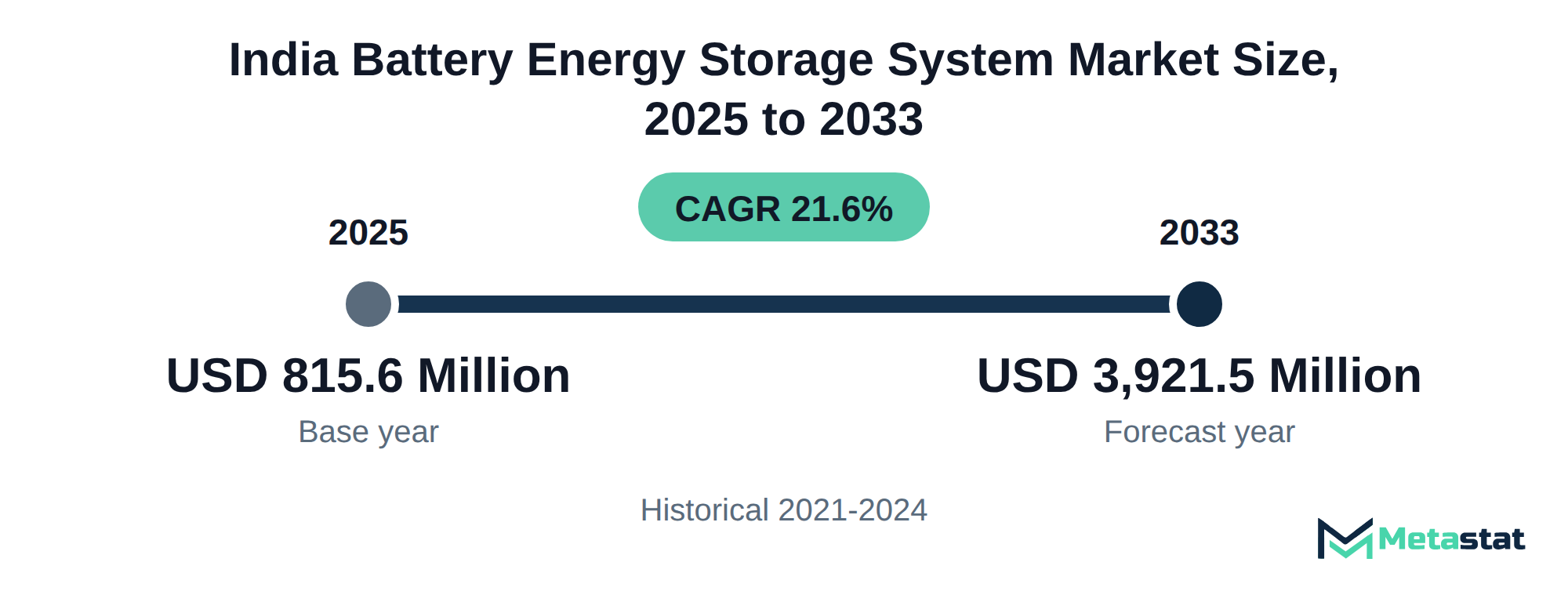
The India Battery Energy Storage System market was valued at USD 815.6 million in 2025 and is projected to reach USD 3,921.5 million by 2033, growing at a CAGR of 21.6% over the forecast period.
The India Battery Energy Storage System market encompasses diverse technologies and applications that enhance energy efficiency and reliability across various sectors. Investment in this market stems from the increasing demand for renewable energy storage solutions, driven by the need for sustainable power management. Buyers, including residential, commercial, and utility sectors, prioritize energy storage systems to optimize energy usage, reduce costs, and ensure uninterrupted power supply. These systems support multiple applications, facilitating efficient energy utilization and promoting grid stability.
Significant growth in the market arises from the rapid adoption of lithium-ion battery technologies, which dominate in terms of value. South India holds the largest market share, reflecting strong investment and advances in energy infrastructure. The overall growth trajectory is supported by the urgent transition towards renewable energy sources, which drives the demand for reliable energy storage solutions. This transition aligns with broader national goals for energy sustainability and resilience.
Projected expansion in the market is driven by technological advancements and increasing governmental initiatives aimed at promoting energy storage systems. The market is expected to achieve a compound annual growth rate of 21.6% during the forecast period, reflecting strong interest from various industries. Ongoing innovation in battery technologies will shape the future of this market and help energy storage solutions meet the demands of modern energy systems.
Investment in the India Battery Energy Storage System market aligns with the increasing demand for sustainable and reliable energy solutions. Key buyers include residential, commercial, and utility sectors seeking to enhance energy efficiency and manage peak loads effectively. This growing emphasis on energy independence and resilience drives spending on battery storage technologies, enabling users to optimize energy consumption and reduce reliance on traditional energy sources.
The lithium-ion battery segment registers the highest value within the market, reflecting advancements in technology and decreasing costs. South India stands out, contributing the largest share, supported by a robust renewable energy infrastructure and government initiatives promoting clean energy adoption. The market expands due to the rising need for energy storage solutions that facilitate the integration of renewable energy sources, including solar and wind power, into the grid.
Evolving regulatory frameworks that favor renewable energy integration and sustainability are driving growth in this sector. Energy policies evolve, and investments in battery storage technologies are expected to increase, enhancing grid stability and providing essential backup during outages. This focus on energy storage solutions continues to influence both supply and demand dynamics in the market.
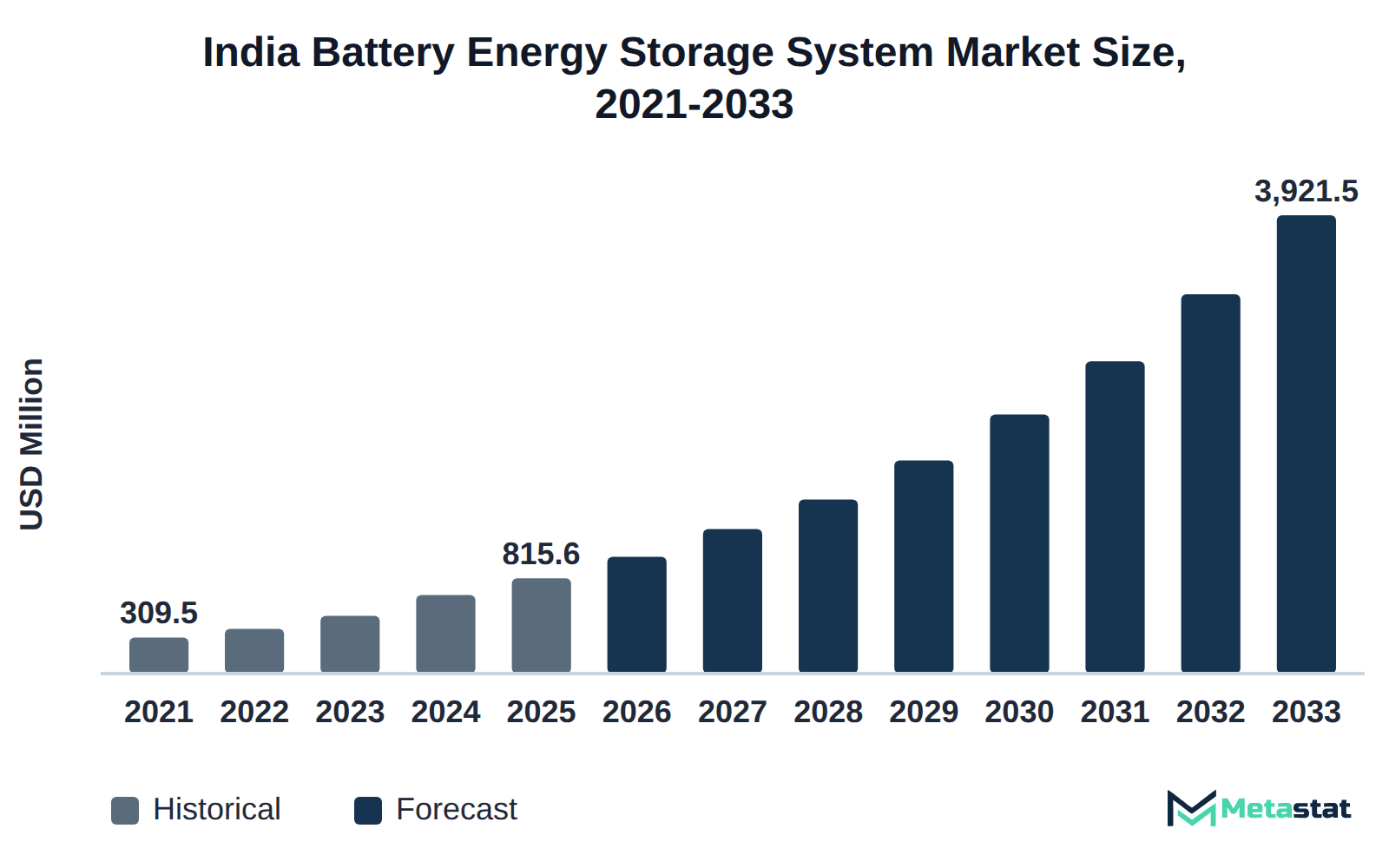
Utility-scale lithium-ion energy storage systems transform grid planning in India. These systems enable utilities to better integrate renewable energy sources, manage peak demand, and enhance grid reliability. By 2033, the lithium-ion battery segment is projected to reach USD 2,958.7 million, reflecting a compound annual growth rate (CAGR) of 22.3%. This significant growth highlights the shift towards advanced storage technologies, which provide faster response times and higher energy densities compared to traditional battery technologies. Faster response times are also useful for smart grid operations that balance supply and demand.
The integration of utility-scale lithium-ion storage improves the efficiency of energy distribution. Utilities store excess energy generated during low-demand periods and deploy it during peak demand, thus stabilizing the grid. This flexibility supports the increasing penetration of renewable energy, which generates varying outputs. The shift to lithium-ion technology aligns with national goals to enhance energy security and transition to cleaner energy sources, positively impacting the India Battery Energy Storage System market.
Investment in utility-scale lithium-ion systems represents a strategic move for utilities aiming to reduce operational costs and improve service reliability. Enhanced storage capabilities facilitate smoother energy transitions and decrease reliance on fossil fuel-based peaking plants. This transition drives demand for lithium-ion solutions, making them integral to future grid infrastructure development. Utility-scale BESS projects offer utilities a practical alternative to fossil fuel-based peaking plants.
Viability gap funding (VGF) assists developers in overcoming financial barriers in the India Battery Energy Storage System market. The government allocates resources to cover the difference between the project's investment cost and the expected financial return, ensuring projects remain viable. This funding strategy incentivizes investment in battery storage solutions, which often require substantial upfront capital. The market is forecast to reach USD 3,921.5 million by 2033.
In addition to VGF, the design of tender processes for battery storage projects shapes purchasing strategies. Tenders that prioritize long-term contracts and stability in pricing attract a wider pool of participants. This approach stabilizes revenue streams for developers and encourages competitive bidding, leading to more favorable pricing for end-users. For instance, the commercial and industrial segment is anticipated to reach USD 868.5 million by 2033, supported by structured tendering processes that enhance market participation. The emphasis on transparent contract models strengthens buyer confidence and accelerates the adoption of battery storage technologies across various sectors.
The shift in battery storage economics in India reflects a significant reduction in cell prices, driven by advancements in manufacturing technologies and increased competition. These factors make storage more accessible to buyers across sectors, particularly in residential and commercial applications. This growth emphasizes heightened demand for efficient energy storage solutions that align with India's renewable energy goals.
Domestic manufacturing initiatives further enhance market dynamics by reducing import dependence and improving localized supply chains. These developments accelerate the pace of technology adoption, particularly in urban and semi-urban markets, where energy reliability plays a critical role in business operations and residential comfort. As battery prices decline, buyers increasingly invest in energy storage systems, securing long-term savings on energy costs. The India Battery Energy Storage System market is expected to expand rapidly, driven by these favorable economic conditions, ultimately creating a more sustainable energy landscape for both consumers and businesses.
The cost of a Battery Energy Storage System in India varies based on factors including battery type, energy capacity, and end-user application. For instance, the Lithium-ion Battery segment, a predominant choice in the market, is projected to grow from USD 724 million in 2026 to USD 2,958.7 million by 2033, indicating increasing investments and demand in this category. The shift towards Lithium-ion Batteries stems from their higher efficiency and longer lifespan compared to traditional battery types.
The growing focus on the commercial and industrial sector further influences pricing dynamics. By 2033, the commercial and industrial application segment is expected to reach USD 868.5 million. This segment benefits from economies of scale as businesses seek to optimize energy storage costs and improve operational efficiency. Rising adoption of such systems in commercial settings contributes to overall market growth and competitive pricing strategies.
As the India Battery Energy Storage System market evolves, stakeholders need to understand the cost structures of different battery types and applications. Companies aiming to invest in energy storage solutions evaluate these costs to make informed decisions that enhance operational capabilities and align with market trends.
Commercial and industrial buyers are investing significantly in energy storage systems due to the growing need for reliable and efficient energy management solutions. This transformation stems from heightened energy consumption and the necessity for backup power following frequent power outages. Buyers weighing backup power options in India may also compare diesel generator sets. Organizations are increasingly turning to the India Battery Energy Storage System market to enhance operational efficiency and reduce energy costs. The commercial and industrial segment is anticipated to reach USD 868.5 million by 2033, driven by these shifting demands. This heightened investment supports the growth of energy storage systems and stimulates competition among providers, leading to improved technologies and service options within the market.
Increased adoption of energy storage technologies among residential users will further enhance overall market growth. Shifting consumer preferences towards sustainable energy sources highlight the importance of battery energy storage systems in optimizing energy consumption.
Advancements in battery technology drive significant changes in the India Battery Energy Storage System market. Innovative materials and manufacturing processes enhance performance while reducing costs, enabling more competitive pricing for end-users. Lithium-ion batteries benefit from ongoing research focused on increasing energy density and decreasing manufacturing expenses. Solid-state battery technology represents a related line of battery innovation. These developments attract investments from various sectors, including commercial and industrial applications, which prioritize efficient energy management solutions.
The demand for affordable and efficient battery systems promotes a competitive environment among suppliers. With enhanced performance metrics, companies effectively target both residential and utility-scale applications. This cost-effective innovation approach aligns with broader efforts to enhance energy reliability and sustainability across the country. Manufacturers focusing on developing and implementing these breakthroughs position themselves favorably within the evolving energy storage solutions market.
High costs associated with battery energy storage systems limit adoption among buyers, particularly in the residential and commercial sectors. The considerable initial investment required for these systems results in slower uptake, with buyers prioritizing lower-cost alternatives or delaying purchasing decisions. This price sensitivity reflects a broader trend where potential users, especially smaller businesses and households, face difficulties justifying the expense compared to traditional energy sources. The India Battery Energy Storage System market experiences challenges expanding its consumer base due to financial constraints, which hinder widespread acceptance. Increased awareness of the benefits of energy storage solutions remains essential for overcoming these financial barriers. Addressing cost concerns is critical to reaching the market's growth potential through 2033.
Suppliers in the India Battery Energy Storage System market face significant challenges due to rising input costs for key materials, particularly lithium, which is crucial for lithium-ion batteries. Increased demand for batteries and limited supply chains contribute to these heightened costs. This situation impacts profit margins, prompting suppliers to seek innovative approaches to maintain competitiveness. Several companies are investing in alternative materials and exploring advanced recycling processes to mitigate the effects of these input cost pressures. Others pursue vertical integration to secure their supply chains and reduce dependency on external sources. Research and development into alternative battery technologies helps address these challenges. By diversifying material sources and improving production efficiency through automation and lean manufacturing practices, suppliers aim to stay economically competitive while maintaining a strong presence in the growing market.
Utility-scale applications represent a significant opportunity in the India Battery Energy Storage System market. The projected growth for this segment is substantial, with a target value of USD 2,752.8 million by 2033. This growth is driven by increasing investments in renewable energy sources and the need for grid stability. Utilities seek to enhance energy reliability and manage peak loads efficiently, driving demand for large-scale battery systems. Large-scale battery systems of this kind are typically housed in BESS containers and enclosures. The transition towards cleaner energy solutions drives the adoption of utility-scale storage, enabling operators to mitigate fluctuations in energy supply and demand. Enhanced infrastructure and supportive policies further contribute to this growth trajectory, positioning utility-scale energy storage as a critical component of India's energy strategy. The market is expected to see continued investment from various stakeholders, reflecting the importance of these systems to sustainability goals.
The India Battery Energy Storage System market is segmented based on Battery Type, Energy Capacity Range, End-User Application, and Region.
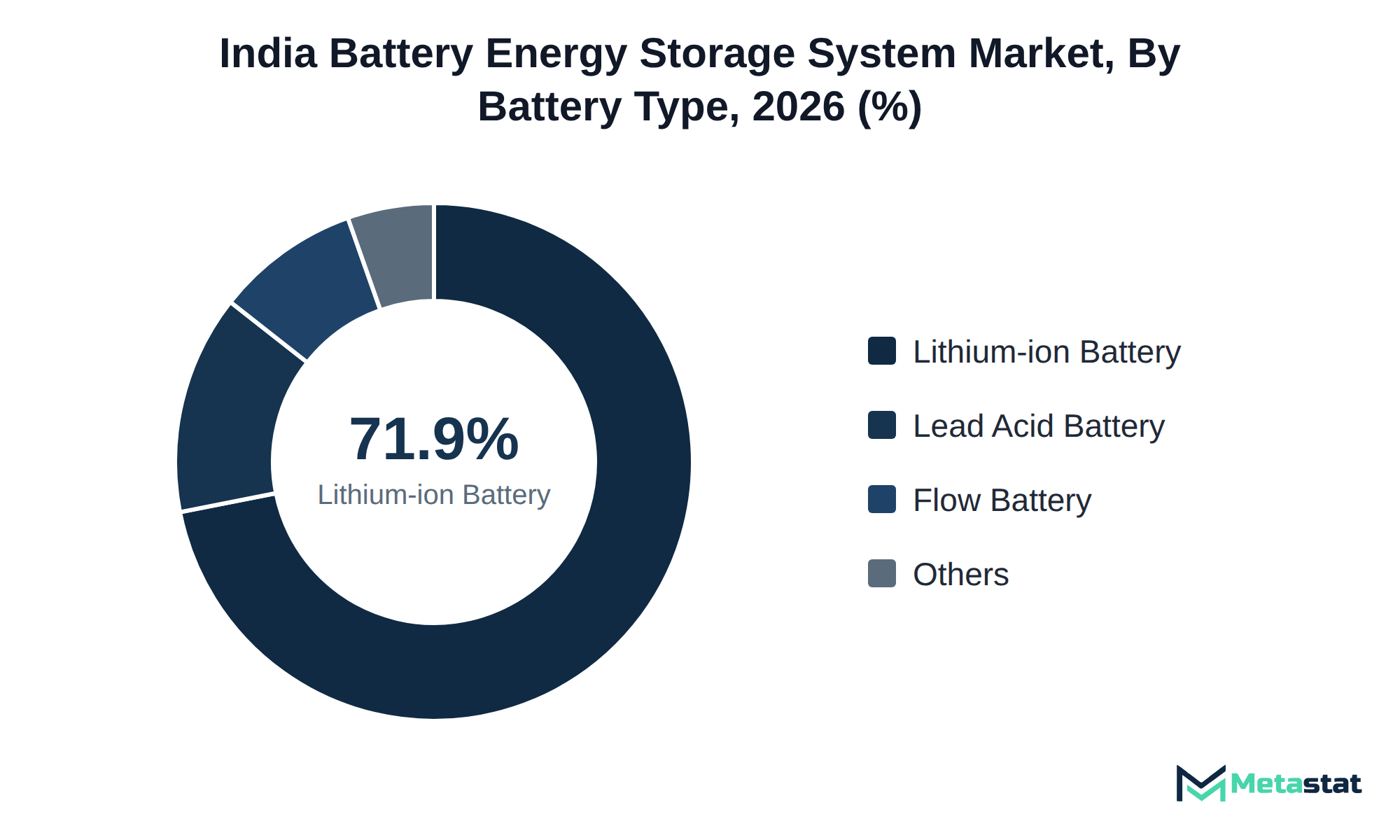
Lithium-ion batteries hold a significant position in energy storage, valued at USD 724 million in 2026 and projected to reach USD 2,958.7 million by 2033, at a CAGR of 22.3% during the forecast period. These batteries serve various applications, primarily in utility-scale energy storage, commercial, and residential sectors, which increasingly rely on reliable power sources. Key drivers for this segment's growth include technological advancements that enhance performance and the push for renewable energy integration. In comparison to other battery types, including lead acid and flow batteries, lithium-ion systems exhibit a stronger growth trajectory, fueled by their higher energy density and decreasing costs. The segment's rapid expansion highlights its critical role in meeting the energy demands of diverse users while addressing challenges posed by conventional energy sources. Continuous innovation and the growing emphasis on sustainability further enhance the appeal of lithium-ion batteries in the India Battery Energy Storage System market.
Lead Acid Battery segment is estimated to reach USD 380.7 million by 2033, at a CAGR of 16.4% during the forecast period. These batteries primarily serve applications in backup power and renewable energy integration, appealing to commercial, industrial, and residential users. Factors influencing this segment include increasing demand for reliable power solutions and the cost-effectiveness of lead acid technology compared to alternatives. Lead Acid Batteries offer a lower initial investment, attracting budget-conscious buyers. However, their growth rate lags behind that of Lithium-ion Batteries, which experience a CAGR of 22.3%. This difference in growth reflects the broader trend towards advanced technologies that provide higher energy density and longer cycle life. The distinct market dynamics of Lead Acid Batteries highlight their role in specific applications while illustrating competition from emerging battery technologies.
Flow Battery segment is expected to reach USD 383.8 million by 2033. This battery type serves primarily in applications requiring long-duration energy storage, including renewable energy integration and grid stability. Utilities and large-scale renewable energy projects increasingly adopt flow batteries because they can discharge energy over extended periods. Lithium-ion counterparts, by contrast, excel in short bursts and rapid cycling. Market growth is driven by rising demand for sustainable energy solutions and advancements in flow battery technology. While experiencing a slower growth rate compared to lithium-ion batteries, with a CAGR of 20.6%, flow batteries offer unique advantages in specific applications, appealing to buyers focused on long-term energy storage solutions. The evolving regulatory landscape supporting renewable energy initiatives further encourages investment in this segment. Vanadium redox flow battery technology is one approach to long-duration storage.
Others is projected to grow at a CAGR of 20.6% during the forecast period. This category encompasses various battery technologies that do not fit into traditional classifications including lithium-ion, lead acid, or flow batteries. Applications include niche sectors where customization and specific energy needs are prevalent, appealing primarily to specialized industrial or commercial users with unique requirements. Increasing demand for innovative energy solutions in specific applications drives this segment. Compared to lithium-ion and lead acid batteries, which exhibit higher growth rates, the Others segment provides alternatives that fill gaps in the market for particular use cases without competing directly on scale. This differentiation highlights the segment's adaptability to evolving energy storage needs, further enhancing its role in the India Battery Energy Storage System market.
Below 100 MWh segment is valued at USD 528 million in 2026 and is projected to reach USD 1,986.2 million by 2033, at a CAGR of 20.8% during the forecast period. This segment primarily serves residential users, small businesses, and localized energy applications, providing essential energy storage solutions for peak shaving and backup power. Demand is driven by the increasing need for energy independence and the proliferation of renewable energy sources. This segment exhibits faster growth compared to others, driven by lower entry costs and heightened interest in sustainable energy. Unlike larger capacity segments, the Below 100 MWh range appeals to smaller-scale applications where quick installation and efficiency are critical, contributing to the robust expansion observed in the India Battery Energy Storage System market.
The 101 to 500 MWh segment is estimated to reach USD 1,222.4 million by 2033, at a CAGR of 21.8% during the forecast period. This segment serves various applications, including commercial, industrial, and utility-scale projects, catering to energy needs that demand significant capacity. Growing interest in sustainable energy solutions drives investments within this segment, particularly among large-scale users looking for reliable energy management. With a higher growth rate than the lead acid battery segment, this category establishes itself as a more attractive option for buyers seeking advanced energy storage solutions. Unlike smaller capacity segments, which typically appeal to residential users, this segment attracts commercial and industrial clients seeking to enhance operational efficiency and energy security. The emphasis on utility-scale storage highlights its critical role in supporting the evolving energy landscape in the India Battery Energy Storage System market.
The Above 500 MWh segment is expected to reach USD 713 million by 2033. This segment primarily serves large-scale utilities and industrial applications that require substantial energy storage capacity for grid stability, renewable energy integration, and peak shaving. Demand for this segment is driven by the increasing adoption of renewable energy sources, which requires reliable energy storage solutions to manage intermittency. Regulatory support for clean energy initiatives enhances market growth. Compared to other energy capacity segments, the Above 500 MWh segment typically experiences slower growth, with a more stable customer base focused on long-term investments rather than the rapid expansion characterizing smaller capacity segments. This segment serves a distinct market dynamic, catering to large-scale energy needs while maintaining a focus on reliability and sustainability.
Residential applications generate a market value of USD 86.9 million in 2026, projected to escalate to USD 300.2 million by 2033, at a CAGR of 19.4% during the forecast period. This segment primarily serves homeowners seeking efficient energy storage solutions to manage energy consumption and reduce electricity costs. Factors driving growth in this segment include increasing electricity prices and rising consumer awareness regarding renewable energy and sustainability. Compared to commercial and industrial applications, which have a projected CAGR of 21.8%, the residential segment displays relatively slower growth due to higher upfront costs and installation complexities. Unlike utility-scale systems, which focus on large-scale energy management, residential systems cater specifically to individual consumers seeking autonomy over their energy usage.
Commercial and Industrial segment is estimated to reach USD 868.5 million by 2033, at a CAGR of 21.8% during the forecast period. This segment serves businesses and manufacturing operations, focusing on energy efficiency and cost savings. The growing emphasis on sustainability and reliable energy sources drives demand in this area, encouraging commercial entities to invest in energy storage solutions. Rising electricity costs and the need for grid independence contribute to market dynamics, encouraging several companies to adopt battery storage. Compared to other segments, this sub-segment experiences rapid growth due to heightened awareness of energy management solutions. Commercial and Industrial applications often feature larger systems, differentiating them from residential units that typically have smaller energy requirements. The market experiences a shift toward advanced battery technologies, enhancing performance and reducing costs, which aligns with the ongoing transformation in the India Battery Energy Storage System market.
Utility applications are expected to reach USD 2,752.8 million by 2033. This segment caters to large-scale energy consumers, including utility companies that require energy storage for grid stability and efficiency. The escalating demand for renewable energy integration acts as a significant driver for this segment, with utilities striving to manage fluctuations in energy supply and demand. The utility segment exhibits faster growth compared to other sub-segments, driven by its larger application scale and the increasing emphasis on sustainable energy practices. The compound annual growth rate (CAGR) for this segment reflects a robust expansion trajectory, contrasting with slower growth observed in segments including residential applications. These dynamics highlight the strategic importance of the utility segment in the evolving India Battery Energy Storage System market.
South India segment is valued at USD 357.8 million in 2026 and is projected to reach USD 1,399.6 million by 2033, at a CAGR of 21.5% during the forecast period. This segment serves various applications, including residential and commercial sectors, where energy storage plays a critical role in enhancing energy reliability and management. Key drivers for this segment include increasing demand for efficient energy solutions, particularly in urban areas experiencing rapid growth. Compared to other segments, South India exhibits significant growth due to a favorable regulatory environment and a push towards renewable energy adoption. Rising awareness of energy management benefits positions this segment uniquely for sustained expansion, distinguishing it from regions with slower growth trajectories in the India Battery Energy Storage System market.
North India segment is estimated to reach USD 914 million by 2033, at a CAGR of 21.6% during the forecast period. This segment primarily serves commercial and industrial applications, where high energy demand and reliability are critical. The growing emphasis on renewable energy and the integration of storage solutions into existing infrastructure significantly drive investments in this region. In comparison to other segments, North India experiences a faster growth trajectory, influenced by increasing industrial activities and urbanization. The region's unique economic landscape and energy requirements differentiate it from other areas, presenting distinct opportunities for battery energy storage systems. The market shows a strong inclination towards modern energy management solutions, reflecting broader trends in the market.
West India segment is expected to reach USD 1,104.1 million by 2033. This region is a key area for energy storage solutions, primarily by commercial and industrial sectors that seek efficiency and sustainability in energy management. Demand in this segment is influenced by increasing investments in renewable energy infrastructure, which necessitate reliable energy storage systems. Compared to other segments, West India exhibits a strong growth rate driven by proactive policies and regulatory support aimed at enhancing energy security. The CAGR for this segment is projected at 21.5%, indicating a faster growth trajectory relative to certain other regions. Increased adoption of energy storage technologies plays a critical role in meeting energy demands, enabling operators to optimize performance and reduce operational costs. The market continues to attract significant interest from various stakeholders aiming to capitalize on the expanding opportunities in energy storage.
East India segment is projected to grow at a CAGR of 21.1% during the forecast period. This region is significant in the development of energy storage systems, used predominantly by utilities and large-scale energy projects to manage supply and demand more effectively. The increasing emphasis on renewable energy sources and the need for reliable backup power drive significant investments in energy storage technologies. Compared to other regions, East India features unique regulatory support aimed at enhancing grid stability and accommodating renewable integration. The growth rate in this region stands out, reflecting a higher demand for energy storage solutions relative to regions with slower growth trajectories. Anticipated market development creates opportunities for stakeholders such as manufacturers and energy providers, contributing to stronger energy infrastructure in the area.
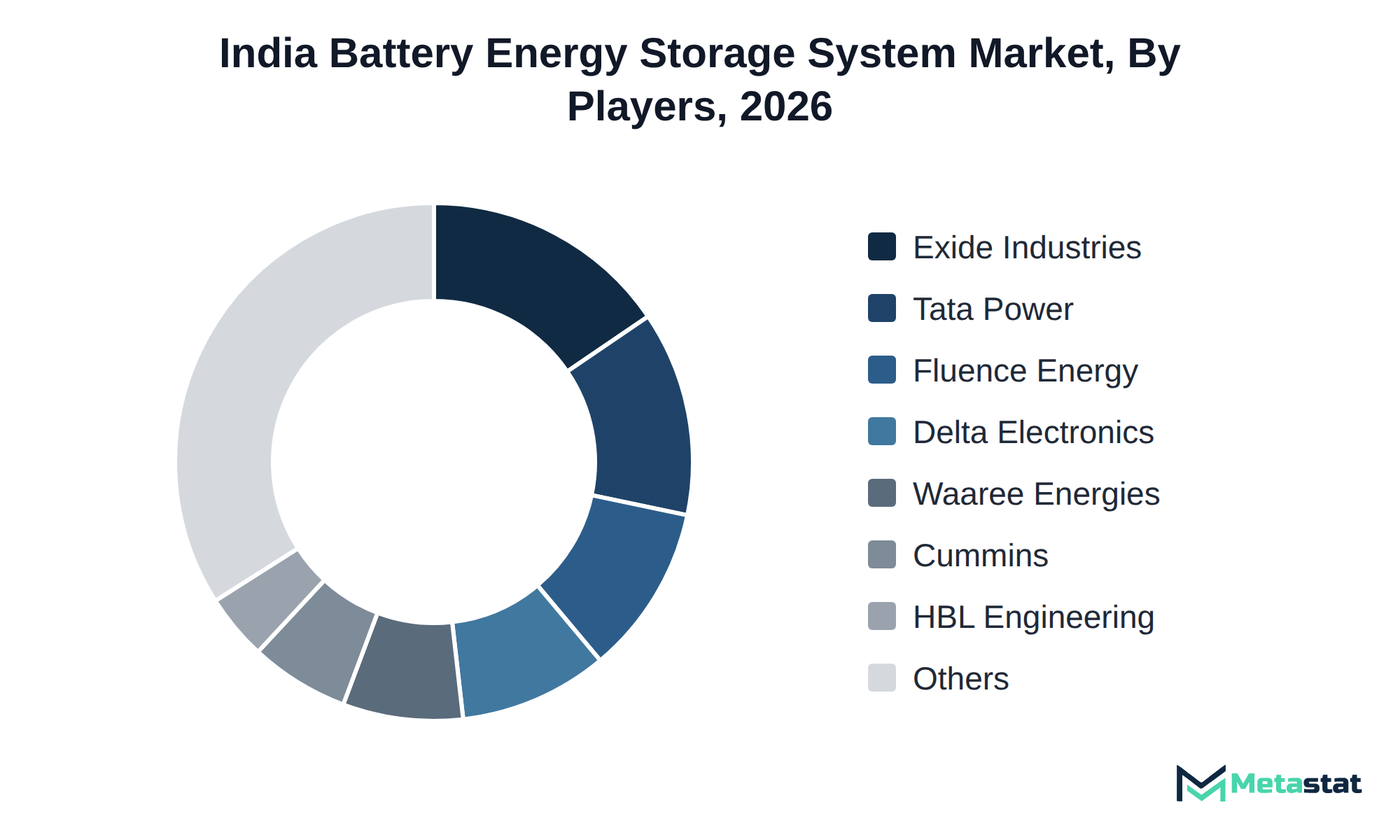
The India Battery Energy Storage System market features a diverse set of players competing on various fronts, including technological innovation, pricing strategies, and service offerings. Companies like Exide Industries Ltd. and Tata Power focus on enhancing product features and reliability to meet specific customer demands, while Fluence Energy, LLC emphasizes integrated solutions that address the growing complexity of energy management.
Buyers prioritize factors including price, customization, and certification when selecting battery energy storage systems. For instance, Delta Electronics, Inc. offers competitive pricing along with tailored solutions for commercial and industrial applications. Waaree Energies Ltd. focuses on customer service and technical support, enhancing buyer trust and retention in the market.
The growth forecast relies on several key developments, particularly in the lithium-ion battery segment and the increasing adoption in various regions, including South India and North India. A significant factor driving this expansion involves the increasing demand for energy storage solutions in residential and commercial applications, projected to enhance overall market performance. Enhanced infrastructure and supportive regulatory measures will further facilitate market growth, enabling players to capitalize on emerging opportunities.
However, challenges persist, including potential supply chain disruptions that could affect the availability of critical components, including lithium-ion batteries. These disruptions would impact production timelines and increase costs, posing a risk to achieving the projected market size. Pricing fluctuations in raw materials and competition among suppliers create additional hurdles. Addressing these factors will influence investment decisions and the pace of technological advancements within the India Battery Energy Storage System market.
By Battery Type: Lithium-ion Battery, Lead Acid Battery, Flow Battery, Others
By End-User Application: Residential, Commercial and Industrial, Utility
By Region: South India, North India, West India, East India
The report strategically identifies and profiles the key market players and analyses their core competencies in each sub-segment of the Battery Energy Storage System market.
|
Report Attributes |
Details |
|
Study Period |
2021-2033 |
|
Base Year |
2025 |
|
Estimated Year |
2026 |
|
Forecast Period |
2026-2033 |
|
Historical Period |
2021-2025 |
|
Growth Rate |
CAGR 21.6% from 2026 to 2033 |
|
Revenue Unit |
USD million |
|
Segmentation |
By Battery Type, Energy Capacity Range, End-User Application, Region, and Region |
Find answers to common questions about this report
The Battery Energy Storage System market size was valued at USD 815.6 million in 2025.
The market is projected to grow at a CAGR of 21.6% during the forecast period from 2026 to 2033.
Lithium-ion Battery leads the Battery Energy Storage System market with a projected value of USD 2,958.7 million by 2033, reflecting the highest growth rate among the battery types.
Commercial and industrial buyers are investing significantly in energy storage systems due to the growing need for reliable and efficient energy management solutions. Utility-scale applications represent a significant opportunity, driven by increasing investments in renewable energy sources and the need for grid stability.
High costs associated with battery energy storage systems limit adoption among buyers, particularly in the residential and commercial sectors. Rising input costs for key materials, especially lithium, challenge suppliers by impacting profit margins and prompting the need for innovative approaches to maintain competitiveness.
Utility-scale applications present a significant opportunity for adoption in the India Battery Energy Storage System market, driven by increasing investments in renewable energy and the need for grid stability. The transition towards cleaner energy solutions supports the demand for large-scale battery systems, enabling operators to efficiently manage fluctuations in energy supply and demand.
The Battery Energy Storage System market is estimated to reach a valuation of USD 3,921.5 million by 2033.
Key players operating in the Battery Energy Storage System market include Exide Industries Ltd., Delta Electronics, Inc., Toshiba Corporation, Tata Power, Waaree Energies Ltd., Cummins Inc., Fluence Energy, LLC, HBL Engineering Limited, and EnerTech UPS.
South India exhibits significant growth potential, with a projected market value of USD 1,399.6 million by 2033, driven by increasing investments in energy storage solutions.
The residential segment is anticipated to reach USD 300.2 million by 2033, reflecting the growing adoption of energy storage technologies among residential users.
The analysts below cover Energy and Power research at Metastat Insights.
LEAD ANALYST
Utkarsh Khirodkar is a Lead Market Research Analyst at MetaStat Insight, specializing in market intelligence, technology sector assessments, and competitive strategy.

PRINCIPAL CONSULTANT - ENTERPRISE AI & EMERGING TECHNOLOGIES
Banking & Finance · Electronics and Semiconductor · Energy and Power · Healthcare IT · Information & Technology · Professional Services
Vijay Gunti is a Principal Consultant at MetaStat Insight, bringing over two decades of experience across enterprise digital transformation, technology strategy, and intelligent systems.

ENERGY & INFRASTRUCTURE INDUSTRY CONSULTANT
Automotive and Transportation · Electronics and Semiconductor · Energy and Power · Machinery & Equipment
Saurabh Vasant Ganvir consults for Energy & Infrastructure Industry at MetaStat Insight, specializing in renewable energy, solar EPC, and electric vehicle (EV) infrastructure markets.
Transitioning ultra-class mining haul trucks to alternative power requires concrete data on remote hydrogen refueling infrastructure economics. The report evaluated megawatt-scale electrolyzer installation expenses, onsite storage safety mandates, and heavy-duty fuel cell stack degradation under continuous duty cycles. That technical rigor helped our engineers benchmark realistic total operating cost horizons for off-highway fleet decarbonization.
Enterprise zero-trust network rollouts are often slowed down by multi-cloud transit latency and proprietary hardware retirement schedules. This study provided realistic total cost of ownership models comparing cloud-delivered security edge solutions against traditional hardware refreshes. The analysis of contract renewal lengths and software maintenance fees gave us clear visibility into enterprise replacement cycles over the next three to five years.
Scaling antibody-drug conjugate manufacturing hinges on contract manufacturing availability for high-potency active ingredients. The MetaStat Insight analysis looked closely at global cleanroom slot constraints, bioconjugation batch failure rates, and supply chain redundancies between the US, Europe, and India. The supplier capability matrix proved genuinely useful for our team when mapping secondary source options across our clinical pipeline.
Explore related market intelligence reports worth reading alongside this one.