
LEAD ANALYST
Utkarsh Khirodkar is a Lead Market Research Analyst at MetaStat Insight, specializing in market intelligence, technology sector assessments, and competitive strategy.

Global Sports Nutrition Market Size, Share, By Raw Material (Animal Derived, Plant-Based and Mixed), By Type (Energy Bars, Protein Powder, Sports Supplements and Sports Drink), By Distribution Channel (Hypermarkets and Supermarkets, Drug and Specialty Stores and Online), By End-user (Athletes, Bodybuilders and Lifestyle Users), Industry Analysis, Growth, Trends, and Forecast, 2026-2033
Report ID
MSI-4528
Published
November, 2026
Pages
284 Pages
Format
Historical
Base year
Forecast
Forecast period
Report Details
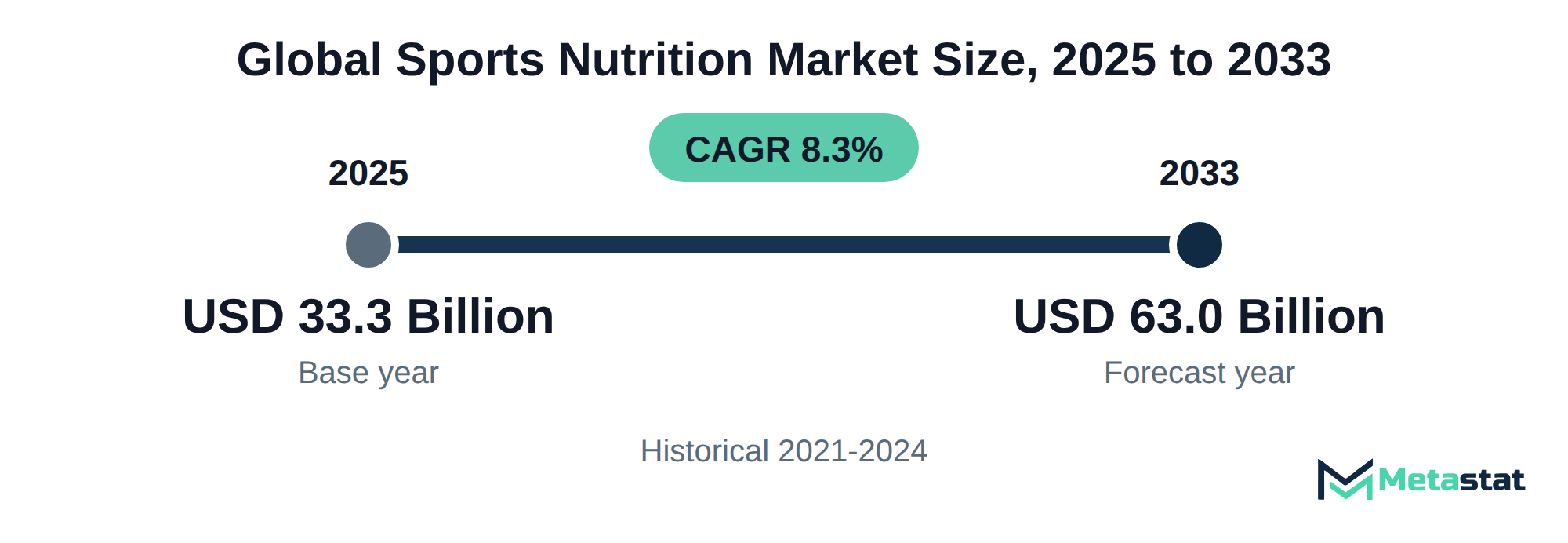
Market Valuation: Valued at $33.3 Billion in 2025, projected to reach $63 Billion by 2033 at a 8.3% CAGR.
Dominant Segment: Energy bars lead the Sports Nutrition market, driven by consumer preference for convenient and portable nutrition options that support performance and recovery.
Geographic Lead: North America dominates the market with a 38.0% share in 2025, primarily due to robust infrastructure and high consumer demand for sports nutrition products.
What's Inside: The report provides comprehensive coverage of market dynamics, competitive analysis, and forecasts from 2026 to 2033, detailing segments by raw material, type, distribution channel, and end-user.
Emerging Trends: The shift towards plant-based products is notable, with the plant-based segment projected to reach USD 19 billion by 2033, reflecting changing consumer preferences for health-conscious and sustainable options.
Choose Your License
Global Sports Nutrition Market
The global Sports Nutrition market was valued at USD 33.3 billion in 2025 and is projected to reach USD 63 billion by 2033, growing at a CAGR of 8.3% over the forecast period.
The Sports Nutrition market covers products designed to enhance athletic performance, support fitness goals, and aid recovery. Buyers invest in these products to improve their physical capabilities, boost energy levels, and optimize recovery processes. This market caters primarily to athletes, bodybuilders, and lifestyle users, each seeking tailored solutions to meet their specific nutritional needs. The increasing interest in fitness and health drives consumer spending across these groups.
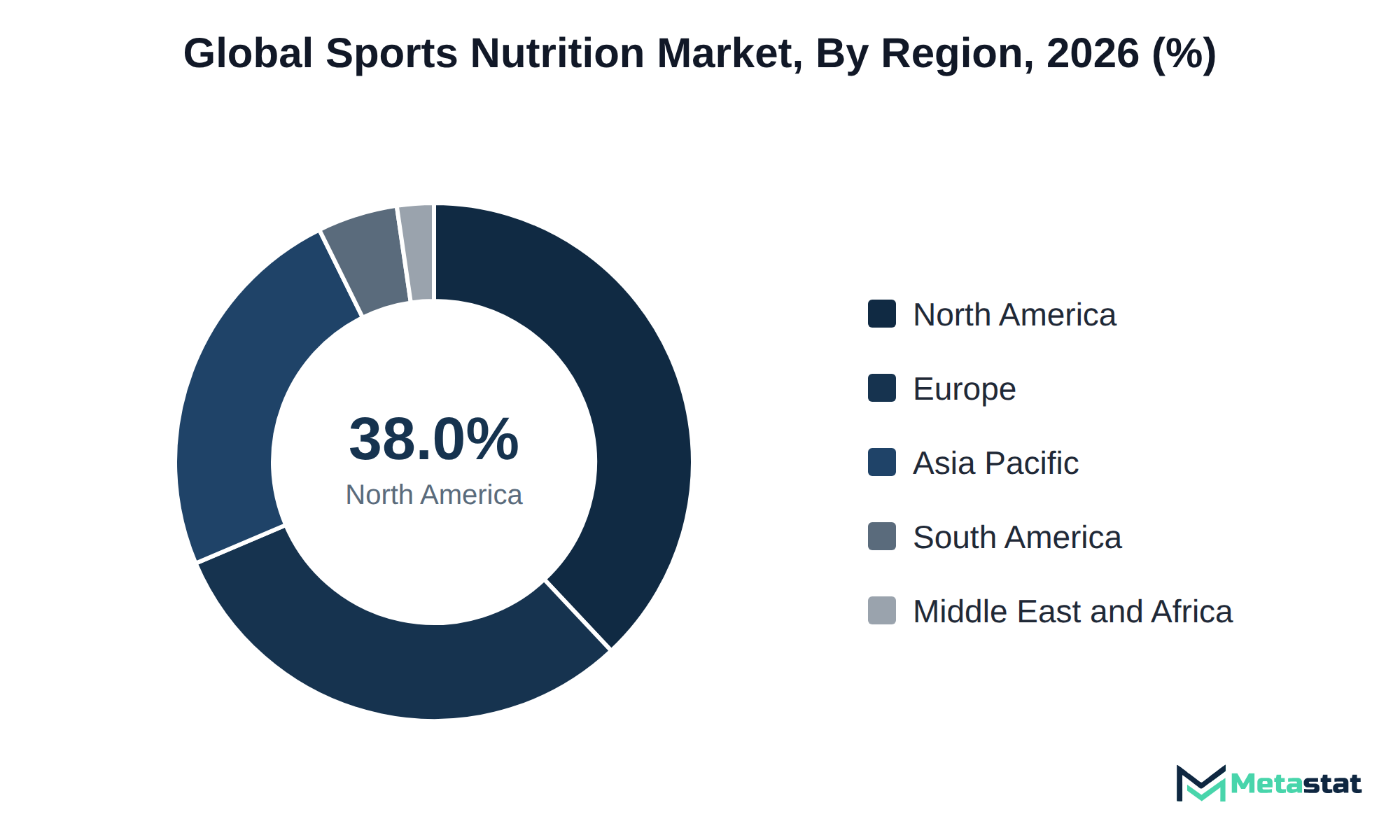
Growth in the market is attributed to several factors, with rising health consciousness being a significant contributor. Among the various segments, energy bars represent the largest share, reflecting a strong preference for convenient and portable nutrition options. By region, North America holds 38.0% of the market in 2025, with the US leading in 2026. This dominance reflects well-developed infrastructure and strong consumer demand in the region.
While the market evolves, the growing popularity of plant-based products and dietary supplements continues to shape consumer preferences. With an increasing number of consumers prioritizing health and wellness, the market is expected to experience sustained growth opportunities. This trend indicates a shift towards more diverse product offerings, catering to a wider audience focused on personalized nutrition solutions.
The Sports Nutrition market serves a diverse consumer base, driven by the increasing focus on health and fitness. Buyers include athletes, bodybuilders, and lifestyle users, all seeking products to enhance performance, support recovery, and achieve fitness objectives. This rising awareness surrounding nutrition and exercise fuels investment in specialized products tailored to various consumer needs.
Rising demand for energy bars, the largest segment by value, is shaping growth in the market. In comparison, Europe and Asia Pacific follow with shares of 30.6% and 24.1%, respectively, reflecting significant consumer engagement in these regions.
Growing participation in sports and fitness activities is a primary growth driver because it raises demand for nutritional products. This trend encourages manufacturers to innovate and expand their offerings, ensuring they meet the evolving preferences of health-conscious consumers. The market's trajectory indicates strong expansion, driven by these shifting consumer behaviors.
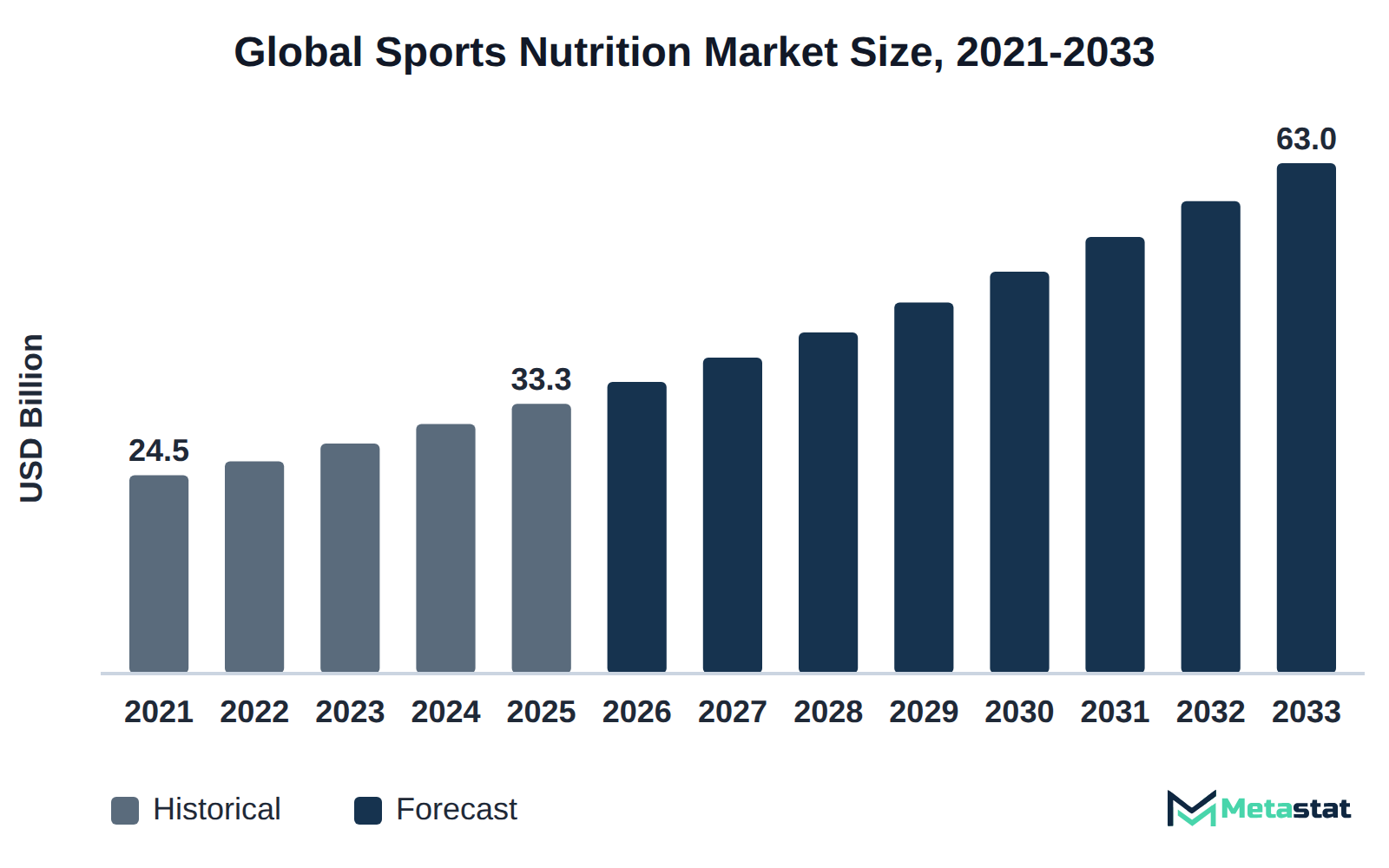
The Sports Nutrition market experiences a notable shift toward plant-based peptides and clean-label beverages, driven by evolving consumer preferences for transparency and health-conscious options. The plant-based sports nutrition segment is projected to reach USD 19 billion by 2033, reflecting a growing demand for products that align with sustainable practices and dietary choices. This transition is changing formulation strategies among manufacturers that want to reach health-oriented consumers.
Consumers increasingly prioritize ingredients that promote wellness while avoiding artificial additives. This trend aligns with the movement toward clean-label formulations, which emphasize simplicity and recognizability in ingredient lists. The shift is exemplified in the energy bars segment, anticipated to grow from USD 32.1 billion in 2026 to USD 56.6 billion by 2033, highlighting the demand for healthier, more transparent products. The growing market for clean-label options coincides with heightened scrutiny on food labeling and safety practices, compelling brands to adapt and innovate.
While consumers gravitate toward plant-based options, manufacturers benefit from improved market positioning. This strategic pivot enhances brand loyalty and taps into a broader demographic, including flexitarians and environmentally conscious shoppers. This shift toward plant-based peptides and clean-label beverages positions the market for sustained growth and competitiveness as buyers become more discerning.
The purchasing behavior of buyers in the Sports Nutrition market reflects a shift from traditional gym-goers to a broader demographic seeking health and wellness solutions. In 2025, the market valuation reached USD 33.3 billion, indicating substantial growth potential as more consumers recognize the benefits of sports nutrition products beyond mere fitness. This expansion covers athletes and bodybuilders as well as lifestyle users who add these products to their everyday routines.
Pricing models shape this transition as consumers increasingly prefer flexible purchasing options. For example, subscriptions and bulk purchasing agreements provide added value, catering to the diverse needs of buyers. Volume-based purchasing is also relevant to B2B sports nutrition, where suppliers sell to business customers rather than individual consumers. The rise in online sales platforms enhances accessibility and convenience, allowing consumers to easily explore different products and pricing structures. By 2033, the market is projected to grow to USD 63 billion, driven by these evolving buyer preferences.
Retailers and manufacturers adapt their strategies to align with changing consumer behavior, strengthening relationships with this expanding customer base. By offering tailored pricing models and enhancing product availability, stakeholders position themselves for greater market penetration and increased revenue opportunities throughout the Sports Nutrition market.
Recent strategic acquisitions have significantly impacted the distribution landscape of functional ready-to-drink (RTD) supplements within the Sports Nutrition market. Industry players focus on expanding their market reach through partnerships and acquisitions that enhance product lines and customer access. For instance, the market is projected to reach USD 63 billion by 2033, reflecting growing consumer interest in convenient nutrition solutions.
The trend towards functional ready-to-drink sports nutrition supplements aligns with evolving consumer preferences for convenient, performance-driven products. Athletes represent a key buyer group, seeking products that support their performance and recovery. The demand for tailored nutrition solutions drives companies to adapt their offerings, ensuring they meet the specific needs of this segment. The athletes segment is expected to grow from USD 13.3 billion in 2026 to USD 23.4 billion by 2033, illustrating the lucrative potential of this market.
These acquisitions enable firms to utilize existing distribution channels effectively, enhancing their competitive edge. The expansion of distribution networks leads to improved market penetration, allowing brands to cater to athletes with diverse nutritional needs. This strategic shift drives revenue growth and encourages innovation, positioning companies to meet rising demand for functional RTD supplements.
Fluctuating whey prices and increasing consumer preference for clean-label products significantly impact the adoption of alternative proteins within the Sports Nutrition market. The price of whey protein, a milk protein, has experienced notable volatility, influenced by factors including supply chain disruptions and changing demand patterns. Rising prices prompt manufacturers to seek cost-effective alternatives to maintain competitive pricing and profitability.
In response to these challenges, alternative protein sources, particularly plant-based proteins such as pea protein, have gained traction. The plant-based segment is projected to reach USD 19 billion by 2033, reflecting a compound annual growth rate (CAGR) of 8.7%. This growth demonstrates a strong consumer shift towards products perceived as healthier and more sustainable. Clean-label demands drive this transition, with consumers increasingly favoring transparent ingredient sourcing and minimal processing.
For manufacturers, alternative protein sources reduce the risks associated with fluctuating whey prices and align with evolving consumer preferences. This strategic shift enhances market positioning and opens new revenue streams, ultimately contributing to the overall growth potential of the Sports Nutrition market.
The growing emphasis on health and fitness among various consumer groups drives significant spending in the market. Increased participation in sports and fitness activities leads to greater demand for products that support performance and recovery. Athletes and bodybuilders particularly seek nutritional solutions to enhance endurance and muscle mass. This shift results in higher sales volumes and a willingness to pay premium prices for high-quality products. The market is projected to reach USD 63 billion by 2033, reflecting a compound annual growth rate of 8.3% from the base year 2025. This trend aligns with changing consumer values, where health-conscious choices prevail, influencing both purchasing behavior and overall market dynamics. The combination of demographic shifts and heightened awareness of personal well-being drives continuous growth in the Sports Nutrition market.
Innovative technologies in product formulation significantly influence market growth. Advances in ingredient extraction and processing improve nutritional profiles while maintaining flavor and texture. Enhanced methods, including microencapsulation and fermentation, boost the efficacy of active ingredients, making formulations more appealing to consumers. These technological enhancements attract health-conscious buyers seeking products that deliver tangible benefits without compromising taste.
The introduction of smart manufacturing systems streamlines production processes, allowing suppliers to respond swiftly to changing consumer demands. Automation and data analytics facilitate optimized inventory management and tailored formulations, supporting broader product variety. These advancements create a more competitive landscape, directly impacting the Sports Nutrition market by enhancing supplier capabilities and driving innovation. Suppliers that adopt these technologies strengthen their position, contributing to sustained growth in the market.
High prices for premium sports nutrition products restrict accessibility for budget-conscious consumers, particularly lifestyle users. Price sensitivity in this demographic leads to smaller, cautious orders and slower uptake of new products. While the market expands, financial constraints on consumers create challenges for manufacturers seeking to increase market penetration. Segment-specific promotions or discounts could enhance reach but often result in lower profit margins. Manufacturers that fail to address pricing strategies face significant obstacles, particularly in competitive retail environments where diverse alternatives exist. As a result, sports nutrition demand reflects the balance between consumer preferences and price points, so manufacturers need innovative approaches that address cost concerns while maintaining quality.
Rising input costs significantly challenge profitability within the market. Factors including increased prices for raw materials, packaging, and logistics contribute to higher expenses for suppliers. The demand for high-quality ingredients, particularly for protein sources, exacerbates these costs. Suppliers face pressure to maintain competitive pricing while managing their margins effectively. In response, suppliers implement cost-control measures, including seeking alternative sourcing strategies and optimizing production processes. Several companies invest in technology to improve operational efficiency and reduce waste, directly impacting overall costs. Collaboration with suppliers for bulk purchasing agreements further aids in mitigating cost pressures. This challenging environment influences pricing strategies and market positioning, shaping how suppliers approach product offerings and consumer engagement.
The demand for plant-based raw materials in nutritional products exhibits significant growth potential. This trend aligns with increasing consumer preference for healthier and sustainable alternatives. The rise in health consciousness among consumers drives the shift towards plant-based nutritional options, particularly among lifestyle users and athletes seeking clean ingredients in their diets. Companies focusing on creating innovative plant-based protein sources, such as rice protein, capitalize on this trend, enhancing competitiveness in the market. Enhanced product offerings that emphasize nutritional value and environmental sustainability attract a broad consumer base. The opportunity for brands lies in developing formulations that meet the rising demand for plant-based components while ensuring taste and functionality, which will ultimately support market growth. This growing segment positions itself to change consumer expectations in the Sports Nutrition market.
The Global Sports Nutrition market is segmented based on Raw Material, Type, Distribution Channel, and End-user.
Animal Derived segment is valued at USD 19.8 billion in 2026 and is projected to reach USD 34.1 billion by 2033, at a CAGR of 8.1% during the forecast period. This segment is essential in sports nutrition, supplying high-quality protein sources primarily used by athletes and bodybuilders to enhance performance and recovery. The growing trend toward high-protein diets fuels demand, particularly among serious fitness enthusiasts seeking effective nutritional solutions. The Animal Derived segment grows slightly slower than the Plant-Based segment, which is expected to achieve a CAGR of 8.7%. It retains a competitive advantage in protein concentration and amino acid profile. This distinction influences purchasing decisions, with many users favoring Animal Derived sources for their perceived efficacy in muscle building and recovery support. The market reflects an increasing consumer focus on sourcing high-quality animal proteins, driving investment and innovation in this segment.
The Plant-Based segment of the Sports Nutrition market serves health-conscious consumers and athletes seeking vegan or vegetarian alternatives for recovery and energy replenishment. Growing awareness of the benefits associated with plant-based nutrition drives significant demand, particularly among lifestyle users and bodybuilders. The rising trend of sustainable and ethical consumption further fuels this segment's growth, with consumers increasingly favoring plant-based options over animal-derived ingredients. Compared to the Animal Derived segment, which shows a CAGR of 8.1%, the Plant-Based segment experiences more rapid expansion, reflecting shifting preferences among buyers. This trend indicates a move toward inclusivity within the market, appealing to diverse dietary needs and preferences.
Mixed raw materials are expected to reach USD 10 billion by 2033. This segment consists of various blends of animal-derived and plant-based ingredients, appealing to diverse consumer preferences. Users include athletes, bodybuilders, and lifestyle enthusiasts, all seeking performance enhancement and recovery support. Demand for mixed formulations is driven by a trend towards versatile nutritional options, allowing consumers to tailor their intake to specific goals. Growth in this segment is anticipated to surpass that of other raw material categories. The segment offers a unique value proposition by combining the benefits of both raw material types, making it appealing to a broader consumer base. In contrast, segments including animal-derived materials focus on traditional formulations, while plant-based options target health-conscious users. This dynamic creates potential for innovation and competitive strategies, enhancing the overall growth trajectory of the market.
Energy bars provide convenient, nutrient-rich snacks for athletes, bodybuilders, and lifestyle users seeking on-the-go nutrition. The rising interest in health and fitness among consumers drives demand for energy bars, with these products offering quick energy sources and protein content essential for recovery and muscle growth. This segment outpaces others in the Type category, exhibiting a higher growth rate, while Protein Powder is projected to reach USD 3.6 billion by 2033 at a CAGR of 6.9%. The dynamic nature of consumer preferences, shifting towards healthier snack options, continues to shape the competitive landscape, making energy bars a focal point of innovation and marketing strategies in the Sports Nutrition market.
This segment primarily serves athletes and fitness enthusiasts focused on muscle recovery and growth. Increasing health consciousness and the demand for convenient, high-protein options drive its growth. The preference for on-the-go nutrition among busy consumers supports the expansion of this segment. Compared to other types, Protein Powder experiences a slower growth rate, reflecting the market's broader shift toward diverse product forms. In particular, Energy Bars achieve a higher CAGR of 8.4%, attracting consumers seeking balanced nutrition in a compact format. Shifting consumer preferences toward high-quality protein sources continue to influence the dynamics of the Protein Powder segment.
Sports Supplements segment is expected to reach USD 2.8 billion by 2033. This segment includes products specifically formulated to enhance athletic performance, support recovery, and improve overall fitness. Athletes and fitness enthusiasts primarily use these supplements for targeted nutritional benefits. A strong demand for effective performance-enhancing products drives growth in this segment. The segment experiences a compound annual growth rate (CAGR) of 8.4%, reflecting quicker expansion compared to other types including Protein Powder, which has a CAGR of 6.9%. This growth is attributed to increasing health consciousness and the desire for convenient nutritional solutions among consumers. The market focus on innovation and product differentiation further supports the expansion of the Sports Supplements segment, positioning it favorably relative to alternatives in the broader market.
Sports drinks are formulated beverages designed to hydrate and replenish electrolytes lost during physical activity. Athletes and fitness enthusiasts primarily use these products to support performance and recovery. The increasing popularity of sports drinks is driven by rising consumer awareness regarding hydration strategies during exercise. This segment distinguishes itself from others by catering specifically to individuals engaged in various sports and fitness routines, focusing on functional benefits rather than just nutrition. Compared to energy bars or protein powders, sports drinks often feature lower prices and have a more immediate appeal to consumers seeking quick hydration solutions. Many consumers prefer the convenience of ready-to-drink beverages, positioning this segment uniquely within the broader sports nutrition market. The market is expected to evolve with innovations in flavor and formulation, enhancing the appeal of sports drinks among diverse consumer groups.
Others within the Type segmentation encompasses a variety of products not classified under traditional categories like energy bars, protein powders, or sports supplements. This segment serves a diverse group of consumers, including casual users and those seeking unique nutritional solutions. A significant force influencing this segment is the increasing demand for personalized nutrition, driving innovation in product formulations. Compared to more established categories, this segment attracts buyers looking for niche offerings that cater to specific dietary preferences or lifestyles. These products often command higher prices, differentiating them from mainstream options while targeting consumers willing to invest in tailored nutrition solutions. The varied nature of this segment presents opportunities for brands to explore and develop unique value propositions that connect with health-conscious individuals seeking alternatives within the sports nutrition market.
Hypermarkets and Supermarkets segment is valued at USD 13.3 billion in 2026 and is projected to reach USD 23.4 billion by 2033, at a CAGR of 8.4% during the forecast period. This segment caters to a wide range of consumers, including athletes and health-conscious individuals, seeking convenient access to sports nutrition products. The increasing focus on health and wellness drives consumer traffic to these retail outlets, facilitating growth. Unlike other distribution channels, this segment benefits from the physical presence and immediate availability of products, which appeals to buyers who prefer in-person shopping experiences. The projected CAGR of 8.4% indicates significant growth, highlighting stronger demand compared to online channels, which face more significant competition from emerging e-commerce platforms. Overall, the popularity of hypermarkets and supermarkets as a distribution channel reflects evolving consumer preferences and shopping habits.
Drug and Specialty Stores segment is estimated to reach USD 19.1 billion by 2033, at a CAGR of 8.4% during the forecast period. This segment serves a diverse group of consumers looking for specialized nutritional products, including athletes and bodybuilders. Rising health consciousness among these buyers drives demand for targeted supplements and nutrition solutions. Compared to other distribution channels, Drug and Specialty Stores offer a more curated selection, catering to specific customer preferences. The focus on high-quality ingredients and expert recommendations differentiates this segment from hypermarkets and supermarkets, where the product range is broader but less specialized. The unique positioning within the Sports Nutrition market enables this segment to capitalize on the increasing trend toward personalized nutrition and expert-driven sales strategies.
Online sales in the Sports Nutrition market are expected to reach USD 14.8 billion by 2033. This channel serves a diverse consumer base seeking convenience and accessibility for purchasing nutrition products. Athletes and lifestyle users frequently use online platforms due to the extensive variety and competitive pricing available. The significant shift towards digital shopping has been a driving force, enabling brands to reach a broader audience effectively. This segment exhibits a strong growth trajectory, differentiating itself from traditional retail channels including hypermarkets and supermarkets, which are projected to reach USD 23.4 billion by 2033. The online segment's growth is propelled by changing consumer buying habits and the continued expansion of ecommerce, contributing positively to revenue generation in the overall market.
Others within the Distribution Channel segment is projected to grow at a CAGR of 6.4% during the forecast period. This sub-segment includes various sales outlets not traditionally categorized, including local health food shops and convenience stores. Many consumers seeking convenience and specialized products use these channels, enhancing accessibility to diverse offerings in the Sports Nutrition market. Growth in this area is driven by increasing consumer demand for personalized nutrition solutions and the convenience of shopping experiences. In contrast to major retail channels like hypermarkets and supermarkets, which are expected to experience a higher CAGR of 8.4%, the Others segment captures a unique consumer base focused on niche products. This distinct positioning allows brands to reach targeted demographics effectively, enhancing overall market penetration.
Athletes engage with sports nutrition products to enhance performance, recovery, and overall physical fitness. Key drivers include increased participation in sports and fitness activities, which fuel demand for specialized nutrition products tailored to the needs of athletes. Compared to other segments, the athletes segment exhibits higher growth due to rising health consciousness and competitive spirit among consumers. Unlike lifestyle users who prioritize convenience or general well-being, athletes typically seek targeted nutritional solutions, highlighting a distinct buyer profile that influences purchasing trends. The market benefits from innovations in product formulations that cater specifically to the nutritional demands of athletes, further supporting growth.
This segment primarily caters to individuals engaged in bodybuilding who focus on muscle gain and performance enhancement. Demand for specialized nutritional products, including high-protein formulations and supplements, drives growth in this area. Increased awareness of fitness and health among consumers fuels the adoption of tailored nutritional solutions. Compared to other segments, this group emphasizes higher protein content and specific dietary needs. While athletes seek performance optimization, bodybuilders concentrate on muscle development and recovery, distinguishing their preferences within the Sports Nutrition market.
Lifestyle Users segment is expected to reach USD 14.8 billion by 2033. This segment targets individuals who incorporate nutrition products into their daily routines for health improvement, weight management, or fitness enhancement. Growing health consciousness among consumers drives significant demand in this segment. The attraction of convenient, ready-to-consume options attracts a diverse consumer base, including fitness enthusiasts and casual exercisers. Compared to athletes and bodybuilders, Lifestyle Users demonstrate a more moderate growth profile, influenced by the overall rise in health and wellness awareness. The CAGR for this segment is projected at 8.4%, reflecting strong growth potential. This growth outpaces certain other segments, highlighting the shift towards lifestyle-centric nutrition solutions in the market. A steady increase in disposable income contributes further to this upward trend, enabling more consumers to invest in nutrition products tailored to their lifestyle needs.
Based on geography, the Global Sports Nutrition market is divided into North America, Europe, Asia-Pacific, South America, Middle East, and Africa.
Projected growth in North America reflects increasing health awareness and fitness trends among consumers. The region's market benefits from strong demand from athletes and lifestyle users, driven by a focus on performance nutrition and overall health improvement. The share of the global market in 2025 stands at 38%, indicating a significant presence. Regional sales channels emphasize hypermarkets, supermarkets, and drug stores, which cater to diverse consumer needs. North America is projected to reach USD 23.8 billion by the end of 2033. Infrastructure supporting distribution remains robust, facilitating easier access to a wide range of sports nutrition products. This growth trajectory positions the market favorably, allowing brands to expand their offerings and cater to evolving consumer preferences.
Europe's contribution to the global Sports Nutrition market stands at 30.6% in 2025. Growing health consciousness among consumers drives demand for various products, particularly among athletes and fitness enthusiasts. Countries including Germany, France, and the UK exhibit a strong inclination towards protein supplementation and energy bars. The rise of fitness culture in urban areas influences purchasing behavior, while stringent regulations governing product safety and labeling further shape market dynamics. Increased availability of sports nutrition products through drug and specialty stores enhances access to a wider audience. This evolving landscape reflects a shift in consumer preferences towards healthier lifestyles, suggesting significant growth opportunities within the market.
The Asia-Pacific region holds a share of the global Sports Nutrition market, accounting for 24.1% in 2025. In countries like China and India, the rising popularity of fitness culture, alongside increasing disposable incomes, supports market growth. Strong infrastructure in urban areas facilitates product availability, enhancing consumer access to sports nutrition products. The market's expansion is further fueled by a growing trend towards plant-based nutrition, with consumers seeking healthier lifestyle options. This demand presents opportunities for innovative product development that targets local tastes and preferences across the region.
Brazil and Argentina drive demand in the Sports Nutrition market, reflecting a growing interest in health and fitness among consumers. The market benefits from increasing participation in sports and recreational activities, contributing to higher consumption of nutritional products. A developing retail infrastructure, including expanding hypermarkets and online channels, supports accessibility and availability of various products. The region's 5.00% share of the global market in 2025 highlights the potential for growth. Changing lifestyles and a focus on wellness motivate consumers to seek sports nutrition solutions tailored to their needs. With a projected growth trajectory, the market gains from rising awareness around health and nutrition, positioning itself as a vital component in the regional dietary landscape.
The Middle East and Africa account for 2.3% of the global market in 2025, with significant potential driven by rising health consciousness among consumers. Countries including Saudi Arabia and the UAE display increasing interest in fitness and sports activities, leading to heightened demand for specific products designed to cater to athletes and lifestyle users. South Africa experiences a growing trend in fitness, further contributing to the regional market expansion. A lack of local manufacturing results in reliance on imports, affecting product pricing and availability. The market's growth depends on catering to local preferences and improving distribution channels, particularly within specialty stores and online platforms.
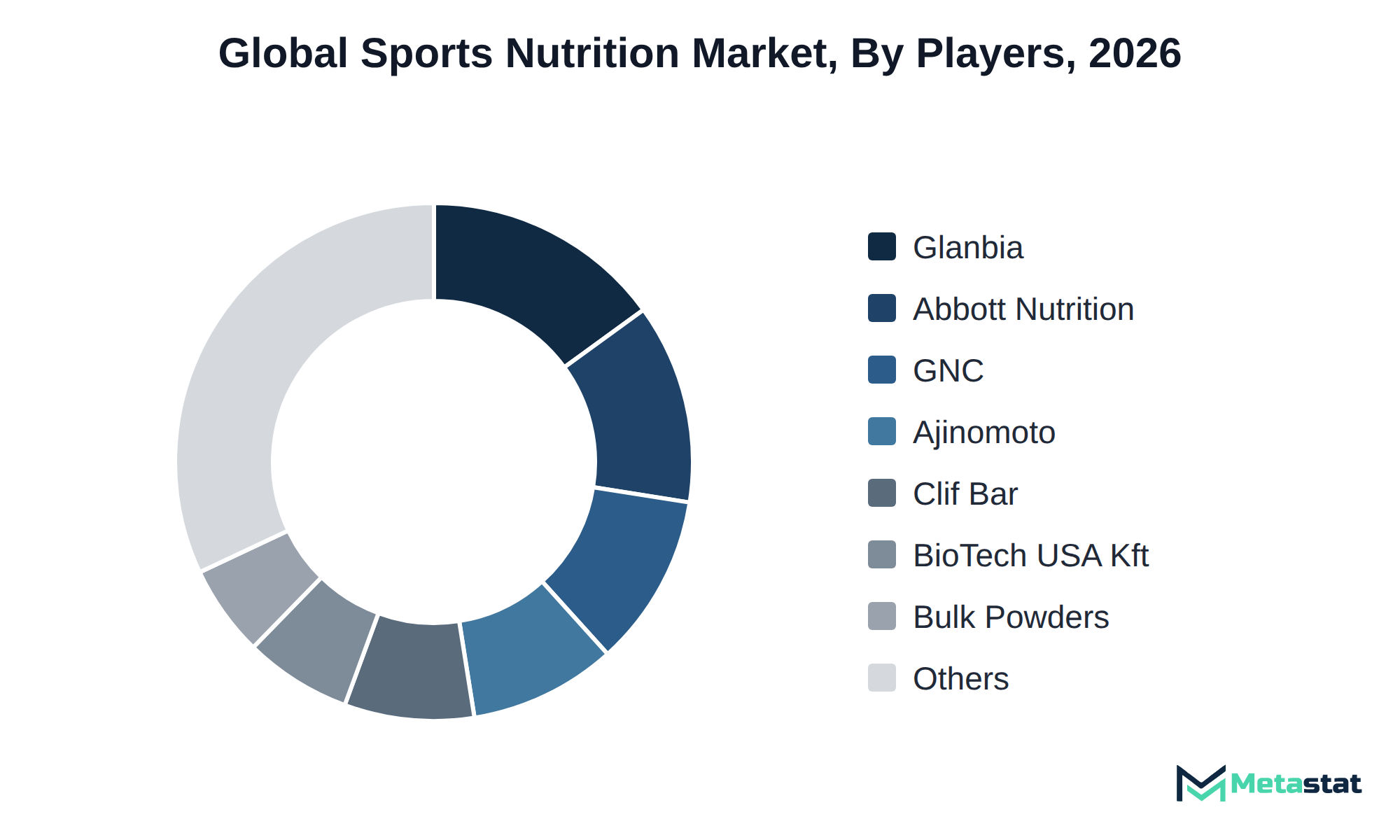
In the sports nutrition market, companies differentiate themselves by focusing on various product segments, including energy bars, protein powders, and sports supplements. Price, quality certification, and product customization influence buyer decisions within the market, compelling companies to tailor their offerings to meet diverse consumer preferences.
Abbott Nutrition Inc. emphasizes the development of high-quality protein products, targeting both athletes and lifestyle users. Glanbia PLC offers a range of nutritional supplements and functional foods, catering to health-conscious consumers seeking performance enhancement. The Coca-Cola Company expands its portfolio through strategic acquisitions, entering the sports nutrition segment with popular brands that appeal to a broad audience.
This growth relies on several key developments within the Sports Nutrition market. First, increased consumer awareness of health and fitness fuels demand for various products, particularly in regions like North America and Europe. The rising popularity of energy bars and protein powders, driven by athletes and lifestyle users, represents a significant opportunity for expansion in these segments. Second, the shift toward plant-based nutrition is expected to enhance market growth, particularly with more consumers seeking sustainable and health-conscious alternatives. The plant-based segment is projected to grow with preferences shifting toward these products. However, supply chain disruptions pose a notable risk that could hinder this growth, affecting availability and prices. Challenges in sourcing raw materials, particularly for animal-derived products, could lead to increased costs and impact revenue. Overall, achieving the projected market size hinges on consumer trends and the ability to address supply challenges effectively.
By Raw Material: Animal Derived, Plant-Based, Mixed
By Type: Energy Bars, Protein Powder, Sports Supplements, Sports Drink, Others
By Distribution Channel: Hypermarkets and Supermarkets, Drug and Specialty Stores, Online, Others
By End-user: Athletes, Bodybuilders, Lifestyle Users
The report strategically identifies and profiles the key market players and analyses their core competencies in each sub-segment of the Sports Nutrition market.
|
Report Attributes |
Details |
|
Study Period |
2021-2033 |
|
Base Year |
2025 |
|
Estimated Year |
2026 |
|
Forecast Period |
2026-2033 |
|
Historical Period |
2021-2025 |
|
Growth Rate |
CAGR 8.3% from 2026 to 2033 |
|
Revenue Unit |
USD billion |
|
Segmentation |
By Raw Material, Type, Distribution Channel, End-user, and Region |
|
By Region |
North America (By Raw Material, Type, Distribution Channel, End-user, and Country)
|
|
Europe (By Raw Material, Type, Distribution Channel, End-user, and Country)
|
|
|
Asia Pacific (By Raw Material, Type, Distribution Channel, End-user, and Country)
|
|
|
South America (By Raw Material, Type, Distribution Channel, End-user, and Country)
|
|
|
Middle East and Africa (By Raw Material, Type, Distribution Channel, End-user, and Country)
|
Find answers to common questions about this report
The Sports Nutrition market size was valued at USD 33.3 billion in 2025.
The market is projected to grow at a CAGR of 8.3% during the forecast period from 2026 to 2033.
The North America Sports Nutrition market size is estimated to reach USD 23.8 billion by 2033.
Energy Bars lead the Sports Nutrition market with a projected value of USD 56.6 billion by 2033, surpassing other segments in terms of revenue.
The growing emphasis on health and fitness among various consumer groups drives significant spending in the market. The demand for plant-based raw materials in nutritional products exhibits significant growth potential, aligning with increasing consumer preference for healthier and sustainable alternatives.
North America holds the dominant share of the Sports Nutrition market, with a value of USD 23.8 billion projected for 2033, representing 38 percent of the total market.
High prices for premium sports nutrition products restrict accessibility for budget-conscious consumers, resulting in smaller orders and slower uptake of new offerings. Rising input costs, including those for raw materials and logistics, challenge profitability and pressure suppliers to maintain competitive pricing while managing margins effectively.
Several factors favor adoption in the Sports Nutrition industry. The growing emphasis on health and fitness among consumers drives demand for products that support performance and recovery. the increasing preference for plant-based raw materials aligns with consumer trends towards healthier and sustainable alternatives, particularly among lifestyle users and athletes.
The Sports Nutrition market is estimated to reach a valuation of USD 63 billion by 2033.
Key players operating in the Sports Nutrition market include Abbott Nutrition Inc., Ajinomoto Co., Inc., Glanbia PLC, GNC Holdings Inc., Nestlé Health Science, The Coca-Cola Company, and Quest Nutrition & Athletics.
The analysts below cover Food and Beverages research at Metastat Insights.
LEAD ANALYST
Utkarsh Khirodkar is a Lead Market Research Analyst at MetaStat Insight, specializing in market intelligence, technology sector assessments, and competitive strategy.

LEAD PRINCIPAL ANALYST, PHARMA AND HEALTHCARE
Food and Beverages · Healthcare · Healthcare IT · Medical Devices
Ajay Devgire is the Lead Healthcare Analyst at MetaStat Insight, leading strategic research and market intelligence initiatives across the global healthcare domain.

SENIOR RESEARCH ANALYST
Biotechnology · Food and Beverages · Medical Devices · Packaging
Snehal Pasalkar is a Research Analyst at MetaStat Insight, operating at the intersection of life sciences research, competitive strategy, and market intelligence.
Tracking maintenance cycle demand for secondary flight display units and terrain collision avoidance systems across regional jet fleets involves complex aftermarket dynamics. MetaStat Insight provided practical analysis separating airline retrofit programs from OEM forward-fit production schedules in North America and Southeast Asia. The supplier matrix highlighted component obsolescence timelines without resorting to vague generalizations. The dataset served as a dependable reference during our annual program review meetings.
Evaluating secondary resin quality across post-consumer packaging streams requires reliable technical segmentation. MetaStat Insight delivered an objective assessment that distinguished between extrusion-grade flake pricing and optical sorting throughput limitations across Western Europe. The competitive positioning breakdown for licensed depolymerization technology providers answered several questions during our feedstock feasibility audit. Their team clarified regional trade restrictions on mixed plastic scrap quickly when our team submitted follow-up requests.
Evaluating sovereign cloud deployments for core banking platforms demands a clear view of data residency regulations and migration exit strategies. MetaStat Insight delivered an exhaustive review of regional latency tolerances, mainframe decommission milestones, and third-party vendor concentration risk. The regulatory compliance mapping across European and Asian financial jurisdictions gave our team a dependable baseline for multi-cloud infrastructure discussions.
Explore related market intelligence reports worth reading alongside this one.
Starting from
$2950