
LEAD ANALYST
Utkarsh Khirodkar is a Lead Market Research Analyst at MetaStat Insight, specializing in market intelligence, technology sector assessments, and competitive strategy.

Global Aquafeed Additives Market Size, Share, By Additive Type (Amino Acids, Vitamins, Trace Minerals, Probiotics and Prebiotics, Organic Acidifiers, Enzymes, Phytogenics, Pigments, Antioxidants and Preservatives), By Farmed Species (Shrimp, Salmonids, Carp, Tilapia, Catfish, Marine Finfish Excluding Salmonids), By Additive Form (Conventional Powders and Granules, Liquids and Suspensions, Encapsulated Powders and Granules), By Life Stage (Hatchery and Nursery, Grow-out and Finishing, Broodstock), Industry Analysis, Growth, Trends, and Forecast, 2026-2033
Report ID
MSI-5829
Published
November, 2026
Pages
283 Pages
Format
Historical
Base year
Forecast
Forecast period
Report Details
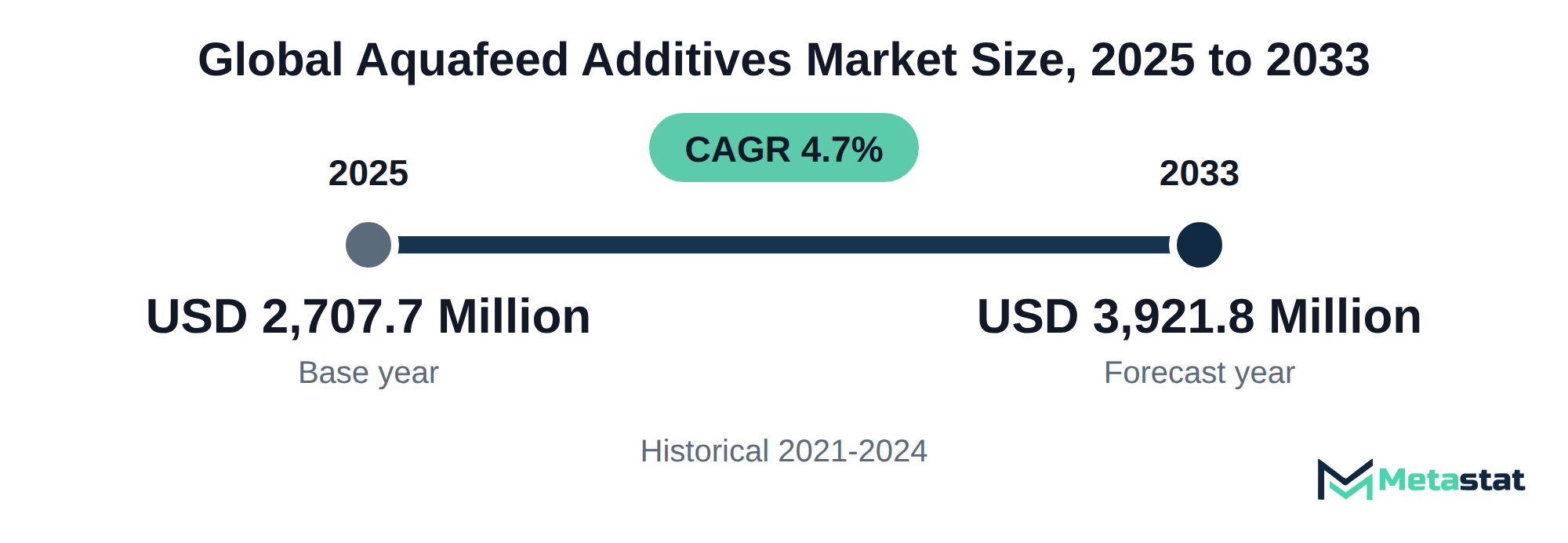
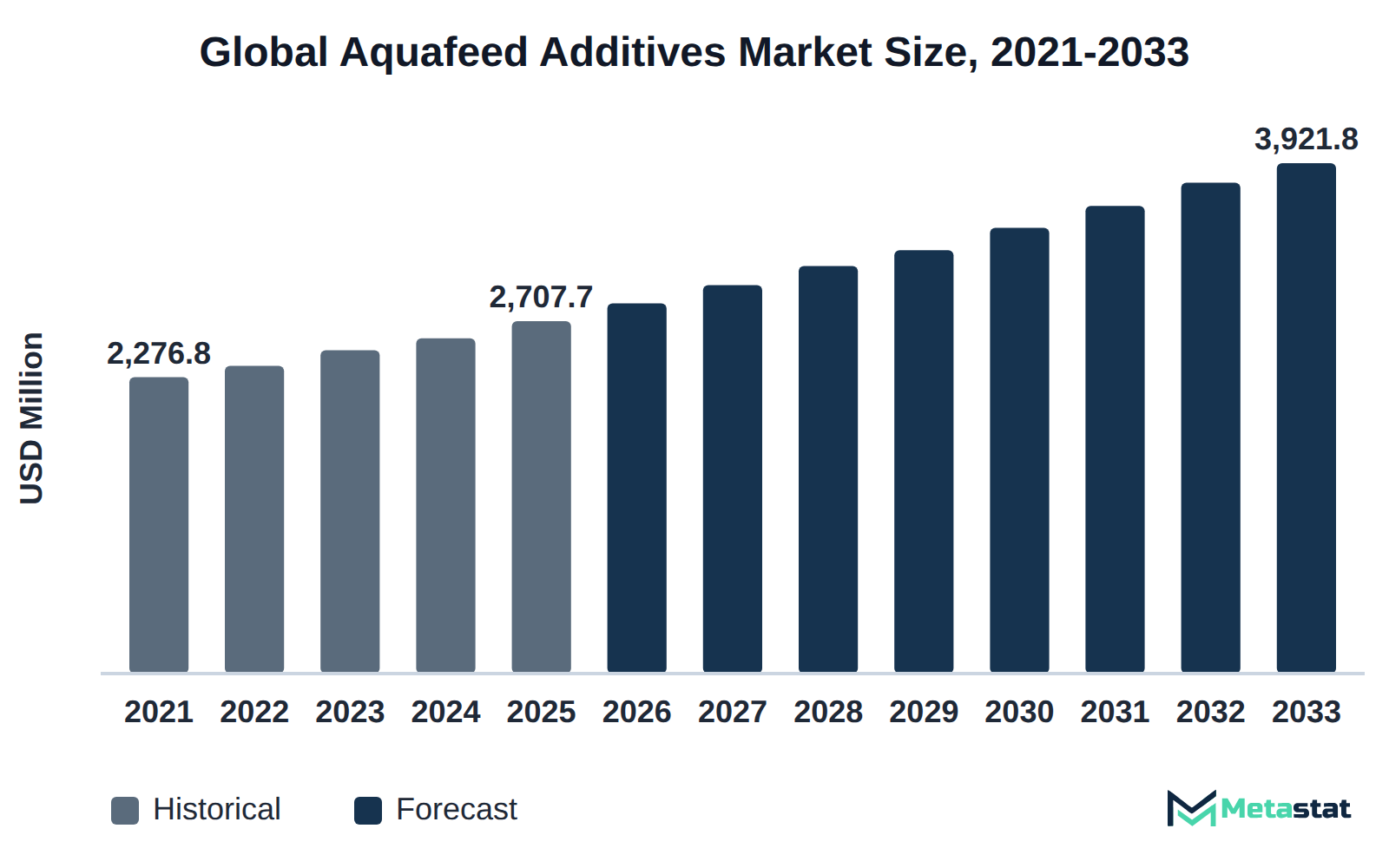
Market Valuation: Valued at $2,707.7 Million in 2025, projected to reach $3,921.8 Million by 2033 at a 4.7% CAGR.
Dominant Segment: Amino Acids lead the Aquafeed Additives market, driven by their essential role in enhancing the nutritional profile of feeds for fish and shrimp farming.
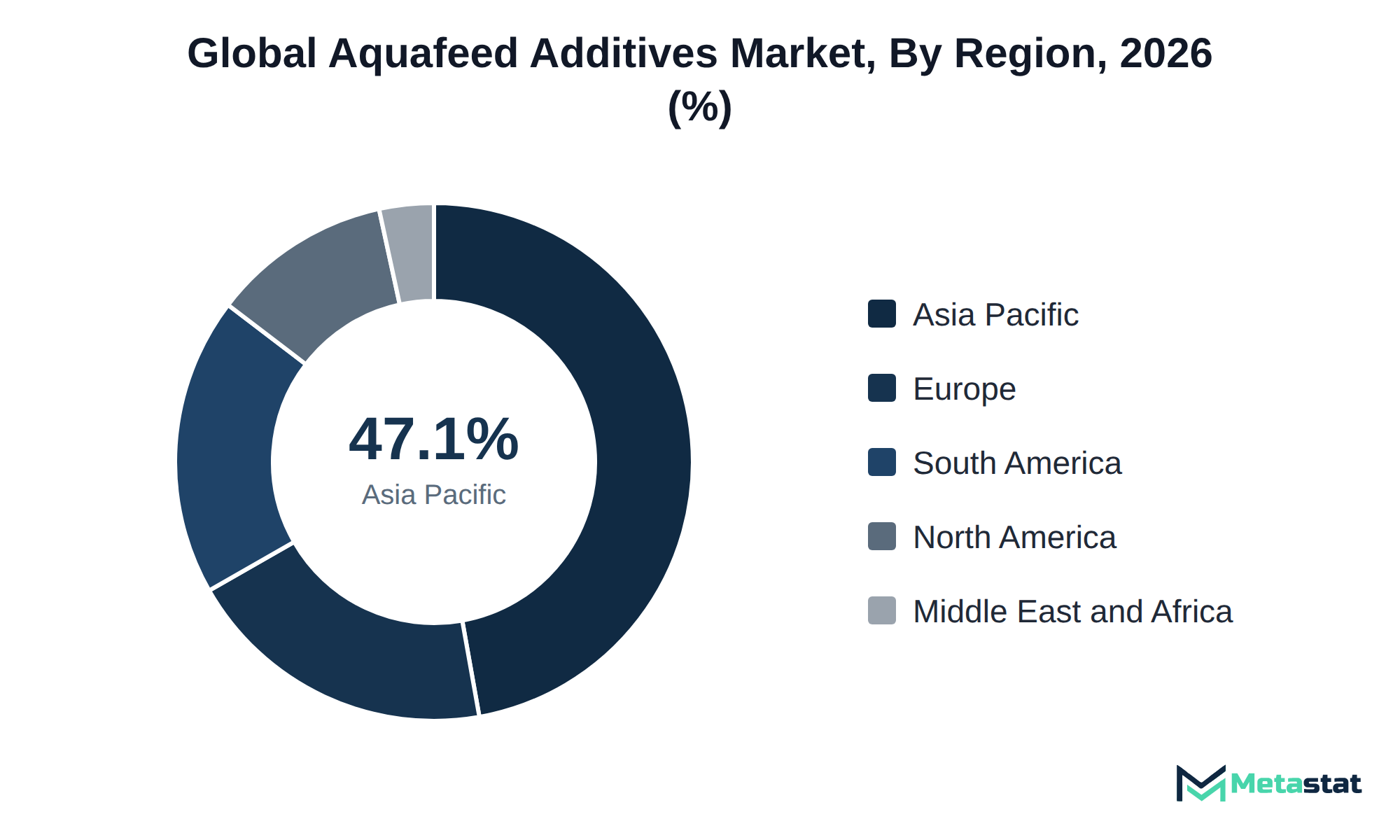
Geographic Lead: The Asia Pacific region dominates the market, accounting for 47.1% of the total share in 2025, primarily due to significant aquaculture activities in countries like China and India.
What's Inside: The report provides a comprehensive analysis of the Aquafeed Additives market, including competitive coverage, detailed segment breakdowns by additive type and farmed species, and forecasts through 2033.
Emerging Trends: The probiotics and prebiotics segment is projected to grow at a CAGR of 7.2%, reflecting a shift towards natural solutions in aquaculture that enhance gut health and feed efficiency.
Choose Your License
Global Aquafeed Additives Market
The global Aquafeed Additives market was valued at USD 2,707.7 million in 2025 and is projected to reach USD 3,921.8 million by 2033, growing at a CAGR of 4.7% over the forecast period.
The Aquafeed Additives market, a specialized part of the wider animal feed additives industry, encompasses a variety of products designed to enhance the nutritional value of aquaculture feeds. Buyers invest in these additives to improve the health and growth rates of farmed aquatic species, leading to higher yields and profitability. The market serves various segments, including amino acids, vitamins, and probiotics, which cater to the specific dietary requirements of different species. The emphasis on sustainable aquaculture practices drives the demand for these additives, with producers seeking to meet consumer expectations for quality and environmental responsibility.
Growth in the market is primarily fueled by increasing aquaculture production worldwide. The shrimp segment stands out with the highest value, reflecting its significance in global seafood markets. Asia Pacific dominates the market, accounting for 47.1% of the total share in 2025, driven by countries like China and India, which lead in aquaculture output. North America holds 11.2% of the market in 2025, with the US leading in 2026.
Probiotics and prebiotics represent a promising segment within the Aquafeed Additives market, expected to experience significant growth. As aquaculture practices evolve, producers recognize the benefits of these additives in enhancing fish health and feed efficiency. The continuous focus on innovation and product development within this segment reflects broader trends in aquaculture, where improving feed formulations helps meet rising consumer demands.
The growing emphasis on sustainable aquaculture practices drives investments in the Aquafeed Additives market. Buyers focus on enhancing feed efficiency and overall health of aquatic species, leading to improved growth rates and reduced environmental impacts. This investment matters most for aquaculture operations that must meet increasing global seafood demand while adhering to regulatory standards.
Among the various segments, feed amino acids represent the highest value within the market, supported by their essential role in fish and shrimp nutrition. The Asia Pacific region captures 47.1% of the market, reflecting the significant aquaculture activities concentrated in countries including China and India. A primary growth driver stems from the rising global consumption of seafood, which necessitates the integration of advanced nutrition solutions in aquaculture feeds.
The North America region accounts for 11.2% of the market in 2025, with the US leading in 2026. The demand for innovative and effective feed additives continues to rise, compelling producers to explore new formulations that enhance the health and performance of farmed species. This environment encourages competition and innovation, which supports overall market growth.
Resin acids and phytogenics emerge as significant components in the formulation of aquafeed additives. These ingredients contribute to the nutritional enhancement and overall health of farmed species. The adoption of phytogenics within the aquafeed additives market reflects a growing trend toward natural alternatives in aquaculture. Their use supports the improvement of feed efficiency and promotes gut health, which is essential for the optimal growth of aquatic species.
The segment of phytogenics is expected to grow with increasing demand for sustainable and environmentally friendly aquaculture practices. This shift aligns with the industry's focus on reducing reliance on synthetic additives. By incorporating phytogenics, producers enhance the palatability of feed while addressing the need for natural immune boosters. The expected growth of the market indicates that aquafeed manufacturers will prioritize these ingredients in their formulations.
Resin acids contribute to the preservation of feed quality and nutritional value over time. The ability to inhibit the growth of harmful bacteria and fungi further reinforces their role within aquafeed formulations. As the market continues to evolve, combining resin acids with phytogenics will drive innovation and help meet consumer demand for high-quality aquafeed additives.
Buyers of microencapsulated aquafeed additives consider multiple pricing strategies and contract models when making purchases. These additives, known for enhancing nutrient stability and bioavailability during pelleting and extrusion processes, often command premium prices due to their specialized formulation and benefits. The pricing for these additives typically ranges from USD 541.5 million to USD 682 million from 2026 to 2033, reflecting a compound annual growth rate of 3.3%. This valuation illustrates the market's increasing acceptance of advanced aquafeed solutions.
Contract models vary, with many suppliers offering long-term agreements that provide consistent pricing and supply assurances. These agreements benefit both parties, ensuring a steady demand for the additives while enabling suppliers to forecast production more accurately. Volume discounts frequently apply, incentivizing larger orders that drive down costs for buyers. The relationship between pricing strategies and contract models enhances market stability and encourages investment in innovative aquafeed solutions.
The adoption of microencapsulated additives significantly influences operational efficiencies, allowing aquaculture producers to optimize feed formulations. Increased emphasis on sustainability and performance drives buyers to seek reliable suppliers in the aquafeed additives market. Consequently, advanced pricing structures and contract negotiations underpin growth within the segment and support higher market engagement and sales.
The incorporation of probiotics and prebiotics in shrimp feed formulation enhances gut health and overall growth performance in aquaculture. Probiotics support the digestive system by promoting beneficial bacteria, which significantly improves nutrient absorption and feed efficiency. This practice addresses the increasing demand for sustainable aquaculture solutions that prioritize animal welfare and environmental impact.
Shrimp feed, a vital component in aquaculture, is expected to reach a value of USD 1,287.5 million by 2033, reflecting a compound annual growth rate (CAGR) of 6% from 2026 to 2033. This growth highlights the importance of functional feed additives, including probiotics and prebiotics, which enhance shrimp health and productivity.
While the aquafeed additives market evolves, the focus on probiotics and prebiotics is likely to drive innovation in formulations. Producers adopting these additives improve the resilience of shrimp against pathogens, ultimately leading to better yield and profitability. Advancements in this area position stakeholders to capitalize on the increasing consumer preference for sustainable seafood products.
Feed mills evaluate aquafeed additives for salmon and shrimp through a combination of performance metrics and ingredient efficacy. An essential factor in this evaluation process involves understanding the nutritional requirements specific to these species. Demand is increasing for high-quality additives that enhance feed formulation and overall aquaculture productivity.
Feed mills focus on additives that contribute to optimal growth rates, health, and feed conversion efficiency. Evaluating the efficacy of additives, including amino acids and probiotics, is central to this process. The aquafeed additives market has shown a notable CAGR of 4.7%, highlighting the importance of ingredient selection for improving profitability. By selecting the right formulations, feed mills enhance their product offerings, drive operational efficiency, and ultimately meet the demands of the growing market for aquafeed additives.
The growing global appetite for shrimp has heightened demand for aquafeed additives, particularly among producers focused on this segment. Shrimp farming operations have expanded significantly due to rising consumer preferences for seafood and health-conscious diets. This shift toward aquaculture, particularly in Asia Pacific, has fueled investments in additives that enhance growth performance and feed efficiency. The shrimp segment is projected to grow from USD 858.8 million in 2026 to USD 1,287.5 million by 2033, reflecting a compound annual growth rate of 6.0%. Buyers prioritize additives that support feed conversion ratios and overall shrimp health, driving volumes and influencing pricing strategies in the aquafeed additives market. Investment in innovative formulations is essential for producers aiming to meet the rising demand effectively.
Advancements in probiotic formulations significantly enhance the nutritional profile of aquafeed. These innovations focus on increasing the efficacy of live microorganisms in promoting gut health and improving feed conversion rates. Awareness of the advantages of probiotics grows, leading aquaculture producers to increasingly seek these additives, particularly for shrimp and other high-value species. Enhanced probiotic products improve fish health and reduce reliance on antibiotics, aligning with industry trends toward sustainable practices.
The Probiotics and Prebiotics segment within the Aquafeed Additives market is projected to experience significant growth, driven by rising demand for environmentally friendly and health-oriented aquaculture solutions. These innovations contribute to the market's expansion, drawing interest from producers seeking to optimize their feed formulations. Efforts to develop targeted probiotic strains further support the adoption of these additives, positioning them as a preferred choice for aquafeed manufacturers.
Price fluctuations in raw materials significantly influence purchasing behavior among aquafeed producers, especially in regions heavily reliant on imported additives. The volatility results in higher costs for manufacturers, leading to smaller order sizes and slower adoption of newer formulations. Producers face challenges when justifying investment in advanced aquafeed additives due to unpredictable pricing, which complicates long-term planning. Smaller aquaculture operations experience constraints in budget allocation, restricting access to premium additives that enhance feed efficiency and growth rates. Uncertainty in pricing undermines confidence in securing a return on investment, ultimately stalling growth and innovation within the market. Buyers prioritize cost-effective solutions over performance enhancements, hindering the overall development of the aquafeed additives market.
Rising input costs challenge suppliers within the Aquafeed Additives market, affecting profitability and product pricing strategies. Significant increases in raw material prices, driven by global supply chain disruptions, impact the ability to maintain competitive pricing. Suppliers respond to these challenges by seeking alternative sourcing strategies and negotiating contracts that ensure price stability. Optimization of production processes and investment in research and development for cost-effective formulations contribute to mitigating financial pressures. Suppliers focus on enhancing operational efficiencies, allowing them to absorb rising costs without passing them directly to buyers. These strategies position suppliers better within the market, ultimately influencing their ability to remain competitive while delivering high-quality products to aquaculture producers. Suppliers need adaptive strategies to sustain their market presence amid changing input costs and financial pressures.
The segment of probiotics and prebiotics indicates significant growth potential within the aquafeed additives market. An expected compound annual growth rate of 7.2% highlights the increasing acceptance of these additives among producers aiming to enhance feed efficacy. Probiotics contribute to the overall health and growth of farmed species, addressing rising consumer demands for sustainable aquaculture practices. The adoption of probiotics particularly benefits shrimp and salmonid species, where gut health is essential for optimizing growth rates and feed conversion ratios. Major players actively invest in research and development to enhance the effectiveness of probiotic formulations. This focus on improving aquaculture output aligns with the broader market trend of increasing the nutritional profile of feeds. Rising demand and ongoing innovation make the probiotics segment a key growth area within the aquafeed additives market, with implications for competitive positioning and future investments.
The Global Aquafeed Additives market is segmented based on Additive Type, Farmed Species, Additive Form, and Life Stage.
Amino Acids segment is valued at USD 541.5 million in 2026 and is projected to reach USD 682 million by 2033, at a CAGR of 3.3% during the forecast period. These additives enhance the nutritional profile of aquaculture feeds, serving primarily producers focusing on fish and shrimp farming. The segment's growth is driven by a heightened focus on optimizing feed efficiency and supporting animal health, which increases profitability for aquaculture enterprises. Unlike other additive categories, Amino Acids exhibit slower growth compared to Probiotics and Prebiotics, which achieve a CAGR of 7.2%. The market for Amino Acids relies on consistent demand from aquaculture producers, who prioritize amino acid supplementation to improve growth rates and overall health of aquatic species.
Vitamins segment is estimated to reach USD 370.2 million by 2033, at a CAGR of 3.3% during the forecast period. These additives enhance the overall health and growth of aquaculture species, with applications primarily in shrimp and salmonid farming. The growing focus on nutrition optimization among producers drives demand for vitamins, influencing feed formulations. This segment exhibits slower growth compared to others, including probiotics and prebiotics, which achieve a CAGR of 7.2%. The increasing regulatory emphasis on feed quality standards further increases the need for high-quality vitamins. The distinct role of this segment, characterized by its steady growth and essential contribution to aquaculture health, differentiates it from faster-growing segments that focus on innovative probiotic solutions. The market evolves, addressing the nutritional needs of various farmed species while adhering to stringent quality requirements.
Trace Minerals segment is expected to reach USD 378.5 million by 2033. This segment plays a critical role in enhancing the health and growth of aquaculture species. Trace minerals are incorporated into aquafeed formulations to improve overall feed efficiency and animal health, particularly among fish and shrimp producers. Rising awareness regarding the health benefits of trace minerals in aquaculture fuels demand for this segment. Significant growth potential exists as producers transition toward sustainable and nutrient-rich feed options, reflecting an increasing commitment to aquaculture health standards. In contrast to other additive types, Trace Minerals show a moderate growth trajectory, with a CAGR of 4.7%, outpacing Vitamins with a CAGR of 3.3%. This growth reflects a strong focus on nutrition among aquaculture farmers, positioning Trace Minerals as an essential component for enhanced aquafeed formulations and overall farm profitability.
Probiotics and prebiotics segment is projected to grow at a CAGR of 7.2% during the forecast period. These additives enhance gut health and improve feed efficiency in aquaculture species, particularly shrimp and salmon. Producers focused on sustainable practices increasingly adopt these additives to promote animal welfare and optimize growth performance. Rising consumer demand for healthy seafood drives the adoption of probiotics and prebiotics, influencing purchasing decisions. Compared to other additive types, this segment stands out with higher growth rates, reflecting a shift toward natural solutions in aquafeed formulations. Other segments, including amino acids and vitamins, exhibit lower CAGRs of 3.3%. The commitment to improving feed quality and the emphasis on health benefits significantly contribute to the segment's growth trajectory.
Organic acidifiers function as feed additives that enhance gut health and improve feed efficiency in aquaculture. These additives are primarily used by producers of various farmed species, including shrimp and salmonids, who aim to optimize growth and overall health of the livestock. Demand for organic acidifiers derives from the need for sustainable alternatives to antibiotics in aquafeed, promoting healthier aquatic animals and reducing the risk of antibiotic resistance. This segment distinguishes itself through its growing acceptance among farmers seeking natural solutions, resulting in potential faster growth compared to other additive types. The increasing focus on sustainability and rising awareness of the health benefits associated with organic acidifiers contribute significantly to the segment's expansion, aligning with broader trends in the aquafeed additives market.
Enzymes enhance feed efficiency and nutrient absorption in aquaculture. Producers of farmed species, including shrimp and salmonids, use enzymes to break down complex feed components, improving digestibility and overall growth performance. The increasing focus on sustainable aquaculture practices drives demand for enzyme applications, as they contribute to healthier aquatic environments and reduce waste. Compared to other segments within the additive type category, enzyme formulations exhibit higher growth potential, driven by advancements in technology and product development. This segment benefits from evolving consumer preferences for sustainable and high-quality aquaculture products, influencing purchasing decisions among feed manufacturers. Regulatory changes regarding environmental impact further support the adoption of enzymes in aquaculture, positioning this segment for significant growth in the coming years.
Phytogenics consist of natural plant-derived additives, including plant extracts, that enhance growth and health in aquatic species. These additives serve multiple functions, including improving gut health, boosting immunity, and enhancing overall feed efficiency. The aquaculture industry increasingly adopts phytogenics to comply with stringent regulations regarding antibiotic use and to meet consumer preferences for natural products. The primary buyers of phytogenics include aquaculture farms focused on sustainable practices and feed manufacturers seeking to differentiate their products. Rising demand for natural and organic additives drives this segment forward, with producers aiming to enhance the efficacy of their formulations. Compared to other additive types, phytogenics exhibit a more gradual growth trajectory, reflecting the ongoing research and development needed for diverse aquaculture applications. Expansion of this segment signals a significant trend toward more natural solutions within the broader Aquafeed Additives market.
Pigments are feed additives that enhance the appearance and marketability of aquaculture products. Producers apply pigments to improve the color of fish and shrimp, thereby increasing consumer appeal and market value. Demand for pigments is driven by the need for high-quality aquaculture products that meet consumer preferences for visual attributes. This segment distinguishes itself from others, including amino acids and vitamins, by focusing on aesthetic enhancement rather than nutritional composition. While other additives target growth and health, pigments primarily enhance product presentation, influencing purchasing decisions among buyers in the aquafeed additives market. The segment experiences competitive pressure due to the availability of substitute products and varying pricing strategies that impact adoption rates. The growing emphasis on product quality in the aquaculture sector further supports the relevance of pigments in the market.
Antioxidants and preservatives maintain the quality and safety of aquafeed. These additives prevent oxidative degradation of nutrients, enhancing the shelf life of feed products. Producers of aquaculture species, particularly those focused on shrimp and salmon farming, apply these additives to ensure optimal health and growth of aquatic organisms. Demand for antioxidants and preservatives is driven by stringent regulations regarding feed safety and quality, prompting suppliers to innovate to meet these standards. Unlike other additive types, this segment experiences steady growth, primarily due to rising consumer awareness of food safety and quality. The segment's focus on enhancing feed stability differentiates it from others, including probiotics and prebiotics, which target gut health and growth performance. Strong regulatory environments across various regions further emphasize the importance of this segment within the Aquafeed Additives market.
Palatability enhancers, pellet binders, emulsifiers, and mycotoxin binders serve specialized functions in aquaculture feed formulations. These additives improve feed acceptance and digestibility among aquatic species, particularly in environments where feed efficiency plays a critical role in production. Producers focus on these additives to optimize growth rates and minimize waste. A key driver for this segment involves an increasing emphasis on sustainable aquaculture practices, which highlight the importance of high-quality feed that supports animal health and performance. This segment faces more competition due to lower entry barriers compared to other additive types, affecting pricing dynamics. In contrast to more specialized additives, including amino acids and probiotics, this segment experiences varied growth rates based on evolving dietary requirements and consumer preferences for aquaculture products. The Aquafeed Additives market benefits from ongoing innovations in product formulations and applications aimed at enhancing overall farm productivity.
This segment primarily focuses on enhancing the growth and health of shrimp through various nutritional additives. Producers engaged in shrimp farming actively seek high-performance additives that improve feed efficiency and overall shrimp health. Demand for this segment is driven by rising global shrimp consumption, which has led to heightened interest in sustainable aquaculture practices. Compared to other farmed species, shrimp presents a faster growth trajectory, with a notable CAGR of 6%, indicating robust market potential. Innovations in aquafeed formulations tailored specifically for shrimp contribute to the segment's attractiveness for producers aiming to enhance yield and profitability, differentiating it from other segments that exhibit slower growth rates.
The Salmonids segment is estimated to reach USD 799.3 million by 2033, at a CAGR of 4.5% during the forecast period. Producers in the aquaculture industry apply additives for salmonid species to enhance growth rates, improve feed efficiency, and support overall health. The increasing focus on sustainable aquaculture practices has driven demand for high-quality feed additives tailored for salmonids. Regulatory pressures aimed at ensuring food safety and environmental sustainability influence the types of additives adopted, with producers seeking solutions that align with these standards. Compared to other segments, salmonids offer a steadier growth trajectory, reflecting consumer preferences for this popular fish species, while other segments experience more variability in demand and pricing. The differentiating characteristics of this segment illustrate its importance within the aquafeed additives market.
Carp segment is expected to reach USD 577.7 million by 2033. This segment serves primarily to enhance growth rates and health standards in carp farming, appealing to aquaculture producers focused on sustainable practices and optimal feed efficiency. A significant demand driver in this segment arises from rising consumer preference for fish protein, leading to increased production efforts to meet market needs. In comparison to other farmed species, this segment exhibits slower growth, with a projected CAGR of 4.3%, which contrasts with the faster-growing shrimp segment. Market dynamics for carp differ from shrimp and salmonids, with producers prioritizing cost-effective feed formulations and local sourcing methods to optimize profitability and sustainability within the market.
Valued at USD 512.1 million in 2026, the Tilapia segment is projected to grow at a CAGR of 4.3% during the forecast period. This segment focuses on supplying feed additives to producers of tilapia, a highly sought-after species in aquaculture due to its fast growth rate and adaptability. Demand for tilapia is driven by increasing consumer preferences for affordable and sustainable protein sources. Compared to shrimp, which has a higher growth rate of 6%, tilapia presents a slower growth trajectory. The sector faces challenges including fluctuating feed ingredient prices, which impact overall profitability. The strategic use of additives tailored for tilapia enhances feed efficiency and overall health, improving the quality of the final product. This positioning within the Aquafeed Additives market highlights the critical role of specialized formulations for tilapia cultivation.
Catfish represents an important farmed species with significant demand within aquaculture. This segment caters to various aquaculture producers focusing on raising catfish for both local and international markets. Growing consumer preference for catfish products drives demand, prompting producers to seek effective aquafeed additives to enhance growth and health. Factors including rising aquaculture standards and increasing awareness of nutrition in fish farming impact the segment's growth trajectory. Compared to other farmed species, catfish exhibits slower growth dynamics, reflecting differences in production practices and market conditions. This segment operates within a competitive landscape, where effective feed formulations play a crucial role in meeting specific nutritional requirements in aquaculture. The emphasis on quality and sustainability continues to shape the dynamics of the market.
Marine finfish excluding salmonids comprise a diverse group of species that require specialized feed formulations to support optimal growth and health. This segment caters mainly to aquaculture operations focusing on species including barramundi, seabass, and bream. Demand for additives in this category is driven by increasing consumer preferences for high-quality seafood products and sustainable aquaculture practices. Higher prices for marine finfish products compared to other farmed species reflect their premium status, encouraging investments in more effective feed solutions. Conditions in the wider fish market also influence these investment decisions. The segment's growth trajectory remains distinct and faces different challenges than shrimp or salmonid segments. For instance, the fish's specific nutritional requirements necessitate tailored formulations, which influence the overall feed cost structure in the market. An enhanced focus on sustainability and health benefits of feed additives further shapes this segment's dynamics.
This segment focuses on farmed species including eels, freshwater prawns, and mollusks. These species require specialized additives to enhance growth, improve health, and optimize feed conversion rates. Farmers of these aquatic species prioritize nutritional quality, leading to a demand for high-performance feed additives tailored to their specific needs. One driving force for this segment involves increasing consumer awareness regarding the quality of seafood and its nutritional benefits, pushing producers to adopt advanced aquafeed solutions. Compared to other segments including shrimp and salmonids, this segment experiences relatively slower growth, reflecting the niche market dynamics and specific nutritional requirements of these species. Farmers face unique challenges related to feed formulation and sourcing, especially for these less common species, which influences purchasing decisions and overall market engagement.
Valued at USD 1,984.6 million in 2026, this segment is projected to reach USD 2,607.2 million by 2033, at a CAGR of 4% during the forecast period. Conventional powders and granules are essential feed additives that enhance nutrient delivery and overall health in aquaculture species. Producers in this segment typically include manufacturers of aquafeed, who rely on these additives to improve feed efficiency and growth rates. Demand is driven by increasing focus on sustainable aquaculture practices and the need for high-quality feed solutions. Compared to other additive forms, conventional powders and granules offer a competitive price point while maintaining efficacy in delivering necessary nutrients to farmed species. This combination positions the segment favorably within the larger aquafeed additives market.
Liquids and Suspensions segment is estimated to reach USD 652.2 million by 2033, at a CAGR of 5% during the forecast period. This segment consists of liquid formulations that enhance nutrient absorption and feed efficiency within aquaculture. They find application in various farmed species, providing essential nutrients and promoting growth in aquatic animals. The demand for liquids and suspensions is driven by the increasing need for efficient feeding strategies to support rapid growth in aquaculture operations. Compared to other additive forms, including conventional powders and granules, this segment experiences a distinct growth trajectory, influenced by the convenience and effectiveness of liquid formulations. Liquids and suspensions cater to a diverse range of fish and shellfish species, attracting a varied customer base in the market, including aquaculture producers seeking to optimize their feed formulations.
Encapsulated Powders and Granules segment is expected to reach USD 662.4 million by 2033. This segment includes additives that provide stability and controlled release of nutrients in aquaculture feeds. Manufacturers frequently apply encapsulated forms to enhance the bioavailability of essential nutrients for farmed species, particularly in the hatchery and nursery stages. Increasing consumer awareness regarding the nutritional quality of aquaculture products drives demand for these additives, resulting in an estimated CAGR of 5.7% during the forecast period. Compared to other additive forms, encapsulated powders and granules attract higher price points due to their advanced formulation techniques. This differentiates them from conventional powders and granules, which are expected to reach USD 2,607.2 million by 2033 with a CAGR of 4%. The growing importance of nutritional efficiency in aquaculture contributes significantly to the expansion of this segment, positioning it favorably in the market.
The Hatchery and Nursery segment is valued at USD 512.1 million in 2026 and is projected to reach USD 757.3 million by 2033, at a CAGR of 5.7% during the forecast period. This segment supports early-stage fish and shrimp development, catering to aquaculture operations focused on producing healthy juveniles. Increasing demand for high-quality aquaculture products fuels growth, with farmers prioritizing the health and survival rates of their stock. Demand is driven by advancements in nutritional formulations that enhance growth and immune responses in hatchery environments. Compared to other segments, this sub-segment exhibits a faster growth trajectory, reflecting a growing emphasis on quality over quantity in aquaculture practices. The Hatchery and Nursery segment has a specialized focus, differing from broader categories that encompass various life stages and species.
Grow-out and Finishing segment is estimated to reach USD 3,063.7 million by 2033, at a CAGR of 4.4% during the forecast period. This segment is crucial for the final growth stages of farmed aquatic species, primarily used by aquaculture producers focusing on optimizing feed efficiency and enhancing weight gain. Demand for this segment is driven by increasing seafood consumption globally, with a notable shift toward healthier protein sources. Compared to other life stage segments, including Hatchery and Nursery, this segment experiences a slower growth rate, attributed to its established role in the production cycle and reliance on existing feed formulations. Its pricing dynamics differ, with costs typically reflecting the premium ingredients required to ensure optimal growth and health in mature aquatic species. The market continues to evolve with innovations, further emphasizing the significance of the Grow-out and Finishing segment.
Broodstock segment is expected to reach USD 100.8 million by 2033. This segment focuses on the breeding stock of aquatic species, critical for sustaining aquaculture operations. Producers apply specialized additives for broodstock to enhance vitality and reproductive performance, ensuring higher yields in subsequent life stages. Demand for broodstock additives is driven by increasing global consumption of seafood, necessitating efficient breeding practices. Compared to other segments, including Grow-out and Finishing, which is projected to reach USD 3,063.7 million by 2033 at a CAGR of 4.4%, the Broodstock segment experiences a distinct growth trajectory influenced by the specific needs of breeders. The market adapts to innovations in additive formulations and breeding techniques, supporting growth in the aquafeed additives market.
Based on geography, the Global Aquafeed Additives market is divided into North America, Europe, Asia-Pacific, South America, Middle East, and Africa.
Demand within the aquafeed additives market in North America stems primarily from increasing aquaculture production in the region. The focus on sustainability and efficient feed formulations drives significant investment in aquafeed additives. Regulatory frameworks in the United States and Canada emphasize the importance of high-quality feed to promote healthy fish stock and sustainable farming practices. By the end of 2033, North America is projected to reach USD 417.3 million. This market growth reflects an increased emphasis on innovation and research in feed formulations that align with environmental standards. The primary countries driving this growth include the United States, Canada, and Mexico, each contributing uniquely to regional demand for aquafeed additives.
Europe represents a significant market for aquafeed additives, accounting for 19.5% of the global share in 2025. Strong demand originates from countries including Germany, France, and the UK, where a robust aquaculture industry drives the necessity for high-quality feed formulations. The emphasis on sustainability and regulatory frameworks in Europe influences the adoption of specific additives that enhance feed efficiency and animal health. Countries like Spain and Italy have developed advanced aquaculture practices, enhancing their competitiveness in the market. Innovations in feed technology contribute to improved growth rates and nutrition, aligning with consumer preferences for sustainably sourced seafood products. The market reflects a growing trend toward specialized additives that support the health and growth of various farmed species.
Asia-Pacific accounted for 47.1% of the global market for Aquafeed Additives in 2025. Countries within this region, particularly China, Japan, India, South Korea, and Australia, drive high demand due to robust aquaculture practices and increasing consumption of seafood. The expanding shrimp farming sector significantly contributes to market growth, driven by advancements in feed technology and nutritional research. Favorable government policies aimed at promoting sustainable aquaculture practices enhance investment in this sector. The combination of growing population and rising disposable income further enhances the demand for aquafeed products. Probiotics and prebiotics are emerging as key components in feed formulations, addressing health and growth challenges in aquaculture. The expected growth in the market reinforces Asia-Pacific's position as a leader in Aquafeed Additives.
South America accounts for 18.6% of the global market in 2025, driven by the growing aquaculture sector in Brazil and Argentina. The shrimp segment holds significant potential, with demand expected to increase, reflecting the region's focus on sustainable aquaculture practices. Infrastructure improvements, including enhanced feed distribution networks, support the efficient delivery of aquafeed additives, contributing to market growth. The presence of local manufacturers allows for tailored solutions that meet the specific needs of regional producers, promoting adoption in the market. Regulations encouraging responsible aquaculture practices further drive demand for innovative additives, positioning the region for continued growth in the coming years.
In the Middle East and Africa, aquaculture development drives demand for the aquafeed additives market. Countries including Saudi Arabia and the UAE have invested heavily in expanding their aquaculture practices, particularly in shrimp and fish farming. South Africa significantly influences regional aquaculture, with initiatives aimed at enhancing fish production. The region's share of the global market is projected at 3.4% in 2025, reflecting the potential for continued growth in aquafeed additives. The need for improved feed formulations, driven by rising production levels, supports demand for specialized additives tailored for local species. Regulatory frameworks focusing on sustainable aquaculture practices further influence market dynamics in this region.
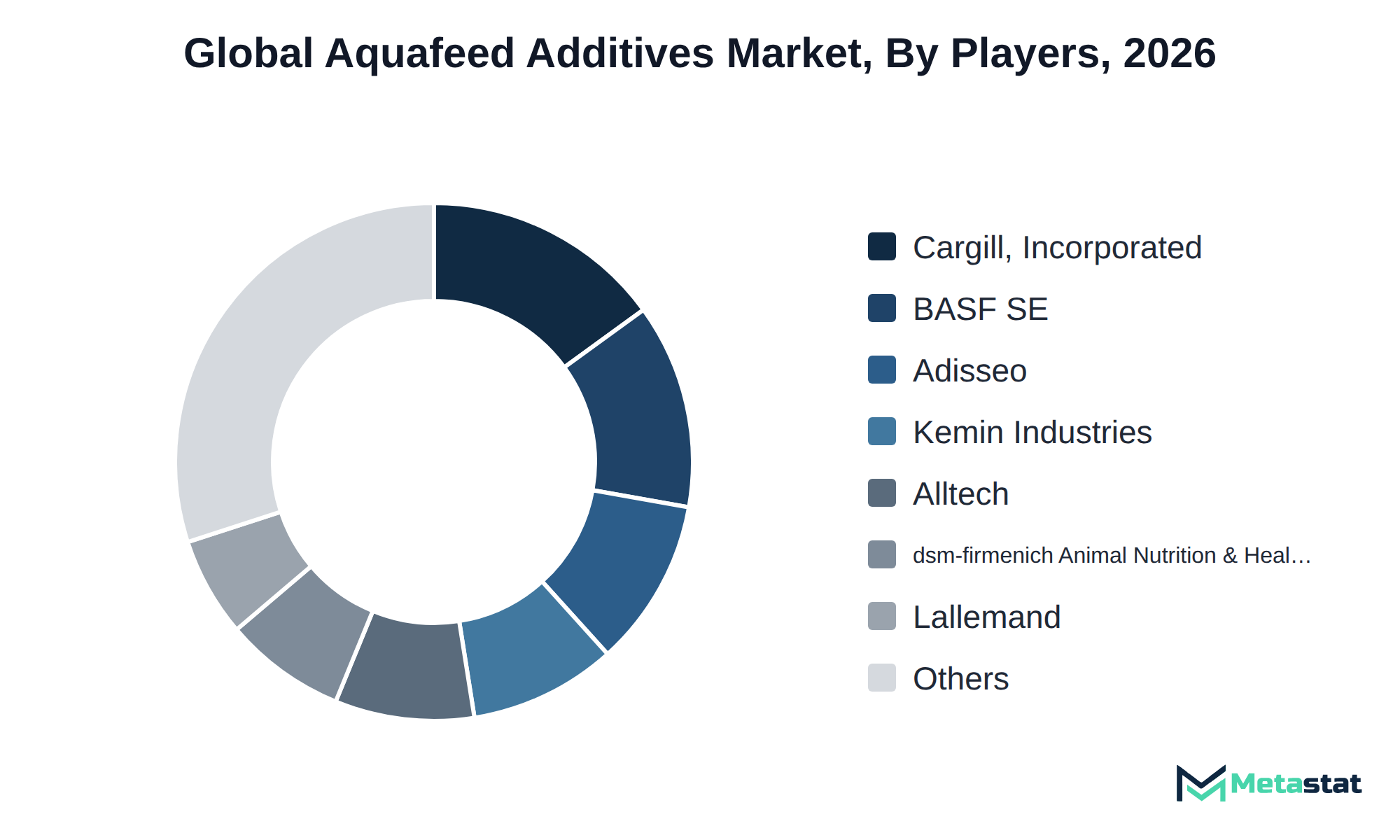
Competition in the Aquafeed Additives market involves a multitude of strategies, focusing on various product attributes and customer demands. Buyers evaluate options based on factors including price, certification, customization, and service quality, influencing their choices in the selection process.
Key players include Adisseo and Kemin Industries, Inc., both emphasizing their comprehensive product offerings and strong customer service. Lallemand Inc. and dsm-firmenich Animal Nutrition & Health prioritize innovation in product formulations, catering to specific nutritional requirements of different aquaculture species. In contrast, companies like Cargill, Incorporated and Alltech, Inc. leverage extensive distribution networks, ensuring broad market reach and support for clients.
In the Aquafeed Additives market, product differentiation remains crucial, with firms developing specialized additives tailored for various farmed species. For instance, BASF SE and Evonik Industries AG focus on advanced nutritional solutions, appealing to buyers aiming for enhanced growth rates in aquaculture. Companies including INVE Aquaculture and Phibro Animal Health Corporation provide targeted additives that optimize feed efficiency, further attracting aquaculture businesses seeking to improve operational effectiveness.
This growth relies on several key developments, including an increase in the adoption of probiotics and prebiotics, which is anticipated to see a CAGR of 7.2%. This trend is particularly pronounced within the shrimp farming segment, where nutritional enhancements contribute to improved feed efficiency and growth rates. Amino acids are projected to grow from USD 541.5 million in 2026 to USD 682 million by 2033 at a CAGR of 3.3%. This expansion reflects consistent demand for high-quality aquafeeds across various species, including salmonids and tilapia.
Risks exist that could hinder growth. Supply chain disruptions and rising raw material costs pose challenges to producers, leading to potential delays in product availability. The European region, with a significant market share of 19.5%, could face stricter regulatory requirements that further impact operational costs. Overall, the Aquafeed Additives market shows strong growth potential, driven by ongoing innovations and expanding applications in aquaculture.
By Additive Type: Amino Acids, Vitamins, Trace Minerals, Probiotics and Prebiotics, Organic Acidifiers, Enzymes, Phytogenics, Pigments, Antioxidants and Preservatives, Others (Palatability Enhancers, Pellet Binders, Emulsifiers, Mycotoxin Binders)
By Farmed Species: Shrimp, Salmonids, Carp, Tilapia, Catfish, Marine Finfish Excluding Salmonids, Others (Eels, Freshwater Prawns, Mollusks)
By Additive Form: Conventional Powders and Granules, Liquids and Suspensions, Encapsulated Powders and Granules
By Life Stage: Hatchery and Nursery, Grow-out and Finishing, Broodstock
The report strategically identifies and profiles the key market players and analyses their core competencies in each sub-segment of the Aquafeed Additives market.
Report Attributes | Details |
Study Period | 2021-2033 |
Base Year | 2025 |
Estimated Year | 2026 |
Forecast Period | 2026-2033 |
Historical Period | 2021-2025 |
Growth Rate | CAGR 4.7% from 2026 to 2033 |
Revenue Unit | USD million |
Segmentation | By Additive Type, Farmed Species, Additive Form, Life Stage, and Region |
By Region | North America (By Additive Type, Farmed Species, Additive Form, Life Stage, and Country)
|
Europe (By Additive Type, Farmed Species, Additive Form, Life Stage, and Country)
| |
Asia Pacific (By Additive Type, Farmed Species, Additive Form, Life Stage, and Country)
| |
South America (By Additive Type, Farmed Species, Additive Form, Life Stage, and Country)
| |
Middle East and Africa (By Additive Type, Farmed Species, Additive Form, Life Stage, and Country)
|
Find answers to common questions about this report
The Aquafeed Additives market size was valued at USD 2,707.7 million in 2025.
The market is projected to grow at a CAGR of 4.7% during the forecast period from 2026 to 2033.
The North America Aquafeed Additives market size is estimated to reach USD 417.3 million by 2033.
The leading segment in the Aquafeed Additives market is Conventional Powders and Granules, with a projected value of USD 2,607.2 million by 2033. This segment surpasses others in terms of market share and revenue potential.
The increasing global appetite for shrimp has heightened demand for aquafeed additives, particularly among producers focused on this segment. Advancements in probiotic formulations significantly enhance the nutritional profile of aquafeed, driving interest from aquaculture producers seeking to optimize their feed formulations.
Price fluctuations in raw materials significantly influence purchasing behavior among producers, leading to challenges in justifying investments in advanced additives. Rising input costs affect profitability and product pricing strategies, complicating long-term planning and hindering overall market development.
The rising demand for probiotics and prebiotics within the aquafeed additives market reflects a shift toward sustainable aquaculture practices. Innovations that enhance feed efficacy and improve gut health are driving adoption, particularly among producers focusing on shrimp and salmonid species.
The Aquafeed Additives market is estimated to reach a valuation of USD 3,921.8 million by 2033.
Key players operating in the Aquafeed Additives market include Adisseo, Kemin Industries, Inc., Lallemand Inc., dsm-firmenich Animal Nutrition & Health, Alltech, Inc., BASF SE, and Cargill, Incorporated.
The Probiotics and Prebiotics segment is projected to grow at a compound annual growth rate of 7.2 percent.
The analysts below cover Food and Beverages research at Metastat Insights.
LEAD ANALYST
Utkarsh Khirodkar is a Lead Market Research Analyst at MetaStat Insight, specializing in market intelligence, technology sector assessments, and competitive strategy.

LEAD PRINCIPAL ANALYST, PHARMA AND HEALTHCARE
Food and Beverages · Healthcare · Healthcare IT · Medical Devices
Ajay Devgire is the Lead Healthcare Analyst at MetaStat Insight, leading strategic research and market intelligence initiatives across the global healthcare domain.

SENIOR RESEARCH ANALYST
Biotechnology · Food and Beverages · Medical Devices · Packaging
Snehal Pasalkar is a Research Analyst at MetaStat Insight, operating at the intersection of life sciences research, competitive strategy, and market intelligence.
Evaluating calorific value requirements and air permit compliance across municipal waste facilities requires localized data. Metastat Insight structured their analysis around operational throughput capacity and feedstock composition variations in Latin America and Eastern Europe. Their competitive mapping of sorting equipment vendors helped clarify technology differences between optical separators and heavy media systems. The study provided an objective baseline during our capital expenditure reviews.
Decarbonizing industrial thermal processes hinges on refrigerant regulations and compressor efficiency limits. Metastat Insights delivered a thorough market analysis that evaluated natural refrigerants like CO2 and hydrocarbons against synthetic low-GWP alternatives. The breakdown of utility incentives and grid capacity constraints across key European manufacturing hubs offered valuable perspective. The follow-up conversation with their sector analysts addressed our specific questions on mechanical vapor recompression systems efficiently.
Assessing 200mm wafer transition schedules and substrate supply bottlenecks requires precise technical intelligence. MetaStat Insight supplied an actionable breakdown comparing planar and trench MOSFET architectures across automotive and industrial drive markets. The regional capacity estimates for Asia-Pacific foundries helped clarify lead-time uncertainties during our strategic planning session. When we needed additional clarification on high-purity raw material sourcing, their analyst team responded with helpful context within twenty-four hours.
Explore related market intelligence reports worth reading alongside this one.