
LEAD ANALYST
Utkarsh Khirodkar is a Lead Market Research Analyst at MetaStat Insight, specializing in market intelligence, technology sector assessments, and competitive strategy.

Global Feed Amino Acids Market Size, Share, By Type (Lysine, Methionine, Threonine, Tryptophan, Valine, Isoleucine, Arginine, Histidine, and Others), By Livestock (Poultry, Swine, Ruminants, Aquaculture, and Others), By Physical Form (Dry and Liquid), By Production Method (Fermentation-Based, Chemical Synthesis-Based, and Protein Hydrolysis-Based), Industry Analysis, Growth, Trends, and Forecast, 2026-2033
Report ID
MSI-4958
Published
August, 2026
Pages
295 Pages
Format
Historical
Base year
Forecast
Forecast period
Report Details
Choose Your License
Global Feed Amino Acids Market
The global Feed Amino Acids market was valued at USD 6.3 billion in 2025 and is projected to reach USD 7.7 billion by 2033, growing at a CAGR of 2.6% over the forecast period.
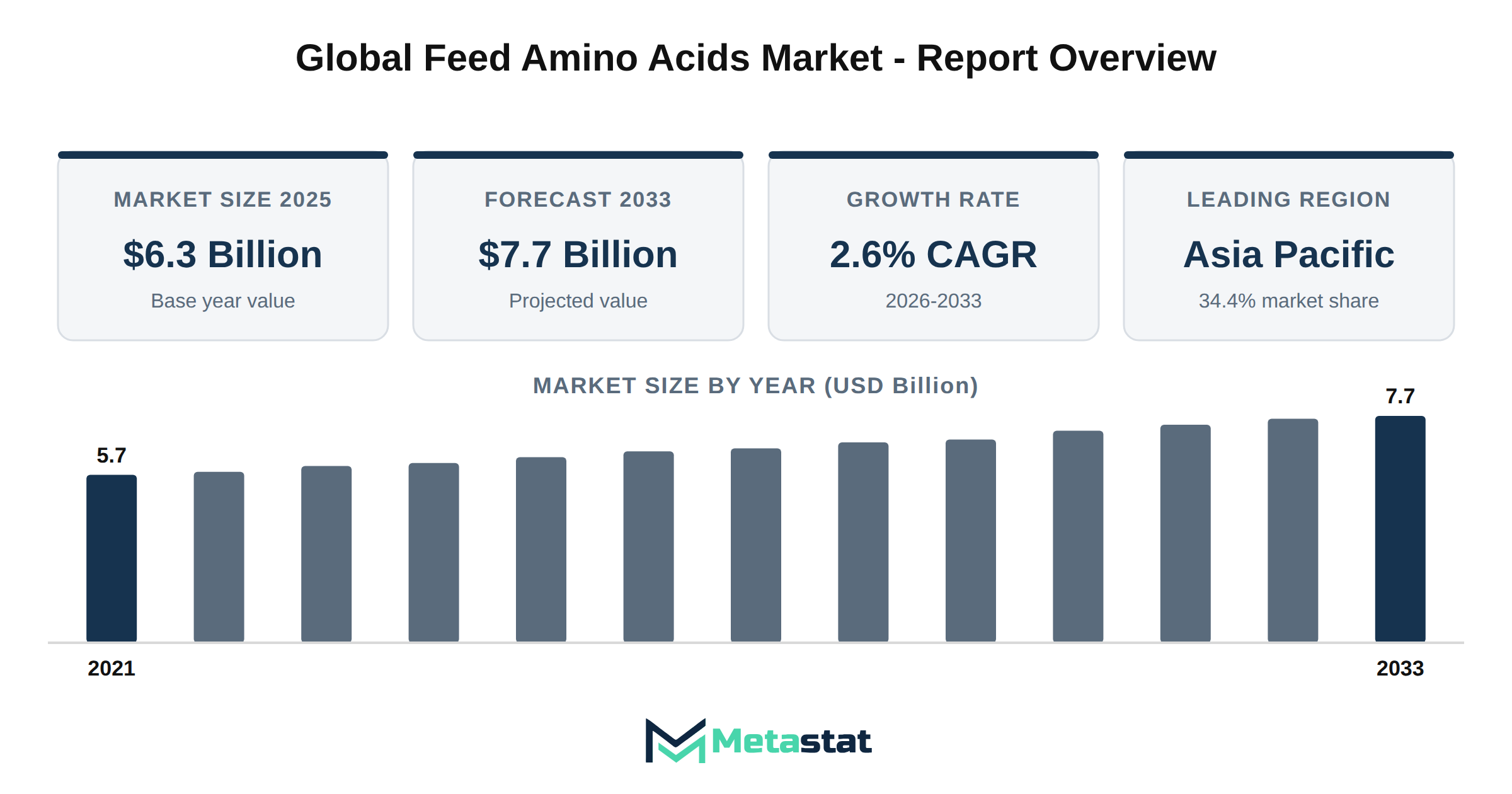
The Feed Amino Acids market was valued at USD 6.3 billion in 2025, reflecting a steady growth trajectory from USD 5.7 billion in 2021. By 2026, the market is expected to reach USD 6.5 billion, with further expansion projected to USD 7.7 billion by 2033, achieving a compound annual growth rate (CAGR) of 2.6% during the forecast period.
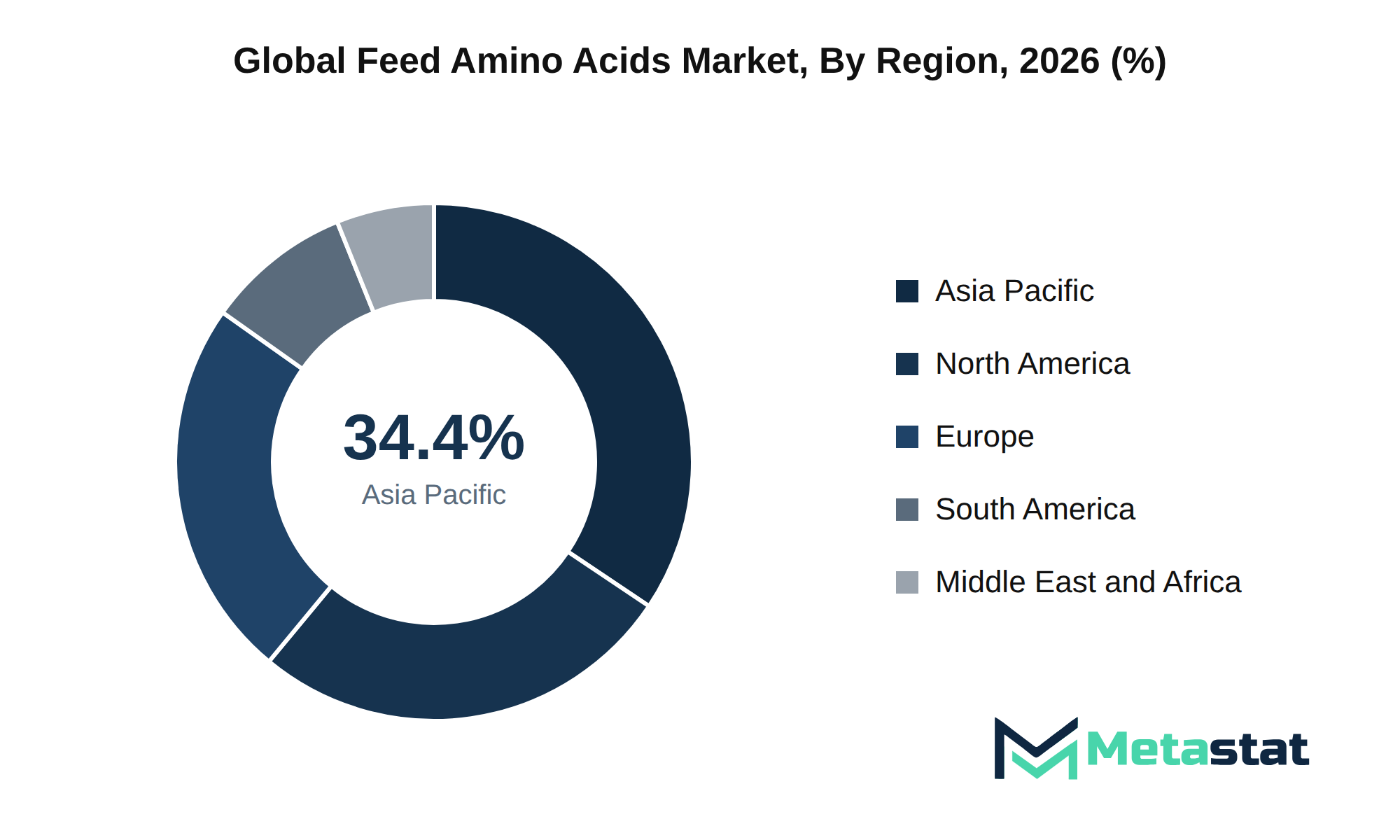
Regional distribution indicates that Asia Pacific holds the largest market share at 34.4%, followed by North America at 26.6% and Europe at 23.8%. With a value of USD 1.8 billion anticipated in North America by 2033, this region reflects a consistent CAGR of 2.6%. South America and the Middle East and Africa contribute smaller shares, at 9.1% and 6.1% respectively.
In terms of product types, lysine remains a significant segment, projected to grow from USD 2.6 billion in 2026 to USD 2.9 billion by 2033, representing a CAGR of 1.7%. Methionine follows with expectations to reach USD 2.1 billion by 2033, achieving a CAGR of 2.2%. Other types, including threonine and tryptophan, contribute to the market dynamics, with tryptophan experiencing the highest growth rate at 4.7%.
The livestock sector, particularly poultry, significantly drives market demand, with projected growth from USD 2.7 billion in 2026 to USD 3 billion by 2033, marking a CAGR of 1.8%. Swine and aquaculture segments exhibit significant growth potential, with aquaculture reflecting the highest CAGR at 5.4%. The market continues to evolve, influenced by regulatory compliance, sustainability efforts, and innovation in production methods. The livestock sector remains a primary driver of demand, enhancing overall market performance.
The Feed Amino Acids market experiences significant influences from regulatory compliance, standards, and geopolitical risks. These factors shape operational strategies among key players, compelling them to adapt to varying compliance requirements across different regions. The evolving regulatory landscape impacts product formulations and sourcing strategies, necessitating robust risk management frameworks to mitigate potential disruptions.
Disruption within the market often arises from shifts in consumer preferences towards sustainable and ethical sourcing of feed ingredients. Shifts in consumer preferences drive research and development trajectories focused on next-generation innovations that enhance the nutritional profiles of amino acids. Such innovations create growth opportunities, enabling companies to address the increasing demand for high-quality livestock feeds.
Sustainable transformation within the Feed Amino Acids market aligns with decarbonization initiatives and circular economy dynamics. Companies invest in technologies that reduce environmental footprints while improving efficiency in production processes. This commitment to sustainability aligns with environmentally conscious consumers and enhances competitive positioning in the market.
The supply chain landscape remains critical, with logistics architecture evolving to optimize efficiency and responsiveness. Strategic sourcing decisions influence procurement processes, impacting cost structures and product availability. Companies enhance their operational resilience by diversifying their supply chains, thereby mitigating risks associated with geopolitical tensions and market fragmentation.
Future strategic outlooks for the Feed Amino Acids market emphasize the importance of capital allocation towards infrastructure investments. Firms focus on upgrading production capabilities and expanding distribution networks to meet rising demand. Economic factors, including inflationary pressures and currency volatility, influence investment strategies, compelling companies to adopt agile approaches to navigate fluctuations in raw material costs.
Corporate imperatives prioritize high-value recommendations that align with market dynamics and consumer expectations. Firms that effectively leverage insights on consumer trends and regulatory requirements position themselves for sustained growth. Ongoing adaptation to market conditions ensures a competitive edge in the evolving landscape of the Feed Amino Acids market.
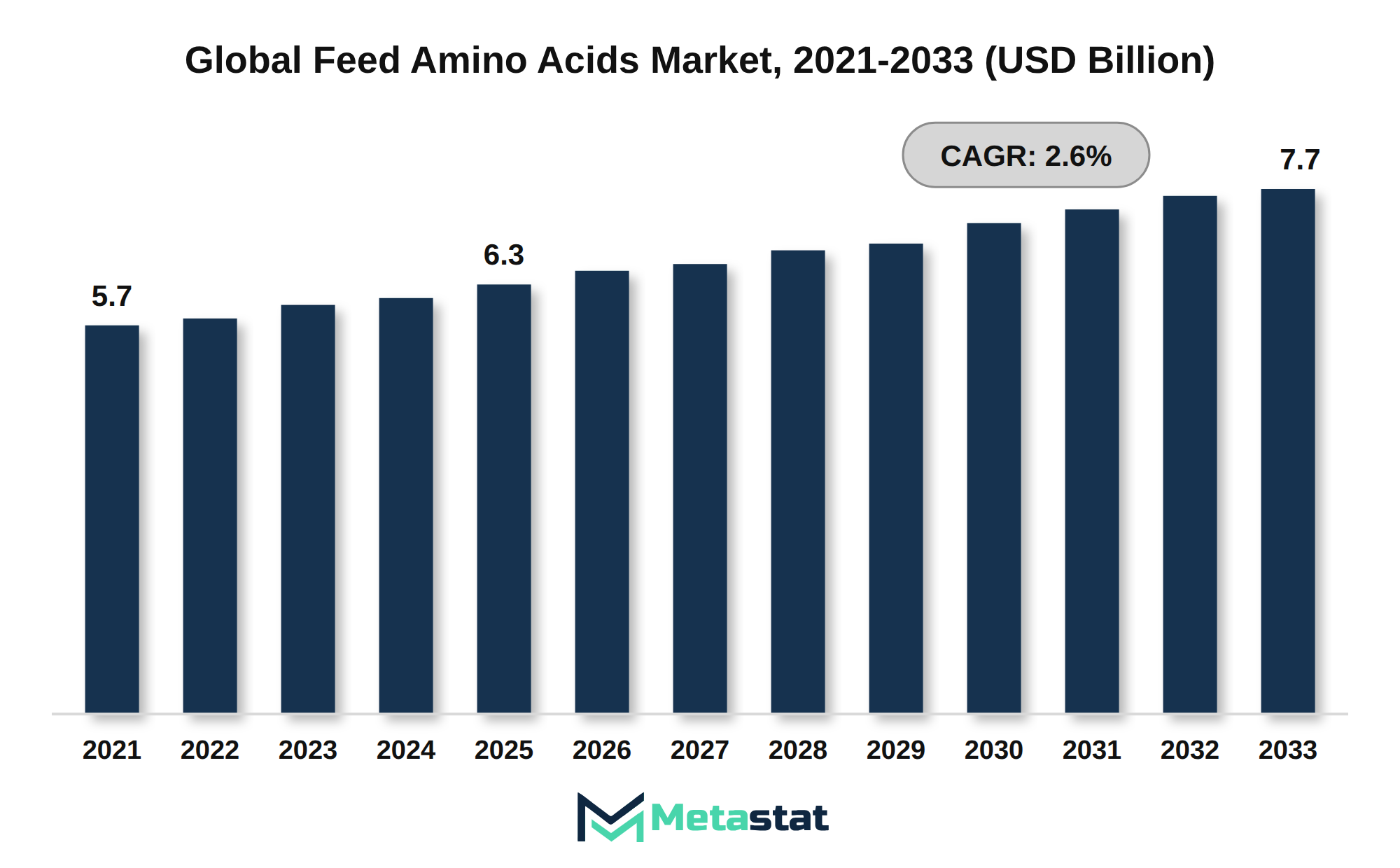
The Feed Amino Acids market benefits from the rising focus on enhancing livestock feed efficiency. Global demand for protein-rich food drives livestock producers to optimize feed formulations, ensuring that animals receive the necessary nutrients for growth and productivity. This optimization contributes to improved feed conversion ratios, reducing overall feed costs for producers while maximizing output.
In regions with growing populations and rising disposable incomes, demand for animal protein fuels investments in livestock production. Producers actively seek feed additives, including amino acids, to improve growth rates and overall health in poultry, swine, and ruminants. The incorporation of amino acids is crucial in diet formulations, driven by their significant role in supporting various metabolic functions and enhancing immune responses.
The shift towards sustainable and efficient livestock practices aligns with broader trends in the Feed Amino Acids market. Increasing consumer awareness regarding food quality and safety influences producers to adopt advanced feed solutions. Investments in research and development of novel amino acid products continue to rise, highlighting the commitment to improving livestock productivity while addressing sustainability challenges faced by the industry.
The Feed Amino Acids market experiences growth driven by advancements in technological integration. Automation and artificial intelligence streamline production processes, enhancing efficiency and reducing operational costs. These technologies contribute to improved yield and consistency in amino acid production, supporting market expansion.
The adoption of sophisticated software solutions enables manufacturers to digitize legacy processes. This transition results in optimized supply chains and enhanced data analytics capabilities, facilitating better decision-making and responsiveness to market demands. Companies leveraging digital transformation achieve greater competitiveness within the Feed Amino Acids market.
Investments in innovative production methods, including fermentation-based and chemical synthesis approaches, reflect the dedication of industry players to enhance product quality and sustainability. The integration of advanced technologies aligns with consumer trends for higher-quality livestock feed, driving demand across various segments in the market.
Ongoing technological integration creates a robust environment for growth and investment in the Feed Amino Acids market. Enhanced productivity, efficiency, and quality align with evolving consumer preferences, positioning the market favorably for long-term expansion.
Increasing regulatory compliance challenges significantly hinder the Feed Amino Acids market. Stringent regulations regarding food safety and quality control create barriers for producers, complicating the approval processes for new products and limiting market access. These compliance hurdles result in extended timelines and higher costs associated with product development and market entry. Consequently, smaller manufacturers struggle to compete, leading to market fragmentation.
Macroeconomic headwinds, including inflationary pressures, contribute to rising operational costs, affecting profit margins across the market. Manufacturers face higher prices for raw materials and labor, which restrict investments in capacity expansion or innovation. This economic landscape creates challenges for maintaining competitiveness and slows overall market growth.
Supply chain disruptions further complicate the market, impacting the availability of critical ingredients and materials needed for production. Geopolitical instability exacerbates these issues, leading to unpredictability in sourcing and resulting in delays that affect market supply. These factors create additional obstacles for stakeholders aiming to meet growing demand in the Feed Amino Acids market.
The Feed Amino Acids market faces significant challenges stemming from geopolitical fragmentation and trade tensions worldwide. Trade deficits and tariff friction disrupt supply chains, leading to increased costs and erratic pricing for amino acids. Countries implementing protective trade measures create uncertainty for producers and buyers, complicating planning and investment strategies.
Technological disruptions and complex research and development integrations further challenge market players. The need for interoperability across diverse systems hinders collaboration among stakeholders, affecting innovation timelines. Market participants that struggle with these integrations encounter delays and increased expenditures, impacting competitive positioning.
Volatility in feedstock and component prices adds another layer of complexity. Fluctuations in raw material availability lead to unpredictable production costs. This uncertainty pressures profit margins, prompting companies to explore alternative sourcing strategies, which do not always yield favorable outcomes.
Logistical disruptions exacerbate these issues, with transportation challenges and supply chain instability affecting timely deliveries. Companies experience heightened operational costs due to delays, which detract from overall market efficiency. Tightening global regulatory standards introduce compliance overhead that diverts resources from core business functions.
Workforce skill gaps and talent retention pressures pose additional risks to the market. A shortage of qualified professionals in production and R&D roles impedes growth, limiting the ability to innovate and adapt to evolving market demands. Addressing these gaps requires significant investment in training and development initiatives.
Environmental lifecycle footprints and sustainability demands compel players to reconsider operational practices. Companies that fail to meet decarbonization mandates face reputational damage and potential legal liabilities. Consequently, the market adapts swiftly to maintain competitiveness while complying with increasing environmental expectations.
Shifts in consumer preferences towards sustainable and eco-friendly products create substantial opportunities in the Feed Amino Acids market. The growing awareness of environmental impacts encourages livestock producers to seek amino acids that align with sustainability imperatives and green transformations. These trends drive demand for innovative formulations that reduce the environmental footprint of animal husbandry.
Technological disruptions significantly influence product development, allowing for enhanced nutrient profiles and optimized production methods. Digital transformation in procurement and purchasing processes streamlines access to feed amino acids, facilitating more efficient supply chain management. Adoption of digital platforms enhances transparency and supports strategic sourcing decisions, improving operational efficiencies.
Geographical expansion into emerging markets offers additional growth potential. Regions with increasing livestock production, including Asia Pacific and South America, present favorable conditions for market penetration. Supply chain localization and import substitution frameworks further support the growth of domestic production capabilities, increasing resilience against global supply chain disruptions.
Strategic consolidation among suppliers strengthens competitive positions, enabling firms to leverage synergies and enhance their product offerings. Mergers and acquisitions within the sector drive innovation, allowing companies to integrate next-generation solutions that meet evolving market demands. The Feed Amino Acids market benefits from these transformations, driven by stakeholders aligning their strategies to capitalize on emerging opportunities.
Investment in research and development promotes the introduction of niche applications, including tailored formulations for aquaculture and specific livestock sectors. These innovations cater to the evolving buying behaviors of consumers seeking specialized solutions, further diversifying the market landscape. Overall, these emerging trends and strategic shifts contribute to a positive growth outlook for the Feed Amino Acids market.
The Global Feed Amino Acids market is segmented based on Type, Livestock, Physical Form, and Production Method.
The lysine segment is valued at USD 2.6 billion in 2026 and is projected to reach USD 2.9 billion by 2033, at a CAGR of 1.7% during the forecast period. Rising demand for high-quality animal feed products significantly influences the growth of this segment. Increasing awareness among livestock producers regarding the nutritional benefits of lysine drives adoption in poultry and swine feed formulations, enhancing growth prospects in these sectors. The market's expansion reflects a structural shift towards optimized feed efficiency, which directly impacts production costs and profitability. Technological advancements in lysine production methods, including fermentation-based processes, contribute to supply chain resilience. Regulatory compliance standards pertaining to animal health and nutrition increase demand for amino acid supplements, including lysine. These factors collectively strengthen the market position of lysine within the broader Feed Amino Acids market, facilitating investment opportunities and product evolution.
Growth in the Methionine segment of the Feed Amino Acids market relies on increasing demand from the poultry and swine sectors, where the amino acid enhances growth performance and feed efficiency. The expanding livestock industry, particularly in regions like Asia Pacific, significantly contributes to this demand, driven by rising meat consumption and the need for efficient protein sources in animal feed formulations.
Technological maturation in production techniques, including fermentation-based methods, supports the segment's growth. Continuous advancements in these processes lead to improved yield and cost efficiency, enhancing profitability for producers. This aspect is significant in a competitive environment, enabling suppliers to maintain favorable pricing structures while meeting the evolving needs of the market.
Regulatory compliance standards focused on food safety and animal health further influence the Methionine segment. These regulations drive manufacturers to innovate and improve product quality, ensuring safer and more effective amino acid solutions for livestock nutrition. Adoption of stringent quality control measures enhances consumer confidence and supports market growth.
Cost structures in the Methionine segment remain influenced by raw material sourcing and pricing volatility. Fluctuations in feedstock prices affect overall production costs, necessitating effective risk management strategies. The segment is projected to reach USD 2.1 billion by 2033, at a CAGR of 2.2% during the forecast period.
Strategic opportunity windows arise from shifting consumer preferences towards premium animal protein products and the growing importance of sustainability in livestock production. This shift encourages further investment in innovative solutions that enhance feed efficiency and reduce environmental impact, presenting significant growth potential for the Methionine segment within the broader Feed Amino Acids market.
Growth in the Threonine segment results from increasing demand in the animal feed industry, particularly for poultry and swine applications. This demand aligns with the need for high-quality protein sources to enhance livestock health and productivity. Adoption of Threonine is fueled by its critical role in protein synthesis and the overall improvement of animal growth rates, which directly affects profitability for livestock producers.
Investment in innovative production methods strengthens segment expansion. Technological advancements, particularly in fermentation-based processes, contribute to cost-effective and efficient Threonine production. Regulatory compliance standards related to animal nutrition further drive market dynamics, because manufacturers strive to meet high-quality requirements while optimizing their formulations.
Threonine segment is expected to reach USD 1.2 billion by 2033. This growth reflects shifting consumption patterns within the Feed Amino Acids market, with increasing preference for amino acid supplementation to achieve optimal feed efficiency. The competitive landscape sees active participation from key industry players, enhancing market resilience and pushing forward product innovation.
While producers focus on maintaining supply chain resilience, Threonine's role in formulating balanced animal diets remains significant. This segment benefits from a proactive approach to raw material sourcing and an emphasis on sustainable practices. Overall, the strategic opportunity windows presented by the growing demand for Threonine in animal nutrition highlight its importance in the broader Feed Amino Acids market.
Tryptophan stands out within the Feed Amino Acids market due to its essential role in animal nutrition. This amino acid is vital for protein synthesis and is important for livestock health and productivity. The projected growth rate of 4.7% CAGR during the forecast period signals increasing recognition of its benefits across various livestock sectors. Adoption among poultry and swine producers largely drives this trend, owing to these segments prioritizing optimizing feed efficiency and overall animal wellness.
Technological advancements in production methodologies enhance the availability and affordability of Tryptophan. Innovations in fermentation and chemical synthesis processes contribute to higher yields and reduced costs, allowing producers to meet the rising demand. Enhanced formulations that incorporate Tryptophan cater to evolving consumer preferences for sustainable and efficient livestock production, reinforcing its significance in the market.
Regulatory compliance standards surrounding animal feed safety increasingly influence Tryptophan use. Producers focus on meeting stringent guidelines, which creates opportunities for growth because companies seek certified and high-quality feed additives. The rising trend of health-conscious consumers seeking sustainably sourced products encourages livestock producers to integrate functional ingredients like Tryptophan into their feed formulations.
The market for Tryptophan reflects a competitive environment, with key players investing in research and development to create next-generation products. This environment encourages strategic partnerships and collaborations aimed at enhancing product offerings and expanding market reach. Overall, Tryptophan's projected growth reflects its integral role in advancing livestock nutrition within the Feed Amino Acids market.
Significant demand for Valine arises from its application in animal nutrition, particularly in the feed for livestock. Poultry and swine industries drive the primary demand, with an increasing emphasis on enhancing growth rates and feed efficiency. Regulatory compliance standards regarding amino acid supplementation create a favorable environment for Valine, because it optimizes livestock health and productivity.
Technological maturation in amino acid production methods contributes to improved efficiency and lower costs, thereby enhancing the economic viability of Valine in the feed amino acids market. The growing trend towards sustainable agriculture supports the adoption of Valine, because its use aligns with practices aimed at reducing environmental impact. Fluctuations in raw material prices influence cost structures, affecting the pricing volatility of Valine. Consistent demand from the livestock sector supports stable market dynamics.
Strategic opportunity windows exist for companies investing in research and development aimed at enhancing Valine production and application methodologies. This focus on product evolution encourages innovation, meeting the changing needs of end-users. With robust capital investment in the sector, the potential for Valine to capture a more significant share of the feed amino acids market remains strong.
Demand for Isoleucine within the Feed Amino Acids market stems from its essential role in animal nutrition, particularly in livestock production. Increased awareness of animal health and growth performance drives adoption among poultry and swine producers. Isoleucine's contribution to muscle development and overall health enhances its importance in feed formulations, supporting stronger growth and improved feed efficiency.
Several factors contribute to the expansion of the Isoleucine segment. Continuous advancements in feed technology promote more efficient use of amino acids, enabling better growth rates and feed conversion ratios in livestock. Increasing investment in research and development supports innovations in product formulations. These developments align with the growing need for high-quality nutrition in the livestock industry, reinforcing demand for Isoleucine.
Consumption patterns reflect a shift towards high-protein diets in animal feed. This transition influences demand across various livestock sectors, with producers seeking to optimize growth rates and enhance feed efficiency. Regulatory compliance regarding nutritional standards necessitates the inclusion of amino acids like Isoleucine in formulations to meet evolving market requirements, driving further adoption among producers.
Market dynamics indicate a competitive landscape, with several key players dedicated to advancing their Isoleucine offerings. Strategic collaborations and partnerships among manufacturers enhance supply chain resilience and product availability. This competitive positioning benefits producers by providing access to high-quality feed ingredients, which is vital for maintaining healthy livestock and improving overall productivity.
Pricing volatility impacts profit margins for producers within the market. Fluctuations in raw material costs and supply chain disruptions constrain production capabilities. Investment in alternative sourcing strategies and diversification of supply chains mitigates these risks, ensuring a steady supply of Isoleucine to meet market demand and support operational stability.
Arginine plays an important role in the Feed Amino Acids market due to its essential function in animal nutrition. Demand arises from its significant benefits in promoting growth, enhancing immune response, and improving overall health in livestock. Adoption within the market is driven by increasing awareness of the nutritional needs of various animal species, particularly in aquaculture and poultry industries. The segment expands due to technological advancements in production methods and formulation processes, which facilitate the incorporation of Arginine in animal feed formulations.
Growing consumption shifts toward high-protein diets contribute to rising demand for Arginine, particularly among health-conscious consumers who prioritize protein sources in livestock feed. Regulatory compliance standards regarding animal health and nutrition further drive the necessity for ingredients like Arginine, because producers seek to meet stringent quality and safety requirements. Strategic opportunity windows within this segment highlight the importance of research and development efforts focused on enhancing the efficacy and applications of Arginine in various livestock sectors.
Cost structures in the Arginine segment reflect fluctuations in raw material sourcing, impacting pricing volatility and margin pressures. Suppliers face challenges related to logistics vulnerabilities and substitution risks, particularly because alternative feed ingredients gain traction. The ongoing technological maturation of production methods mitigates several risks, ensuring a more stable supply chain for Arginine. Investment in innovative production techniques and formulation technologies promises to sustain growth in the market and enhance the competitive landscape of Arginine within the broader Feed Amino Acids market.
Rising demand for Histidine in the Feed Amino Acids market stems from its critical role in protein synthesis and overall metabolic processes in livestock. The compound's significance in animal nutrition enhances growth rates and feed efficiency, particularly in poultry and swine, driving its adoption across various segments. Increased awareness among livestock producers about the benefits of incorporating Histidine into feed formulations supports market expansion.
Technological advancements in fermentation and chemical synthesis methods improve the efficiency of Histidine production, enabling producers to meet growing demand. Innovations in product formulations that emphasize the inclusion of essential amino acids contribute to the evolving nature of animal nutrition. Regulatory compliance regarding animal feed quality and safety standards influences the dynamics of this market segment.
Market participants recognize strategic opportunities in addressing emerging trends in sustainability and animal welfare. Enhanced focus on optimizing feed efficiency aligns with the shift towards environmentally responsible livestock production practices. The Feed Amino Acids market evolves, driven by advancements in research, production technologies, and consumer preferences for quality animal feed.
Demand for the sub-segment of Others (Leucine, Phenylalanine, Glycine) within the Feed Amino Acids market arises from diverse applications in various industries, including pharmaceuticals and food production. These amino acids play critical roles in metabolic processes and are essential for protein synthesis, which drives their utilization in dietary supplements and functional foods.
Technological maturation within this sub-segment fuels innovation, leading to enhanced extraction and purification methods. These advancements contribute to increased availability and improved quality of amino acids, aligning with the growing consumer demand for high-purity ingredients. Product evolution continues to reflect a shift toward more specialized formulations that cater to specific health benefits, thus expanding the market reach.
End-use dynamics reflect increasing adoption across sectors focused on health and wellness, influencing consumption patterns favoring natural and plant-based sources. Regulatory compliance standards impose strict safety and quality requirements, prompting manufacturers to invest in certifications that ensure product reliability. This trend promotes confidence among end-users and supports the market's growth potential.
Pricing volatility linked to raw material sourcing impacts profit margins, compelling firms to explore alternative sourcing strategies. Supply chain resilience becomes essential, particularly in mitigating risks associated with disruptions in raw material availability. Strategic opportunity windows emerge because the industry adapts to changing market conditions, reflecting a proactive approach to evolving consumer preferences and regulatory landscapes.
Poultry represents a significant segment within the Feed Amino Acids market, valued at USD 2.7 billion in 2026 and projected to reach USD 3 billion by 2033, at a CAGR of 1.8% during the forecast period. Demand for amino acids in poultry production arises from the need for optimal growth, health, and feed efficiency. Increasing meat consumption globally drives producers to enhance feed formulations, leading to higher usage of amino acids.
Technological advancements in feed production and nutrient delivery systems support the adoption of amino acids in poultry diets. Improved understanding of nutritional requirements drives the development of specialized feed products tailored to the growth stages of poultry, enhancing overall productivity. Regulatory compliance regarding animal health and food safety standards influences the demand for high-quality feed ingredients, including amino acids.
Cost structures in poultry production reflect the necessity for efficient feed formulations that maximize protein use while minimizing waste. Pricing volatility in raw materials impacts overall feed costs, pushing producers to seek stable and reliable sources of amino acids. Strategic investments in supply chain resilience strengthen procurement processes, ensuring a consistent supply of these critical nutrients.
The evolving dynamics in poultry production, driven by consumer demand for quality meat and regulatory pressures, underpin the growth of the poultry segment within the Feed Amino Acids market. Continued innovation in feed technology and strategic sourcing enhances market opportunities while addressing emerging challenges.
Demand for feed amino acids within the swine segment reflects increasing production of pork globally. Rising consumer preference for protein-rich diets drives this growth, prompting producers to invest in feed quality. The effective incorporation of amino acids enhances growth rates and feed efficiency in swine farming, leading to improved profitability for farmers. Technological advancements in feed formulations enable optimized nutrient profiles, addressing the specific needs of swine at various growth stages. Regulatory compliance concerning animal nutrition and welfare standards influences the adoption of high-quality feed, further pushing demand within the segment.
The swine segment is estimated to reach USD 2.2 billion by 2033, at a CAGR of 2.7% during the forecast period. Competitive pressures within the market drive innovation, leading to the development of next-generation feed solutions that enhance animal health and productivity. Collaboration among industry players supports the establishment of best practices in amino acid utilization, improving market growth potential. The segment's expansion aligns with broader trends encompassing sustainable agricultural practices, ensuring a secure supply of protein to meet global food demands.
Ruminants segment is expected to reach USD 0.9 billion by 2033. Demand for feed amino acids in this segment is driven by the focus on enhancing livestock productivity and overall health. Ruminant feed formulations benefit from the addition of amino acids to improve growth rates, feed efficiency, and overall meat and milk quality. Technological advancements in amino acid production and formulations contribute to better nutrient absorption and utilization, supporting the adoption of these products in ruminant diets.
Expansion catalysts include the growing awareness surrounding the nutritional benefits of amino acids, which leads to increased usage in cattle, sheep, and other ruminants. The rise in global meat consumption, particularly beef and dairy products, increases demand for ruminant feed solutions, enhancing the market's growth trajectory. Regulatory standards focusing on animal health and welfare further encourage the integration of feed amino acids in ruminant diets, aligning with consumer expectations for high-quality and sustainable meat and dairy.
Price stability influences market dynamics. Fluctuations in raw material prices impact the overall cost structures associated with feed amino acids. Producers strive to maintain competitive pricing while ensuring product quality, which influences the decisions of livestock producers. A focus on cost-effective solutions without compromising nutritional value becomes essential for market participants. Innovations in production methods and formulations that enhance performance while controlling costs present strategic opportunities for industry players.
Awareness of the importance of amino acid supplementation in ruminant nutrition is expected to drive consumption shifts. While livestock producers seek to optimize feed formulations, those adopting advanced amino acid products will benefit from improved livestock performance and profitability. Consequently, investment in research and development to explore next-generation feed solutions becomes a priority for key players in the Feed Amino Acids market.
Rising interest in sustainable and efficient aquaculture practices drives significant growth in the aquaculture segment of the Feed Amino Acids market. Demand for high-quality feed in aquaculture, influenced by increasing global fish consumption, emphasizes the necessity for amino acids to enhance fish health and growth rates. Regulatory frameworks promoting sustainable aquaculture practices stimulate this demand, pushing producers to seek advanced formulations that improve feed efficiency.
Technological advancements in feed formulations support the expansion of this segment, with innovations in amino acid profiles tailored to specific species. This development results in improved feed conversion ratios and ultimately higher yields for aquaculture producers. The aquaculture segment is projected to grow at a CAGR of 5.4% during the forecast period, reflecting ongoing investment in optimizing feed solutions for aquatic species.
Environmental considerations increasingly influence consumption patterns, encouraging the adoption of feed that reduces waste and promotes responsible aquaculture. The significance of amino acids in maintaining water quality and supporting the overall health of aquatic animals aligns with market trends emphasizing sustainability. The Feed Amino Acids market continues to evolve, with strategic opportunities emerging driven by producers adapting to shifting consumer preferences and regulatory standards.
Interest in the Others (Companion Animals, Equine) sub-segment continues to grow owing to a rising number of pet owners seeking high-quality nutrition for their animals. This segment benefits from increased awareness of pet health and wellness, leading to greater demand for amino acids that support growth, development, and overall health in companion animals and equine. The trend toward premium pet food products drives producers to innovate and expand their offerings, ensuring that amino acids play a vital role in these formulations.
Investment in research and development provides opportunities for the introduction of advanced formulations tailored specifically for companion animals and equine. Factors including technological maturation and the evolution of production methods facilitate the creation of specialized products that meet the unique dietary needs of these animals. Regulatory compliance standards in pet nutrition push manufacturers to adopt high-quality ingredients, enhancing the appeal of amino acid products within the Feed Amino Acids market.
Continued focus on pet health and nutrition aligns with evolving consumer preferences for natural and high-quality ingredients. This shift influences consumption patterns and drives demand for premium feed options. With the growing emphasis on the well-being of companion animals, the segment stands poised for expansion, contributing to the overall growth of the Feed Amino Acids market.
Valued at USD 3.9 billion in 2026, the Dry segment is projected to reach USD 4.4 billion by 2033, at a CAGR of 1.8% during the forecast period. Demand for dry feed amino acids arises from their stability and ease of handling, which significantly benefits livestock producers. This segment experiences growth driven by the increasing emphasis on high-quality feed formulations across various livestock categories, including poultry and swine. Technological advancements in processing methods enhance the production efficiency of dry amino acids, aligning with the evolving requirements of the Feed Amino Acids market.
Consumption shifts toward dry forms occur due to their extended shelf life and reduced storage costs compared to liquid alternatives. Regulatory compliance standards regarding feed quality and safety further influence demand, because producers prioritize products that meet stringent guidelines. Competitive pricing within the segment is vital, with producers leveraging cost-effective raw material sourcing to mitigate margin pressures. Investment in strategic opportunity windows focuses on enhancing product portfolios and expanding distribution channels, reinforcing the market's position in feed formulations. The Dry segment's resilience reflects ongoing innovations that cater to changing market dynamics and consumer preferences for sustainable and efficient livestock feeding solutions.
Liquid feed amino acids play an essential role in enhancing the nutritional profiles of animal feed, driven by their ability to improve feed efficiency and overall animal health. The increasing focus on animal welfare and productivity accelerates adoption among livestock producers. Adoption rates are particularly high in sectors including poultry and aquaculture, where liquid formulations are easily integrated into feeding systems for improved nutrient absorption.
Liquid segment is estimated to reach USD 3.3 billion by 2033, at a CAGR of 3.8% during the forecast period. The segment benefits from technological advancements in production methods, which enhance formulation stability and product efficacy. These advancements, coupled with rising consumer demand for high-quality animal products, enhance the growth potential of the liquid category within the Feed Amino Acids market.
Market dynamics are influenced by shifts in consumption patterns, with a noticeable trend towards convenience and effectiveness in feed applications. Regulatory compliance standards contribute to the growth of liquid formulations, attributed to their alignment with the high safety and quality expectations of end-users. Price volatility in raw materials exerts pressure on profit margins; however, strategic sourcing and supply chain resilience mitigate these risks, enabling manufacturers to maintain competitiveness in the market.
Growing interest in sustainable production methods drives adoption of fermentation-based processes in the Feed Amino Acids market. This method supports the efficient conversion of raw materials into high-quality amino acids, enhancing product value. Technological advancements in fermentation techniques facilitate higher yields and improved purity, appealing to manufacturers pursuing cost-effective and environmentally friendly solutions.
Market demand for fermentation-based amino acids influences the livestock sector, where producers prioritize natural and bio-based ingredients. Regulatory compliance and consumer preference for clean-label products encourage the use of fermentation-derived amino acids, enhancing market reach across various animal feed applications. The trend toward organic farming practices further drives the shift toward fermented products, aligning with broader sustainability goals.
Catalysts for segment expansion include rising costs of synthetic amino acids and increasing availability of raw materials tailored for fermentation processes. Strategic investments from key players in fermentation technology development strengthen market positions and enhance competitive advantages. Advantages in supply chain resilience through localized production of fermentation-based amino acids contribute to overall operational efficiencies.
Downstream applications benefit from growing recognition of the nutritional advantages associated with amino acids produced through fermentation. Enhancements in product formulations allow livestock producers to meet evolving dietary requirements, responding to shifts in animal health and performance expectations. While the market evolves, continuous innovation in fermentation technology represents a strategic opportunity for stakeholders aiming to capture market share and drive growth.
Chemical synthesis-based production of amino acids is influenced by advancements in manufacturing processes and technology. These developments enhance production efficiency and reduce costs, making synthetic methods appealing to producers. Growing awareness regarding animal nutrition and the critical role of amino acids in livestock health contributes to increased adoption of synthetic feed amino acids across various sectors, particularly poultry and swine.
The market benefits from a shift towards consistent quality and availability of amino acids, critical for meeting the demands of modern animal husbandry. The integration of chemical synthesis within production methods allows for greater control over the composition and purity of amino acids, further driving preference among producers. Regulatory compliance and industry standards dictate the formulations and usage of synthetic feed amino acids, ensuring reliability and safety for end-use in livestock.
Investment in research and development remains crucial for the evolution of chemical synthesis techniques, enabling producers to innovate and adapt to changing market dynamics. Strategic partnerships along with advancements in production methodologies support the growth of this sub-segment, positioning chemical synthesis because a vital contributor to the overall Feed Amino Acids market.
Protein hydrolysis-based production techniques in the Feed Amino Acids market reflect significant advancements in processing methodologies. This approach involves breaking down proteins into their constituent amino acids, often yielding high-purity products suitable for various applications. Technological maturation improves the refinement of hydrolysis methods, enhancing efficiency and reducing production costs.
Key drivers behind the adoption of protein hydrolysis-based production include increasing consumer demand for premium animal nutrition products. Feed manufacturers seek innovative solutions that improve growth rates and overall health in livestock. This trend aligns with the growing focus on sustainable practices within the livestock industry, which emphasizes the utilization of high-quality protein sources.
Regulatory compliance standards play a critical role in shaping product formulations within this sub-segment. Manufacturers ensure that their processes adhere to stringent safety and quality regulations, influencing product development and operational strategies. This regulatory landscape encourages companies to invest in advanced technology to meet evolving consumer and industry expectations.
While the Feed Amino Acids market presents significant growth potential, challenges exist regarding raw material sourcing. Sourcing high-quality protein sources leads to pricing volatility, impacting profit margins for producers adopting hydrolysis methods. Strategic opportunity windows emerge for firms willing to innovate and improve supply chain resilience.
Logistics vulnerabilities pose a risk to the efficiency of protein hydrolysis-based production. Transportation of raw materials and finished products requires careful management to ensure product integrity. Companies that successfully manage these complexities gain a competitive edge by delivering reliable, high-quality amino acids to the market.
The evolution of consumer preferences toward natural and sustainable feed ingredients further influences the dynamics of protein hydrolysis-based production. This shift fuels demand for amino acids derived from natural sources, prompting manufacturers to enhance their offerings. Firms investing in research and development capture emerging trends and drive growth within the market.
Based on geography, the Global Feed Amino Acids market is divided into North America, Europe, Asia-Pacific, South America, Middle East, and Africa.
North America represents a significant market for Feed Amino Acids, with a projected market size of USD 1.8 billion by the end of 2033. This region accounted for 26.6% of the global market share in 2025, driven by growing demand from the poultry and swine segments. The adoption of amino acids within livestock feed reflects a strategic effort to enhance nutritional profiles and optimize production efficiency.
Infrastructure modernization within the agricultural sector supports increased production capacity and improves supply chain dynamics in North America. Countries including the United States, Canada, and Mexico experience heightened interest in localized manufacturing densities for Feed Amino Acids, allowing for more efficient sourcing and distribution. Nearshoring initiatives enhance supply chain resilience, enabling suppliers to respond more effectively to regional demands.
Emerging market front-runners in the North American Feed Amino Acids market include key players leveraging advanced production techniques and innovative product offerings. Competitive dynamics in this region highlight domestic market participants focusing on sustainability and regulatory compliance, aligning with consumer preferences for quality and transparency in feed ingredients.
Incremental growth vectors arise from increasing awareness of the nutritional benefits of amino acids, driving demand for specialized formulations within livestock feed. Cultural nuances and regional B2B buying behaviors influence procurement strategies, with a trend toward sustainable sourcing practices gaining traction among agricultural producers.
The Feed Amino Acids market in North America is poised for expansion, supported by foreign direct investment (FDI) flows and favorable geographic expansion windows. Strategic entry barriers remain manageable, allowing new participants to enter the market while established players consolidate their positions through innovative collaborations and product development initiatives.
Europe represents a significant portion of the Feed Amino Acids market. Key countries driving growth within the region include Germany, France, the UK, Italy, Spain, and Russia, each contributing to the overall demand for amino acids in animal feed. The livestock sector, particularly poultry and swine, shows substantial adoption of amino acids to enhance nutritional profiles, supporting overall market growth.
Increasing awareness of animal health and nutrition fuels demand for high-quality feed ingredients. The region's established livestock farming traditions, alongside stringent regulations on feed quality and safety, drive investments in feed amino acids. European manufacturers prioritize localized production to meet the growing needs of the market, facilitating efficient supply chain management and enhancing competitiveness.
An emphasis on sustainable practices influences the market landscape, with producers exploring fermentation-based and chemical synthesis methods. Regional players demonstrate a commitment to innovation that aligns with evolving consumer preferences for quality and safety. The competitive environment reflects a combination of established companies and emerging players, intensifying market dynamics and influencing strategic decisions among market participants.
Investment in infrastructure modernization supports the production and distribution of feed amino acids, enhancing operational efficiencies. Local compliance mandates drive procurement strategies among manufacturers, ensuring alignment with regulatory standards. The market outlook remains positive, with incremental growth vectors identified across various segments, including poultry and swine, reflecting the region's robust demand for feed amino acids.
The Asia-Pacific region holds a significant market share of 34.4% in the global Feed Amino Acids market for the year 2025. Increasing demand for high-quality animal protein serves because a primary driver behind the rising consumption of feed amino acids, particularly in China and India, where livestock production remains a critical component of the agricultural sector. Expanding urban populations in these countries enhance the demand for poultry and swine, consequently driving the need for amino acid supplementation in animal feed to improve growth rates and feed efficiency.
Infrastructure modernization across Asia-Pacific contributes positively to the market, with investments in local manufacturing facilities and supply chain enhancements increasing accessibility to feed amino acids. Countries like South Korea and Japan enhance their production capabilities while addressing the growing demand for sustainable livestock practices, supporting the adoption of innovative production methods for amino acids.
Emerging market front-runners, including Southeast Asia, experience steady growth due to rising disposable incomes and changing dietary preferences toward protein-rich foods. This shift promotes the need for effective amino acid formulations in animal feed, driving market expansion. The Rest of Asia Pacific presents additional opportunities, marked by underpenetrated territories that exhibit potential for significant growth in feed amino acids consumption.
Regional competitive dynamics feature various domestic players, each striving to capture market share through localized procurement strategies and tailored products. Vendor consolidation trends have been observed, with companies investing in strategic partnerships to enhance their operational capabilities and increase supply chain efficiencies, ultimately benefiting the market.
The Feed Amino Acids market's growth is supported by cultural nuances and regional B2B buying behaviors that influence procurement processes. Local regulatory frameworks and compliance mandates further shape market dynamics, driving the need for high-quality amino acid products that align with regional standards.
South America represents a developing region in the Feed Amino Acids market, accounting for a 9.1% share of the global market in 2025. Brazil and Argentina emerge because key players, driven by increasing demand for high-quality animal feed that includes amino acids to enhance livestock productivity.
The growing focus on improving livestock health and productivity drives the adoption of feed additives, including amino acids. The poultry and swine segments in these countries experience ongoing expansion due to rising consumption of meat products, influencing demand for feed formulations enriched with amino acids.
Local production capabilities and increasing foreign direct investment (FDI) enhance the market’s growth potential. Manufacturers capitalize on the demand for affordable, quality feed solutions, contributing to overall market dynamics and competitiveness in South America.
Efforts in infrastructure modernization and localized manufacturing strengthen the supply chain, enabling faster delivery and reduced costs. The Feed Amino Acids market in South America benefits from regional procurement dynamics, encouraging collaboration among local suppliers and manufacturers.
The Feed Amino Acids market in the Middle East and Africa possesses unique characteristics influenced by distinct regional dynamics. Saudi Arabia, UAE, and South Africa represent key markets within the region, with growth driven by increasing livestock production and rising demand for animal protein. Investments in modern agricultural practices and livestock management techniques support market development, emphasizing the importance of amino acids in enhancing feed efficiency and overall animal health.
Local procurement dynamics vary significantly, with cultural nuances affecting purchasing decisions and preferences within these countries. The presence of established domestic players, alongside an influx of foreign investment, enhances competition while aiding in the adoption of innovative products. Infrastructure improvements across the region enhance distribution capabilities, facilitating access to the Feed Amino Acids market. These enhancements align with regional strategies to boost agricultural productivity and meet the growing protein demands of the population.
In the context of regional supply chain regionalization, localized manufacturing densities play a vital role in streamlining production processes. This trend enables rapid response to market needs and lowers transportation costs, ultimately benefiting the overall market. The competitive environment remains fragmented, with various players striving to consolidate their positions while adapting to shifting regulatory frameworks and compliance mandates within the region. Emerging market front-runners focus on capturing market share through strategic partnerships and product innovation tailored to local needs.
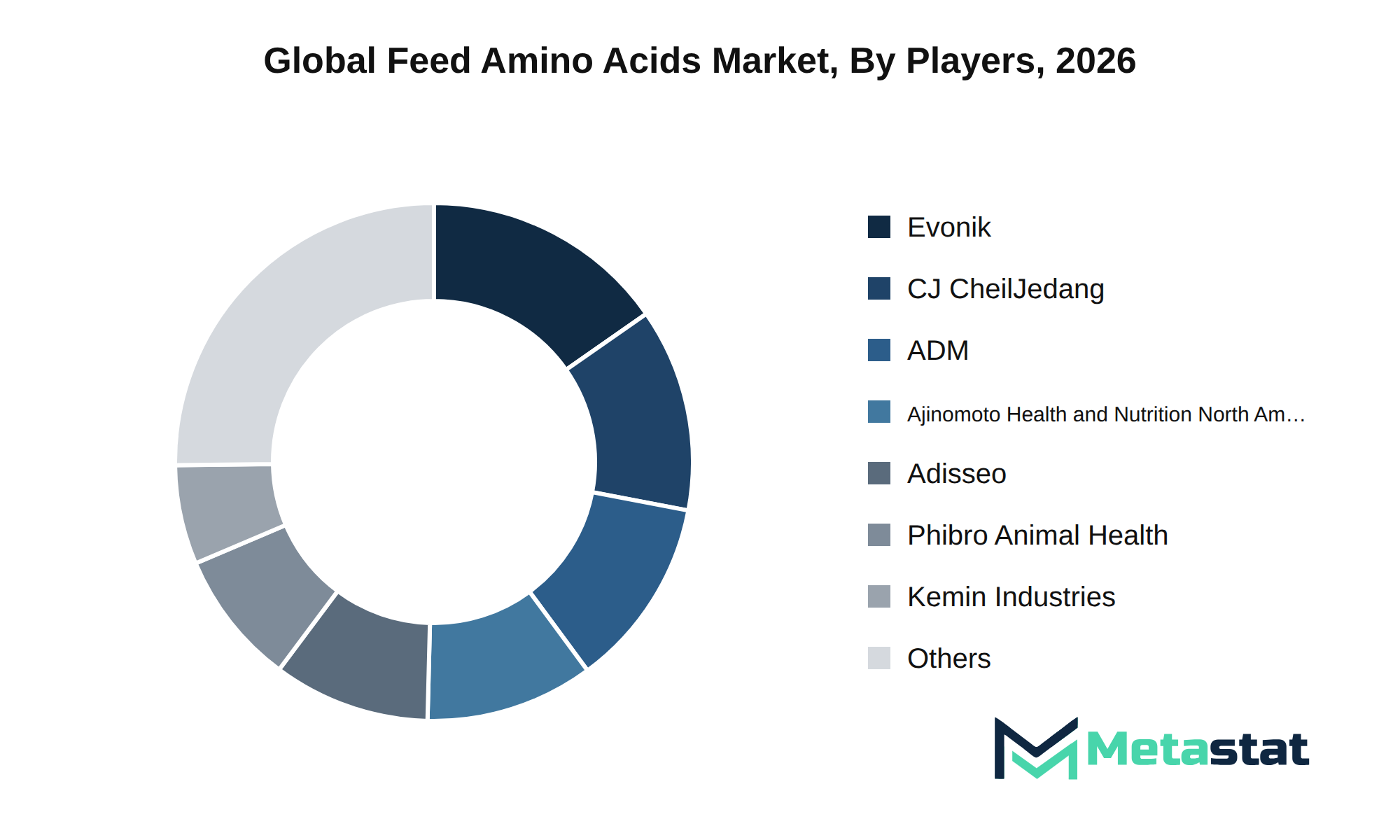
The Feed Amino Acids market features a diverse array of players focused on product differentiation and strategic consolidation. Companies including ADM, Evonik, and CJ CheilJedang Corp. engage in collaborative efforts, including strategic alliances and joint ventures, which enhance their market positioning. These strategies enable firms to leverage proprietary technologies and R&D pipelines, driving innovation across product offerings.
Pricing architectures play a critical role in competitive dynamics, with major players like Cargill, Incorporated and BASF employing unique commercial models to retain market share. Customer retention strategies focus on brand equity, creating high switching costs that challenge new entrants. Established firms maintain robust value chain integration, which ensures supply chain dominance and procurement leverage.
Looking ahead, the Feed Amino Acids market anticipates continued growth driven by ongoing industry restructuring and startup disruption. Defensive imperatives arise from protecting intellectual property portfolios and enhancing technological defensibility, positioning companies for sustained competitive advantage.
Market size is forecast to rise from USD 6.3 billion in 2025 to over USD 7.7 billion by 2033. The base case reflects steady growth projected at a 2.6% CAGR during the forecast period. The bull case anticipates heightened demand driven by advancements in livestock management and nutrition, resulting in stronger-than-expected adoption of feed amino acids across various livestock sectors. Conversely, the bear case suggests potential challenges from economic downturns or regulatory changes that could hinder growth in certain regions.
Macroeconomic factors, including evolving trade corridors and geopolitical realignments, significantly influence the Feed Amino Acids market. Shifts in global supply chains impact production methods and cost structures, affecting downstream demand dynamics. The maturation of core industries requires companies to adapt to new consumption patterns and integrate next-generation technologies, ensuring alignment with market expectations.
Regulatory evolution and compliance milestones play a crucial role in shaping market conditions. Companies navigate a landscape of changing regulations while maintaining product quality and safety standards. Strategic capital allocation directives and infrastructure commitments drive investment in research and development, cultivating emerging white-space opportunities and addressing unmet enterprise needs.
Industry participants focus on executive-level strategic imperatives to maintain competitiveness. The market presents high-growth pockets, particularly in sectors including aquaculture and poultry, where demand for specific amino acids like lysine and methionine continues to rise. Organizations prioritizing defensibility roadmaps and future growth recommendations secure a robust position in the evolving Feed Amino Acids market.
The report strategically identifies and profiles the key market players and analyses their core competencies in each sub-segment of the Feed Amino Acids market.
Report Attributes | Details |
Study Period | 2021-2033 |
Base Year | 2025 |
Estimated Year | 2026 |
Forecast Period | 2026-2033 |
Historical Period | 2021-2025 |
Growth Rate | CAGR 2.6% from 2026 to 2033 |
Revenue Unit | USD billion |
Segmentation | By Type, Livestock, Physical Form, Production Method, and Region |
By Region | North America (By Type, Livestock, Physical Form, Production Method, and Country)
|
Europe (By Type, Livestock, Physical Form, Production Method, and Country)
| |
Asia Pacific (By Type, Livestock, Physical Form, Production Method, and Country)
| |
South America (By Type, Livestock, Physical Form, Production Method, and Country)
| |
Middle East and Africa (By Type, Livestock, Physical Form, Production Method, and Country)
|
Find answers to common questions about this report
The Feed Amino Acids market size was valued at USD 6.3 billion in 2025, according to the Metastat Insights study.
The Feed Amino Acids market is projected to grow at a CAGR of 2.6% during the forecast period from 2026 to 2033.
The North America Feed Amino Acids market size is estimated to reach USD 1.8 billion by 2033.
Lysine leads the Feed Amino Acids market with a projected value of USD 2.6 billion in 2026, increasing to USD 2.9 billion by 2033. This segment's growth reflects a compound annual growth rate of 1.7%.
The Feed Amino Acids market is driven by the rising focus on livestock feed efficiency and the increasing global demand for protein-rich food. Producers seek to optimize feed formulations to enhance growth rates and overall health in livestock, while investments in technological advancements further support market expansion.
Asia Pacific holds the dominant share of the Feed Amino Acids market, accounting for 34.4% in 2025. This region's significant share reflects its extensive livestock production and growing demand for amino acids.
Increasing regulatory compliance challenges significantly hinder the Feed Amino Acids market. Stringent regulations regarding food safety and quality control complicate product approval processes, extending timelines and increasing costs. Macroeconomic headwinds, including inflation, further affect profit margins, restricting investments in capacity expansion and innovation.
The Feed Amino Acids market benefits from increasing global demand for protein-rich food, driving livestock producers to optimize feed formulations. This optimization improves feed conversion ratios, reduces overall feed costs, and enhances animal health and productivity, favoring product adoption across the industry.
The Feed Amino Acids market is estimated to reach a valuation of USD 7.7 billion by 2033.
Key players in the Feed Amino Acids market include ADM, Evonik, CJ CheilJedang Corp., Ajinomoto Health and Nutrition North America, Inc., Adisseo, and BASF.
The analysts below cover Food and Beverages research at Metastat Insights.
LEAD ANALYST
Utkarsh Khirodkar is a Lead Market Research Analyst at MetaStat Insight, specializing in market intelligence, technology sector assessments, and competitive strategy.

LEAD PRINCIPAL ANALYST, PHARMA AND HEALTHCARE
Food and Beverages · Healthcare · Healthcare IT · Medical Devices
Ajay Devgire is the Lead Healthcare Analyst at MetaStat Insight, leading strategic research and market intelligence initiatives across the global healthcare domain.

SENIOR RESEARCH ANALYST
Biotechnology · Food and Beverages · Medical Devices · Packaging
Snehal Pasalkar is a Research Analyst at MetaStat Insight, operating at the intersection of life sciences research, competitive strategy, and market intelligence.
Replacing petrochemical surfactants with bio-based alternatives requires realistic timelines on industrial precision fermentation scaling. The market research broke down commercialization timelines, feedstock sugar price sensitivities, and regional cosmetic ingredient regulatory approvals in Europe and East Asia. That supplier readiness mapping gave our formulations team reliable context when comparing renewable chemical sourcing roadmaps.
Tracking ceramic matrix composite adoption in high-bypass aero engines requires strict attention to material qualification cycles and FAA airworthiness testing milestones. The MetaStat Insight team provided a detailed timeline of silicon carbide fiber manufacturing capacity and commercial foundry lead times. Having clear visibility into upstream thermal barrier coating supply helped us stress-test our long-term component procurement strategy.
Transitioning ultra-class mining haul trucks to alternative power requires concrete data on remote hydrogen refueling infrastructure economics. The report evaluated megawatt-scale electrolyzer installation expenses, onsite storage safety mandates, and heavy-duty fuel cell stack degradation under continuous duty cycles. That technical rigor helped our engineers benchmark realistic total operating cost horizons for off-highway fleet decarbonization.
Explore related market intelligence reports worth reading alongside this one.