
LEAD ANALYST
Utkarsh Khirodkar is a Lead Market Research Analyst at MetaStat Insight, specializing in market intelligence, technology sector assessments, and competitive strategy.

Animal Feed Additives Market Size, Share, By Type (Antibiotics, Vitamins, Antioxidants, Amino Acids, Feed Enzymes, Feed Acidifiers, Phosphates, Carotenoids, Mycotoxin Detoxifiers, and Others), By Form (Powder, Granules, and Liquid), By Livestock (Swine, Pig, Poultry, Cattle, Aquaculture, and Others), By Source (Plant, Animal, and Micro-organisms), Industry Analysis, Growth, Trends, and Forecast, 2026-2033
Report ID
MSI-4741
Published
May, 2026
Pages
317 Pages
Format
Report Details
Choose Your License
Animal Feed Additives Market
Global Animal Feed Additives market size is valued at USD 58.4 billion in 2025 and projected to grow at a CAGR of 6.9% during the forecast period, reaching USD 99.7 billion by 2033.
Global Animal Feed Additives market valued at USD 58.4 billion in 2025, growing at a CAGR of 6.9% through 2033, with potential to exceed USD 99.7 billion.
North America accounts for 38.9% of the global market in 2025, with the U.S. holding the leading country share.
Antibiotics segment accounts for a market share of 3.5% in 2025.
Key trends driving growth: Rising global meat and dairy consumption increases demand for performance-enhancing and health-supportive feed additives, along with regulatory focus on feed efficiency and reduced antibiotic usage accelerates adoption of probiotics, enzymes, and phytogenic additives.
Opportunities include expansion of precision nutrition and species-specific additive solutions creates scalable innovation and premiumization potential.
Key insight: Rising protein demand and livestock productivity focus shape growth trajectory of the Global Animal Feed Additives Market.
The Global Animal Feed Additives market is advancing beyond traditional performance enhancement and cost efficiency towards a more strategic role in livestock productivity, nutritional precision, and sustainable animal farming. Over the coming years, feed additive strategies will increasingly align with species requirements, genetic potential, health indicators, and production conditions. Producers are adopting data-driven formulation systems and farm-level analytics to develop customized additive blends that improve feed conversion, animal health, and operational efficiency.
Sustainability priorities across protein supply chains are reshaping how feed additive portfolios are developed and positioned. Manufacturers are focusing on solutions that help reduce enteric methane emissions, improve nitrogen utilization, and limit phosphate discharge into water systems. These objectives are becoming measurable performance benchmarks linked with environmental reporting frameworks and procurement expectations. Feed additive technologies are increasingly being integrated with traceability systems and broader sustainability management practices across livestock production.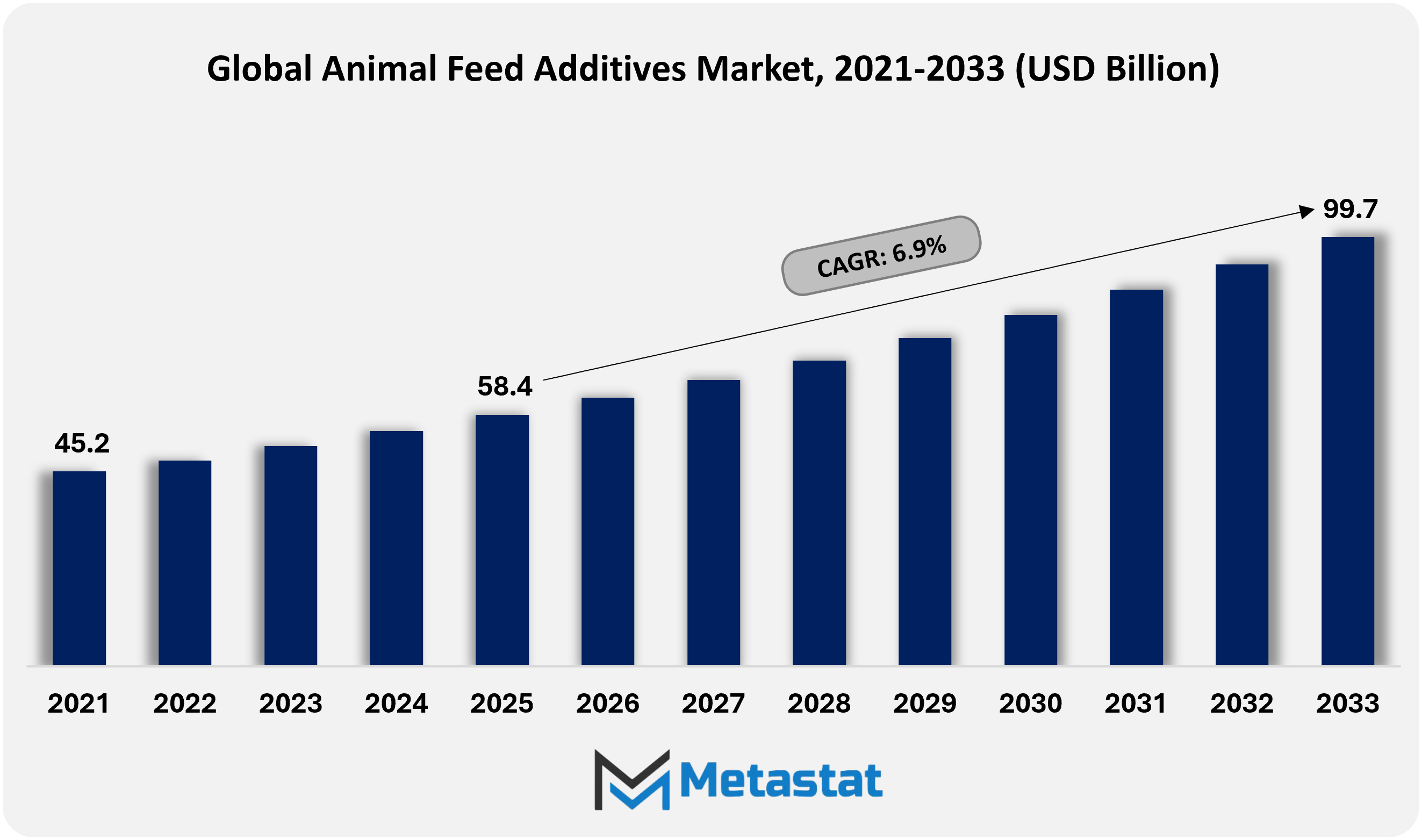
Rising global meat and dairy consumption increases demand for performance-enhancing and health-supportive feed additives.
Rising protein consumption across developing and developed economies is strengthening production targets for livestock and dairy sectors. Higher output requirements are encouraging producers to integrate nutrient enhancers, gut health promoters, and immunity-supporting ingredients into feed programs. The Global Animal Feed Additives market is gaining momentum from commercial farming expansion, improved breeding practices, and supply chain modernization aimed at maximizing production quality and efficiency.
Regulatory focus on feed efficiency and reduced antibiotic usage accelerates adoption of probiotics, enzymes, and phytogenic additives.
Regulatory focus on feed efficiency and reduced antibiotic usage is accelerating the shift toward biologically derived feed solutions. Enzymes improve nutrient absorption, probiotics support gut microbiota balance, and phytogenic ingredients enhance natural performance outcomes. The Global Animal Feed Additives market is benefiting from compliance-driven innovation, where scientific validation and traceable sourcing increasingly influence purchasing decisions across poultry, swine, and ruminant nutrition.
Stringent regulatory approvals and varying compliance standards across regions extend product commercialization timelines.
Multi-layered regulatory approval processes across North America, Europe, and Asia Pacific continue to extend product launch timelines. Differences in safety standards, documentation requirements, and labeling regulations increase operational complexity for multinational suppliers. The Global Animal Feed Additives market faces delayed revenue realization when product development is followed by prolonged validation and authorization procedures.
Volatility in raw material prices impacts formulation costs and margin sustainability for manufacturers.
Fluctuating prices of amino acids, vitamins, minerals, and plant extracts continue to affect cost structures across feed additive portfolios. Supply chain disruptions, climate-related variability in crop output, and geopolitical trade shifts are increasing procurement uncertainty. The Global Animal Feed Additives market requires stronger sourcing strategies and cost optimization measures to preserve profitability under volatile pricing conditions.
Expansion of precision nutrition and species-specific additive solutions creates scalable innovation and premiumization potential.
Advances in data analytics, feed diagnostics, and farm monitoring systems are supporting customized nutrient blends tailored by species, breed, and growth stage. Precision feeding programs help reduce waste while improving feed conversion efficiency. The Global Animal Feed Additives market is creating premium growth opportunities through targeted formulations designed to improve productivity, sustainability metrics, and measurable livestock performance outcomes.
The Global Animal Feed Additives market is classified based on Type, Form, Livestock, and Source.
Antibiotics segment is valued at USD 2.2 billion in 2026 and is projected to reach USD 2.1 billion by 2033, at a CAGR of -0.7% during the forecast period.
Antibiotics continue to hold a limited but relevant position in the Global Animal Feed Additives market, mainly in controlled applications related to disease management and livestock productivity. Regulatory shifts are reducing routine usage and encouraging targeted formulations with stronger residue control and compliance standards. Manufacturers are focusing on precision delivery approaches that support animal health while aligning with evolving global regulations.
Vitamins segment is valued at USD 9.6 billion in 2026 and is projected to reach USD 15.8 billion by 2033, at a CAGR of 7.3% during the forecast period.
Vitamins remain essential in the Global Animal Feed Additives market, supporting immunity, metabolism, and growth performance across intensive farming operations. Rising awareness of nutrient deficiencies and the need for higher production efficiency are supporting segment expansion. Advanced stabilization technologies are improving shelf life and nutrient retention, ensuring consistent feed quality across varying climatic conditions.
Antioxidants segment is valued at USD 4.3 billion in 2026 and is projected to reach USD 6.7 billion by 2033, at a CAGR of 6.8% during the forecast period.
Antioxidants are gaining momentum in the Global Animal Feed Additives market owing to increasing focus on feed preservation and oxidative stability. Producers are adopting improved antioxidant blends to protect fats and essential nutrients during storage. Research activity is also supporting natural antioxidant alternatives that strengthen cleaner formulations and feed efficiency outcomes.
Amino Acids segment is valued at USD 13.4 billion in 2026 and is projected to reach USD 21.8 billion by 2033, at a CAGR of 7.2% during the forecast period.
Amino acids hold a strategic position in protein optimization within the Global Animal Feed Additives market. Balanced amino acid supplementation helps reduce feed costs while improving growth rates and feed conversion performance. Advances in fermentation technology are increasing production efficiency and strengthening product availability across both mature and developing agricultural markets.
Feed Enzymes segment is valued at USD 8.5 billion in 2026 and is projected to reach USD 13.7 billion by 2033, at a CAGR of 7% during the forecast period.
Feed enzymes continue to support nutrient digestibility and resource utilization in the Global Animal Feed Additives market. Enzyme innovation is improving fiber breakdown and phosphorus release, which enhances overall feed value. Rising sustainability goals are encouraging greater enzyme adoption to reduce waste output and improve environmental performance across livestock production systems.
Feed Acidifiers segment is valued at USD 6.7 billion in 2026 and is projected to reach USD 10.1 billion by 2033, at a CAGR of 6.1% during the forecast period.
Feed acidifiers are strengthening gut health management strategies within the Global Animal Feed Additives market. Organic acid blends help promote microbial balance and reduce pathogen risk in intensive farming environments. Future formulations will emphasize synergistic combinations that improve nutrient absorption and maintain stable gastrointestinal conditions.
Phosphates segment is valued at USD 5.2 billion in 2026 and is projected to reach USD 8.2 billion by 2033, at a CAGR of 6.7% during the forecast period.
Phosphates remain important mineral supplements in the Global Animal Feed Additives market, supporting skeletal development and metabolic activity across livestock categories. Sustainable phosphate sourcing and improved bioavailability solutions are influencing procurement strategies. Precision nutrition planning is helping optimize inclusion rates to support productivity targets and environmental compliance requirements.
Carotenoids segment is valued at USD 3.3 billion in 2026 and is projected to reach USD 5.2 billion by 2033, at a CAGR of 6.8% during the forecast period.
Carotenoids continue to expand their role in the Animal Feed Additives market through pigmentation enhancement and antioxidant support. Consumer preference for visually appealing animal products is increasing carotenoid use in poultry and aquaculture feed. Biotechnology advancements are also supporting cost-effective production of natural carotenoids for premium livestock nutrition applications.
Mycotoxin Detoxifiers segment is valued at USD 3.3 billion in 2026 and is projected to reach USD 5.8 billion by 2033, at a CAGR of 8.6% during the forecast period.
Mycotoxin detoxifiers are becoming increasingly important in the Animal Feed Additives market owing to rising contamination risk linked with climate variability and feed storage challenges. Advanced binding agents and biological detoxification solutions help protect feed integrity and animal health. Investment in rapid detection systems is further supporting adoption across global feed supply chains.
Others segment is valued at USD 5.8 billion in 2026 and is projected to reach USD 10.2 billion by 2033, at a CAGR of 8.2% during the forecast period.
Other specialized additives include probiotics, prebiotics, yeast derivatives, and performance-supporting ingredients designed for targeted nutritional outcomes. Innovation pipelines are increasingly focused on multifunctional solutions that combine immunity support, gut health, and feed efficiency improvement. Market growth in this category reflects rising customization across commercial livestock nutrition programs.
Powder segment is projected to reach USD 69.1 billion by 2033, at a CAGR of 7% during the forecast period.
Powder formulations maintain a leading position in the Animal Feed Additives market owing to ease of mixing, storage stability, and compatibility with large-scale feed production systems. Technological refinement in encapsulation is improving nutrient protection and formulation performance. Large feed mills continue to prefer powder-based additives for consistent blending and scalable industrial application.
Granules segment is projected to reach USD 14.7 billion by 2033, at a CAGR of 6.2% during the forecast period.
Granule formulations are gaining preference in the Animal Feed Additives market owing to improved flowability and reduced dust generation during handling. Controlled-release properties also help enhance nutrient absorption efficiency in selected applications. Expansion of automated feeding systems is supporting demand for granulated additives compatible with precision dispensing technologies.
Liquid segment is projected to reach USD 15.8 billion by 2033, at a CAGR of 7.4% during the forecast period.
Liquid additives are recording steady growth in the Animal Feed Additives market through rapid absorption and flexible application in water-based delivery systems. Intensive livestock operations are adopting liquid supplementation to address immediate nutritional needs and improve operational convenience. Improved packaging formats are also supporting storage stability and transportation efficiency.
Swine/Pig segment is projected to reach USD 18.5 billion by 2033.
Swine nutrition programs remain highly important to the Animal Feed Additives market owing to strong pork consumption trends and the need for efficient production outcomes. Performance-oriented additive strategies help improve feed conversion, growth efficiency, and reproductive performance. Disease management priorities are also increasing the inclusion of ingredients that support gut health and immune resilience.
Poultry segment is projected to reach USD 45.5 billion by 2033.
Poultry production continues to generate substantial demand in the Animal Feed Additives market owing to short production cycles and strong global consumption of meat and eggs. Additive innovation in this segment is focused on growth support, egg quality improvement, digestion efficiency, and overall feed optimization. Integration of precision nutrition analytics is further improving productivity benchmarks across poultry systems.
Cattle segment is projected to reach USD 27.6 billion by 2033.
Cattle farming remains a major demand contributor to the Animal Feed Additives market, particularly across dairy and beef production systems. Additive selection is increasingly influenced by rumen efficiency, health management, and productivity improvement goals. Methane reduction initiatives are also stimulating development of specialized feed solutions aligned with sustainability commitments.
Aquaculture segment is projected to reach USD 5.0 billion by 2033.
Aquaculture is emerging as a high-growth segment in the Animal Feed Additives market owing to rising seafood consumption and increasing investment in efficient aquatic nutrition systems. Additives that improve water stability, nutrient absorption, and feed conversion are gaining importance. Investment in aquatic health management solutions is also strengthening resilience against disease outbreaks.
Others segment is projected to reach USD 3.1 billion by 2033.
Other livestock categories include equine, sheep, goats, and specialty animal nutrition. Specialized additive blends are designed to address distinct digestive requirements, health needs, and performance targets within these categories. Diversification across niche farming sectors continues to support incremental revenue opportunities.
Plant segment is projected to grow at a CAGR of 6.9% during the forecast period.
Plant-derived ingredients are expanding in the Global Animal Feed Additives market amid growing preference for natural nutrition solutions. Botanical extracts and essential oils are increasingly used to support immunity, digestion, and growth performance. Sustainable cultivation practices are also improving supply reliability and environmental performance across plant-based additive sourcing.
Animal segment is projected to grow at a CAGR of 6.8% during the forecast period.
Animal-based additives continue to hold relevance in the Animal Feed Additives market owing to their bioavailability and nutritional density in selected applications. Regulatory oversight is shaping sourcing transparency and safety requirements across this segment. Processing improvements are also helping manufacturers strengthen quality consistency across international markets.
Micro-organisms segment is projected to grow at a CAGR of 7.2% during the forecast period.
Micro-organism sourced additives are transforming the Animal Feed Additives market through fermentation-driven innovation. Probiotic and enzyme production supports digestive health, nutrient utilization, and feed efficiency optimization across livestock systems. Continued biotechnological investment is expanding scalable production capacity and strengthening competitive positioning in global animal nutrition markets.
Based on geography, the Global Animal Feed Additives market is divided into North America, Europe, Asia-Pacific, South America, Middle East, and Africa.
North America Animal Feed Additives Market is set to expand at a CAGR of 6.9% within the forecast period, reaching a market size (TAM) of USD 40.0 billion by the end of 2033.
Strong commercial livestock production in North America drives consistent demand for performance-enhancing animal feed additives.
In Europe Animal Feed Additives market maintains a significant position, supported by strong regulatory emphasis on feed safety, sustainable livestock production, and reduced antibiotic usage.
Rapid growth in poultry and aquaculture sectors across Asia Pacific creates significant expansion scope for nutritional and gut-health feed additives.
Across Middle East, Africa, and South America, improving livestock productivity goals and gradual industrialization of animal farming generate steady demand momentum for animal feed additives.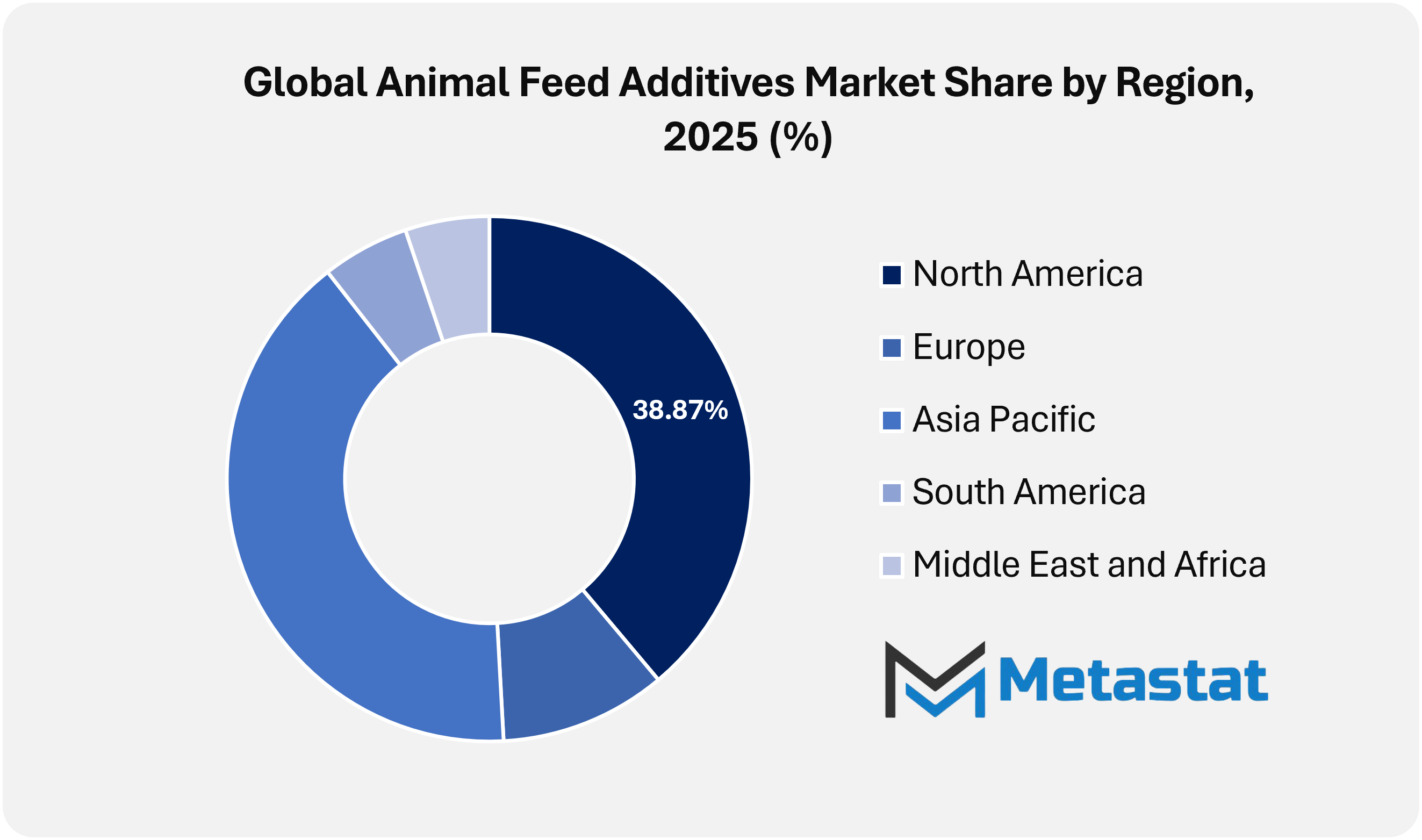
The global animal feed additives market is growing steadily as livestock producers focus on improving animal health, feed efficiency, and overall productivity. Rising demand for meat, dairy, and poultry products across developed and emerging economies continues to strengthen the need for scientifically formulated feed solutions. Feed additives play an important role in improving digestion, immunity, nutrient utilization, and growth performance. With increasing pressure to produce more protein using fewer resources, the industry is relying more heavily on nutritional innovation and performance-based feeding strategies.
Large multinational companies shape the competitive structure of the market through integrated supply chains, wide product portfolios, and strong global distribution reach. Cargill, Incorporated and Archer Daniels Midland Company maintain leading positions across multiple feed additive categories. dsm-firmenich AG, BASF SE, and Evonik Industries AG continue to invest in vitamins, amino acids, enzymes, and specialty ingredients that enhance feed quality and animal performance. Adisseo France S.A.S. and Kemin Industries, Inc. also maintain broad international presence across poultry, swine, and ruminant nutrition.
Mid-sized and specialized players strengthen the market through targeted innovation and sustainability-focused nutrition programs. Alltech, Inc., Novus International, Inc., and Nutreco N.V. are active in developing solutions that help reduce feed waste and environmental impact. International Flavors & Fragrances Inc. and Novonesis contribute advanced biological and fermentation-based solutions. Companies such as Delacon Biotechnik GmbH, Orffa Additives B.V., Impextraco NV, EW Nutrition GmbH, and Phytobiotics Futterzusatzstoffe GmbH support market expansion through phytogenic additives, mineral blends, and gut health products.
Other key competitors are expanding the market through probiotics, yeast-based solutions, and mineral nutrition technologies. Lallemand Inc. and Lesaffre International SAS provide microbial-based ingredients that support digestion and animal performance. Zinpro Corporation, Balchem Corporation, and Amlan International focus on mineral and performance-enhancing solutions. Olmix S.A., Innovad NV/SA, Vetagro S.p.A., Norel S.A., Anpario plc, and Perstorp Holding AB continue to strengthen regional and global supply networks.
Asian manufacturers also play an important role in meeting rising global protein demand. Ajinomoto Co., Inc. is widely recognized for amino acid production that supports feed efficiency and livestock nutrition. Meihua Holdings Group Co., Ltd. and Fufeng Group Limited supply significant volumes of feed-grade amino acids to international markets. Daesang Corporation also strengthens the supply base with fermentation-derived ingredients. Rising demand for safe and sustainable animal protein will keep these companies focused on research, partnerships, and capacity expansion.
Market size is forecast to rise from USD 58.4 billion in 2025 to over USD 99.7 billion by 2033.
As protein demand patterns shift toward differentiated and higher-quality output, additive development is increasingly aligning with meat texture, egg quality, milk composition, and aquaculture yield optimization. The Global Animal Feed Additives market is moving beyond a basic input supply role and becoming a strategic component of integrated livestock value chain design.
This research report categorizes the Animal Feed Additives market based on key segments and regions, forecasts revenue growth, and analyses trends in each submarket. The report analyses the key growth drivers, opportunities, and challenges influencing the Animal Feed Additives market. Recent market developments and competitive strategies such as expansion, product launch, partnership, merger, and acquisition have been included to draw the competitive landscape in the market.
The report strategically identifies and profiles the key market players and analyses their core competencies in each sub-segment of the Animal Feed Additives market.
|
Report Attributes |
Details |
|
Study Period |
2021-2033 |
|
Base Year |
2025 |
|
Estimated Year |
2026 |
|
Forecast Period |
2026-2033 |
|
Historical Period |
2021-2025 |
|
Growth Rate |
CAGR 6.9% from 2026 to 2033 |
|
Revenue Unit |
USD billion |
|
Sales Volume Unit |
Kilotons |
|
Segmentation |
By Type, Form, Livestock, Source, and Region |
|
By Region |
North America (By Type, Form, Livestock, Source, and Country)
|
|
Europe (By Type, Form, Livestock, Source, and Country)
|
|
|
Asia Pacific (By Type, Form, Livestock, Source, and Country)
|
|
|
South America (By Type, Form, Livestock, Source, and Country)
|
|
|
Middle East and Africa (By Type, Form, Livestock, Source, and Country)
|
Find answers to common questions about this report
Top players operating in the Animal Feed Additives industry include Cargill, Incorporated, Archer Daniels Midland Company, dsm-firmenich AG, BASF SE, Evonik Industries AG, and Adisseo France S.A.S.
Global Animal Feed Additives market is estimated to reach USD 99.7 billion by 2033.
The Global Animal Feed Additives market is expected to grow at a CAGR of 6.9% over the forecast period (2026-2033).
Stringent regulatory approvals and varying compliance standards across regions extend product commercialization timelines. will hamper the market growth within the forecast period.
Asia Pacific region dominates the market.
The Metastat Insights study shows that the Global Animal Feed Additives market size was USD 58.4 billion in 2025.
Rising global meat and dairy consumption increases demand for performance-enhancing and health-supportive feed additives. and Regulatory focus on feed efficiency and reduced antibiotic usage accelerates adoption of probiotics, enzymes, and phytogenic additives. are key driving factors, boosting the market.
The Amino Acids is the leading type segment in the Global market.
The Metastat Insights analysis shows that the North America Animal Feed Additives market size is estimated to be USD 40 billion by 2033.
The analysts below cover Chemicals and Materials research at Metastat Insights.
LEAD ANALYST
Utkarsh Khirodkar is a Lead Market Research Analyst at MetaStat Insight, specializing in market intelligence, technology sector assessments, and competitive strategy.

INDUSTRY CONSULTANT - CHEMICALS & ADVANCED MATERIALS
Chemicals and Materials · Machinery & Equipment · Packaging
Amit Gadhekar Consultant for Chemicals and Materials at MetaStat Insight, directing sector-specific intelligence, research, and strategic consulting across global chemical and processing markets.
Tracking maintenance cycle demand for secondary flight display units and terrain collision avoidance systems across regional jet fleets involves complex aftermarket dynamics. MetaStat Insight provided practical analysis separating airline retrofit programs from OEM forward-fit production schedules in North America and Southeast Asia. The supplier matrix highlighted component obsolescence timelines without resorting to vague generalizations. The dataset served as a dependable reference during our annual program review meetings.
Evaluating secondary resin quality across post-consumer packaging streams requires reliable technical segmentation. MetaStat Insight delivered an objective assessment that distinguished between extrusion-grade flake pricing and optical sorting throughput limitations across Western Europe. The competitive positioning breakdown for licensed depolymerization technology providers answered several questions during our feedstock feasibility audit. Their team clarified regional trade restrictions on mixed plastic scrap quickly when our team submitted follow-up requests.
Evaluating sovereign cloud deployments for core banking platforms demands a clear view of data residency regulations and migration exit strategies. MetaStat Insight delivered an exhaustive review of regional latency tolerances, mainframe decommission milestones, and third-party vendor concentration risk. The regulatory compliance mapping across European and Asian financial jurisdictions gave our team a dependable baseline for multi-cloud infrastructure discussions.
Explore related market intelligence reports worth reading alongside this one.