
LEAD ANALYST
Utkarsh Khirodkar is a Lead Market Research Analyst at MetaStat Insight, specializing in market intelligence, technology sector assessments, and competitive strategy.

Near Infrared (NIR) Analyzer Market Size, Share, By Type (Benchtop NIR Analyzers, Portable NIR Analyzers, Handheld NIR Analyzers, Online Process NIR Analyzers, Inline Process NIR Analyzers, On-Combine Process NIR Analyzers, Field-Mounted NIR Analyzers, and Others), By Application (Agriculture Quality Testing, Crop Quality Testing, Grain Quality Testing, Food Processing Quality Control, Feed Analysis, Forage Analysis, Flour Milling, Cereal Processing, and Others), By End User (Farmers, Agronomists, Grain Traders, Elevators Operators, Storage Operators, Food Manufacturers, Beverage Manufacturers, Flour Mills, Cereal Processors, Feed Manufacturers, Nutrition Laboratories, and Others), Industry Analysis, Growth, Trends, and Forecast, 2026-2033
Report ID
MSI-4777
Published
May, 2026
Pages
316 Pages
Format
Report Details
Choose Your License
Near Infrared Analyzer Market
Global Near Infrared (NIR) Analyzer market size is valued at USD 855.3 million in 2025 and projected to grow at a CAGR of 9.9% during the forecast period, reaching USD 1,813.6 million by 2033.
North America holds 34.7% in 2025 with US leading the market share in 2025.
Benchtop NIR Analyzers segment account for a market share of 37.59% in 2025.
Key trends driving growth: Increasing demand for rapid and non-destructive testing solutions across food, pharmaceutical, and agriculture industries and growing industrial automation and smart manufacturing practices are driving integration of inline NIR analyzers.
Opportunities include expansion of handheld NIR analyzers for field-based agricultural and environmental applications and rising adoption of IoT and cloud-connected analyzers is creating new data-driven monitoring opportunities.
Key insight: Rising adoption of portable and AI-enabled NIR analyzers is accelerating real-time industrial quality monitoring globally.
The Global Near Infrared (NIR) Analyzer Market is witnessing strong growth owing to increasing demand for rapid, non-destructive, and real-time analytical solutions across food and beverages, pharmaceuticals, agriculture, chemicals, and oil & gas industries. NIR analyzers help manufacturers maintain product consistency, monitor moisture levels, analyze chemical composition, and improve process efficiency without damaging samples. Industries are increasingly adopting these analyzers to reduce laboratory testing time and improve operational productivity. Growing use of portable and handheld NIR analyzers is further expanding the market, with companies seeking faster on-site testing solutions for quality assurance and regulatory compliance. Technological advancements such as Fourier Transform NIR systems, AI-based spectral analysis, and cloud-integrated monitoring platforms are also improving analytical accuracy and widening application areas.
The market is also benefiting from stringent food safety regulations, increasing pharmaceutical quality standards, and rising industrial automation across manufacturing sectors. Food processing companies are increasingly using NIR analyzers to measure protein, fat, moisture, and ingredient composition in real time, while pharmaceutical manufacturers are integrating these systems into production lines to support process analytical technology (PAT) compliance. Agricultural applications such as soil analysis, grain testing, and feed quality assessment are creating additional revenue streams for market players. Demand for compact analyzers with wireless connectivity and IoT-enabled capabilities is growing steadily, especially among small and mid-sized enterprises seeking cost-efficient testing solutions.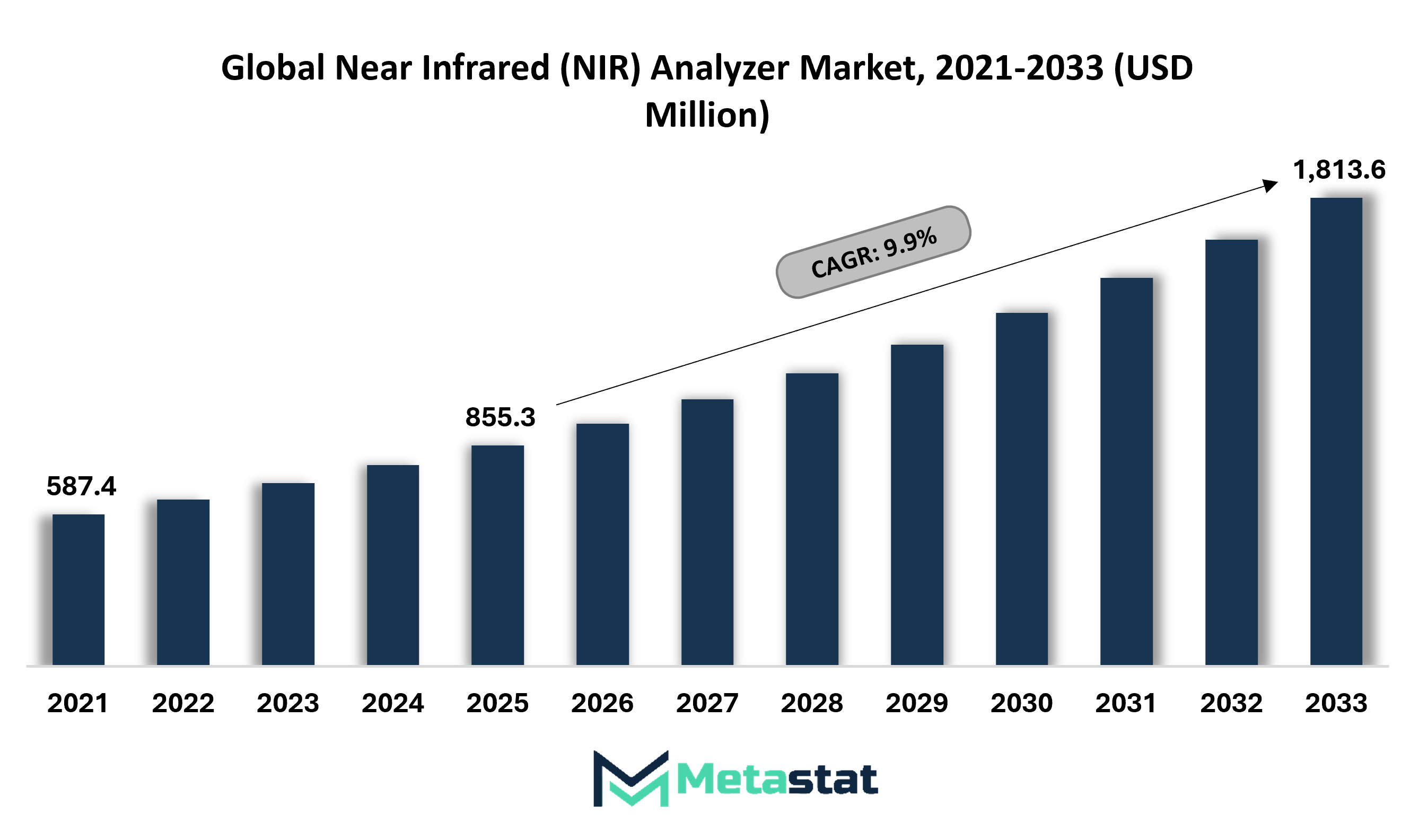
Increasing demand for rapid and non-destructive testing solutions across food, pharmaceutical, and agriculture industries.
Increasing preference for fast and non-destructive testing solutions across food processing, pharmaceutical manufacturing, and agricultural quality assessment continues to support growth in the Near Infrared (NIR) Analyzer market. Rising focus on product consistency, contamination monitoring, and regulatory compliance encourages manufacturers to adopt advanced analytical technologies. Future industry trends indicate stronger dependence on faster testing systems that reduce material waste, improve production speed, and support accurate quality assessment across critical operational stages.
Growing industrial automation and smart manufacturing practices are driving integration of inline NIR analyzers.
Growing adoption of industrial automation and smart manufacturing practices creates robust momentum for the integration of inline analytical systems in the Near Infrared (NIR) Analyzer market. Production facilities across chemicals, food processing, and healthcare sectors continue investing in connected monitoring systems for real-time decision-making. Future production environments indicate broader implementation of smart sensing technologies, improving process efficiency, reducing manual intervention, and supporting predictive operational management across large-scale industrial facilities.
High initial investment and calibration costs limit adoption among small-scale industries.
High installation costs and regular calibration requirements continue creating financial pressure for small and medium-sized businesses participating in the Near Infrared (NIR) Analyzer market. Limited capital availability across developing industrial sectors restricts technology adoption despite growing awareness of analytical benefits. Future market penetration will remain slower among cost-sensitive businesses where budget allocation for advanced instrumentation remains challenging amid uncertain economic conditions and fluctuating industrial investment cycles.
Requirement for skilled professionals to interpret spectral data creates operational challenges.
Dependence on trained professionals for spectral interpretation and analytical validation creates operational challenges within the Near Infrared (NIR) Analyzer market. Complex data evaluation methods increase staff training requirements across pharmaceutical, chemical, and agricultural industries. Future growth will encounter barriers in regions facing shortages of technically qualified professionals. Industrial facilities seeking automated analytical operations continue demanding simplified software systems that support accurate interpretation without extensive technical expertise.
Expansion of handheld NIR analyzers for field-based agricultural and environmental applications
Expansion of handheld analytical devices provides strong future potential for the Near Infrared (NIR) Analyzer market across agricultural inspection, environmental monitoring, and field-based quality assessment activities. Portable systems support instant analysis during crop evaluation, soil monitoring, and raw material verification processes. Future technological improvements indicate stronger demand for compact analyzers featuring wireless connectivity, improved battery performance, and cloud-based data integration that supports faster decision-making across remote operational environments.
The Global Near Infrared (NIR) Analyzer market is classified based on Type, Application, and End User.
Benchtop NIR Analyzers segment is valued at USD 349.2 million in 2026 and is projected to reach USD 615.9 million by 2033, at a CAGR of 8.4% during the forecast period.
Benchtop NIR analyzers continue gaining traction across laboratories and industrial facilities owing to high accuracy levels during sample examination. Growing demand for reliable composition testing in agriculture, food production, and research activities supports wider installation rates. Advanced software integration, automated reporting systems, and rapid measurement capabilities create strong growth potential for future industrial adoption within the Near Infrared (NIR) Analyzer market.
Portable and Handheld NIR Analyzers segment is valued at USD 228.5 million in 2026 and is projected to reach USD 461.7 million by 2033, at a CAGR of 10.6% during the forecast period.
Portable and handheld NIR analyzers generate significant demand owing to mobility benefits during field inspections and on-site quality assessment processes. Agricultural specialists, food inspectors, and commodity traders increasingly prefer compact devices for rapid decision-making. Battery efficiency improvements, wireless connectivity features, and lightweight designs encourage stronger penetration across rural farming regions, supporting long-term growth in the Near Infrared (NIR) Analyzer market.
Online and Inline Process NIR Analyzers segment is valued at USD 201.6 million in 2026 and is projected to reach USD 419.1 million by 2033, at a CAGR of 11% during the forecast period.
Online and inline mounted systems support continuous monitoring within production operations where real-time data remains vital for quality management. Food processing facilities, chemical plants, and grain handling units increasingly invest in automated systems to improve production consistency. Integration with industrial automation systems, predictive maintenance solutions, and digital monitoring networks strengthens future demand patterns in the Near Infrared (NIR) Analyzer market.
On-Combine and Field-Mounted NIR Analyzers segment is valued at USD 97.1 million in 2026 and is projected to reach USD 210.0 million by 2033, at a CAGR of 11.7% during the forecast period.
On-combine and field-mounted NIR analyzers support precision agriculture practices through direct crop analysis during harvesting operations. Farmers receive immediate information regarding moisture content, protein levels, and crop quality conditions, improving operational planning. Rising interest in smart farming technologies, yield optimization techniques, and data-driven agricultural management creates favorable opportunities for sustained development in the Near Infrared (NIR) Analyzer market.
Others segment is valued at USD 63.3 million in 2026 and is projected to reach USD 106.8 million by 2033, at a CAGR of 7.8% during the forecast period.
Other analyzer categories include customized analytical systems developed for niche industrial applications requiring specialized measurement capabilities. Research institutions, environmental testing centers, and pharmaceutical manufacturers continue exploring advanced NIR technologies for broader operational use. Increasing investments in sensor development, artificial intelligence integration, and cloud-based analytical systems contribute toward future technological advancement across the Near Infrared (NIR) Analyzer market.
Agriculture and Crop Quality Testing segment is projected to reach USD 312.7 million by 2033, at a CAGR of 10.7% during the forecast period.
Agriculture and crop quality testing applications continue expanding owing to growing pressure for improved harvest quality and stronger productivity outcomes. NIR analyzers assist agricultural stakeholders through rapid nutrient evaluation and contamination detection processes. Growing awareness of sustainable farming methods, climate-related agricultural challenges, and crop value enhancement creates favourable long-term opportunities within the Near Infrared (NIR) Analyzer market.
Grain Quality Testing segment is projected to reach USD 445.1 million by 2033, at a CAGR of 10.1% during the forecast period.
Grain quality testing remains a major application area owing to growing focus on protein content assessment, moisture evaluation, and grain classification requirements. Storage operators, exporters, and commodity buyers depend on rapid testing systems for operational efficiency. Rising global grain trade activities, food safety concerns, and stricter quality regulations improve future demand prospects in the Near Infrared (NIR) Analyzer market.
Food Processing Quality Control segment is projected to reach USD 525.0 million by 2033, at a CAGR of 10.3% during the forecast period.
Food processing quality control applications continue witnessing robust growth owing to consumer expectations surrounding food safety and product consistency. Manufacturers utilize NIR analyzers for ingredient verification, contamination monitoring, and nutritional assessment procedures. Expansion of packaged food consumption, regulatory compliance requirements, and automated production technologies contributes to wider future adoption in the Near Infrared (NIR) Analyzer market.
Feed and Forage Analysis segment is projected to reach USD 225.8 million by 2033, at a CAGR of 9.3% during the forecast period.
Feed and forage analysis applications support livestock nutrition management through rapid evaluation of nutrient composition and feed quality conditions. Agricultural producers increasingly prioritize efficient animal health management and optimized feeding programs. Technological enhancements in portable evaluation equipment, combined with rising global meat and dairy consumption patterns, encourage stronger future growth opportunities in the Near Infrared (NIR) Analyzer market.
Flour Milling and Cereal Processing segment is projected to reach USD 183.5 million by 2033, at a CAGR of 8.8% during the forecast period.
Flour milling and cereal processing industries use NIR analyzers for continuous monitoring of moisture levels, protein concentration, and ingredient quality parameters. Production facilities are adopting advanced analytical systems to maintain consistency across large-scale operations. Rising urban food consumption, expansion of processed cereal products, and stronger quality assurance practices support future development in the Near Infrared (NIR) Analyzer market.
Others segment is projected to reach USD 121.5 million by 2033, at a CAGR of 7.7% during the forecast period.
Other application areas include pharmaceutical testing, environmental evaluation, chemical manufacturing, and industrial material inspection activities. Industries are increasingly seeking rapid analytical technologies that improve operational productivity and minimize laboratory dependency. Growing industrial digitalization trends, research advancements, and automation investments create additional growth opportunities within the Near Infrared (NIR) Analyzer market.
Farmers and Agronomists segment is projected to reach USD 301.4 million by 2033.
Farmers and agronomists increasingly adopt NIR analyzers for precision farming activities involving soil analysis, crop monitoring, and harvest assessment. Rapid access to analytical information improves agricultural planning and resource management efficiency. Expansion of smart agriculture practices, government support for modern farming equipment, and growing awareness of crop optimization techniques support future demand in the Near Infrared (NIR) Analyzer market.
Grain Traders, Elevators and Storage Operators segment is projected to reach USD 411.0 million by 2033.
Grain traders, elevators, and storage operators utilize NIR analyzers to verify grain quality during procurement, transportation, and storage activities. Reliable testing systems support operational teams through accurate grading and contamination monitoring processes. Rising global agricultural trade networks, food supply chain modernization, and stricter storage requirements create favorable future growth conditions in the Near Infrared (NIR) Analyzer market.
Food and Beverage Manufacturers segment is projected to reach USD 515.4 million by 2033.
Food and beverage manufacturers continue increasing investment in NIR analyzer technology for production quality control and regulatory compliance management. Rapid testing systems improve production efficiency while reducing operational waste generation. Growing processed food demand, stronger safety regulations, and technological modernization across manufacturing facilities contribute toward long-term expansion in the Near Infrared (NIR) Analyzer market.
Flour Mills and Cereal Processors segment is projected to reach USD 234.0 million by 2033.
Flour mills and cereal processors rely on NIR analyzers for continuous monitoring of grain composition and finished product consistency. Analytical technologies support operational accuracy across high-volume processing activities. Rising consumer demand for packaged cereal products, stronger quality certification requirements, and modernization across milling infrastructure create favourable future opportunities in the Global Near Infrared (NIR) Analyzer Market.
Feed Manufacturers and Nutrition Laboratories segment is projected to reach USD 228.9 million by 2033.
Feed manufacturers and nutrition laboratories increasingly depend on NIR analyzers for accurate feed formulation and nutritional assessment procedures. Rapid analysis capabilities improve efficiency across laboratory operations and livestock feed production cycles. Expansion of commercial livestock farming, rising animal nutrition awareness, and technological improvements in analytical systems support future market development in the Near Infrared (NIR) Analyzer market.
Others segment is projected to reach USD 123.0 million by 2033.
Other end users include research institutions, environmental organizations, industrial laboratories, and pharmaceutical companies seeking efficient analytical solutions for specialized operational needs. Adoption continues rising for technologies supporting rapid testing, automation, and digital data integration. Continuous innovation in spectroscopy solutions and industrial quality monitoring systems strengthens future expansion opportunities within the Near Infrared (NIR) Analyzer market.
Based on geography, the Global Near Infrared (NIR) Analyzer market is divided into North America, Europe, Asia-Pacific, South America, Middle East, and Africa.
Strong pharmaceutical manufacturing infrastructure in the United States is increasing deployment of NIR-based process monitoring systems.
Rising focus on food quality assurance and regulatory compliance is supporting analyzer demand across North America.
Europe continues strengthening its NIR analyzer market through stringent food safety regulations, sustainability initiatives, and growing investment in industrial automation technologies, especially across Germany, France, and the UK.
Rapid industrialization in China and India is increasing demand for advanced quality inspection technologies.
Expanding processed food and pharmaceutical manufacturing sectors are creating strong growth potential for portable NIR analyzers in Asia Pacific.
The Middle East, Africa, and South America are gradually emerging as promising markets for Near Infrared analyzers owing to growing industrial activity, rising agricultural modernization, increasing food export requirements, and expanding oil & gas quality monitoring applications. Governments and private industries across these regions are focusing on improving production efficiency and quality assurance, supporting the adoption of advanced spectroscopy technologies.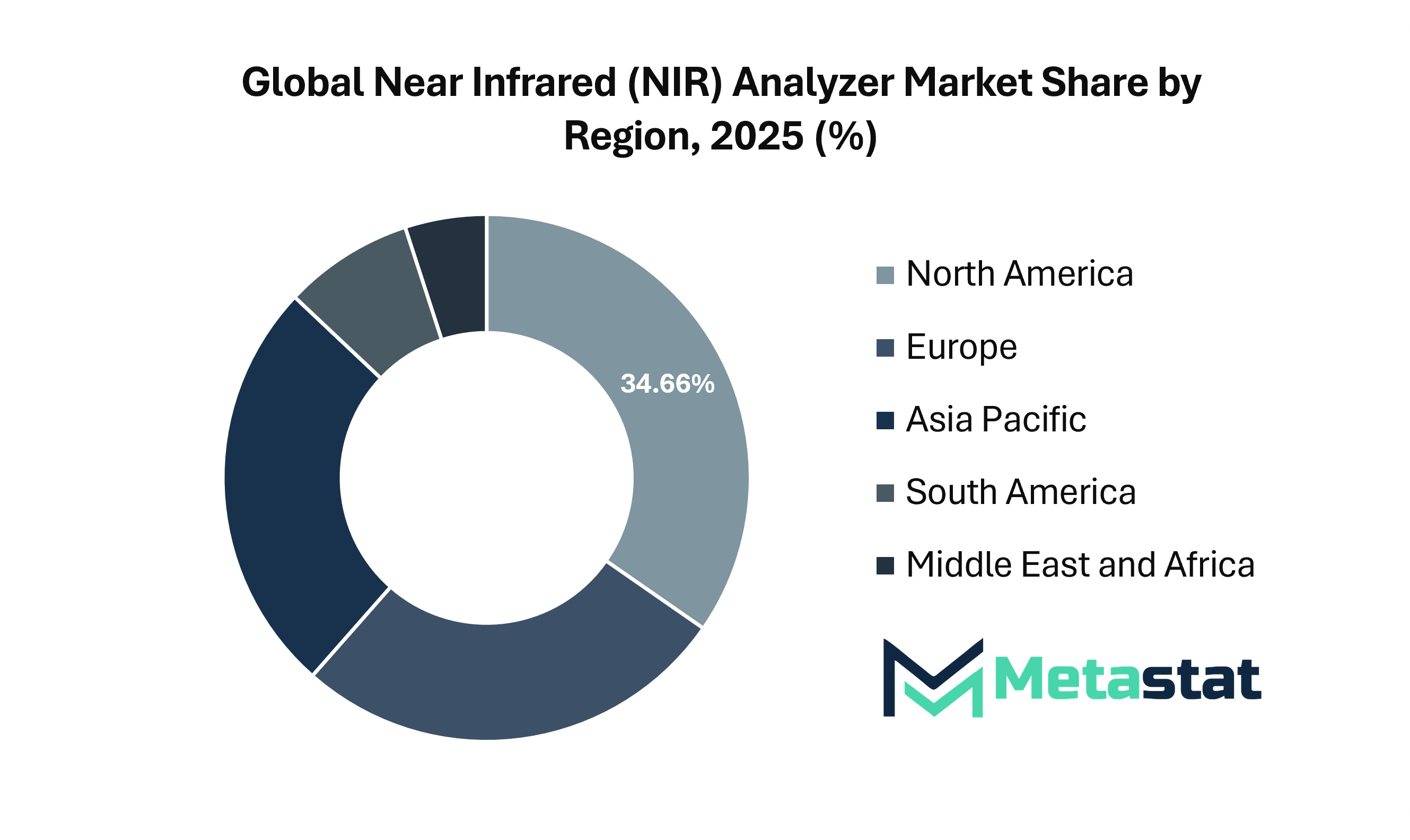
The Global Near Infrared (NIR) Analyzer Market has gained strong interest across industries owing to the growing need for fast and accurate material testing. Companies involved in food processing, agriculture, pharmaceuticals, chemicals, and manufacturing are using these analyzers to improve quality control and reduce testing time. Near infrared analyzers help businesses examine material composition without damaging samples, making the process faster and cost-effective. Industries are increasingly focusing on reducing waste and improving production efficiency, which is supporting demand for advanced analytical equipment. The use of automation in manufacturing facilities is also encouraging the adoption of modern testing systems that provide real-time data and support better decision-making during operations.
The market is also witnessing wider adoption as businesses place greater focus on product consistency and regulatory compliance. Manufacturers are investing in technologies that monitor moisture, protein, fat, and other components with high accuracy during production processes. Portable and handheld analyzers are becoming increasingly common as they enable on-site testing without transferring samples to laboratories. Such convenience helps companies reduce time and labor costs. At the same time, improvements in sensor technology and software integration are making these systems easier to operate for both small and large businesses. Growing awareness of food safety and product quality will support further adoption across multiple sectors in the coming years.
Several major companies are contributing to industry growth through product innovation, partnerships, and expansion strategies. Key participants in the market include ABB Ltd., Bruker Corporation, BUCHI Labortechnik AG, Bühler Group, FOSS Analytical, KPM Analytics, Metrohm AG, Thermo Fisher Scientific Inc., and VIAVI Solutions Inc. Other recognized companies such as AELAB Group, Blue Sun Scientific, Brimrose Corporation of America, Carl Zeiss Spectroscopy GmbH, DICKEY-john Corporation, Dinamica Generale S.p.A., GrainSense Oy, Lumex Instruments, Malvern Panalytical Ltd., Next Instruments, Sensortech Systems Inc., Zeltex LLC, and ZEUTEC Opto-Elektronik GmbH are also strengthening competition through continuous technological improvements and customer-focused solutions.
Future growth will remain positive owing to growing industrial automation and rising demand for instant analytical solutions. Businesses are showing stronger interest in smart manufacturing systems that offer real-time monitoring and improve operational performance. Integration of cloud-based software and digital data analysis tools will create new opportunities for equipment manufacturers. Emerging economies are also increasing investments in food processing, agriculture, and healthcare industries, which will encourage higher adoption of advanced testing equipment. With industries continuing to focus on efficiency, quality assurance, and sustainable production processes, the market will witness steady growth throughout the forecast period.
Market size is forecast to rise from USD 855.3 million in 2025 to over USD 1,813.6 million by 2033.
Future growth of the Near Infrared (NIR) Analyzer Market is expected to remain positive owing to rising investment in automation, predictive analytics, and AI-driven quality control systems. Expansion of pharmaceutical manufacturing, processed food production, precision agriculture, and sustainable industrial practices is likely to create long-term demand for advanced spectroscopy solutions.
This research report categorizes the Near Infrared (NIR) Analyzer market based on key segments and regions, forecasts revenue growth, and analyses trends in each submarket. The report analyses the key growth drivers, opportunities, and challenges influencing the Near Infrared (NIR) Analyzer market. Recent market developments and competitive strategies such as expansion, product launch, partnership, merger, and acquisition have been included to draw the competitive landscape in the market.
The report strategically identifies and profiles the key market players and analyses their core competencies in each sub-segment of the Near Infrared (NIR) Analyzer market.
|
Report Attributes |
Details |
|
Study Period |
2021-2033 |
|
Base Year |
2025 |
|
Estimated Year |
2026 |
|
Forecast Period |
2026-2033 |
|
Historical Period |
2021-2025 |
|
Growth Rate |
CAGR 9.9% from 2026 to 2033 |
|
Revenue Unit |
USD million |
|
Sales Volume Unit |
Units |
|
Segmentation |
By Type, Application, End User, and Region |
|
By Region |
North America (By Type, Application, End User, and Country)
|
|
Europe (By Type, Application, End User, and Country)
|
|
|
Asia Pacific (By Type, Application, End User, and Country)
|
|
|
South America (By Type, Application, End User, and Country)
|
|
|
Middle East and Africa (By Type, Application, End User, and Country)
|
Find answers to common questions about this report
High initial investment and calibration costs limit adoption among small-scale industries will hamper the market growth within the forecast period.
Global Near Infrared (NIR) Analyzer market is estimated to reach USD 1,813.6 million by 2033.
North America region dominates the market.
The Benchtop NIR Analyzers is the leading type of segment in the Global market.
Increasing demand for rapid and non-destructive testing solutions across food, pharmaceutical, and agriculture industries and growing industrial automation and smart manufacturing practices are driving integration of inline NIR analyzers are key driving factors, boosting the market.
The Metastat Insights analysis shows that the North America Near Infrared (NIR) Analyzer market size is estimated to be USD 570.9 million by 2033.
The Metastat Insights study shows that the Global Near Infrared (NIR) Analyzer market size was USD 855.3 million in 2025.
The Global Near Infrared (NIR) Analyzer market is expected to grow at a CAGR of 9.9% over the forecast period (2026-2033).
Top players operating in the Near Infrared (NIR) Analyzer industry includes ABB Ltd., AELAB Group, Blue Sun Scientific, Brimrose Corporation of America, and Bruker Corporation.
The analysts below cover Chemicals and Materials research at Metastat Insights.
LEAD ANALYST
Utkarsh Khirodkar is a Lead Market Research Analyst at MetaStat Insight, specializing in market intelligence, technology sector assessments, and competitive strategy.

INDUSTRY CONSULTANT - CHEMICALS & ADVANCED MATERIALS
Chemicals and Materials · Machinery & Equipment · Packaging
Amit Gadhekar Consultant for Chemicals and Materials at MetaStat Insight, directing sector-specific intelligence, research, and strategic consulting across global chemical and processing markets.
Tracking capacity expansion in single-use bioprocessing requires dependable data on raw material availability and cleanroom-grade polymer supply chains. The competitive landscape chapter gave a grounded evaluation of secondary component suppliers across North America and Asia-Pacific rather than simply reprinting press releases. Having that level of supplier benchmarking helped clarify dual-sourcing considerations for our clinical pipeline planning.
When evaluating distributed energy resource management systems, standard research summaries tend to gloss over the operational differences between front-of-the-meter utility deployments and behind-the-meter industrial sites. The MetaStat Insight report addressed those distinctions directly, especially regarding software interoperability standards and grid interconnection backlogs. The five-year market sizing across regional transmission organizations provided actionable context for our grid modernization strategy.
Most industry reports on warehouse automation bundle autonomous mobile robots and fixed conveyor installations into the same top-level numbers, which complicates advisory work. This study split the market cleanly by payload tiers, navigation technology, and fleet management software layers. The regional forecast for Western Europe gave our team defensible adoption benchmarks when evaluating capital allocation for logistics clients, saving us days of secondary data scrubbing.
Explore related market intelligence reports worth reading alongside this one.