
LEAD ANALYST
Utkarsh Khirodkar is a Lead Market Research Analyst at MetaStat Insight, specializing in market intelligence, technology sector assessments, and competitive strategy.

Global Citric Acid Descaler Market Size, Share, By Form (Liquid, Powder and Granules, Tablets and Sachets), By Application (Coffee Machines and Espresso Makers, Washing Machines and Dishwashers, Kettles and Small Appliances, Heating Systems and Boilers, Industrial Equipment and Heat Exchangers), By End-Use Sector (Household, Hospitality and Foodservice, Industrial and Manufacturing, Healthcare and Institutional), By Distribution Channel (Online Retail, Supermarkets and Hypermarkets, Specialty and Home Improvement Stores, Direct and B2B Sales), Industry Analysis, Growth, Trends, and Forecast, 2026-2033
Report ID
MSI-5675
Published
November, 2026
Pages
264 Pages
Format
Historical
Base year
Forecast
Forecast period
Report Details
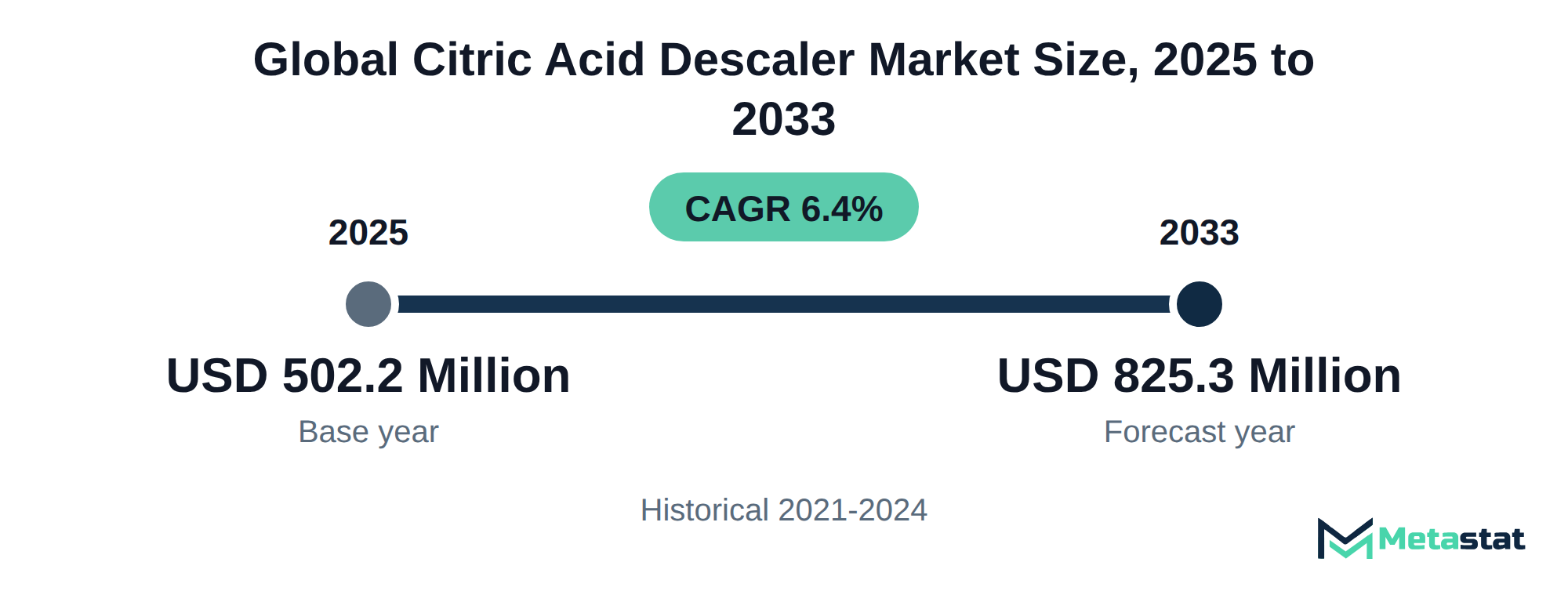
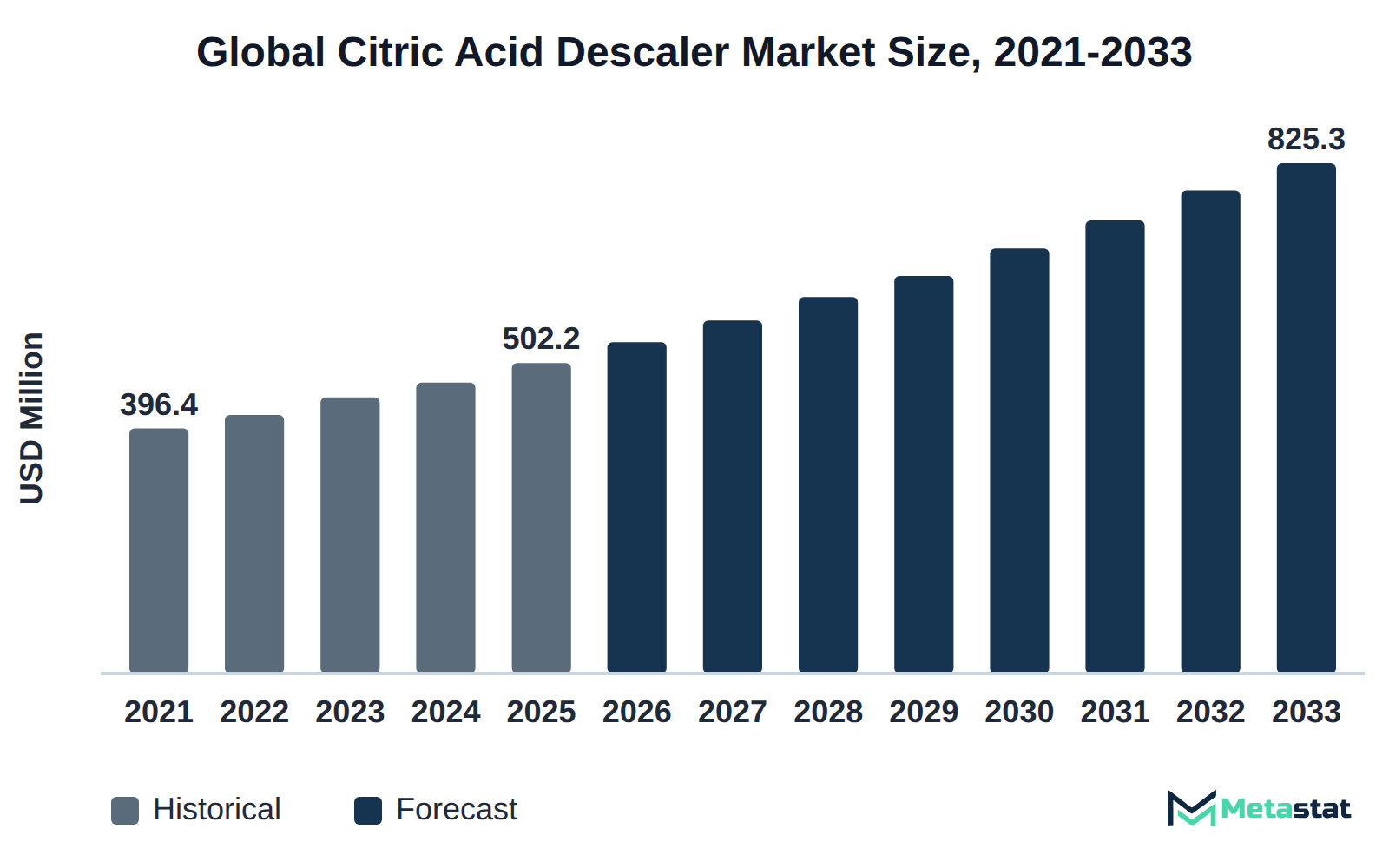
Market Valuation: Valued at $502.2 Million in 2025, projected to reach $825.3 Million by 2033 at a 6.4% CAGR.
Dominant Segment: The household segment leads the market, driven by increasing consumer awareness of appliance maintenance and efficiency. This segment is projected to grow from USD 276.9 million in 2026 to USD 405.4 million by 2033.
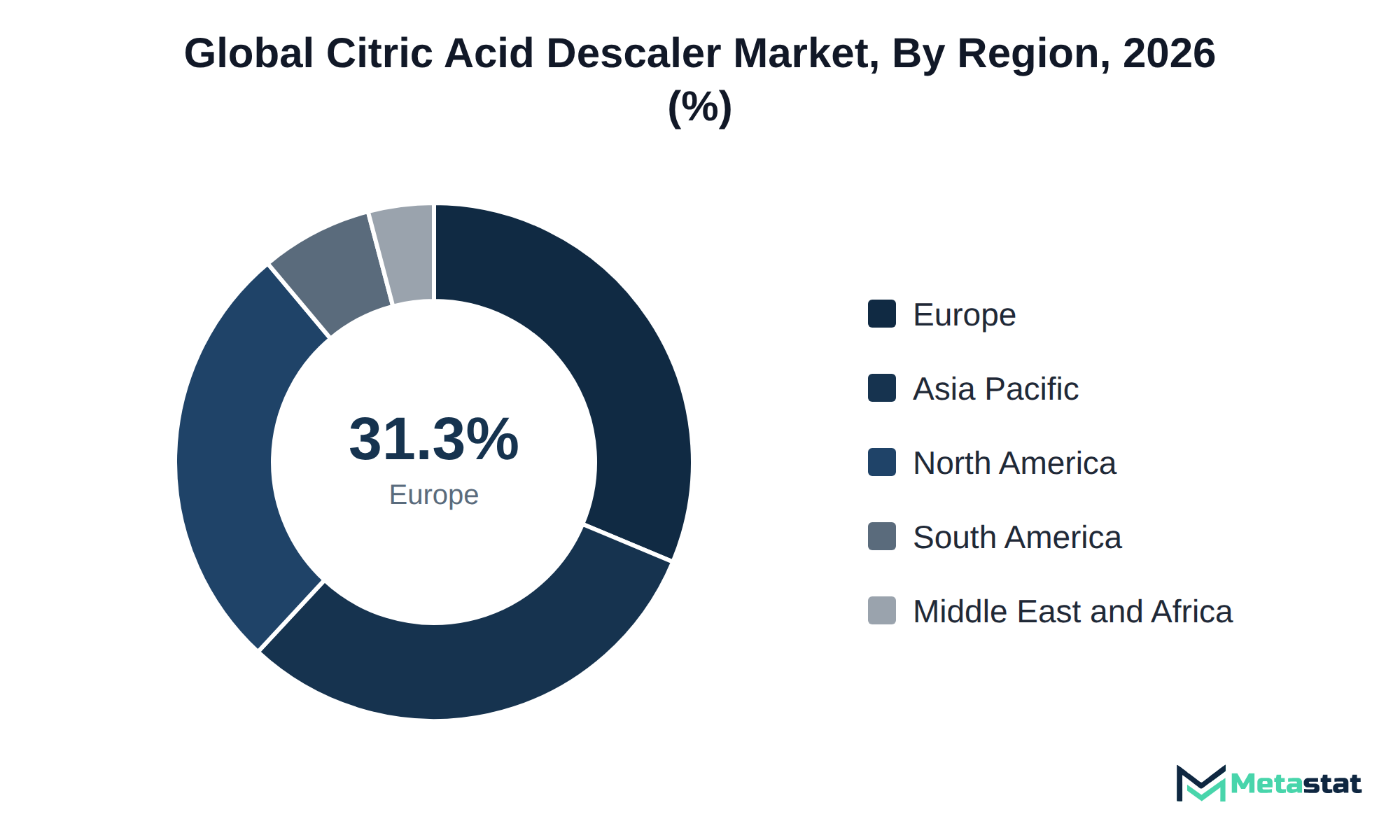
Geographic Lead: North America is the leading region, holding 27.0% of the market in 2025, with the US expected to continue this trend in 2026. The region benefits from heightened awareness of appliance maintenance and energy efficiency.
What's Inside: The report provides a comprehensive analysis of the Citric Acid Descaler market, including competitive coverage, detailed segment breakdowns by form, application, end-use sector, and distribution channel, along with growth forecasts through 2033.
Technological Advancements: Innovative formulations and delivery systems are enhancing descaling efficiency, with suppliers focusing on research and development to improve product effectiveness and safety.
Growth in Online Retail: The online retail channel is anticipated to expand significantly, with a projected CAGR of 8.2% from 2026 to 2033, reflecting a shift in consumer purchasing behavior towards convenience and accessibility.
Choose Your License
Global Citric Acid Descaler Market
The global Citric Acid Descaler market was valued at USD 502.2 million in 2025 and is projected to reach USD 825.3 million by 2033, growing at a CAGR of 6.4% over the forecast period.
The Citric Acid Descaler market encompasses a variety of cleaning products used for removing limescale and mineral deposits from appliances and equipment. Buyers invest in these products to maintain the efficiency and longevity of their machines, ensuring optimal performance while reducing energy consumption. This market serves both household and industrial applications, catering to diverse customer needs across multiple regions.
Growth in the Citric Acid Descaler market stems from wider adoption of descaling solutions, particularly in households and the hospitality industry. The household segment holds the largest value, reflecting a strong demand for effective descaling solutions. North America holds 27.0% of the market in 2025, with the US leading in 2026. This region benefits from growing awareness of appliance maintenance and efficiency, propelling the demand for citric acid-based products.
Rapid advancements in product formulations enhance the effectiveness and safety of citric acid descalers, appealing to environmentally conscious consumers. The market is expected to grow significantly, supported by innovations in packaging and distribution channels. The expected expansion in online retail widens access to these products and drives market penetration and revenue.
The Citric Acid Descaler market includes products essential for maintaining the efficiency of various appliances. Buyers invest in these products to prevent limescale buildup, which leads to reduced performance and higher energy costs. Demand for effective descaling solutions arises from the need to prolong the lifespan of appliances and ensure optimal operation in residential, commercial, and industrial settings.
Rising awareness of the importance of appliance maintenance drives growth in the Citric Acid Descaler market. Households and businesses recognize the benefits of regular cleaning, particularly in regions with hard water, where mineral deposits accumulate rapidly. Among the segments, the liquid form of descalers holds the most value, appealing to consumers due to its ease of use and effectiveness. The market is projected to see significant contributions from North America, with the US expected to lead in 2026.
Consumer preferences shift towards online retail channels, reflecting a growing trend of purchasing cleaning products through e-commerce platforms. This change enhances accessibility and convenience for buyers, contributing to the competitive landscape. The Citric Acid Descaler market continues to see innovations that cater to both residential and industrial needs, ensuring sustained interest and investment in effective cleaning solutions.
Increasing awareness of environmental impacts drives consumers toward citric acid, a safer alternative to harsh chemical descalers in coffee machines and kettles. Citric acid, a bio-based organic acid derived from citrus fruits, offers effective descaling properties without the toxic effects associated with traditional chemical descalers. This shift is evident in the Coffee Machines and Espresso Makers application, projected to grow from USD 168.9 million in 2026 to USD 249.7 million by 2033, reflecting a compound annual growth rate of 5.7%.
Households and foodservice establishments increasingly prefer citric acid for its non-toxic nature and ease of use. The ability to maintain appliances without exposing users to harmful chemicals enhances the appeal of citric acid descalers. This trend aligns with broader consumer demands for eco-friendly products that ensure safety while maintaining performance.
The Citric Acid Descaler market evolves, and suppliers and manufacturers focusing on this transition capture a share of the growing demand for environmentally friendly descaling solutions. By prioritizing citric acid formulations, companies meet consumer preferences and differentiate themselves in a competitive landscape, reinforcing their commitment to sustainability.
Water hardness significantly influences purchasing decisions in the Citric Acid Descaler market. High mineral content in water, prevalent in many regions, leads to increased scaling in appliances and equipment. This condition drives demand for effective descaling solutions, alongside water treatment chemicals used to control scale. For instance, the market is projected to grow at a compound annual growth rate (CAGR) of 6.4%, reaching USD 825.3 million by 2033. Consumers and businesses seek products that combat the effects of hard water, and manufacturers adjust pricing strategies to stay competitive and meet customer needs.
In this market, pricing models and contract structures adapt to the challenges posed by water hardness. Suppliers often implement tiered pricing strategies based on volume or committed contracts, enabling buyers to secure better rates while ensuring consistent supply. This approach caters to both large-scale users, including hospitality and foodservice sectors, and households. As consumer preferences are expected to shift toward eco-friendly products, suppliers must demonstrate the effectiveness and environmental benefits of their offerings. These dynamics create a competitive environment where businesses that emphasize quality and sustainability capture a larger market share.
The tablet and sachet format for citric acid descalers addresses the increasing demand for convenience among consumers. The citric acid descaler market anticipates significant growth, with the tablet and sachet segment projected to reach USD 160.8 million by 2033. This shift reflects a broader trend within the market, where consumers prioritize easy-to-use products that simplify maintenance tasks.
Consumers in the household sector recognize the benefits of these formats, leading to heightened interest in online retail channels. The online retail distribution channel is set to expand, moving from USD 162.6 million in 2026 to USD 282.7 million by 2033. This growth indicates a substantial shift towards e-commerce platforms, enabling consumers to conveniently replenish their supply of descalers without visiting physical stores. By adopting tablet and sachet formats, manufacturers align their products with changing buyer preferences and strengthen their competitive position.
Citric acid descalers demonstrate safety and effectiveness for cleaning espresso machines, dishwashers, and boilers. These appliances often encounter mineral buildup, which impacts their efficiency and longevity.
The citric acid in these descalers works by dissolving limescale deposits, ensuring that appliances operate optimally. The effectiveness of citric acid as a descaling agent stems from its natural acidity, which effectively breaks down mineral deposits without harming internal components. Users report improved performance and extended appliance life when using citric acid descalers regularly.
The growing reliance on citric acid descalers in the market reflects a shift towards environmentally friendly maintenance solutions. Buyers increasingly choose these products due to their proven efficacy and safety profile, enhancing overall consumer satisfaction and driving market growth.
Shifting demographics in the household sector significantly impact expenditure on descaling products. Increased consumer awareness regarding appliance maintenance and efficiency leads to a rise in purchases among young families and millennials. These demographics prioritize convenience and sustainability, favoring citric acid descalers for their perceived safety and environmental benefits. The market reflects this trend, with the household segment projected to grow from USD 276.9 million in 2026 to USD 405.4 million by 2033, indicating a compound annual growth rate of 5.6%. The increasing replacement cycle of aging appliances further supports this growth, as households seek effective solutions to prolong appliance life and minimize operational costs. In this context, the citric acid descaler market captures a larger share as consumers favor eco-friendly options that align with their values and lifestyle choices.
Changing buyer behavior drives demand for products that enhance appliance longevity while ensuring safety and sustainability.
Innovative formulations and delivery systems drive efficiency within the Citric Acid Descaler market. Suppliers increasingly emphasize research and development to create products that minimize the time and effort required for descaling tasks. Enhanced cleaning agents and optimized concentrations result in more effective removal of mineral deposits in appliances. The integration of new technologies, including enzymatic additives, further improves performance while maintaining safety standards.
The impact of these advancements extends across various applications, including household and industrial settings. For instance, coffee machines and dishwashers benefit significantly from improved formulations, leading to a reduction in maintenance costs and an increase in appliance longevity. As consumers learn more about the benefits of advanced descaling solutions, purchasing behavior shifts toward products that deliver higher efficacy and convenience. Consequently, this trend increases demand for citric acid descalers within the overall market, encouraging suppliers to innovate continually.
Price sensitivity among consumers significantly influences purchasing behavior in the Citric Acid Descaler market. Many buyers, particularly in the household and hospitality sectors, prioritize cost-effective solutions. High product prices deter several consumers from investing in citric acid descalers, leading to slower adoption rates. Households often opt for lower-priced alternatives, delaying necessary replacements or upgrades. This trend hinders market growth, particularly in regions with lower disposable incomes.
In the hospitality sector, operators face tight profit margins, making price a crucial factor in their purchasing decisions. They seek bulk purchasing options to minimize costs, limiting the volume of premium products acquired. Retailers in this sector experience challenges in promoting higher-priced citric acid descalers, which impacts overall market demand. Increased competition from lower-cost substitutes drives price sensitivity, complicating market dynamics.
Input cost pressures present significant challenges for suppliers within the Citric Acid Descaler market. Rising prices for raw materials, including citric acid itself, contribute to margin pressure, resulting in reduced profitability. Suppliers respond by optimizing production processes and seeking alternative sourcing strategies to mitigate these costs. Investment in more efficient manufacturing technologies assists in reducing waste and enhancing operational efficiency. Strategic partnerships with raw material providers enable more stable pricing agreements, improving supply chain reliability. These adjustments help maintain competitive pricing and strengthen the value offered to customers. Suppliers navigating these pressures maintain product quality, ensuring customer loyalty and market share retention while facing increasing competition.
Rapid expansion of online retail channels presents a notable opportunity for the Citric Acid Descaler market. The shift in consumer purchasing behavior, driven by convenience and accessibility, supports increased sales through e-commerce platforms. The online retail segment is projected to achieve a compound annual growth rate (CAGR) of 8.2% from 2026 to 2033. This segment allows for direct engagement with consumers, enhancing brand visibility and customer loyalty.
Growth in online retail aligns with the rising demand for convenient packaging options, including tablets and sachets. These formats appeal to consumers seeking easy-to-use solutions for appliance maintenance. E-commerce platforms expand their offerings of citric acid descalers, revealing the potential for increased market penetration. The online retail channel widens access and encourages informed purchasing decisions, which drives overall market growth.
The Global Citric Acid Descaler market is segmented based on Form, Application, End-Use Sector, and Distribution Channel.
Liquid segment is valued at USD 218.1 million in 2026 and is projected to reach USD 318.9 million by 2033, at a CAGR of 5.6% during the forecast period. This segment primarily serves consumers seeking efficient descaling solutions for appliances including coffee machines, kettles, and dishwashers. An increasing focus on maintaining appliance efficiency drives demand in this segment. The convenience and effectiveness of liquid formulations stand out against powder and tablet alternatives, with a slower growth rate than the powder and granules segment, which exhibits a CAGR of 6.6%. The liquid format appeals particularly to household users due to its ease of use and compatibility with various appliances, reinforcing its market position.
The Powder and Granules segment is estimated to reach USD 248.6 million by 2033, at a CAGR of 6.6% during the forecast period. This formulation is widely used for descaling appliances including coffee machines, dishwashers, and heating systems. Households and commercial establishments prioritize powder and granules due to their convenience in storage and usage. The segment experiences growth driven by increasing demand for effective and environmentally friendly cleaning solutions. Compared to other forms, powder and granules offer a cost-effective option while maintaining performance standards. The pricing structure remains competitive, appealing to several price-sensitive consumers and businesses seeking efficient descaling solutions. This segment's growth trajectory is projected to exceed that of other forms, reflecting strong consumer preference for versatility and effectiveness in descaling applications.
Tablets and Sachets segment is expected to reach USD 160.8 million by 2033. This format is preferred for residential and commercial applications, serving users who prioritize convenience and dosage accuracy. The segment is particularly popular among households and hospitality institutions for maintaining appliances like coffee machines and dishwashers. Growth is driven by rising consumer awareness regarding product efficiency and environmental impact, with an increasing trend toward sustainable cleaning solutions. Compared to other forms including liquids and powders, tablets and sachets exhibit a slower growth rate, reflecting a CAGR of 5.6%. Despite this, their ease of use and precise dosage capabilities differentiate them, making them attractive to specific consumer segments within the citric acid descaler market.
Others (Gels, Pastes, Wipes) segment is projected to grow at a CAGR of 6.2% during the forecast period. This segment includes various forms of citric acid descalers primarily for cleaning applications in household and commercial settings. Typical users encompass consumers seeking effective descaling solutions for appliances like kettles and dishwashers, and businesses in the hospitality sector aiming to maintain equipment performance. Increasing demand for environmentally friendly cleaning products drives market growth. Compared to other segments, this category remains competitive due to its unique application methods and versatility in different environments. Rising awareness of the benefits associated with citric acid in cleaning products positions this segment favorably, creating a growing consumer base for gels, pastes, and wipes in the market.
This segment caters to households, coffee shops, and restaurants focused on maintaining the efficiency of coffee equipment through descaling. The growing trend towards premium coffee experiences drives demand for effective descalers that enhance appliance longevity and performance. Compared to other segments, this sub-segment experiences a slower growth rate, influenced by consumer preferences for convenience and ease of use. While other applications, including Washing Machines and Dishwashers, exhibit higher growth potential at a CAGR of 5.9%, the Coffee Machines and Espresso Makers segment differentiates itself by catering specifically to coffee enthusiasts and professionals who prioritize maintenance of equipment for optimal brewing quality.
The Washing Machines and Dishwashers segment is estimated to reach USD 193.8 million by 2033, at a CAGR of 5.9% during the forecast period. This segment primarily serves households and businesses seeking effective cleaning solutions for their appliances. Increased awareness of appliance maintenance contributes to demand, driven by consumers recognizing the importance of descaling for operational efficiency. Compared to other applications, this segment exhibits a more moderate growth rate, influenced by a mix of consumer preference for environmentally friendly products and the rising number of appliances in use. The segment's growth is supported by the ongoing trend toward sustainability, leading buyers to favor citric acid-based solutions over traditional harsh chemicals. The market benefits from these evolving consumer preferences, aligning with broader shifts toward eco-friendly cleaning products.
Kettles and Small Appliances segment is expected to reach USD 99.2 million by 2033. This segment caters primarily to household customers seeking effective descaling solutions for their small kitchen appliances. The increasing prevalence of hard water in many regions drives growing demand for descalers, particularly among consumers prioritizing the longevity and efficiency of their kettles and other small appliances. Unlike other segments, Kettles and Small Appliances experiences a slightly slower growth trajectory, with a CAGR reflecting consumer habits and the life cycles of such appliances. This sub-segment differs from others like Coffee Machines and Espresso Makers, where demand is more pronounced and dynamic, presenting a focused yet steady market trend. Meeting the specific needs of this consumer group influences overall adoption rates and shapes market dynamics.
Heating Systems and Boilers segment is projected to grow at a CAGR of 7.5% during the forecast period. This segment serves essential roles in maintaining the efficiency and longevity of heating systems through effective descaling solutions. The hospitality and industrial sectors, which heavily rely on these systems, drive demand for citric acid descalers designed for their specific needs. Increasing awareness of the importance of regular maintenance for energy efficiency supports growth in this segment. Compared to other segments, the Heating Systems and Boilers segment experiences faster growth due to rising energy costs and regulatory pressures aimed at enhancing system performance. This trend encourages more frequent use of descaling products, positioning it as a key area for innovation and market expansion in the Citric Acid Descaler market.
Industrial equipment and heat transfer equipment, including heat exchangers, require efficient descaling solutions to maintain optimal performance and longevity. These applications primarily serve industries including manufacturing and energy, where equipment performance directly impacts operational efficiency. Demand in this segment is driven by increasing maintenance needs and a growing emphasis on equipment reliability. Users recognize the value of using citric acid descalers to prevent scaling, which impairs heat transfer and results in increased energy costs. This segment exhibits a distinct growth pattern compared to others in the application category, with specific buyers focusing on industrial scale and equipment longevity. Price sensitivity varies, with industrial buyers prioritizing performance and total cost of ownership over initial product costs. This focus on reliability and efficiency differentiates this segment from household or hospitality applications, where consumer preferences lean toward convenience and packaging formats.
Others, including showerheads, faucets, and sanitaryware, represent a vital sub-segment focused on the maintenance of household and industrial plumbing fixtures. This segment is primarily used by homeowners, facility management teams, and maintenance service providers. The demand for efficient descaling solutions in this area is largely driven by the necessity to combat limescale buildup, which affects water flow and appliance efficiency. Competing segments, including Coffee Machines and Espresso Makers, exhibit higher projected growth rates, partly due to the increasing popularity of premium coffee equipment. However, the demand for descalers for plumbing fixtures remains stable, driven by regular maintenance requirements. The market shows significant responsiveness to product enhancements, especially those promoting eco-friendliness and ease of use, aligning with consumer preferences for sustainability.
This segment serves primarily residential users who apply descalers for household appliances including coffee machines, kettles, and dishwashers. Increased awareness regarding appliance maintenance drives demand, particularly among environmentally conscious consumers seeking safe and effective cleaning solutions. Compared to other segments, the household sector exhibits a moderate growth rate, influenced by the rising number of households and the growing emphasis on home care. In contrast, the hospitality and foodservice segment anticipates a faster growth trajectory at a CAGR of 7.2%, driven largely by commercial needs for efficiency and equipment longevity. Distinct buyer demographics further differentiate the household segment, emphasizing consumer preferences for convenience and ease of use.
Hospitality and Foodservice segment is estimated to reach USD 184.1 million by 2033, at a CAGR of 7.2% during the forecast period. This segment serves hotels, restaurants, and catering services that require effective descaling solutions to maintain the performance of their equipment, including coffee machines and dishwashers. The increasing focus on hygiene and quality in foodservice operations drives demand for citric acid descalers in this sector. Compared to other segments in the End-Use Sector, the Hospitality and Foodservice segment experiences faster growth due to heightened consumer awareness and regulatory standards related to cleanliness and maintenance. Suppliers adapt to the shifting preferences of this sector, emphasizing product effectiveness and ease of use. Growth in the market reflects rising investments in hospitality infrastructure and the trend of enhancing customer experience through improved service quality.
The Industrial and Manufacturing segment is expected to reach USD 125.9 million by 2033. This segment encompasses various applications in factories and production facilities, where effective descaling solutions maintain equipment efficiency and extend lifespan. Industries including automotive, food and beverage, and pharmaceuticals heavily rely on citric acid descalers to ensure optimal performance of their machinery. Demand for these products is driven by the increasing focus on operational efficiency and the need for regular maintenance to prevent equipment downtime. Compared to other segments, the Industrial and Manufacturing sector experiences a slower growth rate, focusing on higher-volume purchases by institutional buyers rather than individual consumers. Growth in this segment is supported by ongoing advancements in descaling formulations that enhance effectiveness and safety in industrial applications.
The Healthcare and Institutional segment is projected to grow at a CAGR of 7.2% during the forecast period. This segment primarily serves hospitals, clinics, and other healthcare facilities that require effective cleaning and maintenance solutions for medical equipment and appliances. Increasing awareness of hygiene and sanitation standards, including infection control, drives the demand for descaling products in this sector. This segment typically experiences higher growth compared to others due to stringent regulations concerning cleanliness and maintenance in healthcare settings. The pricing for products in this segment tends to be stable, reflecting the critical nature of their applications. In contrast to the Hospitality and Foodservice segment, which addresses cleanliness, the Healthcare and Institutional segment prioritizes compliance with regulatory standards, thus significantly influencing purchasing decisions. The market sees sustained investment in innovative descaling technologies tailored for healthcare applications.
This sub-segment encompasses various applications that do not fall into the primary categories of household, hospitality, or industrial uses. Products in this sub-segment serve both residential and commercial needs, including cleaning and maintenance for miscellaneous equipment and fixtures. The increasing focus on cleanliness and hygiene in public and private spaces drives demand, particularly in institutional settings where stringent sanitation standards prevail. This segment faces competition from specialized descaling solutions tailored to specific applications, influencing pricing dynamics. Compared to other segments, the growth trajectory appears more gradual, reflecting varying consumer priorities and purchasing habits across different buyer groups. The Citric Acid Descaler market continues to evolve, with these products serving as essential tools for effective maintenance and upkeep.
Online Retail segment is valued at USD 162.6 million in 2026 and is projected to reach USD 282.7 million by 2033, at a CAGR of 8.2% during the forecast period. This segment provides consumers with convenient access to citric acid descalers, particularly through e-commerce platforms. Increasing consumer preference for online shopping fuels demand, with buyers finding it easier to compare products and prices. Expanding digital marketing strategies enhance product visibility and stimulate purchases. Compared to other distribution channels, the Online Retail segment exhibits faster growth, driven by the rise in digital-savvy consumers seeking efficient descaling solutions. In contrast, traditional retail channels experience slower growth due to evolving shopping habits. This trend reflects the dynamic nature of the market, where convenience and accessibility become prominent factors in customer decision-making.
Supermarkets and Hypermarkets segment is estimated to reach USD 201.2 million by 2033, at a CAGR of 5% during the forecast period. This segment is a key distribution channel for many consumers seeking effective descaling solutions for household appliances and industrial applications. Retailers in this segment focus on convenience and accessibility, appealing to both individual consumers and businesses. The steady growth in the segment reflects rising consumer awareness regarding appliance maintenance and longevity. Compared to other distribution channels, including online retail, which anticipates a higher CAGR of 8.2%, the Supermarkets and Hypermarkets segment provides a more traditional shopping experience. This slower growth is attributed to the increasing consumer shift toward e-commerce for convenience and broader selections. Overall, the market shows strong demand for effective descalers within this established retail framework.
The Specialty and Home Improvement Stores segment is expected to reach USD 130.7 million by 2033. The increasing trend toward DIY home maintenance drives demand, resulting in heightened sales through specialty retailers. Unlike other segments, this segment exhibits a stronger growth trajectory, fueled by a compound annual growth rate of 6.2% during the forecast period. Consumers prefer browsing specialized stores for product diversity and expert advice, distinguishing this channel from more generalized retail options. The ongoing shift toward online retailing influences purchasing behavior, compelling brick-and-mortar stores to enhance their service offerings. Overall, the market for Citric Acid Descaler products through Specialty and Home Improvement Stores reflects evolving consumer preferences for effective home care solutions.
Direct and B2B Sales segment is projected to grow at a CAGR of 6.2% during the forecast period. This segment involves sales made directly to businesses or institutional clients, often through dedicated sales teams or partnerships. Users include large-scale operations in hospitality, healthcare, and manufacturing sectors that require effective descaling solutions. The increasing complexity of industrial equipment drives demand, reflecting a trend towards maintaining optimal performance. Compared to other distribution channels, this segment experiences higher growth, attributed to the rising preference for tailored solutions and bulk purchasing options. This preference contrasts with segments including Online Retail, which focuses more on individual consumer sales. The market benefits from this shift, emphasizing the significance of direct relationships between suppliers and businesses.
Distribution through alternative channels encompasses methods beyond traditional retail, allowing for a varied approach to market penetration. This segment includes avenues such as direct sales and other non-standard retail options, appealing to many types of buyers. A growing preference for convenience drives demand in this area, with consumers increasingly seeking flexible purchasing options. The flexibility of distribution channels results in competitive pricing, attracting price-sensitive buyers compared to conventional retail outlets. This sub-segment experiences slower growth than online retail, which has a CAGR of 8.2% during the forecast period, highlighting the different dynamics at play. The Citric Acid Descaler market benefits from diversified distribution strategies, enabling suppliers to reach niche markets and enhancing overall market reach.
Based on geography, the Global Citric Acid Descaler market is divided into North America, Europe, Asia-Pacific, South America, Middle East, and Africa.
The demand for citric acid descaler in North America reflects a growing trend in household and industrial applications. Coffee machines and espresso makers drive significant sales, with increasing consumer awareness regarding maintenance and cleanliness. The market benefits from established retail infrastructure, particularly through online platforms, which facilitate convenient access for buyers. The rising emphasis on sustainability further supports the adoption of environmentally friendly cleaning solutions across various sectors. North America is projected to reach USD 213.4 million by the end of 2033, indicating strong growth driven by these consumer preferences. The region holds a 27.00% share of the global market in 2025, highlighting its importance as a key player in the citric acid descaler market.
In Europe, strong demand for the Citric Acid Descaler market arises from various applications, particularly in household and hospitality sectors. Countries including Germany, France, and the UK demonstrate significant consumption due to high standards for appliance maintenance and water quality. The market benefits from advanced manufacturing capabilities and strong distribution networks that support effective supply chain management. Strong regulatory frameworks focusing on environmental sustainability further enhance market growth, encouraging the adoption of eco-friendly cleaning products. By 2025, Europe holds a market share of 31.3%, positioning it as a vital region for the overall growth of the Citric Acid Descaler market. Factors driving demand include increasing awareness of appliance longevity and efficiency, leading to higher consumer investments in descaling solutions.
Asia-Pacific represents USD 825.3 million of the Citric Acid Descaler market, with demand driven by a growing consumer base and increased awareness of maintenance for household appliances. Countries including China, Japan, and India exhibit a strong inclination towards products that enhance the longevity of devices like coffee machines and washing machines. The rising trend of online retail in the region facilitates convenient access to various descaler forms, including liquids and powders, catering to a diverse range of consumer preferences. The market experiences growth, driven by the need for effective descaling solutions in both household and industrial applications. Enhanced infrastructure and competitive pricing strategies further support the expansion of the market, with a projected growth rate of 6.4% during the forecast period.
Brazil and Argentina drive demand in the Citric Acid Descaler market due to increasing consumer awareness regarding appliance maintenance. The market benefits from a growing hospitality sector, particularly in urban areas, where coffee machines and dishwashers are prevalent. Infrastructure improvements in retail channels enhance accessibility for consumers, leading to higher sales volumes. The market in South America is projected to capture a 7.0% share of global sales in 2025, reflecting the rising acceptance of citric acid-based products. Several buyers prioritize environmentally friendly solutions, further fueling market growth in the region. Increased investment in marketing and distribution strategies strengthens the competitive landscape, enabling companies to capture a broader customer base.
The Citric Acid Descaler market in the Middle East and Africa reflects a unique demand landscape driven by specific regional factors. Countries including Saudi Arabia and the UAE exhibit a growing trend in maintenance for household and industrial applications, resulting in increased interest from various buyer groups. The market benefits from infrastructure investments that enhance distribution capabilities across urban centers. South Africa's developing retail sector further supports market growth through a rise in the availability of descaling products in supermarkets and specialty stores. The region's share in the global market highlights its emerging position. Investment in consumer education regarding appliance maintenance is expected to increase demand for citric acid descalers, promoting broader adoption across the region.
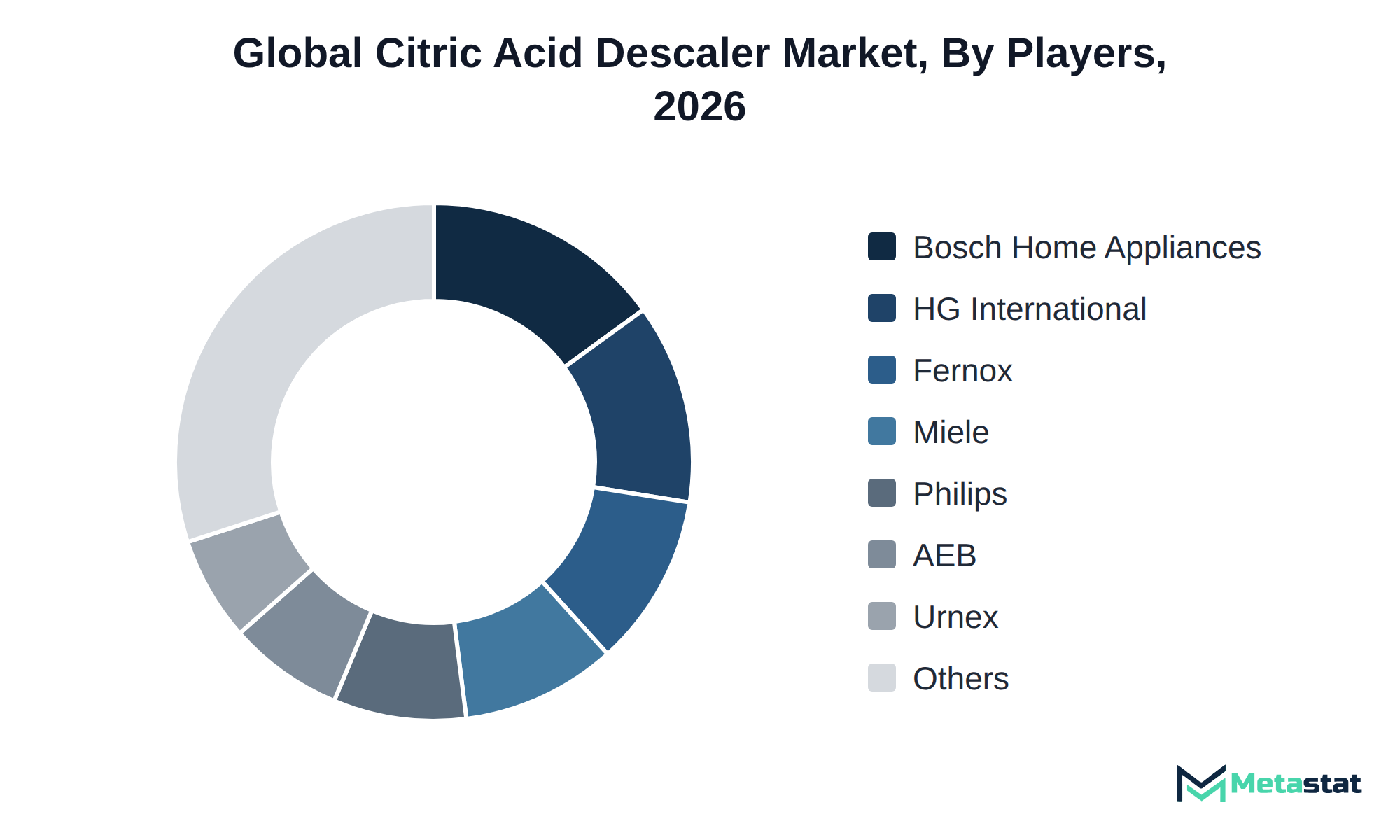
Companies in the Citric Acid Descaler market adopt various strategies to capture consumer interest. Players differentiate their offerings based on factors including pricing, product formulation, and customer service. For instance, HG International emphasizes competitive pricing and a diverse product line catering to various applications. Fernox focuses on developing high-performance formulations that target specific end-use sectors including hospitality and foodservice.
Buyers prioritize product efficacy, certification, and ease of use when selecting descalers. Bosch Home Appliances and Miele rely on their reputations for quality and reliability to attract customers within the household segment. Philips concentrates on sustainable product development, appealing to eco-conscious consumers by offering formulations that align with environmentally friendly practices.
Achieving this growth relies on several key developments within the Citric Acid Descaler market. First, a significant increase in the adoption of liquid formulations, projected to grow at a CAGR of 5.6%, will enhance overall market value. Second, the expansion of the online retail distribution channel, expected to grow at a CAGR of 8.2%, will improve accessibility and drive sales among consumers. Lastly, rising demand from the hospitality and foodservice sector, anticipated to grow at a CAGR of 7.2%, will further contribute to market growth. Potential delays in regulatory approvals or shifts in consumer preferences toward alternative cleaning solutions represent risks that could hinder growth. For instance, if regulatory barriers heighten in key regions including North America and Europe, the anticipated expansion could slow. Overall, while a growth trajectory is anticipated, the successful realization of the market's potential hinges on addressing these challenges and capitalizing on identified opportunities.
By Form: Liquid, Powder and Granules, Tablets and Sachets, Others (Gels, Pastes, Wipes)
By Application: Coffee Machines and Espresso Makers, Washing Machines and Dishwashers, Kettles and Small Appliances, Heating Systems and Boilers, Industrial Equipment and Heat Exchangers, Others (Showerheads, Faucets, Sanitaryware)
By End-Use Sector: Household, Hospitality and Foodservice, Industrial and Manufacturing, Healthcare and Institutional, Others
By Distribution Channel: Online Retail, Supermarkets and Hypermarkets, Specialty and Home Improvement Stores, Direct and B2B Sales, Others
The report strategically identifies and profiles the key market players and analyses their core competencies in each sub-segment of the Citric Acid Descaler market.
Report Attributes | Details |
Study Period | 2021-2033 |
Base Year | 2025 |
Estimated Year | 2026 |
Forecast Period | 2026-2033 |
Historical Period | 2021-2025 |
Growth Rate | CAGR 6.4% from 2026 to 2033 |
Revenue Unit | USD million |
Segmentation | By Form, Application, End-Use Sector, Distribution Channel, and Region |
By Region | North America (By Form, Application, End-Use Sector, Distribution Channel, and Country)
|
Europe (By Form, Application, End-Use Sector, Distribution Channel, and Country)
| |
Asia Pacific (By Form, Application, End-Use Sector, Distribution Channel, and Country)
| |
South America (By Form, Application, End-Use Sector, Distribution Channel, and Country)
| |
Middle East and Africa (By Form, Application, End-Use Sector, Distribution Channel, and Country)
|
Find answers to common questions about this report
The Citric Acid Descaler market size was valued at USD 502.2 million in 2025.
The market is projected to grow at a CAGR of 6.4% during the forecast period from 2026 to 2033.
The North America Citric Acid Descaler market size is estimated to reach USD 213.4 million by 2033.
Liquid form leads the Citric Acid Descaler market with a projected value of USD 318.9 million by 2033, surpassing other segments in revenue generation.
Key drivers for the Citric Acid Descaler market include shifting demographics, with increased consumer awareness regarding appliance maintenance leading to higher purchases among young families and millennials. The rapid expansion of online retail channels supports increased sales through e-commerce platforms, aligning with the rising demand for convenient packaging options.
Europe holds the dominant share of the Citric Acid Descaler market, accounting for 31.3 percent. This figure reflects its leading position compared to other regions.
Price sensitivity among consumers restrains growth in the Citric Acid Descaler market, particularly in the household and hospitality sectors, leading to slower adoption rates. Input cost pressures, including rising prices for raw materials, contribute to margin pressure, reducing profitability for suppliers.
Rapid expansion of online retail channels enhances accessibility and convenience for consumers, favoring the adoption of citric acid descalers. The projected compound annual growth rate of 8.2 percent for the online retail segment from 2026 to 2033 indicates strong potential for increased market penetration and informed purchasing decisions.
The Citric Acid Descaler market is estimated to reach a valuation of USD 825.3 million by 2033.
Key players operating in the Citric Acid Descaler market include HG International, Fernox, Bosch Home Appliances, Miele, Philips, Swirl, IMEC, AEB Group, Eres Sapoli, and Urnex.
The analysts below cover Chemicals and Materials research at Metastat Insights.
LEAD ANALYST
Utkarsh Khirodkar is a Lead Market Research Analyst at MetaStat Insight, specializing in market intelligence, technology sector assessments, and competitive strategy.

INDUSTRY CONSULTANT - CHEMICALS & ADVANCED MATERIALS
Chemicals and Materials · Machinery & Equipment · Packaging
Amit Gadhekar Consultant for Chemicals and Materials at MetaStat Insight, directing sector-specific intelligence, research, and strategic consulting across global chemical and processing markets.
Evaluating sovereign cloud deployments for core banking platforms demands a clear view of data residency regulations and migration exit strategies. MetaStat Insight delivered an exhaustive review of regional latency tolerances, mainframe decommission milestones, and third-party vendor concentration risk. The regulatory compliance mapping across European and Asian financial jurisdictions gave our team a dependable baseline for multi-cloud infrastructure discussions.
Replacing petrochemical surfactants with bio-based alternatives requires realistic timelines on industrial precision fermentation scaling. The market research broke down commercialization timelines, feedstock sugar price sensitivities, and regional cosmetic ingredient regulatory approvals in Europe and East Asia. That supplier readiness mapping gave our formulations team reliable context when comparing renewable chemical sourcing roadmaps.
Tracking ceramic matrix composite adoption in high-bypass aero engines requires strict attention to material qualification cycles and FAA airworthiness testing milestones. The MetaStat Insight team provided a detailed timeline of silicon carbide fiber manufacturing capacity and commercial foundry lead times. Having clear visibility into upstream thermal barrier coating supply helped us stress-test our long-term component procurement strategy.
Explore related market intelligence reports worth reading alongside this one.