
LEAD ANALYST
Utkarsh Khirodkar is a Lead Market Research Analyst at MetaStat Insight, specializing in market intelligence, technology sector assessments, and competitive strategy.

Global Water Treatment Chemicals Market Size, Share, By Product Type (Coagulants, Flocculants, Corrosion Inhibitors, Scale Inhibitors and Dispersants, Biocides and Disinfectants, pH Adjusters and Alkalinity Builders, Oxygen Scavengers and Reducing Agents, Chelating and Sequestering Agents, Antifoams and Defoamers), By Application (Raw Water and Pretreatment, Boiler and Steam Systems, Cooling Water Systems, Closed-Loop Heating and Chilled Water Systems, Process Water Treatment, Drinking Water Treatment, Wastewater and Effluent Treatment, Membrane, RO and Desalination Treatment, Water Reuse and Reclamation), By End-Use Industry (Municipal Water and Wastewater, Power Generation, Oil and Gas, Chemicals and Petrochemicals, Pulp and Paper, Food and Beverage, Mining and Metals, Pharmaceuticals and Life Sciences, Commercial and Institutional), By Treatment Stage (Primary, Secondary, Tertiary and Advanced, Sludge Handling and Conditioning), Industry Analysis, Growth, Trends, and Forecast, 2026-2033
Report ID
MSI-5244
Published
September, 2026
Pages
265 Pages
Format
Historical
Base year
Forecast
Forecast period
Report Details
Market Valuation: Valued at $35.6 Billion in 2025, projected to reach $50.2 Billion by 2033 at a 4.4% CAGR.
Dominant Segment: The Coagulants segment leads the market, driven by increasing regulatory standards and the need for effective water treatment solutions across various industries.
Geographic Lead: North America holds a significant market share, propelled by stringent regulations and advanced infrastructure, while the Asia Pacific region follows closely due to rapid industrialization and urbanization.
What's Inside: The report provides a comprehensive analysis of market dynamics, competitive landscape, and detailed segmentation by product type, application, end-use industry, and treatment stage, covering the forecast period from 2026 to 2033.
Emerging Regional Demands: Rapid urbanization in developing regions creates a pressing need for improved water management solutions, driving investments in chemical treatments to ensure water quality and compliance with standards.
Technological Integration: The adoption of advanced technologies, including AI and automation, enhances operational efficiency and optimizes chemical dosing, leading to improved treatment outcomes and cost savings.
Choose Your License
Global Water Treatment Chemicals Market
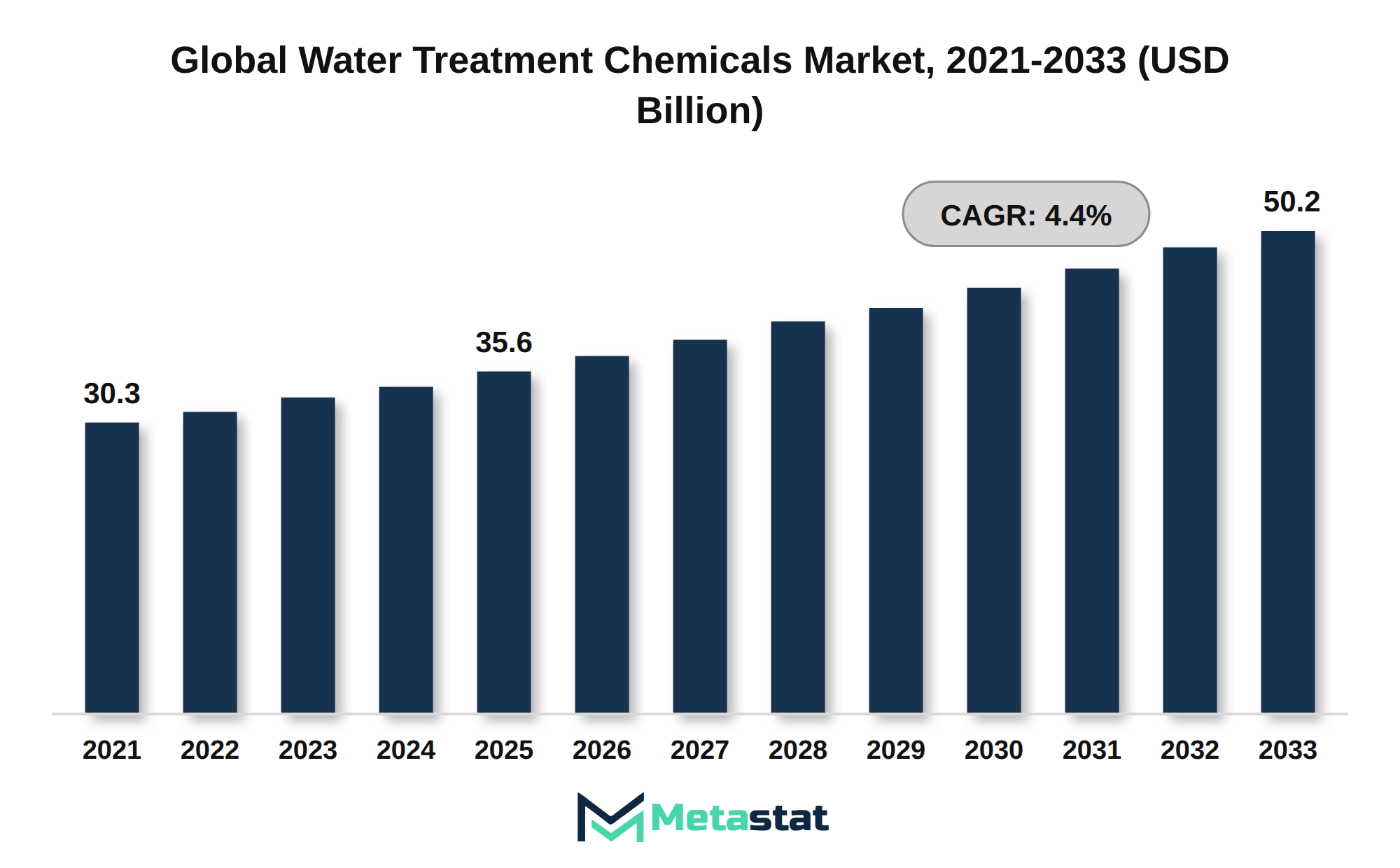
The global Water Treatment Chemicals market was valued at USD 35.6 billion in 2025 and is projected to reach USD 50.2 billion by 2033, growing at a CAGR of 4.4% over the forecast period.
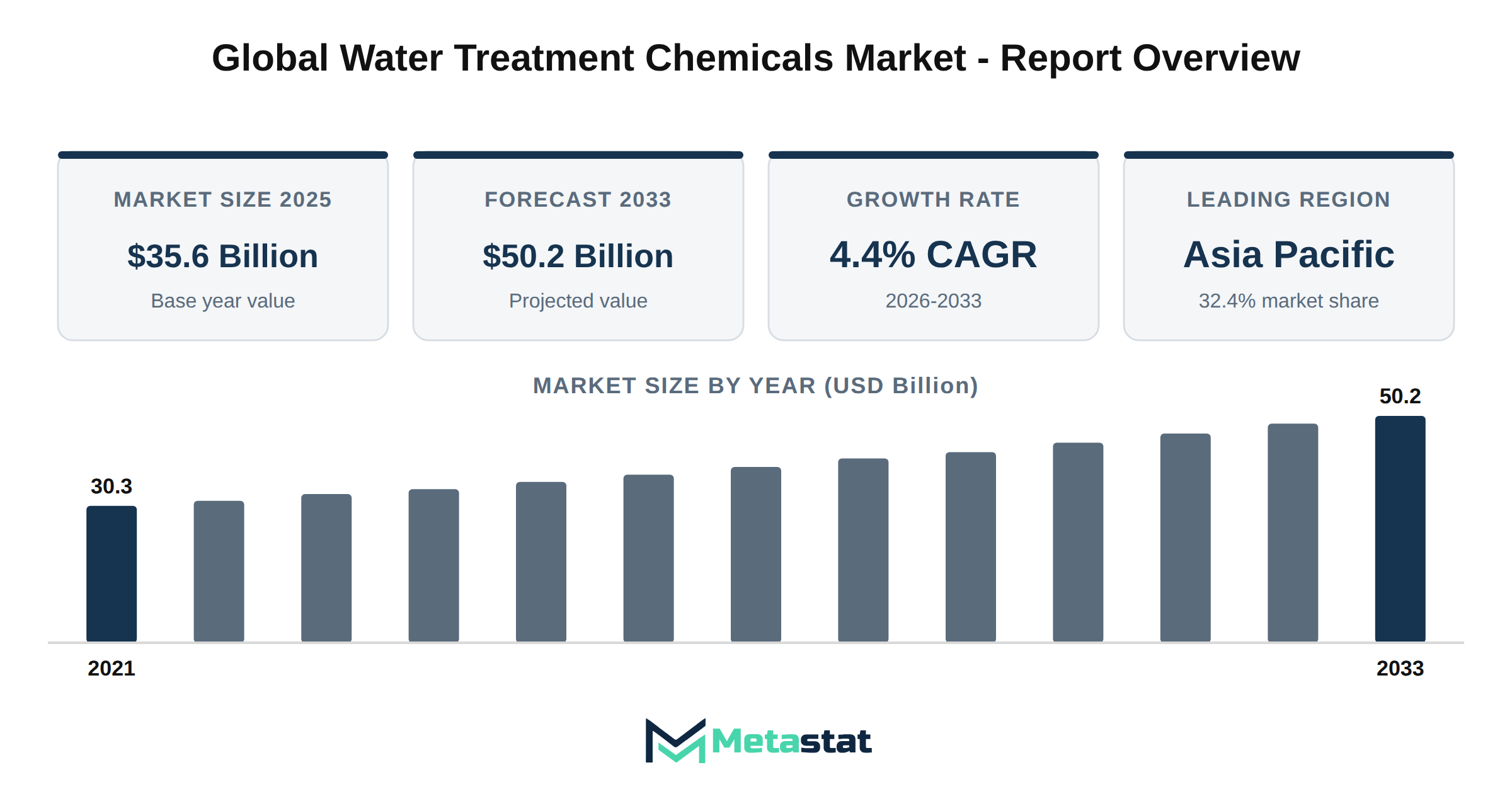
The Water Treatment Chemicals market was valued at USD 35.6 billion in 2025 and is projected to reach USD 50.2 billion by 2033, reflecting a compound annual growth rate (CAGR) of 4.4%. Historical figures indicate steady growth, beginning with USD 30.3 billion in 2021 and gradually increasing to USD 34 billion in 2024. This market demonstrates significant potential, driven by rising awareness of water quality and environmental sustainability.
Regional analysis shows North America holds a share of 30.8% in the market, driven by stringent regulations and advanced infrastructure. The estimated value for North America in 2033 is USD 14.6 billion, with a CAGR of 4.4%. The Asia Pacific region follows closely with a 32.4% market share, reflecting rapid industrialization and urbanization, which heightens demand for effective water treatment solutions.
Innovations including AI-enabled chemical dosing optimization and real-time water chemistry monitoring enhance operational efficiency. The development of phosphate-free and zinc-free chemistry contributes to environmental compliance and sustainability in the Water Treatment Chemicals market. Bio-based coagulants and flocculants represent a shift towards sustainable practices, catering to the growing demand for eco-friendly solutions. This shift supports the market's growth trajectory.
Technological advancements include the introduction of solid and controlled-release treatment chemistries, aiding in waste reduction and improving treatment efficiency. High-recovery membrane antiscalant innovations address challenges associated with scaling in various water treatment processes. The market anticipates continuous evolution, focusing on advanced oxidation and non-chlorine disinfection methods that enhance treatment effectiveness while minimizing harmful byproducts.
Recent advancements in AI-enabled chemical dosing optimization enhance precision in water treatment processes. This innovation allows facilities to achieve optimal chemical use, resulting in cost savings and improved treatment efficiency. Real-time water chemistry monitoring systems provide crucial data, enabling immediate adjustments to treatment protocols, thereby ensuring compliance with environmental standards.
Innovations in phosphate-free and zinc-free chemistry contribute to reduced environmental impact while maintaining effective water treatment solutions. The development of bio-based coagulants and flocculants offers sustainable alternatives to traditional chemicals, appealing to eco-conscious consumers and regulatory bodies. Solid and controlled-release treatment chemistries enhance effectiveness over extended periods, reducing the frequency of applications and minimizing labor costs.
High-recovery membrane antiscalants represent a significant breakthrough in preventing scaling in water systems, ensuring optimal performance and longevity of equipment. Advanced oxidation processes and non-chlorine disinfection methods provide safer alternatives for water treatment, aligning with growing concerns over chemical safety and environmental health.
Integration of smart sensors and digital water technologies streamlines operations, facilitating real-time data collection and analysis. This integration supports regulatory compliance and adapts to various regional risk frameworks, enhancing operational resilience. Disruptions in supply chains necessitate innovative sourcing strategies, prompting firms to reassess logistics architecture and procurement practices.
Market fragmentation presents both challenges and opportunities for players in the Water Treatment Chemicals market. M&A dynamics reflect ongoing consolidation efforts aimed at enhancing market share and expanding product portfolios. Companies focus on capital allocation towards infrastructure investments that promote innovation and ensure future growth.
Strategic outlook emphasizes the importance of corporate imperatives in aligning with sustainability goals and circular economy dynamics. Adoption of high-value recommendations reinforces the need for companies to evolve and adapt to changing market demands, ensuring long-term success in the competitive landscape.
The increasing adoption of advanced technologies significantly influences the Water Treatment Chemicals market. Automation, artificial intelligence, and software solutions streamline processes, enabling companies to optimize chemical dosing and treatment methods. Digitizing legacy systems enhances operational efficiency, leading to improved performance in chemical usage and treatment outcomes.
Investment in technology integration supports enhanced data analytics and monitoring capabilities. This advancement allows for real-time adjustments in treatment processes, ultimately leading to cost savings and higher compliance with safety and environmental standards. Rising operational productivity drives demand for water treatment chemicals, reinforcing the market's growth trajectory.
Firms that leverage technology effectively position themselves to capture greater market share. Modernizing treatment techniques through technological integration aligns with the broader trend of digitization in various sectors, promoting further exploration of innovative chemical solutions. This dynamic environment creates a competitive landscape that drives ongoing investment and development within the market.
Regulatory tightening presents significant challenges for the Water Treatment Chemicals market. Compliance hurdles arise from complex legal mandates that vary across regions, creating a fragmented operational environment. This complexity increases costs and delays adoption, particularly for smaller players who struggle to meet stringent standards. For larger companies, navigating these regulations diverts resources from innovation and expansion efforts, impacting overall market growth.
Macroeconomic headwinds further complicate the market environment. Inflationary pressures have escalated operational costs, forcing companies to reassess pricing strategies and investment plans. High capital investment requirements hinder the entry of new competitors, limiting options for buyers and reducing overall market dynamism. In an environment where cost efficiency becomes critical, several companies opt for less effective alternatives, undermining demand for advanced chemical solutions.
Supply chain disruptions and geopolitical instability exacerbate these issues. Resource scarcity affects the availability of critical raw materials, leading to production delays and increased costs. Companies operating in regions with significant infrastructure gaps face connectivity deficits that hinder efficient distribution and product deployment. This situation creates a ripple effect throughout the market, slowing down potential growth and limiting opportunities for investment.
Labor market challenges contribute to operational constraints within the Water Treatment Chemicals market. Skilled labor deficiencies and rising workforce overhead create barriers to efficient operations. Companies struggle to recruit and retain talent capable of implementing advanced technologies and strategies, which are essential for maintaining competitive advantage. This talent gap stifles innovation and reduces the market's growth potential.
Geopolitical fragmentation continues to disrupt the Water Treatment Chemicals market, leading to increased trade deficits and tariff friction. Political instability in key regions affects the flow of raw materials and components, resulting in supply chain instability that complicates procurement processes for manufacturers. Suppliers face challenges in securing consistent sources of key inputs, contributing to increased operational costs and delays in product availability.
Technological disruptions increasingly affect market dynamics. Companies struggle to integrate advanced solutions into existing infrastructures. Complex research and development integrations hinder the swift adoption of innovations, limiting competitiveness. These challenges lead to interoperability friction, whereby new technologies do not seamlessly function with legacy systems, complicating product implementation.
Shifts in downstream demands create additional pressures within the market. Emerging trends toward sustainability and decarbonization initiatives require manufacturers to adapt rapidly, often before fully understanding the implications on production costs and pricing structures. Compliance overhead associated with tightening global regulatory standards adds another layer of complexity. Companies navigate evolving legal liabilities while maintaining operational effectiveness.
Pricing compression and margin pressures impact profitability. Rising input cost structures, largely driven by supply chain volatility, force companies to reassess pricing strategies to remain competitive. This environment limits the ability to invest in talent retention and workforce skill development, exacerbating the challenges faced by market participants.
The Water Treatment Chemicals market confronts significant hurdles due to infrastructural gaps and retrofitting barriers, which delay the implementation of necessary upgrades. These obstacles hinder the growth potential of the market. Companies struggle to meet the rising demands of various industries while adhering to regulatory requirements and sustainability goals. Addressing these challenges will be crucial for ensuring long-term market viability and competitiveness.
The Water Treatment Chemicals market presents significant opportunities stemming from emerging regional demands. Rapid urbanization in developing regions fuels the need for improved water management solutions. Increased population density and industrial activities strain existing water resources, creating an urgent requirement for effective treatment solutions that ensure water quality and availability. While water scarcity becomes a pressing concern, investments in chemical treatments gain traction, enabling municipalities and industries to maintain compliance with quality standards.
Infrastructure modernization efforts further enhance market potential. Many regions are focusing on upgrading aging water treatment facilities, investing in new technologies that improve efficiency and effectiveness. This upgrade process invites innovative chemical solutions that address specific treatment challenges, including corrosion and scaling, thereby expanding the market's application scope. The emphasis on sustainability in new infrastructure projects ensures that eco-friendly chemical options receive heightened attention, aligning with the global push for environmentally responsible practices.
Geographical expansion contributes to market diversification. Increased industrial activities in regions like Asia Pacific and South America create a higher demand for water treatment chemicals tailored to local conditions. This trend drives suppliers to adapt their offerings and explore partnerships that meet regional needs effectively. By aligning product development with specific geographical requirements, companies in the market strengthen their competitive positioning and capture greater market share.
Technological disruptions present opportunities through next-generation innovations. Advances in chemical formulations and process automation facilitate the development of more efficient and effective water treatment solutions. The introduction of digital technologies into chemical dosing systems enhances operational precision and reduces waste, driving operational yield maximization. These innovations support the market's growth by enabling users to achieve higher standards of water treatment while reducing overall costs.
Value-chain optimization emerges because a crucial strategy within the market. By streamlining processes and enhancing collaboration across stakeholders, players in the market boost operational efficiency. Strategic collaborations enhance the development of integrated solutions that meet diverse industry requirements, enhancing the overall value proposition. This comprehensive approach to product integration not only strengthens market presence but addresses evolving buying behaviors influenced by customer demands for effective solutions.
The Global Water Treatment Chemicals market is segmented based on Product Type, Application, End-Use Industry, and Treatment Stage.
Valued at USD 6.6 billion in 2026, the Coagulants segment is projected to reach USD 8.6 billion by 2033, reflecting a CAGR of 3.8% during the forecast period. The demand for coagulants largely stems from the increasing need for effective water treatment solutions across various industries, particularly in municipal water and wastewater treatment. Rising regulatory standards regarding water quality further drive this segment, because organizations seek to comply with stringent regulations governing effluent discharge and drinking water safety.
Technological advancements in coagulation processes enhance efficiency and effectiveness, leading to greater adoption among end-users. Innovations in formulations and product delivery systems contribute to improved operational performance, allowing for greater customization to meet specific treatment needs. The expansion of industrial applications, including oil and gas, power generation, and food processing, increases demand for coagulants, establishing strong links between these industries and the water treatment chemicals market.
Pricing volatility affects the cost structures associated with coagulants, primarily due to fluctuations in raw material prices. Manufacturers experience margin pressures stemming from this volatility, which necessitates strategic sourcing and cost management to maintain competitiveness. Continued investments in research and development facilitate the evolution of coagulant products, leading to next-generation solutions that address emerging challenges in water treatment.
Flocculants play a critical role in various applications, particularly in water treatment processes, by enhancing the efficiency of sedimentation and filtration. This segment is driven by increasing concerns regarding water quality and the need for effective wastewater management in industries including municipal water and power generation. The growing focus on environmental sustainability further drives demand for flocculants, attributed to regulatory frameworks that increasingly emphasize compliance with stringent water quality standards.
The flocculants segment is estimated to reach USD 7.3 billion by 2033, at a CAGR of 4.8% during the forecast period. Innovations in flocculant formulations, including the development of biodegradable and non-toxic alternatives, contribute to segment growth. These advancements align with the market's move toward sustainable practices, enhancing adoption across various sectors. The segment's expansion is further supported by rising investments in industrial wastewater treatment facilities, ensuring compliance with environmental regulations.
Flocculants are essential for improving operational efficiency in wastewater treatment processes, leading to cost savings for municipalities and industries alike. Evolving technologies in water treatment applications enhance the effectiveness of flocculants, allowing for improved performance and application versatility. Overall, the segment's dynamics reflect the broader trends within the Water Treatment Chemicals market, highlighting its significance in achieving cleaner and safer water resources.
Anticipation surrounds the growth of the Corrosion Inhibitors segment within the Water Treatment Chemicals market, projected to reach USD 5.9 billion by 2033. Increasing industrial activities, particularly in power generation and oil and gas, drive demand for effective corrosion prevention solutions. The rise in infrastructure development, coupled with aging industrial equipment, intensifies the need for reliable corrosion inhibitors that extend asset lifespan and enhance operational efficiency.
Technological advancements play a crucial role in shaping this segment, with ongoing research leading to the development of next-generation inhibitors that provide superior performance. These innovations align with regulatory compliance standards, ensuring that products meet environmental and safety requirements. Manufacturers focus on formulating environmentally friendly options, responding to growing consumer awareness regarding sustainability.
Downstream applications influence consumption patterns, with industries emphasizing the necessity for customized solutions tailored to specific operational conditions. Fluctuations in raw material sourcing and pricing volatility present challenges; however, strategic opportunities arise for companies investing in supply chain resilience and alternative materials. The market remains competitive, prompting firms to enhance product offerings through strategic partnerships and acquisitions, further strengthening their positions in the Water Treatment Chemicals market.
Within the Water Treatment Chemicals market, the Scale Inhibitors & Dispersants segment is projected to grow at a CAGR of 5% during the forecast period. Demand for scale inhibitors arises primarily from industrial applications, where they mitigate scale formation in equipment, enhancing operational efficiency and reducing maintenance costs. Industries including power generation, oil and gas, and municipal water treatment increasingly rely on these chemicals to maintain system integrity and reduce downtime.
Technological advancements in formulations and delivery systems drive the evolution of scale inhibitors, enabling more effective performance in various water conditions. Next-generation products focus on improved efficacy and environmental compliance, addressing stringent regulations concerning chemical usage in water treatment processes. Increased focus on sustainability strengthens demand for innovative solutions that minimize chemical waste while maintaining treatment effectiveness.
Pricing volatility of raw materials, including phosphonates and polyacrylic acids, influences market dynamics. Supply chain resilience remains crucial, particularly amid disruptions caused by geopolitical factors and climate change, impacting sourcing and logistics. Growth potential aligns with increasing investment in infrastructure upgrades and modernization efforts, particularly in industrial sectors requiring advanced water treatment solutions.
Market observers indicate a shift toward greener alternatives, challenging traditional chemical treatments and stimulating innovation in scale inhibitors. This transition creates strategic opportunities for manufacturers to develop environmentally friendly products that meet both performance and regulatory standards. Adaptations in end-user consumption patterns shape the competitive landscape, influencing product development and market positioning.
Increasing focus on water quality and sanitation drives demand for biocides and disinfectants within the Water Treatment Chemicals market. Stringent regulations regarding water safety and health standards necessitate the use of effective biocides in various applications, ensuring the elimination of harmful microorganisms. The segment benefits from advancements in formulation technologies, enabling the development of more effective and environmentally friendly products.
Biocides and disinfectants find extensive application across multiple end-use industries, including municipal water treatment, food and beverage processing, and oil and gas. The emphasis on maintaining safe and clean water supplies drives growth within this segment. Rising consumer awareness regarding hygiene and sanitation accelerates the adoption of these chemicals.
Technological advancements contribute to product innovation, enhancing the efficiency and effectiveness of biocides and disinfectants. Next-generation formulations often incorporate dual-action properties, targeting a broader spectrum of pathogens while minimizing environmental impact. This evolution aligns with growing environmental sustainability demands, shaping the future of the market.
Raw material sourcing and supply chain resilience remain critical factors influencing the pricing dynamics of biocides and disinfectants. Fluctuations in raw material availability lead to pricing volatility, impacting profitability for manufacturers. Strategic investment in supply chain management and alternative sourcing strategies mitigates risks associated with supply chain vulnerabilities.
While environmental regulations tighten, manufacturers face increased pressure to comply with new standards, leading to higher compliance costs. Companies that proactively adapt to regulatory changes will likely maintain a competitive edge in the Water Treatment Chemicals market. Ongoing investments in research and development create strategic opportunity windows, allowing players to introduce innovative solutions that address compliance requirements while meeting market demands.
Demand for pH Adjusters & Alkalinity Builders in the Water Treatment Chemicals market arises from the increasing maintain optimal pH levels in various treatment processes. These products play an important role in ensuring effective chemical reactions, enhancing the efficiency of water treatment systems and overall process performance. Industries including municipal water treatment, power generation, and chemicals rely heavily on pH adjusters to meet stringent regulatory standards and improve operational efficiency.
Technological advancements drive segment expansion, with innovations in formulation and application methods leading to improved performance and reduced environmental impact. Next-generation upgrades focus on enhancing product effectiveness, safety, and sustainability, aligning with the industry's shift towards greener solutions. Downstream applications leverage these advancements, promoting improved water quality and compliance with increasingly stringent environmental regulations.
Cost structures associated with pH adjusters reflect raw material sourcing and production complexities. Fluctuations in raw material prices influence pricing strategies and margin pressures within the market. Strategic opportunity windows exist for manufacturers to innovate and address the growing demand for sustainable and efficient solutions, ensuring resilience against supply chain vulnerabilities and potential substitution risks. These factors contribute to the overall dynamics of the segment.
The pH Adjusters & Alkalinity Builders segment demonstrates significant potential within the Water Treatment Chemicals market, fueled by evolving end-use dynamics and a commitment to regulatory compliance. This alignment with market trends underlines the importance of capital investment in research and development, driving product evolution and enhancing market positioning.
Growing awareness of water quality management enhances the relevance of Oxygen Scavengers & Reducing Agents within the Water Treatment Chemicals market. These chemicals play a vital role in reducing corrosion in water systems, particularly in power generation and industrial applications. Their demand aligns with increasing regulatory requirements for water treatment, reinforcing their significance in maintaining system integrity and efficiency.
Technological maturation in water treatment processes leads to innovations in the formulation and application of Oxygen Scavengers & Reducing Agents. Enhanced product formulations provide improved performance metrics, including lower dosage requirements and increased efficacy. This evolution in product design supports broader adoption across various end-use industries, including municipal water facilities and manufacturing sectors where water quality is critical.
End-use dynamics indicate a trend towards higher consumption of these agents in response to stricter environmental regulations. Industries prioritize compliance with standards that mandate effective corrosion control and water treatment, driving the segment's growth prospects. Regulatory compliance standards drive companies to seek reliable solutions, increasing the demand for effective Oxygen Scavengers & Reducing Agents.
Pricing volatility and margin pressures exert influence on the market, driven by raw material sourcing for these chemicals facing fluctuations. Companies strategically navigate supply chain resilience challenges, seeking stable suppliers and alternative materials to mitigate risks. This strategic approach to sourcing highlights the competitive nature of the market while enhancing the value proposition of Oxygen Scavengers & Reducing Agents because essential components in water treatment processes.
Strategic opportunity windows arise through investments in next-generation technologies that enhance product performance. Companies in the Water Treatment Chemicals market focus on research and development to innovate and expand their offerings. This commitment to product evolution ensures that Oxygen Scavengers & Reducing Agents remain integral to the future of effective water treatment solutions.
Growing environmental concerns and stricter regulations drive the demand for Chelating & Sequestering Agents in the water treatment sector. These agents play a crucial role in preventing metal precipitation and enhancing the efficacy of other water treatment chemicals. Industries focusing on sustainability and compliance with environmental policies increasingly adopt these agents to minimize the impacts of heavy metals and other contaminants in wastewater and effluent streams.
Technological maturation in water treatment processes supports the expansion of this sub-segment. Innovations in formulation and application techniques allow for more efficient use of chelating agents, lowering overall treatment costs. The versatility of these agents across various applications, including municipal wastewater treatment and industrial processes, enhances their appeal to end-users seeking effective solutions.
The water treatment chemicals market reflects a trend toward integrated solutions, with Chelating & Sequestering Agents forming a key component of comprehensive water management strategies. Enhanced performance characteristics and the ability to adapt to diverse water quality conditions strengthen their position within the market, driving further adoption across multiple end-use industries.
Technological advancements in the formulation of Antifoams & Defoamers contribute significantly to market dynamics. Increased production efficiency and enhanced performance characteristics drive demand across various industrial applications. In sectors including municipal water treatment and industrial processes, effective foam control directly impacts operational efficiency and product quality.
Regulatory compliance standards regarding effluent quality and emissions further increase the relevance of Antifoams & Defoamers in the market. Industries face increasing pressure to adhere to stringent environmental regulations, creating a heightened necessity for efficient foam control solutions. The growing focus on sustainability and eco-friendly products influences manufacturers to innovate within this product type, leading to the incorporation of biodegradable and non-toxic formulations.
Raw material sourcing remains a critical factor, with significant fluctuations in supply chain dynamics affecting pricing structures. Volatility of key ingredients leads to margin pressures for manufacturers, necessitating strategic sourcing and inventory management practices. Competition from alternative foaming agents poses a challenge, requiring continuous product evolution to maintain market share.
Strategic investment in research and development is essential for driving innovation in Antifoams & Defoamers. Companies increasingly focus on next-generation upgrades to meet evolving customer needs and adapt to changing market conditions. This proactive approach facilitates the identification of strategic opportunity windows that support long-term growth within the Water Treatment Chemicals market.
Demand for products classified under the Others segment of the Water Treatment Chemicals market encompasses metal precipitants, odor-control chemicals, and sludge conditioners. These products address specific treatment requirements in various industrial processes and municipal applications, ensuring compliance with environmental regulations and improving overall water quality.
Increased emphasis on water quality and treatment efficiency fuels the adoption of these chemicals. Industries including municipal water treatment and food processing encounter issues related to odor control and sludge management, creating opportunities for the segment to expand. Technological advancements in formulations enhance the effectiveness of metal precipitants and odor-control solutions, supporting their integration into existing treatment practices.
Regulations focusing on water quality standards and environmental protection create a favorable outlook for the segment. Compliance with these standards necessitates the use of effective treatment chemicals, driving demand for products that ensure operational efficiency and regulatory adherence. The market's focus on sustainable practices reinforces the role of these chemicals in achieving desired environmental outcomes.
Investment in next-generation treatment technologies supports product evolution within this segment. Manufacturers develop innovative solutions that integrate advanced technologies, addressing challenges faced in sludge conditioning and odor management. This focus on product evolution enhances market competitiveness and positions the segment for growth.
Valued at USD 5.2 billion in 2026, the Raw Water & Pretreatment segment is projected to reach USD 6.7 billion by 2033, at a CAGR of 3.7% during the forecast period. Efforts to enhance water treatment efficiency drive investments in advanced technologies and chemicals. Increasing urbanization and population growth create heightened demands for clean water across various applications, significantly impacting municipal and industrial sectors. The expansion of infrastructure for water treatment further encourages the adoption of innovative solutions, driving growth in the market.
Regulatory compliance regarding water quality standards necessitates the use of effective treatment chemicals, driving demand for products that offer reliable performance in raw water and pretreatment applications. The push for sustainability and the reduction of environmental impact encourages end-users to seek efficient and eco-friendly chemicals. This shift towards innovative solutions influences market dynamics and leads to the development of next-generation products designed to meet stringent regulations.
Long-term capital investments in water infrastructure are anticipated to enhance the operational capabilities of treatment facilities, thereby increasing demand for specific treatment chemicals. The strategic focus on upgrading existing facilities to improve efficiency aligns with trends in the Water Treatment Chemicals market. Collaboration among industry stakeholders, including chemical manufacturers and municipal authorities, supports the ongoing development of effective solutions for raw water treatment challenges.
Market dynamics for boiler and steam systems within the Water Treatment Chemicals market align closely with the demand for reliable and efficient water treatment solutions, driven primarily by the need for enhanced operational efficiency in industries including power generation and manufacturing. Compliance with stringent regulatory standards for wastewater treatment and boiler emissions increases the adoption of effective chemicals designed specifically for these systems.
Technological maturation in water treatment technologies enables innovations that improve product performance, thereby enhancing market penetration. The introduction of next-generation upgrades, including advanced biocides and corrosion inhibitors, supports the expansion of this segment. Utilities and industrial facilities prioritize systems that enhance performance and contribute to sustainability goals, driving further demand.
Valued at USD 5.2 billion by 2033, at a CAGR of 3.6% during the forecast period, the segment reflects a growing trend towards optimization of water usage and energy efficiency. Shifts in consumption patterns, particularly in industrial applications, highlight a preference for innovative solutions that address both operational challenges and environmental impact.
Investment in research and development enables the evolution of boiler and steam systems, allowing suppliers to introduce more efficient and cost-effective water treatment chemicals. Overall, the outlook for this segment remains positive, driven by ongoing improvements in chemical formulations and heightened awareness of the importance of effective water treatment solutions in various industries.
Demand for Cooling Water Systems will experience significant growth due to the increasing need for efficient water use in industrial processes. This segment is expected to reach USD 6.4 billion by 2033. Industries including power generation, manufacturing, and oil and gas rely heavily on cooling systems to maintain operational efficiency and equipment longevity. Stricter regulations aimed at minimizing water usage and enhancing treatment standards further increase market demand.
Technological advancements in water treatment solutions drive innovation within this segment, enabling more effective management of cooling water systems. Enhanced formulations of biocides and scale inhibitors improve system efficiency and mitigate corrosion risks. These advancements cater to the growing consumption shifts toward more sustainable and environmentally friendly practices, reinforcing the relevance of the Cooling Water Systems segment within the Water Treatment Chemicals market.
Investment in infrastructure supporting cooling water systems plays an important role in shaping market dynamics. Increased capital allocations by key end-use industries enhance operational capabilities and expand service offerings. The resulting market expansion likely leads to competitive pricing and improved profit margins in the coming years, highlighting the strategic opportunity windows present in the market.
Growth expectations for the Closed-Loop Heating & Chilled Water Systems segment rely on rising demand for efficient temperature control in industrial processes and commercial buildings. Increased awareness of energy conservation and environmental sustainability influences investments in advanced water treatment solutions. This segment is projected to grow at a CAGR of 3.4% during the forecast period, reflecting a significant opportunity for market players to enhance their product offerings and cater to evolving consumer needs.
Technological maturation in treatment processes drives the development of next-generation upgrades, enabling more effective management of heat exchange systems. Various industries, including commercial real estate and manufacturing, require specialized water treatment solutions to meet stringent regulatory compliance standards. This demand shift results in a focused approach to product evolution, where suppliers innovate to offer more effective and efficient chemical solutions.
Investment in Closed-Loop Heating & Chilled Water Systems aligns with broader trends in the Water Treatment Chemicals market, emphasizing sustainability and operational efficiency. Businesses prioritize reducing their environmental footprint, creating strategic opportunities for companies to introduce advanced chemicals that enhance system performance while minimizing waste. Competition in this segment intensifies owing to firms seeking to establish a strong foothold in an increasingly environmentally conscious marketplace.
Strong demand for effective water treatment solutions drives the Process Water Treatment segment within the Water Treatment Chemicals market. Industries increasingly prioritize the optimization of water quality for operational efficiency, driving the adoption of advanced treatment chemicals. Regulatory compliance regarding water discharge standards mandates the use of specific treatment processes, enhancing the segment's relevance across various end-use industries.
Technological maturation in treatment methods enables innovative product development, creating strategic opportunities. Enhanced formulations lead to improved performance and sustainability, appealing to manufacturers focused on minimizing environmental impact. Consumption shifts toward more sustainable and efficient water treatment practices influence purchasing decisions, prompting investments in next-generation upgrades.
Cost structures within this segment align with fluctuating raw material prices, impacting overall pricing strategies. Margins experience pressure from the necessity for continual advancement, ensuring competitiveness in the market. Supply chain resilience remains essential, particularly concerning the sourcing of specialized chemicals and logistics management. Disruptions in raw material availability could hinder production timelines.
The trend toward integrated solutions for water management involves a comprehensive approach, encompassing treatment, reuse, and reclamation. Capital investment outlook remains positive due to the growing emphasis on infrastructure improvements and sustainable practices, leading to increased market penetration in Process Water Treatment. Innovative technologies are expected to shape the future of the Water Treatment Chemicals market.
Increasing public health awareness and the necessity for safe drinking water drive demand for drinking water treatment chemicals. Regulatory compliance standards play a crucial role in shaping the market, with stricter guidelines ensuring that water treatment processes effectively eliminate contaminants. Rapid urbanization and population growth in various regions increase the demand for reliable drinking water solutions, particularly in developing countries. Technological maturation in treatment methods enhances efficiency, leading to increased adoption of advanced solutions in municipalities and industries. The competitive landscape encourages the development of next-generation products, optimizing water treatment processes to meet evolving consumer expectations and compliance requirements.
Investment in water infrastructure and treatment facilities drives expansion within the market, facilitating improved access to clean drinking water. Supply chain resilience contributes to stable raw material sourcing, reducing potential disruptions and ensuring consistent product availability. Strategic opportunity windows arise from rising consumption shifts toward eco-friendly and sustainable treatment solutions, driven by consumer preference for products that minimize environmental impact. The relationship between consumer preference and regulatory policies shapes the future of drinking water treatment, presenting both challenges and opportunities for industry players.
Increased emphasis on effective wastewater management drives demand for water treatment chemicals. Regulatory pressures surrounding water quality and effluent discharge standards significantly influence purchasing decisions across various industries. Municipal water treatment facilities require advanced solutions to comply with stringent regulations and to protect public health. The rising volume of wastewater generated from industrial processes necessitates the adoption of innovative treatment technologies, enhancing the growth potential of the market.
Technological maturation in wastewater treatment processes leads to the development of next-generation solutions that improve efficiency and effectiveness. Innovations in biocides, flocculants, and corrosion inhibitors contribute to the overall enhancement of treatment capabilities. Demand for high-performance chemicals aligns with the growing focus on sustainability and environmental protection, prompting industries to upgrade existing systems.
Shifts in consumer consumption patterns toward environmentally friendly products stimulate the market. Public awareness regarding the importance of sustainable waste management practices encourages industries to invest in greener alternatives. This trend drives product evolution and fosters competition among suppliers to introduce advanced formulations that minimize environmental impact.
Supply chain resilience remains a critical factor in the wastewater and effluent treatment segment, particularly in the face of raw material sourcing challenges. Fluctuations in the availability and pricing of key ingredients impact cost structures and margin pressures for manufacturers in the market. Strategic opportunity windows emerge for companies that navigate these challenges while delivering consistent quality and performance.
Growing investments in innovative technologies for seawater desalination and advanced filtration systems enhance the relevance of the Membrane, RO & Desalination Treatment segment within the Water Treatment Chemicals market. Increasing freshwater scarcity across various regions drives industries to explore sustainable water management solutions. Regulatory frameworks emphasizing water reuse and recycling further enhance demand for effective membrane technologies.
Adoption of membrane technology in applications including municipal water supply and industrial processes improves efficiency while meeting stringent regulatory standards. The segment benefits from a shift towards more efficient desalination processes, driven by technological maturation and ongoing product evolution. Next-generation membranes featuring enhanced permeability and fouling resistance exhibit a strong trajectory for growth.
Investment in research and development supports advancements in filtration techniques, leading to strategic opportunities within this segment. End-use dynamics indicate a rising focus on quality and safety, prompting industries to prioritize reliable solutions for water treatment. The growing emphasis on regulatory compliance enhances the market's attractiveness, enabling players to align product offerings with evolving certifications and standards.
The Membrane, RO & Desalination Treatment segment's growth aligns with broader trends in the Water Treatment Chemicals market, highlighting the critical intersection of technology and sustainability in addressing global water challenges.
Growing recognition of the importance of sustainable water management drives the Water Treatment Chemicals market, particularly in the Water Reuse & Reclamation segment. This segment experiences increased attention due to ongoing global water scarcity challenges and the need for effective solutions to manage water resources efficiently.
Regulatory compliance significantly shapes the dynamics of the market. Governments worldwide enforce stringent standards for water quality and treatment processes, driving investments in advanced technologies aimed at enhancing water reclamation efforts. These regulations stimulate demand for innovative chemical solutions that meet the evolving needs of various industries.
Technological maturation within the market contributes to the advancement of effective treatment solutions. Continuous research and development efforts lead to the introduction of next-generation upgrades aimed at improving the efficiency and effectiveness of water reuse processes. This evolution supports various end-use applications, including municipal water systems and industrial processes, enhancing overall consumption patterns.
End-user dynamics significantly influence the market landscape. Industries including municipal water utilities and manufacturing sectors increasingly prioritize water reuse initiatives to optimize costs and ensure sustainable practices. This shift shapes consumption patterns, highlighting the growing preference for reclaimed water in various applications, including irrigation and industrial processes.
Strategic opportunity windows arise due to companies seeking to enhance their portfolios with innovative chemical treatments tailored for water reclamation. Capital investment outlooks signal strong interest in developing solutions that not only meet regulatory standards but promote environmental sustainability.
Supply chain resilience remains a critical factor in the Water Treatment Chemicals market. Effective sourcing of raw materials and management of logistics vulnerabilities contribute to the stability of chemical supply chains, ensuring the availability of essential treatment solutions for water reuse applications. This aspect further supports the segment's growth trajectory in response to the rising demand for sustainable water management.
Heightened global emphasis on sustainable practices influences the Others segment, encompassing sludge dewatering, stormwater management, and recreational water treatment. Environmental regulations drive businesses to improve wastewater treatment solutions, enhancing the importance of these applications. Advancements in technology enable efficient chemical formulations, improving performance in handling various water treatment challenges.
Shifts in consumption patterns towards eco-friendly products reflect changing consumer preferences, prompting suppliers to innovate. Regulatory compliance standards for recreational water quality and stormwater management significantly impact product development. Companies focus on developing advanced treatment solutions to meet these standards, ensuring safety and environmental protection.
Increased investments in research and development support technological maturation, driving next-generation product upgrades. Supply chain resilience plays an essential role in maintaining consistent access to raw materials, ensuring operational stability. Strategic opportunity windows emerge because players leverage innovative technologies to enhance performance and expand their market presence within the Water Treatment Chemicals market.
Municipal Water & Wastewater applications present a significant growth opportunity within the Water Treatment Chemicals market. Valued at USD 10.5 billion in 2026, this segment is projected to reach USD 14.4 billion by 2033, at a CAGR of 4.6% during the forecast period. Strong urbanization trends and a growing population intensify the need for efficient water management solutions, which directly impacts the demand for water treatment chemicals. Regulatory compliance with water quality standards enhances the importance of advanced treatment processes, driving investments in innovative solutions. Technological advancements in treatment methods support the evolution of products tailored for municipal applications.
Increased funding for infrastructure development, particularly in developing regions, further supports market expansion. Municipalities focus on upgrading aging water treatment facilities to ensure the delivery of safe drinking water and effective wastewater management. The emphasis on sustainability and environmental protection drives investments in eco-friendly chemicals, which align with regulatory frameworks. Enhanced public awareness of water quality issues contributes to the rising demand for reliable treatment solutions, reinforcing the Municipal Water & Wastewater segment's essential role in the overall Water Treatment Chemicals market.
Market forecasts indicate an estimated growth of the Power Generation segment to USD 5.6 billion by 2033, achieving a CAGR of 3.5% during the forecast period. Key demand drivers stem from increasing regulatory requirements for efficient water management and the necessity for advanced cooling processes within power generation facilities. Adoption of innovative treatment solutions enhances efficiency and reduces environmental impact.
Technological maturation influences segment expansion, with next-generation upgrades in water treatment technologies providing improved performance and compliance with stringent standards. The evolution of products tailored for power generation applications facilitates optimized treatment processes, leading to enhanced operational efficiency.
End-use dynamics indicate that the growing complexity of power generation systems necessitates specialized water treatment chemicals. Consumption shifts towards eco-friendly and effective solutions reflect the industry's response to increasing environmental concerns and operational efficiency targets. Regulatory compliance standards compel the market towards advanced treatment methods, supporting its growth trajectory.
Cost structures and pricing volatility present challenges for manufacturers within the Power Generation segment. Fluctuating raw material prices influence overall operational margins, necessitating strategic adjustments to maintain competitive positioning. The market undergoes continuous scrutiny, highlighting opportunities for innovation and adaptation to emerging technologies.
Strategic windows for capital investment arise from the ongoing demand for efficient power generation solutions. The market for water treatment chemicals continues to evolve, allowing new entrants and established players to enhance their portfolios in response to changing regulatory and operational landscapes. These dynamics collectively contribute to the growth of the Water Treatment Chemicals market.
Growing focus on operational efficiency within the Oil & Gas sector enhances the demand for water treatment chemicals. This segment is expected to reach USD 4.9 billion by 2033, driven by the increasing need for effective water management solutions in various operations, including drilling, extraction, and refining processes. Regulatory compliance regarding water quality and environmental standards significantly shapes purchasing decisions, compelling companies to invest in advanced treatment solutions.
Technological advancements contribute significantly to segment evolution by introducing innovative water treatment technologies and products. Enhanced chemical formulations aimed at improving efficiency and reducing environmental impact attract investment. Fluctuations in oil prices influence capital expenditure in the Oil & Gas industry, thereby affecting the demand for water treatment chemicals. The need for reliable supply chains becomes evident because producers seek to mitigate risks associated with raw material sourcing and logistics vulnerabilities.
Developments in treatment processes, including the integration of biocides and corrosion inhibitors, respond to the challenges posed by water quality and system maintenance. Increased competition among suppliers encourages product differentiation, pushing companies to explore next-generation upgrades. These market dynamics create strategic opportunities for businesses aiming to establish a foothold in the evolving Water Treatment Chemicals market.
Growth trends within the Chemicals & Petrochemicals segment reflect an increasing emphasis on sustainable practices and efficient water management solutions. This segment is projected to grow at a CAGR of 4.1% during the forecast period. Demand from chemical and petrochemical industries for effective water treatment solutions stems from stringent regulatory compliance standards and the necessity for operational efficiency. Companies in these sectors actively seek advanced chemical treatments to ensure high-quality water management while minimizing environmental impact.
Technological advancements significantly influence product evolution within this segment. The adoption of next-generation water treatment chemicals enhances operational performance while addressing emerging challenges in water quality and supply. Increased capital investment towards innovative treatment technologies supports the expansion of this market segment, positioning it favorably for future growth. Integration of smart technologies into water treatment processes reflects a shift in consumption patterns, highlighting the industry's drive towards automation and efficiency.
Economic conditions and cost structures within the Chemicals & Petrochemicals segment play a vital role in shaping market dynamics. Volatility in raw material pricing impacts overall production costs, compelling manufacturers to seek alternatives and optimize supply chain resilience. Strategic opportunity windows arise for companies navigating these challenges, ensuring robust service delivery and competitive pricing strategies within the Water Treatment Chemicals market.
Demand for water treatment chemicals in the Pulp & Paper segment shows a distinct upward trajectory, driven by stringent regulatory compliance standards that emphasize environmental sustainability. Manufacturers in this segment focus on optimizing chemical formulations to enhance process efficiency while reducing environmental impact.
Technological maturation and the emergence of next-generation upgrades significantly influence the adoption of advanced water treatment technologies within Pulp & Paper applications. Innovations in chemical compositions lead to improved processing and waste management capabilities, enabling companies to meet evolving market demands.
Consumption shifts reflect an increasing preference for eco-friendly products, prompting suppliers to develop sustainable solutions that align with environmental regulations. Advancements in product evolution support growth within the market by appealing to environmentally-conscious consumers.
Cost structures face pressures from raw material sourcing challenges and pricing volatility, which impact profit margins for Pulp & Paper manufacturers. Strategic opportunity windows arise for companies that adapt quickly to these market dynamics and invest in resilient supply chains.
Regulatory compliance standards continue to shape the market, with heightened scrutiny on wastewater treatment processes. The regulatory landscape compels manufacturers to invest in more effective treatment solutions, creating a robust demand for specific water treatment chemicals tailored to the Pulp & Paper industry.
Demand from the Food & Beverage sector significantly drives the Water Treatment Chemicals market. Enhanced focus on food safety and quality assurance compels manufacturers to adopt advanced water treatment solutions, ensuring compliance with regulatory standards. The sector's expansion is supported by rising consumer awareness regarding health and safety, prompting investments in innovative chemical solutions that enhance water quality.
Technological maturation in water treatment technologies facilitates the development of next-generation upgrades, contributing to operational efficiency and sustainability in food processing. Continuous product evolution aligns with industry trends, addressing specific treatment needs across various applications. These dynamics create strategic opportunity windows for growth within the market, attracting investments aimed at enhancing treatment effectiveness and reducing environmental impact.
Regulatory compliance standards dictate stringent guidelines for water quality in food production, pushing industry players to prioritize effective treatment solutions. Consumption shifts towards cleaner and safer food products demand reliable water treatment systems. The resilience of the supply chain and effective raw material sourcing play essential roles in maintaining consistent product availability, ultimately impacting pricing and margin pressures within the market.
Companies operating in the Food & Beverage sector increasingly focus on mitigating risks associated with substitution and disruptive alternatives. Understanding technological obsolescence contributes to informed decision-making regarding investment in advanced water treatment chemicals. This proactive approach supports the sustainability goals of the industry while reinforcing the importance of maintaining a high standard of water quality in food production processes.
Demand for water treatment chemicals within the Mining & Metals sector stems from the rising need for efficient water management and regulatory compliance concerning water quality. Industries rely on advanced chemical solutions to treat water used in mining operations, ensuring compliance with increasingly stringent environmental standards.
Technological maturation drives the adoption of innovative chemical formulations tailored for specific mining processes. Companies within this sector prioritize solutions that enhance operational efficiency while minimizing environmental impacts. This trend influences the evolution of products designed for specific applications, including dust control and water recycling in mineral processing.
End-use dynamics reflect a shift towards sustainable practices, creating opportunities for manufacturers to develop new chemical solutions that address both operational and environmental challenges. Increased investments in research and development promote next-generation upgrades that align with sustainability goals, enabling mining companies to optimize resource use.
Regulatory compliance standards influence purchasing decisions, compelling companies to seek solutions that meet both local and global environmental regulations. These requirements significantly impact cost structures, driving up the demand for effective treatment chemicals that facilitate compliance and performance enhancement.
Pricing volatility affects the market, with fluctuations in raw material costs impacting the overall pricing strategies of water treatment chemicals. This volatility, coupled with potential supply chain vulnerabilities, poses challenges for manufacturers and end-users alike, emphasizing the need for strategic planning and supply chain resilience.
Strategic opportunity windows arise due to companies aiming to enhance water treatment processes, presenting avenues for investment and expansion within the market. Such opportunities align with the broader trend of increasing environmental awareness and the importance of sustainable practices in the Mining & Metals sector.
The water treatment chemicals market continues to experience shifts in consumption patterns, driven by the need for efficient and compliant solutions. Manufacturers that adapt to these changes position themselves favorably to capture market share and respond to the evolving demands of the Mining & Metals industry.
Demand for water treatment chemicals within the Pharmaceuticals & Life Sciences segment reflects heightened regulatory compliance standards and the need for safe and effective treatment processes. Pharmaceutical manufacturers require stringent water quality to ensure the safety and efficacy of their products, driving demand for advanced chemical solutions. The segment benefits from the ongoing evolution of production processes, focusing on minimizing contaminants and enhancing the quality of water used in drug formulation.
Technological maturation within the water treatment chemicals market enables the development of next-generation chemical products that support pharmaceutical applications. Innovations in biocides and disinfectants play a crucial role in the effective treatment of water used in pharmaceutical manufacturing. Increased consumer awareness regarding the importance of product safety and quality influences the demand, compelling companies to invest in superior water treatment technologies.
Adoption of advanced water treatment solutions becomes essential due to the increasing complexity of water sources, particularly in urban areas. The rise in consumption shifts toward more sustainable practices shapes the market. Pharmaceutical companies focus on enhancing operational efficiency while adhering to environmental regulations, aligning with the broader industry trend toward sustainability.
Strategic opportunity windows arise from evolving regulatory frameworks, necessitating compliance with stringent standards for water quality. Capital investment in research and development contributes to the growth of this segment, driving innovation and product evolution. Pharmaceutical companies prioritize water quality in their operations, positioning the market for significant advancements that reflect a commitment to safety and efficacy in pharmaceuticals.
Growth within the Commercial & Institutional segment derives from heightened regulatory compliance standards concerning water safety and quality. Organizations increasingly recognize the importance of maintaining clean and safe water supplies for both operational efficiency and public health. This sector's expansion hinges on the adoption of advanced water treatment technologies, aligning with stricter environmental regulations and sustainability goals. Investment in innovative treatment solutions demonstrates a strategic approach to enhancing water quality while mitigating risks associated with waterborne contaminants.
Technological maturation plays a critical role in shaping product evolution and downstream applications. The market experiences a shift towards integrated solutions that address specific water treatment needs in commercial and institutional settings. This increasing sophistication contributes to a competitive advantage and creates investment opportunities and strategic partnership potential in water treatment chemicals.
Consumption patterns indicate a growing demand for tailored water treatment solutions that cater to the unique requirements of various commercial and institutional applications. This trend emphasizes the need for a comprehensive understanding of end-use dynamics, influencing purchasing decisions and driving market growth. Regulatory compliance, along with the emphasis on sustainable practices, positions the segment favorably for future expansion within the Water Treatment Chemicals market.
Growing industrial applications across textiles, automotive, semiconductors, and marine sectors drive demand for effective water treatment solutions. Each of these industries encounters unique challenges related to water quality and usage efficiency. For instance, the textile industry emphasizes the necessity for chemicals that ensure proper dyeing processes while minimizing wastewater toxicity. In the automotive sector, manufacturers require chemicals that enhance water recycling in manufacturing processes, leading to cost savings and environmental compliance.
The semiconductor industry focuses on high-purity water for fabrication processes, necessitating advanced treatment chemicals that prevent contamination and maintain product integrity. In the marine sector, stringent regulations on water quality impact operational practices, compelling companies to adopt innovative treatment solutions that comply with environmental standards. These dynamics significantly influence the growth trajectory of the Others segment within the Water Treatment Chemicals market.
Increasing regulatory compliance standards across these sectors create a pressing demand for advanced treatment chemicals that ensure safety and sustainability. Technological advancements in water treatment methodologies further facilitate the adoption of innovative solutions, enabling industries to enhance operational efficiency while adhering to environmental regulations. The overall expansion of the Water Treatment Chemicals market reflects the diverse needs and evolving requirements of end-use industries, particularly in the Others segment, where specific applications prompt unique chemical solutions.
Growth within the Primary (Coagulation-Flocculation) segment stems from increasing regulations surrounding water quality and safety standards. Municipalities and industries prioritize efficient water treatment solutions, driving demand for effective coagulation and flocculation agents. This segment is valued at USD 12.5 billion in 2026 and is projected to reach USD 16.3 billion by 2033, at a CAGR of 3.8% during the forecast period. The transition towards advanced water treatment technologies enables better operational efficiency, aligning with environmental compliance efforts.
Technological advancements in coagulation and flocculation processes enhance the segment's growth potential. Product evolution includes the introduction of eco-friendly chemical formulations that comply with stringent environmental regulations. These innovations appeal to end-users in municipalities and various industries, supporting their commitment to sustainable practices. The shift towards automated and smart water treatment solutions reflects evolving consumption patterns, leading to improved operational protocols.
Regulatory compliance remains a central driver, influencing procurement strategies across sectors. The need for effective water treatment solutions capable of meeting legal requirements generates robust opportunities within the segment. Rising costs associated with non-compliance further increase the segment's relevance in the Water Treatment Chemicals market. Continuous investments in research and development contribute to improving product formulations, strengthening market positions among key participants.
Overall, the Primary (Coagulation-Flocculation) segment signifies an essential aspect of the Water Treatment Chemicals market, addressing both regulatory demands and evolving customer preferences. The ongoing pursuit of innovative solutions positions this segment favorably for sustained growth and market expansion.
Growing regulatory standards and increased focus on environmental sustainability significantly influence the Secondary (Biological Adjunct Chemicals) segment of the Water Treatment Chemicals market. This segment addresses the rising demand for effective biological treatment processes, particularly in municipal water and wastewater applications. Treatment facilities increasingly adopt biological adjunct chemicals to enhance the efficiency of their treatment processes while ensuring compliance with stringent regulations.
Secondary treatment represents a critical stage in water treatment systems, with biological adjunct chemicals playing a vital role in promoting the breakdown of organic matter. The segment is projected to reach USD 11.4 billion by 2033, with a CAGR of 3.7% during the forecast period. Factors including technological advancements and the ongoing evolution of treatment methodologies drive the adoption of these chemicals across various end-use industries.
Municipalities, faced with the challenge of improving water quality and meeting regulatory requirements, invest in secondary treatment solutions. This investment trend contributes to the overall growth of the market, reflecting a commitment to enhancing water quality and sustainability. Industries seek to optimize treatment processes and reduce operational costs, leading to a rise in the adoption of biological adjunct chemicals in secondary treatment processes.
Increasing regulatory requirements surrounding water quality standards significantly impact the Tertiary and Advanced (AOPs, Disinfection) segment within the Water Treatment Chemicals market. This segment addresses the need for advanced oxidation processes and disinfection methods to ensure compliance with stringent regulations. The rising incidence of waterborne diseases and contamination accelerates the demand for effective disinfection solutions, leading to enhanced public health outcomes.
The market for Tertiary and Advanced (AOPs, Disinfection) is projected to reach USD 15.6 billion by 2033. Technological maturation in disinfection methods, including ultraviolet (UV) treatment and ozone-based solutions, supports segment expansion. These advanced technologies facilitate improved efficiency and effectiveness in treating water, contributing to their growing adoption across various applications.
End-use dynamics in sectors including municipal water treatment and industrial applications highlight the critical function of these advanced solutions in managing water quality. Increasing emphasis on sustainable water practices encourages investment in next-gen upgrades, ensuring that the market adapts to evolving consumer and regulatory demands.
Increasing focus on effective waste management solutions drives growth in the Sludge Handling and Conditioning segment of the Water Treatment Chemicals market. This segment is projected to grow at a CAGR of 4.2% during the forecast period. The rising volume of sludge generated from industrial activities and municipal wastewater treatment processes necessitates advanced handling techniques. Compliance with environmental regulations further increases demand for efficient sludge management solutions.
Technological advancements facilitate the development of innovative products for sludge conditioning, enhancing the operational efficiency of treatment processes. Incorporation of new technologies, including enhanced dewatering agents and advanced conditioning chemicals, streamlines sludge handling and improves overall performance. Downstream applications across municipalities and industries including oil and gas, chemicals and petrochemicals, and power generation shape segment growth within the market.
End-use dynamics reflect a shift toward more sustainable treatment practices, prompting investments in advanced sludge conditioning technologies. Organizations focus on minimizing environmental impact while optimizing treatment costs, influencing purchasing decisions. Regulatory compliance standards further emphasize the necessity for effective sludge handling, ensuring that treatment facilities meet stringent environmental guidelines. This compliance landscape heightens competition among suppliers in the market.
Strategic opportunities exist for innovative product development, targeting specific market needs. Companies investing in research and development focus on enhancing product efficacy and addressing emerging challenges related to sludge management. Overall, the Sludge Handling and Conditioning segment represents a crucial aspect of the Water Treatment Chemicals market, driven by regulatory requirements, technological advancements, and evolving end-use dynamics.
Based on geography, the Global Water Treatment Chemicals market is divided into North America, Europe, Asia-Pacific, South America, Middle East, and Africa.
North America Water Treatment Chemicals market is projected to expand at a CAGR of 4.4% during the forecast period, reaching a market size (TAM) of USD 14.6 billion by the end of 2033. The region accounts for 30.8% of the global market share in 2025. Growth in this region is driven by increasing industrial activities in the United States, Canada, and Mexico, alongside heightened regulatory compliance regarding water treatment standards.
Infrastructure modernization projects in municipalities across North America drive demand for advanced water treatment solutions. Local compliance mandates fuel adoption rates of innovative chemicals that ensure water quality and safety. The market exhibits significant potential for segment expansion, particularly in municipal water and wastewater treatment, where ongoing investments in technology upgrades enhance operational efficiencies.
Emerging market front-runners include major players that emphasize localized manufacturing densities, enhancing supply chain regionalization. Cross-border trade corridors facilitate access to advanced chemical solutions while geopolitical fragmentation influences procurement strategies. Established domestic market participants continuously adapt to competitive landscapes, focusing on vendor consolidation trends and strategic entry barriers that shape regional dynamics.
Energy grid resiliency and local infrastructure readiness strengthen the region's position in the global market. Foreign Direct Investment (FDI) flows into the water treatment chemicals sector illustrate a commitment to innovation and sustainable practices. Regional resource availability supports the ongoing development of high-value replacement cycles, further contributing to incremental growth vectors within the market.
The Water Treatment Chemicals market in Europe, comprising Germany, France, the UK, Italy, Spain, Russia, and the rest of Europe, positions itself because a significant player in the market. Several critical factors drive market growth, including stringent regulations surrounding water quality and an increasing emphasis on sustainable water management solutions.
Infrastructure modernization initiatives across Europe aim to enhance water treatment capabilities, presenting an opportunity for expansion in the market. Emerging front-runners in the region focus on innovative chemical formulations to meet local compliance mandates, driving adoption rates among various industries, including municipal water and wastewater treatment sectors.
Regional dynamics exhibit a mature market characterized by high-value replacement cycles, requiring suppliers to innovate continuously. Localized manufacturing densities enable players to respond effectively to demand fluctuations while contributing to supply chain regionalization and nearshoring initiatives.
Geopolitical factors create complexities within cross-border trade corridors, influencing market competitiveness. Domestic market leaders, supported by foreign direct investment flows, seek to enhance their presence in underpenetrated territories, allowing for the strategic expansion of their operations within the region.
Cultural nuances and regional B2B buying behaviors impact procurement decisions, shaping market dynamics. The increasing availability of resources and energy grid resiliency further support the development of the Water Treatment Chemicals market in Europe.
Asia-Pacific holds a share of 32.4% in the global Water Treatment Chemicals market in 2025. The region benefits from rapid industrialization, especially in countries like China and India, which drives the demand for efficient water treatment solutions. Urban population growth in these nations increases investments in municipal water and wastewater infrastructure, enhancing the adoption of advanced water treatment technologies.
Infrastructure modernization initiatives across Asia-Pacific enhance the market landscape, focusing on sustainable practices and compliance with strict regulatory frameworks. Governments in countries including Japan and South Korea emphasize environmental conservation, prompting enterprises to invest in water treatment chemicals that meet stringent compliance standards.
Localized manufacturing in Southeast Asia and Australia supports market expansion by reducing reliance on imports and enhancing supply chain resilience. Domestic players emerge because significant contributors, leveraging regional resources and responding effectively to local procurement dynamics. This localized approach facilitates competitive pricing and better service delivery, capturing a larger share of the market.
The presence of emerging market front-runners in the Asia-Pacific region signifies strong growth potential within various end-use industries, including power generation and chemicals. The ongoing evolution of these industries creates incremental growth vectors, thereby increasing the demand for water treatment chemicals.
Geopolitical factors influence trade corridors and cross-border dynamics within Asia-Pacific. While businesses seek to optimize their supply chains, regionalization strategies and nearshoring initiatives will likely reshape procurement patterns in the Water Treatment Chemicals market.
Competitive landscapes in Asia-Pacific include a mix of global and domestic players, with leading companies focusing on innovation and technology to enhance their product offerings. This strategic focus positions them favorably against emerging competitors, ensuring continued relevance within the market.
The Water Treatment Chemicals market in South America presents significant potential for growth, primarily driven by increasing investments in infrastructure modernization in Brazil and Argentina. This demand stems from local governments aiming to improve water quality and availability, which directly influences the adoption of water treatment technologies.
Brazil stands because the largest market within the region, supported by its extensive industrial base and the growing need for effective water management solutions. Argentina follows closely, with rising industrial activities stimulating demand for water treatment chemicals. The Rest of South America exhibits emerging opportunities because countries explore modernization initiatives to enhance their water treatment capabilities.
Challenges in the market include regional disparities in regulatory frameworks and compliance mandates, affecting procurement processes and operational efficiencies. Companies operating within the market face varied competition levels, influenced by local vendor consolidation trends and regional resource availability.
Overall, the Water Treatment Chemicals market in South America is poised for steady growth, benefiting from a focus on enhancing local compliance with water quality standards and ongoing infrastructure investments. The market exhibits resilience through incremental growth vectors, driven by strategic entry barriers and foreign direct investment opportunities.
The Middle East and Africa region represents a growing segment within the Water Treatment Chemicals market, characterized by increasing investment in infrastructure modernization. Countries like Saudi Arabia and the UAE actively pursue initiatives to enhance water quality and availability, driven by rapid urbanization and population growth. South Africa's water scarcity challenges further stimulate demand for effective treatment solutions, positioning the region because a critical market for water treatment chemicals.
Emerging market front-runners focus on localized manufacturing and procurement dynamics, leading to increased competition among domestic suppliers. Regional compliance mandates and regulatory frameworks, particularly in water-scarce nations, create an environment conducive to market growth. Geopolitical fragmentation and varying regional trade policies influence market dynamics, impacting supply chain strategies and vendor consolidation trends.
Investment in innovative technologies and solutions enhances energy grid resiliency and local infrastructure readiness, further supporting market expansion. The region continues to address water quality issues, and the Water Treatment Chemicals market is set to experience incremental growth, driven by high-value replacement cycles and the need for advanced treatment solutions.
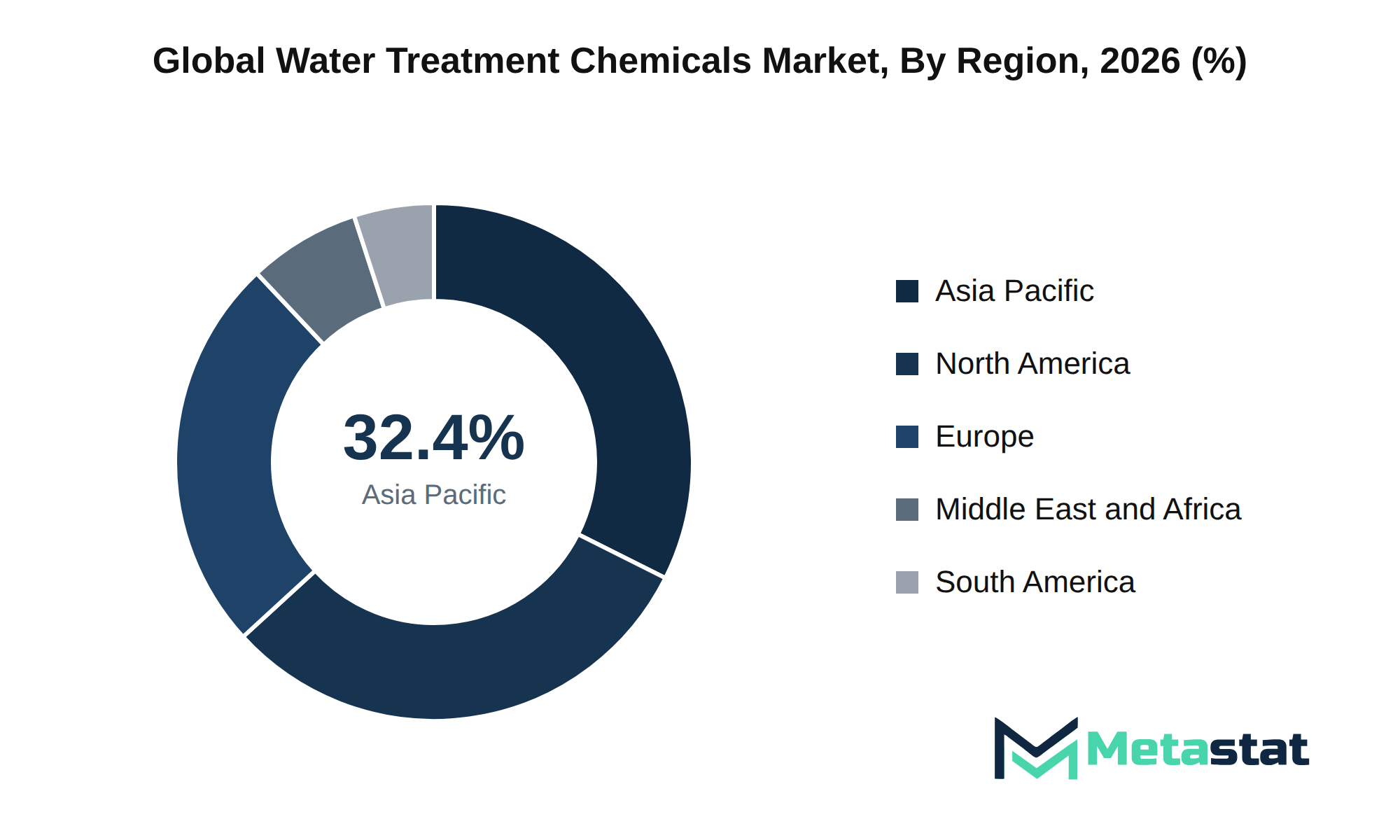
The Water Treatment Chemicals market features a diverse array of players focusing on various strategic initiatives to enhance their market presence. Mergers and acquisitions play a significant role in consolidating market share, allowing companies to expand their product offerings and geographic reach. Strategic alliances and joint ventures facilitate the creation of cross-industry partnerships that enhance innovation and market penetration.
Companies including Ecolab Inc / Nalco Water and BASF SE emphasize product differentiation through proprietary technologies and advanced research and development. This focus on innovation secures a competitive edge within the market, enabling these firms to address specific customer needs more effectively. Strong customer retention strategies and brand equity dynamics significantly influence purchasing decisions, reinforcing loyalty among end users.
Barriers to entry include regulatory challenges and the necessity for established relationships within supply chains. This environment creates a competitive landscape conducive to existing players retaining their market positions while deterring new entrants. Intellectual property portfolios and patent landscapes enhance companies' technological defensibility, ensuring long-term growth and sustainability within the Water Treatment Chemicals market.
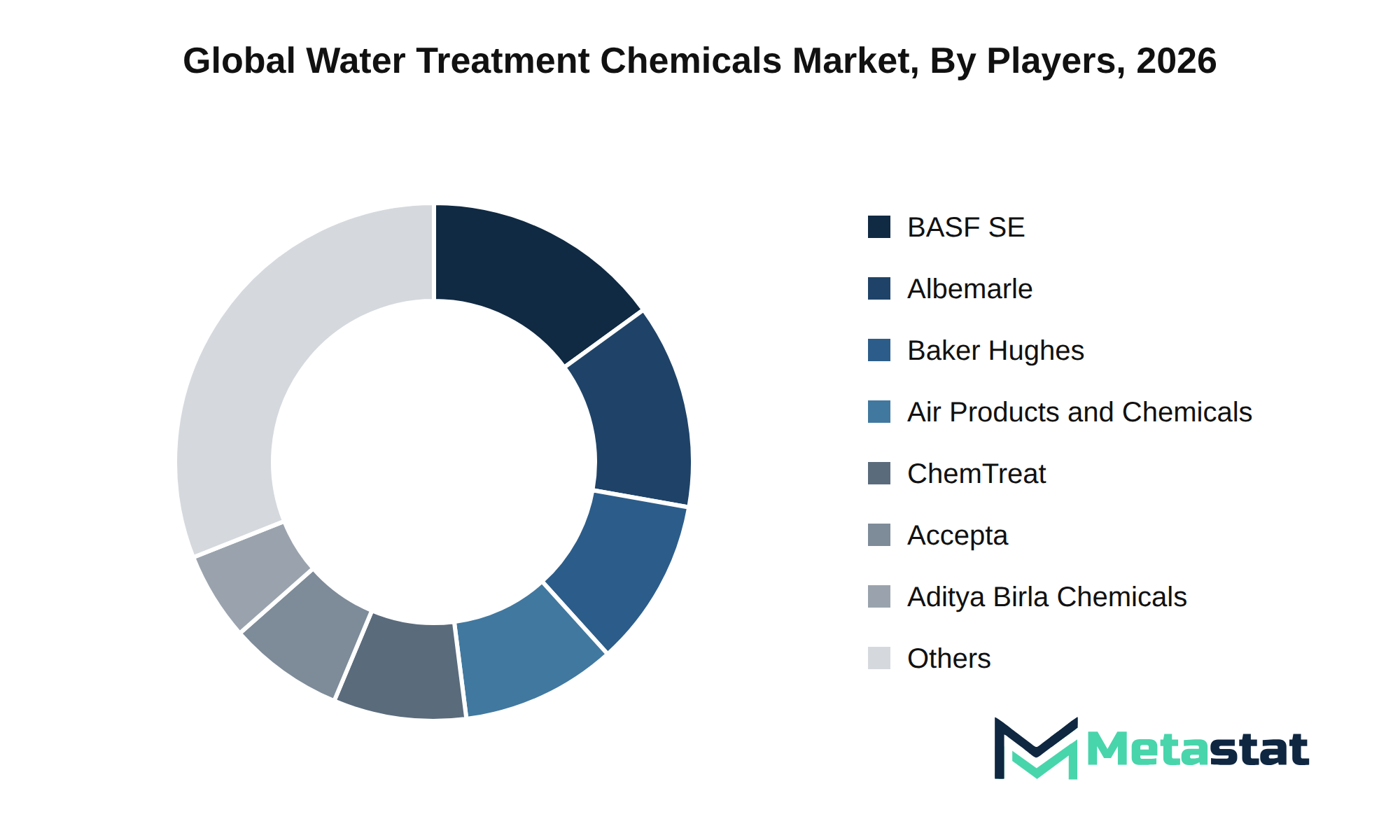
Market size is forecast to rise from USD 35.6 billion in 2025 to over USD 50.2 billion by 2033. The base case estimates a compound annual growth rate (CAGR) of 4.4%, reflecting steady growth driven by increasing demand across various applications and industries. The bull case scenario highlights potential for accelerated growth, fueled by advancements in technology integration and increased investment in next-generation water treatment solutions. Conversely, the bear case suggests potential challenges arising from regulatory changes or economic downturns that could temporarily restrict market expansion.
Shifts in downstream demand and core industry maturation will influence the dynamics of the market. Key industries including municipal water and wastewater management will experience heightened demand due to regulatory compliance and infrastructure upgrades. The integration of innovative technologies and enhanced research and development (R&D) efforts will facilitate the commercialization of advanced water treatment solutions, addressing unmet enterprise needs and creating high-growth pockets within the market.
Regulatory evolution remains a significant factor. Upcoming compliance milestones and policy enforcement horizons will shape market strategies and capital allocation directives. Investment in infrastructure commitments and capital expenditures will support growth across regions, particularly in areas requiring modernized water treatment facilities. Geopolitical realignments and evolving trade corridors impact global supply chains, creating both challenges and opportunities for market participants.
Strategic imperatives for executives will focus on developing robust defensibility roadmaps to navigate potential market fluctuations. Ensuring alignment with regulatory changes and investing in emerging white-space opportunities positions companies for sustained growth in the evolving landscape of the water treatment chemicals market.
The report strategically identifies and profiles the key market players and analyses their core competencies in each sub-segment of the Water Treatment Chemicals market.
Report Attributes | Details |
Study Period | 2021-2033 |
Base Year | 2025 |
Estimated Year | 2026 |
Forecast Period | 2026-2033 |
Historical Period | 2021-2025 |
Growth Rate | CAGR 4.4% from 2026 to 2033 |
Revenue Unit | USD billion |
Segmentation | By Product Type, Application, End-Use Industry, Treatment Stage, and Region |
By Region | North America (By Product Type, Application, End-Use Industry, Treatment Stage, and Country)
|
Europe (By Product Type, Application, End-Use Industry, Treatment Stage, and Country)
| |
Asia Pacific (By Product Type, Application, End-Use Industry, Treatment Stage, and Country)
| |
South America (By Product Type, Application, End-Use Industry, Treatment Stage, and Country)
| |
Middle East and Africa (By Product Type, Application, End-Use Industry, Treatment Stage, and Country)
|
Find answers to common questions about this report
The Water Treatment Chemicals market size was valued at USD 35.6 billion in 2025, according to the Metastat Insights study.
The Water Treatment Chemicals market is projected to grow at a CAGR of 4.4% during the forecast period from 2026 to 2033.
The North America Water Treatment Chemicals market size is estimated to reach USD 14.6 billion by 2033.
The Municipal Water & Wastewater segment leads the Water Treatment Chemicals market, with a projected value of USD 14.4 billion by 2033. This segment's growth reflects a compound annual growth rate of 4.6% from 2026 to 2033.
Key drivers for the Water Treatment Chemicals market include the increasing emphasis on operational productivity and cost-efficiency initiatives, because companies seek to optimize treatment processes. rising public awareness of environmental sustainability is boosting demand for solutions that minimize carbon footprints, aligning with broader trends toward ethical governance and sustainable practices.
North America holds the dominant share of the Water Treatment Chemicals market, accounting for 30.8% in 2025. This region's significant share reflects its extensive industrial activities and strong demand for water treatment solutions.
Regulatory tightening presents significant challenges for the Water Treatment Chemicals market, because compliance hurdles arise from complex legal mandates that vary across regions. macroeconomic headwinds, including inflationary pressures and high capital investment requirements, hinder market dynamism and limit the entry of new competitors.
The growing emphasis on operational productivity and cost-efficiency initiatives drives product adoption in the Water Treatment Chemicals market. Companies invest in technologies that enhance efficiency and reliability while rising public awareness of environmental sustainability boosts demand for solutions that support resource stewardship and minimize carbon footprints.
The Water Treatment Chemicals market is estimated to reach a valuation of USD 50.2 billion by 2033.
Top players operating in the Water Treatment Chemicals market include Ecolab Inc / Nalco Water, BASF SE, Dow, DuPont, Kemira Oyj, and American Water Chemicals, Inc.
The analysts below cover Chemicals and Materials research at Metastat Insights.
LEAD ANALYST
Utkarsh Khirodkar is a Lead Market Research Analyst at MetaStat Insight, specializing in market intelligence, technology sector assessments, and competitive strategy.

INDUSTRY CONSULTANT - CHEMICALS & ADVANCED MATERIALS
Chemicals and Materials · Machinery & Equipment · Packaging
Amit Gadhekar Consultant for Chemicals and Materials at MetaStat Insight, directing sector-specific intelligence, research, and strategic consulting across global chemical and processing markets.
Our group needed clearer visibility into out-of-autoclave processing timelines for high-temperature thermoplastic composites. MetaStat Insight delivered an objective assessment that contrasted automated fiber placement scrap rates with traditional thermoset prepreg layup cycles. The supplier landscape mapped out primary resin suppliers and tape slitting capacity across France, Germany, and Japan with solid technical accuracy. Their analyst handled our questions on precursor supply risks during an unscheduled inquiry call, providing clear, unembellished context.
Evaluating sensor fusion reliability across harsh operating environments can be tricky without field-validated data. The study on agricultural autonomous guidance systems clearly separated stereo vision setups from automotive-grade solid-state LiDAR. We appreciated the regional infrastructure analysis, specifically around RTK network density across North America and South America. During our follow-up consultation, the MetaStat Insight team walked through tier-two perception software partnerships, giving our engineering leads a practical basis for vendor shortlisting.
Analyzing the transition from natural gas to green hydrogen in iron ore reduction requires realistic infrastructure timelines. Meta stat insight supplied a detailed regional assessment of DRI plant conversion costs and scrap metal availability in North America and Western Europe. Their report carefully examined pellet quality specs and electrical grid access constraints without making oversimplified market assumptions. The research material served as a practical reference during internal technology roadmap discussions.
Explore related market intelligence reports worth reading alongside this one.