
LEAD ANALYST
Utkarsh Khirodkar is a Lead Market Research Analyst at MetaStat Insight, specializing in market intelligence, technology sector assessments, and competitive strategy.

Norway Wastewater Treatment Plant (WWTP) Contracting Market Size, Share, By Project Type (New WWTP Construction, Existing WWTP Capacity Expansion, Existing WWTP Treatment-Process Upgrade, Existing WWTP Rehabilitation and Asset Renewal), By Contract Scope (Integrated Full-Plant / Turnkey Contracts, Process and Mechanical Contracts, Civil and Structural Contracts, Electrical, Instrumentation and Automation Contracts, Others (HVAC, Plumbing and Specialized Technical Packages)), By End User (Municipal and Intermunicipal Utilities, Food and Beverage Processing, Aquaculture and Seafood Processing, Pulp and Paper, Chemicals, Petrochemicals and Refining, Mining, Metals and Other Heavy Industry, Other Industrial and Commercial Facilities), Industry Analysis, Growth, Trends, and Forecast, 2026-2033
Report ID
MSI-5208
Published
September, 2026
Pages
299 Pages
Format
Historical
Base year
Forecast
Forecast period
Report Details
Choose Your License
Norway Wastewater Treatment Plant (WWTP) Contracting Market
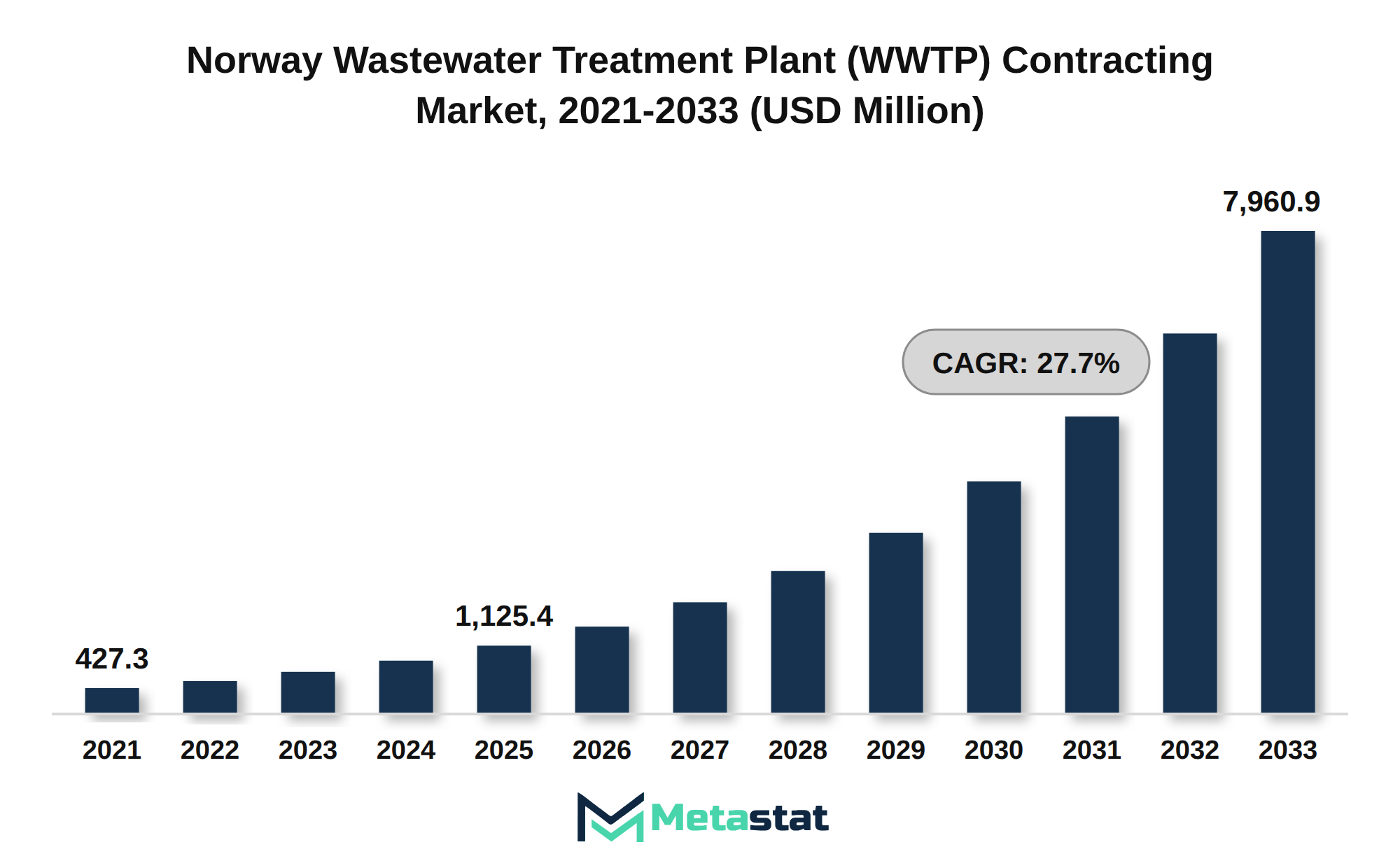
The Norway Wastewater Treatment Plant (WWTP) Contracting market was valued at NOK 1,125.4 million in 2025 and is projected to reach NOK 7,960.9 million by 2033, growing at a CAGR of 27.7% over the forecast period.
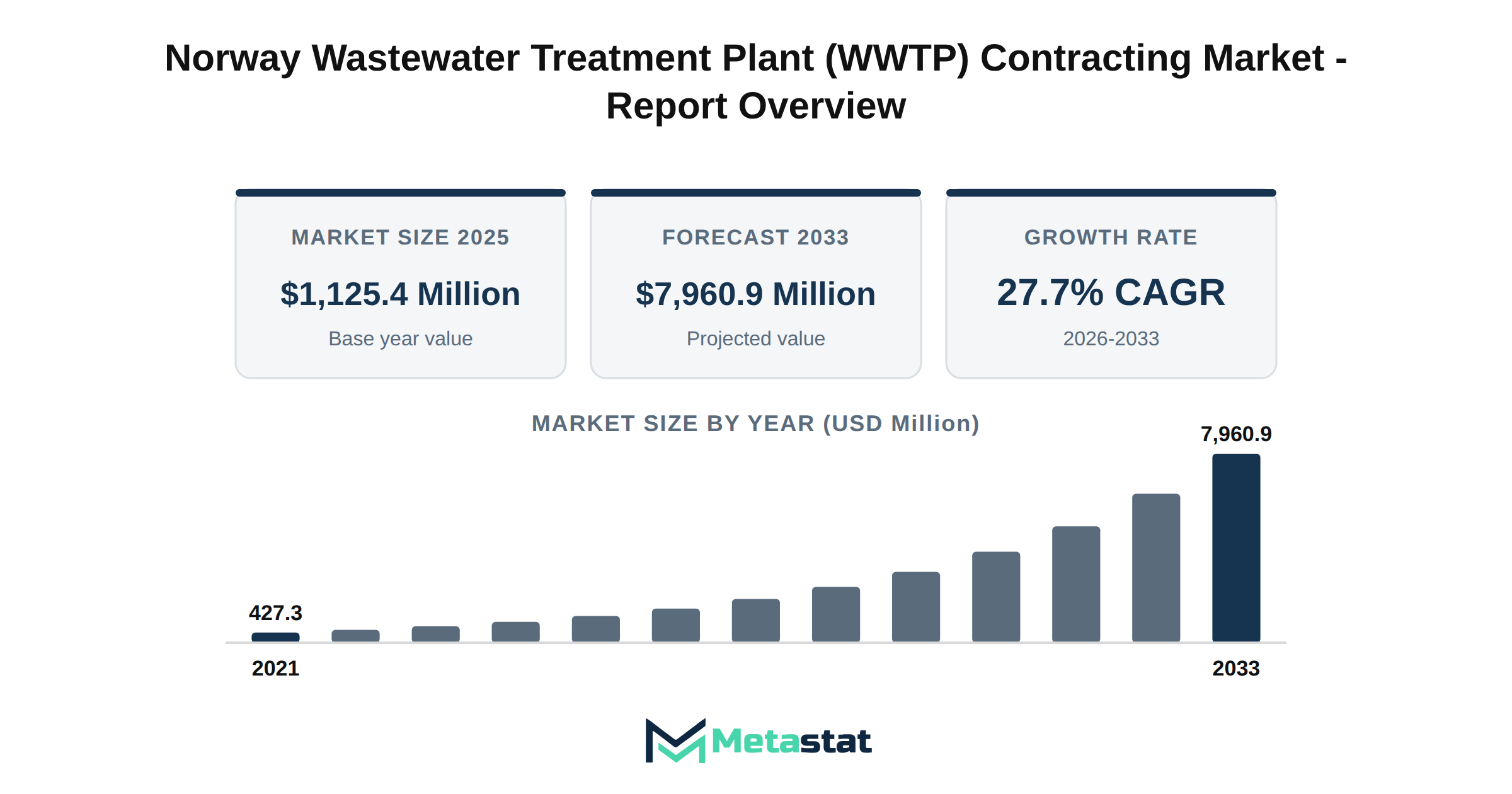
The Norway Wastewater Treatment Plant (WWTP) Contracting market is projected to grow significantly, with a base value of NOK 1,125.4 million in 2025 and an anticipated value of NOK 7,960.9 million by 2033. This growth indicates a compound annual growth rate (CAGR) of 27.7 percent over the forecast period. Historical figures demonstrate a steady rise from NOK 427.3 million in 2021 to NOK 878.8 million in 2024, reflecting increasing investment in wastewater infrastructure and treatment technologies.
The annual WWTP contract award value is expected to rise substantially, driven by factors including urbanization, population growth, and environmental regulations that prioritize sustainable water management. The forward tender pipeline value for upcoming projects shows robust activity, indicating strong market demand. Average contract value benchmarks will likely reflect the complexities and scale of projects, with integrated full-plant and turnkey contracts gaining prominence.
Contract procurement structures are evolving to accommodate innovative financing models and collaborative approaches between public and private sectors. Project CAPEX escalation trends will impact the financial dynamics of the market, with rising material costs and labor shortages influencing overall project budgets. Contractor backlog and bid capacity are expected to expand, driven by increased competition among suppliers and demand for advanced treatment solutions.
The regulatory compliance landscape remains critical, with stringent environmental standards shaping project specifications and operational practices. Geopolitical risk frameworks influence procurement strategies, reflecting firms navigating international supply chains and local market conditions. Continuous disruption in supply chain logistics necessitates adaptive sourcing strategies that prioritize resilience and efficiency.
Research and development trajectories focus on next-generation innovation, aiming to enhance treatment efficiency and resource recovery. Sustainable transformation initiatives drive the integration of decarbonization efforts and circular economy dynamics within project frameworks. The market features fragmentation, with numerous players competing for market share, leading to potential mergers and acquisitions to strengthen competitive positioning.
Capital allocation strategies emphasize infrastructure investments that align with long-term environmental goals. Inflationary pressures and currency volatility pose challenges to project financing, requiring stakeholders to implement risk mitigation measures. The future strategic outlook for the Norway Wastewater Treatment Plant (WWTP) Contracting market appears robust, with corporate imperatives focusing on innovation and sustainability leading to high-value recommendations for stakeholders.
The annual value of contracts awarded in the Norway Wastewater Treatment Plant (WWTP) Contracting market is projected to experience significant growth, reflecting an increasing focus on infrastructure development and sustainable practices. The forward tender pipeline value indicates a robust outlook, highlighting the commitment to advancing wastewater treatment initiatives nationwide.
Average contract value benchmarks show a substantial uptick, influenced by rising project costs and enhanced technological requirements. The procurement and contract packaging structure has evolved, with integrated and turnkey contracts gaining traction, promoting efficiency and streamlined project execution.
Project CAPEX escalation trends highlight the financial pressures faced by stakeholders, driven by inflationary challenges and market volatility. Contractor backlog and bid capacity have expanded, indicating a healthy competitive environment, though regulatory compliance and standards remain critical considerations for successful project delivery.
Geopolitical risk frameworks introduce additional complexities, affecting supply chain dynamics and influencing procurement strategies. Innovations in research and development trajectories are crucial for the adoption of next-generation technologies, facilitating sustainable transformation and aligning with decarbonization and circular economy objectives.
The supply chain landscape has adapted to address logistical challenges, ensuring a resilient sourcing architecture that supports the market's growth. Fragmentation within the sector presents opportunities for consolidation, driven by mergers and acquisitions that reshape the competitive environment and enhance value chains.
Capital allocation focuses on infrastructure investments that align with strategic growth objectives, while inflationary pressures and currency volatility pose ongoing challenges. The future strategic outlook emphasizes the importance of corporate imperatives, enabling organizations to navigate evolving market conditions and capitalize on high-value recommendations.
The Norway Wastewater Treatment Plant (WWTP) Contracting market stands at a critical juncture, characterized by dynamic developments and opportunities that drive growth and innovation across the sector.
The Norway Wastewater Treatment Plant (WWTP) Contracting market experiences significant growth driven by increased investment in infrastructure development. Governments and private entities prioritize upgrading wastewater management systems to enhance environmental sustainability and compliance with evolving standards. This investment trend leads to heightened demand for new WWTP construction and existing capacity expansions, contributing to a robust market environment.
Capital investment environments, including favorable interest rates and GDP growth, create funding opportunities for wastewater treatment projects. Enhanced public and private spending power facilitates the realization of essential infrastructure projects, directly impacting the market's trajectory. Municipal and intermunicipal utilities, because key end users, benefit from these investments by improving their operational efficiency and service delivery, ultimately leading to a more resilient wastewater treatment sector.
The integration of technological advancements positions the market for continued growth. Automation, artificial intelligence, and software adoption streamline processes, allowing for more efficient project execution and management. The digital transformation of wastewater treatment practices enhances operational productivity, driving demand for innovative solutions within the Norway Wastewater Treatment Plant (WWTP) Contracting market.
The drive toward digital transformation significantly influences the Norway Wastewater Treatment Plant (WWTP) Contracting market. Increasing investment in automation, artificial intelligence, and software solutions creates opportunities to streamline existing processes and reduce operational costs. This shift toward digitization enhances efficiency in project execution, enabling contractors to improve service delivery and overall performance.
Municipal and intermunicipal utilities prioritize advanced technology integration to meet operational challenges. Implementing these innovations allows for real-time monitoring and data analysis, facilitating better decision-making and resource management. The emphasis on technological adaptation positions the market for substantial growth. Firms look to modernize aging infrastructure and optimize their operational frameworks.
While digital transformation initiatives expand, the market experiences rising demand for skilled professionals capable of managing these advanced systems. The growing focus on innovation and technology adoption creates a competitive advantage for firms that effectively leverage these advancements. The expansion of the market increases the urgency for investments in infrastructure modernization within the Norway Wastewater Treatment Plant (WWTP) Contracting market.
The Norway Wastewater Treatment Plant (WWTP) Contracting market faces significant constraints due to high capital investment requirements. The installation of advanced wastewater treatment technologies demands substantial financial outlays, deterring smaller municipalities and enterprises from pursuing new projects. Prohibitive upfront costs involved in both new construction and upgrades inhibit the market's potential for expansion, limiting participation primarily to larger entities with sufficient financial capacity.
Escalating operating costs create additional pressure on existing facilities. Rising energy prices and maintenance expenses challenge the profitability of wastewater treatment operations, leading several facilities to defer investments in upgrades or replacements. This trend contributes to stagnation in capacity expansion and process enhancements across the market.
The combined effect of these financial barriers hampers the ability of the industry to respond to increasing regulatory demands and technological advancements. The market's growth trajectory remains restrained, with many operators opting to maintain the status quo rather than invest in costly upgrades. Addressing these capital-related challenges becomes crucial for stimulating future development within the Norway Wastewater Treatment Plant (WWTP) Contracting market.
The Norway Wastewater Treatment Plant (WWTP) Contracting market faces challenges due to geopolitical fragmentation, which disrupts supply chain stability. Increasing trade deficits and tariff friction lead to heightened costs for raw materials and components, impacting project budgets and timelines. Reliance on international suppliers creates vulnerabilities, particularly when logistics disruptions occur, affecting project execution and delivery schedules. Supply chain instability complicates procurement processes, raising operational risks that deter investment in new projects.
Technological disruptions and interoperability friction further challenge the market, particularly in the integration of advanced wastewater treatment technologies. Organizations encounter difficulties in managing complex research and development integrations, which hinder the adoption of innovative solutions. Consequently, the market experiences pressure from rising input costs and compliance overhead associated with evolving legal liabilities. These factors lead to pricing compression, squeezing margins for contractors and suppliers.
Infrastructure gaps and retrofitting barriers introduce additional obstacles, delaying modernization efforts in existing facilities. Demand for skilled labor remains a pressing issue, with workforce skill gaps impacting project execution quality. Tightening regional regulatory standards increase these challenges, necessitating compliance investments that further strain financial resources. The combination of these factors presents a significant challenge to the Norway Wastewater Treatment Plant (WWTP) Contracting market, complicating growth and limiting potential expansion opportunities.
The Norway Wastewater Treatment Plant (WWTP) Contracting market experiences robust opportunities driven by emerging regional demands. Increasing awareness of environmental sustainability and the need for efficient resource management prompt municipalities and industries to invest in new wastewater treatment facilities and upgrade existing ones. Infrastructure modernization initiatives align with the growing emphasis on sustainable practices, driving demand for innovative treatment solutions.
Geographical expansion forms a critical aspect of market growth. Urbanization and population growth in various regions create a pressing need for enhanced wastewater management systems. This trend encourages investment in both new construction and the rehabilitation of existing facilities, contributing to the overall market value. The focus on eco-friendly projects aligns with the rising demand for compliance with environmental standards, highlighting the importance of sustainability imperatives.
Technological disruptions play a significant role in shaping the market landscape. The adoption of advanced treatment technologies, including digital monitoring and process automation, enhances operational efficiency and optimizes maintenance strategies. Companies involved in the Norway Wastewater Treatment Plant (WWTP) Contracting market increasingly embrace next-generation innovations to address the evolving needs of end users, particularly in municipal and intermunicipal utilities.
Strategic consolidation through cross-industry mergers and acquisitions strengthens the competitive position of market participants, enabling them to offer comprehensive solutions that meet diverse customer requirements. The trend toward digital procurement shifts further influences purchasing behaviors, leading to a more streamlined contracting process and improved project delivery timelines. This shift enhances overall market efficiency.
Value-chain optimization remains essential for enhancing operational yield. Companies seek to maximize the lifecycle of treatment assets through maintenance upgrades and retrofitting dynamics, ensuring long-term performance and reliability. The combination of these factors positions the Norway Wastewater Treatment Plant (WWTP) Contracting market for substantial growth, driven by an increasing focus on sustainability and technological advancement.
The Norway Wastewater Treatment Plant (WWTP) Contracting market is segmented based on Project Type, Contract Scope, and End User.
Investment in new wastewater treatment facilities undergoes acceleration driven by increasing environmental regulations and urbanization. These factors contribute to heightened demand for effective solutions in waste management, particularly in densely populated regions. The New WWTP Construction segment is valued at NOK 350.1 million in 2026 and is projected to reach NOK 2,002.2 million by 2033, reflecting a CAGR of 28.3% during the forecast period. Technological advancements in treatment processes enable operational efficiencies and improved water quality, enhancing the appeal of new constructions.
Municipalities and industrial sectors recognize the importance of modernized facilities to meet evolving standards and address sustainability goals. This segment's growth reflects an ongoing commitment to enhancing infrastructure, driven by the increasing necessity for effective wastewater management solutions. The Norway Wastewater Treatment Plant (WWTP) Contracting market positions itself to capitalize on these trends, ensuring that new facilities align with contemporary environmental mandates.
Growth in the Existing WWTP Capacity Expansion segment reflects increasing demand for enhancing the performance and efficiency of existing wastewater treatment facilities. This segment is estimated to reach NOK 1,701.2 million by 2033, at a CAGR of 27.9% during the forecast period. Several factors contribute to this trend, including the need for compliance with stricter environmental regulations, which drive investments in upgrading treatment processes to meet higher standards for effluent quality.
Technological maturation influences the adoption of innovative solutions that improve the operational efficiency of existing plants. Upgrades often involve integrating next-generation technologies, enhancing automation, and implementing advanced process controls that optimize resource use and reduce operational costs. The increasing focus on sustainability and resource recovery further fuels expansion in this segment, driven by facilities seeking to minimize waste and maximize recovery of valuable resources.
End users, particularly municipal and intermunicipal utilities, actively pursue capacity expansion to accommodate growing populations and increased wastewater flow. Investments in these projects yield economic benefits, including reduced energy consumption and improved treatment capacities. The competitive landscape in the Norway Wastewater Treatment Plant (WWTP) Contracting market highlights the strategic opportunity for firms to capitalize on this demand by offering comprehensive solutions that address the unique challenges associated with upgrading existing infrastructure.
Investment in the Existing WWTP Treatment-Process Upgrade segment positions itself because a critical aspect of modernization within the Norway Wastewater Treatment Plant (WWTP) Contracting market. Upgrading treatment processes enhances efficiency and aligns with stricter regulatory compliance standards, thereby driving demand from municipal and industrial end users. The segment is expected to reach NOK 2,899.4 million by 2033, reflecting substantial growth potential.
Regulatory frameworks increasingly emphasize advanced treatment technologies, heightening adoption of process upgrades. These upgrades contribute to improved water quality and operational sustainability. End users in sectors like food and beverage processing, aquaculture, and pulp and paper recognize the importance of adapting to emerging environmental standards.
Technological advancements, including automation and digital monitoring, facilitate the modernization of existing facilities. The transition toward next-generation upgrades supports operational cost reductions and enhances treatment capabilities. This shift aligns with market expectations, because entities focus on optimizing resource utilization and maximizing process output.
In addition, consumption shifts toward more sustainable practices drive investments in treatment-process upgrades. The competitive landscape benefits from a strategic focus on capital investment, where players aim to capture opportunities in technology-driven enhancements. These dynamics create a robust environment for growth within the market, particularly within the Existing WWTP Treatment-Process Upgrade segment.
Investment in the Existing WWTP Rehabilitation & Asset Renewal segment aligns with ongoing sustainability efforts and regulatory compliance. The increasing need for infrastructure upgrades across various municipalities drives significant demand in this segment. With an emphasis on extending the lifespan of aging wastewater treatment facilities, stakeholders prioritize rehabilitation and asset management strategies. These strategies focus on enhancing operational efficiency, reducing environmental impact, and ensuring compliance with stringent regulations.
The Existing WWTP Rehabilitation & Asset Renewal segment is projected to grow at a CAGR of 25.4% during the forecast period. This growth reflects the urgency for modernization of facilities, improving treatment capabilities to meet evolving environmental standards. Municipalities and industries face pressure to enhance water quality and reduce waste, making investment in rehabilitation projects critical. This segment supports compliance with regulatory requirements and encourages a transition toward more sustainable practices within the Norway Wastewater Treatment Plant (WWTP) Contracting market.
Technological advancements contribute to the segment's expansion, facilitating more efficient rehabilitation processes and minimizing operational disruptions. Demand for innovative technologies and techniques accelerates the transition from traditional methods to advanced solutions. While the market evolves, competition intensifies among service providers, prompting strategic collaborations and partnerships to enhance service offerings. This dynamic environment encourages further investment and innovation within the Norway Wastewater Treatment Plant (WWTP) Contracting market.
Valued at NOK 465.6 million in 2026, the Integrated Full-Plant / Turnkey Contracts segment is projected to reach NOK 2,651 million by 2033, reflecting a CAGR of 28.2% during the forecast period. This segment experiences growth, driven by increasing infrastructure investments and the need for comprehensive solutions in wastewater treatment. Municipalities and other stakeholders prioritize integrated contracts due to their efficiency in managing projects from inception to completion, which reduces the complexity and risks associated with coordinating multiple contractors.
The trend towards modernization and technological advancements plays a critical role in the expansion of this segment. Customers seek state-of-the-art treatment solutions that not only meet regulatory standards but enhance operational efficiency. The market for Integrated Full-Plant / Turnkey Contracts benefits from a shift towards sustainable practices and the adoption of next-generation technologies that improve the overall effectiveness of wastewater treatment plants.
Regulatory compliance standards significantly influence market dynamics. Stricter regulations surrounding water quality and environmental protection compel utilities to upgrade their facilities, which fuels demand for integrated solutions. Companies that provide these turnkey contracts align their offerings with regulatory frameworks, enhancing their competitiveness in the Norway Wastewater Treatment Plant (WWTP) Contracting market.
Cost structures within the Integrated Full-Plant / Turnkey Contracts segment maintain a crucial balance due to the need for high-quality materials and innovative technologies. Pricing volatility emerges from fluctuations in raw material costs and changes in labor markets. Strategic investment in supply chain resilience and local sourcing mitigates risks, ensuring that companies remain competitive while delivering value to clients.
Overall, the integrated approach of Full-Plant / Turnkey Contracts positions this segment because a vital contributor to the market's growth trajectory. It aligns with broader trends of increased investment in wastewater infrastructure and changing consumption patterns, ultimately driving demand within the Norway Wastewater Treatment Plant (WWTP) Contracting market.
Investment in Process & Mechanical Contracts contributes significantly to the Norway Wastewater Treatment Plant (WWTP) Contracting market. By 2033, this segment is estimated to reach NOK 2,203.6 million, exhibiting a compound annual growth rate (CAGR) of 28% during the forecast period. This growth arises from increased demand for advanced wastewater treatment technologies and the ongoing need for infrastructure upgrades.
Factors driving expansion include regulatory compliance standards that enforce stricter environmental regulations, encouraging municipalities and industries to invest in process enhancements. Technological maturation supports the adoption of innovative solutions, enhancing operational efficiency and reducing overall costs. The increasing focus on sustainable practices within end-user sectors, including municipal utilities and food processing, promotes further investment in this segment.
The market faces pricing volatility and margin pressures stemming from fluctuating raw material costs and supply chain vulnerabilities. Pricing volatility and margin pressures influence strategic decision-making among key players in the industry. Companies prioritize developing more resilient supply chains to mitigate risks associated with raw material sourcing, ensuring timely project execution while maintaining competitive pricing structures.
Overall, the Process & Mechanical Contracts segment supports overall market growth and adaptation to evolving regulatory landscapes.
In the Norway Wastewater Treatment Plant (WWTP) Contracting market, the Civil & Structural Contracts segment experiences growth driven by increasing investments in infrastructure and the need for modernization of existing facilities. Demand for these contracts arises from municipal and intermunicipal utilities focusing on enhancing wastewater management systems to comply with evolving regulatory standards. The segment benefits from advancements in construction techniques and materials that improve project efficiency and reduce timelines.
Contract value for Civil & Structural Contracts is expected to reach NOK 1,721.1 million by 2033. This growth correlates with a rising emphasis on sustainability and resilience in wastewater infrastructure, encouraging investment in durable and high-performance solutions. Enhanced technologies address project complexities and support timely project delivery, contributing to the segment's expansion within the overall market.
Strategic opportunities exist for firms specializing in civil and structural solutions, particularly those incorporating innovative practices and sustainable approaches. The focus on regulatory compliance and environmental stewardship drives demand for comprehensive solutions that align with policy objectives. Capital investment in this segment reflects the commitment to modernizing Norway's wastewater treatment capabilities, enhancing operational efficiency and service quality.
Investment in Electrical, Instrumentation & Automation Contracts benefits from heightened demand for smart wastewater management solutions. This segment is projected to grow at a CAGR of 28.7% during the forecast period. Technological maturation in automation systems enhances operational efficiency and reduces labor costs, attracting more utilities to upgrade their infrastructures. Regulatory compliance standards demand advanced monitoring and control mechanisms, driving the adoption of innovative solutions in the market.
End-user dynamics play a critical role in shaping this segment, with municipal utilities prioritizing sustainable practices. The push for optimized resource management and energy efficiency supports the integration of next-gen technologies in existing treatment plants. Organizations modernize their systems to align with environmental regulations and cost-saving initiatives.
Increased investment in this area reflects a strategic opportunity window for suppliers specializing in automation technologies. Continuous evolution of products ensures that utilities receive effective solutions tailored to their operational needs. The focus on capturing market share through innovative offerings strengthens the competitive stance of key players within the Norway Wastewater Treatment Plant (WWTP) Contracting market.
Investment in specialized technical packages, including HVAC and plumbing solutions, aligns with increasing regulatory demands and technological advancements within the Norway Wastewater Treatment Plant (WWTP) Contracting market. Municipalities strive to enhance infrastructure resilience and efficiency; these packages play a crucial role in modernizing existing systems and integrating next-generation technologies. Adoption of these specialized solutions supports the overall enhancement of wastewater treatment processes and contributes to improved operational performance.
This segment experiences significant interest from municipal and intermunicipal utilities, driven by the necessity for compliance with stringent environmental regulations and higher performance standards. Technological maturation facilitates the integration of advanced HVAC and plumbing systems, optimizing energy use and reducing operational costs. Enhanced product evolution ensures that end-users receive comprehensive solutions tailored to specific treatment requirements and reinforces the strategic importance of this segment.
Downstream applications in food and beverage processing, aquaculture, and other industrial sectors generate additional demand for such specialized packages. The evolving landscape of consumption shifts reinforces the necessity for sustainable and efficient wastewater treatment methods. Investment in these areas represents a strategic opportunity, promising future growth within the market.
Valued at NOK 895.6 million in 2026, the Municipal & Intermunicipal Utilities segment is projected to reach NOK 4,993.1 million by 2033, demonstrating a CAGR of 27.8% during the forecast period. Demand within this segment derives primarily from the increasing focus on infrastructure improvement and sustainable practices in wastewater management. Regulatory compliance standards, particularly those addressing environmental protection and effluent quality, contribute significantly to the market dynamics. These standards often drive utilities to invest in advanced treatment technologies, leading to increased adoption rates.
Technological maturation plays a significant role in enhancing operational efficiency and reducing overall treatment costs. Next-generation upgrades, including automation and real-time monitoring systems, facilitate better management of wastewater processes, ultimately improving service delivery. Consumption shifts towards more environmentally friendly solutions influence procurement decisions within municipal utilities, creating opportunities for innovative contractors in the market. Ensuring compliance with evolving regulations remains a critical aspect for utilities, necessitating ongoing investments in facility upgrades and process enhancements.
The market for Municipal & Intermunicipal Utilities reflects a growing emphasis on resilient supply chains, driven by utilities striving to mitigate risks associated with raw material sourcing and procurement. Strategic opportunity windows emerge because contractors invest in innovative solutions that address both regulatory and operational challenges. Long-term capital investments will likely focus on sustainable technologies, ensuring that municipal utilities meet the demands of a changing landscape while achieving compliance and operational excellence.
Valued at NOK 763.5 million by 2033, the Food & Beverage Processing segment reflects a significant compound annual growth rate (CAGR) of 27.1% during the forecast period. This growth stems from heightened awareness of environmental sustainability and regulatory compliance, pushing food and beverage companies to invest in advanced wastewater treatment solutions. The demand for efficient wastewater management arises from the increasing need for food safety and quality standards, which necessitate that processors meet higher treatment requirements.
Technological advancements in treatment processes support this segment's expansion, driving investments in next-generation upgrades. Innovations in biological treatment and membrane technologies enhance operational efficiency and wastewater quality, creating competitive advantages for operators in the Norway Wastewater Treatment Plant (WWTP) Contracting market. Adoption of these technologies aligns with the industry's shift toward sustainable practices and resource recovery, further increasing market demand.
End-use dynamics indicate a focus on improving waste management practices, driven by stricter regulations and consumer demand for environmentally friendly products. The segment's attractiveness to investors stems from its potential for high returns, driven by the growing need for compliance and efficiency. Consequently, companies within this sector prioritize capital investments in wastewater treatment solutions, reinforcing the segment's growth trajectory.
Investment within the Aquaculture & Seafood Processing segment reflects growing recognition of environmental sustainability and compliance with regulatory standards. Operators prioritize advanced wastewater treatment technologies to address increasing demands for cleaner water output. The segment is projected to reach NOK 784.9 million by 2033, demonstrating a strong commitment to improving water quality in aquaculture and seafood industries.
Technological advancements, including automated treatment processes and real-time monitoring, drive efficiency in wastewater management. These innovations present strategic opportunities for providers in the Norway Wastewater Treatment Plant (WWTP) Contracting market, enabling them to offer integrated solutions that meet specific client needs. Rising seafood consumption and increasing aquaculture activities contribute to market growth.
Investment in next-generation upgrades aligns with long-term sustainability goals, leading to enhanced operational capabilities within the segment. Continuous improvements in treatment methodologies support the overall performance of the market, ensuring compliance with evolving regulations. This dynamic creates an attractive environment for stakeholders focusing on capital investment and technological maturation.
Responding to regional and global shifts towards sustainability, the aquaculture sector actively seeks innovative solutions that minimize environmental impact. This trend enhances the attractiveness of the Norway Wastewater Treatment Plant (WWTP) Contracting market, where the emphasis on responsible practices creates a favorable investment climate. The commitment to advanced wastewater solutions positions the market for substantial growth through 2033.
Growth within the Pulp & Paper segment reflects strong demand for advanced wastewater treatment solutions that address stringent environmental regulations and sustainability targets. This segment is projected to grow at a CAGR of 26.2% during the forecast period, driven by increasing production capacities and modernization efforts in the industry. Pulp and paper manufacturers prioritize efficient processes and regulatory compliance, creating opportunities for specialized wastewater treatment technologies that enhance operational performance and reduce environmental impact.
Technological advancements facilitate the development of next-generation treatment systems tailored for the unique challenges faced by the Pulp & Paper sector. Integration of innovative solutions enhances treatment efficiency and reduces overall lifecycle costs. The Norway Wastewater Treatment Plant (WWTP) Contracting market aligns with these trends, driven by companies investing in advanced solutions that support sustainable practices.
The segment's expansion drives significant capital investment, with stakeholders actively seeking opportunities to enhance their treatment capabilities. Regulatory compliance standards continue to evolve, prompting Pulp & Paper manufacturers to upgrade their wastewater management systems. This dynamic influences purchasing decisions and drives the market's growth trajectory.
Strategic investments in this segment focus on enhancing treatment processes and equipment relevant to the unique requirements of the Pulp & Paper industry. Companies operating within the Norway Wastewater Treatment Plant (WWTP) Contracting market anticipate robust demand, reflecting the sector's commitment to sustainable practices and environmental stewardship.
Investment within the Chemicals, Petrochemicals & Refining sector aligns with ongoing regulatory compliance standards, which drive demand for enhanced wastewater treatment solutions. Increased scrutiny on environmental impacts and stricter discharge regulations compel organizations in this sector to adopt advanced treatment technologies. This segment experiences expansion due to the necessity of maintaining operational efficiencies while addressing environmental concerns.
Technological maturation in treatment processes drives innovation, enabling companies to upgrade existing systems for improved performance and sustainability. The evolution of product offerings reflects increased emphasis on reducing waste and maximizing resource recovery, further influencing investment decisions within this sector. Next-generation upgrades focus on integrating automation and real-time monitoring, promoting efficiency and reducing operational costs.
End-use dynamics play a significant role in shaping the market, with growing consumption shifts towards sustainable practices. Organizations in the Chemicals, Petrochemicals & Refining sector prioritize investments that enhance their environmental footprint while ensuring compliance with regulations. Increased capital investment in wastewater treatment facilities supports this shift, driving the Norway Wastewater Treatment Plant (WWTP) Contracting market towards more sustainable solutions.
Strategic opportunity windows arise because companies seek to enhance their supply chain resilience and reduce risks associated with raw material sourcing. Organizations face challenges related to pricing volatility and margin pressures, necessitating innovative approaches to wastewater management. The emphasis on cost structures drives investments in efficient and sustainable technologies that align with industry objectives. This focus on innovation supports growth in the market.
Overall, the Chemicals, Petrochemicals & Refining segment within the Norway Wastewater Treatment Plant (WWTP) Contracting market presents substantial opportunities driven by regulatory compliance, technological advancements, and evolving end-use dynamics. Investment in this sector not only addresses immediate operational challenges but lays the groundwork for long-term sustainability and compliance.
Investment in the Mining, Metals & Other Heavy Industry segment reflects a strong focus on regulatory compliance and sustainable practices. Increasing environmental regulations create a demand for advanced wastewater treatment solutions that minimize ecological impact. This segment prioritizes the adoption of innovative technologies that enhance operational efficiency while meeting stringent compliance standards.
Technological maturation further influences this segment, with a significant shift towards next-generation upgrades that leverage automation and smart technologies. The integration of advanced monitoring systems and data analytics enhances decision-making processes and optimizes performance, aligning with industry trends toward digital transformation.
End-use dynamics highlight a growing emphasis on circular economy principles, where the reuse and recycling of water resources take center stage. This shift reduces costs associated with water procurement and aligns with broader sustainability goals that hold importance within the industry.
Strategic opportunity windows arise from shifts in consumption patterns, where demand for sustainable practices drives investment in new wastewater treatment technologies. Capital investment outlook remains robust, fueled by a combination of stakeholder pressure and market dynamics within the Norway Wastewater Treatment Plant (WWTP) Contracting market.
Supply chain resilience is significant, with raw material sourcing becoming a key consideration in project planning and execution. Disruptive alternatives and technological obsolescence present challenges, emphasizing the need for constant innovation within the segment. Overall, the Mining, Metals & Other Heavy Industry segment within the market adapts to evolving demands, positioning itself for sustained growth and development.
Investment within Other Industrial & Commercial Facilities drives the demand for advanced wastewater treatment solutions. Growth in this segment ties to the increasing need for efficient waste management and regulatory compliance across various industries. Factors influencing adoption include technological advancements, which enable more effective treatment processes and enhance operational efficiency. Enhanced focus on sustainability and environmental responsibility prompts many companies to upgrade their existing systems, with particular attention on reducing operational costs and improving waste output quality.
Regulatory compliance standards exert significant influence on the market, compelling facilities to invest in wastewater treatment solutions that meet stringent environmental regulations. The changing nature of environmental policies necessitates the implementation of next-generation upgrades in treatment technology. These upgrades not only improve treatment efficiency but align with broader sustainability goals, effectively supporting long-term operational strategies.
Demand within the Other Industrial & Commercial Facilities segment reflects a broader trend occurring within the Norway Wastewater Treatment Plant (WWTP) Contracting market. Companies recognize the importance of maintaining robust wastewater management practices, leading to increased capital investment in innovative solutions. The segment's expansion creates opportunities for collaboration among technology providers and construction firms, promoting the development of integrated solutions tailored to meet unique facility requirements.
Pricing volatility in the market influences decision-making processes, driven by organizations seeking to maximize returns on their wastewater treatment investments. Marginal pressures stemming from global supply chain vulnerabilities highlight the necessity for strategic sourcing and long-term partnerships. Addressing these challenges enhances resilience while ensuring that facilities remain competitive in a changing market environment.
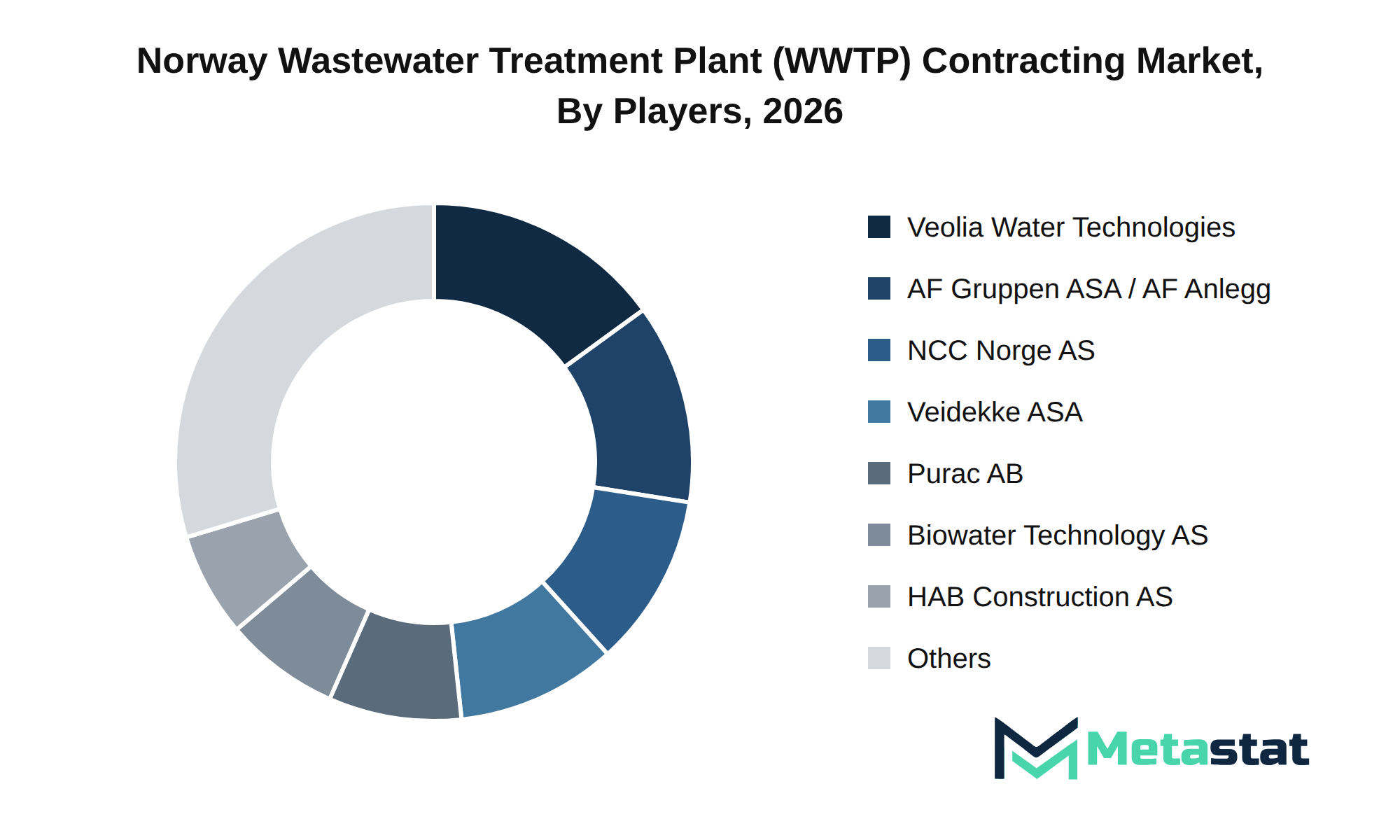
The Norway Wastewater Treatment Plant (WWTP) Contracting market experiences significant competitive activity, driven by strategic alliances, mergers, and acquisitions. Companies including Veolia Water Technologies, Purac AB, and ELIQUO PMI AS actively pursue collaborative opportunities to enhance their service offerings and expand market reach.
In a landscape marked by rapid technological advancement, firms like Biowater Technology AS and Sterner AS focus on product differentiation through proprietary technology and innovative solutions. Substantial investment in R&D pipelines maintains competitive advantages, ensuring that newer, more efficient technologies strengthen their positions in the market.
Strategic consolidation remains a key theme, with companies like AF Gruppen ASA / AF Anlegg and NCC Norge AS leveraging procurement leverage to optimize supply chains and enhance customer retention strategies. Switching costs associated with adopting new technologies create barriers to entry for potential new entrants, allowing established players to maintain brand equity and market share.
Future competitive outlook suggests ongoing investment in technological defensibility and intellectual property portfolios, with firms including Xylem Water Solutions Norge AS and Cambi ASA positioning themselves to capitalize on emerging trends within the market. The emphasis on integrated solutions and comprehensive service offerings highlights the evolution of customer preferences, reinforcing the importance of strategic growth vectors in the sector.
Market size is forecast to rise from NOK 1,125.4 million in 2025 to over NOK 7,960.9 million by 2033. This growth reflects a compound annual growth rate (CAGR) of 27.7%. The base case assumes consistent demand driven by increasing investments in infrastructure, regulatory support for environmental improvements, and growing urbanization. The bull case anticipates heightened demand due to accelerated technological advancements and significant governmental funding for sustainable projects, further enhancing the Norway Wastewater Treatment Plant (WWTP) Contracting market. The bear case highlights potential challenges, including economic downturns that could lead to reduced public and private spending on wastewater infrastructure, impacting future growth.
Macroeconomic factors shape the Norway Wastewater Treatment Plant (WWTP) Contracting market, influencing demand and investment decisions. Shifts in economic cycles affect capital allocation, with strategic imperatives focusing on sustainable development and compliance with evolving regulations. Next-generation technology integration drives research and development timelines that align with industry maturation. Anticipated compliance milestones push stakeholders towards timely investments in modernization and capacity expansion.
Geopolitical realignments and evolving trade corridors present both challenges and opportunities. Emerging white-space opportunities within the market highlight unmet enterprise needs for advanced treatment solutions and efficiency enhancements. Capital expenditures will prioritize projects that align with strategic growth objectives, particularly in municipalities and sectors focused on sustainability. Executive-level strategic imperatives dictate the allocation of resources towards infrastructure commitments, ensuring alignment with regional supply chain shifts and enhancing overall market resilience.
The report strategically identifies and profiles the key market players and analyses their core competencies in each sub-segment of the Wastewater Treatment Plant (WWTP) Contracting market.
|
Report Attributes |
Details |
|
Study Period |
2021-2033 |
|
Base Year |
2025 |
|
Estimated Year |
2026 |
|
Forecast Period |
2026-2033 |
|
Historical Period |
2021-2025 |
|
Growth Rate |
CAGR 27.7% from 2026 to 2033 |
|
Revenue Unit |
NOK million |
|
Segmentation |
By Project Type, Contract Scope, End User, and Region |
Find answers to common questions about this report
The Norway Wastewater Treatment Plant (WWTP) Contracting market size was valued at NOK 1,125.4 million in 2025.
The Norway Wastewater Treatment Plant (WWTP) Contracting market is projected to grow at a CAGR of 27.7% during the forecast period from 2026 to 2033.
The segment for Existing WWTP Treatment-Process Upgrade leads the Norway Wastewater Treatment Plant (WWTP) Contracting market, with a share of 35.2% in 2033. This segment's significant share highlights its importance in the overall market structure.
Significant growth in the Norway Wastewater Treatment Plant (WWTP) Contracting market is driven by increased investment in infrastructure development and the integration of advanced technologies. Enhanced public and private spending facilitates new construction and capacity expansions, while automation and digital transformation improve operational efficiency and service delivery.
High capital investment requirements significantly restrain the Norway Wastewater Treatment Plant (WWTP) Contracting market growth. The substantial financial outlays needed for advanced technologies deter smaller municipalities from pursuing new projects, while rising operating costs challenge existing facilities. These factors limit market expansion and impede the ability to respond to regulatory demands and technological advancements.
Significant growth in the Norway Wastewater Treatment Plant (WWTP) Contracting market is driven by increased investment in infrastructure development and technological advancements. Enhanced public and private spending, along with the integration of automation and artificial intelligence, improves operational efficiency and service delivery, promoting product adoption in this industry.
The Wastewater Treatment Plant (WWTP) Contracting market is estimated to reach a valuation of NOK 7960.9 million by 2033.
Key players in the Norway Wastewater Treatment Plant (WWTP) Contracting market include Veolia Water Technologies, Purac AB, ELIQUO PMI AS, Biowater Technology AS, Sterner AS, and AF Gruppen ASA / AF Anlegg.
Key segments include New WWTP Construction, Existing WWTP Capacity Expansion, Existing WWTP Treatment-Process Upgrade, and Existing WWTP Rehabilitation & Asset Renewal.
The Electrical, Instrumentation & Automation Contracts segment exhibits the highest growth, with a compound annual growth rate of 28.7% through 2033.
The analysts below cover Packaging research at Metastat Insights.
LEAD ANALYST
Utkarsh Khirodkar is a Lead Market Research Analyst at MetaStat Insight, specializing in market intelligence, technology sector assessments, and competitive strategy.

SENIOR RESEARCH ANALYST
Biotechnology · Food and Beverages · Medical Devices · Packaging
Snehal Pasalkar is a Research Analyst at MetaStat Insight, operating at the intersection of life sciences research, competitive strategy, and market intelligence.

INDUSTRY CONSULTANT - CHEMICALS & ADVANCED MATERIALS
Chemicals and Materials · Machinery & Equipment · Packaging
Amit Gadhekar Consultant for Chemicals and Materials at MetaStat Insight, directing sector-specific intelligence, research, and strategic consulting across global chemical and processing markets.
Evaluating secondary resin quality across post-consumer packaging streams requires reliable technical segmentation. MetaStat Insight delivered an objective assessment that distinguished between extrusion-grade flake pricing and optical sorting throughput limitations across Western Europe. The competitive positioning breakdown for licensed depolymerization technology providers answered several questions during our feedstock feasibility audit. Their team clarified regional trade restrictions on mixed plastic scrap quickly when our team submitted follow-up requests.
Evaluating sovereign cloud deployments for core banking platforms demands a clear view of data residency regulations and migration exit strategies. MetaStat Insight delivered an exhaustive review of regional latency tolerances, mainframe decommission milestones, and third-party vendor concentration risk. The regulatory compliance mapping across European and Asian financial jurisdictions gave our team a dependable baseline for multi-cloud infrastructure discussions.
Replacing petrochemical surfactants with bio-based alternatives requires realistic timelines on industrial precision fermentation scaling. The market research broke down commercialization timelines, feedstock sugar price sensitivities, and regional cosmetic ingredient regulatory approvals in Europe and East Asia. That supplier readiness mapping gave our formulations team reliable context when comparing renewable chemical sourcing roadmaps.
Explore related market intelligence reports worth reading alongside this one.