
LEAD ANALYST
Utkarsh Khirodkar is a Lead Market Research Analyst at MetaStat Insight, specializing in market intelligence, technology sector assessments, and competitive strategy.

Global Waterproofing Membranes Market Size, Share, By Type (Liquid Applied Membranes and Sheet-Based Membranes), By Application (Roofing, Walls, Building Foundations, Bridges, Highways, Tunnels, Subway Systems, Water & Wastewater Treatment Plants, Parking Decks, Swimming Pools, Water Parks, Planter Boxes, Retaining Walls, and Others), By Product Type (Silicone, Polyurethane, Cementitious, Modified Bitumen, Thermoplastic Polyolefin, EPDM, Fluoropolymer Sheet, Fiber-reinforced polymer, PVC, and Others), By End User (Residential Construction, Commercial Construction, Industrial Applications, and Public Infrastructure), Industry Analysis, Growth, Trends, and Forecast, 2026-2033
Report ID
MSI-3079
Published
September, 2025
Pages
255 Pages
Format
Report Details
Choose Your License
Waterproofing Membranes Market
The global waterproofing membranes market and its industry will keep expanding beyond the traditional limit of construction materials, venturing into fields that bridge durability with sustainability. In the beyond, waterproofing membranes have stayed inside constructing protection, basements, and roofing structures, but the upcoming years will see them extending to regions in which water resistance might be extra than a defensive layer. Infrastructure development, mainly within the transport quarter, will require membranes now not only for durability however for resilience to fluctuating environmental pressures. Bridges, tunnels, and roads will not remember waterproofing an afterthought however a high design issue, making certain durability towards climatic unpredictability
Key trends driving growth: Increasing demand for infrastructure development, particularly in urban areas, drives the need for waterproofing solutions., Growing awareness of water conservation and the necessity to protect structures from water damage fuels demand for effective waterproofing technologies.
Opportunities include Innovations in eco-friendly, sustainable waterproofing membranes offer significant growth potential in the green building sector.
Key insight: The market is set to grow exponentially in value over the next decade, highlighting significant growth opportunities.
What function will advance substances, and green solutions play in reshaping the destiny of the global waterproofing membranes market, and will they disrupt the dominance of traditional systems? As urbanization speeds up, will the call for durable infrastructure open new boom avenues, or will growing regulatory and fee pressures sluggish down adoption? How would possibly emerging technology and sustainable construction practices redefine the competitive landscape inside the years ahead?
The sector will also start to exert its influence in domains like urban planning and green building. Smart cities will incorporate these membranes into their basement structures, water holding tanks, and landscape elements to ensure that water management and structural integrity move side by side. Additionally, the global waterproofing membranes market will venture into markets such as renewable energy, where solar panel pedestals and wind turbine foundations will need continuous waterproofing against moisture levels to ensure optimum performance. In addition to energy, agriculture and aquaculture will also find uses for these products, employing them to line storage vessels, irrigation channels, and ponds where water preservation will become crucial.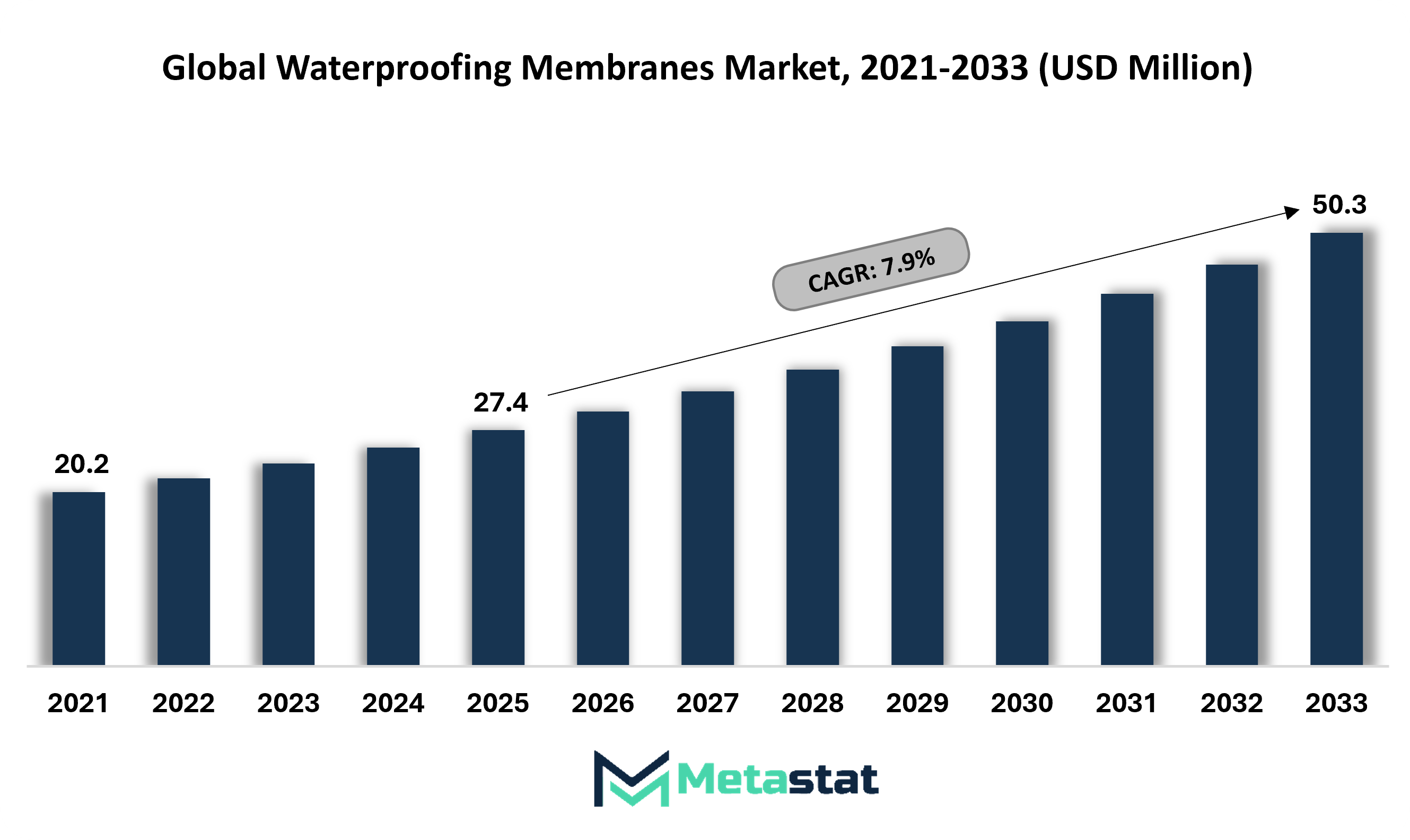
The global waterproofing membranes market is mainly classified based on Type, Application, Product Type, and End User.
Liquid Applied Membranes - Liquid applied membranes will remain in focus in the global waterproofing membranes market as cities grow and the need for flexible protection increases. As architectural variety increases, the demand for seamless and flexible coatings will be enhanced. Sophisticated liquid solutions will provide durability, fast application, and environmentally friendly use in upcoming projects.
Liquid Applied Membranes segment is valued at USD 12.6 billion in 2026 and is projected to reach USD 22.6 billion by 2033, at a CAGR of 8.7% during the forecast period.
Sheet-Based Membranes - Sheet-type membranes will be a crucial element of the global waterproofing membranes market owing to their consistent performance and dependability. Structured layering in large-scale constructions will yield long-term water protection against damage. Future consumption will be toward environmentally friendly, high-strength sheets with consistency and ease of installation for critical infrastructure.
Fully Adhered - Fully bonded systems will take over in the global waterproofing membranes market as accurate construction is adopted as standard practice. Such techniques will provide good adhesion, eliminating chances of leakage or movement. Inventions will render adhesion methods quicker, safer, and more energy-neutral, enabling future structures that focus on efficiency and structural sustainability.
Loose-Laid - Loosely laid membranes will continue to hold value in the global waterproofing membranes market for applications demanding flexibility and reusability. Such an installation process will find particular significance where there is moving ground soil or dynamic loading. Future use will be based on enhanced materials that balance flexibility with durable protection for various construction demands.
Mechanically Attached - Mechanically fastened membranes will solidify their position in the global waterproofing membranes market with constructions demanding stability in tough conditions. Their fastening for sure will find attraction in areas subject to strong winds or building movement. Advances in fastening systems will enhance efficiency, reduce installation time while enhancing stress and wear resistance.
Self-Adhered - Self-sticking membranes will be promising in the global waterproofing membranes market because they are easy and have cleaner application processes. With labour efficiency becoming vital, these types of systems will be popular for both small and large projects. Future developments will focus on user-friendly technology with improved adhesive strength and environmental compatibility.
Roofing and Walls - Roofing and wall shielding will lead the demand in the global waterproofing membranes market as urbanization persists. Advanced membranes will be the backbone for future buildings for protection against harsh weather, energy efficiency, and structural integrity. Expansion will revolve around incorporating smart solutions for long-term monitoring and performance enhancement.
Roofing and Walls segment is projected to reach USD 16.6 billion by 2033, at a CAGR of 7.5% during the forecast period.
Building Foundations - Foundation construction will be a pillar in the global waterproofing membranes market. As more complex and taller structures are designed, protection of underground spaces will become essential. Advanced membranes with chemical resistance and extended durability will shape future construction, inhibiting the intrusion of moisture that can compromise building integrity.
Bridges and Highways - Highways and bridges will drive demand in the global waterproofing membranes market with increasing global infrastructure. These structures will need materials capable of withstanding continuous load, climatic variation, and traffic stress. Solutions in the future will focus on long lifespan, making project maintenance smoother and longer-lasting for increasing transportation networks globally.
Tunnels and Subway Systems - Subway systems and tunnels will have increasing dependence on the global waterproofing membranes market as urban transit evolves. Underground engineering will require better moisture resistance to sustain high-pressure conditions. Future technology will develop membranes that include flexibility with improved strength, making for safe, long-term application in challenging underground construction.
Water and Wastewater Treatment Plants - Water and wastewater plants will rely more on the global waterproofing membranes market to ensure operational integrity. As population growth happens in the future, these plants will require dependable protection from leakage and contamination. Better membranes will offer chemical resistance, protect public health and enabling consistent operation in treatment facilities.
Parking Decks - Parking decks will add market applicability to the global waterproofing membranes market as cities develop vertically. Exposed to car and environmental loads, future membranes would require high strength and flexibility. High-tech materials will make sure protection, minimize preservation, and boom the lifespan of multi-degree parking buildings.
Swimming Pools and Water Parks - Swimming pools and waterparks will consolidate the global waterproofing membranes market by requiring lengthy-lasting, leak-free answers. Upcoming recreational facilities will prioritize safety and water performance, calling for next-technology membranes that balance aesthetic adaptability with excessive overall performance. Innovation will enhance user enjoy at the same time as minimizing electricity and water loss.
Others (Planter Boxes, Retaining Walls) - Uses like planter boxes and retaining walls will make consistent contributions to the global waterproofing membranes market. Urban landscaping and green infrastructure will require trusted waterproofing to maintain soil and structural integrity. Coming developments will incorporate environmentally friendly membranes that are fashioned to aid sustainability and long-term landscape wellness.
Residential Construction - Residential developments will be an important segment of the global waterproofing membranes market as urbanization increases and the demand for housing grows. Homeowners will value long-term structural integrity. Solutions in the future will provide economic, effective, and sustainable waterproofing techniques that improve conditions for living while lowering long-term maintenance requirements.
Commercial Construction - Commercial building will be the driving demand force in the global waterproofing membranes market with mega-size complexes and office buildings. Such construction will require robust defense against climatic stress. High-performance membranes will provide structural integrity while aiding in sustainability objectives, transforming commercial infrastructure into secure and energy-efficient environments.
Industrial Applications - Industrial applications will emphasize the position of the global waterproofing membranes market in the protection of chemical-exposed and heavy machinery facilities. Solutions for the future will aim to have more resistant and resilient membranes to protect production units. Solutions aimed at efficiency will minimize downtime and enhance long-term operational efficiency in all industries.
Public Infrastructure - Public infrastructure will continue to be a key stimulus for the global waterproofing membranes market. Roads, transportation centers, and public facilities will need strong waterproofing to ensure heavy usage resistance. Future investment will be in sustainable high-performance membranes that maximize service life and guarantee reliability in public areas globally.
Based on geography, the global market is divided into North America, Europe, Asia-Pacific, South America, and Middle East & Africa. North America is further divided in the U.S., Canada, and Mexico, whereas Europe consists of the UK, Germany, France, Italy, and Rest of Europe. Asia-Pacific is segmented into India, China, Japan, South Korea, and Rest of Asia-Pacific. The South America region includes Brazil, Argentina, and the Rest of South America, while the Middle East & Africa is categorized into GCC Countries, Egypt, South Africa, and Rest of Middle East & Africa.
The global waterproofing membranes market is prompted by a mixture of long-status global players and local firms which are increasingly more making inroads with area of interest products. This market mirrors the increase in call for products that guarantee sturdiness, safety, and sustainability in residential, commercial, and commercial building creation. With growing urbanization and the growth of infrastructure projects, the call for dependable waterproofing solutions will stay at the coronary heart of constructing sports. Not handiest do they concentrate on preventing water damage, however additionally on growing merchandise that assist prolong the lifespan of buildings and lower preservation fees, something that has forced agencies to beautify product overall performance and evolve with transferring patron demands.
Prominent gamers like Sika AG, BASF SE, and Mapei S.P.A. Have set up themselves via giant product services and their global presence. Their reach spans continents, as they maintain to spend money on R&D to bring new formulations and methods of software. Joining them are players such as Carlisle Companies Inc., GAF Materials Corporation, and Dow Inc., which carry with them long-standing experience often paired with extensive distribution channels that enable them to serve the needs of behemoth infrastructure projects. These global leaders dominate their industries in both product best and sustainability requirements.
Regionally, they're being supplemented with the aid of local players who provide solutions which might be precise to the marketplace, commonly at an aggressive price. Companies like Pidilite Industries Ltd. In India and Oriental Yuhong in China have turn out to be powerful gamers of their respective markets, while additionally developing overseas. These organizations, together with Tremco Incorporated, Fosroc International Ltd., and Soprema Group, maintain to reinforce their positions with innovation and acquisition, maintaining them aggressive in each developing and rising economies. Their versatility tends to provide them with an advantage in phrases of responding to precise geographic conditions or task-particular demands.
Other key players are Saint-Gobain Weber, Johns Manville Corporation, Henry Company LLC, Kemper System America, Inc., GCP Applied Technologies, LATICRETE International, Inc., CICO Technologies Limited, and Maris Polymers. All those players together suggest the range of the solutions inside the global waterproofing membranes market, from international corporations to boutique corporations with specialist packages. With multiplied competition, such firms will keep driving the evolution of product efficacy, user-pleasant nature, and ecological compatibility, defining the destiny of global creation practices.
The marketplace shall remain aggressive as each local players and worldwide giants try to capture possibilities in new infrastructure, urban development, and commercial improvement schemes. As sustainability becomes more and more critical and construction technology emerge as more superior, the contribution of those groups in supplying powerful waterproofing solutions might be critical. The combination of old players and new players on the block ensures that the industry will continue to develop, with innovation and performance remaining at the center.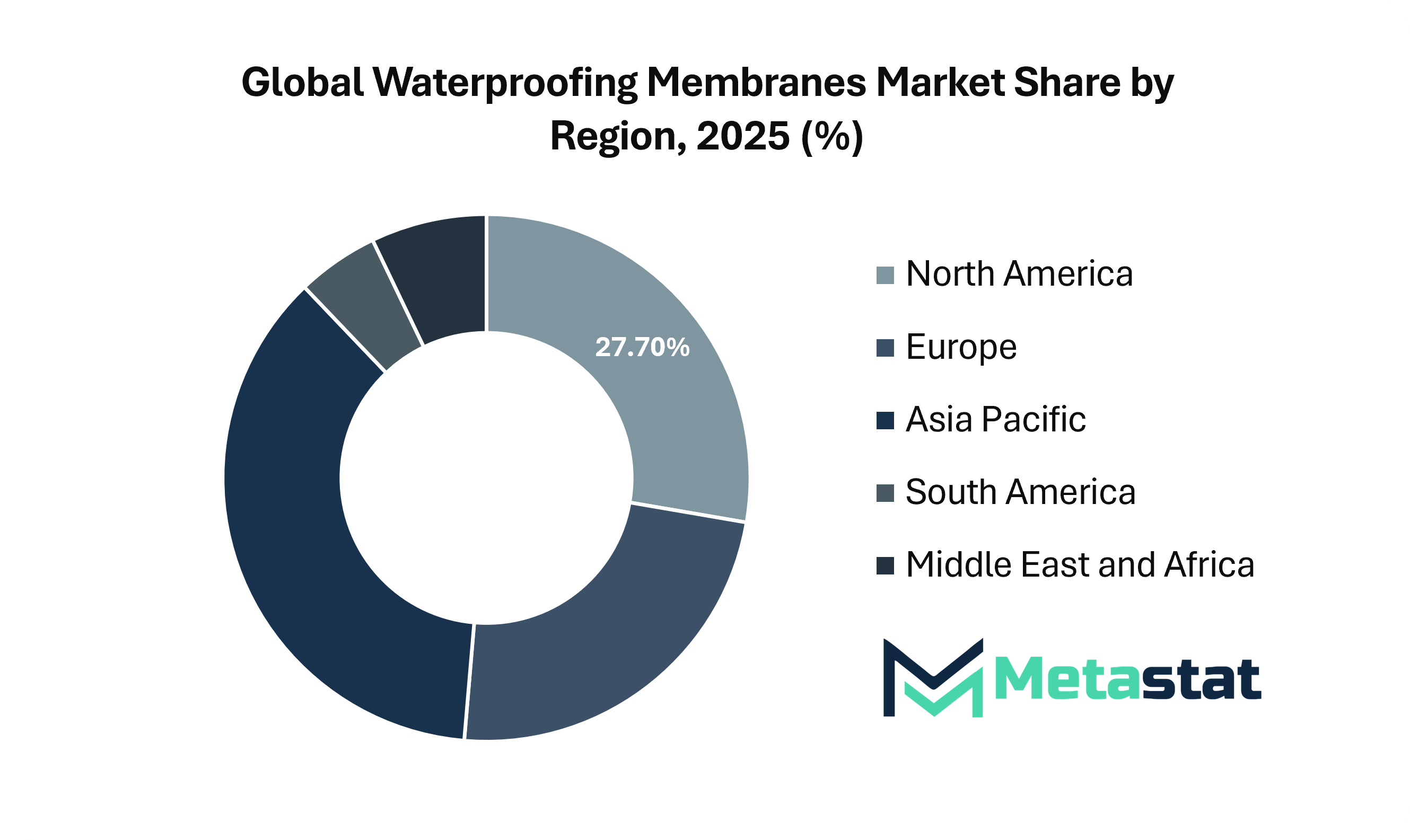
High installation costs and complex application processes may hinder market growth, especially in developing regions - Exorbitant installation prices and cumbersome application processes will remain barriers to broader use of sophisticated solutions in the global waterproofing membranes market. Budgetary constraints in most developing countries will make it more difficult for construction firms and property owners to purchase these specialized materials in significant quantities.
Availability of cheaper alternatives can limit the widespread adoption of advanced waterproofing membranes - Presence of lower-cost alternatives will also hinder the growth of the global waterproofing membranes market in the coming years. Developers might opt for lower-quality alternatives in order to reduce costs, which will cap demand for cutting-edge technologies and maintain lower-cost but less effective approaches in most building traditions.
Innovations in eco-friendly, sustainable waterproofing membranes offer significant growth potential in the green building sector - Technological improvements in inexperienced and sustainable merchandise will revolutionize the global waterproofing membranes market inside the coming years. Increased call for green homes will drive the production of membranes with decrease environmental footprint, prompting architects, engineers, and builders to implement merchandise that meet global sustainability standards. Rising technology that purpose for increased durability and strength efficiency will provide new possibilities for the global waterproofing membranes market. As urbanization will increase and creation is moved in the direction of greater smart infrastructure, these new membranes will take center degree in making destiny towns smart, with an emphasis on environmental sustainability and lengthy-term resilience.
The discussion will not be confined to resistance to leaks and seepage alone. Waterproofing membranes will be designed with multiple functionalities in the not-too-distant future, including thermal resistance and self-healing properties, giving rise to intelligent materials that react based on their surroundings. The global waterproofing membranes market will then be positioned as just a supplier of building materials, becoming an actor in sustainable development, technological innovation, and global infrastructure security.
This research report categorizes the global waterproofing membranes market based on various segments and regions, forecasts revenue growth, and analyzes trends in each submarket. The report analyses the key growth drivers, opportunities, and challenges influencing the global waterproofing membranes market. Recent market developments and competitive strategies such as expansion, type launch, development, partnership, merger, and acquisition have been included to draw the competitive landscape in the market. The report strategically identifies and profiles the key market players and analyses their core competencies in each sub-segment of the global waterproofing membranes market.
By Type:
By Application:
By Product Type:
By End User:
|
Report Attributes |
Details |
|
Study Period |
2021-2033 |
|
Base Year |
2025 |
|
Estimated Year |
2026 |
|
Forecast Period |
2026-2033 |
|
Historical Period |
2021-2025 |
|
Growth Rate |
CAGR 7.9% from 2026 to 2033 |
|
Revenue Unit |
USD billion |
|
Sales Volume Unit |
Thousand Units, Kilotons, Units |
|
Segmentation |
By Type, Application, Product Type, End User, and Region |
|
By Region |
North America (By Type, Application, Product Type, End User, and Country)
|
|
|
Europe (By Type, Application, Product Type, End User, and Country)
|
|
|
Asia Pacific (By Type, Application, Product Type, End User, and Country)
|
|
|
South America (By Type, Application, Product Type, End User, and Country)
|
|
|
Middle East and Africa (By Type, Application, Product Type, End User, and Country)
|
Find answers to common questions about this report
The Metastat Insights study shows that the Global Waterproofing Membranes market size was USD 27.4 billion in 2025.
The Global Waterproofing Membranes market is expected to grow at a CAGR of 7.9% over the forecast period (2026-2033).
The Metastat Insights analysis shows that the North America Waterproofing Membranes market size is estimated to be USD 12.5 billion by 2033.
Global Waterproofing Membranes market is estimated to reach USD 50.3 billion by 2033.
The analysts below cover Chemicals and Materials research at Metastat Insights.
LEAD ANALYST
Utkarsh Khirodkar is a Lead Market Research Analyst at MetaStat Insight, specializing in market intelligence, technology sector assessments, and competitive strategy.

INDUSTRY CONSULTANT - CHEMICALS & ADVANCED MATERIALS
Chemicals and Materials · Machinery & Equipment · Packaging
Amit Gadhekar Consultant for Chemicals and Materials at MetaStat Insight, directing sector-specific intelligence, research, and strategic consulting across global chemical and processing markets.
Enterprise zero-trust network rollouts are often slowed down by multi-cloud transit latency and proprietary hardware retirement schedules. This study provided realistic total cost of ownership models comparing cloud-delivered security edge solutions against traditional hardware refreshes. The analysis of contract renewal lengths and software maintenance fees gave us clear visibility into enterprise replacement cycles over the next three to five years.
Scaling antibody-drug conjugate manufacturing hinges on contract manufacturing availability for high-potency active ingredients. The MetaStat Insight analysis looked closely at global cleanroom slot constraints, bioconjugation batch failure rates, and supply chain redundancies between the US, Europe, and India. The supplier capability matrix proved genuinely useful for our team when mapping secondary source options across our clinical pipeline.
Floating offshore wind feasibility relies heavily on specialized installation vessel availability and port crane limits, which most broad renewable energy forecasts ignore. The report delivered a thorough analysis of dry dock capacity, mooring chain supply constraints, and raw material pricing trends for deepwater anchor installations. It served as a solid independent sanity check for our offshore project capital expenditure assumptions.
Explore related market intelligence reports worth reading alongside this one.
Starting from
$2950