
LEAD ANALYST
Utkarsh Khirodkar is a Lead Market Research Analyst at MetaStat Insight, specializing in market intelligence, technology sector assessments, and competitive strategy.

Global Mining Water Treatment Systems Market Size, Share, By Treatment Technology (Reverse Osmosis, Non-RO Membrane Filtration, Clarification and Chemical Precipitation, Media Filtration and Adsorption, Ion Exchange, Evaporation and Crystallization, Biological Treatment), By Application (Process Water Reuse and Recycling, Mine Drainage Treatment, Freshwater and Desalinated Water Supply, Tailings Water Treatment, Brine Management and ZLD), By Mine Type (Metal Mines, Coal Mines, Non-Metal Mineral Mines), By System Format (Site-Built Fixed Plants, Modular and Containerized Plants, Trailer-Mounted Mobile Systems), Industry Analysis, Growth, Trends, and Forecast, 2026-2033
Report ID
MSI-5663
Published
November, 2026
Pages
280 Pages
Format
Historical
Base year
Forecast
Forecast period
Report Details
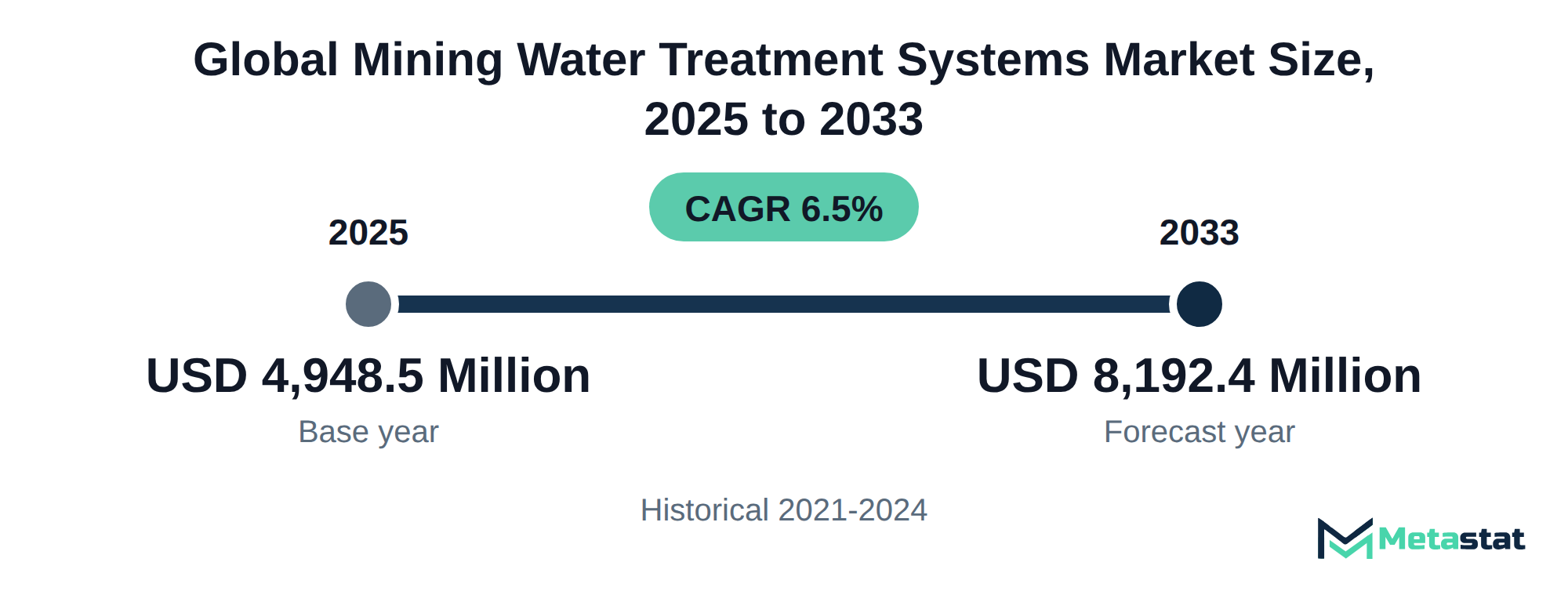
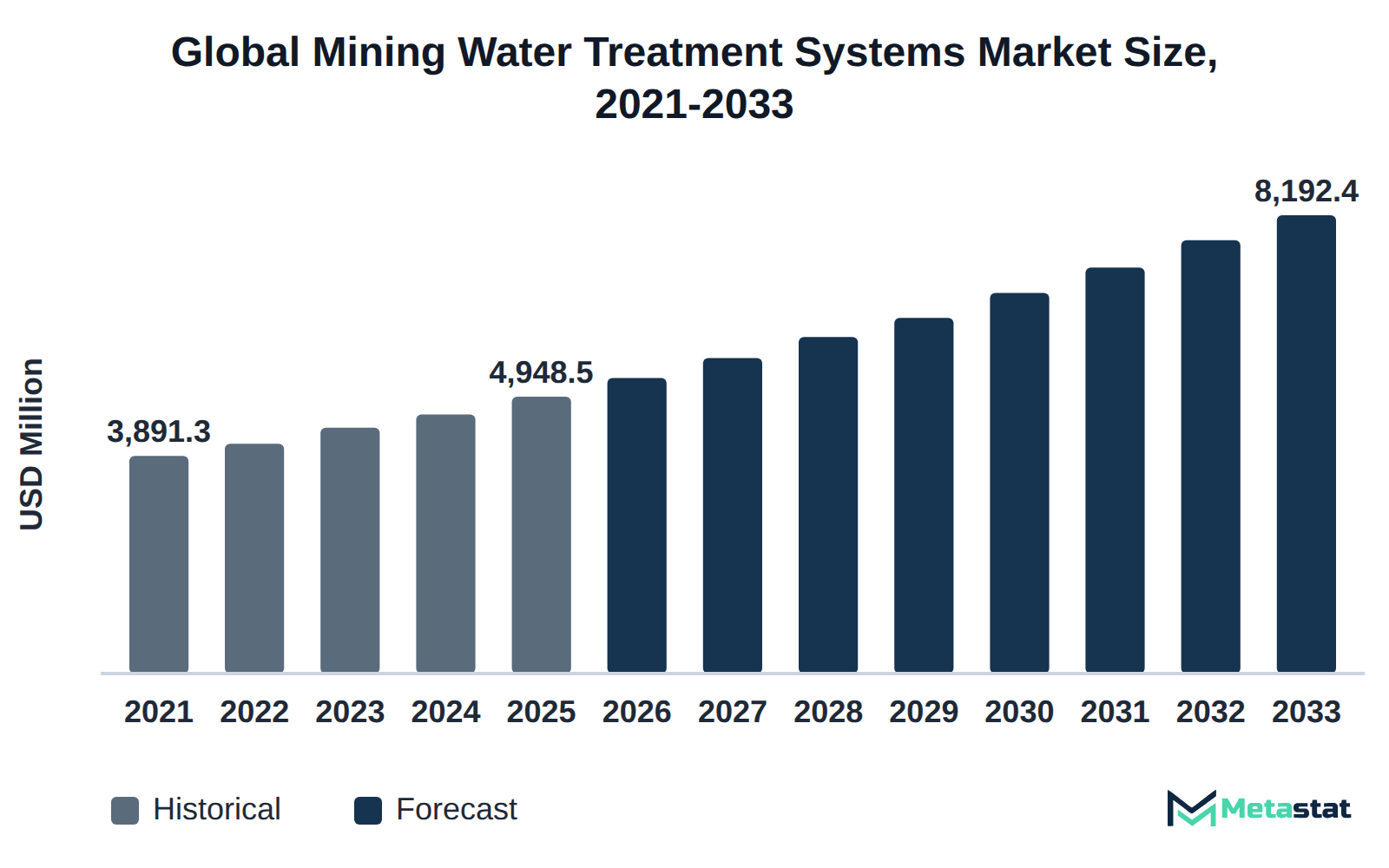
Market Valuation: Valued at $4,948.5 Million in 2025, projected to reach $8,192.4 Million by 2033 at a 6.5% CAGR.
Dominant Segment: The Reverse Osmosis segment leads the market, driven by its effectiveness in removing contaminants and ensuring high water quality for mining operations.
Geographic Lead: North America holds the largest market share, with the US projected to lead in 2026 due to significant investments in water treatment technologies addressing stringent environmental standards.
What's Inside: The report provides an in-depth analysis of market dynamics, including competitive coverage, treatment technologies, and growth forecasts from 2026 to 2033.
Emerging Technologies: Innovative treatment technologies, such as non-RO membrane filtration and clarification systems, are gaining traction, enhancing operational efficiency and reducing costs for mining operations.
Process Water Reuse: The segment for process water reuse and recycling is expected to grow significantly, reflecting the industry's shift towards sustainable practices and the need for effective water management solutions.
Choose Your License
Global Mining Water Treatment Systems Market
The global Mining Water Treatment Systems market was valued at USD 4,948.5 million in 2025 and is projected to reach USD 8,192.4 million by 2033, growing at a CAGR of 6.5% over the forecast period.
The Mining Water Treatment Systems market encompasses technologies and processes designed to treat water generated during mining activities, ensuring compliance with environmental regulations and protecting water resources. Buyers invest in these systems due to the need for effective wastewater management, rising costs associated with water scarcity, and increased regulatory pressures on mining operations. This investment helps sustain operations and extend the life cycle of mining sites.
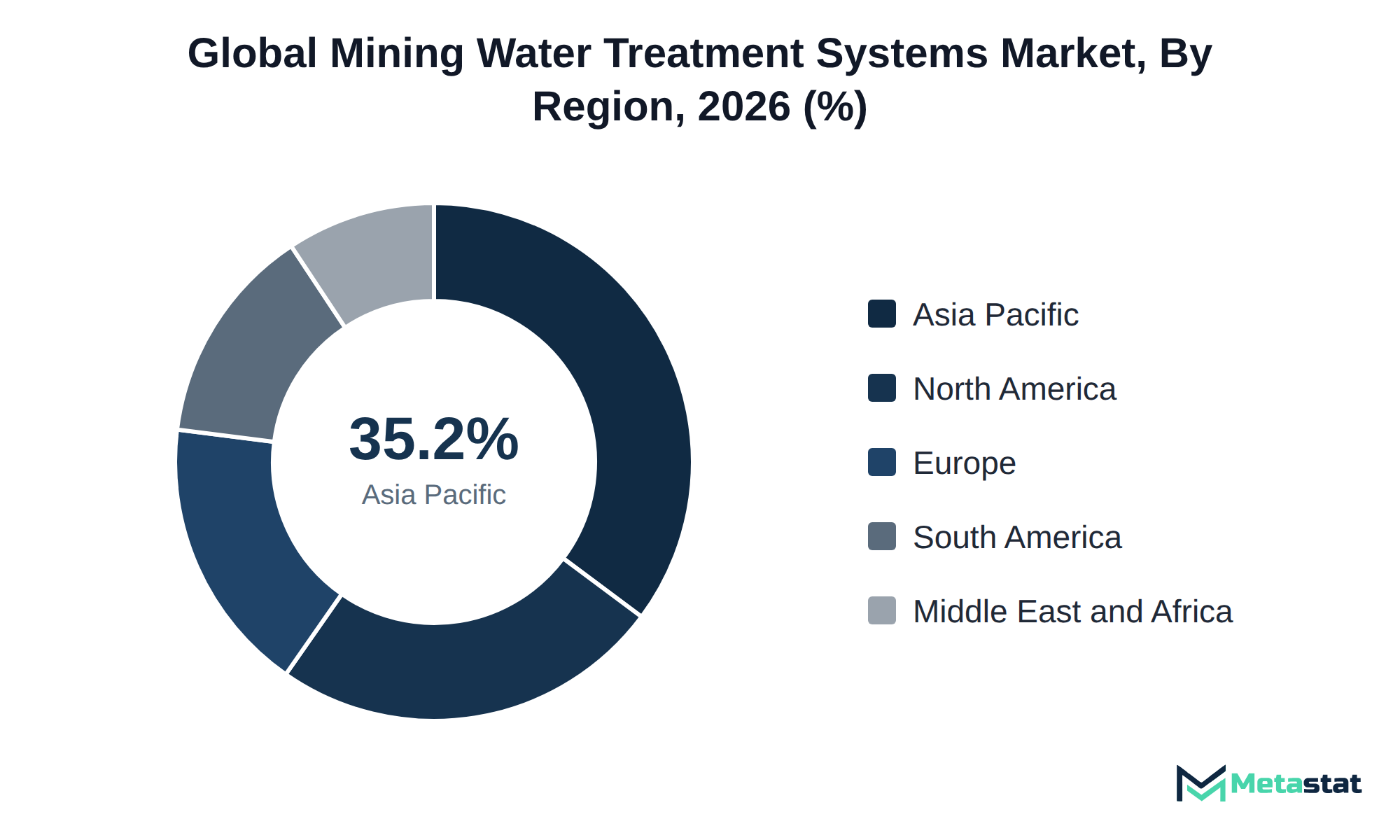
Growth in the market is driven by rising demand for efficient water treatment solutions across various mining operations. The Reverse Osmosis segment represents the largest value within the market, reflecting its effectiveness in removing contaminants and ensuring water quality. North America holds 24.5% of the market in 2025, with the US leading in 2026. This regional dominance results from significant investments in water treatment technologies to address stringent environmental standards.
Continued expansion of the Mining Water Treatment Systems market aligns with the increasing focus on sustainable practices and resource conservation within the mining industry. The rising need for process water reuse and recycling further increases demand, with companies seeking to minimize waste and reduce their environmental footprint. This trend supports the shift toward more sustainable mining operations.
The Mining Water Treatment Systems market addresses the increasing demand for effective water management solutions in mining operations. Buyers invest in these systems to ensure compliance with stringent environmental regulations, optimize resource utilization, and mitigate the environmental impact of mining activities. The need for sustainable practices drives expenditures on advanced treatment technologies that enhance water quality and promote recycling initiatives within mining sites.
Growth in the market is propelled by the rising focus on water reuse and recycling efforts across various mining sectors. The segment for Reverse Osmosis represents the largest share within treatment technologies, reflecting its critical role in delivering high-quality water for operational processes. This regional strength highlights the significant investments made in water treatment solutions to address both regulatory pressures and operational efficiency.
Investments in innovative treatment technologies continue to reshape market dynamics, particularly in the Asia Pacific region, which exhibits the highest market share. This region's substantial mining activities, coupled with increasing concerns about water scarcity and quality, contribute to heightened demand for effective treatment solutions. Together, these factors support sustained growth in the Mining Water Treatment Systems market.
High-recovery reverse osmosis (RO) systems are central to mine water reuse in the Mining Water Treatment Systems market. These systems enhance water recovery rates while minimizing waste, supporting sustainable operations. The market for reverse osmosis in this sector is projected to expand from USD 2,024.7 million in 2026 to USD 3,054.9 million by 2033, reflecting a compound annual growth rate (CAGR) of 6.1%. This growth highlights the increasing adoption of high-recovery RO technologies driven by regulatory pressures and the need for efficient water management.
The integration of thermal brine concentration further complements high-recovery RO systems in mine water reuse applications. This technology allows for effective management of concentrated brine, a challenge in mining operations, thus facilitating the treatment of existing mine drainage. The shift towards these technologies enhances operational efficiency and reduces environmental impacts. Commercially, the reliability of high-recovery RO systems and thermal brine concentration gives mining companies a competitive edge, helping them meet stringent environmental standards while optimizing resource utilization.
Mine drainage treatment removes dissolved metals and sulfate, supporting environmental compliance and operational efficiency within the Mining Water Treatment Systems market. The pricing structure in this segment typically revolves around the complexity and scale of the treatment required. For instance, treatment projects often follow a contract model that aligns costs with the level of contaminants found in mine drainage. Contracts frequently incorporate performance-based pricing, where fees correspond to the efficacy of the treatment solution in achieving regulatory standards.
The mine drainage treatment segment is projected to reach USD 1,763.8 million by 2033, reflecting an increasing demand for effective solutions. This anticipated growth makes strategic procurement decisions more important for buyers, who seek to ensure both cost-effectiveness and compliance with environmental standards. By investing in advanced treatment technologies, buyers optimize operational costs while adhering to evolving regulations surrounding mine drainage. The focus on effective contract models and pricing strategies will drive innovation and investment in the Mining Water Treatment Systems market.
Modular treatment plants offer a practical solution for remote and water-stressed mining sites. These systems provide flexibility and efficiency, addressing the unique challenges faced by mining operations in areas with limited access to water resources. The Mining Water Treatment Systems market shows significant potential, especially with the projected growth of modular and containerized plants, expected to reach USD 2,665 million by 2033, reflecting a compound annual growth rate of 7.6%. This growth highlights the increasing reliance on modular solutions in the mining sector.
Mining companies operating in challenging environments require adaptable and efficient water treatment options to ensure sustainability and compliance with environmental regulations. Modular treatment plants offer the advantage of being transportable and quickly deployable, making them ideal for operations in remote locations where traditional infrastructure is impractical. The demand for effective water management strategies drives investment in these modular systems, ultimately enhancing operational resilience and supporting long-term profitability for mining firms.
Mines must choose between water reuse and zero liquid discharge (ZLD) when setting their water management strategies. The adoption of process water reuse and recycling is projected to increase from USD 1,574.8 million in 2026 to USD 2,551.1 million by 2033, indicating strong growth potential in this segment of the Mining Water Treatment Systems market. This growth reflects heightened focus on sustainability and regulatory compliance, pushing mines to optimize water use and minimize waste.
Water reuse provides substantial operational benefits, including reduced operational costs and improved environmental performance. Conversely, ZLD systems capture and treat wastewater to eliminate liquid waste entirely, offering an alternative for mines in regions with stringent discharge regulations. The capital investment required for ZLD systems is higher, but the long-term benefits of regulatory compliance and enhanced corporate social responsibility often justify this expenditure.
Ultimately, the choice between water reuse and ZLD hinges on specific operational requirements, regional regulations, and cost considerations. Mines evaluating these options consider their unique circumstances to align their strategies with both operational efficiency and environmental stewardship, influencing their competitive position in the Mining Water Treatment Systems market.
Growing environmental awareness drives mining companies to invest in advanced water treatment solutions. The shift toward sustainable practices among large mining firms results in heightened spending on technologies that enable effective water reuse and recycling. Factors contributing to this development include stricter environmental policies and public pressure for responsible resource management. Mining operations see innovative treatment systems as necessary to minimize water usage and mitigate environmental impacts. This trend indicates that the Mining Water Treatment Systems market is expected to experience significant expansion, driven by a collective commitment to sustainability and efficient resource utilization.
Innovative technologies drive the efficiency of Mining Water Treatment Systems. These advancements reflect a shift toward more effective methodologies in water management processes, enhancing operational performance. Technologies including non-reverse osmosis membrane filtration and clarification systems enable mining operations to reduce costs associated with traditional treatment methods. Buyers increasingly favor systems that provide higher recovery rates, tailored solutions, and lower energy consumption, achievable through these new technologies. This trend particularly appeals to metal mines, which adopt such systems to manage process water reuse and treat mine drainage effectively. The Mining Water Treatment Systems market benefits from these technological innovations, driving growth and increased investment as operators seek reliable and sustainable solutions. By implementing these advanced technologies, mining companies strengthen their commitment to environmental stewardship while optimizing resource allocation and operational efficiency.
Increasing operational costs present a significant barrier within the Mining Water Treatment Systems market. Mining companies face rising expenses related to energy, maintenance, and labor, which directly influence their investment decisions for water treatment systems. These higher costs often result in delayed replacement of outdated systems and a more cautious approach to adopting new technologies. For many operators, especially in regions with limited resources, capital constraints lead to smaller orders and reduced commitment to upgrade facilities. Consequently, businesses remain focused on short-term cost management rather than long-term strategic investments in efficient water treatment solutions. The impact of these rising operational costs particularly affects metal mines, which require substantial investments to upgrade or expand their treatment capabilities, ultimately limiting overall market growth potential.
Compliance costs pose a significant challenge for suppliers in the Mining Water Treatment Systems market. The need for adherence to stringent environmental regulations drives up operating expenses, impacting profit margins across the industry. Increased expenditures in developing advanced technologies to meet these regulations limit pricing flexibility and reduce competitive advantage. In response, industry players invest in innovative treatment solutions that enhance efficiency while lowering long-term operational costs. This strategic focus enables suppliers to manage compliance-related pressures effectively. By adopting technologies that improve resource recovery and reduce waste, companies work to balance compliance demands with profitability goals. Suppliers in a competitive environment must achieve regulatory compliance without sacrificing financial performance.
Process water reuse and recycling represents a significant growth opportunity within the Mining Water Treatment Systems market. This upward trajectory stems from mining operators actively seeking to enhance water management strategies while reducing operational costs and environmental footprints. The push for sustainability in mining operations, driven by increasing regulatory pressures and stakeholder expectations, further fuels this demand.
Advanced treatment technologies, including reverse osmosis and non-RO membrane filtration, enable mining companies to effectively reclaim and recycle water. Such technologies enhance operational efficiency while ensuring compliance with environmental standards. The focus on process water reuse positions the market favorably for investment and innovation, creating competitive advantages among industry players. Growth in this segment signals broader acceptance of sustainable practices across the mining sector.
The Global Mining Water Treatment Systems market is segmented based on Treatment Technology, Application, Mine Type, and System Format.
This technology focuses on removing impurities from water through a semi-permeable membrane, making it crucial for mining operations requiring high-quality water for processing and recycling. Mining companies apply reverse osmosis for process water reuse and to meet regulatory compliance regarding effluent discharge. The growing emphasis on sustainable practices and water conservation drives demand for this segment, which experiences a stronger growth rate compared to others including clarification and chemical precipitation. Lower operational costs associated with reverse osmosis technology enhance its attractiveness, leading to wider adoption across various mine types. This segment benefits from technological advancements that improve efficiency and reduce energy consumption, distinguishing it from traditional methods.
Non-RO Membrane Filtration segment is estimated to reach USD 1,361.6 million by 2033, at a CAGR of 7.4% during the forecast period. This segment is essential in treating various water types used in mining operations, particularly in the removal of suspended solids, bacteria, and other contaminants. Ceramic membranes are among the options for this type of filtration. Industries including metal and coal mining apply this technology to ensure compliance with stringent environmental regulations. Increasing pressure to improve water recovery rates and reduce overall operational costs drives growth in this segment. Unlike Reverse Osmosis systems, which are more costly and complex, Non-RO Membrane Filtration offers a more straightforward solution with lower capital expenditures. The segment's growth outpaces others within the treatment technology category, primarily due to its affordability and effectiveness in specific applications, reflecting evolving demand for efficient and sustainable water treatment solutions.
Clarification and Chemical Precipitation segment is expected to reach USD 1,281.3 million by 2033. This technology addresses the separation of suspended solids and dissolved contaminants through chemical processes, widely applied in mining operations for effluent treatment and water recycling. Chemical precipitation depends on dosing with water treatment chemicals. Key users include mining companies aiming to meet regulatory standards and enhance resource recovery. Increased environmental regulations drive demand for effective treatment solutions, with companies focusing on minimizing waste and optimizing water use. The Clarification and Chemical Precipitation segment exhibits a steady growth rate, with a compound annual growth rate (CAGR) projected at 5.5%, slower than Non-RO Membrane Filtration, which shows a CAGR of 7.4%. Compared to other technologies, this segment offers a more cost-effective solution for treating mining wastewater while maintaining quality standards.
Media Filtration and Adsorption segment is projected to grow at a CAGR of 5% during the forecast period. This technology employs granular media to remove suspended solids and certain contaminants from water, making it essential for various mining applications. Activated carbon is a common granular adsorbent used for this purpose. Industries involved in mineral extraction, including metal and coal mining, rely on this segment to ensure water quality and reduce environmental impact. The demand for effective treatment solutions influences growth, particularly in regions where regulations on water discharge are stringent. Compared to other treatment technologies, Media Filtration and Adsorption has a lower growth rate, reflecting its established status in the market alongside emerging technologies that attract more investment. The market recognizes this segment's role in supporting compliance with environmental standards while presenting opportunities for gradual improvements in process efficiency.
Ion exchange involves a process where unwanted ions in water are replaced with more desirable ions. This technology supports various applications, including the treatment of mining process water, where it aids in removing contaminants and improving water quality. Metal mines typically use ion exchange systems because of their efficiency in treating high-purity water. Industry dynamics favor this segment's growth, driven by increasing environmental regulations and the push for sustainable mining practices. Unlike other treatment technologies, ion exchange stands out for its specificity in targeting particular contaminants, resulting in higher operational costs compared to more general approaches. The market continues to see interest from mining companies seeking advanced solutions to meet stringent environmental standards, enhancing compliance and operational efficiency.
Evaporation and crystallization represent advanced treatment technologies employed to manage high salinity in mining wastewater. This sub-segment finds application in industries where efficient brine management is crucial. Mining operations increasingly adopt these processes to recover valuable minerals and minimize environmental impacts. Demand for evaporation and crystallization is driven by stringent regulations concerning discharge limits, prompting operators to seek more effective solutions. Compared to other treatment technologies, this sub-segment faces unique cost considerations and technical challenges. It often involves higher initial investments in equipment and infrastructure, influencing purchasing decisions among operators. This technology primarily appeals to mines generating concentrated brine, differentiating it from more conventional treatment methods. Adoption of evaporation and crystallization technologies contributes significantly to the overall efficiency and sustainability goals outlined within the Mining Water Treatment Systems market.
Biological treatment involves the use of microorganisms to treat wastewater generated from mining operations. This method serves industries looking to remove contaminants organically, promoting sustainability and reducing chemical dependency. Mining companies prioritize biological treatment for its cost-effectiveness and environmental benefits. Factors influencing this segment include environmental regulations that enforce stricter effluent standards, pushing companies to adopt eco-friendly solutions. Biological treatment experiences slower growth compared to other technologies like reverse osmosis, driven by longer processing times and specific operational requirements. In this context, biological treatment addresses the need for sustainable practices while aligning with the increasing demand for compliance with environmental standards within the Mining Water Treatment Systems market.
Advanced oxidation and electrochemical treatment technologies improve the quality and safety of water used in mining operations. These methods find applications in various sectors, including mining companies aiming to mitigate environmental impacts and comply with regulatory standards. The increasing focus on sustainability drives interest in these technologies, which offer effective solutions for contaminant removal and water recycling. In comparison to other treatment technologies, these methods attract buyers interested in innovative solutions that address complex water treatment challenges. The relatively higher investment required for advanced oxidation and electrochemical systems positions them differently within the market, appealing to operators that prioritize long-term operational efficiency and regulatory compliance over initial cost concerns. Adoption of such technologies reflects a shift toward more sustainable practices in the mining sector, presenting significant implications for both operational strategies and environmental stewardship.
This segment focuses on treating and recycling water for reuse in mining operations, reducing freshwater consumption and environmental impact. Mining companies implement these systems to comply with increasingly strict regulations and enhance sustainability practices. The growing emphasis on water management drives demand, particularly in regions facing water scarcity. This segment exhibits a faster growth rate compared to others in the Application category, including Mine Drainage Treatment, which has a CAGR of 5.5%. The potential for cost savings and operational efficiency further incentivizes investment in these advanced treatment technologies. The Mining Water Treatment Systems market reflects a broader trend toward sustainable practices in the industry, highlighting the importance of water reuse and recycling solutions.
Mine Drainage Treatment segment is estimated to reach USD 1,763.8 million by 2033, at a CAGR of 5.5% during the forecast period. This segment involves the treatment of water that has come into contact with mining operations, often containing contaminants that require removal before discharge or reuse. Mining companies engage in this process to comply with environmental regulations and maintain operational efficiency. Demand for advanced treatment technologies, driven by stringent regulatory frameworks, supports growth in this segment. Compared to other applications, Mine Drainage Treatment experiences slower growth, with a CAGR of 5.5% ranking lower than the Process Water Reuse and Recycling segment, which has a CAGR of 7.1%. The market prioritizes innovations in treatment technologies to manage the complexities of water quality and compliance challenges faced by mining operations.
Freshwater and Desalinated Water Supply segment is projected to reach USD 1,660.6 million by 2033. This segment focuses on providing essential water resources for mining operations, addressing the requirements for both freshwater and desalinated water supplies. Mining companies employ these systems to ensure a reliable water source for various processes, enhancing operational efficiency. Significant demand arises from increasing regulatory pressures for sustainable water management and the necessity to mitigate environmental impacts. This segment is expected to experience substantial growth compared to other applications including Mine Drainage Treatment, which holds a lower CAGR of 5.5%. Investment in advanced treatment technologies supports the ongoing development of this segment, reflecting the broader trends influencing the market.
Tailings Water Treatment segment is projected to grow at a CAGR of 5.7% during the forecast period. This process focuses on managing and treating wastewater generated from mining activities, ensuring compliance with environmental regulations while minimizing ecological impact. Tailings originate in mineral processing, which ties this segment to the operation of mining process plants. Mining companies apply these solutions to address the challenges related to water quality and disposal, driven by stringent regulatory frameworks and growing environmental concerns. This segment differs from others in the application category due to its specific focus on waste management, which appeals to companies operating in high-impact mining sectors. The forecasted demand for effective tailings treatment solutions indicates a steady market growth trajectory, with increasing emphasis on sustainable practices in the mining industry. In contrast, other application segments, including Process Water Reuse and Recycling, exhibit higher growth rates, reflecting varying priorities and technological advancements within the market.
Brine management and zero liquid discharge (ZLD) serve essential functions in the processing of mining wastewater by minimizing environmental impact. Industries engaging in resource extraction apply these technologies to efficiently manage saline effluents, ensuring compliance with stringent environmental regulations. Increasing scrutiny on water quality and treatment standards drives significant demand for ZLD solutions, particularly in sectors where water scarcity is prevalent. This sub-segment experiences distinct growth patterns compared to others, focusing on high-value applications that yield cleaner output and reduce wastewater discharge. Investment in advanced ZLD technologies facilitates operational efficiencies, positioning companies favorably within the Mining Water Treatment Systems market. The differentiation in pricing and buyer profiles between brine management and other treatment technologies highlights the evolving dynamics of water treatment solutions in mining.
This sub-segment encompasses the treatment of water used in mining camps and wash-bay wastewater. It primarily serves mobile mining operations, where water management is crucial for both operational efficiency and environmental compliance. Key drivers include the increasing emphasis on sustainable practices within the mining sector, particularly regarding wastewater management. Companies operating in this sub-segment face rising costs associated with advanced treatment technologies. Compared to other applications, this segment experiences rapid growth, reflecting differing priorities within the broader Mining Water Treatment Systems market. Water treatment solutions for mine camp facilities and wash-bays differ in application and operational requirements, highlighting a niche market segment focused on meeting specific needs while adhering to regulatory standards.
Metal Mines segment is valued at USD 2,843.8 million in 2026 and is projected to reach USD 4,565.6 million by 2033, at a CAGR of 7% during the forecast period. This segment primarily focuses on treating water used in the extraction and processing of metals, serving mining companies that operate in this area. Increasing regulatory pressure related to water quality and the environmental impact of mining operations drives demand for advanced water treatment technologies. Compared to other segments, Metal Mines exhibits faster growth due to heightened investments in sustainable mining practices and the need for efficient water management solutions. The specific requirements for metal extraction often lead to greater reliance on technologies including reverse osmosis, distinguishing it from coal and non-metal mineral mines, which typically exhibit slower growth rates.
The Coal Mines segment is estimated to reach USD 2,055.5 million by 2033, at a CAGR of 5.4% during the forecast period. This segment focuses on treating water used in coal mining operations, which is essential for maintaining operational efficiency and ensuring compliance with environmental regulations. Demand for effective water treatment solutions in coal mining is driven by stringent environmental policies and the need for sustainable mining practices. Compared to other segments, including Metal Mines, which is projected to grow at a CAGR of 7%, the Coal Mines segment experiences slower growth due to existing infrastructure and established practices in water management. However, ongoing investments in technology upgrades and process optimization present opportunities for market expansion, enhancing water treatment capabilities in coal mining settings. The Mining Water Treatment Systems market reflects the evolving needs of various mining sectors, including coal, to improve water quality and reduce environmental impact.
Non-Metal Mineral Mines segment is expected to reach USD 1,571.3 million by 2033. This segment focuses on the treatment of water used in mining operations for minerals other than metals. Utilization occurs primarily in mineral extraction and processing, with significant involvement from companies targeting high-quality water supply and discharge management. Its CAGR of 5.4% indicates a slower growth rate compared to other mine types, including Metal Mines, which is projected at 7%. Specific challenges faced by this segment include higher operational costs associated with advanced treatment technologies and the need for regulatory compliance, which limits profit margins. Within the Mining Water Treatment Systems market, the focus on environmental sustainability will further shape investment and operational strategies in this segment.
Site-Built Fixed Plants segment is valued at USD 3,249.6 million in 2026 and is projected to reach USD 4,771.2 million by 2033, at a CAGR of 5.6% during the forecast period. This format consists of large, permanent installations designed to handle significant volumes of water and wastewater treatment, catering primarily to the needs of mining operations. Mining companies rely on these systems to ensure compliance with environmental regulations while optimizing water usage. Demand for Site-Built Fixed Plants is driven by the need for efficient water management solutions that accommodate the increasing scale of mining activities. Compared to modular and containerized plants, this segment typically involves higher capital investments but offers enhanced capacity and longevity, making it a preferred choice for larger operations. The market's focus on sustainability further supports growth in this segment, with companies seeking to implement more effective treatment solutions.
This format provides flexible and efficient solutions for water treatment in mining operations, catering to the evolving demands of mining companies. These systems are particularly beneficial for operations requiring rapid deployment and adaptability to varying site conditions. Packaged wastewater treatment units address a similar need for compact, ready-to-install capacity. Primary growth drivers include the increasing emphasis on water reuse and recycling in mining practices, enhancing operational sustainability. Compared to Site-Built Fixed Plants, which have a more stable growth trajectory at a CAGR of 5.6%, Modular and Containerized Plants show higher growth potential due to their versatility. The market benefits from innovations that lower initial investment costs and facilitate faster installation, making it attractive for mining operations focused on efficient water management strategies.
Trailer-Mounted Mobile Systems segment is expected to reach USD 756.2 million by 2033. This format is primarily for temporary or mobile water treatment applications in mining operations. Mining companies favor this approach for its flexibility, allowing for quick deployment and relocation when operational needs fluctuate. Strong growth in this segment is supported by rising demand for adaptable solutions due to evolving mining conditions. Compared to other system formats, including Site-Built Fixed Plants, Trailer-Mounted Mobile Systems exhibit lower upfront costs and faster installation times, positioning them as a cost-effective alternative for smaller or short-term projects. Market dynamics highlight a trend toward modular solutions that offer scalability and efficiency while adhering to environmental regulations and cost constraints.
Based on geography, the Global Mining Water Treatment Systems market is divided into North America, Europe, Asia-Pacific, South America, Middle East, and Africa.
Demand for the Mining Water Treatment Systems market in North America finds strong support from the mining and metals industries, particularly in the United States, Canada, and Mexico. Significant investments in infrastructure and environmental regulations drive the necessity for advanced water treatment solutions. The market is projected to reach USD 1,898.2 million by the end of 2033, reflecting a commitment to sustainable practices and resource management. The region's share of the global market stands at 24.5% in 2025, highlighting its important role in the sector. Efforts to improve water quality and compliance with local regulations dictate the expansion of treatment technologies, particularly in process water reuse and recycling applications. An enhanced focus on environmental stewardship leads to increased investments in efficient treatment systems, supporting the market's growth trajectory.
The Mining Water Treatment Systems market in Europe benefits from a strong emphasis on environmental regulations that drive demand for efficient water treatment solutions. Countries including Germany and France prioritize sustainability, encouraging mining companies to invest in advanced technologies for water purification and reuse. The market reflects a growing focus on responsible mining practices, with significant investments in infrastructure and treatment facilities throughout the region. The UK and Spain feature notable projects aimed at improving water quality, further enhancing market growth. A share of 17.3% of the global market is projected for Europe in 2025, highlighting its importance in the overall landscape. Collaboration between local governments and mining companies drives innovation in treatment methods, reinforcing the region's commitment to environmental stewardship.
The Asia-Pacific region holds a 35.2% share of the global market in 2025. Demand in this region stems primarily from the mining sectors in countries like China, Japan, and India, driven by increasing water scarcity and stricter environmental regulations. Significant investments in infrastructure enhancements further support the growth of mining water treatment solutions. The mining industry in Australia engages in water management practices that align with sustainability goals, presenting opportunities for innovative treatment technologies. Southeast Asia continues to expand its mining activities, which contributes to rising demand for effective water treatment systems. The mining water treatment systems market in this region is expected to grow steadily, influenced by ongoing improvements in technology and regulatory requirements aimed at reducing environmental impacts.
In South America, the Mining Water Treatment Systems market finds significant demand driven by the mining industry, particularly in Brazil and Argentina. The region's focus on sustainable practices influences the adoption of advanced water treatment technologies. Brazil's mining sector, rich in mineral resources, prioritizes efficient water resource management, while Argentina's evolving regulations encourage investment in innovative treatment solutions. The market benefits from a growing emphasis on environmental compliance, aligning with global sustainability trends. South America holds a notable share of the global market in 2025, reflecting its emerging importance in the overall market for water treatment systems. Companies operating in this market adapt to the region's unique challenges and opportunities to capitalize on increasing demand.
The Middle East and Africa region represents a distinct segment in the Mining Water Treatment Systems market, driven by water scarcity and increasing regulatory pressures focused on sustainability. Countries including Saudi Arabia and the UAE prioritize investments in advanced water management systems to optimize resource usage, especially in arid environments. South Africa, facing significant challenges related to water quality and availability, has seen a surge in demand for efficient treatment solutions. Efforts to enhance local infrastructure and technology capabilities support market growth, presenting opportunities for innovative treatment solutions tailored to specific regional needs.
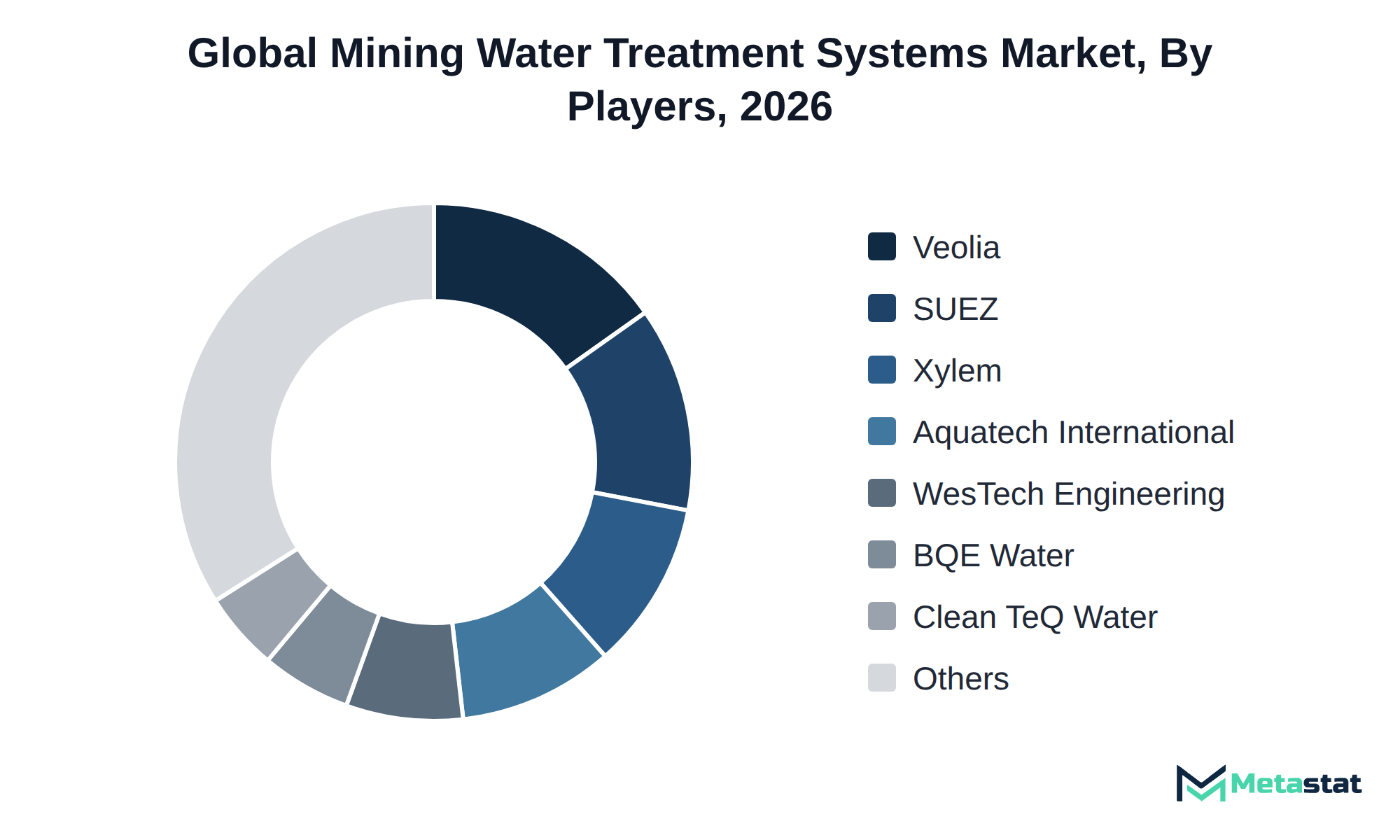
The Mining Water Treatment Systems market features a diverse range of companies employing various strategies to meet buyer demand. Companies differentiate themselves through factors including price, customization, certification, and service quality. The market segments into treatment technologies, applications, mine types, and system formats, influencing buyer selection based on specific project requirements and regional regulations.
Veolia and SUEZ focus on comprehensive water treatment solutions, leveraging their extensive service networks and technological innovations. Aquatech International LLC and IDE Technologies Ltd. specialize in advanced treatment technologies, including reverse osmosis and membrane filtration, appealing to clients seeking efficiency and sustainability. Companies including Pall Corporation and H2O Innovation Inc. emphasize customized solutions and certifications to cater to niche markets, enhancing their competitive positions.
For the market to reach USD 8,192.4 million by 2033, significant growth in specific segments will occur along with addressing key risks. The expansion of Reverse Osmosis technology is crucial, with its value projected to increase from USD 2,024.7 million in 2026 to USD 3,054.9 million by 2033, driven by heightened demand for efficient water treatment solutions in metal mines. However, potential risks exist, including regulatory challenges affecting investment and operational costs. This concern is particularly relevant in North America, where compliance with environmental regulations impacts market dynamics. Addressing these developments and challenges will be essential for sustained growth in the Mining Water Treatment Systems market, facilitating progress toward the projected figures through 2033.
By Treatment Technology: Reverse Osmosis, Non-RO Membrane Filtration, Clarification and Chemical Precipitation, Media Filtration and Adsorption, Ion Exchange, Evaporation and Crystallization, Biological Treatment, Others (Advanced Oxidation, Electrochemical Treatment)
By Application: Process Water Reuse and Recycling, Mine Drainage Treatment, Freshwater and Desalinated Water Supply, Tailings Water Treatment, Brine Management and ZLD, Others (Mine Camp Water, Wash-Bay Wastewater)
By Mine Type: Metal Mines, Coal Mines, Non-Metal Mineral Mines
By System Format: Site-Built Fixed Plants, Modular and Containerized Plants, Trailer-Mounted Mobile Systems
The report strategically identifies and profiles the key market players and analyses their core competencies in each sub-segment of the Mining Water Treatment Systems market.
Report Attributes | Details |
Study Period | 2021-2033 |
Base Year | 2025 |
Estimated Year | 2026 |
Forecast Period | 2026-2033 |
Historical Period | 2021-2025 |
Growth Rate | CAGR 6.5% from 2026 to 2033 |
Revenue Unit | USD million |
Segmentation | By Treatment Technology, Application, Mine Type, System Format, and Region |
By Region | North America (By Treatment Technology, Application, Mine Type, System Format, and Country)
|
Europe (By Treatment Technology, Application, Mine Type, System Format, and Country)
| |
Asia Pacific (By Treatment Technology, Application, Mine Type, System Format, and Country)
| |
South America (By Treatment Technology, Application, Mine Type, System Format, and Country)
| |
Middle East and Africa (By Treatment Technology, Application, Mine Type, System Format, and Country)
|
Find answers to common questions about this report
The Mining Water Treatment Systems market size was valued at USD 4,948.5 million in 2025.
The market is projected to grow at a CAGR of 6.5% during the forecast period from 2026 to 2033.
The North America Mining Water Treatment Systems market size is estimated to reach USD 1,898.2 million by 2033.
The leading segment in the Mining Water Treatment Systems market is Reverse Osmosis, with a projected value of USD 3,054.9 million by 2033. This segment outpaces others in terms of growth and revenue potential.
Growing environmental awareness drives mining companies to invest in advanced water treatment solutions. Increasing operational costs present a significant barrier, influencing investment decisions for water treatment systems.
Increasing operational costs present a significant barrier, influencing investment decisions for water treatment systems. Compliance costs associated with stringent environmental regulations drive up operating expenses, impacting profit margins across the industry.
The Mining Water Treatment Systems market is estimated to reach a valuation of USD 8,192.4 million by 2033.
Key players operating in the Mining Water Treatment Systems market include Veolia, Aquatech International LLC, Xylem Inc., SUEZ, WesTech Engineering, LLC, BQE Water Inc., and Dynatec Systems LLC.
Key applications include Process Water Reuse and Recycling, Mine Drainage Treatment, Freshwater and Desalinated Water Supply, and Tailings Water Treatment. The Process Water Reuse segment is projected to grow from USD 1,574.8 million in 2026 to USD 2,551.1 million by 2033.
The Metal Mines segment shows significant growth, expanding from USD 2,843.8 million in 2026 to USD 4,565.6 million by 2033, reflecting a compound annual growth rate of 7%.
The analysts below cover Chemicals and Materials research at Metastat Insights.
LEAD ANALYST
Utkarsh Khirodkar is a Lead Market Research Analyst at MetaStat Insight, specializing in market intelligence, technology sector assessments, and competitive strategy.

INDUSTRY CONSULTANT - CHEMICALS & ADVANCED MATERIALS
Chemicals and Materials · Machinery & Equipment · Packaging
Amit Gadhekar Consultant for Chemicals and Materials at MetaStat Insight, directing sector-specific intelligence, research, and strategic consulting across global chemical and processing markets.
Assessing commercial microgrid software adoption requires looking past top-level installation numbers and examining utility interconnection queues. The research provided verifiable data on average permitting timelines, tariff structures, and battery storage integration costs across regional utility territories. That grounded perspective was valuable for our team when building five-year demand projections for industrial microgrid controllers.
Ambulatory surgical centers have very different purchasing cycles for robotic-assisted surgery platforms than major hospital networks. The MetaStat Insight study focused squarely on capital expenditure depreciation, procedural reimbursement pathways, and surgeon training overhead. That operational clarity made it much simpler to validate multi-year procedure growth forecasts against actual ambulatory center adoption patterns.
When planning edge sensor rollouts across refinery environments, generic IoT reports typically miss the harsh-environment certification bottlenecks. MetaStat Insight gave an objective evaluation of ATEX and Class 1 Division 2 hardware availability, along with realistic five-year maintenance cycle cost projections. The comparison of wireless mesh versus private cellular backhaul helped our team pressure-test network reliability models for remote processing facilities.
Explore related market intelligence reports worth reading alongside this one.