
LEAD ANALYST
Utkarsh Khirodkar is a Lead Market Research Analyst at MetaStat Insight, specializing in market intelligence, technology sector assessments, and competitive strategy.

Global Textile Enzymes Market Size, Share, By Enzyme Type (Amylases, Cellulases, Catalases, Pectinases, Proteases, Lipases, Others (Xylanases, Glucose Oxidases, Peroxidases)), By Source (Animal-Based, Plant-Based, Microbes), By Application (Bio-polishing, Bio-scouring, Bleaching, Dyeing, Desizing, Others (Washing, Finishing)), Industry Analysis, Growth, Trends, and Forecast, 2026-2033
Report ID
MSI-5775
Published
November, 2026
Pages
257 Pages
Format
Historical
Base year
Forecast
Forecast period
Report Details
Market Valuation: Valued at $589.4 Million in 2025, projected to reach $904.9 Million by 2033 at a 5.5% CAGR.
Dominant Segment: Cellulases dominate the Textile Enzymes market, driven by their effectiveness in bio-polishing and bio-scouring processes, which enhance fabric quality while minimizing environmental impact.
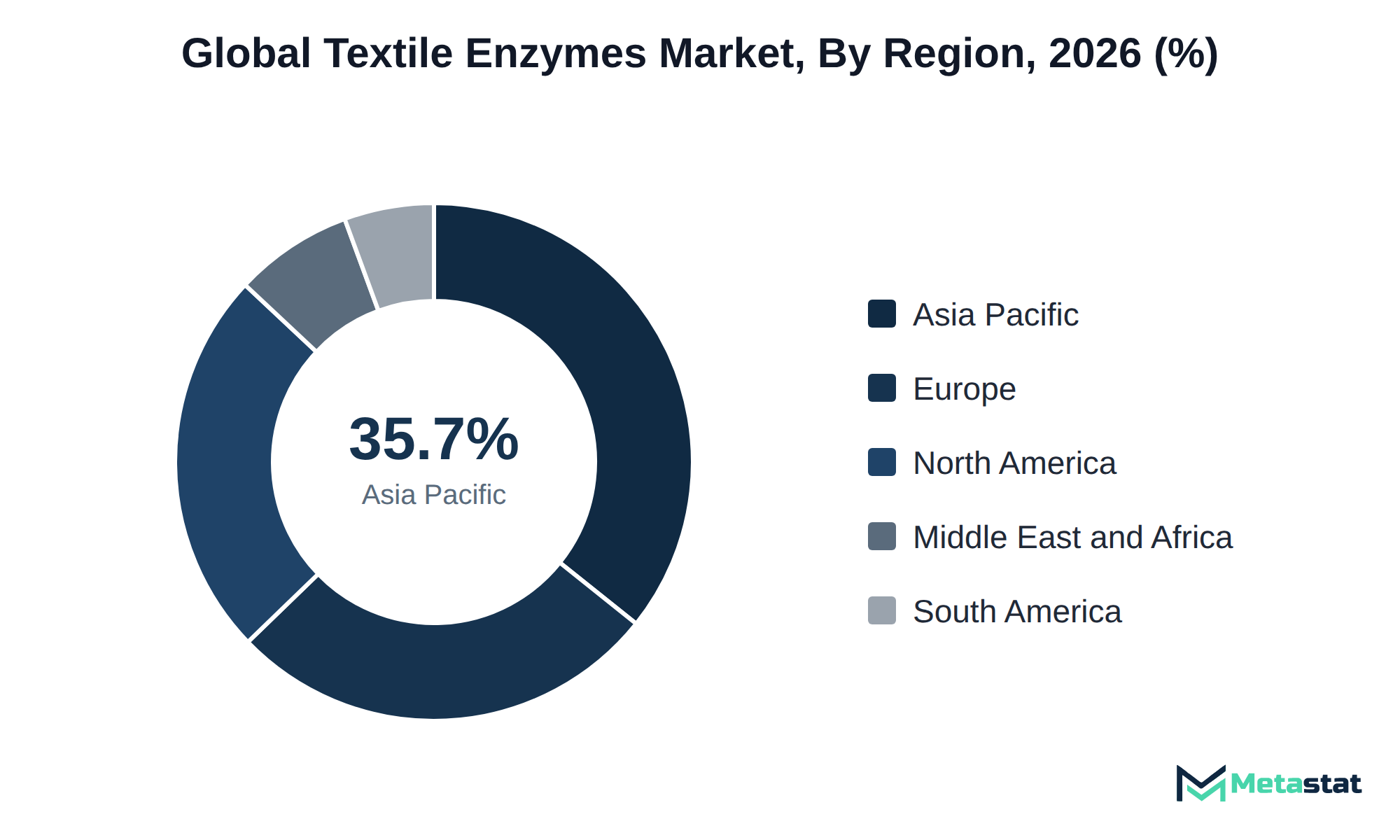
Geographic Lead: Asia Pacific leads the market, holding a 35.7% share in 2025, fueled by increasing demand for sustainable textile processing solutions and stringent environmental regulations.
What's Inside: The report provides a comprehensive analysis of the competitive landscape, including detailed segmentation by enzyme type, source, and application, along with forecasts extending to 2033.
Rising Demand for Sustainable Textiles: Consumer preferences are shifting towards sustainable textiles, prompting manufacturers to invest in eco-friendly enzyme solutions that enhance production efficiency and reduce environmental impact.
Enzyme Innovation Boosts Processing Effi: Advancements in enzyme technology are enhancing textile processing efficiency, with innovations leading to lower energy consumption and reduced processing times.
Choose Your License
Global Textile Enzymes Market
The global Textile Enzymes market was valued at USD 589.4 million in 2025 and is projected to reach USD 904.9 million by 2033, growing at a CAGR of 5.5% over the forecast period.
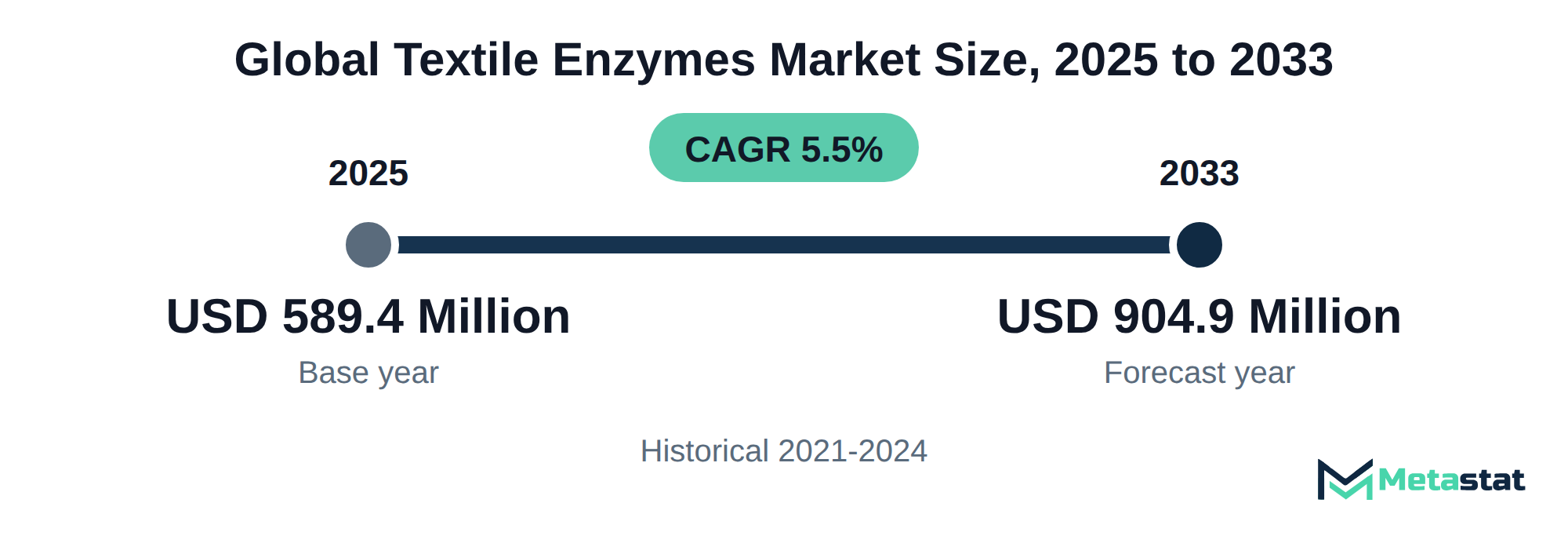
The Textile Enzymes market encompasses a range of enzymatic solutions used in textile processing, enhancing efficiency and sustainability in production. Buyers, including manufacturers and processors, invest in these enzymes to improve fabric quality, reduce environmental impact, and lower operational costs. Key applications include bio-polishing, bio-scouring, and bleaching, where these enzymes are central to modern textile operations.
Growth within the market is driven by increasing demand for eco-friendly textile processing solutions, particularly in regions with stringent environmental regulations. Cellulases form the highest-value segment and contribute significantly to overall market revenue. In terms of regional dynamics, Asia Pacific dominates the market, holding a share of 35.7% in 2025, followed closely by Europe at 27%. North America holds 24.2% of the market in 2025, with the US leading in 2026.
With rising sustainability concerns, the need for innovative textile processing solutions drives market expansion. Companies are focusing on developing advanced enzyme formulations to meet the evolving demands of the textile industry. This shift addresses environmental challenges and makes manufacturers more competitive in the global market.
The Textile Enzymes market covers several enzyme types used in bio-polishing, bio-scouring, and bleaching. Buyers invest in these solutions to enhance textile processing efficiency, improve sustainability, and meet evolving consumer demands for environmentally friendly products. The growing emphasis on sustainable manufacturing practices drives demand for these enzymatic solutions, prompting buyers to integrate them into their operations.
Cellulases represent the segment with the highest value in the market, reflecting their importance in textile treatment processes. Asia Pacific holds the largest market share at 35.7%, indicating a strong preference for textile enzymes in this region. Wider adoption of new textile processing technologies also contributes significantly to market growth.
The rise in consumer awareness regarding sustainable textiles, including organic textile products, acts as a primary growth driver. Manufacturers seek to align their production processes with changing preferences, further enhancing the appeal of textile enzymes. This alignment boosts market penetration and strengthens manufacturers' position in a competitive landscape that prioritizes eco-friendly practices.
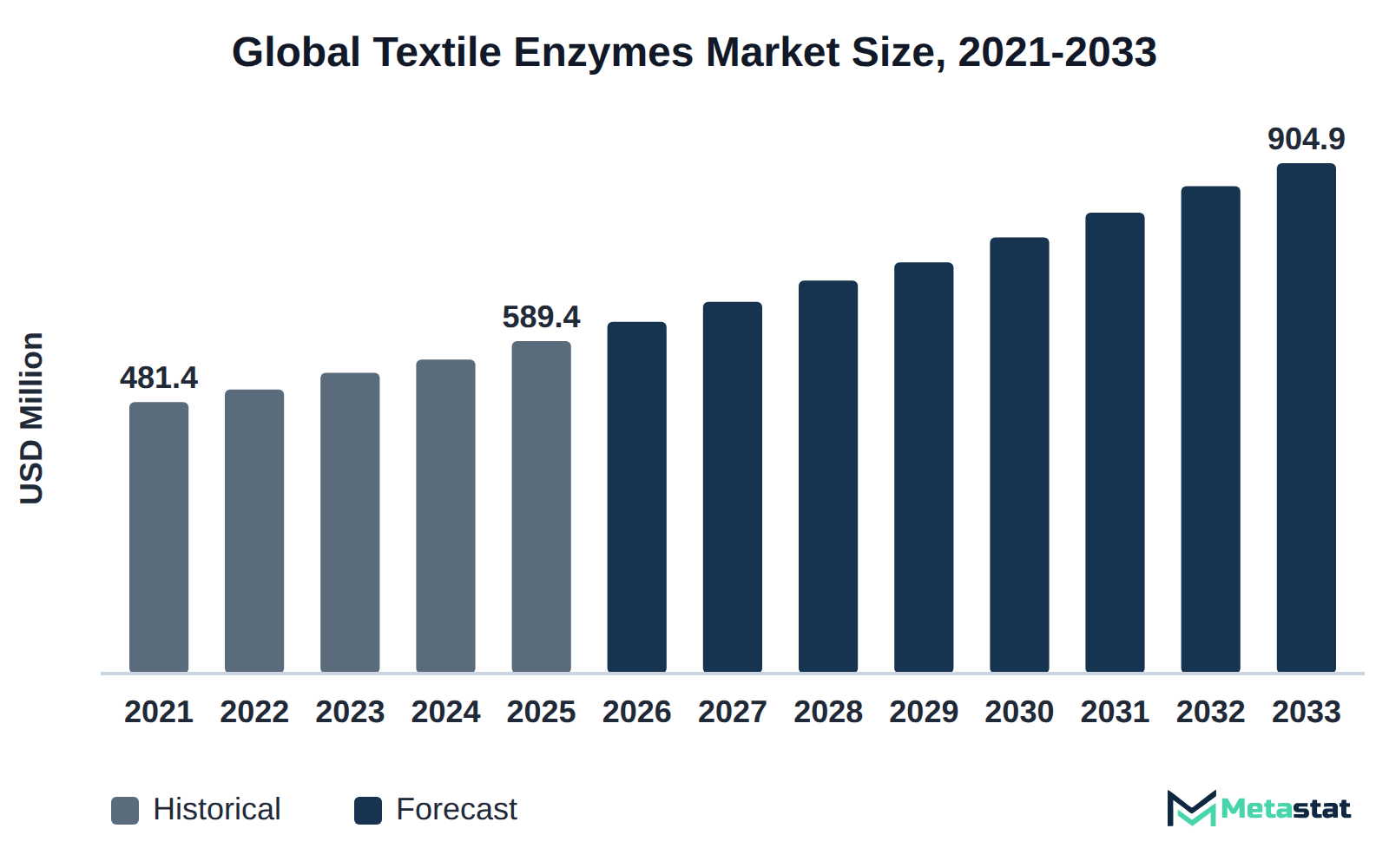
Enzyme engineering significantly enhances efficiency in textile wet processing through targeted application of specific enzymes. The Textile Enzymes market sees increasing adoption of specialized enzymes that streamline processes including bio-polishing and bio-scouring. For instance, bio-polishing enzymes, with a projected value of USD 194.2 million by 2033, contribute to superior fabric quality while reducing water and energy consumption in the finishing stage.
This targeted approach allows manufacturers to replace traditional chemical processes with biological alternatives, leading to reduced environmental impact and lower operational costs. The shift towards enzymes in applications like textile dyeing and bleaching, where enzymes facilitate better color fixation and faster processing times, aligns with the sector's sustainability objectives.
As enzyme engineering evolves, the market anticipates further innovations that will continue driving efficiency and providing competitive advantage. Firms that adopt these advances are better placed in a growing market where consumers demand sustainable, high-quality textile products.
The procurement of cellulases, amylases, and pectinases within the textile enzymes market reflects a growing trend toward sustainable fabric treatment. Buyers increasingly prioritize terms that emphasize environmental responsibility, influencing pricing and contract structures. For instance, contracts often incorporate performance-based pricing, where costs correlate with the efficacy of enzymes in achieving desired fabric treatment outcomes.
In 2026, the market for amylases is projected to reach USD 174.7 million, with expectations to expand to USD 248.1 million by 2033, reflecting a compound annual growth rate (CAGR) of 5.1%. This significant growth highlights the demand for pricing strategies that align with sustainability goals, allowing manufacturers to leverage renewable resources and reduce their ecological footprint.
Several suppliers within the market offer flexible payment options, including tiered pricing based on purchase volumes and long-term supply agreements. Such strategies enable buyers to optimize their procurement costs while ensuring access to high-quality enzymatic solutions tailored for sustainable fabric processing. These arrangements strengthen relationships between manufacturers and buyers and raise competitiveness within the sector.
Increasing demand for bio-based textile processing solutions drives significant interest in low-temperature enzyme applications within the Textile Enzymes market. These enzymes facilitate various processes, including bio-polishing and dyeing, while conserving energy and reducing water consumption. The integration of enzymes in textile processing aligns with the broader move toward sustainable fashion across the apparel and textile industries, where manufacturers strive to meet environmental standards and consumer expectations.
For instance, bio-polishing applications are projected to grow from USD 123.9 million in 2026 to USD 194.2 million by 2033, reflecting a compound annual growth rate (CAGR) of 6.6%. This growth stems from manufacturers seeking efficient, environmentally friendly solutions that enhance fabric quality while minimizing traditional chemical usage. Companies adopting these processes achieve lower operational costs and better product quality, which gives them a competitive edge.
The shift toward low-temperature enzyme applications represents a significant opportunity for suppliers, enabling them to cater to buyers focused on sustainable practices. This evolution strengthens partnerships between enzyme manufacturers and textile producers, leading to a more sustainable and cost-effective production model within the industry.
The shift toward eco-friendly textile manufacturing significantly drives the adoption of textile enzymes. Companies increasingly recognize the environmental impact of traditional textile processes, prompting a transition to more sustainable alternatives. Enzymes including cellulases play a vital role in this process, enhancing fabric performance while reducing water and energy consumption. For instance, the market for cellulases is projected to reach USD 252.1 million by 2033, reflecting a compound annual growth rate of 6.1%. This growth indicates a strong preference among manufacturers for eco-friendly solutions that align with consumer demand for sustainable products.
In addition, the eco-friendly trend leads to improved operational efficiency. Adopting enzymes in processes like bio-polishing and bio-scouring results in reduced chemical usage, lower wastewater output, and minimal energy consumption. Smaller effluent volumes also ease the load on water and wastewater treatment technology at textile mills. This development emphasizes the importance of enzyme adoption in supporting sustainable textile manufacturing practices, which is expected to enhance competitiveness and market positioning.
Shifts in consumer preferences toward sustainable textiles are increasing spending on textile enzymes. Buyers, including apparel manufacturers and textile producers, prioritize eco-friendly solutions while awareness of environmental impacts grows. Higher demand for textile enzymes facilitates processes like bio-polishing and bio-scouring, enhancing sustainability throughout production. For instance, the market is projected to reach USD 904.9 million by 2033, indicating a compound annual growth rate of 5.5%. This growth reflects manufacturers' search for effective alternatives to traditional chemical processes, which often harm the environment. The transition toward sustainable practices influences both volume and pricing dynamics in the market, pushing producers to adopt innovative enzyme solutions.
Advancements in enzyme technology enhance the efficiency of textile processing, driving growth in the Textile Enzymes market. Innovations, including the development of more effective cellulases and amylases, optimize various applications including bio-polishing and bleaching. Enhanced performance leads to lower energy consumption and reduced processing times, creating cost advantages for manufacturers. This trend attracts interest from textile producers focused on improving operational efficiency and sustainability standards. Streamlined production processes significantly impact manufacturing costs and product quality, aligning with industry stakeholders seeking competitive advantages. Suppliers that integrate novel enzymatic solutions are well placed in a market increasingly driven by sustainability and efficiency requirements. Emerging technologies in enzyme production facilitate the formulation of customized solutions tailored to specific end-user requirements. These technological shifts contribute to a more dynamic competitive landscape within the market, driving continuous innovation and investment in enzyme development.
Price sensitivity among textile manufacturers significantly limits the adoption of certain enzyme products. Higher prices for advanced textile enzymes discourage smaller companies from incorporating these solutions, leading to slower uptake and smaller orders. Increased production costs due to premium enzyme pricing have a notable impact on the profitability of textile firms, particularly in competitive markets where margins are already tight.
Manufacturers in developing regions face additional challenges, driven by budget constraints that often delay the replacement of conventional textile chemicals, which are viewed as more cost-effective despite their environmental drawbacks. The need for cost-effective alternatives to existing solutions drives demand for lower-priced enzyme options, hindering market growth. Buyers prioritize operational efficiency and margins, leading to increased demand for affordable alternatives that do not compromise performance. Wider adoption of textile enzymes depends on resolving these pricing issues and improving accessibility.
Rising raw material costs present significant challenges for suppliers in the Textile Enzymes market. Increased costs of feedstock and production processes affect profitability and limit pricing flexibility. Suppliers frequently absorb these costs, reducing operational margins. The impact is particularly pronounced for enzymes derived from animal and plant sources, where sourcing costs fluctuate due to agricultural conditions and commodity prices. In response, suppliers invest in optimizing production efficiency and exploring alternative sourcing strategies. This includes leveraging microbial sources that provide more stable pricing. Suppliers focus on developing enzyme formulations designed to operate effectively at lower concentrations, thereby minimizing the amount of material required for application. These approaches aim to enhance competitiveness and profitability while meeting the evolving demands of the market. Managing input cost pressures is essential for suppliers to sustain growth and capture market opportunities.
The cellulases segment within the market demonstrates the highest growth potential, driven by increasing demand for more efficient and eco-friendly textile processing solutions. This growth results from the rising application of cellulases in various processes including bio-polishing and bio-scouring, where the enzyme enhances fabric quality and reduces water usage. Textile manufacturers increasingly recognize the benefits of these applications, leading to higher adoption rates. The market's focus on sustainability drives investment and innovation in cellulases, positioning this segment as a key driver of overall market expansion. Adoption of cellulases aligns with the broader trend toward sustainable textiles, reinforcing its importance in addressing the evolving needs of the textile industry.
The Global Textile Enzymes market is segmented based on Enzyme Type, Source, and Application.
This enzyme type is widely used in textile applications including bio-polishing and dyeing. Textile manufacturers increasingly adopt amylases for their effectiveness in improving fabric quality and processing efficiency. A key driver for this segment stems from the growing demand for sustainable production methods, with consumers prioritizing eco-friendly textiles. Compared to other enzyme types, amylases exhibit moderate growth, with a CAGR of 5.1%, slower than cellulases, which experience a CAGR of 6.1%. This difference in growth rates highlights competitive dynamics within the market, where demand for more efficient enzyme solutions continues to evolve.
Cellulases segment is estimated to reach USD 252.1 million by 2033, at a CAGR of 6.1% during the forecast period. This category primarily finds applications in textile processing tasks including bio-polishing and bio-scouring, which enhance fabric quality while minimizing environmental impact. Textile manufacturers increasingly adopt cellulases due to rising consumer demand for sustainable production practices. Growth in this segment is driven by technological advancements that improve enzyme performance, allowing for lower processing temperatures and reduced water usage. Compared to other enzyme types, including amylases, cellulases exhibit a higher growth rate, reflecting a shift in manufacturing preferences toward eco-friendly solutions. This trend creates significant competitive advantages for suppliers specializing in cellulases, positioning them to meet evolving market needs.
The catalases segment is expected to reach USD 106.1 million by 2033. This enzyme type is essential in the textile industry, particularly in processes that require the breakdown of hydrogen peroxide during fabric bleaching and cleaning treatments. Manufacturers in this sector leverage catalases for their efficiency in reducing chemical residues, contributing to a more sustainable production process. The projected growth for this segment reflects increased emphasis on environmentally friendly practices. A significant factor driving this segment's expansion is the growing demand for eco-friendly textile processing solutions. Compliance with stricter environmental regulations further enhances the appeal of catalases, presenting opportunities for textile producers to adopt more sustainable operational practices.
Pectinases segment is projected to grow at a CAGR of 5.9% during the forecast period. This enzyme type primarily supports the textile industry through its application in bio-polishing, enhancing the appearance and texture of fabrics. Manufacturers focusing on sustainability and quality improvement apply pectinases to achieve superior results in textile processing. Demand for environmentally-friendly and efficient processing techniques drives the growth of this segment. Compared to other enzyme types, including cellulases, which achieve a higher CAGR of 6.1%, pectinases demonstrate moderate growth but remain critical for specific applications. The unique properties of pectinases differentiate them from amylases and cellulases, allowing for targeted functions that meet the specialized needs of textile producers. Continuous innovations in enzyme formulations contribute to the segment's expansion, aligning with overall trends in the market focused on sustainability and efficiency.
Proteases represent a significant category of enzymes in textile processing, playing a crucial role in the breakdown of proteins during various applications. These enzymes find widespread use among textile manufacturers, particularly in treatments requiring protein degradation, including the removal of excess dye and the softening of fabrics. The growing emphasis on sustainability within the textile industry drives interest in proteases, contributing to more eco-friendly production processes. Compared to other enzyme types, proteases exhibit distinct positioning, focusing on specific applications that differ from cellulases and amylases, which target carbohydrates. While different segments within the market focus on various substrates, proteases serve specialized functions that cater to particular textile processing needs, enhancing their relevance in modern fabric treatment strategies.
Lipases serve a critical role in textile applications, primarily for their ability to break down fats and oils in fabrics, thereby enhancing the quality and feel of textiles after washing. Buyers, including manufacturers of fabrics and apparel, seek lipases for their effectiveness in improving process efficiency and achieving desired textures. Demand for lipases is driven by the rising inclination toward eco-friendly textile processing methods, reflecting a broader industry trend toward sustainability. This segment differs from other enzyme types due to its specialized function in fat removal, which appeals to manufacturers focused on producing lighter and softer fabrics. While the market continues to evolve, the growing emphasis on sustainable practices is expected to fuel further interest in lipases, complementing the overall growth of the market.
The Others (Xylanases, Glucose Oxidases, Peroxidases) segment includes specialty enzymes that find applications in niche textile processes. These enzymes enhance efficiency in textile processing, particularly in specific treatments including fabric finishing and dyeing, appealing to manufacturers focusing on high-quality outputs. Demand for these enzymes is driven by the growing preference for innovative textile solutions that enhance fabric properties. Manufacturers in the market benefit from these advancements, leading to improved product performance. The segment differentiates itself from others through its targeted applications and potentially higher pricing due to specialized properties and functions. Unlike broader enzyme categories, the Others segment caters to specific requirements, establishing strong demand within specialized textile segments and influencing manufacturers' purchasing decisions.
The Animal-Based segment is valued at USD 49.8 million in 2026 and is projected to reach USD 62.9 million by 2033, at a CAGR of 3.4% during the forecast period. This segment primarily serves the textile industry, where it plays a fundamental role in processes including bio-polishing and dyeing. Producers within this segment cater to manufacturers who prioritize natural ingredients in their formulations. A notable aspect influencing the growth of this segment includes increasing regulatory pressures centered on sustainability and eco-friendly practices. Compared to other sources, including plant-based or microbial enzymes, the Animal-Based segment experiences a slower growth rate, reflecting market dynamics that favor plant-based alternatives. However, steady demand for animal-derived enzymes persists due to their specific functional benefits in textile applications, ensuring a continued presence in the market.
The Plant-Based segment is estimated to reach USD 141.8 million by 2033, at a CAGR of 5% during the forecast period. This segment serves textile applications requiring biodegradable solutions, supporting manufacturers focused on sustainability initiatives. Demand for eco-friendly processing methods drives growth within this segment, appealing particularly to brands emphasizing environmental responsibility. Compared to other sources, Plant-Based enzymes exhibit a moderate growth rate, while the rapid expansion of Microbes-based enzymes offers more significant prospects for overall market advancement. The segment's adoption is further influenced by technological innovations that enhance enzyme efficiency, ensuring competitiveness with alternatives. With increasing consumer awareness regarding sustainable production practices, robust demand for Plant-Based enzymes is anticipated.
Microbes segment is expected to reach USD 700.2 million by 2033. This segment plays a critical role in the textile industry, primarily for processes including bio-polishing and bio-scouring. Manufacturers in the textile sector increasingly adopt these enzymes due to their effectiveness in enhancing fabric quality while reducing environmental impact. The driving force behind this segment includes the growing demand for sustainable and eco-friendly production methods. Compared to other sources, the microbes segment benefits from a relatively lower cost structure, positioning it favorably against higher-priced animal-based or plant-based alternatives. The projected growth for this segment aligns with the broader trend of increasing investments in green technologies within the market.
This application focuses on enhancing the surface quality of fabrics, resulting in smoother textures and improved aesthetic appeal. Textile manufacturers apply bio-polishing to meet rising consumer demands for high-quality, sustainable textiles. The growing emphasis on eco-friendly production processes drives investment in this segment. Compared to other applications, bio-polishing experiences faster growth due to its dual benefit of enhancing fabric appearance while supporting sustainable practices, positioning it uniquely within the market. Demand for more efficient finishing processes further contributes to its expansion, with manufacturers striving to reduce environmental impacts while maintaining product quality.
Bio-scouring segment is estimated to reach USD 136.3 million by 2033, at a CAGR of 6.1% during the forecast period. This segment involves the removal of impurities and residual sizing agents from fabric, enhancing the quality and feel of textiles. Textile manufacturers and processors apply bio-scouring to improve fabric properties and reduce the environmental impact associated with conventional scouring methods. Increasing regulatory pressure on environmental sustainability drives demand for bio-scouring solutions, contributing to its anticipated growth. Compared to other applications, bio-scouring demonstrates a higher growth rate due to its alignment with eco-friendly practices. Advancements in enzyme formulations optimize the scouring process, creating a competitive advantage over traditional chemical methods. This segment's focus on sustainability positions it favorably against other applications in the market, reflecting a significant trend toward greener textile processing solutions.
Bleaching segment is expected to reach USD 154.9 million by 2033. This segment is important in textile processing, primarily used for whitening fabrics. Manufacturers in the apparel and home textiles sectors actively employ bleaching enzymes to enhance fabric quality and achieve the desired appearance. Demand for eco-friendly solutions drives growth in this segment, with consumers increasingly preferring sustainable practices in textile production. The bleaching segment exhibits a CAGR of 5.9%, indicating a steady growth rate. Compared to the bio-polishing segment, which has a higher CAGR of 6.6%, bleaching shows a slightly slower growth trajectory. The market prioritizes bleaching technologies that improve efficiency and reduce environmental impact, reinforcing its importance in the broader Textile Enzymes market.
This segment serves the textile industry by facilitating the application of dyes and pigments to fabrics, helping manufacturers enhance product aesthetics. Rising consumer demand for bold colors and unique patterns drives this segment's growth. Sustainability trends influence the adoption of eco-friendly dyeing practices, further increasing demand for textile enzymes. Compared to other segments, dyeing experiences moderate growth, differentiating itself through its specific focus on color application rather than broader textile processing functions. This targeted application establishes a distinct market position, requiring specialized enzymes that optimize color quality while minimizing environmental impact.
Desizing involves the removal of sizing agents from woven fabrics, enhancing their quality and preparing them for subsequent processing. This process is critical in textile manufacturing and is employed by fabric manufacturers and garment producers seeking to achieve smoother finishes. Factors driving demand include the growing emphasis on sustainable practices, with enzymes providing an eco-friendly alternative to traditional chemical desizing methods. This segment distinguishes itself from others, including bio-polishing, due to the specific nature of its application and its focus on preparing textiles rather than enhancing their appearance. The market's emphasis on cost-effectiveness encourages the adoption of enzyme solutions, resulting in lower processing costs compared to harsher chemical methods. The development of innovative enzyme formulations continues to enhance performance, leading to increased efficiency in textile production.
This segment encompasses a variety of enzymes used for washing and finishing processes in textiles. Enzymes in this category enhance the cleanliness and texture of fabrics, contributing to the overall quality of textile products. Manufacturers in apparel and home textiles employ these enzymes to improve fabric performance and aesthetics. Demand for sustainable and eco-friendly textile processing solutions drives interest from brands focusing on minimizing chemical usage. Compared to other segments, this sub-segment targets a unique buyer demographic focused on environmentally conscious practices, positioning it for steady growth. Increasing regulatory pressures for sustainable practices in textile production further highlight the importance of enzymes in washing and finishing applications. The market for textile enzymes continues to evolve, emphasizing innovation in enzyme technology and formulations to meet the changing needs of consumers and manufacturers alike.
Utilization of this segment occurs primarily in fabric treatment processes, appealing to textile manufacturers focused on enhancing the quality and sustainability of their products. Demand for these enzymatic applications arises from increasing consumer awareness of environmental impacts and the shift toward sustainable production methods. Unlike other segments, this one experiences moderate growth, driven by the integration of eco-friendly practices in the textile industry. Competitive pricing of products within this segment attracts a diverse range of buyers, including large manufacturers and smaller, boutique fabric producers, seeking efficient and sustainable solutions. Such trends reflect a significant movement within the Textile Enzymes market, favoring innovations that align with sustainability goals.
Based on geography, the Global Textile Enzymes market is divided into North America, Europe, Asia-Pacific, South America, Middle East, and Africa.
Demand for textile enzymes in North America is driven by the region's strong textile manufacturing sector, which focuses on efficient production processes and sustainable practices. Key buyer groups include textile manufacturers, retailers, and garment exporters, all seeking to enhance product quality while reducing environmental impacts. Advanced infrastructure and technological innovations streamline enzyme integration into production lines. Regulatory frameworks supporting eco-friendly solutions further support market growth. The market is positioned for sustained expansion, reflecting ongoing investments into enzyme technology and increasing consumer preferences for sustainable textile products.
Demand for the Textile Enzymes market in Europe is driven primarily by the textile and apparel industries, which seek innovative solutions for sustainable production processes. Germany and the UK stand out with significant investments in eco-friendly manufacturing technologies, aligning with environmental regulations that promote the use of biodegradable materials and processes. France and Italy contribute to the demand through their established fashion industries, focusing on quality and sustainability. In this context, the market share for Europe is projected at 27.00% in 2025, reflecting strong growth potential through advancements in enzyme technologies and applications. Ongoing efforts to reduce environmental impact by integrating enzyme-based solutions highlight a strategic shift toward greener practices in textile processing.
In Asia-Pacific, the textile enzymes market demonstrates significant growth potential, driven by the expanding textile and apparel industries. Countries including China, India, and Japan lead in production capacity and consumption, fueled by rising demand for sustainable and efficient textile processing methods. Increased consumer awareness regarding eco-friendly products enhances the adoption of enzymes in various applications. The region's emphasis on bio-polishing and bio-scouring techniques supports market expansion, particularly in India and China. Market players recognize opportunities in leveraging plant-based and microbial enzymes, which offer advantages in terms of environmental sustainability. By 2025, this region is expected to hold a 35.7% share of the global market, reflecting its important role in the overall development of the textile enzymes market.
In South America, the Textile Enzymes market experiences significant engagement from the textile manufacturing industry, particularly within Brazil and Argentina. Growing demand for sustainable practices in textile production drives interest in enzyme applications, enhancing eco-friendly processing methods. Infrastructure improvements in these countries facilitate the adoption of innovative technologies, supporting market expansion. The region's share of the global market stands at 5.6% in 2025, reflecting a commitment to modernizing textile operations. Key players focus on developing enzyme-based solutions tailored to local market needs, enhancing competitiveness. The outlook for the market is positive, with expected growth supporting advancements in production efficiency and sustainability.
Demand for the Textile Enzymes market in the Middle East and Africa demonstrates potential driven by the textile manufacturing sectors in countries including Saudi Arabia, UAE, and South Africa. This region's market share accounts for 7.4% of the global total in 2025. Investment in sustainable practices influences buyers pursuing eco-friendly solutions, enhancing production efficiency. The presence of local industries focused on garment production and processing facilities supports growth in enzyme applications. Specific regulatory frameworks promoting sustainability in manufacturing processes further stimulate market interest. The market expands due to rising awareness of environmentally safe practices within the textile industry.
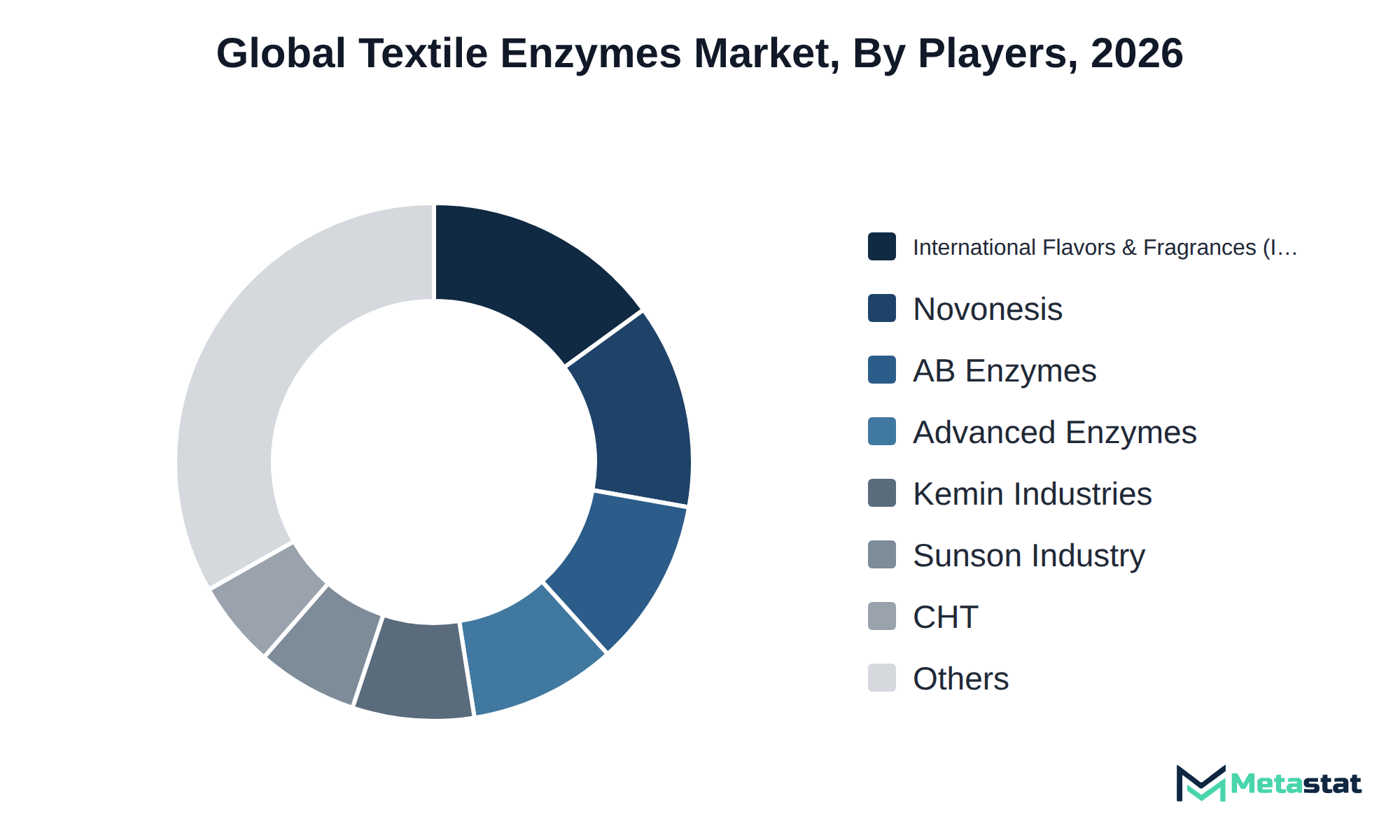
In the Textile Enzymes market, companies compete through various strategic approaches, including product differentiation, pricing, and service offerings. Buyers often select suppliers based on price, certification, and customization capabilities, which influence purchasing decisions significantly.
Novonesis and International Flavors & Fragrances (IFF) focus on innovative formulations, emphasizing customization to meet diverse customer needs. Advanced Enzymes and Kemin Industries prioritize efficient production processes, offering competitive pricing to capture market share. Regional specialty formulators including Sunson Industry Group and CHT Group leverage their unique capabilities to cater to specific applications, enhancing their appeal to targeted segments within the market.
Achieving this growth relies on several key developments in the Textile Enzymes market. For instance, a significant increase in demand for cellulases, expected to reach USD 252.1 million by 2033, will drive overall market expansion. This growth is driven by the textile industry's focus on sustainable practices and the adoption of eco-friendly processes.
The rise of bio-polishing applications, predicted to grow from USD 123.9 million in 2026 to USD 194.2 million by 2033, highlights the market’s shift towards enhancing fabric quality while reducing environmental impact. The Asia Pacific region, accounting for 35.7% of the market share, is central to this transition, with a growing emphasis on innovative textile treatments.
However, potential risks, including fluctuations in raw material costs for microbial sources, could impede market progress. Suppliers operating in this volatile environment face challenges that restrict growth. Addressing these risks through strategic sourcing and operational efficiencies is vital for maintaining the upward trajectory of the market.
By Enzyme Type: Amylases, Cellulases, Catalases, Pectinases, Proteases, Lipases, Others (Xylanases, Glucose Oxidases, Peroxidases)
By Source: Animal-Based, Plant-Based, Microbes
By Application: Bio-polishing, Bio-scouring, Bleaching, Dyeing, Desizing, Others (Washing, Finishing), By
The report strategically identifies and profiles the key market players and analyses their core competencies in each sub-segment of the Textile Enzymes market.
Report Attributes | Details |
Study Period | 2021-2033 |
Base Year | 2025 |
Estimated Year | 2026 |
Forecast Period | 2026-2033 |
Historical Period | 2021-2025 |
Growth Rate | CAGR 5.5% from 2026 to 2033 |
Revenue Unit | USD million |
Segmentation | By Enzyme Type, Source, Application, and Region |
By Region | North America (By Enzyme Type, Source, Application, and Country)
|
Europe (By Enzyme Type, Source, Application, and Country)
| |
Asia Pacific (By Enzyme Type, Source, Application, and Country)
| |
South America (By Enzyme Type, Source, Application, and Country)
| |
Middle East and Africa (By Enzyme Type, Source, Application, and Country)
|
Find answers to common questions about this report
The Textile Enzymes market size was valued at USD 589.4 million in 2025.
The market is projected to grow at a CAGR of 5.5% during the forecast period from 2026 to 2033.
The North America Textile Enzymes market size is estimated to reach USD 209.1 million by 2033.
Cellulases lead the Textile Enzymes market with a projected value of USD 252.1 million by 2033. This segment surpasses others in terms of revenue generation within the market.
Shifts in consumer preferences toward sustainable textiles drive increased spending in the market. The cellulases segment demonstrates the highest growth potential, driven by rising demand for more efficient and eco-friendly textile processing solutions.
Price sensitivity among textile manufacturers significantly limits the adoption of certain enzyme products. Rising raw material costs present challenges for suppliers, affecting profitability and reducing pricing flexibility.
Shifts toward sustainable textiles and advancements in enzyme technology favor adoption in the industry. Increased demand for efficient and eco-friendly textile processing solutions, particularly in the cellulases segment, positions these innovations as key drivers for market expansion.
The Textile Enzymes market is estimated to reach a valuation of USD 904.9 million by 2033.
Key players operating in the Textile Enzymes market include Novonesis, International Flavors & Fragrances (IFF), AB Enzymes, Advanced Enzymes, Kemin Industries, Sunson Industry Group, CHT Group, and Sarex Chemicals.
The cellulases segment is projected to reach USD 252.1 million by 2033, reflecting a compound annual growth rate of 6.1%. This growth results from increasing demand for efficient and eco-friendly textile processing solutions.
The analysts below cover Chemicals and Materials research at Metastat Insights.
LEAD ANALYST
Utkarsh Khirodkar is a Lead Market Research Analyst at MetaStat Insight, specializing in market intelligence, technology sector assessments, and competitive strategy.

INDUSTRY CONSULTANT - CHEMICALS & ADVANCED MATERIALS
Chemicals and Materials · Machinery & Equipment · Packaging
Amit Gadhekar Consultant for Chemicals and Materials at MetaStat Insight, directing sector-specific intelligence, research, and strategic consulting across global chemical and processing markets.
When evaluating distributed energy resource management systems, standard research summaries tend to gloss over the operational differences between front-of-the-meter utility deployments and behind-the-meter industrial sites. The MetaStat Insight report addressed those distinctions directly, especially regarding software interoperability standards and grid interconnection backlogs. The five-year market sizing across regional transmission organizations provided actionable context for our grid modernization strategy.
Most industry reports on warehouse automation bundle autonomous mobile robots and fixed conveyor installations into the same top-level numbers, which complicates advisory work. This study split the market cleanly by payload tiers, navigation technology, and fleet management software layers. The regional forecast for Western Europe gave our team defensible adoption benchmarks when evaluating capital allocation for logistics clients, saving us days of secondary data scrubbing.
Standard industry briefs frequently blur the operational distinctions between isobaric pressure exchangers and centrifugal turbines. In this study, MetaStat Insight categorized mega-scale desalination tenders across the GCC and Mediterranean basins by membrane replacement frequencies and salinity tolerances. Their primary research helped us evaluate local content requirements in Saudi Arabia and the UAE without relying on marketing literature. We found the segment-level equipment replacement estimates grounded and well-reasoned throughout.
Explore related market intelligence reports worth reading alongside this one.