
LEAD ANALYST
Utkarsh Khirodkar is a Lead Market Research Analyst at MetaStat Insight, specializing in market intelligence, technology sector assessments, and competitive strategy.

Global Textile Chemicals Market Size, Share, By Product Type (Colorants, Dyeing and Printing Auxiliaries, Finishing Agents, Coating and Sizing Chemicals, Pretreatment Chemicals and Optical Brighteners), By Processing Stage (Fiber and Yarn Processing, Pretreatment, Dyeing, Printing, Finishing and Coating and Garment Washing), By Fiber Type (Cotton and Other Natural Cellulosic Fibers, Polyester Fibers, Nylon and Other Synthetic Fibers, Regenerated Cellulosic Fibers and Blended Fibers), By End-Use Application (Apparel, Home Textiles, Automotive Textiles, Industrial and Protective Textiles, Medical and Hygiene Textiles and Agricultural Textiles), Industry Analysis, Growth, Trends, and Forecast, 2026-2033
Report ID
MSI-5713
Published
November, 2026
Pages
285 Pages
Format
Historical
Base year
Forecast
Forecast period
Report Details
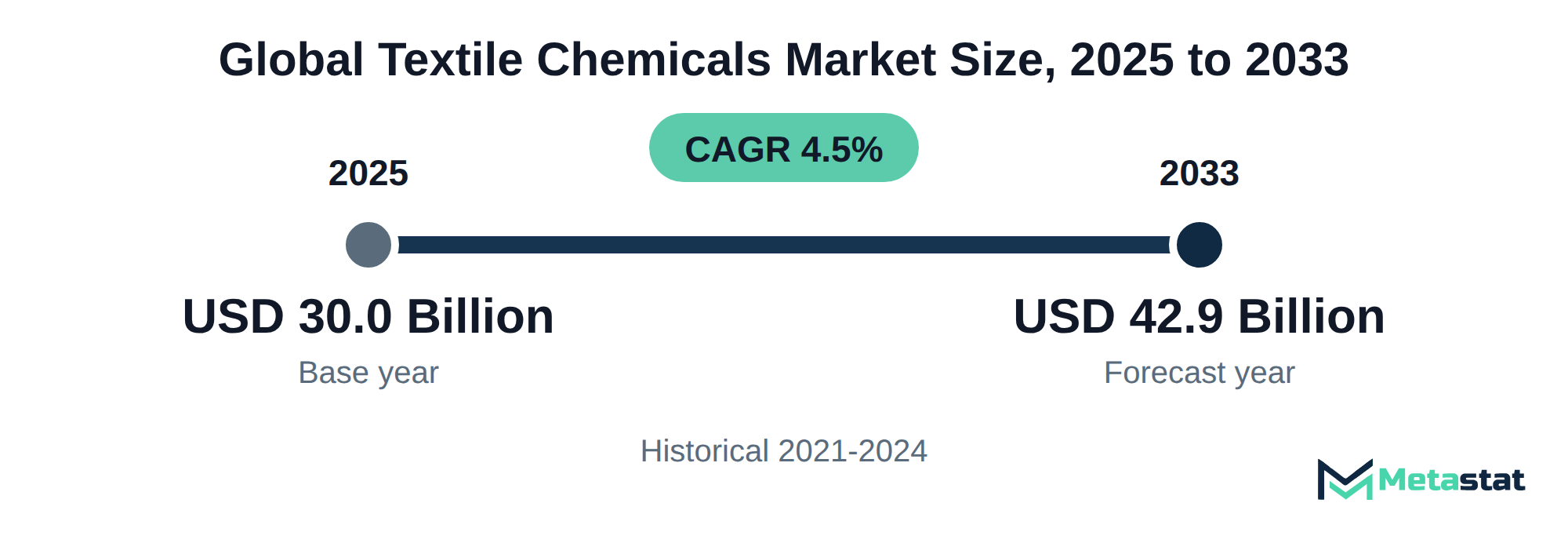
Market Valuation: Valued at $30 Billion in 2025, projected to reach $42.9 Billion by 2033 at a 4.5% CAGR.
Dominant Segment: The apparel segment leads the market, projected to reach USD 20.5 billion by 2033, driven by consumer demand for high-quality, innovative textiles.
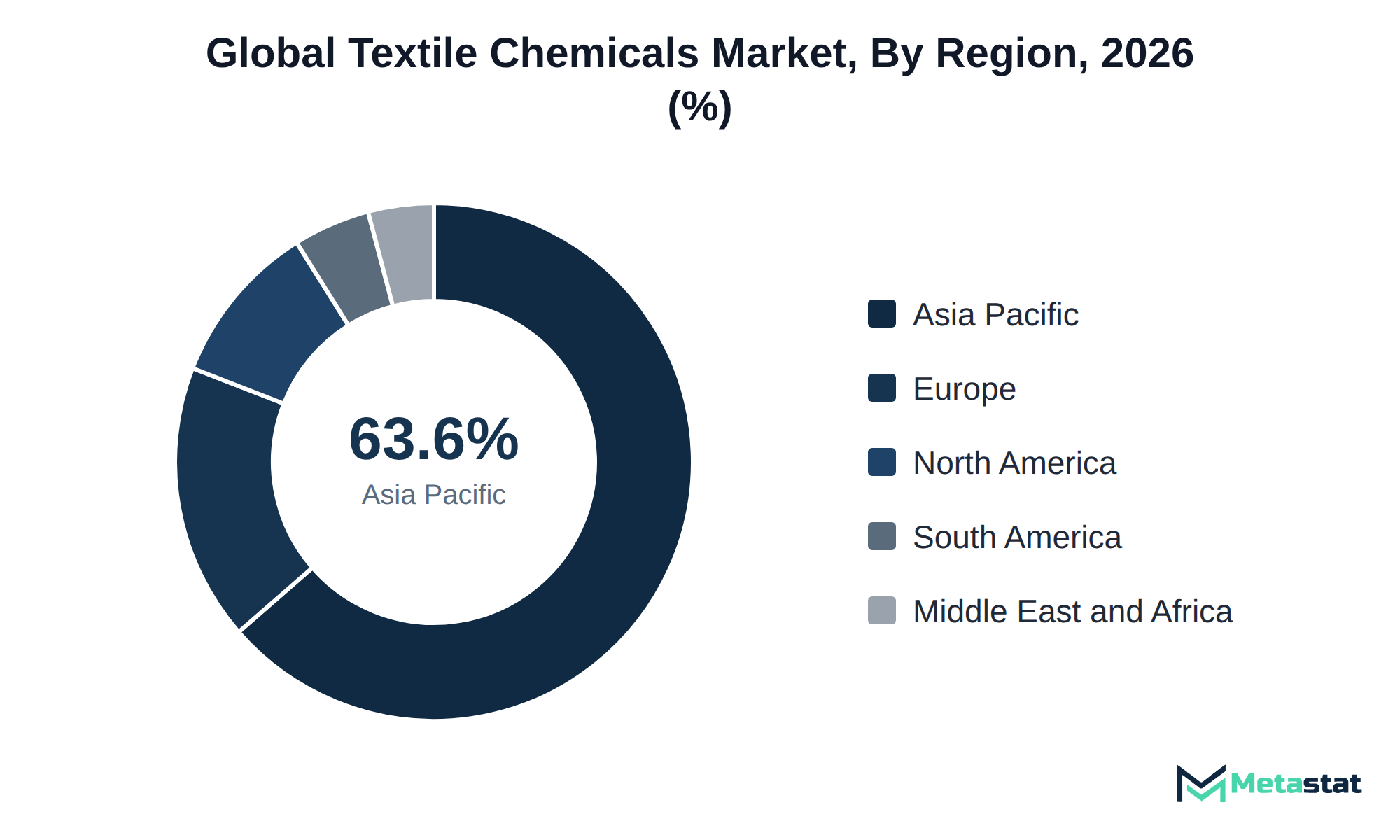
Geographic Lead: Asia Pacific dominates the market with a share of 63.6%, supported by a robust textile manufacturing infrastructure and increasing consumer base in countries like China and India.
What's Inside: The report provides a comprehensive analysis of market dynamics, competitive landscape, and forecasts from 2026 to 2033, covering various product types and processing stages.
Sustainable Product Innovation: Advancements in eco-friendly chemical formulations are driving growth, as manufacturers respond to rising consumer demand for sustainable textile solutions.
Colorants Drive Growth: The Colorants segment is expected to grow from USD 6.7 billion in 2026 to USD 9.2 billion by 2033, with a CAGR of 4.6%, fueled by demand for high-quality color applications.
Choose Your License
Global Textile Chemicals Market
The global Textile Chemicals market was valued at USD 30 billion in 2025 and is projected to reach USD 42.9 billion by 2033, growing at a CAGR of 4.5% over the forecast period.
The Textile Chemicals market covers the products and applications used throughout the textile manufacturing process. This includes colorants, dyeing and printing auxiliaries, finishing agents, and more. Buyers invest in these chemicals to enhance the quality, durability, and aesthetic appeal of textiles, which are essential in various sectors, including apparel, home textiles, and automotive textiles. The demand for high-performance and specialty chemicals drives spending, with manufacturers striving to meet consumer expectations for quality and sustainability.
Growth in the market is supported by increasing demand for innovative textile solutions. The apparel segment holds the most value, driven by a growing consumer preference for high-quality fabrics and sustainable production practices. Asia Pacific leads with a market share of 63.6%, significantly higher than other regions, reflecting the robust textile manufacturing infrastructure and consumer base in countries including China and India. North America holds 10.2% of the market in 2025, with the US leading in 2026.
A key driver of market expansion is technological advancements in textile processing. Innovations in dyeing techniques and finishing processes enable manufacturers to improve efficiency and reduce environmental impact. This trend prompts increased investment in sustainable practices, further driving the demand for textile chemicals that align with evolving regulatory requirements and consumer preferences.
The Textile Chemicals market includes colorants, finishing agents, and dyeing auxiliaries, which are central to textile manufacturing. Buyers invest in these chemicals to enhance the aesthetic qualities, durability, and performance of textiles across multiple applications. This spending reflects the increasing demand for high-quality textiles in diverse sectors, including apparel, home textiles, and automotive applications.
Growth in the market is driven by the rising demand for sustainable and innovative textile solutions. Among the product types, dyeing and printing auxiliaries represent the most significant value, facilitating the dyeing process while ensuring color consistency and quality. In terms of regional contribution, Asia Pacific holds the largest market share at 63.6%, driven by extensive manufacturing capabilities and a strong textile industry base.
North America accounts for 10.2% of the market in 2025, with the US expected to lead in 2026. The need for environmentally friendly chemicals and processes emerges as a critical factor for growth, prompting suppliers to innovate and adapt to changing consumer preferences. This shift towards sustainability is crucial for maintaining competitiveness in the evolving textile chemicals landscape.
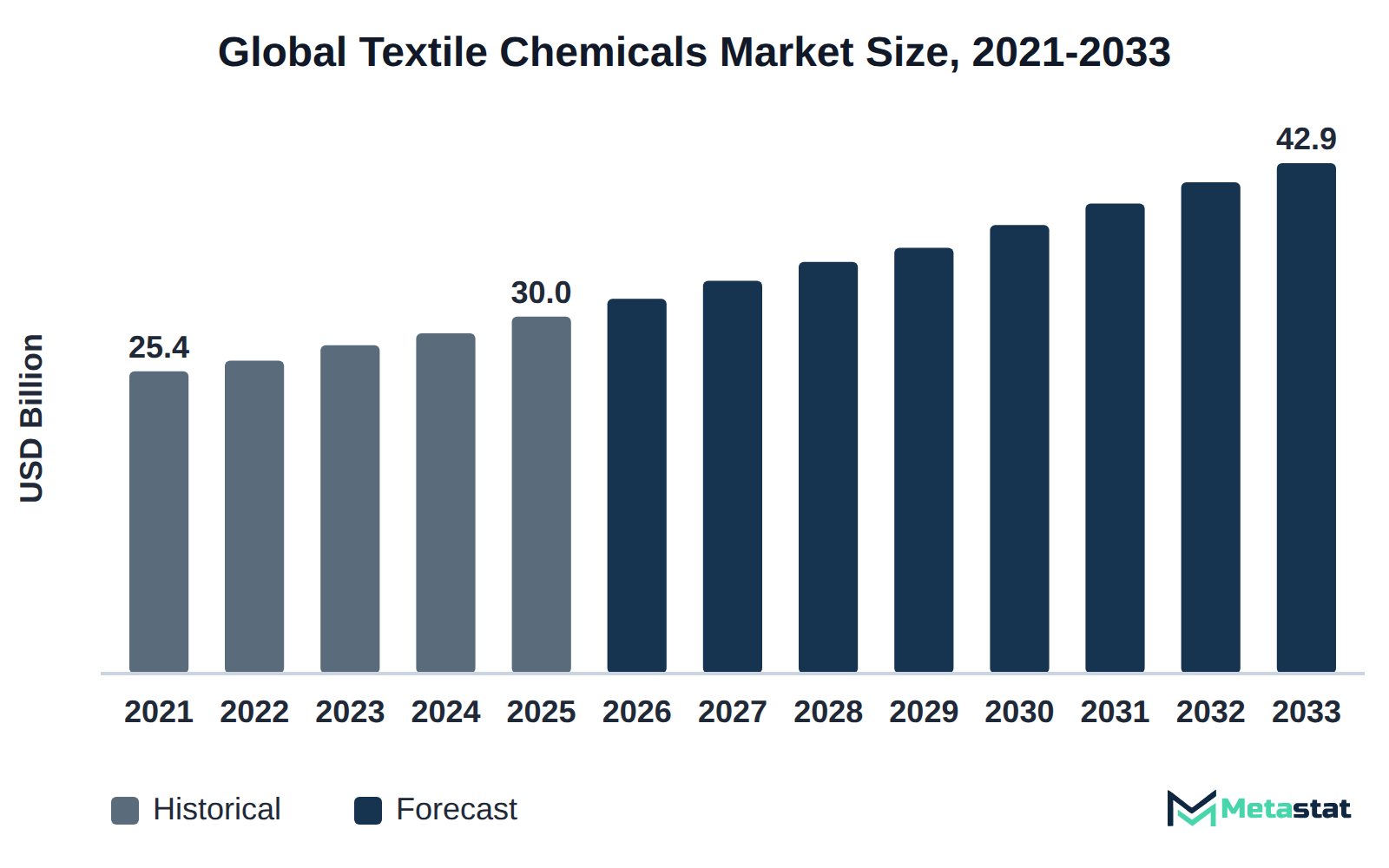
Dyeing and printing auxiliaries improve the quality and efficiency of fabric processing in the textile chemicals market. These chemicals improve color yield and uniformity, ensuring high-quality finished products. The growing demand for durable colors in textiles drives the need for advanced dyeing and printing auxiliaries. In 2025, the market for dyeing and printing auxiliaries is expected to reach USD 8.6 billion, reflecting a compound annual growth rate (CAGR) of 4.7% through 2033.
Technological advancements in dyeing processes, including digital printing, have transformed fabric processing, leading to increased adoption of specialized auxiliaries. These innovations minimize water and energy consumption while enhancing color fastness and fabric performance. Consequently, manufacturers investing in these technologies gain a competitive edge by meeting the rising expectations of environmentally conscious consumers and brands, thereby capturing a larger share of the market.
Pricing models significantly influence purchasing decisions in the Textile Chemicals market, particularly for functional finishes and coatings. Buyers engage in long-term contracts to secure favorable terms and ensure a steady supply of specialized chemicals tailored to their production needs. The market's projected growth to USD 42.9 billion by 2033 highlights the increasing value placed on advanced textile solutions, which include functional coatings that enhance performance properties including water resistance and UV protection.
Manufacturers of high-performance textiles frequently negotiate pricing based on volume commitments and the specific functionalities required. A contract model that incorporates tiered pricing structures allows for flexibility, encouraging buyers to scale their orders according to demand fluctuations. This approach improves financial predictability for both suppliers and buyers within the market, ultimately enhancing collaboration and driving innovation in textile applications.
The focus on functional finishes has become crucial for brands aiming to differentiate their products in a competitive environment. By prioritizing quality and performance, companies secure a more substantial market share while reinforcing brand loyalty among consumers seeking durable and high-quality textiles. This trend highlights the importance of strategic purchasing decisions in shaping the future of the market.
The apparel sector in the Asia Pacific region demonstrates significant demand for textile chemicals, driven by a growing population and rising disposable incomes. With a notable projected increase in the textile chemicals market, specific chemical requirements emerge for manufacturers focusing on apparel production. By 2033, the apparel segment is expected to achieve a market value of USD 20.5 billion, reflecting a compound annual growth rate of 4.3% from 2026.
This growth stems from an increase in consumer preferences for high-quality, innovative textiles that require advanced chemical formulations for dyeing, finishing, and other processing stages. The demand for sustainable and eco-friendly chemicals further influences purchasing decisions among apparel manufacturers in the region. Suppliers of textile chemicals face opportunities to develop tailored solutions that address the specific needs of apparel producers, enhancing product performance while adhering to sustainability standards.
Companies specializing in textile chemicals expand their presence by focusing on the requirements of the apparel sector. By capitalizing on these distinct needs, players in the textile chemicals market reinforce their positioning and drive growth within the apparel market in Asia Pacific.
Textile chemicals are central to fabric dyeing and finishing, enabling rich colors and enhanced functionalities. In the dyeing segment, the market reaches a value of USD 11.7 billion by 2033, reflecting increasing demand for high-quality textile products. Various dyeing and printing auxiliaries support this growth through improved color retention and fabric properties.
Finishing agents provide essential properties to fabrics, enhancing durability, texture, and appearance. The finishing agents segment is projected to achieve significant advancements by 2033, contributing to the overall value of the market. These agents facilitate various functionalities, including wrinkle resistance, water repellency, and stain resistance, ensuring products meet consumer expectations.
Manufacturers are investing in innovative solutions to address specific fabric requirements as the textile chemicals market evolves. The growing focus on sustainability drives the development of eco-friendly chemicals, supporting compliance with environmental regulations while meeting market demands. Businesses prioritizing the integration of advanced textile chemicals into their dyeing and finishing processes position themselves competitively in a dynamic environment.
Changes in environmental regulations prompt a shift toward sustainable practices in the textile industry. Buyers, particularly in the apparel and home textiles segments, increasingly prefer closed-loop systems to mitigate environmental impacts. This transition reflects growing consumer demand for sustainable products, influencing purchasing decisions among manufacturers. Companies invest more in textile chemicals that support eco-friendly processes, leading to an increase in consumption volumes. The market experiences growth driven by a compound annual growth rate of 4.5% from 2026 to 2033. Such developments highlight the industry's commitment to sustainability, facilitating new opportunities for suppliers focused on environmentally friendly solutions.
Growing awareness of environmental issues and shifting consumer preferences create further demand for sustainable textile chemicals. Manufacturers adopting innovative practices align with these trends, enhancing their market competitiveness.
Advancements in sustainable product innovation significantly influence the Textile Chemicals market, prompting suppliers to enhance their offerings. Consumers increasingly demand eco-friendly solutions, compelling manufacturers to develop chemicals with reduced environmental impact. This transition reflects a broader shift toward sustainability in textile production, driven by rising awareness of ecological issues and regulatory pressures. Suppliers invest in research and development to create biodegradable, non-toxic, and energy-efficient chemicals, aligning their product lines with market expectations.
The emphasis on sustainable products benefits key industries, including apparel and home textiles, where performance and environmental responsibility hold significance. Competitive advantages arise for companies that adopt green chemistry practices, allowing them to capture a larger market share. The Textile Chemicals market is expected to experience sustained growth fueled by innovations that not only meet consumer needs but comply with evolving environmental standards.
Rising prices for textile chemicals present a significant restraint in the market, impacting buyers in various sectors, particularly apparel and home textiles. Increased costs associated with raw materials and production processes lead to smaller order volumes and delayed procurement decisions. Manufacturers facing tight margins limit spending on chemical solutions, opting for lower-quality substitutes to remain competitive. This behavior results in slower adoption of innovative products that enhance functionality and sustainability in textiles. The pressure to maintain cost efficiency hampers investment in advanced textile chemicals, which could improve product performance and environmental compliance. Consequently, the market experiences constrained growth while potential buyers weigh the benefits of high-quality textiles against immediate financial considerations.
Profitability within the market faces significant challenges due to rising input costs. Fluctuations in the prices of raw materials, including chemicals and dyes, contribute to increased production expenses. Suppliers experience margin pressure while striving to maintain competitive pricing while dealing with escalating costs. This situation results in reduced profit margins, prompting suppliers to seek cost-effective alternatives.
In response to these challenges, suppliers focus on optimizing their supply chains to enhance efficiency and reduce waste. Investments in technology, including automation and advanced analytics, enable suppliers to streamline operations. Increased collaboration with raw material providers further aids in negotiating better pricing and securing more stable supply agreements. Such strategies aim to sustain profitability amid fluctuating costs while supporting long-term market stability.
The Colorants segment within the Textile Chemicals market presents a significant growth opportunity, with a projected Compound Annual Growth Rate (CAGR) of 4.6% from 2026 to 2033. Increasing demand for high-quality color applications in various end-use applications triggers this robust expansion. Buyers in sectors including apparel and home textiles prioritize colorants that enhance aesthetic appeal while meeting regulatory requirements for sustainability. The market for colorants is expected to grow from USD 6.7 billion in 2026 to USD 9.2 billion by 2033, reflecting a strong upward trajectory driven by evolving consumer preferences and the need for innovative coloring solutions. Manufacturers focusing on sustainable and high-performance colorants stand to gain a competitive advantage, positioning themselves favorably against traditional offerings. This segment's growth aligns with broader trends aimed at enhancing product quality and environmental compliance, driving significant investment and development in the coming years.
The Global Textile Chemicals market is segmented based on Product Type, Processing Stage, Fiber Type, and End-Use Application.
Colorants segment is valued at USD 6.7 billion in 2026 and is projected to reach USD 9.2 billion by 2033, at a CAGR of 4.6% during the forecast period. This segment serves various applications, primarily in the textile and apparel industries, where durable colors are essential. Growth in the colorants segment derives from increasing consumer demand for customized and high-quality fabrics. Several buyers in fashion and home textile sectors seek advanced colorant solutions to achieve unique aesthetics and branding. In contrast to other segments, including Dyeing and Printing Auxiliaries, which have a higher CAGR of 4.7%, colorants experience steadier growth rates. Regulatory shifts toward environmentally friendly dyes and sustainable production practices further influence this segment, compelling manufacturers to innovate in formulations while maintaining the quality and appeal of their offerings.
This segment enhances the dyeing and printing processes in textile manufacturing by providing necessary support through various chemicals that improve color fixation and application efficiency. Manufacturers of textiles rely on these auxiliaries to achieve high-quality finishes and rich colors. Demand for these products is driven by the increasing need for eco-friendly and high-performance textiles, reflecting a broader trend within the market toward sustainability and innovation. Compared to other segments, including Colorants, Dyeing and Printing Auxiliaries show a moderate growth trajectory, indicating stable demand from key industries without the aggressive pricing pressures seen elsewhere. The reliance on these chemicals highlights their significance in the overall Textile Chemicals market, particularly among fabric manufacturers focused on quality and performance.
Finishing Agents segment is expected to reach USD 8.3 billion by 2033. This segment serves vital functions in enhancing the durability, appearance, and performance of textiles, primarily for manufacturers in the apparel and home textiles sectors. The demand for innovative finishes, driven by consumer preferences for high-performance textiles, supports growth in this segment. With a projected Compound Annual Growth Rate (CAGR) of 4.3%, Finishing Agents experience steady expansion, differing from Coating and Sizing Chemicals, which exhibit a slower growth rate of 3.9%. The segment's focus on sustainability and eco-friendly formulations aligns with broader environmental goals, further reinforcing its relevance in the market. Investment in research and development for advanced finishing technologies continues to influence the competitive landscape.
Coating and Sizing Chemicals account for a critical function in textile production, focusing on enhancing the durability and aesthetic appeal of fabrics. This segment is projected to grow at a CAGR of 3.9% during the forecast period. These chemicals are widely used by manufacturers in various sectors, including apparel and automotive, to improve fabric performance. Demand stems from the increasing emphasis on quality and longevity in textile products. The segment distinguishes itself from others due to its relatively stable pricing and specific applications compared to more volatile segments including colorants or dyeing auxiliaries. While manufacturers seek to enhance product offerings while maintaining cost-effectiveness, Coating and Sizing Chemicals play an essential role in meeting these objectives, thus driving growth in the textile chemicals market.
Pretreatment chemicals serve essential roles in the textile manufacturing process, primarily enhancing fabric performance and preparing fibers for subsequent processes. This segment finds extensive application in various textile operations, particularly among manufacturers focused on optimizing the quality and longevity of their products. Demand for pretreatment chemicals rises due to increasing consumer expectations for high-quality textiles with superior performance attributes. This segment experiences growth driven by emerging trends emphasizing sustainability and eco-friendliness in production methods, distinguishing it from other segments with different focuses. Compared to colorants and finishing agents, pretreatment chemicals face unique challenges related to regulatory compliance and technological advancements required for more efficient formulations. The market presents opportunities for innovation, particularly in creating environmentally friendly solutions that align with the growing demand for sustainable textiles.
Optical brighteners and yarn lubricants enhance the performance and appearance of textiles. Optical brighteners improve brightness and whiteness in fabrics, while yarn lubricants facilitate smoother processing and reduce friction during manufacturing. These products find usage in various textile applications, including apparel and home textiles. Rising demand for high-quality textiles is expected to drive growth in this sub-segment. Increased consumer awareness regarding fabric care and maintenance boosts interest in specialty chemicals, influencing purchasing decisions. Compared to other product types within the market, optical brighteners and yarn lubricants experience relatively stable demand, with less volatility attributed to seasonal trends. This segment supports the efficient production of textiles, ensuring that manufacturers meet the market's quality expectations.
Fiber and Yarn Processing segment is valued at USD 3.2 billion in 2026 and is projected to reach USD 4.1 billion by 2033, at a CAGR of 3.9% during the forecast period. This segment involves the application of chemicals to fibers and yarns to improve their properties, enhance dye uptake, and facilitate processing in the textile manufacturing sector. Manufacturers in this segment primarily serve apparel and home textiles producers, who require high-quality materials for their products. The growth of this segment is driven by increasing demand for efficient processing solutions and heightened focus on sustainability in production methods. Compared to other segments, including Dyeing, which is projected to reach USD 11.7 billion by 2033, the Fiber and Yarn Processing segment demonstrates moderate growth, highlighting its essential yet stable role in the overall market.
Pretreatment segment is estimated to reach USD 6.3 billion by 2033, at a CAGR of 4.1% during the forecast period. This segment plays a critical role in preparing textiles for dyeing and finishing processes, ensuring optimal adhesion and strong color application. Primarily used by textile manufacturers, pretreatment chemicals enhance the quality and performance of fabrics, catering to diverse applications including apparel and home textiles. Growing demand for high-quality textiles drives the adoption of pretreatment chemicals, with increasing emphasis on efficiency and sustainability in production processes. Compared to other segments, including Dyeing and Printing Auxiliaries, which are projected to reach USD 8.6 billion by 2033, the pretreatment segment exhibits steady growth, reflecting its foundational importance in textile processing. These dynamics contribute to a resilient market environment, highlighting the vital function pretreatment chemicals serve in the Textile Chemicals market.
This segment enhances the color and aesthetic appeal of fabrics, serving various end-use applications including apparel and home textiles. Factors driving growth include increasing demand for bright colors and innovative dyeing techniques, particularly within the Asia Pacific region, which has significant textile production. The Dyeing segment exhibits a higher growth rate compared to other segments, with a projected CAGR of 5.4%. Unlike the Dyeing and Printing Auxiliaries segment, which is anticipated to reach USD 8.6 billion, the Dyeing segment focuses on achieving specific color results, impacting textiles’ market value differently. Technological advancements in dyeing processes contribute to environmental sustainability, influencing buyer preferences and increasing adoption among manufacturers pursuing eco-friendly production methods.
Printing is projected to grow at a CAGR of 5.4% during the forecast period. This segment is essential for creating designs and patterns on textiles, primarily in apparel and home textiles. The demand for digital printing technology drives growth, owing to flexibility and efficiency in producing customized designs. This segment distinguishes itself from others in the processing stage, with a faster growth rate compared to Fiber and Yarn Processing, which has a CAGR of 3.9%. The increasing need for sustainability in textile production has led to innovations in printing techniques, enhancing the appeal of printed textiles. Suppliers in this segment focus on developing eco-friendly inks and dyes to meet consumer preferences and regulatory standards. Such advancements contribute to the overall expansion of the market.
Finishing and Coating involves critical processes for textile products, enhancing surface characteristics and functionality. This segment finds application in various textile items, serving industries including apparel and home textiles, where aesthetics and durability are essential. The rise in consumer demand for high-quality fabrics fuels growth in this segment, driven by a focus on performance and appearance. Compared to other processing stages, this segment presents unique challenges, primarily related to sourcing sustainable ingredients and managing production costs. Its differentiation from segments like Dyeing lies in its focus on finishing touches rather than color application, thus catering to different buyer requirements. Innovations in formulation and technology play a significant role in shaping competitive dynamics, affecting both product offerings and pricing strategies across the market.
Garment washing and aftertreatment chemicals play an essential role in the textile finishing process, enhancing the quality and aesthetics of fabric. Manufacturers use these chemicals to refine the final appearance of garments and improve their functionality, addressing specific consumer preferences. Demand for eco-friendly and sustainable solutions drives the growth of this segment, pushing suppliers to innovate with greener alternatives. In contrast to other processing stages, garment washing and aftertreatment typically exhibit steadier growth patterns, focusing on enhancing product quality rather than volume. This approach highlights a shift in buyer preferences toward premium, quality-enhancing treatments. The Textile Chemicals market reflects an increasing focus on sustainability, influencing purchasing decisions across various textile segments.
Cotton and Other Natural Cellulosic Fibers segment is valued at USD 10.2 billion in 2026 and is projected to reach USD 13.7 billion by 2033, at a CAGR of 4.4% during the forecast period. This segment primarily serves the apparel industry, where cotton's softness and breathability make it a preferred choice for consumers. The demand for sustainable and eco-friendly textiles drives the growth of this segment, reflecting a shift towards natural fibers among manufacturers and consumers. Compared to other segments, including Polyester Fibers, which is projected to grow at a CAGR of 4.7%, the Cotton and Other Natural Cellulosic Fibers segment offers a more niche appeal focused on comfort and sustainability. This positioning attracts buyers seeking high-quality, environmentally conscious textile options, influencing pricing strategies across the market.
Polyester Fibers segment is estimated to reach USD 15.3 billion by 2033, at a CAGR of 4.7% during the forecast period. This segment primarily serves the apparel industry, where its properties of durability and resistance to wrinkles are highly valued. The increasing consumer preference for sustainable and high-performance fabrics drives demand in this segment. Compared to other fiber types, Polyester Fibers exhibit a competitive edge due to their lower cost and versatility, appealing to a broader range of buyers. Growth in the market is influenced by technological advancements in fiber production, which enhance the quality and functionality of polyester textiles, allowing for greater application in various end-use scenarios.
The Nylon and Other Synthetic Fibers segment is expected to reach USD 5.3 billion by 2033. This segment finds applications primarily in the production of textiles that require durability and resilience, commonly used in apparel and industrial applications. The increasing demand for lightweight and high-strength materials drives growth in this segment, particularly in the sports and outdoor apparel sectors. Competing segments, including Cotton and Other Natural Cellulosic Fibers, exhibit a slower growth trajectory with a CAGR of 4.4%, highlighting Nylon's advantages in performance characteristics. In addition, advancements in manufacturing technologies enhance the appeal of synthetic fibers, further differentiating this segment from others that rely on natural fibers. The Textile Chemicals market recognizes the ongoing transition toward sustainable practices, leading to more environmentally friendly alternatives in fiber production. Such trends could reshape purchasing preferences and impact market dynamics.
Regenerated Cellulosic Fibers segment is projected to grow at a CAGR of 5.1% during the forecast period. This segment consists of fibers derived from natural cellulose sources, including wood pulp, which undergo chemical processes to create fibers suited for textile applications. These fibers find usage in various consumer goods, particularly in apparel and home textiles. The rising demand for sustainable and biodegradable materials drives growth in this segment, with consumers increasingly preferring environmentally friendly options. Compared to other fiber types, Regenerated Cellulosic Fibers exhibit a higher growth rate, reflected in their anticipated expansion from USD 10.2 billion in 2026 to USD 13.7 billion by 2033. Competition within the market intensifies as manufacturers focus on innovative processing techniques that enhance the performance and versatility of these fibers.
Wool and Silk Fibers represent a unique category within the fiber type segmentation, primarily used in high-end apparel and luxury textile applications. This segment caters to manufacturers focused on producing garments that require softness, drape, and warmth, appealing to consumers seeking quality. Demand for this segment is driven by trends in sustainable fashion and increasing consumer preference for natural fibers over synthetic alternatives. Compared to other fiber types, including polyester or cotton, Wool and Silk Fibers typically command higher prices due to their specialized applications and the intricacies involved in their production processes. This segment experiences slower growth relative to synthetic fibers; however, it remains crucial for niche markets, where quality and sustainability play significant roles in purchasing decisions. The distinctive properties of wool and silk differentiate this segment from others, ensuring its ongoing relevance in the textile chemicals market.
Blended Fibers represent a specific category of fibers that combine two or more different types of fibers to achieve desired properties in textiles. This segment finds application in a variety of end-use products, including apparel, home textiles, and industrial applications. The demand for blended fibers is driven by consumer preferences for fabrics that offer enhanced durability, comfort, and performance. Blended fibers suit manufacturers aiming to optimize production while meeting market requirements for functionality. Compared to other fiber types, blended fibers often cater to a wider range of consumer needs, leading to increased adoption across diverse markets. The Textile Chemicals market reflects an overall trend toward integrating innovative materials, with blended fibers playing a significant role in enhancing product appeal and performance.
The apparel segment is valued at USD 15.3 billion in 2026 and is projected to reach USD 20.5 billion by 2033, at a CAGR of 4.3% during the forecast period. This segment focuses on textiles used for clothing, catering primarily to consumers and fashion brands seeking quality and aesthetic appeal. The increasing demand for sustainable and innovative fabrics drives growth in this area, with manufacturers investing in eco-friendly and performance-enhancing chemicals. Compared to other segments, the apparel segment exhibits significant growth due to fashion trends and changing consumer preferences. While segments including industrial textiles experience slower growth, apparel remains a key driver in the Textile Chemicals market, reflecting evolving fashion dynamics and consumer expectations.
Home Textiles segment is estimated to reach USD 8.8 billion by 2033, at a CAGR of 4.1% during the forecast period. This segment primarily serves households, hotels, and other establishments that require materials for bedding, curtains, and upholstery. Increased consumer focus on home aesthetics and comfort drives demand. The growing trend toward sustainable and environmentally friendly materials influences purchasing decisions, resulting in higher demand for responsibly sourced textiles. Compared to other segments in the End-Use Application category, Home Textiles experiences moderate growth, differing from the Apparel segment, which has a higher CAGR of 4.3%. Innovations in fabric technology, including stain-resistant and easy-care materials, further enhance the segment's appeal, supporting its expansion in the market. Sustainable practices and ethical sourcing play significant roles in shaping the future of the segment, influencing both producers and consumers.
Automotive Textiles segment is expected to reach USD 3.8 billion by 2033. This segment includes materials used in the interior and exterior applications of vehicles, catering to automotive manufacturers and suppliers. Demand for these textiles is driven by increasing consumer preferences for durability and aesthetic appeal in automotive interiors. Rising regulations related to vehicle safety and environmental sustainability push manufacturers towards high-performance textiles. Compared to other segments, including Apparel, which has a CAGR of 4.3%, the Automotive Textiles segment experiences a distinct focus on specialized performance characteristics and compliance with stringent standards, resulting in a competitive pricing landscape. This segment's growth aligns with broader trends within the Textile Chemicals market, reflecting a shift towards innovative and functional materials in automotive applications.
Industrial and Protective Textiles segment is projected to grow at a CAGR of 5.5% during the forecast period. This segment is primarily for manufacturing workwear, safety apparel, and protective gear across various industries, including construction, healthcare, and manufacturing. Rising awareness regarding workplace safety and regulatory requirements significantly drives demand in this segment. Compared to other segments, including Apparel and Home Textiles, Industrial and Protective Textiles reflects a stronger emphasis on durability and functionality, which translates to distinct performance requirements. The market for this segment shows a robust outlook, supported by continuous advancements in fabric technology and an increasing focus on safety standards, setting it apart from consumer-driven segments. The Textile Chemicals market benefits from these trends, with innovations enhancing the protective qualities of textiles while maintaining comfort and usability.
Medical and Hygiene Textiles focus on applications requiring specialized fabrics for health and safety, often in healthcare settings, personal protective equipment, and hygiene products. Key buyers include hospitals, clinics, and manufacturers of medical devices. Growth in this segment is influenced by increasing awareness of hygiene and infection control, driving demand for high-performance textiles. Innovations in antimicrobial treatments and advanced materials enhance the functionality and safety of medical textiles, ensuring compliance with stringent regulatory standards. This segment stands out from others due to its emphasis on performance characteristics and higher price points, reflecting the critical nature of applications in health-related environments. In the Textile Chemicals market, the need for durable and safe healthcare fabrics influences purchasing decisions, shaping competitive dynamics among suppliers.
Others (Agricultural and Geotextiles) encompasses a unique category within the end-use applications of textile chemicals. This segment finds applications in agricultural textiles including crop covers, mulch films, and geotextiles for erosion control and soil stabilization. Demand is driven by the growing importance of sustainable agricultural practices and the increasing adoption of geosynthetic products to enhance soil preservation and reduce environmental impact. Unlike other textile applications, this segment often experiences slower growth due to specific regulatory requirements and the need for specialized properties in materials. Farmers and construction companies primarily use these products, reflecting a distinct buyer profile compared to other segments. The market observes unique challenges related to material performance and durability that affect adoption rates, differentiating it from more mainstream textile applications.
Based on geography, the Global Textile Chemicals market is divided into North America, Europe, Asia-Pacific, South America, Middle East, and Africa.
In North America, a growing demand for sustainable textile production drives the Textile Chemicals market. Notable industries contributing to this demand include apparel and home textiles, where consumers increasingly prioritize eco-friendly materials and processes. The regional market benefits from stringent regulations aimed at promoting sustainability and reducing environmental impact, influencing purchasing decisions among manufacturers. The United States, Canada, and Mexico lead in adoption, with key players focusing on developing innovative and sustainable solutions tailored to local market needs. North America is projected to reach USD 4.2 billion by the end of 2033, reflecting ongoing investments in sustainable practices within the textile sector. Increasing emphasis on compliance with environmental standards supports market expansion, positioning the region favorably for future growth.
Strong demand in Europe stems from growing industries including apparel and home textiles, with significant contributions from countries like Germany, France, and Italy. Sustainable practices and regulatory standards drive interest in eco-friendly textile chemicals, creating opportunities for innovation. The demand for high-quality finished textiles influences purchasing decisions across the region, particularly in protective and industrial textiles. Europe holds a 17.3% share of the global market in 2025, reflecting its importance in the textile chemicals market. Competitive dynamics in this region encourage suppliers to focus on R&D, enhancing product offerings to meet stringent regulations and consumer preferences.
Asia Pacific represents a significant portion of the global Textile Chemicals market, accounting for 63.6% of the total share in 2025. Key drivers of demand in this region include robust textile manufacturing in China and India, with these countries leading in production capacity and export activities. Japan’s focus on innovation in textile technology further enhances market growth, particularly in high-performance applications. Ongoing investments in sustainable practices, along with government initiatives to improve production efficiency, contribute to a favorable business environment. The region's diverse consumer preferences across apparel, home textiles, and industrial applications necessitate a wide range of chemical solutions, driving continual advancements in formulations and product offerings. This dynamic environment positions the market for sustained growth and evolution during the forecast period.
In South America, the Textile Chemicals market sees notable activity driven by robust demand from industries including apparel and home textiles. Brazil and Argentina serve as the primary markets, reflecting a growing interest in innovative textile solutions. The market benefits from a rising consumer preference for sustainable and eco-friendly products. Investment in local manufacturing facilities enhances production capabilities, contributing to regional growth. The share of South America in the global market is projected at 4.8% in 2025. This growth trajectory highlights the region's potential in the Textile Chemicals market, with increasing opportunities for suppliers and manufacturers aiming to expand their presence.
The region demonstrates unique characteristics influencing the Textile Chemicals market. Significant growth in demand arises from the apparel and automotive sectors, primarily driven by rising consumer preferences for high-quality and innovative textile products. Regulatory initiatives in sustainability are gaining traction, prompting manufacturers to adopt eco-friendly practices. Infrastructure developments in countries like Saudi Arabia and the UAE enhance production capabilities, contributing to market expansion. South Africa's textile industry focuses on both local and export markets, emphasizing protective and industrial textiles. The region's share of the global market stands at 4.1% in 2025, reflecting its evolving role within the wider global framework.
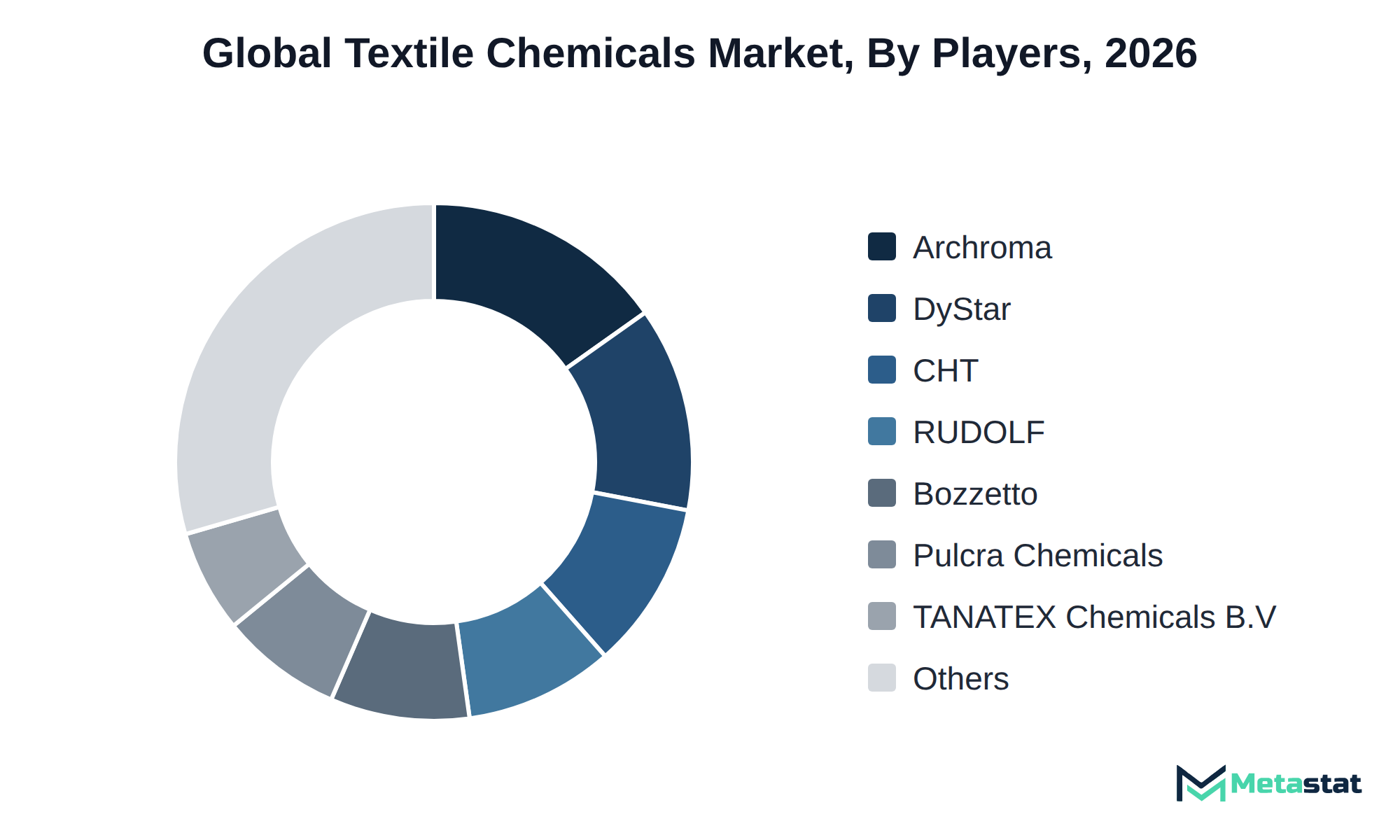
Companies in the Textile Chemicals market employ various competitive strategies to capture market share and meet diverse buyer needs. Key factors influencing buyer choices include price, customization, certification, and service quality. Companies differentiate themselves through specialized product offerings and regional strengths.
Firms including Archroma and DyStar Group focus on advanced colorants and dyeing auxiliaries, emphasizing sustainable practices and environmental certifications. Meanwhile, BASF SE and Solvay S.A. leverage their extensive chemical portfolios to provide comprehensive solutions across multiple applications, including apparel and industrial textiles.
Regional players like CHT Group and RUDOLF GmbH cater to specific local markets by offering tailored formulations that address unique customer requirements. This strategic positioning allows them to compete effectively with larger multinational firms while maintaining strong relationships with local manufacturers.
Future growth depends on several developments. Expanding demand in the apparel segment, driven by increasing consumer preferences for sustainable and innovative textiles, will significantly influence market dynamics. Advancements in dyeing and printing auxiliaries, projected to reach USD 8.6 billion by 2033, will enhance the overall efficiency of textile production and contribute to revenue growth. In the Asia Pacific region, which holds a substantial market share of 63.6%, continued industrialization and urbanization will fuel this demand, particularly in countries like China and India.
However, potential risks, including fluctuating raw material prices and stringent environmental regulations, could hinder growth. The impact of these factors could particularly affect the finishing agents segment, where operational costs are closely tied to material inputs. Overall, the textile chemicals market is positioned for growth if industry players adapt to evolving trends and meet the challenges.
By Product Type: Colorants, Dyeing and Printing Auxiliaries, Finishing Agents, Coating and Sizing Chemicals, Pretreatment Chemicals, Others (Optical Brighteners and Yarn Lubricants)
By Processing Stage: Fiber and Yarn Processing, Pretreatment, Dyeing, Printing, Finishing and Coating, Others (Garment Washing and Aftertreatment)
By Fiber Type: Cotton and Other Natural Cellulosic Fibers, Polyester Fibers, Nylon and Other Synthetic Fibers, Regenerated Cellulosic Fibers, Wool and Silk Fibers, Blended Fibers
By End-Use Application: Apparel, Home Textiles, Automotive Textiles, Industrial and Protective Textiles, Medical and Hygiene Textiles, Others (Agricultural and Geotextiles)
The report strategically identifies and profiles the key market players and analyses their core competencies in each sub-segment of the Textile Chemicals market.
Report Attributes | Details |
Study Period | 2021-2033 |
Base Year | 2025 |
Estimated Year | 2026 |
Forecast Period | 2026-2033 |
Historical Period | 2021-2025 |
Growth Rate | CAGR 4.5% from 2026 to 2033 |
Revenue Unit | USD billion |
Segmentation | By Product Type, Processing Stage, Fiber Type, End-Use Application, and Region |
By Region | North America (By Product Type, Processing Stage, Fiber Type, End-Use Application, and Country)
|
Europe (By Product Type, Processing Stage, Fiber Type, End-Use Application, and Country)
| |
Asia Pacific (By Product Type, Processing Stage, Fiber Type, End-Use Application, and Country)
| |
South America (By Product Type, Processing Stage, Fiber Type, End-Use Application, and Country)
| |
Middle East and Africa (By Product Type, Processing Stage, Fiber Type, End-Use Application, and Country)
|
Find answers to common questions about this report
The Textile Chemicals market size was valued at USD 30 billion in 2025.
The market is projected to grow at a CAGR of 4.5% during the forecast period from 2026 to 2033.
The North America Textile Chemicals market size is estimated to reach USD 4.2 billion by 2033.
Colorants lead the Textile Chemicals market with a projected value of USD 9.2 billion by 2033. This segment surpasses others in terms of revenue growth within the product type category.
Key drivers for the Textile Chemicals market include rising awareness of environmental issues and shifting consumer preferences that create demand for sustainable textile chemicals. The Colorants segment presents a significant growth opportunity, driven by increasing demand for high-quality color applications in various end-use applications.
Rising prices for textile chemicals present a significant restraint in the market, impacting buyers in various sectors. Increased costs associated with raw materials and production processes lead to smaller order volumes and delayed procurement decisions.
Growing consumer demand for sustainable products and increasing awareness of environmental issues favor adoption in the textile chemicals industry. Manufacturers are investing in innovative, eco-friendly solutions that align with evolving regulatory standards, enhancing their market competitiveness.
The Textile Chemicals market is estimated to reach a valuation of USD 42.9 billion by 2033.
Key players operating in the Textile Chemicals market include Archroma, DyStar Group, CHT Group, RUDOLF GmbH, Bozzetto Group, Pulcra Chemicals GmbH, and TANATEX Chemicals B.V.
The Colorants segment is projected to grow at a Compound Annual Growth Rate (CAGR) of 4.6% from 2026 to 2033.
The analysts below cover Chemicals and Materials research at Metastat Insights.
LEAD ANALYST
Utkarsh Khirodkar is a Lead Market Research Analyst at MetaStat Insight, specializing in market intelligence, technology sector assessments, and competitive strategy.

INDUSTRY CONSULTANT - CHEMICALS & ADVANCED MATERIALS
Chemicals and Materials · Machinery & Equipment · Packaging
Amit Gadhekar Consultant for Chemicals and Materials at MetaStat Insight, directing sector-specific intelligence, research, and strategic consulting across global chemical and processing markets.
The technical breakdown of ISO 20022 migration readiness across correspondent banking corridors was remarkably thorough. Rather than treating cross-border corporate payments as a single block, the report drew a useful distinction between multilateral netting platforms and domestic instant payment rails across ASEAN economies. MetaStat Insight highlighted regulatory constraints on foreign exchange liquidity management that many publications gloss over. The research material offered practical clarity for our platform development roadmap.
Our group needed clearer visibility into out-of-autoclave processing timelines for high-temperature thermoplastic composites. MetaStat Insight delivered an objective assessment that contrasted automated fiber placement scrap rates with traditional thermoset prepreg layup cycles. The supplier landscape mapped out primary resin suppliers and tape slitting capacity across France, Germany, and Japan with solid technical accuracy. Their analyst handled our questions on precursor supply risks during an unscheduled inquiry call, providing clear, unembellished context.
Evaluating sensor fusion reliability across harsh operating environments can be tricky without field-validated data. The study on agricultural autonomous guidance systems clearly separated stereo vision setups from automotive-grade solid-state LiDAR. We appreciated the regional infrastructure analysis, specifically around RTK network density across North America and South America. During our follow-up consultation, the MetaStat Insight team walked through tier-two perception software partnerships, giving our engineering leads a practical basis for vendor shortlisting.
Explore related market intelligence reports worth reading alongside this one.