
LEAD ANALYST
Utkarsh Khirodkar is a Lead Market Research Analyst at MetaStat Insight, specializing in market intelligence, technology sector assessments, and competitive strategy.

India White Oil Market Size, Share, By Grade (Pharmaceutical Grade, Food Grade, Technical / Industrial Grade), By Viscosity (Low-Viscosity White Oil, Medium-Viscosity White Oil, High-Viscosity White Oil), By Application (Emollients and Skin Conditioning, Pharmaceutical Excipients and Laxatives, Industrial Lubrication, Carrier and Diluent Applications, Mould Release Agents and Protective Coatings), By End-Use Industry (Pharmaceuticals and Healthcare, Personal Care and Cosmetics, Food and Beverage Processing, Plastics and Polymers, Rubber and Elastomers, Textiles and Fibres, Agriculture and Agrochemicals, Others (Paper, Printing Inks, Leather and Perfumery)), Industry Analysis, Growth, Trends, and Forecast, 2026-2033
Report ID
MSI-5807
Published
November, 2026
Pages
273 Pages
Format
Historical
Base year
Forecast
Forecast period
Report Details
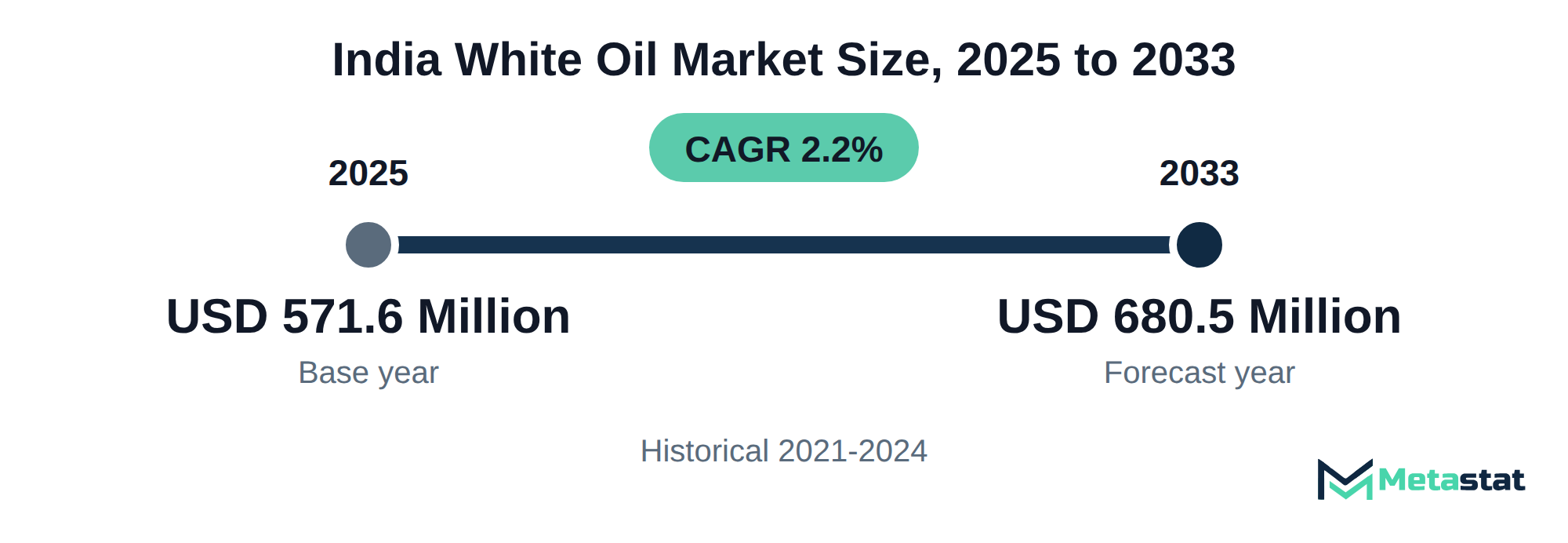
Market Valuation: Valued at $571.6 Million in 2025, projected to reach $680.5 Million by 2033 at a 2.2% CAGR.
Dominant Segment: The pharmaceutical grade segment leads the market, driven by a growing demand for high-purity oils essential for drug formulation, projected to reach USD 179.7 million by 2033.
Geographic Lead: The Asia-Pacific region is the fastest-growing area, fueled by an expanding pharmaceutical sector and increasing consumer awareness in personal care.
What's Inside: The report provides a comprehensive analysis of market segmentation by grade, viscosity, application, and end-use industry, along with competitive insights and strategic dynamics.
High-Viscosity Demand: High-viscosity white oil is expected to see significant growth, driven by its applications in pharmaceuticals and cosmetics, reflecting a trend towards high-performance formulations.
Choose Your License
India White Oil Market
The India White Oil market was valued at USD 571.6 million in 2025 and is projected to reach USD 680.5 million by 2033, growing at a CAGR of 2.2% over the forecast period.
The India White Oil market encompasses various grades including pharmaceutical, food, and technical grades, with applications spanning from emollients and skin conditioning to industrial lubrication. Buyers invest in this market to source high-quality oils that fulfill specific requirements across diverse industries including pharmaceuticals, personal care, and food processing. Demand for these oils arises from their essential roles in formulations, enhancing product quality and performance.
Growth in the market is driven primarily by the increasing demand for pharmaceutical grade white oil, projected to grow at a compound annual growth rate of 3% from 2026 to 2033. This segment represents a significant portion of the market's value, reflecting the rising need for high-purity oils in healthcare applications. Regions with a strong pharmaceutical sector, particularly in Asia, contribute significantly to overall market expansion.
The market experiences steady growth, supported by ongoing trends in personal care and pharmaceuticals. Demand for high-viscosity white oil continues to gain traction, driven by its widespread application in various formulations. These oils hold strategic importance in meeting changing consumer and industry needs.
Buyer expenditure in the India White Oil market reflects the diverse applications and essential properties of the product. Industries including pharmaceuticals, personal care, and food processing rely on white oil for its emollient and conditioning characteristics. This demand stems from the need for high-quality ingredients that ensure product efficacy and safety, positioning white oil as a critical component in various formulations.
Expanding applications in the pharmaceutical and personal care sectors, which continue to innovate and introduce new products, drive growth in the market. The pharmaceutical grade segment stands out as the most valuable, contributing significantly to overall market revenues. Among regional markets, the strongest growth occurs in Asia-Pacific, fueled by increasing consumer awareness and rising disposable income, which drives the demand for personal care products.
One primary factor behind market expansion involves the ongoing advancements in product formulations, enhancing the utility and versatility of white oil across applications. This trend drives increased adoption rates among manufacturers seeking to improve the quality and performance of their end products. The India White Oil market continues to evolve, driven by innovations that cater to diverse consumer needs and industry standards.
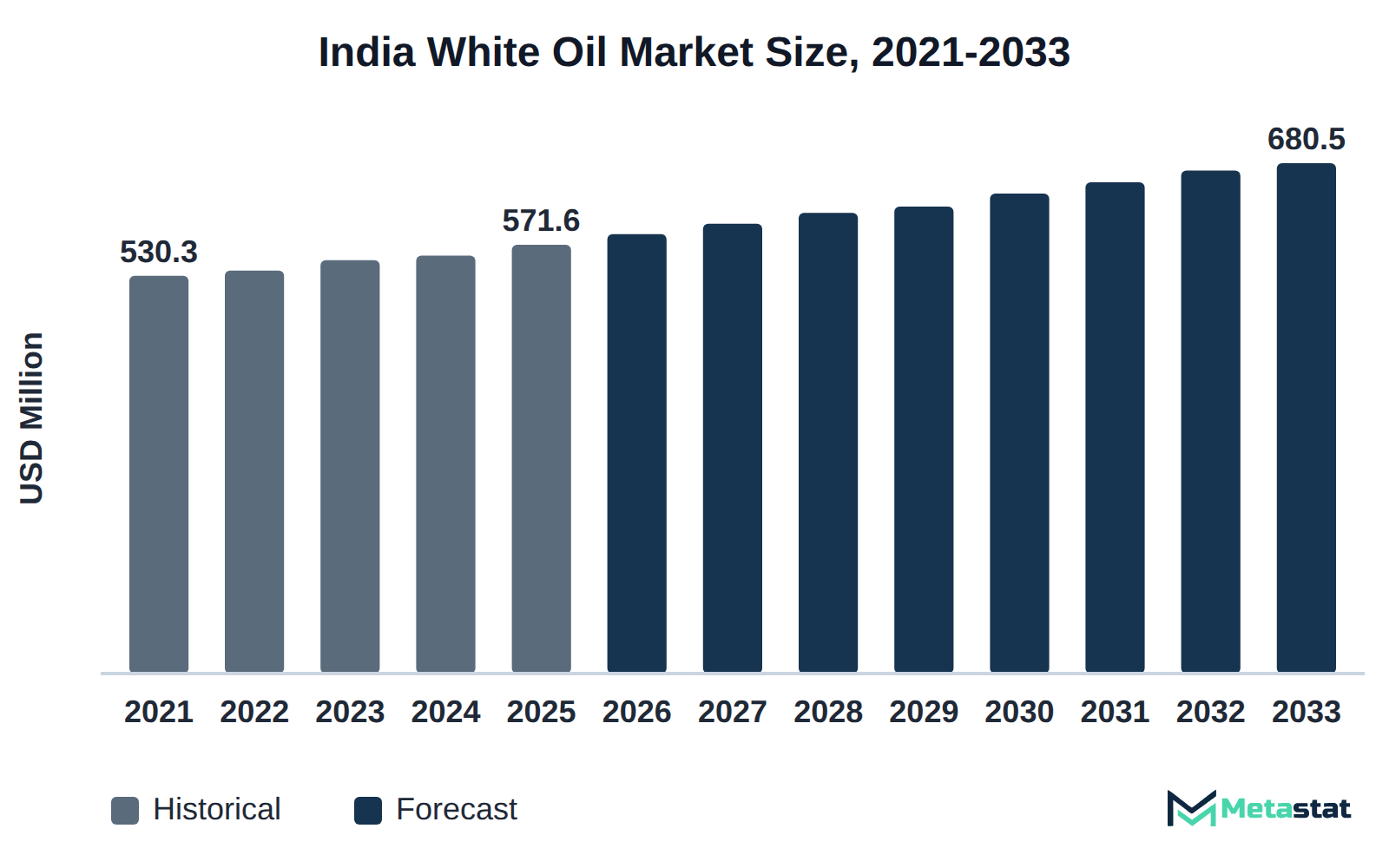
The demand for high-purity white oils in the pharmaceutical and personal care sectors in India demonstrates significant growth. High-purity white oils, particularly pharmaceutical grade, serve critical functions in drug formulation and personal care products. The pharmaceutical grade segment is projected to reach USD 179.7 million by 2033, reflecting a compound annual growth rate (CAGR) of 3%. This growth is driven by increasing needs for high-quality excipients that ensure safety and efficacy in medicinal products.
In personal care, the use of high-purity white oils in emollients and skin conditioning applications is anticipated to rise, with a forecasted increase to USD 195.7 million by 2033. This segment's growth supports the demand for formulations that enhance skin health and provide moisture retention. Evolving consumer preferences for natural and safe products drive manufacturers to select high-purity oils that meet stringent regulatory standards.
The commercial implications of this trend are substantial. Companies focusing on high-purity white oils within the India White Oil market secure a competitive advantage by addressing the specific quality requirements of pharmaceutical and personal care applications. This strategy enhances product integrity and builds brand loyalty among consumers who prioritize safety and efficacy in their choices. While the market expands, suppliers adapt to these evolving needs to capture the growing demand.
Pricing dynamics in the India White Oil market significantly influence purchasing decisions among buyers. The pharmaceutical and personal care sectors represent major consumers, with specific requirements for white oil grades, including pharmaceutical and food-grade options. These requirements point to strong demand for high-quality white oil in critical applications.
Contract models in this market often involve long-term agreements that secure stable pricing for buyers, especially in the pharmaceutical sector, where quality and consistency are vital. Suppliers frequently offer tiered pricing depending on order volume, allowing buyers to optimize procurement costs. In addition, buyers increasingly engage in collaborative partnerships with suppliers to ensure continuity and reliability in supply chains. Such strategic relationships enhance both operational efficiency and product quality, enabling firms to maintain competitive advantages in their respective markets.
Buyers need to understand the pricing strategies and contract models within the India White Oil market to manage procurement effectively. The emphasis on grade innovation and viscosity selection is significant in determining not only costs but the performance of end products within various industrial and consumer applications.
Consumption of white oil in the plastics and polymers industry demonstrates significant growth potential, driven by increasing demand for high-quality materials. Adoption of technical and industrial grade white oil is rising in the India White Oil market. This grade is critical in the manufacturing of plastics and polymers, particularly in applications requiring superior lubrication and stability. This segment is projected to reach USD 363.8 million by 2033, highlighting the sector's importance in the overall market.
The food processing industry presents distinct needs for white oil, especially in food-grade applications. Rising focus on food safety and quality has led to demand for food-grade white oil, which is essential in ensuring compliance and safety of food products. The segment is expected to reach USD 137 million by 2033, reflecting the industry's increasing reliance on high-quality ingredients and processes.
Both sectors highlight the critical function of white oil in enhancing product performance and compliance with regulatory standards. Growing consumption in plastics, polymers, and food processing will contribute to the overall growth of the market, presenting opportunities for suppliers to cater to evolving buyer requirements.
Demand for pharmaceutical grade white oil is expected to increase significantly, driven by the growing pharmaceutical industry in India. This growth stems from the rising need for high-quality excipients in drug formulation and development. Manufacturers in the pharmaceutical sector prioritize purity and consistency in white oil, impacting the pricing dynamics within the market.
The personal care and cosmetics sector presents another significant demand driver for white oil. This segment is forecasted to reach USD 176.3 million by 2033, with a CAGR of 2.9%. The increasing adoption of white oil in formulations for skin conditioners and emollients reflects changing consumer preferences towards natural and effective ingredients in personal care products. Such shifts in consumer behavior directly influence the pricing strategies of suppliers in the India White Oil market.
The transition toward high-purity white oils in the pharmaceutical sector drives increased demand in the India White Oil market. Pharmaceutical companies seek refined products that meet stringent safety and efficacy standards, leading to greater expenditure. The sector experiences a shift in preference toward pharmaceutical grade white oils, with a compound annual growth rate (CAGR) of 3% projected between 2026 and 2033. This preference arises from the need for higher-quality excipients and active ingredients in drug formulation. The emphasis on safety and quality in healthcare significantly influences purchasing decisions, pushing volumes higher while enhancing competitive pricing across the market. In response, suppliers focus on improving product offerings to meet evolving consumer requirements, thereby impacting overall market dynamics. These factors contribute to a positive outlook for growth in the pharmaceutical applications segment.
Adoption of sustainable production methods within the India White Oil market results from increasing environmental regulations aimed at reducing carbon footprints. Suppliers implement innovative technologies to comply with stricter emission standards, thereby minimizing waste and enhancing resource efficiency. Industries including personal care, pharmaceuticals, and food processing, which require high-purity oils, experience pressure to source products from environmentally responsible manufacturers. This evolving landscape influences supplier operations, driving investments in cleaner production technologies.
Investment in advanced refining processes yields cost-effective production while ensuring compliance with regulatory demands. Producers benefit from improved operational efficiencies, which support competitive pricing strategies in the market. The focus on sustainability aligns with regulatory expectations and enhances brand reputation among environmentally conscious consumers. This shift toward sustainable manufacturing practices establishes a foundation for growth in the market, driven by buyers preferring suppliers committed to environmental stewardship.
Rising raw material costs create significant pricing pressures in the India White Oil market, affecting buyers across various industrial sectors. The food and beverage processing industry, for example, experiences slower uptake of white oils due to high prices, which reduce profit margins and limit purchasing capacity. In the pharmaceutical sector, ongoing price increases lead to smaller order sizes, prompting manufacturers to explore alternative materials or formulations that offer cost savings. The technical and industrial grade segment faces challenges in securing bulk orders, with companies seeking to manage operational costs while fluctuating market prices occur. These financial constraints result in a cautious approach among buyers, delaying essential product replacements and hindering overall market growth. Persistent pricing pressures necessitate strategic adjustments among suppliers to enhance competitiveness and attract buyers in a price-sensitive environment.
Compliance costs represent a significant challenge for suppliers operating in the India White Oil market. Regulatory requirements surrounding product quality and safety necessitate substantial investments in quality control processes and certifications. Suppliers bear these costs, which ultimately influence their profit margins. The financial burden associated with compliance deters several market participants from entering the market, limiting competition and innovation.
In response to rising compliance costs, suppliers increasingly invest in technology to streamline operations and enhance product quality. Automation and advanced monitoring systems enable more efficient production processes, ultimately reducing costs associated with non-compliance. Collaboration among suppliers to share best practices and resources mitigates financial pressures. As the market develops, these strategies become crucial for staying competitive under complex regulatory requirements.
Food grade white oil exhibits strong growth potential within the India White Oil market, driven by increased consumption in the food and beverage processing industry. The annual compound growth rate for food grade white oil is projected at 3.3% through 2033, highlighting its significance in meeting the rising demand for safe and compliant food-related applications. Factors contributing to this growth include the expanding use of food grade oils in emollients, lubricants, and processing agents, which require high purity standards. This increasing reliance on food grade white oil creates opportunities for suppliers to enhance their product offerings and cater to a growing consumer base focused on health and safety. Companies focusing on the development of food grade formulations capture this upward trend, strengthening their market positions while contributing to overall revenue growth. The market's evolution suggests a strong trajectory for food grade applications, enhancing both adoption and competition in this sector.
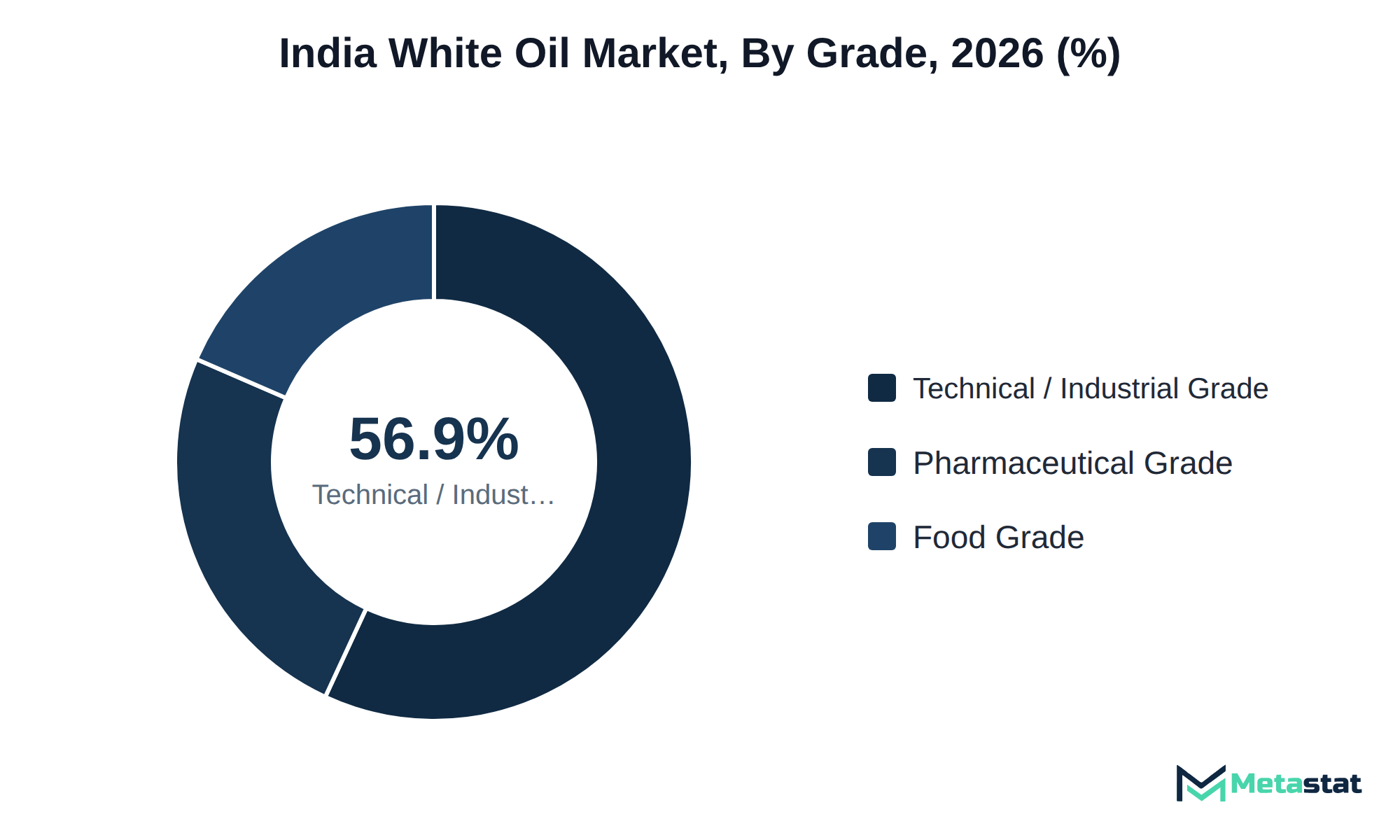
The India White Oil market is segmented based on Grade, Viscosity, Application, and End-Use Industry.
This segment serves critical functions in the pharmaceutical and healthcare industries, primarily used for excipients in drug formulations and laxatives. Laxatives form part of the wider gastroenterology products category. Increasing demand for high-quality, high-purity white oils supports growth, driven by stringent regulatory requirements for pharmaceutical applications. Compared to food and technical grades, the Pharmaceutical Grade segment experiences a higher growth rate, largely due to its specialized applications and the increasing emphasis on safety and efficacy in drug development. The forecasted growth reflects ongoing investments in healthcare and pharmaceutical innovations, which enhance the segment's importance within the India White Oil market.
Food Grade segment is estimated to reach USD 137 million by 2033, at a CAGR of 3.3% during the forecast period. This grade finds application in various sectors including food processing, where it functions as a critical ingredient in emulsions and food products requiring high purity. The driving force behind this segment's growth stems from rising health consciousness and demand for safe, high-quality food products. Compared to other grades, Food Grade white oil demonstrates a higher growth rate, attributed to its essential role in compliance with food safety standards. The segment's growth trajectory reflects a focused shift toward sustainable and health-oriented food production, integrating with consumer preferences for clean and safe ingredients. Consequently, investment in the Food Grade segment aligns with evolving regulatory frameworks and consumer expectations, enhancing its market position.
Technical / Industrial Grade segment is expected to reach USD 363.8 million by 2033. This segment finds application primarily in industrial lubrication, where it serves various manufacturing processes involving machinery and equipment. Industries including automotive, textiles, and plastics leverage this grade for its lubricating and protective properties. A significant factor affecting this segment is the steady growth in industrial production, driven by advancements in manufacturing technologies and increased demand for efficiency. This segment grows more slowly than Pharmaceutical Grade and Food Grade, which have respective CAGRs of 3.0% and 3.3%. It remains a critical component of the market, catering to specific industrial applications where high viscosity and stability are essential. Demand for high-viscosity white oil characterizes this segment, distinguishing it from the other segments in this group which target more consumer-focused applications.
Low-Viscosity White Oil segment is valued at USD 221.5 million in 2026 and is projected to reach USD 245.9 million by 2033, at a CAGR of 1.5% during the forecast period. This segment primarily serves applications including emollients and skin conditioning, with a significant presence in the pharmaceutical and personal care industries. The increasing demand for high-purity formulations drives growth, particularly for products requiring lower viscosity levels. In comparison to other viscosity segments, Low-Viscosity White Oil displays slower growth, influenced by the unique specifications required in personal care and healthcare applications. The segment stands out due to its specialized use and the higher price point attributed to the stringent quality standards necessary for its applications. Overall, market dynamics indicate a gradual increase in adoption, reflecting a steady demand trajectory.
Medium-Viscosity White Oil segment is estimated to reach USD 293.8 million by 2033, at a CAGR of 2.4% during the forecast period. This grade finds usage primarily in applications including industrial lubrication and pharmaceutical excipients, serving buyers in the healthcare and manufacturing sectors. The demand for this segment benefits from the increasing need for versatile lubricants and additives in various industrial processes. Compared to its counterparts, Medium-Viscosity White Oil exhibits a slower growth trajectory, reflecting differing technical requirements and pricing structures. In contrast, Low-Viscosity White Oil demonstrates a CAGR of 1.5%, indicating a less dynamic growth rate. The market experiences pressure from rising raw material costs, which affects the overall pricing strategy for buyers across multiple sectors.
High-Viscosity White Oil segment is expected to reach USD 140.7 million by 2033. This segment finds extensive application in industries requiring high-performance lubricants and a base for various formulations, especially in the pharmaceutical and cosmetics manufacturing sectors. Increasing demand from these sectors drives growth, complemented by the need for high-purity standards. The growth rate for this segment is slower compared to Medium-Viscosity White Oil, which is projected to achieve a CAGR of 2.4%. High-Viscosity White Oil offers distinct advantages in specific applications, appealing to buyers focused on quality and performance. Rising environmental regulations push stakeholders to seek compliant products, further influencing market dynamics. The focus on sustainability in industrial practices enhances the segment's appeal among environmentally conscious consumers. Continuous innovation and adaptation to new regulatory standards provide opportunities for growth and differentiation within the market.
Emollients and Skin Conditioning segment is valued at USD 162.2 million in 2026 and is projected to reach USD 195.7 million by 2033, at a CAGR of 2.7% during the forecast period. This segment finds application primarily in the personal care and cosmetics industry, where it enhances skin hydration and overall texture. Growing consumer awareness regarding skin health and the use of natural ingredients drives demand for high-quality emollients and other skincare ingredients. Unlike other sub-segments, including Pharmaceutical Excipients and Laxatives, which exhibit a CAGR of 3%, the Emollients and Skin Conditioning segment demonstrates a slightly slower growth trajectory. The segment's focus on consumer preferences for products featuring clean and sustainable formulations distinguishes it from technical applications that prioritize industrial usage over consumer need.
Pharmaceutical Excipients and Laxatives segment is estimated to reach USD 141.8 million by 2033, at a CAGR of 3% during the forecast period. This segment serves critical roles in drug formulation, used primarily by pharmaceutical manufacturers for creating effective medication. Demand is driven by the increasing need for high-quality pharmaceutical excipients that ensure stability, bioavailability, and patient compliance in drug products. Regulatory advancements and growing focus on patient-centric formulations contribute to the segment's growth. In comparison to other application segments, Pharmaceutical Excipients and Laxatives exhibit a stronger growth trajectory, primarily due to rising healthcare investments and a shift toward innovative drug delivery systems. This segment's anticipated growth reflects broader trends within the India White Oil market, highlighting heightened emphasis on quality and compliance in pharmaceutical applications.
Industrial Lubrication segment is expected to reach USD 147.8 million by 2033. This segment finds application primarily in the manufacturing and maintenance of machinery and equipment, supporting operations across various industries, including automotive and manufacturing. Growth within this segment is driven by increasing demand for high-performance lubricants, which enhance equipment efficiency and longevity. Competition from alternative lubrication solutions, including synthetic oils, challenges traditional white oils, affecting pricing strategies. Compared to other applications, the Industrial Lubrication segment exhibits a slower growth rate, with a projected CAGR of 2.0%, reflecting relatively stable demand dynamics in industrial sectors. Technological advances in lubrication formulations and evolving regulatory standards both shape growth in this segment.
Carrier and Diluent Applications segment is projected to grow at a CAGR of 2% during the forecast period. This segment serves various industries, including pharmaceuticals and personal care, where it acts as a medium for transporting active ingredients or additives. Demand for carrier and diluent applications is driven by the increasing focus on product efficiency and formulation versatility. Compared to other applications, this segment exhibits slower growth, reflecting broader market dynamics and competition from alternative formulations. With a focus on streamlined production and formulation processes, investments in technology development enhance the segment's appeal, contributing to its long-term sustainability. By 2033, this segment is expected to remain central to the market's future, ensuring reliable supply chains and high-quality end products.
Mould Release Agents and Protective Coatings involve specialized formulations across various manufacturing processes, particularly in the plastics and rubber sectors. These products enhance the release of molded items from their respective molds, reducing defect rates and improving overall production efficiency. The primary consumers of this segment include manufacturers of rubber products and plastic components. Demand is influenced by the growing emphasis on operational efficiency and waste reduction in production processes. Compared to other applications, this segment experiences a distinct pricing structure, often reflecting higher value due to the specialized nature of its formulations. The increasing focus on quality and performance in production drives further interest in adopting these agents. Continuous advancements in formulation technologies contribute to enhanced product offerings, positioning this segment as a key player within the India White Oil market.
Valued at USD 115.9 million in 2026, this segment is projected to reach USD 142 million by 2033, at a CAGR of 2.9% during the forecast period. Pharmaceutical white oil primarily serves the pharmaceuticals and healthcare industries, being applied in formulations, excipients, and various medical applications. Increasing research and development activities in the healthcare sector drive demand within this segment, supported by a growing emphasis on high-quality and pure products. Compared to other segments, this area exhibits stronger growth due to the consistent need for high-purity formulations in medical products. Other segments, including food grade, experience growth driven by different consumer behaviors and market requirements. Demand patterns differ across white oil categories, which leads to distinct growth trajectories.
Personal Care and Cosmetics segment is estimated to reach USD 176.3 million by 2033, at a CAGR of 2.9% during the forecast period. This segment serves various applications including skincare, haircare, and cosmetic products, catering to consumers seeking high-quality personal care formulations. The increasing consumer awareness regarding skin health and the demand for natural and organic ingredients drives growth in this segment. Unlike other segments, the Personal Care and Cosmetics category experiences a relatively steady growth rate, influenced by evolving consumer preferences and rising disposable income. This contrasts with segments including Food Grade, which shows a higher CAGR of 3.3%. The market exhibits potential for innovation, with new formulations and product developments enhancing appeal to consumers.
Food and Beverage Processing segment is expected to reach USD 89.7 million by 2033. This segment serves the food and beverage industry by providing white oil for various applications, including food packaging and processing. The increasing focus on food safety and quality drives demand for high-quality white oil products. Key players in this segment, including food manufacturers and processors, prioritize ingredients that meet stringent safety standards. Compared to other segments, this segment exhibits a moderate growth rate, driven by the overall health of the food industry. The segment's dynamics differ from those of the Pharmaceuticals and Healthcare segment, which has a projected CAGR of 2.9% during the same period. With growing consumer awareness regarding food quality, the adoption of food-grade white oil is expected to rise, positively impacting the market.
Plastics and Polymers segment is projected to grow at a CAGR of 1.9% during the forecast period. This segment finds application in the manufacturing of various plastic products and polymers, serving industries including construction, automotive, and consumer goods. Demand for white oil in this segment derives from its role as a processing aid and lubricant, enhancing the quality and performance of finished products. The relatively slower growth rate compared to other segments reflects a mature market with established supply chains. Challenges including fluctuating raw material prices and increasing regulations around plastic production influence operational costs. These factors create a distinct environment for this segment compared to faster-growing categories like Pharmaceuticals and Healthcare, which benefit from higher demand driven by increasing health and wellness trends. In the India White Oil market, the Plastics and Polymers segment remains essential for maintaining product standards and quality in the plastic manufacturing process.
Rubber and Elastomers involve materials used in various applications, including automotive, consumer goods, and industrial products. This segment serves manufacturers that require specific properties, including flexibility and durability, for their end products. The demand for rubber and elastomers is driven by the growing automotive industry, where these materials play a crucial role in components like tires and seals. Regulatory standards regarding material performance and environmental impact influence manufacturers' choices in sourcing white oil for these applications. Compared to other segments, including Pharmaceuticals and Healthcare, which show a robust CAGR of 2.9%, the growth rate within Rubber and Elastomers varies, driven by industry-specific needs and technological advancements. The India White Oil market supports this segment through the provision of high-quality white oil that meets precise specifications required for optimal performance in rubber production.
Textiles and Fibres involve the use of white oil in various fabric and textile applications. This segment caters primarily to manufacturers in the textile industry, applying white oil for lubrication and processing in spinning, weaving, and finishing operations. Such uses place white oil alongside other textile chemicals used in fabric processing. Demand drivers include the increasing emphasis on sustainable textile production and innovations in fabric treatments. The segment stands out for its moderate growth compared to others including Pharmaceuticals and Healthcare, influenced by specific buyer preferences for quality and performance. Positioned within a competitive environment, this segment faces pressure from alternative materials and formulations while benefiting from the growing trend towards high-quality textiles that require effective processing aids. Shifting consumer preferences and environmental considerations also shape the broader dynamics of the India White Oil market.
Agriculture and Agrochemicals involve the application of white oil in various agricultural processes, particularly in pesticide formulation, serving as a carrier for active ingredients. This segment attracts buyers from the agricultural sector focused on improving crop yields and ensuring effective pesticide delivery. The rising demand for sustainable agricultural practices drives this segment forward, specifically the need for efficient and eco-friendly formulations. Compared to other segments, the Agriculture and Agrochemicals segment typically experiences slower growth, influenced by regulatory factors that govern pesticide usage and environmental impact assessments. The market's evolving focus on organic farming and integrated pest management highlights a shift in buyer preferences, requiring adaptations in product formulation and application methods to address modern agricultural challenges.
Others (Paper, Printing Inks, Leather and Perfumery) encompasses various applications that leverage white oil in specialized formulations. These include uses in printing inks, leather conditioning, and perfumery manufacturing. Industries including paper production and cosmetic formulation depend on this sub-segment for its properties, which enhance product performance and longevity. Demand for white oil in these applications is driven by the increasing need for high-quality finishing agents and enhanced product stability. Compared to other segments, this sub-segment experiences slower growth due to niche market dynamics and competitive product alternatives. However, specific applications in traditional industries support steady demand, maintaining relevance within the India White Oil market.
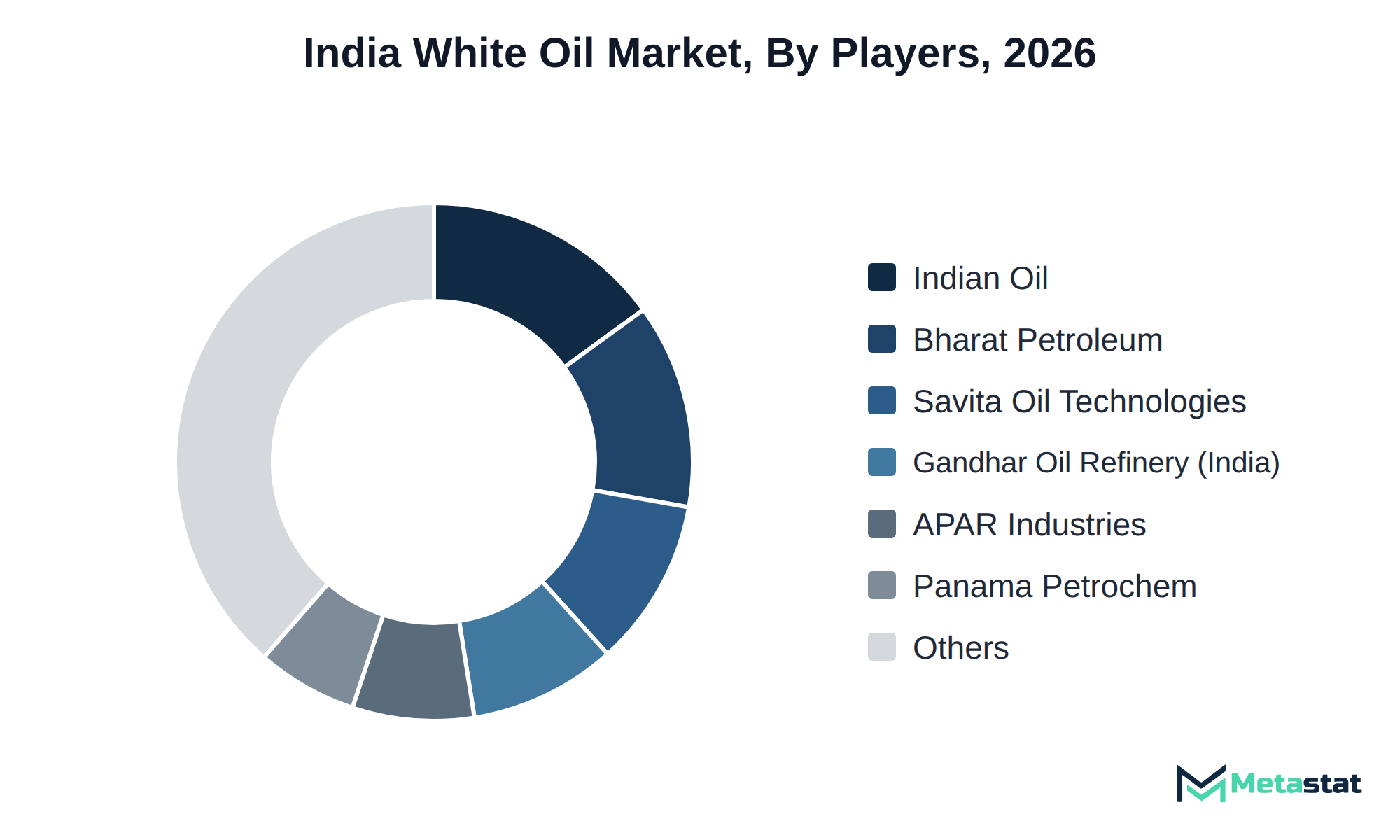
Companies in the India White Oil market compete based on multiple factors including pricing, certification, customization, and service. Buyers prioritize the quality of white oil products, influencing their purchasing decisions. Firms specializing in specific grades, including pharmaceutical or food-grade oils, appeal to distinct buyer segments requiring high standards and certifications.
Savita Oil Technologies Limited focuses on producing high-quality pharmaceutical-grade oils, catering to the stringent requirements of the healthcare sector. Meanwhile, Gandhar Oil Refinery (India) Limited emphasizes its technical and industrial-grade offerings, targeting applications in various industrial sectors. Nandan Petrochem Limited provides competitive pricing and customization options, appealing to diverse applications within the market.
The India White Oil market needs several key developments to achieve its projected growth. A significant increase in demand for pharmaceutical excipients and laxatives will support growth; this segment is expected to reach USD 141.8 million by 2033. Another vital factor involves the expansion of food grade white oil, anticipated to reach USD 137 million by the end of the forecast period. An increase in regulatory standards and the drive for higher product quality in the personal care and cosmetics industry are expected to enhance demand. However, the market faces risks from fluctuating raw material prices, which could hinder growth projections. Rising prices could lead to increased costs for manufacturers, potentially affecting pricing strategies and profitability across segments.
By Viscosity: Low-Viscosity White Oil, Medium-Viscosity White Oil, High-Viscosity White Oil
By Application: Emollients and Skin Conditioning, Pharmaceutical Excipients and Laxatives, Industrial Lubrication, Carrier and Diluent Applications, Mould Release Agents and Protective Coatings
By End-Use Industry: Pharmaceuticals and Healthcare, Personal Care and Cosmetics, Food and Beverage Processing, Plastics and Polymers, Rubber and Elastomers, Textiles and Fibres, Agriculture and Agrochemicals, Others (Paper, Printing Inks, Leather and Perfumery)
The report strategically identifies and profiles the key market players and analyses their core competencies in each sub-segment of the White Oil market.
Report Attributes | Details |
Study Period | 2021-2033 |
Base Year | 2025 |
Estimated Year | 2026 |
Forecast Period | 2026-2033 |
Historical Period | 2021-2025 |
Growth Rate | CAGR 2.2% from 2026 to 2033 |
Revenue Unit | USD million |
Segmentation | By Grade, Viscosity, Application, End-Use Industry, and Region |
Find answers to common questions about this report
The White Oil market size was valued at USD 571.6 million in 2025.
The market is projected to grow at a CAGR of 2.2% during the forecast period from 2026 to 2033.
Technical / Industrial Grade leads the White Oil market with a projected value of USD 363.8 million by 2033. This segment surpasses others in terms of total revenue.
The transition toward high-purity white oils in the pharmaceutical sector drives increased demand due to the need for higher-quality excipients and active ingredients. the rising consumption of food grade white oil in the food and beverage processing industry contributes to market growth as it meets the demand for safe and compliant food-related applications.
Rising raw material costs create significant pricing pressures, restraining growth in the India White Oil market. Compliance costs represent another challenge for suppliers, as regulatory requirements necessitate substantial investments in quality control processes and certifications. These factors limit operational flexibility and reduce overall market competitiveness.
The increasing consumption of food grade white oil in the food and beverage processing industry supports adoption, with a projected annual compound growth rate of 3.3% through 2033. This growth stems from the rising demand for safe and compliant food-related applications, enhancing opportunities for suppliers to improve their product offerings.
The White Oil market is estimated to reach a valuation of USD 680.5 million by 2033.
Key players operating in the White Oil market include Savita Oil Technologies Limited, Gandhar Oil Refinery (India) Limited, APAR Industries Limited, Nandan Petrochem Limited, Panama Petrochem Limited, Eastern Petroleum Private Limited, and Indian Oil Corporation Limited.
Pharmaceutical grade white oil is projected to grow at a compound annual growth rate (CAGR) of 3 percent between 2026 and 2033, driven by the demand for higher-quality excipients in drug formulation.
Food grade white oil finds significant use in emollients, lubricants, and processing agents within the food and beverage processing industry, contributing to its projected CAGR of 3.3% through 2033.
The analysts below cover Chemicals and Materials research at Metastat Insights.
LEAD ANALYST
Utkarsh Khirodkar is a Lead Market Research Analyst at MetaStat Insight, specializing in market intelligence, technology sector assessments, and competitive strategy.

INDUSTRY CONSULTANT - CHEMICALS & ADVANCED MATERIALS
Chemicals and Materials · Machinery & Equipment · Packaging
Amit Gadhekar Consultant for Chemicals and Materials at MetaStat Insight, directing sector-specific intelligence, research, and strategic consulting across global chemical and processing markets.
Assessing 200mm wafer transition schedules and substrate supply bottlenecks requires precise technical intelligence. MetaStat Insight supplied an actionable breakdown comparing planar and trench MOSFET architectures across automotive and industrial drive markets. The regional capacity estimates for Asia-Pacific foundries helped clarify lead-time uncertainties during our strategic planning session. When we needed additional clarification on high-purity raw material sourcing, their analyst team responded with helpful context within twenty-four hours.
Tracking maintenance cycle demand for secondary flight display units and terrain collision avoidance systems across regional jet fleets involves complex aftermarket dynamics. MetaStat Insight provided practical analysis separating airline retrofit programs from OEM forward-fit production schedules in North America and Southeast Asia. The supplier matrix highlighted component obsolescence timelines without resorting to vague generalizations. The dataset served as a dependable reference during our annual program review meetings.
Evaluating secondary resin quality across post-consumer packaging streams requires reliable technical segmentation. MetaStat Insight delivered an objective assessment that distinguished between extrusion-grade flake pricing and optical sorting throughput limitations across Western Europe. The competitive positioning breakdown for licensed depolymerization technology providers answered several questions during our feedstock feasibility audit. Their team clarified regional trade restrictions on mixed plastic scrap quickly when our team submitted follow-up requests.
Explore related market intelligence reports worth reading alongside this one.