
LEAD ANALYST
Utkarsh Khirodkar is a Lead Market Research Analyst at MetaStat Insight, specializing in market intelligence, technology sector assessments, and competitive strategy.

Global Pharmaceutical Excipients Market Size, Share, By Functionality (Fillers and Diluents, Suspending and Viscosity Agents, Coating Agents, Binders, Disintegrants, Colorants, Lubricants and Glidants), By Type (Lactose-based Excipients, Cellulose-based, Starches, Carboxymethylcellulose Sodium (CCS), Sodium Starch Glycolate (SSG), Fine Chemicals, Mannitol, Biopharma Excipients), By Formulation (Oral Solid Dosage Forms, Parenteral Formulations, Topical and Transdermal, Pulmonary/Inhalation, Ophthalmic), By Source (Plant-based, Animal-based, Synthetic, Mineral-based, Marine-based), Industry Analysis, Growth, Trends, and Forecast, 2026-2033
MSI-5097
August, 2026
277 Pages
Historical
Base year
Forecast
Forecast period
Report Details
Comprehensive Market Analysis And Insights
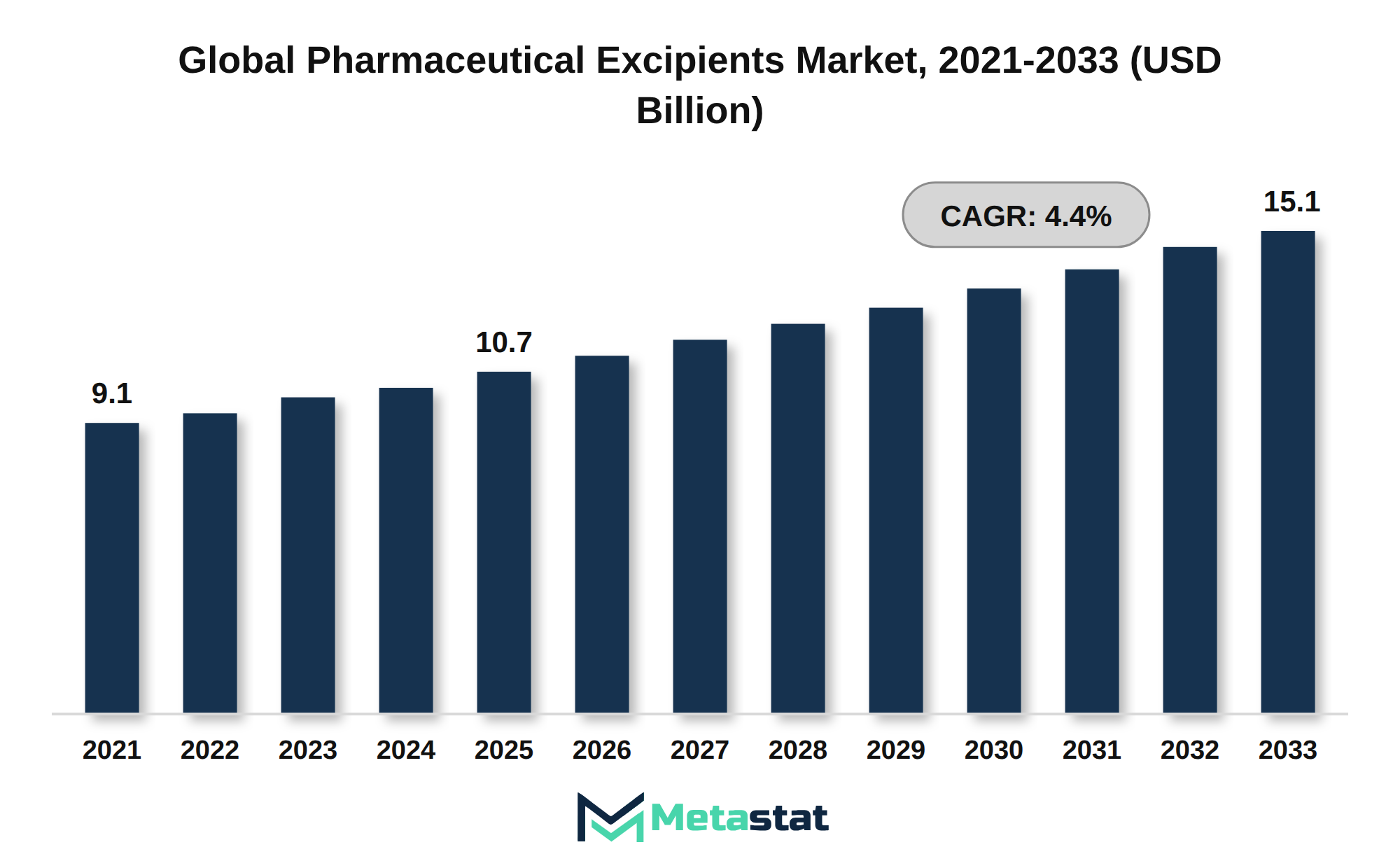
The global Pharmaceutical Excipients market was valued at USD 10.7 billion in 2025 and is projected to reach USD 15.1 billion by 2033, growing at a CAGR of 4.4% over the forecast period.
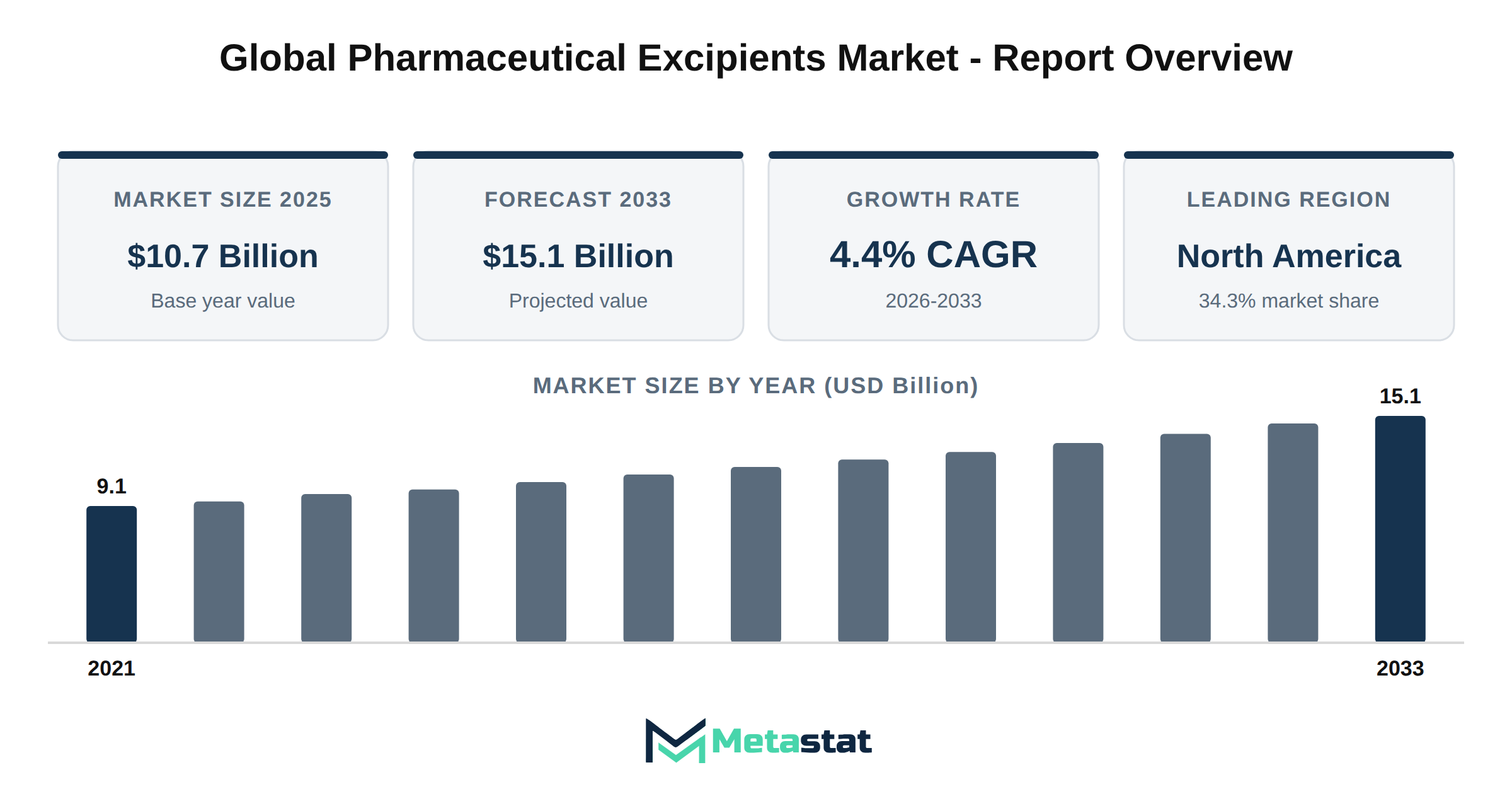
The Pharmaceutical Excipients market had a base value of USD 10.7 billion in 2025, with projections indicating growth to USD 15.1 billion by 2033, reflecting a compound annual growth rate (CAGR) of 4.4%. Historical values show the market expanding from USD 9.1 billion in 2021 to USD 10.2 billion in 2024, highlighting consistent growth leading up to the base year.
Significant trends influencing the market include the demand for high-purity and low-endotoxin specifications, driven by the increasing focus on biologics and advanced therapy formulations. This trend aligns with evolving regulatory requirements and necessitates robust compliance measures. The advancement of co-processed and multifunctional excipients supports innovation, providing enhanced performance characteristics that meet the evolving needs of pharmaceutical manufacturers.
Global pharmaceutical manufacturing continues to evolve, with expansion efforts accompanied by a focus on regulatory compliance and adherence to established standards. Regional risk frameworks have become crucial in navigating potential disruptions. Research and development trajectories indicate a shift towards next-generation innovation, while sustainable transformation, decarbonization, and circular economy dynamics shape the market and influence sourcing strategies and procurement practices.
Supply security remains a key consideration, with dual-sourcing strategies implemented to mitigate risks associated with supply chain fragmentation. The market's competitive dynamics reflect ongoing mergers and acquisitions activities, contributing to a more integrated value chain. Infrastructure investments aimed at enhancing logistics architecture further support the market's growth potential.
High-purity excipients with low-endotoxin specifications play a crucial role in ensuring the safety and efficacy of pharmaceutical products. These specifications are essential for applications involving sensitive biologics and advanced therapy medicinal products (ATMPs). The increasing focus on patient safety drives demand for such high-quality excipients, prompting manufacturers to optimize their processes to meet these stringent requirements. This shift enhances the overall quality of pharmaceutical formulations and improves market competitiveness.
Innovation in co-processed and multifunctional excipients supports the development of more effective formulations. This trend reflects the industry's shift towards multifunctional ingredients that simplify the formulation process and enhance product performance. The ability to combine multiple functionalities into a single excipient reduces production costs and improves efficiency, appealing to formulators aiming for streamlined processes in a competitive market.
Regulatory harmonization and change control processes have become significant factors in the pharmaceutical excipients market. Stricter regulatory requirements and the need for compliance with global standards compel manufacturers to adopt more robust change control systems. These systems ensure that any modifications in excipient production do not compromise product quality or safety, thus facilitating smoother market access and reducing the risk of regulatory delays.
Supply security remains a critical concern for excipient manufacturers, prompting the implementation of dual-sourcing strategies. Such strategies mitigate supply chain risks associated with single-source dependencies, ensuring a consistent supply of materials. This proactive approach enhances stability in production and reinforces manufacturers' ability to respond effectively to market fluctuations.
The global expansion of pharmaceutical manufacturing necessitates adherence to various regulatory compliance standards, which influences market dynamics. Manufacturers face challenges related to meeting diverse regional regulations while maintaining consistent product quality. The evolving regulatory landscape compels companies to invest in compliance infrastructure and adapt their operations to meet varying standards across different regions.
Market fragmentation presents both challenges and opportunities within the pharmaceutical excipients market. The presence of numerous players encourages innovation and competition, driving the development of new products and technologies. However, this fragmentation complicates procurement processes and customer journeys, because formulators navigate a diverse array of suppliers and products. Strategic partnerships and collaborations help streamline operations and enhance market reach.
Future strategic outlooks emphasize the importance of sustainable transformation and decarbonization efforts within the market. Increasing stakeholder awareness regarding environmental impact encourages companies to explore circular economy dynamics in their operations. Embracing sustainable practices aligns with regulatory expectations and appeals to environmentally conscious consumers, positioning companies favorably in the market.
Capital allocation towards research and development remains essential for innovation in the pharmaceutical excipients market. Companies prioritize investments in R&D to develop next-generation excipients that meet evolving formulation needs. This focus on innovation enables manufacturers to stay competitive and responsive to changing market demands, ultimately driving growth and profitability.
The growth of the global economy directly influences the Pharmaceutical Excipients market through increased healthcare spending and rising investment in pharmaceutical research and development. Enhanced macroeconomic conditions typically result in higher gross domestic product (GDP) growth rates, which contribute to expanded healthcare budgets. This expansion directly translates into heightened demand for pharmaceutical products, driving the need for excipients that ensure drug efficacy and safety.
Investment environments characterized by favorable interest rates and venture funding allow pharmaceutical companies to invest in new technologies and processes. This financial backing supports innovation in excipient formulations, enhancing product performance and meeting evolving market needs. Capital investment facilitates the development of advanced manufacturing capabilities, further supporting the growth of the market.
Shifting demographic patterns, including an aging population, generate increased demand for pharmaceuticals, prompting manufacturers to seek excipients that ensure optimal drug delivery. Urbanization and lifestyle changes lead to evolving consumer behaviors, driving demand for tailored pharmaceutical solutions. The Pharmaceutical Excipients market benefits from this diversification, creating numerous opportunities for growth driven by companies responding to these demographic shifts.
Economic growth and favorable investment conditions create a robust environment for the Pharmaceutical Excipients market, driving innovation and expansion in the sector. The resulting demand for high-quality excipients aligns with the needs of a dynamic and evolving healthcare landscape.
The integration of advanced technologies significantly impacts the Pharmaceutical Excipients market. Automation, artificial intelligence, and software adoption enhance operational efficiencies, driving productivity across various stages of pharmaceutical development. While companies increasingly digitize legacy processes, they realize substantial cost reductions and improved accuracy in formulation processes. This modernization aligns with industry demands for higher quality and compliance, positioning organizations competitively in a changing marketplace.
Technological advancements support the development of innovative excipient formulations that cater to diverse pharmaceutical applications. The ongoing trend toward personalized medicine and targeted therapies necessitates the utilization of sophisticated excipients, thereby expanding research and development initiatives. Consequently, investment in advanced technologies emerges because a strategic priority for manufacturers aiming to capture market share and respond to evolving customer needs.
The Pharmaceutical Excipients market benefits from a heightened focus on operational productivity and cost-efficiency initiatives. By streamlining processes and optimizing labor utilization, organizations enhance their overall profitability. This strategic shift not only strengthens competitive positioning but meets the growing demand for sustainable practices within the industry.
The Pharmaceutical Excipients market faces significant constraints due to regulatory hurdles that complicate market entry and product approval processes. Stringent compliance requirements demand substantial investment in quality assurance and documentation, deterring smaller players and limiting innovation. Extensive testing and validation of excipient safety and functionality create barriers to market entry, ultimately affecting competition.
Geopolitical instability and macroeconomic headwinds introduce uncertainty, impacting investment decisions and market stability. Resource scarcity exacerbates these challenges, particularly in regions reliant on specific raw materials for excipient production. High capital investment requirements and escalating operating costs reduce the willingness of companies to introduce new products, slowing market expansion.
The Pharmaceutical Excipients market experiences fragmentation due to varying regional regulations and standards, leading to complexities in global supply chains. Companies face difficulties in maintaining compliance across jurisdictions, which complicates operational strategies. These factors contribute to increasing costs and resource allocation challenges, impacting the market's overall growth trajectory.
The cumulative effect of these regulatory and economic pressures presents a substantial challenge for stakeholders in the Pharmaceutical Excipients market, necessitating strategic approaches to navigate the evolving landscape successfully.
The Pharmaceutical Excipients market encounters challenges stemming from geopolitical fragmentation, which influences the stability and reliability of supply chains. Trade deficits and tariff friction create operational hurdles that affect pricing structures and accessibility of raw materials. This environment creates uncertainty, compelling companies to reassess sourcing strategies and potentially leading to increased costs passed on to consumers.
Technological disruptions heighten the complexity of research and development integrations, leading to longer timelines and higher expenses for manufacturers. Companies face interoperability friction while adopting new technologies in existing frameworks, which complicates the transition to more efficient manufacturing processes. Increased volatility in feedstock and components further exacerbates the market's challenges, resulting in unpredictable material costs and potential supply shortages.
Logistics disruptions arise from these geopolitical tensions, straining transportation networks and increasing delivery times. The tightening of global regulatory standards adds layers of compliance overhead, placing additional burdens on manufacturers striving to meet evolving legal liabilities. This complexity diverts resources from innovation and development, impacting competitive positioning within the Pharmaceutical Excipients market.
Pricing compression and margin pressures create a challenging environment for producers, compelling them to optimize operations while rising input costs. Talent retention pressures surface because companies seek skilled professionals in an increasingly competitive labor market. This situation impacts the overall capability to innovate and adapt to changing market demands.
Environmental lifecycle footprints and sustainability demands introduce further challenges, necessitating significant investment in retrofitting existing facilities and addressing decarbonization mandates. Intellectual property protection deficits, alongside cybersecurity risks and data vulnerabilities, pose additional threats that impact the operational integrity of organizations within the Pharmaceutical Excipients market.
The culmination of these factors leads to market saturation and pressures from substitution vectors, challenging the sustainability and growth prospects of the industry. Companies navigate this complex environment to maintain their competitive edge and pursue opportunities for advancement within the market.
Rising demands across various regions contribute to the growth of the Pharmaceutical Excipients market. Increased investment in healthcare infrastructures in developing economies enhances access to essential medicines, fueling demand for pharmaceutical excipients. Regions including Asia Pacific exhibit significant potential due to an expanding population and increasing healthcare expenditure. The growing emphasis on improving the quality of pharmaceuticals results in higher consumption of excipients that facilitate better product performance.
Technological disruptions and digital transformation within the pharmaceutical sector stimulate innovation in excipient development. Advancements in manufacturing processes lead to the production of more efficient and tailored excipients that meet specific formulation needs. The push towards sustainability and green transformations promotes the adoption of eco-friendly excipients, aligning with environmental, social, and governance (ESG) criteria. This alignment encourages collaboration between stakeholders and enhances the market's attractiveness for investment.
The evolving buying behaviors and digital procurement shifts further influence market dynamics. Pharmaceutical companies increasingly prioritize strategic consolidation to streamline their supply chains and optimize their product offerings. This trend encourages partnerships and mergers that enhance market presence and broaden the customer base. Localized supply chains support resilience against disruptions, allowing companies to adapt proactively to changing market conditions.
Overall, the convergence of regional demands, technological innovations, and strategic movements within the Pharmaceutical Excipients market presents substantial opportunities for growth and expansion. Companies that leverage these dynamics effectively position themselves to capture emerging market segments and capitalize on evolving consumer preferences.
The Global Pharmaceutical Excipients market is segmented based on Functionality, Type, Formulation, and Source.
Valued at USD 3 billion in 2026, the Fillers and Diluents segment is projected to reach USD 3.9 billion by 2033, reflecting a CAGR of 3.7% during the forecast period. This segment experiences growth driven by increasing demand for efficient and effective pharmaceutical formulations. The push for higher quality in drug production significantly influences the adoption of fillers and diluents, which enhance the stability and bioavailability of active pharmaceutical ingredients.
Technological maturation within the industry supports the evolution of these excipients, resulting in innovative solutions tailored for various applications. The pharmaceutical landscape experiences a shift toward personalized medicine, driving the need for customized formulations that address specific patient needs. Regulatory compliance standards surrounding excipient quality and safety continue to evolve, compelling manufacturers to invest in advanced testing and quality assurance processes.
Cost structures in this segment remain under pressure due to fluctuating raw material prices and increasing production costs. Strategic opportunities exist for manufacturers to optimize supply chains and enhance sourcing practices. Investment in research and development is essential for driving innovation and expanding product offerings to meet emerging market demands. While the market progresses, effective management of resource allocation and strategic partnerships remains critical for maintaining competitive advantage.
Growth in the Suspending and Viscosity Agents segment stems from increasing demand for formulations requiring stable consistency and uniformity. The pharmaceutical industry increasingly incorporates these agents to enhance the performance of various dosage forms, particularly in parenteral and oral solid formulations. Anticipated advancements in formulation technologies, alongside a shift towards personalized medicine, drive the adoption of sophisticated excipients, including suspending and viscosity agents. This segment is poised for notable expansion, reaching USD 2.3 billion by 2033, at a CAGR of 5.2% during the forecast period.
Downstream applications in the pharmaceutical sector emphasize the need for reliable and effective excipients, creating a competitive landscape that prioritizes innovation. Regulatory compliance standards exert substantial influence, ensuring that products meet stringent quality and safety benchmarks. This regulatory environment encourages manufacturers to invest in research and development, leading to the introduction of next-generation excipients tailored for specific applications. Consequently, the market experiences continuous evolution, adapting to the dynamic demands of end-users, which include pharmaceutical companies striving to enhance therapeutic efficacy.
Cost structures associated with suspending and viscosity agents reflect the complexities of sourcing high-quality raw materials, impacting pricing strategies. Volatility in raw material availability poses challenges, compelling suppliers to adopt more resilient sourcing strategies. The presence of disruptive alternatives, including novel excipients and formulation technologies, creates competitive pressures within the market. However, strategic opportunity windows exist for companies that successfully navigate these challenges, positioning themselves because leaders in the evolving pharmaceutical excipients market.
Growing applications of coating agents in various pharmaceutical formulations drive demand within the Pharmaceutical Excipients market. Coating agents enhance the stability, efficacy, and aesthetic appeal of pharmaceutical products, making them indispensable in drug formulation. The segment is expected to reach USD 2.2 billion by 2033, reflecting a growth trajectory fueled by increasing consumer preferences for high-quality and visually appealing medications.
Technological advancements play a critical role in segment expansion. Innovations in coating technologies, including enteric coatings and controlled-release coatings, enhance drug delivery systems, resulting in improved therapeutic outcomes. These advancements attract investment and encourage pharmaceutical companies to adopt new formulations, further stimulating market growth.
Regulatory compliance standards increasingly influence product development and formulation strategies within the market. Stringent regulations ensure the safety and effectiveness of coating materials, prompting manufacturers to invest in quality assurance and certification processes. This focus on compliance enhances operational efficiency and builds trust among consumers and healthcare professionals.
Cost structures associated with raw material sourcing and production processes remain significant factors for manufacturers. Fluctuations in the prices of raw materials impact profit margins, necessitating strategic sourcing and inventory management practices. Effective management practices help mitigate risks related to pricing volatility, ensuring that manufacturers maintain competitiveness in a dynamic market.
Downstream applications of coating agents extend beyond pharmaceuticals to encompass nutraceuticals and food industries, indicating a broader market potential. This diversification reflects changing consumer trends toward health and wellness products, creating strategic opportunities for manufacturers to expand their offerings and capture new market segments.
The Binders segment experiences significant growth driven by increasing demand for efficient drug formulation processes. Pharmaceutical manufacturers emphasize the importance of binders for enhancing tablet integrity, ensuring adequate binding properties, and optimizing drug delivery systems. Growth in this segment is projected at a CAGR of 4.3% during the forecast period, reflecting a robust outlook. Manufacturers adopt advanced binding agents to meet the evolving needs of the market.
Technological advancements in binder formulations contribute to product evolution, with innovations focusing on enhancing functionality and compatibility with various active pharmaceutical ingredients. This evolution aligns with trends in personalized medicine and the demand for tailored pharmaceutical solutions. Manufacturers seek to improve patient outcomes, positioning the Binders segment because crucial in the broader Pharmaceutical Excipients market.
Supplier competition in the binders space intensifies. Companies invest in research and development to introduce next-generation products. This competitive landscape encourages collaboration among industry players, driving the development of high-performance binders that cater to specific application needs across diverse pharmaceutical formulations. The commitment to regulatory compliance standards shapes the segment, ensuring that binders meet stringent quality and safety requirements in the market.
Disintegrants fulfill a vital role in facilitating the breakup of tablets and capsules, ensuring effective drug release in pharmaceutical formulations. Demand for disintegrants arises primarily from the growing focus on enhancing bioavailability of medications across various therapeutic areas. Innovations in disintegrant formulations and the introduction of next-generation excipients drive segment expansion, catering to the increasing complexity of drug formulations.
End-use dynamics reflect a substantial shift towards oral solid dosage forms, which predominantly incorporate disintegrants in their composition. Regulatory compliance standards and certifications for excipients shape the landscape, encouraging manufacturers to enhance product quality and performance. The ongoing evolution of product formulations aligns with technological maturation, leading to advanced disintegrant options that meet the specific needs of the pharmaceutical industry.
Cost structures associated with disintegrants influence pricing volatility. Raw material sourcing challenges and logistics vulnerabilities impact availability and pricing of these excipients. Strategic opportunity windows emerge because developers explore innovative solutions to address substitution risks and the presence of disruptive alternatives. Market players are expected to invest in research and development to enhance disintegrant properties, supporting the overall growth of the Pharmaceutical Excipients market.
Colorants in the Pharmaceutical Excipients market play a vital role in enhancing the visual appeal and identification of pharmaceutical products. The demand for these excipients is heavily influenced by the growing emphasis on product differentiation and branding within the industry. Regulatory bodies impose strict guidelines on the use of colorants in pharmaceuticals, ensuring safety and compliance, which drives manufacturers to seek compliant options, further fueling innovation and product development.
Recent shifts in consumer preferences towards natural and organic products enhance the demand for natural colorants, aligning with broader healthcare trends. The expansion of the colorants segment benefits from advancements in technology that enable the formulation of stable and safe colorants suitable for various pharmaceutical applications. This technological maturation supports the development of next-generation colorants, which address specific needs in terms of efficacy and safety.
Downstream applications of colorants extend beyond traditional pharmaceuticals, finding utility in nutraceuticals and dietary supplements. The evolving landscape around consumer health products creates strategic opportunity windows for colorant manufacturers to diversify their offerings. Competition is expected to intensify due to companies investing in R&D to create innovative, high-performance colorants that meet emerging consumer demands.
Pricing volatility impacts the margins of colorant suppliers, influenced by fluctuations in raw material costs and supply chain dynamics. Suppliers adapt to these pressures while maintaining product quality and compliance. Continuous developments in raw material sourcing and logistics resilience are essential for sustaining competitiveness in the market.
Overall, the colorants segment within the Pharmaceutical Excipients market demonstrates substantial potential for growth, driven by regulatory compliance, technological advancements, and dynamic consumer preferences. Strategic investments in innovation and sourcing will enhance market positioning and profitability for players in this segment.
Increasing adoption of lubricants and glidants significantly enhances the performance of pharmaceutical formulations. These excipients contribute to improved flow properties and uniformity of dosage forms, crucial for oral solid dosage and other formulations. The rising demand for efficient production processes drives manufacturers to incorporate advanced lubricants and glidants, facilitating smoother production and enhancing product quality.
Technological maturation within the Pharmaceutical Excipients market supports the evolution of lubricant and glidant formulations. Innovative approaches focus on enhancing excipient characteristics, including hydrophilicity and compatibility with active pharmaceutical ingredients. This evolution aligns with industry trends toward minimizing production costs while maximizing efficiency and performance.
End-use dynamics reflect a shift toward more complex formulations, resulting in increased consumption of specialized lubricants and glidants. Regulatory compliance standards dictate stringent quality requirements, driving demand for high-quality excipients. Suppliers face the challenge of sourcing raw materials while ensuring compliance with industry regulations, influencing cost structures and pricing strategies.
Strategic opportunity windows emerge because manufacturers explore innovative formulations and technologies aimed at enhancing product performance and meeting evolving consumer needs. Ongoing investment in research and development will strengthen the segment’s position in the market. The ability to adapt to changing market conditions, including pricing volatility and raw material availability, plays a critical role in shaping the future trajectory of lubricants and glidants within the Pharmaceutical Excipients market.
Innovation in the Others category, encompassing preservatives, emulsifiers, flavouring agents, and sweeteners, significantly shapes the Pharmaceutical Excipients market. Demand for these components arises from their vital roles in enhancing product stability and sensory attributes of pharmaceutical formulations. Consumers increasingly prioritize quality and performance, driving pharmaceutical companies to incorporate advanced excipients that deliver desired characteristics in end products.
Product evolution within this segment centers on developing ingredients that meet stringent regulatory compliance standards while offering improved functionalities. Manufacturers continuously adapt formulations in response to shifting consumption patterns and preferences, emphasizing the importance of flavour and sweetness in patient adherence, particularly in oral dosage forms. Regulatory scrutiny surrounding food-grade excipients further drives innovation, resulting from firms striving to develop compliant solutions that align with market demands.
Strategic opportunity windows exist for excipient manufacturers who explore sustainable sourcing and raw material innovation. The emphasis on clean-label products enhances the competitive landscape, encouraging firms to invest in research and development for natural preservatives and flavouring agents. While manufacturers confront challenges related to pricing volatility and margin pressures, a focus on supply chain resilience becomes essential. Addressing these factors strategically positions firms to meet the evolving needs of the Pharmaceutical Excipients market.
Valued at USD 3 billion in 2026, the Lactose-based Excipients segment is projected to reach USD 3.8 billion by 2033, with a CAGR of 3.2% during the forecast period. Demand for lactose-based excipients stems from their extensive use in oral solid dosage forms and parenteral formulations. The pharmaceutical industry increasingly relies on these excipients owing to their favorable properties, including compatibility with various active ingredients and the ability to enhance drug stability and bioavailability. Regulatory compliance stands because a significant factor in this segment, with stringent guidelines guiding manufacturers in formulation development. These compliance requirements shape product evolution, pushing for innovations that align with safety and efficacy standards. The market experiences consumption shifts driven by growing health awareness and a rise in chronic diseases, leading to increased demand for effective pharmaceutical products. Strategic opportunity windows arise from advancements in lactose processing technologies, enabling the production of high-quality excipients. With ongoing investments in research and development, manufacturers seek to innovate and improve their offerings, addressing the dynamic needs of end-users in the pharmaceutical excipients market. Fluctuations in raw material sourcing and pricing volatility introduce challenges, affecting cost structures and profit margins associated with lactose-based excipients. Overall, the segment exhibits stable growth prospects, supported by ongoing developments and a robust pipeline of pharmaceutical products.
Cellulose-based excipients play a crucial role in enhancing the functionality of various pharmaceutical formulations. This segment emphasizes the significance of natural polymers, which exhibit desirable properties in drug delivery systems. The increasing focus on biocompatibility and safety in pharmaceutical applications has driven adoption, aligning with global trends towards environmentally friendly solutions. Cellulose-based excipients are particularly relevant in oral solid dosage forms, contributing to their effectiveness because binders, disintegrants, and stabilizers.
Cellulose-based segment is estimated to reach USD 2.7 billion by 2033, at a CAGR of 4% during the forecast period. Demand for cellulose-based excipients stems from their versatility in different formulations, offering stability and improved bioavailability. The market sees significant investment in research and development, aiming to innovate and optimize cellulose derivatives for enhanced performance. Regulatory compliance remains critical, driving manufacturers to adhere to stringent standards that govern the use of excipients in pharmaceutical products.
Continuous advancements in cellulose technology contribute to market growth, driving the development of next-generation upgrades that enhance product efficacy. The shift towards patient-centric formulations highlights the importance of cellulose-based excipients because enablers of drug delivery. Strategic partnerships among players in the Pharmaceutical Excipients market facilitate innovation and supply chain resilience, ensuring the availability of high-quality cellulose materials. Overall, the cellulose-based excipients segment demonstrates robust potential for expansion within the broader market.
Increasing demand for starches in the Pharmaceutical Excipients market arises from their multifunctionality in various formulations, particularly attributed to their roles because binders and disintegrants. The segment experiences growth driven by applications in oral solid dosage forms, where starches contribute to the stability and effectiveness of these products. Technological advancements enhance the properties of starches, allowing for better performance in formulations, which supports their expanding role in drug development.
The starches segment is expected to reach USD 1.7 billion by 2033. The shift towards natural and plant-based ingredients fuels the adoption of starches, because manufacturers emphasize clean label products. Regulatory trends favoring natural components further enhance the segment's appeal, positioning it for sustained growth. The market's competitive landscape reflects a race for innovations in starch sourcing and formulation techniques, underlining the strategic importance of this sub-segment in advancing pharmaceutical applications.
Growth in the Carboxymethylcellulose Sodium (CCS) segment aligns with increasing demand for high-quality excipients across various pharmaceutical applications. This growth stems from CCS's versatility, which supports formulations requiring enhanced viscosity and stability. The sector gains traction due to its application in oral solid dosage forms and parenteral formulations, reflecting broader trends within the Pharmaceutical Excipients market. Adoption of CCS is projected to expand owing to manufacturers seeking to improve product efficacy and patient outcomes.
Technological advancements play a critical role in CCS’s market dynamics. Innovations in formulation techniques enhance the performance characteristics of CCS, facilitating its integration into diverse pharmaceutical products. The segment is projected to grow at a CAGR of 4.7% during the forecast period. Regulatory compliance drives significant investments in high-quality excipients, including CCS, ensuring alignment with international standards across various markets. These factors contribute to a robust competitive landscape, encouraging ongoing product evolution and differentiation.
Fluctuations in raw material sourcing impact cost structures and pricing volatility within the market. The emphasis on sustainable sourcing practices for plant-based materials influences CCS pricing and availability. Strategic opportunities arise from the push for substitutes that meet evolving regulatory standards, further supporting market growth. The resilience of the supply chain for CCS contributes to its enduring presence in the Pharmaceutical Excipients market, highlighting both its significance and the commitment to maintaining quality in various applications.
Growing interest in sodium starch glycolate (SSG) reflects its essential functionality because a disintegrant in various pharmaceutical formulations. Increasing demand arises from its effectiveness in facilitating rapid disintegration of tablets, enhancing drug bioavailability, and improving patient compliance. Innovations in excipients technology contribute to the evolution of SSG, leading to improvements in product formulations and performance attributes.
The pharmaceutical excipients market benefits from the integration of SSG in oral solid dosage forms, where its role significantly impacts dissolution rates and overall drug delivery efficacy. Regulatory compliance standards influence the adoption of SSG, ensuring that it meets safety and efficacy benchmarks set by authorities. While pharmaceutical companies prioritize product quality and performance, the strategic importance of SSG continues to rise, creating competitive advantages in formulation.
Supply chain resilience remains a critical factor in the sourcing of raw materials for SSG production. Disruptive alternatives pose risks. Ongoing research and development efforts focus on enhancing the unique properties of SSG, ensuring its position within the evolving landscape of excipients. Strategic opportunity windows for SSG expand because manufacturers explore new applications and formulations, reinforcing its relevance in the pharmaceutical excipients market.
Increasing focus on high-quality and effective pharmaceutical formulations drives demand for fine chemicals within the Pharmaceutical Excipients market. These chemicals serve critical roles in enhancing product performance, stability, and bioavailability of pharmaceutical products. Evolving regulatory standards influence the demand for fine chemicals, aligning with the need for compliance and ensuring safety and efficacy in drug development.
Technological maturation in the production processes of fine chemicals contributes to improved efficiency and reduced costs. Innovations in synthesis techniques and quality control enhance the ability to meet specific formulation requirements, driving product evolution within the market. Strategic investment in research and development facilitates the introduction of next-generation fine chemicals tailored for advanced therapeutic applications.
Downstream applications across various therapeutic areas, including oncology, cardiovascular, and neurology, highlight the critical role of fine chemicals. Increasing consumer awareness regarding the safety and efficacy of pharmaceutical products influences consumption shifts, leading to a greater emphasis on the quality of excipients. The adaptability of fine chemicals to diverse formulation strategies enhances their appeal to manufacturers, driving demand.
Cost structures for fine chemicals reflect the complexities associated with sourcing raw materials and compliance with stringent regulations. Pricing volatility in the market poses challenges for manufacturers, impacting margins and necessitating strategies for cost containment. Supply chain resilience is crucial in mitigating risks related to raw material sourcing and logistics, ensuring a consistent supply of high-quality fine chemicals.
The emergence of disruptive alternatives, including bio-based excipients, introduces competition within the market. While substitution risks exist, the unique properties and functionalities of fine chemicals secure their position in various applications. Strategic opportunity windows arise for manufacturers focusing on innovation and differentiation to capture market share while evolving consumer preferences.
Increasing focus on the pharmaceutical applications of mannitol drives demand within the Pharmaceutical Excipients market. This sugar alcohol serves multiple functions, including a filler, binder, and stabilizer in various formulations, enhancing the stability and performance of drug products. The compound's role in niche applications, including in osmotic drug delivery systems and a sweetening agent in chewable tablets, supports its adoption across diverse therapeutic areas.
Technological maturation contributes to the growth of the mannitol segment, with advancements in production processes improving purity and consistency. While manufacturers seek to optimize formulations, the focus shifts towards high-quality excipients that meet stringent regulatory compliance standards. This trend drives innovation and development, enhancing product efficacy while addressing market demands for safety and reliability.
Shifts in consumer preferences towards more effective and palatable formulations increase the importance of mannitol within the market. The trend towards personalized medicine further strengthens demand, driven by tailored formulations that often require specialized excipients that enhance bioavailability and patient compliance. This evolving landscape presents strategic opportunity windows for manufacturers to innovate and capture market share.
The growth of the mannitol segment aligns with broader trends in the Pharmaceutical Excipients market, characterized by increased regulatory scrutiny, technological advances, and evolving consumer preferences. This dynamic environment positions mannitol because a vital component in the ongoing development of pharmaceutical formulations.
Growing demand for biopharma excipients arises from the increasing focus on biologics and biosimilars, which require specialized excipients for formulation and stability. Adoption of advanced drug delivery systems increases the need for these excipients, driven by their ability to enhance bioavailability and therapeutic efficacy. Increased investment in research and development of biopharmaceuticals drives segment expansion, with manufacturers seeking to meet the evolving needs of the market.
Technological maturation in biopharma excipients highlights advancements in formulation strategies that improve patient compliance and therapeutic outcomes. Product evolution emphasizes the development of novel excipients tailored for specific biopharmaceutical applications, including targeted drug delivery and controlled release mechanisms. Downstream applications across injectables and other delivery methods highlight the versatility of biopharma excipients, making them integral to the pharmaceutical development process.
Compliance with regulatory standards specific to biopharmaceuticals shapes market dynamics, because manufacturers strive to meet stringent quality and safety requirements. Cost structures within this segment reflect the complexity of biopharma formulations, impacting pricing strategies and margin pressures. Supply chain resilience remains a critical consideration, with raw material sourcing and logistics vulnerabilities influencing production capabilities.
Strategic opportunities emerge from the increasing prevalence of biopharmaceuticals in therapeutic areas including oncology, immunology, and rare diseases. White-space analysis within the market identifies potential for innovation and development of sustainable excipients, driven by growing environmental awareness and regulatory pressures. Capital investment outlook reflects confidence in the biopharma segment, with funding directed towards enhancing production efficiencies and expanding capabilities within the Pharmaceutical Excipients market.
Demand for specialized excipients in the Pharmaceutical Excipients market continues to grow, driven by evolving formulation needs and diverse application requirements. The segment labeled "Others" encompasses a variety of functional ingredients, including preservatives, emulsifiers, and flavoring agents, which enhance the overall performance and stability of pharmaceutical products.
The expansion of this segment aligns with increasing regulatory compliance standards that emphasize the importance of product safety and efficacy. Manufacturers focus on sourcing high-quality raw materials to meet these standards, impacting cost structures and pricing strategies across the market. Producers invest in technological advancements, while innovations in formulation techniques create opportunities for next-generation upgrades, enhancing the versatility of excipients.
Increased consumer awareness regarding product ingredients influences demand dynamics, pushing companies to consider cleaner label practices. This shift towards transparent formulations significantly impacts downstream applications, compelling producers to innovate their offerings in response to changing consumer preferences.
Strategic opportunity windows arise for players in this segment, reflecting their adaptation to the evolving landscape of pharmaceutical requirements. Competition intensifies because companies seek to differentiate their products and meet the diverse needs of the market. Overall, the Others segment presents a unique space within the Pharmaceutical Excipients market, driven by ongoing product evolution and regulatory pressures.
Valued at USD 4.9 billion in 2026, the Oral Solid Dosage Forms segment is projected to reach USD 6.2 billion by 2033, at a CAGR of 3.3% during the forecast period. The increasing consumer preference for oral solid dosage forms, stemming from their ease of administration and accurate dosing, supports growth in this segment. Adoption of innovative formulations and advanced excipient technologies enhances the performance of oral solid dosage forms, driving demand across the Pharmaceutical Excipients market.
Regulatory compliance remains a critical factor, with strict standards governing the development and manufacturing processes of oral solid dosage forms. This focus on regulatory adherence encourages investment in the segment, ensuring quality and efficacy in pharmaceutical products. The ability to customize formulations for targeted therapeutic effects presents strategic opportunities for manufacturers, aligning with evolving consumer needs and enhancing market competitiveness.
Increased competition among suppliers fuels innovation, prompting the introduction of next-generation excipients and formulation enhancements. The expanding range of applications for oral solid dosage forms in various therapeutic areas further contributes to market growth. While trends shift toward personalized medicine, demand for tailored excipient solutions within this segment is expected to strengthen.
Increasing investment in biologics and advanced therapies drives growth in the Parenteral Formulations segment within the Pharmaceutical Excipients market. Demand for these formulations arises from their crucial role in delivering medications effectively, particularly vaccines and monoclonal antibodies. Regulatory guidelines promoting safer and more effective parenteral products influence adoption rates significantly.
The Parenteral Formulations segment is projected to reach USD 3.6 billion by 2033, at a CAGR of 5.9% during the forecast period. This growth reflects the increasing emphasis on patient-centric approaches in drug delivery systems, addressing specific therapeutic needs. The market experiences a shift towards higher-quality excipients that meet stringent safety and compatibility standards, enhancing formulation performance.
Technological advancements contribute to the evolution of parenteral excipients. Innovations enable better solubility and stability of active pharmaceutical ingredients. These upgrades in formulation technology align with the evolving demands of healthcare providers and patients for more effective and efficient treatment options. The expanding pipeline of biologics creates a conducive environment for excipient manufacturers focused on developing specialized products tailored for parenteral applications.
Increased focus on supply chain resilience ensures that raw material sourcing remains robust, mitigating risks associated with disruptions. The market faces challenges related to pricing volatility, requiring manufacturers to implement strategies that protect profit margins. Strategic investments in research and development facilitate the creation of next-generation excipients, positioning the market for sustained growth in the coming years.
Consumer preferences for effective and convenient drug delivery systems drive significant demand for the Topical & Transdermal segment within the Pharmaceutical Excipients market. This segment is expected to reach USD 2 billion by 2033, reflecting a strong growth trajectory. The rising prevalence of chronic diseases and increased awareness of health and wellness further increase the need for topical and transdermal formulations, leading to greater investments in development and innovation.
Technological advancements drive the evolution of more efficient excipients, enhancing the performance of topical and transdermal products. Manufacturers focus on improving absorption rates and bioavailability, resulting in higher quality formulations that meet consumer expectations. Regulatory compliance plays a critical role in segment expansion, driven by stricter guidelines that necessitate adherence to safety and efficacy standards, pushing companies to innovate and upgrade their product offerings continuously.
The cost structure associated with topical and transdermal formulations influences pricing strategies for manufacturers. Strategic investments in research and development contribute to the long-term sustainability of the segment, ensuring consistent supply chain resilience. By optimizing sourcing of raw materials and mitigating potential logistical vulnerabilities, manufacturers position themselves competitively in the evolving landscape of the Pharmaceutical Excipients market.
Rapid advancements in inhalation technology drive significant interest in the Pulmonary/Inhalation segment of the Pharmaceutical Excipients market. This segment is projected to grow at a CAGR of 6.4% during the forecast period, reflecting a shift in focus towards more effective drug delivery systems. Increasing prevalence of respiratory diseases enhances demand for innovative and efficient formulations, driving investments in research and development within this sub-segment.
Technological maturation in formulation science supports the development of next-generation inhalation products, enabling manufacturers to create more precise and targeted therapies. The growing emphasis on patient-centric solutions aligns with end-use dynamics that prioritize convenience and ease of use. Consequently, drug developers increasingly seek high-quality excipients that improve formulation stability and bioavailability.
Regulatory compliance standards play a critical role in shaping product development for this segment. Strict safety and efficacy requirements necessitate thorough evaluation of excipient performance, influencing manufacturers' choices and strategies. Fluctuations in raw material sourcing and pricing volatility present challenges while creating strategic opportunity windows for suppliers that offer innovative solutions.
Investment in advanced technologies and robust supply chain resilience remains vital for participants in the market. Companies focusing on the Pulmonary/Inhalation segment benefit from the continuous evolution of excipients tailored to meet specific formulation needs. This ongoing product evolution enhances competitiveness and expands the overall reach of the market.
Growing interest in ophthalmic formulations contributes to the expansion of the Pharmaceutical Excipients market. The increasing prevalence of eye-related disorders, including glaucoma and dry eye syndrome, fuels innovation in drug delivery systems tailored for ocular applications. Enhanced patient compliance drives the demand for convenient and effective ophthalmic products, leading to a surge in the development of novel excipients designed for topical ocular use.
Advancements in formulation technologies support the introduction of next-generation ophthalmic products. Innovations including nanotechnology and microemulsions enable improved drug solubility and bioavailability, enhancing therapeutic efficacy. Regulatory compliance standards shape the landscape, ensuring that excipients meet stringent safety and quality criteria for ophthalmic applications.
Cost structures associated with ophthalmic excipients remain a critical consideration for manufacturers. The balance between quality and pricing influences product development strategies and market competitiveness. Supply chain resilience ensures the timely availability of high-quality raw materials required for producing excipients, supporting uninterrupted production processes and meeting market demands.
Strategic opportunity windows emerge due to pharmaceutical companies investing in research and development to explore innovative excipient solutions for ophthalmic formulations. Identifying white-space opportunities allows for targeted product development, driving growth in the segment. The evolving landscape of the Pharmaceutical Excipients market reflects a commitment to advancing ophthalmic applications, ultimately improving patient outcomes and addressing unmet medical needs.
Consumer interest in sublingual and buccal formulations drives growth in the Pharmaceutical Excipients market. These delivery methods enhance absorption rates and offer rapid onset of action, aligning with patient preferences for convenience and efficacy. The rise of personalized medicine, coupled with advancements in formulation technologies, supports the expansion of this segment. Regulatory bodies emphasize the importance of safety and efficacy, prompting manufacturers to innovate and adhere to stringent compliance standards.
Technological maturation contributes significantly to the adoption of these delivery systems. The integration of next-generation excipients enables improved stability and bioavailability, addressing challenges associated with traditional forms. End-use dynamics highlight a shift toward patient-centric approaches, with a growing focus on formulations that enhance user experience. Disruptive alternatives, including novel delivery mechanisms, present strategic opportunity windows for market participants to expand their portfolios.
Investment in research and development drives product evolution within this segment. Companies aim to develop advanced formulations that meet evolving consumer demands and regulatory expectations. The impact of cost structures and pricing volatility influences manufacturers’ strategies, affecting product positioning and market competitiveness. While the market evolves, the importance of raw material sourcing and supply chain resilience becomes increasingly critical to ensure consistent quality and availability of excipients.
Valued at USD 4 billion in 2026, the Plant-based segment is projected to reach USD 5.6 billion by 2033, with a CAGR of 5% during the forecast period. Increased demand for plant-based excipients in the Pharmaceutical Excipients market arises from a growing preference for natural ingredients and sustainable sourcing practices. This shift aligns with regulatory trends emphasizing the reduction of synthetic materials in pharmaceutical formulations.
Technological maturation facilitates the development of advanced extraction and processing methods for plant-based excipients, enhancing their functionality and application scope. Downstream applications in oral solid dosage forms and parenteral formulations exhibit significant growth potential, driven by rising awareness of the benefits of plant-derived ingredients.
Regulatory compliance standards influence sourcing strategies for plant-based excipients, ensuring products meet safety and efficacy requirements. The cost structure for these materials reflects investments in sustainable farming practices and potential volatility in raw material availability. Strong market growth is anticipated, supported by ongoing demand for environmentally friendly pharmaceutical solutions.
Growing consumer preference for natural ingredients drives demand for animal-based excipients in the Pharmaceutical Excipients market. Regulatory compliance and the need for safe, effective formulations enhance the attractiveness of these materials. The application of animal-based excipients spans various pharmaceutical formulations, including oral solid dosages and parenteral applications. Their versatility supports formulation effectiveness by providing necessary attributes including binding and lubricating properties.
The animal-based segment is projected to reach USD 1.6 billion by 2033, at a CAGR of 1.9% during the forecast period. This growth reflects increasing investments in research and development for innovative animal-derived products. The rising need for biocompatibility in pharmaceutical applications positions animal-based excipients favorably within the competitive landscape. With a strong focus on maintaining quality and adhering to strict regulations, suppliers in the market prioritize sustainable sourcing and ethical production practices.
Technological maturation in extraction and processing methods enhances the efficiency of producing high-quality animal-based excipients. Innovations in formulation technologies facilitate the incorporation of these excipients, aligning with evolving end-user demands. In an environment where cost structures and pricing volatility impact margins, suppliers navigate these challenges to ensure competitiveness. Overall, the animal-based segment continues to evolve, propelled by advancements that cater to the dynamic needs of the Pharmaceutical Excipients market.
Increasing reliance on synthetic materials in pharmaceutical formulations contributes significantly to the expansion of the Synthetic segment within the Pharmaceutical Excipients market. Regulatory bodies increasingly favor synthetic excipients due to their consistency and reliability in drug formulations. This shift in preference reflects a broader trend toward standardization and quality assurance across the industry.
Adoption of synthetic excipients is driven by their versatility in various formulations, including oral solid dosage forms and parenteral formulations. The ongoing development of next-generation synthetic excipients enhances their performance, aligning with rising demand for effective and efficient pharmaceutical products. This evolution supports the segment's anticipated growth trajectory. The Synthetic segment is projected to reach USD 4.9 billion by 2033.
Technological advancements play a critical role in the maturation of synthetic excipients, driving innovation in drug delivery systems. Increased investment in research and development facilitates the creation of more sophisticated synthetic materials, addressing specific application needs across the pharmaceutical landscape. This trend positions the segment favorably for sustained market expansion, driven by ongoing advancements in formulation technology.
Consumer preferences for products with enhanced efficacy and safety profiles increase demand for synthetic excipients. Companies operating within the Pharmaceutical Excipients market focus on developing high-performance synthetic solutions that meet evolving consumer expectations. Strategic partnerships and collaborations among industry players further enhance innovation and competitive positioning in the synthetic segment.
Demand for mineral-based excipients in the Pharmaceutical Excipients market stems from their versatile applications in various formulations. This segment's growth aligns with the increasing preference for naturally-derived components, which enhances product appeal in the eyes of manufacturers and consumers alike. Regulatory compliance standards favor mineral-based products due to their safety profiles and established efficacy, further driving their adoption in the market.
The mineral-based segment is projected to grow at a CAGR of 3.7% during the forecast period. The evolution of formulations that require enhanced stability and performance increases the need for these excipients. Their role in ensuring consistent product quality and regulatory adherence positions them strategically within the market, supporting the development of innovative pharmaceutical solutions.
Shifts in consumption patterns, driven by consumer awareness of ingredient origins, influence the demand for mineral-based excipients. These trends compel manufacturers to prioritize sourcing practices that align with sustainability goals, impacting supply chain dynamics. Strategic opportunity windows arise from companies focusing on expanding their mineral-based product offerings to meet the evolving demands of the Pharmaceutical Excipients market.
Increased emphasis on sustainability within the pharmaceutical industry drives interest in marine-based excipients. These excipients offer natural properties beneficial for formulation, appealing to manufacturers prioritizing eco-friendly solutions. Rising demand for marine-based options results from their applications in various formulations, including oral solid dosage forms and parenteral formulations.
Technological maturation further contributes to the growth of the marine-based segment. Research and development efforts focus on optimizing extraction and processing techniques, enhancing the usability of marine-derived materials. This evolution leads to a broader range of applications, addressing specific needs in the pharmaceutical excipients market.
Regulatory compliance remains a critical factor influencing marine-based excipients. Stringent quality standards and certifications enhance the credibility and acceptance of these ingredients in pharmaceutical applications. Manufacturers actively pursue certifications to align with regulatory requirements, increasing consumer confidence and expanding market opportunities.
Supply chain resilience supports the marine-based segment. Sourcing raw materials from diverse marine environments ensures a steady supply, mitigating risks associated with environmental fluctuations. Strategic partnerships with local suppliers enhance accessibility while supporting sustainable harvesting practices, aligning with the industry's increasing focus on environmental responsibility.
Pricing volatility poses challenges for marine-based excipients, influenced by market dynamics and raw material availability. Manufacturers adapt pricing strategies to maintain competitiveness while ensuring product quality. This balancing act impacts profit margins, necessitating ongoing evaluation of cost structures to optimize financial performance in the market.
Based on geography, the Global Pharmaceutical Excipients market is divided into North America, Europe, Asia-Pacific, South America, Middle East, and Africa.
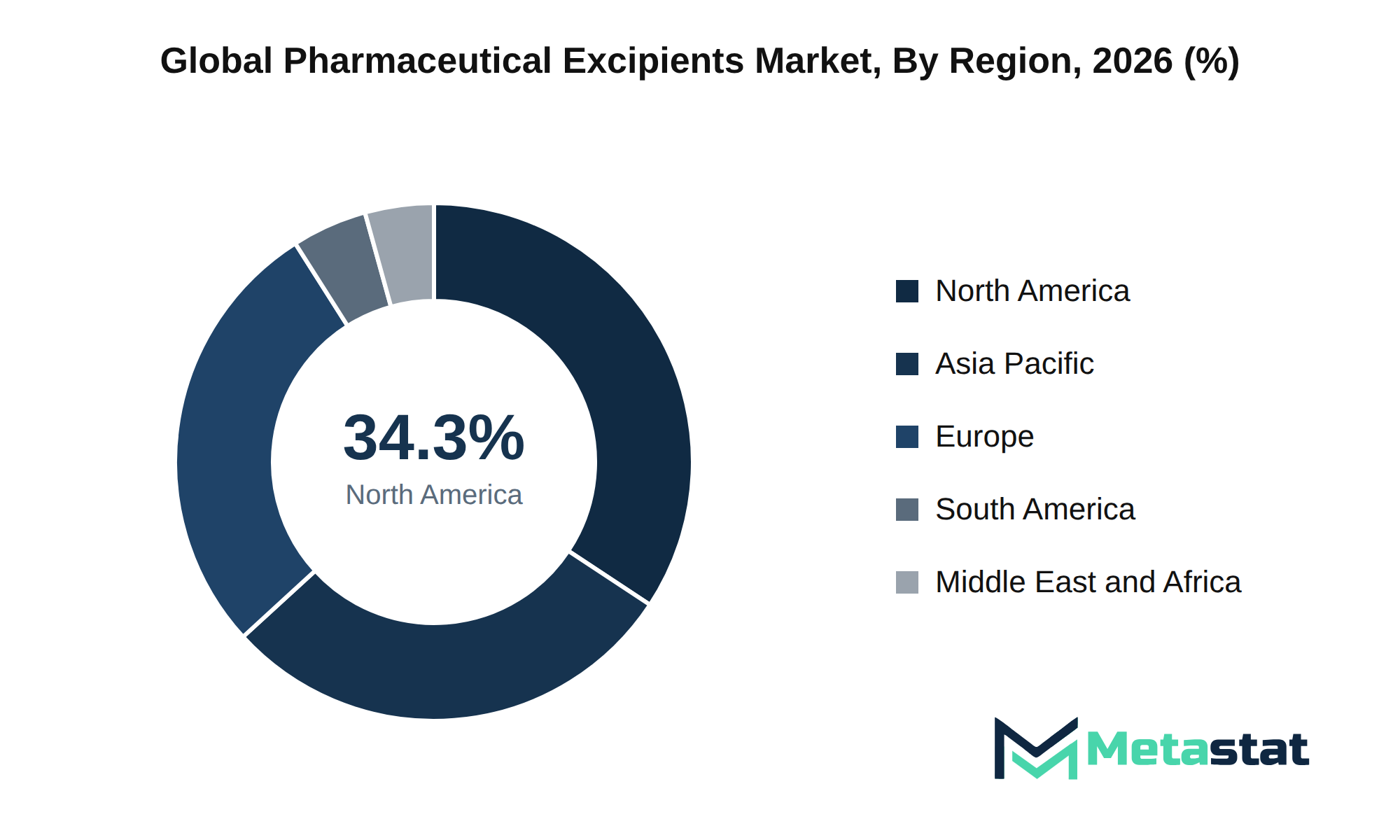
North America holds a share of the global Pharmaceutical Excipients market, accounting for 34.3% in 2025. The market is set to expand at a CAGR of 4.4% within the forecast period, reaching a market size (TAM) of USD 4.9 billion by the end of 2033. The presence of established pharmaceutical companies in the United States, Canada, and Mexico drives the demand for high-quality excipients tailored for various formulations.
Infrastructure modernization plays a critical role in enhancing manufacturing capabilities, enabling quicker production cycles and improved product quality. Regional supply chain regionalization and nearshoring initiatives contribute to cost efficiencies and responsiveness to market needs. Localized manufacturing densities support the rising demand for innovative excipients, particularly in biopharma and specialty drug markets.
Strategic entry barriers, including regulatory compliance and local mandates, influence the competitive landscape significantly. Domestic market participants continue to innovate and consolidate their positions, creating a robust environment for pharmaceutical excipients. An increasing focus on sustainable sourcing and environmentally friendly practices aligns with consumer expectations and drives market growth.
The regional competitive landscape reflects a dynamic relationship among established players and emerging companies. This scenario encourages collaboration and investment in research and development, leading to the introduction of novel excipients. Cultural nuances and regional B2B buying behaviors shape procurement strategies, further influencing the trajectory of the market.
In Europe, the Pharmaceutical Excipients market experiences significant growth, supported by strong demand for innovative drug formulations. Leading countries including Germany, France, and the UK play important roles in shaping market dynamics through substantial investments in pharmaceutical research and development. The increasing focus on high-quality excipients aligns with stringent regulatory standards, driving manufacturers to enhance their product offerings.
Emerging trends in sustainability and natural product sourcing contribute to the expansion of the market. The presence of established pharmaceutical companies alongside a growing number of biopharma startups creates a competitive environment that stimulates innovation. Localized manufacturing capabilities and supply chain regionalization strengthen the market's resilience against global disruptions.
With a share of 27.8% of the global market in 2025, Europe continues to attract foreign direct investment (FDI) flows aimed at enhancing local capabilities. The ongoing modernization of infrastructure supports the efficient distribution of pharmaceutical excipients, facilitating access to various segments within the market. While the region adapts to evolving consumer preferences and regulatory requirements, significant growth opportunities arise for stakeholders throughout the supply chain.
Asia Pacific represents a significant portion of the Pharmaceutical Excipients market, accounting for 28.9% of the global share in 2025. The region experiences growth driven by several factors, including increasing pharmaceutical manufacturing capacities and rising healthcare expenditures.
China, Japan, India, and South Korea are leading markets within the region, demonstrating high adoption rates of novel excipients. A shift toward innovative drug formulations, particularly in biopharmaceuticals and personalized medicine, increases demand for advanced excipients. Infrastructure modernization across these countries facilitates enhanced production capabilities and supply chain efficiencies.
Localized manufacturing initiatives and strategic entry barriers play crucial roles in shaping competitive dynamics within the market. The presence of established domestic players provides stability, while intensified competitive landscapes encourage investment in research and development. Cultural nuances reflect diverse procurement dynamics, influencing business-to-business buying behaviors and preference for specific excipient types.
Emerging markets in Southeast Asia exhibit underpenetrated territories, presenting growth opportunities for new entrants. Increased foreign direct investment flows into the region support the development of localized production facilities, improving alignment with regional regulatory frameworks and compliance mandates. This shift enhances market accessibility and promotes sustainable practices within manufacturing processes.
Overall, Asia Pacific's Pharmaceutical Excipients market stands poised for continuous expansion through incremental growth vectors, driven by innovation, investment, and strategic collaborations among key stakeholders.
The Pharmaceutical Excipients market in South America presents notable opportunities for growth, primarily driven by increasing pharmaceutical manufacturing activities in Brazil and Argentina. The region has begun to modernize its infrastructure, enhancing production capacities and enabling better access to high-quality excipients. Brazil, because the largest economy, leads the market with significant investments in healthcare and a growing demand for advanced pharmaceutical formulations.
Argentina contributes to market expansion through rising local pharmaceutical production and an increased focus on quality compliance. This focus aligns with global standards, facilitating market participants' entry and operations in the region. The Rest of South America continues to exhibit potential for excipient demand, particularly because countries enhance regulatory frameworks and local procurement practices.
Regional dynamics highlight the need for localized manufacturing and procurement strategies among suppliers to meet the unique demands of the market. The presence of domestic players, coupled with foreign direct investment, strengthens supply chains. Overall, the Pharmaceutical Excipients market in South America is poised for steady growth, driven by infrastructure developments and increased product innovation.
The Middle East and Africa region represents a smaller segment of the Pharmaceutical Excipients market, accounting for 4.3% of the global share in 2025. This market experiences growth driven by rising demand for pharmaceutical products and the expansion of local manufacturing capabilities in countries including Saudi Arabia and the UAE. Investments in healthcare infrastructure and modernization efforts enhance production efficiency and improve the quality of pharmaceutical formulations.
The presence of domestic market participants influences the competitive landscape, encouraging innovation and the adoption of advanced excipients. Collaboration between local players and international firms enhances the availability of high-quality excipients, supporting the development of new pharmaceutical formulations tailored to regional preferences.
South Africa's established pharmaceutical industry contributes to the market's growth, leveraging its expertise in producing various excipients. The combination of growing healthcare demands and an expanding base of localized manufacturing facilities positions the region for sustained growth in the Pharmaceutical Excipients market.
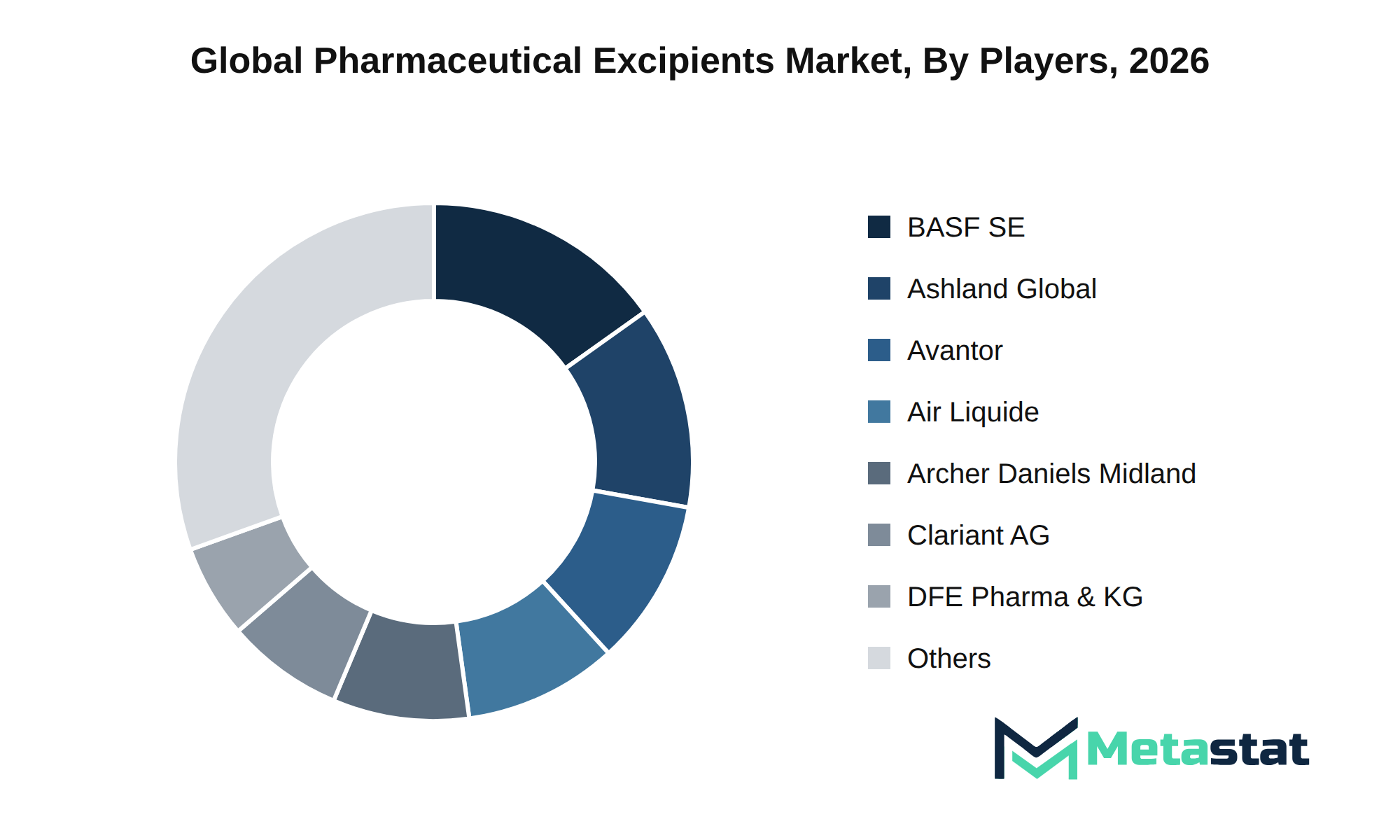
Market participants in the Pharmaceutical Excipients market engage in various strategies to maintain competitive advantages. Mergers and acquisitions contribute to strategic consolidation, allowing companies to enhance their product offerings and expand market reach. Notable players, including BASF SE and Dow Inc, invest in research and development to differentiate their products and build proprietary technology moats. This investment emphasizes the importance of innovation in maintaining market presence.
Strategic alliances and partnerships emerge because key tactics for companies seeking to leverage synergies and enhance their value chains. Collaborations among firms like Avantor, Inc. and Gattefossé strengthen supply chain dominance and enhance procurement leverage. These strategic behaviors facilitate the entry of participants into new markets while mitigating the threat of new entrants through established brand equity and customer retention strategies.
Companies deploy various pricing architectures that align with market dynamics. Competitive pricing enhances attractiveness to customers while ensuring profitability. The relationship of product differentiation and intellectual property portfolios contributes to the technological defensibility of businesses within the market. The future competitive outlook suggests continued emphasis on strategic growth vectors, enabling firms to navigate evolving market conditions effectively.
Market size is forecast to rise from USD 10.7 billion in 2025 to over USD 15.1 billion by 2033. The base case reflects growth at a 4.4% CAGR, driven by increasing demand for innovative excipients and advancements in pharmaceutical formulations. A bullish outlook anticipates accelerated growth due to significant investments in R&D, leading to the introduction of next-generation products and technologies. Conversely, a bearish case considers potential slowdowns from regulatory challenges and geopolitical uncertainties, which could impact supply chains and market dynamics.
Macroeconomic trends and structural shifts in consumer behavior influence the Pharmaceutical Excipients market, encouraging firms to adapt their strategies to meet evolving market needs. Strategic capital allocation and infrastructure commitments play a crucial role in supporting market growth, allowing companies to enhance production capacities and streamline operations. Compliance with regulatory requirements remains essential, driven by industries navigating imminent enforcement timelines, shaping future operational frameworks.
Investment in high-growth segments including plant-based and synthetic excipients presents emerging opportunities for market participants. The evolution of trade corridors and global supply chains further impacts the competitive landscape, compelling companies to reassess their sourcing strategies and operational efficiencies. Understanding these dynamics enables stakeholders to align their business models with market demands and regulatory expectations, ultimately driving sustainable growth in the Pharmaceutical Excipients market.
The report strategically identifies and profiles the key market players and analyses their core competencies in each sub-segment of the Pharmaceutical Excipients market.
Report Attributes | Details |
Study Period | 2021-2033 |
Base Year | 2025 |
Estimated Year | 2026 |
Forecast Period | 2026-2033 |
Historical Period | 2021-2025 |
Growth Rate | CAGR 4.4% from 2026 to 2033 |
Revenue Unit | USD billion |
Segmentation | By Functionality, Type, Formulation, Source, and Region |
By Region | North America (By Functionality, Type, Formulation, Source, and Country)
|
Europe (By Functionality, Type, Formulation, Source, and Country)
| |
Asia Pacific (By Functionality, Type, Formulation, Source, and Country)
| |
South America (By Functionality, Type, Formulation, Source, and Country)
| |
Middle East and Africa (By Functionality, Type, Formulation, Source, and Country)
|
Find answers to common questions about this report
The Pharmaceutical Excipients market size was valued at USD 10.7 billion in 2025, according to the Metastat Insights study.
The Pharmaceutical Excipients market is projected to grow at a CAGR of 4.4% during the forecast period from 2026 to 2033.
The North America Pharmaceutical Excipients market size is estimated to reach USD 4.9 billion by 2033.
Lactose-based excipients lead the Pharmaceutical Excipients market, with a projected value of USD 3.8 billion by 2033. This segment's growth reflects its significant role in various pharmaceutical applications.
Economic growth and favorable investment conditions drive the Pharmaceutical Excipients market by increasing healthcare spending and supporting pharmaceutical research and development. Demographic shifts, including an aging population, further increase demand for tailored pharmaceutical solutions, promoting innovation and expansion within the sector.
North America holds the dominant share of the Pharmaceutical Excipients market, with a value of USD 4.9 billion in 2033, representing 34.3% of the total market.
The Pharmaceutical Excipients market faces significant constraints from regulatory hurdles that complicate market entry and product approval processes. Stringent compliance requirements necessitate substantial investment in quality assurance, deterring smaller players and limiting innovation. Geopolitical instability and resource scarcity further exacerbate these challenges, impacting investment decisions and overall market growth.
Economic growth and favorable investment conditions drive product adoption in the Pharmaceutical Excipients market. Increased healthcare spending, along with advancements in technology and a focus on operational efficiency, enhances the demand for high-quality excipients, aligning with the evolving needs of the healthcare landscape.
The Pharmaceutical Excipients market is estimated to reach a valuation of USD 15.1 billion by 2033.
Key players in the Pharmaceutical Excipients market include ABITEC Corporation, Air Liquide SA, Archer Daniels Midland Company, Ashland Global Holdings Inc, BASF SE, Clariant AG, and Evonik Industries AG.
Choose Your License
Global Pharmaceutical Excipients Market
The analysts below cover Biotechnology research at Metastat Insights.
LEAD ANALYST
Utkarsh Khirodkar is a Lead Market Research Analyst at MetaStat Insight, specializing in market intelligence, technology sector assessments, and competitive strategy.

SENIOR RESEARCH ANALYST
Biotechnology · Food and Beverages · Medical Devices · Packaging
Snehal Pasalkar is a Research Analyst at MetaStat Insight, operating at the intersection of life sciences research, competitive strategy, and market intelligence.
Integrating zero-trust access controls across legacy electronic health record systems involves complex compliance overhead. Team produced an analysis that clearly separated identity governance and administration tools from privileged access management platforms. Their evaluation of HIPAA and GDPR compliance features across cloud native solutions gave our architecture group clear baseline criteria. The custom data request regarding biometric authentication adoption in hospital networks was returned promptly with clear documentation.
Evaluating calorific value requirements and air permit compliance across municipal waste facilities requires localized data. Metastat Insight structured their analysis around operational throughput capacity and feedstock composition variations in Latin America and Eastern Europe. Their competitive mapping of sorting equipment vendors helped clarify technology differences between optical separators and heavy media systems. The study provided an objective baseline during our capital expenditure reviews.
Decarbonizing industrial thermal processes hinges on refrigerant regulations and compressor efficiency limits. Metastat Insights delivered a thorough market analysis that evaluated natural refrigerants like CO2 and hydrocarbons against synthetic low-GWP alternatives. The breakdown of utility incentives and grid capacity constraints across key European manufacturing hubs offered valuable perspective. The follow-up conversation with their sector analysts addressed our specific questions on mechanical vapor recompression systems efficiently.
Explore related market intelligence reports worth reading alongside this one.