
LEAD ANALYST
Utkarsh Khirodkar is a Lead Market Research Analyst at MetaStat Insight, specializing in market intelligence, technology sector assessments, and competitive strategy.

Global Pure EPA Active Pharmaceutical Ingredient (API) Market Size, Share, By Formulation Type (Capsules, Tablets, Liquid Formulations, and Powder Formulations), By Application (Cardiovascular Disease, Mental Health Disorders, Inflammatory Disorders, and Others), By End User (Pharmaceutical Companies, Contract Manufacturing Organizations (CMOs), Research Institutes, and Biotechnology Companies), Industry Analysis, Growth, Trends, and Forecast, 2026-2033
Report ID
MSI-4770
Published
May, 2026
Pages
315 Pages
Format
Report Details
Choose Your License
Pure EPA Active Pharmaceutical Ingredient (API) Market
Global Pure EPA Active Pharmaceutical Ingredient (API) market size is valued at USD 358.9 million in 2025 and projected to grow at a CAGR of 10.9% during the forecast period, reaching USD 820.8 million by 2033.
North America held a 29.6% market share in 2025, with the U.S. leading regional demand.
The capsules segment accounted for a 57.2% market share in 2025.
Key trends driving growth: Growing prevalence of cardiovascular and metabolic disorders globally, Rising clinical adoption of omega-3–based prescription drugs.
Opportunities include expansion of algae-based and fermentation-derived EPA API production for sustainable supply chains.
Key insight: The Global Pure EPA Active Pharmaceutical Ingredient (API) Market is expanding steadily as demand rises for clinically validated omega-3 based therapies with high purity standards.
The Global Pure EPA Active Pharmaceutical Ingredient (API) Market has gained importance across pharmaceutical and nutraceutical supply chains owing to the increasing use of purified eicosapentaenoic acid in cardiovascular and triglyceride management products. Pure EPA APIs are valued for controlled potency, regulatory compliance, and suitability for premium finished formulations.
Manufacturers are focusing on molecular distillation, concentration technologies, oxidation control, and traceability systems to meet stringent quality benchmarks. Increased interest in preventive healthcare and evidence-backed lipid management solutions will support long-term growth of the Global Pure EPA Active Pharmaceutical Ingredient (API) Market.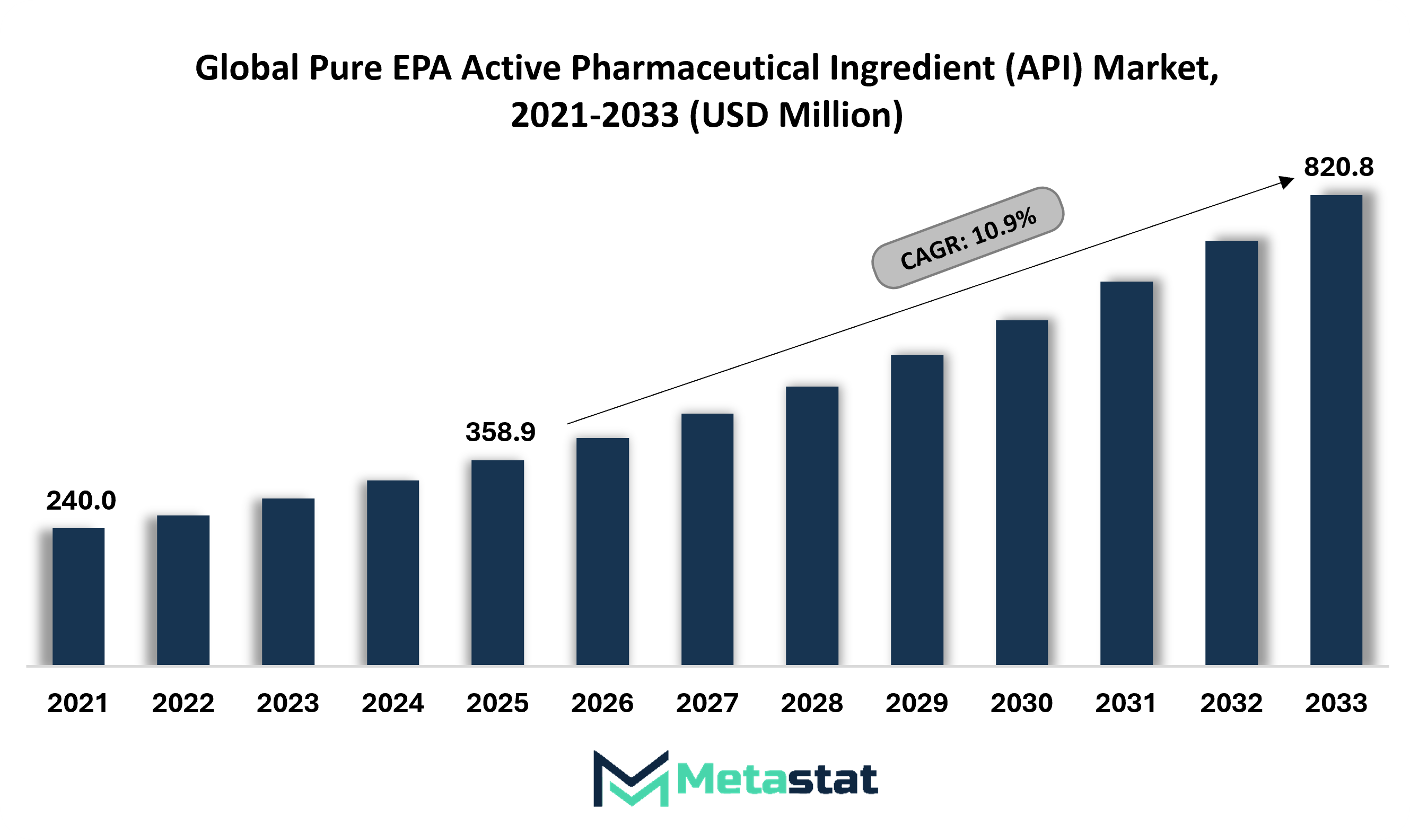
Growing prevalence of cardiovascular and metabolic disorders globally.
The Global Pure EPA Active Pharmaceutical Ingredient (API) market is gaining momentum from the rising prevalence of cardiovascular disease, obesity, diabetes, hypertension, lipid imbalance, aging populations, sedentary lifestyles, processed food consumption, and preventive healthcare adoption. Hospitals, specialty clinics, and nutraceutical-linked prescription channels will support stronger sourcing activity across major healthcare economies.
Rising clinical adoption of omega-3–based prescription drugs (e.g., EPA ethyl ester therapies)
Prescription demand for omega-3 formulations continues to increase with stronger physician confidence, improved outcome data, post-treatment cardiac care, triglyceride management, and wider formulary acceptance. EPA ethyl ester therapies create reliable procurement cycles for API suppliers. Future launches, lifecycle extensions, and branded and generic entries will increase production contracts.
High production and purification costs for achieving pharmaceutical-grade EPA purity
Advanced purification requires complex distillation, concentration, oxidation control, contamination testing, and cold-chain handling. Premium marine inputs, energy use, solvent recovery, and quality validation increase overall production expenditure. Margin pressure may affect smaller manufacturers, making cost-efficient process engineering crucial for broader competitive participation.
Strict regulatory approvals and compliance requirements (FDA/EMA GMP standards)
Regulatory pathways require validated facilities, batch traceability, impurity control, documentation accuracy, stability studies, and frequent audits under FDA and EMA GMP standards. Approval delays may slow commercialization schedules. Continuous investment in compliance systems, trained workforce, and digital quality monitoring will remain essential.
Expansion of algae-based and fermentation-derived EPA API production for sustainable supply chains
Algae cultivation and precision fermentation are opening cleaner sourcing routes with reduced dependence on wild fish stocks. Controlled production supports stable purity levels, scalable output, and environmental goals. Pharmaceutical buyers seeking resilient supply chains will encourage partnerships, capacity additions, and regional manufacturing hubs over the coming years.
The Global Pure EPA Active Pharmaceutical Ingredient (API) market is segmented based on formulation type, application, and end user.
Capsules segment is valued at USD 227.3 million in 2026 and is projected to reach USD 444.9 million by 2033, at a CAGR of 10.1% during the forecast period.
Capsules maintain strong future potential owing to dose accuracy, odor control, and improved patient convenience. Advanced shell materials, stability coatings, and targeted release systems may increase adoption across prescription nutrition-linked therapies. Manufacturing lines will gain higher efficiency through automated filling, traceability systems, and stricter quality validation across regulated markets.
Tablets segment is valued at USD 84.5 million in 2026 and is projected to reach USD 184.0 million by 2033, at a CAGR of 11.8% during the forecast period.
Tablets offer a cost-efficient pathway for large-volume manufacturing across healthcare systems. Future growth may rise from layered tablet formats, sustained-release designs, and simpler packaging for retail pharmacies. Better shelf life, shipping convenience, and batch consistency may support broader commercial adoption across expanding treatment categories.
Liquid Formulations segment is valued at USD 43.1 million in 2026 and is projected to reach USD 83.0 million by 2033, at a CAGR of 9.8% during the forecast period.
Liquid formulations may attract rising demand where swallowing difficulty limits solid dosage adoption. Pediatric care, geriatric care, and hospital use will support growth. Future development may include taste masking, oxidation control, precision droppers, and ready-to-use packs designed for safer dosing and faster administration workflows.
Powder Formulations segment is valued at USD 42.8 million in 2026 and is projected to reach USD 108.8 million by 2033, at a CAGR of 14.2% during the forecast period.
Powder formulations offer flexibility for sachets, reconstitution packs, and customized dosage preparation. Future industry movement will focus on moisture-resistant packaging, improved solubility technologies, and combination therapy blending. Bulk logistics efficiency and longer storage stability may create value for distributors, clinics, and production facilities worldwide.
Cardiovascular Disease segment is projected to reach USD 562.9 million by 2033, at a CAGR of 10.3% during the forecast period.
Cardiovascular disease treatment remains a major demand center owing to increasing lifestyle risk factors and aging populations. Future clinical strategies may favor preventive lipid management, supportive nutrition-based therapies, and integrated chronic care programs. Strong clinical awareness will maintain consistent purchasing activity across hospitals and branded medication channels.
Mental Health Disorders segment is projected to reach USD 83.2 million by 2033, at a CAGR of 13.5% during the forecast period.
Mental health disorders may open new opportunities through research on omega-related neurological support and emotional well-being pathways. Future research may improve acceptance in adjunct therapy programs. Adoption may rise through outpatient care, wellness prescriptions, and broader awareness of brain health management among urban populations.
Inflammatory Disorders segment is projected to reach USD 107.6 million by 2033, at a CAGR of 12.1% during the forecast period.
Inflammatory disorders create steady need for formulations linked with response modulation and long-term symptom support. Future expansion may come from arthritis care, skin conditions, and recovery-focused therapies. Improved evidence generation, physician confidence, and patient adherence programs may support stronger market penetration globally.
Others segment is projected to reach USD 67.1 million by 2033, at a CAGR of 11.1% during the forecast period.
Other applications may include eye health, metabolic support, immune balance, and specialty wellness therapies. Future business development may emerge from niche prescription applications and customized healthcare models. Smaller categories often emerge as innovation hubs where premium pricing and targeted branding create attractive revenue streams.
Pharmaceutical Companies segment is projected to reach USD 403.8 million by 2033.
Pharmaceutical companies hold a critical position through formulation development, regulatory filing, branding, and global distribution strength. Future investment may target cleaner sourcing, advanced purification systems, and portfolio diversification. Strong clinical networks and commercialization capabilities will maintain leadership positions within competitive healthcare environments.
Contract Manufacturing Organizations (CMOs) segment is projected to reach USD 219.8 million by 2033.
Contract Manufacturing Organizations (CMOs) may gain larger shares through outsourcing trends and flexible manufacturing capacity. Future clients will seek faster scale-up, validated compliance systems, and lower capital burden. Specialized plants with modern analytics may secure long-term supply agreements across multinational healthcare supply chains.
Research Institutes segment is projected to reach USD 67.1 million by 2033.
Research institutes support pipeline expansion through clinical studies, mechanism evaluation, and new therapeutic pathway mapping. Future relevance may rise with government grants, academic partnerships, and disease-focused innovation facilities. Published evidence often shapes scientific confidence, regulatory progress, and next-generation product development strategies.
Biotechnology Companies segment is projected to reach USD 130.0 million by 2033.
Biotechnology companies may unlock advanced opportunities through novel delivery science, bioavailability enhancement, and precision health solutions. Future business models may include strategic licensing, co-development partnerships, and targeted therapy applications. Agile innovation culture often accelerates movement from laboratory discovery toward commercial healthcare adoption.
Based on geography, the Global Pure EPA Active Pharmaceutical Ingredient (API) market is divided into North America, Europe, Asia-Pacific, South America, Middle East, and Africa.
North America benefits from strong branded prescription demand, advanced regulatory structures, and established omega-3 product awareness.
Europe will represent a significant regional market for Pure EPA Active Pharmaceutical Ingredient (API), supported by strong pharmaceutical manufacturing standards, mature prescription drug channels, and rising clinical focus on lipid management and cardiovascular disease prevention.
Asia Pacific offers strong opportunities through expanding pharmaceutical manufacturing, rising preventive healthcare spending, and increasing nutraceutical demand.
Japan, China, South Korea, and India remain vital markets owing to supplement consumption growth and manufacturing expansion.
Across the Middle East, Africa, and South America, demand is supported by improving healthcare access, rising wellness product adoption, and broader distribution of omega-3 treatments.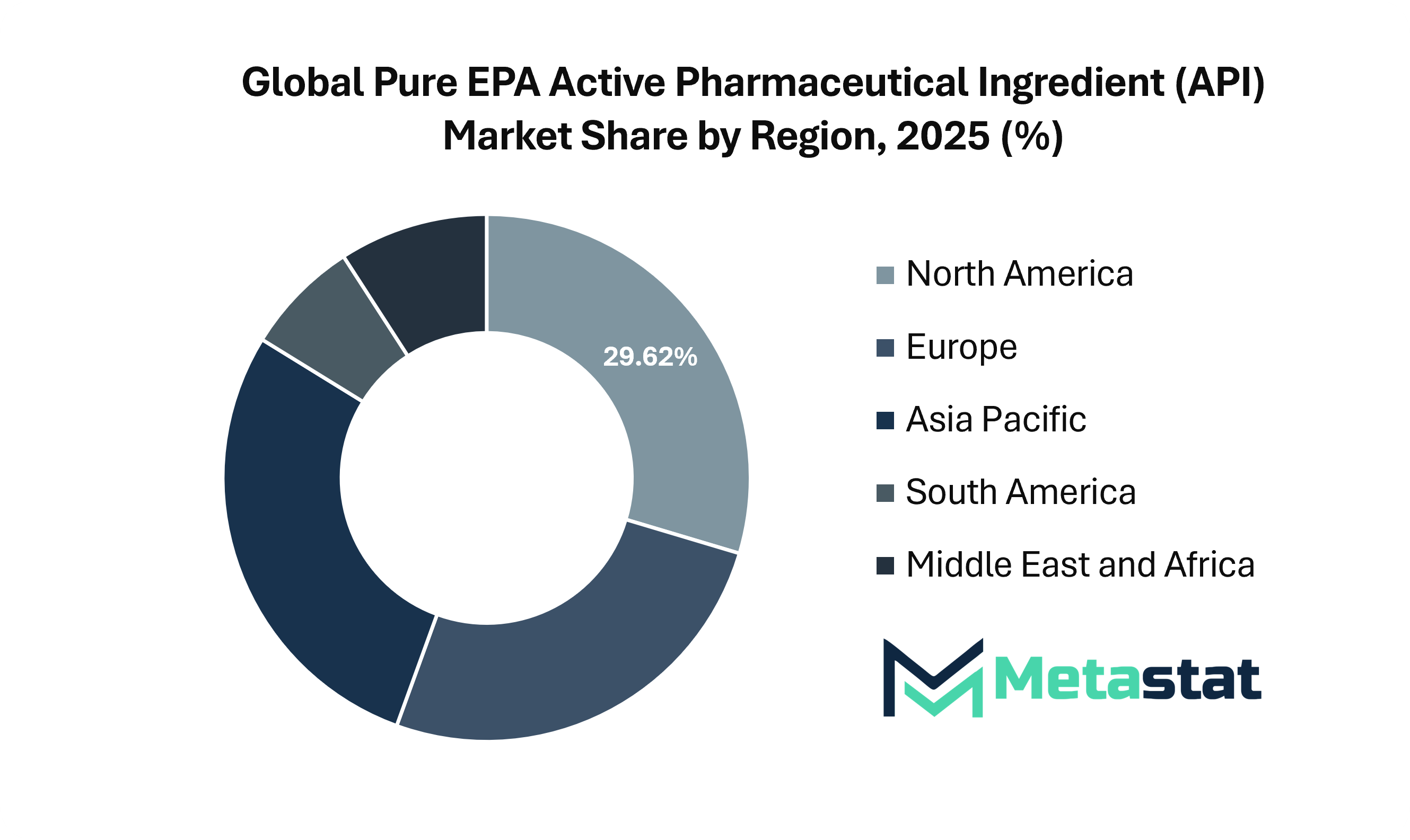
The Global Pure EPA Active Pharmaceutical Ingredient (API) Market continues to gain attention as healthcare manufacturers seek cleaner omega-based inputs for medicines and specialty formulations. Adoption rises as patients and physicians look for trusted sources with consistent purity, safety, and traceability. Companies active in this area focus on refining processes, raw material sourcing, and regulatory requirements that support wider use. Growth is linked with aging populations, preventive care trends, and interest in heart health products. Buyers often evaluate supply reliability, pricing stability, and technical service before selecting long-term manufacturing partners for stable commercial programs across global healthcare sectors.
Key industry participants include BASF SE, KD Pharma Group SA, Axplora Group GmbH, Nissui Corporation, Huatai, Solutex, Epax Norway AS, KinOmega Biotech, and Bizen Chemical Co., Ltd. Each company brings a distinct strength, including marine sourcing links, purification know-how, formulation support, or large-scale output capacity. Some firms build value through research partnerships, while others compete through efficient production and reliable delivery schedules. Their presence helps buyers select suppliers that match quality goals, volume needs, and regional approval requirements across mature and developing healthcare markets.
Competition in this field will center on purity levels, documentation quality, and secure access to raw inputs. Producers maintaining strict testing systems may earn stronger trust from drug makers facing close regulatory audits. Price remains important, although low cost alone rarely wins contracts when patient safety is involved. Many buyers prefer suppliers that can scale output quickly during demand fluctuations without reducing standards. Investments in cleaner extraction techniques, waste control, and energy efficiency may improve margins while supporting corporate responsibility goals that influence purchasing decisions across global healthcare networks.
Looking ahead, market progress will depend on regulatory clarity, steady fisheries management, and continued clinical interest in purified omega ingredients. Firms that communicate transparently, meet filing timelines, and maintain reliable inventories may strengthen client loyalty. Expansion into new treatment uses may create additional demand, particularly in markets where preventive health spending is rising. At the same time, supply shocks or raw material fluctuations may strain margins and delay launches. Even with such risks, disciplined manufacturers and responsive partners are positioned to capture long-term opportunities in a market that values trust, quality, and supply reliability.
Market size is forecast to rise from USD 358.9 million in 2025 to over USD 820.8 million by 2033.
The Global Pure EPA Active Pharmaceutical Ingredient (API) Market is expected to benefit from rising chronic disease management needs, increasing adoption of evidence-based nutraceuticals, and broader pharmaceutical innovation using purified lipids. Future adoption will favor sustainable sources, ultra-high-purity grades, and traceable GMP-compliant supply systems.
This research report categorizes the Pure EPA Active Pharmaceutical Ingredient (API) market based on key segments and regions, forecasts revenue growth, and analyzes trends across each submarket. The report analyzes the key growth drivers, opportunities, and challenges influencing the Pure EPA Active Pharmaceutical Ingredient (API) market. Recent market developments and competitive strategies such as expansions, product launches, partnerships, mergers, and acquisitions have been included to define the competitive landscape of the market.
The report strategically identifies and profiles key market players and analyzes their core competencies across each sub-segment of the Pure EPA Active Pharmaceutical Ingredient (API) market.
|
Report Attributes |
Details |
|
Study Period |
2021-2033 |
|
Base Year |
2025 |
|
Estimated Year |
2026 |
|
Forecast Period |
2026-2033 |
|
Historical Period |
2021-2025 |
|
Growth Rate |
CAGR 10.9% from 2026 to 2033 |
|
Revenue Unit |
USD million |
|
Sales Volume Unit |
Kilotons |
|
Segmentation |
By Formulation Type, Application, End User, and Region |
|
By Region |
North America (By Formulation Type, Application, End User, and Country)
|
|
Europe (By Formulation Type, Application, End User, and Country)
|
|
|
Asia Pacific (By Formulation Type, Application, End User, and Country)
|
|
|
South America (By Formulation Type, Application, End User, and Country)
|
|
|
Middle East and Africa (By Formulation Type, Application, End User, and Country)
|
Find answers to common questions about this report
Top players operating in the Pure EPA Active Pharmaceutical Ingredient (API) industry includes BASF SE, KD Pharma Group SA, Axplora Group GmbH, Nissui Corporation, and Huatai.
North America region dominates the market.
Global Pure EPA Active Pharmaceutical Ingredient (API) market is estimated to reach USD 820.8 million by 2033.
The Capsules is the leading type of segment in the Global market.
Growing prevalence of cardiovascular and metabolic disorders globally and rising clinical adoption of omega-3–based prescription drugs are key driving factors, boosting the market.
The Metastat Insights analysis shows that the North America Pure EPA Active Pharmaceutical Ingredient (API) market size is estimated to be USD 230.7 million by 2033.
The Global Pure EPA Active Pharmaceutical Ingredient (API) market is expected to grow at a CAGR of 10.9% over the forecast period (2026-2033).
The Metastat Insights study shows that the Global Pure EPA Active Pharmaceutical Ingredient (API) market size was USD 358.9 million in 2025.
The analysts below cover Healthcare research at Metastat Insights.
LEAD ANALYST
Utkarsh Khirodkar is a Lead Market Research Analyst at MetaStat Insight, specializing in market intelligence, technology sector assessments, and competitive strategy.

LEAD PRINCIPAL ANALYST, PHARMA AND HEALTHCARE
Food and Beverages · Healthcare · Healthcare IT · Medical Devices
Ajay Devgire is the Lead Healthcare Analyst at MetaStat Insight, leading strategic research and market intelligence initiatives across the global healthcare domain.
Scaling antibody-drug conjugate manufacturing hinges on contract manufacturing availability for high-potency active ingredients. The MetaStat Insight analysis looked closely at global cleanroom slot constraints, bioconjugation batch failure rates, and supply chain redundancies between the US, Europe, and India. The supplier capability matrix proved genuinely useful for our team when mapping secondary source options across our clinical pipeline.
Floating offshore wind feasibility relies heavily on specialized installation vessel availability and port crane limits, which most broad renewable energy forecasts ignore. The report delivered a thorough analysis of dry dock capacity, mooring chain supply constraints, and raw material pricing trends for deepwater anchor installations. It served as a solid independent sanity check for our offshore project capital expenditure assumptions.
Assessing commercial microgrid software adoption requires looking past top-level installation numbers and examining utility interconnection queues. The research provided verifiable data on average permitting timelines, tariff structures, and battery storage integration costs across regional utility territories. That grounded perspective was valuable for our team when building five-year demand projections for industrial microgrid controllers.
Explore related market intelligence reports worth reading alongside this one.
Starting from
$2950