
LEAD ANALYST
Utkarsh Khirodkar is a Lead Market Research Analyst at MetaStat Insight, specializing in market intelligence, technology sector assessments, and competitive strategy.

Global Occupational Medicine Market Size, Share, By Service Type (Preventive Occupational Health Services, Occupational Health Screening & Medical Examinations, Health Surveillance, Work-Related Injury & Illness Management, Fitness-for-Work & Return-to-Work Services, Occupational Rehabilitation, Drug & Alcohol Testing, Risk Assessment & Medical Advisory, Workplace Wellness & Mental Health and Others), By Delivery Model (On-Site Clinics, Near-Site Clinics, Dedicated Occupational Health Centers, Mobile Services, Virtual & Telehealth and Hybrid Services), By End-User Industry (Manufacturing, Construction, Healthcare & Life Sciences, Energy, Utilities & Mining, Transportation & Logistics, Government & Public Sector, IT & Professional Services, Retail & Consumer Services, Hospitality & Food Services and Others), By Organization Size (Small & Medium-Sized Enterprises, Large Enterprises, Multinational Corporations and Public-Sector Organizations), Industry Analysis, Growth, Trends, and Forecast, 2026-2033
Report ID
MSI-5106
Published
August, 2026
Updated
Pages
250 Pages
Format
Historical
Base year
Forecast
Forecast period
Report Details
Choose Your License
Global Occupational Medicine Market
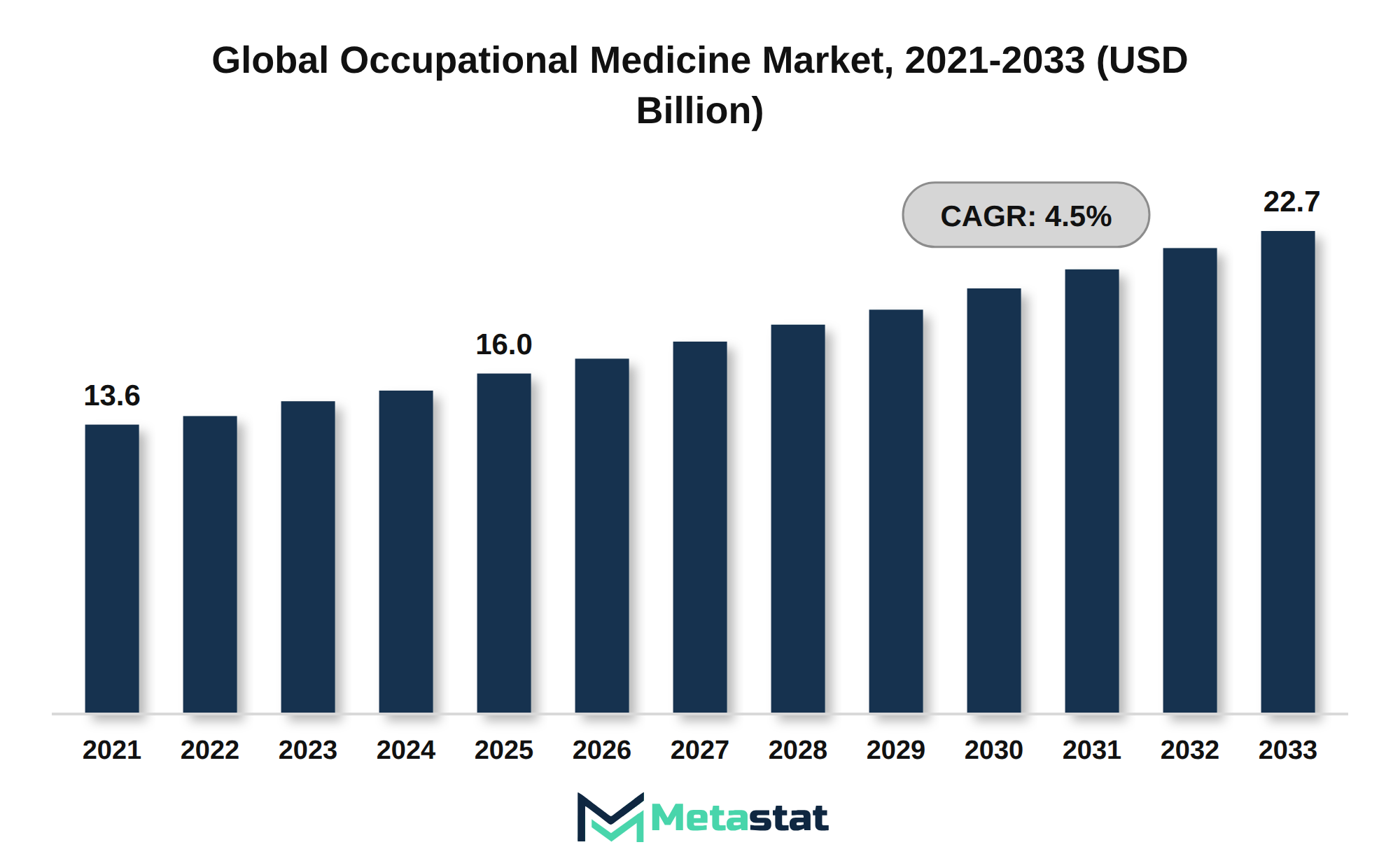
The global Occupational Medicine market was valued at USD 16 billion in 2025 and is projected to reach USD 22.7 billion by 2033, growing at a CAGR of 4.5% over the forecast period.
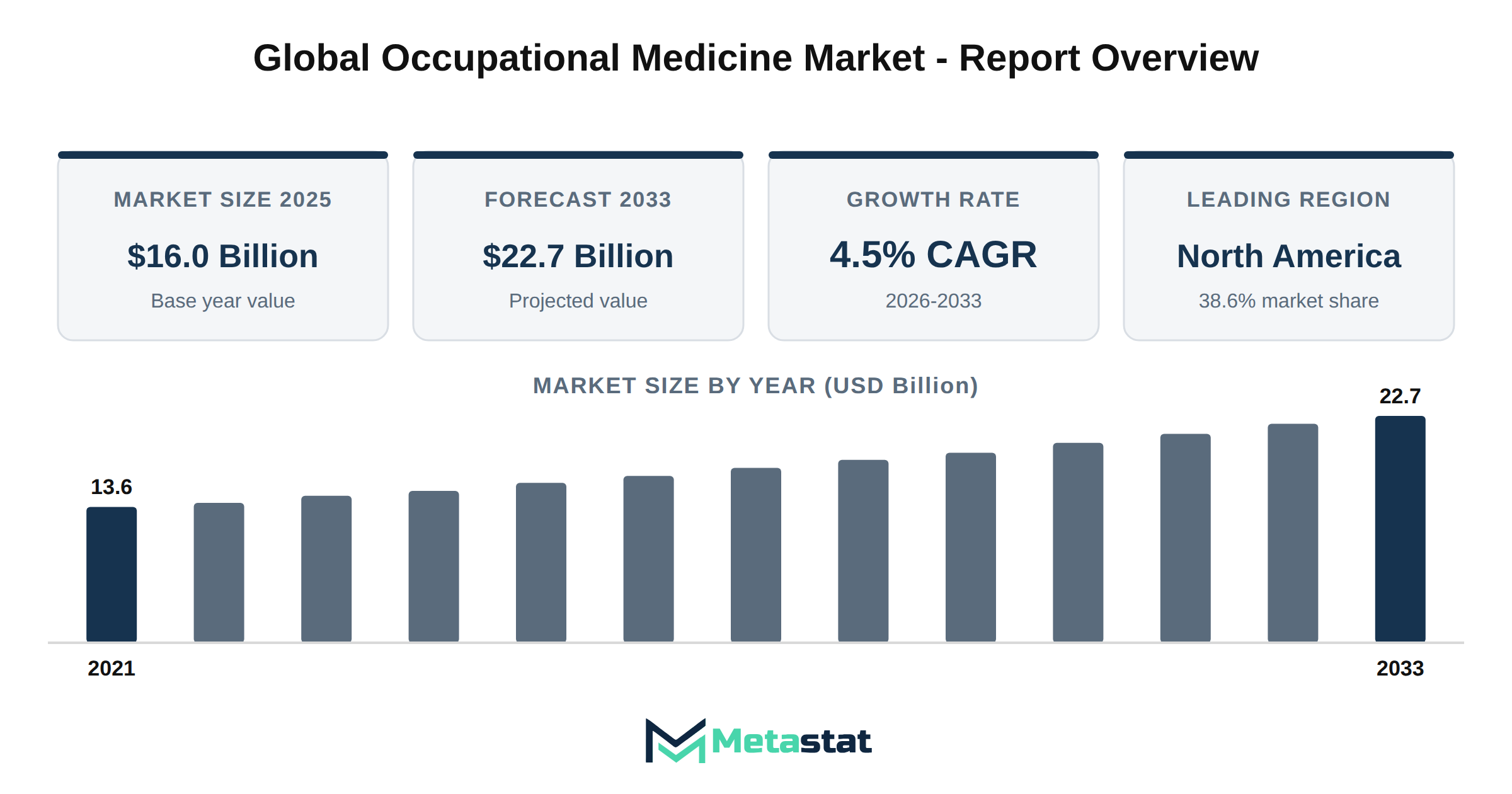
The Occupational Medicine market reached a value of USD 16 billion in 2025, reflecting steady growth from USD 13.6 billion in 2021. This upward trajectory is projected to continue, with an estimated market value of USD 22.7 billion by 2033, representing a compound annual growth rate (CAGR) of 4.5%. The growth of the market is driven by several factors, including increased awareness of workplace health and safety, regulatory compliance demands, and the necessity for organizations to create healthy work environments.
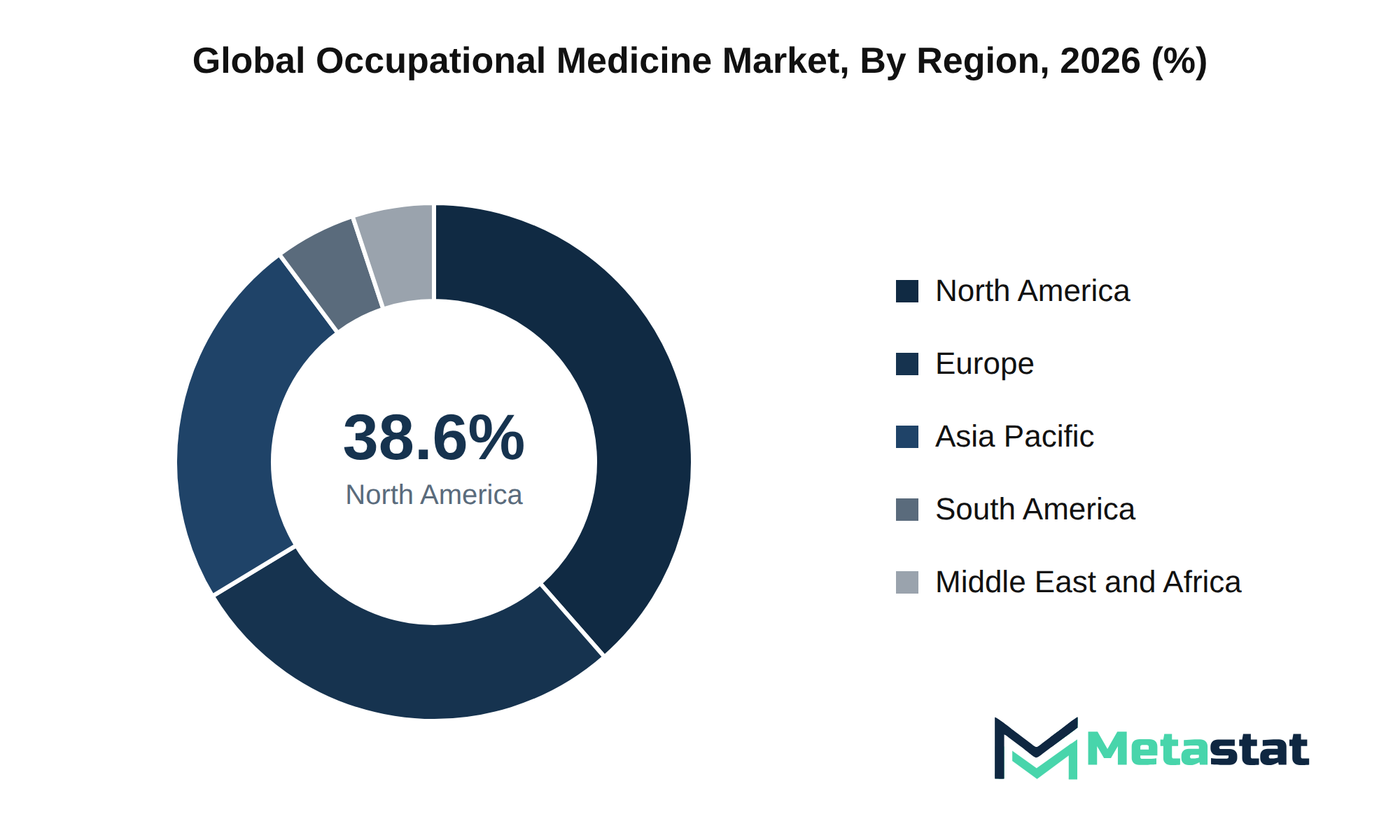
North America holds the largest market share at 38.6%, followed by Europe at 27.8% and Asia Pacific at 23.5%. The North American market is anticipated to reach USD 8 billion by 2033, maintaining its position because a leader in the Occupational Medicine landscape. The driving forces in this region include stringent health regulations and a growing emphasis on employee wellness programs.
Across various service types, Preventive Occupational Health Services will experience growth from USD 4.1 billion in 2026 to USD 5.4 billion by 2033, with a CAGR of 3.8%. Occupational Health Screening & Medical Examinations are expected to contribute significantly, reaching USD 3.1 billion by 2033, supported by ongoing health monitoring requirements.
The delivery model segment indicates a shift towards On-Site Clinics, projected to grow from USD 7.4 billion in 2026 to USD 9.2 billion by 2033 at a CAGR of 3.2%. This trend highlights organizations' preference for convenient access to healthcare services, enhancing the overall employee experience and productivity.
Within the end-user industries, manufacturing and construction sectors are substantial drivers. In manufacturing, the market size is set to increase from USD 3.9 billion in 2026 to USD 5 billion by 2033, reflecting a CAGR of 3.4%. The construction industry is projected to achieve USD 4.1 billion by 2033, benefiting from enhanced focus on occupational safety and health standards.
The Occupational Medicine market experiences significant influence from regulatory compliance and standards, which shape operational practices across various industries. Adherence to these regulations ensures that organizations maintain a safe and healthy work environment, ultimately promoting employee well-being and productivity. These frameworks establish guidelines for occupational health services, emphasizing the importance of risk assessment and management in workplace settings.
The ongoing disruption within the market highlights the imperative for innovation in service delivery and healthcare solutions. Research and development trajectories focus on enhancing service efficiency and effectiveness, particularly in preventive occupational health services and medical examinations. This focus on innovation drives the market forward, attracting investment and creating competitive advantages among service providers.
Next-generation innovations, including virtual and telehealth services, support the evolution of the Occupational Medicine market by expanding access to care. These advancements facilitate timely health assessments and interventions, catering to diverse end-user industries including manufacturing and construction. Such innovations contribute to improved health outcomes and reduced costs for organizations.
Sustainable transformation across the market emphasizes the integration of environmentally responsible practices within occupational health services. This shift aligns with global decarbonization efforts and the circular economy, prompting organizations to adopt eco-friendly approaches in their health and safety protocols. Sustainability becomes a core corporate imperative, with organizations recognizing its value in enhancing their reputation and operational efficiency.
The supply chain landscape within the Occupational Medicine market reflects a network of service providers, healthcare professionals, and regulatory bodies. Logistics architecture ensures timely services, allowing organizations to respond effectively to health and safety needs. Efficient sourcing strategies enhance service delivery and contribute to overall market growth.
Market fragmentation presents both challenges and opportunities within the Occupational Medicine landscape. Numerous players operate across various segments, creating a competitive environment that drives innovation and service quality. Mergers and acquisitions dynamics influence market consolidation, enabling companies to expand their service offerings and geographic reach.
Capital allocation trends indicate a focus on infrastructure investments aimed at enhancing service accessibility and quality. Companies prioritize investments in technology and facility upgrades, ensuring they remain competitive in a changing market. This strategic allocation of resources supports long-term growth and positions organizations for future success.
The strategic outlook for the Occupational Medicine market emphasizes the importance of proactive health management and employee wellness initiatives. By prioritizing these areas, organizations enhance workforce productivity and mitigate occupational health risks. High-value recommendations for stakeholders include investing in innovative health solutions and encouraging collaboration across the value chain to maximize impact.
Recent macro-economic conditions significantly influence the Occupational Medicine market. Increased GDP growth creates favorable environments for capital investment, allowing both public and private sectors to enhance their healthcare spending. While organizations expand, attention to employee health and wellness rises, prompting higher demand for occupational health services. This trend particularly benefits industries with strict health and safety requirements, including manufacturing and construction.
Demographic shifts, including an aging workforce, increase the necessity for comprehensive occupational health programs. With a growing focus on worker safety, organizations invest in preventative services and health surveillance. These elements integrate into broader strategies aimed at improving operational productivity and reducing costs associated with workplace injuries and illnesses. Overall, the emphasis on health optimization contributes to the market's anticipated growth through 2033.
The Occupational Medicine market experiences growth driven by advancements in digital transformation. Organizations increasingly adopt automation and artificial intelligence technologies, which streamline processes and improve the efficiency of service delivery. This shift enables healthcare providers to offer more effective preventive occupational health services and health surveillance, ultimately leading to enhanced patient outcomes.
Technological integration allows for the digitization of legacy processes, promoting faster and more accurate occupational health screening and medical examinations. Companies capitalizing on these innovations reduce operational costs while improving service accessibility. Increased digitization facilitates better data management and analytics, allowing firms to tailor services to meet the evolving needs of clients and address emerging health challenges.
The ongoing trend of digital transformation in the Occupational Medicine market is expected to contribute positively to the overall growth trajectory, driven by organizations enhancing their capabilities and adapting to changing consumer behaviors. Investments in advanced technologies position healthcare providers to respond effectively to market demands, creating a competitive landscape that prioritizes quality, efficiency, and patient satisfaction.
Increased regulatory compliance challenges present a significant barrier to the Occupational Medicine market. Stringent regulations surrounding health and safety standards require organizations to invest heavily in compliance measures, diverting resources away from other operational areas. Small and medium-sized enterprises face heightened pressure to adhere to these regulations, often lacking the financial and human capital to do so effectively. This situation results in higher operational costs and contributes to slower market adoption among these businesses.
Legal mandates impose additional burdens on employers, necessitating comprehensive occupational health programs that are expensive and complex to implement. The market experiences a varied response based on organizational size, with larger enterprises more capable of absorbing these costs due to greater resources and established frameworks. In contrast, smaller organizations struggle with the financial implications of compliance, leading to potential gaps in occupational health services.
Macroeconomic pressures, including inflationary trends, further exacerbate these challenges. Rising costs of goods and services impact the overall budget allocation for occupational health initiatives. Consequently, businesses deprioritize investments in occupational medicine, hindering advancements in health services and technology adoption. Slower downstream demand in certain sectors contributes to a reluctant approach toward expanding occupational health services.
Geopolitical instability and supply chain disruptions introduce uncertainty that affects operational planning. Organizations frequently reassess their commitments to occupational health services due to these external pressures, potentially leading to delays in service deployment. The combination of these factors creates a complex environment where adherence to compliance requirements competes with broader economic considerations, limiting overall growth in the market.
The Occupational Medicine market faces significant challenges due to geopolitical fragmentation, which leads to trade deficits and tariff friction. These factors disrupt supply chains, causing instability that affects both product availability and pricing strategies. Organizations navigate complex regulatory environments that vary across regions, complicating compliance efforts and increasing operational overhead.
Technological disruptions contribute to these challenges, with rapid advancements requiring organizations to adapt without established frameworks for integration. Interoperability friction among diverse technologies further limits the efficiency of occupational health services, leading to increased costs and resource allocation issues. This complexity hinders overall market growth, because firms struggle to meet evolving demands while maintaining compliance with tightening global standards.
Rising input costs present another significant challenge for the market. Fluctuations in feedstock prices and component volatility create pressures on profit margins, forcing companies to reassess pricing models. Workforce skill gaps and talent retention pressures compound these issues, because organizations seek to maintain a skilled labor force amid changing demands in occupational health services.
Infrastructure gaps and retrofitting barriers impede progress within the market. Companies encounter difficulties when implementing new technologies and practices, leading to potential delays and increased costs. Intellectual property protection deficits and cybersecurity risks further threaten the integrity of operations, creating vulnerabilities that impact overall market performance.
The combination of these factors creates a challenging environment for the Occupational Medicine market, where navigating geopolitical issues and adapting to technological changes are essential for sustained growth and profitability.
The Occupational Medicine market experiences significant opportunities driven by emerging regional demands. Regions including North America and Europe exhibit increasing awareness of employee health, leading to higher demand for preventive occupational health services. With anticipated growth in these areas, businesses focus on enhancing their workforce's health, thereby increasing investments in occupational medicine solutions.
Infrastructure modernization supports market expansion. While companies upgrade facilities and implement new health and safety protocols, the demand for occupational health services rises. Enhanced infrastructure supports better health surveillance and occupational health screening, promoting improved employee well-being and productivity.
Geographical expansion presents another market opportunity, particularly in developing regions. Rapid urbanization in Asia Pacific and South America creates a growing workforce that requires comprehensive occupational health services, driving demand for innovative health solutions tailored to local needs.
Technological disruptions and digital transformation significantly enhance service delivery in the market. The adoption of telehealth and mobile health services improves access to occupational medicine, allowing organizations to provide timely medical examinations and health consultations. This shift facilitates better health management in various industries, including manufacturing and construction.
Sustainability imperatives influence the market landscape. Companies increasingly prioritize eco-friendly practices and ESG-driven alignments, seeking occupational health solutions that adhere to sustainable principles. This trend drives demand for health services that incorporate green transformations, promoting employee health and environmental responsibility.
Strategic consolidation through mergers and acquisitions strengthens the competitive environment in the Occupational Medicine market. Companies that expand their service offerings through partnerships enhance their market presence and diversify their portfolio, enabling greater access to niche applications and specialized health services.
Value-chain optimization and process automation enhance operational yield maximization. Organizations adopting these strategies provide more efficient occupational health services, ultimately leading to reduced costs and improved service quality. This ongoing evolution positions the market for sustained growth throughout the forecast period.
The Global Occupational Medicine market is segmented based on Service Type, Delivery Model, End-User Industry, and Organization Size.
Valued at USD 4.1 billion in 2026, the Preventive Occupational Health Services segment is projected to reach USD 5.4 billion by 2033, reflecting a compound annual growth rate (CAGR) of 3.8% during the forecast period. Primary demand drivers for this segment include heightened awareness of employee health and wellness, coupled with increasing regulatory requirements for workplace safety. Adoption of preventive health measures by organizations addresses potential health risks, ensuring a healthier workforce and reducing absenteeism.
Expansion catalysts include advancements in technology, which facilitate innovative solutions in health assessments and monitoring. The growing integration of digital health tools supports more effective preventive practices. End-user dynamics show a strong focus on health surveillance and routine examinations, enabling prompt worker interventions and promoting a culture of safety. The regulatory landscape encourages investments in preventive services, aligning with corporate responsibility initiatives.
Consumption shifts reflect a rising preference for proactive health management rather than reactive measures. Organizations increasingly prioritize preventive services to mitigate future healthcare costs and enhance employee productivity. Cost structures in this segment benefit from long-term savings associated with reduced injury-related expenses. Pricing volatility remains manageable due to competitive offerings and value-driven services, ensuring margins remain stable.
This segment's resilience is supported by strategic opportunities, particularly in sectors like manufacturing and construction where workplace hazards are prevalent. Capital investment outlook is favorable, driven by the need for comprehensive employee health strategies in the Occupational Medicine market. This ultimately enhances service delivery and expands market reach.
Occupational Health Screening & Medical Examinations segment is estimated to reach USD 3.1 billion by 2033, at a CAGR of 4.3% during the forecast period. Demand for this segment aligns with the broader trend in the Occupational Medicine market, emphasizing the importance of employee health and wellness initiatives. An increasing focus on preventive healthcare and the need for routine medical check-ups contribute to the growing adoption of these services.
Regulatory compliance remains a significant driver for the sector. Employers seek to meet workplace safety and health standards. This increasing emphasis on compliance encourages organizations to implement regular health screenings to mitigate risks associated with workplace injuries and illnesses. Consequently, employers in various industries, including manufacturing and construction, actively pursue these examinations to ensure a healthy workforce and minimize liabilities.
Technological advancements enhance the effectiveness and efficiency of health screening services. Innovations in telehealth and digital health records streamline the process, making it easier for employers to manage and schedule screenings. This technological maturation supports market growth by offering more accessible and timely medical examinations, catering to the evolving needs of businesses and their employees.
Consumption shifts towards preventive care among workers and employers drive market dynamics. Companies recognize the long-term benefits of investing in employee health. The shift towards a healthier workforce translates into reduced absenteeism and increased productivity, creating a favorable environment for continual growth in the segment. While employers prioritize health, the Occupational Medicine market adapts to these changes, facilitating service expansion and the introduction of next-gen health screening solutions.
Growth within the Health Surveillance segment reflects a growing emphasis on workplace health and safety protocols across various industries. Increasing awareness of occupational hazards and the need for regular health assessments drive demand for health surveillance services. Industries, particularly manufacturing and construction, adopt these services to ensure compliance with health regulations and maintain workforce productivity. Proactive health monitoring leads to early detection of potential health issues, reducing long-term medical costs and improving employee well-being.
This segment is expected to reach USD 2.8 billion by 2033. The rising focus on employee health, combined with advancements in medical technologies, supports the expansion of health surveillance offerings. Organizations increasingly invest in comprehensive health screening and monitoring programs, recognizing the direct correlation between a healthy workforce and operational efficiency. Regulatory compliance further fuels investment in health surveillance, pushing companies to adopt systematic monitoring practices to meet health and safety standards. Overall, this segment enhances employee health and organizational resilience within the broader Occupational Medicine market.
Growth within the Work-Related Injury & Illness Management segment reflects a pressing need for organizations to address workplace incidents effectively. Occupational health management strategies increasingly emphasize minimizing downtime and enhancing employee productivity. Rising healthcare costs and an increasing focus on employee wellness spotlight the importance of effective injury management. Regulations mandating strict reporting and management of workplace injuries drive the adoption of specialized services. This segment is projected to grow at a CAGR of 4.3% during the forecast period. Companies actively seek solutions to streamline treatment processes and improve recovery outcomes, resulting in enhanced operational efficiency.
Technological advancements contribute significantly to segment expansion. Innovations in telemedicine and mobile health services enhance access to care for injured workers, allowing for timely interventions. The integration of data analytics in injury management enables organizations to identify patterns and implement preventive measures more effectively. This evolution in service delivery aligns with the broader trends within the Occupational Medicine market, where a focus on proactive health management prevails. Organizations prioritize comprehensive programs that encompass rehabilitation and return-to-work strategies, ensuring that employees receive the necessary support throughout their recovery.
Cost structures associated with Work-Related Injury & Illness Management play a crucial role in shaping organizational decisions. Companies that invest in preventive measures and efficient management of workplace injuries realize long-term savings. The segment benefits from a strategic opportunity window driven by businesses recognizing the value of comprehensive injury management solutions. With an emphasis on maintaining compliance with regulations, organizations strive to enhance their injury management frameworks, contributing positively to overall market growth.
Growing emphasis on employee health and productivity drives demand for Fitness-for-Work & Return-to-Work Services within the Occupational Medicine market. These services support organizations in managing workforce health, ensuring employees recover effectively and return to work after illness or injury. Adoption of evidence-based practices and protocols enhances recovery rates, contributing to increased organizational productivity.
Expansion catalysts include the rising focus on workplace wellness initiatives and preventive care, which align with regulatory compliance standards. Organizations prioritize employee wellbeing within their corporate responsibility, leading to greater investment in comprehensive health services. Technological maturation plays a critical role, with advanced telehealth solutions enabling efficient delivery of Fitness-for-Work services.
Downstream applications of these services extend across various end-user industries, including manufacturing and healthcare, where maintaining a healthy workforce directly impacts operational efficiency. Regulatory pressures and changing workplace dynamics create opportunities for providers to innovate service offerings, aligning them with evolving industry standards.
Strategic opportunity windows arise from increasing awareness of mental health issues and their impact on occupational performance. Organizations responding to these shifts invest in services that promote both physical and mental health, driving demand in the market. Investment in Fitness-for-Work & Return-to-Work Services represents a proactive approach to managing workforce health, reducing costs associated with absenteeism and turnover.
Occupational rehabilitation represents a critical component within the Occupational Medicine market, focusing on the effective reintegration of employees following injuries or illnesses. This segment benefits from a heightened emphasis on workplace wellness and productivity, compelling employers to invest in comprehensive rehabilitation programs. The increasing incidence of work-related injuries drives demand for tailored rehabilitation solutions, prompting organizations to seek specialized services that facilitate employee recovery and return to work.
Technological advancements play an integral role in shaping the occupational rehabilitation landscape. Innovations in telehealth and mobile rehabilitation services enable providers to deliver care more efficiently, enhancing accessibility for employees. These advancements attract businesses aiming to reduce downtime and maintain operational efficiency while ensuring compliance with occupational health regulations.
Regulatory compliance standards related to workplace safety and employee health create a favorable environment for the growth of occupational rehabilitation services. Organizations face pressure to adhere to these standards, driving investment into rehabilitation programs that meet or exceed compliance requirements. This trend cultivates a competitive market landscape, where providers differentiate themselves through the quality and effectiveness of their rehabilitation offerings.
Organizations focus on retaining talent and minimizing the impacts of absenteeism, leading to increased investment in occupational rehabilitation. This focus reflects a strategic shift towards enhancing employee well-being and productivity, reinforcing the importance of rehabilitation services within the broader Occupational Medicine market.
Growing attention toward workplace safety and employee well-being fuels demand for drug and alcohol testing services within the Occupational Medicine market. Factors including increasing substance abuse issues and the need for a safe working environment drive organizations to implement rigorous testing protocols. Industries like manufacturing and construction, where safety is critical, prioritize these services to mitigate risks associated with impaired employees.
Technological advancements in testing methodologies enhance the accuracy and efficiency of drug and alcohol testing, promoting wider adoption among employers. Next-generation testing solutions, including rapid testing kits and mobile testing units, offer flexibility and convenience, contributing to segment expansion. Regulatory compliance standards further reinforce the necessity of drug and alcohol testing, because organizations strive to meet legal and safety requirements.
End-use dynamics indicate a shift toward comprehensive wellness programs that incorporate drug and alcohol testing because a fundamental component. This integration reflects an evolving perception of employee health, where proactive measures lead to improved productivity and reduced liability. Consumption shifts indicate that organizations increasingly view drug and alcohol testing because an investment in workforce stability and overall operational efficiency.
Pricing volatility experienced within the market influences the cost structures associated with drug and alcohol testing services. Organizations face margin pressures while balancing the need for compliance with budget constraints. Strategic opportunity windows arise for providers that offer competitive pricing without compromising service quality, positioning them favorably within the market.
Increasing focus on workplace safety and employee well-being drives demand for Risk Assessment & Medical Advisory services within the Occupational Medicine market. Regulatory standards play a key role in shaping this demand, with organizations striving to comply with health and safety regulations that require comprehensive risk assessments. Penalties for failing to meet these standards motivate companies to invest in these advisory services.
The expansion of this segment occurs alongside technological advancements. Emerging tools and methodologies enhance risk assessment processes, enabling more accurate and efficient evaluations of workplace hazards. Organizations in high-risk sectors, including manufacturing and construction, increasingly adopt these technologies to improve safety outcomes.
Healthcare and life sciences sectors show a growing commitment to integrating risk assessment into their operational frameworks. This integration ensures the identification and mitigation of potential health risks, reinforcing the importance of proactive measures in creating a safe work environment. Workforce trends, including the increased emphasis on mental health and wellness, influence demand for comprehensive risk assessments, further driving growth within this segment.
Investment in Risk Assessment & Medical Advisory services reflects a broader commitment to enhancing workplace safety. Companies recognize that prioritizing employee health translates into reduced absenteeism and improved productivity, ultimately contributing to overall business performance. While organizations seek to maintain competitive advantages, the strategic importance of these advisory services continues to rise.
Looking ahead, the Occupational Medicine market anticipates steady growth driven by continuous enhancements in risk assessment methodologies and regulatory pressures. Organizations strive to stay ahead of compliance requirements, and investments in this sub-segment promise to yield significant benefits operationally and commercially.
Growing attention towards mental health and wellness among employees significantly influences the Workplace Wellness & Mental Health sub-segment within the Occupational Medicine market. Organizations increasingly recognize the importance of creating a supportive work environment that prioritizes mental health, resulting in heightened demand for wellness programs and services. This trend is propelled by a shift in workforce expectations, with employees valuing mental health resources and support systems. Employers investing in mental health initiatives often observe improved employee engagement, productivity, and retention rates.
Technological advancements play a crucial role in the evolution of workplace wellness offerings. Digital platforms and telehealth solutions enhance access to mental health resources, making it easier for organizations to implement comprehensive wellness programs. These technologies facilitate real-time tracking of employee well-being and provide tailored support based on individual needs. In addition, adherence to regulatory compliance standards surrounding mental health remains essential, prompting organizations to seek certified wellness programs that align with legal requirements.
While the focus on employee wellness expands, organizations increasingly explore diverse approaches to mental health support. Strategies including workshops, counseling services, and wellness assessments gain traction, providing employees with effective resources to improve their mental well-being. The growing emphasis on mental health leads to strategic opportunities for service providers, enabling them to capture a larger share of the market and enhance their service offerings.
Vaccination, training, exposure monitoring, and emergency response represent vital components within the Occupational Medicine market. These activities enhance workplace health and safety, addressing both regulatory requirements and employee welfare. Increased emphasis on preventing workplace injuries and illnesses drives demand for comprehensive health programs that include vaccination and training initiatives. Such proactive measures ensure compliance with existing regulations while promoting a culture of safety within organizations.
Exposure monitoring is essential for identifying potential health risks associated with specific work environments. By implementing robust monitoring protocols, companies mitigate risks and enhance their overall safety framework. Emergency response services add another layer of protection by equipping organizations to handle workplace incidents effectively, thus limiting potential liability and improving employee confidence.
Adoption of these services reflects a broader trend of prioritizing employee health, which translates into increased productivity and reduced absenteeism. The Occupational Medicine market benefits from this focus, with an expanding array of service offerings tailored to diverse industry needs. Companies investing in these areas demonstrate a commitment to maintaining a safe and healthy workforce, which is essential for sustainable growth.
Valued at USD 7.4 billion in 2026, the On-Site Clinics segment is projected to reach USD 9.2 billion by 2033, at a CAGR of 3.2% during the forecast period. Demand for on-site clinics arises from organizations focusing on enhancing employee health and productivity. These clinics provide immediate access to occupational health services, reducing downtime and improving employee satisfaction. While industries adopt preventive measures, the segment experiences growth, driven by increased awareness regarding workplace health issues and regulatory compliance standards. Integration of technology within these clinics, including telehealth services, enhances service delivery while ensuring compliance with health guidelines. The Occupational Medicine market benefits from this trend, driven by organizations perceiving value in investing in on-site health services to mitigate risks associated with work-related injuries. Overall, the On-Site Clinics segment contributes significantly to the broader Occupational Medicine market by aligning with evolving health and safety regulations, ultimately supporting sustained market growth.
Increased investment in workplace health initiatives drives the adoption of Near-Site Clinics within the Occupational Medicine market. Employers recognize the advantages of providing accessible healthcare services for employees, leading to improved productivity and reduced absenteeism. This segment is projected to reach USD 2.7 billion by 2033, expanding at a CAGR of 4.3% during the forecast period.
Growing partnerships between employers and healthcare providers enhance service accessibility. Technological advancements streamline patient care processes. Next-generation upgrades in telehealth and digital services contribute to the effectiveness of Near-Site Clinics, aligning with the increasing demand for convenient and efficient healthcare solutions.
Regulatory compliance standards significantly shape service offerings within this segment. Organizations prioritize compliance to mitigate risks associated with workplace health regulations, prompting investments in occupational health services. This focus on regulatory adherence creates opportunities for growth while impacting cost structures and pricing strategies in the market.
Dedicated Occupational Health Centers represent a significant component within the market, reflecting a structured approach to providing specialized health services in occupational settings. This segment is projected to reach USD 3.3 billion by 2033, driven by increased awareness of health management and regulatory compliance standards in various industries. The focus on enhancing workforce productivity and minimizing workplace injuries drives investment in these dedicated facilities.
Adoption of dedicated facilities aligns with the evolving landscape of workforce health needs, particularly in sectors including manufacturing and construction, where on-site health services are critical. Organizations increasingly recognize the importance of preventive care and immediate response to work-related health issues, leading to enhanced demand for these centers. Strategic opportunities arise from the necessity for businesses to comply with health regulations and ensure a safe work environment, making dedicated health centers an essential investment.
Technological advancements further support the evolution of dedicated occupational health centers. Integration of next-generation health technologies, including telehealth services and data analytics, enables these facilities to deliver more efficient and effective care. This evolution contributes to improved health outcomes and operational efficiencies, reinforcing their role within the Occupational Medicine market.
Overall, the dedicated Occupational Health Centers segment reflects a proactive approach to workforce health management. Continued investment in this area is expected to lead to enhanced service offerings and growth opportunities, ensuring alignment with the heightened focus on employee well-being and safety across industries.
Growing reliance on Mobile Services within the Occupational Medicine market stems from the demand for accessible healthcare solutions that adapt to the evolving work environment. Organizations increasingly recognize the benefits of delivering medical services directly to employees, eliminating barriers related to travel and time constraints. This trend highlights the expanding focus on employee wellness and the desire to enhance productivity through convenient healthcare options.
The Mobile Services segment is projected to grow at a CAGR of 5.6% during the forecast period. The increasing prevalence of chronic health conditions, coupled with regulatory pressures for occupational health compliance, drives the need for innovative delivery models that ensure timely medical access. The market shows a significant shift toward mobile clinics, which provide a comprehensive range of services including health screenings, vaccinations, and wellness programs tailored to the needs of diverse workforces.
Technological advancements facilitate the deployment of mobile health units, integrating advanced diagnostic tools and telehealth capabilities. These innovations enhance service delivery while addressing gaps in traditional healthcare access, particularly in remote or underserved areas. The focus on Mobile Services not only caters to immediate medical needs but emphasizes preventive care, aligning with broader trends in the Occupational Medicine market aimed at reducing long-term healthcare costs.
Strategic partnerships between healthcare providers and employers further strengthen the position of mobile services within the market. Collaborative efforts enable the development of customized health programs that address specific workforce needs. While organizations prioritize employee health, demand for mobile services is expected to increase, reinforcing the segment's growth trajectory.
Technological advancements in healthcare have positioned virtual and telehealth services because a crucial component within the Occupational Medicine market. The convenience of accessing healthcare remotely facilitates timely medical consultations and enhances compliance with workplace health initiatives. Employers increasingly appreciate the role of telehealth in improving employee engagement and satisfaction, leading to improved productivity.
Widespread adoption of digital health technologies drives the expansion of virtual and telehealth services. The ongoing evolution of communication technologies supports effective interactions between healthcare providers and employees. Companies prioritizing health and wellness initiatives recognize the significance of incorporating telehealth solutions to address employee needs.
Regulatory frameworks increasingly support telehealth integration into occupational health programs. Emerging policies endorse remote healthcare delivery, further incentivizing organizations to incorporate these services into their health offerings. Firms that adopt virtual and telehealth solutions align with current trends, enhancing their competitiveness in the Occupational Medicine market.
Cost structures associated with traditional healthcare delivery often present challenges for organizations. Virtual and telehealth services typically incur lower operational costs, providing companies with an effective method for managing healthcare expenses. This shift improves financial sustainability and enhances the overall health outcomes of the workforce.
While organizations face pressures to innovate and improve employee health programs, virtual and telehealth services present strategic opportunities. Companies exploring these solutions gain a competitive edge, capturing market share and addressing evolving workforce demands. The Occupational Medicine market is poised for significant growth driven by the continued evolution of telehealth services.
Integration of Hybrid Services within the Occupational Medicine market reflects a dynamic shift in service delivery. The growing need for flexible healthcare solutions influences this trend, allowing organizations to customize services according to employee requirements. This model incorporates both on-site and remote healthcare options, catering to diverse workforce needs. Industries with fluctuating staffing levels, including construction and manufacturing, seek these adaptable services to maintain compliance with health regulations and enhance productivity.
Technological advancements facilitate the effectiveness of Hybrid Services. Enhanced telehealth capabilities enable healthcare providers to conduct assessments and follow-ups remotely, reducing downtime for employees. This approach aligns with evolving organizational practices that prioritize employee health while managing operational costs. The model promotes efficient use of resources, optimizing healthcare delivery by combining traditional in-person visits with modern virtual consultations.
Demand for Hybrid Services is driven by evolving workplace dynamics and a heightened focus on employee mental health. Employers increasingly recognize the need for comprehensive wellness programs that address physical, emotional, and psychological health. Organizations that invest in these services experience improved employee retention, reduced absenteeism, and enhanced overall productivity. Regulatory compliance and the desire to create safe work environments further drive the adoption of innovative service models.
Strategic opportunities within the market arise from the increasing prevalence of chronic health conditions and the need for preventive care. Organizations prioritize proactive health management strategies, aligning with the transition from reactive to preventive healthcare. This shift creates avenues for providers to offer tailored solutions that fit the unique challenges faced by various industries.
Valued at USD 3.9 billion in 2026, the manufacturing segment is projected to reach USD 5 billion by 2033, at a CAGR of 3.4% during the forecast period. Demand within this segment is driven by the ongoing focus on employee safety, health compliance, and productivity. Increasing regulations surrounding workplace health standards further increase the necessity for effective occupational medicine solutions.
Industry players adopt various strategies, including enhanced health screenings and injury management programs, to address emerging health challenges. The integration of advanced technologies in health monitoring and preventive care enhances service delivery within this segment. Manufacturers seek to mitigate risks associated with workplace injuries through proactive health management practices. These efforts ensure a safer working environment.
Regulatory compliance remains a critical factor influencing operational strategies in the manufacturing sector. Adherence to stringent health and safety regulations accelerates the demand for occupational health services, driving market growth. Evolution in service offerings and a shift towards more comprehensive health solutions are anticipated, driven by manufacturers increasingly prioritizing employee well-being.
Investment in occupational health services continues to expand, reflecting an acknowledgment of the importance of maintaining a healthy workforce. This segment's growth aligns with broader trends in the occupational medicine market, emphasizing the need for tailored health solutions that address specific industry requirements. While the market evolves, ongoing advancements in technology and service delivery models will play an important role in shaping the future of occupational medicine in manufacturing.
In the construction industry, occupational health remains a crucial factor in ensuring worker safety and compliance with regulatory standards. The segment is estimated to reach USD 4.1 billion by 2033, at a CAGR of 4.6% during the forecast period. The demand for occupational medicine services is driven by increasing awareness of workplace hazards and the need for preventive healthcare measures. Construction companies prioritize worker health to minimize downtime and enhance productivity, leading to higher investment in services including health screenings and injury management.
Technological advancements facilitate the evolution of service delivery within the market, with innovations in telehealth and mobile services enhancing accessibility. Regulatory compliance influences operations, with stricter safety protocols requiring construction firms to adopt comprehensive health programs. The emphasis on worker well-being ensures that construction companies recognize the value of investing in occupational medicine, resulting in a strong growth trajectory for this segment.
Investment in the Healthcare & Life Sciences sector reflects an increasing awareness of employee health and safety standards. This segment is projected to reach USD 3 billion by 2033. Regulatory compliance, particularly in medical and pharmaceutical environments, drives the growth of occupational medicine services tailored for healthcare professionals. A strong emphasis on preventative measures and health monitoring enhances demand for occupational health screenings and medical examinations. Innovations in technology facilitate better health surveillance and injury management, improving service efficiency. The market benefits from strategic partnerships between healthcare providers and occupational health service companies, promoting integrated health solutions.
Occupational Medicine serves a crucial role in the Energy, Utilities & Mining segment, where safety and regulatory compliance remain top priorities. Growing environmental and safety regulations create a consistent demand for occupational health services tailored to these industries. Companies within this sector increasingly invest in health surveillance and risk assessment services to mitigate workplace hazards and comply with safety standards.
The Energy, Utilities & Mining segment is projected to grow at a CAGR of 4.4% during the forecast period. Companies recognize the importance of maintaining a healthy workforce, leading to the adoption of preventative health measures. Demand for services including health screenings and drug testing contributes to enhanced workforce productivity and reduced absenteeism.
Technological advancements in health monitoring and data analytics support the evolution of occupational health services in this segment. Enhanced tracking and reporting capabilities improve compliance with regulatory requirements. Businesses in Energy, Utilities & Mining seek innovative solutions to address health and safety challenges, creating opportunities for growth within the Occupational Medicine market.
In the Transportation & Logistics sector, an increasing emphasis on employee health and safety significantly influences the Occupational Medicine market. Regulatory compliance requirements drive organizations to invest in occupational health services, ensuring adherence to standards set forth by authorities. Heightened awareness of the physical and mental demands placed on workers in this industry encourages the adoption of comprehensive health programs, focusing on injury prevention and overall well-being.
Technological advancements enhance service delivery within this sector. Solutions including telehealth and mobile health services improve accessibility to healthcare for workers in remote locations, enabling timely intervention. Advancements in data analytics facilitate better tracking of health trends and outcomes, allowing organizations to tailor their occupational health strategies to specific needs.
Investment in preventive health measures shows promise for reducing costs associated with work-related injuries and illnesses. By addressing health risks proactively, companies in this sector enhance productivity while minimizing disruptions caused by employee absences. The ongoing evolution of health services, combined with strategic investments in technology, positions the Transportation & Logistics sector because a key contributor to the growth of the market.
Overall, the combination of regulatory pressures, technological maturation, and a commitment to employee welfare positions the Transportation & Logistics segment for continued expansion within the Occupational Medicine market. Organizations prioritizing health and safety initiatives experience enhanced operational efficiency and a more engaged workforce.
Investment in the Government & Public Sector drives a consistent demand for occupational health services. Government regulations and policy initiatives increasingly prioritize workplace safety and employee well-being, prompting public sector organizations to seek comprehensive occupational medicine solutions. This segment benefits from a focus on regulatory compliance standards that mandate regular health checks and safety protocols.
Technological maturation enhances efficiency in service delivery within the segment. Next-generation upgrades, including digital health solutions, streamline patient management and data collection, improving health surveillance and compliance with health regulations. The rise of telemedicine solutions presents strategic opportunities for public sector organizations to enhance service accessibility while addressing cost constraints.
Downstream applications, particularly in risk assessment and medical advisory, illustrate the segment's significance in promoting workplace wellness. Increasing awareness of mental health issues further influences consumption shifts, leading to a growing emphasis on mental health programs and support within the occupational medicine market. Public sector organizations actively seek innovative solutions to address these evolving health challenges.
Cost structures in the Government & Public Sector reflect the balance of service efficiency with budget constraints. Pricing volatility and margin pressures necessitate strategic planning and resource allocation to ensure the sustainability of occupational health initiatives. Supply chain resilience plays a critical role in maintaining service continuity, particularly in light of potential logistics vulnerabilities.
Strategic opportunity windows arise due to public sector organizations prioritizing investments in employee health and safety. White-space analysis identifies gaps in service offerings, signaling potential growth areas for occupational medicine providers. Capital investment in health infrastructure remains essential to support the sector's evolving needs, ensuring that organizations remain compliant with regulatory requirements while delivering high-quality occupational health services.
Strong emphasis on workplace health within IT & Professional Services drives demand for comprehensive Occupational Medicine solutions. Increasing awareness regarding occupational health standards influences organizations to prioritize employee well-being, resulting in the adoption of preventive health measures.
Expansion catalysts include a growing number of regulations mandating health screenings and wellness programs. Compliance with these regulatory standards enhances the operational framework for organizations, leading to investments in occupational health services that align with industry best practices.
Technological maturation presents opportunities for advancements in health surveillance and risk assessment tools. The incorporation of advanced analytics and telehealth solutions allows for improved monitoring of employee health, facilitating timely interventions for potential health risks. These developments contribute to a more proactive approach to occupational health within the market.
Downstream applications reflect a significant shift toward integrated health solutions tailored for the IT and professional services sectors. Organizations increasingly recognize the importance of mental health support, making workplace wellness and mental health programs essential components of their occupational health strategies.
While consumption patterns evolve, a focus on value-based care emerges, influencing pricing strategies and cost structures in the market. Organizations increasingly seek cost-effective solutions that deliver measurable outcomes in employee health and productivity. This shift prompts a reevaluation of budget allocations for occupational health services.
Strategic opportunity windows arise from a heightened focus on employee engagement and retention within the IT & Professional Services sectors. Organizations that invest in comprehensive occupational medicine programs position themselves to attract and retain top talent, creating a competitive advantage in the market.
Overall, the evolving landscape of the IT & Professional Services sector highlights the vital role of Occupational Medicine in enhancing employee health and productivity while navigating the complexities of regulatory compliance and market demands.
Increasing focus on employee well-being within the retail and consumer services sector drives the demand for effective occupational health solutions. Employers prioritize maintaining a healthy workforce, ensuring compliance with regulatory standards, and enhancing workplace productivity. This trend necessitates the integration of comprehensive health programs that address both physical and mental health needs, contributing to a more engaged and productive workforce.
Technological advancements in health services offer opportunities for enhanced service delivery in the sector. Retail and consumer services benefit from mobile services and telehealth solutions that provide flexible access to healthcare. This convenience aligns with the industry's dynamic nature, ensuring that employees receive timely medical attention without significant disruptions to their work routines.
Changes in consumer preferences influence the dynamics of the occupational medicine market. An increased emphasis on workplace wellness programs reflects a shift towards preventive healthcare measures, reducing the incidence of work-related injuries and illnesses. This proactive approach supports employee health and leads to cost savings for organizations in the long run.
The retail and consumer services industry faces unique challenges related to pricing volatility and margin pressures. Rising costs of healthcare services and materials impact budget allocations, prompting companies to seek strategic partnerships and innovative solutions. Organizations increasingly adopt value-based care models to optimize overall healthcare spending while maintaining quality service delivery.
Regulatory compliance standards play a critical role in shaping occupational health strategies. Adhering to evolving policies and certifications ensures that organizations mitigate risks associated with workplace health and safety. This compliance creates a culture of safety, enhancing employee trust and satisfaction within the retail and consumer services sector.
Investment in wellness initiatives within the retail and consumer services industry serves because a strategic opportunity window. By prioritizing employee health, organizations enhance their brand reputation and position themselves competitively in the market. This focus on wellness attracts top talent and retains existing employees, ultimately contributing to sustainable growth within the sector.
Occupational Medicine market dynamics within the Hospitality & Food Services sector revolve around several factors, including regulatory compliance and employee health management. Increased focus on health and safety standards, driven by stringent regulations, creates a demand for comprehensive occupational health services. The sector experiences significant pressure to maintain compliance with industry-specific regulations, requiring investment in preventive health measures and employee wellness programs.
The evolution of service delivery models plays a critical role in shaping market offerings. On-site clinics and mobile health services have become essential for providing immediate access to occupational health solutions, ensuring swift responses to workplace injuries and health concerns. Adoption of technology-driven solutions enhances service efficiency and effectiveness, aligning with the sector's focus on operational excellence.
End-user dynamics reflect a growing emphasis on wellness and preventive care. Organizations recognize the economic impact of occupational health on workforce productivity. With a focus on mitigating risks related to workplace injuries, organizations seek to implement robust health surveillance and injury management programs, ultimately contributing to long-term cost savings. Increasing health-related expenditures represent an investment in workforce stability and operational resilience.
In this competitive landscape, the importance of strategic partnerships emerges, enabling organizations to access specialized services and expertise tailored to the unique challenges of the Hospitality & Food Services sector. Collaboration with industry leaders and health service providers facilitates the integration of innovative solutions, driving advancements in health monitoring and support systems.
Investments in research and development within this sector highlight a commitment to advancing occupational health practices. Embracing next-generation upgrades, including telehealth services and digital health solutions, positions organizations to respond proactively to health challenges, ensuring alignment with evolving workforce needs. Market demands and regulatory requirements will shape the future trajectory of the Occupational Medicine market within the Hospitality & Food Services sector.
In various industries, the demand for occupational medicine stems from increasing awareness of workplace health and safety. Industries including agriculture, forestry, education, telecommunications, media, banking, financial services, and insurance (BFSI), and automotive continuously seek solutions to enhance employee health and productivity. Regulatory compliance standards drive organizations to adopt comprehensive occupational health strategies, ensuring adherence to safety regulations and reducing potential liabilities.
Technological maturation significantly influences the evolution of services within this sub-segment. Enhanced data analytics, telehealth solutions, and mobile health applications enable organizations to monitor and manage employee health more effectively. These advancements improve health outcomes while optimizing operational costs.
Downstream application trends within the occupational medicine market reflect a growing emphasis on preventive measures and health surveillance. Organizations recognize that proactive health management reduces the incidence of work-related injuries and illnesses, ultimately creating a healthier workforce. This trend aligns with consumption shifts prioritizing employee well-being over traditional reactive healthcare approaches.
Strategic opportunity windows emerge due to industries increasingly investing in comprehensive occupational health programs. Capital investment in occupational medicine aligns with the broader goal of enhancing workplace safety and productivity. By addressing the specific health needs of employees in agriculture, education, telecommunications, BFSI, and automotive sectors, organizations position themselves for long-term success and resilience in the market.
Valued at USD 6.1 billion in 2026, the Small & Medium-Sized Enterprises segment reflects a commitment to enhancing workplace health standards. This commitment results from an increasing awareness of the benefits associated with preventive health measures, including reduced absenteeism and improved employee morale. While companies invest in comprehensive occupational health services, growth in this segment is anticipated to reach USD 8.4 billion by 2033, representing a CAGR of 4.8% during the forecast period.
Regulatory compliance drives substantial investment in health programs among small and medium-sized enterprises, highlighting the importance of adherence to occupational health standards. Organizations focusing on these services experience enhanced operational efficiency, leading to a competitive advantage. Advancements in technology facilitate the adoption of innovative health solutions, contributing to segment expansion.
Demand for tailored occupational health services within small and medium-sized enterprises reflects a shift toward proactive health management. This trend influences the overall landscape of the Occupational Medicine market, because stakeholders recognize the value of a healthy workforce. The provision of accessible and effective health services is essential for maintaining compliance and supporting employee well-being.
Investment in health services is expected to enhance productivity and employee retention, directly impacting revenue growth. Companies prioritizing occupational health initiatives experience positive effects on their operational dynamics, leading to an overall strengthening of market presence. While this segment evolves, ongoing assessment of health needs and regulatory changes will shape service offerings, ensuring alignment with industry demands.
The Small & Medium-Sized Enterprises segment is significant in the Occupational Medicine market, driven by regulatory requirements, technological advancements, and a focus on employee health. The projected growth reflects a broader commitment to workplace wellness, highlighting the importance of this segment in the evolving landscape of occupational health.
Large Enterprises segment is estimated to reach USD 8.6 billion by 2033, at a CAGR of 3.8% during the forecast period. Demand for occupational medicine among large enterprises arises from the need for comprehensive health and safety programs that align with regulatory compliance standards. Companies increasingly focus on enhancing employee wellness, driven by rising awareness of the impacts of health on productivity and operational efficiency.
Investment in next-generation health services continues to rise, contributing to segment expansion through the integration of innovative medical technologies. Large enterprises prioritize preventive occupational health services, which offer cost-effective solutions to mitigate workplace injuries and illnesses. A strong emphasis on creating safer work environments fuels the adoption of occupational health screening and medical examinations, thereby enhancing workforce health and reducing long-term healthcare costs.
Growing regulatory pressures regarding workplace health and safety further stimulate demand in the market. Companies invest in health surveillance and work-related injury management programs to ensure compliance and minimize risks associated with occupational hazards. This proactive approach to employee health creates a culture of safety that benefits both employees and employers.
In addition, large enterprises increasingly seek strategic partnerships with occupational health service providers to streamline health service delivery. Such collaborations improve access to specialized care and resources, supporting overall workforce health strategies. The evolving landscape of the Occupational Medicine market presents opportunities for large enterprises to enhance their health programs, ultimately leading to improved employee satisfaction and retention.
Multinational Corporations represent a significant segment within the Occupational Medicine market, reflecting a strong commitment to employee health and safety standards. This commitment drives demand for comprehensive occupational health services, which include preventive health measures, health screenings, and injury management. Companies in this segment prioritize maintaining a healthy workforce, which enhances productivity and reduces costs associated with employee absenteeism and turnover.
Investment in occupational health services within multinational corporations focuses on regulatory compliance and workplace wellness initiatives. While these companies operate across diverse geographies, adherence to local health regulations and global standards is vital. Such compliance mitigates legal risks and positions these corporations because responsible employers, creating a positive corporate image. The projected growth for this segment, reaching USD 3.1 billion by 2033, highlights the dynamic response to increasing regulatory demands and the growing emphasis on employee welfare.
Technological advancements in health surveillance and remote monitoring significantly influence this segment. Companies increasingly adopt digital health solutions, facilitating regular health assessments and real-time monitoring of employee well-being. These innovations enable more efficient health management practices, aligning with the trend toward data-driven decision-making in corporate health policies.
The evolving dynamics of the workplace, particularly in response to the COVID-19 pandemic, have reinforced the need for robust occupational health strategies. Multinational corporations are reevaluating their health policies, ensuring they address physical health and mental well-being, which has become increasingly critical. Such adaptations are essential for maintaining a competitive edge in the market, emphasizing the importance of integrating comprehensive health approaches into corporate strategies.
Investment in public-sector organizations significantly influences the Occupational Medicine market. This segment is projected to grow at a CAGR of 6.1% during the forecast period. The increasing focus on employee health and safety regulations drives demand within this sector, aligning with governmental mandates for regular health assessments and wellness programs. These requirements enhance the adoption of various preventive services, including health screenings and occupational health services.
Public-sector organizations prioritize employee wellness, which supports a healthier workforce and leads to reduced absenteeism and increased productivity. The emphasis on comprehensive health surveillance and injury management in public sector workplaces heightens the need for integrated occupational health services. Such services not only comply with regulatory standards but enhance community health outcomes.
Technological advancements play a crucial role in evolving service delivery models within this segment. The adoption of mobile services and telehealth solutions supports public-sector organizations in addressing health care accessibility issues. These innovations streamline the delivery of care, enabling organizations to manage employee health risks effectively and improve overall service efficiency.
With a projected value increasing to USD 3.1 billion by 2033, the growth of public-sector organizations within the market reflects broader trends in occupational health. The integration of next-generation health technologies and services positions this segment for continued expansion, addressing the shifting dynamics of employee health needs and expectations.
Based on geography, the Global Occupational Medicine market is divided into North America, Europe, Asia-Pacific, South America, Middle East, and Africa.
The Occupational Medicine market in North America exhibits significant growth potential, driven by increasing regulatory compliance requirements and a growing awareness of employee health and safety. The United States, Canada, and Mexico maintain a strong focus on the delivery of occupational health services, supported by well-established healthcare infrastructure and a heightened emphasis on preventive care. This regional concentration reflects 38.6% of the global market share in 2025.
In recent years, proactive engagement in preventive health services has spurred demand for occupational health screening and medical examinations. With an expected market size of USD 8 billion by the end of 2033, the market expands at a CAGR of 4.5% throughout the forecast period. This growth is attributed to an increase in health surveillance initiatives and work-related injury management strategies across various industries.
The expansion of on-site clinics and near-site clinics enhances accessibility for workers, aligning with the rising focus on employee well-being. Leading organizations within the region continue to invest in occupational health resources, supported by a culture that prioritizes workplace safety. These investments position North America because a front-runner in the Occupational Medicine market, driving innovation and improved health outcomes.
Collaboration among stakeholders, including healthcare providers and employers, drives the adoption of comprehensive health programs. With an eye toward modernization, companies actively pursue strategies that incorporate localized manufacturing and procurement dynamics. These efforts create a more responsive approach to occupational health, addressing the specific needs of the workforce while enhancing overall productivity.
The Occupational Medicine market in Europe exhibits steady growth, driven by a robust regulatory framework and heightened awareness surrounding employee health and safety. Countries including Germany, France, the UK, Italy, and Spain reflect a growing commitment to occupational health initiatives, significantly contributing to the market's expansion. Increasing labor regulations across these nations compel organizations to prioritize preventive care and health management practices.
Germany operates in the market, leveraging its strong manufacturing and industrial sectors to drive demand for occupational health services. France and the UK follow closely, with a focus on integrating health services into workplace environments. Italy and Spain experience a rise in occupational health initiatives, particularly in construction and healthcare sectors, enhancing their market presence. Russia presents emerging opportunities owing to local industries modernizing infrastructure and adopting international health standards.
The market benefits from investments in local compliance mandates, ensuring that organizations meet regulatory requirements effectively. Europe reflects mature dynamics coupled with opportunities for incremental growth. Localized procurement trends and cultural nuances influence B2B buying behaviors, leading to tailored health solutions that address specific regional needs.
The Occupational Medicine market demonstrates resilience in Europe, supported by strategic entry barriers and foreign direct investment. Continued expansion of health services within organization structures positions the region for sustained growth through to 2033.
The Asia-Pacific region, representing 23.5% of the global Occupational Medicine market in 2025, demonstrates significant growth potential driven by expanding industrial sectors. Rapid urbanization in countries including China and India fuels demand for occupational health services, particularly in high-risk industries like manufacturing and construction. Increased awareness regarding employee health and safety leads organizations to invest in preventive occupational health services, medical examinations, and health surveillance, enhancing workplace productivity and compliance with local regulations.
Investment patterns indicate a strong inclination towards modernization of infrastructure and healthcare facilities across the region. Countries like Japan and South Korea prioritize advanced occupational health screening technologies, aligning with a growing emphasis on preventive care. This trend complements emerging markets in Southeast Asia, where local compliance mandates drive the adoption of occupational medicine practices.
Regional dynamics show a shift towards localized manufacturing densities, enhancing the availability of occupational health services. This localization strategy supports supply chain regionalization and reduces dependency on international suppliers, creating a competitive environment among domestic market participants. Cultural nuances influence B2B buying behaviors, leading organizations to adopt tailored approaches in their occupational health strategies.
With increasing foreign direct investment (FDI) flows into the healthcare sector, Asia-Pacific presents lucrative opportunities for vendors in the Occupational Medicine market. Enhanced regulatory frameworks and trade policies facilitate market entry for foreign players, while domestic companies consolidate to strengthen their positions. The presence of established healthcare institutions, including the Cleveland Clinic and Hackensack Meridian Health, boosts the credibility and attractiveness of the market.
Overall, the Asia-Pacific region demonstrates a robust trajectory for growth in the Occupational Medicine market, supported by a combination of infrastructural advancements, regulatory support, and cultural adaptations that enhance service delivery and compliance.
The Occupational Medicine market in South America experiences growth driven by increasing awareness of workplace health and safety regulations. Brazil and Argentina represent the primary countries in this region, holding a share of 5.1% of the global market in 2025. Demand for occupational health services reflects a growing commitment to enhancing employee wellness across various industries, including manufacturing and construction.
Investment in infrastructure modernization significantly impacts the market. Local enterprises prioritize compliance with health standards. Emerging market front-runners in South America actively seek efficient occupational health solutions to improve productivity. This focus on health services aligns with broader economic initiatives aimed at strengthening workforce capabilities and mitigating the risks associated with work-related injuries.
Cultural nuances and regional B2B buying behaviors influence procurement decisions, with businesses increasingly favoring localized service providers. Domestic market participants are establishing strategic partnerships to enhance service delivery and expand their offerings. Consequently, the market anticipates incremental growth driven by ongoing commitments to occupational health standards and practices.
The Occupational Medicine market in the Middle East and Africa presents unique characteristics and growth opportunities. Regional demand is significantly influenced by rising awareness of occupational health and safety standards, particularly in Saudi Arabia and the UAE, where regulatory frameworks increasingly emphasize employee well-being. In South Africa, the focus on labor rights and workplace safety initiatives drives the market, with both public and private sectors recognizing the importance of preventive healthcare services.
Infrastructure modernization efforts in Saudi Arabia, driven by Vision 2030, enhance the region's capacity to deliver occupational health services. The establishment of healthcare facilities and investment in health technologies contribute to market expansion. The presence of multinational corporations in the region supports knowledge transfer and adoption of advanced occupational health practices.
The local competitive landscape features players committed to addressing the specific needs of industries including construction, manufacturing, and energy. These sectors increasingly prioritize health surveillance and injury management, fueling the demand for specialized services. The Occupational Medicine market is projected to grow steadily, reflecting both regional economic developments and heightened focus on workplace health initiatives. This growth is expected to influence investment and operational strategies across various sectors.
Emerging market front-runners in this region include organizations dedicated to providing innovative solutions tailored to local compliance mandates and cultural nuances. Increased foreign direct investment flows into the healthcare sector signal confidence in the market's potential. With a projected market share of 5.1% in 2025, the region stands poised for incremental growth in occupational medicine services, offering a range of solutions that cater to the evolving needs of various industries.
Competitive dynamics in the Occupational Medicine market reflect a blend of strategic consolidation and innovation. Companies including Concentra, Inc. and WorkCare, Inc. pursue mergers and acquisitions to enhance their service offerings and strengthen market presence. This consolidation trend enables firms to leverage combined expertise, optimize resource allocation, and improve operational efficiencies, driving growth in a competitive landscape.
Firms like Cleveland Clinic and Novartis AG engage in strategic alliances and partnerships to broaden their reach and enhance service delivery. These collaborations focus on integrating diverse capabilities, driving innovation, and improving health outcomes. Organizations including Medcor, Inc. and Axiom Medical Consulting, LLC emphasize product differentiation to establish unique market propositions and attract clients seeking specialized services.
Investment in research and development shapes competitive positioning. Companies including Pfizer Inc. and AstraZeneca focus on advancing proprietary technologies and cultivating intellectual property portfolios to enhance their market standing. This emphasis on innovation creates barriers to entry for new entrants, ensuring that established players maintain their competitive edge.
The future competitive outlook for the Occupational Medicine market remains positive, driven by trends in customer retention strategies and evolving market demands. Companies actively seek to enhance brand equity through quality service delivery, building loyalty among clients while navigating the complexities of an evolving healthcare environment.
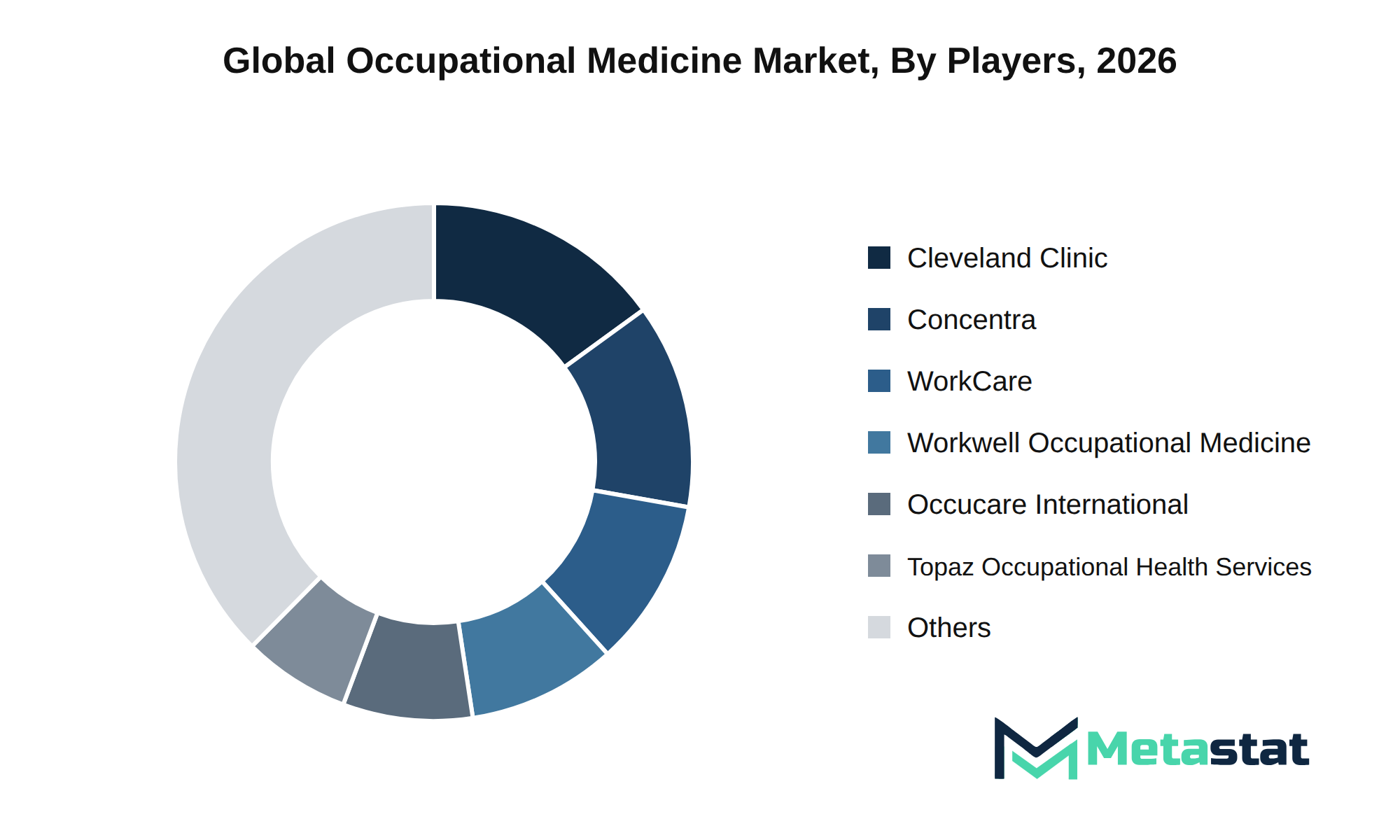
Market size is forecast to rise from USD 16 billion in 2025 to over USD 22.7 billion by 2033. This growth reflects a 4.5% CAGR driven by industries increasingly prioritizing employee health and safety, thus driving demand within the Occupational Medicine market. Factors including economic cycle changes and evolving downstream demand highlight the necessity for organizations to enhance their occupational health strategies.
The bull case envisions a scenario where heightened awareness of workplace health leads to accelerated adoption of innovative medical technologies and increased investments in preventive services. Conversely, the bear case presents challenges including regulatory shifts and economic downturns impacting organizational budgets, potentially slowing growth within the market.
Strategic capital allocation and infrastructure commitments will dictate future market dynamics. Organizations investing in next-generation technologies and enhancing their occupational health capabilities position themselves to meet emerging enterprise needs effectively. Market participants navigating through these macroeconomic scenarios, maintaining compliance with evolving regulations and addressing imminent compliance milestones will remain critical for sustainable growth.
Attention to geopolitical realignments and global supply chain shifts will influence operational strategies, compelling organizations to adapt to benefit from evolving trade corridors. Identifying high-growth pockets and addressing unmet needs presents opportunities for market players to enhance their offerings and align with executive-level strategic imperatives in the Occupational Medicine market.
The report strategically identifies and profiles the key market players and analyses their core competencies in each sub-segment of the Occupational Medicine market.
Report Attributes | Details |
Study Period | 2021-2033 |
Base Year | 2025 |
Estimated Year | 2026 |
Forecast Period | 2026-2033 |
Historical Period | 2021-2025 |
Growth Rate | CAGR 4.5% from 2026 to 2033 |
Revenue Unit | USD billion |
Segmentation | By Service Type, Delivery Model, End-User Industry, Organization Size, and Region |
By Region | North America (By Service Type, Delivery Model, End-User Industry, Organization Size, and Country)
|
Europe (By Service Type, Delivery Model, End-User Industry, Organization Size, and Country)
| |
Asia Pacific (By Service Type, Delivery Model, End-User Industry, Organization Size, and Country)
| |
South America (By Service Type, Delivery Model, End-User Industry, Organization Size, and Country)
| |
Middle East and Africa (By Service Type, Delivery Model, End-User Industry, Organization Size, and Country)
|
Find answers to common questions about this report
The Occupational Medicine market size was valued at USD 16 billion in 2025.
The Occupational Medicine market is projected to grow at a CAGR of 4.5% during the forecast period from 2026 to 2033.
The North America Occupational Medicine market size is estimated to reach USD 8 billion by 2033.
Preventive Occupational Health Services leads the Occupational Medicine market, with a projected value of USD 5.4 billion by 2033. This segment demonstrates significant growth potential compared to other service types.
Key drivers for the Occupational Medicine market include increased GDP growth, which enhances healthcare spending and raises demand for occupational health services. Advancements in digital transformation, including automation and artificial intelligence, further streamline processes and improve service delivery, contributing positively to market growth through 2033.
North America holds the dominant share of the Occupational Medicine market, with a value of USD 8 billion in 2033, representing 38.6 percent of the total market.
Increased regulatory compliance challenges significantly restrain growth in the Occupational Medicine market. Organizations face substantial costs associated with adhering to stringent health and safety standards, particularly small and medium-sized enterprises that lack the resources to comply effectively. geopolitical instability and rising input costs further complicate operational planning and market expansion.
Increased GDP growth enhances capital investment in healthcare, driving demand for occupational health services. The aging workforce necessitates comprehensive health programs, while advancements in digital transformation improve service delivery efficiency and patient outcomes, further favoring product adoption in the Occupational Medicine market.
The Occupational Medicine market is estimated to reach a valuation of USD 22.7 billion by 2033.
Key players in the Occupational Medicine market include Concentra, Inc., WorkCare, Inc., Cleveland Clinic, Amgen Inc., Sanofi, Novartis AG, and Pfizer Inc.
The analysts below cover Healthcare research at Metastat Insights.
LEAD ANALYST
Utkarsh Khirodkar is a Lead Market Research Analyst at MetaStat Insight, specializing in market intelligence, technology sector assessments, and competitive strategy.

LEAD PRINCIPAL ANALYST, PHARMA AND HEALTHCARE
Food and Beverages · Healthcare · Healthcare IT · Medical Devices
Ajay Devgire is the Lead Healthcare Analyst at MetaStat Insight, leading strategic research and market intelligence initiatives across the global healthcare domain.
Last Updated: September, 2026
Enterprise zero-trust network rollouts are often slowed down by multi-cloud transit latency and proprietary hardware retirement schedules. This study provided realistic total cost of ownership models comparing cloud-delivered security edge solutions against traditional hardware refreshes. The analysis of contract renewal lengths and software maintenance fees gave us clear visibility into enterprise replacement cycles over the next three to five years.
Scaling antibody-drug conjugate manufacturing hinges on contract manufacturing availability for high-potency active ingredients. The MetaStat Insight analysis looked closely at global cleanroom slot constraints, bioconjugation batch failure rates, and supply chain redundancies between the US, Europe, and India. The supplier capability matrix proved genuinely useful for our team when mapping secondary source options across our clinical pipeline.
Floating offshore wind feasibility relies heavily on specialized installation vessel availability and port crane limits, which most broad renewable energy forecasts ignore. The report delivered a thorough analysis of dry dock capacity, mooring chain supply constraints, and raw material pricing trends for deepwater anchor installations. It served as a solid independent sanity check for our offshore project capital expenditure assumptions.
Explore related market intelligence reports worth reading alongside this one.