
LEAD ANALYST
Utkarsh Khirodkar is a Lead Market Research Analyst at MetaStat Insight, specializing in market intelligence, technology sector assessments, and competitive strategy.

India Human Dermal and Amniotic Tissue Market Size, Share, By Type (Cryopreserved Amniotic Membrane, Lyophilized Amniotic Membrane, Amniotic Suspension, Human Dermal Allografts, and Amnion-Dermal Composites), By Application (Chronic Wound Care, Acute Wounds Care, Corneal Ulcers, Pterygium, Tendon, Ligament Repair, Burns, Trauma, Plastic Surgery, Regenerative Medicine, and Research), Industry Analysis, Growth, Trends, and Forecast, 2026-2033
Report ID
MSI-4805
Published
June, 2026
Pages
306 Pages
Format
Report Details
Choose Your License
India Human Dermal and Amniotic Tissue Market
India Human Dermal and Amniotic Tissue market size is valued at USD 119.1 million in 2025 and projected to grow at a CAGR of 14.5% during the forecast period, reaching USD 351.1 million by 2033.
Cryopreserved Amniotic Membrane segment account for a market share of 31.0% in 2025.
Key trends driving growth: Increasing cases of diabetic ulcers, burns, and chronic wounds are driving the need for biologic tissue-based healing solutions and expansion of private hospitals and specialty clinics is improving access to advanced reconstructive and surgical treatments.
One of the key opportunities include growing awareness of regenerative medicine creates scope for wider use in orthopedics, ophthalmology, and cosmetic procedures.
Key insight: Rising demand for advanced wound care and regenerative treatments is strengthening adoption of human dermal and amniotic tissue products across India.
The India Human Dermal and Amniotic Tissue Market is an emerging segment of the regenerative healthcare industry, centered on biologic tissue products used for healing, reconstruction, and tissue repair. These products are used in chronic wound care, ophthalmology, orthopedic repair, trauma management, and plastic surgery, where faster healing and reduced complications remain key clinical priorities.
Hospitals, tissue banks, specialty clinics, and medical suppliers are investing in cold-chain storage, surgeon training, ethical sourcing systems, and advanced graft preservation technologies. Rising diabetes incidence, trauma cases, and increasing preference for biologic treatment methods will support long-term expansion of the India Human Dermal and Amniotic Tissue Market.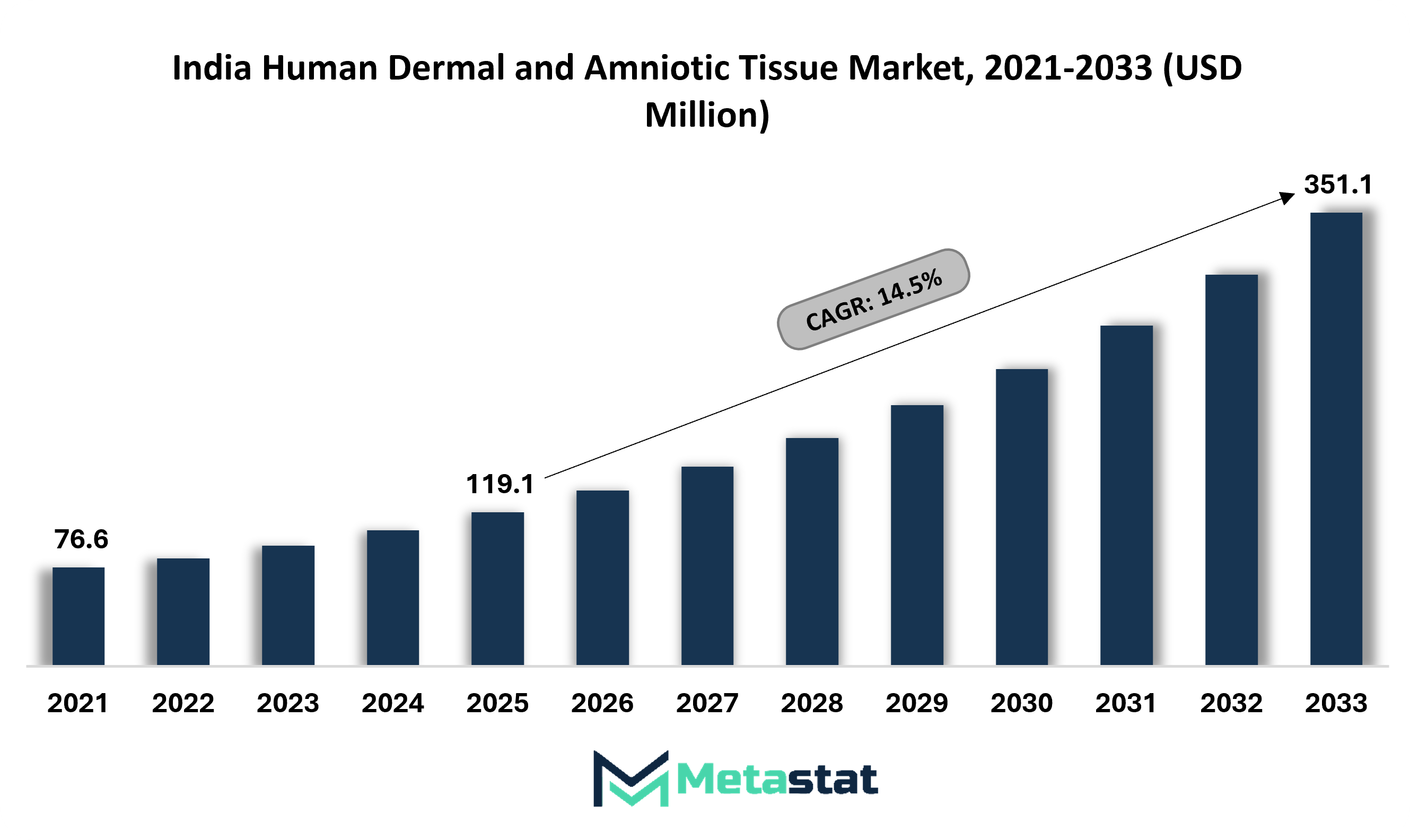
Increasing cases of diabetic ulcers, burns, and chronic wounds are driving the need for biologic tissue-based healing solutions.
Rising diabetes burden, accident-related injuries, thermal trauma, pressure ulcers, and chronic non-healing wounds will increase demand for biologic grafts, dermal matrices, and amniotic healing products. Faster wound closure rates, lower infection risk, reduced repeat procedures, and improved healing outcomes will support stronger clinical preference across urban treatment facilities.
Expansion of private hospitals and specialty clinics is improving access to advanced reconstructive and surgical treatments.
Rapid growth of multispecialty hospitals, cosmetic surgery centers, wound care units, and orthopedic clinics will widen treatment availability. Improved operating infrastructure, skilled surgeons, advanced storage systems, and premium patient care services will encourage higher use of tissue-based products across metro cities and emerging healthcare corridors.
High treatment costs and limited reimbursement support can restrict product adoption in price-sensitive regions.
Premium pricing of graft materials, surgical handling charges, hospital procedure costs, and post-treatment care expenses will restrict patient acceptance in budget-constrained regions. Limited insurance coverage, delayed claim settlement, and low public healthcare funding will create barriers for wider penetration beyond affluent urban patient groups.
Regulatory complexity related to tissue sourcing, storage, and approvals will slow market expansion.
Strict compliance requirements for donor screening, traceability records, cold-chain storage, sterilization controls, ethical procurement, and product approvals will prolong launch timelines. Multiple documentation stages, audit requirements, and variable state-level enforcement will increase operating costs for manufacturers, tissue banks, distributors, and healthcare institutions.
Growing awareness of regenerative medicine creates scope for wider use in orthopedics, ophthalmology, and cosmetic procedures.
Higher clinical awareness, doctor education, and patient interest in regenerative care will open new demand channels. Orthopedic tendon repair, ocular surface healing, scar revision, facial aesthetics, dental surgery, and sports injury recovery will create fresh revenue pools for specialized tissue solutions.
The India Human Dermal and Amniotic Tissue market is classified based on Type and Application.
Cryopreserved Amniotic Membrane segment is valued at USD 42.2 million in 2026 and is projected to reach USD 103.5 million by 2033, at a CAGR of 13.7% during the forecast period.
Cryopreserved amniotic membrane holds strong clinical value through preserved growth factors, structural proteins, and natural healing support. Future demand will increase across tertiary hospitals, trauma centers, and specialty wound clinics. Improved storage systems, wider cold-chain networks, and surgeon familiarity will strengthen commercial adoption across India.
Lyophilized (Dehydrated) Amniotic Membrane segment is valued at USD 31.4 million in 2026 and is projected to reach USD 84.2 million by 2033, at a CAGR of 15.1% during the forecast period.
Lyophilized dehydrated amniotic membrane offers easier delivery, longer shelf life, and simplified inventory handling. Expansion will accelerate across mid-sized hospitals and regional care facilities. Better packaging standards, sterile processing improvements, and lower logistics burden will enhance accessibility across wider patient treatment applications.
Amniotic Suspension segment is valued at USD 7.4 million in 2026 and is projected to reach USD 17.3 million by 2033, at a CAGR of 13% during the forecast period.
Amniotic suspension is gaining interest as an injectable regenerative solution for targeted clinical use. Future adoption will emerge across pain management, sports injury care, and outpatient orthopedic facilities. Research-backed protocols, doctor training, and controlled processing quality will encourage broader therapeutic acceptance across India.
Human Dermal Allografts segment is valued at USD 31.2 million in 2026 and is projected to reach USD 84.2 million by 2033, at a CAGR of 15.2% during the forecast period.
Human dermal allografts remain critical for reconstructive surgery, chronic wound closure, and soft tissue reinforcement. Future opportunities will increase with rising cosmetic procedures, diabetic wound treatment, and trauma recovery demand. Strong tissue banking systems and standardized graft screening will support clinical confidence.
Composite Grafts (Amnion-Dermal Composites) segment is valued at USD 23.8 million in 2026 and is projected to reach USD 62.0 million by 2033, at a CAGR of 14.6% during the forecast period.
Composite grafts combining amnion and dermal layers will gain traction through dual benefits of wound coverage and tissue regeneration. Future hospital preference will increase for complex wounds, burns, and difficult surgical repairs. Product innovation and surgeon outcome data will elevate category presence.
Wound Care (Chronic and Acute Wounds) segment is projected to reach USD 132.8 million by 2033, at a CAGR of 14.3% during the forecast period.
Wound Care (Chronic and Acute Wounds) remains a major application area owing to diabetes prevalence, pressure injuries, burns, and accident-related trauma. Future market expansion will follow growing advanced hospital networks and faster healing priorities. Cost-efficient treatment pathways and reduced hospital stay requirements will support adoption.
Ophthalmology (Corneal Ulcers, Pterygium) segment is projected to reach USD 32.8 million by 2033, at a CAGR of 13.7% during the forecast period.
Ophthalmology (Corneal Ulcers, Pterygium) use continues to grow for ocular surface repair, ulcer management, and pterygium surgery support. Future adoption will increase with rising eye disease screening and specialty eye hospitals. Better surgeon awareness, smoother graft handling, and faster healing outcomes will encourage wider use.
Orthopedics (Tendon and Ligament Repair) segment is projected to reach USD 66.6 million by 2033, at a CAGR of 15% during the forecast period.
Orthopedics (Tendon and Ligament Repair) shows strong potential through tendon healing, ligament repair, and sports injury treatment. Future expansion will follow rising fitness participation, injury cases, and preference for minimally invasive procedures. Clinical evidence, rehabilitation integration, and specialist adoption will support commercial development across India.
Surgical Applications (Burns, Trauma, Plastic Surgery) segment is projected to reach USD 102.4 million by 2033, at a CAGR of 15.2% during the forecast period.
Surgical Applications (Burns, Trauma, Plastic Surgery) will expand with emergency care improvements and rising cosmetic procedure volumes. Reliable graft availability, infection control standards, and improved healing timelines will drive stronger hospital utilization.
Regenerative Medicine and Research segment is projected to reach USD 16.4 million by 2033, at a CAGR of 12.3% during the forecast period.
Regenerative Medicine and Research offer long-term opportunities through stem-cell research, tissue engineering, and next-generation biologic treatments. Future momentum will build from academic partnerships, biotech funding, and clinical trial activity. Strong regulatory clarity and manufacturing quality systems will accelerate innovation pipelines.
India Human Dermal and Amniotic Tissue Market is gaining traction owing to rising demand for advanced wound care, surgical repair, and regenerative support across hospitals and specialty clinics. Clinicians are increasingly adopting biologic graft materials that support healing, reduce infection risk, and improve patient comfort. Growing awareness of modern treatment options across metro cities and emerging healthcare clusters will support wider product adoption. Better clinician training, improved product access, and steady healthcare spending will strengthen future demand across wound care, ophthalmology, orthopedics, and reconstructive surgery.
Among the key India Human Dermal and Amniotic Tissue Market players, LifeCell International has established relevance through local tissue banking capabilities and healthcare network access. LifeNet Health, MTF Biologics, MiMedx, Organogenesis Inc., and BioTissue bring experience in tissue-based and regenerative solutions used across selected clinical applications. Integra LifeSciences Corporation and Smith & Nephew plc maintain strong positions in surgical care, wound management, and reconstructive treatment ecosystems. Companies with reliable sourcing, clinician training, compliance support, and consistent graft availability will gain stronger hospital preference across India.
Competition among these companies is expected to improve price competitiveness, delivery reliability, and training support for surgeons and wound care teams. Firms will invest in storage standards, traceability systems, and compliance practices that build clinical and institutional confidence. Hospitals will prefer suppliers that provide consistent inventory, timely technical guidance, and dependable post-procedure support. Private healthcare chains will create wider opportunities for premium biologic alternatives, while public institutions will increase adoption through planned tenders and clinical programs. Clear outcomes data will remain important as hospitals evaluate cost, safety, consistency, and clinical value before procurement decisions.
The market outlook remains positive as India continues to expand healthcare capacity and specialist services. Rising trauma cases, diabetic wounds, cosmetic repair needs, and aging patients will increase demand for advanced graft materials over time. Market success will depend on clinical awareness, ethical sourcing, fair pricing, and careful handling from storage to final use. Companies that train doctors, support evidence-based practice, and maintain reliable distribution will gain stronger trust across hospitals, clinics, and specialty treatment centers.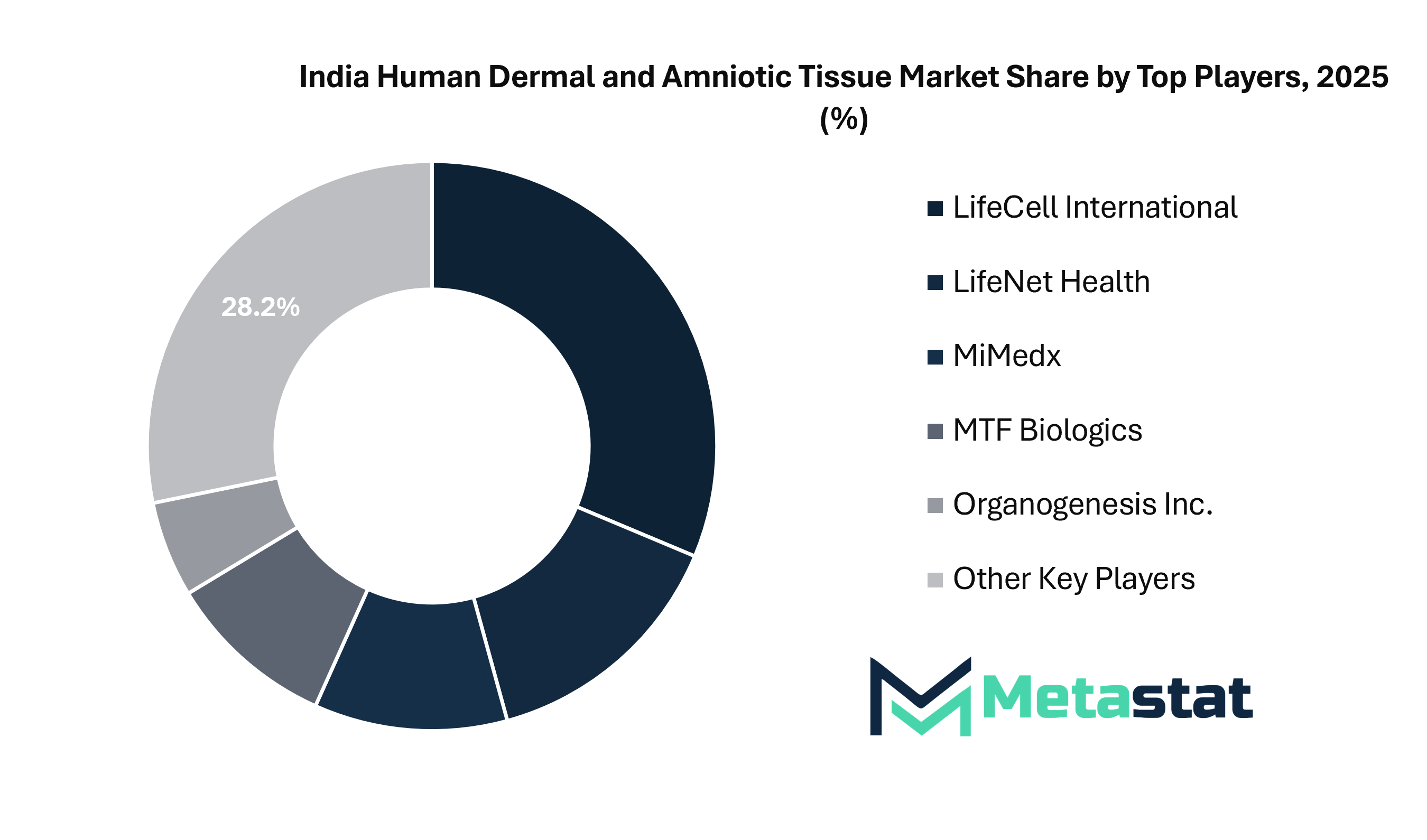
Market size is forecast to rise from USD 119.1 million in 2025 to over USD 351.1 million by 2033.
The India Human Dermal and Amniotic Tissue Market is expected to benefit from rising advanced surgery volumes, diabetic wound management needs, and broader acceptance of regenerative medicine. Future adoption is likely to favor off-the-shelf graft formats, improved reimbursement pathways, local processing facilities, ophthalmic biologics expansion, and evidence-based orthopedic tissue applications.
This research report categorizes the India Human Dermal and Amniotic Tissue Market based on type and application, forecasts revenue growth, and analyzes trends across each submarket. The report analyzes key growth drivers, opportunities, and challenges influencing the India Human Dermal and Amniotic Tissue Market. Recent market developments and competitive strategies such as expansions, product launches, partnerships, mergers, and acquisitions have been included to define the competitive landscape.
The report strategically identifies and profiles key market players and analyzes their core competencies across each sub-segment of the India Human Dermal and Amniotic Tissue Market.
|
Report Attributes |
Details |
|
Study Period |
2021-2033 |
|
Base Year |
2025 |
|
Estimated Year |
2026 |
|
Forecast Period |
2026-2033 |
|
Historical Period |
2021-2025 |
|
Growth Rate |
CAGR 14.5% from 2026 to 2033 |
|
Revenue Unit |
USD million |
|
Segmentation |
By Type and Application |
Find answers to common questions about this report
Top players operating in the India Human Dermal and Amniotic Tissue industry includes LifeCell International, LifeNet Health, Integra LifeSciences Corporation, Smith & Nephew plc, and MTF Biologics
India Human Dermal and Amniotic Tissue market is estimated to reach USD 351.1 million by 2033.
Increasing cases of diabetic ulcers, burns, and chronic wounds are driving the need for biologic tissue-based healing solutions and expansion of private hospitals and specialty clinics is improving access to advanced reconstructive and surgical treatments are key driving factors, boosting the market.
The Metastat Insights study shows that the India Human Dermal and Amniotic Tissue market size was USD 119.1 million in 2025.
High treatment costs and limited reimbursement support can restrict product adoption in price-sensitive regions will hamper the market growth within the forecast period.
The India Human Dermal and Amniotic Tissue market is expected to grow at a CAGR of 14.5% over the forecast period (2026-2033).
The Cryopreserved Amniotic Membrane is the leading type of segment in the India market.
The analysts below cover Healthcare research at Metastat Insights.
LEAD ANALYST
Utkarsh Khirodkar is a Lead Market Research Analyst at MetaStat Insight, specializing in market intelligence, technology sector assessments, and competitive strategy.

LEAD PRINCIPAL ANALYST, PHARMA AND HEALTHCARE
Food and Beverages · Healthcare · Healthcare IT · Medical Devices
Ajay Devgire is the Lead Healthcare Analyst at MetaStat Insight, leading strategic research and market intelligence initiatives across the global healthcare domain.
Decarbonizing industrial thermal processes hinges on refrigerant regulations and compressor efficiency limits. Metastat Insights delivered a thorough market analysis that evaluated natural refrigerants like CO2 and hydrocarbons against synthetic low-GWP alternatives. The breakdown of utility incentives and grid capacity constraints across key European manufacturing hubs offered valuable perspective. The follow-up conversation with their sector analysts addressed our specific questions on mechanical vapor recompression systems efficiently.
Assessing 200mm wafer transition schedules and substrate supply bottlenecks requires precise technical intelligence. MetaStat Insight supplied an actionable breakdown comparing planar and trench MOSFET architectures across automotive and industrial drive markets. The regional capacity estimates for Asia-Pacific foundries helped clarify lead-time uncertainties during our strategic planning session. When we needed additional clarification on high-purity raw material sourcing, their analyst team responded with helpful context within twenty-four hours.
Tracking maintenance cycle demand for secondary flight display units and terrain collision avoidance systems across regional jet fleets involves complex aftermarket dynamics. MetaStat Insight provided practical analysis separating airline retrofit programs from OEM forward-fit production schedules in North America and Southeast Asia. The supplier matrix highlighted component obsolescence timelines without resorting to vague generalizations. The dataset served as a dependable reference during our annual program review meetings.
Explore related market intelligence reports worth reading alongside this one.