
LEAD ANALYST
Utkarsh Khirodkar is a Lead Market Research Analyst at MetaStat Insight, specializing in market intelligence, technology sector assessments, and competitive strategy.

Advanced Wound Care Products Market By Product (Dressings, Devices & Accessories, Grafts & Matrices, and Topical Agents), By Dressings Type (Foam Dressings, Silicone Dressings, Non-silicone Dressings, Hydrocolloid Dressings, and Others), By Wound Type (Surgical & Traumatic Wounds, Diabetic Foot Ulcers, Pressure Ulcers, Venous Leg Ulcers, Burns & Other Wounds), By End User (Hospitals, ASCs, and Wound Care Centers, Home Care Settings, and Others), Industry Analysis, Size, Share, Growth, Trends, and Forecasts 2025-2032
Report ID
MSI-4153
Published
September, 2025
Pages
256 Pages
Format
Report Details
Choose Your License
Advanced Wound Care Products Market
Global advanced wound care products market valued at approximately USD 5879.2 million in 2025, growing at a CAGR of around 7.0% through 2032, with potential to exceed USD 9444.4 million.
Dressings account for a market share of 60.7% in 2024, driving innovation and expanding applications through intense research.
Key trends driving growth: Rising prevalence of diabetes and chronic wounds, Increasing demand for innovative and faster-healing wound care solutions
Opportunities include: Growing telemedicine integration creates new opportunities for advanced wound care solutions
Key insight: The market is set to grow exponentially in value over the next decade, highlighting significant growth opportunities.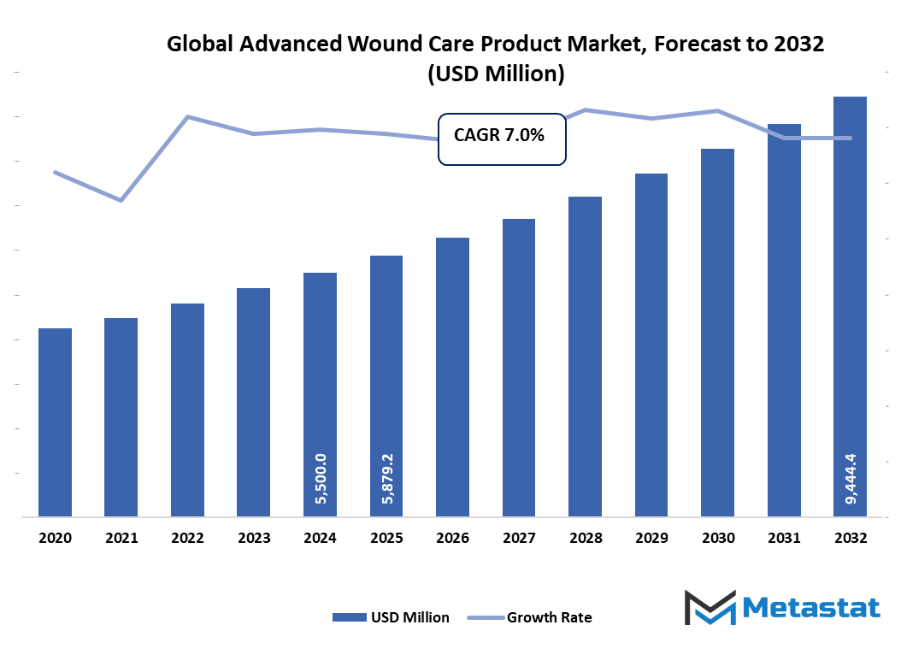
The global advanced wound care products market will be a niche part of the healthcare sector that specializes in the management of intricate, chronic, and surgical wounds with accuracy and innovation. This market will be more than just traditional bandages and dressings, targeting scientifically engineered products that heal faster, have optimal moisture content, and avoid infection. Sophisticated dressings, bioactive composites, and therapy equipment will be at the center of this market, providing solutions specific to burns, diabetic ulcers, pressure ulcers, and post-operative wounds.
The profession will be focused not just on the wound closure's functional element but also on patient comfort, time saved in healing, and complications avoided that will result in hospital readmissions. New technologies and materials will develop products that are able to release drugs directly into the wound bed, draw out excess exudate, and promote tissue regeneration. Such products will be an integral part of hospitals, clinics, and home healthcare environments, where effectiveness and results will be top-of-the-line considerations.
The global advanced wound care products market is mainly classified based on Product, Dressings Type, Wound Type, End User.
Dressings: Dressings are going to be the largest part of the global advanced wound care products market, in which they will be the main actors. Besides safeguarding the wound, providing quicker recovery, and avoiding infection, the dressings will be the essential consumers of the market. Technological progress will enable the production of more sophisticated dressings that will have new features such as moisture control, antimicrobial activity, and patient comfort.
Devices & Accessories: Devices and accessories will assist in wound monitoring and treatment using advancements such as negative pressure wound therapy (NPWT) machines. The solutions will help in faster tissue generation, reduce hospitalization periods, and assist in complex wound management, thus being immensely vital to the treatment of both acute and chronic wounds.
Grafts & Matrices: Grafts and matrices will be used in the cure of serious wounds where the healing process is slow or poor. They will aid in tissue regeneration, serve as a scaffold for cell proliferation, and help manage deep ulcers, burns, and operation wounds, improving clinical outcomes in general.
Topical Agents: Topical products will play an adjunctive function by reducing the risk of infection and ensuring an environment conducive to healing. The products will include antimicrobial creams, growth factors, and enzymatic debriding solutions, augmenting the wound bed preparation and allowing quicker recovery for all kinds of wounds.
Foam Dressings: Foam dressings will be preferred due to their absorbency of exudate and maintenance of a moist healing environment. They will also be comfortable and pliable enough to be used on moderate-to-high exuding wounds and in post-operative use, reducing the need for frequent changes.
Silicone Dressings: Silicone dressings will have widespread application in sensitive skin and atraumatic removal. They will do very little trauma during removal, thus being appropriate for patients requiring high surveillance, particularly pediatric and geriatric wound care cases.
Non-silicone Dressings: The non-silicone dressings will remain relevant as cost-effective options for the management of wounds. They will be adopted in institutions where cost is a limiting factor, but they will remain effective in protection and moisture balance for a range of wound conditions.
Hydrocolloid Dressings: Hydrocolloid dressings will gain popularity owing to their ability to promote autolytic debridement and maintain a moist environment, thus accelerating healing of low-to-moderately exuding wounds. Increased wear time will result in less discomfort to the patient and fewer dressing changes.
Other: Other dressings such as alginates and hydrofibers will only be used for certain types of wounds. They will be essential for the treatment of wounds that are highly exuding, burns, and ulcers, to which a higher level of absorbency or antimicrobial activity is preferred.
Surgical & Traumatic Wounds: Among the applications, surgical and traumatic wounds will be the main events causing the demand for new products. Surgery centers and hospitals will be the first consumers of these advanced solutions to obtain fewer complications post interventions, as well as infection prevention, and recovery time cuts.
Diabetic Foot Ulcers: This segment of diabetic foot ulcers would be a primary segment closely related to the global propagation of diabetes. The propagation of advanced wound care solutions will not only make the healing faster but also make the incidences of amputations lower, thus making a remarkable contribution to the welfare of patients.
Pressure Ulcers: One of the consequences of pressure ulcers would be the demand for novel devices and dressings that could help shorten the healing time and hospital stay. Preventive care will gradually gain more and more weight in long-term care facilities.
Venous Leg Ulcers: Specialty products will utilize venous leg ulcers to enhance circulation, decrease exudate, and aid with chronic wound management. Their healing will be a combination of dressing, compression, and patient education.
Burns & Other Wounds: Burns and compound wounds will be complemented by grafts, matrices, and advanced dressings that provide fast tissue regeneration, lower the occurrence of scarring, and keep the wound from infection, thus leading to better recovery outcomes.
Hospitals, ASCs, and Wound Care Centers: Hospitals, ambulatory surgical centers (ASCs), and wound care centers will continue to be the biggest end-users, implementing advanced wound care products for surgical, trauma, and chronic wound management with professional supervision and optimal patient care.
Home Care Settings: The demand for advanced wound lives in home care settings will be growing since patients will prefer low-cost, user-friendly wound care options with fewer hospital visits. Easy-to-handle dressings and portable NPWT devices will facilitate this trend.
Other: Other end-users like rehabilitation centers and long-term care facilities will use advanced wound care products to treat chronic wounds, post-operative status, and pressure ulcers, improving overall patient outcomes within long-term care settings.
|
Forecast Period |
2025-2032 |
|
Market Size in 2025 |
$5879.2 Million |
|
Market Size by 2032 |
$9444.4 Million |
|
Growth Rate from 2025 to 2032 |
7.0% |
|
Base Year |
2025 |
|
Regions Covered |
North America, Europe, Asia-Pacific, South America, Middle East & Africa |
The global advanced wound care products market will have a major influence depending on the specific region that is being looked at and the adoption pattern where healthcare establishments, the level of awareness and technology readiness matters in the different regions. The United States of America together with the other two North American countries, i.e. Canada and Mexico, will be a very important factor in demand-generation and hold the confederacy as the heartbeat of the region which is going to look at the highest level of care for post-surgery and chronic wound cases. High-end hospital networks and the reimbursement policy will set the mood for next-generation therapy equipment and dressing materials to find their way into the daily clinical practice through being integrated.
Europe will consist of the UK, Germany, France, and Italy as well as the rest of the continent and together they will continue to give the highest priority to advanced wound care in their effort to reduce the length of hospital stays and to optimize the recovery of patients. The continent will become a mature market for specialty products with an increasing incidence of diabetic ulcers, pressure injuries, and post-operative wounds being the major sources of wound care problems that the region will treat through products whose effectiveness will be supported by science-backed evidence and will gradually replace old ways of treatment.
Asia-Pacific region which is comprising of India, China, Japan, South Korea, and other neighbouring countries such as Taiwan and Singapore. It is a rapidly expanding market for the advanced wound care practices that has put a spotlight on itself in the Asia-Pacific region. It comes because of not only the large population of these areas but also the fact that the places are highly urbanized and heavily having private hospital networks and outpatient treatment; plus, the quality of the healthcare standard has gone up as well as the growing awareness and high expenditure on practice.
Brazil and Argentina being the heart of South America will experience a gradual growth of adoption over time as the modernization of the healthcare sector in the region continues to gather momentum and there is more money to be spent on technologies that help bring the treatment cost down and facilitate the department's work. The developments in the Middle East and Africa advanced wound care solutions which encompass the Gulf Cooperation Council states, namely Saudi Arabia, Oman, Bahrain, UAE, Qatar, and Kuwait, Egypt and South Africa are going to be led by the initiatives of the government being focused on the expansion of the already existing hospital infrastructure and the efforts towards better outcomes for patients.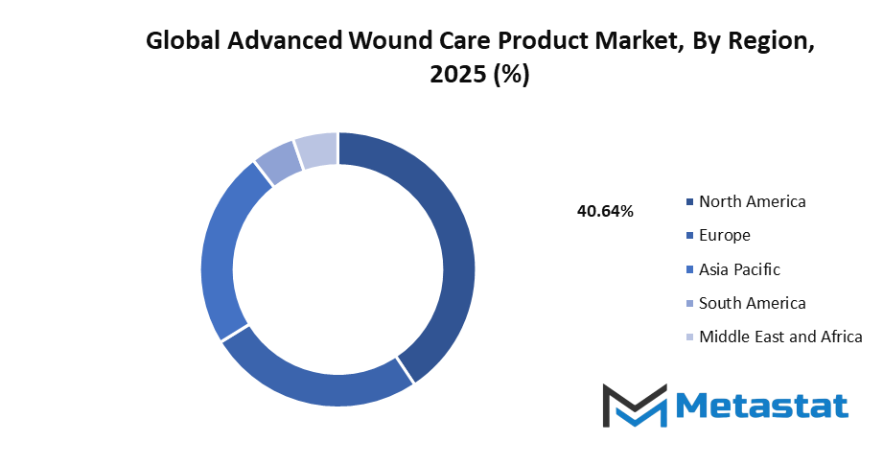
Rising prevalence of diabetes and chronic wounds: Instances of diabetes and chronic wounds have been rising globally and are expected to increase in the future. As a result, the global advanced wound care products market is anticipated to expand. Such cases usually demand the help of medical specialists to be provided an efficient treatment plan and thus, better patient outcomes. This scenario is favourable to the need of modern solutions that can stimulate accelerated wound healing and act as the barrier against possible infection or amputation.
Increasing demand for innovative and faster-healing wound care solutions: Growing preference of patients and healthcare professionals for advanced technologies are the leading factors for the expansion of the global market for advanced wound care products. The market for advanced wound care products will find support for the move towards advanced dressings, grafts, and devices that speed up recovery. The medical solutions which enhance tissue healing, cut down the period of hospital stay as well as improve the overall comfort and satisfaction of the patients will be embraced by the healthcare practitioners, thus leading to the constant product development and innovation.
High cost of advanced wound care products limits accessibility: Though clinical benefits are evident, the high cost of advanced dressings, NPWT devices, and grafts are likely to create obstacles for the global advanced wound care products market. The products will be less affordable for patients and healthcare systems in cost-sensitive markets, which may result in a decrease in the market's pace of adoption.
Limited awareness in developing regions slows adoption: Besides the high prices of advanced wound products namely dressings and devices, a major challenge of the global advanced wound care products market will be low awareness of modern wound care solutions in rural areas of developing countries. Majority of the budget for wound care in such regions might still be allocated to traditional methods, thus prolonging the time before treatment and leading to lower demand. This is a good reason to enlighten and train the stakeholders, which includes the patients and the healthcare workers.
Growing telemedicine integration creates new opportunities for advanced wound care solutions
Wound assessment and monitoring via telecommunication platforms are among the promising avenues for the global advanced wound care products market. Implementation of such a strategy would increase the patient base reachable by expert care and at the same time be a cost-saving method due to lesser hospital visits. In addition, introducing the use of more accessible dressings and portable therapy devices would be possible if easy handling character and low demand for healthcare refund could be achieved through telemedicine.
The global advanced wound care products market will comprise both globally established firms and innovative local players who will, through a balanced mix of competition and cooperation, maintain a vibrant and competitive market. Besides the others, market leaders such as Smith & Nephew plc, Mölnlycke Health Care AB, ConvaTec Group PLC, Coloplast A/S, 3M Company, Integra LifeSciences Holdings Corporation, and Medtronic plc will continue to do so with their extensive portfolios of sophisticated dressings, negative pressure wound therapy systems, and bioactive solutions. Actually, such leaders will benefit from the research program and the global distribution network to not only enlarge their market impact but to also expand the access to their technologies.
Meanwhile, other noteworthy players that ought to be taken into consideration include Ethicon, Inc. (Johnson & Johnson), DeRoyal Industries, Inc., B. Braun Melsungen AG, Paul Hartmann AG, Organogenesis Holdings Inc., Hollister Incorporated, Medline Industries, Inc., Lohmann & Rauscher GmbH & Co. KG, Cardinal Health, Inc., Advancis Medical UK Ltd., and MiMedx Group, Inc. These players will be focusing on the development of new technologies that will enhance patient care and address the growing demand for more personalized treatments. As a result, their working method will include making partnerships with healthcare providers, research bodies, and hospitals to help the implementation of new and advanced wound management programs supported by the evidence.
Such engagement will then be the motive for the firms to come up with new and improved products as a means of maintaining their competitiveness in the market. This will lead to the firms taking up the necessary investments in products that would speed up the healing process, minimize the infection risk, as well as make the treatment more cost-effective. Apart from the product innovation, patient comfort and the integration with digital monitoring tools will be the major factors to market leadership sustainability. It could be noted that the competition among businesses will become even tougher due to the growing demand for chronic and acute wound products across the globe and this will push companies to implement sustainable production and increase their international presence.
Market size is forecast to rise from USD 5879.2 million in 2025 to over USD 9444.4 million by 2032. Advanced Wound Care Products will maintain dominance but face growing competition from emerging formats.
Along with this, the global advanced wound care products market will experience integration with digital healthcare solutions, where caregivers can track healing remotely and adjust treatment protocols based on real-time feedback. This will enhance communication between healthcare professionals and patients, making chronic wound care an active rather than passive intervention. Through the union of clinical expertise with product advancement, the industry will transform wound healing into a high-tech field for the purpose of regaining quality of life and reducing the fiscal burden of prolonged treatments.
This research report categorizes the global advanced wound care products market based on various segments and regions, forecasts revenue growth, and analyzes trends in each submarket. The report analyses the key growth drivers, opportunities, and challenges influencing the global advanced wound care products market. Recent market developments and competitive strategies such as expansion, type launch, development, partnership, merger, and acquisition have been included to draw the competitive landscape in the market. The report strategically identifies and profiles the key market players and analyses their core competencies in each sub-segment of the global advanced wound care products market.
Find answers to common questions about this report
Global Advanced Wound Care Products market is valued at $5879.2 million in 2025.
Global Advanced Wound Care Products market is estimated to grow with a CAGR of 7.0% from 2025 to 2032.
Global Advanced Wound Care Products market is estimated to reach $9444.4 million by 2032.
Top players operating in the Advanced Wound Care Products industry includes Smith & Nephew plc, Mölnlycke Health Care AB, ConvaTec Group PLC, Coloplast, and Others.
The analysts below cover Medical Devices research at Metastat Insights.
LEAD ANALYST
Utkarsh Khirodkar is a Lead Market Research Analyst at MetaStat Insight, specializing in market intelligence, technology sector assessments, and competitive strategy.

LEAD PRINCIPAL ANALYST, PHARMA AND HEALTHCARE
Food and Beverages · Healthcare · Healthcare IT · Medical Devices
Ajay Devgire is the Lead Healthcare Analyst at MetaStat Insight, leading strategic research and market intelligence initiatives across the global healthcare domain.

SENIOR RESEARCH ANALYST
Biotechnology · Food and Beverages · Medical Devices · Packaging
Snehal Pasalkar is a Research Analyst at MetaStat Insight, operating at the intersection of life sciences research, competitive strategy, and market intelligence.
Evaluating sovereign cloud deployments for core banking platforms demands a clear view of data residency regulations and migration exit strategies. MetaStat Insight delivered an exhaustive review of regional latency tolerances, mainframe decommission milestones, and third-party vendor concentration risk. The regulatory compliance mapping across European and Asian financial jurisdictions gave our team a dependable baseline for multi-cloud infrastructure discussions.
Replacing petrochemical surfactants with bio-based alternatives requires realistic timelines on industrial precision fermentation scaling. The market research broke down commercialization timelines, feedstock sugar price sensitivities, and regional cosmetic ingredient regulatory approvals in Europe and East Asia. That supplier readiness mapping gave our formulations team reliable context when comparing renewable chemical sourcing roadmaps.
Tracking ceramic matrix composite adoption in high-bypass aero engines requires strict attention to material qualification cycles and FAA airworthiness testing milestones. The MetaStat Insight team provided a detailed timeline of silicon carbide fiber manufacturing capacity and commercial foundry lead times. Having clear visibility into upstream thermal barrier coating supply helped us stress-test our long-term component procurement strategy.
Explore related market intelligence reports worth reading alongside this one.
Starting from
$2950