
LEAD ANALYST
Utkarsh Khirodkar is a Lead Market Research Analyst at MetaStat Insight, specializing in market intelligence, technology sector assessments, and competitive strategy.

India Industrial Wastewater Treatment Market Size, Share, By Technology (Membrane Bioreactor (MBR), Activated Sludge, Reverse Osmosis (RO), Membrane Filtration and Others (Advanced Oxidation, Electrocoagulation)), By Treatment Method (Physical Treatment, Chemical Treatment, Biological Treatment and Electrochemical Treatment), By Process Type (Zero Liquid Discharge (ZLD), Partial Treatment, Conventional Treatment and Wastewater Recycling and Reuse), By End-Use Industry (Chemicals and Petrochemicals, Pharmaceuticals and Life Sciences, Textiles and Apparel, Food and Beverage, Pulp and Paper, Power Generation, Metals and Mining, Oil and Gas Refining, Automotive and Engineering and Others (Electronics, Leather and Rubber Processing)), Industry Analysis, Growth, Trends, and Forecast, 2026-2033
Report ID
MSI-5783
Published
November, 2026
Pages
279 Pages
Format
Historical
Base year
Forecast
Forecast period
Report Details
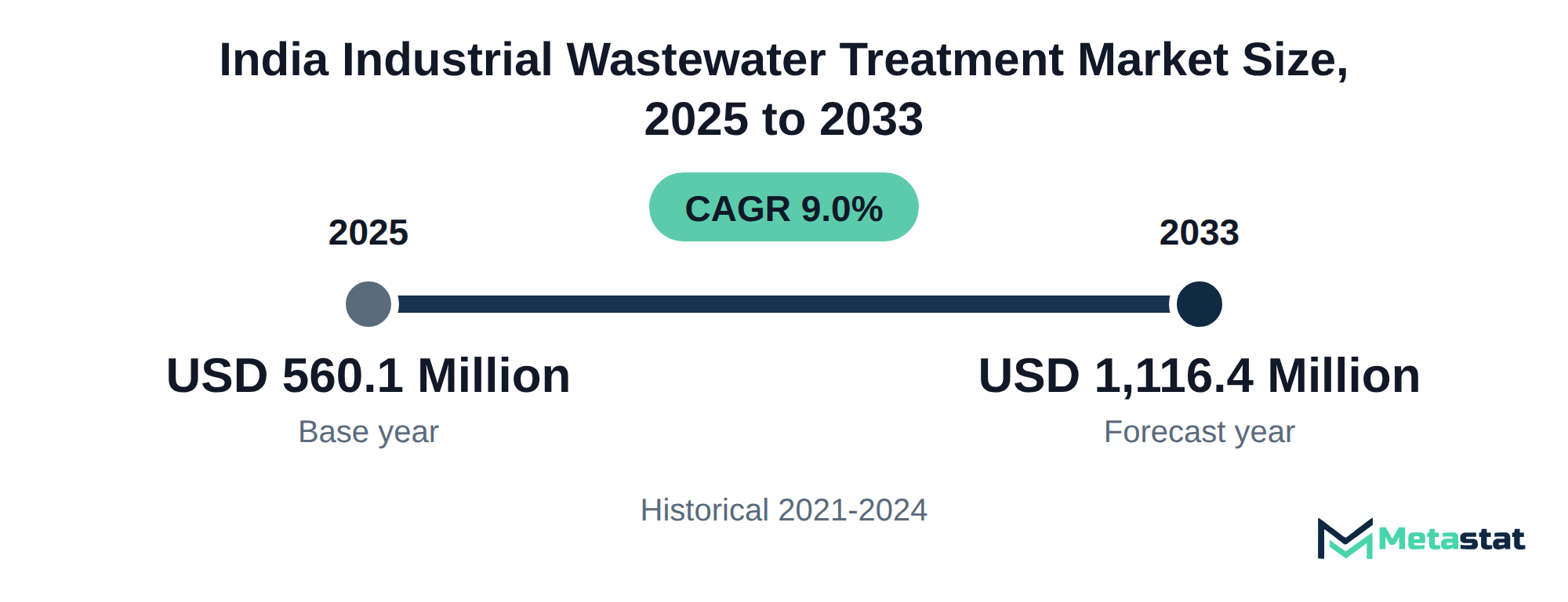
Market Valuation: Valued at $560.1 Million in 2025, projected to reach $1,116.4 Million by 2033 at a 9.0% CAGR.
Dominant Segment: Biological Treatment is the leading segment, projected to reach USD 425.5 million by 2033, driven by its effectiveness in meeting stringent environmental regulations and its cost-efficiency in treating diverse wastewater types.
Geographic Lead: The southern region of India holds the largest market share, attributed to its strong industrial base and rapid urbanization, which leads to increased wastewater generation and a corresponding need for effective treatment solutions.
What's Inside: This report provides a comprehensive analysis of the India Industrial Wastewater Treatment market, covering technologies, treatment methods, process types, and end-use industries, along with competitive insights and growth forecasts from 2026 to 2033.
Emerging Technologies: Membrane Bioreactor (MBR) technology is expected to grow significantly, with a projected CAGR of 10.4%, reflecting the industry's shift towards more efficient and sustainable wastewater treatment solutions.
Investment Trends: Investment in Zero Liquid Discharge (ZLD) systems is on the rise, with a forecasted CAGR of 10.9%, driven by regulatory pressures and the need for sustainable water management practices across various industries.
Choose Your License
India Industrial Wastewater Treatment Market
The India Industrial Wastewater Treatment market was valued at USD 560.1 million in 2025 and is projected to reach USD 1,116.4 million by 2033, growing at a CAGR of 9.0% over the forecast period.
The India Industrial Wastewater Treatment market encompasses various technologies and processes aimed at treating industrial wastewater, ensuring compliance with environmental regulations, and promoting sustainability. Buyers invest in these solutions due to the increasing need for effective water management and the reduction of environmental footprints. Industries including chemicals, pharmaceuticals, and textiles primarily drive demand, each requiring tailored treatment solutions to address specific contamination challenges.
Growth in the market is fueled by heightened regulatory pressures and a growing awareness of environmental sustainability among industries. The Biological Treatment segment stands out in terms of value, reflecting its widespread applicability and effectiveness in addressing diverse wastewater characteristics. The chemicals and petrochemicals sector contributes significantly to market expansion, necessitating advanced treatment solutions to manage wastewater generated from production processes.
Among various regions, the largest share of the market resides within the industrial hubs of India, where rapid urbanization and industrialization contribute to increasing wastewater generation. The demand for innovative treatment technologies continues to rise, driven by operational efficiency and the need for compliance with stringent environmental standards. Investment in advanced wastewater treatment methods enhances operational sustainability across sectors, positioning the market for growth.
Investment in the India Industrial Wastewater Treatment market stems from the increasing emphasis on effective wastewater management and stringent regulatory standards. Industries seek reliable treatment solutions to minimize environmental impact while ensuring compliance with local and international regulations. This focus on sustainability drives companies to adopt advanced technologies that enhance operational efficiency and reduce overall water consumption.
Biological treatment emerges as the dominant segment within the market, reflecting significant investment from various industries, including chemicals and petrochemicals. The continuous development of innovative technologies and processes contributes to market growth, with Membrane Bioreactor (MBR) technology exhibiting the highest projected growth rate. Growth in the pharmaceuticals and life sciences sector supports increasing demand for efficient wastewater treatment solutions.
The southern region of India holds the largest share of the market, attributed to its robust industrial base and increasing urbanization. Urban centers in this region face challenges related to water scarcity and pollution, prompting investments in wastewater treatment infrastructure. This trend is expected to drive further growth in the market, reflecting the imperative to protect water resources and ensure sustainable industrial practices.
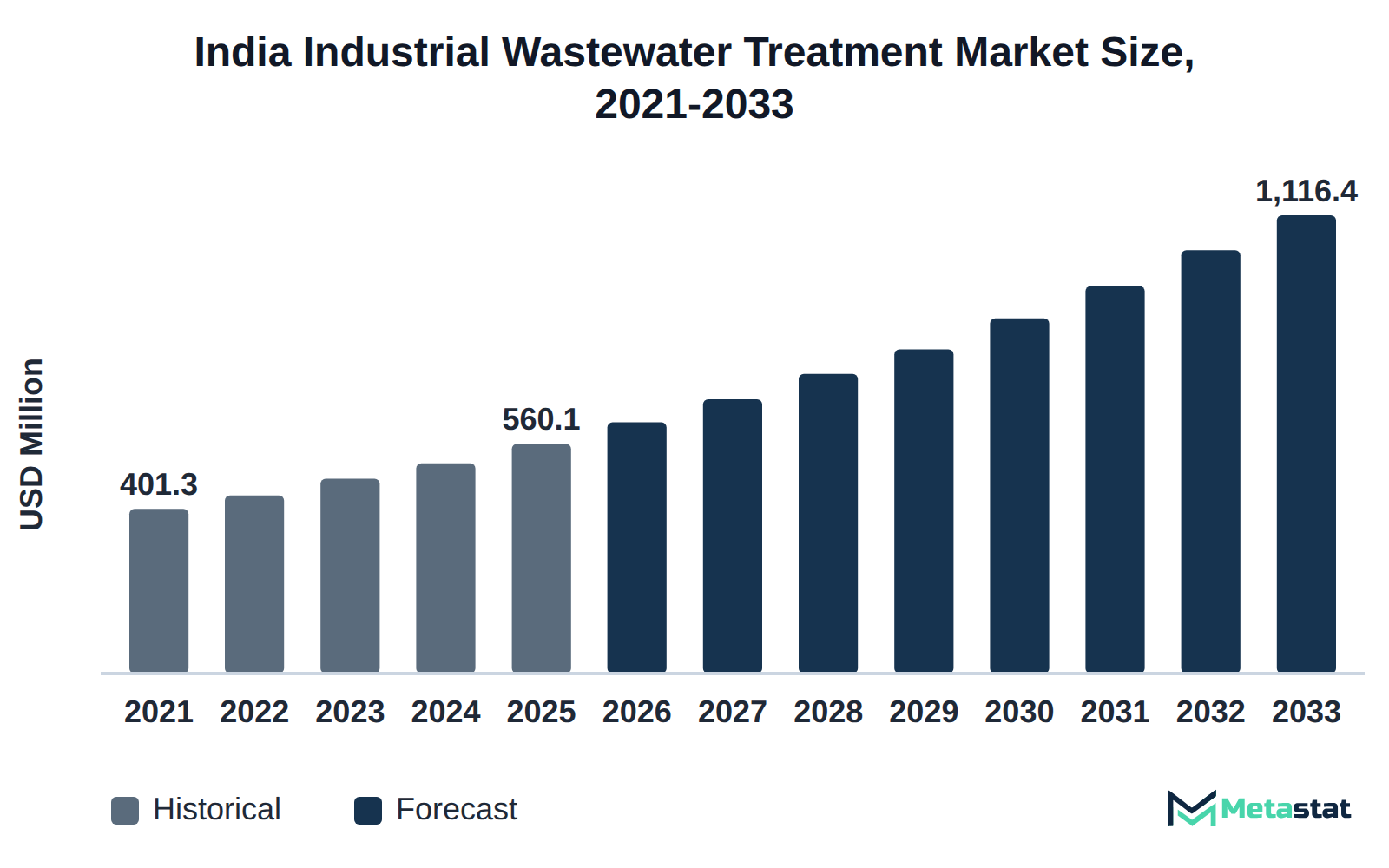
The India Industrial Wastewater Treatment market exhibits a significant shift towards advanced technologies including Membrane Bioreactor (MBR), Membrane Filtration, and Electrochemical systems. The adoption of Membrane Bioreactor technology, projected to grow from USD 141.5 million in 2026 to USD 283.7 million by 2033 with a CAGR of 10.4%, highlights the industry's focus on efficient and sustainable solutions. MBR technology optimizes the treatment process by combining biological treatment with membrane filtration, resulting in higher quality effluent and a reduced footprint compared to traditional methods.
Electrochemical treatment methods demonstrate a CAGR of 11.8%, driven by their capacity to efficiently remove various contaminants from industrial wastewater. This technology enhances operational efficiency and aligns with regulatory standards for effluent discharge, appealing to sectors facing stringent environmental regulations. The increased demand for sustainable practices in industries including pharmaceuticals and life sciences further supports the shift towards these advanced treatment technologies.
Overall, the transition towards Membrane Filtration systems and Electrochemical treatments within the India Industrial Wastewater Treatment market addresses compliance challenges and enables industries to achieve operational efficiencies. This transformation presents significant revenue potential for technology providers, contributing to the market growth trajectory.
Investments in Zero Liquid Discharge (ZLD) and water recycling technologies gain traction within the India Industrial Wastewater Treatment market. These technologies emphasize the need for efficient water usage and waste management in manufacturing sectors. Increasing regulatory pressure on industries to minimize wastewater discharge drives the adoption of ZLD systems. In the 2026-2033 period, ZLD is projected to achieve a compound annual growth rate (CAGR) of 10.9%, rising from USD 149.8 million in 2025 to USD 308.5 million by 2033.
Companies engage in various pricing strategies when implementing ZLD systems. Short-term contracts often accompany initial installations, allowing manufacturers to evaluate the performance and efficiency of the systems before committing to long-term agreements. This approach reduces financial risk and provides flexibility. Several firms finance ZLD systems through leasing models, allowing access to advanced technologies without substantial upfront costs.
These purchasing strategies reflect the market's response to the need for sustainable practices in the manufacturing industry. The emphasis on water recycling and ZLD solutions drives innovation, resulting in enhanced operational efficiency and compliance with environmental standards.
Compliance with industrial effluent standards has become critical for manufacturers, driven by stringent regulations established by environmental authorities. These regulations focus on minimizing the environmental impact of wastewater discharges. For instance, the market for biological treatment, which addresses a significant portion of these compliance needs, is projected to reach USD 425.5 million by 2033. This growth reflects increasing adoption of effective treatment technologies that meet or exceed regulatory requirements.
Water reuse requirements further increase demand for advanced treatment solutions. Industries including chemicals and petrochemicals, which have a projected market value of USD 207.9 million by 2033, actively invest in technologies that enhance water recovery. Efficient treatment processes fulfill regulatory standards and reduce operational costs through water reuse. This trend significantly influences purchasing decisions within the market, with companies prioritizing investments in advanced solutions that ensure compliance while optimizing resource use.
Indian industries increasingly adopt advanced wastewater treatment technologies to enhance water efficiency and minimize discharge. A significant factor driving this adoption is rising regulatory pressure to comply with environmental standards. Many companies recognize the necessity of implementing effective treatment solutions to meet these criteria while maintaining operational efficiency.
In the India Industrial Wastewater Treatment market, technologies including Zero Liquid Discharge (ZLD) demonstrate substantial growth. ZLD is expected to increase from USD 149.8 million in 2026 to USD 308.5 million by 2033, representing a compound annual growth rate (CAGR) of 10.9%. This demand for ZLD reflects a strategic shift among industries, particularly in sectors including chemicals and petrochemicals, where strict regulations on water discharge compel organizations to invest in innovative treatment methods.
By embracing advanced wastewater treatment technologies, industries achieve compliance and enhance sustainability practices, ultimately leading to reduced operational costs and improved public perception. The integration of these systems positions companies favorably in an increasingly environmentally conscious market, driving long-term profitability and growth.
Manufacturers in the chemicals and petrochemicals sector increasingly invest in wastewater treatment systems due to rising emission limits. This shift reflects the need for compliant operations and sustainable practices. The adoption of closed-loop systems facilitates the reuse of water, effectively minimizing wastewater generation and reducing overall operational costs. By implementing these advanced technologies, companies enhance their production efficiency and align with environmental standards.
Investment in the India Industrial Wastewater Treatment market is projected to reach USD 1,116.4 million by 2033, driven by this change. The market experiences significant growth due to the demand for solutions that meet stringent regulations while ensuring resource efficiency. Environmental consciousness among consumers escalates, leading companies to face pressure to improve their sustainability practices, further boosting demand for innovative wastewater treatment technologies.
Investment in innovative treatment technologies drives growth in the India Industrial Wastewater Treatment market. Industries increasingly adopt techniques including Zero Liquid Discharge (ZLD) and advanced oxidation processes to address stringent environmental regulations and enhance operational efficiency. The adoption of these technologies results from ongoing efforts to minimize water wastage and improve overall sustainability. Companies face rising operational costs associated with traditional treatment methods. This scenario encourages the exploration of cost-effective alternatives that comply with regulations while delivering substantial economic benefits.
The chemicals and petrochemicals sector particularly focuses on advanced treatment solutions to manage complex effluents and reduce environmental impact. This shift reflects a broader trend among Indian industries recognizing the importance of sustainable practices in maintaining competitiveness. As the market grows, investment in these innovative solutions is expected to rise and promote a culture of environmental responsibility within manufacturing sectors.
Price sensitivity significantly affects adoption rates within the India Industrial Wastewater Treatment market. Industries focused on wastewater treatment face tight budgets, which influences purchasing decisions. Higher capital expenditures associated with advanced technologies deter smaller manufacturers, leading to slower uptake of modern treatment solutions. For instance, companies operating in the food and beverage sector prioritize cost-effective treatment options due to tight margins, resulting in smaller orders for sophisticated systems. This reluctance to invest in higher-priced technologies reflects a broader trend where financial constraints dictate the pace of innovation in wastewater management. Consequently, the market struggles to capitalize fully on advanced treatment methods, which limits overall growth potential.
Suppliers face significant input cost pressures within the India Industrial Wastewater Treatment market. Rising costs for raw materials and essential components impact profitability and operational efficiency. Industries increasingly rely on specialized materials and technologies to enhance treatment capabilities, leading to higher initial expenditures. Suppliers respond by optimizing procurement strategies and establishing long-term partnerships with material providers, aiming to secure competitive pricing and stable supply chains. Several suppliers invest in research and development to create cost-effective alternatives and improve process efficiencies. These strategies facilitate better management of financial pressures, enabling suppliers to maintain competitive pricing while ensuring compliance with treatment standards. Ongoing optimization and innovation help suppliers manage input cost challenges and sustain growth within the market.
The chemical treatment segment within the India Industrial Wastewater Treatment market presents substantial growth potential. With a projected value of USD 178.8 million by 2033, this segment demonstrates a compound annual growth rate of 7.9%. The increasing focus on effective wastewater management among various industries drives investment in chemical treatment methods, which offer efficient solutions for pollutant removal and water reclamation. Factors including stringent regulations surrounding effluent discharge and rising environmental awareness among manufacturers further contribute to this trend. Buyers in the pharmaceuticals and life sciences sectors, and chemicals and petrochemicals industries actively seek advanced chemical treatment solutions to ensure compliance while optimizing operational efficiency. The market distinguishes itself through the development of innovative chemical processes that enhance treatment effectiveness, resulting in improved sustainability practices across various sectors.
The India Industrial Wastewater Treatment market is segmented based on Technology, Treatment Method, Process Type, and End-Use Industry.
Membrane Bioreactor (MBR) technology combines biological treatment and membrane filtration to enhance the efficiency of wastewater treatment processes. Industries including pharmaceuticals and food and beverage apply MBR systems to meet stringent effluent discharge standards while ensuring water recovery. Increasing regulations concerning water quality drive the adoption of MBR systems, resulting in higher demand specifically in sectors striving for sustainability. Compared to other treatment technologies, MBR exhibits a higher growth rate because it treats many wastewater types, produces cleaner effluent, and lowers operational costs over time. Its anticipated growth rate exceeds that of conventional treatment methods.
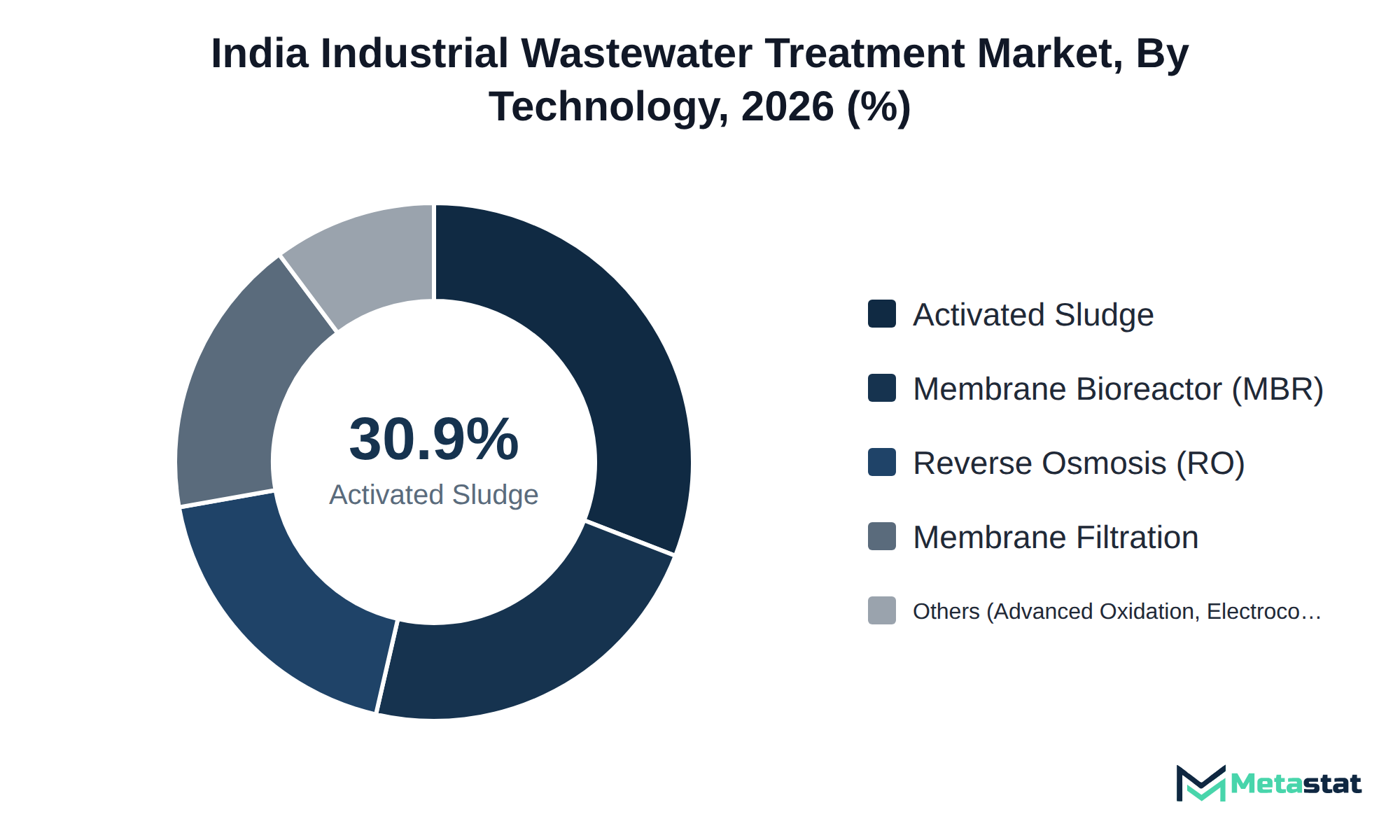
Activated Sludge segment is estimated to reach USD 308.5 million by 2033, at a CAGR of 7.5% during the forecast period. This technology employs a mixed culture of microorganisms to treat wastewater, primarily employed by industries including chemicals, pharmaceuticals, and food processing. The growing focus on water conservation and regulatory compliance drives increased adoption, particularly in sectors facing stringent wastewater discharge standards. Unlike other technologies, Activated Sludge offers a balance between effectiveness and operational costs, attracting industries with moderate budgets. The segment experiences steady growth compared to alternatives like Membrane Bioreactor (MBR), which features a higher CAGR of 10.4%. With rising environmental awareness, the market sees expanding opportunities for advanced treatment solutions that enhance efficiency and sustainability.
Reverse Osmosis (RO) segment is projected to reach USD 220 million by 2033. This technology is essential in treating industrial wastewater, effectively removing contaminants and enabling water recycling. Industries including chemicals, pharmaceuticals, and food and beverage frequently employ RO systems for their high efficiency in purification and compliance with stringent regulations. Growth in this segment is driven by increasing environmental concerns and the rising need for sustainable water management practices. Compared to other technologies in the market, including Activated Sludge and Membrane Bioreactor, Reverse Osmosis displays a stable adoption rate, with its application widely recognized for reliability and effectiveness. The CAGR for this segment aligns with broader trends toward innovation in wastewater treatment technologies, reinforcing its significance in the India Industrial Wastewater Treatment market.
Membrane Filtration segment is projected to grow at a CAGR of 9.4% during the forecast period. This technology involves the use of selective membranes for the separation of contaminants from wastewater, making it suitable for a variety of industries including textiles, food and beverage, and pharmaceuticals. Increasing regulatory pressures regarding water quality standards drive demand for effective filtration solutions, promoting the adoption of membrane filtration systems. Compared to other technologies, membrane filtration systems provide better quality effluent and higher recovery rates, appealing to industries facing stringent discharge regulations. The segment's growth is supported by the rising emphasis on sustainability and resource recovery, particularly in sectors that rely heavily on clean water for production processes. With a focus on innovation and efficiency, companies investing in membrane filtration technology position themselves favorably in the competitive landscape of the India Industrial Wastewater Treatment market.
Advanced oxidation and electrocoagulation technologies focus on the treatment of industrial wastewater by employing chemical processes to break down contaminants. These methods find application primarily in sectors requiring stringent water quality standards, including chemicals, pharmaceuticals, and textiles. Demand for these advanced technologies stems from increasing regulatory pressure for compliance and the need for effective pollutant removal, driving market interest in innovative solutions. Compared to traditional methods, this segment experiences a differentiated acceptance trajectory, appealing to industries where high-quality effluent is critical. While traditional treatments offer lower upfront costs, advanced oxidation and electrocoagulation often present superior long-term operational efficiency and effectiveness, driving adoption among specific industrial players. The India Industrial Wastewater Treatment market continues to evolve, with technological advancements pushing the boundaries of wastewater management and leading to enhanced treatment performance.
Physical Treatment segment is valued at USD 122.3 million in 2026 and is projected to reach USD 203.3 million by 2033, at a CAGR of 7.5% during the forecast period. This treatment method is widely employed to remove suspended solids and other pollutants from wastewater, primarily by applying physical processes including sedimentation, filtration, and flotation. Industries including chemicals and petrochemicals, food and beverage, and textiles rely heavily on physical treatment to comply with environmental regulations and enhance water quality. Increasing regulatory pressure regarding effluent discharge drives the demand for effective physical treatment solutions. Compared to Chemical Treatment and Biological Treatment segments, this method demonstrates a more gradual growth trajectory, reflecting a stable yet essential approach to wastewater management. The market distinguishes itself through lower upfront investment relative to more advanced treatment technologies.
Chemical Treatment segment is estimated to reach USD 178.8 million by 2033, at a CAGR of 7.9% during the forecast period. This treatment method involves the use of chemicals to remove contaminants from wastewater, making it essential for industries including pharmaceuticals, chemicals, and food processing. The chemicals used in these treatment programs belong to the wider water treatment chemicals industry. Demand for this segment is driven by stringent environmental regulations and the increasing need for efficient wastewater management systems. Compared to other treatment methods, Chemical Treatment typically offers higher effectiveness in addressing specific contaminants, leading to its adoption in specialized applications. This segment's growth outpaces Physical Treatment, which is projected to grow at a CAGR of 7.5%. This trend illustrates a shift toward more sophisticated solutions in the India Industrial Wastewater Treatment market, catering to evolving industrial requirements.
Biological Treatment segment is expected to reach USD 425.5 million by 2033. This segment focuses on natural biological processes to break down organic matter and contaminants in wastewater. Industries including pharmaceuticals, textiles, and food and beverage predominantly employ this method to meet stringent environmental regulations and enhance sustainability efforts. The increasing emphasis on environmental compliance drives demand for biological treatment solutions, resulting in a projected CAGR of 10% during the forecast period. Compared to other treatment methods, the biological treatment segment offers a cost-effective and environmentally friendly solution, distinguishing itself with lower operational costs and a broader application range. The growth trajectory of this segment highlights the commitment of various industries toward sustainable wastewater management practices, contributing significantly to the growth of the India Industrial Wastewater Treatment market.
Electrochemical Treatment is projected to grow at a CAGR of 11.8% during the forecast period. This method employs electrochemical processes to treat wastewater, effectively removing organic and inorganic pollutants. Industries including pharmaceuticals and chemicals adopt this method to comply with stringent wastewater regulations and enhance treatment efficiency. The growing focus on sustainability and waste minimization contributes to increased adoption rates in this segment. Unique to the Electrochemical Treatment segment, the technology's ability to operate at lower energy costs enhances its appeal compared to other treatment methods. While Biological Treatment captures a substantial market share, Electrochemical Treatment distinguishes itself with its growth trajectory, positioning it favorably among emerging technologies in the India Industrial Wastewater Treatment market. Increased government support for advanced treatment methods further drives growth in this segment, reflecting a shift toward innovative solutions in wastewater management.
Advanced Treatment incorporates innovative technologies designed to enhance the efficiency of wastewater treatment processes. This method focuses on complex pollutants that traditional methods struggle to address, making it essential for industries including pharmaceuticals and petrochemicals. The push for stricter environmental regulations drives demand for advanced treatment solutions, compelling operators to adopt more effective methods for compliance. In comparison to other treatment methods, advanced treatment often incurs higher costs due to the sophisticated technology involved; however, it offers significant long-term savings through improved water reuse and resource recovery. This method stands out from alternatives like physical and chemical treatments, which do not achieve similar levels of contaminant removal. The India Industrial Wastewater Treatment market is expected to increasingly rely on advanced treatment methods to meet evolving standards and sustainability goals.
Zero Liquid Discharge (ZLD) technology focuses on minimizing wastewater discharge by recovering and reusing water, making it essential for industries with stringent environmental regulations. Industries including textiles and chemicals adopt ZLD to mitigate their environmental impact while complying with regulations. The increasing emphasis on sustainable practices drives growth within this segment, distinguishing it from conventional treatment options that do not achieve complete wastewater recovery. Compared to other segments, ZLD offers higher growth at a CAGR of 10.9%, exceeding the CAGR of several conventional treatment methods. The market's focus on environmental sustainability and regulatory compliance enhances the demand for Zero Liquid Discharge systems.
Partial Treatment segment is estimated to reach USD 209.2 million by 2033, at a CAGR of 7.4% during the forecast period. This approach focuses on removing specific contaminants from wastewater, making it suitable for industries requiring cost-effective solutions. Chemical manufacturers and textile producers increasingly adopt Partial Treatment technologies to meet regulatory compliance and reduce environmental impacts. The segment experiences growth driven by stringent emissions regulations and rising awareness of sustainable practices. Compared to other segments, including Biological Treatment, which is expected to reach USD 425.5 million by 2033, Partial Treatment offers a more economical solution for certain applications, contributing to its appeal among several small to medium enterprises. This prioritization of cost without compromising quality ensures substantial demand within the India Industrial Wastewater Treatment market.
Conventional Treatment segment is expected to reach USD 322.7 million by 2033. This treatment process employs standard methods for the removal of contaminants from industrial wastewater, catering primarily to various sectors, including chemicals and petrochemicals, pharmaceuticals, and textiles. The push for stricter regulations on wastewater discharge drives growth in this segment, compelling industries to adopt effective treatment solutions. Compared to other processes, Conventional Treatment is anticipated to experience moderate growth due to its established nature and lower initial costs. While technologies including Zero Liquid Discharge (ZLD) demonstrate faster growth rates, the affordability and reliability of Conventional Treatment position it as a preferred solution for many manufacturers, ensuring compliance with environmental standards without substantial capital investment. The market reflects a balanced demand for economical, efficient solutions that accommodate various operational budgets.
Wastewater Recycling and Reuse segment is projected to grow at a CAGR of 9.8% during the forecast period. This segment focuses on treating and reusing wastewater, primarily benefiting industries that require large volumes of water, including textiles and pharmaceuticals. Demand for this segment is driven by increasing regulatory pressure to reduce freshwater consumption and mitigate environmental impact. Compared to other segments, including Conventional Treatment or Partial Treatment, which experience slower growth rates, the Wastewater Recycling and Reuse segment shows a more robust expansion, reflecting a shift toward sustainable water management practices. The emphasis on resource recovery and cost savings enhances its appeal among manufacturers seeking to optimize operations while adhering to stricter environmental standards. The market highlights this trend, demonstrating an increasing commitment to innovative water treatment technologies.
Valued at USD 113 million in 2026, this segment is projected to reach USD 207.9 million by 2033, at a CAGR of 9.1% during the forecast period. Companies operating in the chemicals and petrochemicals sector manage wastewater treatment to handle effluents generated from manufacturing processes. Increasing regulatory pressure regarding environmental compliance fuels demand for effective treatment solutions. This sector exhibits a higher growth rate compared to other segments, reflecting a significant emphasis on sustainability and corporate responsibility. The distinct requirement for advanced treatment technologies differentiates this segment, positioning it favorably for investment and innovation within the market. Significant capital allocation toward enhancing treatment capabilities aligns with broader environmental goals, resulting in strong growth potential for wastewater treatment solutions tailored to this industry.
Pharmaceuticals and Life Sciences segment is estimated to reach USD 172.8 million by 2033, at a CAGR of 10% during the forecast period. This segment encompasses the treatment of wastewater generated by pharmaceutical manufacturing and life sciences research facilities. Key players in this segment include pharmaceutical companies that prioritize compliance with stringent environmental regulations and sustainability initiatives. Regulatory frameworks demanding high purity standards drive investment in advanced treatment technologies, distinguishing this segment from others due to its focus on meeting these specific requirements. Compared to the broader market, the Pharmaceuticals and Life Sciences segment exhibits a more dynamic growth trajectory, influenced by rapid advancements in research and development practices. This segment's emphasis on innovative treatment solutions supports its robust expansion, contributing significantly to the overall growth of the India Industrial Wastewater Treatment market.
Textiles and Apparel segment is expected to reach USD 137.4 million by 2033. This segment primarily serves manufacturers and retailers involved in clothing and fabric production, focusing on wastewater treatment procedures that effectively manage dye effluents and chemical residues. Dyes and pigments used in fabric production are one source of these effluents. The rising emphasis on sustainable practices drives demand, with businesses seeking solutions to reduce environmental impact and comply with increasing regulations. Compared to other segments, the Textiles and Apparel segment exhibits a unique growth trajectory, with a CAGR of 9.2%, reflecting a robust commitment to improving wastewater management. The market expansion is propelled by the need for advanced treatment technologies that address specific contaminants prevalent in textile production processes. In this context, the India Industrial Wastewater Treatment market presents significant potential for innovation and investment, addressing both ecological and operational objectives.
Valued at USD 137.4 million in 2033, the Food and Beverage segment is projected to grow at a CAGR of 9.2% during the forecast period. This segment serves food and beverage manufacturers, where effective wastewater management is critical to comply with environmental regulations and maintain operational efficiency. Growth within this segment is driven by increasing regulatory pressures focused on environmental sustainability, influencing companies to invest in advanced treatment technologies. Compared to other sub-segments, the Food and Beverage segment experiences robust demand due to the high volume of wastewater generated in food processing and beverage production. This sub-segment stands out with its focus on biological and chemical treatment methods tailored to handle organic waste and contaminants specific to food and beverage operations. The India Industrial Wastewater Treatment market benefits from these developments, indicating a strong trajectory for both investment and innovation in treatment processes.
The Pulp and Paper segment serves industries focused on producing paper, cardboard, and related products. This segment requires efficient treatment processes to manage the high volume of wastewater generated during production, which contains significant amounts of organic materials and chemicals. Industries in this segment prioritize sustainable practices and regulatory compliance, driving demand for advanced wastewater treatment solutions. Regulatory pressures related to water discharge standards drive companies to adopt innovative technologies for effective treatment. Compared to other segments, the Pulp and Paper segment experiences different growth dynamics, influenced by environmental regulations and technological advancements. These dynamics distinguish it from segments with less stringent treatment requirements or lower volumes of wastewater.
Power Generation involves the treatment of wastewater produced by power plants, ensuring compliance with environmental regulations and promoting sustainability in energy production. Facilities in this sector employ advanced treatment processes to manage effluents, which are often high in contaminants and require careful handling. Increasing regulatory pressures and a growing emphasis on environmental responsibility drive demand within this segment. Compared to other sectors, the Power Generation segment experiences distinct challenges related to the heavy pollutants present in wastewater. This sector typically invests in more sophisticated technologies to achieve compliance and reduce environmental impact, positioning it for steady growth. While segments like Chemicals and Petrochemicals exhibit faster growth rates, the Power Generation segment prioritizes comprehensive treatment processes, reflecting a more regulated operational environment. The adoption of innovative technologies enhances the capabilities of the market, catering to the increasing need for efficient wastewater management in energy production.
Metals and Mining involves the extraction and processing of minerals, generating significant wastewater that requires treatment for environmental compliance. Companies in this sector prioritize effective treatment solutions to manage the environmental impact of their operations. Increasing regulatory pressure to reduce pollution levels drives demand for innovative wastewater treatment technologies. Unlike segments including Chemicals and Petrochemicals, the Metals and Mining segment experiences unique challenges related to the complexity of wastewater composition, including heavy metal contamination. This complexity often leads to higher treatment costs compared to simpler industrial processes. Adoption of advanced treatment methods tailored to the needs of this sector enhances operational sustainability and regulatory compliance. Mining water treatment systems are one example of such tailored methods.
Oil and Gas Refining involves the processing of crude oil into various petroleum products while managing the associated wastewater. This segment serves companies in the oil and gas industry, which require effective treatment solutions to address environmental compliance and sustainability. Demand for advanced treatment technologies drives this segment, particularly due to stringent regulations regarding wastewater discharge. Compared to other segments, Oil and Gas Refining typically experiences steady growth, influenced by fluctuations in crude oil prices and industry investments in environmental technologies. The market emphasizes the adoption of innovative treatment processes to minimize environmental impacts while optimizing operational efficiency.
The Automotive and Engineering segment is significant in the treatment of wastewater generated from manufacturing processes in the automotive sector. Industries within this segment focus on stringent environmental regulations and sustainability initiatives, driving investments in effective wastewater treatment solutions. Factors including growing concerns over pollution and increasing regulatory pressures significantly influence demand in this segment. This sub-segment differentiates itself from others through its specific requirements for advanced treatment technologies that ensure compliance with environmental standards, thereby influencing cost structures and adoption rates. Comparatively, this segment experiences slower growth than others due to the higher costs associated with implementing advanced treatment technologies. The India Industrial Wastewater Treatment market benefits from the increasing emphasis on sustainable practices in automotive manufacturing, which drives investments in innovative treatment solutions.
This sub-segment focuses on the treatment of wastewater generated by industries including electronics, leather, and rubber processing. These sectors produce various pollutants that require effective treatment before discharge or reuse. The demand for wastewater treatment in this sub-segment is driven by stringent environmental regulations aimed at reducing industrial pollution and ensuring compliance. Manufacturers within these industries benefit from advanced treatment technologies that enhance operational efficiency and reduce overall costs. Compared to other segments, including chemicals and petrochemicals, this sub-segment faces different challenges, including higher variability in wastewater composition, which requires tailored treatment solutions. The India Industrial Wastewater Treatment market continues to evolve due to innovations and regulatory pressures shaping the landscape, ensuring that industries remain competitive while adhering to environmental standards.
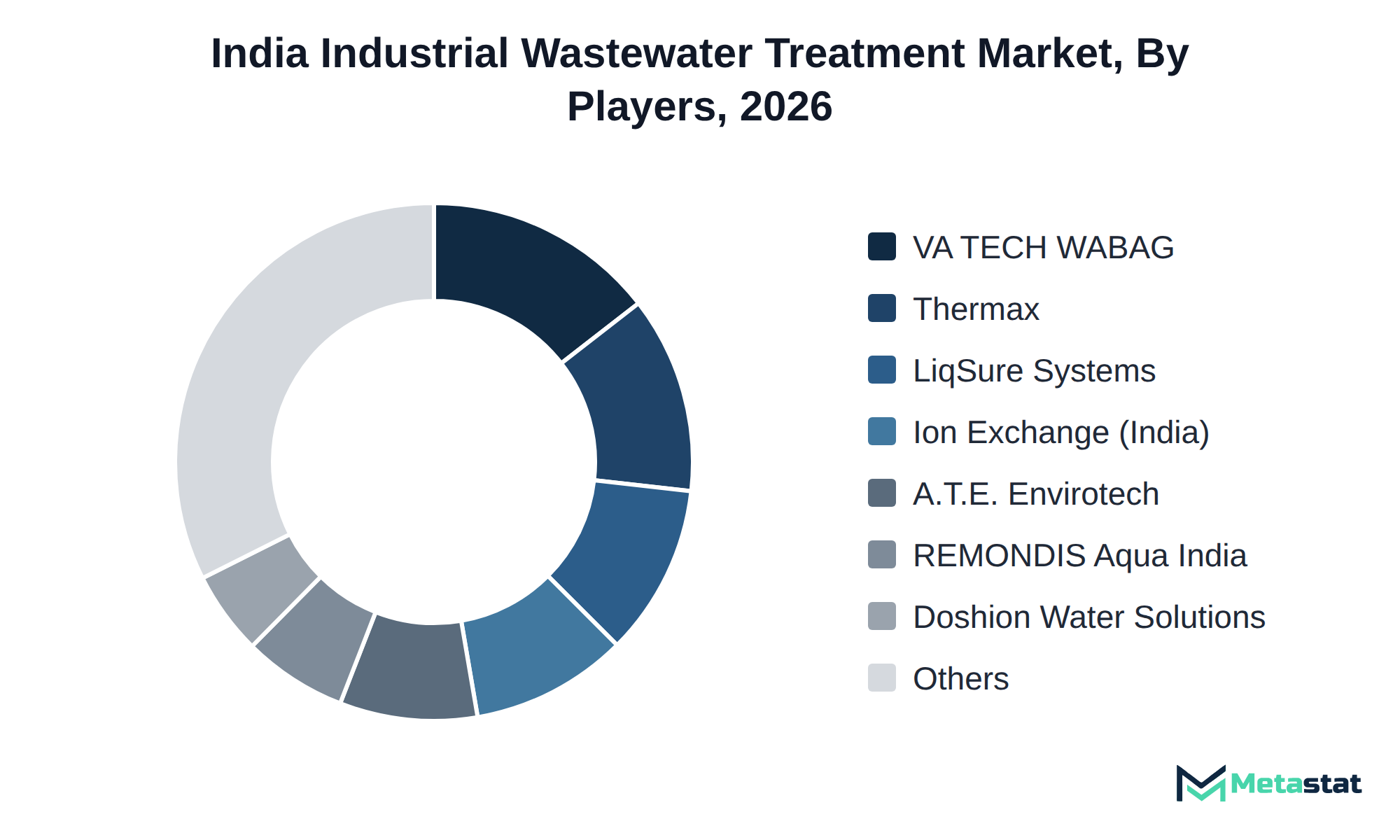
Companies in the India Industrial Wastewater Treatment market compete on several factors, including pricing, service quality, and technological advancements. Buyers prioritize certifications, customization options, and the ability to meet specific regulatory standards, influencing their purchasing decisions.
LiqSure Systems Pvt. Ltd. focuses on innovative treatment solutions that enhance operational efficiency. VA TECH WABAG Limited emphasizes comprehensive service offerings, integrating advanced technologies into its water management systems. Ecolab Inc. delivers tailored solutions aimed at improving water and energy efficiency across various industries.
Growth in the India Industrial Wastewater Treatment market relies on several key developments. Increased investment in advanced treatment technologies, including Membrane Bioreactor (MBR) systems, is expected to drive higher efficiency in wastewater processing, enhancing capacity in key sectors like chemicals and petrochemicals. The segment is projected to experience a compound annual growth rate (CAGR) of 10.4% from 2026 to 2033, contributing significantly to market expansion.
The adoption of Zero Liquid Discharge (ZLD) processes is anticipated to support sustainable practices, with a CAGR of 10.9% in the same period. This method appeals to industries seeking to minimize environmental impact, further propelling the India Industrial Wastewater Treatment market. However, potential regulatory challenges could impede progress. Stricter compliance requirements increase operational costs, affecting the financial feasibility of implementing advanced treatment solutions across various sectors.
By Technology: Membrane Bioreactor (MBR), Activated Sludge, Reverse Osmosis (RO), Membrane Filtration, Others (Advanced Oxidation, Electrocoagulation)
By Treatment Method: Physical Treatment, Chemical Treatment, Biological Treatment, Electrochemical Treatment, Advanced Treatment
By Process Type: Zero Liquid Discharge (ZLD), Partial Treatment, Conventional Treatment, Wastewater Recycling and Reuse
By End-Use Industry: Chemicals and Petrochemicals, Pharmaceuticals and Life Sciences, Textiles and Apparel, Food and Beverage, Pulp and Paper, Power Generation, Metals and Mining, Oil and Gas Refining, Automotive and Engineering, Others (Electronics, Leather and Rubber Processing)
The report strategically identifies and profiles the key market players and analyses their core competencies in each sub-segment of the Industrial Wastewater Treatment market.
Report Attributes | Details |
Study Period | 2021-2033 |
Base Year | 2025 |
Estimated Year | 2026 |
Forecast Period | 2026-2033 |
Historical Period | 2021-2025 |
Growth Rate | CAGR 9.0% from 2026 to 2033 |
Revenue Unit | USD million |
Segmentation | By Technology, Treatment Method, Process Type, End-Use Industry, and Region |
Find answers to common questions about this report
The Industrial Wastewater Treatment market size was valued at USD 560.1 million in 2025.
The market is projected to grow at a CAGR of 9.0% during the forecast period from 2026 to 2033.
Biological Treatment leads the Industrial Wastewater Treatment market with a projected value of USD 425.5 million by 2033. This segment surpasses others in terms of total value, reflecting its significant role in the industry.
Rising emission limits and stringent environmental regulations drive investment in wastewater treatment systems. Increased environmental consciousness among consumers pressures companies to enhance sustainability practices, further boosting demand for innovative treatment technologies.
Price sensitivity significantly affects adoption rates within the market. Higher capital expenditures associated with advanced technologies deter smaller manufacturers, leading to slower uptake of modern treatment solutions.
Investment in innovative treatment technologies drives growth in the India Industrial Wastewater Treatment market. The increasing focus on effective wastewater management among various industries, along with stringent regulations and rising environmental awareness, favor the adoption of advanced chemical treatment solutions.
The Industrial Wastewater Treatment market is estimated to reach a valuation of USD 1,116.4 million by 2033.
Key players operating in the Industrial Wastewater Treatment market include LiqSure Systems Pvt. Ltd., VA TECH WABAG Limited, Thermax Limited, Ion Exchange (India) Limited, REMONDIS Aqua India, Effwa Infra & Research Limited, and Veolia Water Technologies.
The chemical treatment segment is projected to reach USD 178.8 million by 2033, reflecting a compound annual growth rate of 7.9%.
Key applications of wastewater treatment in India include industrial wastewater management and municipal wastewater treatment, driven by increasing urbanization and industrialization.
The analysts below cover Chemicals and Materials research at Metastat Insights.
LEAD ANALYST
Utkarsh Khirodkar is a Lead Market Research Analyst at MetaStat Insight, specializing in market intelligence, technology sector assessments, and competitive strategy.

INDUSTRY CONSULTANT - CHEMICALS & ADVANCED MATERIALS
Chemicals and Materials · Machinery & Equipment · Packaging
Amit Gadhekar Consultant for Chemicals and Materials at MetaStat Insight, directing sector-specific intelligence, research, and strategic consulting across global chemical and processing markets.
Evaluating secondary resin quality across post-consumer packaging streams requires reliable technical segmentation. MetaStat Insight delivered an objective assessment that distinguished between extrusion-grade flake pricing and optical sorting throughput limitations across Western Europe. The competitive positioning breakdown for licensed depolymerization technology providers answered several questions during our feedstock feasibility audit. Their team clarified regional trade restrictions on mixed plastic scrap quickly when our team submitted follow-up requests.
Evaluating sovereign cloud deployments for core banking platforms demands a clear view of data residency regulations and migration exit strategies. MetaStat Insight delivered an exhaustive review of regional latency tolerances, mainframe decommission milestones, and third-party vendor concentration risk. The regulatory compliance mapping across European and Asian financial jurisdictions gave our team a dependable baseline for multi-cloud infrastructure discussions.
Replacing petrochemical surfactants with bio-based alternatives requires realistic timelines on industrial precision fermentation scaling. The market research broke down commercialization timelines, feedstock sugar price sensitivities, and regional cosmetic ingredient regulatory approvals in Europe and East Asia. That supplier readiness mapping gave our formulations team reliable context when comparing renewable chemical sourcing roadmaps.
Explore related market intelligence reports worth reading alongside this one.