
LEAD ANALYST
Utkarsh Khirodkar is a Lead Market Research Analyst at MetaStat Insight, specializing in market intelligence, technology sector assessments, and competitive strategy.

Global Dyes and Pigments Market Size, Share, By Product Type (Reactive Dyes, Disperse Dyes, Vat Dyes, Acid Dyes, Direct Dyes, Sulfur Dyes, Solvent Dyes, Organic Pigments, Inorganic Pigments and Others), By Application (Textiles, Paints and Coatings, Plastics, Printing Inks, Paper, Leather, Construction Materials, Food and Beverages, Cosmetics and Personal Care and Others), By Physical Form (Powders, Granules, Liquid Dispersions, Liquid Solutions and Pastes), By Sales Channel (Direct Sales and Distributors), Industry Analysis, Growth, Trends, and Forecast, 2026-2033
Report ID
MSI-5643
Published
October, 2026
Pages
283 Pages
Format
Historical
Base year
Forecast
Forecast period
Report Details
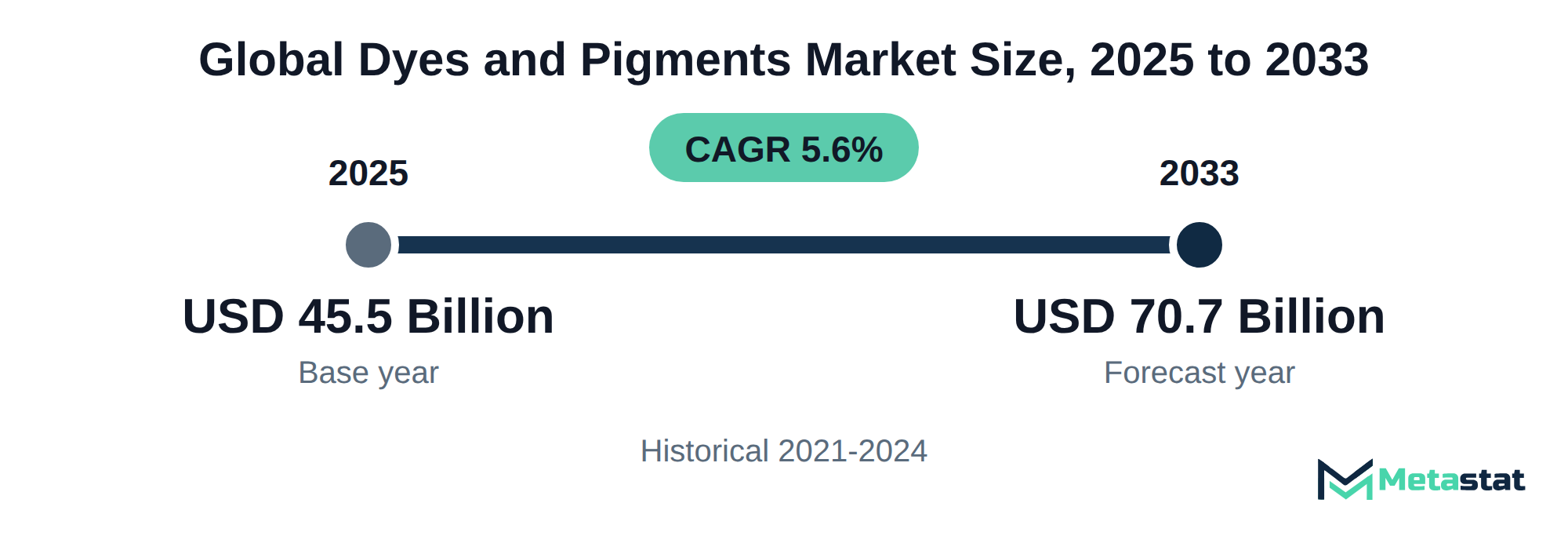
Market Valuation: Valued at $45.5 Billion in 2025, projected to reach $70.7 Billion by 2033 at a 5.6% CAGR.
Dominant Segment: Reactive Dyes lead the market due to their strong affinity for fibers, which enhances dyeing efficiency and color fastness, making them the preferred choice for textile manufacturers.
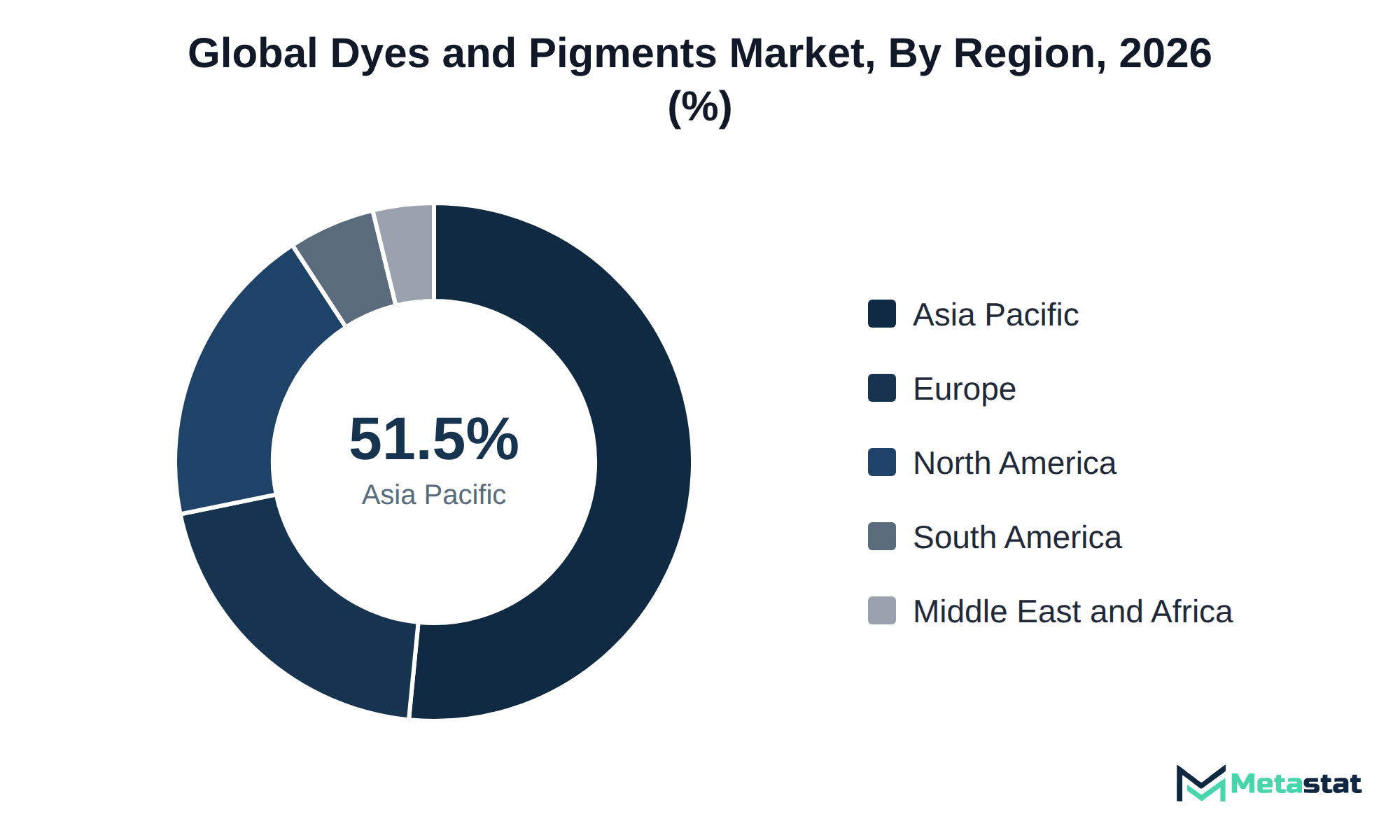
Geographic Lead: Asia Pacific holds the largest market share at 51.5% in 2025, driven by significant textile manufacturing activities in China and India, contributing to high demand for dyes and pigments.
What's Inside: This report provides a comprehensive analysis of the Dyes and Pigments market, covering product types, applications, and physical forms, along with competitive insights and a forecast window from 2026 to 2033.
Market Dynamics: The growth of the Dyes and Pigments market is primarily driven by the expanding textile sector, which demands high-quality dyes, alongside increasing consumer preference for sustainable and eco-friendly solutions.
Emerging Trends: The rising adoption of low-water reactive dyes is reshaping textile processing economics by promoting sustainable practices and reducing operational costs for manufacturers.
Choose Your License
Global Dyes and Pigments Market
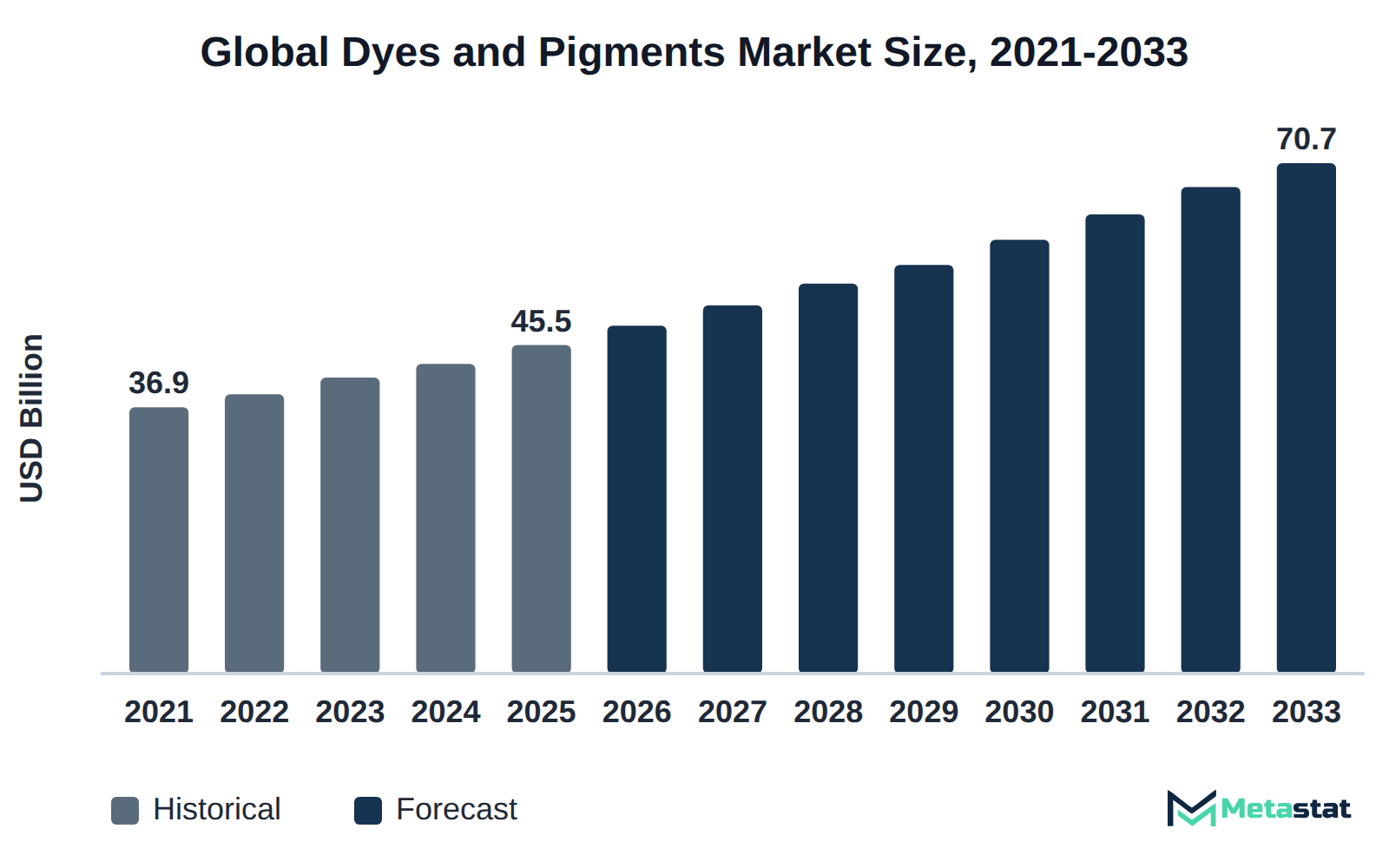
The global Dyes and Pigments market was valued at USD 45.5 billion in 2025 and is projected to reach USD 70.7 billion by 2033, growing at a CAGR of 5.6% over the forecast period.
The Dyes and Pigments market covers coloring agents used in textiles, paints, coatings, and plastics. Buyers invest in these products to achieve specific aesthetic and functional properties in their applications, reflecting the growing demand for high-quality and durable solutions. The versatility of dyes and pigments, combined with their ability to enhance product appeal and performance, drives significant spending across multiple sectors.
Rising consumer awareness of sustainable and eco-friendly products propels growth in the dyes and pigments market. Among the various segments, textiles represent the largest share, capturing substantial value due to their diverse applications and ongoing innovations in textile dyeing technologies. Asia Pacific stands out, holding 51.5% of the market share in 2025, with demand driven predominantly by countries including China and India.
North America holds 19.0% of the market in 2025, with the US leading in 2026. The anticipated rise in demand for high-performance coatings and specialty inks facilitates expansion within the Dyes and Pigments market. This growth trajectory reflects a broader trend toward customization and enhanced product functionality across industries.
The Dyes and Pigments market serves multiple industries by providing essential coloring solutions that enhance aesthetics and functionality. Buyers invest in these products to achieve specific color properties, durability, and compliance with regulatory standards. The diverse applications reinforce the importance of these materials in sectors including textiles and paints, where visual appeal and product quality are critical for market competitiveness.
Textile industry demand for high-quality dyes and pigments is the primary growth driver. Among the segments, Reactive Dyes hold the most value, reflecting their widespread use in fabric dyeing processes. Asia Pacific dominates the market with a share of 51.5%, surpassing North America, which holds 19.0% of the market in 2025, with the US leading in 2026. This regional strength stems from substantial textile manufacturing activities and a growing population, fueling consumption across various applications.
Innovations in dye and pigment formulations enhance performance characteristics, attracting investments from manufacturers seeking to improve product offerings. The ongoing shift toward environmentally friendly alternatives influences purchasing decisions, aligning with global sustainability trends. The market's evolution reflects continuous adaptation to consumer preferences and regulatory requirements, shaping an evolving environment for stakeholders.
Low-water reactive dyes significantly transform textile processing economics by reducing water consumption and enhancing dyeing efficiency. The Dyes and Pigments market is shifting toward these products, which support more sustainable textile manufacturing. In 2026, the market for reactive dyes is projected to reach USD 9.9 billion and grow to USD 15 billion by 2033, reflecting a compound annual growth rate (CAGR) of 6.1%. This growth highlights the increasing adoption of environmentally friendly dyeing processes among textile manufacturers.
These dyes provide superior dyeing performance with less water, reducing operational costs that arise from traditional dyeing methods. Industries focused on sustainability and compliance with environmental regulations adopt low-water reactive dyes to enhance their market position while addressing consumer demands for eco-friendly products. The shift toward these dyes creates opportunities for manufacturers to invest in advanced dyeing technologies, leading to improved production efficiency. Low-water reactive dyes improve both economic and environmental outcomes in the Dyes and Pigments market.
High-performance pigments exhibit a significant influence on pricing strategies within the Dyes and Pigments market. The increasing demand for durable coatings and recyclable plastics drives buyers to explore various procurement models. Contract purchasing emerges as a prevalent approach, where buyers commit to long-term agreements with suppliers to secure stable pricing. This model offers advantages including price predictability and the potential for volume discounts, aligning with rising raw material costs.
In 2026, the market is projected to reach USD 48.2 billion, reflecting a shift in purchasing dynamics. Buyers in industries including textiles and paints actively seek suppliers that provide not only cost-effective solutions but sustainable options, driven by growing emphasis on environmental responsibility. The ability to offer eco-friendly products enhances supplier competitiveness and influences purchasing decisions, ultimately affecting contract negotiations.
By 2033, the market value is anticipated to reach USD 70.7 billion, indicating significant growth opportunities. This expansion necessitates strategic pricing considerations as buyers increasingly prioritize suppliers that demonstrate reliability and innovation. High-performance pigments in coatings and plastics therefore become a critical factor in securing competitive advantages.
The demand for natural colorants in food and cosmetic formulations is experiencing significant growth due to increasing consumer preference for clean-label products. This shift reflects a broader trend towards health-conscious choices, prompting manufacturers to seek out dyes and pigments derived from natural sources. In the Dyes and Pigments market, natural colorants are gaining traction as industries prioritize sustainability and transparency in their offerings.
In 2023, the market for natural colorants in the food sector alone reached a substantial value, driven by consumers' desire for safer and more environmentally friendly alternatives. This trend extends to cosmetics manufacturing, where products featuring natural ingredients enhance brand appeal and promote customer loyalty. Companies focusing on natural colorants differentiate themselves in a competitive landscape, capturing an increasingly conscious consumer base.
Businesses are adapting, and natural colorants align with consumer preferences while supporting regulatory compliance. With the Dyes and Pigments market projected to grow significantly, this segment represents a vital opportunity for businesses aiming to innovate and meet the evolving needs of their customers.
Colorfastness and compliance are critical factors for buyers when selecting dyes and pigments. These attributes ensure that products maintain their intended color and meet regulatory standards throughout their lifecycle. The Dyes and Pigments market sees significant demand from the textiles application segment, with a projected value increase from USD 17.4 billion in 2026 to USD 24.9 billion by 2033, driven by stringent colorfastness requirements in the fashion and home décor industries.
Buyers prioritize products that exhibit high resistance to fading, washing, and light exposure. Compliance with environmental regulations remains essential. Manufacturers of dyes and pigments invest in sustainable formulations that align with regulations, reflecting a growing emphasis on eco-friendly solutions. This shift attracts buyers in various sectors, including textiles, paints, and plastics. The market's competitive landscape encourages innovations that improve colorfastness and comply with safety standards.
Incorporating colorfast technologies brings operational advantages, including reduced returns and increased customer satisfaction. Companies focusing on developing products with enhanced compliance and performance capabilities attract a broader customer base, establishing long-term relationships. Colorfastness and compliance influence buyer choices and shape growth and competitiveness in the Dyes and Pigments market.
Increasing demand from the textile sector significantly drives growth in the Dyes and Pigments market. The expansion of this sector reflects a shift in consumer preferences toward appealing colors and diverse patterns, compelling manufacturers to invest in high-quality dyes. This heightened interest results in an increased volume of dyes consumed within textile production processes, positively affecting pricing structures. The forecast indicates that the textiles application segment will grow from USD 17.4 billion in 2026 to USD 24.9 billion by 2033, representing a compound annual growth rate of 5.3%. Such growth presents opportunities for suppliers to innovate and offer specialized dye products that cater to these emerging market needs.
The increased focus on sustainable practices within textiles further enhances demand for environmentally friendly dye solutions, leading to an evolving environment for manufacturers. Companies are adapting to changing consumer behaviors and preferences, and the market is responding.
High-performance pigments enhance color strength and durability, driving significant adoption across various applications. This shift results from technological advancements that allow for improved formulation stability and resistance to environmental factors. The paint and coating industries particularly benefit from these innovations, which require colors that maintain vibrancy and withstand harsh conditions. The transition to high-performance materials contributes to a reduction in the frequency of repainting and reapplication, ultimately lowering long-term costs for manufacturers and consumers alike. The growing emphasis on sustainability pushes producers to explore options that minimize environmental impact, leading to the development of eco-friendly high-performance pigments. Producers enhance their offerings to meet stringent performance standards. The market is projected to see higher demand across both traditional and emerging sectors, including construction and automotive. This trend creates competitive advantages for manufacturers prioritizing innovation and sustainability in product development strategies.
Fluctuating prices of raw materials impact the willingness of buyers to commit to long-term investments in the Dyes and Pigments market. Industries including textiles and coatings experience slower order placements due to uncertainty surrounding pricing trends. This volatility affects budgeting and financial planning, prompting buyers to postpone purchases or seek alternatives, thereby limiting market growth potential. Manufacturers in the market face challenges in maintaining consistent profit margins, further complicating the overall business environment. Delays in the adoption of innovative products hinder potential advancements in quality and performance. Buyers require price stability to secure long-term supply agreements, influencing their purchasing strategies and ultimately shaping market dynamics.
Input costs for raw materials exert significant pressure on suppliers in the Dyes and Pigments market. Fluctuations in the prices of chemicals and other essential components lead to increased production expenses, impacting profit margins. Suppliers focus on optimizing their procurement strategies to mitigate these cost pressures. Implementing alternative sourcing methods and exploring local suppliers enhances cost efficiency. Investments in technology and process innovations emerge as critical solutions to streamline operations and reduce waste. These measures help suppliers maintain competitiveness while addressing the financial implications of rising input costs. Adapting to market conditions and evolving customer demands influences the strategic choices of suppliers in the Dyes and Pigments market, driving innovation and efficiency across applications.
The segment of reactive dyes is positioned for growth within the Dyes and Pigments market, driven by their enhanced performance in textile applications. The textile industry's continuous demand for bright and long-lasting colors drives the adoption of these products. Reactive dyes exhibit strong affinity for fibers, offering improved dyeing efficiency and color fastness, which appeal to manufacturers focusing on quality and sustainability. Growth in the reactive dyes segment benefits suppliers and enhances overall market dynamics, contributing to the anticipated expansion of the Dyes and Pigments market during the forecast period.
The Global Dyes and Pigments market is segmented based on Product Type, Application, Physical Form, and Sales Channel.
Primarily used in the textile industry, reactive dyes bond chemically with fibers, resulting in rich colors and improved durability. This segment sees strong demand as more manufacturers adopt sustainable and efficient dyeing processes. Compared to other dye categories, including disperse and acid dyes, reactive dyes exhibit a faster growth rate, with a CAGR of 6.1%. The focus on environmentally friendly dyeing methods enhances the appeal of reactive dyes, making them a preferred choice for manufacturers aiming to meet stringent ecological regulations. In the Dyes and Pigments market, this segment stands out due to its unique characteristics and stronger performance in textile applications, reflecting a significant shift toward sustainable practices in the industry.
Disperse Dyes segment is estimated to reach USD 10.4 billion by 2033, at a CAGR of 6% during the forecast period. These dyes primarily find applications in textile manufacturing, specifically for synthetic fibers like polyester, where they provide vivid colors and excellent wash and light fastness. The growth of this segment is driven by rising demand for high-quality textile products. Competitive pricing and technological advancements in dyeing processes contribute to this growth. Compared to other dye segments, Disperse Dyes present a faster growth rate, attributed to their specialized use and increasing adoption in the textile sector. Robust expansion in this segment contrasts with others that experience slower growth rates, influenced by varying buyer preferences and application requirements. The increasing trend toward eco-friendly dyeing processes further enhances the appeal of Disperse Dyes, ensuring their significance in the Dyes and Pigments market.
Vat Dyes segment is expected to reach USD 2.7 billion by 2033. These dyes are primarily used in textile applications, providing strong colors and high color fastness due to their unique chemical properties. Increasing demand for durable and high-quality dyeing solutions among manufacturers drives this segment's growth. The textile industry, particularly in regions including Asia Pacific, significantly influences the adoption of vat dyes, which offer advantages over other dye types in terms of color stability and resistance to fading. While the growth rate of this segment is moderate compared to reactive and disperse dyes, which display higher CAGRs, vat dyes appeal to buyers prioritizing long-lasting color performance. The market for vat dyes contributes to the overall advancement of the Dyes and Pigments market, reflecting shifting preferences toward sustainable and efficient dyeing processes.
Acid Dyes segment is projected to grow at a CAGR of 5.1% during the forecast period. These dyes are primarily used in textiles, leather, and paper applications, where strong color effects and wash durability are essential. Demand for Acid Dyes is driven by the increasing need for high-quality dyeing processes in textiles, particularly for synthetic fibers. This segment differs from others in terms of its specific application and the need for compatibility with various substrates. Unlike Reactive Dyes, which target different fabrics, Acid Dyes primarily focus on protein fibers and nylon, contributing to their unique market positioning. The anticipated growth reflects a broader trend in the Dyes and Pigments market, where businesses seek innovative solutions that enhance product performance and aesthetic appeal.
Direct Dyes color textiles and other materials, providing strong colors and high colorfastness. This segment is essential for manufacturers focused on applications requiring reliable and consistent coloration. The textile industry, in particular, heavily relies on direct dyes for their ability to produce vivid hues on various fabric types. Growing demand from consumers for high-quality textiles fuels the expansion of this segment. Pricing pressure from competing dye products, including reactive and disperse dyes, influences market dynamics. Direct Dyes tend to offer competitive pricing compared to reactive dyes, appealing to cost-sensitive segments of the textile industry. However, performance attributes related to colorfastness and wash durability drive manufacturers to consider alternatives when specifications demand higher standards. The Dyes and Pigments market reflects the diverse needs of industries seeking effective coloring solutions.
Sulfur dyes are widely recognized for their use in dyeing cotton and other cellulosic fibers, providing strong colors with excellent lightfastness. Their popularity stems from their cost-effectiveness and suitability for large-scale applications, particularly in the textile industry. Manufacturers use sulfur dyes predominantly for denim and other cotton fabrics, reacting favorably to the rising demand for denim products. The segment experiences growth driven by the increasing preference for sustainable and environmentally friendly dyeing processes. Compared to other dye types, sulfur dyes offer lower prices, making them appealing for mass production despite their more complex application requirements. The market's shift toward sustainable practices influences adoption rates, with manufacturers seeking alternatives that align with eco-friendly guidelines. While other segments, including reactive dyes, experience faster growth, sulfur dyes maintain relevance due to their affordability and functionality in specific applications.
Solvent dyes color plastics, waxes, and oils across various applications. This segment appeals predominantly to manufacturers across the automotive, cosmetics, and food industries, where bright color and product performance are essential. The increasing consumer preference for visually appealing products drives demand for solvent dyes, enhancing their adoption in sectors focused on aesthetics. Compared to other dye segments, solvent dyes typically offer a different pricing structure, often positioned at a premium due to their specialized applications and superior color properties. Regulatory factors regarding environmental impact shape market dynamics, encouraging the development of greener alternatives in the formulation of solvent dyes. However, ongoing innovations and the quest for high-performance colorants support market growth.
Organic pigments consist of color-producing compounds predominantly used in various applications including paints, coatings, and plastics. Their demand arises mainly from the need for high-performance and eco-friendly solutions, appealing to manufacturers seeking sustainable options. The ongoing trend toward sustainability and environmental friendliness drives the growth of organic pigments, particularly in the paints and coatings sector.
Unlike other segments, organic pigments typically command higher prices due to their performance attributes and environmental benefits. This segment experiences robust interest from industries aiming to reduce their ecological footprint. The shift toward less toxic, more sustainable formulations reflects broader market trends, enabling organic pigments to stand out among competing products. This segment's fluidity and adaptation to consumer preferences position it well for future opportunities in the evolving market.
Inorganic pigments are widely used for their strong colors, durability, and lightfastness. This segment finds application in various industries, including paints, coatings, plastics, and construction materials. The demand for inorganic pigments has risen due to their environmental stability and non-toxic properties, making them favorable for many applications. Growth in infrastructure development and increased consumer spending in sectors including construction enhance demand for these pigments. Unlike organic pigments, which offer more intense colors, inorganic pigments typically provide excellent opacity and color retention, catering to specific requirements for durability and performance. The market for inorganic pigments exhibits distinct dynamics, influenced by factors including raw material availability and regulatory compliance regarding environmental standards. This segment appeals to buyers seeking reliable and cost-effective coloring solutions across diverse industrial applications, contributing to its significance in the overall market.
Natural dyes, mordant dyes, and basic dyes encompass a unique sub-segment within the product type category. These dyes find application primarily in the textile and cosmetics industries, with a growing trend in sustainable and eco-friendly products. A notable force influencing this segment is the increasing consumer preference for natural and organic products, driving manufacturers to explore these options. This sub-segment distinguishes itself from others through its focus on environmentally friendly processes, appealing to a niche market segment. Compared to conventional dyes, natural dyes typically command higher prices due to their sourcing and production methods. Regulatory pressures for sustainable practices contribute to the segment's evolution and adoption within the market, reflecting a broader shift driven by environmental consciousness among consumers and manufacturers alike.
The textiles application primarily serves the clothing and fabric industries, focusing on dyeing processes that enhance the aesthetic appeal and performance of materials. Increasing consumer preferences for durable colors and sustainable dyeing solutions drive growth in this segment. Compared to other applications, including paints and coatings, textiles exhibit slower growth, influenced by the need for compliance with environmental regulations and shifts toward eco-friendly dyeing alternatives. The textiles segment shows increasing adoption of reactive dyes due to their superior bonding capabilities, setting it apart from other dyeing methods that demand different applications and techniques. The market evolves, aligning with trends toward sustainable and high-performance products.
Paints and Coatings segment is estimated to reach USD 20.3 billion by 2033, at a CAGR of 5.8% during the forecast period. This segment is essential in the production of paints, varnishes, and coatings used in various industries, including automotive, construction, and furniture. Increased consumer demand for aesthetic appeal and durability in finished products drives growth. Progress in eco-friendly formulations influences the evolution of this segment, pushing manufacturers toward sustainable solutions. Durable, high-performance finishes also matter in formulations such as powder coatings. Compared to other segments, the paints and coatings application experiences relatively higher growth rates, supported by the rising trend of premium products in the market. Investments in innovative technologies to enhance product performance further differentiate this segment, leading to a more competitive landscape among suppliers.
The Plastics segment is expected to reach USD 8.6 billion by 2033. This segment caters to various industries, including packaging, automotive, and consumer goods, where strong colors and durability are essential. The growth trajectory of this segment is driven primarily by rising demand for colored plastic packaging, reflecting consumer preferences for visually appealing products. Increasing adoption of environmentally friendly pigments in plastic manufacturing enhances the appeal of this segment. Compared to others in the application category, the Plastics segment exhibits a distinctive growth profile due to integration with technological advancements that improve color stability and processing characteristics, setting it apart from segments like textiles, which experience slower growth patterns. This dynamic contributes to a competitive edge within the Dyes and Pigments market.
The Printing Inks segment is projected to grow at a CAGR of 5.3% during the forecast period. This segment serves essential functions in the production of printed materials, including packaging, labels, and publications, predominantly used by commercial printing companies and publishers. The increasing demand for high-quality prints, driven by advancements in printing technology, drives growth in this segment. The push for eco-friendly inks presents opportunities, with manufacturers seeking sustainable alternatives to traditional solvent-based inks. Compared to other segments, including Paints and Coatings, which is projected to reach USD 20.3 billion by 2033, the Printing Inks segment experiences slower growth but appeals to a diverse market with specific quality requirements, ensuring its unique position in the Dyes and Pigments market.
Paper serves a significant role in various printing and packaging applications, relying on effective colorants to achieve desired aesthetic qualities. This segment finds demand from manufacturers producing printed materials, packaging solutions, and specialty papers. Growth is driven by the increasing use of high-quality printed products and sustainable packaging solutions. Regulatory requirements emphasizing eco-friendliness influence the selection of paper dyes and pigments. Compared to other segments, the Paper segment typically experiences slower growth rates due to reliance on traditional printing processes and established market standards. This segment faces competition from alternative coloring solutions, impacting its pricing dynamics within the larger market.
Leather requires specific dyes and pigments to achieve desired colors and finishes. This segment caters primarily to the leather goods manufacturing industry, including production of footwear, bags, and upholstery. The demand for high-quality leather products drives the need for specialized dyes that provide durability and aesthetic appeal. Increased consumer preference for premium leather goods influences market behavior, pushing manufacturers to adopt innovative dyeing techniques that enhance product quality. Compared to other application segments like textiles or paints, the leather segment often demands higher-priced, specialized dye solutions due to the unique properties required for leather finishing. Various factors, including environmental regulations, impact the availability and selection of dyes used in this segment, affecting production processes and costs.
Construction materials encompass a range of substances used in the building and infrastructure sectors, relying on colorants to enhance aesthetic appeal and durability. The construction industry applies dyes and pigments in various applications including concrete, coatings, and decorative finishes, serving builders, architects, and designers. Demand arises from the need for visually appealing and durable materials in residential, commercial, and industrial projects. Environmental regulations increasingly drive the use of sustainable and eco-friendly colorants, impacting product formulation and selection. Compared to other segments, construction materials exhibit distinct characteristics, with differing regulatory influences and a focus on durability and performance, aligning with broader trends in sustainable building practices. The Dyes and Pigments market is expected to evolve, supporting advancements in the construction materials sector.
Food and Beverages applications employ dyes and pigments for enhancing the visual appeal and aesthetic quality of various products. This segment sees demand primarily from food manufacturers and beverage producers who rely on bright colors to attract consumers and differentiate their offerings. A significant trend driving growth in this sector involves increasing consumer preference for visually appealing products, which influences manufacturers to invest in high-quality colorants. Compared to other segments like Textiles or Paints and Coatings, this sector faces unique challenges related to compliance with food safety regulations, impacting the selection of approved colorants. The need for natural and synthetic colorants that meet stringent regulatory standards shapes product innovation and supplier strategies within the Dyes and Pigments market. This sub-segment's emphasis on consumer safety and product differentiation highlights its distinct role in the broader market dynamics.
Cosmetics and Personal Care use dyes and pigments to enhance product appeal, ensuring bright colors in various formulations, including makeup, skincare, and haircare products. Manufacturers in this segment prioritize color consistency and safety, targeting consumers who demand quality and effectiveness. Rapid growth in the beauty industry drives demand for innovative and high-performance colorants. The increasing trend toward natural and organic formulations influences product development, with many companies seeking sustainable and eco-friendly dyes. Unlike other segments, the Cosmetics and Personal Care segment often experiences a faster growth trajectory, largely due to evolving consumer preferences and increased focus on aesthetic attributes. This segment typically faces unique regulatory challenges that require compliance with strict safety standards, impacting product formulation and approval timelines. The Dyes and Pigments market continues to evolve, aligning with trends in personalization and sustainability, pushing manufacturers to innovate continuously.
Household products, art materials, and pharmaceuticals employ a variety of colorants to achieve desired visual effects. The personal care and beauty industries leverage these dyes to enhance product appeal, while the pharmaceutical sector employs them for coloring gels, capsules, and tablets. Demand for these colorants is driven by increasing consumer preferences for visually appealing products, prompting manufacturers to focus on innovative and effective formulations. This segment exhibits a distinct pricing structure compared to other applications, reflecting higher costs associated with specialized formulations. The market operates under stringent regulations, particularly in pharmaceuticals, ensuring safety and efficacy in color usage. These dynamics shape the segment's growth trajectory, influencing investment decisions and product development strategies. The Dyes and Pigments market benefits from this segment's unique requirements and consumer demands, facilitating innovative solutions.
Valued at USD 18.6 billion in 2026, the Powders segment is projected to reach USD 25.4 billion by 2033, at a CAGR of 4.6% during the forecast period. Powders are widely used in applications including textiles, paints, and coatings, providing essential color and finish. This segment attracts manufacturers in various industries seeking to enhance their products' aesthetic appeal and performance. Demand for powders is driven by the growing textile and paints industries, with producers investing in innovative formulations to improve colorfastness and stability. Compared to liquid dispersions, powders often offer lower production costs, although they experience slower growth due to shifting preferences for alternative forms. In the context of the Dyes and Pigments market, the Powders segment presents unique opportunities for expansion while addressing the specific requirements of diverse applications.
Granules segment is estimated to reach USD 8.4 billion by 2033, at a CAGR of 6.2% during the forecast period. This segment finds significant application in various industries, particularly in the manufacturing of plastics and textiles. The growing requirement for high-performance materials, along with rising environmental awareness, drives demand in this sector. Granules differ from other forms, including powders and liquids, due to their ease of handling and application in processes requiring precision. The segment experiences faster growth relative to the Powders segment, which has a CAGR of 4.6%. Granules offer advantages in terms of stability and shelf life, appealing to manufacturers seeking reliable and effective colorants. Innovations in product formulation and production techniques further enhance the appeal of granules, distinguishing them in the competitive landscape of the Dyes and Pigments market.
Liquid Dispersions segment is expected to reach USD 23.9 billion by 2033. This segment finds extensive application in industries including textiles, coatings, and plastics, where high dispersion stability and consistent color quality are essential. Demand for liquid dispersions is driven by the growing need for eco-friendly alternatives, reflecting a trend toward sustainable practices in manufacturing. Compared to other physical forms, including powders and granules, liquid dispersions offer advantages in application ease and uniformity. The segment's growth rate aligns with a CAGR of 5.8%, indicating robust demand, particularly in the coatings sector, which emphasizes the importance of color accuracy and performance. Overall, the dynamics influencing this segment contribute to broader growth trends observed in the Dyes and Pigments market.
Liquid Solutions segment is projected to grow at a CAGR of 5.8% during the forecast period. This segment is primarily for applications requiring smooth integration and uniform color distribution, particularly in textiles and paints. Manufacturers rely on liquid solutions for their ease of application and effective color management in various formulations. The growth in this segment is driven by increasing demand from the textile industry, which seeks durable colors for fabric finishing. Compared to other physical forms, including Powders, Liquid Solutions feature faster application processes and a broader range of uses in consumer products, making this segment distinct. With a projected value of USD 23.9 billion by 2033, investment in innovations within this sector continues to shape the Dyes and Pigments market.
Pastes represent a specialized form used in various applications, primarily targeting the textile and coatings industries. Producers apply pastes to achieve consistent color application and enhanced adherence on substrates. Demand for pastes is driven by the growing need for high-performance solutions that provide superior coverage and durability. This sub-segment distinguishes itself from others by its ability to deliver a thicker consistency, which is particularly beneficial in specific applications where liquid forms struggle to perform effectively. While other segments experience varying growth rates, pastes fit into a niche that appeals to manufacturers looking for tailored solutions to meet demanding performance standards. The increasing focus on sustainable and eco-friendly practices further influences the adoption of pastes, driven by manufacturers seeking to align with environmental standards while maintaining product quality. The Dyes and Pigments market continues to evolve, with pastes meeting the diverse needs of end-users across different industries.
Direct Sales segment is valued at USD 33 billion in 2026 and is projected to reach USD 49 billion by 2033, at a CAGR of 5.8% during the forecast period. This segment primarily involves selling dyes and pigments directly to manufacturers across various industries, including textiles, paints, and coatings. Direct interaction improves communication and tailored solutions for specific customer needs, enhancing satisfaction and loyalty. The demand for customization and fast delivery fuels growth in this segment, differentiating it from distribution channels that involve additional intermediaries. Compared to other sales channels, including distributors, which are projected to reach USD 21.7 billion by 2033 at a CAGR of 5.3%, the Direct Sales segment shows a stronger growth trajectory. This preference for direct purchasing highlights the market's evolving dynamics, emphasizing the importance of direct relationships between producers and buyers for effective service delivery.
This segment facilitates the supply of dyes and pigments to a wide range of industries, including textiles, paints, and coatings. Demand from these sectors drives growth, reflecting a consistent need for effective distribution channels to ensure timely availability. Distributors typically offer a selection of products that cater to various applications, which distinguishes this segment from others focusing on direct sales or specialized applications. Pricing strategies employed by distributors influence market dynamics, positioning this segment uniquely in terms of growth potential and customer engagement compared to others, including direct sales, which feature different pricing structures. The market continues to evolve, with distributors playing an essential role in meeting customer demands across multiple sectors.
Based on geography, the Global Dyes and Pigments market is divided into North America, Europe, Asia-Pacific, South America, Middle East, and Africa.
Demand within North America for the Dyes and Pigments market reflects significant activity driven by the textiles and paints and coatings industries. The region's manufacturing capabilities support the production of high-quality goods, influencing buyers to seek dependable colorants that enhance product appeal. The market is projected to reach USD 12.7 billion by the end of 2033. Regulatory standards aimed at environmental sustainability influence production processes, encouraging firms to adopt eco-friendly dyes and pigments. This trend aligns with growing consumer awareness regarding sustainable practices. The United States, Canada, and Mexico contribute to regional growth, each exhibiting distinct requirements for colorants in their respective markets. Overall, the focus on sustainability and quality within production processes positions North America as a significant player in the global Dyes and Pigments market.
Demand for dyes and pigments in Europe, particularly driven by the textiles and paints and coatings industries, influences the market's performance. Countries like Germany and France illustrate strong consumption patterns due to their robust manufacturing capabilities and focus on quality standards. The European market benefits from advanced regulations aimed at environmental sustainability, influencing the choice of dyes and pigments. Compliance with these regulations drives innovation and promotes the development of eco-friendly products. In 2025, Europe's share of the global market reflects its substantial contribution to the overall demand and growth prospects within the dyes and pigments market.
Asia Pacific dominates the Dyes and Pigments market, accounting for 51.5% of the global share in 2025. Key demand drivers include the strong textile and automotive industries, particularly in countries like China and India. The region benefits from a robust manufacturing infrastructure, which supports production capacities and facilitates access to raw materials. Increasing urbanization and consumer spending on color-enhanced products contribute to market growth. Environmental regulations in countries including Japan influence the adoption of sustainable practices among manufacturers, enhancing competitiveness in the market. The Asia Pacific region is projected to experience significant growth through 2033.
The Dyes and Pigments market in South America experiences growth driven primarily by the textiles and paints and coatings sectors. Brazil and Argentina represent key players, with increasing demand for colorants in both textile manufacturing and coatings applications. Infrastructure improvements and investments in the region facilitate market expansion, enhancing the ability to meet consumer preferences for innovative and high-quality products. The region is projected to hold a market share of 5.4% by 2025. Growing environmental awareness influences the selection of dyes and pigments, prompting manufacturers to adopt sustainable practices and eco-friendly formulations. The industry's trajectory in South America reflects regional economic conditions and evolving buyer preferences within the market.
In the Middle East and Africa, the Dyes and Pigments market reflects unique regional dynamics influenced by varying industrial applications. The textiles industry remains a key driver, with manufacturers focusing on effective color solutions to meet consumer preferences. Saudi Arabia and the UAE exhibit strong demand, supported by an expanding manufacturing base. South Africa contributes to market growth, particularly in paints and coatings, where regulatory standards push for higher quality and innovation. The region's share of the global market stands at 3.8% in 2025, highlighting its emerging significance within the broader context. Continued investments in infrastructure and manufacturing capacity are expected to enhance the market's potential through 2033.
Operational strategies in the Dyes and Pigments market reflect diverse approaches to meet customer demands. Factors including price, certification, customization, and service quality strongly influence buyer choices, driving competition among suppliers. Companies invest in product innovation and sustainability to differentiate their offerings and capture market share.
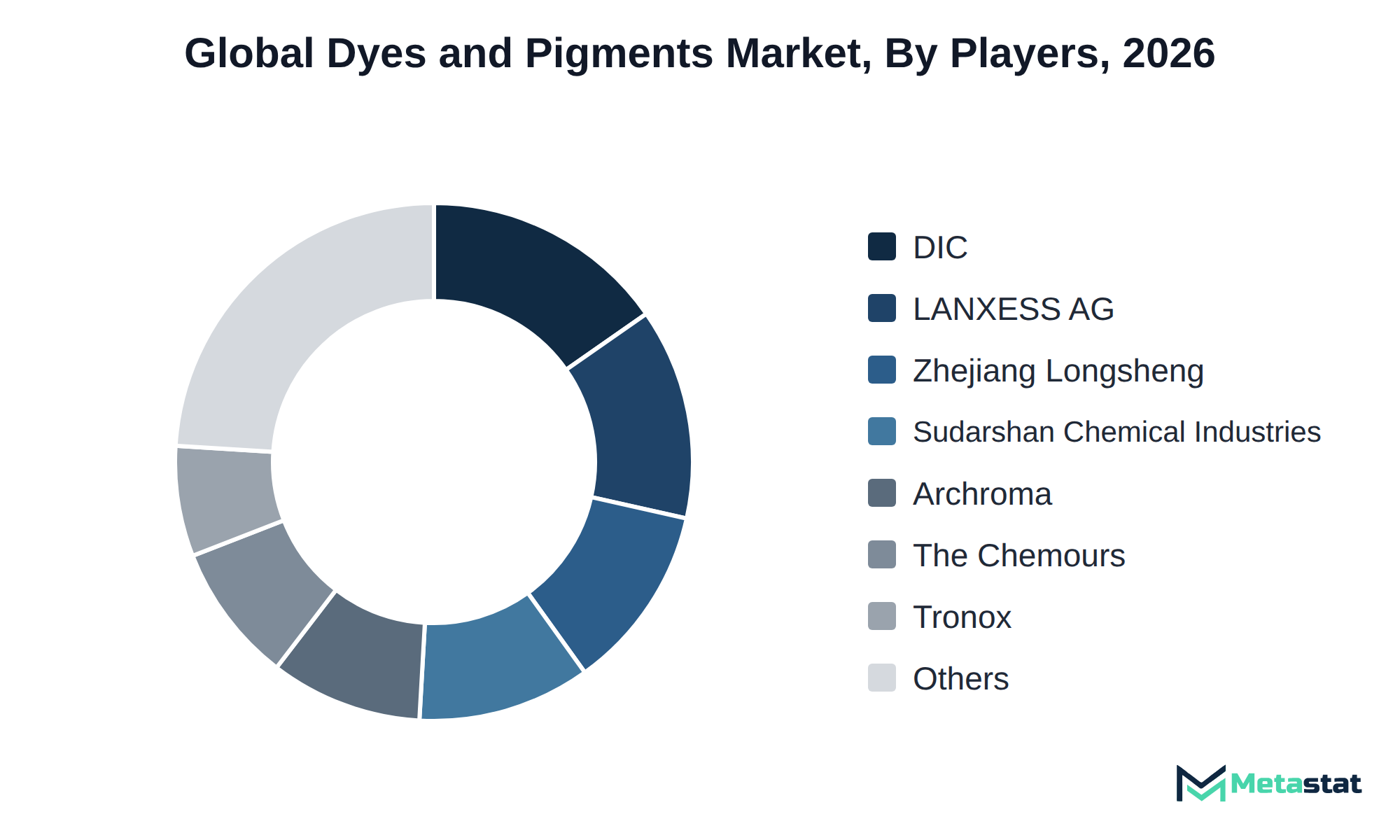
Sudarshan Chemical Industries Limited emphasizes a broad portfolio of dyes and pigments, focusing on environmental compliance and quality assurance to enhance customer trust. DIC Corporation prioritizes advanced technological solutions and product customization to cater to various industrial applications. Archroma concentrates on sustainable solutions, providing eco-friendly dyes that address rising environmental concerns among consumers.
Competitive dynamics in the market involve multiple players adopting distinct strategies to enhance their positions. Zhejiang Longsheng Group Co., Ltd. invests in expanding manufacturing capacity, enabling it to fulfill increasing demand efficiently. LANXESS AG emphasizes innovation in specialty chemicals, enhancing performance and application versatility of its pigment products.
Tronox Holdings plc leverages its expertise in titanium dioxide production to enhance its pigments' quality, catering to sectors including paints and coatings. The Chemours Company focuses on optimizing supply chains to improve service levels, ensuring timely delivery and responsiveness to customer needs. Strategic behaviors illustrate a commitment to adapting to market changes and customer preferences.
Growth in the Dyes and Pigments market relies on several key developments, particularly within specific segments and regions. The paints and coatings application, expected to reach USD 20.3 billion by 2033, significantly contributes to market growth. The Asia-Pacific region remains a dominant force, anticipated to account for 51.5% of the total market share, which will enhance revenue generation across various segments.
However, challenges including fluctuations in raw material prices pose a risk to achieving this market potential. Price volatility disrupts production costs, leading to increased prices for end-users and potentially dampening demand. Addressing these challenges while capitalizing on growth opportunities in the textiles and paints segments will be crucial for sustaining market momentum and achieving the ambitious forecast of USD 70.7 billion by 2033.
By Product Type: Reactive Dyes, Disperse Dyes, Vat Dyes, Acid Dyes, Direct Dyes, Sulfur Dyes, Solvent Dyes, Organic Pigments, Inorganic Pigments, Others (Basic, Mordant and Natural Dyes)
By Application: Textiles, Paints and Coatings, Plastics, Printing Inks, Paper, Leather, Construction Materials, Food and Beverages, Cosmetics and Personal Care, Others (Pharmaceuticals, Household Products and Art Materials)
By Physical Form: Powders, Granules, Liquid Dispersions, Liquid Solutions, Pastes
By Sales Channel: Direct Sales, Distributors
The report strategically identifies and profiles the key market players and analyses their core competencies in each sub-segment of the Dyes and Pigments market.
Report Attributes | Details |
Study Period | 2021-2033 |
Base Year | 2025 |
Estimated Year | 2026 |
Forecast Period | 2026-2033 |
Historical Period | 2021-2025 |
Growth Rate | CAGR 5.6% from 2026 to 2033 |
Revenue Unit | USD billion |
Segmentation | By Product Type, Application, Physical Form, Sales Channel, and Region |
By Region | North America (By Product Type, Application, Physical Form, Sales Channel, and Country)
|
Europe (By Product Type, Application, Physical Form, Sales Channel, and Country)
| |
Asia Pacific (By Product Type, Application, Physical Form, Sales Channel, and Country)
| |
South America (By Product Type, Application, Physical Form, Sales Channel, and Country)
| |
Middle East and Africa (By Product Type, Application, Physical Form, Sales Channel, and Country)
|
Find answers to common questions about this report
The Dyes and Pigments market size was valued at USD 45.5 billion in 2025.
The market is projected to grow at a CAGR of 5.6% during the forecast period from 2026 to 2033.
The North America Dyes and Pigments market size is estimated to reach USD 12.7 billion by 2033.
Reactive Dyes lead the Dyes and Pigments market with a projected value of USD 15 billion by 2033, reflecting the highest growth rate among the product types.
Increasing demand from the textile sector drives growth in the Dyes and Pigments market, reflecting a shift in consumer preferences towards rich colors and diverse patterns. The reactive dyes segment is positioned for growth, driven by their enhanced performance in textile applications, with a projected compound annual growth rate of 6.1%.
Asia Pacific holds the dominant share of the Dyes and Pigments market, accounting for 51.5 percent of the total market. This region's significant share reflects its extensive manufacturing capabilities and demand across various applications.
Fluctuating prices of raw materials restrain growth in the Dyes and Pigments market. This volatility impacts buyers' willingness to commit to long-term investments, resulting in slower order placements in industries including textiles and coatings. Uncertainty surrounding pricing trends complicates budgeting and prompts buyers to postpone purchases or seek alternatives.
Increasing demand for strong colors and sustainable practices within the textile sector drives the adoption of high-quality dyes and eco-friendly solutions. The growth of reactive dyes, projected to achieve a CAGR of 6.1%, highlights the industry's shift towards products that offer improved efficiency and color fastness, enhancing overall market dynamics.
The Dyes and Pigments market is estimated to reach a valuation of USD 70.7 billion by 2033.
Key players operating in the Dyes and Pigments market include Sudarshan Chemical Industries Limited, DIC Corporation, Archroma, LANXESS AG, Tronox Holdings plc, The Chemours Company, and Synthesia, a.s..
The analysts below cover Chemicals and Materials research at Metastat Insights.
LEAD ANALYST
Utkarsh Khirodkar is a Lead Market Research Analyst at MetaStat Insight, specializing in market intelligence, technology sector assessments, and competitive strategy.

INDUSTRY CONSULTANT - CHEMICALS & ADVANCED MATERIALS
Chemicals and Materials · Machinery & Equipment · Packaging
Amit Gadhekar Consultant for Chemicals and Materials at MetaStat Insight, directing sector-specific intelligence, research, and strategic consulting across global chemical and processing markets.
Floating offshore wind feasibility relies heavily on specialized installation vessel availability and port crane limits, which most broad renewable energy forecasts ignore. The report delivered a thorough analysis of dry dock capacity, mooring chain supply constraints, and raw material pricing trends for deepwater anchor installations. It served as a solid independent sanity check for our offshore project capital expenditure assumptions.
Assessing commercial microgrid software adoption requires looking past top-level installation numbers and examining utility interconnection queues. The research provided verifiable data on average permitting timelines, tariff structures, and battery storage integration costs across regional utility territories. That grounded perspective was valuable for our team when building five-year demand projections for industrial microgrid controllers.
Ambulatory surgical centers have very different purchasing cycles for robotic-assisted surgery platforms than major hospital networks. The MetaStat Insight study focused squarely on capital expenditure depreciation, procedural reimbursement pathways, and surgeon training overhead. That operational clarity made it much simpler to validate multi-year procedure growth forecasts against actual ambulatory center adoption patterns.
Explore related market intelligence reports worth reading alongside this one.