
LEAD ANALYST
Utkarsh Khirodkar is a Lead Market Research Analyst at MetaStat Insight, specializing in market intelligence, technology sector assessments, and competitive strategy.

Europe Lithium-Ion Battery Pouch Cell Laminates Market Size, Share, By Laminate Thickness (Up to 100 µm, Above 100 µm to 150 µm, and Above 150 µm), By End-Use Industry (Electric Vehicles, Stationary Energy Storage, Consumer Electronics, and Others), By Laminate Manufacturing Origin (Imported Laminate and European-Manufactured Laminate), By Region (Germany, France, UK, Italy, Spain, Russia, and Rest of Europe), Industry Analysis, Growth, Trends, and Forecast, 2026-2033
Report ID
MSI-5811
Published
November, 2026
Pages
269 Pages
Format
Historical
Base year
Forecast
Forecast period
Report Details
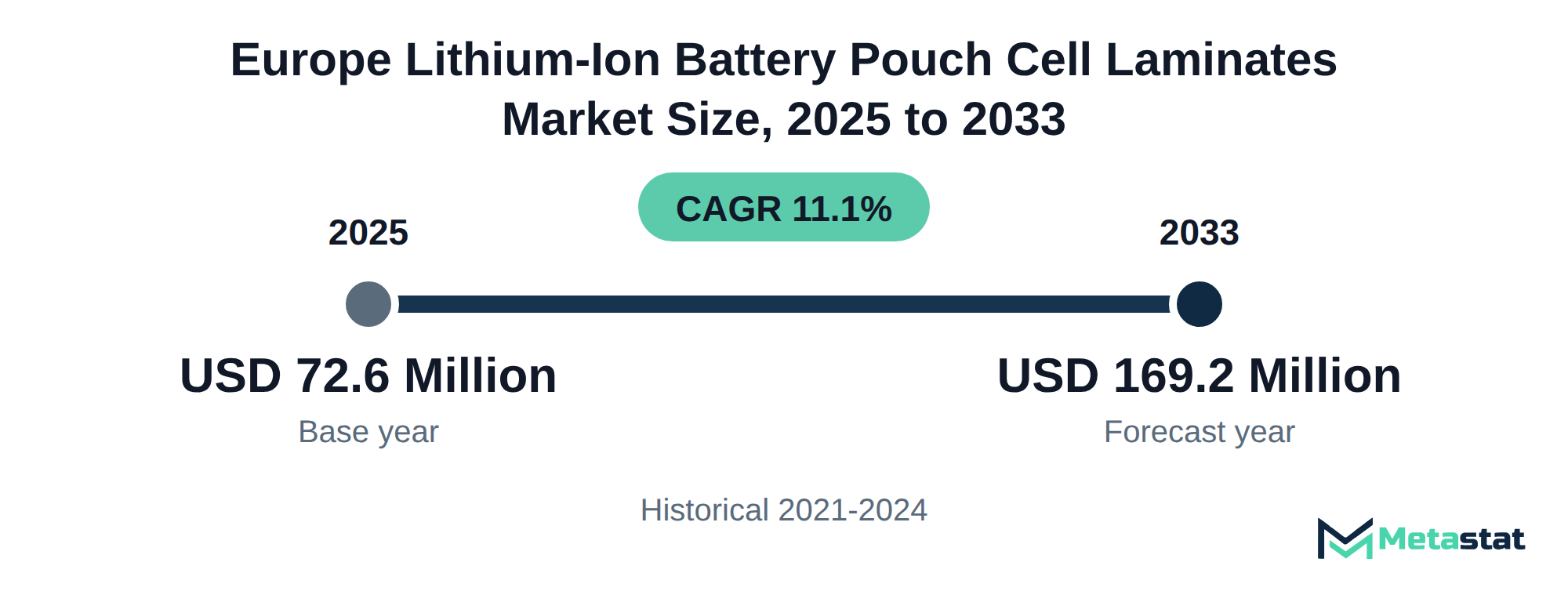
Market Valuation: Valued at $72.6 Million in 2025, projected to reach $169.2 Million by 2033 at a 11.1% CAGR.
Dominant Segment: The electric vehicles segment leads the market, driven by increasing consumer demand for sustainable transportation solutions and significant investments in battery technology.
Geographic Lead: Germany holds the largest market share, supported by its robust automotive industry and commitment to electric vehicle production, with substantial growth also observed in France.
What's Inside: The report provides comprehensive competitive coverage, detailed analyses of market dynamics, and forecasts through 2033, focusing on laminate thickness, end-use industries, and manufacturing origins.
Emerging Manufacturing Technologies: Advancements in manufacturing processes, including improved coating techniques and automation, are enhancing efficiency and reducing costs, significantly impacting the market's growth trajectory.
Growing Demand for European-Manufactured: The European-manufactured laminates segment is projected to experience rapid growth, driven by local production capabilities and a shift towards domestically sourced materials.
Choose Your License
Europe Lithium-Ion Battery Pouch Cell Laminates Market
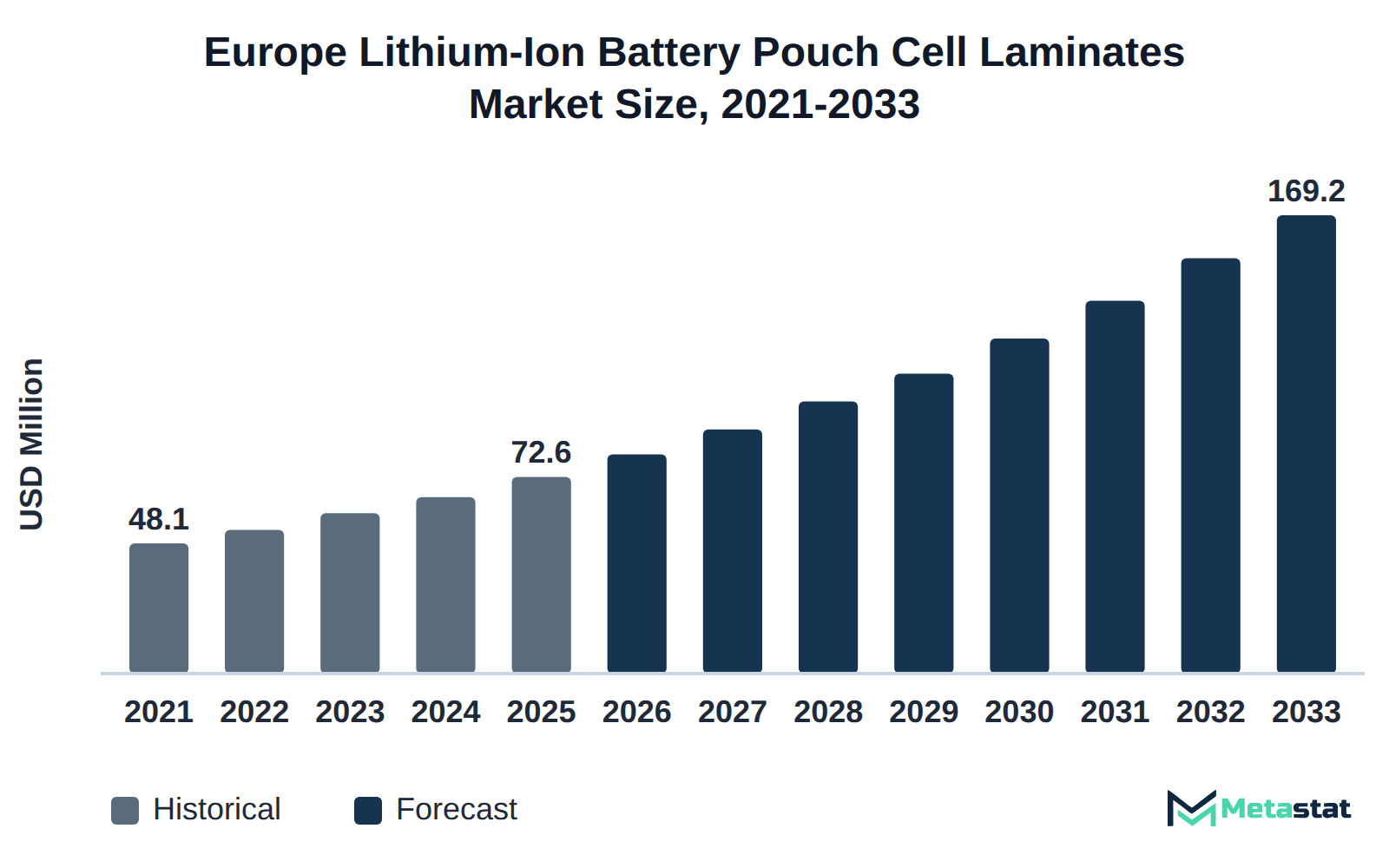
The Europe Lithium-Ion Battery Pouch Cell Laminates market was valued at USD 72.6 million in 2025 and is projected to reach USD 169.2 million by 2033, growing at a CAGR of 11.1% over the forecast period.
The Europe Lithium-Ion Battery Pouch Cell Laminates market encompasses products used in various applications, predominantly in electric vehicles, stationary energy storage, and consumer electronics. Buyers invest in these laminates due to their essential role in enhancing energy density, efficiency, and overall performance of lithium-ion batteries. The growing demand for high-performance batteries, driven by increasing adoption of electric vehicles and renewable energy sources, underpins the market expansion.
Significant growth occurs in the segment of electric vehicles, which represents the largest share of demand within the market. Germany holds the highest market share, reflecting its strong automotive industry and commitment to electric vehicle production. This regional strength contributes to the overall growth of the market, supported by investments in infrastructure, technology advancements, and consumer preferences shifting toward sustainable energy solutions.
One main growth driver is the increasing focus on energy efficiency, pushing manufacturers to enhance the performance capabilities of lithium-ion batteries. This trend aligns with regulatory frameworks aimed at reducing carbon emissions and promoting sustainable technologies. Innovative manufacturing techniques and rising demand for reliable energy storage solutions position the market for continued growth in the coming years.
The European pouch cell laminate market covers several thicknesses that serve electric vehicle, stationary energy storage, and consumer electronics buyers. Buyers invest in these laminates to enhance battery efficiency, extend lifecycle, and improve overall performance. The emphasis on electric vehicles drives substantial spending, with manufacturers prioritizing high-quality materials to support the growing demand for sustainable transportation solutions.
Growth in the Europe Lithium-Ion Battery Pouch Cell Laminates market is significantly fueled by the accelerating adoption of electric vehicles, which represents the largest segment by value. This shift towards electric mobility is supported by increasing consumer awareness of environmental issues and governmental initiatives promoting clean energy. By region, Germany leads with the largest share, reflecting its automotive industry and its commitment to advancing electric vehicle infrastructure.
Adoption of European-manufactured laminates is projected to see rapid expansion, driven by a focus on local sourcing and reduced supply chain risks. This trend aligns with the growing preference for domestically produced components, enhancing the market's resilience and sustainability. Together, these factors position the market for continued growth.
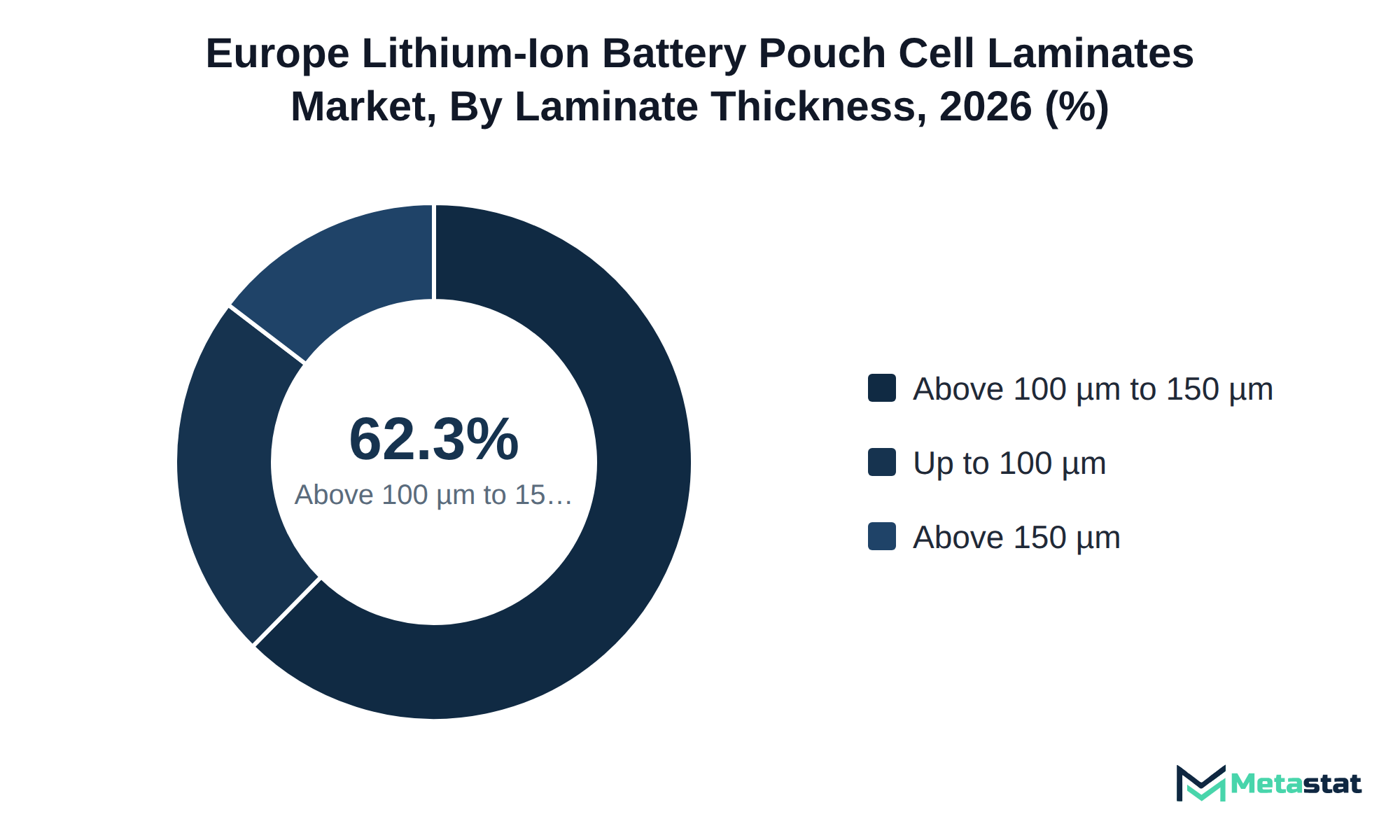
The transition towards higher laminate thickness in pouch cells supports increased demand at European gigafactories. Pouch cells with a laminate thickness above 100 µm show significant growth potential, projected to reach a value of USD 103.7 million by 2033, reflecting a compound annual growth rate of 10.9%. This shift towards thicker laminates stems from the requirements of electric vehicle manufacturers seeking enhanced safety and performance features for their battery packs. Battery packs also rely on protective hardware such as EV battery enclosure systems. Battery packs also rely on protective hardware such as EV battery enclosure systems.
Electric vehicles constitute the primary end-use industry for these laminates, with demand anticipated to rise from USD 70.4 million in 2026 to USD 143.1 million by 2033, representing a compound annual growth rate of 10.7%. This heightened interest in electric vehicle technology drives innovation in laminate production, with manufacturers investing in advanced materials and processes to enhance energy density and thermal stability. Thermal stability at the cell level complements battery thermal management at the pack and system level. Thermal stability at the cell level complements battery thermal management at the pack and system level.
Investments in thicker laminates yield operational benefits for manufacturers, including improved durability and efficiency. With the competitive landscape of the Europe Lithium-Ion Battery Pouch Cell Laminates market evolving, producers that adapt their offerings to meet the demands of gigafactories position themselves favorably for long-term growth and profitability.
The pricing structure for Europe Lithium-Ion Battery Pouch Cell Laminates reflects various purchasing models that influence buyer decisions. Buyers typically engage in long-term contracts with manufacturers to secure stable pricing and supply.
Contract models often stipulate minimum order quantities and pricing tiers based on volume commitments. Such agreements provide manufacturers with a reliable revenue stream while allowing buyers to mitigate price volatility. This model is particularly prevalent among major players in the electric vehicle sector, where the demand for high-quality laminates is set to increase substantially. Stable contracts and strategic purchasing streamline operations and improve profit margins for both buyers and suppliers.
In addition, the preference for European-manufactured laminates is gaining traction among buyers, attributed to quality assurance and shorter lead times. The value of European-manufactured laminates is expected to reach USD 32.8 million by 2033, presenting a significant growth opportunity within the market. Understanding these purchasing dynamics is essential for stakeholders aiming to optimize procurement strategies in the Europe Lithium-Ion Battery Pouch Cell Laminates market.
The qualification of local inputs for battery pouch film is essential in the supply chain of the Europe Lithium-Ion Battery Pouch Cell Laminates market. Domestic sourcing of materials reduces reliance on international suppliers, enhancing production efficiency and lowering transportation costs. For instance, the European-Manufactured Laminate segment is projected to reach USD 32.8 million by 2033, driven by increased local production capabilities and stringent quality standards.
European manufacturers emphasize the importance of local compliance and reliability in sourcing materials. This approach aligns with regional regulations and supports sustainability initiatives. The demand for high-quality, locally sourced laminate materials corresponds with the growth in electric vehicle production, which is expected to increase from USD 70.4 million in 2026 to USD 143.1 million by 2033. These developments highlight the preference of manufacturers for locally qualified inputs that meet specific performance criteria, ensuring product reliability and safety.
Ultimately, local input qualification enhances the competitive edge of regional manufacturers in the Europe Lithium-Ion Battery Pouch Cell Laminates market. This local focus supports economic growth and innovation within the industry while addressing evolving consumer demands for transparency and sustainability in battery production. Local qualification of laminates forms one part of the wider battery materials supply chain. Local qualification of laminates forms one part of the wider battery materials supply chain.
Several European gigafactories are integrating pouch cells into their production lines, reflecting the growing trend towards lightweight and flexible battery designs. This transition aligns with the industry’s shift towards higher energy densities and improved space efficiency, attributes that pouch cells provide. Solid-state battery development is another route toward higher energy density. Solid-state battery development is another route toward higher energy density.
For instance, the gigafactory operated by a prominent automotive manufacturer in Germany is among those using pouch cells. This facility emphasizes the production of electric vehicle batteries, contributing significantly to the region's output. The strategic choice for pouch cells enhances manufacturing efficiency and offers advantages in battery performance, which remains critical for competition in the Europe Lithium-Ion Battery Pouch Cell Laminates market.
The integration of pouch cells is expected to yield substantial commercial benefits, including reduced costs and increased production scalability. While more manufacturers adopt this technology, the overall market for Europe Lithium-Ion Battery Pouch Cell Laminates shows promising growth potential, creating competitive advantages for those involved in the production and development of advanced battery technologies.
Growing interest in electric vehicles drives spending on materials essential for battery production. Automotive manufacturers shift towards lithium-ion technologies to meet heightened consumer demand for sustainable transportation solutions. This transition results in a significant increase in the volume of pouch cell laminates required. The surge in electric vehicle adoption places considerable pressure on suppliers to enhance production capabilities and innovate laminate designs. Consequently, the market sees stronger revenue and investment, in line with the global push toward cleaner energy alternatives.
Rising demand for stationary energy storage solutions adds to this growth. Grid systems adapt to renewable energy sources, making the need for efficient energy storage systems critical. Vehicle-to-grid technology adds a further link between electric vehicle batteries and grid storage. Vehicle-to-grid technology adds a further link between electric vehicle batteries and grid storage. This demand surge aligns with the broader trends shaping the Europe Lithium-Ion Battery Pouch Cell Laminates market.
Advancements in manufacturing technologies significantly impact the Europe Lithium-Ion Battery Pouch Cell Laminates market. Innovations in production processes, including improved coating techniques and automation, enhance efficiency while reducing costs. Suppliers increasingly adopt these technologies to meet the rising demand for high-performance laminates, particularly in electric vehicles and stationary energy storage systems. Enhanced production capabilities allow for greater precision in laminate thickness, addressing specific requirements of various applications.
The integration of new materials, including high-performance polymers, contributes to the development of lighter and more durable laminates. This shift in material science enables manufacturers to produce laminates that withstand higher operating temperatures and provide better safety. Consequently, these advancements position manufacturers to respond effectively to the growing consumer demand for reliable battery performance. The overall enhancement in manufacturing processes strengthens the competitive landscape, with companies striving to capture a larger share of the expanding market.
Escalating material costs create a significant barrier for buyers in the Europe Lithium-Ion Battery Pouch Cell Laminates market. Rising prices of raw materials directly affect the manufacturing expenses of laminate products, prompting buyers to reconsider their purchasing strategies. Electric vehicle manufacturers experience challenges in maintaining competitive pricing while incorporating these laminates into their systems. This cost pressure results in smaller orders and delays in procurement decisions while manufacturers seek alternative solutions or delay investments in new technologies. Similarly, stationary energy storage providers face constraints in scaling their operations due to increased laminate expenses, which impacts their ability to invest in larger projects. Rising material costs make potential buyers cautious, slowing adoption and expansion over the forecast period.
Compliance costs pose a significant challenge for suppliers in the Europe Lithium-Ion Battery Pouch Cell Laminates market. Stricter environmental regulations and standards aimed at reducing emissions during manufacturing processes increase operational expenditures. Suppliers face pressure to invest in advanced technologies and systems that ensure adherence to these regulations, leading to higher production costs.
In response, many suppliers prioritize investments in sustainable materials and processes. These investments focus on technologies that minimize waste and enhance energy efficiency throughout production. Suppliers explore partnerships with technology providers specializing in eco-friendly solutions to mitigate compliance-related expenses. Such initiatives align with regulatory requirements while maintaining competitive pricing.
Ultimately, the challenge of compliance costs influences pricing strategies and profit margins within the market. Suppliers adjusting their operations and product offerings to meet these regulatory demands enhance their market positioning and create long-term growth opportunities.
The segment for European-manufactured laminates shows significant growth potential within the Europe Lithium-Ion Battery Pouch Cell Laminates market. It is expected to rise from USD 0 million in 2026 to USD 32.8 million by 2033, demonstrating a compound annual growth rate of 48.4%. This rapid expansion primarily results from local manufacturers increasing production capacity to meet rising demand for domestically sourced materials in various applications, including electric vehicles and stationary energy storage. Buyers increasingly prefer local suppliers due to reduced lead times and a focus on sustainability, driving this shift in purchasing behavior. Enhanced capabilities in advanced manufacturing processes align with these preferences, leading to greater adoption of locally sourced laminates. Growth in this segment reflects a shift toward reliable and efficient supply chains, which supports overall market expansion.
The Europe Lithium-Ion Battery Pouch Cell Laminates market is segmented based on Laminate Thickness, End-Use Industry, Laminate Manufacturing Origin, and Region.
The Up to 100 µm segment is valued at USD 18.4 million in 2026 and is projected to reach USD 34.2 million by 2033, at a CAGR of 9.2% during the forecast period. This segment finds application primarily in electric vehicles, where thinner laminates enhance flexibility and reduce weight. Demand for this segment is driven by increasing adoption of lightweight materials in automotive manufacturing, supporting stronger performance and efficiency in vehicles. Compared to thicker laminates, the growth of the Up to 100 µm segment is slower, reflecting a broader trend toward higher thickness alternatives that offer improved energy density and power. Thicker laminates, with a CAGR of 10.9%, attract customers seeking higher performance. This leaves the Up to 100 µm segment to serve niche applications and specific buyer preferences in the Europe Lithium-Ion Battery Pouch Cell Laminates market.
Pouch cell laminates in this thickness range serve applications requiring enhanced durability and energy density, particularly electric vehicles and energy storage systems. Growth in this segment is driven by escalating demand for electric vehicles, which rely on high-performance battery systems. Compared to other segments, including those with laminate thickness below 100 µm, this segment experiences faster growth due to its ability to meet specific performance requirements. The increasing focus on energy efficiency and battery longevity in consumer electronics further supports this growth trajectory. In contrast to thicker laminates, this segment balances weight and performance, appealing to manufacturers aiming for optimal product specifications.
Pouch cell laminates above 150 µm are expected to reach USD 31.4 million by 2033. This thickness category primarily serves applications in high-performance batteries, particularly for electric vehicles and stationary energy storage systems. Rapid advancements in battery technology significantly contribute to the growth of this segment, driven by increasing demand for enhanced energy density and safety features. The higher price point associated with thicker laminates positions this segment differently compared to others, including those below 100 µm, which typically cater to consumer electronics with lower performance requirements. The segment's growth is notable, with a projected CAGR of 10.9% reflecting stronger demand relative to thinner laminates. Buyers from the automotive sector particularly prefer this thickness due to its suitability for high-capacity battery configurations.
This segment supplies laminates for electric vehicle batteries, serving automakers focused on reducing carbon emissions and enhancing energy efficiency. A significant driver for this segment stems from increasing consumer demand for sustainable transportation solutions, propelling investments in battery technology. Compared to the stationary energy storage segment, which holds a lower CAGR of 17%, the electric vehicles segment experiences strong growth due to the rapid expansion of the electric vehicle market. The differentiation in buyer dynamics is significant; while stationary energy storage caters to utility and commercial applications, electric vehicles attract individual consumers and automotive manufacturers, leading to higher overall expenditure on laminates. The strong upward trajectory of this segment highlights its importance within the Europe Lithium-Ion Battery Pouch Cell Laminates market.
Stationary Energy Storage segment is estimated to reach USD 14 million by 2033, at a CAGR of 17% during the forecast period. This segment serves critical functions in stabilizing energy supply for renewable sources, providing backup power for residential and commercial applications, and enhancing grid reliability. Demand arises mainly from utility companies and commercial establishments seeking sustainable energy solutions. Utility companies can add storage capacity through utility-scale BESS installations. Utility companies can add storage capacity through utility-scale BESS installations. A significant driver for this segment involves the increasing adoption of renewable energy technologies, contributing to rising demand for effective energy storage solutions. Stationary Energy Storage grows faster than other segments because it supports the transition toward sustainable energy consumption, with a notable CAGR of 17%. This contrasts with segments like Consumer Electronics, which experience relatively slower growth and lower investment due to different usage patterns and buyer profiles.
The Consumer Electronics segment is expected to reach USD 5.4 million by 2033. This segment contains components essential for devices including smartphones, tablets, and laptops, underscoring its importance to tech manufacturers. The growing demand for lightweight and energy-efficient products significantly drives consumer preferences, influencing purchases from manufacturers focused on innovation. Compared to other segments, the Consumer Electronics segment experiences slower growth, with a notable CAGR reflecting limited expansion opportunities. The segment's lower growth rate stands in contrast to the Stationary Energy Storage segment, which has a CAGR of 17%. Changes in technology, particularly in wireless charging and miniaturization, shape market dynamics, compelling manufacturers to seek advanced laminates that satisfy evolving consumer requirements. These advancements contribute to a shift in buyer behavior, urging manufacturers to prioritize laminate quality and performance to enhance device functionality.
Others (Industrial Equipment, Medical Devices) segment is projected to grow at a CAGR of 14.1% during the forecast period. This segment serves various applications, including medical devices and industrial machinery, where reliable power sources are crucial for performance and safety. Demand for advanced medical devices with enhanced functionality drives increased adoption of lithium-ion batteries in this sector. Wearable medical devices are one example of battery-powered products in this category. Wearable medical devices are one example of battery-powered products in this category. Companies in the medical field prioritize high-quality laminates due to regulatory requirements and performance standards. Unlike segments including Electric Vehicles, this segment experiences a moderate growth rate, reflecting distinct purchasing motivations and market dynamics. The expected growth pattern shows variability, with Other segments exhibiting more stable expansion rates compared to Electric Vehicles. With a CAGR of 14.1%, this segment emphasizes the increasing reliance on effective power solutions across diverse applications. Continuous innovation in battery technology supports this growth, positioning the segment favorably within the market.
Imported Laminate segment is valued at USD 78.9 million in 2026 and is projected to reach USD 136.5 million by 2033, at a CAGR of 8.2% during the forecast period. This segment primarily serves the electric vehicle industry, where high-performance laminates are essential for enhancing battery efficiency and safety. Demand for imported laminates is driven by the increasing adoption of electric vehicles and energy storage systems across Europe. Compared to other segments, including European-Manufactured Laminate, which is expected to grow at a CAGR of 48.4%, Imported Laminate experiences slower growth. This difference arises from regional manufacturers ramping up production capabilities and local sourcing strategies, which enhance the competitiveness of European-manufactured products. The market for imported laminates remains crucial, reflecting a balance between cost and performance in battery applications.
European-Manufactured Laminate segment is estimated to reach USD 32.8 million by 2033, at a CAGR of 48.4% during the forecast period. This segment finds application primarily in electric vehicles and stationary energy storage systems, where high-quality and reliable laminates are crucial for performance and safety. Rapid growth is driven by increasing local production capacities, owing to rising demand for domestically sourced materials. This segment outpaces the Imported Laminate segment, which is projected to grow at a CAGR of 8.2%, reflecting a significant shift towards enhanced local manufacturing capabilities. European-Manufactured Laminates attract buyers seeking higher-quality assurance and compliance with regional standards, making this sub-segment a critical component of the Europe Lithium-Ion Battery Pouch Cell Laminates market.
Germany segment is valued at USD 1.1 million in 2026 and is projected to reach USD 4.6 million by 2033, at a CAGR of 22.6% during the forecast period. This segment primarily supplies laminates for electric vehicles, which use these materials for battery production. The surge in electric vehicle adoption drives demand for lithium-ion battery pouch cell laminates. Germany's positioning within the automotive sector significantly influences this segment, differentiating it from others by exhibiting a higher growth rate compared to the stationary energy storage segment, which has a CAGR of 17%. The emphasis on local manufacturing aligns with the market's broader trend toward sustainability, further enhancing the appeal of domestically produced laminates over imported options. The market experiences substantial pressure from technological advancements that improve the efficiency of laminate production, reinforcing the competitive dynamics among suppliers.
France segment is estimated to reach USD 48.3 million by 2033, at a CAGR of 36.9% during the forecast period. This segment serves a variety of applications, particularly in the electric vehicle sector, where high-performance laminates enhance battery efficiency and safety. The rapid advancement in electric vehicle adoption fuels the demand for lithium-ion batteries, significantly impacting the local laminate market. Compared to other segments, including stationary energy storage, which is projected to grow at a CAGR of 17%, the France segment exhibits faster growth due to heightened investments in sustainable mobility solutions. Increased governmental support for electric vehicles drives market expansion, setting this segment apart from others focused on consumer electronics or industrial equipment.
UK segment is expected to reach USD 23.9 million by 2033. This segment primarily serves the electric vehicle sector, which increasingly relies on efficient and lightweight materials for battery production. A notable driver of growth stems from the heightened focus on sustainable transportation solutions, resulting in significant investment aimed at enhancing performance and reducing costs. Compared to other regions, the UK follows a unique trajectory influenced by local policies promoting green technologies. The expected CAGR of 22.6% highlights its rapid expansion relative to other segments in Europe, which exhibit slower growth rates. The market's conditions reflect a robust commitment to innovation and adaptation in response to evolving consumer preferences and regulatory frameworks.
Italy is projected to grow at a CAGR of 8.3% during the forecast period. This segment serves various applications, particularly in electric vehicles and stationary energy storage systems. The demand for laminates in Italy is driven by increasing adoption of electric vehicles, reflecting a broader shift towards sustainable energy solutions. Compared to other segments, Italy represents a slower growth trajectory, particularly when evaluated against the rapid expansion seen in the French and German regions. The anticipated market value in Italy highlights the importance of local manufacturers and suppliers adapting to evolving technological requirements and consumer preferences. Continuous advancements in laminate technologies, alongside regulatory support for electric vehicle adoption, will further influence market dynamics. Increasing integration of these laminates in innovative applications highlights Italy's strategic role in the Europe Lithium-Ion Battery Pouch Cell Laminates market.
Spain represents an emerging region for the adoption of lithium-ion battery pouch cell laminates. Key applications include electric vehicles and stationary energy storage systems, attracting manufacturers seeking to enhance performance and efficiency. Growing demand in the automotive sector drives interest, supported by investments in sustainable energy. Supply chain dynamics and production capabilities differentiate Spain from other regions, with local manufacturers increasingly focusing on competitive pricing and quality. The region faces challenges related to rising costs and regulatory compliance, impacting procurement strategies. Overall, the evolving situation in Spain positions it as a significant player in the broader Europe Lithium-Ion Battery Pouch Cell Laminates market.
Russia's involvement focuses on the demand for Lithium-Ion Battery Pouch Cell Laminates driven by the growing electric vehicle market and the need for energy storage solutions. Industries in Russia, particularly automotive manufacturers, adopt these laminates for their lightweight properties and enhanced performance in battery applications. The demand for electric vehicles, fueled by governmental initiatives promoting sustainable energy, emphasizes the requirement for efficient battery technologies. While the overall market trends toward various laminate thicknesses, Russia's growth trajectory differs from other regions, which experience more rapid adoption rates. The market in Russia faces challenges related to local production capabilities and sourcing of quality materials, impacting the competitive landscape. Continued investment in electric vehicle infrastructure and energy storage technologies is expected to play a crucial role in shaping the future of the market in Russia.
Rest of the Europe segment encompasses various countries beyond the major markets of Germany, France, the UK, and Italy. This segment serves industries that use lithium-ion battery pouch cell laminates for applications in electric vehicles, stationary energy storage, and consumer electronics. Demand in this segment is influenced by the increasing need for energy-efficient solutions and sustainable technologies across multiple sectors. Companies in this region face challenges related to import dependencies and varying levels of local manufacturing capabilities. Growth dynamics differ from other segments, particularly in terms of adoption rates and price sensitivity, positioning this segment with distinct market characteristics within the Europe Lithium-Ion Battery Pouch Cell Laminates market.
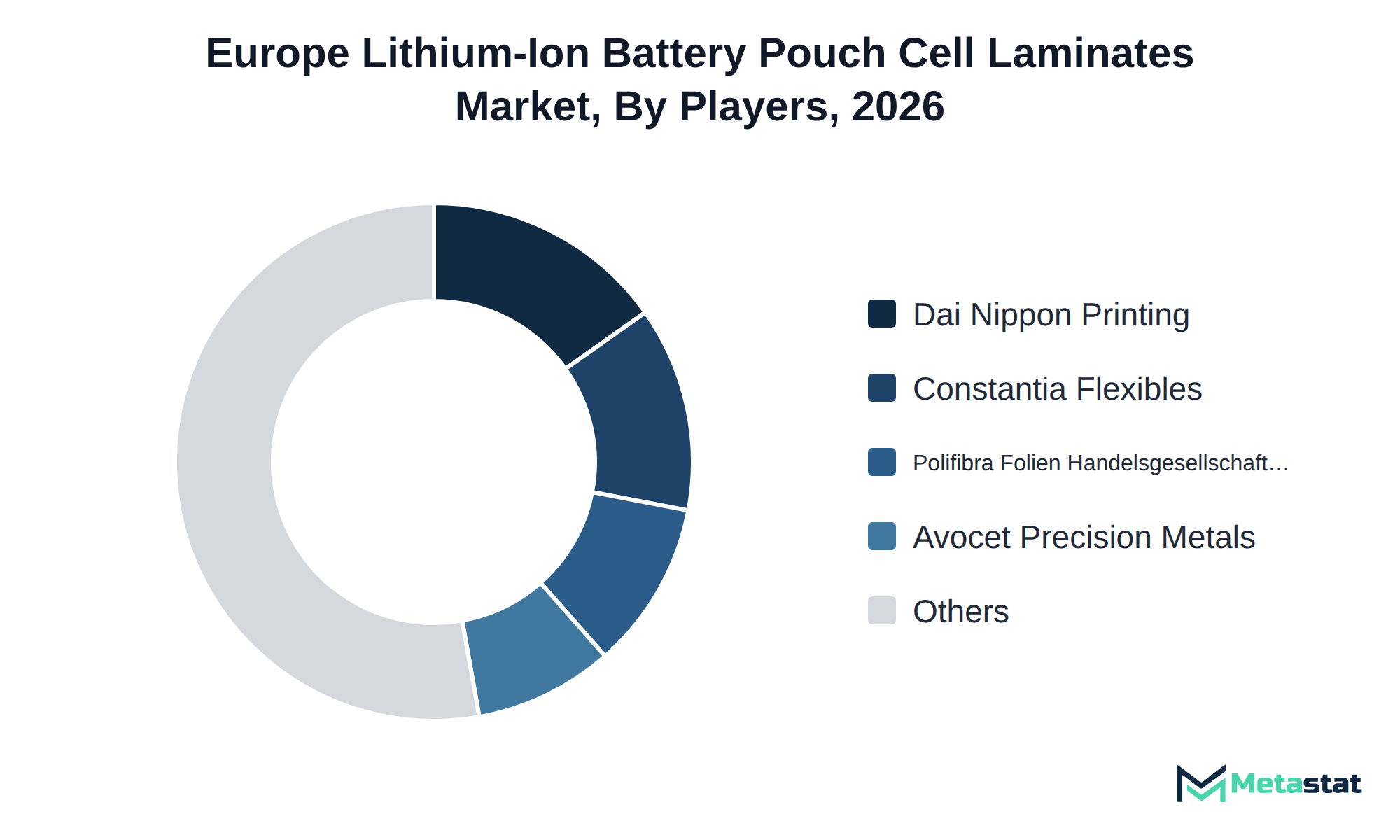
Competition among companies in the Europe Lithium-Ion Battery Pouch Cell Laminates market focuses on multiple strategic factors, including price, customization, and certification. Buyers prioritize these aspects when selecting suppliers, driven by the need for products that meet specific performance and regulatory requirements.
Constantia Flexibles emphasizes innovation in laminate formulations to enhance product performance and cater to various end-use industries. Dai Nippon Printing Co., Ltd. focuses on advanced manufacturing techniques, positioning its products for the electric vehicle sector. Polifibra Folien Handelsgesellschaft mbH and Avocet Precision Metals address niche applications, providing specialized solutions for both consumer electronics and industrial equipment. These strategies enable each company to carve out distinct market segments while enhancing overall competition in the market.
Achieving this growth hinges on several key developments within the Europe Lithium-Ion Battery Pouch Cell Laminates market. This surge relies on increasing demand for environmentally friendly transportation solutions. Second, the rise of European-manufactured laminates is anticipated, projected to reach USD 32.8 million by 2033, driven by regional supply chain efficiencies and a shift towards local sourcing. Conversely, challenges could hinder this progress, including supply chain disruptions. Such disruptions impact the availability of imported laminates and affect pricing strategies. Regions like Germany and France, with significant anticipated growth rates of 22.6% and 36.9%, respectively, could experience delays in achieving these forecasts if logistics and production constraints arise. Addressing these issues will be essential for maintaining momentum toward the projected market value.
By End-Use Industry: Electric Vehicles, Stationary Energy Storage, Consumer Electronics, Others (Industrial Equipment, Medical Devices)
By Laminate Manufacturing Origin: Imported Laminate, European-Manufactured Laminate
By Region: Germany, France, UK, Italy, Spain, Russia, Rest of the Europe
The report strategically identifies and profiles the key market players and analyses their core competencies in each sub-segment of the Lithium-Ion Battery Pouch Cell Laminates market.
Report Attributes | Details |
Study Period | 2021-2033 |
Base Year | 2025 |
Estimated Year | 2026 |
Forecast Period | 2026-2033 |
Historical Period | 2021-2025 |
Growth Rate | CAGR 11.1% from 2026 to 2033 |
Revenue Unit | USD million |
Segmentation | By Laminate Thickness, End-Use Industry, Laminate Manufacturing Origin, Region, and Region |
Find answers to common questions about this report
The Lithium-Ion Battery Pouch Cell Laminates market size was valued at USD 72.6 million in 2025.
The market is projected to grow at a CAGR of 11.1% during the forecast period from 2026 to 2033.
The leading segment in the Lithium-Ion Battery Pouch Cell Laminates market is Electric Vehicles, with a projected value of USD 143.1 million by 2033. This segment surpasses others in terms of revenue growth and market demand.
Growing interest in electric vehicles drives demand for pouch cell laminates, with projections indicating an increase from USD 70.4 million in 2026 to USD 143.1 million by 2033. advancements in manufacturing technologies enhance production efficiency and support the evolving landscape of energy storage solutions.
Escalating material costs create a significant barrier for buyers, affecting manufacturing expenses and prompting cautious purchasing strategies. Compliance costs due to stricter environmental regulations increase operational expenditures for suppliers, leading to higher production costs and influencing pricing strategies.
Growing demand for locally manufactured laminates is favoring adoption in the Europe Lithium-Ion Battery Pouch Cell Laminates market, driven by preferences for reduced lead times and sustainability. The segment for European-manufactured laminates is expected to expand significantly, reflecting a shift towards reliable supply chains in response to rising demand.
The Lithium-Ion Battery Pouch Cell Laminates market is estimated to reach a valuation of USD 169.2 million by 2033.
Key players operating in the Lithium-Ion Battery Pouch Cell Laminates market include Constantia Flexibles, Dai Nippon Printing Co., Ltd., Polifibra Folien Handelsgesellschaft mbH, and Avocet Precision Metals.
The European-manufactured laminates segment is projected to grow at a compound annual growth rate of 48.4%, increasing from USD 0 million in 2026 to USD 32.8 million by 2033.
The electric vehicles segment shows the highest demand, with expected growth from USD 70.4 million in 2026 to USD 143.1 million by 2033, reflecting a compound annual growth rate of 10.7%.
The analysts below cover Chemicals and Materials research at Metastat Insights.
LEAD ANALYST
Utkarsh Khirodkar is a Lead Market Research Analyst at MetaStat Insight, specializing in market intelligence, technology sector assessments, and competitive strategy.

INDUSTRY CONSULTANT - CHEMICALS & ADVANCED MATERIALS
Chemicals and Materials · Machinery & Equipment · Packaging
Amit Gadhekar Consultant for Chemicals and Materials at MetaStat Insight, directing sector-specific intelligence, research, and strategic consulting across global chemical and processing markets.
Replacing petrochemical surfactants with bio-based alternatives requires realistic timelines on industrial precision fermentation scaling. The market research broke down commercialization timelines, feedstock sugar price sensitivities, and regional cosmetic ingredient regulatory approvals in Europe and East Asia. That supplier readiness mapping gave our formulations team reliable context when comparing renewable chemical sourcing roadmaps.
Tracking ceramic matrix composite adoption in high-bypass aero engines requires strict attention to material qualification cycles and FAA airworthiness testing milestones. The MetaStat Insight team provided a detailed timeline of silicon carbide fiber manufacturing capacity and commercial foundry lead times. Having clear visibility into upstream thermal barrier coating supply helped us stress-test our long-term component procurement strategy.
Transitioning ultra-class mining haul trucks to alternative power requires concrete data on remote hydrogen refueling infrastructure economics. The report evaluated megawatt-scale electrolyzer installation expenses, onsite storage safety mandates, and heavy-duty fuel cell stack degradation under continuous duty cycles. That technical rigor helped our engineers benchmark realistic total operating cost horizons for off-highway fleet decarbonization.
Explore related market intelligence reports worth reading alongside this one.