
LEAD ANALYST
Utkarsh Khirodkar is a Lead Market Research Analyst at MetaStat Insight, specializing in market intelligence, technology sector assessments, and competitive strategy.

Global Metamitron Herbicides Market Size, Share, By Formulation Type (Granular Formulation and Liquid Concentrate), By Crop Type (Sugar Beet, Fodder Beet and Others (Red Beet / Beetroot)), By Application Method (Foliar Application and Soil Application), By Distribution Channel (Direct Sales, Agrochemical Distributors, Agricultural Retailers and Online Retailers), Industry Analysis, Growth, Trends, and Forecast, 2026-2033
Report ID
MSI-5815
Published
November, 2026
Pages
274 Pages
Format
Historical
Base year
Forecast
Forecast period
Report Details
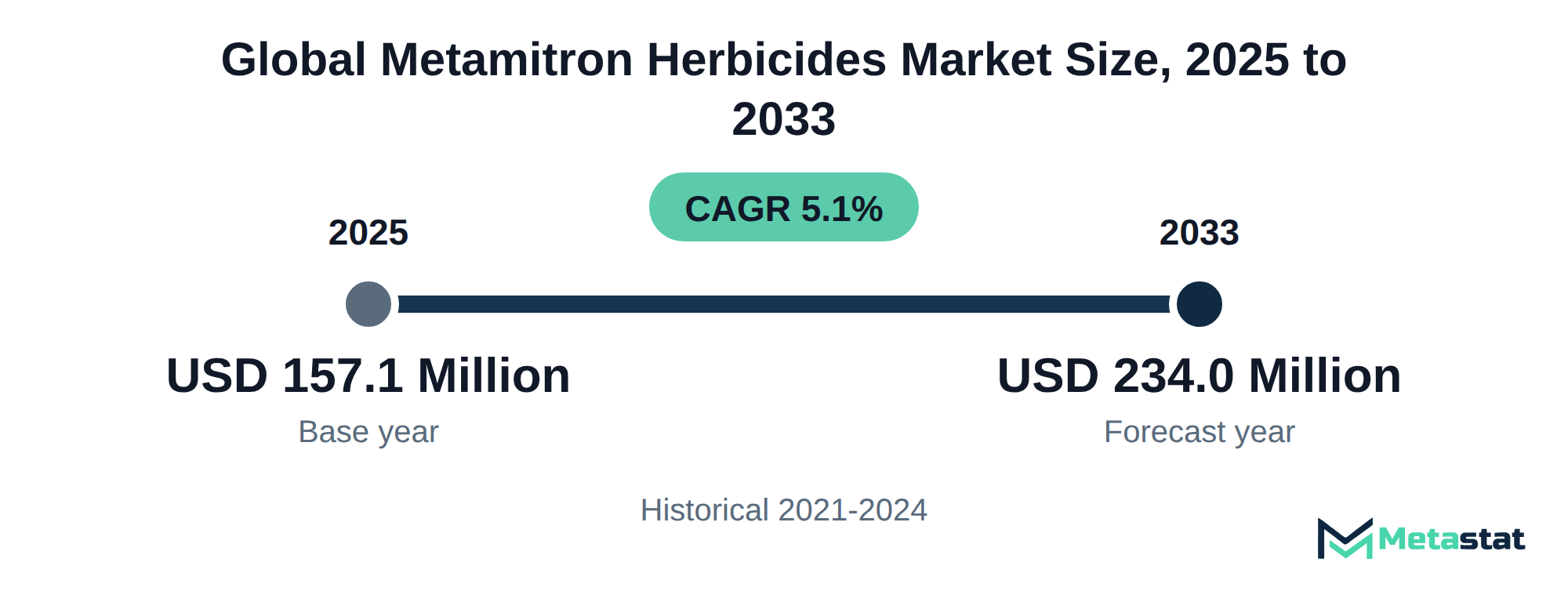
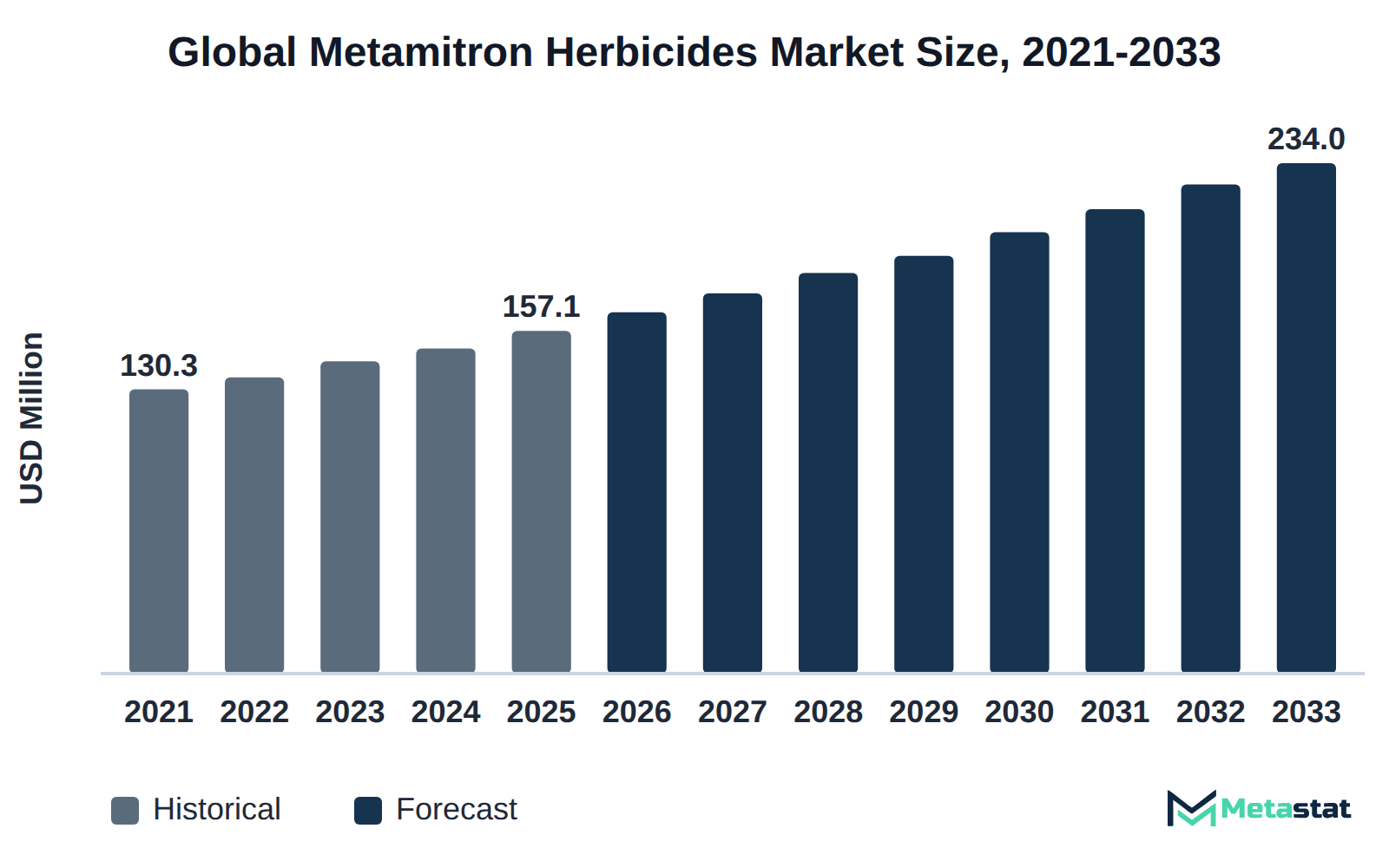
Market Valuation: Valued at $157.1 Million in 2025, projected to reach $234 Million by 2033 at a 5.1% CAGR.
Dominant Segment: The sugar beet segment leads the market, driven by the urgent need for effective weed control solutions and robust agricultural practices.
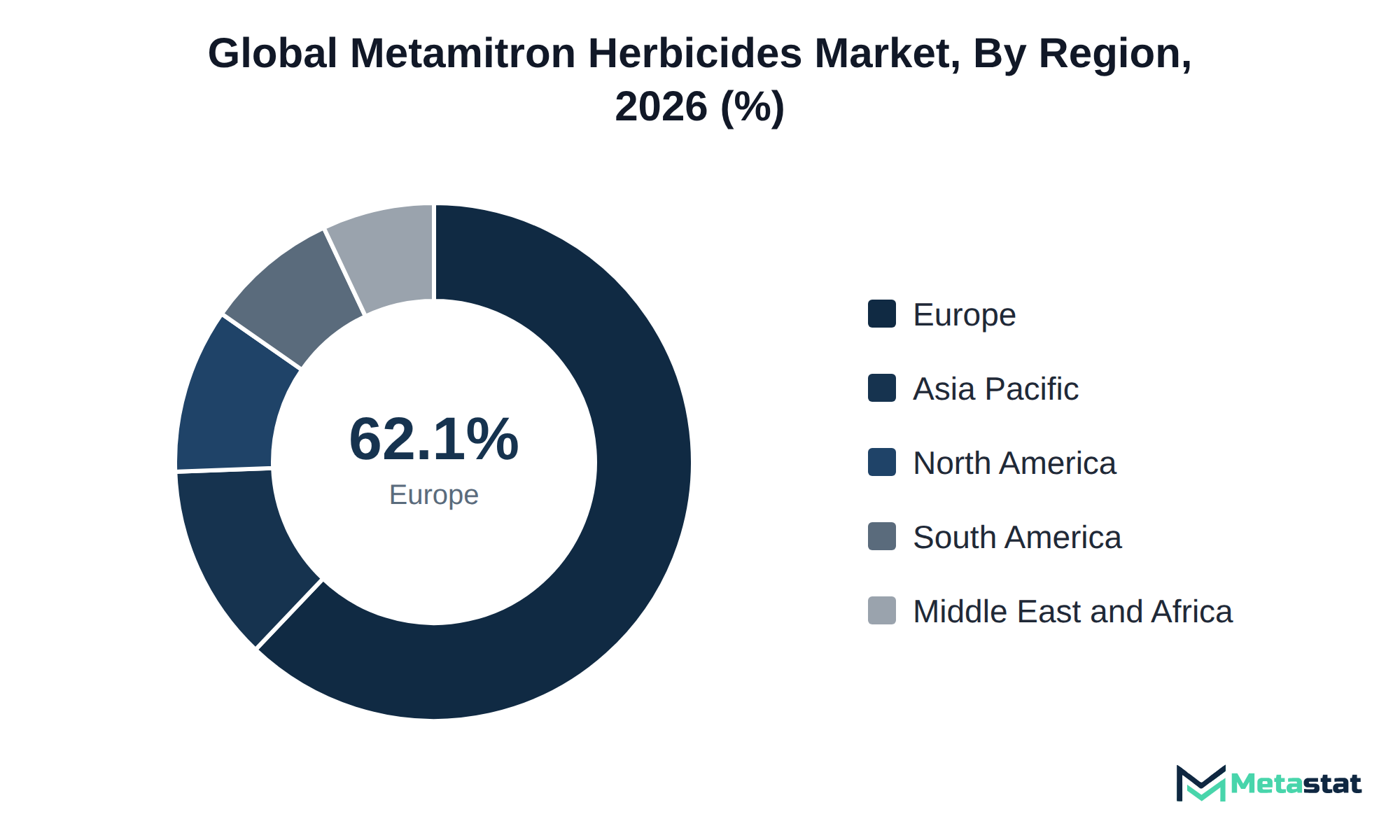
Geographic Lead: Europe holds the largest market share at 62.1%, reflecting a strong reliance on herbicide solutions to meet agricultural demands and ensure food security.
What's Inside: The report provides comprehensive competitive coverage, market analyses, and forecasts from 2026 to 2033, detailing key trends and growth drivers.
Market Opportunity: The fodder beet segment shows significant growth potential, with a projected CAGR of 5.8%, driven by rising demand for efficient weed management solutions.
Application Method Trends: The soil application method is expected to grow at a CAGR of 6.1%, highlighting its importance in enhancing nutrient absorption and aligning with sustainable agricultural practices.
Choose Your License
Global Metamitron Herbicides Market
The global Metamitron Herbicides market was valued at USD 157.1 million in 2025 and is projected to reach USD 234 million by 2033, growing at a CAGR of 5.1% over the forecast period.
The Metamitron Herbicides market encompasses a range of herbicide products specifically formulated for agricultural applications, particularly targeting crops like sugar beet and fodder beet. Buyers invest in these herbicides to enhance crop yield and manage weed populations effectively, which is crucial for maintaining agricultural productivity. The market features various formulation types, including granular and liquid concentrates, appealing to different agricultural practices and preferences.
Growth in the market is driven by the increasing demand for effective herbicides that support sustainable farming practices. The sugar beet segment represents the largest share, reflecting robust agricultural practices and the need for high-yield crops. Europe stands out with the largest market share at 62.1%, demonstrating a strong reliance on herbicide solutions to meet agricultural needs and ensure food security. North America holds 10.3% of the market in 2025, with the US leading in 2026.
Factors influencing the market include advancements in formulation technology and the ongoing trend toward precision agriculture. The adoption of innovative application methods, including foliar application, enhances the effectiveness of herbicides, further driving market growth. The market is projected to expand significantly, with increased investments in research and development leading to new product introductions and improved formulations.
The Metamitron Herbicides market serves agricultural sectors by providing effective solutions for weed control, particularly for crops like sugar beet and fodder beet. Buyers invest in these herbicides to enhance crop yields and ensure the sustainability of their farming practices. Demand for effective herbicides directly correlates with the growing need for efficient agricultural production methods, which in turn supports the market's expansion.
Growth in the market is driven by increasing agricultural productivity requirements and heightened awareness regarding sustainable farming practices. Liquid concentrates, representing the most significant segment by value, are anticipated to contribute substantially to market revenues. Europe stands out as the largest regional share contributor, accounting for 62.1% of the market. North America is projected to account for 10.3% of the market in 2025, with the US expected to lead in 2026.
The increasing adoption of precision agriculture techniques further fuels demand for metamitron herbicides. Farmers seek solutions that align with modern agricultural practices, emphasizing the importance of innovation in crop protection. This shift not only enhances productivity but aligns with global trends towards environmentally responsible farming.
Recent advancements in Metamitron formulations have significantly improved selective weed control in beet cultivation. The introduction of a liquid concentrate formulation, projected to reach USD 217 million by 2033, enhances effectiveness against a range of weed species while minimizing impact on crops. This formulation type enables farmers to achieve better yields through effective weed management, addressing the persistent challenge of weed resistance in agricultural practices.
In the sugar beet segment, expected to grow from USD 135.7 million in 2026 to USD 187.8 million in 2033, the adoption of innovative Metamitron formulations supports growers in maximizing their harvests. Enhanced weed control technologies facilitate increased crop health and productivity, aligning with the demands of growers seeking efficient solutions. This focus on product innovation drives growth in the Metamitron Herbicides market and ensures that users remain competitive in a changing agricultural landscape.
The prevalence of sugar beet herbicides reflects significant investment in integrated weed management practices among farmers. Revenue is projected to increase from USD 135.7 million in 2026 to USD 187.8 million by 2033, indicating robust market potential. This growth results from the urgent need for effective weed control solutions and sustainable agricultural practices, driven by rising environmental concerns and regulatory pressures.
Purchasing models for sugar beet herbicides typically involve direct sales arrangements or contracts through agrochemical distributors. These channels offer farmers flexibility in pricing and supply. Pricing strategies depend on formulation type, with liquid concentrates commanding higher prices than granular formulations. The market encourages partnerships and long-term contractual agreements that provide stability for producers and access to necessary products for farmers.
This alignment between pricing models and integrated weed management practices enhances adoption rates of Metamitron herbicides within the agricultural sector. By ensuring reliable access to effective herbicides, producers strengthen their market position, supporting overall growth within the sector.
Pricing strategies significantly impact the purchasing decisions of agricultural retailers in the Metamitron Herbicides market. These retailers require competitively priced products to maximize their profit margins while effectively meeting the needs of their customers. The market exhibits a projected value of USD 234 million by 2033, reflecting an anticipated compound annual growth rate (CAGR) of 5.1% from the base year 2025. Retailers face pressure to balance pricing strategies against fluctuating raw material and production costs, which influence their inventory management and product offerings.
The trend towards lower-priced formulations, especially in the granular segment, presents a crucial consideration for retailers. The granular formulation is expected to grow from USD 13.5 million in 2026 to USD 17 million by 2033, with a CAGR of 3.4%. This growth indicates a shift in consumer preference towards cost-effective solutions, compelling retailers to adjust their pricing tactics for higher profitability. Such pricing dynamics influence competition among suppliers and affect overall market positioning, prompting retailers to develop robust strategies that respond to changing cost structures.
The regulatory environment influences the procurement strategies of companies operating in the Metamitron Herbicides market. Compliance with safety and environmental regulations mandates that retailers and suppliers maintain up-to-date knowledge of the legal standards for herbicides, impacting their operational costs. Regulatory approvals ensure that products meet established safety guidelines, influencing which products retail organizations choose to stock.
While the market evolves, the focus on sustainable and environmentally friendly solutions becomes critical. Companies that prioritize compliance with emerging regulations secure a competitive edge. The expected growth of revenue in the market highlights the significance of regulatory adherence, with opportunities arising for retailers to expand their offerings of compliant products. This alignment with regulatory standards enhances consumer trust and improves brand reputation, ultimately driving sales in a competitive marketplace.
Supply chain efficiency is a critical factor influencing the performance of distributors within the Metamitron Herbicides market. Effective supply chain management enables distributors to respond swiftly to demand fluctuations and product availability, ensuring that agricultural retailers receive timely deliveries. With the market projected to grow, distributors prioritizing robust supply chain strategies enhance their operational effectiveness and customer satisfaction.
The presence of agrochemical distributors, anticipated to reach USD 108.3 million by 2033, emphasizes the importance of this channel in the market. Distributors dedicated to optimizing their logistics and inventory management practices significantly reduce costs while improving service levels. This competitive advantage contributes to overall market growth, as reliable supply chains become essential for maintaining product availability and meeting the evolving needs of retailers and farmers alike.
Strong demand for Metamitron-based herbicides in sugar beet farming arises from the need for efficient weed management. Farmers increasingly recognize that effective herbicide application leads to enhanced crop yields and improved quality. Data indicates that the sugar beet crop type segment is projected to grow from USD 135.7 million in 2026 to USD 187.8 million by 2033, reflecting a compound annual growth rate (CAGR) of 4.8%. This growth signals a significant opportunity for suppliers within the Metamitron Herbicides market.
The rising global population and shifting dietary preferences drive increased sugar consumption, further necessitating high productivity in sugar beet cultivation. Farmers seek robust solutions to combat weed pressure, which severely hinder crop performance. Metamitron's effectiveness in controlling a wide range of weeds positions it as a favored choice among growers. Enhanced agricultural practices, combined with the introduction of advanced formulations, support adoption rates, ultimately influencing profitability for those operating in the market.
Growing interest in sugar beet cultivation drives demand for effective herbicides. Farmers increasingly recognize the importance of controlling weed competition to enhance yields and profitability. This demographic shift towards more intensive sugar beet farming results in heightened purchases of Metamitron Herbicides, which provide reliable weed management solutions tailored for this crop. The volume of Metamitron-based products used in sugar beet cultivation is expected to rise, with a significant increase reflected in the forecasted growth rate of 4.8% CAGR for this segment. The market benefits from this growing adoption, driven by farmers seeking to optimize production processes and ensure sustainable crop yields. Increased spending on herbicides for sugar beet translates to a more competitive market, with suppliers responding to rising demand by expanding product offerings and improving formulation effectiveness.
Innovations in granular formulation technology significantly enhance effectiveness and application efficiency in the Metamitron Herbicides market. These advancements facilitate improved weed control, particularly in sugar beet and fodder beet cultivation. Manufacturers increasingly focus on developing granular formulations that provide targeted action while minimizing environmental impact, aligning with sustainable agricultural practices.
Such formulations allow for better adherence to soil surfaces, ensuring optimized delivery of active ingredients. This results in higher efficacy and improved control over persistent weed species, meeting the demands of modern farming techniques. The market observes a notable shift towards these innovative granular solutions, driven by increasing crop yield requirements and stringent environmental regulations.
Market players are investing in research and development to refine these formulations, contributing to overall growth. Enhanced granular offerings strengthen the competitive landscape, enabling suppliers to differentiate their products and cater to the evolving needs of agricultural professionals in the Metamitron Herbicides market.
The rising costs associated with Metamitron Herbicides present a significant challenge for agricultural retailers, particularly in regions where budgets are constrained. Price sensitivity affects several smaller farming operations, which require effective solutions but struggle with higher expenditure. The increased cost of herbicides results in slower uptake, leading to smaller orders and delayed replacements among these buyers. The competitive landscape contributes to pricing pressures, compelling retailers to seek more economical alternatives, even if they compromise on effectiveness. This trend hinders market growth since smaller farmers opt for cheaper substitutes rather than investing in high-quality Metamitron products. Overall, price sensitivity restricts purchases and influences operational decisions, ultimately shaping demand within the market.
Rising input costs represent a significant challenge for the Metamitron Herbicides market. Suppliers face increased expenses related to raw materials and production, impacting profitability and pricing strategies. These pressures stem from various factors, including volatile pricing in the agricultural chemicals sector and shifting supply chain dynamics. Suppliers are responding by implementing cost-control measures, optimizing production processes, and seeking alternative sourcing strategies to mitigate these pressures. Collaboration with farmers and distributors enhances supply chain efficiency, enabling better pricing models and improved margins. Through these strategies, suppliers aim to sustain their competitive edge while navigating the complexities of rising costs. Consequently, maintaining profitability becomes increasingly challenging, impacting growth trajectories within the Metamitron Herbicides market.
The fodder beet segment displays significant growth potential within the Metamitron Herbicides market, driven by rising demand for efficient weed management solutions. This crop type offers a unique opportunity for growers seeking to optimize yields and enhance livestock productivity. The projected CAGR of 5.8% through 2033 indicates a robust market response to the need for effective herbicides. Contributing factors include an increased focus on sustainable agricultural practices and the rising popularity of fodder beet among livestock farmers.
Market players stand to benefit from developing tailored herbicide solutions specifically for fodder beet applications. The focus on advanced formulations that offer superior weed control is likely to attract attention from agricultural retailers aiming to meet the evolving needs of their customers. Addressing this demand will support market growth and enhance competitive positioning among suppliers in the herbicide sector.
The Global Metamitron Herbicides market is segmented based on Formulation Type, Crop Type, Application Method, and Distribution Channel.
This formulation type is primarily applied in the application of herbicides for weed control in crops including sugar beet and fodder beet, appealing to agricultural sectors seeking effective solutions for weed management. The segment experiences steady growth driven by its effectiveness in targeted applications, distinguishing it from Liquid Concentrate, which benefits from a higher CAGR of 5.2%. Factors influencing this segment include rising demand for efficient weed management solutions and technological advancements in formulation, enabling precise application and improved efficacy. The Granular Formulation segment remains essential for agricultural practitioners, offering a reliable product choice amid competition from alternative formulations.
Liquid Concentrate segment is estimated to reach USD 217 million by 2033, at a CAGR of 5.2% during the forecast period. This formulation type is commonly used for efficient weed control in various agricultural settings, particularly for crops like sugar beet and fodder beet. Farmers and agricultural suppliers favor this segment due to its effectiveness and ease of application. Growth in this segment is driven by increasing demand for liquid formulations that offer precise targeting of weeds while minimizing impact on desirable crops. Compared to granular formulations, the liquid concentrate variant exhibits a faster growth trajectory, highlighting an annual increase in demand. This segment is distinguished by its application efficiency and user-friendly handling, making it essential for modern agricultural practices.
This segment serves farmers cultivating sugar beets, focusing on effective weed management to enhance crop yield and quality. Increasing adoption of sustainable agricultural practices drives demand for herbicides that align with environmental standards. The segment experiences steady growth, driven by rising awareness of integrated weed management strategies and the necessity for effective solutions against persistent weed species. Compared to the Fodder Beet segment, which has a higher CAGR of 5.8%, Sugar Beet grows at a slower pace, reflecting its established market presence and lower volatility in pricing dynamics. Consequently, the market remains attractive for investment, meeting the ongoing requirements of sugar beet producers.
The Fodder Beet segment is estimated to reach USD 28.5 million by 2033, at a CAGR of 5.8% during the forecast period. This segment targets agricultural producers focusing on fodder beet cultivation, where effective weed control is critical for optimizing yield and quality. Increasing demand for fodder beet for livestock feed drives the uptake of herbicides in this segment. The ongoing trend towards sustainable agriculture fuels interest in efficient herbicide formulations that minimize environmental impact. Compared to other segments, fodder beet herbicides exhibit a unique growth trajectory, driven by specific crop requirements and feeding strategies. In contrast to the sugar beet segment, which has a CAGR of 4.8%, the fodder beet segment enjoys a higher growth rate, reflecting its rising significance in herbicide applications within the market.
The Others (Red Beet / Beetroot) segment is expected to reach USD 17.7 million by 2033. This segment serves farmers cultivating red beet and beetroot, who require effective weed control solutions. Demand for this segment is driven by the rising popularity of red beet and beetroot in various culinary applications, leading to increased production efforts. The growth rate of this segment reflects a CAGR of 5.8%, positioning it faster than the Sugar Beet segment, which has a CAGR of 4.8%. This segment appeals to a niche market, differing from others by focusing specifically on unique root vegetables, which command different pricing dynamics and consumer preferences compared to more commonly grown crops. The segment's specific usage patterns and targeted applications further distinguish it within the market.
Foliar Application segment is valued at USD 125.7 million in 2026 and is projected to reach USD 173.8 million by 2033, at a CAGR of 4.7% during the forecast period. This method involves applying herbicides directly to the leaves of plants, making it particularly effective for controlling weed growth in crops including sugar beet and fodder beet. Farmers leverage this technique to optimize weed management and enhance crop yields. The segment experiences growth driven by increasing demand for effective pest control solutions in the agricultural sector. Compared to Soil Application, this method typically exhibits slower growth, attributed to the need for precision in application timing and conditions. Despite lower growth, the foliar approach remains popular due to its targeted effectiveness, distinguishing it from other application methods within the Metamitron Herbicides market.
The Soil Application segment is estimated to reach USD 60.2 million by 2033, at a CAGR of 6.1% during the forecast period. This application method is crucial for enhancing nutrient absorption in crops including sugar beet and fodder beet, making it a preferred choice among farmers. The effectiveness of soil application often influences purchasing decisions among agricultural retailers and distributors, who seek reliable solutions for weed management. Growing awareness of soil health and optimal crop yield drives demand for this method, distinguishing it from foliar application, which experiences slower growth at a CAGR of 4.7%. The focus on soil application aligns with trends in sustainable agriculture, where long-term soil fertility becomes a priority. While the market evolves, innovation in formulation technology continues to enhance the effectiveness of soil-applied herbicides, reinforcing their significance in crop management strategies.
Direct Sales segment is valued at USD 29.9 million in 2026 and is projected to reach USD 40.1 million by 2033, at a CAGR of 4.3% during the forecast period. This segment primarily serves agricultural retailers seeking direct access to Metamitron Herbicides, enabling them to optimize their inventory and meet customer demands efficiently. Direct sales benefit from a growing trend of personalized service, enhancing customer relationships and building brand loyalty. The convenience and immediacy of purchasing products directly from suppliers appeal to retailers, differentiating this channel from agrochemical distributors and online retailers. The direct sales segment displays slower growth compared to other distribution channels, including online retailers, which experience a CAGR of 9%. This distinct positioning influences how agricultural chemicals are marketed and sold in the market.
Agrochemical Distributors segment is estimated to reach USD 108.3 million by 2033, at a CAGR of 4.5% during the forecast period. This segment is essential in the distribution of metamitron herbicides, serving agricultural retailers and farmers seeking effective solutions for weed management. The segment thrives due to increasing demand for efficient herbicides among farmers, who prioritize reliable sources for their agricultural inputs. Compared to other distribution channels, this segment exhibits moderate growth, influenced by shifting purchasing patterns toward more direct and online channels. Agrochemical distributors face unique challenges, including the necessity for competitive pricing strategies to attract buyers in a market where cost-consciousness prevails. Adoption of new technologies and formulations impacts purchasing decisions, further defining the landscape of the market.
Agricultural Retailers segment is expected to reach USD 68.7 million by 2033. This segment serves farmers and agricultural producers seeking effective solutions for weed management in crops, particularly sugar and fodder beets. The adoption of Metamitron Herbicides in this channel is driven by ongoing innovations in formulation and application techniques, enhancing efficacy and operational efficiency. Compared to other distribution channels, Agricultural Retailers offer more personalized service and guidance, supporting better usage outcomes for end-users. While the segment experiences steady growth, with a projected CAGR of 4.3%, it faces competition from online retailers, which provide more convenient access to products. The market continues to evolve, with Agricultural Retailers playing a significant role in educating growers about the benefits of herbicides and proper application methods.
The Online Retailers segment is projected to grow at a CAGR of 9% during the forecast period. This segment primarily serves consumers seeking convenient access to Metamitron Herbicides through digital platforms, catering to both commercial and private buyers. Increasing reliance on e-commerce for agricultural inputs drives segment growth, reflecting a broader trend in retail toward online purchasing. The digital channels offer competitive pricing and broader product accessibility, appealing to a diverse customer base. Unlike traditional distribution channels, which experience slower growth rates, online retailers leverage technology to enhance user experience and streamline purchasing processes. The agility of online sales platforms enables rapid response to changing market dynamics, establishing a significant competitive advantage. This segment significantly supports overall demand within the market.
Based on geography, the Global Metamitron Herbicides market is divided into North America, Europe, Asia-Pacific, South America, Middle East, and Africa.
Demand for Metamitron Herbicides in North America reflects the agricultural focus on effective weed management in key crops like sugar beet and fodder beet. The strong agricultural infrastructure in the United States, Canada, and Mexico supports high input usage and adoption of advanced herbicide solutions. The region's market is projected to reach USD 26.3 million by the end of 2033. The increasing emphasis on sustainable farming practices drives interest in formulations that enhance efficiency and reduce environmental impact. While the market experiences growth, challenges remain due to fluctuating costs that affect operational budgets for agricultural retailers. The Metamitron Herbicides market shows strong potential for expansion, particularly through online retail channels, which are expected to see significant growth during the forecast period.
Demand within the region significantly influences the Metamitron Herbicides market, with a focus on countries including Germany, France, the UK, Italy, Spain, and Russia. The robust agricultural sector in Europe drives the need for effective herbicide solutions, particularly in the cultivation of sugar beets and fodder beets. Regulatory frameworks promoting sustainable farming practices enhance the market's appeal, prompting increased adoption of advanced herbicide formulations. The region is projected to hold 62.1% of the global market in 2025, reflecting a strong preference for innovative agricultural products. Investment in research and development within the European agrochemical industry strengthens product offerings, catering to diverse agricultural needs while ensuring compliance with stringent regulations.
Demand for Metamitron Herbicides in Asia-Pacific derives primarily from countries including China, Japan, and India, where agricultural practices focus on crop yield optimization. The sugar beet segment holds significant relevance in this region, driven by the increasing requirement for effective weed control solutions. Government initiatives promoting sustainable agriculture further support the adoption of herbicides. The market in Asia-Pacific accounts for 12.3% of the global share in 2025, reflecting a growing emphasis on modern agricultural practices. Rising investments in agricultural technology and practices enhance the growth potential of the market. South Korea and Australia contribute to demand, focusing on high-efficiency farming techniques.
In South America, the Metamitron Herbicides market experiences significant demand driven by agricultural practices in Brazil and Argentina. Major crop cultivation, particularly sugar beet, underlines the necessity for effective weed management solutions. The region's agricultural sector focuses on enhancing crop yield, which fuels the need for advanced herbicide formulations. Brazil stands out as a leading consumer, supporting growth through various agricultural initiatives aimed at improving productivity. With an engaged base of local farmers and agricultural enterprises, investments in herbicide technology support sustainable farming practices across South America. Emerging distribution channels enhance accessibility, ensuring that farmers effectively apply Metamitron Herbicides to optimize crop production.
In the Middle East and Africa, demand for the Metamitron Herbicides market focuses primarily on countries including Saudi Arabia, UAE, and South Africa, where agricultural practices emphasize crop protection and yield improvement. The market benefits from favorable climatic conditions that support the cultivation of crops susceptible to weeds, particularly sugar beet and fodder beet. Regional initiatives promoting sustainable farming practices further enhance the adoption of herbicides. The sector operates with a market share of 7.0% in 2025, reflecting its growing significance within the global market. Continued investment in agricultural technology and a rising trend toward precision farming in the region contribute to the expansion of the market, providing opportunities for growth and competition among suppliers.
Companies in the Metamitron Herbicides market adopt various strategies to differentiate their offerings and capture market share. Key factors influencing buyer decisions include price, certification, customization, and service quality. To meet these demands, companies focus on developing diverse formulations tailored to specific agricultural needs, enhancing their competitive positioning and addressing the unique requirements of different crop types.
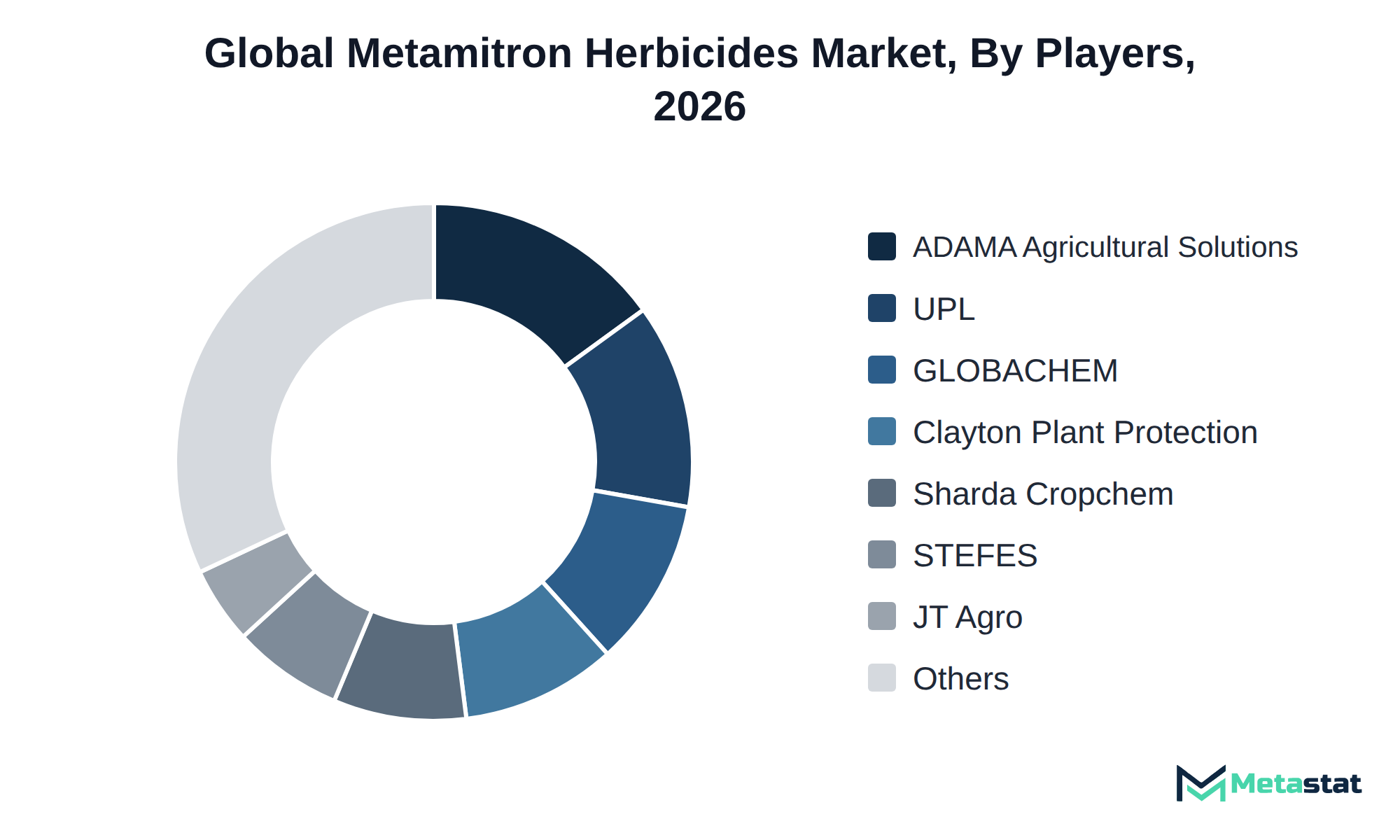
ADAMA Agricultural Solutions emphasizes a comprehensive product portfolio, ensuring widespread availability and strong support for users. UPL Limited targets sustainable agriculture solutions, aligning its products with eco-friendly practices while catering to diverse crop types. Players like GLOBACHEM NV concentrate on innovation in formulation technologies, enhancing product effectiveness and usability for farmers, which is crucial for maintaining market relevance in a competitive landscape.
Achieving this growth depends on several key developments influencing the Metamitron Herbicides market. Second, the liquid concentrate formulation type, expected to reach USD 217 million by 2033 at a CAGR of 5.2%, is essential for meeting evolving agricultural demands. Third, enhancing distribution channels, particularly through direct sales and agrochemical distributors, is vital for improving product accessibility in various regions. However, risks persist, particularly concerning regulatory changes and environmental considerations that impact herbicide usage. In regions like Europe, where compliance with stringent regulations occurs, any shifts could slow market progression. Therefore, navigating these dynamics will determine whether the market achieves its forecasted growth trajectory.
By Formulation Type: Granular Formulation, Liquid Concentrate
By Crop Type: Sugar Beet, Fodder Beet, Others (Red Beet / Beetroot)
By Application Method: Foliar Application, Soil Application
By Distribution Channel: Direct Sales, Agrochemical Distributors, Agricultural Retailers, Online Retailers
The report strategically identifies and profiles the key market players and analyses their core competencies in each sub-segment of the Metamitron Herbicides market.
Report Attributes | Details |
Study Period | 2021-2033 |
Base Year | 2025 |
Estimated Year | 2026 |
Forecast Period | 2026-2033 |
Historical Period | 2021-2025 |
Growth Rate | CAGR 5.1% from 2026 to 2033 |
Revenue Unit | USD million |
Segmentation | By Formulation Type, Crop Type, Application Method, Distribution Channel, and Region |
By Region | North America (By Formulation Type, Crop Type, Application Method, Distribution Channel, and Country)
|
Europe (By Formulation Type, Crop Type, Application Method, Distribution Channel, and Country)
| |
Asia Pacific (By Formulation Type, Crop Type, Application Method, Distribution Channel, and Country)
| |
South America (By Formulation Type, Crop Type, Application Method, Distribution Channel, and Country)
| |
Middle East and Africa (By Formulation Type, Crop Type, Application Method, Distribution Channel, and Country)
|
Find answers to common questions about this report
The Metamitron Herbicides market size was valued at USD 157.1 million in 2025.
The market is projected to grow at a CAGR of 5.1% during the forecast period from 2026 to 2033.
The North America Metamitron Herbicides market size is estimated to reach USD 26.3 million by 2033.
Liquid Concentrate leads the Metamitron Herbicides market with a projected value of USD 217 million by 2033, surpassing other formulation types. This segment's growth reflects a compound annual growth rate of 5.2 percent.
Growing interest in sugar beet cultivation drives demand for effective herbicides, as farmers recognize the importance of controlling weed competition to enhance yields and profitability. The fodder beet segment displays significant growth potential, with a projected CAGR of 5.8 percent through 2033, reflecting rising demand for efficient weed management solutions.
Europe holds the dominant share of the Metamitron Herbicides market, accounting for 62.1 percent. This figure reflects the region's significant presence compared to others, including North America at 10.3 percent.
Rising costs associated with Metamitron Herbicides present a significant challenge, particularly for smaller farming operations that struggle with higher expenditures. Price sensitivity restricts purchases and influences operational decisions, ultimately shaping demand within the market.
The rising demand for efficient weed management solutions in fodder beet cultivation supports market adoption. This growth is driven by an increasing focus on sustainable agricultural practices and the crop's popularity among livestock farmers, leading to a projected CAGR of 5.8 percent through 2033.
The Metamitron Herbicides market is estimated to reach a valuation of USD 234 million by 2033.
Key players operating in the Metamitron Herbicides market include ADAMA Agricultural Solutions, UPL Limited, GLOBACHEM NV, Belcrop BV, Clayton Plant Protection Ltd., JT Agro Ltd., STEFES GmbH, and Vextachem S.r.l.
The analysts below cover Chemicals and Materials research at Metastat Insights.
LEAD ANALYST
Utkarsh Khirodkar is a Lead Market Research Analyst at MetaStat Insight, specializing in market intelligence, technology sector assessments, and competitive strategy.

INDUSTRY CONSULTANT - CHEMICALS & ADVANCED MATERIALS
Chemicals and Materials · Machinery & Equipment · Packaging
Amit Gadhekar Consultant for Chemicals and Materials at MetaStat Insight, directing sector-specific intelligence, research, and strategic consulting across global chemical and processing markets.
Scaling antibody-drug conjugate manufacturing hinges on contract manufacturing availability for high-potency active ingredients. The MetaStat Insight analysis looked closely at global cleanroom slot constraints, bioconjugation batch failure rates, and supply chain redundancies between the US, Europe, and India. The supplier capability matrix proved genuinely useful for our team when mapping secondary source options across our clinical pipeline.
Floating offshore wind feasibility relies heavily on specialized installation vessel availability and port crane limits, which most broad renewable energy forecasts ignore. The report delivered a thorough analysis of dry dock capacity, mooring chain supply constraints, and raw material pricing trends for deepwater anchor installations. It served as a solid independent sanity check for our offshore project capital expenditure assumptions.
Assessing commercial microgrid software adoption requires looking past top-level installation numbers and examining utility interconnection queues. The research provided verifiable data on average permitting timelines, tariff structures, and battery storage integration costs across regional utility territories. That grounded perspective was valuable for our team when building five-year demand projections for industrial microgrid controllers.
Explore related market intelligence reports worth reading alongside this one.
Starting from
$2950