
LEAD ANALYST
Utkarsh Khirodkar is a Lead Market Research Analyst at MetaStat Insight, specializing in market intelligence, technology sector assessments, and competitive strategy.

Global Melamine Testing Market Size, Share, By Offering Type (Laboratory Testing Services, Test Kits and Strips, Analytical Instruments and Reference Standards), By Analytical Method (LC-MS/MS, HPLC without Mass Spectrometry, GC-MS and GC-MS/MS, ELISA and Lateral Flow Immunoassay), By Sample Type (Infant Formula and Baby Food, Other Dairy Products, Animal Feed and Pet Food and Food-Contact Materials), By End User (Food and Beverage Manufacturers, Feed and Pet Food Manufacturers, Government and Border Control Agencies and Independent Testing and Research Laboratories), Industry Analysis, Growth, Trends, and Forecast, 2026-2033
Report ID
MSI-2440
Published
November, 2026
Pages
295 Pages
Format
Historical
Base year
Forecast
Forecast period
Report Details
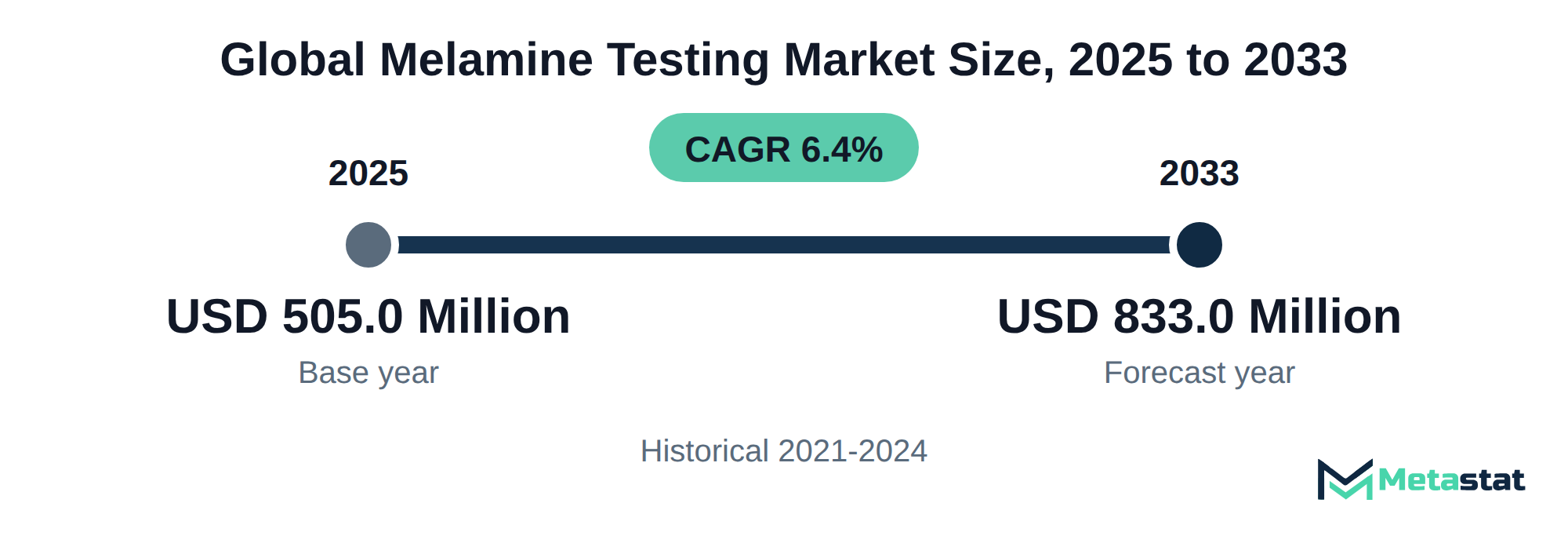
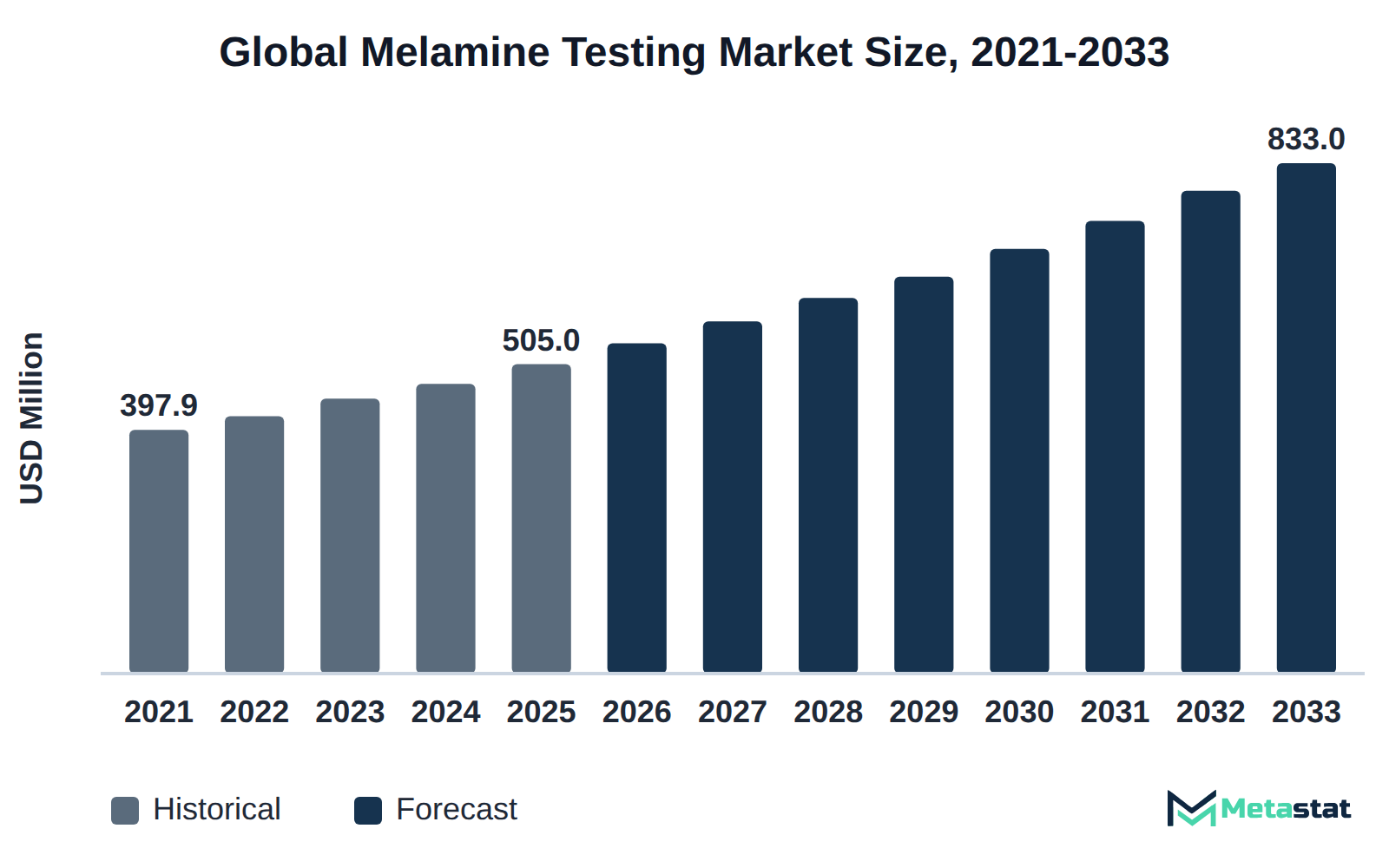
Market Valuation: Valued at $505 Million in 2025, projected to reach $833 Million by 2033 at a 6.4% CAGR.
Dominant Segment: Laboratory testing services lead the Melamine Testing market, driven by their comprehensive analytical capabilities and the increasing need for compliance with safety regulations.
Geographic Lead: Europe currently holds the largest market share at 27.6% in 2025, supported by robust food safety regulations and advanced testing facilities.
What's Inside: The report provides detailed competitive coverage, market analyses, and forecasts from 2026 to 2033, focusing on various segments including offering types and analytical methods.
Emerging Opportunities: The test kits and strips segment is projected to grow at a CAGR of 8%, reflecting a rising demand for rapid and efficient testing solutions among food manufacturers.
Market Dynamics: Rising consumer safety concerns and technological advancements in analytical methods are key drivers of growth, enhancing the demand for reliable melamine testing solutions.
Choose Your License
Global Melamine Testing Market
The global Melamine Testing market was valued at USD 505 million in 2025 and is projected to reach USD 833 million by 2033, growing at a CAGR of 6.4% over the forecast period.
The Melamine Testing market encompasses services and products focused on detecting and measuring melamine levels in various food and feed products. It belongs to the wider field of food quality and safety testing. This market serves food and beverage manufacturers, feed and pet food manufacturers, and food-contact material manufacturers. Expenditure stems from the need for compliance with safety regulations and quality assurance in food products, ensuring consumer safety and brand integrity.
Growth in the Melamine Testing market is driven by increasing awareness of food safety and stringent regulatory standards. Laboratory testing services generate the highest revenue and provide the analytical capabilities needed for melamine detection. Regions including Europe lead in market share, accounting for 27.6% in 2025, reflecting a robust framework for food safety regulations and advanced testing facilities.
North America holds 25.4% of the market in 2025, with the US leading in 2026. Demand for accurate melamine testing aligns with rising consumer health consciousness and the need for high-quality food products. Manufacturers invest in reliable testing solutions to maintain product safety and enhance market competitiveness.
The Melamine Testing market includes various testing methodologies and services used to ensure compliance with food safety regulations and consumer safety standards. Buyers investing in this market prioritize the assurance that products are free from harmful levels of melamine, particularly in food and feed sectors. This demand is driven largely by heightened awareness regarding food safety, regulatory requirements, and the risks associated with melamine contamination in consumable goods.
Growth within the market is influenced significantly by the expanding food and beverage manufacturing sector, which increasingly emphasizes quality control and safety in its operations. The Laboratory Testing Services segment commands the highest value, reflecting its essential role in providing accurate and reliable testing solutions. This regional dominance stems from stringent regulatory frameworks and a proactive approach to food safety practices.
Technological advancements within analytical methods and testing equipment further support market expansion. Innovations including LC-MS/MS and HPLC without Mass Spectrometry enhance testing accuracy and efficiency, appealing to manufacturers aiming to meet stringent safety standards. Regulatory pressures and technological improvements position the Melamine Testing market for growth at a CAGR of 6.4% over the forecast period.
The use of liquid chromatography-tandem mass spectrometry (LC-MS/MS) for the confirmation of melamine in infant formula represents a significant advancement in analytical methods within the Melamine Testing market. This technology delivers high sensitivity and specificity, essential for detecting low levels of melamine, a contaminant that poses serious health risks to infants.
The LC-MS/MS segment is projected to grow from USD 270 million in 2026 to USD 422.8 million by 2033, reflecting a compound annual growth rate (CAGR) of 6.6%. This growth highlights the increasing reliance on advanced analytical techniques among food and beverage manufacturers, driven by regulatory requirements and rising consumer awareness regarding food safety.
Adoption of LC-MS/MS technology supports manufacturers by ensuring compliance with stringent safety standards while enhancing product quality. By investing in this technology, companies position themselves competitively within the market, meeting consumer demand for safe and reliable infant nutrition products.
Rapid food safety testing for melamine in dairy and feed supply chains leverages various pricing models that cater to the unique requirements of buyers within the Melamine Testing market. Laboratory testing services represent the largest segment, projected to grow from USD 351.4 million in 2026 to USD 534.5 million by 2033, reflecting a compound annual growth rate of 6.2%. This significant growth emphasizes the increasing demand for reliable testing methods among food and beverage manufacturers, who prioritize compliance with safety regulations and quality assurance.
Buyers typically engage in long-term contracts with testing service providers, enhancing predictability in budgeting and ensuring consistent service quality. Pricing strategies often include tiered pricing based on the volume of tests required, incentivizing larger orders while allowing for flexibility in smaller batch testing. This structure supports manufacturers in managing operational costs while ensuring the integrity of their products. The competitive landscape within the market drives providers to offer specialized packages tailored to specific industries, further enhancing customer satisfaction and loyalty.
The demand for melamine migration testing among food-contact material manufacturers reflects heightened safety concerns about the potential migration of harmful chemicals from plastic tableware into food. This testing helps manufacturers comply with regulatory standards, which increasingly focus on consumer safety. In this context, manufacturers face pressure to deliver products that meet stringent safety requirements.
In the Melamine Testing market, the food-contact material manufacturers segment is projected to reach USD 104.3 million by 2033. This growth signifies the increasing prioritization of food safety among manufacturers, driving them to invest in rigorous testing protocols. The focus on quality assurance enhances brand reputation and mitigates the risk of costly recalls and legal issues associated with non-compliance.
Consequently, food-contact material manufacturers recognize that effective melamine migration testing represents a competitive advantage, facilitating access to an expanding market while building consumer trust. Manufacturers that want to succeed as regulations evolve need reliable testing methodologies.
Testing for melamine in milk powder involves advanced analytical methods to ensure safety and compliance with food regulations. Laboratories commonly employ techniques like LC-MS/MS, which has a projected market value of USD 422.8 million by 2033. This method provides high sensitivity and specificity, enabling accurate quantification of melamine levels in various dairy products.
Melamine Testing market participants prioritize reliable results to meet regulatory standards and protect consumer health. The emphasis on stringent testing protocols drives the demand for laboratory testing services, which are expected to reach USD 534.5 million by 2033. Accurate testing safeguards public health and enhances product quality and brand reputation.
Laboratories equipped with advanced technologies like LC-MS/MS position themselves competitively in the market, attracting food and beverage manufacturers who rely on precise testing to ensure the integrity of their products. This focus on quality and compliance remains crucial in maintaining consumer trust in the food supply chain.
Growing awareness of food safety drives increased spending on melamine testing services. Food and beverage manufacturers prioritize testing to ensure compliance with safety standards, reflecting a shift in consumer expectations. This heightened focus on safety directly impacts the demand for testing services, leading to a projected market value of USD 833 million by 2033, up from USD 505 million in 2025. Rising demand for safe, high-quality food motivates manufacturers to invest in broader testing protocols that improve the reliability of their products. Increased focus on safety drives market growth, with producers actively seeking to maintain consumer trust and competitive advantage.
Technological advancements in analytical methods drive growth in testing services. Enhanced methodologies, including liquid chromatography-tandem mass spectrometry (LC-MS/MS) and high-performance liquid chromatography (HPLC), deliver greater accuracy and sensitivity in detecting melamine. These improvements attract food and beverage manufacturers, who prioritize precise testing to ensure product safety and compliance. Sophisticated technologies reduce testing times and deliver more reliable results, which improves operational efficiency for laboratories. The Melamine Testing market sees a shift toward these advanced techniques, reflecting a broader trend toward quality assurance in food safety. Demand for innovative analytical instruments further supports market expansion, with suppliers focusing on developing solutions to meet evolving customer requirements.
Laboratories with broad testing capabilities hold a competitive position in the market. Food safety regulations tighten and consumer awareness grows, making the adoption of advanced analytical techniques critical. This evolution in testing methods allows market players to cater to the increasing demand for rigorous testing protocols. In turn, this contributes to strengthening the overall market landscape, ensuring that manufacturers and consumers benefit from enhanced food safety standards.
High testing costs pose a significant barrier for many food and beverage manufacturers considering melamine testing services. The expense associated with advanced analytical techniques and laboratory testing deters several manufacturers from investing in necessary testing, resulting in slower market uptake. This reluctance often leads to smaller order volumes and delayed implementation of testing protocols. Manufacturers operating on tighter margins face challenges in justifying such expenditures, which directly impacts their ability to ensure product safety and compliance with quality standards. Consequently, the melamine testing market experiences constrained growth, particularly among smaller players in the food and beverage sector, who prioritize cost management over comprehensive safety measures. Price sensitivity reflects a critical restraint that shapes purchasing decisions and overall market dynamics.
Compliance costs present a significant challenge within the market, affecting the profitability of suppliers. Increasing scrutiny from regulatory bodies regarding the testing of melamine levels in food products leads to heightened expenses associated with meeting safety standards. Suppliers face pressure to invest in advanced testing methodologies and equipment while ensuring accreditation adherence. This situation drives up operational costs, thereby compressing profit margins.
In response, suppliers adopt strategies to enhance efficiency and reduce costs. Implementing automation in testing processes improves throughput and minimizes labor expenses, allowing for a more competitive pricing structure. Collaboration with technology providers supports access to advanced analytical instruments, facilitating compliance without excessive financial strain. These initiatives help suppliers stay relevant while meeting compliance demands, positioning them for growth.
Test kits and strips show the highest growth potential in the Melamine Testing market, driven by increasing demand for rapid and efficient testing solutions. The CAGR for this segment is projected at 8%, indicating strong adoption among various buyer groups, including food and beverage manufacturers and feed and pet food manufacturers. These buyers seek quick testing methods to ensure compliance with safety standards and meet consumer expectations. Test kits and strips enable effective on-site testing, reducing downtime and enhancing operational efficiency.
The significance of this segment becomes evident in the growing emphasis on food safety, reflected in heightened spending by manufacturers on testing solutions. The market for test kits and strips is expected to address the rising demand for immediate results, making it a critical component of overall testing strategies. Manufacturers focusing on developing innovative, user-friendly testing kits are likely to capture this emerging opportunity, enhancing market penetration and revenue potential in the coming years.
The Global Melamine Testing market is segmented based on Offering Type, Analytical Method, Sample Type, and End User.
This segment is essential in assessing melamine levels in various food products, primarily by food and beverage manufacturers and regulatory agencies. The growing focus on food safety standards significantly enhances demand for these services. Increasing regulatory pressures drive manufacturers to seek reliable testing services, ensuring compliance and consumer safety. Compared to other segments, including Test Kits and Strips, which exhibit a CAGR of 8%, Laboratory Testing Services experiences a slower growth rate. However, the comprehensive nature and higher reliability of laboratory testing strengthen its position, catering to clients prioritizing accuracy and thoroughness in their testing protocols.
Test Kits and Strips segment is estimated to reach USD 168.3 million by 2033, at a CAGR of 8% during the forecast period. This segment focuses on providing rapid testing solutions for melamine detection in various food products, particularly infant formula and baby food. Food and beverage manufacturers, seeking compliance with safety standards, highly employ these kits. The demand for quick results fuels the growth of this segment, distinguishing it from Laboratory Testing Services, which exhibits a slower CAGR of 6.2%. Increasing safety concerns regarding food quality drive investments in Test Kits and Strips, while technological advancements contribute to enhanced testing accuracy. The affordability and simplicity of these kits support their adoption by several smaller manufacturers who face operational constraints with more sophisticated testing methods. Overall, the growth trajectory of this segment highlights a market trend prioritizing efficiency and speed in quality assurance processes, reflecting the evolving landscape of food safety practices.
Analytical Instruments segment is expected to reach USD 85.6 million by 2033. These food testing analytical instruments facilitate precise measurement of melamine levels in various food products, catering primarily to laboratories and food safety agencies. Demand for advanced analytical instruments is driven by increasing regulatory requirements and the need for accurate testing methods that ensure compliance with safety standards. The analytical instruments segment exhibits a distinct growth trajectory, supported by a CAGR of 6.6%, outpacing other offerings in the laboratory testing segment. This growth reflects the ongoing commitment of food manufacturers to invest in high-quality testing solutions. The integration of innovative technologies enhances testing efficiency, positioning this segment favorably compared to test kits and strips, which present a different market dynamic with a CAGR of 8%. Investment in analytical instruments underlines the market's focus on safety and quality assurance across food supply chains.
Reference Standards and Sample Preparation Consumables segment is projected to grow at a CAGR of 6.1% during the forecast period. This segment is essential for achieving accuracy and reliability in melamine testing, serving laboratories and testing facilities that require standards and consumables to ensure precise results. The demand for these products is driven by stringent regulations surrounding food safety and quality assurance. Unlike other segments, the Reference Standards and Sample Preparation Consumables segment experiences steady growth, reflecting consistent investments in quality control and testing processes. Compared to the Laboratory Testing Services segment, which holds a larger market value, this segment focuses on providing essential components that enhance testing accuracy while not directly offering testing services. Consequently, the growing emphasis on compliance and quality assurance in food production and safety shapes the demand dynamics for this specific segment.
This analytical method is essential in the detection of melamine levels in various food products, particularly infant formula and dairy items. Food and beverage manufacturers adopt LC-MS/MS due to its high sensitivity and accuracy in identifying contaminants. The growing regulatory emphasis on food safety drives demand for this segment, distinguishing it from other analytical methods that exhibit slower growth rates. For instance, the HPLC segment has a lower CAGR of 5%, indicating a comparatively slower adoption rate. The combination of regulatory pressures and the need for precise analysis supports the growth trajectory of the LC-MS/MS segment, positioning it as a critical tool for ensuring compliance and consumer safety in the market.
HPLC without Mass Spectrometry segment is estimated to reach USD 120.2 million by 2033, at a CAGR of 5% during the forecast period. This analytical method is commonly employed for testing various food samples to ensure safety and compliance with regulations. Food and beverage manufacturers adopt this method due to its effectiveness in detecting melamine levels without requiring mass spectrometry equipment, which often incurs higher operational costs. The slower growth rate of this segment compared to others, including LC-MS/MS, reflects its narrower adoption among laboratories that prioritize high-throughput testing capabilities. Technological advancements enhance the efficiency of HPLC, further driving its application across different food safety sectors. This segment primarily serves manufacturers seeking reliable and cost-effective testing solutions, ensuring consumer safety in the market.
GC-MS and GC-MS/MS segment is expected to reach USD 73.8 million by 2033. This analytical method is widely used for detecting melamine in various food products, including infant formula, dairy, and pet food. Food and beverage manufacturers primarily rely on this segment to ensure compliance with safety regulations and quality standards. The increasing emphasis on food safety and stringent regulatory requirements significantly drives demand for GC-MS and GC-MS/MS testing services. Compared to other analytical methods, this segment differentiates itself through its higher sensitivity and specificity, allowing for more accurate detection of contaminants. While other methods, including HPLC without Mass Spectrometry, achieve a CAGR of 5%, the GC-MS and GC-MS/MS segment experiences significant growth, reflecting the market's increasing need for reliable testing solutions.
ELISA testing serves as a crucial analytical method for detecting melamine in various food products. This segment is projected to grow at a CAGR of 6.3% during the forecast period. Food and beverage manufacturers apply ELISA testing to ensure product safety and compliance with regulations. Demand for reliable and efficient testing methods drives growth in this segment, particularly among those prioritizing food safety. Distinctions in growth rates become evident when comparing ELISA to other analytical methods including LC-MS/MS, which is anticipated to reach USD 422.8 million by 2033 at a higher CAGR of 6.6%. The ELISA method typically offers a lower cost of entry for manufacturers, appealing to smaller businesses within the market seeking to maintain safety standards without significant capital expenditure. This combination of factors strengthens the segment's position in the overall melamine testing market.
Lateral flow immunoassay represents a rapid testing method for the detection of melamine in various food products. This approach attracts food and beverage manufacturers seeking efficient testing solutions without extensive laboratory procedures. The increasing urgency for swift testing results drives the adoption of lateral flow immunoassays, particularly in settings where quick decision-making is crucial. Compared to other analytical methods, including LC-MS/MS, lateral flow immunoassays typically offer lower costs and faster results, making them appealing for routine screenings. Ongoing enhancements in lateral flow technology further improve its effectiveness and keep it relevant in the Melamine Testing market.
Others (Spectroscopy, Enzymatic Assays) involves various analytical techniques for the detection of melamine in food products. This segment is predominantly used by food and beverage manufacturers, independent testing laboratories, and regulatory agencies to ensure safety and compliance with food safety standards. The increasing focus on food safety and stringent regulations drives demand in this segment. Compared to other analytical methods, the pricing structure varies, impacting the choice of method among users. This segment attracts buyers seeking specific applications that require flexibility and adaptability in testing methodologies. It maintains distinct characteristics that set it apart from more established methods, contributing to a diverse approach in the overall testing landscape. The market is expected to see continued interest in these techniques, emphasizing their importance in ensuring food safety.
Infant Formula and Baby Food segment is valued at USD 144.9 million in 2026 and is projected to reach USD 227.6 million by 2033, at a CAGR of 6.7% during the forecast period. This segment helps ensure the safety and quality of food products for infants, which matters to manufacturers serving sensitive consumer groups. The increasing scrutiny on food safety standards and regulations drives demand within this segment, particularly among food and beverage manufacturers committed to maintaining high quality. Compared to other segments, Infant Formula and Baby Food exhibits faster growth due to heightened consumer awareness surrounding potential contaminants, further emphasizing its importance in the broader scope of the Melamine Testing market. The focus on stringent testing measures ensures compliance with safety regulations, distinguishing it from segments including Animal Feed and Pet Food, which do not face the same level of consumer pressure or regulatory oversight.
The Other Dairy Products segment is estimated to reach USD 215.2 million by 2033, at a CAGR of 5.7% during the forecast period. This segment focuses on the testing of dairy products beyond infant formula and baby food, serving manufacturers that aim to ensure product safety and compliance with health regulations. Demand for melamine testing in this segment arises from increasing regulatory pressures and the need for food safety assurance. Compared to other segments, the Other Dairy Products segment experiences slower growth, reflecting a more mature market environment. Testing costs associated with this segment influence the pace of adoption among producers, contrasting with the faster-growing Test Kits and Strips segment driven by rising demand for rapid testing solutions. The Melamine Testing market overall continues to adapt to these dynamics, emphasizing the importance of stringent quality assurance practices.
The Other Human Foods and Food Ingredients segment is expected to reach USD 123 million by 2033. This segment plays a critical role in testing a diverse range of food items, catering primarily to manufacturers focused on ensuring the safety and quality of their products. Increased consumer awareness regarding food safety drives demand, particularly due to regulatory pressures on food producers. Compared to other segments, this one experiences a moderate growth trajectory, with a projected CAGR that aligns closely with the overall market. The segment benefits from rising investments in quality assurance and testing protocols, differentiating it from segments like Infant Formula and Baby Food, which exhibit higher growth rates driven by more stringent regulations and consumer scrutiny. The market sees consistent interest from food manufacturers aiming to maintain compliance and uphold brand reputation through thorough testing of food ingredients.
The Animal Feed and Pet Food segment is projected to grow at a CAGR of 6.2% during the forecast period. This segment is critical for ensuring the safety and quality of feed for livestock and pets, primarily by manufacturers of animal nutrition products. The increasing emphasis on food safety and quality assurance drives demand in this segment, particularly as consumers become more aware of the potential risks associated with contaminated feed. Compared to other sample types, including Other Dairy Products and Infant Formula and Baby Food, which are projected to grow at CAGRs of 5.7% and 6.7% respectively, this segment presents a moderate growth trajectory. Rising consumer demand for high-quality animal products supports the expansion of testing services in the market, aligning with evolving regulatory requirements for food safety. This growth indicates a significant opportunity for service providers to enhance their portfolios and meet the specific needs of feed manufacturers.
Food-Contact Materials and Articles focus on testing materials that come into contact with food products, ensuring safety and compliance with health regulations. This segment serves food manufacturers, packaging companies, and regulatory agencies that require testing to guarantee the absence of harmful substances in food-contact materials. Regulatory pressures drive demand for rigorous testing in this area, reflecting increased consumer awareness regarding food safety. Compared to other sample types, this segment faces distinct challenges, primarily related to compliance with stringent regulations. The testing requirements for food-contact materials differ from those for human foods and animal feed, often leading to a higher degree of scrutiny. Emphasis on safety standards and continuously evolving regulations make strong testing protocols important for food-contact materials.
The Food and Beverage Manufacturers segment is valued at USD 234.6 million in 2026 and is projected to reach USD 359.2 million by 2033, at a CAGR of 6.3% during the forecast period. This segment includes manufacturers involved in producing food products and beverages, who rely on melamine testing to ensure safety and compliance with regulatory standards. Increased consumer awareness of food safety and stricter regulations significantly influence this segment's growth. Compared to other segments, this segment demonstrates robust demand driven by the need for high-quality food products. The higher growth rate of this segment, at 6.3%, reflects the critical importance of melamine testing in maintaining product integrity, distinguishing it from other segments with slower growth rates.
Feed and Pet Food Manufacturers segment is estimated to reach USD 117.2 million by 2033, at a CAGR of 6.2% during the forecast period. This segment focuses on ensuring the safety and quality of feed and pet food products, addressing concerns about melamine contamination in these items. Manufacturers in this sector require rigorous testing to meet safety standards and maintain consumer trust. Rising awareness regarding food safety and regulatory compliance drives demand in this segment. With a CAGR of 6.2%, this segment demonstrates slower growth compared to other segments, including Test Kits and Strips, which is expected to grow at a CAGR of 8%. Compliance with health regulations continues to influence market dynamics, distinguishing this segment through its specific focus on animal nutrition and safety standards. Growth potential remains evident, supported by an overall increase in scrutiny across the market.
This segment involves testing materials that interact with food products to ensure safety and compliance with health regulations. Manufacturers in this segment rely on stringent quality standards, driving demand for melamine testing services. The increasing focus on food safety regulations globally supports growth in this sector, reflecting heightened awareness among consumers regarding the safety of food-contact materials. Compared to other segments, this segment exhibits a moderate growth rate, influenced by evolving regulations and standards in food safety. The anticipated CAGR for this segment positions it favorably within the market, creating opportunities for testing providers to enhance their service offerings and cater to the growing needs of manufacturers.
Importers, Distributors and Retailers segment is projected to grow at a CAGR of 6.7% during the forecast period. This segment involves entities responsible for the procurement, distribution, and retail of melamine testing products, serving food manufacturers and regulatory bodies. The increasing focus on food safety regulations drives demand for reliable testing services among these entities. Importers, Distributors and Retailers differ from other segments, including Food and Beverage Manufacturers, due to their intermediary role and broader market reach. This segment experiences growth through the expansion of food safety standards globally, encouraging these players to enhance their offerings. The market's emphasis on compliance and quality assurance leads to continuous investment in testing capabilities among distributors and retailers.
Government and Border Control Agencies focus on ensuring compliance with food safety regulations and standards related to melamine testing. These agencies employ testing services to monitor imported foods and materials for contamination, serving both public health interests and trade regulations. Growing concerns over food safety and the potential risks associated with melamine in food products drive the demand for testing services in this segment. This sub-segment is distinct from others due to its regulatory emphasis, prioritizing adherence to safety protocols rather than commercial objectives. Government and Border Control Agencies represent a significant part of the market, responding to increasing global scrutiny of food safety and quality assurance measures.
Independent Testing and Research Laboratories conduct rigorous assessments to ensure food safety and compliance with health standards. These facilities provide essential services to food manufacturers, government agencies, and researchers by identifying contaminants including melamine in various products. Demand for testing services in these laboratories is driven by increasing consumer awareness of food safety and regulatory requirements. This segment experiences slower growth due to the high costs associated with advanced testing methods. While food and beverage manufacturers prioritize testing for compliance and quality assurance, research laboratories focus more on developing new methodologies and technologies for detection. This distinction highlights the varying objectives and operational approaches within the market.
Based on geography, the Global Melamine Testing market is divided into North America, Europe, Asia-Pacific, South America, Middle East, and Africa.
Growing demand for melamine testing in North America derives from stringent food safety regulations and an increasing focus on quality assurance in food production. Countries including the United States, Canada, and Mexico contribute significantly to this demand due to their robust food and beverage sectors. The market's projected value is expected to reach USD 205.6 million by the end of 2033, reflecting a compound annual growth rate (CAGR) of 6.4% during the forecast period. Laboratory testing services play a crucial role, driven by the need for comprehensive testing solutions among food manufacturers. The implementation of modern analytical methods enhances testing accuracy, further propelling the growth of the market. Investment in advanced testing technologies and rising consumer awareness regarding food safety standards continue to strengthen the market potential within the region.
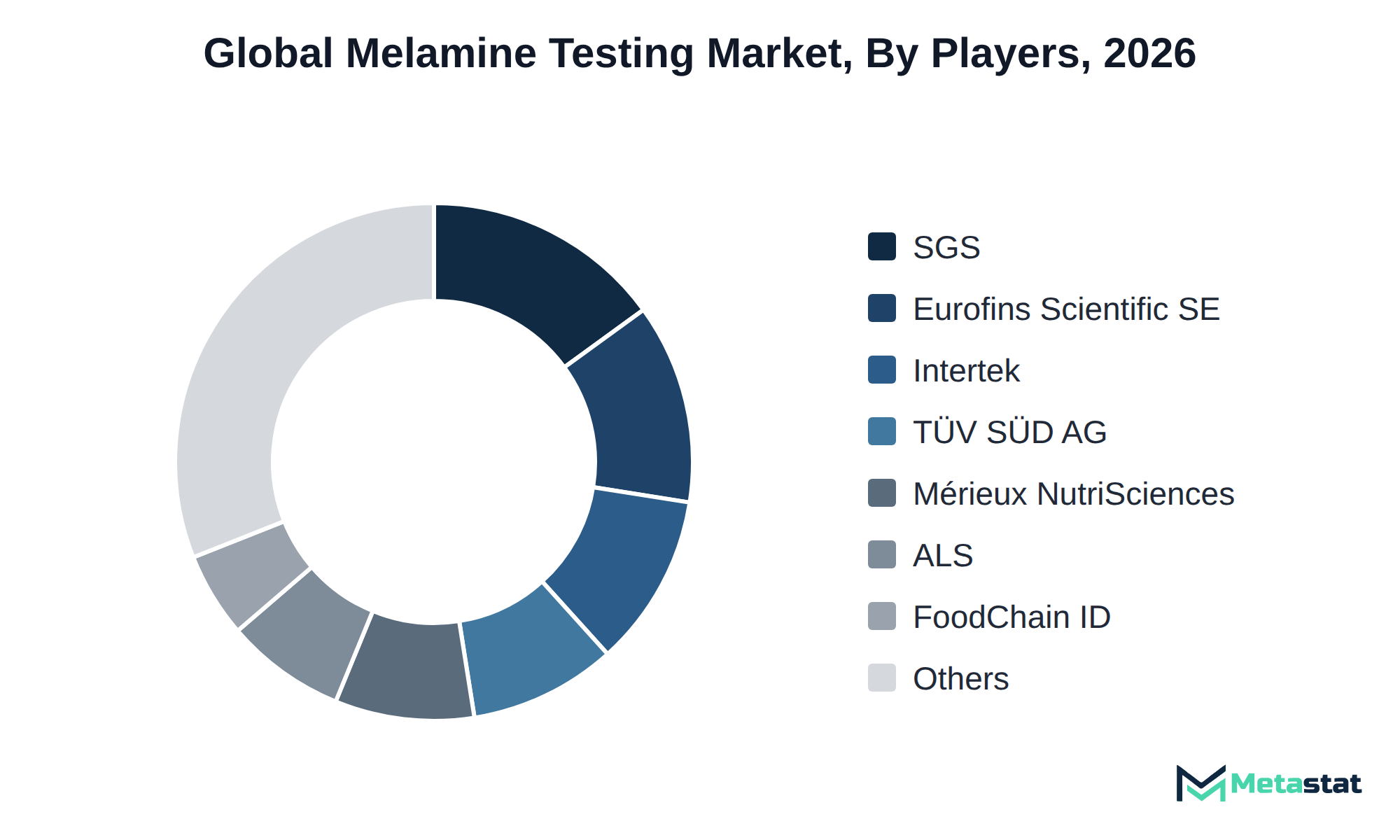
Demand in the Melamine Testing market in Europe derives primarily from stringent food safety regulations and a focus on quality assurance within food supply chains. Countries including Germany, France, and the UK have established comprehensive testing protocols that ensure compliance with European Union standards. The region's infrastructure supports advanced laboratory capabilities, enhancing the reliability and accuracy of testing methods, including LC-MS/MS and HPLC. Manufacturers in the food and beverage sector prioritize melamine testing to maintain brand integrity and consumer trust. With a market share of 27.6% in 2025, Europe influences global trends and advancements in testing techniques, driving innovation and investment in the sector.
The Asia-Pacific region stands out in the Melamine Testing market, driven by increasing demand for food safety, particularly in countries like China and India. Regulatory measures aimed at ensuring food quality and safety standards significantly influence market dynamics. In China, stringent food safety regulations push manufacturers to adopt rigorous testing methods, contributing to market growth. Japan and South Korea emphasize advanced analytical techniques to maintain high-quality standards in food products. The market's share in the region reached 37.4% in 2025, highlighting the critical role of local food and beverage manufacturers alongside strong demand from feed and pet food industries. The focus on compliance with health regulations supports the expansion of the market across Asia-Pacific, enhancing the necessity for advanced testing solutions.
In South America, the Melamine Testing market experiences steady growth, primarily driven by increasing safety concerns in the food sector. Brazil and Argentina represent significant contributors to this demand, focusing on food safety regulations that ensure product compliance and consumer protection. The region’s share of the global market reached 5.5% in 2025. Both countries emphasize stringent testing protocols in food production, necessitating reliable testing methods. The presence of established agricultural sectors further supports demand for comprehensive testing solutions. Growing consumer awareness regarding food quality and safety continues to shape market dynamics, reinforcing the importance of effective melamine testing in protecting public health. The market evolution in South America reflects broader trends in food safety and quality assurance, aligning with international standards.
In the Middle East and Africa, stringent food safety regulations influence the Melamine Testing market significantly, particularly in countries like Saudi Arabia and the UAE. The increasing focus on quality assurance among food manufacturers drives demand for melamine testing services. South Africa, with its diverse food sector, represents another key contributor to the market, emphasizing the importance of safety assessments in food products. The region accounted for 4.2% of the global market share in 2025. Continuous investments in food safety initiatives and growing awareness of food contaminants support the market growth and expand opportunities for service providers.
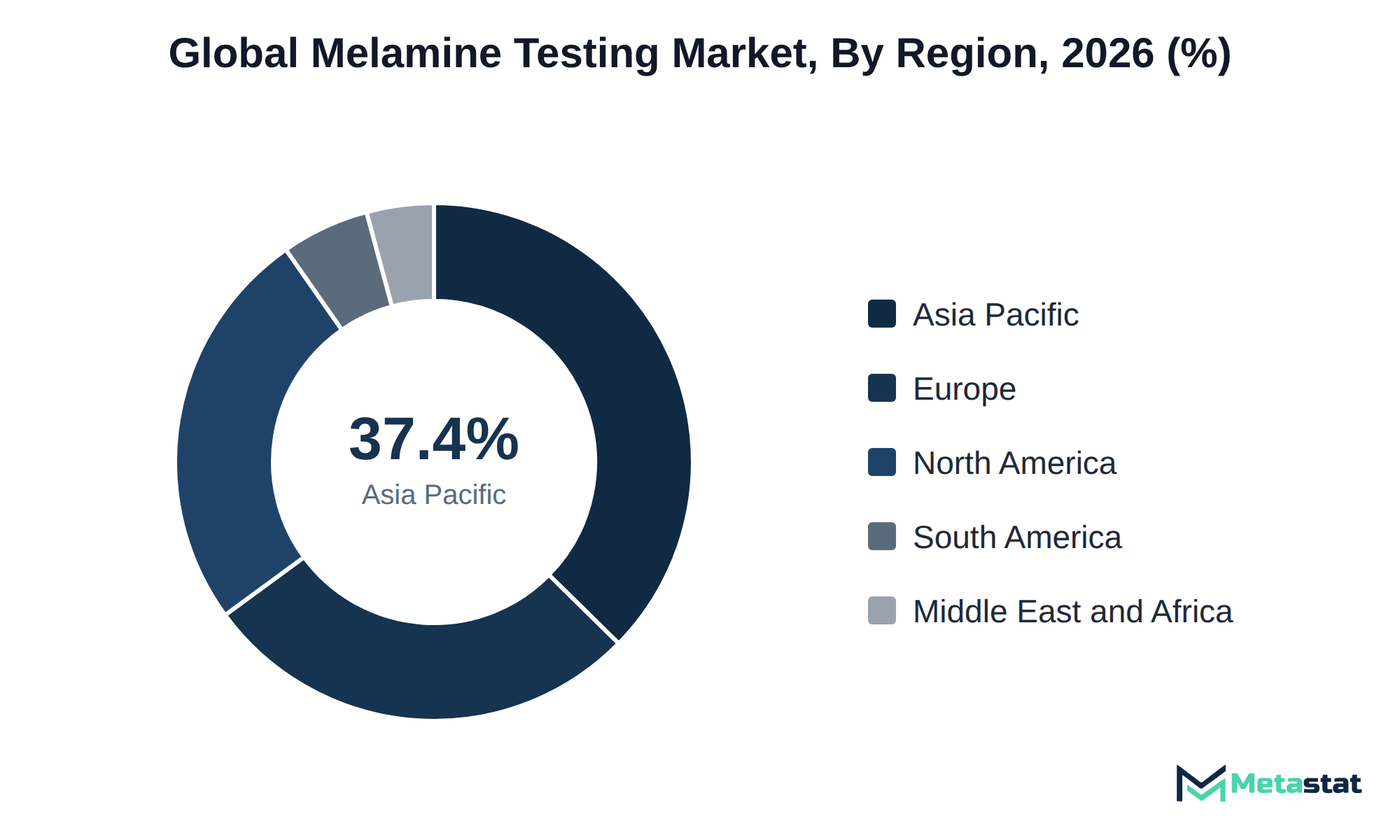
Firms in the Melamine Testing market compete through various strategies, including specialization in specific service types and pricing structures. Key players focus on delivering laboratory testing services, analytical instruments, and test kits tailored to customer needs, emphasizing reliability and regulatory compliance.
Buyers prioritize attributes including certification, customization, and service quality when selecting suppliers. For instance, Intertek Group plc emphasizes comprehensive testing services and regulatory support, while Eurofins Scientific SE offers a wide range of analytical methods to meet diverse customer requirements. SGS SA distinguishes itself by providing extensive global coverage and specialized expertise in food safety testing.
Various competitors adopt distinct approaches to capture market share within the Melamine Testing market. Companies like Thermo Fisher Scientific Inc. focus on advanced analytical instruments that enhance testing precision. In contrast, Mérieux NutriSciences positions itself around tailored testing solutions for food and beverage manufacturers, ensuring compliance with stringent safety standards.
Emerging players, including analytical systems providers, leverage innovative testing methodologies to penetrate niche markets, increasing competition. The competitive landscape requires ongoing investment in technology and service excellence to meet evolving market demands.
This growth relies on several key developments within the Melamine Testing market. First, the increasing demand for laboratory testing services, especially among food and beverage manufacturers, will drive significant revenue. Second, the adoption of test kits and strips is anticipated to surge, with the segment reaching USD 168.3 million by 2033, supported by regulatory pressures on food safety. However, potential economic downturns represent a significant risk that could hinder growth. Economic challenges limit funding for testing services, impacting the market's expansion in regions including North America and Europe, where strict regulations prevail. The market's trajectory depends on maintaining robust demand for testing solutions and navigating potential financial constraints. Overall, these factors will shape the future outlook of the Melamine Testing market, influencing its growth and development through 2033.
By Offering Type: Laboratory Testing Services, Test Kits and Strips, Analytical Instruments, Reference Standards and Sample Preparation Consumables
By Analytical Method: LC-MS/MS, HPLC without Mass Spectrometry, GC-MS and GC-MS/MS, ELISA, Lateral Flow Immunoassay, Others (Spectroscopy, Enzymatic Assays)
By Sample Type: Infant Formula and Baby Food, Other Dairy Products, Other Human Foods and Food Ingredients, Animal Feed and Pet Food, Food-Contact Materials and Articles
By End User: Food and Beverage Manufacturers, Feed and Pet Food Manufacturers, Food-Contact Material Manufacturers, Importers, Distributors and Retailers, Government and Border Control Agencies, Independent Testing and Research Laboratories
The report strategically identifies and profiles the key market players and analyses their core competencies in each sub-segment of the Melamine Testing market.
|
Report Attributes |
Details |
|
Study Period |
2021-2033 |
|
Base Year |
2025 |
|
Estimated Year |
2026 |
|
Forecast Period |
2026-2033 |
|
Historical Period |
2021-2025 |
|
Growth Rate |
CAGR 6.4% from 2026 to 2033 |
|
Revenue Unit |
USD million |
|
Segmentation |
By Offering Type, Analytical Method, Sample Type, End User, and Region |
|
By Region |
North America (By Offering Type, Analytical Method, Sample Type, End User, and Country)
|
|
Europe (By Offering Type, Analytical Method, Sample Type, End User, and Country)
|
|
|
Asia Pacific (By Offering Type, Analytical Method, Sample Type, End User, and Country)
|
|
|
South America (By Offering Type, Analytical Method, Sample Type, End User, and Country)
|
|
|
Middle East and Africa (By Offering Type, Analytical Method, Sample Type, End User, and Country)
|
Find answers to common questions about this report
The Melamine Testing market size was valued at USD 505 million in 2025.
The market is projected to grow at a CAGR of 6.4% during the forecast period from 2026 to 2033.
The North America Melamine Testing market size is estimated to reach USD 205.6 million by 2033.
Laboratory Testing Services leads the Melamine Testing market with a projected value of USD 534.5 million by 2033. This segment outpaces others in growth potential, reflecting a compound annual growth rate of 6.2 percent.
Growing awareness of food safety drives increased spending on testing services. Technological advancements in analytical methods enhance accuracy and sensitivity, attracting food and beverage manufacturers who prioritize precise testing for compliance and safety.
High testing costs pose a significant barrier for many food and beverage manufacturers, deterring smaller players from investing in necessary testing. Compliance costs further challenge profitability, as increasing scrutiny from regulatory bodies drives up expenses associated with meeting safety standards.
Factors favoring adoption in the melamine testing industry include heightened awareness of food safety, leading food and beverage manufacturers to prioritize compliance with safety standards. The projected market value of USD 833 million by 2033 reflects this increasing demand for rigorous testing solutions.
The Melamine Testing market is estimated to reach a valuation of USD 833 million by 2033.
Key players operating in the Melamine Testing market include Intertek Group plc, Eurofins Scientific SE, SGS SA, ALS Limited, Mérieux NutriSciences, and TÜV SÜD AG.
Key analytical methods include liquid chromatography-tandem mass spectrometry (LC-MS/MS), high-performance liquid chromatography (HPLC), and gas chromatography-mass spectrometry (GC-MS). These techniques enhance accuracy and sensitivity in detecting melamine residues.
The analysts below cover Chemicals and Materials research at Metastat Insights.
LEAD ANALYST
Utkarsh Khirodkar is a Lead Market Research Analyst at MetaStat Insight, specializing in market intelligence, technology sector assessments, and competitive strategy.

INDUSTRY CONSULTANT - CHEMICALS & ADVANCED MATERIALS
Chemicals and Materials · Machinery & Equipment · Packaging
Amit Gadhekar Consultant for Chemicals and Materials at MetaStat Insight, directing sector-specific intelligence, research, and strategic consulting across global chemical and processing markets.
Assessing commercial microgrid software adoption requires looking past top-level installation numbers and examining utility interconnection queues. The research provided verifiable data on average permitting timelines, tariff structures, and battery storage integration costs across regional utility territories. That grounded perspective was valuable for our team when building five-year demand projections for industrial microgrid controllers.
Ambulatory surgical centers have very different purchasing cycles for robotic-assisted surgery platforms than major hospital networks. The MetaStat Insight study focused squarely on capital expenditure depreciation, procedural reimbursement pathways, and surgeon training overhead. That operational clarity made it much simpler to validate multi-year procedure growth forecasts against actual ambulatory center adoption patterns.
When planning edge sensor rollouts across refinery environments, generic IoT reports typically miss the harsh-environment certification bottlenecks. MetaStat Insight gave an objective evaluation of ATEX and Class 1 Division 2 hardware availability, along with realistic five-year maintenance cycle cost projections. The comparison of wireless mesh versus private cellular backhaul helped our team pressure-test network reliability models for remote processing facilities.
Explore related market intelligence reports worth reading alongside this one.
Starting from
$2950