
LEAD ANALYST
Utkarsh Khirodkar is a Lead Market Research Analyst at MetaStat Insight, specializing in market intelligence, technology sector assessments, and competitive strategy.

Global Food Testing Analytical Instrumentation Market Size, Share, By Technology (Chromatography, Spectroscopy, Wet Chemical and Combustion Analysis, Molecular Analysis, Immunoassay and Microbial Analysis), By Food Category (Dairy Products, Meat, Poultry and Seafood, Grains, Cereals and Oilseeds, Beverages, Processed Foods, Fruits and Vegetables), By Testing Application (Nutritional and Compositional Analysis, Chemical Contaminant and Residue Analysis, Microbial Safety Testing, Authenticity and Adulteration Testing, Allergen Testing, Physical Quality Testing), By End User (Food and Beverage Manufacturers, Independent Testing Laboratories, Government and Regulatory Laboratories), Industry Analysis, Growth, Trends, and Forecast, 2026-2033
Report ID
MSI-5649
Published
October, 2026
Pages
304 Pages
Format
Historical
Base year
Forecast
Forecast period
Report Details
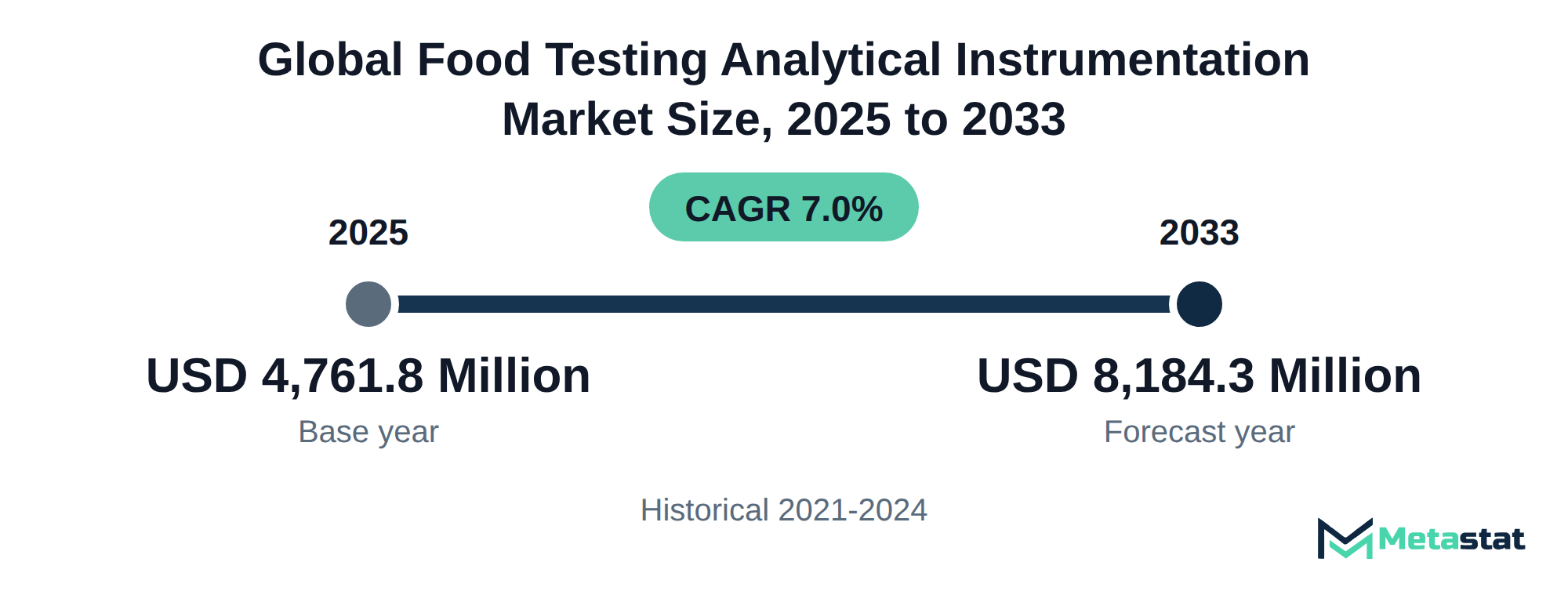
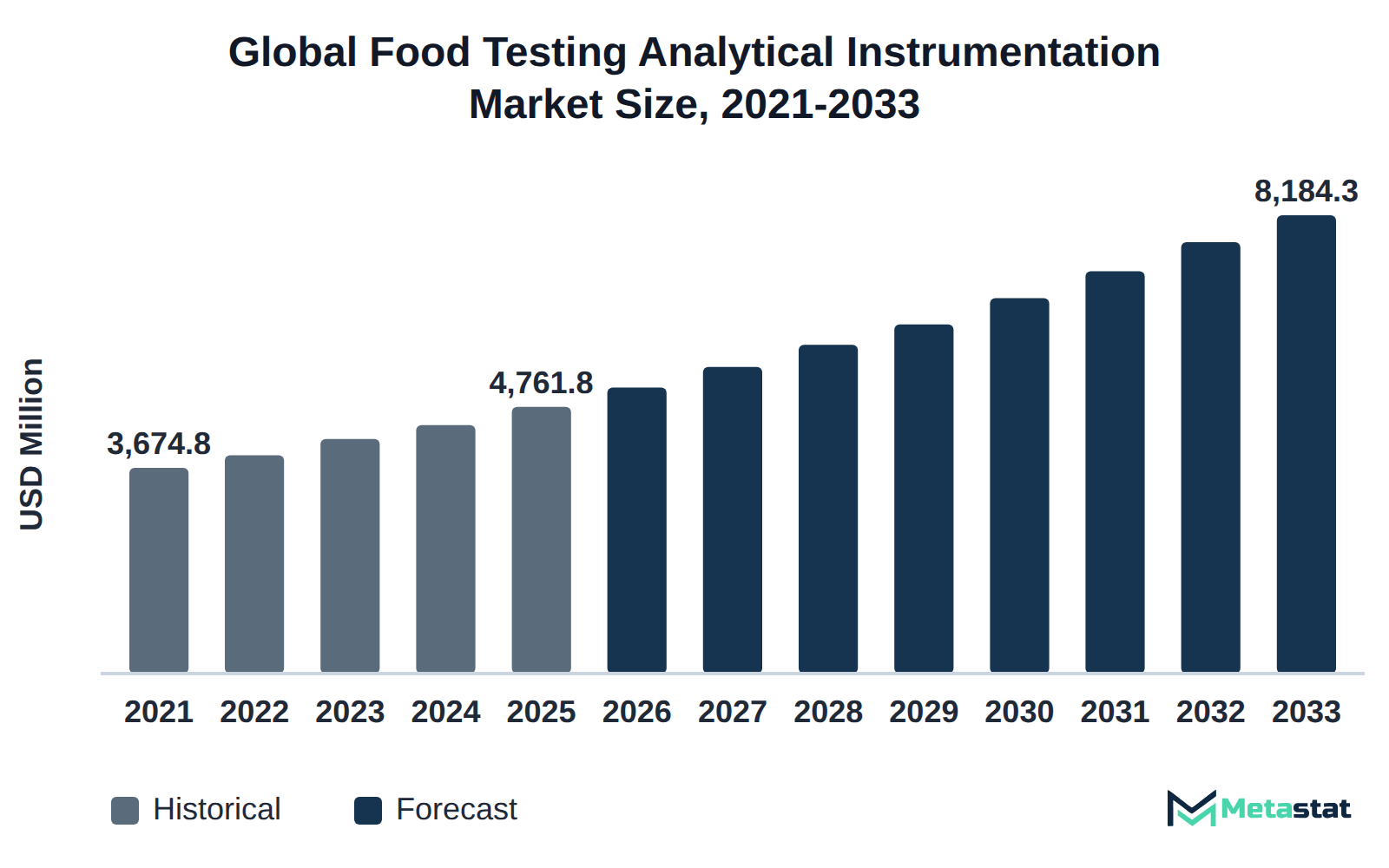
Market Valuation: Valued at $4,761.8 Million in 2025, projected to reach $8,184.3 Million by 2033 at a 7.0% CAGR.
Dominant Segment: Chromatography leads the market, driven by its critical role in detailed food analysis and compliance with safety standards.
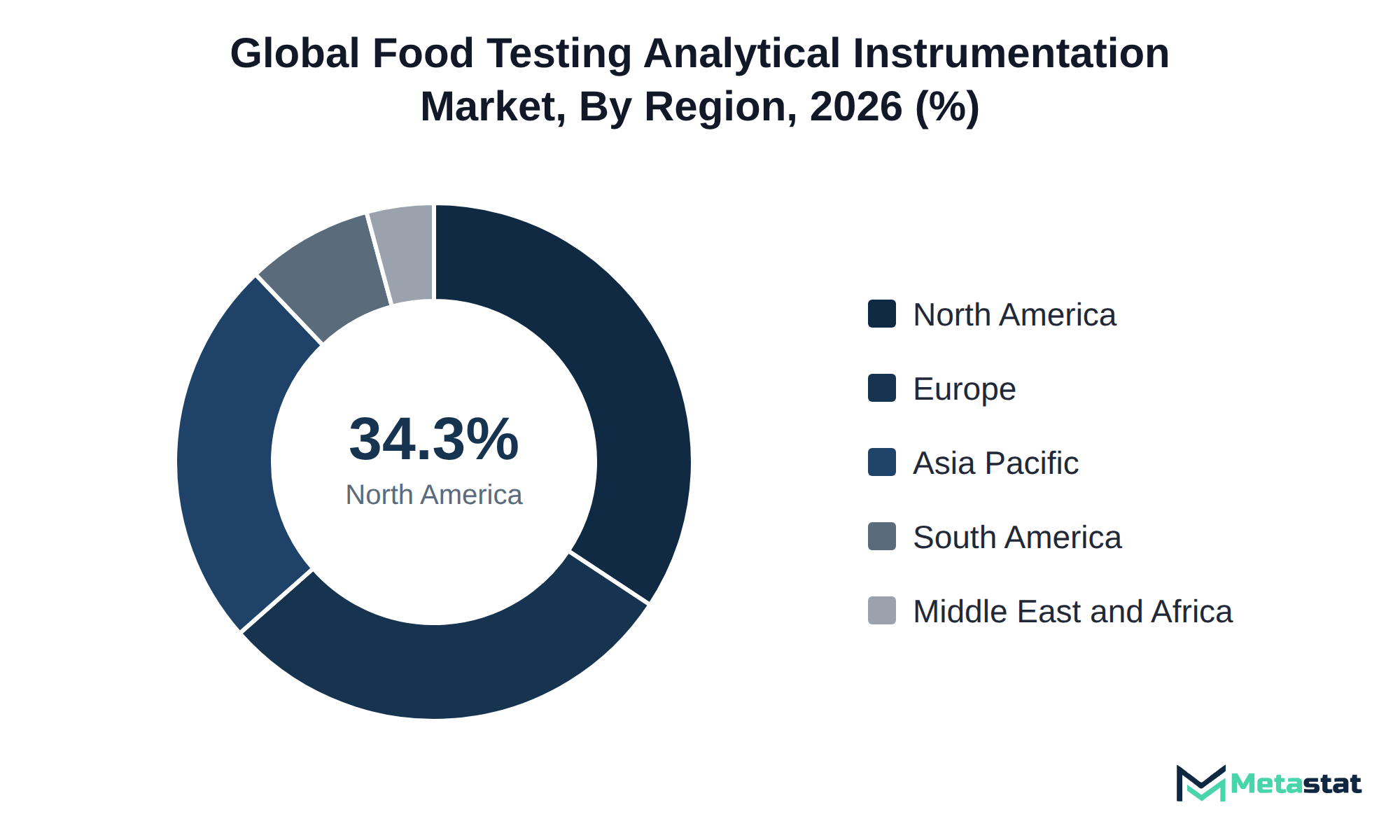
Geographic Lead: North America is the leading region, holding 34.3% of the market in 2025, bolstered by advanced technological infrastructure and stringent regulatory practices.
What's Inside: The report provides comprehensive coverage of market dynamics, competitive landscape, and detailed forecasts from 2026 to 2033, focusing on various technologies and applications.
Emerging Trends: The independent testing laboratories segment shows the highest growth potential, with a projected CAGR of 8.1%, reflecting increasing consumer and regulatory focus on food safety.
Technological Advancements: The adoption of NIR and FTIR technologies in dairy, grain, and meat testing enhances accuracy and efficiency, meeting the rising demand for precision in food safety.
Choose Your License
Global Food Testing Analytical Instrumentation Market
The global Food Testing Analytical Instrumentation market was valued at USD 4,761.8 million in 2025 and is projected to reach USD 8,184.3 million by 2033, growing at a CAGR of 7.0% over the forecast period.
The Food Testing Analytical Instrumentation market encompasses various technologies and methodologies used to analyze food products for safety, quality, and compliance with regulations. Buyers invest in these instruments to ensure product integrity, consumer safety, and adherence to stringent industry standards. This market serves food and beverage manufacturers, independent testing laboratories, and government regulatory bodies, all of which prioritize high-quality testing solutions to mitigate risks associated with foodborne illnesses and contamination.
Growth in the market is driven by increasing consumer awareness regarding food safety and the demand for transparency in food sourcing. The segment of chromatography represents the highest value, reflecting the essential role of this technology in detailed food analysis. North America holds 34.3% of the market in 2025, with the US leading in 2026. This region benefits from advanced technological infrastructure and a robust regulatory framework that promotes rigorous food testing practices.
The rising number of food safety regulations globally contributes to market expansion. The need for accurate testing applications, including nutritional analysis and contaminant testing, influences investment decisions among manufacturers and testing facilities. These factors create a favorable environment for innovation and the adoption of advanced analytical instruments across the industry.
The Food Testing Analytical Instrumentation market includes an array of analytical instruments and techniques essential for ensuring food safety and quality. Buyers invest in this market to comply with stringent regulations, enhance product quality, and safeguard consumer health. Demand arises from various sectors, including food and beverage manufacturers, independent testing laboratories, and government regulatory bodies, all of which prioritize accurate testing solutions to maintain standards and consumer trust.
Growth in the market is primarily driven by increasing consumer awareness regarding food safety and nutritional content. The segment of chromatography holds the highest value, reflecting its critical role in detailed chemical analysis. North America's high market share results from advanced technological adoption and a strong emphasis on food quality regulations.
In addition to chromatography, other technologies including spectroscopy and molecular analysis contribute significantly to the market's expansion. The increasing focus on reducing foodborne illnesses and ensuring compliance with international standards fuels demand. The market is positioned for sustained growth over the forecast period, supported by ongoing innovations and heightened regulatory scrutiny.
The adoption of Near-Infrared (NIR) and Fourier Transform Infrared (FTIR) spectroscopy technologies in dairy, grain, and meat composition testing enhances the accuracy and efficiency of quality assessments. In the Food Testing Analytical Instrumentation market, the transition to these advanced analytical methods aligns with the growing demand for precision in food safety and quality control. The dairy products segment illustrates substantial market potential for these technologies.
NIR and FTIR technologies facilitate rapid, non-destructive testing, enabling manufacturers to analyze moisture, fat, protein, and other critical components without altering samples. This capability proves essential in maintaining compliance with regulatory standards and meeting consumer expectations for quality. Integrating these technologies increases operational efficiency and supports the product consistency that competitive food production requires.
The market's expansion reflects a broader trend towards automation and digitization in food testing practices. By investing in NIR analyzers and FTIR instrumentation, food manufacturers achieve improved product quality and greater throughput, positively impacting overall profitability. Successful implementation of these technologies will define competitive advantages in dairy, grain, and meat processing sectors.
The Food Testing Analytical Instrumentation market experiences significant investment in chromatography and mass spectrometry technologies specifically for detecting pesticide, mycotoxin, and veterinary drug residues. This focus is driven by increasing regulatory requirements and consumer demand for food safety. The segment of chromatography alone is projected to grow from USD 1,762.7 million in 2026 to USD 2,902.2 million by 2033, reflecting a compound annual growth rate (CAGR) of 7.4%. Such growth indicates strong market confidence in these technologies, reinforcing their critical role in ensuring food safety.
Pricing models for these analytical instruments vary based on several factors, including the technology employed, the level of automation, and service contracts. Buyers frequently opt for comprehensive service agreements that offer maintenance, calibration, and training within the purchase. These contracts often lead to long-term relationships between manufacturers and buyers, providing consistent support and ensuring compliance with evolving standards. The commitment to service agreements benefits both parties by facilitating smoother operations and reducing downtime, ultimately enhancing food safety efforts. Chromatographic and mass spectrometric instruments continue to attract significant attention and investment, which further raises their importance in food safety.
Latin American food laboratories emphasize the importance of validated methods and instrument support in their testing processes. This focus stems from stringent regulatory requirements and a growing awareness of food safety standards within the region. Specifically, the Food Testing Analytical Instrumentation market in Latin America is characterized by a demand for advanced analytical techniques that ensure compliance with local and international regulations.
For instance, food and beverage manufacturers operating in Latin America are projected to adopt instruments that support nutritional and compositional analysis, with a significant value increase from USD 2,920.4 million in 2026 to USD 4,592.2 million by 2033. This expected growth reflects the necessity for these laboratories to adopt technologies that maintain the integrity and safety of food products.
The prioritization of validated methods enhances product quality and builds consumer trust, leading to a competitive advantage for laboratories and manufacturers alike. As the market evolves, sophisticated analytical instrumentation will shape how food laboratories across Latin America operate.
Food producers emphasize the importance of selecting the appropriate analysis method for ensuring product safety and quality. Rapid spectroscopy offers quick results, making it ideal for initial screening of food products, while confirmatory chromatography provides detailed analysis that verifies results from rapid food safety testing. This growth indicates significant investment in precise and reliable testing methods.
Producers often choose rapid spectroscopy to enhance throughput in testing processes, minimizing time spent on routine quality checks. However, the need for compliance with stringent food safety regulations drives the necessity for confirmatory chromatography, especially in cases where regulatory bodies require verification of initial test results. The value of chromatography technology in food testing highlights its role in maintaining product integrity and protecting public health. Balancing speed and accuracy remains essential for producers managing complex food testing requirements.
Heightened awareness surrounding food safety significantly drives investment in food quality and safety testing among food and beverage manufacturers. Consumers increasingly prioritize health and safety, prompting manufacturers to enhance testing protocols and ensure compliance with evolving standards. This shift has stimulated demand for advanced analytical instruments capable of delivering accurate and timely food safety assessments. The food and beverage manufacturing segment is expected to experience a Compound Annual Growth Rate (CAGR) of 6.7% between 2026 and 2033, reflecting the urgency for reliable testing solutions. Adequate investment in food testing analytical instrumentation equips companies to meet regulatory requirements while strengthening consumer trust. The market benefits from this trend, giving suppliers opportunities to innovate and expand their offerings as expectations for food quality and safety rise.
The ongoing pursuit of cost efficiency in food testing drives technological advancements within the Food Testing Analytical Instrumentation market. Suppliers focus on developing instruments that enhance productivity while minimizing operational costs. Manufacturers of food products increasingly seek solutions that streamline processes and reduce resource consumption, prompting innovation in equipment design and function. Advancements include the integration of automated systems and real-time monitoring capabilities, significantly enhancing testing accuracy and speed.
The trend toward cost-effective solutions influences purchasing decisions within the market. Independent testing laboratories, government agencies, and food and beverage manufacturers actively invest in advanced instrumentation that optimizes workflow and reduces the time required for testing. Tightening margins in the food industry drive demand for analytical instruments that provide a high return on investment. Enhanced performance and efficiency of these technologies improve profitability for suppliers and promote broader adoption within the industry.
Compliance with stringent regulations remains a significant barrier for food and beverage manufacturers in the Food Testing Analytical Instrumentation market. The complexity and variability of these regulations often require extensive resources for adherence, resulting in slower uptake of new technologies. Manufacturers face delays in adopting advanced testing instruments, impacting operational efficiency and competitiveness. Independent testing laboratories frequently encounter challenges in validating new methodologies, prolonging procurement timelines. These hurdles hinder several smaller companies, limiting their ability to invest in updated testing solutions and reducing market presence. Regulatory compliance consumes valuable time and financial resources, delaying the replacement of outdated instruments and restricting market growth.
Input costs for essential materials and components in the Food Testing Analytical Instrumentation market exert significant pressure on suppliers. Rising prices of raw materials, particularly in chromatography and spectroscopy technologies, challenge profit margins. Suppliers face the dual burden of maintaining quality while managing escalating costs, which has prompted many to increase efficiency through process optimization and strategic supplier partnerships. Enhanced collaboration with raw material providers aims to stabilize costs and secure more favorable pricing structures.
Investment in research and development enables firms to innovate and introduce cost-effective solutions, helping them navigate the competitive landscape. Suppliers actively explore alternative materials and technologies to reduce dependency on costly inputs. By using advanced manufacturing techniques and automation, companies can ease cost pressures while delivering high-quality instrumentation. Such initiatives ensure sustained growth within the market, facilitating continued investment in technological advancements and maintaining competitiveness in an evolving environment.
The independent testing laboratories segment demonstrates the highest compound annual growth rate (CAGR) of 8.1% within the Food Testing Analytical Instrumentation market. Increased focus on food safety and quality assurance among consumers and regulatory bodies drives laboratories to adopt advanced analytical instrumentation. This segment's growth reflects heightened investment in technologies that enable more accurate and efficient testing processes. Enhanced capabilities in microbial safety testing and nutritional analysis further increase demand, with laboratories aiming to meet the rising expectations of food manufacturers and regulatory compliance. The anticipated value of USD 2,168 million by 2033 highlights the significance of this segment in shaping the overall market. Innovative testing solutions help laboratories address food safety and quality challenges, supporting their operational efficiency and market competitiveness.
The Global Food Testing Analytical Instrumentation market is segmented based on Technology, Food Category, Testing Application, and End User.
This technology serves to separate and analyze complex mixtures in various food products, enabling manufacturers to ensure quality and compliance with safety standards. Food and beverage manufacturers primarily employ chromatographic methods, such as high-performance liquid chromatography, for nutritional and compositional analysis, chemical contaminant detection, and residue analysis. The rising emphasis on food safety and regulatory compliance drives growth in this segment, distinguishing it from others within the market, particularly due to its higher growth rate compared to other methodologies. Integration of advanced techniques and improved efficiency in chromatographic systems contributes to its increasing adoption, making it a preferred choice for precise analyses in the food industry.
Spectroscopy segment is estimated to reach USD 2,686.9 million by 2033, at a CAGR of 7.4% during the forecast period. Spectroscopy analyzes the composition and quality of food products, making it essential for food and beverage manufacturers, independent testing laboratories, and government regulatory agencies. Demand for spectroscopy is driven by increasing emphasis on food safety and quality assurance, with a growing need for rapid and accurate testing methods. Compared to other technologies, the spectroscopy segment demonstrates a strong growth trajectory, supported by advancements in spectral analysis techniques. Its ability to analyze a range of food matrices distinctly positions it ahead of other segments, including wet chemical and combustion analysis, which exhibit slower growth and lower market penetration. The market continues to evolve, reflecting shifts in regulatory demands and consumer expectations surrounding food safety.
Wet Chemical and Combustion Analysis segment is expected to reach USD 894.5 million by 2033. This segment is essential in determining the chemical composition and quality of various food products. It involves techniques that analyze food samples for moisture, fat, protein, and other critical components, frequently used by food and beverage manufacturers and independent testing laboratories. Demand for this segment grows due to increasing emphasis on food quality and safety standards. The segment grows at a compound annual growth rate (CAGR) of 7.4%, making it a key part of the market. While other segments like Chromatography show slightly higher growth rates, Wet Chemical and Combustion Analysis remains vital due to its focused applications. This segment serves unique needs that differ from other technological approaches, contributing significantly to overall quality assurance in food processing.
Molecular analysis identifies and quantifies molecular components in food products, using advanced techniques to deliver detailed results. This segment is projected to grow at a CAGR of 7.8% during the forecast period. Key end users include food and beverage manufacturers, who apply molecular analysis for ensuring product safety and compliance with regulations, while independent testing laboratories employ these methods for accurate assessments. Rising demand for precise analysis and detection of contaminants, along with evolving regulations, drives growth in this segment. Compared to other technology segments, molecular analysis stands out through its higher growth rate and specific applications, reflecting a strong trend toward more sophisticated testing methodologies in the market.
Immunoassay and Microbial Analysis focuses on detecting and quantifying specific antigens, antibodies, and microbial organisms in food products. This segment serves food and beverage manufacturers, independent testing laboratories, and government agencies to ensure compliance with safety and quality standards. Increasing consumer demand for safe and high-quality food drives the growth of this segment, prompting investment in advanced testing methodologies. Regulatory pressures for food safety and quality assurance further support the expansion of immunoassay and microbial analysis technologies. Compared to other segments, this segment prioritizes accuracy and reliability in testing, often leading to higher operational costs and specialized equipment. This focus on precision sets it apart from other technologies that prioritize speed or cost efficiency over thoroughness. The Food Testing Analytical Instrumentation market continues to evolve with these requirements, ensuring that food safety remains a priority in industry practices.
This segment includes technologies for microscopy, particle characterization, and physical property analysis. These methods support detailed examinations of food products, aiding in quality control and safety assessments. Common users include food and beverage manufacturers, independent testing laboratories, and research institutions. Enhanced accuracy in measurements and assessments drives demand in this segment, reflecting a broader need for precise analytical capabilities.
Technological advancements, including improvements in microscopy techniques and particle analysis methodologies, influence growth. This segment faces different dynamics compared to others in the market, particularly regarding pricing and application range. Typically, products in this segment command higher prices due to their specialized nature, appealing to sectors prioritizing rigorous testing and compliance. Overall, this sub-segment plays a distinctive role in the food testing analytical instrumentation market.
Dairy Products segment is valued at USD 1,251.3 million in 2026 and is projected to reach USD 2,038.7 million by 2033, at a CAGR of 7.2% during the forecast period. This segment encompasses testing solutions tailored for dairy producers, ensuring compliance with safety standards and quality control. Increasing consumer awareness surrounding health and nutrition drives demand for rigorous testing protocols. Dairy producers, including manufacturers and processors, prioritize analytical methods such as melamine testing to verify product integrity and nutritional claims. Compared to segments including Meat, Poultry, and Seafood, which has a CAGR of 7.3%, Dairy Products experiences slightly slower growth due to its already established market presence. However, the segment's focus on technological advancements and compliance with evolving regulatory requirements continues to support its expansion in the market.
Meat, Poultry and Seafood segment is estimated to reach USD 1,888.9 million by 2033, at a CAGR of 7.3% during the forecast period. This segment is essential in ensuring the safety and quality of animal-based food products. Food manufacturers and testing laboratories apply advanced analytical methods to identify contaminants and ensure compliance with safety regulations. Growing consumer awareness regarding food safety significantly drives demand within this segment. The rising implementation of stringent regulations regarding meat quality and safety increases the need for effective testing solutions. Compared to other food categories, this segment experiences a higher growth rate, with its focus on critical testing applications, including Chemical Contaminant and Residue Analysis, projected to achieve a value of USD 2,408.6 million by 2033. The market continues to evolve, responding to increasing regulatory demands and technological advancements.
Grains, Cereals and Oilseeds segment is expected to reach USD 1,654.1 million by 2033. This segment encompasses various food products, including grains, cereals, and oilseeds, primarily used by food manufacturers and testing laboratories for quality assurance, nutritional analysis, and contaminant testing. Emerging consumer demands for safer food products drive growth, resulting in an increased focus on rigorous testing to ensure compliance with food safety standards. The segment's growth rate, backed by a compound annual growth rate (CAGR) of 7.4%, surpasses certain other segments, reflecting rising investments in analytical instrumentation. Testing laboratories prioritize advanced technologies to address the unique challenges associated with grains and cereals, differentiating this segment through its specific testing applications compared to broader categories like Dairy Products or Meat, Poultry, and Seafood. The ongoing emphasis on food quality and safety drives demand, reinforcing the significance of this segment within the Food Testing Analytical Instrumentation market.
The Beverages segment is expected to reach USD 2,038.7 million by 2033, with a projected growth rate of 7.3% during the forecast period. This segment involves testing for quality, safety, and compliance in various beverage products including soft drinks, alcoholic beverages, and juices. Manufacturers and independent testing laboratories employ these analytical instruments to verify product integrity and ensure adherence to food safety regulations. Increasing consumer demand for high-quality and safe beverages acts as a significant driver for growth in this segment. The Beverages segment demonstrates strong growth compared to other food categories, benefiting from heightened scrutiny concerning product safety and quality. The market remains competitive, with beverage manufacturers frequently investing in advanced testing technologies to maintain compliance and meet consumer expectations. This investment trend supports sustained growth in the market.
Processed foods encompass a broad category of food products that have undergone various methods of preservation and enhancement. This segment is essential for ensuring food safety and quality, widely used by food manufacturers, quality control laboratories, and regulatory agencies. Demand for processed foods is significantly driven by shifting consumer preferences toward convenience and longer shelf-life products. Rising concerns regarding food safety compel manufacturers to invest in advanced testing instrumentation to verify compliance with health standards. Compared to other food categories, processed foods present unique challenges in maintaining quality during extensive processing, which influences the types of analytical instrumentation employed. Innovation in testing technologies continues to influence this segment, creating a competitive environment where quality assurance remains critical. Growth trends indicate that this segment's performance is expected to follow closely behind other sub-segments in the Food Testing Analytical Instrumentation market, reflecting the ongoing evolution of consumer demands and regulatory requirements.
The Fruits and Vegetables segment encompasses a diverse range of products requiring rigorous testing to ensure safety and quality. This segment serves food and beverage manufacturers, independent testing laboratories, and government regulatory agencies, focusing on nutritional and compositional analysis, chemical contaminant testing, and microbial safety testing. Growing consumer awareness regarding health and nutrition significantly drives demand for testing services, pushing manufacturers to enhance product safety and quality. This segment differentiates itself through varied testing requirements compared to others within the food category, reflecting distinct regulatory demands and consumer expectations. The increasing prevalence of foodborne illnesses related to fresh produce necessitates heightened testing measures, influencing market dynamics significantly. In this landscape, the Food Testing Analytical Instrumentation market adapts to meet evolving consumer and regulatory demands, reinforcing the importance of reliable testing methodologies.
This sub-segment encompasses the testing of spices, honey, and cocoa, focusing on quality and safety assessments essential for consumer protection and industry compliance. Organizations including food manufacturers and regulatory bodies conduct these tests to ensure products meet safety standards and maintain quality. The segment's growth is driven by increasing consumer awareness regarding food safety and the rising demand for authentic products. Compared to other food categories, this segment experiences slower growth due to the niche nature of its applications and specialized testing requirements. The market employs advanced methodologies and technologies tailored for specific components found in spices, honey, and cocoa, distinguishing it from broader food testing categories.
Nutritional and Compositional Analysis segment is valued at USD 1,689.9 million in 2026 and is projected to reach USD 2,593.6 million by 2033, at a CAGR of 6.3% during the forecast period. This segment evaluates the nutritional content and composition of food products, serving food manufacturers, independent testing laboratories, and regulatory bodies. Increasing consumer awareness regarding health and nutrition drives demand for accurate and reliable testing in this segment. Unlike other segments, which focus solely on safety or quality, this segment emphasizes nutritional value, making it distinct. The CAGR of 6.3% positions Nutritional and Compositional Analysis as a slower-growing segment compared to Chemical Contaminant and Residue Analysis, which shows a CAGR of 7.8%. The market for food testing analytical instrumentation continues to evolve, reflecting the growing importance of nutrition in food safety and quality assurance.
Chemical Contaminant and Residue Analysis segment is estimated to reach USD 2,408.6 million by 2033, at a CAGR of 7.8% during the forecast period. This segment involves testing food products for harmful residues and contaminants, ensuring compliance with safety regulations. Food and beverage manufacturers, independent testing laboratories, and government regulatory bodies conduct these analyses to meet quality standards and consumer safety requirements. Increasing regulatory scrutiny regarding food safety drives demand in this segment, compelling manufacturers to invest in advanced testing methodologies. This segment's growth trajectory stands out due to a higher CAGR compared to other testing applications. The emphasis on stringent safety protocols and the importance of transparency in food sourcing further enhance its market position. The Chemical Contaminant and Residue Analysis segment signifies a critical aspect of the Food Testing Analytical Instrumentation market, reflecting ongoing efforts to ensure food safety and quality.
Microbial Safety Testing segment is expected to reach USD 1,304.6 million by 2033. This segment focuses on assessing the presence of harmful microorganisms in food products with instruments such as automated colony counters, ensuring consumer safety and compliance with health regulations. Food and beverage manufacturers, along with independent testing laboratories, adopt this segment to maintain product integrity. The growing emphasis on food safety regulations drives demand for microbial safety testing, which is essential in protecting public health. Compared to other testing applications, this segment experiences a slightly slower growth rate, with a projected CAGR of 7.8%. In contrast, Nutritional and Compositional Analysis operates at a CAGR of 6.3%, indicating that microbial safety testing commands a more significant focus among regulatory bodies and consumers alike. The importance of this segment within the Food Testing Analytical Instrumentation market highlights ongoing efforts to enhance food safety protocols across the industry.
The Authenticity and Adulteration Testing segment is projected to grow at a CAGR of 6.4% during the forecast period. This segment involves assessing food products to confirm their identity and ensure they meet quality standards, targeting food and beverage manufacturers and regulatory bodies. Isotope ratio mass spectrometry is one technique laboratories use to verify product identity and origin in this application. Increasing consumer awareness regarding food safety and authenticity drives demand for rigorous testing procedures. Regulatory pressure to adhere to safety standards enhances the segment's growth prospects. Compared to other testing applications, this segment's growth remains steady, often reflecting shifts in consumer preferences for transparency in food sourcing and production methods. The market anticipates significant advancements in analytical techniques, which will improve testing accuracy and efficiency, ultimately supporting the growth of the Food Testing Analytical Instrumentation market.
Allergen Testing focuses on identifying and quantifying allergens present in food products, ensuring safety for consumers with food allergies. A significant driver for this segment stems from the increasing prevalence of food allergies among consumers, resulting in heightened regulatory scrutiny and consumer awareness regarding allergen safety. Unlike other testing applications, allergen testing often requires specialized methodologies, leading to higher costs associated with the necessary technology and skilled personnel. The Food Testing Analytical Instrumentation market experiences continuous development in allergen testing methodologies, enhancing precision and reliability in allergen detection.
Physical Quality Testing focuses on evaluating the sensory characteristics, texture, and overall quality of food products. This testing application serves manufacturers in the food and beverage industry, ensuring that products meet established quality standards. Regulatory pressures and increasing consumer demand for high-quality food products drive the need for rigorous testing in this segment. Unlike other testing applications, Physical Quality Testing emphasizes sensory attributes, distinguishing it from Nutritional and Compositional Analysis, which centers on nutrient content. The market for this application is expected to adapt to new consumer trends prioritizing quality and safety, enhancing its relevance among food manufacturers.
Shelf-Life and Stability Testing focuses on evaluating the durability and safety of food products under various conditions. This testing plays a critical role for food and beverage manufacturers and independent testing laboratories, ensuring compliance with safety regulations and quality standards. Demand for this segment is driven by increasing emphasis on product safety and quality assurance among consumers. The market experiences unique challenges, including the need for advanced technology to accurately assess stability over time. Compared to other testing applications, this segment exhibits slower growth due to specific technological requirements and longer testing durations. However, its importance remains high within the broader Food Testing Analytical Instrumentation market, with growing recognition of the need for robust stability data to support product development and shelf-life determinations.
This segment focuses on the rigorous testing of food products to ensure compliance with safety and quality standards. Food and beverage manufacturers apply these analytical instruments to assess nutritional content, detect contaminants, and verify authenticity, which directly impacts consumer safety and brand reputation. The increasing demand for high-quality food products drives market growth, with regulatory requirements influencing testing frequency and methods. Compared to independent testing laboratories, which experience a faster growth rate with a CAGR of 8.1%, this segment offers a steadier pace of expansion, reflecting the ongoing commitment of manufacturers to enhance food safety and maintain consumer trust in their products. The Food Testing Analytical Instrumentation market benefits from this alignment between regulatory pressures and market demand.
Independent Testing Laboratories segment is estimated to reach USD 2,168 million by 2033, at a CAGR of 8.1% during the forecast period. This segment serves various clients including food producers, regulatory bodies, and research institutions, relying on advanced testing methodologies to ensure compliance with safety and quality standards. Growing regulatory scrutiny surrounding food safety drives demand for independent laboratory services, necessitating rigorous analysis of food products. This segment stands out due to its higher growth rate compared to other end users in the market, reflecting the increasing emphasis on thorough testing by independent entities. The increasing complexity of food supply chains further emphasizes the need for reliable testing services, which fuels investment in innovative analytical instrumentation to meet evolving consumer expectations and regulatory requirements.
The Government and Regulatory Laboratories segment is expected to reach USD 960 million by 2033. This segment focuses on testing and ensuring compliance with safety standards for food products, primarily conducted by government bodies and regulatory agencies. The increasing emphasis on food safety and quality assurance drives demand within this segment, reflecting a growing public health concern. Government and Regulatory Laboratories experience a higher growth rate compared to others in the End User category, with a projected CAGR of 8.1%. Enhanced food safety regulations and the need for more rigorous testing practices contribute significantly to this growth. The market's focus on compliance testing creates distinct demand patterns, separating this segment from other end users that rely more on commercial and competitive pressures.
USD 960 million characterizes the Others (Academic and Research Institutions) segment, projected to grow at a CAGR of 6% during the forecast period. This segment primarily serves educational institutions and research laboratories requiring rigorous testing of food products for various studies and compliance with safety regulations. A significant driver of expansion stems from increased funding and interest in food safety research, enhancing the demand for advanced analytical instrumentation. Compared to other end users, this segment experiences slower growth and operates under unique price sensitivity due to budget constraints typical in academic settings. The focus on innovative testing methods, driven by technological advancements, differentiates this segment from others, emphasizing research quality and accuracy over volume. This focus aligns with trends observed in the Food Testing Analytical Instrumentation market, reflecting the evolving landscape of food safety and regulatory compliance.
Based on geography, the Global Food Testing Analytical Instrumentation market is divided into North America, Europe, Asia-Pacific, South America, Middle East, and Africa.
The North American market for Food Testing Analytical Instrumentation shows significant growth potential, driven by a strong emphasis on food safety and quality. The region benefits from stringent regulatory frameworks and high demand for advanced testing technologies among food and beverage manufacturers. Key players in the United States, Canada, and Mexico are investing in innovative solutions to enhance product safety and meet regulatory standards. North America is projected to reach USD 2,689.4 million by the end of 2033, reflecting an increasing commitment to ensuring food quality. This commitment results in heightened demand for testing services, particularly in nutritional analysis and chemical contaminant testing, further strengthening the market position in the global landscape.
Europe holds a share of 29.2% in the Food Testing Analytical Instrumentation market by 2025. The region benefits from a robust infrastructure supporting food safety regulations, stimulating demand across various buyer groups. Countries including Germany, France, and the UK represent key markets, driven by advanced food processing industries that prioritize compliance with stringent safety standards. Independent testing laboratories play a critical role in ensuring product safety and quality, further enhancing market growth. Government and regulatory laboratories contribute to maintaining high safety benchmarks, influencing manufacturers to adopt advanced testing technologies such as chromatography systems and mass spectrometers. Overall, the European market is expected to experience steady growth, driven by an increasing emphasis on food safety and quality assurance.
Emerging trends in the Asia Pacific region significantly influence the Food Testing Analytical Instrumentation market. Countries like China, India, and Japan experience heightened demand driven by increasing food safety regulations and growing consumer awareness regarding food quality. The region's diverse food industry, particularly in meat and dairy production, necessitates advanced testing solutions to ensure compliance with safety standards. Government initiatives promoting food safety further support the adoption of these analytical instruments. By 2025, the Asia Pacific region is projected to capture 24.4% of the global market share, reflecting its critical role in the overall growth trajectory. Investments in new technologies and infrastructure enhancements are supporting the expansion of testing capabilities across various sectors, reinforcing the market's potential in this dynamic region.
In South America, the Food Testing Analytical Instrumentation market experiences growth driven by increasing food safety concerns among consumers. Brazil and Argentina represent key markets, with food and beverage manufacturers investing in advanced testing solutions to ensure product compliance and quality. The need for rigorous testing protocols stems from stringent regulations regarding food safety, which encourage manufacturers to adopt sophisticated analytical technologies. The region's share of the global market is projected at 7.9% in 2025, reflecting growing demand for food safety and quality assurance. Enhanced testing capabilities within the market align with modernization trends in food production processes, further supporting expansion opportunities.
In the Middle East and Africa, the Food Testing Analytical Instrumentation market faces unique challenges and opportunities driven by diverse factors. Saudi Arabia and the UAE increasingly emphasize food safety regulations, prompting an uptick in demand for advanced testing technologies. This regulatory framework focuses on the health and safety of food products, impacting food and beverage manufacturers significantly. South Africa's growing agricultural sector further stimulates the need for reliable testing methodologies, particularly in the analysis of contaminants and residues. Regional players anticipate growth, particularly in independent testing laboratories, where funding for modernization aligns with rising consumer safety awareness. The market share for this region reflects gradual expansion influenced by local market dynamics.
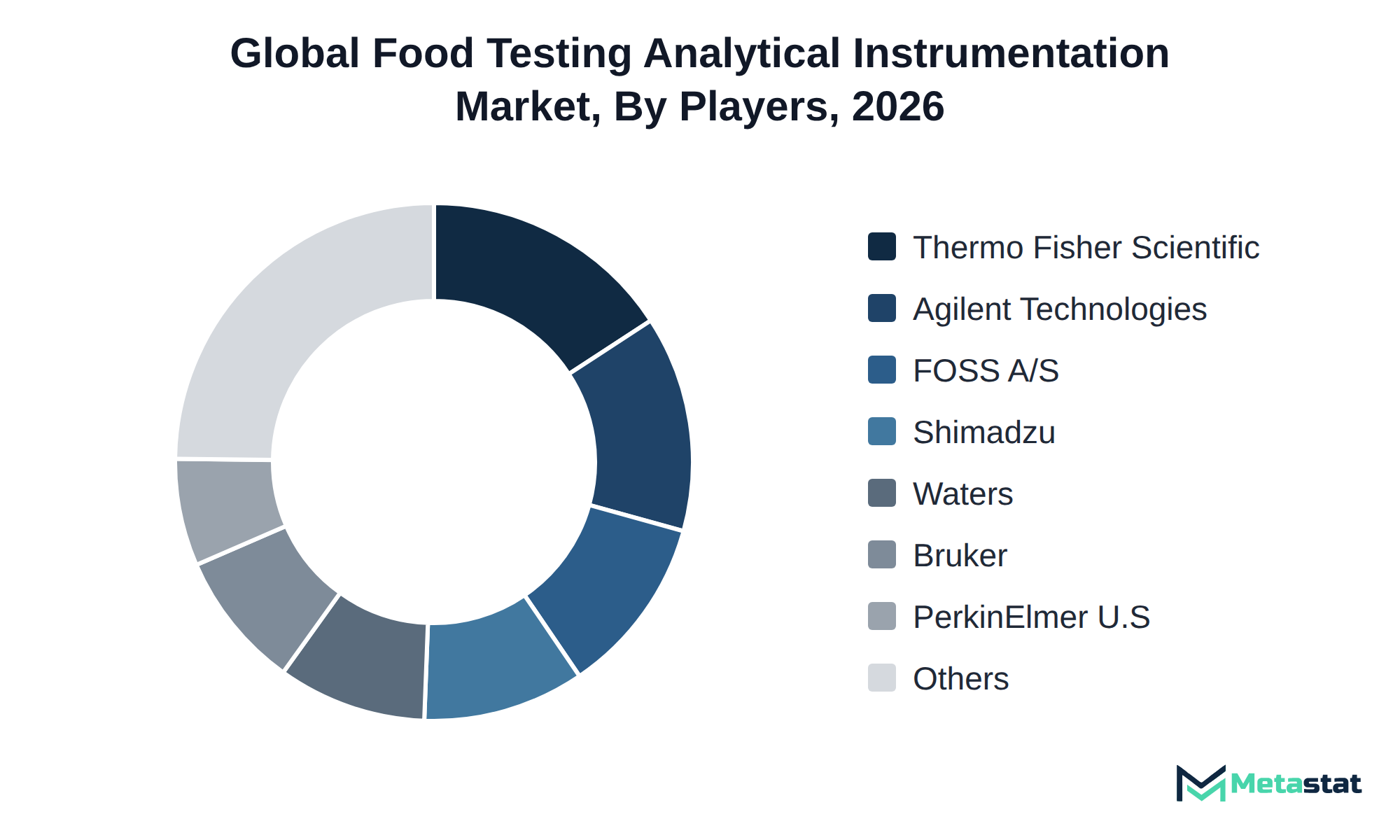
The Food Testing Analytical Instrumentation market features a diverse range of companies competing through various strategic approaches. Key players differentiate themselves based on technology offerings, service quality, and customer engagement strategies. Companies prioritize meeting buyer preferences for price, certification, customization, and support services, which significantly influence purchasing decisions.
FOSS A/S, Thermo Fisher Scientific Inc., and Agilent Technologies, Inc. emphasize advanced technologies including chromatography and spectroscopy, catering to food and beverage manufacturers and independent testing laboratories. Product innovation in molecular analysis and microbial safety testing drives their competitive edge in the market.
PerkinElmer U.S. LLC and Danaher Corporation focus on comprehensive instrumentation services, including training and technical support, enhancing customer satisfaction and loyalty. Companies including Waters Corporation and Bruker Corporation prioritize robust ecosystems, integrating their offerings into existing workflows for food and beverage manufacturers.
Growth in the Food Testing Analytical Instrumentation market relies on several key developments. First, increasing demand for advanced testing solutions in the food and beverage manufacturing sector is essential. This sector is projected to expand from USD 2,920.4 million in 2026 to USD 4,592.2 million by 2033, driven by rising consumer awareness regarding food safety and quality. Second, advancements in chromatography and spectroscopy technologies will enhance analytical capabilities, allowing for more efficient testing processes. Potential risks could hinder market progress. Regulatory changes and compliance costs slow down adoption rates, particularly impacting small and medium-sized food enterprises. Achieving the forecasted market size will depend on maintaining a balance between innovation and regulatory demands, ensuring that the Food Testing Analytical Instrumentation market continues to grow effectively.
By Technology: Chromatography, Spectroscopy, Wet Chemical and Combustion Analysis, Molecular Analysis, Immunoassay and Microbial Analysis, Others (Microscopy, Particle Characterization, Physical Property Analysis)
By Food Category: Dairy Products, Meat, Poultry and Seafood, Grains, Cereals and Oilseeds, Beverages, Processed Foods, Fruits and Vegetables, Others (Spices, Honey, Cocoa)
By Testing Application: Nutritional and Compositional Analysis, Chemical Contaminant and Residue Analysis, Microbial Safety Testing, Authenticity and Adulteration Testing, Allergen Testing, Physical Quality Testing, Others (Shelf-Life and Stability Testing)
By End User: Food and Beverage Manufacturers, Independent Testing Laboratories, Government and Regulatory Laboratories, Others (Academic and Research Institutions)
The report strategically identifies and profiles the key market players and analyses their core competencies in each sub-segment of the Food Testing Analytical Instrumentation market.
Report Attributes | Details |
Study Period | 2021-2033 |
Base Year | 2025 |
Estimated Year | 2026 |
Forecast Period | 2026-2033 |
Historical Period | 2021-2025 |
Growth Rate | CAGR 7.0% from 2026 to 2033 |
Revenue Unit | USD million |
Segmentation | By Technology, Food Category, Testing Application, End User, and Region |
By Region | North America (By Technology, Food Category, Testing Application, End User, and Country)
|
Europe (By Technology, Food Category, Testing Application, End User, and Country)
| |
Asia Pacific (By Technology, Food Category, Testing Application, End User, and Country)
| |
South America (By Technology, Food Category, Testing Application, End User, and Country)
| |
Middle East and Africa (By Technology, Food Category, Testing Application, End User, and Country)
|
Find answers to common questions about this report
The Food Testing Analytical Instrumentation market size was valued at USD 4,761.8 million in 2025.
The market is projected to grow at a CAGR of 7.0% during the forecast period from 2026 to 2033.
The North America Food Testing Analytical Instrumentation market size is estimated to reach USD 2,689.4 million by 2033.
Chromatography leads the Food Testing Analytical Instrumentation market with a value of USD 1,762.7 million in 2026. This segment demonstrates the highest projected growth rate of 7.4% through 2033.
Heightened awareness surrounding food safety drives investment among food and beverage manufacturers, with consumers prioritizing health and safety. The ongoing pursuit of cost efficiency in food testing leads to technological advancements that enhance productivity while minimizing operational costs.
North America holds the dominant share of the Food Testing Analytical Instrumentation market, with a value of USD 2,689.4 million projected for 2033. This region accounts for 34.3 percent of the total market share.
Compliance with stringent regulations remains a significant barrier for food and beverage manufacturers, consuming valuable time and financial resources. Input costs for essential materials and components exert pressure on suppliers, challenging profit margins and prompting the need for process optimization.
Heightened investment in advanced analytical instruments drives the adoption of food testing solutions, as food and beverage manufacturers prioritize compliance with evolving safety standards. The integration of cost-effective technologies enhances operational efficiency, prompting suppliers to innovate and expand offerings that meet rising expectations for food quality and safety.
The Food Testing Analytical Instrumentation market is estimated to reach a valuation of USD 8,184.3 million by 2033.
Key players operating in the Food Testing Analytical Instrumentation market include FOSS A/S, Thermo Fisher Scientific Inc., Agilent Technologies, Inc., Shimadzu Corporation, Waters Corporation, and Bruker Corporation.
The analysts below cover Food and Beverages research at Metastat Insights.
LEAD ANALYST
Utkarsh Khirodkar is a Lead Market Research Analyst at MetaStat Insight, specializing in market intelligence, technology sector assessments, and competitive strategy.

LEAD PRINCIPAL ANALYST, PHARMA AND HEALTHCARE
Food and Beverages · Healthcare · Healthcare IT · Medical Devices
Ajay Devgire is the Lead Healthcare Analyst at MetaStat Insight, leading strategic research and market intelligence initiatives across the global healthcare domain.

SENIOR RESEARCH ANALYST
Biotechnology · Food and Beverages · Medical Devices · Packaging
Snehal Pasalkar is a Research Analyst at MetaStat Insight, operating at the intersection of life sciences research, competitive strategy, and market intelligence.
Our group needed clearer visibility into out-of-autoclave processing timelines for high-temperature thermoplastic composites. MetaStat Insight delivered an objective assessment that contrasted automated fiber placement scrap rates with traditional thermoset prepreg layup cycles. The supplier landscape mapped out primary resin suppliers and tape slitting capacity across France, Germany, and Japan with solid technical accuracy. Their analyst handled our questions on precursor supply risks during an unscheduled inquiry call, providing clear, unembellished context.
Evaluating sensor fusion reliability across harsh operating environments can be tricky without field-validated data. The study on agricultural autonomous guidance systems clearly separated stereo vision setups from automotive-grade solid-state LiDAR. We appreciated the regional infrastructure analysis, specifically around RTK network density across North America and South America. During our follow-up consultation, the MetaStat Insight team walked through tier-two perception software partnerships, giving our engineering leads a practical basis for vendor shortlisting.
Analyzing the transition from natural gas to green hydrogen in iron ore reduction requires realistic infrastructure timelines. Meta stat insight supplied a detailed regional assessment of DRI plant conversion costs and scrap metal availability in North America and Western Europe. Their report carefully examined pellet quality specs and electrical grid access constraints without making oversimplified market assumptions. The research material served as a practical reference during internal technology roadmap discussions.
Explore related market intelligence reports worth reading alongside this one.