
LEAD ANALYST
Utkarsh Khirodkar is a Lead Market Research Analyst at MetaStat Insight, specializing in market intelligence, technology sector assessments, and competitive strategy.

Global Activated Carbon Market Size, Share, By Product Type (Granular Activated Carbon, Powdered Activated Carbon, Extruded and Pelletized Activated Carbon, Others), By Raw Material (Coal-Based Activated Carbon, Coconut Shell-Based Activated Carbon, Wood-Based Activated Carbon, Others), By Application (Decolorisation Treatment, Sugar Production, Concentration Treatment, Solvent Recovery, PFAS Adsorption Treatment, Others), By End-Use Industry (Water and Wastewater Utilities, Chemical and Petrochemical, Food and Beverage, Pharmaceuticals and Healthcare, Automotive and Transportation, Mining and Metallurgy, Power Generation, Residential and Commercial Filtration, Others), Industry Analysis, Growth, Trends, and Forecast, 2026-2033
Report ID
MSI-5540
Published
October, 2026
Pages
278 Pages
Format
Historical
Base year
Forecast
Forecast period
Report Details
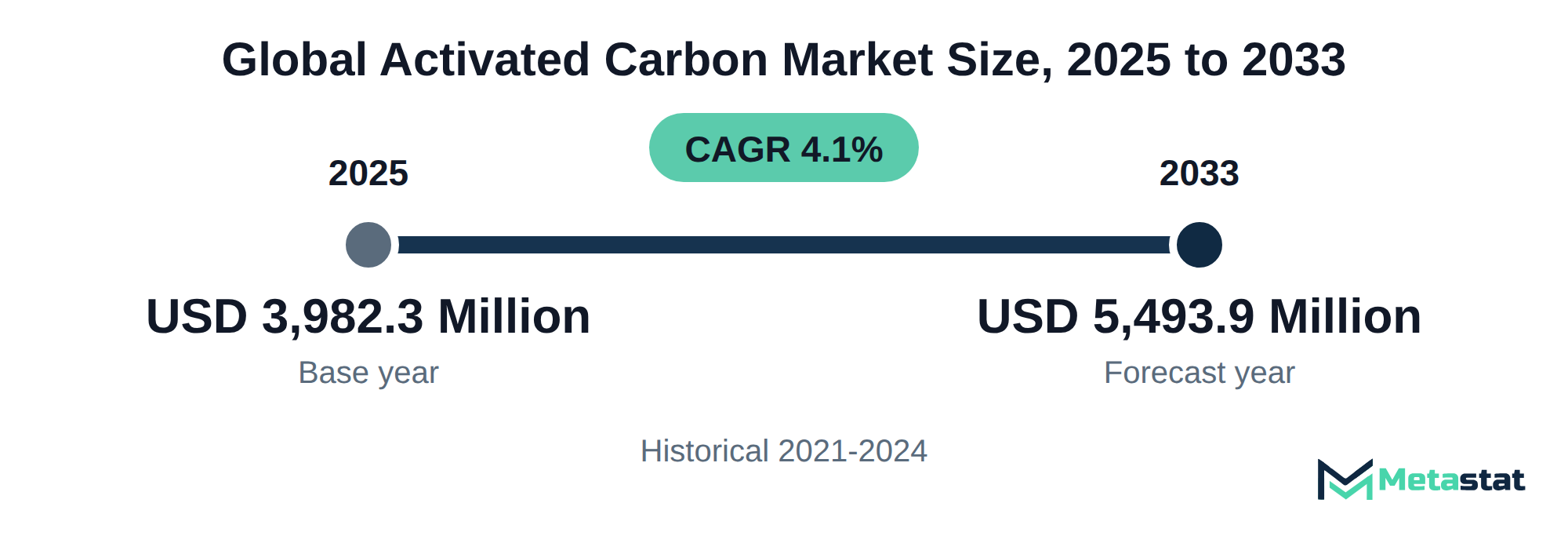
Market Valuation: Valued at $3,982.3 Million in 2025, projected to reach $5,493.9 Million by 2033 at a 4.1% CAGR.
Dominant Segment: Granular Activated Carbon leads the market, driven by its superior adsorption capabilities and extensive applications in water treatment and industrial processes.
Geographic Lead: North America is the leading region, accounting for 28.2% of the market in 2025, supported by advanced water treatment facilities and stringent environmental regulations.
What's Inside: The report provides a comprehensive analysis of the activated carbon market, including competitive coverage, segment breakdowns by product type, raw material, application, and end-use industry, along with forecasts up to 2033.
Coconut Shell-Based Carbon Growth: Coconut shell-based activated carbon is projected to grow at a CAGR of 5.1%, reflecting increasing demand for sustainable materials in water treatment and food processing applications.
Cost Reductions Drive Competitive Pricin: Technological advancements in production are leading to significant cost reductions, allowing suppliers to offer competitive pricing and expand market access for smaller businesses.
Choose Your License
Global Activated Carbon Market
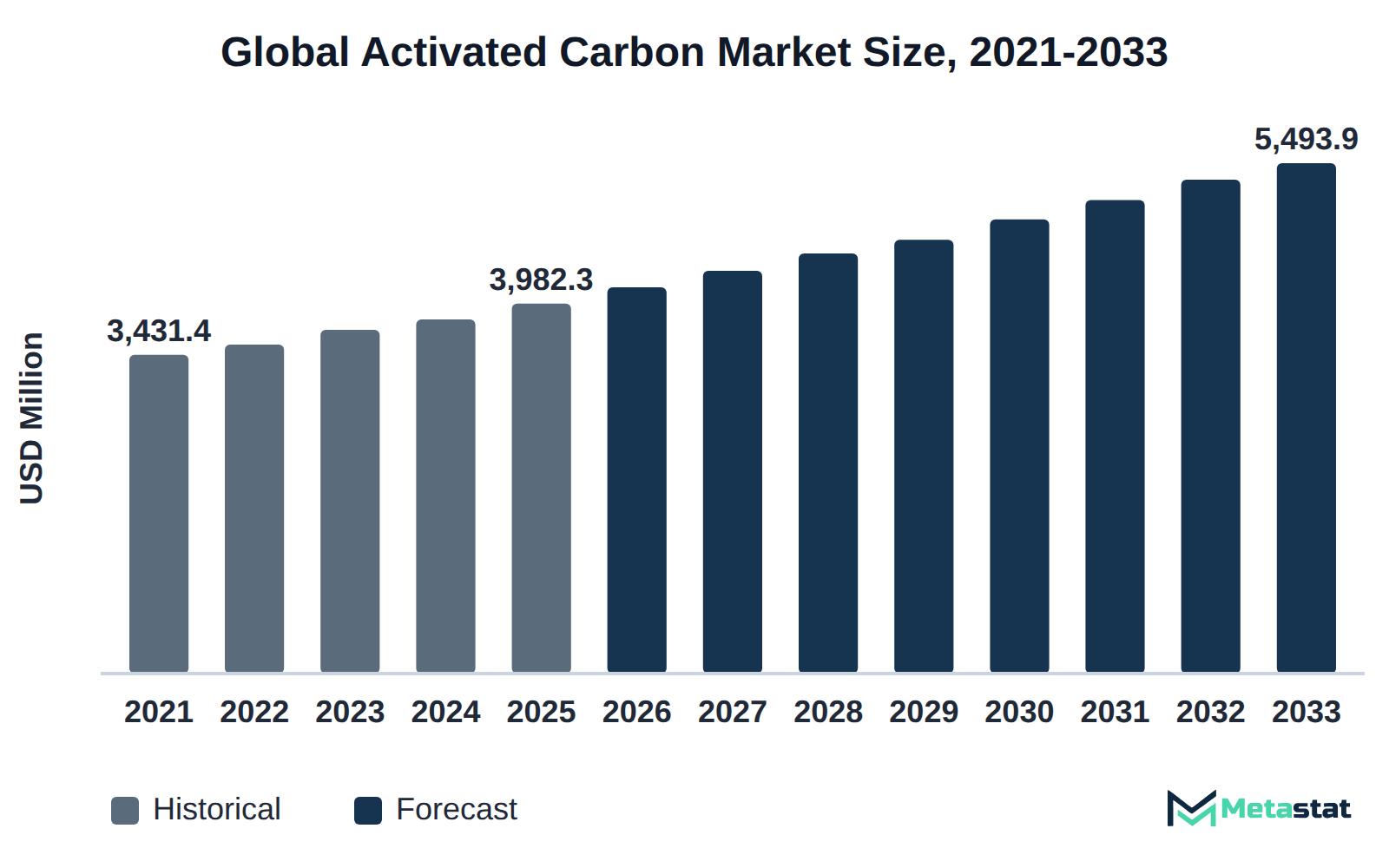
The global Activated Carbon market was valued at USD 3,982.3 million in 2025 and is projected to reach USD 5,493.9 million by 2033, growing at a CAGR of 4.1% over the forecast period.
The Activated Carbon market encompasses various forms of carbon used for filtration, purification, and other applications. Buyers invest in activated carbon to enhance water treatment, air purification, and industrial processes, driven by increasing demand for clean water and air quality improvement. Environmental regulations and the necessity for effective pollutant removal fuel spending in this sector.
Growth in the market is supported by rising awareness among consumers and industries regarding environmental sustainability. Granular Activated Carbon represents the most significant segment by revenue. North America holds 28.2% of the market in 2025, with the US leading in 2026. This region exhibits strong demand due to the presence of advanced water and wastewater treatment facilities.
One primary growth driver is the escalating need for efficient water and wastewater treatment solutions. The increasing adoption of activated carbon in various end-use industries, particularly in water and wastewater utilities, contributes to market expansion. Enhanced applications across sectors including pharmaceuticals and food processing underpin the market's positive trajectory.
The Activated Carbon market includes various product types, including granular, powdered, and extruded activated carbon, which serve multiple applications across diverse industries. Buyers invest in this market primarily to enhance filtration and purification processes, ensuring compliance with environmental regulations and improving product quality. Demand for activated carbon solutions arises from industries like water and wastewater utilities, where the need for effective contaminant removal drives procurement decisions. Market growth reflects a response to increasing environmental concerns and the emphasis on sustainable practices.
Growth in the market is significantly influenced by the rising demand for granular activated carbon, which holds the largest share within the product segments. This regional dominance is attributed to advanced water treatment infrastructure and stringent regulations promoting the use of activated carbon in various applications. The growing focus on clean water access and efficient waste management supports market expansion in North America.
The increasing adoption of coconut shell-based activated carbon highlights a shift towards more sustainable raw materials within the market. Buyers seek environmentally friendly alternatives, driving the demand for carbon sourced from renewable materials. This transition aligns with global sustainability initiatives and influences market dynamics, encouraging investments in innovative production methods and environmentally responsible sourcing strategies.
The rising demand for advanced water treatment technologies has positioned activated carbon as a critical component in PFAS removal applications. Increasing environmental awareness regarding per- and polyfluoroalkyl substances (PFAS) contamination in water supplies has driven utilities and industries to seek effective solutions. Activated carbon exhibits high adsorption capacities for PFAS, making it a preferred choice among water treatment facilities. In the activated carbon market, the decolorisation treatment segment is projected to reach USD 1,419.6 million by 2033, reflecting a compound annual growth rate (CAGR) of 2.9% from 2026.
This growth highlights the significance of activated carbon in addressing water quality issues associated with PFAS. Water and wastewater utilities are increasingly investing in activated carbon systems to enhance their treatment processes. Demand from this end-use industry is anticipated to rise to USD 1,584.4 million by 2033, featuring a CAGR of 5% over the forecast period. Such investments ensure compliance with stricter regulations and improve overall public health safety. The activated carbon market stands to benefit significantly from these developments as demand for cleaner water solutions grows.
Granular activated carbon (GAC) and powdered activated carbon (PAC) exhibit distinct performance characteristics and cost implications for buyers in the Activated Carbon market. GAC often presents advantages in larger-scale applications due to its effective adsorption capabilities, while PAC finds preference in processes requiring rapid treatment of smaller volumes. The pricing structure for these two forms significantly influences purchasing decisions, with GAC generally commanding a higher price point due to its broader application range and longer operational life.
In 2026, GAC is projected to reach a value of USD 1,778.8 million, climbing to USD 2,427.2 million by 2033, reflecting a compound annual growth rate (CAGR) of 4.5%. Conversely, PAC is anticipated to achieve a value of USD 2,018.5 million by 2033, highlighting a CAGR of 3.6%. These figures illustrate the relative market positioning, emphasizing the importance of evaluating cost versus performance when making procurement decisions.
Contract models vary between buyers depending on usage volume and contractual length, affecting overall expenditure. Bulk purchasing agreements frequently emerge in industrial contexts, granting favorable pricing terms. While demand for activated carbon continues to escalate across various sectors, understanding the performance and cost trade-offs between GAC and PAC is crucial for optimizing procurement strategies within the market.
Coconut shell-based activated carbon is gaining traction due to its environmental benefits and performance characteristics. This raw material offers a sustainable alternative to coal-based carbon, appealing to eco-conscious manufacturers. The coconut shell-based activated carbon segment is expected to achieve a value of USD 2,182.2 million by 2033, reflecting strong demand within the market.
Water and wastewater utilities, key buyers, prioritize sustainable sourcing to meet regulatory requirements and respond to increasing consumer demand for environmentally friendly solutions. The rising focus on sustainability enhances the attractiveness of coconut shell-based products, allowing companies to differentiate themselves in a competitive environment. This trend is particularly evident in regions with stringent environmental policies.
Investment in coconut shell-based activated carbon innovations drives advancements in production processes, enhancing efficiency and performance while lowering costs. The shift towards this raw material aligns with global efforts to reduce carbon footprints, making it essential for suppliers to adapt their offerings. Successful integration of coconut shell-based products into portfolios not only meets buyer demands but positions firms favorably for future growth in the activated carbon market.
Activated carbon is essential in both industrial and environmental applications, particularly in water and wastewater utilities. Demand within this sector is expected to increase significantly, driven by the growing need for effective water treatment solutions. By 2033, the market for activated carbon in water and wastewater utilities is projected to reach USD 1,584.4 million, reflecting a compound annual growth rate (CAGR) of 5%. This growth is fueled by stringent regulations on water quality and rising awareness of environmental sustainability.
In the context of industrial applications, activated carbon serves essential functions, including decolorization treatment in various manufacturing processes. Industries including food and beverage rely heavily on activated carbon to ensure product quality and safety. Technological advances will support broader adoption across these applications.
Consequently, the evolving demand for activated carbon across industrial and environmental applications enhances market opportunities. Investments in innovative activated carbon solutions ensure compliance with environmental standards, allowing companies to improve operational efficiency while addressing consumer preferences for sustainability.
The water and wastewater utilities sector experiences heightened investment in activated carbon technologies due to stricter emission limits aimed at reducing environmental impact. This regulatory shift prompts companies to adopt closed-loop systems, which require advanced filtration solutions, including activated carbon for effective contaminant removal. The transition towards stricter environmental standards influences buyer behavior, leading to increased volumes of activated carbon purchases. This trend enhances operational efficiency and compliance with evolving regulatory frameworks, increasing the overall demand for activated carbon solutions. Activated carbon recycling and reactivation services support this model by restoring spent carbon for reuse.
Technological advancements in filtration processes and heightened awareness of water quality further drive this growth, supporting the market's expansion across various applications. The adoption of activated carbon systems in the water and wastewater industry aligns with broader sustainability goals, promoting a commitment to environmental responsibility while addressing operational demands.
Technological advancements in activated carbon production lead to significant cost reductions for suppliers. These improvements enhance operational efficiency and reduce waste during manufacturing processes. Lower production costs allow suppliers to offer competitive pricing, making activated carbon more appealing to a broader range of industries, including water treatment, food processing, and pharmaceuticals. Increased affordability supports adoption among smaller businesses that previously found activated carbon solutions prohibitively expensive. The ongoing push for sustainable and cost-effective solutions drives suppliers to innovate continuously, which keeps the activated carbon market responsive to customer demands. Companies that implement these cost-saving measures gain a competitive edge, contributing to the overall growth and expansion of the market.
Innovative production methods lower costs and improve product quality and performance. Suppliers focusing on sustainability and efficiency differentiate their offerings. The ability to provide high-quality activated carbon at lower prices strengthens market positioning and attracts new customers across various applications. Competitiveness in pricing drives greater investment in activated carbon technologies, supporting overall market growth and adoption in diverse end-use industries.
Rising costs of raw materials, particularly coal and coconut shell, create a barrier for buyers in the Activated Carbon market. These high prices hinder budget allocation for water and wastewater utilities, which comprise a significant buyer segment. Financial implications manifest in delayed procurement decisions and smaller order volumes while companies evaluate the cost-benefit of activated carbon solutions. The impact on new project timelines arises from the need for extensive financial planning to accommodate increased material expenses. Suppliers face challenges in maintaining competitiveness while sourcing materials at higher rates, leading to potential limitations in supply availability. The overall effect limits market growth potential and influences long-term investment strategies among buyers, with many opting to explore alternative solutions or technologies to mitigate costs. Such dynamics reflect a cautious approach toward activated carbon adoption that could reshape future demand trajectories.
Rising input costs present a significant challenge for suppliers in the Activated Carbon market. Fluctuations in the prices of key raw materials, including coal and coconut shells, directly impact production expenses. Suppliers respond by seeking alternative sourcing strategies and improving operational efficiencies to mitigate cost impacts. Implementing advanced production technologies enables suppliers to enhance yield and reduce waste, further controlling costs. The shift toward more sustainable raw materials, including coconut shell-based activated carbon, reflects a proactive approach to address both cost and environmental concerns. Increased competition pushes suppliers to innovate product offerings and enhance value propositions to maintain margins while navigating these pressures. These dynamics highlight the critical balance suppliers achieve between cost management and delivering high-quality products in a competitive market.
The coconut shell-based activated carbon segment is projected to experience substantial growth. With a compound annual growth rate of 5.1%, this segment reflects increasing demand driven by environmental benefits and superior adsorption capabilities. The surge in eco-conscious initiatives and consumer preferences for sustainable materials enhances the appeal of coconut shell-derived products. Industries including water treatment and food production increasingly adopt this material due to its effectiveness in removing contaminants and ensuring product quality. This growth gives suppliers an opportunity to expand their offerings in the activated carbon market by using sustainable sourcing to reach a broader consumer base. Such expansion aligns with ongoing focus on environmental responsibility, contributing to enhanced competitiveness within the sector.
The Global Activated Carbon market is segmented based on Product Type, Raw Material, Application, and End-Use Industry.
This type of activated carbon finds extensive use in water treatment processes, air purification, and industrial applications, serving sectors including municipal water utilities and chemical processing. The segment's growth is driven by increasing demand for effective filtration solutions to meet regulatory standards and ensure environmental compliance. Granular Activated Carbon distinguishes itself from powdered and extruded variants through its superior adsorption properties, making it the preferred choice for high-flow applications. The CAGR of 4.5% reflects a steady growth trajectory, positioning it faster than other segments including powdered activated carbon, which experiences a CAGR of 3.6%. This dynamic highlights the strategic importance of granular forms in the evolving Activated Carbon market.
Powdered Activated Carbon segment is estimated to reach USD 2,018.5 million by 2033, at a CAGR of 3.6% during the forecast period. This type of activated carbon finds extensive application in water treatment, particularly for decontaminating and purifying drinking water. Water utilities and industrial sectors primarily use powdered activated carbon due to its high adsorption capacity and rapid reaction time. The segment's growth is driven by increasing environmental regulations enforcing stricter water quality standards, compelling industries to adopt advanced treatment solutions. Compared to other segments, including Granular Activated Carbon which exhibits a CAGR of 4.5%, powdered activated carbon experiences slightly slower growth. Its pricing structure remains competitive, appealing to a broad range of buyers requiring effective solutions for water filtration and treatment. Rising awareness regarding water safety and quality further strengthens demand for this segment, providing a favorable outlook for market developments.
Extruded and Pelletized Activated Carbon segment is expected to reach USD 764.8 million by 2033. This segment finds application in various industries, including water treatment, automotive, and manufacturing, where efficient filtration and adsorption solutions are crucial. Demand is driven by increasing focus on environmental regulations and the need for high-performance materials. Extruded and pelletized forms offer advantages in terms of handling and effectiveness compared to other types, including powdered activated carbon, which experiences limitations in larger-scale applications. The segment’s growth, at a CAGR of 2.5%, reflects steadier adoption compared to alternatives, including granular activated carbon, which exhibits stronger growth potential at 4.5%. Factors influencing this segment include the push for innovative filtration technologies and the continued development of sustainable production methods, ensuring that this segment remains competitive in the evolving market.
Others (Bead-Shaped, Fibrous, Honeycomb Activated Carbon) segment is projected to grow at a CAGR of 2.5% during the forecast period. This category finds use in various applications, including specialized air and water filtration processes. Industries including automotive and pharmaceuticals increasingly adopt these forms of activated carbon due to their unique structural properties, which enhance adsorption capabilities for specific contaminants. The segment's growth is driven by heightened environmental regulations that demand improved filtration solutions. Unlike Granular and Powdered Activated Carbon, which experience higher growth rates, this segment presents a more gradual increase, appealing to niche buyers focused on precise filtration needs.
Coal-Based Activated Carbon segment is valued at USD 1,739.7 million in 2026 and is projected to reach USD 2,188.8 million by 2033, at a CAGR of 3.3% during the forecast period. This product primarily serves industries including water treatment and air purification, where effective adsorption capabilities play a crucial role. Rising environmental regulations drive demand from sectors focused on reducing pollutants. Compared to other raw material segments, coal-based activated carbon experiences slower growth, reflecting increasing competition from coconut shell-based options, which benefit from a higher CAGR of 5.1%. Environmental awareness expands, and the market's transition toward more sustainable materials influences long-term purchasing decisions among buyers, impacting overall dynamics in the activated carbon market.
Coconut Shell-Based Activated Carbon segment is estimated to reach USD 2,182.2 million by 2033, at a CAGR of 5.1% during the forecast period. This segment finds applications primarily in water treatment, air purification, and food processing, serving industries that require high-performance filtration solutions. The increasing emphasis on sustainable and eco-friendly materials drives growth in this segment, appealing to environmentally conscious buyers seeking alternatives to coal-based products. Compared to other raw materials, coconut shell-based activated carbon demonstrates a higher growth trajectory due to its superior adsorption capabilities and renewable sourcing. Demand for this segment is further fueled by stricter environmental regulations, propelling investments in advanced filtration technologies across the market.
Wood-Based Activated Carbon segment is expected to reach USD 834 million by 2033. Primarily used in water treatment applications and industrial processes, this segment caters to end-users in water and wastewater utilities. Driven by increasing demand for sustainable solutions, this segment stands out due to its renewable sourcing. This raw material has a more environmentally friendly profile compared to coal-based options, contributing to its growing acceptance among eco-conscious consumers. While the Coconut Shell-Based Activated Carbon segment experiences higher growth potential with a CAGR of 5.1%, Wood-Based Activated Carbon maintains a stable presence with its applications in various industries. The market reflects a shift toward sustainable materials, supporting the competitive positioning of suppliers focusing on environmentally sourced products.
Others (Peat, Petroleum Pitch, Non-Coconut Agricultural Residues) segment is projected to grow at a CAGR of 4.9% during the forecast period. This segment finds applications in various industries, often used for specific filtration and adsorption processes. Industries including water treatment and agriculture adopt these materials due to their availability and cost-effectiveness compared to traditional raw materials. The increasing focus on sustainable and environmentally friendly practices drives demand for alternative raw materials, influencing the growth of this segment. In contrast to more established raw materials like coconut shell and coal, which have higher adoption rates, this segment offers a unique avenue for cost-effective solutions while supporting sustainability efforts. The market's trajectory reflects a growing trend toward diversifying raw material sources, enhancing competition and potentially lowering prices for end-users.
This application finds extensive use in industries including water and wastewater utilities, where it plays a critical role in removing color and impurities from water sources. Demand for this segment rises due to stringent regulations aimed at enhancing water quality and environmental protection. Compared to other applications, Decolorisation Treatment experiences slower growth, primarily driven by established technologies in use. However, its growth trajectory remains steady, influenced by continuous investments in water treatment infrastructure, particularly in regions facing significant pollution challenges. This segment's focus on environmental compliance distinguishes it from applications including solvent recovery, which experiences faster growth due to emerging technologies and changing industry needs. The Activated Carbon market is expected to adapt to these dynamics, ensuring consistent demand for effective decolorisation solutions.
Sugar Production segment is estimated to reach USD 1,083.4 million by 2033, at a CAGR of 3.1% during the forecast period. This segment focuses on the application of activated carbon in the sugar industry, where it plays a significant role in decolorization and purification processes. Producers in this sector include sugar manufacturers looking to enhance product quality and meet regulatory standards. Demand for activated carbon in sugar production is driven by increasing emphasis on food safety and quality standards. Compared to other applications, this segment experiences moderate growth, positioned between faster-growing categories like solvent recovery and slower ones like concentration treatment, making sugar production a key area of focus within the activated carbon market.
Concentration Treatment segment is expected to reach USD 902.7 million by 2033. This application focuses on the extraction of valuable components from mixtures, primarily in industries including pharmaceuticals, food production, and chemical processing. Demand for concentrated substances drives growth, supported by increasing consumer preferences for high-purity products. The segment differentiates itself through a projected CAGR of 3.0%, indicating a moderate growth trajectory compared to other applications in the market. In particular, the growing emphasis on process efficiency and sustainability contributes to the adoption of activated carbon in concentration treatment, distinguishing it from applications that encounter more significant barriers to entry.
Solvent Recovery segment is projected to grow at a CAGR of 5% during the forecast period. This application involves the recovery of solvents from waste streams, primarily by industries including chemical manufacturing and pharmaceuticals. The increasing emphasis on sustainability and waste reduction drives demand for solvent recovery solutions. Regulatory pressures pushing companies to adopt eco-friendly practices enhance the segment's growth potential. Compared to other applications, Solvent Recovery stands out with a relatively faster growth rate, supported by the need for companies to comply with environmental standards and minimize waste disposal costs. The anticipated market value for this segment reinforces its significance within the broader Activated Carbon market, reaching substantial figures by 2033.
PFAS Adsorption Treatment targets the removal of per- and polyfluoroalkyl substances, commonly referred to as PFAS, from water and other contaminated media. Industries including water treatment and environmental remediation apply this application to address regulatory pressures and health concerns associated with PFAS contamination. Demand for PFAS adsorption solutions is driven by tightening regulations surrounding water quality and increased awareness of health risks linked to PFAS exposure. Compared to other applications, this segment stands out due to its specialized focus on a specific contaminant, impacting the choice of activated carbon type and influencing procurement strategies. The unique nature of PFAS treatment creates distinct dynamics in pricing and demand relative to more generalized applications including decolorisation and concentration treatment.
Others (Drinking Water Treatment) encompasses various methods and technologies aimed at ensuring potable water quality. This segment targets municipal water treatment facilities and private water systems that require efficient and effective filtration methods to remove contaminants. Demand for drinking water treatment solutions grows due to increasing concerns over water quality and the prevalence of contaminants including PFAS. Suppliers face challenges related to compliance with stringent regulations governing water safety standards. This segment typically features a different pricing structure, influenced by the specific requirements of water utility providers, setting it apart from other applications including decolorization treatment and solvent recovery. The Activated Carbon market benefits from these dynamics, prompting innovations and adaptations to meet evolving consumer and regulatory expectations.
This segment serves industries involved in water treatment, purification, and wastewater management, where activated carbon is essential in filtering contaminants and improving water quality. Increasing regulatory standards for water quality drive demand for effective treatment solutions, pushing utilities to adopt advanced filtration technologies. Distinct from other segments, this segment experiences faster growth compared to applications including Sugar Production, where the CAGR stands at 3.1%. The focus on sustainable practices in water management enhances the investment appeal of the activated carbon market, emphasizing the significance of this segment in meeting environmental compliance and public health standards.
Chemical and Petrochemical segment is estimated to reach USD 973.5 million by 2033, at a CAGR of 3.6% during the forecast period. This segment primarily serves industries focused on the production of chemicals and petrochemicals, employing activated carbon for applications including purification and filtration processes. Demand arises from the need for high-quality materials in manufacturing processes and environmental compliance obligations. This segment remains distinct from others due to its specialized applications and steady growth rate, which is slower compared to segments including Water and Wastewater Utilities, with a CAGR of 5%. Rising emphasis on environmental regulations and sustainability initiatives drives demand for activated carbon solutions, supporting market growth through enhanced product offerings and technology advancements.
The Food and Beverage segment is expected to reach USD 737.8 million by 2033. This segment involves the use of activated carbon for various purification processes, including decolorization and adsorption to enhance product quality. End-users include food manufacturers, beverage companies, and processing plants seeking to meet necessary quality standards and consumer demands. Growing awareness of health and safety in food production drives demand for this segment, supporting its growth trajectory. With a projected CAGR of 5.4%, this segment outpaces several other segments in the market, particularly those experiencing slower growth rates. Regulatory pressures and consumer preferences for cleaner production methods further influence adoption rates, positioning the Food and Beverage segment as a key area of opportunity within the Activated Carbon market.
Pharmaceuticals and Healthcare is projected to grow at a CAGR of 5.4% during the forecast period. This segment serves various applications, including drug manufacturing and therapeutic solutions, primarily used by pharmaceutical companies and healthcare facilities. Growth in this segment is driven by increasing demand for high-quality medicinal products and stringent regulatory requirements for drug safety and efficacy. The segment distinguishes itself through higher growth relative to other segments, including Food and Beverage, which has a comparatively lower CAGR. The focus on innovative drug delivery systems and advanced therapies necessitates the use of specialized activated carbon solutions, enhancing the segment's appeal. Expanding needs for effective and safe healthcare solutions fuel the demand for activated carbon products tailored for this industry.
The Automotive and Transportation segment plays a critical role in reducing emissions and enhancing vehicle efficiency. This segment employs activated carbon in various applications, including cabin air filters, fuel cells, and exhaust systems, primarily for automotive manufacturers and transportation service providers. Growing environmental regulations and rising consumer demand for cleaner transportation solutions drive the growth of this segment. Compared to others in the End-Use Industry category, this segment demonstrates unique characteristics, including differing regulatory pressures and technology adoption rates, which influence the selection of activated carbon solutions. The segment's operational requirements and specific applications contribute to its distinct positioning within the activated carbon market, encouraging innovative developments tailored to meet stringent industry standards.
Mining and Metallurgy involves the use of activated carbon in processes including metal extraction, purification, and recovery. Industries involved in mining and metallurgy employ activated carbon for its adsorption properties, enhancing the efficiency of operations like gold recovery and other mineral processing. Demand for activated carbon in this sector experiences growth driven by increased mining activities and regulatory requirements for environmental protection. This segment differs from others in the market due to the specific industrial applications and the unique operational requirements it addresses. While other segments including Water and Wastewater Utilities experience rapid growth, Mining and Metallurgy requires specialized knowledge and expertise, influencing pricing and supplier relationships. Such dynamics create distinct market characteristics that set this segment apart from its counterparts.
Power Generation involves the use of activated carbon for various applications, including emissions control and air quality improvement. Utilities and energy companies use activated carbon to capture pollutants from flue gas, ensuring compliance with environmental regulations. The segment experiences growth driven by increasing regulatory pressures and the need for cleaner energy production. This sub-segment typically involves higher pricing due to specialized applications and performance requirements compared to other segments. Demand from energy sectors seeking to enhance sustainability significantly influences market dynamics. The Power Generation segment operates within a competitive landscape where innovation and compliance standards shape procurement strategies, differentiating it from other activated carbon applications.
Residential and Commercial Filtration employs activated carbon to remove impurities and contaminants from air and water in household and commercial settings. This segment caters to individual consumers, businesses, and institutions requiring clean and safe drinking water and improved air quality. Demand for filtration solutions is driven by increasing awareness of health and environmental issues, prompting consumers to invest in high-quality filtration systems. This segment distinguishes itself from others by focusing on smaller-scale applications and lower pricing strategies, appealing to a wider range of customers seeking affordable solutions. While the market sees consistent growth, the Residential and Commercial Filtration segment typically expands at a moderate pace compared to industrial applications. The emphasis on health standards and regulatory compliance further influences buying decisions, enhancing the relevance of activated carbon in this sector.
This segment involves applications in electronics and industrial manufacturing, focusing on uses including filtration, purification, and specialized manufacturing processes. Industries use activated carbon to improve product quality and maintain compliance with stringent environmental standards. Demand drivers include increasing regulatory requirements for emissions control and the need for efficient filtration systems. This sub-segment distinguishes itself from others through its specific focus on high-performance applications, which often require premium-priced products and advanced technologies. Unlike broader segments that target general water treatment or industrial applications, this sub-segment benefits from specialized buyer requirements, leading to unique market dynamics. Product development and technological advancements play significant roles in shaping the market, highlighting the importance of innovation within the activated carbon sector. The market reflects growing awareness of sustainability and environmental impact, influencing purchasing decisions across various sectors.
Based on geography, the Global Activated Carbon market is divided into North America, Europe, Asia-Pacific, South America, Middle East, and Africa.
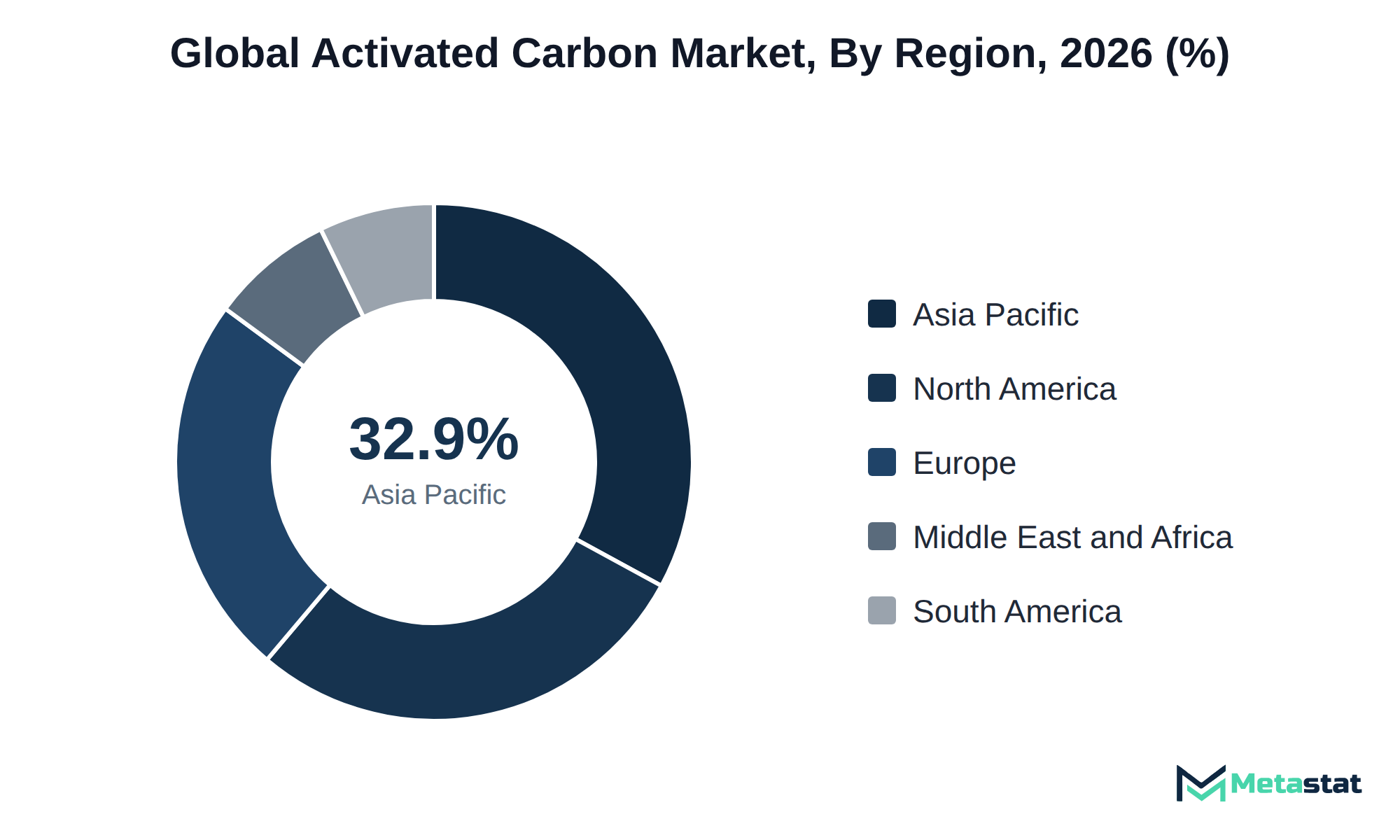
Demand for activated carbon in North America benefits significantly from stringent regulations concerning water quality and environmental emissions. The implementation of various environmental protection standards in the United States, Canada, and Mexico drives the adoption of activated carbon for purification and filtration applications. The water and wastewater utilities sector leads the market, with projected growth reaching USD 1,584.4 million by the end of 2033. The growing food and beverage industry emphasizes the importance of high-quality filtration processes, further enhancing demand. North America holds a notable share of 28.2% of the global market in 2025. North America is projected to reach USD 1,451.5 million by the end of 2033, indicating a strong growth trajectory for the activated carbon market.
Demand for activated carbon in Europe is influenced by stringent environmental regulations aimed at improving air and water quality. The region's commitment to sustainability drives investments in water and wastewater utilities, which demand high-quality activated carbon for various treatment processes. Countries including Germany and the UK prioritize innovations in clean technology, enhancing overall market growth. The share of the global market for Europe stands at 23.9% in 2025, reflecting robust adoption of activated carbon solutions among industries including chemical and petrochemical, where activated carbon serves critical roles. Anticipated growth in these sectors contributes to the expansion of the activated carbon market within the region.
The Asia-Pacific region accounts for 32.9% of the Activated Carbon market in 2025. China, Japan, and India drive substantial demand through their industrial activities, particularly in water treatment and air purification applications. The region benefits from increased investments in environmental regulations aimed at improving air and water quality. South Korea and Australia exhibit strong uptake in advanced applications, including solvent recovery and pharmaceutical uses. The diverse range of coconut shell-based activated carbon production in Southeast Asia supports the market, driven by growing awareness of environmental sustainability. This region is projected to experience continuous growth driven by the heightened focus on industrial applications, with a forecasted market value of USD 5,493.9 million by 2033.
In South America, the Activated Carbon market shows significant demand driven by industrial applications, particularly in Brazil and Argentina. The water treatment sector plays a prominent role, necessitating effective filtration solutions to ensure water quality. Brazil contributes to market growth, influenced by extensive agricultural and industrial activities. Environmental awareness and regulatory efforts focused on water quality improvement further support the demand for activated carbon products. The market in this region constitutes 7.2% of the global share in 2025. A rising emphasis on sustainable practices within industries creates opportunities for increased adoption of activated carbon technologies.
Argentina's industrial growth, especially in food and beverage processing, contributes to the market's expansion. Investments in water purification and pollution control initiatives enhance commercial prospects, driving demand for activated carbon. Overall, specific regional factors, including regulatory frameworks and industry focus, shape the dynamics of the Activated Carbon market in South America.
The market in the Middle East and Africa benefits from growing investment in water treatment and resource management. Countries including Saudi Arabia and the UAE prioritize water conservation initiatives, driving demand for activated carbon applications in water and wastewater utilities. South Africa's industrial sector increasingly adopts activated carbon in air quality control and environmental remediation. Rising awareness of environmental issues and improving infrastructure further support market growth. The share of the global activated carbon market for this region was 7.7% in 2025, reflecting steady interest in sustainable solutions across various industries. The rising focus on compliance with environmental regulations promotes new opportunities for activated carbon utilization, driving growth in this segment of the market.
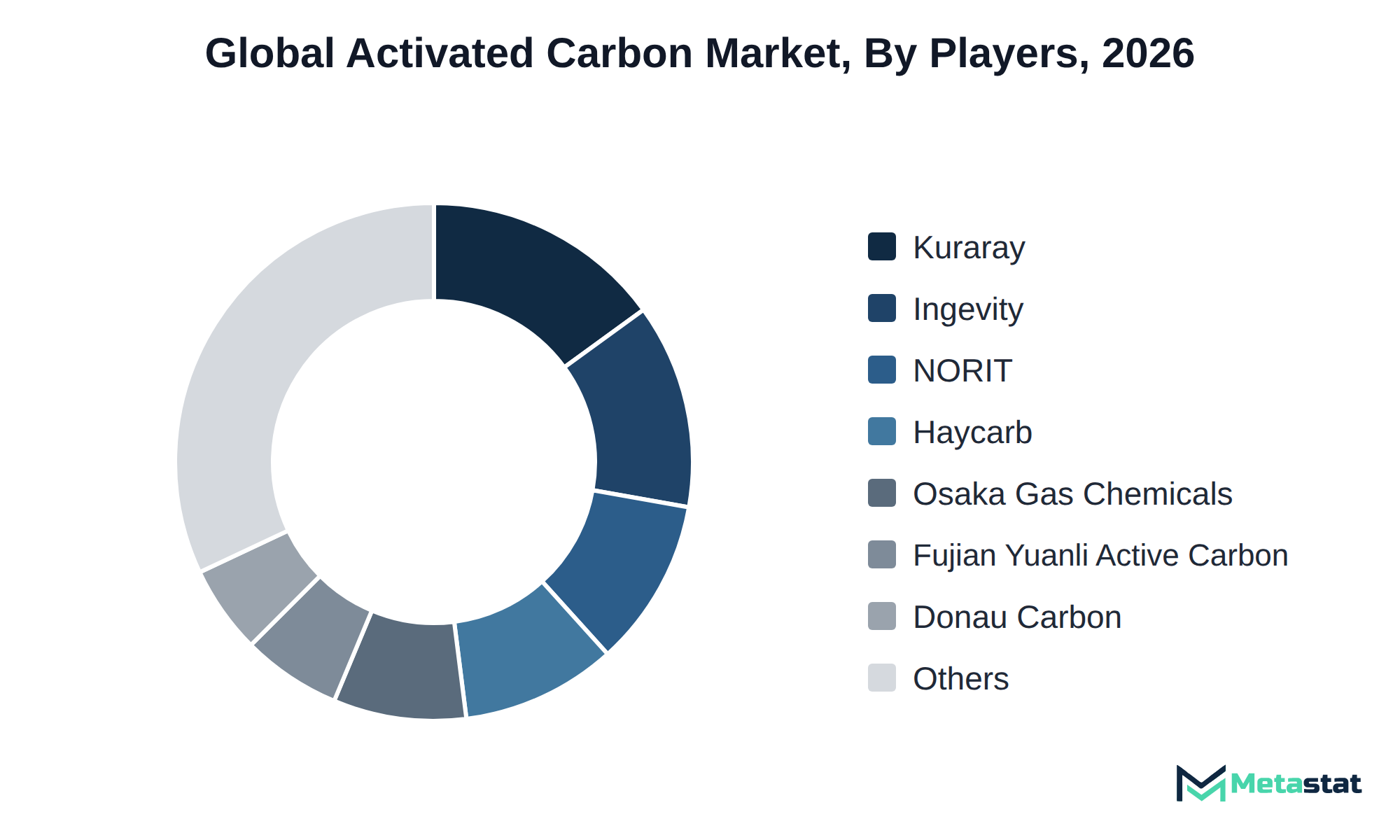
Competition in the Activated Carbon market involves various strategies focused on specific product offerings and customer requirements. Companies differentiate themselves through price, certification, customization, service, and their overall ecosystem. Buyers prioritize these factors when selecting suppliers, aiming for optimal cost-efficiency and product performance.
Kuraray Co., Ltd. emphasizes the development of granular activated carbon, building on its expertise in high-quality products. Ingevity Corporation targets the chemical and petrochemical industries, focusing on specialized solutions for environmental applications. Evoqua Water Technologies LLC excels in providing activated carbon solutions for water treatment, enhancing its position within the water and wastewater utilities sector.
This growth relies on several key developments within the market. An increase in demand for Granular Activated Carbon, primarily driven by advancements in water treatment technologies, supports expansion in the Water and Wastewater Utilities sector. The Coconut Shell-Based Activated Carbon segment is expected to experience significant growth, reflecting heightened interest in sustainable raw materials from buyers in various industries, including food and beverage. The forecast relies on the successful implementation of innovations in powdered activated carbon applications, particularly in decolorization treatment processes across the chemical and petrochemical industry.
The market faces potential risks that could hinder growth. Fluctuations in raw material prices, particularly for coal-based activated carbon, impact production costs and, ultimately, pricing strategies. Such volatility poses a challenge for manufacturers and could slow adoption rates among customers, particularly in price-sensitive regions like South America. Reaching the projected market size depends on managing these challenges while capitalizing on emerging opportunities across segments.
By Product Type: Granular Activated Carbon, Powdered Activated Carbon, Extruded and Pelletized Activated Carbon, Others (Bead-Shaped, Fibrous, Honeycomb Activated Carbon)
By Raw Material: Coal-Based Activated Carbon, Coconut Shell-Based Activated Carbon, Wood-Based Activated Carbon, Others (Peat, Petroleum Pitch, Non-Coconut Agricultural Residues)
By Application: Decolorisation Treatment, Sugar Production, Concentration Treatment, Solvent Recovery, PFAS Adsorption Treatment, Others (Drinking Water Treatment)
By End-Use Industry: Water and Wastewater Utilities, Chemical and Petrochemical, Food and Beverage, Pharmaceuticals and Healthcare, Automotive and Transportation, Mining and Metallurgy, Power Generation, Residential and Commercial Filtration, Others (Electronics and Industrial Manufacturing)
The report strategically identifies and profiles the key market players and analyses their core competencies in each sub-segment of the Activated Carbon market.
Report Attributes | Details |
Study Period | 2021-2033 |
Base Year | 2025 |
Estimated Year | 2026 |
Forecast Period | 2026-2033 |
Historical Period | 2021-2025 |
Growth Rate | CAGR 4.1% from 2026 to 2033 |
Revenue Unit | USD million |
Segmentation | By Product Type, Raw Material, Application, End-Use Industry, and Region |
By Region | North America (By Product Type, Raw Material, Application, End-Use Industry, and Country)
|
Europe (By Product Type, Raw Material, Application, End-Use Industry, and Country)
| |
Asia Pacific (By Product Type, Raw Material, Application, End-Use Industry, and Country)
| |
South America (By Product Type, Raw Material, Application, End-Use Industry, and Country)
| |
Middle East and Africa (By Product Type, Raw Material, Application, End-Use Industry, and Country)
|
Find answers to common questions about this report
The Activated Carbon market size was valued at USD 3,982.3 million in 2025.
The market is projected to grow at a CAGR of 4.1% during the forecast period from 2026 to 2033.
The North America Activated Carbon market size is estimated to reach USD 1,451.5 million by 2033.
Granular Activated Carbon leads the Activated Carbon market with a projected value of USD 2,427.2 million by 2033, based on its higher growth rate compared to other segments.
Heightened investment in activated carbon technologies is driven by stricter emission limits aimed at reducing environmental impact. Rising costs of raw materials, particularly coal and coconut shell, create a barrier for buyers, affecting budget allocation and procurement decisions.
Asia Pacific holds the dominant share of the Activated Carbon market, accounting for 32.9 percent in 2025. This region's significant share reflects its extensive industrial activities and demand for activated carbon applications.
The transition towards stricter environmental standards and heightened awareness of water quality are favoring adoption in the activated carbon industry. technological advancements in production processes have led to cost reductions, making activated carbon solutions more accessible to a wider range of industries.
The Activated Carbon market is estimated to reach a valuation of USD 5,493.9 million by 2033.
Key players operating in the Activated Carbon market include Kuraray Co., Ltd., Osaka Gas Chemicals Co., Ltd., NORIT, Haycarb PLC, Ingevity Corporation, and Evoqua Water Technologies LLC.
The granular activated carbon segment is projected to increase from USD 1,778.8 million in 2026 to USD 2,427.2 million by 2033, reflecting a compound annual growth rate of 4.5%.
The analysts below cover Chemicals and Materials research at Metastat Insights.
LEAD ANALYST
Utkarsh Khirodkar is a Lead Market Research Analyst at MetaStat Insight, specializing in market intelligence, technology sector assessments, and competitive strategy.

INDUSTRY CONSULTANT - CHEMICALS & ADVANCED MATERIALS
Chemicals and Materials · Machinery & Equipment · Packaging
Amit Gadhekar Consultant for Chemicals and Materials at MetaStat Insight, directing sector-specific intelligence, research, and strategic consulting across global chemical and processing markets.
Evaluating calorific value requirements and air permit compliance across municipal waste facilities requires localized data. Metastat Insight structured their analysis around operational throughput capacity and feedstock composition variations in Latin America and Eastern Europe. Their competitive mapping of sorting equipment vendors helped clarify technology differences between optical separators and heavy media systems. The study provided an objective baseline during our capital expenditure reviews.
Decarbonizing industrial thermal processes hinges on refrigerant regulations and compressor efficiency limits. Metastat Insights delivered a thorough market analysis that evaluated natural refrigerants like CO2 and hydrocarbons against synthetic low-GWP alternatives. The breakdown of utility incentives and grid capacity constraints across key European manufacturing hubs offered valuable perspective. The follow-up conversation with their sector analysts addressed our specific questions on mechanical vapor recompression systems efficiently.
Assessing 200mm wafer transition schedules and substrate supply bottlenecks requires precise technical intelligence. MetaStat Insight supplied an actionable breakdown comparing planar and trench MOSFET architectures across automotive and industrial drive markets. The regional capacity estimates for Asia-Pacific foundries helped clarify lead-time uncertainties during our strategic planning session. When we needed additional clarification on high-purity raw material sourcing, their analyst team responded with helpful context within twenty-four hours.
Explore related market intelligence reports worth reading alongside this one.
Starting from
$2950
Starting from
$2950