
LEAD ANALYST
Utkarsh Khirodkar is a Lead Market Research Analyst at MetaStat Insight, specializing in market intelligence, technology sector assessments, and competitive strategy.

Global Distillers Corn Oil Market Size, Share, By Product Grade (Feed-Grade Distillers Corn Oil, Fuel-Grade Distillers Corn Oil, Industrial-Grade Distillers Corn Oil), By Extraction Method (Centrifugal Separation, Solvent Extraction, Mechanical Pressing, Enzymatic Extraction), By Application (Biodiesel Production, Animal Feed (Poultry, Swine, Aquaculture), Oleochemicals, Industrial Lubricants, Surfactants and Detergents, Chemical Manufacturing), By End-Use Industry (Biofuel Producers, Renewable Fuel Producers, Animal Feed Manufacturers, Oleochemical Manufacturers, Chemical Processing Industries, Industrial Lubricant Manufacturers), Industry Analysis, Growth, Trends, and Forecast, 2026-2033
Report ID
MSI-5820
Published
November, 2026
Pages
263 Pages
Format
Historical
Base year
Forecast
Forecast period
Report Details
Market Valuation: Valued at $2,183 Million in 2025, projected to reach $3,506.8 Million by 2033 at a 6.1% CAGR.
Dominant Segment: Fuel-Grade Distillers Corn Oil leads the market, driven by its significant role in renewable fuel applications and the rising demand for biodiesel production.
Geographic Lead: North America holds the largest market share, with the US expected to maintain its lead due to established infrastructure and investments in biofuel technologies.
What's Inside: The report provides a comprehensive analysis of the market, including competitive coverage, detailed segmentation by product grade and extraction method, and forecasts through 2033.
Growing Applications: The Animal Feed segment is projected to expand significantly, reflecting the increasing global demand for sustainable and high-quality feed alternatives.
Technological Advancements: Centrifugal Separation technology is highlighted for its efficiency in oil extraction, contributing to lower operational costs and higher yields for producers.
Choose Your License
Global Distillers Corn Oil Market
The global Distillers Corn Oil market was valued at USD 2,183 million in 2025 and is projected to reach USD 3,506.8 million by 2033, growing at a CAGR of 6.1% over the forecast period.
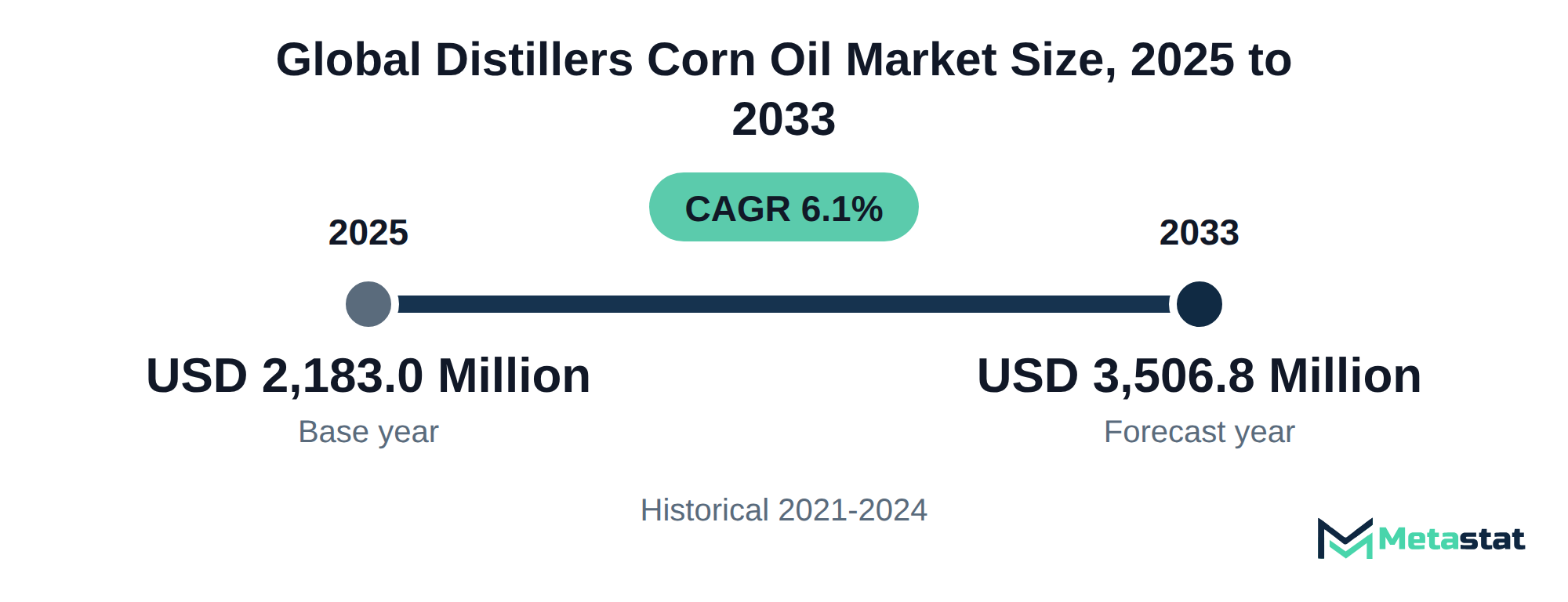
The Distillers Corn Oil market encompasses various grades of oil derived from the distillation process of corn. Buyers invest in this market due to the growing demand for renewable energy sources and animal feed supplements. Its uses in biodiesel production, animal nutrition, and industrial applications attract manufacturers and consumers alike and drive spending across several sectors.
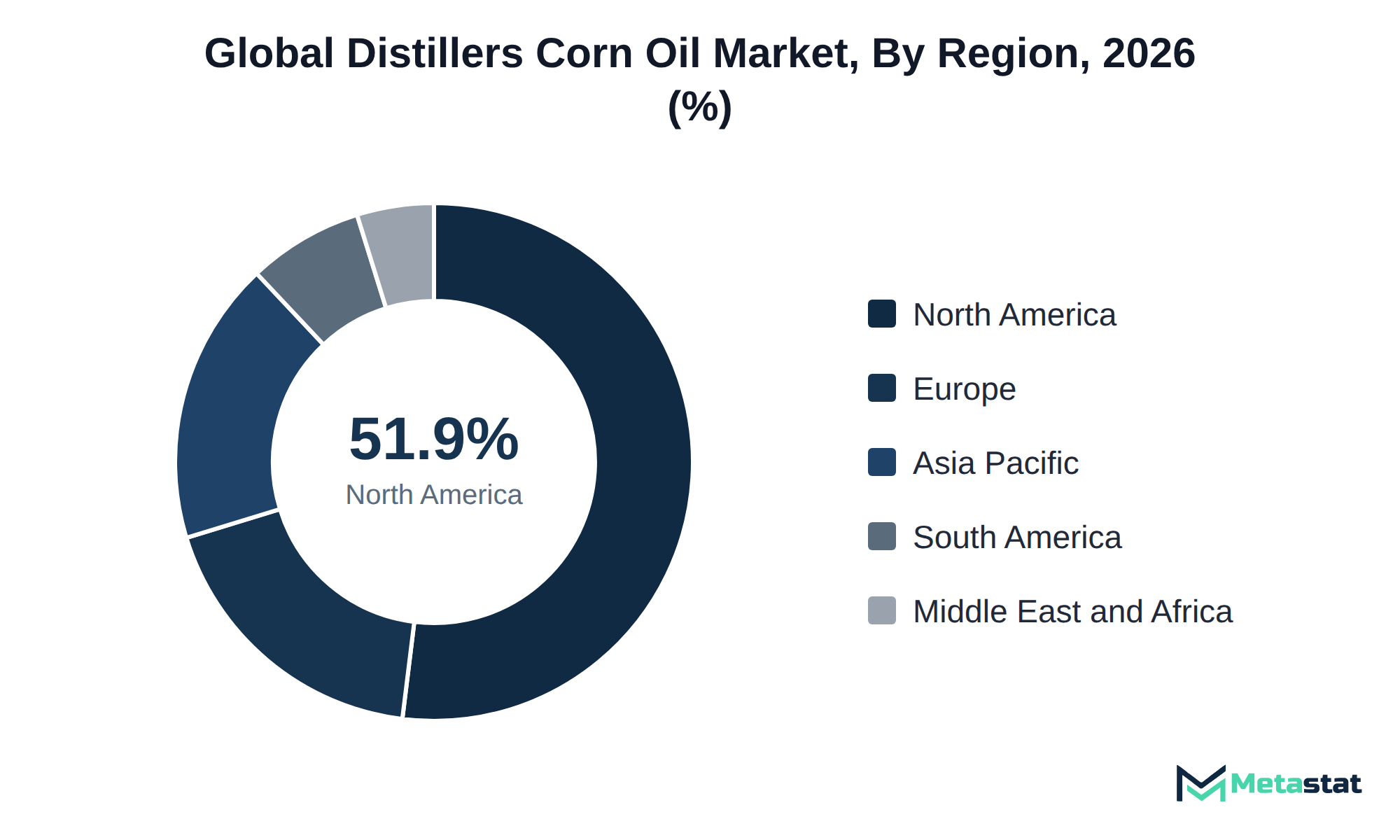
Growth in the market is propelled by increasing awareness of sustainable energy alternatives and the rise in biofuel production. Among the product grades, Fuel-Grade Distillers Corn Oil commands the highest value, reflecting its significant role in renewable fuel applications. North America holds 51.9% of the market in 2025, with the US leading in 2026. The region's established infrastructure and investment in biofuel technologies enhance its market position.
The expanding use of distillers corn oil in animal feed applications significantly supports market growth. Animal feed manufacturers prioritize the nutritional benefits of distillers corn oil, which contributes to the overall health and productivity of livestock. Together with rising demand for biofuels, this factor supports further market expansion in the coming years.
The Distillers Corn Oil market includes feed-grade, fuel-grade, and industrial-grade oils, each serving distinct applications across various industries. Buyers invest in this market primarily for biodiesel production, animal feed, and industrial lubricants, driven by the growing demand for renewable energy sources and sustainable feed options. The continuous expansion of biofuel production fuels the need for high-quality distillers corn oil, enhancing its appeal to producers in the biofuel and animal feed sectors.
Growth in the market is expected to be supported by increasing investments in biodiesel production and renewable fuel initiatives. The fuel-grade segment is the most valuable category, reflecting a rising preference for cleaner fuel alternatives. North America's lead reflects its established infrastructure and government support for biofuels, which encourage wider use of distillers corn oil across applications.
Key players in the market include POET, LLC, Valero Energy Corporation, and Green Plains Inc., all of which are expanding their production capacities and enhancing their product offerings to capture a larger share of the market. Their focus on sustainable practices and innovation positions them to meet growing demand for distillers corn oil.
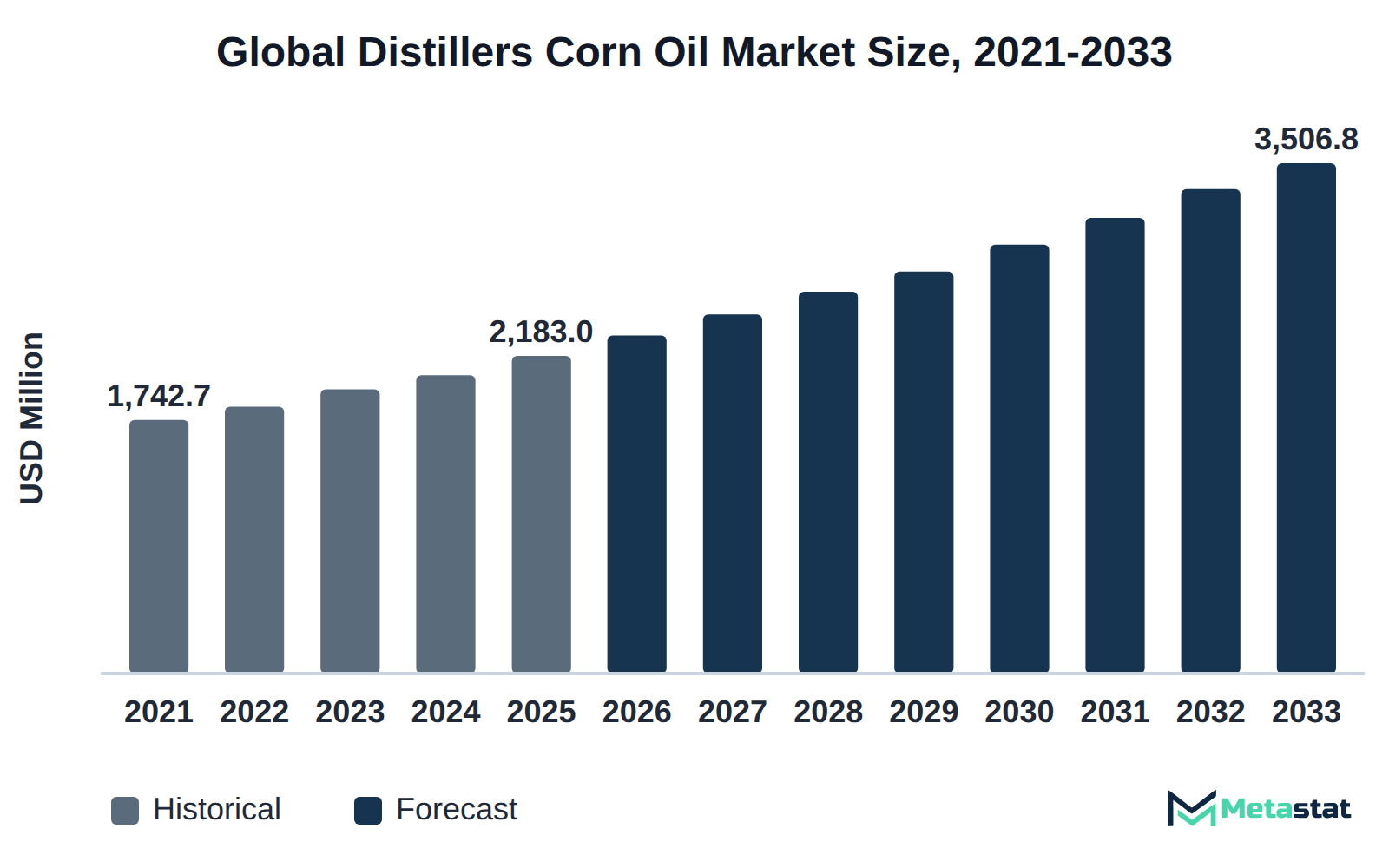
Centrifugal separation technology stands out in the distillers corn oil market due to its efficient extraction capabilities. This method is projected to grow from USD 2,043.2 million in 2026 to USD 3,030.5 million by 2033, offering a compound annual growth rate of 5.8%. The technology operates by employing high-speed centrifuges, which effectively separate oil from the residual solids in the distillation process. This efficiency enhances yield and reduces operational costs for producers.
The increasing adoption of centrifugal separation aligns with the growing demand for high-quality distillers corn oil, particularly in applications including biodiesel production and animal feed. The feed-grade segment is expected to increase from USD 1,108.7 million in 2026 to USD 1,606.8 million by 2033, illustrating the commercial implications of this extraction method. Improved recovery efficiency from centrifugal separation enables producers to meet demand while optimizing resource use.
In a competitive environment, effective extraction technologies like centrifugal separation strengthen market positions by increasing production capacity and enhancing profitability. This technological shift addresses immediate market needs and supports long-term sustainability, helping producers respond to evolving market dynamics.
The rising demand for renewable diesel significantly impacts the utilization of distillers corn oil within the market. This shift is driven by the increasing focus on sustainable fuel options and government initiatives supporting renewable energy. In this context, the biodiesel production application of distillers corn oil is projected to grow from USD 827.8 million in 2026 to USD 1,151.6 million by 2033, reflecting a compound annual growth rate of 4.8%. This growth creates a competitive landscape where buyers seek favorable pricing and contract models.
In the current market environment, buyers engage in long-term contracts to secure stable pricing and supply. These contracts ensure predictability in budgeting and guarantee a consistent product flow, crucial for industries reliant on distillers corn oil for biodiesel production. Suppliers typically set prices based on market fluctuations, production costs, and quality specifications. Volume purchasing agreements provide discounts, incentivizing buyers to commit to larger quantities over extended periods.
Such pricing strategies strengthen supplier-buyer relationships and support a more stable market for distillers corn oil. With the projected increase in demand for biodiesel, a stable contract framework is anticipated to support growth and facilitate investment in production capabilities. This approach to purchasing and pricing shapes the future of the market.
The demand for Animal Feed and Oleochemicals continues to expand, significantly impacting the Distillers Corn Oil market. Animal feed manufacturers require high-quality ingredients to support livestock health and productivity. This has led to an increase in the use of Feed-Grade Distillers Corn Oil, which is projected to grow from USD 1,108.7 million in 2026 to USD 1,606.8 million by 2033, reflecting a compound annual growth rate (CAGR) of 5.4%. The nutritious profile of distillers corn oil enhances the feed's energy content, making it a desirable option for poultry feed as well as swine and aquaculture diets.
In parallel, the vegetable-based oleochemicals industry increasingly incorporates Distillers Corn Oil in the production of various chemical products. The growing focus on sustainable and renewable resources drives this trend. This segment's growth aligns with the rising demand for eco-friendly products across multiple industries, including personal care and cleaning products. The integration of Distillers Corn Oil in these applications positions it as a key ingredient in the shift toward sustainability.
The expanded usage in animal feed and oleochemical applications highlights the evolving needs of buyers in the market. Suppliers who effectively address these distinct requirements enhance their market share and drive revenue growth in an increasingly competitive environment.
Applications across various industries strongly influence the pricing of distillers corn oil. Rising demand for biodiesel supports the overall market and affects pricing mechanisms and supply stability.
The relationship between feed-grade and fuel-grade distillers corn oil contributes to market dynamics. Fluctuations in grain prices, regulatory changes, and shifts in consumer preferences directly impact both the supply chain and pricing strategies within the distillers corn oil market.
Growing interest in sustainable energy sources has led to increased biodiesel production, significantly influencing buyer behavior in the Distillers Corn Oil market. Biofuel producers, seeking to meet rising energy demands and adhere to environmental regulations, turn to distillers corn oil as a key feedstock. This shift results in heightened volume requirements, pushing prices upward due to competition for supply. The increasing acceptance of biodiesel as a viable alternative to fossil fuels drives this trend, enhancing market dynamics. Demand for distillers corn oil is expected to expand significantly as biofuel producers use it in their sustainable energy initiatives.
Innovative extraction technologies enhance the efficiency and yield of distillers corn oil production. Centrifugal separation, a prominent method, provides superior efficiency through rapid processing and improved oil recovery rates. The adoption of this technology leads to reduced operational costs for producers, allowing them to optimize output while maintaining quality standards. In comparison, solvent extraction methods experience growing popularity due to higher yield potential, appealing to manufacturers seeking to maximize production capabilities. Enhanced recovery rates contribute to increased profitability for suppliers, thereby influencing investment in advanced extraction technologies. The trend toward mechanization and automation in extraction processes drives operational efficiency and reduces labor costs, making distillers corn oil production more economically viable. These technological advancements support market growth. They increase competition among suppliers and give buyers better pricing and wider availability of high-quality products.
Fluctuations in raw material prices significantly affect the Distillers Corn Oil market, leading to uncertainty among buyers. Producers of biodiesel and animal feed, the primary consumers of distillers corn oil, face challenges in planning purchases and managing budgets due to inconsistent pricing. This volatility often results in smaller orders or delayed procurement decisions, impacting overall market dynamics. Buyers in these sectors prioritize stable pricing for their operational efficiency, complicating their ability to adopt distillers corn oil consistently. Consequently, the market experiences slower uptake, particularly in regions where cost sensitivity is high. Such price instability hinders long-term contracts and partnerships, limiting revenue growth opportunities for suppliers. Enhanced strategies for price stabilization could improve buyer confidence, ultimately facilitating greater participation in the market.
Fluctuations in input costs present significant challenges for suppliers in the distillers corn oil market. Rising prices for raw materials, including corn, impact the entire production process, squeezing margins and increasing the cost of goods sold. In response, suppliers implement strategies including enhancing operational efficiencies and exploring alternative sourcing to mitigate these pressures. Investments in technology that optimize processing and extraction methods contribute to lowering overall production costs. Several suppliers diversify their supply chains to reduce dependency on a single source of raw materials, improving resilience against price volatility. These measures enable suppliers to sustain competitiveness within the market while maintaining adequate profit margins.
Despite these strategies, ongoing volatility in input costs necessitates continuous adaptation and innovation within the supply chain. Suppliers strive to balance cost control with quality as the market landscape evolves.
The animal feed application represents a significant opportunity within the Distillers Corn Oil market, driven by the increasing global demand for poultry, swine, and aquaculture products. This segment is projected to reach USD 1,259.6 million by 2033, reflecting a compound annual growth rate of 5.4%. Rising livestock production and changing dietary preferences contribute to the increase in animal feed requirements. Producers increasingly seek sustainable and nutritious feed alternatives, positioning distillers corn oil as an appealing option due to its high energy content and favorable nutritional profile. This trend aligns with the broader movement toward sustainable agricultural practices, influencing the purchasing decisions of animal feed manufacturers. Given this growth, investment in the segment is likely to rise, expanding production capacity and supporting innovation in feed formulations.
The Global Distillers Corn Oil market is segmented based on Product Grade, Extraction Method, Application, and End-Use Industry.
This grade primarily serves the animal feed industry, specifically targeting poultry, swine, and aquaculture sectors. Demand is driven by the increasing need for high-quality feed ingredients that enhance animal growth and productivity. Compared to other segments, including Fuel-Grade Distillers Corn Oil, which experiences a higher growth rate at 6.6%, the feed-grade segment maintains a stable growth trajectory. Both segments serve the growing renewable energy and agricultural markets. Feed-Grade Distillers Corn Oil appeals more directly to feed manufacturers focused on quality and nutritional content, which reflects a different buyer profile and pricing dynamics.
Fuel-Grade Distillers Corn Oil segment is estimated to reach USD 1,588.9 million by 2033, at a CAGR of 6.6% during the forecast period. This segment finds application primarily in the production of renewable diesel and meets the growing demand from biofuel producers. Increased regulatory support for renewable energy fuels drives demand for this segment, positioning it favorably compared to other grades. Unlike Feed-Grade Distillers Corn Oil, which primarily serves animal feed applications, fuel-grade oil targets biofuel and renewable fuel producers, reflecting a distinct market focus. The higher growth rate associated with this segment, at 6.6%, outpaces the growth of Feed-Grade Distillers Corn Oil, projected at 5.4%. This difference highlights varying end-user priorities and the strategic importance of fuel-grade oil in the transition toward sustainable energy solutions. The segment offers significant revenue potential as energy markets shift toward sustainable solutions.
Industrial-Grade Distillers Corn Oil segment is expected to reach USD 311 million by 2033. This grade finds applications in various industrial sectors, primarily serving manufacturers of lubricants and chemicals. Demand for industrial-grade oil is driven by the growing need for sustainable and eco-friendly alternatives in industrial processes. The segment benefits from an increasing emphasis on reducing environmental impact while ensuring product efficacy. Compared to the feed-grade and fuel-grade segments, industrial-grade oil is positioned for slower growth, with a CAGR of 4.8%, indicating a more stable yet less dynamic market. Price sensitivity remains a notable factor, with several manufacturers seeking cost-effective solutions while maintaining quality. The distinct applications and specific buyer requirements differentiate this segment from other grades in the market.
This method is primarily used for the efficient extraction of oil from corn, making it a preferred choice among biofuel producers and renewable fuel manufacturers. The increasing focus on sustainable energy sources drives the demand for biodiesel production, which heavily relies on the efficiency of extraction methods. Compared to other extraction techniques, including solvent extraction, which has a CAGR of 7.7%, centrifugal separation shows moderate growth. However, its established use in the industry ensures consistent demand from key players focused on high-yield production. This segment stands out for its operational efficiency and lower cost, making it attractive for various agricultural and industrial applications. The Distillers Corn Oil market evolves with advancements in extraction technologies, enhancing the overall efficiency of oil production.
Solvent Extraction segment is estimated to reach USD 332.1 million by 2033, at a CAGR of 7.7% during the forecast period. This extraction method primarily targets the production of biofuels and animal feed, catering to biofuel producers and animal feed manufacturers. The segment benefits from increasing demand for sustainable energy solutions, influencing the practices of key buyers in the market. Solvent extraction technology offers distinct advantages, including higher yield and efficiency compared to other extraction methods, including mechanical pressing. This method aligns well with the market's shift towards renewable energy sources, further enhancing its position. The Solvent Extraction segment enjoys strong growth potential, driven by advancements in extraction technology and the escalating need for eco-friendly fuel alternatives.
Mechanical Pressing segment is expected to reach USD 81 million by 2033. This extraction method employs mechanical forces to separate oil from corn, appealing to various industries seeking natural oil solutions. Primarily, biofuel producers and animal feed manufacturers use Mechanical Pressing for its efficiency in producing oil suitable for biofuels and feed applications. The rising demand for natural and sustainable products drives this segment. Compared to other extraction methods, including Centrifugal Separation, which is projected to attain USD 3,030.5 million by 2033 at a CAGR of 5.8%, Mechanical Pressing exhibits slower growth dynamics. The overall market positioning and varying extraction efficiencies influence buyer preferences, with price points playing a crucial role in adoption decisions. Cost considerations consistently affect market performance, with Mechanical Pressing typically featuring lower operating costs than alternative methods, enhancing its appeal among cost-sensitive buyers.
Enzymatic Extraction is projected to grow at a CAGR of 10.6% during the forecast period. This extraction method employs enzymes to enhance the efficiency of oil recovery from corn, making it suitable for biodiesel production and animal feed applications. Biofuel producers and animal feed manufacturers increasingly incorporate enzymatic extraction due to its effectiveness in maximizing yield. The segment stands out with its higher growth rate compared to other extraction methods, driven by advancements in enzymatic technology that improve production processes. This growth reflects a broader trend toward sustainable and efficient production practices in the distillers corn oil market. The increasing focus on optimizing resource use further supports adoption among manufacturers aiming to enhance product value in a competitive environment.
This segment primarily serves biofuel producers who use distillers corn oil as a feedstock for biodiesel, aligning with the global shift toward renewable energy sources. Strong demand for biodiesel drives growth in this segment, particularly from countries striving to meet renewable energy targets and reduce carbon emissions. Regulatory incentives promoting biodiesel use support market expansion. Compared to other segments, including animal feed, biodiesel production experiences slower growth, reflecting complexities in regulatory compliance and technological adaptation in converting feedstocks into fuel. The biodiesel application highlights the versatility of distillers corn oil while catering to a unique set of buyers focused on sustainable energy solutions.
The Animal Feed (Poultry, Swine, Aquaculture) segment is estimated to reach USD 1,259.6 million by 2033, at a CAGR of 5.4% during the forecast period. This application primarily serves animal feed manufacturers, who use distillers corn oil for its high-energy content and nutritional benefits for livestock. The demand for high-quality animal feed continues to grow, driven by rising global meat consumption and the need for efficient feed formulations. This segment experiences growth due to its essential role in enhancing animal health and productivity. Compared to other segments, this application highlights a moderate growth rate, influenced by its established position in the market. Pricing dynamics reflect shifts in raw material costs, impacting profitability for suppliers in the animal feed sector. The growing focus on sustainable practices further encourages adoption, positioning animal feed as a key application area within the distillers corn oil market.
Oleochemicals segment is expected to reach USD 359.8 million by 2033. Used primarily in the production of soaps, detergents, and cosmetics, oleochemicals derived from distillers corn oil serve a variety of manufacturing processes. Key players in this segment include chemical manufacturers seeking sustainable alternatives to petroleum-based products. This segment experiences significant growth driven by rising demand for bio-based products, reflecting a broader trend toward sustainability in chemical production. Compared to other applications, oleochemicals exhibit a slower growth rate due to competition from established petroleum derivatives. The market for oleochemicals continues to expand as industries prioritize environmentally-friendly sourcing and production methods.
Industrial Lubricants segment is projected to grow at a CAGR of 7.6% during the forecast period. This segment finds applications in various fields, primarily serving manufacturers of industrial lubricants who seek sustainable options for their products. Demand is buoyed by increasing regulatory pressures to adopt environmentally friendly products, influencing lubricant producers to source renewable materials. Unlike other segments including Biodiesel Production, which has a lower growth rate of 4.8%, the Industrial Lubricants segment caters to a distinct buyer group focused on industrial applications, leading to a higher average price point. Strong growth prospects in this segment reflect broader trends within the Distillers Corn Oil market, driven by shifts toward sustainability and the need for high-performance lubricants.
Surfactants and detergents serve critical roles in various cleaning and industrial processes. These products find applications in both household cleaning products and industrial cleaning products, with manufacturers emphasizing the need for effective solutions that enhance performance and sustainability. Demand for surfactants and detergents is spurred by the growing emphasis on environmentally friendly products, driving manufacturers to seek renewable sources including distillers corn oil. This segment faces distinct challenges, including regulatory pressures regarding environmental impact and ingredient sourcing. Compared to other segments, including biodiesel production, surfactants and detergents experience slower growth, reflecting varying market dynamics and the specific requirements of buyers in the cleaning and industrial sectors. The increasing preference for sustainable ingredients positions this segment as a significant component of the distillers corn oil market.
Chemical manufacturing involves the production of various chemicals for industrial applications. This segment primarily caters to manufacturers of specialty chemicals, formulations, and raw materials. The demand for distillers corn oil in this sector is driven by the rising need for sustainable and renewable feedstocks for chemical production. Regulations promoting the use of bio-based products enhance the market's growth potential. In comparison to other applications, chemical manufacturing typically experiences slower growth, largely due to the established nature of traditional feedstock sources. Increased accessibility to distillers corn oil, a viable alternative, offers opportunities for innovation in product development for chemical producers, supporting a shift toward greener production processes. The market presents favorable conditions for growth through the adoption of distillers corn oil in various chemical formulations.
Biofuel Producers segment is valued at USD 735 million in 2026 and is projected to reach USD 1,031.7 million by 2033, at a CAGR of 5% during the forecast period. This segment primarily serves biofuel manufacturers seeking renewable energy sources. The increasing demand for sustainable fuel alternatives drives expansion in this segment, supported by regulatory initiatives promoting biofuels. Unlike other segments, Biofuel Producers exhibit stable growth, differing from the Fuel-Grade and Feed-Grade segments, which experience faster growth rates of 6.6% and 5.4%, respectively. The relatively lower growth rate reflects the established nature of the biofuel market compared to emerging opportunities in animal feed and fuel applications. Investment in technologies enhancing biodiesel production efficiency further influences this segment's performance.
Renewable Fuel Producers segment is estimated to reach USD 953.1 million by 2033, at a CAGR of 7.4% during the forecast period. This segment is significant in the production of renewable energy, primarily focusing on the manufacturing of biofuels from various feedstocks. The increasing emphasis on sustainable energy sources drives demand for distillers corn oil among biofuel producers, who use this oil in biodiesel production. Regulatory support for renewable energy initiatives further supports growth in this segment, distinguishing it from others in the market. Renewable Fuel Producers exhibit a faster growth rate compared to other end-use industries, driven by the global shift toward greener fuels and a reduction in greenhouse gas emissions. In contrast to the Animal Feed Manufacturers segment, which anticipates a CAGR of 5%, the Renewable Fuel Producers segment is expected to capture a larger share due to heightened consumer interest and government incentives for renewable fuel adoption.
The Animal Feed Manufacturers segment is expected to reach USD 871.8 million by 2033. This segment serves the production of animal feed for various livestock, including poultry, swine, and aquaculture. The demand derives from the growing need for high-quality feed ingredients that enhance livestock nutrition. Rising consumer preferences for protein-rich diets drive increased production in the livestock sector, influencing demand for distillers corn oil. This segment experiences a CAGR of 5.4%, indicating strong growth compared to other segments. In contrast to the Fuel-Grade segment, which is projected to grow at a faster CAGR of 6.6%, the Animal Feed Manufacturers segment focuses on a specific buyer group with distinct nutritional requirements, impacting pricing and adoption in the market.
Oleochemical Manufacturers segment is projected to grow at a CAGR of 8% during the forecast period. This segment finds application in producing soaps, detergents, and other surface-active agents, making it essential for various consumer goods and industrial products. Demand for bio-based oleochemicals drives growth within this segment, with manufacturers increasingly seeking sustainable and environmentally friendly alternatives to traditional petrochemical products. The higher growth rate of this segment compared to others, including biodiesel producers, is attributed to the expanding market for green chemicals and the shift towards sustainable sourcing. The oleochemical sector faces opportunities in innovations related to product formulations and processing technologies, positioning it favorably in the distillers corn oil market. Manufacturers focusing on enhancing the bio-based content of their products benefit from rising consumer preferences for eco-friendly solutions.
Chemical Processing Industries use Distillers Corn Oil for producing various chemicals utilized across different applications. This segment primarily serves biofuel producers and renewable fuel manufacturers, who leverage this oil for its chemical properties. Demand for this sub-segment is driven by the increasing need for sustainable and renewable energy sources. This contrasts with other segments, including animal feed, which focus on livestock nutrition. The market’s emphasis on eco-friendly solutions heightens interest in distillers corn oil, contributing to growth opportunities. Regulatory frameworks promoting green energy further influence the adoption of distillers corn oil in chemical processing. The distinctive applications and regulatory drivers set this segment apart from others, creating unique dynamics within the overall market.
Industrial lubricants represent a vital application of distillers corn oil, primarily in manufacturing processes that require enhanced lubrication properties. These products cater to various industries, including automotive and machinery manufacturing, where high-performance lubricants are essential for operational efficiency. The growing emphasis on environmentally friendly solutions drives demand for sustainable lubricants, which distillers corn oil effectively provides. This segment experiences slower growth compared to others, reflecting a more mature market with established players. The need for compliance with evolving regulations regarding lubricants limits rapid expansion. Industrial lubricant manufacturers prioritize cost-effectiveness and performance, distinguishing themselves from biofuel producers who focus on different application areas within the market. Increased adoption of bio-based lubricants indicates a shift towards sustainable practices, influencing market dynamics and competitive strategies.
Based on geography, the Global Distillers Corn Oil market is divided into North America, Europe, Asia-Pacific, South America, Middle East, and Africa.
Strong demand for biofuels and animal feed drives the Distillers Corn Oil market in North America. The United States, Canada, and Mexico represent significant markets, with biofuel producers and renewable fuel producers leading consumption. By 2033, North America is projected to reach USD 1,688.9 million. The region's high share of the global market at 51.9% in 2025 reflects robust production and processing capabilities. Industry players focus on sustainable practices to enhance production efficiency, driven by regulatory frameworks promoting renewable energy sources. The market benefits from increasing investments in biodiesel production, animal feed manufacturing, and oleochemical applications, ensuring continued growth in the coming years.
In Europe, the Distillers Corn Oil market benefits from strong demand driven primarily by biofuel producers and animal feed manufacturers. Countries including Germany, France, and the UK emphasize renewable energy initiatives that support biodiesel production, enhancing the market's growth potential. The market's share is projected at 18.3% in 2025. Specific regulations aimed at reducing carbon emissions further increase the need for sustainable energy sources, boosting demand for distillers corn oil in these sectors. Growth is anticipated through advancements in extraction methods and applications, particularly in oleochemicals and industrial lubricants, which align with the region's industrial focus.
Demand for distillers corn oil in the Asia-Pacific region originates from a range of industries, including biodiesel production and animal feed manufacturing. Significant investments in renewable energy infrastructure highlight the region's commitment to sustainability. Countries including China and India focus on enhancing fuel supply chains, which improves the market profile. Australia’s push for biofuel alternatives further supports growth in biodiesel production, aligning with environmental goals. The region's share of the global market reached 17.7% in 2025, reflecting the strong emphasis on biofuel and livestock feed applications. Industry players actively explore advanced extraction methods to optimize production efficiency, ensuring competitive positioning within the overall distillers corn oil market. Continuous innovation in extraction technologies increases market penetration across various segments.
In South America, the Distillers Corn Oil market experiences significant activity driven by high demand for animal feed, particularly in Brazil and Argentina. Regulatory trends favoring biofuel production support the market, with initiatives promoting the use of renewable resources. Economic conditions in these countries provide a supportive infrastructure for biofuel producers and animal feed manufacturers, enhancing operational efficiency. The region accounts for 7.2% of the global market in 2025, reflecting its growing importance in the international landscape. Escalating interest in sustainability among consumers drives the industry forward, encouraging investments and innovation in production methods.
In the Middle East and Africa, the market demonstrates unique characteristics influenced by local demand dynamics. Significant interest arises from biofuel producers and animal feed manufacturers, driven by regional initiatives promoting renewable energy and sustainable agricultural practices. The region's share of the global market in 2025 reflects a concentrated focus on enhancing biofuel capabilities. Countries including Saudi Arabia and the UAE invest in infrastructure projects aimed at supporting biofuel production, aligning with global sustainability goals. South Africa, with its growing agricultural sector, increasingly relies on distillers corn oil for animal feed applications. The market's growth trajectory in this area reflects escalating demand for environmentally friendly fuel alternatives and nutritious animal feed solutions.
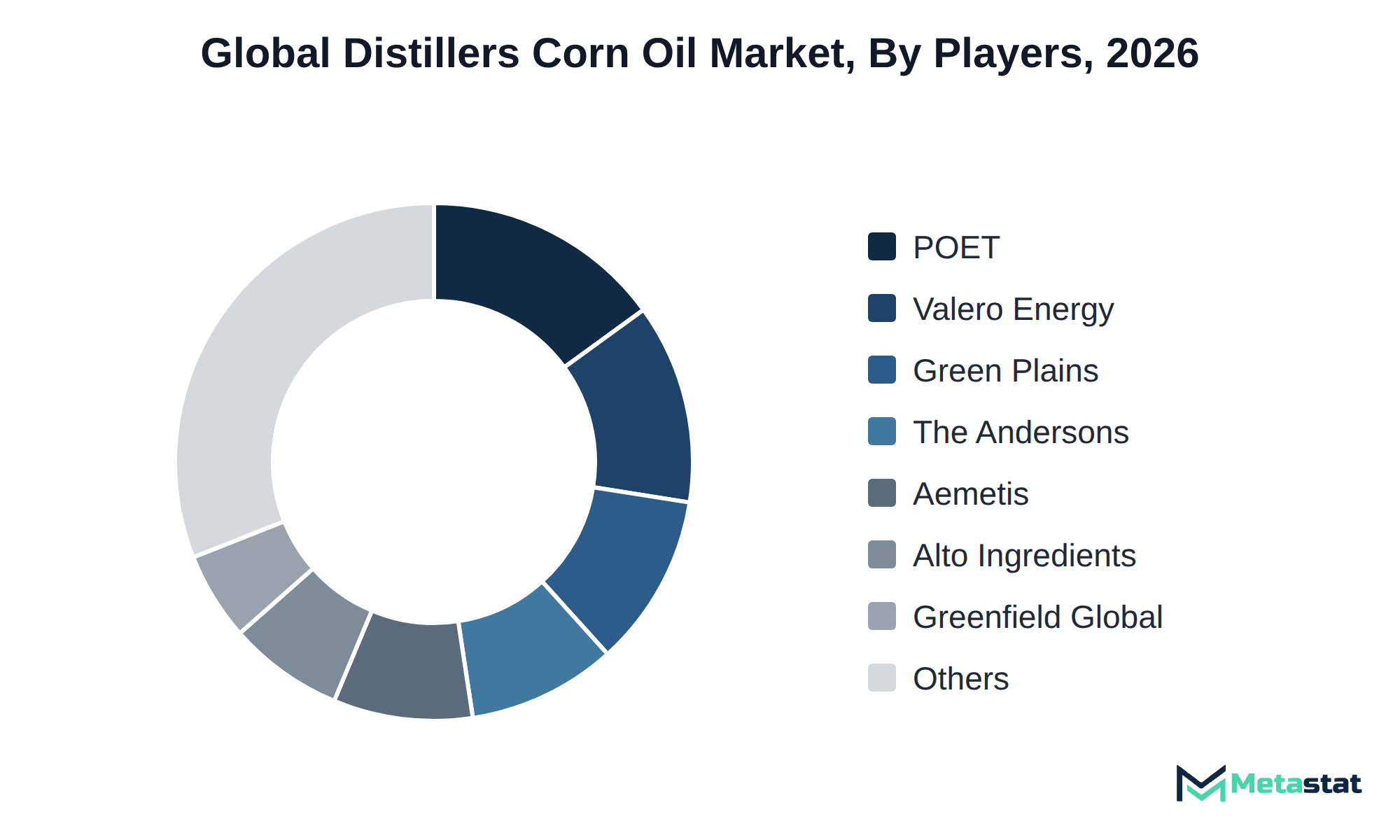
Competition in the Distillers Corn Oil market emphasizes product differentiation and pricing strategies. Companies focus on offering varied product grades, including Feed-Grade, Fuel-Grade, and Industrial-Grade Distillers Corn Oil to attract diverse buyer segments. Buyers prioritize quality, certification, and service reliability when selecting suppliers.
POET, LLC emphasizes its extensive production capabilities and strong market presence, appealing to both biofuel producers and animal feed manufacturers. Valero Energy Corporation targets the renewable fuel sector, focusing on efficient production methods to meet growing demand. Green Plains Inc. distinguishes itself through innovations in extraction methods and application versatility, catering to a wide range of industries, including biodiesel production and oleochemicals.
Companies implement distinct strategies to capture market share. Aemetis, Inc. and Alto Ingredients, Inc. concentrate on sustainable production processes, aligning with increasing consumer demand for environmentally friendly solutions. Guardian Energy LLC enhances its competitive edge by providing customized services and technical support to clients in the biofuel industry. These strategic behaviors shape the competitive landscape, influencing buyer decisions and market trends.
Achieving this growth requires several key developments within the Distillers Corn Oil market. Increased demand from the biodiesel production segment, driven by a global shift toward renewable energy sources, will support growth. Rising consumption of animal feed across North America and Europe, where producers seek sustainable and cost-effective feed options, presents further opportunities. Advancements in extraction methods, particularly solvent extraction, will enhance production efficiency, positioning manufacturers to meet growing market needs.
However, the market faces potential risks that could hinder reaching the projected value. Regulatory challenges, particularly in environmental compliance, impose constraints on production capabilities. If these regulations tighten, particularly in North America, operational costs could rise, impacting profitability for key players. Overall, rising demand across various segments and prudent management of regulatory risks will shape the trajectory of the market through the forecast period.
By Extraction Method: Centrifugal Separation, Solvent Extraction, Mechanical Pressing, Enzymatic Extraction
By Application: Biodiesel Production, Animal Feed (Poultry, Swine, Aquaculture), Oleochemicals, Industrial Lubricants, Surfactants and Detergents, Chemical Manufacturing
By End-Use Industry: Biofuel Producers, Renewable Fuel Producers, Animal Feed Manufacturers, Oleochemical Manufacturers, Chemical Processing Industries, Industrial Lubricant Manufacturers
The report strategically identifies and profiles the key market players and analyses their core competencies in each sub-segment of the Distillers Corn Oil market.
Report Attributes | Details |
Study Period | 2021-2033 |
Base Year | 2025 |
Estimated Year | 2026 |
Forecast Period | 2026-2033 |
Historical Period | 2021-2025 |
Growth Rate | CAGR 6.1% from 2026 to 2033 |
Revenue Unit | USD million |
Segmentation | By Product Grade, Extraction Method, Application, End-Use Industry, and Region |
By Region | North America (By Product Grade, Extraction Method, Application, End-Use Industry, and Country)
|
Europe (By Product Grade, Extraction Method, Application, End-Use Industry, and Country)
| |
Asia Pacific (By Product Grade, Extraction Method, Application, End-Use Industry, and Country)
| |
South America (By Product Grade, Extraction Method, Application, End-Use Industry, and Country)
| |
Middle East and Africa (By Product Grade, Extraction Method, Application, End-Use Industry, and Country)
|
Find answers to common questions about this report
The Distillers Corn Oil market size was valued at USD 2,183 million in 2025.
The market is projected to grow at a CAGR of 6.1% during the forecast period from 2026 to 2033.
The North America Distillers Corn Oil market size is estimated to reach USD 1,688.9 million by 2033.
Fuel-Grade Distillers Corn Oil leads the market with a projected value of USD 1,588.9 million by 2033. This segment surpasses others based on its growth potential and demand in various applications.
Growing interest in sustainable energy sources has led to increased biodiesel production, significantly influencing buyer behavior. Rising global demand for poultry, swine, and aquaculture products drives the animal feed application, positioning distillers corn oil as a preferred feed alternative.
North America holds the dominant share of the Distillers Corn Oil market, accounting for USD 1,688.9 million in 2033, representing 51.9 percent of the total market. This significant share highlights the region's leading position compared to others.
Fluctuations in raw material prices significantly affect the market, leading to uncertainty among buyers and complicating procurement decisions. Rising prices for raw materials, including corn, increase production costs and squeeze margins for suppliers.
The increasing global demand for poultry, swine, and aquaculture products drives the adoption of distillers corn oil in the animal feed application. This segment's projected growth reflects a shift toward sustainable and nutritious feed alternatives, enhancing its appeal among manufacturers.
The Distillers Corn Oil market is estimated to reach a valuation of USD 3,506.8 million by 2033.
Key players operating in the Distillers Corn Oil market include POET, LLC, Valero Energy Corporation, Green Plains Inc., The Andersons, Inc., Aemetis, Inc., and Alto Ingredients, Inc.
The analysts below cover Food and Beverages research at Metastat Insights.
LEAD ANALYST
Utkarsh Khirodkar is a Lead Market Research Analyst at MetaStat Insight, specializing in market intelligence, technology sector assessments, and competitive strategy.

LEAD PRINCIPAL ANALYST, PHARMA AND HEALTHCARE
Food and Beverages · Healthcare · Healthcare IT · Medical Devices
Ajay Devgire is the Lead Healthcare Analyst at MetaStat Insight, leading strategic research and market intelligence initiatives across the global healthcare domain.

SENIOR RESEARCH ANALYST
Biotechnology · Food and Beverages · Medical Devices · Packaging
Snehal Pasalkar is a Research Analyst at MetaStat Insight, operating at the intersection of life sciences research, competitive strategy, and market intelligence.
Our team was tracking whether regional recycling infrastructure could realistically absorb the growing volume of lithium iron phosphate batteries over the next decade. The report did a solid job separating announced hydrometallurgical plant capacity from active, permitted operational throughput. That distinction made the feedstock availability projections and regional recovery rate models far more credible than standard commercial overviews.
Tracking capacity expansion in single-use bioprocessing requires dependable data on raw material availability and cleanroom-grade polymer supply chains. The competitive landscape chapter gave a grounded evaluation of secondary component suppliers across North America and Asia-Pacific rather than simply reprinting press releases. Having that level of supplier benchmarking helped clarify dual-sourcing considerations for our clinical pipeline planning.
When evaluating distributed energy resource management systems, standard research summaries tend to gloss over the operational differences between front-of-the-meter utility deployments and behind-the-meter industrial sites. The MetaStat Insight report addressed those distinctions directly, especially regarding software interoperability standards and grid interconnection backlogs. The five-year market sizing across regional transmission organizations provided actionable context for our grid modernization strategy.
Explore related market intelligence reports worth reading alongside this one.