
LEAD ANALYST
Utkarsh Khirodkar is a Lead Market Research Analyst at MetaStat Insight, specializing in market intelligence, technology sector assessments, and competitive strategy.

Global Vegetable-Based Oleochemicals Market Size, Share, By Product Type (Fatty Acids, Fatty Alcohols, Glycerin, Fatty Acid Methyl Esters, Specialty Fatty Esters, Fatty Amines and Others), By Feedstock Source (Palm Oil, Palm Kernel Oil, Coconut Oil, Soybean Oil, Rapeseed/Canola Oil, Sunflower Oil and Others), By End-Use Industry (Home Care & Detergents, Personal Care & Cosmetics, Food & Beverage, Pharmaceuticals & Nutraceuticals, Polymers, Plastics & Rubber, Lubricants & Metalworking Fluids, Paints, Coatings, Inks & Resins, Agriculture & Animal Feed, Candles, Waxes & Fragrances and Others), Industry Analysis, Growth, Trends, and Forecast, 2026-2033
Report ID
MSI-5254
Published
September, 2026
Pages
278 Pages
Format
Historical
Base year
Forecast
Forecast period
Report Details
Market Valuation: Valued at $17.8 Billion in 2025, projected to reach $30.4 Billion by 2033 at a 6.9% CAGR.
Dominant Segment: The Fatty Acids segment leads the market, driven by increasing awareness of environmental sustainability and the demand for biodegradable alternatives in personal care and home care applications.
Geographic Lead: Asia Pacific holds the largest market share at 46.3%, with rapid industrialization in countries like China and India fueling demand for sustainable products.
What's Inside: The report provides a comprehensive analysis of the competitive landscape, market segmentation by product type, feedstock source, and end-use industry, along with detailed forecasts through 2033.
Investment in sustainable production tec: Investment in sustainable production technologies is driving growth, as manufacturers innovate to meet consumer preferences for eco-friendly products across various industries.
Technological integration drives efficie: Technological advancements, including automation and AI, enhance operational efficiency and productivity, aligning production processes with market demands for sustainable sourcing.
Choose Your License
Global Vegetable-Based Oleochemicals Market
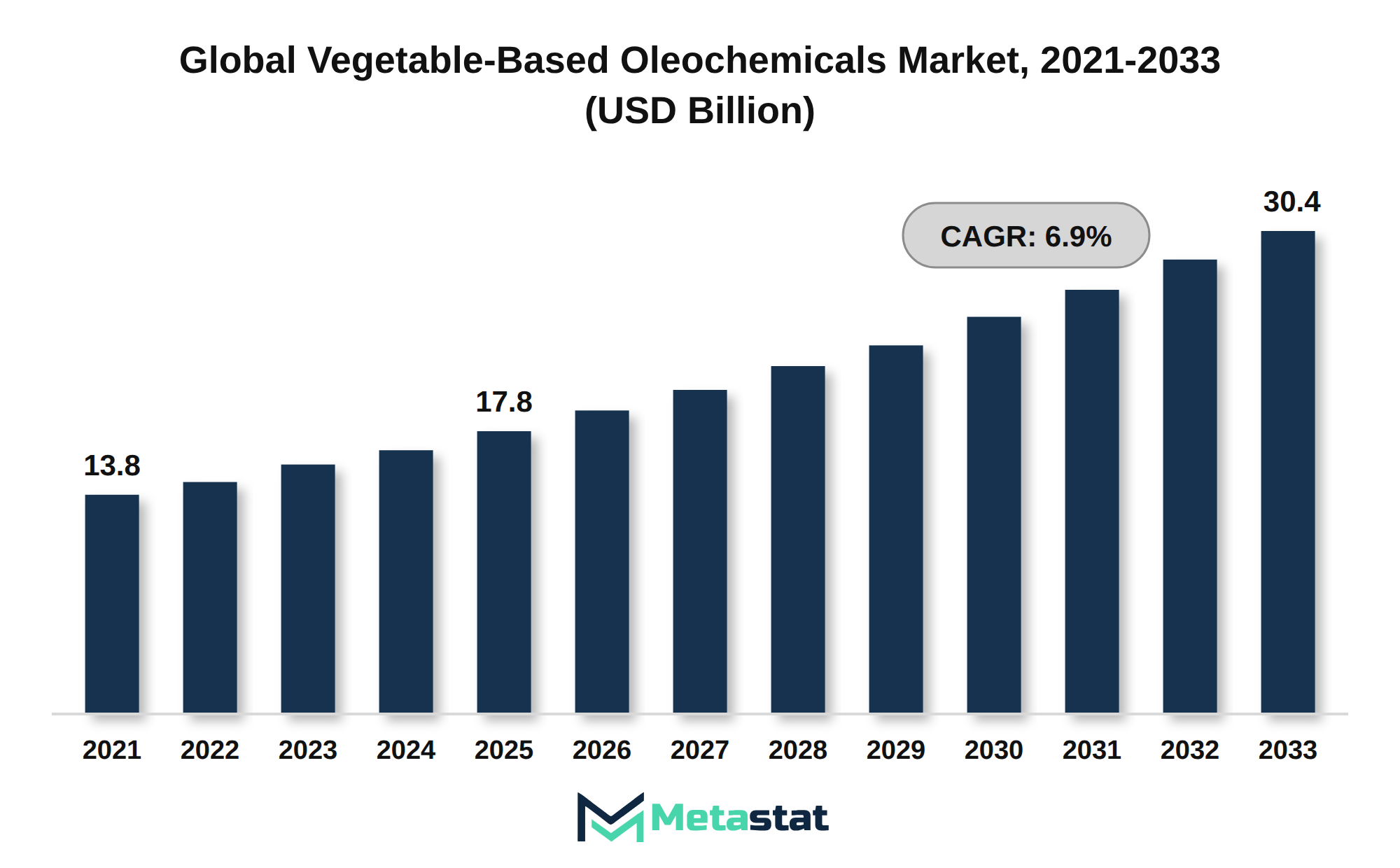
The global Vegetable-Based Oleochemicals market was valued at USD 17.8 billion in 2025 and is projected to reach USD 30.4 billion by 2033, growing at a CAGR of 6.9% over the forecast period.
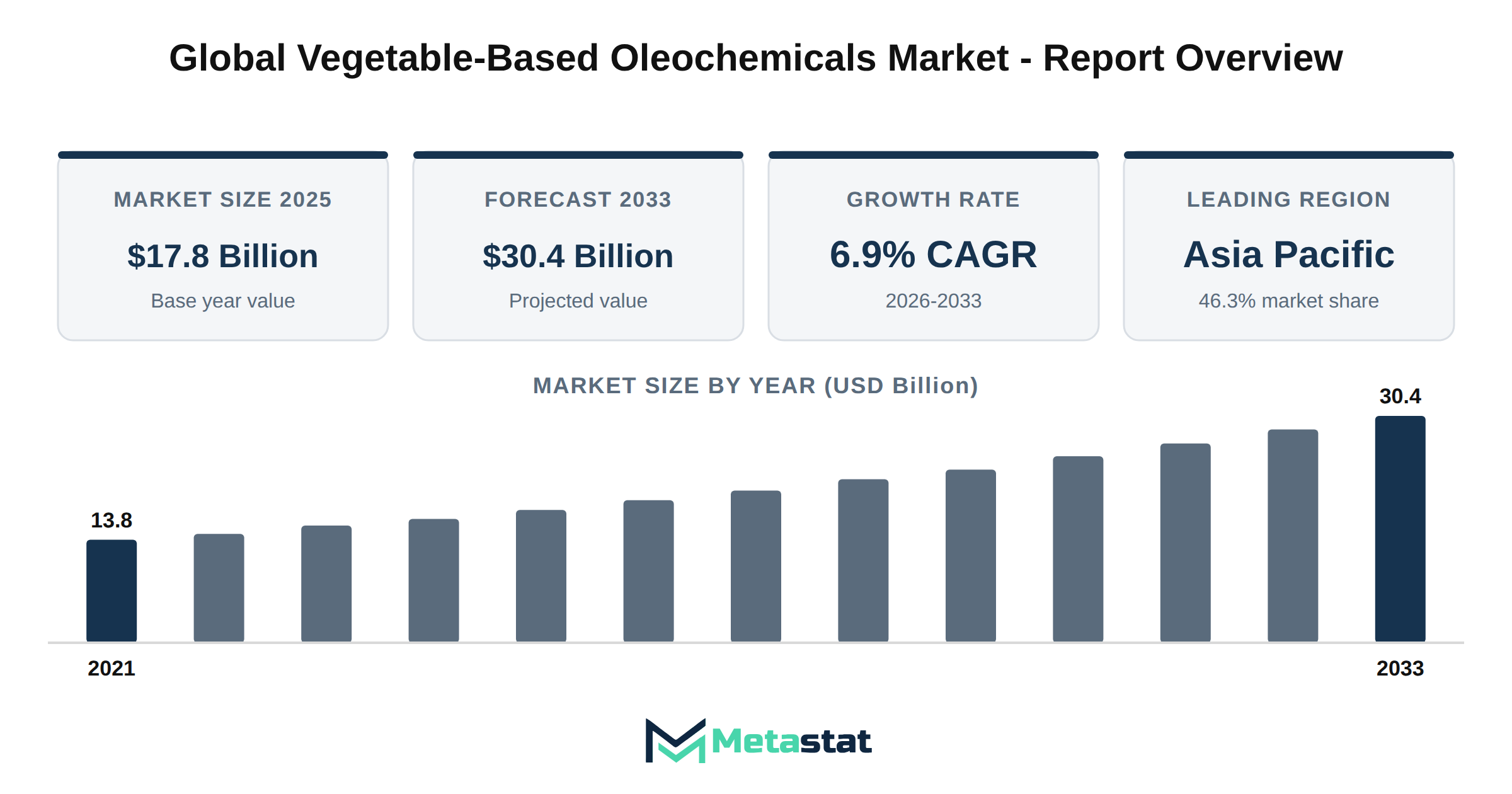
The Vegetable-Based Oleochemicals market is projected to expand from USD 17.8 billion in 2025 to USD 30.4 billion by 2033, reflecting a compound annual growth rate (CAGR) of 6.9%. This growth trajectory highlights the increasing adoption of bio-based and renewable oleochemical ingredients across various industries, driven by a shift towards sustainability and environmental consciousness.
Rising demand for bio-based products intensifies the competition among suppliers. The push for renewable oleochemicals aligns with consumer preferences for environmentally friendly products, particularly in personal care and cosmetics. This trend encourages investments in sustainable sourcing and production practices.
Palm oil and palm kernel oil dominate the feedstock sources for oleochemical manufacturing, accounting for significant production output. The growth in fatty acids and fatty alcohols within industrial applications demonstrates the versatility of these products, which find usage in diverse sectors including detergents, personal care, and food processing. The increasing focus on specialty fatty esters further drives high-value demand within the market.
The adoption of sustainable oleochemicals in personal care and cosmetics reflects shifting consumer preferences towards natural ingredients. This transition enhances product appeal and meets regulatory requirements for sustainability. In addition, the demand for home care and detergents increases oleochemical consumption, with manufacturers seeking innovative formulations that emphasize eco-friendliness.
The pharmaceutical and nutraceutical sectors represent key applications for vegetable-based oleochemicals, using these ingredients for their beneficial properties. The emergence of bio-based lubricants and metalworking fluids creates new growth opportunities, particularly in industries prioritizing performance and sustainability.
Oleochemical demand in polymers, plastics, and rubber manufacturing continues to rise, driven by the need for sustainable materials in these sectors. Emerging applications of vegetable-based oleochemicals in coatings and resins further indicate a broadening scope of usage, enhancing the market's growth potential.
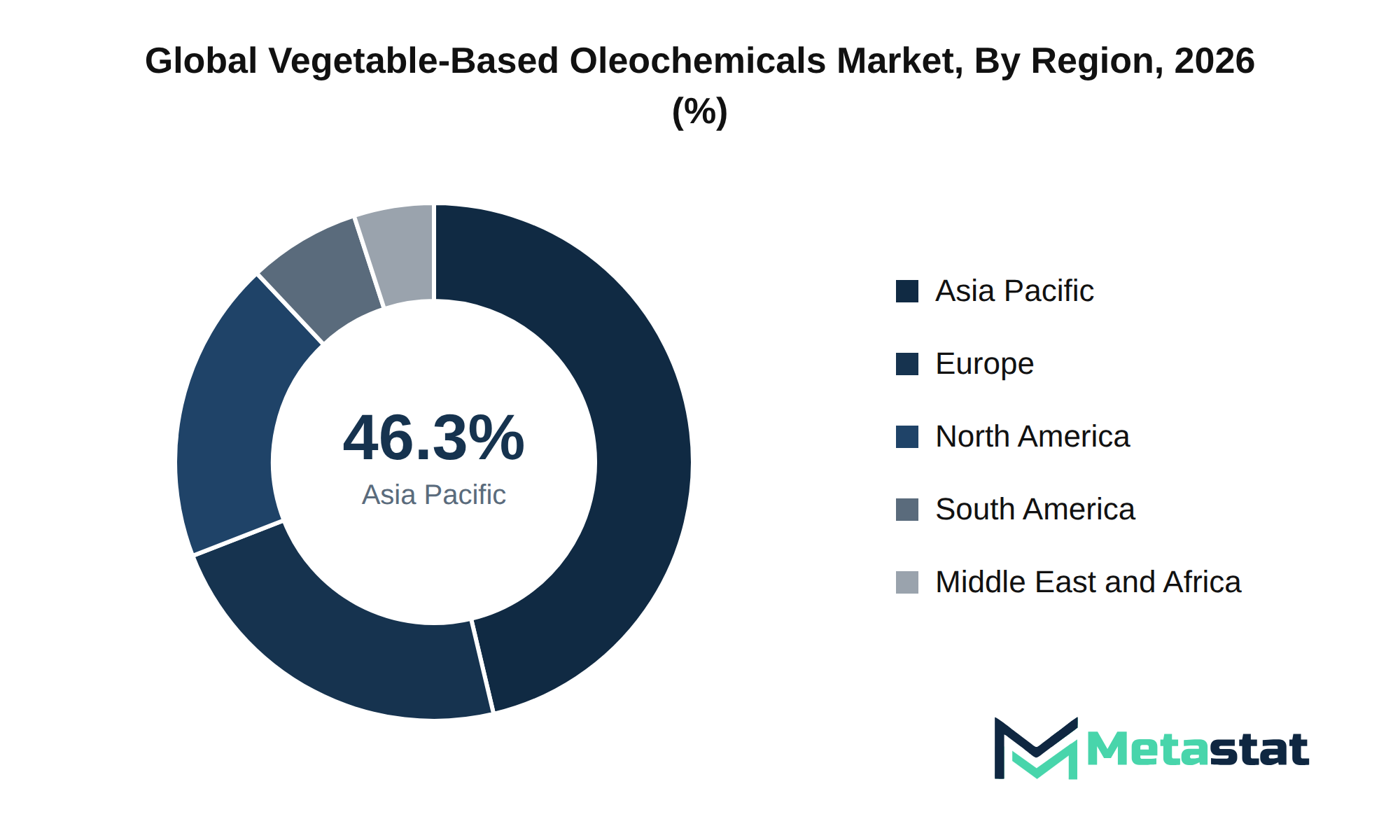
Asia Pacific holds the largest share of the market, with significant production and consumption growth anticipated. Europe shows strong demand for sustainable and certified oleochemical ingredients, aligning with regulatory frameworks that emphasize environmental responsibility. North America presents opportunities in renewable specialty oleochemicals, catering to evolving consumer demands.
Latin America presents potential for vegetable oil feedstock and oleochemical expansion, driven by favorable agricultural conditions and access to raw materials. Oleochemical feedstock pricing and raw material cost dynamics will play a crucial role in shaping market strategies and profitability.
The Vegetable-Based Oleochemicals market experiences significant growth driven by rising demand for bio-based and renewable oleochemical ingredients. This trend reflects an increasing consumer preference for sustainable products across various industries, particularly in personal care and cosmetics. The shift towards environmentally friendly formulations enhances the market's appeal, attracting new investments and driving innovation within the industry.
Vegetable oil feedstock trends shape oleochemical production strategies. Palm and palm kernel oils dominate the market due to their widespread availability and cost-effectiveness. This dominance supports the production of key oleochemical products including fatty acids and fatty alcohols, which find extensive use in industrial applications. The growth trajectory in these segments highlights the essential role of vegetable oil feedstocks in meeting industry needs.
Specialty fatty esters drive high-value oleochemical demand, particularly in the personal care sector. These formulations provide enhanced performance characteristics, contributing to the growing adoption of sustainable oleochemicals. The home care and detergent industries support oleochemical consumption, with manufacturers increasingly prioritizing natural ingredients to meet consumer expectations for eco-friendly products.
Pharmaceutical and nutraceutical applications of vegetable-based oleochemicals represent another vital growth area. The incorporation of these ingredients in health-related products aligns with the global trend towards organic and natural solutions. Bio-based lubricants and metalworking fluids create new growth opportunities, reflecting an industry shift towards sustainable alternatives.
The demand for oleochemicals extends into polymers, plastics, and rubber manufacturing, where plant-derived ingredients gain traction. Emerging applications in coatings and resins further exemplify the versatility of vegetable-based oleochemicals, driving innovation across various sectors. The Asia Pacific region leads production and consumption growth, supported by robust industrial activities and increasing investments in sustainable practices.
In Europe, the demand for sustainable and certified oleochemical ingredients continues to rise, influenced by stringent regulatory frameworks and consumer awareness. North America presents opportunities in renewable specialty oleochemicals, focusing on developing local supply chains and reducing reliance on fossil fuels. Latin America demonstrates potential for vegetable oil feedstock and oleochemical expansion, driven by favorable agricultural conditions and increasing production capabilities.
Pricing dynamics for oleochemical feedstocks directly impact raw material costs and market stability. Supply chain risks associated with palm oil availability necessitate strategic sourcing and traceability measures within the industry. Regulatory compliance, including RSPO certification, remains crucial for ensuring sustainable practices throughout the oleochemical supply chains.
Decarbonization and circular economy initiatives in oleochemical manufacturing align with global sustainability goals. Process innovation in fatty acid, glycerin, and ester production enhances efficiency and reduces environmental impact. Biotechnology and green chemistry innovations continue to transform oleochemical manufacturing, driving new product developments and applications.
The competitive landscape of global vegetable-based oleochemical producers evolves with capacity expansion and investment trends. Mergers, acquisitions, and strategic partnerships within the oleochemicals industry enhance market positioning and drive collaboration among key players. The shift towards high-purity and specialty oleochemical products reflects changing end-use industry preferences for natural and plant-derived ingredients.
Supply chain localization and regional manufacturing strategies emerge due to critical components for success in the vegetable-based oleochemicals market. Future growth opportunities arise from the ongoing demand for innovative, sustainable solutions that align with consumer expectations and regulatory requirements.
Investment in sustainable production technologies fuels growth in the Vegetable-Based Oleochemicals market. Increasing awareness of environmental issues drives demand for eco-friendly products across various industries, prompting manufacturers to innovate and adopt green technologies. Enhanced sustainability initiatives align with consumer preferences for bio-based and biodegradable materials, particularly in sectors including personal care and home care, which prioritize environmental responsibility.
Capital investments in research and development for sustainable solutions enable firms to improve operational efficiencies and reduce carbon footprints. Innovations, including advanced extraction and processing techniques, result in higher yields and lower resource consumption. The integration of automation and digital technologies streamlines production processes, reducing operational costs while enhancing product quality.
Competition intensifies because players in the market recognize the necessity of sustainability-focused strategies to capture a larger share of the growing consumer base that values environmentally friendly products. This trend signals a positive growth trajectory for the Vegetable-Based Oleochemicals market, supporting the increasing shift toward sustainable practices across various end-use industries.
Technological integration significantly influences the growth of the Vegetable-Based Oleochemicals market by enhancing operational efficiency and productivity. Automation and the adoption of artificial intelligence streamline manufacturing processes, reducing labor costs and increasing output. Digitization of legacy processes improves data analytics, supporting better decision-making in product development and market positioning.
The transition towards smart manufacturing technologies facilitates the transformation of traditional production methods into more efficient systems. This shift addresses evolving consumer preferences for sustainably sourced products, aligning with market demands. Improved capabilities promote a higher rate of innovation in product development, enabling the introduction of new formulations that appeal to health-conscious and environmentally aware consumers.
Investment in advanced technologies promotes production efficiency and strengthens supply chain resilience. Enhanced transparency and traceability throughout the supply chain contribute to risk mitigation and compliance with sustainability initiatives. Decreased operational costs and shortened production timelines position the market favorably for sustained growth in the coming years.
The Vegetable-Based Oleochemicals market faces substantial challenges due to increasing regulatory compliance and market barriers. Stricter environmental regulations impose higher operational standards on producers, leading to increased costs and delays in product development and market entry. Compliance with these regulations often requires significant investment in advanced technologies, diverting financial resources from other potential growth initiatives. Companies operating in the market encounter complex legal mandates that vary by region, complicating cross-border trade and increasing the risk of non-compliance penalties.
Macroeconomic headwinds exert pressure on the market, contributing to inflationary trends that raise production costs. Supply chain disruptions, stemming from geopolitical instability, affect the availability of raw materials essential for oleochemical production. Such challenges hinder production capabilities and create uncertainty within pricing strategies, impacting overall market stability. In addition, resource scarcity, particularly for key feedstocks, restricts supply availability, further constraining market growth.
High capital investment requirements represent another significant barrier for new entrants and existing players within the market. The need for state-of-the-art production facilities and equipment demands substantial upfront expenses, dissuading smaller firms from entering the space. Escalating operating costs linked to workforce overhead and skilled labor deficiencies challenge profitability, limiting the capacity for innovation and expansion.
The emergence of alternative offerings and substitution risks poses additional threats to traditional vegetable-based oleochemical products. Competing materials, often derived from petrochemical sources, undermine market demand, particularly if they offer cost advantages or improved performance characteristics. This competition necessitates ongoing investment in research and development to maintain product relevance and market share.
Infrastructure gaps, including insufficient transportation and distribution networks, further impede market penetration, particularly in emerging regions. These gaps lead to deployment bottlenecks, hindering the ability to effectively reach end-use industries. Cultural barriers and regional adoption resistors compound these challenges, resulting in fragmented market dynamics that complicate the competitive environment. Overall, these factors collectively hinder the growth potential of the Vegetable-Based Oleochemicals market by increasing operational complexity and costs, thereby affecting profitability and long-term sustainability.
The Vegetable-Based Oleochemicals market encounters challenges stemming from geopolitical fragmentation, which disrupts trade flows and creates uncertainties among suppliers and buyers. Escalating trade deficits and tariff friction hinder the cross-border movement of raw materials, increasing costs for producers. Industries reliant on imported feedstocks face heightened risks of supply chain instability, leading to interruptions in production schedules and impacting profit margins.
Logistical disruptions further complicate market dynamics, contributing to delays in the delivery of essential components. These issues affect manufacturers' ability to maintain consistent output levels, which influences pricing strategies. Integration of advanced technologies for supply chain management becomes critical yet challenging due to interoperability friction across different systems. These complexities necessitate greater investment in efficient logistics solutions to ensure product availability.
Compliance overhead related to tightening global regulatory standards requires significant resources for manufacturers. The evolving landscape of legal liabilities demands continuous adaptation, driven by companies striving to ensure sustainable practices while managing operational costs. The need for innovative solutions to address these challenges shapes the future competitiveness of the Vegetable-Based Oleochemicals market.
Workforce skill gaps and talent retention pressures further exacerbate the situation, driven by companies seeking skilled labor adept at navigating modern production technologies. Rising input cost structures contribute to pricing compression, which affects overall profitability. A focus on sustainability and decarbonization mandates compels firms to reassess their production processes and invest in greener alternatives, adding another layer of complexity to market operations.
Emerging regional demands significantly influence the Vegetable-Based Oleochemicals market, particularly in Asia Pacific, which holds a share of 46.3 percent. Rapid industrialization in countries including China and India creates heightened demand for sustainable products, prompting manufacturers to focus on local sourcing and production. This trend enhances supply chain resilience and allows for quicker response to market needs.
Infrastructure modernization continues to facilitate the growth of the market by streamlining production processes and improving logistics. Investments in advanced processing plants and distribution networks enhance operational efficiency, leading to cost reductions and better product availability. Companies benefit from increased competitiveness and enhanced market presence.
Technological disruptions, particularly in production methodologies, drive innovation within the Vegetable-Based Oleochemicals market. Automation and digital transformation initiatives enable manufacturers to optimize their processes, reduce waste, and improve product yields. The integration of data analytics into production systems supports more informed decision-making and accelerates product development cycles.
Sustainability imperatives push companies toward greener practices, aligning with environmental, social, and governance (ESG) expectations. Firms that adopt eco-friendly practices differentiate themselves in a crowded market, appealing to environmentally conscious consumers and organizations. This alignment with sustainability goals fulfills regulatory requirements and enhances brand loyalty and customer retention.
Cross-industry mergers and acquisitions contribute to market growth by facilitating the exchange of knowledge and technology between sectors. These strategic consolidations enable firms to diversify their offerings and enter new markets, ultimately enhancing their market share and increasing revenue potential.
Shifts in buying behaviors, particularly toward digital procurement models, reshape market dynamics. A growing preference for online purchasing platforms encourages suppliers to enhance their digital presence, improving accessibility and customer engagement. This trend aligns with the overall shift towards e-commerce and reflects broader changes in consumer behavior.
Overall, these factors create a favorable environment for the Vegetable-Based Oleochemicals market. Companies that strategically leverage these opportunities position themselves for long-term success and increased market penetration.
The Global Vegetable-Based Oleochemicals market is segmented based on Product Type, Feedstock Source, and End-Use Industry.
Valued at USD 6.8 billion in 2026, the Fatty Acids segment is projected to reach USD 10.4 billion by 2033, exhibiting a CAGR of 6.3% during the forecast period. Awareness of environmental sustainability drives demand for fatty acids, attributed to industries increasingly adopting bio-based products to meet consumer preferences and regulatory standards. The shift towards biodegradable and non-toxic alternatives enhances demand in end-use industries, particularly in personal care and home care applications.
Technological advancements in production processes contribute to segment growth, enabling higher efficiency and lower costs. Innovations in extraction and processing enhance product purity and quality, thus expanding the range of applications fatty acids serve. This evolution creates new market opportunities, particularly in the realms of specialty chemicals and food additives.
Changing consumption patterns, particularly the increasing preference for natural and organic products, strengthen market demand. Regulatory compliance regarding environmental standards further influences purchasing decisions, compelling manufacturers to adopt fatty acids derived from renewable sources. These dynamics position the Fatty Acids segment favorably within the broader Vegetable-Based Oleochemicals market, reflecting a strong growth outlook driven by sustainability and innovation.
Projected growth in the Fatty Alcohols segment stems from increasing demand across various end-use industries, particularly personal care and cosmetics. The shift toward sustainable and biodegradable products drives innovations in formulation and application, enhancing the appeal of vegetable-based options. Regulatory compliance standards around environmental sustainability encourage manufacturers to transition to renewable feedstocks, strengthening market potential. The Fatty Alcohols segment is estimated to reach USD 5.4 billion by 2033, at a CAGR of 6.7% during the forecast period. The growing preference for natural ingredients in personal care products increases consumption, leading to heightened investments in research and development.
Technological maturation within the sector facilitates advancements in production processes, allowing for the efficient extraction and processing of fatty alcohols from renewable sources. Cost structures are influenced by fluctuating raw material prices, impacting overall pricing strategy. Effective sourcing of sustainable feedstocks, including palm oil and coconut oil, plays a critical role in maintaining supply chain resilience. Strategic opportunity windows emerge for manufacturers focusing on next-generation upgrades and innovations to meet evolving consumer preferences.
Growing consumer awareness regarding the benefits of natural ingredients drives demand for glycerin across various industries. This segment is projected to reach USD 4.3 billion by 2033. The versatility of glycerin in personal care and cosmetics applications enhances its appeal, while regulatory compliance standards favoring sustainable and natural products support its adoption. Increased demand for glycerin from the pharmaceuticals and nutraceuticals sectors further drives growth in the market.
Technological maturation contributes to higher efficiency in glycerin production, reducing costs and improving margins for manufacturers. Continued investment in next-generation production techniques supports expansion and enhances product quality. The evolving landscape of consumer preferences toward cleaner labeling and natural ingredients positions glycerin favorably within the Vegetable-Based Oleochemicals market.
Substitution risks from synthetic alternatives challenge the glycerin segment; however, the ongoing shift toward eco-friendly formulations strengthens its market position. Raw material sourcing strategies focusing on sustainable palm oil and coconut oil ensure resilience in supply chains, allowing manufacturers to meet rising consumer demand effectively. Capital investment in glycerin production facilities expands operational capacity and encourages innovation, ultimately supporting the segment's growth trajectory.
Significant growth in the Fatty Acid Methyl Esters segment arises from increasing demand for biofuels and environmentally friendly products. The shift towards sustainable practices in various industries drives this demand, particularly in transportation and personal care applications. Regulatory support for renewable fuel standards enhances market potential, creating opportunities for new investments and technological advancements. Product evolution driven by consumer preferences for biodegradable and non-toxic alternatives further supports segment expansion. Fatty Acid Methyl Esters serve because versatile ingredients in formulations, catering to diverse end-use industries including home care, personal care, and automotive. The segment is projected to grow at a CAGR of 7.6% during the forecast period.
Cost structures play a crucial role in determining market dynamics. Fluctuations in raw material prices affect production costs, influencing profit margins across the supply chain. Strategic sourcing from sustainable feedstocks allows manufacturers to mitigate these pressures while addressing consumer expectations for environmentally responsible products. The market continues to adapt to changing consumption patterns, emphasizing the importance of innovation and investment in sustainable alternatives. Enhanced supply chain resilience is essential for meeting the growing demand for Fatty Acid Methyl Esters, highlighting the segment's significance within the broader Vegetable-Based Oleochemicals market.
Growing applications of specialty fatty esters in various industries contribute to the expansion of the Vegetable-Based Oleochemicals market. Key factors driving demand include the increasing preference for bio-based products among consumers and manufacturers. Such preferences reflect a broader trend toward sustainable and environmentally friendly alternatives in formulations for personal care, food, and industrial applications.
Specialty fatty esters play a vital role in improving product performance in personal care and cosmetics, enhancing texture and emolliency. Demand from the pharmaceuticals and nutraceuticals sectors highlights the importance of these compounds. Their versatility allows for tailored formulations that meet specific end-user requirements, driving innovation and product evolution.
Regulatory frameworks supporting the use of bio-based ingredients create a favorable environment for the specialty fatty esters segment. Compliance with environmental regulations and standards strengthens the market position, enabling suppliers to meet growing demand effectively. Pricing volatility and margin pressures experienced in the broader oleochemical market impact specialty fatty esters, requiring manufacturers to optimize cost structures while maintaining product quality.
Supply chain resilience remains critical for sourcing raw materials needed for specialty fatty esters. Disruptive alternatives from synthetic sources present substitution risks, prompting companies to focus on sustainability and ethical sourcing practices. Strategic opportunities arise for firms investing in next-generation upgrades and technological maturation, allowing them to remain competitive in a dynamic marketplace.
Demand for Fatty Amines in the Vegetable-Based Oleochemicals market stems from their varied applications across numerous industries. Industries including personal care, pharmaceuticals, and agriculture increasingly adopt these amines due to their beneficial properties, including biodegradability and compatibility with other formulations.
Growing environmental awareness drives manufacturers to explore sustainable alternatives, propelling the shift towards vegetable-based sources. This transition aligns with global trends emphasizing renewable materials, prompting companies to invest in the development of innovative formulations that enhance product quality while adhering to environmental standards.
Regulatory frameworks increasingly dictate the use of safe and environmentally friendly ingredients in consumer products. Compliance with these regulations enhances the appeal of Fatty Amines, leading to their integration in formulations that meet stringent safety and environmental criteria. Expanding consumer preference for eco-friendly products drives market growth.
Technological advancements in production processes contribute to greater efficiency and cost-effectiveness in manufacturing Fatty Amines. Enhanced production techniques enable suppliers to optimize their resources, thereby reducing production costs and increasing profit margins. Strategic investments in research and development further drive innovation, allowing for the creation of next-generation products that cater to evolving consumer preferences.
While the market experiences shifts in consumption patterns towards natural and sustainable products, the demand for Fatty Amines is poised for significant growth. This demand reflects a broader shift within the Vegetable-Based Oleochemicals market, where sustainability and performance increasingly dominate purchasing decisions across various industries.
Demand for the "Others (Fatty Amides, Dimer Acids, Metallic Soaps)" sub-segment of the Vegetable-Based Oleochemicals market stems from diverse applications across various industries. These products serve critical roles in formulations for personal care, home care, and industrial applications, reflecting a shift towards sustainable and biodegradable options among manufacturers. Regulatory compliance plays a substantial part in driving innovation, with stringent environmental regulations encouraging the development and adoption of eco-friendly alternatives.
Technological advancements enhance product performance and efficiency, contributing to overall segment growth. Innovations in processing techniques enable the production of high-quality fatty amides and dimer acids, meeting the evolving demands of end-users. Rising interest in customization exists, with manufacturers seeking tailored solutions to specific application requirements, reinforcing the importance of product evolution.
Shifts in consumer preferences towards sustainable products further influence this sub-segment. Consumers increasingly favor products derived from renewable resources, prompting manufacturers to invest in developing these alternatives. This transition supports the market's growth trajectory, encouraging new entrants and established players to explore strategic opportunities in product development and distribution.
Challenges persist within this sub-segment, including raw material sourcing and price volatility related to feedstock. Fluctuations in raw material prices impact production costs, influencing profitability margins. Strategic planning and effective supply chain management enhance resilience in the market.
Valued at USD 6.1 billion in 2026, the Palm Oil segment is projected to reach USD 9.9 billion by 2033, at a CAGR of 7.1% during the forecast period. Demand for palm oil in the Vegetable-Based Oleochemicals market is driven by its versatility and high yield, making it a preferred feedstock for various applications including fatty acids, fatty alcohols, and glycerin. Regulatory support for sustainable sourcing and increasing consumer preference for environmentally friendly products further encourage adoption of palm oil-derived oleochemicals.
Adoption across end-use industries, including personal care and pharmaceuticals, highlights the segment's growth potential. The rising focus on natural ingredients in consumer products promotes the use of palm oil derivatives. Increasing investments in sustainable agriculture practices enhance the segment's attractiveness, ensuring supply chain resilience and meeting growing market demands.
Price volatility in crude oil and other commodity markets presents challenges to the palm oil segment, influencing cost structures and profit margins. However, the segment's strong growth outlook remains intact, supported by consistent demand across various industries and ongoing technological advancements in extraction and processing methods, which enhance yield and efficiency.
Growing interest in sustainable and eco-friendly products drives demand for the Palm Kernel Oil segment in the Vegetable-Based Oleochemicals market. This segment is projected to reach USD 7.2 billion by 2033, at a CAGR of 7.2% during the forecast period. The rising use of palm kernel oil in personal care and cosmetics applications significantly influences market expansion due to its favorable properties, including high stability and moisture retention capabilities. Regulatory compliance regarding the sourcing of sustainable feedstocks enhances consumer trust and opens opportunities for brands utilizing palm kernel oil.
Market participants focus on innovation and product development to cater to changing consumer preferences. The evolution of formulations incorporating palm kernel oil in various applications, including lubricants and food products, reflects an adaptive approach to shifting market dynamics. Strategic partnerships among suppliers and manufacturers streamline the supply chain, ensuring consistent quality and availability of palm kernel oil. Increased investments in production technologies contribute to operational efficiencies, enhancing margins and improving competitive positioning within the market.
Overall, the Palm Kernel Oil segment stands ready to capitalize on growth opportunities arising from evolving consumption trends and innovations in application areas. This segment's performance is significant in the overall dynamics of the Vegetable-Based Oleochemicals market, highlighting its importance in driving sustainable development and meeting global demands.
Increasing awareness regarding the health benefits of coconut oil significantly drives demand within the Vegetable-Based Oleochemicals market. The oil's versatility in applications ranging from cosmetics to food products enhances its attractiveness across various industries. The growing trend toward natural and organic ingredients in consumer products increases adoption, particularly in personal care and pharmaceuticals, where coconut oil serves because a key component.
Valued at USD 4.5 billion by 2033, the Coconut Oil segment experiences growth fueled by rising consumer preferences for sustainable and eco-friendly alternatives. The segment's expansion reflects a broader industry shift toward natural feedstocks, because industries increasingly prioritize sustainability in their sourcing strategies. Investment in research and development for next-gen upgrades in processing methods continues to enhance product quality and output efficiency, further supporting segment growth.
Adoption of coconut oil in personal care formulations remains strong, driven by its moisturizing properties and suitability for sensitive skin. Regulatory compliance standards increasingly favor natural ingredients, encouraging manufacturers to incorporate coconut oil into their products. While the market evolves, capital investment in coconut oil processing technologies strengthens supply chain resilience and positions the segment for sustained growth.
Growing interest in sustainable materials drives the adoption of Soybean Oil within the Vegetable-Based Oleochemicals market. This feedstock source contributes to the development of eco-friendly products across various industries. The Soybean Oil segment is projected to grow at a CAGR of 6.4% during the forecast period. Increasing applications in personal care, home care, and food sectors significantly enhance market demand. Regulatory compliance standards favor renewable resources, supporting the shift toward plant-derived ingredients. Market dynamics reflect a strong inclination toward natural substitutes in response to consumer preferences.
Investment in biotechnology and extraction technologies fuels the segment's growth. Technological advancements lead to improved yield and efficiency in processing Soybean Oil, reducing production costs. Heightened competition arises from innovations in formulations and product offerings. Strategic opportunity windows attract new entrants and expand existing players. Ongoing shifts in consumption patterns emphasize the need for biobased ingredients, further enhancing Soybean Oil's position in the market.
Growing interest in the environmental sustainability of feedstocks drives adoption of Rapeseed/Canola Oil within the Vegetable-Based Oleochemicals market. This feedstock offers a renewable alternative to petroleum-based products, aligning with increasing consumer demand for eco-friendly solutions. The agricultural sector plays a critical role in cultivating rapeseed, which supports regional economies and enhances supply chain resilience. Enhanced agricultural practices and technological maturity facilitate the efficient production of this feedstock, contributing to consistent supply levels.
Regulatory compliance standards further encourage the adoption of rapeseed, driven by governments implementing policies promoting the use of sustainable resources. The push for certifications related to organic and non-GMO products influences market dynamics, driving producers to source rapeseed that meets these requirements. This emphasis on quality ensures that end-users in industries including personal care and food & beverage receive products that align with consumer preferences.
Pricing volatility remains a consideration for producers reliant on rapeseed, influenced by fluctuations in crop yields and market demand. Strategic investments in research and development provide opportunities for next-gen upgrades, enhancing the efficiency and versatility of products derived from rapeseed. With ongoing shifts in consumption patterns towards natural and plant-based ingredients, the rapeseed segment is poised for growth within the broader Vegetable-Based Oleochemicals market.
Increased demand for natural and sustainable products supports the expansion of sunflower oil within the Vegetable-Based Oleochemicals market. The drive towards eco-friendly alternatives aligns with consumer preferences for products derived from renewable resources. Innovations in extraction and processing technologies enhance the appeal of sunflower oil, making it an attractive feedstock option for various applications.
Growing applications across multiple industries, including personal care and food production, indicate significant potential for this feedstock. The regulatory landscape increasingly favors natural ingredients, pushing manufacturers to explore sunflower oil because a viable alternative. This trend results in heightened competition among producers to secure sustainable sources, ultimately influencing pricing dynamics within the market.
Consumer preference shifts towards health-conscious and environmentally friendly options. Sunflower oil's positioning within the Vegetable-Based Oleochemicals market expands. The ability of this feedstock to meet regulatory compliance and certification standards enhances its marketability. Continuous investment in innovation and sustainability offers strategic opportunities for stakeholders in the sunflower oil segment.
In the Vegetable-Based Oleochemicals market, the "Others" sub-segment, encompassing Castor Oil, Corn Oil, Rice Bran Oil, and other vegetable oils, demonstrates potential owing to shifting consumer preferences towards natural and sustainable materials. Rising awareness regarding the environmental impact of petrochemical-based alternatives fuels demand for these feedstocks. Regulatory pressures promoting bio-based materials enhance market attractiveness.
Downstream applications of these oils span across various industries, including personal care, food, and pharmaceuticals, where they serve because key ingredients contributing to product performance and health benefits. This versatility positions the sub-segment for strategic growth opportunities, enabling manufacturers to adapt to evolving consumer demands and regulatory landscapes.
Investments in technology and innovation play a crucial role in enhancing the efficiency and sustainability of sourcing these feedstocks. Companies increasingly pursue next-generation upgrades to improve product quality while reducing environmental footprints. This commitment to sustainability aligns with the broader trends shaping the Vegetable-Based Oleochemicals market.
Valued at USD 4.5 billion in 2026, the Home Care & Detergents segment is projected to reach USD 6.9 billion by 2033, reflecting a CAGR of 6.3% during the forecast period. Demand in this segment significantly aligns with rising consumer preferences for eco-friendly and effective cleaning products. Manufacturers increasingly focus on formulating products that incorporate renewable ingredients derived from vegetable-based oleochemicals, addressing sustainability concerns and regulatory standards. The segment experiences momentum from innovations in product formulations, leveraging advancements in technology to enhance cleaning efficiency and user experience.
Market participants are adopting next-gen upgrades to improve product performance and address evolving consumer expectations. The expansion of the market aligns with the shift towards biodegradable and non-toxic ingredients, propelling manufacturers to explore alternative feedstocks. This evolution influences the cost structures within the segment, because producers invest in sustainable sourcing practices while managing pricing volatility linked to raw material availability. Enhanced supply chain resilience becomes essential for navigating potential disruptions, facilitating consistent product availability and competitive pricing in the market.
Overall, the growth trajectory of the Home Care & Detergents segment highlights the increasing integration of vegetable-based oleochemicals into everyday cleaning products. This trend reflects broader shifts in consumer preferences, regulatory compliance, and market dynamics, shaping the future of the market.
Increasing consumer preference for natural ingredients drives demand for personal care and cosmetic products. This shift toward sustainable formulations significantly influences the Vegetable-Based Oleochemicals market, particularly in this sub-segment. The Personal Care & Cosmetics segment is estimated to reach USD 5.7 billion by 2033, at a CAGR of 7.4% during the forecast period. The growing emphasis on clean and green beauty products encourages manufacturers to replace synthetic chemicals with vegetable-based alternatives. Innovations in product formulations, including the use of glycerin and fatty alcohols, enhance the appeal of personal care products, contributing to their market expansion.
Consumer awareness regarding the environmental impact of personal care products drives a shift toward eco-friendly options. This trend leads to increased investments in R&D for the development of biodegradable and non-toxic formulations. Regulatory compliance regarding safety and sustainability further shapes the landscape for personal care products, compelling brands to adapt their offerings. The Vegetable-Based Oleochemicals market benefits from these evolving trends, creating opportunities for growth and innovation.
Increasing demand for natural ingredients in the food sector drives growth in the Vegetable-Based Oleochemicals market, particularly within the Food & Beverage segment. Key factors influencing this demand include rising consumer awareness regarding health and nutrition, alongside a shift towards plant-based and organic products. Producers actively seek vegetable-based alternatives to synthetic chemicals, aligning product offerings with consumer preferences for sustainability and safety.
Valued at USD 2.8 billion by 2033, this segment experiences significant expansion fueled by innovations in formulations that enhance quality and functionality of food products. Technological advancements play a crucial role in product evolution, enabling the development of vegetable-based ingredients that meet regulatory standards while ensuring safety and efficacy. Regulatory compliance remains essential, driven by stricter guidelines surrounding food safety and environmental impact that shape market dynamics.
Supply chain resilience is crucial for the Food & Beverage segment, with raw material sourcing strategies emphasizing sustainable and reliable options. The ongoing exploration of disruptive alternatives to traditional feedstocks reflects a proactive approach to market challenges. Overall, the Food & Beverage segment within the Vegetable-Based Oleochemicals market presents substantial growth opportunities driven by evolving consumer preferences, regulatory landscapes, and technological innovations.
Increased utilization of vegetable-based oleochemicals in the Pharmaceuticals & Nutraceuticals sector arises from the demand for natural ingredients in health-related products. This segment is projected to grow at a CAGR of 8% during the forecast period. Factors influencing this growth include rising consumer awareness of health benefits associated with natural products and a shift toward organic and plant-based alternatives. The industry emphasizes sustainable sourcing, leading to a preference for vegetable-based options over synthetic chemicals. Regulatory compliance standards supporting natural formulations further drive demand within the market. While consumers seek comprehensive health solutions, the focus on biodegradable and environmentally friendly ingredients enhances market opportunities.
The segment's trajectory aligns with broader trends in wellness and preventive healthcare. Investment in research and development for innovative applications of vegetable-based oleochemicals within pharmaceuticals and nutraceuticals fuels growth prospects. The market benefits from advancements in extraction and processing technologies, enabling manufacturers to enhance product efficacy and safety. Increased collaboration between industry players and research institutions promotes innovation, reinforcing the position of vegetable-based oleochemicals in the market.
Growing applications of vegetable-based oleochemicals in the Polymers, Plastics & Rubber segment arise from increasing demand for sustainable and biodegradable materials. Industries prioritize eco-friendly alternatives to conventional petrochemical products, aligning with global sustainability goals. Regulatory frameworks emphasizing reduction of carbon footprints support the shift toward renewable raw materials.
Technological advancements in polymer chemistry enhance the performance characteristics of vegetable-based oleochemicals, enabling their integration into various formulations. Companies invest in research and development to create innovative products that meet rigorous requirements of end-users, driving segment growth. Ongoing innovations improve product efficacy and broaden application scopes.
End-use dynamics shift toward sustainable practices, with consumers increasingly seeking environmentally responsible options in the Polymers, Plastics & Rubber sector. This trend aligns with broader consumption shifts toward greener products, influencing purchasing decisions across multiple industries. The growing focus on environmental impact incentivizes manufacturers to adopt vegetable-based alternatives, promoting market expansion.
Strategic opportunity windows emerge for companies focusing on the development of specialized formulations that meet evolving needs of various applications. Capital investment outlook remains optimistic, with stakeholders recognizing the potential of vegetable-based oleochemicals in creating sustainable products that appeal to environmentally conscious consumers. The Vegetable-Based Oleochemicals market experiences growth driven by these factors.
Growing applications of vegetable-based oleochemicals in lubricants and metalworking fluids reflect a shift toward sustainable formulations that minimize environmental impact. Industries prioritize eco-friendly alternatives to conventional petroleum-based products, enhancing the appeal of bio-based lubricants in various industrial processes. Regulatory compliance standards focusing on reducing harmful emissions encourage manufacturers to explore vegetable-based options.
Innovative technologies facilitate the development of advanced formulations that offer superior performance characteristics. These formulations provide effective lubrication, improved thermal stability, and reduced toxicity, appealing to a wider range of end-users. Downstream applications, particularly in automotive and machinery sectors, benefit significantly from these enhancements, leading to increased demand within the vegetable-based oleochemicals market.
Strategic opportunity windows arise from the escalating demand for biodegradable products in the lubricants and metalworking fluids segment. The industry's shift toward sustainability encourages collaboration among manufacturers, suppliers, and research institutions to drive product evolution and technological maturation. This collaborative approach enhances the resilience of supply chains, ensuring a steady availability of raw materials necessary for production.
Cost structures associated with vegetable-based formulations reflect fluctuations in raw material prices and technological advancements. Market participants navigate these dynamics to maintain competitive pricing while addressing margin pressures. Strategic sourcing of materials from sustainable agricultural practices supports the positive perception of vegetable-based oleochemicals in the market.
Growing applications of vegetable-based oleochemicals in paints, coatings, inks, and resins reflect increasing consumer preference for environmentally friendly products. This trend aligns with stringent regulatory compliance standards aimed at reducing volatile organic compounds (VOCs), ultimately driving demand for bio-based alternatives. Innovations in formulations, focusing on improving performance while maintaining eco-friendliness, create significant growth opportunities.
The ongoing transition towards sustainable materials influences consumption shifts within the market, encouraging increased investments in research and development of next-generation products. Adoption of advanced technologies for the formulation of paints and coatings enhances product performance, contributing to the overall expansion of the segment. Supply chain resilience within the vegetable-based oleochemicals market ensures stable availability of raw materials, facilitating production processes.
Cost structures undergo constant review, with companies assessing pricing volatility associated with vegetable oil sources. The influence of global markets on raw material sourcing presents challenges that require strategic planning. Competitive pressures from synthetic alternatives highlight the necessity for continuous innovation to maintain market share. Technological obsolescence poses risks, prompting industry players to prioritize updates and next-generation upgrades to remain relevant.
Overall, the paints, coatings, inks, and resins segment within the vegetable-based oleochemicals market presents substantial potential for growth, driven by evolving consumer preferences and regulatory demands. Strategic opportunity windows exist for firms willing to invest in sustainable solutions, ensuring their position in a market leaning towards environmentally responsible practices.
Consumer preferences increasingly lean towards natural and sustainable ingredients in animal feed, creating a growing demand for vegetable-based oleochemicals. This trend aligns with the agricultural industry’s need for environmentally friendly solutions that enhance livestock health and productivity. The infusion of vegetable-based oleochemicals into animal feed formulations contributes to improved nutritional profiles and overall animal well-being.
Technological advancements in the production of vegetable-based oleochemicals support the development of innovative feed additives. These enhancements offer better digestibility and nutrient absorption, driving their adoption in the agriculture sector. Regulatory compliance and certification standards emphasize the importance of using natural ingredients in animal feed, encouraging manufacturers to explore vegetable-based alternatives.
Investments in research and development focused on the agricultural applications of vegetable-based oleochemicals signify a strategic opportunity window for market players. Producers recognize the potential for growth in this segment owing to escalating consumer awareness regarding food safety and quality. The integration of these products within farming practices initiates a shift towards more sustainable agricultural methods, enhancing the overall resilience of the supply chain.
The Vegetable-Based Oleochemicals market benefits from a robust supply chain that supports raw material sourcing, ensuring availability and quality. Challenges related to pricing volatility and cost structures demand strategic management to maintain margins while meeting consumer expectations for sustainable products. Such dynamics position the market for continued expansion, especially within the agriculture and animal feed sector, where demand for innovative, healthy solutions persists.
Consumer interest in eco-friendly products drives demand for vegetable-based oleochemicals in the Candles, Waxes & Fragrances segment. Increasing environmental concerns prompt manufacturers to replace petroleum-based ingredients with sustainable alternatives, thus promoting the market. The push for transparency in ingredient sourcing encourages brands to adopt natural and biodegradable materials, enhancing product appeal to environmentally conscious consumers.
Technological advancements in production processes enable manufacturers to improve efficiency and reduce costs, driving expansion within the segment. Innovations in formulation techniques lead to the development of high-quality candles and fragrances, supporting increased market penetration. The rise of artisanal and specialty products contributes to demand growth, because consumers seek unique and customizable options.
Regulatory compliance regarding ingredient safety and environmental impact further influences the market. Stringent regulations encourage manufacturers to prioritize sustainable practices, creating a competitive edge for companies offering vegetable-based solutions. This compliance builds trust among consumers, promoting brand loyalty and repeat purchases.
Shifts in consumer preferences towards organic and natural products influence purchase decisions, creating opportunities for brands that focus on plant-derived ingredients. An increasing emphasis on product sustainability aligns with the overall growth trajectory of the Vegetable-Based Oleochemicals market, supporting long-term investment in research and development.
Interest in sustainable solutions influences the use of vegetable-based oleochemicals in various industries, including textiles, construction, and oilfield chemicals. These sectors benefit from the unique properties of vegetable-based products, which enhance performance while aligning with environmental mandates. Regulatory compliance, including certifications for eco-friendly materials, drives manufacturers to explore natural alternatives, fostering innovation in the sector.
Demand dynamics in the textile industry center on the need for biodegradable and non-toxic chemicals, updating traditional practices with sustainable options. The construction sector increasingly adopts these materials due to their lower environmental impact and improved safety profiles compared to conventional chemical alternatives.
Oilfield chemicals represent another area where vegetable-based oleochemicals find application, particularly in formulations that prioritize eco-friendliness. Companies invest in research and development to create next-generation products that meet stringent environmental standards set forth by governing bodies. Trends toward sustainable practices provide strategic opportunity windows for suppliers seeking to differentiate their offerings in the competitive market.
Consumption shifts toward environmentally responsible products strengthen growth prospects in the Vegetable-Based Oleochemicals market. In this context, the sub-segment addressing textiles, construction, and oilfield chemicals reflects a commitment to evolving industry standards, enhancing market resilience and supporting future innovations.
Based on geography, the Global Vegetable-Based Oleochemicals market is divided into North America, Europe, Asia-Pacific, South America, Middle East, and Africa.
Growth in the North America Vegetable-Based Oleochemicals market benefits from increasing consumer awareness of sustainable products and environmental concerns. The region's focus on eco-friendly alternatives drives demand across various end-use industries, particularly personal care and home care sectors. The market's projected CAGR of 6.9% indicates robust expansion, with a target size of USD 5.5 billion by 2033. Adoption of vegetable-based oleochemicals aligns with regulatory frameworks emphasizing sustainability and natural ingredients.
Established players, combined with localized manufacturing and procurement dynamics, enhance the competitive landscape in North America. The United States, Canada, and Mexico contribute significantly, leveraging their capabilities in agricultural resources and technology. Market growth is further supported by shifting consumer preferences toward renewable and biodegradable products, encouraging manufacturers to innovate and expand their product offerings.
Infrastructure modernization plays a critical role in facilitating market expansion. Investments in supply chain regionalization and nearshoring initiatives enhance efficiency and response times, enabling firms to meet rising demand effectively. The North American market exhibits strong potential for high-value replacement cycles, particularly in industries prioritizing natural ingredients, translating to incremental growth vectors in the Vegetable-Based Oleochemicals market.
Europe accounts for a significant share of the Vegetable-Based Oleochemicals market, representing 22.8% in 2025. This market benefits from increasing consumer awareness regarding sustainability and eco-friendly products, which drive demand across various sectors. Growth in the region is particularly strong in the personal care and cosmetics industry, where products that incorporate natural ingredients are increasingly favored.
Germany, France, the UK, Italy, and Spain contribute substantially to this market, supported by robust domestic manufacturing capabilities and advanced regulatory frameworks. Consumer preferences for sustainable alternatives fuel competition among local producers, leading to an expanded product range that includes fatty acids and glycerin derived from vegetable sources.
Several factors underpin market expansion in Europe. The region's emphasis on green chemistry and environmental compliance encourages investment in vegetable-based alternatives. The presence of established players, including Wilmar International Limited and KLK OLEO, enhances supply chain efficiencies and drives innovation in product development. Localized sourcing strategies and regional partnerships further strengthen competitive advantages in the market.
Demand within the pharmaceuticals and nutraceuticals sectors is expected to experience notable growth, driven by an increasing focus on health and wellness. This trend aligns with the overall shift towards natural ingredients, which benefits the market by increasing consumption across diverse applications.
The Vegetable-Based Oleochemicals market in Europe is anticipated to evolve significantly, with continuous advancements in product formulation and technology. Manufacturers adapt to changing consumer preferences and regulatory requirements, positioning the region because a key player in the global market.
Asia-Pacific represents a significant portion of the Vegetable-Based Oleochemicals market, accounting for 46.3% of the global share in 2025. This substantial presence results from the region's robust demand for sustainable and eco-friendly products. Countries including China, India, and Japan drive growth through increasing applications across various industries, including personal care, food and beverage, and home care.
Emerging market front-runners leverage favorable regulatory environments and heightened consumer awareness surrounding sustainability. This leads to strong adoption rates of vegetable-based oleochemicals in personal care and cosmetics, with manufacturers focusing on innovative formulations. The region's diverse feedstock sources, including palm oil and soybean oil, contribute to the availability and affordability of raw materials, enhancing market competitiveness.
Infrastructure modernization and localized manufacturing densities further support market expansion, enabling companies to respond swiftly to changing consumer preferences. Strategic entry barriers including foreign direct investment (FDI) flows create opportunities for both domestic and international players. Regional competitive landscapes exhibit a mix of established companies and new entrants, promoting healthy competition that encourages innovation and product development.
Localized procurement dynamics reflect regional cultural nuances, influencing B2B buying behaviors. This ongoing transformation positions the Asia-Pacific region because a crucial player in the Vegetable-Based Oleochemicals market, with growth driven by evolving consumer demands and advancements in technology.
In South America, the Vegetable-Based Oleochemicals market anticipates growth driven by rising demand for environmentally friendly and sustainable products. Brazil and Argentina represent significant markets, characterized by a growing awareness of the benefits of vegetable-based alternatives. Investments in localized manufacturing and infrastructure modernization enhance production capabilities and distribution efficiency across the region.
The market benefits from a favorable regulatory environment that supports the use of renewable materials in various applications. Increased consumer interest in natural ingredients, particularly in the personal care and food sectors, influences suppliers and manufacturers to adapt their offerings. Competitive dynamics reflect a mix of established domestic players and new entrants, promoting innovation and strategic partnerships.
Sustained economic activity and expanding cross-border trade corridors contribute to the market's potential. Demand for vegetable-based oleochemicals is supported by growing applications in home care, detergents, and food industries. Overall, South America exhibits promising growth opportunities within the Vegetable-Based Oleochemicals market, driven by evolving consumer preferences and emerging market participants.
The market for vegetable-based oleochemicals in the Middle East and Africa is poised for gradual expansion, driven by increasing awareness of sustainable products and natural ingredients. The region's unique demographic and economic factors contribute to a growing appetite for eco-friendly alternatives across various industries, including personal care and home care sectors.
Saudi Arabia and the UAE present emerging market opportunities due to their investments in infrastructure modernization and local manufacturing capabilities. South Africa represents a significant player in the market, focusing on applying vegetable-based oleochemicals in its growing personal care and cosmetics industry. The Rest of the Middle East and Africa reflects a diverse landscape of adoption, characterized by varying degrees of market penetration and demand for natural products.
Cross-border trade corridors and regional cooperation enhance access to vegetable-based oleochemicals, promoting competitive pricing and supply chain efficiencies. Local compliance mandates drive adherence to quality and sustainability standards, pushing manufacturers toward adopting vegetable-based solutions.
The competitive landscape features several domestic and international players vying for market share. Local vendors increasingly consolidate their positions, leveraging cultural nuances and regional B2B buying behaviors to capture a larger customer base. Overall, the vegetable-based oleochemicals market in the Middle East and Africa demonstrates promising growth potential, supported by evolving consumer preferences and strategic investments in sustainable practices.
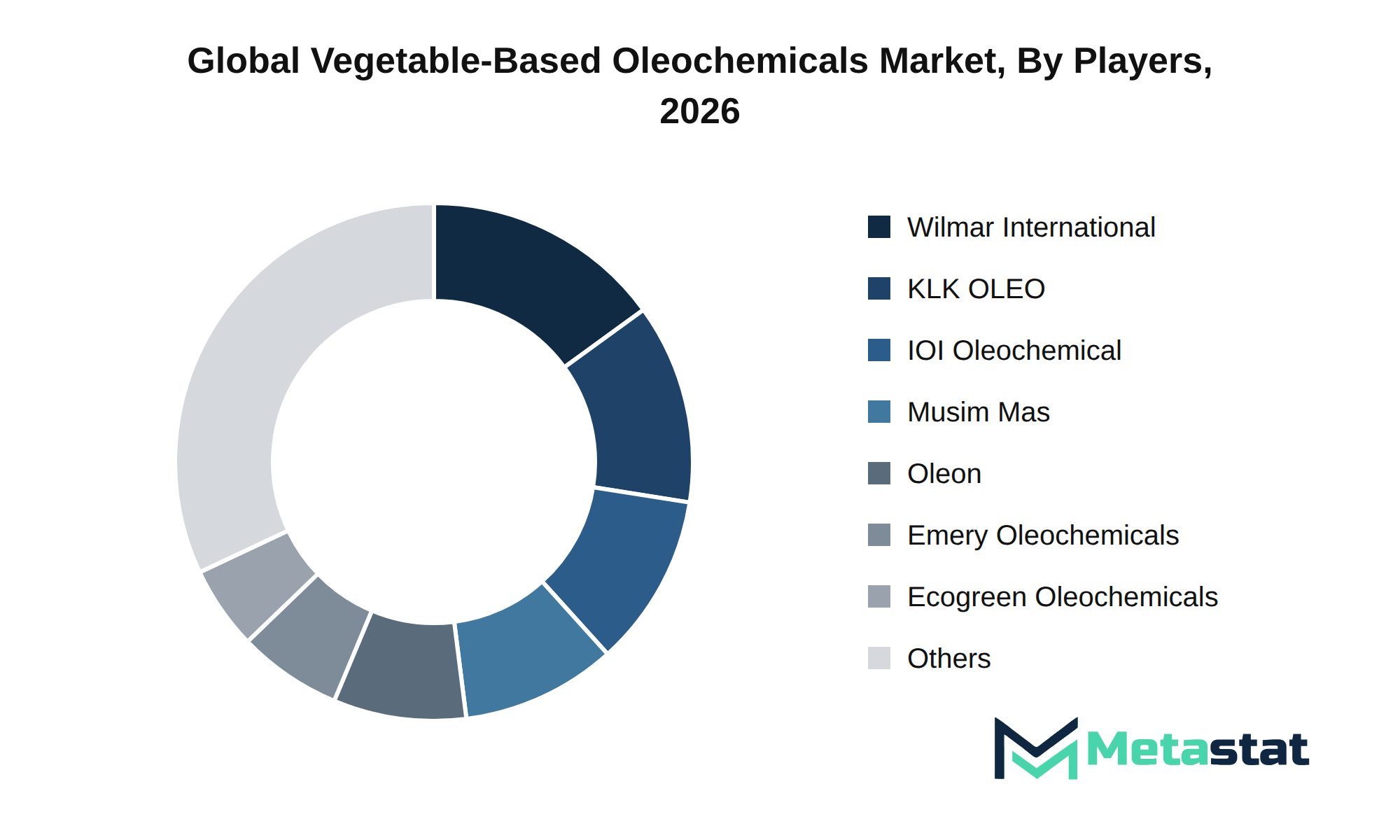
The Vegetable-Based Oleochemicals market features several significant players, including Wilmar International Limited, KLK OLEO, and IOI Oleochemical, which actively pursue strategic consolidation through mergers and acquisitions to enhance market positioning. Companies including Musim Mas Group and Oleon NV focus on product differentiation and proprietary technology to establish competitive advantages.
Innovative research and development pipelines contribute to the advancement of new products, with firms like Emery Oleochemicals and Ecogreen Oleochemicals leading initiatives to expand their portfolios. Strategic alliances and joint ventures frequently enable resource sharing and market access for competitors like Godrej Industries Limited - Chemicals and VVF (India) Limited.
Barriers to entry remain significant within the market, with established players leveraging supply chain dominance and procurement leverage to maintain competitiveness against potential new entrants. Customer retention strategies, including brand equity dynamics, play a critical role in sustaining market share, particularly for major suppliers including Cargill, Incorporated and P&G Chemicals.
The future competitive outlook within the Vegetable-Based Oleochemicals market indicates ongoing defensive imperatives. Companies pursue strategic growth vectors to mitigate risks and capitalize on emerging opportunities. Firms including Pacific Oleochemicals Sdn Bhd and IFFCO (Malaysia) Sdn Bhd exemplify the dynamic strategies employed to navigate market challenges effectively.
Market size is forecast to rise from USD 17.8 billion in 2025 to over USD 30.4 billion by 2033. The base case reflects a steady growth trajectory with a compound annual growth rate (CAGR) of 6.9%. Bull cases suggest that accelerated technological advancements and increased regulatory support could enhance market dynamics, driving greater adoption across various applications. Conversely, bear cases indicate potential challenges stemming from geopolitical tensions, trade disruptions, and fluctuating commodity prices, which could impede growth in specific regions.
The Vegetable-Based Oleochemicals market faces a backdrop of macroeconomic shifts, with structural consumption changes reflecting a transition towards sustainable practices. Core industries are maturing, prompting heightened demand for innovation and next-generation technology integration. Research and development commercialization timelines are shortening, allowing for quicker market entry of new products that meet evolving consumer needs.
Regulatory evolution plays a critical role in shaping the future landscape, with compliance milestones influencing product lifecycles and market acceptance. Strategic capital allocation directives increasingly focus on infrastructure commitments and capital expenditure investments that support sustainable practices. Emerging opportunities arise from unmet enterprise needs and high-growth pockets within the market, presenting avenues for expansion and competitive advantage.
Executive-level strategic imperatives emphasize the importance of defensibility roadmaps that align with anticipated market trends. Macroeconomic factors and industry-specific developments will dictate investment strategies and future growth recommendations, ensuring alignment with the broader objectives of sustainability and innovation.
The report strategically identifies and profiles the key market players and analyses their core competencies in each sub-segment of the Vegetable-Based Oleochemicals market.
Report Attributes | Details |
Study Period | 2021-2033 |
Base Year | 2025 |
Estimated Year | 2026 |
Forecast Period | 2026-2033 |
Historical Period | 2021-2025 |
Growth Rate | CAGR 6.9% from 2026 to 2033 |
Revenue Unit | USD billion |
Segmentation | By Product Type, Feedstock Source, End-Use Industry, and Region |
By Region | North America (By Product Type, Feedstock Source, End-Use Industry, and Country)
|
Europe (By Product Type, Feedstock Source, End-Use Industry, and Country)
| |
Asia Pacific (By Product Type, Feedstock Source, End-Use Industry, and Country)
| |
South America (By Product Type, Feedstock Source, End-Use Industry, and Country)
| |
Middle East and Africa (By Product Type, Feedstock Source, End-Use Industry, and Country)
|
Find answers to common questions about this report
The Vegetable-Based Oleochemicals market size was valued at USD 17.8 billion in 2025.
The Vegetable-Based Oleochemicals market is projected to grow at a CAGR of 6.9% during the forecast period from 2026 to 2033.
The North America Vegetable-Based Oleochemicals market size is estimated to reach USD 5.5 billion by 2033.
The Fatty Acids segment leads the Vegetable-Based Oleochemicals market, with a projected value of USD 10.4 billion by 2033. This segment's growth reflects its significant demand compared to other product types.
Investment in sustainable production technologies and increasing awareness of environmental issues drive growth in the Vegetable-Based Oleochemicals market. Manufacturers innovate and adopt green technologies to align with consumer preferences for eco-friendly products, particularly in sectors focused on environmental responsibility.
Increasing regulatory compliance and market barriers impose higher operational standards, leading to increased costs and delays in product development. Supply chain disruptions and resource scarcity further constrain market growth, complicating pricing strategies and limiting profitability. These factors collectively hinder the Vegetable-Based Oleochemicals market's growth potential.
Investment in sustainable production technologies and increasing awareness of environmental issues drive product adoption in the Vegetable-Based Oleochemicals market. Manufacturers are innovating to meet consumer preferences for eco-friendly products, particularly in personal care and home care sectors, which emphasize sustainability.
The Vegetable-Based Oleochemicals market is estimated to reach a valuation of USD 30.4 billion by 2033.
Key players in the Vegetable-Based Oleochemicals market include Wilmar International Limited, KLK OLEO, IOI Oleochemical, Musim Mas Group, Oleon NV, and Emery Oleochemicals.
The Fatty Acids segment is projected to grow from USD 6.8 billion in 2026 to USD 10.4 billion by 2033, reflecting a CAGR of 6.3%.
The analysts below cover Chemicals and Materials research at Metastat Insights.
LEAD ANALYST
Utkarsh Khirodkar is a Lead Market Research Analyst at MetaStat Insight, specializing in market intelligence, technology sector assessments, and competitive strategy.

INDUSTRY CONSULTANT - CHEMICALS & ADVANCED MATERIALS
Chemicals and Materials · Machinery & Equipment · Packaging
Amit Gadhekar Consultant for Chemicals and Materials at MetaStat Insight, directing sector-specific intelligence, research, and strategic consulting across global chemical and processing markets.
Replacing petrochemical surfactants with bio-based alternatives requires realistic timelines on industrial precision fermentation scaling. The market research broke down commercialization timelines, feedstock sugar price sensitivities, and regional cosmetic ingredient regulatory approvals in Europe and East Asia. That supplier readiness mapping gave our formulations team reliable context when comparing renewable chemical sourcing roadmaps.
Tracking ceramic matrix composite adoption in high-bypass aero engines requires strict attention to material qualification cycles and FAA airworthiness testing milestones. The MetaStat Insight team provided a detailed timeline of silicon carbide fiber manufacturing capacity and commercial foundry lead times. Having clear visibility into upstream thermal barrier coating supply helped us stress-test our long-term component procurement strategy.
Transitioning ultra-class mining haul trucks to alternative power requires concrete data on remote hydrogen refueling infrastructure economics. The report evaluated megawatt-scale electrolyzer installation expenses, onsite storage safety mandates, and heavy-duty fuel cell stack degradation under continuous duty cycles. That technical rigor helped our engineers benchmark realistic total operating cost horizons for off-highway fleet decarbonization.
Explore related market intelligence reports worth reading alongside this one.