
LEAD ANALYST
Utkarsh Khirodkar is a Lead Market Research Analyst at MetaStat Insight, specializing in market intelligence, technology sector assessments, and competitive strategy.

Brazil Fertilizers Market Size, Share, By Fertilizer Class (Mineral Fertilizers, Organomineral Fertilizers, Organic Fertilizers and Biofertilizers), By Crop Type (Oilseeds, Cereals and Grains, Sugar Crops, Cotton and Other Fiber Crops, Pulses, Fruits and Vegetables, Pasture and Forage Crops and Others (Forestry, Tobacco, Floriculture and Specialty Crops)), By Nutrient System (Nitrogen Fertilizers, Phosphate Fertilizers, Potash Fertilizers, Compound and Complex NPK/NP/PK Fertilizers, Secondary Macronutrient Fertilizers and Micronutrient Fertilizers), By Mode of Application (Foliar, Fertigation, Soil Treatment and Seed Treatment), Industry Analysis, Growth, Trends, and Forecast, 2026-2033
Report ID
MSI-4964
Published
August, 2026
Pages
296 Pages
Format
Historical
Base year
Forecast
Forecast period
Report Details
Choose Your License
Brazil Fertilizers Market
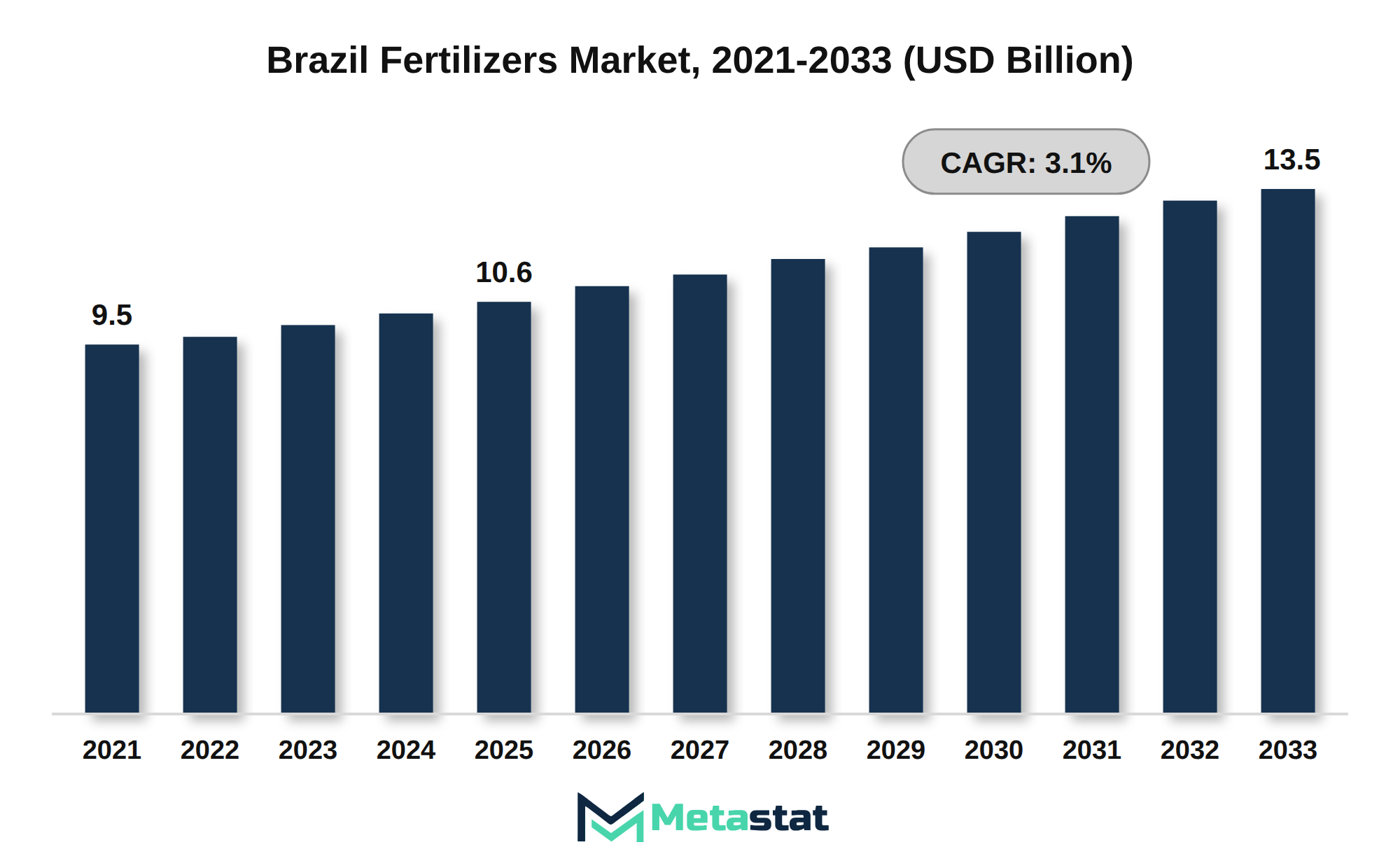
The Brazil Fertilizers market was valued at USD 10.6 billion in 2025 and is projected to reach USD 13.5 billion by 2033, growing at a CAGR of 3.1% over the forecast period.
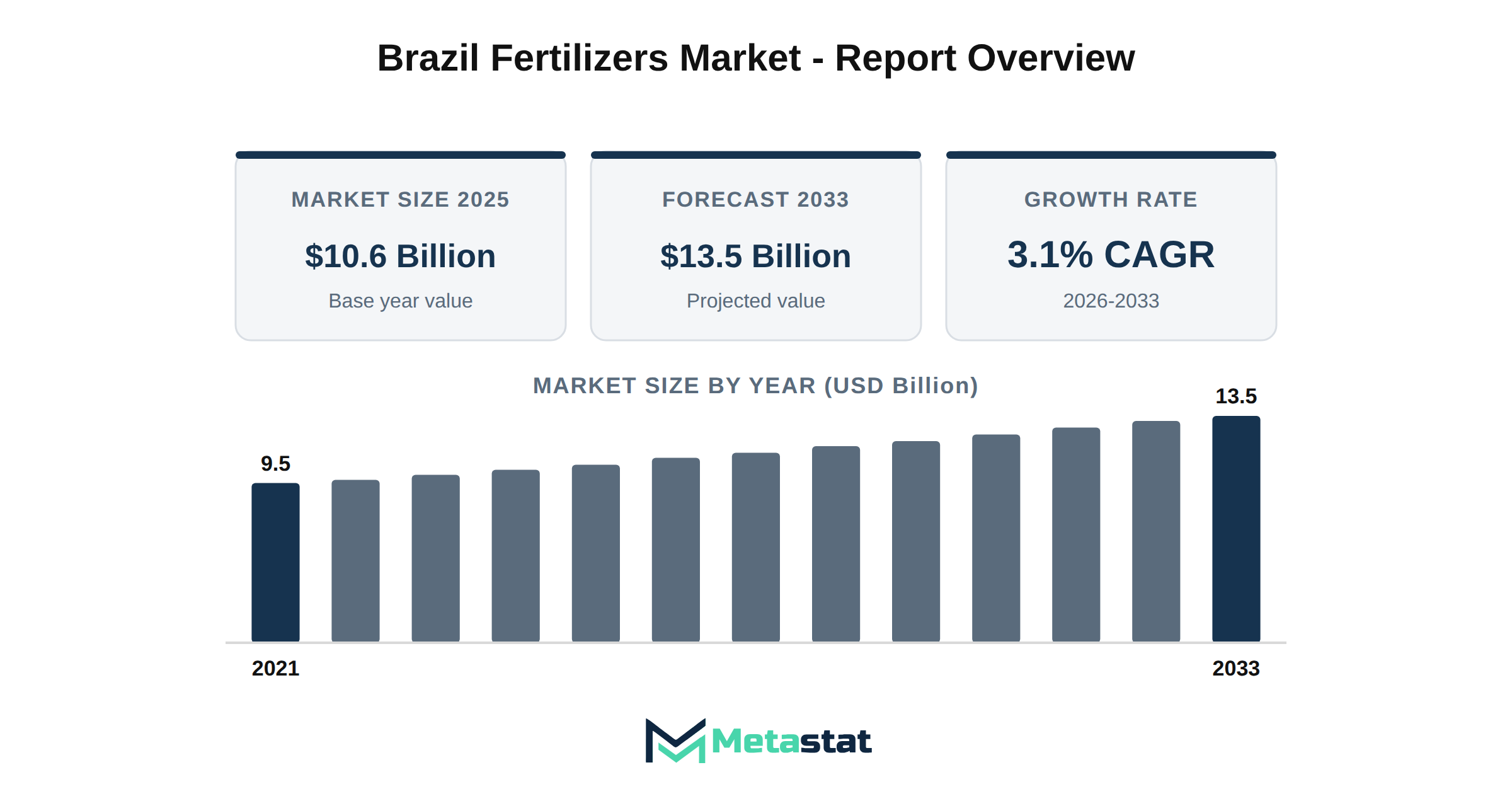
The Brazil Fertilizers market reached a base value of USD 10.6 billion in 2025. Projections indicate an increase to USD 13.5 billion by 2033, reflecting a compound annual growth rate (CAGR) of 3.1 percent during the forecast period from 2026 to 2033. Historical data shows gradual growth from USD 9.5 billion in 2021 to USD 10.6 billion in 2025, with an upward trajectory anticipated to continue.
Mineral fertilizers dominate the market, representing 88.6 percent of the total share. Organomineral fertilizers account for 5.1 percent, while organic fertilizers and biofertilizers hold respective shares of 4.1 percent and 2.2 percent. The market's structure is characterized by these segments' varying growth rates, with organomineral fertilizers projected to grow at a CAGR of 5.4 percent, reflecting a rising preference among consumers.
Growth drivers in the Brazil Fertilizers market include increasing demand from various agricultural sectors. Oilseeds, cereals and grains, and cotton crops represent significant contributors to this demand. For instance, the oilseeds segment is expected to expand from USD 4.3 billion in 2026 to USD 5.1 billion by 2033, marking a CAGR of 2.7 percent. The cereals and grains segment anticipates a CAGR of 4.2 percent, reaching USD 2.8 billion by 2033.
Attention to nutrient systems shows that nitrogen fertilizers will grow from USD 3 billion in 2026 to USD 3.6 billion by 2033. Phosphate fertilizers are projected to reach USD 3.3 billion during the same period, with a CAGR of 2.6 percent. This growth highlights the importance of these nutrients in enhancing crop yields and supporting agricultural productivity.
The mode of application influences the market's dynamics. Foliar application is anticipated to increase from USD 1.2 billion in 2026 to USD 1.6 billion by 2033, reflecting a CAGR of 4.9 percent. Fertigation, another application method, targets a value of USD 1.4 billion in 2033, supported by a CAGR of 5.7 percent. These trends indicate a shift towards more efficient and effective application methods in modern agriculture.
The evolution of the Brazil Fertilizers market is influenced by various factors including regulatory compliance and geopolitical risk frameworks. Navigating these complexities requires companies to adapt their strategies, ensuring alignment with established standards while managing risks associated with international trade policies. This adaptability enhances competitiveness and drives sustained growth.
Research and development trajectories within the market focus on next-generation innovations that address the increasing demand for sustainable agricultural practices. Investments in sustainable transformation, decarbonization, and circular economy dynamics reflect a commitment to environmental stewardship. Companies pursue technologies that improve efficiency and reduce the carbon footprint of fertilizer production.
The supply chain landscape shapes the operational framework of the market, encompassing logistics architecture and sourcing strategies. Efficient supply chain management enhances product availability and reduces costs, which directly influences market dynamics. Capital allocation strategies play a vital role in determining the success of infrastructure investments that support production capabilities and distribution networks.
Market fragmentation presents challenges and opportunities for players within the Brazil Fertilizers market. Diverse offerings from numerous suppliers create competitive pressure while driving innovation. Mergers and acquisitions facilitate consolidation, enabling companies to enhance their market positions and improve resource allocation.
Understanding customer journey dynamics is essential for effective market penetration. Tailored approaches to meet customer needs drive satisfaction and loyalty, ultimately impacting sales performance. Companies leverage insights from customer interactions to refine product offerings and enhance value propositions.
Macroeconomic headwinds, including inflationary pressures and currency volatility, influence operational costs and pricing strategies. These economic factors necessitate careful financial management and strategic planning to mitigate risks and capitalize on market opportunities. The outlook for the Brazil Fertilizers market remains positive, supported by ongoing investments and a commitment to innovation.
A growing emphasis on sustainability initiatives significantly influences the Brazil Fertilizers market. Increased awareness regarding environmentally friendly practices has led agricultural producers to adopt fertilizers that align with sustainability goals. This shift arises from a combination of consumer demand for organic produce and regulatory pressures aimed at reducing environmental impacts. Farmers prioritize fertilizers that support sustainable farming techniques while enhancing crop yields.
The demand for organic and biofertilizers is rising, driven by evolving consumer preferences for products that promote ecological balance. Organic fertilizers capture a larger share of the market, attributed to producers seeking to meet consumer expectations and differentiate their offerings. The integration of biofertilizers, which enhance soil health and promote sustainable agriculture, represents a key growth area within the market.
Investment in research and development of new fertilizer formulations that minimize carbon footprints is gaining traction. Companies actively pursue innovations that support sustainable agriculture practices and cater to increasing consumer preferences for environmentally responsible products. This focus on sustainability enhances the operational viability of agricultural producers while contributing positively to the environment.
Overall, the emphasis on sustainability initiatives directly impacts the Brazil Fertilizers market by shaping demand and encouraging innovation in fertilizer technologies. This trend is expected to sustain growth and drive continued investment in environmentally friendly practices across the agricultural sector.
Investment in infrastructure development plays a critical role in advancing the Brazil Fertilizers market. Enhanced transportation networks and modernized facilities facilitate the distribution of fertilizers, improving access for producers across various regions. Increased capital allocation towards upgrading physical assets allows suppliers to streamline operations and improve logistics efficiency, resulting in reduced delivery times and lower costs.
The ongoing modernization of agricultural technology contributes to greater productivity and operational efficiency within the sector. The integration of advanced technologies enhances the ability to optimize input usage, making it essential for producers seeking to maximize returns. This trend drives demand for fertilizers that align with evolving market needs, resulting in growth across various fertilizer segments.
Investment in infrastructure is expected to enhance the competitiveness of local producers while attracting international players to the Brazil Fertilizers market. The combination of improved accessibility and technological advancements positions the market for sustainable growth over the forecast period, ensuring a strong response to increasing agricultural demands.
Regulatory challenges impose significant constraints on the Brazil Fertilizers market. Compliance hurdles associated with varying regional regulations create complexities for producers, leading to increased operational costs. While companies navigate these legal mandates, the added financial burden restricts their ability to invest in innovation and expansion. Macroeconomic headwinds, including inflationary pressures, contribute to rising production costs, complicating market entry for new players. These factors collectively hinder growth, creating a challenging environment for existing firms.
Supply chain disruptions and geopolitical instability further exacerbate these challenges. Interruptions in the supply chain delay product availability, impacting agricultural output and straining relationships with buyers. The market faces heightened risks from resource scarcity and the need for continuous adaptation to changing conditions. Such factors reduce overall competitiveness, limiting potential growth and reinforcing the current market dynamics.
Investment in technological advancements and infrastructure remains critical, but high capital investment requirements serve because a barrier for smaller firms. Escalating operating costs associated with technological upgrades further discourage market participation. The Brazil Fertilizers market addresses these barriers to facilitate a more conducive environment for growth and innovation in the sector.
Geopolitical fragmentation influences the Brazil Fertilizers market by creating trade deficits and tariff friction. Increased tariffs on imported raw materials heighten production costs for local manufacturers, impacting pricing strategies and profit margins. These dynamics compel producers to navigate complex international trade environments while striving to remain competitive against global suppliers.
Technological disruptions further challenge the market. Rapid advancements in fertilizer production necessitate ongoing research and development (R&D) efforts. This continuous need for innovation strains resources, resulting from interoperability friction between new technologies and existing systems. Consequently, firms experience delays in the adoption of new solutions, which hampers operational efficiency.
Supply chain instability presents another significant obstacle. Fluctuations in feedstock and component availability disrupt production schedules and inflate costs. Disruptions in logistics channels exacerbate these issues, leading to decreased reliability in supply chains. Firms consequently confront rising prices for inputs while attempting to meet evolving market demands in a timely manner.
Workforce skill gaps and talent retention pressures create additional challenges. The fertilizer industry increasingly relies on skilled labor for advanced manufacturing processes. Shortages in qualified personnel result in production bottlenecks, further hindering growth within the market. Firms face heightened competition for talent, which drives up labor costs and affects overall productivity.
The cumulative impact of these challenges constrains the market's potential. Manufacturers adapt to shifting geopolitical landscapes, technological demands, and workforce dynamics. Addressing these issues effectively remains crucial for sustaining growth and maintaining competitiveness in the Brazil Fertilizers market.
The Brazil Fertilizers market benefits from increasing regional demands, particularly for high-efficiency and environmentally-friendly solutions. A notable rise in agricultural productivity necessitates fertilizers that enhance crop yield while adhering to sustainability standards. This growth is attributed to expanding agricultural practices across various crop types, including oilseeds and cereals. The market experiences a shift toward organic and biofertilizers, reflecting a growing preference for eco-friendly choices among farmers and agribusinesses.
Infrastructure modernization plays a significant role in enhancing the distribution networks for fertilizers. Improved logistics and storage facilities facilitate timely delivery to end-users, thereby reducing spoilage and increasing overall efficiency. Technological disruptions enable the adoption of precision agriculture techniques, allowing farmers to apply fertilizers more effectively, optimizing nutrient application and minimizing waste. Such advancements contribute to increased operational yield, positively influencing market dynamics.
Digital transformation within the agricultural sector shapes new buying behaviors, leading to a rise in online procurement channels. Farmers and distributors increasingly engage in digital platforms, resulting in streamlined purchasing processes. This transition allows for better price comparison and supplier selection, enhancing competitiveness among fertilizer producers. Consequently, companies adapt their commercial models to accommodate these changes and align with evolving consumer preferences.
Strategic consolidation within the market enhances operational capabilities and drives innovation. Collaborations and mergers enable companies to expand their product offerings and reach diverse customer segments. Such partnerships facilitate resource sharing, knowledge exchange, and the development of next-generation fertilizers that cater to specific agricultural needs. This strategic alignment supports comprehensive growth in the Brazil Fertilizers market, positioning it favorably for future developments.
The Brazil Fertilizers market is segmented based on Fertilizer Class, Crop Type, Nutrient System, and Mode of Application.
Valued at USD 9.7 billion in 2026, the Mineral Fertilizers segment is projected to reach USD 11.4 billion by 2033, at a CAGR of 2.3% during the forecast period. Increasing agricultural production to meet rising food demand drives substantial growth in the segment. The push for higher crop yields and enhanced soil fertility motivates farmers to adopt mineral fertilizers due to their effectiveness in providing essential nutrients.
Product evolution within the Mineral Fertilizers segment focuses on improving nutrient efficiency and minimizing environmental impact. Innovations in formulations, including slow-release variations, allow for targeted application, reducing nutrient runoff and optimizing yields. Growing awareness of environmental regulations influences market dynamics, because sustainability becomes a priority. Adoption of these fertilizers aligns with regulatory compliance standards, encouraging responsible farming practices.
Consumption shifts toward high-efficiency products impact the competitive landscape in the Brazil Fertilizers market. Increased investment in research and development among producers drives advancements in fertilizer technology, enhancing product offerings. Economic factors, including pricing volatility and margin pressures, challenge manufacturers while driving efforts to maintain competitive pricing without compromising quality.
The Mineral Fertilizers segment experiences strategic opportunity windows through government initiatives promoting agricultural productivity. Enhanced infrastructure for distribution and logistics supports market accessibility, facilitating the supply chain for mineral fertilizers. Continued engagement with end-users, including farmers and agricultural cooperatives, strengthens market relationships, ensuring alignment between supply and demand.
Increasing awareness of soil health and fertility drives demand for organomineral fertilizers within the Brazil Fertilizers market. This segment effectively combines organic and inorganic materials, enhancing nutrient availability while promoting sustainable agricultural practices. Farmers aim to improve crop yields and soil quality, resulting in accelerated adoption of these fertilizers.
Market expansion results from innovative product formulations and advancements in technology, enabling enhanced nutrient release and absorption. The focus on sustainable farming practices influences the utilization of organomineral fertilizers, aligning with global trends toward eco-friendly agricultural solutions. Regulatory compliance regarding fertilizers further enhances the segment’s growth potential.
The organomineral fertilizers segment is estimated to reach USD 0.8 billion by 2033, at a CAGR of 5.4% during the forecast period. This growth reflects an increasing shift toward integrated nutrient management, allowing farmers to optimize input efficiency and minimize environmental impacts. Agricultural practices evolve, and organomineral fertilizers play a vital role in addressing the needs of modern farming while supporting broader objectives within the Brazil Fertilizers market.
Growing consumer awareness of the benefits of organic agriculture drives demand for organic fertilizers in Brazil. This trend reflects an increasing preference for sustainable farming practices, leading farmers to seek environmentally friendly alternatives. The segment is expected to reach USD 0.7 billion by 2033, reflecting a commitment to enhancing soil health and crop yield while minimizing chemical inputs.
Adoption of organic fertilizers is further fueled by shifting dietary preferences towards organic produce, which encourages farmers to transition from conventional fertilizers to organic options. Regulatory compliance standards promote the use of organic products, aligning with governmental initiatives aimed at supporting sustainable agriculture. These factors create a favorable environment for market growth, driven by producers and consumers prioritizing health and environmental sustainability.
Technological maturation within the segment introduces innovative formulations and application methods, improving the effectiveness of organic fertilizers. Enhanced research and development efforts focus on improving product quality and performance, building confidence among buyers. Increased investment in educational programs regarding the benefits of organic fertilizers supports a more informed consumer base, further facilitating market penetration.
Economic factors, including pricing volatility of conventional fertilizers, encourage farmers to explore organic alternatives. While organic fertilizers typically carry a higher initial cost, the long-term benefits of improved soil health and crop quality present a compelling case for adoption. The market's resilience is supported by a diversified supply chain that includes local producers, ensuring accessibility and affordability of these products for Brazilian farmers.
Increasing adoption of biofertilizers is evident in the Brazil Fertilizers market, driven by the focus on sustainable agriculture and the need for eco-friendly alternatives to synthetic fertilizers. Environmental concerns surrounding chemical usage drive farmers toward organic solutions that enhance soil health and crop productivity while maintaining environmental integrity. This shift in consumer preferences necessitates innovation, leading to advancements in biofertilizer formulations and application methods.
The biofertilizers segment is projected to grow at a CAGR of 12.7% during the forecast period. Growth aligns with rising awareness among agricultural producers regarding the benefits of biofertilizers, including improved nutrient availability and enhanced microbial activity in soils. Increased investment in research and development enhances product efficiency and efficacy, catering to the evolving demands of the agriculture sector.
In terms of end-use dynamics, farmers across various crop types, including oilseeds, cereals, and vegetables, actively incorporate biofertilizers into their cultivation practices. This practice contributes positively to yield improvements and productivity, aligning with broader agricultural goals. Regulatory standards encouraging the adoption of environmentally friendly inputs support the growth and acceptance of biofertilizers in the market.
Anticipated growth in the Brazil Fertilizers market reflects a strategic opportunity window for stakeholders involved in the biofertilizer segment. Capital investments directed toward innovation and market expansion enhance the competitive landscape, positioning biofertilizers because a viable alternative in agricultural practices. The ongoing trends indicate a robust demand trajectory for biofertilizers, highlighting their essential role in the future of sustainable agriculture.
Valued at USD 4.3 billion in 2026, the Oilseeds segment is projected to reach USD 5.1 billion by 2033, at a CAGR of 2.7% during the forecast period. This growth results from rising global demand for oilseeds, driven by the increasing consumption of vegetable oils and biofuels. Brazilian farmers, focusing on higher yield crops, turn to fertilizers to enhance productivity, leading to greater adoption of fertilizers specifically formulated for oilseed crops.
The market's expansion is supported by advancements in fertilizer technology, including the development of products tailored to the nutrient requirements of oilseed plants. Enhanced formulations improve nutrient uptake and ensure optimal growth conditions, contributing to the increase in oilseed production. Favorable climatic conditions and the strategic positioning of Brazil because a major agricultural player further stimulate the demand for fertilizers.
Cost structures influence the segment, with fluctuations in raw material prices affecting profitability. However, the steady demand for oilseeds helps mitigate pricing volatility. Regulatory compliance and sustainability practices increasingly guide fertilizer application, encouraging farmers to adopt more efficient and environmentally friendly practices. This shift in consumption patterns aligns with global agricultural trends and positions the Brazil Fertilizers market for continued growth within the oilseed sector.
Cereals and Grains represent a significant segment in the Brazil Fertilizers market, with an estimated value of USD 2.8 billion by 2033, achieving a CAGR of 4.2% during the forecast period. Strong demand for cereals and grains in Brazil arises from rising population levels and increasing dietary preferences for diverse food products, compelling farmers to enhance yields and productivity. This shifting consumption pattern drives adoption of advanced fertilizers tailored to optimize crop performance. Technological advancements in fertilizer formulations contribute to improving nutrient delivery and application efficiency. Innovations in biofertilizers and organomineral options create opportunities for enhancing soil health and crop resilience, aligning with sustainable agricultural practices. Heightened awareness among farmers regarding the benefits of these fertilizers reinforces investment in modern techniques, which further fuels market growth. The regulatory framework surrounding agricultural practices in Brazil supports the uptake of fertilizers for cereals and grains, emphasizing standards that enhance food security and agricultural sustainability. This environment creates a favorable setting for manufacturers and suppliers in the market, leading to increased competition and innovation. With the emphasis on efficiency, the cereals and grains segment is projected to play a critical role in meeting future food demands while supporting the overall growth of the Brazil Fertilizers market.
Growing demand for fertilizers specific to Sugar Crops drives investment in the Brazil Fertilizers market. This segment is projected to reach USD 1.4 billion by 2033. The rise in sugar consumption, coupled with increasing production requirements, contributes to this trend. Producers enhance yield and quality through advanced fertilizer solutions, ensuring optimal growth for sugarcane and related crops.
Technological advancements play a crucial role in segment expansion. Innovations in fertilizer formulations, including slow-release and precision application techniques, support improved nutrient uptake and minimize environmental impact. These developments align with the market's shift towards sustainable agricultural practices, where efficient resource usage boosts profitability and meets regulatory standards.
Cost structures within the Sugar Crops segment create unique challenges. Fluctuations in raw material prices impact production costs, necessitating strategic sourcing and pricing strategies. Suppliers face pressure to offer competitive pricing while maintaining product quality, influencing profit margins across the value chain. This dynamic environment requires careful management of financial resources and operational efficiencies.
Regulatory compliance influences market dynamics. Adherence to environmental regulations and safety standards shapes product development and application practices for sugar crops. Fertilizer manufacturers focus on obtaining necessary certifications, ensuring products meet stringent guidelines, which enhance market acceptance and drive sales growth.
The outlook for the Sugar Crops segment remains positive, driven by sustained demand for sugar and evolving agricultural practices. Investment in research and development is expected to facilitate product evolution, enhancing the market's resilience against disruptions. Strategic opportunities for growth include partnerships with agricultural cooperatives and adoption of digital farming technologies, positioning stakeholders to capitalize on market trends effectively.
Growing cultivation of cotton and other fiber crops in Brazil necessitates effective fertilization strategies to enhance yield and quality. This segment is projected to grow at a CAGR of 4.7% during the forecast period, reflecting ongoing investments in agronomy and advancements in fertilizer technologies. Increased demand for high-quality cotton fibers drives producers to adopt specific nutrient formulations that optimize growth conditions, aligning with global market trends toward premium textile production.
The market experiences shifts in consumption patterns, with producers prioritizing fertilizers that enhance fiber quality and resistance to pests and diseases. This focus aligns with broader agricultural practices aimed at improving sustainability and reducing environmental impact. Regulatory compliance standards further encourage the adoption of innovative fertilizers, creating a competitive landscape where efficiency and effectiveness are essential for achieving desired crop outcomes.
Price volatility in raw materials poses challenges for producers, compelling them to seek cost-effective and reliable sources of fertilizers. Strategic opportunity windows exist for companies that offer tailored solutions addressing these challenges while ensuring compliance with evolving agricultural regulations. The dynamics of the Cotton and Other Fiber Crops segment within the Brazil Fertilizers market reflect a critical intersection of demand drivers, technological advancements, and compliance pressures shaping future growth.
Demand for fertilizers within the Pulses segment reflects trends in agricultural practices that emphasize crop rotation and diversification. Growing consumer preferences for plant-based diets drive interest in pulses, contributing to their adoption in sustainable farming practices. Farmers increasingly recognize the role of specialized fertilizers in enhancing yield potential, aligning with industry efforts to improve productivity while maintaining environmental standards.
Technological advancements play a significant role in the segment's development. Innovations in fertilizer formulations tailored for pulses support enhanced nutrient availability and absorption. These developments address specific soil deficiencies and optimize growth conditions for various pulse crops. Enhanced product evolution continues to support farmers in maximizing agricultural outputs while minimizing input costs.
Shifts in consumption patterns towards higher protein diets further fuel interest in pulses. The market responds to these changes by promoting fertilizers that enhance the nutritional quality of pulse crops. Regulatory compliance emphasizes environmentally friendly practices, positioning the segment favorably within the broader Brazil Fertilizers market. This alignment with regulatory standards encourages investment in sustainable fertilizer solutions.
Margin pressures and pricing volatility present ongoing challenges within the segment. Fluctuations in raw material prices impact production costs, requiring suppliers to adopt strategies that mitigate risks. Supply chain resilience becomes crucial to ensure consistent availability of inputs, enabling farmers to implement effective fertilization techniques for pulse cultivation. By capitalizing on strategic opportunity windows, stakeholders navigate these complexities and drive growth within the market.
Increasing focus on fresh produce drives substantial demand for fertilizers within the Fruits and Vegetables segment. The market relies on high-quality fertilizers to enhance crop yield and quality, reflecting consumer preferences for organic and sustainably grown products. Technological advancements in fertilizer formulations enable improved nutrient availability, directly impacting crop performance. Regulatory compliance regarding agricultural practices influences the adoption of specific fertilizers that meet sustainability standards. Investment in this segment looks promising, with opportunities for innovation in fertilizer development aimed at optimizing plant health and resilience, strengthening long-term demand.
Shifts in consumption patterns highlight the increasing preference for locally sourced and fresh fruits and vegetables. This trend encourages growers to adopt advanced fertilizer solutions that support efficient production practices while maintaining environmental integrity. Growing awareness of agricultural sustainability drives demand for eco-friendly fertilizer options within the market. Overall, the Fruits and Vegetables segment represents a dynamic opportunity area, aligning with broader trends toward health-conscious consumption and sustainable farming practices, reinforcing the segment's position.
Increasing focus on sustainable agriculture significantly benefits the Pasture and Forage Crops segment within the Brazil Fertilizers market. Enhanced nutritional requirements for livestock drive demand for specialized fertilizers, contributing to expansion in this area. Various agricultural practices and crop management strategies emphasize the importance of optimizing soil nutrients to support pasture health and productivity, resulting in improved yields for Brazilian farmers.
Investment in innovative fertilizer products tailored to the unique needs of pasture and forage crops supports market growth. Emerging technologies for nutrient delivery systems enhance efficiency and effectiveness, aligning with the long-term objectives of Brazilian farmers. This segment experiences ongoing evolution in product formulations to improve yields while maintaining environmental sustainability, reinforcing the competitive position of suppliers in the market.
Shifts in consumption patterns reflect a growing preference for high-quality forage, further driving demand for fertilizers specific to this crop type. Regulatory compliance and certifications play a crucial role in shaping product offerings, ensuring they meet industry standards and consumer expectations. The dynamic nature of this segment highlights opportunities for growth and investment in the Brazil Fertilizers market, expanding the addressable base for suppliers.
Interest in the Others (Forestry, Tobacco, Floriculture and Specialty Crops) segment shows potential growth driven by evolving agricultural practices and increased demand for specialty products. Adoption of targeted fertilizers enhances yield and quality in these niche markets, influencing overall market dynamics. This segment benefits from growing consumer preferences for sustainably sourced agricultural products and increased investment in agricultural technology. Technological advancements in fertilizer formulation and application methods support the segment's expansion, reflecting a shift towards precision agriculture. The diversification of crop types encourages investment and innovation, shaping consumption patterns within the Brazil Fertilizers market.
Regulatory frameworks promoting sustainable farming practices impact product utilization in the segment. Compliance with environmental standards influences fertilizer choices, driving demand for eco-friendly products. These factors contribute to a competitive landscape where producers strive to develop innovative solutions tailored for specific crop needs. The segment's evolution aligns with broader trends in the agriculture sector, positioning it because a strategic opportunity within the Brazil Fertilizers market.
Valued at USD 3 billion in 2026, the Nitrogen Fertilizers segment is projected to reach USD 3.6 billion by 2033, at a CAGR of 2.4% during the forecast period. Increasing demand for nitrogen fertilizers primarily arises from the agricultural sector's emphasis on maximizing crop yields. Fertilizers enhance plant growth by supplying essential nutrients, particularly nitrogen, which is essential for protein synthesis and overall plant health.
Several factors drive adoption, including advancements in nutrient management practices and a growing understanding of soil health. Farmers increasingly recognize the importance of nitrogen in improving crop quality and productivity, influencing purchasing decisions across various crop types. The market experiences significant momentum from cereal and grain cultivation, where nitrogen fertilizers are critical for achieving desired harvest outcomes.
Technological maturation in the production of nitrogen fertilizers enables manufacturers to offer products that are more efficient and environmentally friendly. Innovations in application techniques, including precision agriculture, optimize fertilizer usage, reduce waste and enhance crop responsiveness. These advancements present strategic opportunities for companies aiming to capitalize on growing market trends.
Consumption shifts toward high-performance fertilizers contribute to price volatility, affecting margins. Fluctuating raw material costs impact operational strategies for producers, prompting a need for efficient supply chain management. Ongoing regulatory compliance standards regarding fertilizer use and environmental impact shape the operational landscape for nitrogen fertilizers in the Brazil Fertilizers market.
Investment in sustainable practices continues to rise, focusing on reducing nitrogen losses and improving application efficiency. The introduction of next-generation upgrades in fertilizer formulations aims to address these challenges while enhancing agricultural productivity. Overall, the Nitrogen Fertilizers segment presents growth potential within the broader Brazil Fertilizers market.
Demand for Phosphate Fertilizers in the Brazil Fertilizers market is expected to reach USD 3.3 billion by 2033, growing at a CAGR of 2.6% during the forecast period. Increasing agricultural productivity drives the need for effective nutrient management, particularly phosphorus, which plays a critical role in root development and crop yields. An enhanced focus on precision farming techniques increases the adoption of phosphate fertilizers, ensuring efficient usage and maximizing returns on investment for farmers.
Technological advancements in fertilizer formulation and application techniques contribute significantly to market expansion. Innovations in slow-release and controlled-release phosphate fertilizers optimize nutrient availability, reduce environmental impacts, and improve crop performance. Increased interest in sustainable practices among growers supports product evolution, aligning with regulatory compliance standards and environmental stewardship initiatives.
Consumption shifts toward high-quality, environmentally friendly products influence purchasing decisions. Farmers increasingly seek phosphate fertilizers that align with organic farming regulations and sustainability goals. The market's alignment with the growing preference for sustainable agriculture enhances competitive dynamics and opens strategic opportunity windows for suppliers.
Growing interest in sustainable agriculture significantly influences the adoption of Potash Fertilizers in Brazil. These fertilizers play a critical role in enhancing crop yield and improving soil quality, catering to the increasing demand for high-quality agricultural products. The segment is expected to reach USD 3.5 billion by 2033, reflecting a robust market outlook.
Technological advancements fuel segment expansion by enabling the development of innovative potash products that meet diverse agricultural needs. The market benefits from evolving application techniques, including fertigation and foliar applications, enhancing nutrient delivery efficiency. These advancements support farmers in maximizing their productivity and optimizing resource use, which is essential in a competitive agricultural environment.
Demand dynamics within the Brazil Fertilizers market indicate a strong inclination towards specific crop types, particularly oilseeds and cereals. Increased cultivation of these crops drives the need for potash fertilizers, owing to their requirement for adequate potassium levels for optimal growth. This trend aligns with consumer preferences for food quality and sustainability, further propelling market growth.
Pricing volatility presents challenges for stakeholders within the potash fertilizers segment. Fluctuations in raw material costs create margin pressures, necessitating effective pricing strategies to maintain profitability. Companies operating in the market continue to seek efficient sourcing solutions and robust supply chain resilience to mitigate these risks.
Regulatory compliance and environmental considerations significantly impact product formulation and application practices. Adhering to stringent agricultural standards enhances product credibility and builds consumer trust. Companies that proactively address these compliance requirements position themselves favorably within the competitive environment.
Growth in the Compound and Complex NPK/NP/PK Fertilizers segment aligns with increasing demand for fertilizers formulated to meet specific nutrient needs of various crops. The segment is projected to grow at a CAGR of 4.9% during the forecast period. Adoption of these fertilizers stems from their ability to enhance crop yield and quality, appealing to producers focused on maximizing production efficiency and profitability.
Technological advancements drive segment expansion, with innovations improving the formulation and effectiveness of NPK fertilizers. Enhanced nutrient delivery systems and gradual improvements in precision agriculture technologies contribute to higher uptake rates among farmers. This evolution supports the broader trends within the Brazil Fertilizers market, where precision and efficiency have become critical competitive factors.
Increased environmental awareness influences the product evolution of Compound and Complex NPK/NP/PK Fertilizers. Fertilizers that align with sustainability goals gain traction, prompting manufacturers to develop products that minimize environmental impact while maximizing agricultural productivity. This dynamic enhances the attractiveness of the segment, particularly among environmentally conscious growers.
End-use dynamics reflect shifts in crop production practices, with a notable rise in demand for diversified crops requiring specialized nutrient solutions. Brazil's diverse agricultural landscape supports this trend, driven by farmers seeking tailored fertilizers that address specific crop nutrient requirements. Consequently, the market reinforces its position within the global fertilizer ecosystem.
Cost structures in this segment face pressures from raw material sourcing and fluctuations in pricing for essential components, including nitrogen, phosphorus, and potassium. These factors contribute to the need for strategic sourcing decisions among producers. Maintaining a stable supply chain is crucial to mitigate risks associated with pricing volatility, ensuring continued growth in the Compound and Complex NPK/NP/PK Fertilizers segment.
The increasing emphasis on nutrient management within agriculture enhances the relevance of Secondary Macronutrient Fertilizers in Brazil. This segment contributes to improving soil health and crop productivity across diverse agricultural practices. Farmers recognize the impact of micronutrient deficiencies on yield and quality, resulting in greater adoption of these fertilizers.
Technological advancements support the evolution of Secondary Macronutrient Fertilizers. Companies invest in innovations that enhance nutrient delivery and efficiency, addressing specific crop needs. These developments ensure application precision, enabling fertilizers to effectively contribute to agricultural yield.
End-use dynamics within the Brazil Fertilizers market reflect a shift towards integrated nutrient management. Farmers adjust practices to optimize fertilizer use, relying on Secondary Macronutrient Fertilizers to complement primary nutrients. This collaboration enhances crop resilience, ultimately strengthening demand in the agricultural sector.
Regulatory compliance standards increasingly shape the fertilizer landscape. Manufacturers face heightened expectations regarding product quality and environmental impact, influencing their strategies. Meeting these standards contributes to sustainable practices and aligns with consumer preferences for eco-friendly agriculture.
Strategic opportunities arise from the ongoing evolution of the agricultural sector. Investment in research and development facilitates innovations in fertilizers, driving market growth. With increasing interest in sustainable practices, Secondary Macronutrient Fertilizers represent a viable option for enhancing crop performance while minimizing environmental impact.
Investments in micronutrient fertilizers contribute to improved crop yields and enhance agricultural productivity in Brazil. Adoption of these specialized fertilizers supports the cultivation of crops including fruits, vegetables, and high-value specialty crops, which demand precise nutrient management for optimal growth. End-users recognize the benefits of micronutrients in addressing soil deficiencies, leading to increased interest from farmers aiming to boost output and profitability. Regulatory compliance standards increasingly emphasize the role of micronutrients in sustainable farming practices, driving growers to consider these products to meet quality and safety benchmarks.
The Brazilian government encourages best practices in agriculture, including the use of micronutrient fertilizers to enhance food security and sustainability. Consumption shifts toward more efficient and eco-friendly products increase demand, further integrating these solutions into modern agricultural strategies. Strategic opportunities arise from innovative formulations and delivery methods, expanding the appeal of micronutrient fertilizers among diverse crop types. The evolving product landscape reflects ongoing research and development, ensuring that the market remains responsive to the needs of farmers seeking to optimize their inputs and maximize returns.
Investments in foliar application techniques contribute significantly to the Brazilian agricultural sector, highlighting a strategic avenue for enhancing crop yields. Valued at USD 1.2 billion in 2026, this segment is projected to reach USD 1.6 billion by 2033, at a CAGR of 4.9% during the forecast period. The increasing adoption of precision agriculture practices, which optimize nutrient delivery through targeted application, drives growth within this market segment. Enhanced awareness of the benefits of foliar fertilizers among growers encourages broader acceptance, aligning with trends in sustainable farming.
The integration of advanced technologies in foliar applications, including drone-assisted spraying and data analytics, supports the efficient use of resources and maximizes output. Regulatory compliance standards surrounding agricultural practices strengthen the focus on innovative fertilization methods. In this context, the Brazil Fertilizers market serves because a platform for adopting next-generation upgrades, further promoting the efficiency of foliar applications and improving overall crop health. These factors position the segment for sustainable expansion within the market.
Fertigation enhances the efficiency of nutrient application in the Brazil Fertilizers market. This method of delivering fertilizers through irrigation systems optimizes water usage while ensuring that crops receive adequate nutrients. The estimated market value for fertigation is projected to reach USD 1.4 billion by 2033, at a CAGR of 5.7% during the forecast period. Factors driving this growth include increasing agricultural productivity demands and the growing adoption of precision farming techniques, which focus on improving crop yields through efficient resource management.
Technological advancements shape the fertigation landscape, enabling farmers to implement more efficient and automated systems. Compatibility with various cropping systems and the integration of sensors to monitor soil moisture and nutrient levels highlight the adaptability of fertigation practices. These innovations facilitate better decision-making regarding fertilizer applications, resulting in cost savings and enhanced crop performance.
The growing interest in sustainable agriculture further accelerates growth in the fertigation segment. Farmers increasingly recognize the benefits of reducing nutrient runoff and minimizing environmental impacts through targeted applications. This ongoing shift towards environmentally friendly practices aligns with regulatory compliance efforts and consumer preferences for sustainably produced food products.
The fertigation segment of the Brazil Fertilizers market is positioned for significant growth, driven by technological advancements, agricultural productivity requirements, and sustainability initiatives. This segment's evolution reflects broader trends within the market, emphasizing efficiency and responsible resource management.
Rising emphasis on effective soil management strategies drives demand for soil treatment fertilizers in Brazil. This segment enhances nutrient availability and improves soil health, addressing the needs of various crop types. Increased adoption of precision agriculture techniques supports the market, enabling farmers to optimize fertilizer usage and enhance crop yields. Regulatory compliance standards significantly shape product offerings, encouraging manufacturers to innovate and improve formulations. The soil treatment segment is expected to reach USD 9.8 billion by 2033, reflecting significant growth within the Brazil Fertilizers market. Continued investments in research and development facilitate the evolution of advanced soil treatments, appealing to environmentally conscious growers. This evolution encourages a shift toward more sustainable agricultural practices, reinforcing the segment's importance in the broader market.
Growing attention toward enhanced agricultural practices influences the adoption of seed treatment solutions within the Brazil Fertilizers market. This segment is projected to grow at a CAGR of 6.8% during the forecast period. Increased pest resistance and improved crop health drive demand for effective seed treatment options. Farmers seek solutions that boost yields and minimize crop losses, contributing to the segment's expansion. Regulatory compliance standards motivate the adoption of advanced seed treatment technologies, aligning with global sustainability goals. Continuous product evolution in seed treatment methodologies drives innovation and competition, enhancing overall market value.
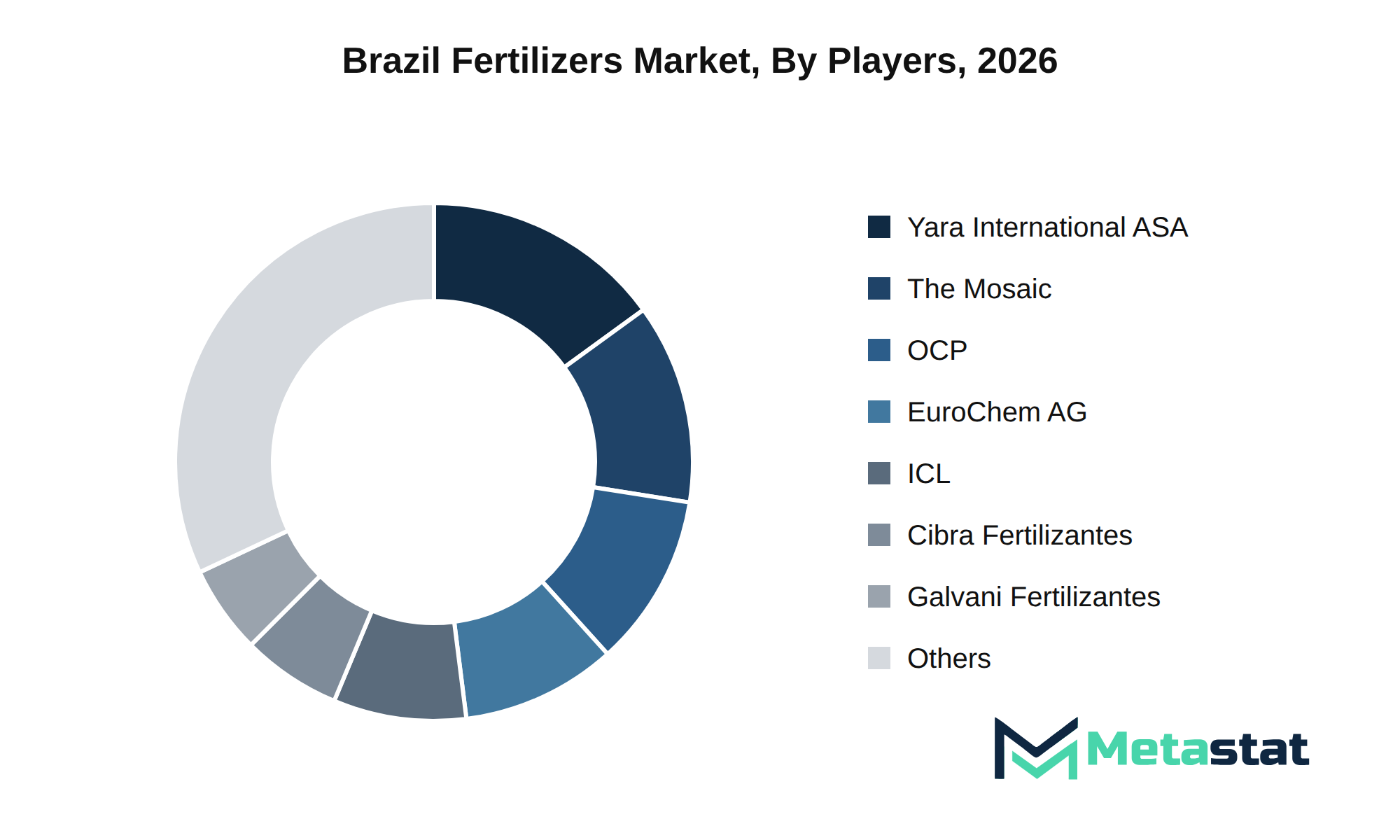
The Brazil Fertilizers market features a diverse array of players focusing on various strategic initiatives to enhance their market positioning. Companies including Yara International ASA, The Mosaic Company, and EuroChem Group AG pursue strategic alliances and joint ventures to strengthen their competitive edge and expand their product offerings. Such partnerships facilitate access to advanced technologies and proprietary methods, thereby enhancing product differentiation in the market.
Pricing architectures among competitors emphasize a focus on value chain integration and procurement leverage. Firms including OCP Group and ICL Group Ltd. leverage their supply chain dominance to optimize costs and maintain competitiveness. This strategy enables these firms to offer competitive pricing while ensuring product quality, thus attracting a broader customer base.
Research and development pipelines remain critical differentiators within the Brazil Fertilizers market. Companies like CMOC Group Limited and Groupe Roullier invest heavily in technological advancements to create innovative solutions tailored to specific agronomic needs. These investments in R&D contribute to building technological defensibility and enhancing brand equity, which helps retain existing customers and attract new ones.
The competitive outlook for the Brazil Fertilizers market anticipates continued strategic growth vectors driven by evolving agricultural practices and global sustainability trends. A focus on biofertilizers and organic solutions is evident, with firms including Verde AgriTech Ltd. and Cibra Fertilizantes S.A. positioning themselves to cater to the increasing demand for sustainable agricultural inputs.
Market size is forecast to rise from USD 10.6 billion in 2025 to over USD 13.5 billion by 2033. The base case anticipates growth driven by robust agricultural production and increasing demand for fertilizers in Brazil. Economic factors, including inflation and commodity prices, influence fertilizer pricing and overall market dynamics. Bull cases benefit from heightened investment in agricultural technologies and government policies that favor sustainable farming practices, leading to accelerated adoption of innovative fertilizers. Bear cases could emerge from geopolitical tensions and trade barriers that hinder supply chains, potentially limiting market expansion.
Next-generation technology integration, including precision agriculture and data analytics, reshapes the market, driving efficiency and optimizing fertilizer usage. The maturation of core industries, combined with regulatory evolution, changes compliance timelines and enforcement horizons, necessitating adaptability among suppliers. Strategic capital allocation prioritizes infrastructure commitments, enhancing production capabilities and distribution networks.
Emerging white-space opportunities exist in organic and biofertilizers, where unmet enterprise needs present high-growth pockets, particularly among environmentally conscious consumers. While demand shifts towards sustainable practices, executive-level strategic imperatives focus on defensibility roadmaps and future growth recommendations. The Brazil Fertilizers market stands poised for steady growth, influenced by a combination of macroeconomic factors, technological advancements, and evolving consumer preferences.
The report strategically identifies and profiles the key market players and analyses their core competencies in each sub-segment of the Fertilizers market.
Report Attributes | Details |
Study Period | 2021-2033 |
Base Year | 2025 |
Estimated Year | 2026 |
Forecast Period | 2026-2033 |
Historical Period | 2021-2025 |
Growth Rate | CAGR 3.1% from 2026 to 2033 |
Revenue Unit | USD billion |
Segmentation | By Fertilizer Class, Crop Type, Nutrient System, Mode of Application, and Region |
Find answers to common questions about this report
The Fertilizers market size in Brazil was valued at USD 10.6 billion in 2025.
The Fertilizers market is projected to grow at a CAGR of 3.1% during the forecast period from 2026 to 2033.
Mineral Fertilizers lead the Brazil Fertilizers market, with a projected value of USD 11.4 billion in 2033, representing the largest segment by revenue. This segment accounts for 88.6 percent of the market share.
Key drivers for the Brazil Fertilizers market include a growing emphasis on sustainability initiatives, which encourages agricultural producers to adopt environmentally friendly fertilizers. investment in infrastructure development enhances distribution efficiency, while technological advancements improve productivity and operational efficiency, supporting market growth.
Regulatory challenges, macroeconomic headwinds, and supply chain disruptions significantly restrain growth in the Brazil Fertilizers market. Compliance with varying regional regulations increases operational costs, while inflationary pressures and geopolitical instability heighten production expenses and complicate market entry for new players. These factors collectively hinder competitiveness and limit potential growth opportunities.
A growing emphasis on sustainability initiatives and increased consumer demand for organic produce are favoring product adoption in the Brazil Fertilizers market. Producers are prioritizing fertilizers that align with sustainability goals, leading to a rise in organic and biofertilizers that enhance soil health and promote sustainable agriculture practices.
The Fertilizers market is estimated to reach a valuation of USD 13.5 billion by 2033.
Key players operating in the Brazil Fertilizers market include Yara International ASA, The Mosaic Company, EuroChem Group AG, OCP Group, ICL Group Ltd., and CMOC Group Limited.
Organic fertilizers are projected to reach USD 0.7 billion by 2033. This growth reflects the increasing demand for environmentally friendly agricultural practices.
Cereals and grains exhibit a growth rate of 4.2% CAGR, with a forecasted size of USD 2.8 billion by 2033. This segment's growth aligns with rising consumer demand for staple food products.
The analysts below cover Agriculture research at Metastat Insights.
LEAD ANALYST
Utkarsh Khirodkar is a Lead Market Research Analyst at MetaStat Insight, specializing in market intelligence, technology sector assessments, and competitive strategy.
Assessing commercial microgrid software adoption requires looking past top-level installation numbers and examining utility interconnection queues. The research provided verifiable data on average permitting timelines, tariff structures, and battery storage integration costs across regional utility territories. That grounded perspective was valuable for our team when building five-year demand projections for industrial microgrid controllers.
Ambulatory surgical centers have very different purchasing cycles for robotic-assisted surgery platforms than major hospital networks. The MetaStat Insight study focused squarely on capital expenditure depreciation, procedural reimbursement pathways, and surgeon training overhead. That operational clarity made it much simpler to validate multi-year procedure growth forecasts against actual ambulatory center adoption patterns.
When planning edge sensor rollouts across refinery environments, generic IoT reports typically miss the harsh-environment certification bottlenecks. MetaStat Insight gave an objective evaluation of ATEX and Class 1 Division 2 hardware availability, along with realistic five-year maintenance cycle cost projections. The comparison of wireless mesh versus private cellular backhaul helped our team pressure-test network reliability models for remote processing facilities.
Explore related market intelligence reports worth reading alongside this one.